 Domestic abuse/violence, also known as intimate partner abuse/violence, is not a new phenomenon. We’ve studied families whose relationships include verbal abuse, emotional abuse, and/or physical aggressiveness, and those where factors such as addiction, alcoholism, and other struggles are also present.
While some people may be under the impression that urban living and low socioeconomic status are the sources of domestic violence, or that IPV only occurs among certain populations, the truth is that domestic violence occurs across the entire spectrum of wealth and social status.
When we see wealthy families in the media, on television shows such as Lifestyles of the Rich and Famous or Keeping up with the Kardashians, we may come away envying their wealth and possessions. Many of those families, and others not portrayed on television, may, however, often feel at odds with how they can have an internal experience that matches their outside environment. They may feel pressure to maintain a public face of contentment with their position and wealth, no matter the turmoil they experience privately. Wealth does not solve all of a person’s problems, and no matter a person’s means (or lack thereof), they may still experience mental health concerns, emotional struggles, family troubles, and any number of other life challenges.
Consider the following statistics about domestic violence:
- 1 in 3 women and 1 in 4 men have experienced some type of violence from an intimate partner. [fat_widget_right]
- 1 in 4 women and 1 in 7 men have experienced severe violence from an intimate partner.
- More than 20,000 phone calls about domestic abuse are made to crisis hotlines in the United States each day.
- The presence of a gun in an instance of IPV increases the likelihood of homicide by 500%.
- 19% of all incidents involve a weapon.
- 1 in 3 victims of IPV are male.
Challenges to Seeking Help in Affluent Populations
Highly educated, high-income individuals may experience additional barriers when attempting to seek help for domestic violence within their partnership or family. Affluent individuals may be more likely to have power and influence, maintain their privacy, and live in isolated or remote locations, though of course this is not always the case. While these may be considered protective factors in some instances, they can also make it more difficult for victims (partners or children) to seek help. When a partner who is abusive has the means to keep a partner, children, or other family members isolated, as well as power and influence, the victim may feel powerless to seek help and fear they will not be believed if they report abuse. They may fear further emotional or physical abuse, or, when children are involved, the possibility of losing their children. If the partner who is abusive fears ruin should the abuse come to light, there may be the potential for greater harm.
Among women who have been highly educated and women who earn high incomes, there is also often a great deal of self-judgment and self-blame for becoming victims. Many women may feel they somehow should have known better than to put themselves into an abusive situation and may be reluctant to seek help out of embarrassment or shame. This is another barrier to obtaining help and support. Some individuals may find it easier to deny the abuse in order to better cope with it. The thought of leaving, of seeing an attorney and ending the marriage, may be frightening, and some may find it too overwhelming or difficult to contemplate.
For many people, the words “domestic violence” bring to mind a situation in which a man abuses a woman. But abuse also occurs in LGBTQ+ families and relationships, and individuals of any gender may be abusive or experience abuse. In situations where a man experiences abuse, he may feel ashamed or fear losing his credibility and status, due to heteronormative ideals and gender role stereotypes. Some men may feel greatly ashamed of being victimized and avoid disclosing abuse and seeking help as a result.
While it bears repeating that abuse occurs in families of all income levels, it is also true that abusive individuals who wield a great deal of influence and power may readily go to great lengths to make it difficult for a person to leave. A situation also becomes infinitely more complex when children are involved.
Domestic violence in affluent families often extends beyond an emotional component and revolves around financial control and power, which can be utilized to hurt and control a partner and children. Domestic violence in affluent families often extends beyond an emotional component and revolves around financial control and power, which can be utilized to hurt and control a partner and children. If those experiencing the abuse were to bring it to light, the abusive partner could potentially lose their political, corporate, social, or financial status, as well as their family. Because a partner who is abusive is not likely to desire any of these outcomes, they may do whatever possible to keep their family under their control.
The fear of losing everything may go both ways, though. A partner who takes steps to escape abuse and an abusive partner also stands to lose in all those areas. For some, the risk may be too great, and they may remain in an abusive relationship, hoping their partner will eventually improve, change, or stop the cycle of abuse altogether.
Getting Help After Intimate Partner Abuse
When a partnership or family relationship is characterized by violence, battery, or other assault, the first concern should always be the safety of those who have experienced abuse. CPS, police, and other authorities may need to be involved to help survivors safely leave the home. Mental health professionals who have been informed about intimate partner abuse should take steps to assist the survivor in formulating an exit strategy and plans to get to safety with their children. This process must be confidential and anonymous, as statistics show 75% of IPV victims killed by an abusive partner are killed after they leave the abusive environment.
It may be hard to ask for help if you have experienced, or are currently experiencing, abuse from your partner. The first step is to tell someone. Whether you call a crisis hotline and share details of your situation anonymously, or confide in a parent, spiritual leader, mentor, or trusted coworker or friend, this step helps break down the barrier of silence many survivors of abuse feel trapped behind. By calling a crisis hotline, you can also learn about resources available to you. If you are injured or have a medical emergency, it may be best to call 911 or local law enforcement.
If you feel a friend or family member may be experiencing abuse, or you see something, I encourage you to say something. It may be best to let them know, privately, that you are there to listen if they need support or help. A simple show of support may help the person experiencing abuse feel safe enough to share. Nobody should have to live with this trauma and fear, but it may take you letting your loved one know you support them unconditionally to break the silence.
Is It Possible to Treat Intimate Partner Abuse?
I believe, in some cases, when a person who is abusive or controlling recognizes this fact and wants to change, it is possible for that individual to learn to address what has led them to be abusive and overcome it. Even if it is not possible for the relationship in which the abuse has occurred to continue, a person who was abusive may learn to avoid acts of abuse or violence in the future.
There are many factors that lead a person to commit acts of abuse, though none of these ever excuse the fact of the abuse occurring. Some people who abuse their partners may, as a result of childhood experiences, other history, or some other reason, may feel frustration and fear over the idea of losing their partner and so attempt to exert control. Individuals who come from abusive families may have learned abuse growing up. When they realize the source, they may be able to address it and learn to address their feelings and frustrations in loving, caring ways.
The fact that abuse is so often hidden and goes undiscussed among affluent individuals can make it harder to address and treat the causes of abuse. Those who are wealthy or have high social status may find it harder to access resources, or fear being met with disbelief if they attempt to seek help.
But I believe it is possible for some relationships that have been characterized by abuse to experience some level of healing and growth through therapy—though this does not always lead to a continuation of the relationship. Emotionally focused therapy, a therapeutic intervention designed to address distress in adult relationships, offers techniques for couples to learn how to address relationship conflict. Violence, however, is a contraindication for this approach—the tools utilized are considered to be ineffective when violence is present because the aggression and violence must be addressed first.
When I work with couples, I try to help them identify the loving feelings they have for one another and teach them to see their partner as a person they have chosen and want to be close to, a person whose happiness is important to them. I believe it is possible for people who have engaged in acts of abuse in the past to learn to work with their partner in healthy ways by learning how to communicate their attachment needs and how to heal and repair any damage or trauma in their past that may have led to the development of abusive or violent tendencies.
However, even when a partner who has been abusive is able to stop being abusive, under no circumstances should a partner who has been abused be encouraged to return to that relationship if they choose not to do so. Safety is the primary consideration, and those who have experienced abuse may never feel safe with a partner who has acted in abusive or violent ways. This decision must always be respected by all involved.
If both partners feel safe and wish to work to repair a relationship in which abuse has occurred, relationship counselors can work with both partners, individually and together, to develop tools for safety, communication, and conflict resolution. Some individuals may find feelings of violence and aggression dissolve, significantly or even entirely, once they address past traumatic experiences. Others may experience the same effect when they work through concerns over losing a partner. However, this is not true for all situations, and moving forward in therapy may be at the discretion of the couple and the therapist working with them. Many therapists do not advise relationship counseling in some instances of IPV or domestic abuse but instead strongly encourage the partner who experienced the abuse to seek help and formulate a safety plan.
Therapy may progress slowly, as the therapist works to help the couple understand the basis of the abuse or the fear of losing one’s partner, and that abusive acts can be extreme manifestations of this fear and emotion. Some people who have not developed helpful or productive ways of addressing these emotions may resort to aggressive or violent tactics, simply out of being unable to deal with their feelings. I believe that most people do not truly want to hurt those they love, and that when a person is willing to change, they are able to do so, through extensive work on a personal level and in therapy.
Discussion about domestic violence has increased in recent years. In fact, October is dedicated to the awareness of domestic violence and intimate partner abuse. As a couples counselor, I work to address issues that may not be as readily discussed, such as abuse among affluent individuals. If you live in an abusive situation, I encourage you to reach out for help, even if you fear you may not be believed. A compassionate and qualified counselor will offer empathy and support and help you locate resources and assistance, no matter your status or situation.
References:
- Domestic violence in affluent marriages. (2016, March 9). Retrieved from https://www.domesticshelters.org/domestic-violence-articles-information/domestic-violence-in-affluent-marriages#.Wfje-2hSzIU
- King, J. (n.d.). 5 challenges of wealthy abused women. Retrieved from http://www.preventabusiverelationships.com/articles/tiffanys_abuse_264.php
- National Coalition Against Domestic Violence. (2015). Domestic violence national statistics. Retrieved from https://ncadv.org/assets/2497/domestic_violence.pdf
- What is domestic violence? (2016). Domestic Violence Roundtable. Retrieved from http://www.domesticviolenceroundtable.org
 Many of us are aware of the importance of validating other people’s feelings. We know recognizing and acknowledging feelings helps others to feel understood, valued, cared about, and important. We can easily recognize how abusive, mean-spirited, or hostile interactions involve a failure to validate feelings and, sometimes, purposeful attempts to be hurtful.
But well-intended exchanges among well-meaning people can also miss the mark on validating feelings and can cause people to feel a lack of support. Even during conversations where we feel tremendous compassion and want to help, it can be all too easy to unknowingly or unintentionally minimize and invalidate what the other person is trying to convey, ultimately creating more conflict or strong feelings of frustration, hurt, anger, and rejection.
[fat_widget_right]
In theory, acknowledging feelings is easy. Validating feelings doesn’t mean you accept or agree with the other person’s position; it simply means you acknowledge what they are saying. Yet, effectively acknowledging the emotions and experiences of others can at times be a challenge.
Let’s take the following simple example and explore seven ways failure to validate can occur. Imagine you didn’t get enough sleep last night and you feel utterly exhausted today. You complain to someone—your partner, parent, friend, or coworker—by saying, “I am so tired!” Consider how you might feel if any of the following reactions occurred:
1. Minimizing or Denying
“The day will be over soon enough!”
Many people are uncomfortable with feelings, especially negative ones. They don’t want to accept them, give them any power, or allow them to exist. People sometimes incorrectly believe that ignoring feelings will help them to diminish and ultimately disappear. However, this is rarely the case. Ignoring, minimizing, or denying feelings either causes them to amplify or results in other negative feelings, namely those of being hurt, isolated, or rejected.
2. Blaming or Scolding
“You shouldn’t have stayed up so late watching that movie!”
Sometimes people look for the reason behind negative feelings or difficult experiences. They assume pointing out the cause or giving a rationale may lessen the negative situation or, perhaps, prevent it from reoccurring. Attempting to teach a lesson has its place, but doing so without acknowledging present feelings typically closes off the person to hearing the message.
3. Lecturing
“You really need to get more sleep. Not getting enough sleep is bad for your immune system!”
Sometimes we unintentionally state our concern for others in a way that feels more like a lecture. Without first validating feelings or offering empathy, our message comes across as preachy and judgmental rather than well-intended, helpful, and supportive.
4. Unsolicited Advice
“You should start going to bed earlier. Try a relaxing bubble bath and stop looking at your iPad that late in the evening.”
People often want to be helpful, thus they jump to providing suggestions and advice. However useful the guidance may be, providing it too soon, prior to acknowledging feelings, can wind up feeling judgmental. It makes the messenger appear superior and can feel like there is an underlying implication of ignorance and incompetence.
5. Questioning
“Why were you up so late last night?”
While asking questions can be helpful to get more information about the situation, asking them without first acknowledging feelings can come across as critical, uncaring, and dismissive. Intentionally or otherwise, questions can imply blame, which may ultimately make the person feel resentful, misunderstood, and more inclined to shut down.
6. Shifting Focus
“I was up so late last night because …”
We often connect with others over shared experiences and we tell our own stories as a way to relate to one another. However, shifting the focus to your own experience before first validating the experience of the other person can make you seem self-absorbed and can create distance.
7. Comparing
“Oh, my gosh, I’m SO exhausted.”
When people want to be helpful, they are compelled to look for the solution, fix a problem, or remove any discomfort. But, delivered in the absence of validation, these approaches often backfire.
Similar to shifting the focus, we sometimes respond to somebody’s experience or emotions by sharing our own feelings. While the intent may be to connect over a common occurrence, such sharing can feel like a comparison that ultimately minimizes the person’s feelings and makes them feel ignored rather than understood.
I’m not saying any of these things are bad in and of themselves. They are all perfectly fine and useful approaches when delivered with appropriate timing and in appropriate circumstances. The problem lies in jumping to these things too soon without first acknowledging the feelings or empathizing with the situation. All of the above responses would likely be better received if they were prefaced by something to the effect of, “Being tired in the middle of the day is the worst!” Or, “I’m sorry you are so tired!” Offering validation prior to advice, motivation, wisdom, or sharing helps the subsequent message to come across as caring rather than dismissive.
When people want to be helpful, they are compelled to look for the solution, fix a problem, or remove any discomfort. But, delivered in the absence of validation, these approaches often backfire. It can be incredibly frustrating and unhelpful to feel talked at versus understood in the heat of the moment or when talking about personal emotions. Sharing feelings opens people up to being vulnerable. And when we feel vulnerable, we need validation, empathy, and understanding rather than tidbits of advice or storytelling.
Validating involves ensuring your first response is one of acknowledgment and empathy. Hearing “That really sucks!” or “That sounds so stressful!” is often more helpful than any of the lectures, questioning, or unsolicited advice that may follow. It may sound silly or like unnecessary fluff, but we are hardwired to need connection, and only in feeling heard do we truly feel connected, supported, and understood.
 Emotional connection, a bond that holds partners together in a relationship, is one of the most important strengths for couples to have. Without a strong emotional connection, relationships can easily drift apart.
Many couples come in for counseling because they have become emotionally disconnected. This doesn’t just happen; it’s typically a gradual process. For many couples, it may take years before they recognize that they have become emotionally disconnected.
[fat_widget_relationships_right]
Many reasons exist for emotional disconnection. Attachment theory sheds light on how some couples may disconnect. It teaches us that our loved one should be a source of comfort, security, and refuge. When our partner becomes emotionally disconnected or unresponsive, we can be left feeling lonely, sad, hurt, and even helpless.
When we feel emotionally disconnected, our sense of security can feel like it is in jeopardy, causing us to feel fearful. The amygdala, the almond-shaped region in our midbrain, acts as a built-in alarm system. It triggers an automatic response when a threat occurs. When we feel disconnected, alone, and afraid, it can feel threatening. The amygdala responds and a sense of panic can set in.
Every relationship encounters disagreements or conflict at times. When we have a secure emotional connection with our loved one, this temporary feeling is experienced as nonthreatening. We realize there is no actual threat or long-term concern. For those who have a weaker emotional connection, the fear can feel devastating, leaving some with a sense of panic. These feelings often occur on an unconscious level. It is not until we bring them into our awareness that things can begin to change.
Attachment injuries are generally linked to family of origin and are a result of an insecure attachment. The way we were modeled love and experienced attachment in our early years created an internal imprint. If we experienced a secure attachment with our primary caregivers, the likelihood we will have secure attachments in future relationships is strong. If we didn’t have secure attachments growing up, it is more likely this will be problematic in our adult relationships.
When life gets full of things like growing careers, rearing children, balancing home life and work, and mounting stressors, our emotional connection can become compromised. This can rattle our attachment injuries, contributing to less emotional connection and more drifting.
In a new relationship, detecting how our attachment styles will impact our relationship is not always easy. Generally, in the beginning, we are happy and in love. Life tends to be more carefree. Emotional connection is generally strong. When life gets full of things like growing careers, rearing children, balancing home life and work, and mounting stressors, our emotional connection can become compromised. This can rattle our attachment injuries, contributing to less emotional connection and more drifting.
Over time, couples can begin to drift as the escalating responsibilities of life take over. The mounting pressures and duties of life can deplete our emotional reserves, leaving less for our partner. If left unchecked, emotional disconnection can establish negative patterns that take hold. Often, these negative patterns can go on for years.
Here are three steps to get you back on the track to emotional connection:
1. Awareness
The first step is to recognize a problem exists. Becoming aware of the signs of emotional disconnect is beneficial. Here are some common ones:
- You and your partner are not spending as much time together as you used to.
- You are not communicating like you once did.
- You are not feeling safe when talking together.
- Your needs are not being met.
- You feel lonely in your relationship.
These are just some of the telltale signs that emotional disconnect may be an issue.
2. Communicate the Issue
When you detect a problem exists, make time to have a conversation with your partner. Start by asking if it’s a good time to talk. If not, ask when a good time would be.
Let your partner know that you have recognized you are both emotionally disconnecting. Express that you would like to begin the process of reconnecting on a deeper level. See if your partner feels the same way.
3. Be Intentional About Emotionally Connecting
Make a plan for being intentional about talking about your emotions and what you are feeling. Setting a time when you both feel safe to talk about your feelings is vital. Talk honestly about the state of your relationship.
Dr. Sue Johnson, psychologist and primary developer of Emotionally Focused Therapy, describes three components and questions that are helpful in the process of emotionally connecting. She uses the acronym ARE, which stands for accessibility, responsiveness, and engagement.
- Accessibility: Can I reach you? This question asks if you are open to your partner, even if you have doubts or insecurities. Are you willing to investigate your own feelings to see how they are influencing your relationship? Are you willing to tune in to your partner to see what their feelings or attachment injuries may be revealing?
- Responsiveness: Can I rely on you to respond to me emotionally? This question implores you to make room for your partner’s emotions, attachment needs, and fears. Are you willing to examine how they may be affecting you and your behavior? Are you paying attention to your partner’s needs for comfort, all the while behaving with sensitivity and compassion?
- Engagement: Do I know you value me and stay close? This question asks that you be emotionally present for your partner. Are you paying attention to their emotions, thoughts, and needs in a deep and loving way? In like regard, your partner should also be present and engaged.
Awareness, communication, and intentionality are good places to begin if your relationship is lacking the emotional connection you yearn for. If you feel you are having difficulty with any of these steps, it could be advantageous to have a psychologist or therapist guide you in the process. Sometimes couples become so emotionally disconnected and stuck in negative patterns that it is difficult to have conversations about emotions. If this feels like you, then reaching out to a professional could be a great step toward getting your relationship back on course.
In conclusion, this beautiful quote by Thomas Merton conveys the richness found in a good relationship: “Love is our true destiny. We do not find the meaning of life by ourselves alone—we find it with another.” One of the most precious relationships we have is with our partner. When that relationship is healthy and thriving, it is like a treasure, comparable to none.
Reference:
Johnson, S., & Sanderfer, K. (2016). Created for connection. New York, NY: Little, Brown and Company.
 I believe infidelity is one of the most difficult challenges a couple can experience and attempt to recover from. In my work with people who have experienced infidelity—who may still be reeling from its effects—I’ve noticed some similarities between their varied experiences. While some come to me days after discovery and others may wait decades, many of those seeking help share one common experience, regardless of the amount of time that has passed: the pressure to forgive.
While many partners who have been unfaithful and want to salvage the relationship seek to be forgiven, sometimes almost immediately, many partners who have been betrayed are not ready to forgive until they are sure their partner understands the pain the act has caused.
Understanding Infidelity’s Impact
Infidelity can come in many forms, and it is not always characterized by a sexual relationship. Often infidelity occurs in the form of a new relationship outside the primary relationship. In some instances infidelity may be undetectable to all involved. Typically, an affair suggests that an individual was unfaithful over a period of time with an affair partner was an active, knowing participant. To some, infidelity also includes secret thoughts about a person other than a partner or the development of an emotional connection outside the primary relationship. A partner can also be unfaithful by hiding income or debt.
In most cases, infidelity is evidenced by: [fat_widget_right]
- Guilt over the crossing of relationship boundaries, even if one partner is not aware of what happened.
- Acts or thoughts kept secret by one partner because they know the other partner would not approve
- A feeling of betrayal when the acts or thoughts are discovered or revealed.
People who have been unfaithful may not be aware they have crossed the line into infidelity. They may also not have had the intention of harming their partner. In the aftermath of unfaithfulness, however, they often discover the pain experienced by the other person goes deeper than they could have imagined.
A betrayed partner may come to find their world view, sense of safety, and very identity has been shaken. Many people I treat experience both physical and emotional symptoms, such as intrusive thoughts that creep in over the course of their day, difficulty sleeping or eating, or depression symptoms, among others. These effects, and the pain experienced as a result, may heal in time. But time does not automatically heal the wounds of infidelity; therefore, there is not a specific timeline for forgiveness. Couples who want to recover from the trauma of infidelity generally find it necessary to invest significant time and effort into rebuilding the relationship.
What Forgiveness Can Signify—and What It Doesn’t
After infidelity comes to light, the person who was unfaithful may hope to be forgiven right away. While forgiveness may be a necessary part of infidelity recovery, it generally does not occur at the beginning of the recovery process. In my experience, forgiveness more often comes near the end of the process. To the partner who was betrayed, forgiveness often means the end of the journey. Why? Because forgiveness can feel dangerous.
Forgiveness can feel dangerous because, to some, it may indicate certain beliefs they may not necessarily support. Let’s consider a few of those.
1. I can never feel hurt or upset again.
When an affair is discovered, couples who are trying to reconcile may fall into opposite roles. The partner who was betrayed is the “good” partner while the partner who was unfaithful is the “bad” one. They remain in these roles until the “good” partner sees the “bad” partner begin to understand the hurt they experienced as a result of the “bad” partner’s actions.
Hurt stemming from a breach of trust such as infidelity may cause emotions and symptoms that affect activities of daily life. In this case, the betrayed partner may feel it’s better to forgive for the good of the relationship, but that doing so will remove the pain from the experience. By forgiving, they might feel, they can never try to heal from the pain or learn what is needed to prevent it from happening again.
But forgiveness does not wipe away or invalidate the pain or trauma resulting from an act of infidelity, nor does it indicate the person who was betrayed no longer experiences those emotions.
2. I am excusing or accepting your behavior.
Many partners I’ve worked with struggle with the idea that forgiving infidelity does not mean the behavior is acceptable. Some equate it to raising children: if there are no consequences to deter behavior, then the behavior is excused. Partners who have been betrayed may feel by forgiving, they are offering the partner who was unfaithful a “get out of jail free” card.
After infidelity, most couples struggle to find a way to ease the pain, and forgiveness may seem like a less-painful way out. Unfortunately, when a partner who has been betrayed is rushed to forgive, increased pain and distance is often the result.
But both partners need to work to find a way to separate the pain of the breach from the freedom of forgiveness. The reality is, forgiveness is for the forgiver. It can help to think of forgiveness as taking the weight of your own hurt and pain and tossing it into the ocean. By forgiving, you are saying “I do not want to carry this burden of pain any longer.” A person can still experience hurt as a result of a behavior but choose to forgive—because they want to begin to heal.
3. Now I have to want to restore the relationship.
A partner who has been unfaithful may believe once they are forgiven, the relationship will return to the way it was or be automatically repaired. But this may not be the case. Even when a person is able to forgive, they may still not be ready to repair the relationship, at that time or at any time.
Restoration is not always the goal of infidelity recovery, and infidelity recovery does not have to involve both partners. Sometimes one or both partners may choose to heal alone. Forgiving a partner who was unfaithful may, to some, mean moving on from the relationship. Some partners who were unfaithful may similarly choose to move on from the relationship.
I teach the people I work with that there are levels to recovery.
- The first level, forgiveness, involves releasing the self from the pain of this action. People may struggle to heal when they are consumed by pain.
- The next level is reconciliation. This level is different for everyone. Many couples may find this to be the most comfortable goal of counseling, as they want to build something new together out of the rubble of their old relationship. Realizing the old relationship was broken, they choose to work to create a new one that incorporates their prior experience. This can be a cautious approach, as the partner who experienced betrayal may continue to scan the relationship for any signs of danger well into the healing process.
- The highest level of forgiveness is restoration. This is a level many couples aspire to, as it generally indicates the relationship is restored to its previous standing.
In most cases the first level is sufficient for individuals who choose to recover on their own. Reconciliation is necessary to rebuild trust, but it is important to remember forgiveness does not automatically mean reconciliation will follow.
4. Now I must be ready to trust completely.
I’ve heard partners who have been unfaithful say, “If you forgive me, then you have to trust me.” I work diligently to teach them forgiveness and trust are two separate events. Forgiveness can mean a partner wants to trust again at some point, but it may not yet be possible. Forgiveness helps the person forgiving find release from pain, while trust can allow the person who was forgiven to find release from guilt. The act of rebuilding trust also requires the participation of both partners.
After infidelity, most couples struggle to find a way to ease the pain, and forgiveness may seem like a less-painful way out. Unfortunately, when a partner who has been betrayed is rushed to forgive, increased pain and distance is often the result. While in some cases, forgiveness may not be possible, in other cases being unable to forgive may prolong pain.
Finding the place where forgiveness is beneficial can be a delicate process, and patience, with both the self and with one’s partner, is more likely to aid recovery than forcing the process. No recovery has a timeline or a shortcut. Recovering is hard work, whether partners choose to end a relationship or attempt to rebuild it. In either case, recovering from infidelity can present an opportunity for both partners to find strength and grow, and couples counseling can be a helpful step in this process.
 People often wonder why those they care about stay with romantic partners who hurt them. It’s a good question on the surface, but the answer is much more complicated.
When people are in abusive relationships, they consciously or unconsciously use many coping strategies. In fact, most such coping strategies involve the use of their strengths: forgiveness, giving (more than 50% in the relationship), tolerance, patience, accommodation, and other pro-social skills for adapting to a difficult situation.
[fat_widget_right]
Sometimes, though, not-so-positive traits are used to adapt to an abusive situation. These include minimizing, denial, rationalization, pretending/fantasizing, “spacing out,” alcohol and drug use, and developing symptoms of anxiety, depression, and posttraumatic stress.
And then there is abuse amnesia.
An exacerbating condition occurs if the person experiencing abuse grew up in an abusive household. In this case, the person may have been conditioned to adapt to an abusive environment by utilizing the above-listed coping styles. People in this situation do not typically respond to “red flags” because they have become accustomed or desensitized to them during their developmental years. They have most likely honed the art of abuse amnesia.
What, exactly, does abuse amnesia look like in practice? It occurs when a person has been abused—physically, verbally, sexually, or emotionally—and in a matter of minutes, hours, or days, it’s as if the occurrence of abuse never happened. The victim and the perpetrator carry on as if the incident never happened.
Why does abuse amnesia occur? One reason is brain chemistry. Here are the brain chemicals involved and their effects (in extremely simplified terms):
- Oxytocin: bonding
- Dopamine: craving, pursuing, longing, motivating, saliency
- Endogenous opioids: withdrawal equals pain, use equals pleasure
- Cortisol: stress
- Adrenaline: stress
When an abusive incident happens, the hormones cortisol and adrenaline are released, putting the individual in a heightened sense of readiness. After extensive incidents of abuse, the brain response has familiarized with a pattern: hyperarousal (abuse and abandonment) and then relief. During the hyperarousal phase, the individual experiences increased levels of stress hormones. Once things have calmed down, the body searches for relief.
During the abandonment phase of the cycle, the victim’s brain releases chemicals that cause the feelings of longing, anticipation, and the motivation to find relief. Endogenous opioid withdrawal causes pain, and the neurotransmitter dopamine motivates the person to search for relief in the object of desire—the abuser.
Once the chaotic encounter between victim and abuser is over, homeostasis sets in. The abusive relationship has become a system. All systems strive for homeostasis, which occurs at a state of equilibrium. Each person in the system adjusts in order to reach that “perfect” state of equilibrium. Abuse amnesia is an essential component of this balance.
It is distressing to think bad thoughts about a recent traumatic event. It is much more calming to remember the good times. Thus, a person who is in an abusive relationship trains their brain to “move on” and feel good again. Once the abusive partner comes back and stops actively abusing, the brain releases oxytocin and opioids, which have a calming effect. The stress hormones are diminished and the feelings of relief caused by the positive chemicals reinforce the victim’s ability to forget the bad and hold on to the good.
The pattern continues—minimize the bad, focus on the good. Forget the pain. Remember the positive.
Even with very little good, thoughts of hope are there to calm the senses. Memories from previous experiences of relief kick in and offer the promise of help coming in the form of the abuser—the beholder of the hope.
How to Heal from Abuse Amnesia
If you realize you have abuse amnesia, then action is required to change. Here are some practical steps to take to stop the patterns of abuse:
Realize you have value and should be treated accordingly. You do not deserve to be treated poorly by your partner. You deserve dignity and respect. Settle for nothing less.
- Get support. You need to find healthy relationships to be part of and safe people to talk to. Abuse is damaging to your personhood. In order to heal, it is essential that you be around people who will not abuse you under any circumstances. Find support from kind, compassionate people who are good listeners. Consider meeting with a therapist.
- Write a list of abusive incidents and keep adding to it. Write down what the abusive person is doing to you and keep adding to it. It might look like this: (1) Called me a name; (2) Blamed me for our last fight; (3) Didn’t follow through with a commitment; (4) Threw a cup at my head; and so on. In healthy relationships, keeping a “record of wrongs” is unwise because it is counterproductive to focus on a partner’s failings; however, in an abusive relationship, different rules apply.
- Write a recovery plan for yourself. To do this, you need to know what you want to change about yourself—not the other person. This list can contain as many goals as you want, but three may be a manageable start. For instance, you could have goals such as these: (1) I will pay attention to my needs and take care of them at all times; (2) I will not sacrifice myself for a relationship; (3) I will live in an abuse-free environment. Your list should contain personal boundaries and bottom-line behaviors. Carry these written goals everywhere you go.
- Stop pretending and live in truth. Tell yourself, “I will not push things under the rug anymore and instead will hold my partner accountable.” How do you hold someone accountable? You tell them, “I will not put up with this behavior one more minute. You either get help or I will not be able to invest my emotional energy in this relationship until you do.” Follow through.
- Value yourself. Realize you have value and should be treated accordingly. You do not deserve to be treated poorly by your partner. You deserve dignity and respect. Settle for nothing less.
- Find your voice. Start talking about your situation to others. Abuse thrives in secrecy.
- Set boundaries. There may be many boundary violations in an abusive relationship. Learn to identify what boundaries you need to incorporate in order to break the cycle of abuse and protect yourself. Remember: boundaries involve your behavior, not the other person’s. You can only change yourself. People who perpetrate abuse hate boundaries, so recognize the more you try to implement them the more you may be challenged.
- Learn abstinence. An abusive relationship is akin to an addiction. Both partners become addicted to the patterns and the brain chemicals involved in the toxic interactions. A primary ingredient for working a recovery plan is to implement abstinence. You must abstain from toxic encounters. One thing you can abstain from is abuse amnesia—refuse to allow yourself to just “move on” after an abusive encounter.
- Journal. As you attempt to heal, write your feelings in a journal. Keep track of what is happening in your relationship. Notice the patterns and write your feelings down so you can realize what is happening in your life. Journaling can help you feel your emotions, process your thoughts, and get to a place of healing.
The first step for any type of recovery involves awareness. As you become aware that you have been overlooking abuse, you actually implement the first step of recovery. Awareness precedes action and impedes denial. Awareness involves the idea of realization—that is, understanding that “this is really happening, it is happening now, and it is happening to me.”
 Rona and Crandall have been married for many years. When they first got together, Rona learned Crandall had a history of talking in his sleep. He thought it was just a cool fact about himself, but Rona didn’t think it was cool at all—he scared her sometimes when he shouted and thrashed at invisible demons, but he usually calmed at her touch or the sound of her voice. Sleep talking is fairly common, and they lived with it.
With aging, his conditioned worsened. One night, Rona woke up after he banged her in the head with his elbow. She thought it was an accident, but it began to happen more and more often. When she told him what was happening, he didn’t know what she was talking about. Once or twice his elbow found her eye socket, and that was frightening. She pushed him off and he usually responded, but sometimes she had to push him really hard. The next morning she’d complain about his behavior, and he’d either deny it or get angry.
[fat_widget_right]
A few times when Crandall woke during the night to go to the bathroom, he became confused and couldn’t find the bed. Once, Rona woke up to see Crandall pressing his body against the bedroom window; she was scared he would fall out. He was sleepwalking. She was afraid he would hurt himself, maybe fall down the stairs leading to their bedroom, but he laughed and said that would never happen.
They had a nightlight in the bathroom, but to be safe Rona suggested they add another light in the bedroom. Rona thought there was a chance the added light would wake Crandall when he was sleepwalking, but it didn’t seem to have much effect. The attacks on Rona’s head became more frequent, happening a few nights a week and sometimes repeatedly on those nights.
Rona thought Crandall had a sleep disorder. She told him that she didn’t feel safe sleeping with him and would sleep in the spare bedroom. That caught his attention and he decided to consult a sleep doctor. Except he didn’t. Crandall was a procrastinator in general, and consulting a sleep doctor was frightening. He wanted to consult “the best” sleep doctor. When Rona asked him how he was going to find the right doctor, he said he hadn’t thought about it, so Rona suggested he consult his physician and ask for a referral. Crandall got angry, accused Rona of making a big deal out of nothing, and denied his strange behavior, but later agreed some of what she said was accurate. Crandall was very frightened; as many people do, he denied his fear and felt mad and suspicious instead.
Crandall had a problem with REM sleep—REM, which stands for rapid eye movement, is a normal state of sleep that happens several times a night and is characterized by vivid dreaming. The eyes move rapidly, and often the body is restless; pulse and breathing rates speed up, but ordinarily the person remains asleep. During REM sleep, voluntary movement of the body is suppressed.
A REM sleep disorder describes a condition where body movement is not suppressed and the person acts out dreams by shouting or thrashing or sleepwalking, or even by attacking a sleep partner. Often the REM disorder is discovered not by the sleeper but by the partner. REM sleep behavior disorder, or RBD, can be dangerous to both the sleeper and the partner.
RBD has punched a hole in the intimacies of their marriage. They will have to work to find other ways to nourish their bond.
A person with RBD consults a sleep doctor for appropriate diagnosis and treatment and to see if there are underlying neurological or other issues needing treatment. If the person is on several medications, RBD could signal a drug interaction problem. Medication can also help with RBD.
RBD presents serious safety issues for both Rona and Crandall. Crandall’s sleep environment will have to be made safe. Potentially dangerous objects must be removed from the room, and stairway and window protections may be necessary. Until Crandall’s treatment is successfully under way, Rona would be wise to sleep in the spare bedroom. Crandall might find sleeping separately hard to handle; Rona may adjust more easily.
The emotional fallout may be tough. Rona can’t trust Crandall at night, and now she can’t sleep as soundly as she needs. Her body tells her to stay away from him. He can’t trust himself not to hurt her. RBD has punched a hole in the intimacies of their marriage. They will have to work to find other ways to nourish their bond.
RBD is a condition best treated by a medical doctor, but the effects of living with RBD need other kinds of intervention too. Perhaps Rona and Crandall can consult a marriage counselor or individual therapists to work on alleviating the harm caused by RBD, which places them both in physical and emotional jeopardy. They need to develop different kinds of closeness, ways, and places they can feel safe together again.
Note: The couple depicted in the preceding account is fictional and used for illustrative purposes only.
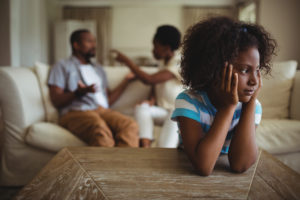 Contrary to popular belief, witnessing arguments between parents may not always be bad for children. According to new research published in the Journal of Family Psychology, it’s how those arguments are handled that matters.
Children who witness constructive arguments between their parents may benefit from the experience. Compared to children whose parents engage in destructive argument patterns, children exposed to constructive disagreements were more emotionally secure.
Arguing in Front of Children: Conflict Style Matters
The study used data from the Building Strong Families Project, which focused on families with low incomes. These families face many stressors that put them at risk for conflict. Researchers analyzed data collected when children in the study were about 3 years old. Both mothers and fathers answered questions about how they managed conflict, as well as how their children reacted to conflicts between the parents.
The study defined constructive conflict as conflict in which couples stayed focused on a single topic and made progress toward a solution. Constructive conflict also meant avoiding anger and resentment and sticking to the present instead of bringing up past disputes.
Researchers identified the following styles of conflict management: relationships in which both partners managed conflict constructively; relationships in which both partners managed conflict destructively; and relationships in which one partner was more destructive than the other.
[fat_widget_right]They found no correlation between conflict management style and parenting style. This suggests parents could behave lovingly with their children even when they were destructive with their partners. But even when parents were loving, children who witnessed destructive conflicts suffered. Compared to those who witnessed constructive conflict, children who had one destructive parent were more likely to feel emotionally insecure.
Why Some Conflict Can Be Beneficial
Researchers noted that levels of emotional insecurity were lowest among children whose parents both engaged in destructive conflict. This may be because the parents were more likely to separate by the time data was collected. The fact that so few parents fit into this group might also have skewed the data.
Though stereotypes suggest low-income families may have more constructive conflicts due to stress, the study found destructive conflict was relatively uncommon. Both partners were destructive in just 3% of families. More than half of couples both consistently argued constructively.
Therapists interested in supporting families, particularly low-income families, should consider that not all conflict is harmful. Instead, helping families discuss disagreements more constructively may benefit families and children.
References:
- Kopystynska, O., Paschall, K. W., Barnett, M. A., & Curran, M. A. (2017). Patterns of interparental conflict, parenting, and children’s emotional insecurity: A person-centered approach. Journal of Family Psychology. doi:10.1037/fam0000343
- Parents: How you manage conflict has an impact on your kids. (2017, September 20). Retrieved from https://www.sciencedaily.com/releases/2017/09/170920131717.htm
 As social media become more deeply entrenched in our lives, couples are experiencing both the positive and negative effects of social engagement on their relationships. Couples utilize the internet and social media extensively for both personal and professional purposes. According to Pew, 72% of married couples or those in committed relationships use social networking sites. Many of these couples maintain their own social media accounts.
A growing concern deals with what represents healthy social media behavior for those in committed relationships. Conflicts occur when couples differ on what is acceptable behavior for social media engagement. Healthy and emotionally intelligent relationships are based on honesty, trust, respect, and commitment. Since the advent of social media, some of these core values are being challenged.
[fat_widget_right]
What makes engaging on social media any different than other behavior in our relationships? A key question for committed couples today might be: Are you demonstrating healthy relationship etiquette during your online interactions? This article will introduce seven rules of etiquette to consider for healthy social media engagement within committed relationships.
1. Practice Shared Accessibility
Unless your profession is bound by codes of confidentiality, you may want to consider opening up for discussion access to computers, smartphones, and other devices. Some may cringe at this concept; however, healthy relationships don’t harbor secrets. Social media and the internet are no exceptions. If your partner wants to see what you are doing on social media or on the web, why wouldn’t you grant them access?
Tip: Have a conversation with your significant other about how you both want to handle accessibility regarding your online behavior.
2. Allow Your Partner to Be Your Friend or Follower on Social Media
Some people have difficulty allowing their partners to follow or friend them on social media. A good point to consider and ask is: What would be the reasons you wouldn’t want your partner to follow or friend you?
Here’s a scenario to contemplate: You and a friend go to lunch. Unbeknownst to you, your partner is having lunch at the same restaurant. Would you choose to say hello to your partner and their friend or would you ignore them? Most people would likely say hello. A good majority might even ask if their partner wanted to join them. In like regard, the social graces of media engagement should be considered.
Tip: If you are in a committed relationship, becoming your partner’s friend or follower is exercising good social etiquette.
3. Post Images and Words That Convey Respect
Far too often, our photos, posts, and words get put online with no real consideration to our partners. If you want to avoid misunderstandings and hurt feelings, exercise caution and wisdom when posting.
Let’s use an example. If you were to take photos with someone else and your significant other doesn’t know the person, it would be considerate to not post flirtatious, suggestive, or inappropriate things. Avoid posting photos that could offend, embarrass, or hurt your partner. The adage “a picture is worth a thousand words” rings true.
Tip: Use discretion and common sense when posting. When in doubt, don’t post.
4. Ask Yourself How You Would Feel If the Posts Were Turned
If you’re not sure what is appropriate, whether posting, chatting online, texting, or some other social media engagement, ask yourself: How you would feel if the posts were turned? Would you feel comfortable, safe, and good about what is being posted or said on social media? Does the post make you feel confident about your relationship or is your blood pressure rising with concern or disbelief? If it is the latter, don’t post. Instead, post something that is uplifting, celebratory, or encouraging of your relationship.
Tip: Always consider how you would feel if your partner were posting the same thing as you.
5. Exercise Accountability
Instead of engaging on social media with people about your relationship problems, try talking to your partner, trusted confidant, or a licensed therapist.
Most people don’t start out wanting to stray in their relationships. In fact, most committed couples are just that—committed. The challenge can come when we begin crossing boundaries in our online and social media interactions. This can be especially problematic when you and your partner are having difficulties. Instead of engaging on social media with people about your relationship problems, try talking to your partner, trusted confidant, or a licensed therapist.
Tip: Stay away from private conversations with people that could potentially lead to either an emotional or physical affair. This isn’t a hard and fast rule, but rather a rule of thumb. Many people have friendships with people they are attracted to. The important consideration is that your significant other knows about the friendship. How do they feel about your relationship with this social media pal? If you don’t know, ask.
6. Consider Sharing Passwords
According to Pew, 67% of internet users in a committed relationship or marriage have shared their passwords to one or more online accounts with a significant other. About 11% of married adults or those in committed relationships share a social media profile. What’s important here is that there is an agreement about why you would want to share passwords (or why you wouldn’t). Some people feel open and comfortable sharing passwords, while others do not. Give it some thought.
Tip: Ask what your significant other thinks about sharing passwords. Is this important?
7. Set Time Limits
Many people spend inordinate amounts of time on social media and the internet. Technology has changed our lives. Certainly, there are many positive effects, including increased capabilities to communicate and enhanced production and performance. The internet gives us endless possibilities to connect with the world at large. We can easily get absorbed in the myriad uses for technology—emails, texts, social media platforms, news sites, and games, to name some. All that time we’re spending online, though, is time we’re not engaged with our partners.
Tip: Consider setting time limits or boundaries around how and when you use social media and technology, especially when sharing time with your partner.
These are not exhaustive suggestions for social media etiquette; however, they may serve as conversation starters. In many cases, just discussing these ideas with a significant other can make a difference. Engaging in conversations around these points can also lead to less confusion and conflict.
Reference:
Lenhart, A., & Duggan, M. (2014). Couples, the internet, and social Media. Retrieved from http://www.pewinternet.org/2014/02/11/couples-the-internet-and-social-media/
 It took FOREVER to finally leave the person in your life with narcissism, only to realize that once you made that fateful decision, your name became mud.
Your ex is not going to let you go without a fight. You’re going to be villainized like you never experienced before the breakup.
All your friends and family will hear how crazy, unbalanced, manipulative, and narcissistic you are. Your ex will be sure to strike first; you may not want to strike at all, but your hand may seem forced.
[fat_widget_right]
The smear campaign of a person with narcissism can be so convincing. Since, throughout the relationship, you mainly kept your mouth shut about the problems you were having, no one really saw this coming. When your ex starts to talk negatively about you, with feelings of hurt and strong conviction, others may be inclined to believe what they hear. They had no idea how “crazy” you were, but now, if they think about it, they do remember the time you did x, y, or z.
Like many people with narcissistic qualities, your ex can be a master manipulator. They can turn on the sad eyes and tears, convincing everyone how dearly you are loved by them and how clueless they are about why it ended so abruptly. Maybe it’s menopause or a midlife crisis on your part. Obviously, something is wrong with you.
The smear campaign may even work with your children. The children have become so accustomed to an abusive relationship that the concept of scapegoating seems normal. Blaming and villainizing others has been modeled as acceptable. They may see nothing abnormal about making you a target of wrath. And since they love the parent with narcissism, they likely want to win their favor, which makes it all the more easy for them to join in the campaign.
The Anatomy of a Smear Campaign
Here’s how a good smear campaign works:
- It generally contains an element of truth. For instance, if the person with narcissism complains you abandoned the relationship, well, this is true. They will likely go on and on about how all they ever wanted was to love you and stay with you, but you, in your evilness, flippantly left the relationship—for no reason other than you don’t care about anything other than yourself and can’t keep your commitments.
- It is done with implication. The person with narcissism may say something like, “I don’t want to sound mean, but certain people, who shall remain nameless, have me worried.” The person with narcissism may imply that, no matter how hard they have tried to help you or deal with your issues, you are irreparable. Some people—you being one of them—are just hopeless. Implication can be a very effective tool. Those listening come to their conclusions about you based on this subtly nefarious input.
- It is also done overtly. Sometimes the person with narcissism just comes right out and says it: you are a no-good lunatic! They will tell story after story about all the awful things you’ve done. They will take every vulnerability you’ve revealed to them and use it now, along with made-up information, to tarnish your reputation and slander your name.
- It is relentless. No one holds a grudge quite like a person with narcissism. They can carry a silent treatment to the grave just as well as they can carry a smear campaign. They are relentless. You may be shocked and dismayed by the battleground you find yourself navigating. Never have you encountered such an enemy.
How to Deal with Narcissistic Attacks
What can you do if you find yourself in this position? Here are some tried-and-true suggestions from those who have gone before you:
- Learn to value yourself above anyone else’s opinion. The only way a smear campaign can work is if you allow it to. If people choose to go along with false accusations about you, then yes, it hurts—but you don’t have to let it destroy you. You can learn to not care what others think about you.
Yes, you do deserve defense, but being caught in the trap of trying to get others (and the person with narcissism) to see your good heart can become a never-ending battle. It is easier to simply tell yourself, “They aren’t going to see,” and move on.
- Remember why you left the relationship in the first place. You were devalued and discarded. You did not leave to continue to be disrespected by others. If others are going to jump on your ex’s narcissistic bandwagon and join their hater campaign, simply walk away and remind yourself that you deserve respect.
- Resist the urge to defend yourself. While this may be easier said than done, it is an important concept. Remember when you were in your relationship? You likely felt defensive often. You probably tried to explain yourself thousands of times, to no avail. You ended up being caught in all kinds of “gotcha” traps. So now that you’re out of the relationship, understand that this person continues to try to control your emotions in similar fashion—causing you to doubt your motives, your good nature, even your sanity. Yes, you do deserve defense, but being caught in the trap of trying to get others (and the person with narcissism) to see your good heart can become a never-ending battle. It is easier to simply tell yourself, “They aren’t going to see,” and move on.
- Make a preemptive strike. In other words, make friends with your “enemies.” Let them get to know you personally. It’s a lot harder to hate someone you know well. If you can befriend the people your ex is targeting for their campaign, you may be able to affect some damage control. If the people being targeted are family (including your children), tell them your side of the story. Let them know you are the target of a smear campaign and to not believe what your ex is saying about you. Inform them your ex is creating “spin” to the point that what they are saying is fiction and a waste of time to believe. Be forthright, convincing, and firm. State your side once, then let it go.
- Spend your time well. No matter what others think or do, you really have no power over them. The only person you have power over is yourself. Regardless of what others do with their thoughts and actions toward or against you, you cannot control them. You may be able to influence them, but that is all. Don’t spend a lot of your precious energy trying to make others see the truth. Spend time with people who don’t judge you—those who value you and help you feel supported and loved. Enjoy your life!
 “It is an absolute human certainty that no one can know his own beauty or perceive a sense of his own worth until it has been reflected back to him in the mirror of another loving, caring human being.” —John Joseph Powell, The Secret of Staying in Love
“Invisible threads are the strongest ties.” —Friedrich Nietzsche
There’s a lot more to trauma than meets the eye—or the general public’s awareness—and it’s deeply related to love and connection.
When many people think of trauma, they tend to think about shock trauma: a single, overwhelming incident that’s larger than our ability to cope. Examples include natural disasters, motor vehicle accidents, sexual assault, animal attacks, and war.
[fat_widget_right]
On the other hand, developmental trauma comes from something that happens improperly during childhood. It is often subtle and may happen over a long period of time. It involves not receiving the necessary supports for the young nervous system to mature and develop in the way it needs to. Some of these supports are material, of course, but many are relational: having to do with the overall quality and nuances of important relationships, especially with parents.
You can think of it like incorrect or missing ingredients in a recipe: The cake is baked, but it hasn’t risen all the way. Of course, a cake is pretty much finished after it comes out of the oven. The good news for us is, unlike the cake, our nervous system is always primed and waiting to recover what it needs. Thanks to neuroplasticity, our growth and development are lifelong.
In developmental trauma, the biggest and most common missing “ingredient,” by far, is that of deeply and consistently feeling love and connection. I’m not talking about watching your parents behave toward you in a responsible and self-sacrificing manner and then deducing they must love you. No, I’m talking about feeling it deep in your bones that you are loved—indeed, treasured. This bodily felt sense allows us to sink into a sense of safety and well-being. It is truly traumatic to not receive this basic ingredient; we need it to develop and maintain a stable sense of ourselves and of safety.
With love being so basic, how is it so many of us end up without enough of it?
It’s been my experience that:
- Some parents deeply love their kids, but they don’t know how to show (embody) it because they never had this from their own parents.
- Some parents love their kids, but their own life circumstances are too chaotic for them to embody it or be consistent about it with their children. This happens frequently when addiction or other chronic conditions strike the family.
- Some parents simply don’t have the capacity to love, usually due to their own developmental traumas.
- Some people don’t have parents who are in their lives.
Long the fodder of songwriters and poets, our desire for love also has a deeply biological basis. It goes beyond simple reproduction (which is accomplished in reptiles without a shred of sentimentality, as far as we can discern). Basically, the physical origin of love lies in our mammalian biology. We are not lizards! Think about our fellow mammals: puppies, rabbits, hamsters. They are warm and cuddly, and many, if not most, of them prefer company.
As Dr. Stephen Porges explains, reptiles have slow metabolisms; that’s why they are cold, and why snakes can go weeks without eating. Mammals have much faster metabolisms, so we need to eat more frequently. This need to extract more nutrients from the environment requires a more complex survival strategy—and that’s why most of us tend to stick together. It is part of our most essential survival wiring to stick together and form deep, satisfying bonds with other humans.
For us humans, being (or feeling) alone is biologically stressful, and may lead to poor health outcomes including earlier death. Consider:
- In prison settings, solitary confinement is often considered to be a form of torture. Too much of it can cause the person to become psychotic.
- The Atlantic has a series of articles about isolation and loneliness. Research indicates people, animals, insects, and even cells experience health issues and die more quickly in isolation.
- Dr. Dean Ornish is a cardiologist in San Francisco. He has a reputation for being able to save heart patients whom other physicians have been unable to help. He considers his patient support groups an essential part of his formula for success.
- Check your experience: Try to recall the last time you were pleasantly touched by another human being in a way that felt both safe and consensual. If you are unable to access such a memory and you’re an animal lover, you could recall cuddling with a dog or a cat. How did this experience make you feel in your body? Many people report a pleasant sense of warmth, full embodiment, and well-being. Such experiences are accompanied by physiological markers of reduced stress, such as lowered heart rate, blood pressure, and cortisol.
Despite the growing body of literature to the contrary, some people convince themselves they’re okay alone or mostly alone. Some even feel they’re better off that way. Others make do with surface-level interactions, but they don’t share any of their private or intimate feelings very often. Men especially tend to be socialized into the idea it’s not okay to share their deeper feelings (this idea tends to cause them great suffering, which they then have to disconnect themselves from).
In my experience, the reason some folks teach themselves to “make do” with relational crumbs is because they have experienced unbearable pain in their attachment relationships. Such experiences create an unsolvable bind: the person must deny themselves this vital “nutrient” in order to survive. Being alone might be lonely, but at least it feels safe. And so they bury the deep need for love and connection, or they find bits of it by caretaking others and then fleeing when the relationship becomes too intense. However, as Jeremy McAllister notes in his brilliant article Ending the Anxious Avoidant Dance, Part 1: Opposing Attachment Styles, “The most avoidant among us, while perhaps giving up on the possibility (or dissociating from it most of the time), still desire connection outside of self.” It’s in there, somewhere, behind those seemingly impenetrable defenses.
This strategy of forging a life mostly or entirely by oneself often requires some kind of addiction in order to stay disconnected from these intolerable feelings. Common examples include addiction to work, sex, various mood-altering substances, and physical exercise. None of these activities are inherently bad, of course; it all depends on how one approaches them.
The corollary to “love is dangerous” is often “and I’m not allowed to have any needs.” This is because “having needs makes me vulnerable” in that needs are potential pathways to even more intolerable pain: the pain of punishment, disappointment, rejection, or of having to revisit and feel the old, buried, unmet needs. McAllister refers to this as “self-sufficient, unsupported life and its accompanying sense of scarcity and fatalism—a frozen mix of giving up and hanging on, not taking chances.” These are defenses against pain that is truly intolerable. Those of us who have ever loved an avoidant person would do well to keep this in mind, regardless of the outcome of the relationship: they are suffering from the ghosts of old, truly intolerable pain.
A dear friend of mine struggled with love and connection throughout his life. He likened his struggle to being alone on a cold beach in wintertime and approaching a campfire: “You’re cold and lonely and you look down the beach, see the light and warmth, hear the conversation and laughter. So you approach, and then you’re in the warmth and the laughter, and it feels wonderful. But then you get too close, or the fire flickers, and the light and the heat burn you. So you retreat back into the cold, where it’s lonely and quiet but at least things are calm and they don’t burn you. But then eventually, the loneliness draws you back in … and you approach again, cautiously … and the whole thing starts all over.”
So, it seems that human love and connection are vitally important but intensely complicated. No one ever said it was easy being human, and I believe deep relational difficulties are a major cause of human struggling. So, then, what on earth do we do about all this?
Life isn’t forever, and a common regret at the end is that of having bypassed some risks that could have really paid off, especially those related to connecting with others. It’s a missing out on what could have been but never was. So why not take that risk?
My thought is, the same trauma that harmed us can also be a window into deep healing. It may feel easier to stay in avoidance, but we have to start taking the risk to be more vulnerable, even if only in baby steps.
At the time of the 1994 Northridge earthquake in Southern California, I was living in West Los Angeles and working as an in-home supported living counselor. Wanting to be of service, I drove carefully around the city to my clients’ houses a few hours later. Aside from the obvious rubble and other physical disruptions, I remember one thing very clearly: people were wide open to each other. It was really beautiful. On the streets, in the grocery stores, people of disparate ethnic groups, gender, age, everything—they were all hugging each other, asking each other if they were okay, telling their earthquake stories. The difference was dramatic: the traumatic event had cracked their usual defenses.
Relational issues can be just as powerful. For example, I’ve long felt grief cracks our hearts wide open. I am never so deeply appreciative of my friends as I am after I’ve lost one.
In my years as a clinician, I have seen that, in a strange and unpredictable way, the very trauma that injured us can also be the doorway into a deeper healing and happier way of life. Now, this requires courage—so much courage. I’ve never seen such bravery as I see in the trauma survivors who come to work with me. Every day, I sit with them and they discover things that feel bad in their experiences, in their bodies. I ask them, “That tightness in your chest, that pit in your stomach: can you sit with that and feel it? Can we sit with it together? Let’s see what it has to say.” This is the stuff many people spend their lives avoiding; yet here these folks are, staring it right in the face. Their systems learn to tolerate the trauma, metabolize it, and then organically move into a much happier state of being.
Life isn’t forever, and a common regret at the end is that of having bypassed some risks that could have really paid off, especially those related to connecting with others. It’s a missing out on what could have been but never was. So why not take that risk? By which I mean, be the change you wish to see in the world. Take the risk of offering kindness where anger wants to jump in. Open your heart to the widest extent you can. If it won’t open, get yourself some kind of support with that: attending therapy, meeting with a spiritual leader, obtaining a volunteer job, a dog, even a garden. We’re all in this together, and life is too short to keep our hearts closed and later regret it.
And in the end, love is worth it.
“I give thanks for life. I honor life.” —Peter Levine, World Trade Center 911 survivor video
“Sometimes reaching out and taking someone’s hand is the beginning of a journey. At other times, it’s allowing another to take yours.” —Vera Nazarian
References:
- Abrams, L. (2013, April 24). How people and animals in isolation die sooner. The Atlantic. Retrieved from https://www.theatlantic.com/health/archive/2013/04/how-people-and-animals-in-isolation-die-sooner/275071
- Heiss, J. (2015, July 2). Solitary confinement isn’t punishment, it’s torture. The Guardian. Retrieved from https://www.theguardian.com/commentisfree/2015/jul/02/solitary-confinement-isnt-punishment-its-torture.
- Helper, S.S. (2017, August 5). So lonely, I could die. Retrieved from https://www.socialworkhelper.com/2017/08/05/so-lonely-i-could-die
- Levine, P. (2002). Sharon: World Trade Center 9/11 survivor video. Summarized at https://traumahealing.org/wp-content/uploads/2017/01/Demo-Descriptions-2016.pdf
- McAllister, J. (2017). Ending the anxious-avoidant dance. Retrieved from https://www.goodtherapy.org/blog/ending-anxious-avoidant-dance-part-1-opposing-attachment-styles-0518174
- Ornish, D. (1995). Dr. Dean Ornish’s program for reversing heart disease: The only system scientifically proven to reverse heart disease without drugs or surgery. New York: Ivy Books.
- Porges, S. (2011). The polyvagal theory. New York: Norton and Company.
- Scheff, W. (2001). Personal communication.
- Trudeau, M. (2010). Human connections start with a friendly touch. Retrieved from http://www.npr.org/templates/story/story.php?storyId=128795325
- Ware, B. (n.d.). Regrets of the dying. Retrieved from http://www.bronnieware.com/blog/regrets-of-the-dying
 Best friends since high school, Linda and May decided to share an apartment after college. They were always there for each other, enjoyed laughs and adventure often, and cheered each other on through the challenges. Recently, however, May seemed to be more stressed than usual. Her mood was low and she was increasingly pessimistic. Linda started to notice she was also feeling more stressed. But whenever Linda left the apartment, she felt fine.
Sometimes it can be difficult to know what to do when someone we care about is going through a challenging time. You might think the advice I’m about to offer is selfish, but if we consider the science behind it, you might discover that the healthiest plan is to take care of yourself first. That involves self-differentiation.
The term self-differentiation was first introduced by Murray Bowen, whose ideas are the basis of family systems therapy. There are two aspects to self-differentiation: intrapsychic differentiation and interpersonal differentiation. Intrapsychic differentiation is when we can tell apart our thoughts from our emotions. In other words, it’s self-awareness. On the other hand, interpersonal differentiation is when we can distinguish our experience from the experience of people we are connected to. Both aspects of self-differentiation are important, as they empower us to be aware of our current state and the influence of different interactions and environments on our state so we can take action.
[fat_widget_right]
What makes the concept of self-differentiation so important? Bowen’s systems therapy was revolutionary in the field of psychology because it was a pioneer in considering individuals’ symptoms as a byproduct of, and interrelated with, the dynamics and structures of their family. We do not exist in isolation, nor are we immune from the interactions and emotions of the people around us. Instead, our emotions and sense of self are shaped by, and a part of, an emotional system created by the family.
Studies on emotion transmission (the “contagious” result of emotions in a system) and emotion convergence (the idea that people living together can become similar emotionally over time) offer support for Bowen’s systems theory. Interestingly, emotion convergence was found not only in romantic relationships, but also in studies of platonic relationships among roommates.
Excitingly, research in the fields of affective neuroscience and interpersonal neurobiology is also finding evidence for the influence people have on each other’s psychophysiological well-being (see Trust Your Longing for Social Engagement. It’s for Your Own Good!). However, while clearly important for our health and wellness, not all forms of social engagement are conducive to our health. In fact, poor forms of social engagement can lead to adverse results.
For instance, the landmark ACE (Adverse Childhood Experiences) study discovered that adverse early childhood experiences—which are largely relational—were correlated with increased risk for many health and psychosocial problems later in life. This includes, but is not limited to, high blood pressure, high cholesterol, liver disease, heart disease, obesity, cancer, anxiety, depression, poor academic achievement, and poor work performance.
Interestingly, emotion transmission research found a greater level of the “contagious” effect from negative emotions than from positive emotions. In other words, if our partners or roommates are feeling upset or down, the degree to which we may start to have similar emotions is greater than when they are feeling happy.
Evidently, we influence each other’s emotional and physiological health. The takeaway from this can be twofold: (1) just as we are wired for co-regulation, the flip side is we are also wired for co-dysregulation; and (2) time apart can allow our system to shift states and find our own homeostasis.
While it may be easy and somewhat straightforward to consider that exposure to a volatile or aggressive environment will activate stress response in your own system, subtler, less overt influences are also being discovered. For instance, one study looked at the physiological impact couples have on each other by measuring their cortisol level at different times of the day. Interestingly, a higher level of association was found in cortisol level between spouses during times of the day they shared the environment (i.e., in the morning and evening) as compared to times of the day when they were apart (i.e., at work).
Evidently, we influence each other’s emotional and physiological health. The takeaway from this can be twofold: (1) just as we are wired for co-regulation, the flip side is we are also wired for co-dysregulation; and (2) time apart can allow our system to shift states and find our own homeostasis.
One way to think of this is that, to be there for your friend, partner, or family during difficult times, it’s important to make sure your system continues to be regulated and resourced. Basically, “in an emergency,” make sure you put your oxygen mask on first before helping others. And make sure to frequently check your own oxygen supply and resources to be able to stay healthy and be giving of the love and support you want to give while getting through the turbulence. To be able to do that, it helps to have some self-differentiation.
Following are some tips and ideas to practice and increase your ability to self-differentiate:
- Journaling: Expressing yourself in writing can be a great way to learn about yourself as well as an avenue for some relief. Pick a time of day that works for you, a cozy corner that you can relax into and start writing. It can also help to read back what you’ve written and notice what emotions and thoughts you’ve expressed.
- Emotions in color: Part of intrapsychic differentiation is distinguishing between different types of emotions. A fun and creative way to develop this awareness is to practice a daily color journal. Using pencils or crayons, choose colors to represent the different emotions you are feeling that day. On a blank piece of paper, make a little legend that shows what emotion each color represents. Then fill the page with colors representing how much of each emotion you are feeling. This is just one way to do it. Have fun coming up with your own version of “emotions in color.”
- Self-care: When you take a moment and check in with yourself to see what you need, you are practicing self-awareness by self-referencing and acknowledging your needs as separate from someone else’s.
- Take a walk: Recognizing the potency of emotion transmission and co-regulation/dysregulation, stepping out of the situation and reorienting to a calmer environment can help you find your bearings and return to the regulated zone. Noticing how different you feel when you are out of the situation also helps reinforce differentiation between yourself and the other. This can be an experience you refer to in your mind so you can maintain that difference when you reengage.
- Five- to 10-minute meditation: As expressed above, intrapsychic differentiation is similar to self-awareness. Mindfulness and meditation practices help develop our ability to notice our inner experiences.
- Enlist a specialist: Sometimes, self-differentiation can be challenging to achieve. Working with a professional can offer you an experienced and skilled ally to support you through this process. Just as working with a personal coach can take your training to the next level, working with a specialist can help deepen your self-differentiation as well.
References:
- About the CDC-Kaiser ACE Study. (n.d.). Retrieved from https://www.cdc.gov/violenceprevention/acestudy/about.html
- Anderson, C., Keltner, D., & John, O. P. (2003). Emotional convergence between people over time. Journal of Personality and Social Psychology, 84(5), 1054.
- Butler, E. A., & Randall, A. K. (2013). Emotional coregulation in close relationships. Emotion Review, 5(2), 202-210.
- Saxbe, D., & Repetti, R. L. (2010). For better or worse? Coregulation of couples’ cortisol levels and mood states. Journal of Personality and Social Psychology, 98(1), 92.
Dear GoodTherapy.org,
I’ve been married for nine years and have two children. This past month, my wife told me that she no longer loves me and she needs space. I was diagnosed with depression a year ago and she says the episode changed me and I am no longer the person she married. She now wants time to “find herself” and to try and “discover her love” again.
[fat_widget_right]
Since letting me know about how she feels, she has become very distant and spends most of her time reading books or giving her attention to friends. She also refuses to talk about the situation; she says that just makes things worse and will push her further away. She says she will chat to me when she is ready.
I’m really not sure what to do. I feel completely unloved and stuck in a situation where I’m with someone who doesn’t want to be with me. While I’m trying to be supportive to her, it also hurts to know I’m with someone who doesn’t love me anymore. I still love her deeply. —Feeling Unloved
Submit Your Own Question to a Therapist
Dear Feeling,
How very painful it must have been to hear your wife say those words to you. It is not unusual for feelings to ebb and flow over the course of a relationship, but hearing a partner say they no longer love you is hurtful. On the one hand, it sounds like your wife wants to “discover” her love again—meaning she has not closed the door on the possibility your love can be rekindled. She may be on a journey of her own and may need time and space to get there. However, it is difficult to rediscover love in a vacuum. It sounds as if you feel as if you are in the dark about what your wife wants or needs and what a reasonable timeline might be, which is a frustrating and scary place to be.
It also sounds as if you feel her withdrawing from you and your relationship, which also can be painful. You may be ready to engage, but she is not. When you experienced your depression, I wonder if you experienced a similar need to withdraw from the relationship. Is there anything in your experience of the past year that can help you understand what she is experiencing?
No matter the path you choose, it will require both of you to engage in conversations about how to move through this process, particularly as parents of young children. The way the two of you communicate and navigate this uncertain time will have an impact on how you are able to parent together.
While she may not be ready to talk about the situation, it is reasonable to ask for some parameters. You can’t rush another’s process, but you can discuss a timeline for check-ins. This doesn’t mean requiring big answers of one another, but there needs to be a way for the two of you to share information so you both can make good decisions. One of those decisions may be to not stay “stuck” in a situation where you feel unloved. Your relationship needs to work for the two of you, and if your needs are not being met, and especially if you are feeling more and more hurt and isolated, it’s fair to consider whether staying in the relationship makes sense for you.
There is much to sort out for each of you individually and both of you together. My recommendation would be for each of you to work with an individual counselor to clarify your needs and what you are able to offer one another, and, if your wife is willing, to work with a couples counselor who can help the two of you decide how to be in relationship together.
I have known couples who needed to take a break from one another in order to find ways to reconnect. For some, that meant separating for a time while working in counseling together. Others found ways to do so without physically separating, but by establishing clear guidelines for how to be together during a transitional time. No matter the path you choose, it will require both of you to engage in conversations about how to move through this process, particularly as parents of young children. The way the two of you communicate and navigate this uncertain time will have an impact on how you are able to parent together. Finding ways to parent effectively together may provide opportunities to reconnect as a team and rediscover one another as partners. Opening lines of communication without pressuring one another to have answers is an important step to take, and one that may need the support of a professional.
Best of luck,