 Editor’s note: The subject matter in this article may be triggering for those who experience body image issues, those coping with an eating disorder, and those who are in recovery.
The internet can be a valuable resource for those seeking education and support for anorexia and bulimia. While it may be a helpful tool for recovery and treatment, there is also a wealth of information online that encourages and supports those with eating disorders who are not seeking recovery, but are instead seeking “thinspiration.”
Thinspiration, also referred to as thinspo, is a play on words used to describe the widespread use of photos of thin models and actresses with captions that glorify eating disorders. These memes are shared with the intention of inspiring people to get thin by engaging in disordered eating habits.
Thinspiration or pro-ana/pro-mia (pro-anorexia, pro-bulimia) blogs are popular among those affected by eating disorders, but this is not a new phenomenon. As far back as 2001, Yahoo removed some 100 websites labeled as pro-ana for violating their policies.
In recent years, social media has provided a breeding ground for bourgeoning thinspiration groups, making it all the more challenging to monitor and remove content. According to Eating Disorders Review, a residential treatment center in Chicago reported 30-50% of its teen patients were using social media to support their eating disorders. This has left many therapists, counselors, and others in the recovery community wondering how dangerous they are and what can be done to protect vulnerable teens.
What Is Thinspiration?
[fat_widget_right]Thinspiration is far more complex than the photos of excessively skinny people posted on social media. The pro-ana/pro-mia community views anorexia and bulimia as lifestyle choices rather than mental health conditions. In their quest to support each other in being thin, they provide tips on how to suppress hunger, hide missed periods, and keep stomach acid from affecting the teeth after vomiting.
One popular thinspo blog distinguishes “anorexics” from “rexies,” stating, “If you identify yourself as anorexic, then this site is not for you.” The blogger goes on to say anorexics want sympathy for their disease whereas rexies are proud of their accomplishments and seek admiration for their lifestyle choice.
“Nothing tastes as good as skinny feels” is perhaps the most popular mantra of the thinspiration community. Some other popular mottos include “Your stomach isn’t grumbling; it’s applauding,” “I beat obesity,” and the misguided use of Bon Iver’s lyric “Come on skinny love, just last the year.”
They’re not just posting pictures of celebrities, either. Teenagers are posting photos of themselves on blogs and social media platforms, showcasing the different phases of anorexia and bulimia. Often, the highly esteemed photos are of people in the late stages of illness who are hollow-cheeked and gaunt. The “likes” and “thumbs-up” received on social media can give the person positive reinforcement for disordered eating.
Why Thinspiration Is Dangerous
“Thinspo is incredibly dangerous and triggering, especially for those who already have a negative body image,” said Chapin Faulconer, LPC. “I find that my adolescent female clients with eating disorders often look at thinspo and aspire to look like the images they see online. Thinspo not only perpetuates the idea that eating disorders and extreme thinness are acceptable, but it goes one step further and promotes the belief that eating disorders are lifestyle choices and not mental disorders which can result in death, particularly in the case of anorexia.”
Thinspiration websites are especially dangerous for those struggling with disordered eating, particularly adolescents and teenagers. These people are already experiencing self-esteem issues and typically feel isolated from their friends and family. They may turn to the thinspiration community for support and a sense of belonging. While others are telling them they’re sick and need to seek treatment, thinspiration validates their experience and tells them they’re making a lifestyle choice that takes self-control, willpower, and dedication.
Researchers and mental health experts recognize thinspiration as a serious social problem. For the millions of people with anorexia and bulimia, thinspiration can be life-threatening.The pro-ana/pro-mia community has become akin to a sorority for many young girls, who may enjoy the feeling of being involved in a secret society. Some of them even refer to themselves as “the elite” and use mottos such as “girl power” to encourage one another. Even though the community is heavily geared toward females, males are also susceptible to disordered eating. Statistics show about 10% to 15% of people with anorexia or bulimia are male, and they may be less likely to seek treatment because of the incorrect perception that eating disorders only affect females.
One of the websites went as far as to create a pro-ana religion, creed, and psalm, providing readers with a set of rules referred to as “The Thin Commandments.” Some of the edicts included: “Being thin is more important than being healthy,” “Thou shall not eat fattening food without punishing oneself afterwards,” and “Being thin and not eating are signs of true willpower and success.”
Researchers and mental health experts recognize thinspiration as a serious social problem. For the millions of people with anorexia and bulimia, thinspiration can be life-threatening.
Eating disorders have the highest mortality rate of any mental health condition. More than 20% of people diagnosed with anorexia will die from complications related to the condition. The other 80% may experience a variety of health problems as a result of their disordered eating including shrinkage of the heart muscle, irregular heartbeat, muscle atrophy, kidney stones, kidney failure, and osteoporosis.
In addition to the physical effects, anorexia and bulimia can negatively impact a person’s home, personal, social, and professional life. The emotional effects can lead to other mental health conditions. Nearly 50% of people with eating disorders meet the criteria for a depression diagnosis.
How Can We Help?
The National Eating Disorder Association has worked with social media platforms to take this content down. Tumblr, Pinterest, Instagram, and other social media platforms have implemented policies to help prevent the sharing of thinspo-related images and blogs. Popular thinspiration hashtags have been blocked from search features, but many users have figured out ways to get around the ban.
Because censorship seems to be ineffective, studies suggest a zero tolerance policy may not be the best approach. After studying 33 pro-anorexia bloggers, researchers from Indiana University concluded these communities had originally intended to provide support and could be prolonging lives until people with eating disorders were ready to seek recovery. James Watson, administrator of PrettyThin, formerly the world’s largest community for individuals with eating disorders until it shut down in 2014, saw the community as a safe haven for individuals to talk openly about their issues.
The problem isn’t unique to eating disorders. Information and websites promoting other forms of self-harm also exist, including pro-cutting websites, pro-suicide websites, and sites that support drug abuse. According to researchers, when zero tolerance doesn’t work, harm reduction may be a better strategy.
Furthermore, if these websites are providing a sense of community for people, what may be needed are more alternative communities that promote a healthy self-image and relationship to one’s body while still providing a safe space for people to openly express their concerns without feeling judged or labeled.
According to a report by Common Sense Media, teenagers spend an average of nine hours a day consuming some type of media. Studies show more media exposure is directly linked to a higher risk of mental health issues and lower self-esteem.
Perhaps these are the most important questions: What messages are sent out to people about body image and self-acceptance, and how do we shift those messages so media exposure can increase self-esteem rather than deplete it?
Where to Seek Support for Disordered Eating
If you or someone you know is struggling with an eating disorder, it may be beneficial to seek the guidance of a mental health professional. The following resources may also be of help.
National Eating Disorders (NEDA)
Helpline: 1-800-931-2237
Website: www.nationaleatingdisorders.org
National Association of Anorexia Nervosa and Associated Disorders (ANAD)
Helpline: 630-577-1330
Website: www.anad.org
Support Groups by State: http://www.anad.org/eating-disorders-get-help/eating-disorders-support-groups/
Eating Disorder Hope
Helpline: 1-888-206-1175
Website: www.eatingdisorderhope.com
References:
- Eating Disorders Fact Sheet. Eating Disorder Coalition. Retrieved from http://www.eatingdisorderscoalition.org/inner_template/facts_and_info/facts-about-eating-disorders.html
- Eating Disorder Statistics. Retrieved from http://www.anad.org/get-information/about-eating-disorders/eating-disorders-statistics/
- Grayson-Mathis, C.E. (2005). Pro-anorexia websites: The thin web line. Are these sites fueling an epidemic? Retrieved from http://www.webmd.com/mental-health/eating-disorders/anorexia-nervosa/features/pro-anorexia-web-sites-thin-web-line
- Greenfield, R. (2012, April 21). To ban or not to ban? How do you solve the problem of thinspo? The Wire. Retrieved from http://www.thewire.com/technology/2012/08/ban-or-not-ban-how-do-you-solve-problem-thinspo/51436/
- Gregoire, C. (2012, February 9). The hunger blogs: A secret world of teenage thinspiration. Huffington Post. Retrieved from http://www.huffingtonpost.com/2012/02/08/thinspiration-blogs_n_1264459.html
- IU researchers interview pro-anorexic bloggers for groundbreaking new study. (2012, August 20). IU News Room. Retrieved from http://newsinfo.iu.edu/news/page/normal/22967.html
- Totally in control: The rise of pro-ana/pro-mia websites. Social Issues Research Centre (SIRC). Retrieved from http://www.sirc.org/articles/totally_in_control2.shtml
- Wallace, K. (2015, November 3). Teens spend a ‘mind-boggling’ 9 hours a day using media, report says. Retrieved from http://www.cnn.com/2015/11/03/health/teens-tweens-media-screen-use-report/
- Wilson, J. & Hernando, H. (2015, February 28). ‘Thinspiration selfies almost killed me’: Anorexia survivor’s warning as Mirror investigation uncovers shocking secret world on Instagram. Retrieved from http://www.mirror.co.uk/news/real-life-stories/thinspiration-selfies-killed-me-anorexia-5245488
 If you’ve watched television in the last few years, you’ve likely come across a reality show about hoarding. Rather than truly educating the public on the condition, reality TV tends to dramatize the issue, spread misinformation, and increase stigma.
Hoarding reality shows can be misleading, as they often showcase only the most extreme cases of hoarding. Hoarding is a broad term that covers a vast range of circumstances. For example, a person with a hoarding problem may have difficulty getting rid of possessions but still have far less clutter than the individuals seen on TV.
An estimated 15 million people in the United States experience hoarding issues. Hoarding is a serious condition that can have devastating physical, emotional, social, financial, and legal effects on the individual and surrounding loved ones.
It’s time to bust the stigma and tell the truth. Here are seven common myths about hoarding.
1. Hoarding Is Just Another Name for OCD
Hoarding is a complex mental condition characterized by collecting too many items, an inability to let go of possessions, and trouble with organization. Until recently, hoarding was considered by mental health professionals as a form of obsessive compulsion (OCD).
While hoarding seems to be related to OCD, a vast percentage of individuals with hoarding problems do not exhibit other OCD symptoms. Even though some experts consider it a subtype of OCD, typical treatment plans have not been shown to be effective at treating the symptoms of hoarding.
2. Hoarding Is the Same Thing as Being Disorganized
[fat_widget_right]While being disorganized can be a problem itself, it is not as severe as hoarding. The major difference between someone who is hoarding and someone who is messy is hoarding can make it difficult for the person to function. People may accumulate so many items they can no longer sit on the sofa or use the stove. A person who hoards is often unable to get rid of such items even when they are no longer useful or they interfere with daily living. A messy person is usually able to let things go when necessary.
Hoarding is far more serious than being disorganized. Compulsive hoarding can affect a person’s ability to maintain relationships, keep a job, and take care of personal and household needs.
3. Cleaning Will Immediately Solve the Problem
Simply attempting to clean up a cluttered space without addressing the underlying issue typically fails to solve the problem. People may spend hours of time and thousands of dollars to clean out a space only to have the person relapse and start accumulating more stuff in just a few months.
Those whose homes are cleaned out without their permission also may experience extreme distress, complicating the issue. To completely stop hoarding, a holistic treatment plan may be more effective.
4. Hoarders Are Lazy, Dirty, and Unmotivated
Stereotyping people with a hoarding condition as dirty or lazy is an unfair stigma. People who hoard may have cognitive deficits in the brain, impairing their ability to make decisions as well as to keep things organized. Studies have also shown there may be a genetic component to hoarding problems.
Rather than being stigmatized, what people with a hoarding condition really need from others is compassion, empathy, and support.Assuming a person who hoards is also dirty adds to the stigma surrounding a hoarding condition. The term hoarding most often refers to the accumulation of objects and clutter rather than dirt. It is common for a person who hoards to keep a clean house despite the clutter.
Hoarding is also common after a major loss when a person is unable to cope with grief in a healthy way. People who hoard are not lazy; they are just less capable than the average person at carrying out tasks and making decisions. Rather than being stigmatized, what people with a hoarding condition really need from others is compassion, empathy, and support.
5. Hoarders Are Collectors
Hoarding and collecting are two different things. Collectors tend to keep their items organized and proudly on display for others to see. People who hoard will rarely display their possessions, usually keeping their belongings in complete disarray. They often feel embarrassment and shame when others see their mess.
Hoarding also differs from collecting because it often prevents normal usage of the home. For example, a person’s kitchen appliances may no longer be accessible as a result of clutter.
6. Hoarders Can’t Stop Hoarding
Though it can be difficult for an affected person to stop hoarding, compulsive hoarding can be treated. Medication has not been shown to be effective against hoarding, though it may help alleviate some of the symptoms associated with it such as depression and anxiety.
Long-term therapy can effectively treat hoarding when combined with adequate education and support. Hoarding generally requires a holistic and comprehensive treatment program that addresses all aspects of a person’s life.
7. Hoarding Can Be Treated by a Single Medical Professional
Hoarding is a multi-faceted issue and typically requires a team of professionals to effectively treat the problem. Some professionals that may be involved in the treatment process include psychiatrists, therapists, counselors, professional organizers, building inspectors, and landlords, among others. These teams are often referred to as task forces, and approximately 75 cities currently have them in place to help those in the community who are struggling with hoarding.
If you or a loved one are struggling with hoarding problems, it may be helpful to talk to a therapist or other mental health professional who specializes in hoarding.
References:
- Baker, J., Bergren, M. G., Frost, J., Sanchez, L., Andreasen, T., & Bratiotis, C. (2014). Beyond the Sensationalism: Professional Responses to Hoarding Disorder in the Omaha Community. Retrieved from http://www.unomaha.edu/news/2014/04/hoardingwhitepaper.pdf
- Bratiotis, C., Otte, S., et. al. (2014) Hoarding Fact Sheet. International OCD Foundation. Retrieved from https://iocdf.org/wp-content/uploads/2014/10/Hoarding-Fact-Sheet.pdf
- Dailey, S. G. (2013, February) Hoarding: A Complex Issue Needing Community Support. Age Wise: King County. Retrieved from http://www.agewisekingcounty.org/en/125/1/449/Hoarding-A-Complex-Issue-Needing-Community-Support.htm
- Samuels, J., Shugart, Y., et al. (2007, March). Significant linkage to compulsive hoarding on chromosome 14 in families with obsessive-compulsive disorder: results from the OCD Collaborative Genetics Study. American Journal of Psychiatry, 164(3): 493-9. Retrieved from http://www.ncbi.nlm.nih.gov/pubmed/17329475
- Treneva, R. (2005, August 3). Hoarding: Myths and Misconceptions. Insight Bulletin. Retrieved from http://insightbulletin.com/hoarding-myths-and-misconceptions/
- Webley, K. (2010, April 26). Hoarding: How Collecting Stuff Can Destroy Your Life. Retrieved from http://content.time.com/time/nation/article/0,8599,1984444,00.html
 It is love or is it lust? Many have asked this question at some point, struggling to make a distinction between the two. According to recent science, the answer lies in the eyes.
“The eyes are the windows to the soul” is a popular phrase, and science has revealed the truth of this poetic line. Researchers have found eye movement alone can distinguish the feelings of love from lust.
Love or Lust: The Eyes Tell All
During a study by University of Chicago researchers, participants’ eye patterns were monitored while looking at a stranger’s photo. According to the results, a person who sees someone as a potential romantic partner would look at the person’s face, whereas a person who is feeling lust or sexual desire is more likely to look at the person’s body.
Other scientific studies have shown the brain regions involved in feelings of love are different from those involved in feelings of lust. Eye movement data proved different eye movements occur when a person views a photo of romantic love, such as a picture of a couple holding hands, versus a photo of an attractive person.
The Neurophysiology of Love and Lust
[fat_widget_right]Though love and lust are interrelated, they are coordinated by different emotional systems and neural processes in the brain. Lust is ruled by the sex drive, which is processed in the endocrine and reproductive system, driven by testosterone and estrogen.
Physical attraction plays a role in feelings of lust and falling in love. Attraction is driven by the reproductive instinct and is subject to hormonal reactions as well as the release of neurotransmitters such as dopamine and norepinephrine.
After someone has fallen in passionate love, the initial excitement and passion may fade over time as the dopamine levels associated with novelty begin to level out. At this point, the love may grow into companionate love. This type of love is associated with bonding hormones, such as oxytocin and vasopressin.
Distinguishing Between Lust and Love
Although science indicates love and lust are distinct even on a physiological and neurological level, it may not make distinguishing between the two any easier for those under the charms of lust and romantic love. Differentiating between the two can be a challenge, as the feelings often occur simultaneously and both have the ability to cloud judgment. So how can you tell the difference?
Lust is purely physical attraction. It is an altered state of consciousness biologically driven by the instinct to procreate. It can be incredibly powerful and can at times surpass logic and reason. Lust is initiated by pheromones, chemicals secreted in sweat that reveal information about genetics and influence behavior. When you experience physical attraction and sexual desire for another, it is the result of bodily awareness of a good genetic match for creating offspring. Lust knows nothing about long-term compatibility or companionship.
Love is also an attraction, but it goes beyond a physiological impulse. Love is not immediate; rather, it grows over time. When you meet someone you fall in love with, it may start out as lust and grow into infatuation, which is what we commonly associate with romantic love.
Love is also an attraction, but it goes beyond a physiological impulse. Love is not immediate, but rather grows over time.When you become infatuated with another, you may begin to see through rose-colored glasses, putting the person on a pedestal and ignoring any flaws. Infatuation can become obsessive, leading someone to experience the “can’t eat, can’t sleep” phenomenon often associated with falling in love.
Scientific studies have shown the brain in love looks a lot like the brain on cocaine, with high dopamine levels and lowered serotonin. Eventually, the exciting feelings fade as the novelty of the relationship wears off and you are no longer under the lover’s haze. It is often at this stage when people begin to see their partner clearly without projections, and flaws start to become apparent. Lovers either realize they are not compatible and part shortly after infatuation fades or they commit to the relationship and develop companionate love for one another.
Lust and infatuation require little commitment or effort, whereas love generally requires a high degree of both. A successful loving relationship requires honesty, communication, compassion, respect, and trust. Love is most often built on a strong mutual foundation. Love usually involves personal sacrifice. When you’re in love, you shift from “me-thinking” to “we-thinking.” It is the willingness to consider another’s well-being in the same way you would your own.
References:
- Blair, L. (2010, July 14). Mistaking lust for love. The Guardian. Retrieved from http://www.theguardian.com/lifeandstyle/2010/jul/14/mistaking-lust-for-love
- Fisher, H. E. (2000, January 1). Brains do it: Lust, Attraction, and Attachment. The Dana Foundation. Retrieved from http://www.dana.org/Cerebrum/Default.aspx?id=39351
- Ingmire, J. (2014, July 17). Eye movements reveal difference between love and lust. UChicago News. Retrieved from http://news.uchicago.edu/article/2014/07/17/eye-movements-reveal-difference-between-love-and-lust
- Lahat, I. (2014, July 9). The Brain Looks the Same When We’re in Love or High on Cocaine. Business Insider. Retrieved from http://www.businessinsider.com/the-brain-looks-the-same-high-on-love-or-cocaine-2014-7
 For many, anxiety is the enemy. It can make you feel nervous and afraid and can prevent you from taking actions that will move you forward in life. People often look at anxiety as something they need to get rid of or prevent, but what if that isn’t the case? Would your relationship to anxiety change if you could look at is as a friend rather than an enemy?
Anxiety itself may not be the problem; not knowing what to do with it may be the main issue. Anxiety is the body’s natural response to stress. If you can accept that some anxiety is inevitable, you may be able to learn how to work with it instead of against it.
Here are seven creative ways to turn anxiety into productivity.
1. Use the Adrenaline
Anxiety gives you adrenaline. Stimulants such as caffeine and nicotine can cause physical symptoms similar to anxiety symptoms in the body by increasing heart rate and constricting the blood vessels. Coffee is a popular productivity booster for this reason. If you’re feeling anxious about an upcoming project, speech, or other task, try utilizing the extra energy to help improve performance and increase productivity.
Many sports psychologists and coaches generally want their athletes to be a little anxious rather than relaxed right before a game. Researchers say there is a “sweet spot”—a moderate amount of anxiety that actually helps people perform better by keeping them on their toes. Studies have shown learning increases when stress hormones are slightly elevated. The Yerkes-Dodson curve—originally developed by Harvard psychologists Robert Yerkes and John Dodson in 1908—illustrates how arousal enhances performance up to a certain point, but too much anxiety may hinder performance.
2. Reframe Your Anxiety
Anxiety is not always a negative thing. Telling yourself anxiety is bad and trying to avoid it may end up making the problem worse. Rather than saying “I’m so nervous,” try saying “I’m so excited” instead.
Anxiety is the body’s natural response to stress. If you can accept that some anxiety is inevitable, you may be able to learn how to work with it instead of against it.A research study conducted at Harvard Business School found saying “I am excited” out loud can improve performance. In order to increase anxiety levels during the study, Dr. Alison Woods Brooks told students their persuasive speeches would be recorded. Before delivering the speech, students were instructed to say “I am excited” or “I am calm” out loud to themselves.
Those who said “I am excited” gave longer speeches that were more competent, relaxed, and persuasive than those who said “I am calm.”
Because anxiety and excitement are both emotional states characterized by high arousal, Dr. Woods suggests it may be easier to reframe symptoms of anxiety as excitement rather than trying to be calm. When you’re feeling anxious, you often focus on potential threats. In these situations, it is more productive to try to reframe the situation and focus on potential opportunities instead of threats.
3. Accept that Anxiety May Be Inevitable
Some situations or tasks may always give you some amount of anxiety. Rather than trying to avoid these tasks or diminish the emotion, it may be best just to accept the feeling as part of the experience.
The more you view anxiety as routine and normal, the less power it can have over you. Even successful people experience fear. They just choose to find a way to persevere in spite of it. Try to remember that anxiety and fear are natural reactions. If you’re able to, choose to focus on the task in front of you rather than the fear related to it.
4. Channel the Anxiety into Motivation
[fat_widget_anxiety_left]Find your anxiety sweet spot and channel it into motivation. Research shows most people have an anxiety sweet spot where they have enough anxiety to feel alert, but not enough to feel debilitated. In this state, anxiety can be an excellent motivator. For example, if you’re worried about theft, you might lock your doors. If you’re concerned about your health, you might visit a doctor. Whatever the worry, the surrounding anxiety can often push you to do something about it.
Anxiety often results from some sort of apprehension about the future. Perhaps you’re worrying about the outcome of something you really care about. Remind yourself why it matters to you in the first place, and let that drive you forward. Anxiety has the ability to make you more alert, focused, and productive, and you have the ability to use that to your advantage.
5. Distinguish Productive Worry from Unproductive Worry
Anxiety can be either productive or unproductive. Unproductive anxiety usually amounts to worrying about things that are out of your control and may lead to an anxiety attack. If you can’t do anything to change the situation, you might be wasting your time and energy by worrying about it.
On the contrary, productive anxiety generally amounts to worry about things you do have the power to change. If you are worried about a presentation you have to give to your boss, you can acknowledge your anxiety and take the steps necessary to help you be best prepared for the presentation.
6. Decatastrophize Your Anxiety
Anxiety often stems from fear. Try to decatastrophize your anxiety by asking yourself what it is you are truly afraid of.
What is the worst possible outcome, and what are the odds of that actually occurring? When you realize even the worst outcome isn’t as bad as it may seem in your head, your anxiety may start to decrease.
7. Practice Centering
Centering is a pre-performance technique originally designed by sports psychologist Dr. Robert Nideffer in the 1970s. Centering is a 7-step process that can help you quiet the mind, focus, and gain poise.
- Step 1: Choose a focal point. Select a focal point that is below eye level to minimize distractions.
- Step 2: Set a clear intention. Your intention is your goal. What task are you planning on doing in spite of your anxiety? Whether it is a performance, work task, or creative project, clearly state your intention in positive language.
- Step 3: Breathe mindfully. Use diaphragmatic breathing to calm the body and deactivate the body’s fight or flight response.
- Step 4: Scan and release tension. When you engage in more negative thinking, the muscles in the body have a tendency to tighten. Scan the body slowly for tension, relaxing the muscles one by one.
- Step 5: Find your center. In many Eastern philosophies and traditions, it is believed the body has a specific location where the center of a person’s energy rests. By finding your center, you may begin to feel more grounded, calm, and self-assured.
- Step 6: Visualize success. Visualize yourself accomplishing your intended goal. Activate the right brain by imagining what it would look like, feel like, and smell like to achieve your desired results.
- Step 7: Direct your energy appropriately. By the time you reach the last step, you are more likely to be calm enough to channel the energy appropriately. Rather than trying to rid yourself of the anxiety completely, you can use it as inspiration.
Anxiety can be both normal and healthy in small amounts. If it becomes debilitating and is negatively impacting your life, a qualified therapist may be able to help you learn how to deal with anxiety.
References:
- Beck, M. (2012, June 18). Anxiety can bring out the best: researchers prescribe just enough stress to ace life’s tests; too little is lazy. Wall Street Journal. Retrieved from http://www.wsj.com/articles/SB10001424052702303836404577474451463041994
- Kageyama, N. How to make performance anxiety an asset instead of a liability. Bulletproof Musician. Retrieved from http://www.bulletproofmusician.com/how-to-make-performance-anxiety-an-asset-instead-of-a-liability/
- MacGill, M. (2013, December 28). ‘Work with anxiety’ rather than seek calm to improve performance. Medical News Today. Retrieved from http://www.medicalnewstoday.com/articles/270641.php
- Nisen, M. (2013, February 19). How productive people turn anxiety and fear into an advantage. Business Insider. Retrieved from http://www.businessinsider.com/how-productive-people-turn-anxiety-and-fear-into-an-advantage-2013-2
- Porter, J. (2014, October 21). How to turn your anxiety into a productivity booster. Fast Company. Retrieved from http://www.fastcompany.com/3037338/how-to-be-a-success-at-everything/how-to-turn-your-anxiety-into-a-productivity-booster
 Some people differentiate “counseling” from “therapy.” I have practiced in Washington and Texas and have found no clear differentiation in state law, the language of credentialing regulation, or the definitions provided by major national accrediting bodies for the respective professional licenses.
I am currently in Washington state, so I speak from a perspective within these borders. Here, there is no legal protection for the use of the terms “counselor”/”counseling” or “therapist”/”therapy” in and of themselves. Meanwhile, terms such as “social work”/”social worker” (see RCW 18.320), “psychologist,” and related titles and terms are protected by law (see RCW 18.83.020). Because of this, no explicit distinction has been made in law or regulation, that I am aware of, distinguishing “counseling” or “therapy.”
Rather, the scope of practice for particular credentials is deferred by states to the national bodies that accredit graduate counseling programs and provide guidance for standards of professional practice for mental health professionals with specific credentials (LCSW, LPC, LMHC, LMFT, LCPC, etc.). Examples of these accrediting entities include CACREP, COAMFTE, and the APA. Examples of organizations providing guidance for standards of professional practice include NBCC, NASW, AAMFT, AMHCA, and, again, the APA.
[fat_widget_right]
Beyond that, states treat these varying master’s-level clinical practitioners with legal parity, or equivalence, in scope of practice and legal protection.
In Washington state’s new credentialing law, passed in 2008 and rolled out in 2009, “psychotherapist” and “psychotherapy” were more clearly defined, but let’s be clear that the kind of regulatory accountability provided by these defined uses in the law does not apply to the terms “therapy” or “therapists.” I should note that the law also restricts the use of the term “private practice counseling” to sole use by two new categories of unlicensed providers, certified advisors (CA) and certified counselors (CC) (see RCW 18.19.020 and WAC 246-810-010). Can you imagine a law reserving such a term for unlicensed practitioners and placing licensed practitioners in legal limbo for using it?
Further, that 2009 law in and of itself did not explicitly regulate beyond providing new credentialing categories. It did result in executive recommendations in 2011 for scopes of practice, disclosure statements to be provided to people receiving services, and continuing education standards, but these recommendations still have not been translated into regulation (or even a great deal of clarity).
For instance, agency-affiliated counselors (AAC) are credentialed to provide counseling (see RCW 18.19, WAC 246-810), but Washington State Department of Health regulation does not require any academic degree as a minimum educational requirement for this particular credential, so the term “counseling” remains loosely defined and diluted (though not nearly as much as it was in the era of the state’s “registered counselor” credential).
And, whereas some regulatory bodies and insurance companies associate “counseling” with such services as skill-building, coaching, and varying forms of behavioral modification, all I have seen in the language of regulatory code and most insurance coding language are terms such as “skills training,” “psychoeducation,” “rehabilitation,” and the like, and a steering clear of the word “counseling” by itself whenever possible, due to its multitude of uses rendering it nearly descriptively meaningless.
One might think it best, then, to limit the words “counseling” and “counselor” to referring to non-degreed or bachelor’s-level mental health practitioners. Keep in mind, though, that the nature and scope of clinical practice for those credentialed as LPCs (licensed professional counselors), LMHCs (licensed mental health counselors), and LCPCs (licensed clinical professional counselors) has legal parity with master’s-level professions that prefer the terms “therapy” and “therapist” (such as LMFTs, or licensed marriage and family therapists). So while I think it’s fair to say the use of the term “therapy” is more limited, I’d bet LPC, LMHC, and LCPC boards would contend it is unfair to elevate it to a higher educational or professional plane in usage, which may result in viewing such clinicians as less qualified or as providing a less specialized treatment service than, for instance, LMFTs.
While it’s true that there are not, similarly, examples of bachelor’s-level clinicians who are credentialed under the terms “therapy” or “therapist,” it seems to me the terms are used so interchangeably as to be nearly synonymous from a regulatory perspective. Ultimately, I think calling a treatment service “psychotherapy” or “therapy” versus “counseling” has less to do with the methodology used or, in most cases, diagnoses rendered and more to do with permissions related to an as-yet-insufficiently defined scope of practice.
The terms “therapist” and “counselor” are often used interchangeably but are also sometimes used to highlight level of education or credentialing. A credentialed therapist may have had more extensive training and be more broadly credentialed. A counselor may not be credentialed, and may have a bachelor’s degree but no master’s. Of course, a counselor may indeed have a graduate degree and independent license yet simply prefer the words “counselor” and “counseling” to “therapist” and “therapy.”
For these reasons, I do not think there is a necessary distinction between “counseling” and “therapy” unless clear direction is provided for their usage by a local governing entity or other regulatory body that makes it so. Still, some are adamant that “therapy” is the realm of clinicians with a master’s-level education and above, while “counseling” is the realm of clinicians with a bachelor’s or below.
In many places, authorization to diagnose sets apart master’s- and doctoral-level clinicians from bachelor’s-level clinicians, although within the community mental health system in Washington, a master’s degree alone is insufficient for diagnosis. According to Washington state’s Access to Care Standards (2015) for Medicaid enrollees, one must also meet the state’s legal definition of MHP, or mental health professional (WAC 388-865-0150). Nearly every linguistic distinction and practice limitation has been forged into regulation in order to provide consumer protections requiring that practitioners practice reasonably within their scope of education and training.
The terms “therapist” and “counselor” are often used interchangeably but are also sometimes used to highlight level of education or credentialing. A credentialed therapist may have had more extensive training and be more broadly credentialed. A counselor may not be credentialed, and may have a bachelor’s degree but no master’s. Of course, a counselor may indeed have a graduate degree and independent license yet simply prefer the words “counselor” and “counseling” to “therapist” and “therapy.”
If you have any questions about a practitioner’s level of education, credentials, or experience, ask them. When I was in private practice, I periodically received phone calls to consult about the nature of the services I provided as well as to inquire about my background and qualifications. I was grateful for these opportunities to provide people with helpful information ensuring that if they did choose to see me, for counseling or for therapy, they would do so with eyes wide open.
A few questions: Do you differentiate between “counseling” and “therapy”? Does your state? Especially if you’re a master’s-level practitioner, do you value one term over the other? Please share your thoughts below.
References:
- Revised Code of Washington 18.19.
- Revised Code of Washington 18.83.
- Revised Code of Washington 18.320.
- Second Substitute House Bill 2674, 2008. 60th Legislature, State of Washington.
- State of Washington (January 2015, revised September 2015). State of Washington access to care standards for regional support networks/behavioral health organizations.
- Washington Administrative Code 246-810.
- Washington Administrative Code 388-865.
 Most people drawn to a career in social work have a desire to help those in need. Social workers serve the community by helping people solve and cope with problems in daily life. Clinical social workers may also diagnose and treat mental health conditions, behavioral problems, and emotional issues, similar to therapists and counselors.
Just as social workers can take on many different roles in their field, there is no single route to a career as a social worker. If you are considering a career in social work, be sure to educate yourself in order to determine the best option for you.
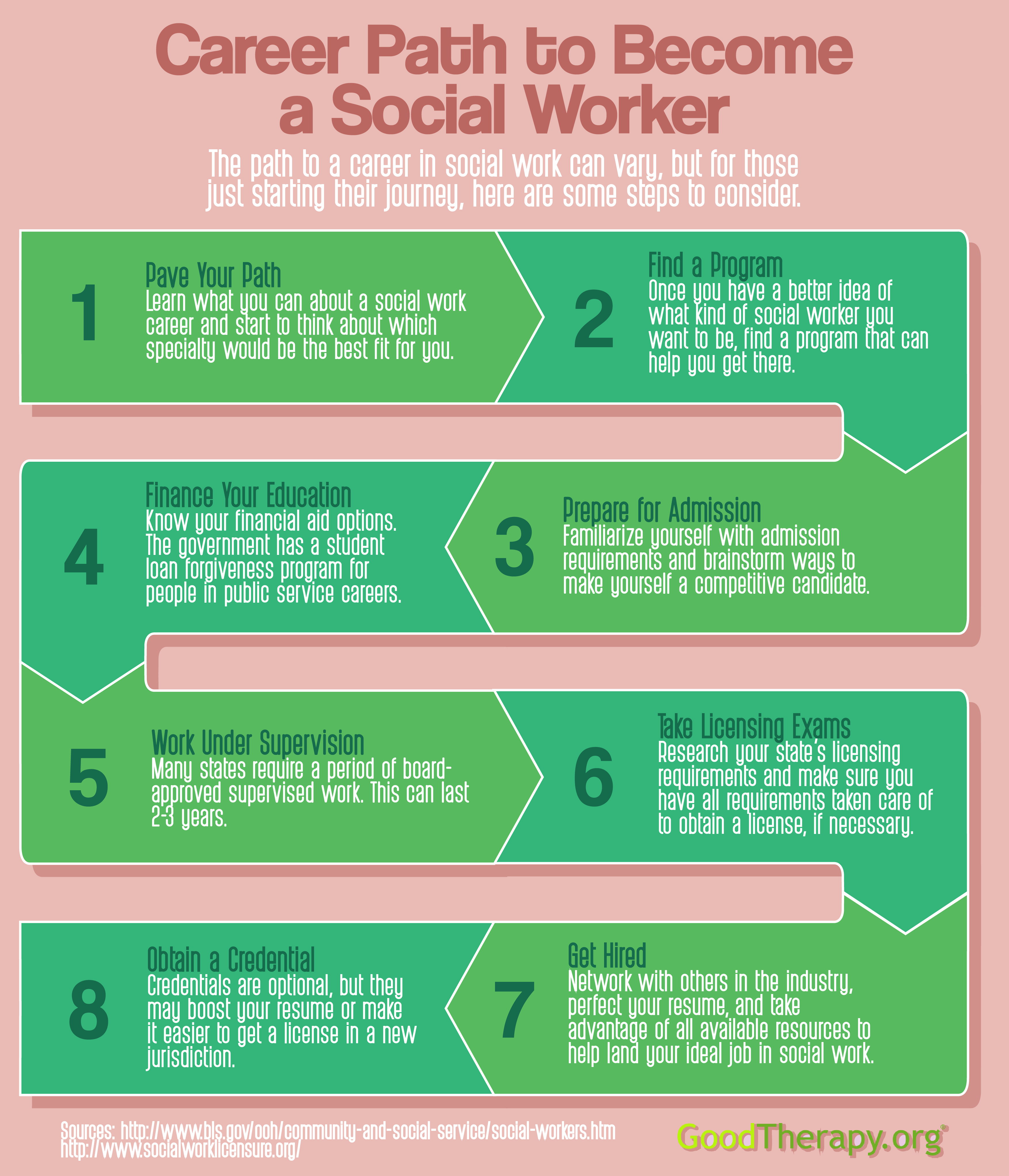
1. Pave Your Path in Social Work
If you are considering becoming a social worker, you can start by learning everything you can about the field. Some ways to learn more about what social workers do include researching online, going to a local library, speaking with a college recruiter, or shadowing a licensed social worker for a day.
Next, examine your aptitude for the career. An effective social worker will typically have high levels of compassion and empathy, strong interpersonal and listening skills, well-developed organizational and problem-solving skills, and good time management.
Although it is not necessary to decide on an area of interest immediately, it may help to research different specialties within social work. Some of these include:An effective social worker will typically have high levels of compassion and empathy, strong interpersonal and listening skills, well-developed organizational and problem-solving skills, and good time management.
- Child and family social workers
- Clinical social workers
- School social workers
- Healthcare social workers
- Geriatric social workers
- Hospice and palliative care social workers
- Medical social workers
- Mental health and substance abuse social workers
2. Find the Right Program for You
When choosing a social work program, it may be helpful to envision a path for your career. Do you want to work in a hospital, public school, or at a non-profit? Do you see yourself more in advocacy or policy change, mental health care, private practice, or the military?
The right program for you will depend upon your chosen path. For example, if you’re interested in clinical work, a program with a clinical concentration may be the best fit.
Most entry-level positions will require a bachelor’s degree in social work, though some will accept a related field such as psychology or sociology. To work in the clinical field, a master’s degree is necessary.
In some states, baccalaureate social workers can obtain licensure, but most require a master’s degree. In addition to licensing requirements, there are other advantages of pursuing an advanced social work degree. Master’s level Social Workers (MSWs) often have higher salaries and more career opportunities.
 Infographic by Hannah Johnson
3. Prepare for Admission
Once you have decided on a program and a school, fully understanding and adhering to the admission requirements can make you a competitive candidate. You will need letters of recommendation from people who have known you for at least six months and can easily speak to your skills and attributes.
Volunteer work is an excellent way to show commitment and propensity for social work. Many human service agencies have volunteer opportunities to gain valuable experience. Some students interested in social work choose to volunteer for AmeriCorps, a national community service organization that provides small stipends and education awards in exchange for a service commitment.
[fat_widget_left]An accredited social work undergraduate degree is not necessary for admission to a graduate-level social work program. Any undergraduate degree can be sufficient, but a related field may be preferred.
You can view the directory of accredited social work programs from the Council on Social Work Education here.
4. Finance Your Education
Education can be an expensive investment. Considering financial aid options long before the start of a program can help you get your finances organized. You may qualify for grants, scholarships, or student loans, and some employers may even provide educational assistance. The government also has a student loan forgiveness program available to those who work in the public service field.
5. Work under Supervision after Graduation
In most cases, you will need to work under board-approved supervision for a period of two to three years or 3,000 hours after graduation before applying for state licensure. After receiving a master’s degree, all states require some form of practice for independent clinical licensing if you intend to eventually work in private practice.
Many states require a period of supervised work even for non-clinical positions such as administrative work. It may be necessary to check with your state licensing requirements and your admitted program to know for sure what your requirements will be.
6. Take State Licensing Exams
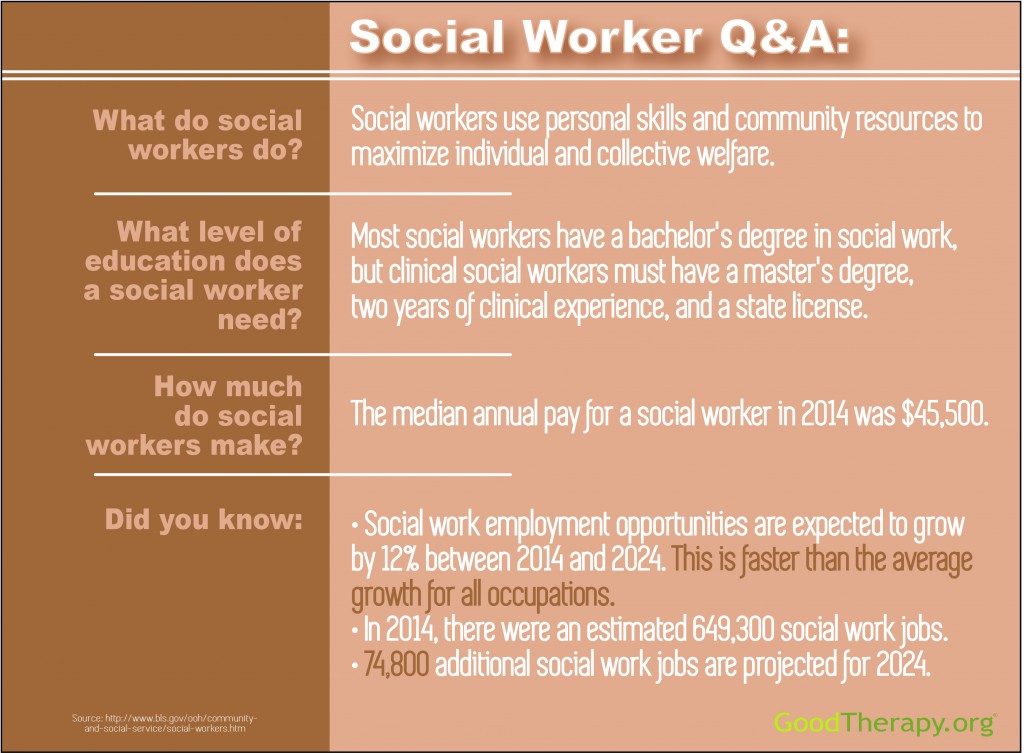
To become a licensed social worker, learning the licensure requirements in your state is a key step. In the past, many jurisdictions would accept bachelor’s degrees in related fields without accreditation, but most states are moving away from this and do require an accredited degree from the Council on Social Work Education (CSWE) or foreign equivalent for licensure. For those with bachelor’s degrees not CSWE accredited, a master’s degree in social work from an institution that is accredited may be necessary.
In addition to educational requirements, you will also need to work under supervision, take an exam, and possibly be fingerprinted in some states. You can check your state’s requirements here.
In several states, you will need to take the Association of Social Work Boards (ASWB) master’s exam before or after graduation. After completion of all other requirements, you will then take a clinical or advanced generalist exam if necessary.
7. Obtain an Optional Credential
The National Association of Social Workers offers an Academy of Certified Social Workers (ACSW) certification. It is not the same as licensing and does not give any legal authority to practice in any state, but it does provide an additional credential to add to a resume. In some cases, the certification may make it easier to receive a new license in a new jurisdiction.
8. Get Hired
Once you have completed your education and licensing requirements, you’re ready to look for social work jobs. Networking can be helpful for getting to know others in the industry, and spending time perfecting your resume and using all resources available to you can make it easier to land your first social work job or start your own clinical practice. For anyone in a therapist or social work career, staying involved in the community and keeping up with your continuing education requirements can help maintain your licensure and expand your knowledge.
References:
- Bureau of Labor Statistics. (2015, December 17). U.S. Department of Labor. Occupational Outlook Handbook, 2014-15 Edition. Social Workers. Retrieved from http://www.bls.gov/ooh/community-and-social-service/social-workers.htm
- Council on Social Work Education. (CSWE). (n.d.). Directory of Accredited Programs. Retrieved from http://www.cswe.org/Accreditation/Accredited-Programs.aspx
- Federal Student Aid. (2015, December). Public Service Loan Forgiveness Program. Questions and Answers for Federal Student Loan Borrowers. Retrieved from https://studentaid.ed.gov/sites/default/files/public-service-loan-forgiveness-common-questions.pdf
- National Association of Social Workers (NASW). (n.d.). Become a Social Worker: Starting out. Retrieved from http://www.socialworklicensure.org/articles/become-a-social-worker.html#context/api/listings/prefilter
- National Association of Social Workers (NASW). (n.d.). Social Work License Requirements. Retrieved from http://www.socialworklicensure.org/articles/social-work-license-requirements.html
 The process of psychotherapy is an unpredictable journey into the unconscious, one that offers surprising gifts and unexpected obstacles. The gifts are many: greater access to creativity, insight, tools to address difficult emotions, and increased intimacy, to name a few.
One of the primary obstacles to these gifts, however, is the “cautionary tale”—the primary unconscious story of hurt, imprinted from childhood, which you carry to each relationship. This tale underlies the therapeutic process and, if not understood and addressed, can undermine it.
Mixed Feelings in Therapy
Although you may be earnest in your pursuit of therapy, you may have mixed feelings about looking at the causes of your suffering. This is part of being human. Who WANTS to re-experience pain?
Inevitably, you will bring your mixed feelings in the door with you at the outset of therapy. These mixed feelings show themselves in a variety of ways in session: in the anxiety felt in the room, in the various stories shared with the therapist, in the tensions felt, in the fluctuations between stuck-ness and progress, in a feeling of push-pull.
[fat_widget_right]
It is as if you are taking a trip while simultaneously unsure you want to go or, if you do, where you are headed.
And so you bring in your luggage (filled with conflicts, emotions, thoughts, and memories), drop the bags down in the room, and then, with the help of the therapist, hope (and possibly dread) to sort through them.
If you are unable or unwilling to sort through the bags, they can come out in unconscious ways and stall the process.
What Do We Mean by Cautionary Tale?
One term for these unconscious mixed feelings is the cautionary tale. Thomas Ogden, a major contributor to contemporary psychoanalytic thought, said the following about how the therapist must keep the cautionary tale in mind:
I am listening from the outset for the patient’s “cautionary tales,” i.e., the patient’s unconscious explanations of why he feels the analysis is a dangerous undertaking and his reasons for feeling the analysis is certain to fail …
The patient unconsciously holds a fierce conviction (which he has no way of articulating) that his early childhood experience has taught him about the specific ways in which each of his (object) relationships will inevitably become painful …
Ogden is suggesting here that the so-called cautionary tale is not just mixed feelings but a hidden conviction that therapy will fail. This is important to be aware of, for therapists and people in therapy alike.
Origins of the Cautionary Tale
But where, exactly, does this come from? Simply, a cautionary tale is born when a child’s first love relationships cause pain, either through the experience of abuse, disappointment, misattunement, overstimulation, unreliability, neglect, or something else. Because these early experiences are so painful, the child unconsciously weaves a tale about how this pain will inevitably occur in EVERY relationship, as protection from that same pain.
As the child develops and matures, the tale that was once protective becomes destructive: The adult will act out unconsciously to prove the present relationship is like all the others.
As the child develops and matures, the tale that was once protective becomes destructive: The adult will act out unconsciously to prove the present relationship is like all the others.
Developing a New Pathway
One of the great things about therapy is that this tale can be studied and updated. If you and your therapist keep an eye on your cautionary tale and how it might manifest in the therapeutic relationship, you have the chance to uncover the pain behind it.
If you are in therapy or thinking about starting therapy, pay attention to the thoughts and feelings you have about the process and your therapist’s role in it. Pay particular attention to any anxiety, skepticism, doubt, fear, or paranoia about the process. Then talk about it. There is sure to be a treasure trove of old feelings, packed away underneath, that could hold the key to the gifts you seek.
Reference:
Ogden, T. (1992). Comments on Transference and Countertransference in the Initial Analytic Meeting. Psychoanalytic Inquiry, 12:225-247.
 On February 16, 2016, police in West Palm Beach, Florida arrested Malachi Love-Robinson, 18, for allegedly setting up a medical practice, posing as a doctor, and examining patients without a medical license. Amazingly, this was not the first time the teen had been arrested for operating without a medical license. On his website, Love-Robinson listed his qualifications to provide psychotherapy, phototherapy, electrotherapy, and physiotherapy, among many other professional services; however, licenses or certifications to provide such services were never disclosed.
It is frightening to consider that the person you turn to for physical or mental health care may not be who they say they are, let alone able to safely and effectively perform the procedures they say they can.
This sensational story sounds like just that, a story; however, stories of actual health professionals acting outside of their scope of competence occur only too often. As can be seen on popular cosmetic surgery shows such as E!’s Botched and Lifetime’s Atlanta Plastic, it is not uncommon for individuals to discover their health professional was incompetent or unqualified to perform a medical procedure. Unfortunately, this discovery typically happens after a surgical or cosmetic procedure has taken place and the person is left with a physical or psychological issue. Afterward, the person discovers their doctor was not a specialist, not licensed, or worse yet, not a doctor at all.
[fat_widget_right]
On reality television and with the Love-Robinson case, it is easy to blame victims for placing themselves in situations that caused physical or mental harm. In regard to Love-Robinson, social media posts have commented, “They (patients) should have known he wasn’t a real doctor by how young he looked” and “I congratulate the young man; it’s the patients’ own faults if they fell for it.” In hindsight, it is always easier to judge things differently, to believe all the information we know now was obvious in the beginning. But the reality is, when people visit health professionals, they typically trust them to be credible, vetted, and experts.
Many (perhaps even most) of us do not take time to really explore who our health professionals are. How much time did you spend investigating your primary care doctor before your first visit? When you were referred to a specialist, how much effort did you expend in reviewing their credentials? When you found a therapist, did you ask questions to determine the best fit or did you schedule with the first person who returned your phone call?
How much time did you spend investigating your primary care doctor before your first visit? When you were referred to a specialist, how much effort did you expend in reviewing their credentials? When you found a therapist, did you ask questions to determine the best fit or did you schedule with the first person who returned your phone call?
Additionally, unethical health professionals may target vulnerable populations, including individuals with low socioeconomic status, ethnic minorities, sexual and gender minorities, children, the elderly, and people with disabilities. We have seen this with the U.S. Public Health Service (USPHS) Syphilis Study at Tuskegee in which African-American research participants were purposely left untreated for syphilis despite there being a cure for the disease (Northridge, 2011); the continued practice in some states of conversion therapy, which attempts to change the sexual orientation or gender identity of gay, lesbian, bisexual, and transgender individuals, even with research indicating such practices cause psychological harm (APA, 2015); or the St. Louis Veterans Affairs dental clinic exposing more than 1,800 veterans to HIV and hepatitis. Subjugation to societal discrimination or biases can leave vulnerable populations feeling powerless to assert their rights or question those in positions of power.
It is not helpful to blame the victims when health-related crimes or injustices occur, as it is possible that any of us could be misled by a seemingly legitimate professional. Having said that, there are steps we can take to educate ourselves as consumers and to investigate the credentials of health professionals.
Consider the following:
- State licensure boards license health care professionals. A simple web search of your state’s licensure board can provide you with information regarding the status of a health professional’s license. Seeking a psychologist? Visit The Association of State and Provincial Psychology Boards to find your state’s licensure board.
- Health care professionals may be members of national or state associations. For example, your medical doctor may be a member of the American Medical Association, or your psychologist a member of the American Psychological Association. Membership can lend greater credibility and can alert you to ethical standards your health professional is expected to maintain.
- Complaints regarding ethical violations, misconduct, or fraud can be filed through your health professional’s state licensure board or professional membership organization. You can also review any previous complaints regarding your health care professional by contacting state licensure and professional membership bodies.
- If your health professional has certifications, you can check with the certifying organization to verify the certificate. For example, if it is important that your couples counselor is Gottman-trained, you can review therapists through the Gottman Institute website.
- Research and publications are not necessary for a health professional to be skilled and competent in their field. In fact, many health professionals are so involved with their clinical work that they do not have the time or interest to engage in research. For those health professionals who do, exploring their research and publications can help gauge your health professional’s level of expertise in a particular area.
- Don’t wait for health professionals to reveal themselves to you. Ask your provider questions to ensure they are the best match for you. This includes asking questions about the provider’s education, expertise, and training. If you don’t feel comfortable with the provider’s answers, find someone else.
References:
- American Psychological Association. (2015). Guidelines for psychological practice with transgender and gender nonconforming people. American Psychologist, 70 (9), 832-864.
- Northridge, M. (2011). Toward the ethical conduct of science and a socially just world. In R. Katz & R. Warren (Eds.), The search for the legacy of the USPHS Syphilis Study at Tuskegee (pp. 49–58). New York, NY: Lexington.

Compassion fatigue can be a serious occupational hazard for those in any kind of helping profession, with a majority of those in the field reporting experiencing at least some degree of it in their lives. This is no surprise, as it is typically those with the most empathy who are the most at risk.
Compassion fatigue is characterized by physical and emotional exhaustion and a profound decrease in the ability to empathize. It is a form of secondary traumatic stress, as the stress occurs as a result of helping or wanting to help those who are in need. It is often referred to as “the cost of caring” for others who are in physical or emotional pain. If left untreated, compassion fatigue not only can affect mental and physical health, but it can also have serious legal and ethical implications when providing therapeutic services to people.
While it is not uncommon to hear compassion fatigue referred to as burnout, the conditions are not the same. Compassion fatigue is more treatable than burnout, but it can be less predictable and may come on suddenly or without much warning, whereas burnout usually develops over time.
Because it can arise so abruptly, it can be important for therapists and others in the helping professions to protect themselves from this condition. Here are 11 ways to prevent compassion fatigue from happening to you:
1. Get Educated
If you know you are at risk for compassion fatigue, taking the time to learn the signs and symptoms can be a helpful means of prevention.
The most common signs and symptoms of compassion fatigue include:
- Chronic exhaustion (emotional, physical, or both)
- Reduced feelings of sympathy or empathy
- Dreading working for or taking care of another and feeling guilty as a result
- Feelings of irritability, anger, or anxiety
- Depersonalization
- Hypersensitivity or complete insensitivity to emotional material
- Feelings of inequity toward the therapeutic or caregiver relationship
- Headaches
- Trouble sleeping
- Weight loss
- Impaired decision-making
- Problems in personal relationships
- Poor work-life balance
- Diminished sense of career fulfillment
[fat_widget_right]Knowing the signs and symptoms and continuing to check in with yourself can help you better prevent and manage compassion fatigue if it arises. Many people find that ranking their level of compassion fatigue on a scale of 1-10 is an effective strategy. For example, a rank of 6 might mean you are declining social invitations due to feeling drained and a 7 might be difficulty sleeping due to excessive worry about someone else’s well-being.
Cultivating a high level of self-awareness and understanding of how your 6 differs from your 7 can help you gage where you are so you can implement necessary strategies to avoid the red zone that would likely be a 9 or 10.
It is not only the work itself that poses a risk, but the person’s life conditions as well. For example, someone who is not only taking care of people at work, but also caring for a child or adult family member at home may be even more susceptible to compassion fatigue. If you are currently experiencing increased life stressors at home as well as in the workplace, prevention strategies against compassion fatigue may be important.
If you think you may be experiencing compassion fatigue, you can take a compassion fatigue self-assessment developed by the Compassion Fatigue Awareness Project here.
2. Practice Self-Care
Practicing self-care can be a critical method of protecting yourself against compassion fatigue. It is not uncommon for those who are constantly concerned with the needs of others to wind up neglecting their own.
Those who practice good self-care are significantly less vulnerable to stress and compassion fatigue than those who fail to do so. A good self-care regimen will look different for each person, but it should generally include:
- Balanced, nutritious diet
- Regular exercise
- Routine schedule of restful sleep
- Balance between work and leisure
- Honoring emotional needs
Making time for these self-care activities leaves less room for overworking, which can lead to compassion fatigue, said Nicole Urdang, MS, NCC, DHM, a holistic psychotherapist based in New York.
“Overworking is often at the heart of compassion fatigue and its first cousin: vicarious trauma,” Urdang said. “Taking the very best care of yourself includes setting limits.”
3. Set Emotional Boundaries
It can be especially important for therapists, social workers, nurses, and caregivers alike to set firm emotional boundaries to protect themselves. Empathy and compassion are generally at the forefront of a human services career.
If left untreated, compassion fatigue not only can affect mental and physical health, but it can also have serious legal and ethical implications when providing therapeutic services to people.The challenge is to remain compassionate, empathetic, and supportive of others without becoming overly involved and taking on another’s pain. Setting emotional boundaries helps maintain a connection while still remembering and honoring the fact that you are a separate person with your own needs.
If people in a human services career are exposed to too much trauma, they may begin to feel overwhelmed, and people may feel that overwhelm in different ways, Urdang said.
“It might manifest as insomnia, overeating, skipping meals, addictive behavior, isolating oneself, depression, anxiety, or anger. We might find ourselves fighting with partners or children, having no patience, feeling exhausted, noticing a lowered libido, unmotivated, and, paradoxically, being less interested in what our clients have to say,” she said. “Believe it or not, these are all helpful, as they quickly alert us to our depleted state. If we are paying attention and are committed to radical self-care, we can act on this awareness by rebalancing our life. If that is not possible, simply taking short breaks throughout the day to close your eyes, focus on your breath, or put your hands on your heart and send yourself some compassion can all make a big difference.”
4. Engage in Outside Hobbies
Maintaining a solid work-life balance can help protect you from compassion fatigue. When all your time is spent working or thinking about work, it can be easy to burn out. Studies have shown work-life balance is becoming more important to workers, and making time for leisure activities and personal hobbies outside of work can help lower stress levels and improve overall life satisfaction.
5. Cultivate Healthy Friendships Outside of Work
While it is great to have strong relationships with your co-workers, it is equally important to cultivate and maintain healthy relationships outside of work. It can sometimes be difficult for co-workers to avoid talking about work even outside the workplace. Connecting with friends who are not aware of the ins and outs of your work situation can provide much needed emotional and professional relief.
6. Keep a Journal
Journaling is an excellent way to process and release emotions that may arise from your line of work. Taking the time to cultivate self-awareness and connect with your personal thoughts and feelings can help prevent suppression of emotions, which can lead to compassion fatigue over time.
7. Boost Your Resiliency
Resilience is our ability to bounce back from stress. While some people seem to naturally be more resilient than others, resilience is a skill that can be learned and cultivated.
“Resilience can be thought of as the ability to adapt to and become stronger through adversity,” said Marjie L. Roddick, MA, LMHC. “It can be a protective factor against compassion fatigue, so those with higher resiliency are better able to prevent compassion fatigue. Resilience is something that can be learned, and enhancing or boosting it can reduce the effects of compassion fatigue as new coping methods are learned.”
8. Use Positive Coping Strategies
While it may be tempting to wash away the stress and emotional burdens of your job with alcohol or drugs, this can actually work in the reverse and compound stress in the long run. Consider making a list of positive coping strategies to use in times of stress. This might include deep breathing, meditation, taking a walk, talking with a friend, watching a funny movie, or relaxing in a hot bath.
9. Identify Workplace Strategies
Workplace strategies are often an important part of compassion fatigue prevention. If your employer does not currently have any in place, consider suggesting their implementation.
Some workplace strategies that have been proven to be beneficial are:
- Support groups and open discussions about compassion fatigue in the workplace
- Regular breaks
- Routine check-ins
- Mental health days
- Onsite counseling
- Relaxation rooms, massage, meditation classes, etc.
10. Seek Personal Therapy
If you find yourself feeling emotionally vulnerable, significantly stressed, or overwhelmed, consider seeing a therapist who can help you process your feelings and implement strategies to help you combat compassion fatigue and maintain a healthy work-life balance.
References:
- Badger, K. (2008). Preventing compassion fatigue: Caring for ourselves while caring for others. Phoenix Society’s Burn Support News. Retrieved from http://www.phoenix-society.org/resources/entry/preventing-compassion-fatigue
- Brooks, C. (2013, March 5). Career success means work-life balance, study finds. Retrieved from http://www.huffingtonpost.com/2013/03/05/career-success-means-work-life-balance_n_2812707.html
- Boyle, D. A. (2011, January). Countering compassion fatigue: A requisite nursing agenda. The Online Journal of Issues in Nursing, 16, (1). Retrieved from http://www.nursingworld.org/MainMenuCategories/ANAMarketplace/ANAPeriodicals/OJIN/TableofContents/Vol-16-2011/No1-Jan-2011/Countering-Compassion-Fatigue.html
- Mathieu, F. (2007). Running on empty: Compassion fatigue in health professionals. Rehab & Community Care Medicine. Retrieved from: http://www.compassionfatigue.org/pages/RunningOnEmpty.pdf
 Though I wish it weren’t so, many therapies get “stuck” at some point, leading to premature termination or a less-than-ideal outcome. Here are three of the many possible patterns that could lead you to feel stuck in therapy. If any of these feels familiar, be sure to bring this up with your therapist right away. Hopefully you can put your efforts together to overcome the factors keeping you from making the progress you envision.
1. Waiting for the Therapist to Heal You
When we take our experience or difficulties to a helping professional, many of us harbor a wish, secretly or not-so-secretly, that the professional’s advice, explanations, or prescriptions alone will be enough to heal us. We wind up in a passive, dependent stance in therapy, approaching therapy as though it will be like surgery: I’ll lie back, and the doctor will diagnose my ailment and cut it out of me. Therapies can go on for years with the person expectantly waiting for a piece of advice or interpretation that will finally part the clouds. Meanwhile, the therapist is left puzzled, wondering why change has not occurred despite all the good ideas that have been discussed.
The omnipotent and powerful therapist is a nice fantasy, one that therapists (myself included) can accidentally participate in by overworking—providing unnecessary or unhelpful advice, explanations, or instructions, or taking full responsibility for therapeutic progress. Those of us who have managed to get out of such an entanglement, where the therapist is overworking and the person in therapy is passively waiting, have learned an important lesson: no therapist has ever changed anyone. Change cannot result from a therapist “doing something” to us; it comes from us doing something differently with ourselves.
[fat_widget_right]
Infants and children are completely dependent on others for survival, and the passive/dependent stance that many people approach therapy with may be a remnant of that need. My clinical experience suggests the yearning for a powerful, magical caregiver who will come along and make it all better often sticks around because it was not fulfilled at the time it was supposed to be—childhood. However, part of growing up is learning to think and solve problems for ourselves, and developing the ability to mobilize our own resources in the face of a challenge.
A good therapist will help you create the optimal conditions for you to do this but simply cannot do it for you. If you are waiting around for your therapist to do this, and if you have a sense that your therapist is not aware of this pattern or is reinforcing it somehow, the passive/dependent stance in therapy could be keeping you stuck. Talk to your therapist about what is going on.
2. Fighting Against Reality
Just as therapists cannot change people (a difficult reality for many to accept), therapy cannot change reality. Many of us come to therapy with a secret agenda: I want to change reality so that my anxiety-provoking feelings about reality will go away. We ask our therapist for “effective communication strategies” that might help us be more persuasive to a distant father, or detoxify a toxic spouse. We burden our therapy with fixing someone else’s problems.
There is, of course, a time and place for learning such communication strategies in therapy; however, if the goal of this learning is to change or control an unchangeable person or situation, the therapy will inevitably fail because the goal is unrealistic.
Believe me, if I could change reality, I would—reality can stimulate all kinds of uncomfortable, anxiety-producing reactions in us. I don’t like those feelings, either! But we’re all probably better off learning to accept and cope with the thoughts and emotions that reality tends to stir up in us, rather than continuing to chase after the fantasy of a perfect reality that we can control and change. After all, so many of our problems are a result of the difficulties we have in coping with reality and our feelings about it.
If your therapy has become focused on changing or controlling someone else, or a situation that is beyond your control, your “stuck-ness” may continue until you refocus on the things you do have some control over; namely, your inner reactions to outer realities.
3. Chasing Someone Else’s Goals
Many people, when asked why they are seeking therapy, reply: “Well, my wife/husband/partner/friend says …” They have not necessarily come to therapy of their own free will, but at least in part to meet the needs of another person. This can also be the case for people who come for court-mandated treatment and for adolescents. And it can limit the efficacy of therapy in a number of ways.
If your therapy has become focused on changing or controlling someone else, or a situation that is beyond your control, your “stuck-ness” may continue until you refocus on the things you do have some control over; namely, your inner reactions to outer realities.
First, because they are not internally motivated to achieve their therapy goals, people who are compelled into therapy by others may not put in the necessary amount of effort and energy that change requires. They may not even see themselves as having a problem or a goal to work toward.
They may submit to the will of the referring person and pursue goals that are not truly their own. They may decide to change themselves to make the other person happy, and their behavior may even change as a result. This kind of change can be quite transient, though, ending with a complete reversal and the refrain, “I only did it to make you happy!”
On the flipside of that coin are people who say, “I’ll be damned before I change,” and perpetuate their life problems out of stubbornness against the person who compelled them into therapy. This defiance, while sometimes pleasurable in the moment, can be quite self-defeating, as the person in therapy is intentionally perpetuating problems just to “stick it” to the other person.
Therapists can get caught up in this, too, pursuing outside parties’ goals rather than those of the person in therapy. Many of us learn the hard way that if someone’s will and desire for change are not on line, the therapy will inevitably get stuck. If you’re not in therapy of your own free will, complying with or defying someone else’s goals for you, or feeling like therapy is going nowhere, make sure to bring this up with your therapist. Together, you can develop goals that will help you get unstuck and lead to the outcomes you desire.
 While there are many benefits to having high intelligence, many managers, supervisors, and other workers—particularly those who work in businesses in which interpersonal relationships are key—have become keenly aware that workplace success may depend on their ability to use another invaluable personality trait: emotional intelligence.
What Is Emotional Intelligence?
The concept of emotional intelligence (EQ) was introduced by psychologists Peter Salovey and John Mayer in a landmark article in 1990. The idea was popularized in 1995 by psychologist and author Daniel Goleman after the release of his book, Emotional Intelligence: Why It Can Matter More than IQ.
Emotional intelligence refers to the capacity to identify, evaluate, and manage emotions in one’s self as well as in other people. While some researchers believe this ability may be trained and developed, other experts suggest emotional intelligence is a trait a person must be born with.
Principles of Emotional Intelligence
[fat_widget_right]A number of theories have emerged to explain the concept of emotional intelligence. Salovey and Mayer developed the ability model, which emphasizes a person’s capacity to understand and use emotional information in social contexts. Konstantin Vasily Petrides developed the trait model, which focuses on how people view their own emotional abilities, and Goleman developed the mixed model, which uses principles from both the ability and trait models.
Though each model has its distinguishing features, the underlying principles of the models are similar. According to Goleman, the key principles of emotional intelligence include:
- Self-awareness – the ability to recognize personal emotions, emotional triggers, and limitations
- Self-regulation – the ability to manage emotions so they do not have a negative effect
- Motivation – an inner drive that comes from the personal joy experienced after an accomplishment
- Empathy – the ability to recognize, understand, and experience the emotions of another person
- Social skills – the ability to interact and negotiate with other individuals in order to find the best way to meet the needs of each person
Emotional Intelligence in the Workplace
Many mental health experts believe emotional intelligence is a valuable asset in the workplace. In certain environments, employees with high levels of emotional intelligence may be better able to cooperate with others, manage work-related stress, solve conflicts within workplace relationships, and learn from previous interpersonal mistakes.
This may not mean high emotional intelligence is beneficial or necessary for all jobs. Studies show that while jobs that require large amounts of interpersonal interaction—for example, sales or real estate jobs—may benefit from workers who possess high emotional intelligence, the opposite is true for occupations that are generally more individualistic, such as a research scientist or an accountant.
In settings where people tend to work alone, people who possess high emotional intelligence may actually perform at a lower level than the average worker because they may be overly concerned about the emotions of other people.
Emotional Intelligence and Leadership
In certain environments, employees with high emotional intelligence may be better able to cooperate with others, manage work-related stress, solve conflicts that may arise within workplace relationships, and learn from previous interpersonal mistakes.Though emotional intelligence may not be necessary for every type of job, it can be a vital trait for most people in leadership positions. To be effective leaders in the workplace, managers, supervisors, and other authority figures must be able to function productively with people under their charge. A good leader is able to create the type of work environment where each person feels relevant and motivated to succeed.
Leaders with high emotional intelligence are able to use their social skills to foster rapport and trust with their employees. They tend to view their team members as individuals with unique abilities, backgrounds, and personalities, rather than as a uniform collective. Effective leaders seek to understand and connect emotionally with their staff—genuinely sharing in their joys as well as their concerns. The ability to build mutual trust and respect can become especially important if an unpopular decision is made within the business setting, but the managers need to keep their teams working efficiently.
Like all other types of relationships, work relationships may experience problems sooner or later. When conflict arises, leaders with high emotional intelligence may be better able to control their own impulses, view the situation from all perspectives, and seek mutually beneficial solutions. Effective leaders are transparent and are not afraid to admit when they are wrong. They are also more likely to try to improve work relationships.
Telltale Signs of Leaders with Low Emotional Intelligence
While leaders with high EQ are more likely to maximize the efforts and output of their employees, leaders with low EQ are more likely to have a negative impact on the productivity of their teams. Leaders with low EQ may display attitudes and behaviors such as:
- Criticizing other people when they mistakes
- Refusing to accept personal responsibility for errors
- Always playing the role of the victim
- Refusing to accept critical feedback
- Using passive, aggressive, or passive-aggressive styles of communication
- Refusing to integrate with the team
- Not being open to others’ opinions
Despite these issues, however, some experts believe emotional intelligence may be trained and developed.
The Potential Downsides of Emotional Intelligence
Though emotional intelligence is usually painted in a positive light and is often considered to be a valuable personality trait, a balanced view of the concept can be important. Emotional intelligence, like any other skill or talent, may be used positively or negatively depending on the intentions of the person wielding the ability.
As people with high EQ are better able to manage their own emotions and evaluate the emotions of others, they have the capacity to be more deceptive and manipulative than other people. Business leaders with high EQ and self-serving motives may toy with the emotions of their employees, using them to climb the corporate ladder with little regard for their workers’ long-term welfare.
Such leaders may also pretend to offer friendship and support, while secretly seeking to undermine the ambitions of team members who could become potential rivals. They may even expose their workers to public embarrassment, shame, or guilt in an effort to reach their own personal goals.
Those seeking to become effective leaders may do well to reflect on the importance of emotional intelligence. Leaders who are eager to hone specific aspects of their emotional intelligence may utilize self-help publications or seek the support of a qualified counselor, therapist, or coach.
References:
- Craemer, M. (n.d.). Emotional intelligence is vital to workplace success. Retrieved from https://www.washington.edu/admin/hr/pod/leaders/orgdev/alliance/articles/EQ_Craemer.pdf
- Deleon, M. (2015, May 8). The importance of emotional intelligence at work. Retrieved from http://www.entrepreneur.com/article/245755
- Grant, A. (2014, January 2). The dark side of emotional intelligence. The Atlantic. Retrieved from http://www.theatlantic.com/health/archive/2014/01/the-dark-side-of-emotional-intelligence/282720/
- Llopis, G. (2012, September 24). 5 ways to lead with emotional intelligence—and boost productivity. Retrieved from http://www.forbes.com/sites/glennllopis/2012/09/24/5-ways-to-lead-with-emotional-intelligence-and-boost-productivity/
- Salovey, P. & Mayer, J. D. (1990). Emotional intelligence. Retrieved from http://www.unh.edu/emotional_intelligence/EIAssets/EmotionalIntelligenceProper/EI1990%20Emotional%20Intelligence.pdf
Thank you for reaching out with this honest question. I commend you for having the courage to admit this is happening and to seek counsel for it.
You may be surprised to know that what you are experiencing with your therapist isn’t uncommon. In fact, what you are likely experiencing is a phenomenon known as “erotic transference,” which is when a person experiences feelings of love or fantasies of a sexual or sensual nature about his or her therapist.
[fat_widget_right]
It is easy to see why you might have developed these feelings. Your therapist may embody many, if not all, of the qualities you may desire in an ideal mate. The therapist is accepting, attentive, kind, and nonjudgmental and, for at least an hour every week, fully engaged with you. One of the problems with this sort of situation is that you are falling for an image you have of the therapist, not for who the therapist actually is. You know very little about him, and you have used your imagination to fill in the rest. You have created a fantasy of sorts of your unmet needs and have imagined that the therapist is that person.
It is not “nuts” to share this with your therapist—in fact, it can actually become a significant turning point in your relationship with him. In many cases, this deepens the therapeutic work and allows you to process things on a much deeper level. It will take courage and trust for you to share this with your therapist, but taking that kind of risk in therapy is necessary for growth.
It is not “nuts” to share this with your therapist—in fact, it can actually become a significant turning point in your relationship with him. In many cases, this deepens the therapeutic work and allows you to process things on a much deeper level.
There are a number of ways in which your therapist might respond. Ideally, he will be able to help you recognize what is going on beneath the “crush” in order to get to the deeper material. Many times, therapists in this situation are able to work with the person in therapy and generate meaningful transformation.
Of course, if he is not comfortable with continuing work with you, he may refer you to another therapist. Unfortunately, there is no way I can offer a definitive answer as to how he might respond.
What he ought not do is share that he has similar feelings or act on any feelings. As you mentioned, there are rules in every state that forbid romantic relationships between therapists and the people they help for a certain time period after termination of the therapy (it depends on your state). Regardless of state regulations, the ethics code of the American Counseling Association (2014) specifies that there must be a five-year period between the end of the counseling relationship and the start of a sexual or romantic relationship. It would be highly inappropriate, unprofessional, and, yes, illegal for your therapist to do anything other than work with you through this or refer you to someone else.
I hope you can navigate this with grace and recognize that what you feel can be and often is a part of the therapeutic relationship. In fact, I can’t think of one therapist I know who hasn’t experienced this, so please don’t feel as though you are an anomaly. It’s very normal, but the important thing is how you handle it; be honest, sit with his response, and most of all, treat yourself with the deepest level of care and compassion you can muster.
Best wishes,
Lisa