
.jpg)
Social work is a dynamic profession dedicated to enhancing individual and community well-being through evidence-based interventions, advocacy, and resource mobilization. As of 2024, approximately 810,900 social workers serve communities across the United States, making it one of the largest helping professions in the country. Social workers operate at the intersection of individual needs and societal resources, working to address complex challenges ranging from mental health crises to systemic inequities.
The profession has evolved significantly in recent years, with 23.4% of U.S. adults experiencing mental illness in 2024 (61.5 million people), highlighting the critical need for skilled social work professionals. Social workers serve as essential bridges between vulnerable populations and the resources they need to thrive, employing evidence-based practices and maintaining a commitment to social justice, human dignity, and professional integrity.
Table of Contents

- What Do Social Workers Do?
- Social Work Practice Settings
- Social Work and Mental Health
- Core Competencies and Professional Standards
- The Job Outlook for Social Workers
- How to Become a Social Worker
- Professional Development and Specializations
- Frequently Asked Questions
What Do Social Workers Do?
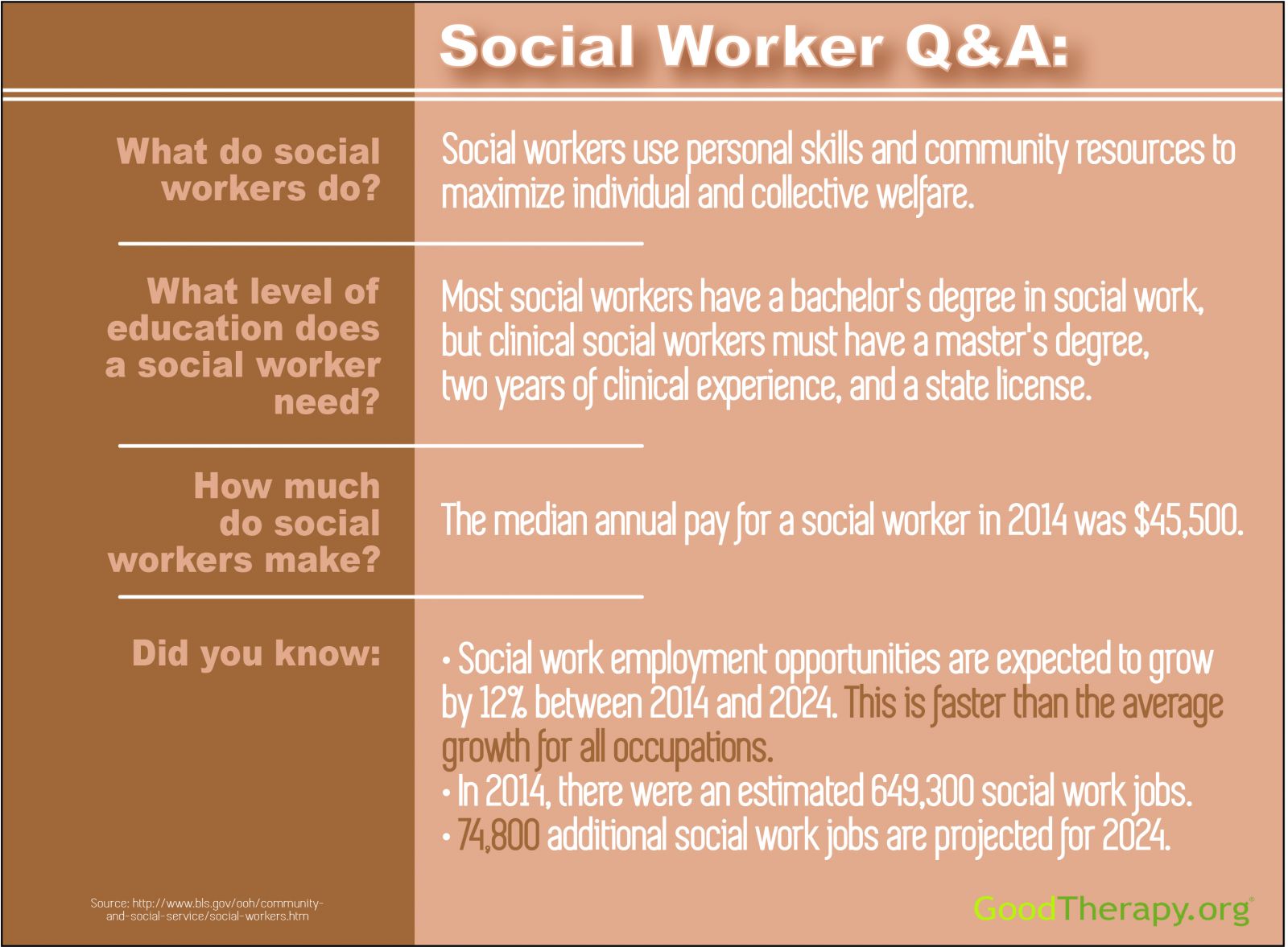
Social workers are trained professionals who help individuals, families, and communities overcome challenges and improve their quality of life. Social work interventions are instrumental in improving social health outcomes by addressing the social determinants of health, enhancing mental and physical well-being, and fostering community engagement. Their work encompasses direct clinical practice, case management, advocacy, program development, and policy analysis.
The scope of social work practice is remarkably diverse. Social work is a long-established profession in health care and rehabilitation. Social work interventions appear as complex interventions that address multiple dimensions of human need. Social workers employ various evidence-based approaches including:
- Clinical interventions: Providing therapy and counseling services
- Case management: Coordinating care and connecting clients with resources
- Community organization: Mobilizing communities to address systemic issues
- Policy advocacy: Working to change systems and policies that affect vulnerable populations
- Crisis intervention: Responding to immediate needs and emergencies
Social Work Practice Settings
Social workers practice in diverse settings, each requiring specialized knowledge and skills:
Healthcare Settings
Healthcare social workers will continue to be needed to help aging populations and their families adjust to new treatments, medications, and lifestyles. In hospitals and medical facilities, social workers:
- Facilitate discharge planning and care coordination
- Provide psychosocial support to patients and families
- Connect patients with community resources
- Address barriers to healthcare access
- Support patients through medical crises and end-of-life care
Child Welfare and Family Services
Child, family, and school social workers will be needed to help strengthen parenting skills, prevent child abuse, and identify alternative homes for children who are unable to live with their biological families. These professionals:
- Investigate reports of child abuse and neglect
- Facilitate foster care and adoption processes
- Provide family preservation services
- Offer parenting education and support
- Coordinate with schools and other agencies
Mental Health and Substance Use Treatment
With 12.6% of U.S. young adults ages 18-25 having serious thoughts of suicide in 2024, and 1 in 15 U.S. adults experiencing both a substance use disorder and mental illness, social workers in these settings:
- Provide individual, group, and family therapy
- Develop treatment plans
- Facilitate support groups
- Coordinate care with other providers
- Advocate for clients' rights and needs
Schools and Educational Settings
School social workers address the intersection of education and social needs:
- Support students experiencing academic difficulties
- Address behavioral and emotional challenges
- Connect families with community resources
- Provide crisis intervention
- Facilitate communication between home and school
Criminal Justice System
Social workers in correctional settings:
- Provide rehabilitation services
- Facilitate reentry planning
- Offer counseling and support groups
- Connect individuals with community resources
- Work with families affected by incarceration
Social Work and Mental Health
Social workers play a dominant role in mental health service delivery. More than one in five U.S. adults live with a mental illness (59.3 million in 2022; 23.1% of the U.S. adult population), creating substantial demand for mental health services. The profession has responded by developing specialized competencies and evidence-based interventions.
Evidence-Based Mental Health Interventions
Modern social work practice emphasizes evidence-based approaches. Cognitive-Behavioral Therapy (CBT) is a widely used therapeutic approach in social work practice, particularly in addressing mental health issues such as depression, anxiety, and trauma. Dialectical Behavior Therapy (DBT) is a comprehensive treatment approach for individuals with borderline personality disorder (BPD) and other complex mental health conditions. Parent-Child Interaction Therapy (PCIT) is an evidence-based intervention for young children with disruptive behavior problems and their parents or caregivers.
Addressing Complex Mental Health Needs
Social workers are uniquely positioned to address the social determinants of mental health. Through a comprehensive analysis of 30 peer-reviewed studies, the paper identifies the positive impact of community-based interventions, mental health services, and social support systems on individuals and communities. They work to:
- Remove barriers to mental health treatment
- Address stigma and discrimination
- Coordinate care across multiple systems
- Advocate for policy changes
- Support recovery and resilience
Core Competencies and Professional Standards
Essential Qualities of Effective Social Workers
Professional social workers demonstrate specific competencies that enable effective practice:
- Communication skills: Ability to listen actively and communicate complex information clearly
- Cultural competence: Understanding and respecting diverse backgrounds and experiences
- Critical thinking: Analyzing situations and developing appropriate interventions
- Empathy: Genuinely caring about clients while maintaining professional boundaries
- Organization: Managing multiple cases and priorities effectively
- Problem-solving: Developing creative solutions to complex challenges
Ethical Framework
Social work is a public service field founded on core values of justice, dignity and worth of a person, human relations, integrity, and competence. CSWE accreditation standards are grounded in these core values. Social workers adhere to a professional code of ethics that guides their practice and ensures client protection.
The Job Outlook for Social Workers
The employment outlook for social workers remains strong. Overall employment of social workers is projected to grow 6 percent from 2024 to 2034, faster than the average for all occupations. About 74,000 openings for social workers are projected each year, on average, over the decade.
Growth by Specialization
Different areas of social work show varying growth projections:
- Healthcare social workers: 6% growth from 2024 to 2034, translating to approximately 13,600 new jobs
- Child, family, and school social workers: 5% growth from 2024 to 2034, adding approximately 18,700 new positions
- Mental health and substance use social workers, including Licensed Clinical Social Workers (LCSWs) who offer therapy and addiction support. Workforce mental health: As organizations prioritize mental health, social workers are stepping into employee assistance programs (EAPs)
Salary Information
The median annual wage for social workers was $61,330 in May 2024. Salary ranges vary significantly:
- The lowest 10 percent earned less than $41,580, and the highest 10 percent earned more than $99,500
- Median salaries range from $53,940 for child, family, and school social workers to $77,030 for social and community service managers
- Healthcare social workers earn a median annual salary of $62,940. The lowest 10% earn approximately $41,880 while the highest 10% make over $86,170
Emerging Opportunities
Climate and environmental justice: The intersection of social work and climate change is emerging as a new frontier. Social workers are advocating for communities who are disproportionately affected by environmental disasters, displacement, and resource scarcity. Policy and advocacy: With systemic inequities under a national spotlight, there is a renewed emphasis on social workers in policy roles—advising legislation, organizing communities, and shaping equitable systems.
How to Become a Social Worker
Educational Requirements
The path to becoming a social worker begins with formal education:
Bachelor's Degree (BSW)
- A BSW is the minimum requirement for most social work positions. The BSW degree prepares individuals for generalist practice positions (such as casework), where you engage with clients (e.g., individuals, families, communities), assess their needs, link them to services, and monitor their progress. Accredited BSW programs require a minimum of 400 hours of supervised field experience
Master's Degree (MSW)
- MSW programs prepare graduates for work in their chosen field of concentration or specialization and include developing skills required to perform clinical assessments, manage large caseloads, take on supervisory roles, engage in policy-level advocacy, and explore new ways of drawing on social services to meet the needs of clients and communities
- To become a Licensed Clinical Social Worker (LCSW), you must first complete an MSW from a CSWE-accredited program. Then graduates will typically first obtain their Master's licensure in their state, complete two years (or approximately 3,000 hours) of supervised post-MSW clinical experience, then pass the clinical licensure exam
Accreditation Requirements
Most jurisdictions require an individual to have a social work degree from a CSWE-accredited social work program to be eligible for licensure or sit for a licensing exam. The Council on Social Work Education (CSWE) is the sole accrediting body for social work programs in the United States.
Licensing and Certification
All states and territories have licensing, certification, or registration requirements for social work practice. The licensing process typically involves:
1. Education: Completing a degree from a CSWE-accredited program
2. Examination: Passing the appropriate Association of Social Work Boards (ASWB) exam
3. Supervised Experience: For clinical licensure, completing supervised practice hours
4. Continuing Education: Maintaining licensure through ongoing professional development
Common license types include:
- Licensed Baccalaureate Social Worker (LBSW)
- Licensed Master Social Worker (LMSW)
- Licensed Clinical Social Worker (LCSW)
Professional Development and Specializations
Advanced Certifications
Added training and certifications can elevate your qualifications and earnings. In-demand areas of practice include clinical supervision, trauma-informed care, substance use, grief and bereavement, and geriatric social work. Social workers can pursue specialized certifications in:
- Trauma-informed care
- Substance use treatment
- School social work
- Healthcare social work
- Military social work
- Forensic social work
Professional Organizations
Key organizations supporting social work professionals include:
- National Association of Social Workers (NASW): The largest membership organization of professional social workers
- Clinical Social Work Association (CSWA): Supporting clinical social workers
- School Social Work Association of America (SSWAA): Focusing on school-based practice
- Association of Healthcare Social Work Directors (AHSWD): Leadership in healthcare settings
Frequently Asked Questions
What is the difference between a social worker and a therapist?
While there is overlap, social workers take a broader systems approach, addressing not just individual mental health but also environmental factors, resource access, and social justice issues. Clinical work typically requires an MSW, completion of a licensing exam, and supervised hours (post-MSW), allowing social workers to provide therapy services similar to other mental health professionals.
How long does it take to become a social worker?
Entry-level positions typically require a BSW (4 years). Clinical positions require an MSW (additional 2 years) plus supervised experience. Minimum of 3,000 hours of post-MSW paid clinical employment appropriately supervised clinical practice accumulated in no less than two (2) years, nor more than six (6) years. Minimum of 100 hours of supervision from a LCSW for clinical licensure.
Can social workers prescribe medication?
No, social workers cannot prescribe medication. However, they often work closely with psychiatrists and other medical professionals to ensure comprehensive care for clients.
What settings offer the highest salaries for social workers?
Healthcare and clinical social workers typically earn the most. Healthcare social workers earn higher-than-average wages because they operate within hospital systems and medical settings, where funding and billing structures support higher salaries. Clinical social workers who manage private practices can also command strong incomes.
Is social work a stressful career?
Social work can be emotionally demanding due to working with vulnerable populations and complex situations. However, 80 percent of Americans have a favorable opinion of social workers. And one out of six Americans say they, a parent, sibling, or child has been helped by a social worker, demonstrating the profession's positive impact and community value.
What's the job security like for social workers?
Excellent. The field is projected to grow by 6% through 2034, which is faster than the average for all occupations. This isn't a small field, either; there were about 810,900 social workers employed in 2024. For anyone considering this career, that level of growth signals strong job security.
References:
- Association of Social Work Boards. (2021). U.S. states with education requirements for social work licensure beyond accredited degrees. https://www.aswb.org/wp-content/uploads/2021/03/Education-requirements-for-social-work-licensure-beyond-accredited-degrees.pdf
- Association of Social Work Boards. (2025). The licensed social work workforce: A 2024 workforce study series report 2. https://www.aswb.org/wp-content/uploads/2025/07/Social-Work-Workforce-Study-Series-Report-2.pdf
- Bureau of Labor Statistics. (2024). May 2024 occupational employment and wage statistics: Social workers. https://www.bls.gov/oes/2023/may/oes211029.htm
- Bureau of Labor Statistics. (2024). Projected employment growth for community and social service occupations, 2022-32. Beyond the Numbers, 13(1). https://www.bls.gov/opub/btn/volume-13/projected-employment-growth-for-community-and-social-service.htm
- Bureau of Labor Statistics. (2024). Social workers: Occupational outlook handbook. U.S. Department of Labor. https://www.bls.gov/ooh/community-and-social-service/social-workers.htm
- Columbia School of Social Work. (2024). Social work licensing. https://socialwork.columbia.edu/content/social-work-licensing
- Council on Social Work Education (CSWE). (2024). Accreditation. https://www.cswe.org/accreditation/
- Council on Social Work Education (CSWE). (2024). Social work at-a-glance. https://www.cswe.org/students/prepare-for-your-education/social-work-at-a-glance/
- Katz, C., & Lasswell, M. (2024). Evidence-based practice in social work. Social Work Test Prep. https://socialworktestprep.com/blog/2024/march/18/evidence-based-practice/
- Mental Health America. (2024). The state of mental health in America 2024. https://mhanational.org/wp-content/uploads/2024/12/2024-State-of-Mental-Health-in-America-Report.pdf
- National Association of Mental Illness (NAMI). (2024). Mental health by the numbers. https://www.nami.org/about-mental-illness/mental-health-by-the-numbers/
- National Institute of Mental Health (NIMH). (2023). Mental illness statistics. https://www.nimh.nih.gov/health/statistics/mental-illness
- National Association of Social Workers (NASW). (2023). Social work month 2023 survey shows strong support for social workers. https://www.socialworker.com/extras/social-work-month-project-2023/social-work-month-2023-survey-shows-strong-support-for-social-workers/
- Navarro, J. (2025, October 30). Social work employment outlook & salaries 2026. Careers in Psychology. https://careersinpsychology.org/social-work-employment-outlook/
- Padole (Talekar), A. (2024). Role of social work interventions in enhancing social health outcomes. Journal of Engineering, Technology and Natural Resources, 2(12). https://rjpn.org/jetnr/papers/JETNR2412052.pdf
- Proctor, E. K., & Rosen, A. (2018). The pursuit of quality for social work practice: Three generations and counting. Clinical Social Work Journal, 46(4), 321-330. https://pmc.ncbi.nlm.nih.gov/articles/PMC5982535/
- Social Work Degree Center. (2025). Social worker salary by state 2026: Complete BLS guide. https://www.socialworkdegrees.org/faq/how-much-do-social-workers-make
- Stachl, N., Behrens, F., Müller, T., et al. (2024). Social work practice and outcomes in rehabilitation: A scoping review. Frontiers in Rehabilitation Sciences. https://pmc.ncbi.nlm.nih.gov/articles/PMC11609207/
- Substance Abuse and Mental Health Services Administration (SAMHSA). (2023). Key substance use and mental health indicators in the United States: Results from the 2022 National Survey on Drug Use and Health (HHS Publication No. PEP23-07-01-006, NSDUH Series H-58). https://www.samhsa.gov/data/report/2022-nsduh-annual-national-report
- University of the Pacific. (2025). High-demand social work roles in 2025: Trends and opportunities. https://socialwork.pacific.edu/blog/high-demand-social-work-roles-2025-trends-and-opportunities
