 Emotional abuse can be every bit as devastating to individuals and relationships as physical and sexual abuse. And the pain of experiencing emotional abuse can be heightened when you feel unsure whether what you are experiencing is normal or okay. You may feel something is wrong but be unable to identify what it is. You may find yourself spending a great deal of time trying to put yourself in the other person’s shoes and understand where they are coming from. You may notice you are altering your behavior in order to keep the peace or avoid conflict.
Emotional abuse occurs when one person—intentionally or otherwise, consciously or unconsciously—engages in behavior that insults, threatens, rejects, neglects, blames, manipulates, isolates, degrades, punishes, humiliates, or exerts control over another. Fear, guilt, and shame are among common responses to, and goals of, emotional abuse.
Although it is most often thought of in terms of intimate partner relationships, emotional abuse can occur in other types of relationships as well. Parent-child relationships, for example, can be marked by emotional abuse, sometimes continuing well into adulthood.
[fat_widget_right]
Although physical and sexual abuse can also be considered forms of emotional abuse, the latter tends to be more subtle. Physical or sexual abuse may be easier to identify, as they often have physical evidence and a clear incident to reference. Emotional abuse is more often characterized by a pattern or collection of behaviors over time that can be difficult to recognize. Some of these behaviors, when taken on their own, might not necessarily be thought of as abusive. It is the systematic application of these behaviors, with an intention to change the way another responds, that is destructive.
A few examples of emotionally abusive behaviors include: putting you down or calling you names, cutting you off from other sources of connection and support, demanding to know your whereabouts at all times, limiting your access to finances or financial decision making, making threats to harm you or damage property, making you feel constantly unsettled or wary, or leading you to doubt reality.
People who are emotionally abusive can be expert manipulators. They may be very intentional about choosing behaviors that cannot be proven or that come close to crossing lines while retaining deniability.
People who are emotionally abusive can be expert manipulators. They may be very intentional about choosing behaviors that cannot be proven or that come close to crossing lines while retaining deniability. They may manufacture or maintain a chaotic environment, so that it is hard to pin down or describe exactly what is happening. They may also lie about what has happened or rewrite history in order to avoid responsibility for their actions.
Individuals who behave in emotionally abusive ways typically do not respect boundaries. This can be problematic on many levels, but never more so than when you try to leave the relationship. Attempts to leave the relationship or to diminish contact may be met with an increase in abusive or manipulative behaviors intended to convince you to stay. These behaviors may be threatening or intended to induce guilt. However, they may also feel positive, like promises for change or admissions of responsibility for problems in the relationship. Unfortunately, promises for change and responsibility taking may be short-lived once you compromise your boundary and return.
Perhaps the most perplexing phenomenon of all is the ability of abusive individuals to be remarkably kind, caring, and generous at times. Few people would remain in relationships that always felt bad. Fewer would choose to begin relationships with people who treated them poorly all the time. The confusing fact of the matter is individuals who are capable of cruelty are also capable of kindness. They may be charming and generous at times. These instances of kindness or generosity may be good, but abuse is never okay. It cannot be offset.
Emotional abuse often comes packaged with trauma, and while your first priority in any emotionally abusive situation should be to seek a safer environment, therapeutic interventions can also help. Consider contacting a licensed therapist as you make sense of what has happened and begin the healing process. Therapy is a safe space for you to work through any unprocessed feelings and can guide you toward appropriate resources in your community.
 To recover from the emotional abuse caused by a parent with narcissistic tendencies, you must repair your reality—a reality that has been skewed and damaged by your experience of parenting. You are recovering from a serious interpersonal trauma. The repair process has nothing to do with (1) self-improvement, (2) fixing your parent, or (3) working on the relationship with your parent.
When you grow up around a parent with narcissistic qualities, you may be conditioned to believe that only the voice of that person matters. You may learn that only that person is allowed to have and express feelings and opinions. You may shut off your voice and needs in order to meet your parent’s needs. You may watch your other parent abide or acquiesce, and without thinking, the entire family may follow suit.
After all of this childhood conditioning, it can be difficult to adopt healthier ways of being in adulthood. This article provides some suggestions on how to heal from this type of abuse, but it is by no means exhaustive. Partnering with a qualified therapist can help you determine the best way to address your specific needs and circumstances.
[fat_widget_right]
Learning to Love Yourself
In order to heal, it is time to start focusing on what it means to experience self-value. Here are four strategies you can incorporate in your life from this day forward to “rewire†your brain and encourage self-value:
1. Develop Self-Compassion
Developing self-compassion can prove quite challenging for some people. It can trigger emotional flashbacks in some individuals who have been exposed to cyclical abuse where compassion was part of the setup for the next attack. It can also be difficult for those who grew up in emotionally neglectful homes and rarely or never received compassion (Germer and Neff, 2014).
Realize that compassion may be absent in a relationship with a person with narcissism, and since parents are so essential for demonstrating empathy to their children, the kids may grow up underdeveloped in this area, particularly when it comes to compassion toward the self.
Be patient as you learn to create kindheartedness toward yourself. Consider what you would say to someone else in similar circumstances, or what benevolent friends have said to you in the past to bring you comfort; learn to say these same words to yourself (Germer and Neff, 2014).
2. Eliminate Your Inner Critic and Toxic Shame
Your “inner child†holds on to the hope that if it becomes smart, helpful, talented, and flawless enough, your parent will finally love it. The continued failure to win the approval of the parent leads the inner child to conclude that it is defective and unlovable. Thus, the child learns through this self-reflection process to self-criticize (Neff, n.d.).
Your “inner child†holds on to the hope that if it becomes smart, helpful, talented, and flawless enough, your parent will finally love it. The continued failure to win the approval of the parent leads the inner child to conclude that it is defective and unlovable.
Because of the constant projection and implication of failure on the part of your parent, you not only have a hurt inner child, but you likely also have an internalized “inner parent†in the form of a punitive voice and inner critic. Hearing the internalized voice of the inner critic continues the experience of toxic shame.
You can eliminate shame by learning to be vulnerable with safe people. As you begin to make connections with safe people, start telling them your story (Brown, 2010).
3. Build Self-Trust
Visualize your traumatized inner child and start developing a relationship with it that is comforting, accepting, strong, secure, and safe. The best way to learn self-trust is to start treating yourself well.
Since you have been in a close interpersonal relationship with a parent with narcissism, you have missed out on the role modeling and mirroring of healthy nurturing. Because of this, you may experience attachment trauma, a faulty inner working model for relationships, and an inaccurate belief system about yourself in relationship to others (Courtois and Ford, 2013).
This needs repair. Stop rejecting yourself and start repairing the damage your parent has caused. You can do this. Embrace your inner child with warmth and acceptance (Walker, 2013).
4. Exercise Self-Care
Because your parent with narcissism has trained you to focus only on their reactions, you may be conditioned to focus outside of yourself and may have no idea how to look internally at your own needs.
Begin to embark on a journey of self-care. Develop an “inner nurturer†and let it have a strong presence in your life. Write a list of happy, healthy things you can do with and for yourself each day.
Conclusion
Please realize that this article only touches the surface of what can happen with a person raised with a parent with narcissistic tendencies and is just a beginning point for what is needed to heal. Recovery from any type of abuse is a process, one that may take a lifetime. Allow yourself the gifts of time, grace, and unhurried, relaxed baby steps. Do not rush the process. Learn to enjoy each day as it comes and be mindful of what you are experiencing and learning. Work to eliminate the critic that resides inside your head. Ultimately, the recovery process involves developing a healthy relationship with self and others. Seek support from a therapist as needed.
References:
- Brown, B. (2010). The Gifts of Imperfection. New York, NY: Hazelden.
- Connelly, S. (n.d.). Permission to Stop Beating Yourself Up. Retrieved from http://traumahealed.com/articles/permission-to-stop-beating-yourself-up/
- Courtois, C.A., & Ford, J.D. (2013). Treatment of Complex Trauma. New York, NY: The Guilford Press.
- Germer, C.K., & Neff, K. (2014). Cultivating Self-Compassion in Trauma Survivors. Retrieved from http://self-compassion.org/wp-content/uploads/2015/08/Germer.Neff_.Trauma.pdf
- Neff, K. (n.d.). Self-Compassion. Retrieved from http://self-compassion.org/exercise-2-self-compassion-break/
- Walker, P. (2013). Complex PTSD: From Surviving to Thriving. United States: Azure Coyote.
 Many people struggle to understand how our culture defines domestic violence. Some believe that to constitute domestic violence, a person must be beaten or violently struck in some way. However, domestic violence behaviors do not necessarily include physical assault. While it may include sexual, emotional, and/or physical abuse, the most consistent component of a domestic violence relationship is an ongoing effort to maintain power and control over one’s partner.
The National Coalition Against Domestic Violence (2016) lists several abusive behaviors that are earmarks of domestic violence:
[fat_widget_right]
- Frequently accusing one’s partner of lying and/or cheating: “You were 15 minutes late getting home. Who were you having sex with?â€
- Controlling finances. For example, the abusive person may make eight times the wage their partner earns, yet insist they split household bills equally. The abusive person may insist they control all the money and offer an allowance they control rather than share equally in financial responsibilities.
- Forcing sexual acts, sometimes minimized with comments such as, “I just had too much to drink,†or, “I knew you really wanted it.â€
- Isolating the person. This can appear in the form of behaving rudely or in other socially inappropriate ways to discourage their partner’s friends and family from wanting to be around them. The abusive person may find ways to keep their partner from spending time with family or friends, monitor their partner’s conversations, and forbid their partner from communicating with others.
- Preventing a partner from working or advancing their education.
- Destroying a partner’s property.
- Hurting, or threatening to hurt, a partner’s pets.
- Belittling a partner for not doing things “right†(in the abusive person’s opinion).
- Intimidating by creating an environment where a partner feels the need to “walk on eggshellsâ€; the world revolves around keeping the abusive person from being disturbed.
- Treating the abusive person’s partner as if their needs and feelings do not exist, or as if they are a servant. At times, the abusive person may promise to change, but their behavior does not improve for long, if at all.
Abusive individuals often want the people they abuse to believe they are at fault: “If you would only ____, I would not get angry. You provoked me. You are crazy.†To be clear, there is nothing any person can say or do that provokes or deserves abuse. While a person may behave in ways that could benefit from modification, those are relationship issues. Domestic violence is not a relationship issue; it is in many cases a criminal act.
Abuse loves when we don’t talk about it; it thrives in silence. By giving a voice to those who feel they have none and talking about their pain, we give abuse nowhere to hide.
In many states, a domestic violence charge does not necessarily need to include touching a partner. Destroying property, stalking, and harassing—including menacing texts and phone calls—can constitute domestic violence. Domestic violence may be addressed in three different types of court: criminal, civil, and family (American Bar Association, 2001). Abusive people will sometimes attempt to pressure or manipulate a partner into dropping charges or to lie to help minimize the consequences of the abusive person’s behavior.
Often, a domestic violence relationship may seem like any happy relationship in the beginning, but becomes more controlling and abusive over time (National Coalition Against Domestic Violence, 2016). Because of this, people who have been abused sometimes report feeling shame for not recognizing the signs of abuse sooner. It is not unusual for someone leaving a domestic violence relationship to state they realized they were in a domestic violence relationship only after they felt it was too late to leave, and that they wanted to leave sooner but did not believe they could materially survive alone. However, many resources are available to assist with safety plans, housing, legal advocacy, and other resources.
Getting Help for Domestic Violence
If you or someone you care about is in a domestic violence relationship, you are not alone. To speak confidentially with a trained advocate, call the National Domestic Violence Hotline at 1-800-799-7233. Live, private chat is also available at http://www.thehotline.org/. Information and thousands of resources, including counseling, across the United States are available to people in an abusive relationship and to friends and family of a person they believe to be in an abusive relationship. Contact a trained therapist if you need further guidance or support.
Abuse loves when we don’t talk about it. It thrives in silence. By giving a voice to those who feel they have none and creating spaces for them to talk about their pain—and offering support as they do so—we give abuse nowhere to hide.
References:
- American Bar Association. (2001). Know your rights: Domestic violence. Retrieved from http://www.americanbar.org/content/dam/aba/migrated/publiced/domviol.authcheckdam.pdf
- National Coalition Against Domestic Violence. (2016). What is domestic violence? Retrieved from http://ncadv.org/learn-more/what-is-domestic-violence
- National Domestic Violence Hotline. (2016). Is this abuse? Retrieved from http://www.thehotline.org/is-this-abuse/
 Editor’s Note: This article contains description of childhood abuse, which may be triggering for some readers.
“I have an image in my mind I can’t seem to get rid of,†I tell Dr. Erickson. “A snapshot of a memory that’s always there, and I can’t stop looking at it.â€
His office is dimly lit. On the wall facing me are two pictures of shamans, medicine men who heal spiritually. I had thought a psychiatrist might decorate with pictures from the masters—Van Gogh, Monet, or maybe a classical artist like Michelangelo. Below the shamans, on an end table, is a Kokopelli statue set in a dish of smooth stones. Next to that are two huge bookcases filled with copies of publications from the American Psychiatric Association. At least he seems well-read.
“Are you sure it’s a memory?†He sits near the opposite wall, filing my evaluation form into a folder. Today he’s wearing a shirt and tie. If it weren’t for his long hair and ponytail he would seem every bit a doctor.
“Yes. It’s something the attorneys brought up during the deposition. Something I haven’t thought about in a long time.â€
He stares at me and says nothing. I realize he isn’t going to prod. It seems a strange way to communicate, not asking questions.
[fat_widget_right]“When I was nine I told kids at school that I’d seen my father’s penis,†I tell him, “that I’d touched it. Only I didn’t know to call it that. They stared at me in shock. That’s when I realized there was something wrong with what I was doing. You only know what you’re told when you’re a child. I didn’t know that other kids weren’t touching their fathers that way.†I pause. “They stopped playing with me after that.â€
He’s quiet for a moment. “That’s the image in your mind?â€
“Yes, swinging on the playground, laughing. I remember the looks on their faces when I admitted what I was doing. It was all so … innocent.â€
“How does that make you feel?â€
How does it make me feel? The memory is so old, almost thirty years have gone by, but it still seems like yesterday. It’s the kind of memory I store in one of those chests at the bottom of my mind, but now I can’t seem to put it back.
“Ashamed, sad, like I’ve done something wrong.â€
“Do you feel that in your body?â€
Another strange question. The memory is in my head. My emotions are in my head, glued to that image of swinging happily, chattering with my friends and having no idea of the impact of my words. My emotions are not imprinted in my body. But I think about the question anyway because I have so much anxiety these days, a tightness in my stomach that feels like a descending roller coaster. Even my nightly dose of Seroquel isn’t alleviating it.
“In my stomach,†I say.
“Images come forward in your mind to help you get what you want. Your subconscious wants to heal. This is its way of communicating that to you.â€
“There’s something for me to learn from this memory?â€
[EMDR] is very effective for trauma and posttraumatic stress. Once you process the memory, the picture goes away, along with the emotions associated with it.
He nods. “There’s something called EMDR—eye movement desensitization and reprocessing. It’s a therapy like hypnosis that can help speed the processing of memories. It’s very effective for trauma and posttraumatic stress. Once you process the memory, the picture goes away, along with the emotions associated with it.â€
I’d like to get rid of the snapshot memory, and the sadness and shame it brings with it. It was different before; it was a private memory I could easily tuck away. I could convince myself it was a single incident barely worth my energy to consider. But I had admitted it during the deposition; I had exposed my shame to a team of attorneys who simply stared at me, stoic and apathetic. I had mirrored their apathy, determined not to allow them to see my pain. I can still see their unimpressed expressions.
“How do I do that?†I ask Dr. Erickson.
“I move my hand in front of you and you follow it with your eyes as you think about the memory. Emotions will come to the surface. As you process the emotions, they will be released. The memory will lose its emotional charge.â€
“Will the image go away then?â€
“It should.â€
Is that what the memory wants—to be felt? Have I tucked away so much of my life that it stubbornly refuses to be hidden any longer? Or is this just a byproduct of the deposition, the aftermath of stress?
What I know is that the memory bothers me. I don’t like looking at those faces of my schoolmates staring in shock, and the memory of realizing I did something wrong. I don’t like being made to feel bad when the onus should be on someone else. Maybe that’s been the problem; the guilt belongs to someone else and not me.
“Okay,†I say.
“Okay what?â€
“Okay, I want to try that. I want the image to go away.â€
He moves our chairs closer together, so his left arm will be next to my left arm. We’re sitting side by side, but facing in opposite directions. He lets me sit close to the door so I don’t feel boxed in. “An escape route,†he says. Then he stands back from the chairs like an artist appreciating his work.
I know his deliberate manner is meant to make me feel more comfortable, but his ceremonial style has the opposite effect. I hesitate and glance at the door. Am I going to need an escape route? Do his patients routinely flee the room and he’s learned to anticipate it? Or is this merely a psychological strategy?
I take my seat, knowing that I would rather feel part of the scene than an observer.
Nothing will happen with me standing in place, and if it’s all been set up by design then I’m failing and the image will remain. Unwilling to leave and uncertain of how to move forward, I take my seat, knowing that I would rather feel part of the scene than an observer.
He gives me a moment before taking the seat next to mine. We’re too close for my comfort. I have pretty strict boundaries; I’ve never been able to allow people to get very close to me physically. It always feels like they’re suffocating me with their proximity, as if they’ve wrapped their arms around me in a crushing embrace.
I can see the ring he wears and the tiny hairs on his arms, and it makes my body tense. He’s sitting only a few inches from me; I can feel his gaze studying me, and I become self-conscious and begin to fidget in the chair.
“Think about the image,†he instructs. “Think about being on the playground with your friends. Hear their laughter. Think about how you feel as you talk to them. You feel ashamed, sad.â€
I hate this already. What kind of therapy begins like this?
He moves his left hand horizontally in front of me. I follow it with my eyes, but I don’t see his hand.
The playground is noisy. I’m swinging with my friends. It’s a Catholic school, and we’re all in uniforms: replicas of one another.
“I’ve never seen a boy’s wiener before,†Kathy says. Her voice is filled with laughter.
“I’ve seen my father’s,†I say. “It looks like a bratwurst.â€
“You have not!â€
“Yes. I touched it.â€
“That’s right,†Dr. Erickson says in a soothing voice. He’s reading the emotions that play across my face. “Stay with it. Let the emotions build and then let them go.â€
I don’t know how to let go. I don’t know what I’m supposed to learn from this. It’s all old news, pain long past. It doesn’t belong with me. I’m an adult now, a grown woman who’s made her own way in the world and crafted her own successes. I’m a million years from that little girl on the playground, but the pain is so fresh.
The transformation is rapid. The expressions on the girls’ faces morph from playful amusement to confusion, settling on prudence. They’re judging me. They know something I don’t know. For the first time in my memory, I feel like an outsider, a pariah.
Dr. Erickson stops EMDR. I can feel his eyes on me, but I don’t look at him. I stare, without seeing, at the carpet.
“I have a question,†he says gently. “Whose shame is it?†He moves his hand in front of me, and the image switches.
I’m touching one of my sisters, kissing her on the neck. On Wednesday nights we played a game my father made up, where we had to select small pieces of paper from a hat. On each piece of paper was written something we were supposed to do: kiss a butt, lick a breast, touch a crotch. Each of us would then choose one of our siblings and go into a room with them.
“Where are you?†Dr. Erickson asks. He’s stopped his hand movement and is studying me.
“With one of my sisters.â€
“On the playground?â€
“No.†Pause. “Every Wednesday my mother would go away and my father would have us sit in a circle, naked. He made up this game.†When I finished explaining the bizarre game, I said, “I’m with one of my sisters in a room … kissing her.â€
“Go with that,†he instructs, and begins EMDR again.
It’s all giggles and little-girl fun. It doesn’t feel sexual, just playful. We’re both naked because that’s the way our father wanted it.
I don’t like touch. It’s a mantra I say to myself and it has defined my life. I don’t have relationships and I don’t let people near. But some part of my brain is wondering why I’m not afraid with my sister, why I don’t feel apprehension. I say as much to Dr. Erickson.
“You’re judging her as an adult with rights and wrongs. She’s feeling the comfort of her sister.â€
“I liked when we were touching.†It’s the only time I can recall liking touch, when caressing was comforting and nurturing. What happened to that feeling? Darkness falls on me as tears well in my eyes. An enormous sadness overwhelms me.
“I like touching my sister, but I don’t like touching other people. Men. What kind of a person does that make me?â€
“Human.â€
What I hear is “different.â€
The memories fade, but they don’t disappear.
I like the softness of my sister’s skin and the sense of freedom, and I like the closeness as if nothing were going to separate us. Sitting in a psychiatrist’s office, trying to come to terms with my life, liking to touch my sister seems wrong.
I’ve never had a sexual relationship with anyone, male or female. I stopped dating a decade ago; I long since gave up trying to let someone get close. And yet there I was at the tender age of nine, exploring my sister’s body. Was that what was wrong with me?
“I want you to think about the healing white light,†Dr. Erickson says softly. “It’s coming from high above and surrounding you. A brilliant white light taking away all the pain.â€
The light bathes me with a warm glow. It calms my breathing, eases my tension and, like a drug, dulls the pain the memory created.
“Let those images go. You don’t need them anymore.â€
The memories fade, but they don’t disappear. I like the light surrounding me. It takes me far away from my feelings of guilt and shame.
 Laureen Peltier is the author of Hungry For Touch: A Journey from Fear to Desire. She focuses on educating others on the possibility of making a full recovery from PTSD, as well as the benefits of healing past trauma. A passionate speaker for RAINN and other organizations, Laureen is sought-after for medical and nursing schools, and has participated in several online and DVD documentaries focusing on PTSD recovery.
 It took a long time before I finally decided to see a psychotherapist—and for reasons that are probably very common:
- I wasn’t sure I had “issues†that warranted help. With nothing to measure against, how was I to know if my angst wasn’t exactly what everyone else felt?
- I grew up hearing family members say people should be strong enough to handle problems on their own. Seeing a therapist or asking for help was a sign of weakness.
- I had no idea what psychotherapy actually entailed. My biggest frame of reference was the film Ordinary People. I loved the therapy sessions depicted in the film, but surely the problems of the boy were far greater than my own.
It took a long time before I was able to acknowledge that my childhood had an effect upon my adult life. Again, with nothing to measure against, how was I to know? I took for granted that my self-doubt, low self-esteem, anxiety, irritability, and desire to be on my own were simply who I was. I didn’t even realize I kept people at a distance and shared nothing of myself because I had been that way all my life. It was simply my personality. I was an introvert. So what?
But thankfully, I began to piece together that negative patterns in my life were emerging and repeating. I recognized the depression I felt had begun in high school, continued and got stronger in college, and then became a recurrent theme in adulthood. After several failed relationships, the depression continued and grew intolerable. I had no idea my own self-imposed barriers against people were actually making things worse.
[fat_widget_right]At 34, I knew something was wrong because I was drinking more, not less. I could see I had always pursued relationships that were destined to fail from the outset, and if they weren’t, I would sabotage them so they did. Through either cheating or losing interest in sex, we would simply drift apart and become friends. For me, the concept of intimacy was repellent.
I give myself credit for recognizing I was stuck, unhappy, and highly unlikely to improve on my own. I was concerned about costs, so I searched and managed to find a therapy organization with a sliding scale fee. I forced myself to the initial consultation meeting, and was caught off-guard when the therapist fairly quickly asked me about my childhood. What would that have to do with anything? I managed to tell her it wasn’t happy. I had snippets of foggy, bad memories.
Over the next two months, I dared to open up to her. I told her about my mother, who had beaten me over the course of six years. It wasn’t my mother’s fault, I explained, because she’d experienced much worse: her father had committed suicide. After a particularly difficult session, I broke down for the first time. I told the therapist about a horrible beating and the announcement from my mother that she hated me.
But I was very fearful, and that would be my last session. I returned the next week and told the therapist I couldn’t afford to come anymore. My finances were too tight. She said I was always welcome to come back, and she was proud of the progress I had made.
While my first attempt at therapy ended prematurely because I was still unable to face painful, buried memories, it proved to me that something mattered about my childhood. I’d hidden it away for a reason. There was something inside me, because I’d never cried like that before.
It took about another 10 years before I dared to try therapy again. By then I’d become a poster child for dysfunction: anonymous hook-ups, juggling sex with multiple partners, heavy binge drinking on weekends, and depression. Thankfully—again—I recognized my patterns were not going to stop without outside help. I had proven myself powerless to make changes on my own.
Searching the internet, I found GoodTherapy.org. I liked I could explore psychological topics, and could find a large, supportive community.
Searching the internet, I found GoodTherapy.org. I liked I could explore psychological topics, and could find a large, supportive community. I located a doctor near my home with a specialty in childhood trauma. Though I had no idea what trauma meant, I thought back to my first experimentation with therapy, and surmised a childhood focus would probably be what I needed.
I was very nervous on the first meeting, but the therapist put me at ease. I felt an immediate rapport with him. When prompted, I told him about the “childhood†part. I showed him a scar just below my right eyebrow. My mother had thrown me and I’d caught my face on the corner of a wooden bookshelf. I wanted to be worthy of his time and was afraid he might find my case frivolous and refuse to see me. At the end of the session, I asked him if he thought we would be a good fit, and he said, “Very much so.â€
About two years later I began a book, Grandson of a Ghost, as a therapeutic exercise. I still had difficulty comprehending that my childhood impacted my life, and the book helped me see—literally, in black and white—the ramifications. Here is an excerpt, taken from the moment when I was able to articulate how the abuse poisoned my sense of self:
For Scott, it was now clear that with no one to talk to, and with no frame of reference—in isolation—he grew up fearful of people and had a low self-image. The low self-esteem as a child made the world a scary place. It was terrifying before and after a beating. He was helpless and lacked any shred of control. Everything was potentially dangerous and threatening, laced with a fear of getting in trouble. Fear of making a mistake. Fear of others discovering he was actually something awful. The secret had to be hidden so that no one would find out. It would interfere with learning, because of the amount of mental energy required to keep the secret. He daydreamed constantly, lost in a fog. It made sense. He was ashamed, because he misbehaved and always made his mother cry. He didn’t deserve love, because he was the horrible dark seed somehow planted within the family and disrupting it.
Generational abuse—abuse passed down from parents to children—is a widespread problem, and it impacted my family after the suicide of my grandfather. It’s a difficult topic, and I hope my book can help people.
Three and a half years later, I am still with my therapist. My life has been transformed. The fog has lifted. I’ve learned not to overreact to threats, both real and imagined. I’ve learned to question and quickly parse an alarm. I’ve learned my abuse did have lasting repercussions. I’ve also learned that love means something. It matters. And before working with my therapist, I was closed to it. Now I see connection to others as the key that sets me free.
Scott Depalma is the author of the forthcoming book, Grandson of a Ghost. He grew up in Vermont and fled to New York City when he turned 21, unsure of anything except the need to run and disappear. Scott hopes his story helps others recognize that abuse has a lasting impact, but also that a new perspective (a rebirth) filled with joy and connection is possible at any age.
 The term “domestic violence†is an umbrella term that encompasses so much more than just physical violence. It involves a pattern of manipulative behaviors meant to control and maintain power over another individual, and it can happen in any type of relationship. While physical and sexual abuse are the most obvious forms of violence, emotional abuse—often referred to as “invisible woundingâ€â€”is something many people encounter, whether in childhood or as an adult, and its effects can be every bit as damaging.
Working in the domestic violence department at a local counseling agency, I frequently encountered individuals who were not sure they “deserved†to be seeking services. Many came in at the urgings of friends or family members, but because they had no bruises, broken bones, or black eyes to show, they timidly questioned whether they were in the right place for the right reasons.
[fat_widget_right]
When I teach tools for building self-esteem, I talk a lot about how we all have a little voice in the back of our heads, feeding us messages all day long. That voice is often referred to as “self-talk†and it plays a huge role in how you feel about yourself; however, as one of my recent workshop participants pointed out, that voice may not always feel like your own. Sometimes the messages we repeat in our own thoughts echo the voices and messages we’ve heard from significant figures in our lives, be it a parent, sibling, teacher, partner, spouse, or other individual.
Over time, the negative, hurtful, or discouraging messages we hear from others get internalized and may cause us to doubt our abilities or value. While some harmful messages are well-intended—for example, a parent focusing on why you got a B instead of an A on a test—others are downright mean, shaming, and belittling. They keep us trapped in a place of self-doubt, holding us back from living up to our full potential.
Eventually, emotional abuse takes a toll on your happiness, self-esteem, and ability to trust in yourself. These consequences of emotional abuse can be just as painful and detrimental as a physical blow.
Bullies and individuals who are abusive or narcissistic may intentionally put you down in their attempts to make themselves feel more powerful. This type of emotional abuse tends to happen so gradually and subtly over time that a victim may not even recognize the behavior as abusive until they are stuck in a seemingly hopeless position. Eventually, emotional abuse takes a toll on your happiness, self-esteem, and ability to trust in yourself. These consequences of emotional abuse can be just as painful and detrimental as a physical blow.
Emotional abuse can wreak havoc on a person’s sense of identity and well-being. It can involve verbal abuse—put-downs and name-calling—and any form of belittling or humiliation. Emotional abuse can also include mind games and attempts to make another person feel guilty or at fault via unwarranted jealousy or something called “gaslightingâ€â€”manipulating somebody into doubting themselves.
Emotional abuse may also involve making threats—to leave, take away the children, cause physical harm, cut off financial support, or go through with suicide—and can leave an individual feeling isolated as the abusive person attempts to control who the victim sees and talks to. Coupled with the blaming, denial, and minimization that an abusive person may display, these behaviors can make it extremely hard for somebody in an emotionally abusive situation to maintain the confidence and sense of self-worth that is paramount to leading a healthy and fulfilling life.
Recovering from Emotional Abuse
The damage from emotional abuse can be profound and the scars run deep; however, it is possible to take back control of your life. Doing so takes courage and determination. It involves beginning to believe in your worth and starting to let go of the disparaging commentary you’ve incorporated into your inner dialogue. As you gain self-acceptance, you may be better able to stand up for yourself, be assertive, and set healthy boundaries.
If you have been affected by emotional abuse, I encourage you to seek help from an experienced therapist to work through the lingering hurt and trauma as you reclaim your voice. Be advised that while the long-term benefits of standing up to emotional abuse are worthwhile, the short-term setbacks may seem insurmountable. Because an abusive person typically seeks to maintain power and control, your attempts to begin standing up for yourself may be met with resistance and an even greater attempt to break your spirit down. But don’t let this hold you back.
Imagine a balancing scale: As you become healthier and begin standing up for yourself you gain back some control, evening the scale and causing the abusive person to lose some sense of power. The abusive person may increase the attempts to control you in order to raise their end of the scale back up and push your end farther down.
Be aware that these attempts may result in an escalation of abusive behaviors. Where there is emotional abuse, there is an increased risk of potential physical violence, so if you feel unsafe it is especially important to get support in your journey to heal and become empowered. As you learn methods to stay safe and increase self-esteem, you can begin to renounce the negative messages thrown your way and instead acquire your own voice of self-acceptance. With time and effort, you will be able to maintain your position in that balancing scale, sending the message that you will not tolerate being emotionally abused.
 Posttraumatic stress (PTSD) can severely interfere with functioning, resulting in intrusive memories, depression, disrupted sleep, anxiety, and avoidance of situations that bring back memories of the trauma. But the symptoms of some trauma survivors, particularly those who have experienced prolonged abuse or captivity, don’t neatly match traditional symptoms of PTSD. In the 1980s, some therapists and researchers began to advocate for recognition of a new variety of PTSD called complex posttraumatic stress disorder or C-PTSD. Although C-PTSD is not listed in the Diagnostic and Statistical Manual of Mental Disorders, therapists are increasingly recognizing the issue, which requires different treatment and produces different symptoms.
What Is Complex PTSD?
PTSD is a reaction to a threatening event, and the event is usually a single event that occurred for a brief duration. Traumatic events that might cause PTSD include watching a loved one die, witnessing a violent act, rape, assault, and military combat. C-PTSD, by contrast, is more likely to occur when a person experiences multiple or ongoing traumas or when a single trauma lasts for a long time and leads to feelings of captivity. Survivors of concentration camps, people who were regularly abused as children, domestic violence survivors, military personnel who are exposed to ongoing violence, people who have experienced repeated sexual assaults, and kidnapping victims may experience C-PTSD.
While PTSD typically causes disturbances—such as flashbacks, avoidance of locations or situations that remind a person of the event, or chronic fear and depression—to the traumatic event, C-PTSD is more likely to cause identity and personality disturbances in addition to the symptoms of traditional PTSD. This is because people exposed to prolonged trauma may begin to view the trauma as a core part of their identity or as something they caused, and sometimes they might question their own memories—believing, for example, that perhaps the trauma didn’t really happen.
Symptoms of Complex PTSD
C-PTSD has many of the same symptoms as PTSD, including intrusive memories or flashbacks, depression, anxiety, avoidance, and changes in personality. However, people with C-PTSD also experience symptoms that people with PTSD don’t normally have. These include: [fat_widget_trauma_ptsd_right]
- Chronic fear of abandonment. Many people with C-PTSD are diagnosed with an attachment disorder, and neediness, fear of abandonment, and even regression during times of stress are common in C-PTSD.
- Difficulty controlling emotions or changes in personality.
- Disturbances in self-perception and persistent feelings of shame.
- Obsession with the perpetrator and frequently changing perceptions of the perpetrator. A sexual abuse survivor, for example, might go back and forth between viewing the abuser as evil and loving, and might continue an unhealthy entanglement with that person.
- Emotional flashbacks: Rather than intrusively remembering the traumatic event, a person with C-PTSD might instead simply get emotionally overwhelmed and re-experience the emotions he or she felt during the traumatic event without ever actually recalling or thinking about the traumatic event. This is particularly common during periods of stress. A person might, for example, begin sobbing or feel terrified during a minor disagreement with his or her partner.
Treatment for Complex PTSD
Because C-PTSD is a relatively newly recognized condition, there’s still some debate about how it should be treated. Exposure therapy, which is highly effective with PTSD, is still being studied for its effectiveness in treating C-PTSD. As C-PTSD may mean dozens of traumatic memories or years of trauma, some clinicians have argued exposure therapy is impractical. C-PTSD researchers have generally recommended a stage-based treatment approach that includes the following phases:
- Establishing safety and helping the client find ways to feel safe in his or her environment or eliminate dangers in the environment.
- Teaching basic self-regulation skills.
- Encouraging information processing that builds introspection.
- Helping the client to integrate his or her traumatic experiences.
- Encouraging healthy relationships and engagement.
- Strategies designed to reduce distress and increase positive affect.
References:
- Complex PTSD. (n.d.). National Center for PTSD. Retrieved from http://www.ptsd.va.gov/professional/pages/complex-ptsd.asp
- ISTSS complex PTSD treatment guidelines. (n.d.). International Society for Traumatic Stress Studies. Retrieved from http://www.istss.org/AM/Template.cfm?Section=ISTSS_Complex_PTSD_Treatment_Guidelines
- Walker, P. (n.d.). Emotional flashback management in the treatment of complex PTSD.Psychotherapy.net. Retrieved from http://www.psychotherapy.net/article/complex-ptsd
I imagine it took a lot of courage to share this deeply painful experience with a doctor and to write in and share it here, too. It seems like you are ready to begin to address the past trauma and take a look at how it might be impacting your life in the present.
[fat_widget_right]
While I cannot make a diagnosis with the information you provided here, it does sound possible that you are dealing with posttraumatic stress (PTSD) related to the sexual abuse you experienced as a child. Whether or not you actually meet the diagnostic criteria for PTSD, there is probably a connection between your past abuse and the problems you are dealing with today. These problems—difficulty trusting, unexplained anger, periods of depression, conflicted feelings about children, and nightmares—are warning signs that an underlying issue needs to be addressed.
Whether or not you actually meet the diagnostic criteria for PTSD, there is probably a connection between your past abuse and the problems you are dealing with today.
We are very adaptive beings. We figure out what we need to do to survive a situation. As a child, you probably developed coping mechanisms that allowed you to get through the trauma of sexual abuse and survive. Unfortunately, the coping mechanisms that facilitate survival in a traumatic environment can create problems when they are applied in a healthier environment. For example, you say you have difficulty trusting people; as a child who was sexually abused by your stepfather, learning not to trust people was an adaptive way to prevent abuse at the hand of others. Using mistrust as a way to prevent further abuse probably also allowed you to feel a sense of control over your life. As an adult, however, this mistrust may prevent you making yourself vulnerable to others, which is a key ingredient to happy, healthy relationships.
The good news: there absolutely is hope for healing from this. I have worked, successfully, with many people over the years who have similar stories. We have worked together to help them heal from the pain of the past traumas and to gain insight into how the traumas impact their lives in the present. This insight creates the opportunity to find new ways of being in the present—ways that don’t create obstacles for living full, healthy lives.
I encourage you to find a therapist near you who can partner with you on this journey. You deserve to live a full and healthy life, too!
Best wishes,
Sarah
 Because it’s mostly silent and invisible, childhood emotional neglect is largely an overlooked phenomenon in psychology. Unlike physical neglect or abuse, where there are signs such as bruises or children coming to school underfed, emotional neglect is difficult to identify as there are frequently no observable signs. More importantly, emotional neglect is generally unrecognized by the child until symptoms begin to appear in adulthood.
Emotional neglect can take many forms, from a parent having unrealistically high expectations or not listening attentively, to invalidating a child’s emotional experiences to the point he or she begins to feel self-doubt. When a parent is not emotionally attuned to a child, there is no mirror held up, no positive reflection being shared with the child. Developing a positive sense of self, then, becomes more challenging for the child.
Symptoms of Emotional Neglect
As outlined in Running on Empty: Overcome Your Childhood Emotional Neglect by Dr. Jonice Webb, symptoms of childhood emotional neglect that show up in adults may include (but are not limited to):
[amazon_affiliate]
- “Numbing out†or being cut off from one’s feelings
- Feeling like there’s something missing, but not being sure what it is
- Feeling hollow inside
- Being easily overwhelmed or discouraged
- Low self-esteem
- Perfectionism
- Pronounced sensitivity to rejection
- Lack of clarity regarding others’ expectations and your own expectations for yourself
[fat_widget_right]
While having these symptoms doesn’t necessarily mean you were emotionally neglected, if you identify with more than one symptom, it may be worthwhile to talk with a therapist about the possibility.
What Kinds of Parents Tend to Emotionally Neglect Their Children?
First, let me say most parents are well-intentioned and well-meaning and generally do the best they can. Some may have experienced emotional neglect themselves as children, and therefore may not have a lot to give emotionally. However, there are some parenting styles and characteristics that lend themselves to emotional neglect.
Authoritarian parents want their children to follow the rules, and have little time or inclination for listening to a child’s feelings and needs. As adults, children raised by an authoritative parent may either rebel against authority or perhaps become submissive.
Permissive parents have a laissez-faire attitude about child rearing and may let children pretty much fend for themselves. Children raised by permissive parents may have a tough time setting boundaries and limits for themselves in adulthood.
Parents with narcissistic qualities feel the world revolves around them. It’s typically all about the parent’s needs instead of the child’s. As adults, these children may have difficulty identifying their needs and ensuring that they’re met. They may even feel that they don’t deserve to have their needs met.
Perfectionistic parents tend to believe their children can always do more or better. These are the parents who may complain when a child brings home a report card with all A’s and one B. Children of such parents may grow up to be perfectionists, and set unrealistically high expectations for themselves, resulting in anxiety around feelings of never being good enough.
Absent parents can be removed from a child’s life for a variety of reasons, such as death, illness, divorce, working long hours, or frequent travel for work. Children of absent parents end up raising themselves to a large extent, and if they are the oldest child may also raise their younger siblings. These children tend to be overly responsible, which may carry over to adult life. As children, they seem like little adults, overburdened with worry about their families.
Tips for Recovering from Emotional Neglect
So what can you do if you think you may have been emotionally neglected as a child? Here are some tips:
1. Learn to be aware of positive and negative emotions when you’re experiencing them.
If you’ve spent your adult life being disconnected from your feelings, the first step is to learn to identify positive and negative emotion. It’s important to acknowledge just good and uncomfortable feelings to begin with.
Once you have that down, you can focus on noting subtler nuances of feelings. You may not even have words for how you feel, which is perfectly normal if you didn’t grow up in a home where people talked about their feelings.
2. Identify your needs, and take steps to meet them.
Many adults who experienced emotional neglect as children are often unaware of what they need and typically don’t feel deserving of getting their needs met. Develop your emotional vocabulary by researching emotions and needs online or at the library. Once you know what you need, it’s time to take action.
3. If you believe you don’t deserve to have your needs met, acknowledge the belief and see it as just that—a belief, not a fact.
It can be helpful to begin to deconstruct old beliefs you’ve held for a long time that may no longer hold true. Like everyone else on the planet, you have emotional needs that you deserve to have met, no matter what you experienced in childhood.
4. Be gentle with and take good care of yourself, starting with small steps.
Adults who experienced emotional neglect as children often have difficulty with self-care. Unaware of their feelings and needs, they frequently don’t know where to start. Try treating yourself with the same care and gentleness you would give a child who wasn’t able to take care of themselves. Be tender and compassionate with yourself, especially if you tend to be self-critical or judgmental.
And remember: Rome wasn’t built in a day! This is a process. When you skin your knee, you need to clean out the wound and expose it to the light of day; the same holds true for emotional wounds. Dare to bring the wound out of hiding, give it some light and air, and you’ll be on the road to healing.
Reference:
Webb, J. (2012). Running on Empty: Overcome Your Childhood Emotional Neglect. New York, NY: Morgan James Publishing.
 October is Domestic Violence Awareness Month. The more we talk about domestic violence, the more likely it becomes that we build awareness, identify abusive behaviors, and take action to prevent harm to people in our communities who may be family, friends, neighbors, or coworkers.
So let’s talk about it.
What Is Domestic Violence?
Let’s start by talking about what domestic violence is and is not. We can define domestic violence as a pattern of behaviors used by one person in a relationship to exert power and control over the other person in that relationship.
Domestic violence is not a “relationship problem†or a “rough patch†in a relationship. It is ongoing. It is a pattern of behavior that tends to begin with something seemingly minor, which then escalates over time and becomes increasingly dangerous in nature.
The cycle of abuse typically begins when tension builds and the abusive person becomes angry. Some form of abusive behavior follows—it could be name calling, it could be throwing a dinner plate, or it could be any number of other actions. After the abusive incident, there may be a “honeymoon” or make-up phase in which the abusive person apologizes, promises to change, and/or swears the abuse will never happen again. The honeymoon phase is typically followed up by a time of calm in which the abusive person and possibly even the victim behave as if the abuse never happened.
[fat_widget_right]
Types of Abuse
Domestic violence exists in various forms, but the common thread among them is the aim to maintain power and control. Abuse may take the form of physical, sexual, emotional, financial, spiritual, or stalking.
Technological abuse is becoming increasingly common as well. Technological abuse may include the abusive person posting pictures online of the victim or sending threats via text message or email. According to the National Coalition Against Domestic Violence, a woman is assaulted or beaten every nine seconds in the United States. The Coalition also reports that one in three women and one in four men is physically abused by an intimate partner, with the most common occurrence of domestic violence victimization found in women between the ages of 18 and 24.
Effects of Abuse
Abuse can have a variety of effects on the victim, children in the home, and on the community. Long-term effects of abuse on the victim differ from one person to another and may include flashbacks, panic attacks, anxiety, trouble sleeping, broken bones, head trauma, low self-esteem, eating disorders, depression, suicide ideation, and chronic pain.
According to the National Coalition Against Domestic Violence, a woman is assaulted or beaten every nine seconds in the United States.
Children who are exposed to domestic violence also respond in different ways and may show symptoms that vary by age. Infants may be easily irritated, difficult to soothe, and exhibit continuous fussiness or crying. Toddlers may use profanity, have frequent nightmares, show meanness toward others, or seem to not know how to play. Some children may bully other children, earn low grades, be unable to complete homework or other tasks, show an inability to follow directions, or even show regressive behaviors such as thumb sucking or bed-wetting.
Teens who witness or experience violence in the home may show aggressive or violent behavior toward others, develop depression or anxiety, isolate, or engage in self-destructive behavior. They may also engage in obsessive-compulsive behaviors or appear to be overachieving and perfectionistic.
Domestic violence also impacts the community as a public health problem. It reduces productivity in the workplace. Many victims miss work because of abuse-related injuries or because of fear that the person abusing them will know where to find them. Victimization is also associated with costs for hospital care, emergency room visits, physician care, dental care, ambulance transport, physical therapy, and mental health care. The Centers for Disease Control and Prevention estimates that the total health care cost associated with domestic violence each year is nearly $4.1 billion.
Why Victims Stay
A recent online campaign known as #WhyIStayed became popular among domestic violence survivors following a widely publicized incident involving then-NFL player Ray Rice knocking his then-fiancée (now wife) unconscious in an elevator. Instead of focusing on why someone would hit a partner, many in the media and on the Internet asked, “Why would she stay with someone who abuses her?†Survivors took to social media to share their stories about what kept them in abusive relationships.
People may have many reasons for staying with an abusive partner, including:
- Fear of retaliation from the abusive person or the abusive person’s friends and family
- Having nowhere else to go
- Lack of adequate finances, or reliance on the abusive person financially
- Fear of losing custody of the children
- Fear that their immigration status will be reported
- Religious or cultural beliefs
- Hope that the abusive person will change
- Threats that pets will be harmed if the victim leaves
The moment a survivor decides to leave an abusive partner is often the most dangerous point. By deciding to leave, survivors are essentially making an effort to remove themselves from the control of their partners. When the abusive person recognizes that his or her partner is trying to leave, he or she may behave in dangerous ways to maintain their control, such as threatening suicide or by displaying or using weapons.
Safety Planning and Seeking Help
Whether a person decides to leave or stay with an abusive person, precautions can be taken to minimize risk and maximize safety. Packing an emergency bag with important items can help if someone needs to get away from an abusive situation quickly. The bag should be kept with a trusted person, such as a close friend or relative, and should include copies of important documents such as protection orders, bank account information, cash, extra keys, medication, and copies of birth certificates. If you’re not in an abusive situation but suspect someone you know is, you may offer to keep an emergency bag ready for when the timing is safe and without the abusive person present.
Domestic violence often involves isolating victims from friends and family, so seeking support can be difficult. When the timing is right, seek out, or help someone seek out, assistance from local domestic violence agencies or access other help, such as counseling or legal aid. Agency workers and providers can offer options, help you explore choices, create a safety plan, and help survivors feel a sense of connection by providing support.
References:
- Liptak, J. J., & Leutenberg, E. A. (2009). The domestic violence survival workbook: Self-assessments, exercises & educational handouts. Duluth, MN. Whole Person Associates.
- National Coalition Against Domestic Violence. (2015). Domestic violence national statistics. Retrieved from http://www.ncadv.org
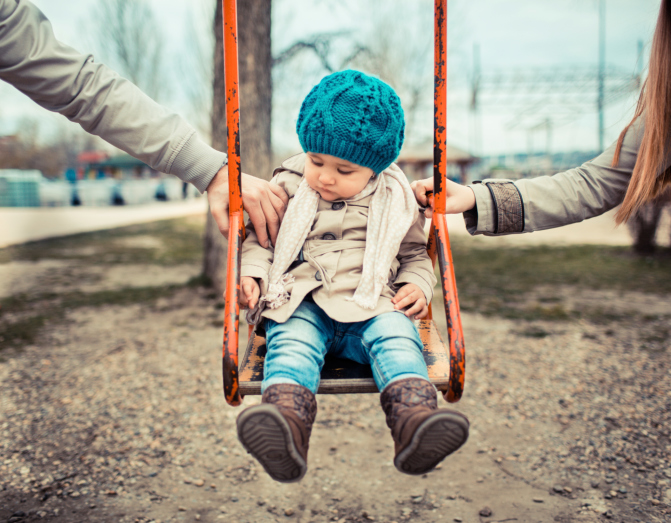 Earlier this year, a Michigan judge incarcerated three children after they refused to see their father. The children say their father is abusive, but the father claims the mother has initiated a campaign to alienate him from his children. After swift public outcry, the judge released the children, ordering instead that they participate in parental reunification therapy.
Divorced parents often engage in acrimonious custody fights, and some parents may launch extended campaigns to destroy their children’s relationship with the other parent. Parental alienation syndrome, originally coined in the 1980s, remains a controversial diagnosis and is not listed in the DSM-5.
A broken relationship with one parent can be destructive to children, but so can spending time with an abusive parent the child fears. Parental reunification therapy requires children to spend extended periods of time with the alienated parent, often without contact from the other parent. The theory is that this is the only way to break the cycle of parental alienation, but controversy swirls around the practice. Critics say the therapy could be used to force contact with abusive parents, and the treatment may amount to “deprogramming†that can be traumatizing.
Alzheimer’s Disease Consists of 3 Distinct Subtypes, According to UCLA Study
A UCLA study has identified three potential subtypes of Alzheimer’s. Though more research will be necessary, the subtypes could shed light on Alzheimer’s causes as well as potential treatment. Inflammatory Alzheimer’s is characterized by an increase in C-reactive proteins, as well as an increase in serum albumin and globulin levels. Non-inflammatory Alzheimer’s does not produce the same increases, but does lead to other metabolic abnormalities. Cortical Alzheimer’s—which often affects relatively young individuals—affects language first and produces effects that are more widely distributed across the brain.
The Sinister Science of Addiction
Research has long suggested that addiction is a disease rather than a personal failing, and measurable differences in brain chemistry account for much of the behavior associated with addiction. A new video in the Reaction series—a group of videos produced by the American Chemical Society—shows how addiction functions in the brain.
Criminals Acquire Guns Through Social Connections
[fat_widget_right]Popular myths suggest most guns used in crimes are stolen, but new research suggests that friends and family are a more likely option for acquiring guns. Research on the Cook County Jail in Chicago about how jail inmates obtained guns suggests that 60% of the guns were purchased or the product of a trade. Chicago gun laws prohibit selling guns to people with criminal records, so many former inmates are unable to acquire guns at gun stores or through other traditional avenues.
Trial Review Confirms Common Antidepressant is ‘Unsafe and Ineffective’ for Teens
Paroxetine—better known under its brand name of Paxil—has been prescribed to teens to treat depression since 2001, but new research argues the practice should end. Not only was the drug no better than a placebo; it was also potentially dangerous. In 2012, GlaxoSmithKline, the pharmaceutical company that markets the drug, was fined $3 billion for failing to report drug safety information to the Food and Drug Administration and for illegally marketing some of its drugs.
The Psychology of Why People Like Steve Rannazzisi Lie About Having Survived 9/11
A handful of people have been accused of lying about being present at the 9/11 terrorist attacks. This week, comedian Steve Rannazzisi came clean, admitting he had been lying about his presence at the World Trade Center that day. Experts are unsure why some people feel compelled to lie about a history of trauma. Theories include a need to feel involved, a craving for attention, serious mental health issues, and false memories.
More Time Outside Tied to Less Nearsightedness in Children
According to a study of Chinese schoolchildren, spending time outside could reduce the rate of nearsightedness. As many as 90% of Chinese high school graduates are nearsighted. But the study, which followed almost 2,000 schoolchildren for three years, suggests that as little as 45 minutes outside each day could reduce the country’s rate of nearsightedness.
Eating a Lot of Fish May Help Curb Depression Risk—at Least in Europe
 A number of studies have tied Omega-3 fatty acids—present in high quantities of fish—to a potential treatment for depression. A pooled analysis of 26 studies involving 150,278 participants suggests that Europeans who consume fish can reduce their depression risk by as much as 17%. This correlation was found only in European studies. The reduction in depression risk as a result of high fish consumption was higher among men, who saw a 20% reduction. Women’s risk of depression dropped by about 16%.
 “I’ve been fine for years. Now I have nightmares every night and can barely function at work. What’s going on?â€
“I thought I was over it. I even went to therapy as a kid! Why is it all coming back again?â€
“I feel like I’m falling apart, but the abuse was years ago. Does this mean I’m getting worse?â€
One of the first things survivors of sexual abuse ask me when they come into my therapy office is, “Why now? Why are these feelings and memories coming back now?†Often, the underlying question is, “I was fine before, but now I’m struggling. Am I going crazy?â€
If you’re having this experience—being suddenly overwhelmed by a past trauma—let me reassure you the same way I reassure the people I work with in my office. No, you’re not going crazy! As difficult as it may be to believe, a sudden reemergence of old feelings is often a sign that you’re ready to heal on a deeper level.
Recovery from Trauma Happens in Stages
Healing from a trauma such as sexual assault or abuse happens in stages. In the first few days after an assault, we tend to shut down because the emotions feel so overwhelming that we can deal with them only in small doses. For ongoing sexual abuse or molestation, this shutdown state may last for the entire time the abuse occurs. Eventually, in the days, weeks, and months after an assault occurred or the abuse ends, we usually find ways to “put the past behind us,†to regulate our emotions and to build a stable life. We may still experience some triggers or have some nightmares, and we don’t typically forget about what happened, but over the years we start to feel “normal.â€
Then, sometimes, all those feelings come roaring back. What’s going on?
When the fear, the anger, the sadness, the helplessness, the heartache—all the emotions that were perhaps too painful, too complicated, or just “too†in the immediate aftermath of the trauma—suddenly reemerge, your new task is to sit with those emotions and let them have their say.
In my experience as a therapist, what’s happening is that some deep, inner part of you finally feels safe and stable enough to address the leftover emotional fallout that’s been patiently waiting for years. Your job right after the trauma and in the years since the trauma occurred has been to find stability. You developed successful coping mechanisms that let you function in the world without falling apart. Those are invaluable skills that are going to get you through the next part of your recovery.
You Are Strong Enough to Feel Vulnerable Now
When the fear, the anger, the sadness, the helplessness, the heartache—all the emotions that were perhaps too painful, too complicated, or just “too†in the immediate aftermath of the trauma—suddenly reemerge, your new task is to sit with those emotions and let them have their say. They’ve been patiently waiting for you to develop the strength to cope with them successfully, and if they’ve shown up for you now, after all this time, they think you’re finally ready. You are strong enough to feel vulnerable for a while.
So what do you do? How do you cope without getting overwhelmed?
- Know that you are not regressing or going “crazy.†Reassure yourself that these seemingly new emotions are a normal part of the trauma-recovery process and that they won’t stick around forever. These emotions don’t mean you’re moving backward in your healing or that you’ll always feel this way. There is an end!
- Recognize that “the only way out is through.†These emotions will go away, but only after you let yourself feel them. Emotions give us valuable information about ourselves and the world, so you need to learn to listen to them. This is your opportunity to learn that skill.
- Go slowly. If all these emotions feel overwhelming and scary, you can take them in small doses. I often recommend setting a timer for 15 or 10 or even five minutes every day, and using that time to feel whatever you’re feeling right then. When the timer goes off, stop. (This is where your strength comes in!) It may be hard to feel at first, or hard to stop feeling, but that’s why you’re practicing. This exercise helps you build confidence that you can turn off the flood of emotions, which can help reduce anxiety about letting yourself feel.
- Give yourself credit for your progress. As you work through this stage of the healing process, you may find yourself caught up in one emotion for a while. You may go through a week-long period of sadness, for example, or a month of feeling really angry. People sometimes feel stuck when this happens and forget that they haven’t always felt that way and are therefore not likely to feel that way forever. Keeping a journal or talking about your feelings with a supportive loved one can help you see that you’re moving forward.
If you need additional support or resources, a therapist specializing in trauma recovery can help. If you need immediate help regarding sexual assault or abuse and you’re in the United States, you can call the 24-hour National Sexual Assault Hotline at 1-800-656-HOPE (4673) for support, resources, and referrals.
Related Reading:Â