 Any divorcing parent knows that one of the hardest parts of a marital ending is feeling forced to stay connected to someone you don’t particularly want to see or spend time with. Not all co-parenting situations are toxic—in fact, many couples find parenting is easier after they have separated—but the adjustment to parenting separately can be tricky for anyone.
Children can be one of the biggest stressors on a marriage, and even when that marriage ends, the co-parenting relationship maintains its own level of stress. Once your custody has been set, you may be faced with all sorts of issues and circumstances that challenge you to reflect on your parenting strategies. Among your considerations: how best to cope with your ex as you figure out what this new relationship means and how it’s supposed to go.
Productive co-parenting isn’t about following any particular formula. Each couple has their own unique dynamic, story, and situation that needs to be worked out in a way that serves the context of that family. However, there are techniques, strategies, and practices that can improve both the co-parenting dynamic and each partner’s experience of that relationship.
[fat_widget_right]
In my work with divorce, my focus is almost always on what each individual can work on within themselves. I encourage couples and individuals to refrain from trying to change or control their partners, and to focus on their own thoughts, feelings, and behaviors instead. Based on that philosophy, here are five strategies you can use to improve your co-parenting relationship that are completely within your control.
1. Use Empathy and Your Child’s Perspective
Having compassion for an ex can be hard when there has been betrayal, hurt, or rejection, but this is an essential component to co-parenting well. Seeing the situation through your child’s eyes will help you drop down into your heart, and it may give you a different perspective as you deal with your ex. Children simply want to feel loved, safe, and to spend time with their parents, so if you can make your main intention to help them in these respects, you’ll be co-parenting from a compassionate place. As you co-parent, remember it’s more about your child than you, and stepping into that place of empathy will be a good reminder. No matter how much you struggle with your ex, your children are always the priority.
2. Set Clear Boundaries and Maintain Structure
From the minute your marriage ended, your marital relationship shifted into something different, but you may still be engaging in old dynamics. Many of the ways you interacted with your ex in marriage are no longer appropriate or necessary, and a lack of good boundaries may make it even harder to transition into a new way of relating. Becoming clear about what works for you as you move forward untangling the relationship may help you set healthy boundaries. This includes how your children are picked up, whether your ex has a key to the house, and what kind of contact there is when you have the kids. Your boundaries may be violated, but it’s still important to communicate them.
3. Relinquish Control and Accept What’s Happening
There may be things you don’t approve of when it comes to your ex’s parenting style, or how they spend time with the kids. You may also feel differently about introducing a new partner or dating when it comes to parenting time. The reality is that more often than not you have no say over how your ex decides to live. Unless the situation is dangerous or neglectful, you need to learn to accept and let go of your need to control what happens in your absence. Instead of trying to control or change what’s happening, learn to let go, accept, and work with it as best you can. This is one of the hardest consequences of co-parenting, but also the one thing that can really reduce unnecessary stress.
4. Maintain Your Values and Live from Integrity
No matter how frustrated or annoyed you feel about co-parenting with your ex, maintaining your integrity and sticking to your values is essential. It’s easy to get pulled into ugly dynamics or engage in bad behavior when your buttons are pushed, but keeping your cool and staying true to yourself will feel better than reacting. It can help to make a list of the traits and qualities you want to uphold as you co-parent. These might include patience, kindness, respect, and/or grace. These are hard to stick to when you are dealing with someone who doesn’t have the same agenda, but rising above and taking the high road will be better for you and your kids.
5. Enjoy Your Time Off
Many parents spend the whole time they don’t have their children worrying and waiting for them to come back. It’s hard to not see your children half the time, but this alone time can be considered a silver lining. The more you take care of yourself by using that time to reboot and replenish, the better you’ll be for your children when you have them. Try practicing self-care, spending time with friends, exercising, or just having quiet time. All of these forms of self-support may lead to a greater sense of happiness, and you’ll have more space for caregiving and for dealing with your ex.
Learning to co-parent well is a growth-promoting process. You gain skills in negotiating, compromising, as well as stretching your internal capacities for compassion, patience, and empathy. All aspects of divorce can be used to transform the self, so making co-parenting another arena for becoming a better person may shift your focus and intention as you manage this challenging part of the process.
 Author’s note: A caveat before we get into the substance of this article: couples counseling with a skilled therapist can greatly help couples in which one partner has the symptoms or diagnosis of autism spectrum (ASD)/high-functioning autism. This article describes the path followed by many women whose husbands are not diagnosed and who did not have successful couples counseling support to help them understand their differences. I write here about heterosexual married couples because these are the couples I see most frequently in my practice, where most often it is the man who exhibits the characteristics of ASD. This is not meant to imply only heterosexual couples face these issues or only men can have problematic ASD.
When a neurotypical woman is married to a man who has the behaviors associated with autism spectrum (ASD), several things typically occur. Over the course of her marriage, she experiences herself as gradually disappearing. In the place of her former self emerges a person she barely recognizes. She is so lonely. So hurt. So … angry. She feels isolated, as her social connections have gradually diminished. She feels misunderstood by everyone who knows her, so she has learned not to talk about her “problems.†She starts to feels crazy. She also feels guilty, because her husband is a good man.
This result can be seen in the following modified example from my psychotherapy practice:
A woman in her mid-50s came in for her first appointment. She seemed unsure of herself, eyes downcast, behaving as many women do when they first arrive. I recognized the familiar look of bewilderment, explained by others before her as wondering whether they are going to make sense when they begin to speak, of whether I will view them as whiners, or whether they may be wasting my time.
[fat_widget_right]
Before taking a seat, she handed me her curriculum vitae. Many pages long, it was heavy in my hand.
“This is who I used to be,†she said.
At a glance, I could see that among other things this woman had successfully argued a case in front of the U.S. Supreme Court. Sinking into the chair in my office, however, she appeared too meek to look me in the eye as her tears began to form.
“I think my husband has Asperger’s. I don’t know, though. Maybe it’s me. Maybe there’s something wrong with me,†she said. “We have been married for 20 years. I don’t mean to say anything bad about him. He’s a good man. But I need a divorce. And my children think I’m a crazy person.â€
Then the tears came in earnest.
“It’s such a relief to be here. People don’t believe me. I stopped talking about this a long time ago.â€
I have seen this many times. On one occasion, a woman told me, “My husband has Asperger’s.†Then she began to cry, could not stop, seemed uncomfortable for not being able to compose herself, and left the office without uttering another word.
There are women who work with me for several months and can still feel blindsided when something comes up at home that they misinterpret from a neurotypical (NT) perspective instead of considering the implications of ASD. They continue to be surprised at the gap between themselves and their husbands. The pain they feel when they recognize this gap catches them like a stab to the stomach.
What has happened to these women? It’s difficult to see the process while it is going on, just as it is difficult to see the effects of water drops on granite minute by minute. But changes that are negligible day to day are incontrovertible over the long term. With time, granite that once held the characteristics of a unique natural form is visibly reduced to a smooth, monolithic surface.
What has happened to these women? It’s difficult to see the process while it is going on, just as it is difficult to see the effects of water drops on granite minute by minute. But changes that are negligible day to day are incontrovertible over the long term. With time, granite that once held the characteristics of a unique natural form is visibly reduced to a smooth, monolithic surface.
Instead of drops of water, women married to men on the spectrum are struck by pain from unrelenting moments of being reflected inaccurately in the place they look most often for reassurance: the eyes of their husbands. And over time, they begin to interpret what is reflected to them as a reliable representation. They try to alter their own perspective, their own aspirations, their hopes and dreams, to bring them into line so they are consistent with the way their husbands treat them. The lonely process of love and guilt and shame rips them apart.
It starts like this: a man on the spectrum (most often undiagnosed) marries a woman for all the qualities he admires, but once the wedding is over, those very qualities become the things that spark the most unsettling experiences for him. She is outgoing socially, has interesting things to talk about, and is engaged in intriguing professional activities. She is well-regarded, confident, and kind.
For her part, she finds his thoughtful attention and his stability comforting. She is also drawn to what she takes to be his reticence. She admires his ability to maintain his focus so intently and to be so successful in his work.
To a man on the spectrum, however, living with a person who has these qualities may be predictably uncomfortable. Where he seeks equilibrium in order to feel he understands the world around him, she seeks—and represents—novelty, as a result of the very curiosity that made her the woman he initially admired.
His constant anxiety related to living in what feels like an alien culture is soothed by predictability. This would be facilitated by the presence of a partner who complies with his view of reality. This is not because he sets out to manipulate her. It is because his fundamental concepts are threatened by hers. His anxiety grows with his fear of doing “something wrong†because he is never quite confident about what the “right thing to do†might be.
From her perspective, his thoughtful attention may have disappeared the very day of the wedding. He quickly became self-involved and aloof. The stability she admired slowly shows itself to be profound inflexibility. The reticence does not point to the underlying wisdom she assumed was present; she now sees that it comes from his not knowing what to do or say. And his inability to focus on her has come to mean she exists outside his field of interest, where he is apparently content to relegate her.
Mommy’s Birthday Doesn’t Matter
We can look at birthdays to explore the dynamics common to interactions between partners in an ASD/NT couple. When he does not acknowledge her birthday, and she asserts that his behavior has upset her, he may respond that he did not mean to upset her; therefore, she shouldn’t be upset. Or he might tell her that because birthdays come once year and everyone has them, they are no big deal and she should stop making such a big deal about them. Or he could tell her they celebrated her birthday last year. Or that birthdays are for children. In other words, he may hold her to the same idea regarding birthdays he holds himself. He may criticize her to the degree that her feelings about birthdays differ from his. He will miss her distress.
As a result, she doesn’t have the opportunity to celebrate her birthday, something which is generally understood as a common social convention in our culture. She also feels rejected by her husband over the belief her birthday is worth noting in the first place. She asks herself why such a little thing as a birthday seems so important to her. She wonders whether she is being juvenile, as he suggested. She sees he doesn’t care one way or another about celebrating his own birthday, after all.
She decides he is more mature than she is and attempts to comply with this idea of “maturity†by trying to ignore her own birthday. It doesn’t work. All her friends and family members mark their birthdays in some way. She sometimes has to explain to them why hers was overlooked. On occasion, she makes up stories about her birthday so people won’t feel sorry for her. She feels rejected, as well as foolish for being immature.
Overall, she is sad and lonely, still wondering why she can’t seem to make a point on her own behalf that she’d enjoy at least a card acknowledging her birthday, even though birthdays may not be important to him. But over time, she has learned further discussion is hopeless on a subject like this. She won’t say anything else about her birthday. She has learned such a conversation isn’t a discussion at all. It feels more like a pedantic correction of yet another one of her stupid ideas. And it will leave her upset, possibly in tears, with nowhere to go but inside.
She continues to celebrate his birthday. She makes certain the children’s birthdays are acknowledged and celebrated. She is now operating from the notion that her own birthday is a nonevent. It does not get mentioned because she does not bring it up. Her children, even though they are young, are noticing mommy’s birthday doesn’t matter, however. Daddy’s does. Theirs do. Mommy’s doesn’t. They do not understand it is Mommy herself—and without help from Daddy—who makes all the other birthdays happen. By complying with her husband’s view of things, however, in order to avoid the pain of being criticized about it once again, she has taught her own children that Mommy’s birthday doesn’t matter.
It is fair to wonder why a woman can’t decide to celebrate her own birthday on her own terms, regardless of what her husband thinks about it. In most cases, this would be a valid point. When ASD is present, though, the calculus is different. She can celebrate. She can bake a cake. She can buy herself flowers and even make reservations to go to dinner that evening. If she does, however, her husband’s attitude will be clear to her and to the children, whether he says anything with actual words or keeps his silence. It will be obvious to all concerned that he does not approve. He will comply to a minimum degree. He will participate begrudgingly. He will damn with faint praise. He will stonewall, which means he will say nothing at all, when she suggests (even mildly) that he participate. She has become accustomed to his stonewalling, which Dr. John Gottman, relationship expert, believes can kill a relationship because it denies communication and denies opportunity for the relationship to grow.
The Children Are Watching
The children are watching everything, interpreting it from their limited perspective and understanding. Mommy isn’t thinking of this at the time. She is not thinking the children learn how to treat their mother by observing the way their father treats her. She is operating on the assumption her children know her and love her and they see she is a good person. She is unaware that negative lifelong attitudes toward her are being formed in the young minds of the children she loves so dearly, and that these attitudes can come at her later to hurt her every bit as much as the behaviors she suffered from her husband, their father—the very behaviors that instilled these attitudes in the children in the first place. She is not thinking about the fact the children will likely remain unware they hold these subconscious notions regarding their mother, regarding how to treat her, regarding what she “deserves.†They watched how their father treated her. They learned. As adults, they may ignore their mother’s feelings and question her judgment, just the way Daddy does.
She is also unaware that in doing all the work and providing all the energy toward celebrating Daddy’s birthdays and the children’s birthdays, she is showing the children one more example of taking on both roles, Mommy and Daddy. She does it because it is important to her, for example, that the children’s birthdays are celebrated. She wants them to have fun. She wants them to have one special day a year that is all about them. She sees this as normal.
Daddy doesn’t agree, so he doesn’t participate.
Mommy does it all, from the planning to the present buying to the cake decorating, at home or at the bakery. She chats with all the parents who bring their own children to celebrate. She cleans up after the party. She is exhausted. She says so. Her husband may respond by saying, “Well, you’re the one who had to have this big party! You asked for it.†He may not help with the cleanup because, well, it was “her idea to have the party.â€
The children are watching as Mommy cleans up and Daddy retreats to his study. If they get wild or misbehave, a distinct possibility after having the house full of friends and their tummies full of birthday cake and ice cream, it will be Mommy who has to enter the fray and settle things down. If she’s tired and feeling lonely and rejected by her husband, she is at her least resilient point, and she can snap unintentionally at the children. She looks like the bad guy, the parent who is “always angry.†This is how it may seem to small children.
The children are also susceptible to misunderstanding another basic fact they observe regularly. They see Mommy being strong. They see her as the one in charge of all the daily life of the family, and of all the extras (such as birthday parties, ballet lessons, soccer games, play dates), and they wonder where Daddy is. Because the reality of the situation is impenetrable and inaccessible to the children, they may create their own narratives. They may believe Daddy is a good man, yet Mommy seems to want to do everything. They determine this is because Mommy has pushed Daddy aside in order to control everything herself. Mommy doesn’t let Daddy help. Poor Daddy! Mommy is really mean.
Time to Make a Change
The years go by. The children go off to college, graduate, create their own lives. Mom couldn’t be more proud of the young people they have become. She decides she can no longer survive the relationship with her husband, however. It is not unusual for women to leave these marriages once the children are at least in high school, but often the marker is when they leave the house for college. This is not an easy decision for a woman. In fact, it is brutal. And it often makes no sense to anyone who is looking in at the marriage from the outside, including the couple’s children. She must give up everything in order to save her sanity. Yes, it has come to that.
This woman has lost a partner, lost a marriage. She has also lost her dreams, her hopes. She has lost her fundamental sense of who she is. She has to mourn these losses. She then has to heal. And she has to re-create herself.
The woman by this time may have few friends, few confidants. She has learned to refrain from discussing her marriage difficulties, because the friends she has have always seen her husband as such a “nice guy†and because he is undeniably a good provider. She stopped trying to talk about it because she got tired of hearing “all marriages have problems,†she is “expecting him to meet all her needs, which is impossible for any one person to do,†and she is “misinterpreting things.â€
When she finally does go through a divorce, she discovers it will take her years to sort things out. She will think she is doing well immediately afterward because it feels so good to be free from the constant state of stress and criticism. This can be exhilarating. But gradually, she learns it is a phase. And it reveals a miscomprehension of how much healing she really has to do. During this time, before she reestablishes her new self, she may do things that seem rational and make decisions that seem logical. However, it is in looking back from a vantage point of several years after her divorce that she is likely to begin seeing just how separated from her true being she was during these years of healing, and of how much more healing she had to do, and still faces.
This woman has lost a partner, lost a marriage. She has also lost her dreams, her hopes. She has lost her fundamental sense of who she is. She has to mourn these losses. She then has to heal. And she has to re-create herself. It can take a decade or more to sort these things out and to become strong on her own. If she enters into a relationship with another man before she gets her bearings, she is likely to face additional confusion until the dust settles. This is not to be dismissed as the normal post-divorce phase of a woman’s life. It is an epic battle for reconstruction.
A No-Win Situation
By this time, the children see her differently. She is the woman who did not deserve to have birthday parties, remember. She is the woman who appeared to have pushed their father aside, so he was unable to be part of their daily lives. She appeared to have been the one who rejected him, and who instead of involving him in their lives, inserted her own agenda and goals. She is the one who spent all the money, because she had to manage everything and make all the decisions without her husband’s input. She is the one, most importantly, who broke up the family. Her selfishness caused the divorce, and the children were left to sort it all out.
Dad is the victim. Mom is the witch.
Mom has given her life to be both mother and father to the children because their father, on the autism spectrum but undiagnosed, was incapable of being involved emotionally and practically in the daily lives of their young family. Patterns were established. Mom continued to give. She finally left the marriage for her own sanity. She loses her marriage, her husband, her intact family. She appears to be the agent of the demise of the family, but she is not, because in running from abuse (regardless of the fact it was not necessarily intentional), she is running from a burning building in order to save her life. A fire set by intent, an accidental fire—what’s the difference to the person inside the house who must flee if she wants to live?
The woman loses again when she begins to understand her children treat her the way their father always treated her. They don’t respect her. They keep their distance. They blame her for everything they ever felt was wrong in the house when they were growing up.
The woman coming out of an ASD/NT marriage loses twice. She loses her husband and she loses when her children treat her the way their father treated her.
And to attempt to tell her story to her children is wrought with landmines invisible to her and unimaginable to the children. She feels she cannot convey the reality to them, regardless of her attempts. And even after all these years, she does not want to disparage their father, because she understands ASD is not his fault. She still treads carefully, even though he is unlikely to extend the same grace toward her. The children do not see this. Too much time has gone by. Too many patterns are set. They see only criticism of their father if she mentions she had to heal, or that she had to rediscover who she was after the divorce, or that she may have made decisions in the early years following the divorce that were not ultimately consistent with the person she now knows herself to be. She is, once again, judged and criticized—this time by the very children she exhausted herself to nurture.
If she is fortunate, she has found a good therapist along the way. She has had the opportunity to talk without feeling crazy. She has cried the bulk of her tears, though they still come when she thinks of her children, of how she loves them, of how unfair this has been to them, to her, to her former husband.
She has herself. She has friends. If she is fortunate, she has learned to re-create herself in such a way she has a career or an involvement in the community that allows her to experience herself in her competence and to be acknowledged by others as a person worthy of attention, worthy of friendship, even worthy of a birthday party.
Postscript: This article is a composite of what I have seen in my practice over the years among neurotypical women who have emerged from marriages with men who exhibit the behaviors consistent with a diagnosis of autism spectrum disorder (formerly called Asperger’s syndrome, high functioning autism). As a psychotherapist, I work with ASD/NT couples. I work with individuals affected by ASD. I work with women who are or were married to men with ASD. My role can be described as that of an ASD/NT translator, essentially, and my goal is to help both partners understand the world as seen from the other. By writing this, I do not mean to disparage or judge anyone. This article reflects my experience as a therapist, and I offer it here in this form to help women understand that their experiences are valid as well as to help their friends and family members understand what these women have been struggling with—and what they may well continue to struggle with for some time to come.
References:
- Gottman, J. (2015). The Seven Principles for Making Marriage Work: A Practical Guide from the Country’s Foremost Relationship Expert. New York, NY: Harmony Books.
- Silverman, S. (2015). NeuroTribes: The Legacy of Autism and the Future of Neurodiversity. New York, NY: Avery Publishing.
 Earlier this year, the Powerball jackpot soared to $1.5 billion dollars. Ticket sales went through the roof. People who never played the lottery before were suddenly buying handfuls of tickets. According to psychologists, this is likely rooted in an innate fear of missing out.
FOMO, an acronym for “Fear of Missing Out†has become a popular internet term in the last few years. It was even added to the Oxford English Dictionary in 2013. FOMO is defined as the feeling of anxiety or apprehension over the possibility of not being included in an exciting event happening elsewhere that others are experiencing.
The term may be new, but the feeling itself is not. People tend to wonder if the grass might be greener on the other side. There’s always the question of whether someone out there is living a better life, making more money, or finding more opportunities. In the digital age, when social media and smartphones have the potential to make us more preoccupied with others’ lives than ever before, FOMO can become a serious problem for some people.
Where FOMO Comes From
The term FOMO was originally popularized by entrepreneur Caterina Fake. FOMO is a modern-day form of “keeping up with the Joneses.” Where people were once trying to keep up with a handful of neighbors, they’re now trying to keep up with hundreds, even thousands of social media friends and followers.
Social media has its good points. It can help people stay connected to friends and family around the globe, but it can also create serious feelings of anxiety, inferiority, and depression for some. People look to social media to feel more connected, but in many ways, it can make people feel more disconnected.
[fat_widget_right]It is not clear to researchers whether social media is responsible for creating feelings of FOMO or if it simply makes it easier for people to indulge in those feelings. The latter is more likely, as humans have dealt with emotions such as envy and regret since the beginning of time. Looking at others’ lives on social media for hours each day can exaggerate those emotions.
Research has linked FOMO to feeling disconnected from others and discontent with one’s own life. According to a 2013 study published in Computers in Human Behavior, people with a high degree of FOMO feel less competent, less autonomous, and less connected in their daily lives than the average person. People with strong feelings of FOMO also reported using social media more often, suggesting social media may be a significant contributing factor to their anxiety.
Megan MacCutcheon, LPC, has noticed the negative effects of social media in people who are seeking to improve their self-esteem through therapy.
“In my workshops, participants often begin a conversation around social media and how it affects their self-esteem and the ability to feel satisfied in their own lives,†MacCutcheon said. “They see all these pictures and status updates on Facebook and develop a fear that they are missing out on the happiness, success, perfect families, and exciting experiences that everyone else seems to have.â€
For those looking to improve their self-esteem and increase satisfaction in their own lives, here are some tips for overcoming FOMO.
Embrace the JOMO (Joy of Missing Out)
JOMO, or “Joy of Missing Out†is a counter-term created by entrepreneur Anil Dash. While people with FOMO may second-guess their choices and wonder if they could be having more fun elsewhere, people with JOMO embrace the choices they have made and find joy in the present situation.
Millions of amazing events take place in the world at any given moment. It is impossible to be everywhere at once. Rather than worrying about what you may or may not be missing out on, try making the choice that is best for you and owning that decision. Find happiness in what you’re doing, and remind yourself why you made the choice in the first place.
Limit Your Social Media Intake
FOMO might be an age-old problem, but social media can add fuel to the fire. If you find social media is making you feel envious of others’ lives or unsatisfied with your own, try limiting your time on social media websites such as Facebook, Instagram, and Twitter. Many people have become addicted to knowing what is happening in others’ lives. They end up neglecting their own lives, staring into a screen instead of being fully present in the moment.
Try giving yourself a set amount of time to check social media each day. Applications such as StayFocusd, Anti-Social, and Self-Control can block or limit time on social media and other distracting websites. You can also stop notifications from appearing on your phone so you are only engaging with social media when you are actively logged on.
Go to a Digital Detox Camp
FOMO is a modern day form of “keeping up with the Joneses.” Where people were once trying to keep up with a handful of neighbors, they’re now trying to keep up with hundreds and even thousands of social media friends and followers.If limiting time on social media doesn’t seem like enough, sometimes a full hibernation may be helpful. Some people choose to take a few weeks or even months off from social media to spend time with their real-life friends and family and focus on the present moment.
Some may choose to go on a camping or hiking trip to unplug. Others may find it more difficult to put their phones down, so they choose to attend a digital detox camp. Camp Grounded, located in Northern California, is one such digital detox camp. Adult campers willingly give up their phones for a few days, leaving the work jargon at home and participating in activities such as campfires, yoga, meditation, swimming, archery, and stargazing, among others.
Remind Yourself Social Media Is Airbrushed
Remember what is posted on social media is usually not what it seems. Just like the photos of models in magazines are airbrushed, people don’t typically post the whole truth on social media. Instead, people typically only post their best selfies and are more likely to share a photo of an exciting adventure rather than a rant about any difficulty they may be having. Remember, no matter how perfect or interesting a person’s life seems, everyone has bad days.
Be Grateful
Cultivating an attitude of gratitude can help combat anxious and envious feelings. Research has shown simply writing down a few things you’re grateful for each day can help increase your overall life satisfaction. Further positive psychology research links gratitude to greater feelings of happiness and well-being. The next time you’re feeling envious of what someone else has, try redirecting your focus to the positive aspects of your own life. You may start to feel better.
Practice Meditation
Meditation can help you become more mindful of your thoughts and feelings and how they affect your life. Taking a few minutes to meditate each day can help clear your mind and reduce anxiety.
Change Your Thoughts
According to psychologists, FOMO can actually be a form of cognitive distortion. Cognitive distortions are irrational thought patterns—such as believing your friends don’t like you if you weren’t invited to a recent event—that can lead to depression and other mental health conditions. Cognitive behavioral therapy techniques can help people learn to spot cognitive distortions when they occur and transform them into more positive and constructive thoughts.
Unplugging from technology, redirecting your thoughts, and seeking help from a qualified mental health professional are all ways you can stop worrying about what you’re missing out on and start feeling confident in the way you choose to spend your time.
References:
- Burkeman, O. (2014, October 17). This column will change your life: The joy of missing out. The Guardian. Retrieved from http://www.theguardian.com/lifeandstyle/2014/oct/17/joy-of-missing-out-oliver-burkeman
- Hinds, H. (2016, January 13). Fear of missing out fuels pressure to play Powerball. Retrieved from http://www.fox13news.com/consumer/74215255-story
- Huet, E. (2014, June 20). Camp Grounded: Where people pay $525 to have their smartphones taken away from them. Retrieved from http://www.forbes.com/sites/ellenhuet/2014/06/20/camp-grounded-digital-detox/#732df78c688a
- Giving thanks can make you happier. (2011). Harvard Health. Retrieved from http://www.health.harvard.edu/healthbeat/giving-thanks-can-make-you-happier
- Glei, J. K. (2010). 10 online tools for better attention and focus. Retrieved from http://99u.com/articles/6969/10-online-tools-for-better-attention-focus
- Pappas, S. (2013, May 14). Life satisfaction linked with fear of missing out. Huffington Post. Retrieved from http://www.huffingtonpost.com/2013/05/14/fear-of-missing-out-life-dissatisfaction-fomo_n_3275349.html
- White, J. (2013, July 8). Research finds links between social media and the ‘fear of missing out.’ The Washington Post. Retrieved from https://www.washingtonpost.com/national/health-science/research-finds-link-between-social-media-and-the-fear-of-missing-out/2013/07/08/b2cc7ddc-e287-11e2-a11e-c2ea876a8f30_story.html
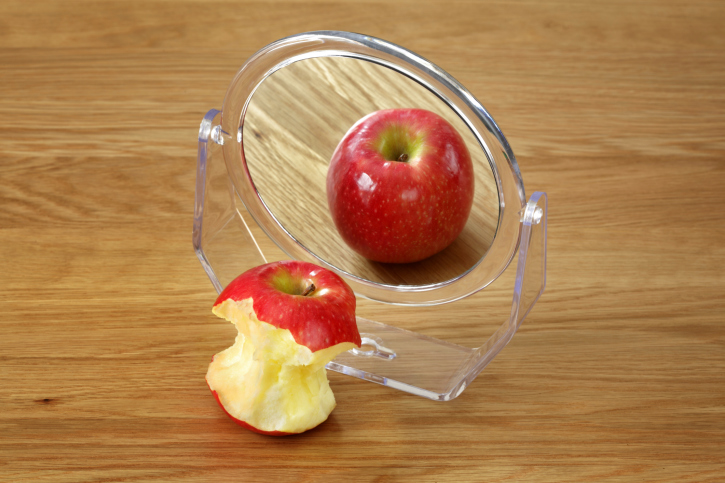 Editor’s note: The subject matter in this article may be triggering for those who experience body image issues, those coping with an eating disorder, and those who are in recovery.
The internet can be a valuable resource for those seeking education and support for anorexia and bulimia. While it may be a helpful tool for recovery and treatment, there is also a wealth of information online that encourages and supports those with eating disorders who are not seeking recovery, but are instead seeking “thinspiration.”
Thinspiration, also referred to as thinspo, is a play on words used to describe the widespread use of photos of thin models and actresses with captions that glorify eating disorders. These memes are shared with the intention of inspiring people to get thin by engaging in disordered eating habits.
Thinspiration or pro-ana/pro-mia (pro-anorexia, pro-bulimia) blogs are popular among those affected by eating disorders, but this is not a new phenomenon. As far back as 2001, Yahoo removed some 100 websites labeled as pro-ana for violating their policies.
In recent years, social media has provided a breeding ground for bourgeoning thinspiration groups, making it all the more challenging to monitor and remove content. According to Eating Disorders Review, a residential treatment center in Chicago reported 30-50% of its teen patients were using social media to support their eating disorders. This has left many therapists, counselors, and others in the recovery community wondering how dangerous they are and what can be done to protect vulnerable teens.
What Is Thinspiration?
[fat_widget_right]Thinspiration is far more complex than the photos of excessively skinny people posted on social media. The pro-ana/pro-mia community views anorexia and bulimia as lifestyle choices rather than mental health conditions. In their quest to support each other in being thin, they provide tips on how to suppress hunger, hide missed periods, and keep stomach acid from affecting the teeth after vomiting.
One popular thinspo blog distinguishes “anorexics†from “rexies,†stating, “If you identify yourself as anorexic, then this site is not for you.†The blogger goes on to say anorexics want sympathy for their disease whereas rexies are proud of their accomplishments and seek admiration for their lifestyle choice.
“Nothing tastes as good as skinny feels†is perhaps the most popular mantra of the thinspiration community. Some other popular mottos include “Your stomach isn’t grumbling; it’s applauding,†“I beat obesity,†and the misguided use of Bon Iver’s lyric “Come on skinny love, just last the year.â€
They’re not just posting pictures of celebrities, either. Teenagers are posting photos of themselves on blogs and social media platforms, showcasing the different phases of anorexia and bulimia. Often, the highly esteemed photos are of people in the late stages of illness who are hollow-cheeked and gaunt. The “likes†and “thumbs-up†received on social media can give the person positive reinforcement for disordered eating.
Why Thinspiration Is Dangerous
“Thinspo is incredibly dangerous and triggering, especially for those who already have a negative body image,†said Chapin Faulconer, LPC. “I find that my adolescent female clients with eating disorders often look at thinspo and aspire to look like the images they see online. Thinspo not only perpetuates the idea that eating disorders and extreme thinness are acceptable, but it goes one step further and promotes the belief that eating disorders are lifestyle choices and not mental disorders which can result in death, particularly in the case of anorexia.â€
Thinspiration websites are especially dangerous for those struggling with disordered eating, particularly adolescents and teenagers. These people are already experiencing self-esteem issues and typically feel isolated from their friends and family. They may turn to the thinspiration community for support and a sense of belonging. While others are telling them they’re sick and need to seek treatment, thinspiration validates their experience and tells them they’re making a lifestyle choice that takes self-control, willpower, and dedication.
Researchers and mental health experts recognize thinspiration as a serious social problem. For the millions of people with anorexia and bulimia, thinspiration can be life-threatening.The pro-ana/pro-mia community has become akin to a sorority for many young girls, who may enjoy the feeling of being involved in a secret society. Some of them even refer to themselves as “the elite†and use mottos such as “girl power†to encourage one another. Even though the community is heavily geared toward females, males are also susceptible to disordered eating. Statistics show about 10% to 15% of people with anorexia or bulimia are male, and they may be less likely to seek treatment because of the incorrect perception that eating disorders only affect females.
One of the websites went as far as to create a pro-ana religion, creed, and psalm, providing readers with a set of rules referred to as “The Thin Commandments.†Some of the edicts included: “Being thin is more important than being healthy,†“Thou shall not eat fattening food without punishing oneself afterwards,†and “Being thin and not eating are signs of true willpower and success.â€
Researchers and mental health experts recognize thinspiration as a serious social problem. For the millions of people with anorexia and bulimia, thinspiration can be life-threatening.
Eating disorders have the highest mortality rate of any mental health condition. More than 20% of people diagnosed with anorexia will die from complications related to the condition. The other 80% may experience a variety of health problems as a result of their disordered eating including shrinkage of the heart muscle, irregular heartbeat, muscle atrophy, kidney stones, kidney failure, and osteoporosis.
In addition to the physical effects, anorexia and bulimia can negatively impact a person’s home, personal, social, and professional life. The emotional effects can lead to other mental health conditions. Nearly 50% of people with eating disorders meet the criteria for a depression diagnosis.
How Can We Help?
The National Eating Disorder Association has worked with social media platforms to take this content down. Tumblr, Pinterest, Instagram, and other social media platforms have implemented policies to help prevent the sharing of thinspo-related images and blogs. Popular thinspiration hashtags have been blocked from search features, but many users have figured out ways to get around the ban.
Because censorship seems to be ineffective, studies suggest a zero tolerance policy may not be the best approach. After studying 33 pro-anorexia bloggers, researchers from Indiana University concluded these communities had originally intended to provide support and could be prolonging lives until people with eating disorders were ready to seek recovery. James Watson, administrator of PrettyThin, formerly the world’s largest community for individuals with eating disorders until it shut down in 2014, saw the community as a safe haven for individuals to talk openly about their issues.
The problem isn’t unique to eating disorders. Information and websites promoting other forms of self-harm also exist, including pro-cutting websites, pro-suicide websites, and sites that support drug abuse. According to researchers, when zero tolerance doesn’t work, harm reduction may be a better strategy.
Furthermore, if these websites are providing a sense of community for people, what may be needed are more alternative communities that promote a healthy self-image and relationship to one’s body while still providing a safe space for people to openly express their concerns without feeling judged or labeled.
According to a report by Common Sense Media, teenagers spend an average of nine hours a day consuming some type of media. Studies show more media exposure is directly linked to a higher risk of mental health issues and lower self-esteem.
Perhaps these are the most important questions: What messages are sent out to people about body image and self-acceptance, and how do we shift those messages so media exposure can increase self-esteem rather than deplete it?
Where to Seek Support for Disordered Eating
If you or someone you know is struggling with an eating disorder, it may be beneficial to seek the guidance of a mental health professional. The following resources may also be of help.
National Eating Disorders (NEDA)
Helpline: 1-800-931-2237
Website: www.nationaleatingdisorders.org
National Association of Anorexia Nervosa and Associated Disorders (ANAD)
Helpline: 630-577-1330
Website: www.anad.org
Support Groups by State: http://www.anad.org/eating-disorders-get-help/eating-disorders-support-groups/
Eating Disorder Hope
Helpline: 1-888-206-1175
Website: www.eatingdisorderhope.com
References:
- Eating Disorders Fact Sheet. Eating Disorder Coalition. Retrieved from http://www.eatingdisorderscoalition.org/inner_template/facts_and_info/facts-about-eating-disorders.html
- Eating Disorder Statistics. Retrieved from http://www.anad.org/get-information/about-eating-disorders/eating-disorders-statistics/
- Grayson-Mathis, C.E. (2005). Pro-anorexia websites: The thin web line. Are these sites fueling an epidemic? Retrieved from http://www.webmd.com/mental-health/eating-disorders/anorexia-nervosa/features/pro-anorexia-web-sites-thin-web-line
- Greenfield, R. (2012, April 21). To ban or not to ban? How do you solve the problem of thinspo? The Wire. Retrieved from http://www.thewire.com/technology/2012/08/ban-or-not-ban-how-do-you-solve-problem-thinspo/51436/
- Gregoire, C. (2012, February 9). The hunger blogs: A secret world of teenage thinspiration. Huffington Post. Retrieved from http://www.huffingtonpost.com/2012/02/08/thinspiration-blogs_n_1264459.html
- IU researchers interview pro-anorexic bloggers for groundbreaking new study. (2012, August 20). IU News Room. Retrieved from http://newsinfo.iu.edu/news/page/normal/22967.html
- Totally in control: The rise of pro-ana/pro-mia websites. Social Issues Research Centre (SIRC). Retrieved from http://www.sirc.org/articles/totally_in_control2.shtml
- Wallace, K. (2015, November 3). Teens spend a ‘mind-boggling’ 9 hours a day using media, report says. Retrieved from http://www.cnn.com/2015/11/03/health/teens-tweens-media-screen-use-report/
- Wilson, J. & Hernando, H. (2015, February 28). ‘Thinspiration selfies almost killed me’: Anorexia survivor’s warning as Mirror investigation uncovers shocking secret world on Instagram. Retrieved from http://www.mirror.co.uk/news/real-life-stories/thinspiration-selfies-killed-me-anorexia-5245488
 If you’ve watched television in the last few years, you’ve likely come across a reality show about hoarding. Rather than truly educating the public on the condition, reality TV tends to dramatize the issue, spread misinformation, and increase stigma.
Hoarding reality shows can be misleading, as they often showcase only the most extreme cases of hoarding. Hoarding is a broad term that covers a vast range of circumstances. For example, a person with a hoarding problem may have difficulty getting rid of possessions but still have far less clutter than the individuals seen on TV.
An estimated 15 million people in the United States experience hoarding issues. Hoarding is a serious condition that can have devastating physical, emotional, social, financial, and legal effects on the individual and surrounding loved ones.
It’s time to bust the stigma and tell the truth. Here are seven common myths about hoarding.
1. Hoarding Is Just Another Name for OCD
Hoarding is a complex mental condition characterized by collecting too many items, an inability to let go of possessions, and trouble with organization. Until recently, hoarding was considered by mental health professionals as a form of obsessive compulsion (OCD).
While hoarding seems to be related to OCD, a vast percentage of individuals with hoarding problems do not exhibit other OCD symptoms. Even though some experts consider it a subtype of OCD, typical treatment plans have not been shown to be effective at treating the symptoms of hoarding.
2. Hoarding Is the Same Thing as Being Disorganized
[fat_widget_right]While being disorganized can be a problem itself, it is not as severe as hoarding. The major difference between someone who is hoarding and someone who is messy is hoarding can make it difficult for the person to function. People may accumulate so many items they can no longer sit on the sofa or use the stove. A person who hoards is often unable to get rid of such items even when they are no longer useful or they interfere with daily living. A messy person is usually able to let things go when necessary.
Hoarding is far more serious than being disorganized. Compulsive hoarding can affect a person’s ability to maintain relationships, keep a job, and take care of personal and household needs.
3. Cleaning Will Immediately Solve the Problem
Simply attempting to clean up a cluttered space without addressing the underlying issue typically fails to solve the problem. People may spend hours of time and thousands of dollars to clean out a space only to have the person relapse and start accumulating more stuff in just a few months.
Those whose homes are cleaned out without their permission also may experience extreme distress, complicating the issue. To completely stop hoarding, a holistic treatment plan may be more effective.
4. Hoarders Are Lazy, Dirty, and Unmotivated
Stereotyping people with a hoarding condition as dirty or lazy is an unfair stigma. People who hoard may have cognitive deficits in the brain, impairing their ability to make decisions as well as to keep things organized. Studies have also shown there may be a genetic component to hoarding problems.
Rather than being stigmatized, what people with a hoarding condition really need from others is compassion, empathy, and support.Assuming a person who hoards is also dirty adds to the stigma surrounding a hoarding condition. The term hoarding most often refers to the accumulation of objects and clutter rather than dirt. It is common for a person who hoards to keep a clean house despite the clutter.
Hoarding is also common after a major loss when a person is unable to cope with grief in a healthy way. People who hoard are not lazy; they are just less capable than the average person at carrying out tasks and making decisions. Rather than being stigmatized, what people with a hoarding condition really need from others is compassion, empathy, and support.
5. Hoarders Are Collectors
Hoarding and collecting are two different things. Collectors tend to keep their items organized and proudly on display for others to see. People who hoard will rarely display their possessions, usually keeping their belongings in complete disarray. They often feel embarrassment and shame when others see their mess.
Hoarding also differs from collecting because it often prevents normal usage of the home. For example, a person’s kitchen appliances may no longer be accessible as a result of clutter.
6. Hoarders Can’t Stop Hoarding
Though it can be difficult for an affected person to stop hoarding, compulsive hoarding can be treated. Medication has not been shown to be effective against hoarding, though it may help alleviate some of the symptoms associated with it such as depression and anxiety.
Long-term therapy can effectively treat hoarding when combined with adequate education and support. Hoarding generally requires a holistic and comprehensive treatment program that addresses all aspects of a person’s life.
7. Hoarding Can Be Treated by a Single Medical Professional
Hoarding is a multi-faceted issue and typically requires a team of professionals to effectively treat the problem. Some professionals that may be involved in the treatment process include psychiatrists, therapists, counselors, professional organizers, building inspectors, and landlords, among others. These teams are often referred to as task forces, and approximately 75 cities currently have them in place to help those in the community who are struggling with hoarding.
If you or a loved one are struggling with hoarding problems, it may be helpful to talk to a therapist or other mental health professional who specializes in hoarding.
References:
- Baker, J., Bergren, M. G., Frost, J., Sanchez, L., Andreasen, T., & Bratiotis, C. (2014). Beyond the Sensationalism: Professional Responses to Hoarding Disorder in the Omaha Community. Retrieved from http://www.unomaha.edu/news/2014/04/hoardingwhitepaper.pdf
- Bratiotis, C., Otte, S., et. al. (2014) Hoarding Fact Sheet. International OCD Foundation. Retrieved from https://iocdf.org/wp-content/uploads/2014/10/Hoarding-Fact-Sheet.pdf
- Dailey, S. G. (2013, February) Hoarding: A Complex Issue Needing Community Support. Age Wise: King County. Retrieved from http://www.agewisekingcounty.org/en/125/1/449/Hoarding-A-Complex-Issue-Needing-Community-Support.htm
- Samuels, J., Shugart, Y., et al. (2007, March). Significant linkage to compulsive hoarding on chromosome 14 in families with obsessive-compulsive disorder: results from the OCD Collaborative Genetics Study. American Journal of Psychiatry, 164(3): 493-9. Retrieved from http://www.ncbi.nlm.nih.gov/pubmed/17329475
- Treneva, R. (2005, August 3). Hoarding: Myths and Misconceptions. Insight Bulletin. Retrieved from http://insightbulletin.com/hoarding-myths-and-misconceptions/
- Webley, K. (2010, April 26). Hoarding: How Collecting Stuff Can Destroy Your Life. Retrieved from http://content.time.com/time/nation/article/0,8599,1984444,00.html
 When I work with people who have difficulty expressing what they want and need, especially to their significant others, it is apparent feelings about hurting the other can create a fierce resistance to the authentic expression of self. As a therapist, my job is to find a way to help people navigate between consideration of the other’s feelings and honoring their own wishes and desires.
For some, realizing they have wounded someone they care about, even unintentionally, can cause painful regret and self-attack. Frequently, I find I must help people accept that they can and sometimes should choose to express themselves knowing it might hurt someone they love. My challenge is how to help someone accept that hurting and being hurt comes with the territory of love and relationships.
Identification with the Other
Mark, who has been married to Cynthia for five years, talks about how much he loves his wife and how difficult it is to make choices for himself when she disapproves of those choices: “Cynthia is such a strong person. She always seems to know what she wants and what is right for us. I wanted to take a relaxing beach vacation since work has been so crazy, but she insisted we do something more interesting. When I tried to push and said how tired I was, she started to cry and told me I should know how much she hates the beach and how it hurt her feelings that I would even suggest it. I felt really terrible and mean. She’s right: I should never have brought it up.â€
[fat_widget_right]
Mark and I explored his reaction to Cynthia and his feelings of guilt and cold-heartedness for not recognizing he would hurt her by expressing his wishes. Mark found it difficult to consider that he hadn’t done something unforgivable. He was consumed with self-loathing and seemed devastated as he put his head in his hands and told me: “I always feel like the world’s worst person when I hurt her so badly. It shakes me up and I hate myself.â€
Mark was not aware of how he identifies with Cynthia’s feelings and experiences her pain as if it were his own: “I know just how she feels when I do that to her. I’ve felt that so many times in my life, especially when my older sisters would be mean to me. I never want to make anyone, especially the woman I love, feel so awful.â€
His recounting of his experiences with his sisters led us to focus on how Mark identifies with Cynthia and assumes her hurt feels exactly like his hurts of so many years ago, inflicted with malice. I asked Mark if he could imagine not feeling so viscerally that he had hurt her and instead feel sad or sorry for his behavior. I pointed out, “You identify with Cynthia and experience her pain as if it were your own. It seems difficult to step back a little and just feel badly that your wishes hurt her and be concerned, rather than taking on and experiencing her feelings. Identifying this way makes it very difficult to allow yourself to be free to express your needs and cope with your impact. You also end up attacking yourself and feeling like a bad person when it feels like you have so seriously wounded your wife.â€
Mark acknowledged he often felt paralyzed to express his wishes but found it confusing to consider he could have a choice and not identify with Cynthia. I introduced the idea of empathy to Mark as an alternative to identification. We have begun to work on what it would mean and how it would feel to be empathic (being compassionate and sensitive to feelings without having the feelings) rather than identifying. This is not yet a distinction Mark can easily understand, and we continue to work on this. We will also continue our exploration of how Mark develops his identification reaction when a significant other is hurting.
Early Family Communications About Hurt and Hurting
Some children grow up in families where parents communicate that any negative impact the child makes on the parent will not be tolerated. This means the child cannot disagree, create conflict, or express any thoughts or feelings which negatively affect the parent. Under these circumstances, the parent’s response when they feel the child has hurt them is typically a communication that the child has inflicted pain and suffering on the parent. This is frequently experienced by the child as a sign of the child’s “badness.â€
When a child’s early experience is that they have the power to inflict such hurt and distress on a parent, they are likely to take on that “bad person†feeling. Thus, feelings of shame, anxiety, and worries about being destructive can become part of the child’s identity. The degree to which this is felt and internalized may depend on where on the continuum of possible responses the parent’s reaction falls. The parent’s negative responses may range from a quiet and subtle withdrawal of love or connection, to guilt- and fear-inducing accusations of “you hurt me†or “you’re mean,†to aggressive physical punishment.
This kind of negative emotional response from a parent may severely interfere with the child’s ability to develop a positive sense of self and impair the capacity to assert their wishes and desires to others. The expression of any sense of agency can create anxiety about the risk of negatively impacting the other, along with worry they are doomed to experience the feelings that have come to be part of the “bad person†identity.
Part of the work for these people in therapy is to get comfortable with being hurt and hurting as a normal component of relationships. This doesn’t mean one shouldn’t feel badly or sorry when they inflict hurt. It does mean it is necessary to address old responses of feeling devastated (identification) when a loved one is hurting, as well as the “bad person†feelings of shame and self-hate.
Jana, 29, was very angry in her session with me as she recounted a memory when she was 5 or 6: “My parents divorced, and my father left me and my younger brother with my mother. I was sad all the time and scared. My mother went to work, and we had a babysitter. I remember pulling on my mother and crying, ‘Don’t go, don’t go.’ I was beside myself. She told me to stop it, that I was making her feel bad and hurting her feelings. I’m not absolutely sure she said this to me, but I think she said something like it was mean of me to make her feel like a bad mother. I think she said that a lot. She hasn’t changed. She’s the mean one. That icy cold voice comes out of her even now when I’m upset about something or need something from her.â€
I remarked, “You seem angry at her now. How did you express anger growing up?â€
Jana sighed, “I am angry now. But I could never let myself get angry at her when I was growing up. I couldn’t really let myself feel angry feelings toward her until a few years ago, after I started to work with you. I was always the bad one; I felt I was always hurting her. I especially remember hurting her if I didn’t say the right thing to my grandparents. I absolutely remember her telling me I was mean to make her look like a bad daughter because of something I said or didn’t say to my grandparents. I don’t know what she wanted. It was so unpredictable. I remember this awful feeling in my stomach, like I was going to throw up. For so many years, I felt like a disgusting person.â€
Jana has increasingly been able to understand her child self was not to blame for her mother’s hurt feelings and that her behaviors were not bad or mean, even if her mother experienced them that way. She is now better able to be angry with her mother and recognizes her overwhelming feelings of shame and anxieties about her impact on others are related to her early experiences.
Nevertheless, she has not been able to give up the wish for her mother to affirm her goodness. She continues to struggle to maintain a more positive sense of herself and disavow the “bad person†feelings. Contact with her mother is her biggest challenge to accepting her goodness and shedding her sense of herself as a disgusting person. Fortunately, Jana’s awareness of her situation, and her commitment to herself to grow an identity in which she can comfortably express who she is, is powerful motivation to keep growing.
For Jana and Mark, there is a strong drive to suppress their thoughts and feelings rather than risk “bad person†feelings and/or their own pain should they hurt a significant other. For any person who has to fight “bad person†feelings, it becomes necessary to loosen the hold on the idea that the other’s hurt is the consequence of their behavior and/or badness. Rather, they need to recognize that the other’s feelings of being hurt don’t always correspond to having been treated in a hurtful manner.
It may sound glib to say “hurt happens,†but it does. This doesn’t mean behavior isn’t sometimes intentional and meant to hurt and destroy. However, when I think about the people I help and their early experiences in their families, they were not helped to be comfortable with their nondestructive or non-mean behavior if the other felt impacted in hurtful ways. (I am not addressing hurtful behavior when it was intentional.) Part of the work for these people in therapy is to get comfortable with being hurt and hurting as a normal component of relationships. This doesn’t mean one shouldn’t feel badly or sorry when they inflict hurt. It does mean it is necessary to address old responses of feeling devastated (identification) when a loved one is hurting, as well as the “bad person†feelings of shame and self-hate. These old responses do not serve the individual’s needs for self-esteem, agency, and authenticity.
Note:Â To protect privacy, names in the preceding article have been changed and the dialogues described are a composite.
 Parents who play video games with their children may have a better understanding of how those games affect children, according to a study by researchers from the University of Oxford and Cardiff University published in PeerJ.
The effects of video games on children remains a contested topic. A 2015 American Psychological Association task force report asserted a link between violent video games and aggression. Some studies—including a 2015 study of 200 children—undermine this claim, finding no association between video games and violence. Video games may also affect children’s mental health. A 2016 study found a slight association between video game play and depression and conduct issues.
Should Parents Play Video Games with Kids?
The study involved three trials designed to assess attitudes toward video games. The first study polled 959 men and 1,019 women about their attitudes toward and experience with video games. Attitudes toward video games were more positive among those who played games frequently.
The second study assessed 483 men and 517 women on their attitudes toward video games, including their belief in inaccurate assertions about video games, such as the assumption that games cause mass shootings. That study determined older groups, as well as those with only limited game-play experience, were more likely to have negative views of video games and to endorse inaccurate assertions about games. They were also more likely to believe law should restrict game access.
A third study of 929 men and 987 women assessed experience with video games, but also asked about the participants’ status as parents. Researchers asked parents if they played video games with their children and how they believed video games affected their children.
[fat_widget_right]Parents who played video games with their children were more likely to have a nuanced view of video game play, citing both benefits and drawbacks. Women reported less exposure to game play, either by themselves or with their children, and were more likely to hold negative beliefs about video game exposure. Overall, parents who regularly played games with their children were about three times as likely to have accurate beliefs about the effects of video gaming.
The study’s authors say their results point to the ways inexperience can contribute to bias in perceptions of gaming.
Video Game Recommendations
The American Academy of Pediatrics (AAP) still recommends no “screen time†in front of televisions or digital media for children under age 2. For older children, the organization no longer proposes a hard limit on screen time. Instead, it suggests parental involvement matters, parents should evaluate the content of the media their children consume, and children need limits to prevent technology from interfering with other activities. The AAP also points to the importance of other activities, such as outdoor time and reading, and encourages parents to establish “screen-free zones.â€
References:
- Media and children. (n.d.). Retrieved from https://www.aap.org/en-us/advocacy-and-policy/aap-health-initiatives/pages/media-and-children.aspx
- Parents know best about effects of video games on children (2016, April 12). Retrieved from http://medicalxpress.com/news/2016-04-parents-effects-video-games-children.html
- Przybylski, A. K., & Weinstein, N. (2016). How we see electronic games. PeerJ,4. doi:10.7717/peerj.1931
- Shapiro, J. (2015, September 30). The American Academy of Pediatrics just changed their guidelines on kids and screen time. Retrieved from http://www.forbes.com/sites/jordanshapiro/2015/09/30/the-american-academy-of-pediatrics-just-changed-their-guidelines-on-kids-and-screen-time/#5d4e61d7137c
 It is love or is it lust? Many have asked this question at some point, struggling to make a distinction between the two. According to recent science, the answer lies in the eyes.
“The eyes are the windows to the soul†is a popular phrase, and science has revealed the truth of this poetic line. Researchers have found eye movement alone can distinguish the feelings of love from lust.
Love or Lust: The Eyes Tell All
During a study by University of Chicago researchers, participants’ eye patterns were monitored while looking at a stranger’s photo. According to the results, a person who sees someone as a potential romantic partner would look at the person’s face, whereas a person who is feeling lust or sexual desire is more likely to look at the person’s body.
Other scientific studies have shown the brain regions involved in feelings of love are different from those involved in feelings of lust. Eye movement data proved different eye movements occur when a person views a photo of romantic love, such as a picture of a couple holding hands, versus a photo of an attractive person.
The Neurophysiology of Love and Lust
[fat_widget_right]Though love and lust are interrelated, they are coordinated by different emotional systems and neural processes in the brain. Lust is ruled by the sex drive, which is processed in the endocrine and reproductive system, driven by testosterone and estrogen.
Physical attraction plays a role in feelings of lust and falling in love. Attraction is driven by the reproductive instinct and is subject to hormonal reactions as well as the release of neurotransmitters such as dopamine and norepinephrine.
After someone has fallen in passionate love, the initial excitement and passion may fade over time as the dopamine levels associated with novelty begin to level out. At this point, the love may grow into companionate love. This type of love is associated with bonding hormones, such as oxytocin and vasopressin.
Distinguishing Between Lust and Love
Although science indicates love and lust are distinct even on a physiological and neurological level, it may not make distinguishing between the two any easier for those under the charms of lust and romantic love. Differentiating between the two can be a challenge, as the feelings often occur simultaneously and both have the ability to cloud judgment. So how can you tell the difference?
Lust is purely physical attraction. It is an altered state of consciousness biologically driven by the instinct to procreate. It can be incredibly powerful and can at times surpass logic and reason. Lust is initiated by pheromones, chemicals secreted in sweat that reveal information about genetics and influence behavior. When you experience physical attraction and sexual desire for another, it is the result of bodily awareness of a good genetic match for creating offspring. Lust knows nothing about long-term compatibility or companionship.
Love is also an attraction, but it goes beyond a physiological impulse. Love is not immediate; rather, it grows over time. When you meet someone you fall in love with, it may start out as lust and grow into infatuation, which is what we commonly associate with romantic love.
Love is also an attraction, but it goes beyond a physiological impulse. Love is not immediate, but rather grows over time.When you become infatuated with another, you may begin to see through rose-colored glasses, putting the person on a pedestal and ignoring any flaws. Infatuation can become obsessive, leading someone to experience the “can’t eat, can’t sleep†phenomenon often associated with falling in love.
Scientific studies have shown the brain in love looks a lot like the brain on cocaine, with high dopamine levels and lowered serotonin. Eventually, the exciting feelings fade as the novelty of the relationship wears off and you are no longer under the lover’s haze. It is often at this stage when people begin to see their partner clearly without projections, and flaws start to become apparent. Lovers either realize they are not compatible and part shortly after infatuation fades or they commit to the relationship and develop companionate love for one another.
Lust and infatuation require little commitment or effort, whereas love generally requires a high degree of both. A successful loving relationship requires honesty, communication, compassion, respect, and trust. Love is most often built on a strong mutual foundation. Love usually involves personal sacrifice. When you’re in love, you shift from “me-thinking†to “we-thinking.†It is the willingness to consider another’s well-being in the same way you would your own.
References:
- Blair, L. (2010, July 14). Mistaking lust for love. The Guardian. Retrieved from http://www.theguardian.com/lifeandstyle/2010/jul/14/mistaking-lust-for-love
- Fisher, H. E. (2000, January 1). Brains do it: Lust, Attraction, and Attachment. The Dana Foundation. Retrieved from http://www.dana.org/Cerebrum/Default.aspx?id=39351
- Ingmire, J. (2014, July 17). Eye movements reveal difference between love and lust. UChicago News. Retrieved from http://news.uchicago.edu/article/2014/07/17/eye-movements-reveal-difference-between-love-and-lust
- Lahat, I. (2014, July 9). The Brain Looks the Same When We’re in Love or High on Cocaine. Business Insider. Retrieved from http://www.businessinsider.com/the-brain-looks-the-same-high-on-love-or-cocaine-2014-7
 Sexually compulsive behavior is easy to joke about. We’ve seen an endless array of politicians and celebrities claim they’re “sex addicts.†Some of them legitimately are addicted to sex, while others seem to be using this as an excuse for their behavior. It makes some question if these people (mostly men) simply are letting their high libidos take over. Is this a legitimate issue?
Yes.
As a sex therapist and sex addiction therapist, I find many people have little understanding about this serious issue. Sex addiction can decimate relationships that appear happy. It can create a level of disconnection that is difficult to recover from. And the betrayal and trauma associated with this can be extremely challenging to overcome.
When people ask what I do, I get a variety of responses. One of the most common replies I get is, “I wish I was a sex addict.†I have to maintain my composure when I hear this. I want to admonish this ignorant and sarcastic commentary with a heavy dose of reality. There’s nothing admirable or desirable about addictive sexual behavior. I typically refrain from responding with a harsh tone, remembering the idea of “being addicted to sex†can appear like nothing more than a high sex drive. However, sex addiction is more complicated than having a high libido.
[fat_widget_sex_right]
Sex addiction isn’t about having a lot of sex. Although some people addicted to sex do have many sexual encounters, many have the opposite. They struggle with finding sex that is pleasurable or satisfying. Some avoid certain sexual behaviors, only to obsessively engage in another type of behavior. Others have a subconscious desire to connect, but fear the vulnerability of such connection.
Overall, relationships, trust, and intimacy become imbalanced. Sadly, this imbalance is often disguised under the typical chaos of work and family life, until it becomes undeniably traumatic.
What can make this even worse is that this behavior is often buried under a series of secrets and lies. Many partners of people addicted to sex are completely blindsided by a discovery of a series of behaviors. This is often a crushing blow to the partner, and a shaming experience for the one who is out of control. Families can be torn apart by this.
Many who are dealing with sex addiction also describe their lives as quite lonely. The sex isn’t necessarily fun or even enjoyable. They love their families and they hate that they’re lying to them. They just don’t know a way out.
Many who are dealing with sex addiction also describe their lives as quite lonely. The sex isn’t necessarily fun or even enjoyable. They love their families and hate that they’re lying to them. They just don’t know a way out.
Week after week, I hear the painful stories of people whose sexual behavior is out of control. Whether it’s a personal story or a story about their relationships, the pain caused by sex addiction is no laughing matter. This is why I puff up with frustration when people make light of or oversimplify what sexual addiction is. It’s not easy to treat or process through. And when it’s made out to be a silly punch line, it can increase the shame for those who are struggling with this issue.
Sex addiction is numbing behavior that takes on another level of compulsivity. All of us numb to some extent. Numbing is a minor level of dissociation. However, people addicted to sex take this numbing to a whole different level of disconnection. This can become so prevalent that work and relationships can be at risk.
For those dealing with this serious issue, support groups, such as 12-step groups, can help. However, they often need another layer of support. Therapy can help with building solid plans for recovery in a way that helps people stay in alignment with their values system. It can help people with sex addiction grow so they can reduce their levels of shame, reconnect with their families, and reach life goals.
Thank you very much for writing to me specifically, even though you don’t trust me. I think it takes great courage to reach out and describe one’s uncomfortable life situation to someone who is a stranger. You may be skeptical, but you have come forward and made contact. That means something. I hope you go one step further.
[fat_widget_right]
Given that I did respond, you seem to conclude I just want you to come see me and pay me—that I’m in it for the money. It’s true I need to make money and pay the bills, just as everyone does, but the unvarnished truth is I’m answering your letter because it’s my job. What you do next is entirely up to you.
Without spending time with you and getting to the root of your feelings, I can’t offer a guess as to why you think the way you do, but I can readily see you’re unhappy with your life and worried that just about everyone you know is out to get you, in one way or another. You say the only people you can trust are your parents, and that you have no friends. You have a girlfriend, but you’re afraid she will leave you for someone else. It makes sense that you’d be unhappy.
You don’t have to live this way. These thoughts, accurate or not, are harmful in and of themselves because the stresses and discomfort they cause affect you both physically and emotionally.
You describe that you are living in constant fear that someone will take advantage of you and cause you harm. You don’t have to live this way. These thoughts, accurate or not, are harmful in and of themselves because the stresses and discomfort they cause affect you both physically and emotionally. You may know that stress can cause a multitude of physical and emotional reactions that may be detrimental to your health.
It always helps to discuss and bounce around your ideas with another person. Psychotherapy might be very useful to you. You’ve written a clear account of an aching life ruled by skepticism, mistrust, and suspicion. You name your feelings and define your life situation with great clarity. Clear self-expression goes with clear thinking. You might find a therapist who includes journal work as part of a treatment plan. Or you might prefer talk therapy. Sometimes you have to try a few different things, or even therapists, to find the right fit. But if you believe nothing else, please believe help is out there. Perhaps the hardest part for you will be trusting in that, and making the initial call.
While you and a therapist identify ways to alleviate your painful feelings, the therapist can help evaluate their accuracy. Especially if you don’t have many people you’re close to, or that you trust, a fresh and objective perspective from someone who knows what to look for can be useful. Fear responses and trust issues are often based on things that happened in the past, and uncovering what those things might be is an important part of finding healing solutions in the present.
The kind of therapy or treatment you seek and find helpful may depend to some extent on your tastes, but I strongly advise you to make the effort. With some work, guidance, and reflection, you may find that your life (and perhaps your blood pressure) is better for it.
Take care,
Lynn
 People with a gambling addiction who attended Gamblers Anonymous (GA) meetings gambled less frequently than peers who avoided the 12-step program, according to a new study published in the Journal of Gambling Studies. When GA treatment was combined with other therapies, people with a gambling addiction made even better progress.
Gambling addiction is among the most common behavioral addictions, affecting 3% to 6% of the population. People who compulsively gamble can quickly accrue hundreds of thousands of dollars in debt, spurring a cycle of gambling to regain the money. These effects can be destructive and can create a deadly habit with a high suicide rate. The National Council on Problem Gambling estimates 1 in 5 people with a gambling habit will attempt suicide.
Is Gamblers Anonymous Effective?
The study reviewed 17 other studies on problem gambling published between 2002 and 2015. The studies looked at a range of treatment approaches, including Gamblers Anonymous.
[fat_widget_right]The review showed people who regularly attended Gamblers Anonymous meetings gambled less frequently. They also experienced less depression, stress, sleep deprivation, and anxiety, and higher levels of life satisfaction. The program’s focus on patience, acceptance of financial realities, and identity as a problem gambler all played important roles in recovery.
The program was even more effective when combined with psychotherapy. Cognitive behavioral therapy, which attempts to alter problematic or misleading thoughts to change behavior, proved especially effective.
Gender Differences in Gambling Recovery
Though media portrayals of problem gamblers suggest most people with a gambling addiction are men, the National Council on Problem Gambling suggests the gender gap is narrowing. Data shows women make up the majority of gamblers ages 45-64.
The study looked at how gender affected experiences with Gamblers Anonymous. Though women initially experienced similar benefits to men, the review suggests women may use the program differently. Rather than only attending meetings, women participants are more likely to use GA as a tool for creating informal social networks with other women.
Even though the study confirmed the benefits of Gamblers Anonymous, the authors say their research highlights the need for more research into effective treatments for problem gambling.
References:
- Gamblers Anonymous associated with progress, could benefit from more combined approach. (2016, April 5). Retrieved from http://www.eurekalert.org/pub_releases/2016-04/smh-gaa040416.php
- National Problem Gambling Awareness Week female gamblers fact sheet[PDF]. (n.d.). Washington, D.C.: National Council on Problem Gambling.
- Schuler, A., Ferentzy, P., Turner, N. E., Skinner, W., Mcisaac, K. E., Ziegler, C. P., & Matheson, F. I. (2016). Gamblers Anonymous as a recovery pathway: A scoping review. Journal of Gambling Studies. doi:10.1007/s10899-016-9596-8
- Wright, C. (2012, September 13). How gambling can kill you faster than drug abuse or alcoholism. Retrieved from http://www.alternet.org/how-gambling-can-kill-you-faster-drug-abuse-or-alcoholism
 As adults, we don’t typically have tantrums. We don’t throw ourselves on the floor crying and screaming. We can, however, act out when we don’t have a space to honestly express our feelings.
Many people enter therapy with the intention of learning to control their stress. This is often preceded by verbal warnings at work telling them their stress is too visible.
Crying is a big one. Getting angry is another.
Once, a person shared with me that his latest performance evaluation advised him to “find a better way to hide your stress.†Not “decrease your stress.†Not “maybe this job is too difficult and we’re pushing you too hard.†Not “maybe you’re being treated poorly here.â€
No, they wanted him to hide his stress better so as not to see it. They didn’t want to deal with his emotions.
[fat_widget_right]
I can understand this, to some extent, from an employer’s perspective. It’s hard to work in an atmosphere where someone is crying all the time. Certainly, it’s a challenge to focus on work if someone is screaming and pounding on their desk.
But office or workplace culture often sends mixed, even hypocritical, messages. In many workplaces, when a boss is stressed it’s perfectly acceptable to berate a subordinate, even in front of other employees. Expressions of the boss’ stress are allowed. Anyone else who gets upset or looks frazzled, though—that’s not okay. Giving back anger to a boss who is giving it to you? That’s a big no-no.
Some people can take their stress out on others, but most can’t.
So what to do?
Allow Yourself to Have Your Feelings
It’s important to understand that where there’s a crying jag or aggressive streak, there’s usually a buildup of attempts to push those feelings away by squelching or stuffing them. When those feelings come rushing out, it often follows days, maybe weeks, of holding them in.
When you fully express your feelings in the safe confines of your therapist’s office, you don’t have to do it in your boss’ office. You learn to modulate, but not squelch.
You can learn techniques to hide your feelings, but they’re going to come out somewhere, sometime. They’re going to pop out when you go home and are short with your kids, snap at your partner, or yell at the barista for not giving you the correct change. Maybe you’ll notice your body responds with muscle tension, headaches, or by getting sick.
That can happen with unexpressed feelings.
In session, a person will tell me the story of what’s been happening at work. I’ll hear about various incidents, but the feelings they inspire still might not be fully expressed.
It’s an interesting phenomenon, people in therapy continuing to not express their feelings.
Here’s the thing, though: When you fully express your feelings in the safe confines of your therapist’s office, you don’t have to do it in your boss’ office. You learn to modulate, but not squelch.
Express Feelings Where It’s Safe to Do So
Ever see the kid who’s an angel at school but has big tantrums at home? Ever witnessed how exhausted, yet fully soothed, that child becomes because they were able to show their “worst self†to someone safe and trusted, who acknowledged and empathized with their pain, who didn’t punish them, who comforted them when they were done?
It might seem paradoxical, but having tantrums at home can allow the child to have a higher frustration tolerance at school. The child knows they can express those feelings in a safe environment and, perhaps, explore the meanings behind the feelings with the parents.
You’re Not Too Emotional
The same concept applies with adults and therapy. Regardless of age, we all need to express our feelings somewhere, sometime, to keep them from coming out in destructive ways. Expressing strong feelings in therapy means you don’t have to release them to such a large extent at work.
Many people worry that if they deeply feel their feelings, there’ll be no turning back. If they turn on the tap, will they be able to turn it off? But like the child who feels safe having a tantrum at home and has no behavioral problems at school, we can learn to tolerate difficult feelings as they arise and express them fully in safe spaces.
We learn that feelings come and go. We learn to hold our partners when they cry. We learn to sit with our buddies when they’re depressed. We’re not too emotional. We just spend too much time trying to hold in emotions instead of listening to them.