 There is a great deal of literature and support available for parents of children with the traits or diagnosis of autism spectrum (ASD). I write often about relationships in which this describes one partner, and there are books available in support of such couples. But what if you suspect one of your parents may be on the spectrum? There are meager resources available which specifically address such concerns.
Perhaps you have children of your own now and one of them seems autistic, prompting you to look at your family of origin with new perspective. It’s also possible you discovered that you are autistic yourself. Or you have read enough about autism that it suddenly dawned on you that ASD might explain the challenges you have always had with a parent—challenges that have, up until now, baffled you. For the sake of this article, let’s say it is your father you are concerned about.
It can be sobering to think these thoughts after all these years. It can be frightening. You may wonder whether you even have the right to consider such a thing with regard to your own father, who otherwise seems to have a successful life and a mature career. In fact, this is one of the things that has never squared with you: your father has always seemed to be a different person to you than to the rest of the world. All these years, you thought the root of the problem resided within you. Now you are beginning to wonder.
[fat_widget_right]
You may wonder why what feels like relentless critical judgment always seems more characteristic of your father than confidence-building positive acknowledgment (“If you can get an A in every other subject, why do you consistently get a B in mathematics?â€).
You may wonder why your father never seems to get jokes (yours or anyone else’s), figures of speech (he takes things literally), or social conventions (“Valentine’s Day is merely an excuse for card companies to make moneyâ€).
You may wonder why he can send you checks but seldom seems to ask about or understand the emotional state you may be in at any given time.
You may wonder why your mother seldom has her own interests or friends anymore, but rather seems to live in support of your father’s plans and interests.
You may wonder why your father never hugs you and doesn’t seem to like it when you hug him.
You may wonder whether your father is depressed, because he has always been so quick to anger and so slow to recover from it.
You may feel angry about all the fruitless years you have spent trying to please your father. And you may feel guilty for feeling angry.
You may wonder why a father would set out to hurt his child over and over again without seeming to understand that he does it.
The main thing to remember is that your father came of age well before the notion of high-functioning autism (until recently called Asperger’s syndrome) was understood even within the ranks of mental health professionals. Until just recently, autism was imagined in its most dysfunctional forms, as characterized by children who seemed beyond the reach of language and behavioral communication. Milder forms of autism were generally not considered.
Since ASD is invisible, those who are now older adults and had the social manifestations of mild autism as children were likely described as being “quirky,†as being someone who “hears a different drum,†or who “likes to keep to themselves.†They may have had few friends, a chemistry lab in their bedroom, and a preference for the company of adults, which was facilitated by advanced language skills.
When we do ASD evaluations as psychotherapists, we generally meet with the individual for several sessions to gather as much information as we can. Since there is no specific test for ASD, the process is narrative. Meetings with the spouse or children are of great importance in this process, because by definition people with ASD are not able to provide insight into what it is like to love them and to live with them.
The intense special interests of children with ASD were viewed most often as precocious (“Brian knows everything there is to know about the solar systemâ€), perhaps interesting (“if you want to know anything about dinosaurs, Amber is the one to askâ€), but also sometimes as weird (“Thomas knows everything there is to know about industrial exhaust systemsâ€). The judgment depended on how mainstream the child’s special interest appeared to be.
For the fortunate, their special interests aligned with academic pursuits that led to successful professional careers (law, medicine, university professorships, music, engineering). Such individuals applied their extraordinary powers of concentration to their fields and may have had stellar success as a result. For their children and wives, this can be a source of great confusion, because this is where the split becomes most obvious to them: the doctor, the attorney, the engineer can be prominent and well-respected in the world outside the home, but when the doors are closed and the family is home alone, another person emerges. This is the person who prefers to eat in silence, who returns to the study each evening after supper only to emerge well past everyone else’s bedtimes, and who then leaves the house earlier than everyone else the next morning. This is the person who has never attended a ballet performance, who has never changed a diaper, and who may sometimes read bedtime stories in stylized and stilted English to the children.
I can tell you some things about the points I raised earlier that might help you to make sense of your father’s behavior from his perspective. This list is not exhaustive, but it can be a start.
- Regarding the critical judgment you always felt: If your father has ASD, one of the most important guiding principles in his life is likely to be his sense of justice and fairness. Therefore, for him to notice that you are clearly capable of getting all As on your report cards except for the errant Bs in math most likely means he is driven to call your attention to the problem so you can remedy it. To him, it seems perfectly clear: now that you see the error in your grading pattern, you will be able to fix it and get an A in every class. It is less likely to occur to him that you may be struggling with an ineffective instructor in math, or that you just don’t like the subject and are doing your best. It is particularly unlikely he would commend you on all the As you did receive; the grades are their own rewards, and there is little he is going to believe would be necessary to add to that. He will assume you know this already, because he will assume you think the same way he thinks.
- If your dad doesn’t get jokes, tends to take things literally, and balks at social conventions such as celebrating birthdays and holidays, it is likely due to the fact individuals with ASD process the world cognitively and not intuitively (the way of the neurotypical). This means that much of what is communicated by body language, tone of voice, gesture, facial expression, and posture is likely to go unnoticed; the meaning of the words will be heard without mitigation. Jokes fall flat. And the social conventions, those unstated but generally understood reasons for celebrating birthdays and holidays, will make no sense because they do not seem practical.
- Sending you checks may be your father’s primary means of showing he cares for you. He may not ask how you are feeling, and he may not respond much if you volunteer such information, because he is not likely to be comfortable in the realm of the emotions. This doesn’t mean he has no feelings; to the contrary, he likely feels things very deeply. He is probably at a loss for how to express them, however, and at a loss for how to offer you support when you express yours. Emotions generally don’t make sense to him.
- If you look at the arc of your mother’s life and see a constriction in her self-expression now compared to how she was when she was younger, it may be because it is so very difficult to be married to someone with ASD. Years of feeling judged and criticized have left their mark. She is lonely and tired, and she has no emotional support from the man she loves. She likely has deep pain that even she doesn’t understand. She may seem resigned to growing old, even though she is not old at all. She is likely to know your father better than anyone else. She may find great relief in your courage to come to her and raise the question. This is something for you to think about carefully, however, because sometimes bringing up ASD can sound like an accusation instead of a thoughtful inquiry to those prepared to be defensive.
- Many people who have ASD do not like to be hugged, nor do they hug others freely. It may not make sense, or it may be physically uncomfortable. Regardless, it is not to be taken personally because it is not meant personally. It is tough to think your father doesn’t want to hug you, but remember: he probably doesn’t like to hug anyone at all.
- Older adults with ASD have spent their lives trying to figure out the neurotypical world, often with great fears of never quite getting things right. This may create constant anxiety, and being on the spectrum is above all exhausting. This is why preferring to be alone for long hours is so important: transitions between one state and another (from the office to home, for example) can feel almost impossible to manage. After years of anxiety, depression is not unusual in individuals with ASD. In fact, anxiety and depression are the hallmarks of adult ASD. Your father may not describe himself as anxious or depressed, but his behavior may demonstrate these qualities.
- Your anger and frustration make sense if your father has ASD. You are just now beginning to wonder about this. Memories of frustration and disillusionment may come flooding into your mind. Remember this: you did the best you could possibly do given your age and experience at any particular phase in your life. Feeling guilty now may make sense to you, but it isn’t in your best interest because when you were growing up, you didn’t do anything with the sole intent of hurting your father. You just wanted him to be your dad. You may have acted out. That’s what kids do because they are not mature enough to do anything else. Now that you are older and more mature yourself, your inquiry is also more mature. Cut yourself some slack. This is a time to be gentle with yourself.
- Above all, the most salient point regarding ASD is this: what you see and experience in your father’s words and behavior may be different from what he means by them. It is critical to understand that your father is probably not intending to hurt you, and at the same time it is imperative to acknowledge that your pain is real. This is the great tragedy of ASD.
What can you do now that you have these questions? I recommend finding a therapist who has both a keen understanding of autism spectrum issues as well as deep compassion for those on the spectrum and for those in that person’s life. Make an appointment to discuss your thoughts and your concerns. Feel welcome to ask many questions so you can gain a sound grasp of what it means to have ASD. Remember, however, that no therapist can diagnose your father in absentia; he would need to be present in order for this to be done.
When we do ASD evaluations as psychotherapists, we generally meet with the individual for several sessions to gather as much information as we can. Since there is no specific test for ASD, the process is narrative. Meetings with the spouse or children are of great importance in this process, because by definition people with ASD are not able to provide insight into what it is like to love them and to live with them.
If after a few sessions you believe your father may have ASD, you can discuss with your therapist whether bringing this question to your father might be a good idea. There are possible benefits, to be sure. There are also possible risks. You may find it is enough for you to understand ASD well enough that you can now relate differently to your father. Or you may decide you’d like to talk to him about the possibility of coming with you to therapy to share what you are learning.
There is always the possibility this will come to him like rain in the desert and that he will welcome the opportunity to explore the possibility he has ASD. I have seen many adults cry when they recognize themselves in the diagnosis, because for the first time, certain things about their experiences over a lifetime finally begin to make sense to them. ASD becomes the key that unlocks a lifetime of mysteries.
On the other hand, he may give you a blank (or even hostile) look and dismiss the subject. If so, it may not be a good idea to push it. He has built his life with an understanding of himself that has served him well enough by his definition. Perhaps the inquiry and exploration will be for you alone. It can still be helpful to you, even without his involvement.
Finally, please remember that if your father has ASD, you likely have had a difficult childhood. It will be important for you to find a therapist who understands the impact of ASD on your life. I wish you well in your inquiry, and hope a new understanding will lead to hope and forgiveness in your life from this day forward.
 When it comes to knowing ourselves, ideas and mental constructs are overrated. We put too much emphasis on conceptual knowledge and not enough on direct experience.
While it’s tempting to use only cognitive methods to “figure ourselves out,†when we can let go of the mental stories and rest in direct experience as it unfolds, we challenge the habitual ways we make sense of who we are.
When we see ourselves in this direct way, a response of fear is common; our culture trains us to know ourselves through the mind. But rest assured, this fear is a sign of growth. In order for us to grow, we have to move beyond our familiar sense of who we are and into unknown territory—and our natural response to the unknown is typically fear. If we learn to become comfortable with this fear and stop judging it as a sign of weakness or another negative, we begin to open a door of great discovery and even excitement.
Of course, this is easier said than done. Our habitual ways and defenses are deeply ingrained, and a lot of dedication is needed to move beyond them. Below are some ways to work with the fear that inevitably comes up as we journey inside.
[fat_widget_right]
Resting in Not Knowing
It isn’t easy to be with the sensation of not knowing. We tend to either compulsively take action to find answers or avoid situations that trigger the sense of not knowing altogether. What we often miss here is a third option: By staying with the inner experience of not knowing, at the same time fully feeling the desire to know without pushing for an answer, we can experience new levels of self-awareness.
Again, this radical approach isn’t easy. It takes time and practice to develop the capacity to tolerate the experience of not knowing without trying to control it.
Connecting to Aliveness
When we are able to stay with the sensations of insecurity, nervousness, or fear that come from being with the unknown, we also connect with our aliveness. At this point, aliveness and fear can feel like the same thing—but upon further exploration and working skillfully with the uncomfortable sensations of fear, we can begin to discern how excitement is an aliveness different from fear. This sense of aliveness becomes a major player in our development if we learn to trust it, but it requires us to be willing to feel what we encounter in our experience.
Conversely, when we try to deny any part of our inner experience, we only reject parts of ourselves—and this blocks our vitality and joy.
The Body Is Your Ally
If we learn to sense our bodies directly instead of trying to figure things out mentally when we feel a fear of the unknown, we are doing the work. Fear shows itself in many ways, but fundamentally it has a physiological manifestation. If we sense it directly in the body, we develop tolerance for these experiences. When we try to work with fear only at the level of thoughts or even emotions, we are unlikely to deepen in our self-discovery.
For example, say you notice you’re experiencing obsessive thinking about something in the future: you might try to apply a mental solution by appealing to reason, and you may even find temporary relief. However, later on, that anxiety manifests again, perhaps with a different story. What if, instead, you turned toward the body, without ignoring the thoughts, and focused on the actual sensations of the anxiety (e.g., tightness, heavy breathing, vibration, etc.)? You may discover that the sensations themselves, without the attached meaning your mind attributes to them, are more manageable than you think.
Furthermore, you may begin to see there’s a feedback loop between thoughts, emotions, and body sensations. In other words, by understanding the relationship between thinking, feeling, and body sensations, you may see how stories and mental strategies only reinforce the sense of anxiety. This is a liberating insight that can give us the confidence to be with any internal experience.
Don’t Be Afraid of Fear
Fear will inevitably arise when we encounter the unknown, and the more comfortable we become with the different sensations that occur, the easier they may be to navigate. After enough practice, we can begin to recognize that fear is simply a natural response of our nervous system when it encounters the unknown.
If we are not experiencing fear in our lives, we are not growing. We are most likely staying in our comfort zone.
Be Aware of Counterphobic Tendencies
When encountering new layers of fear and defenses, some people tend to dive into these experiences head-on, believing they will “master†the experience. There can be a reckless pushing through with great force that wants to break open the fear and the defenses, but what is behind that movement is fear itself.
Learning to tolerate not knowing and the uncomfortable space that arises when we first encounter new defenses is a practice in itself. The key here is not so much to charge through the experience or break your defenses in a rushed way, but to get in touch with the outer layers of the defense.
Usually what we encounter if we don’t force anything is vulnerability and tenderness. Hanging out in those spaces without trying to change them is the real challenge. Staying open with the parts of you that are terrified—which means being able to slow down and hang out with the vulnerability—is the real brave act, not jumping over it or trying to break through.
For instance, my wife recently confronted me with some patterns of behavior of mine that were affecting her in a negative way. My first reaction was defensive. I was arguing back to her, and I was trying to blame her. As I recognized I was being defensive, I noticed that my chest and solar plexus were contracted. I found myself trying to break open the defensiveness and the contraction. I was trying to force myself to not be defensive.
I recognized I was doing this and that I was in fact being violent toward myself. I took a few breaths, slowed down, and brought in space. With that space, I recognized there was fear and that the fear was pushing the forceful energy. I stayed with the uncomfortableness of the contraction and the mental defensiveness. I simply observed them and felt them without trying to change them. As I allowed the experience, I became more tolerant of it, developed some understanding about it, and bit by bit it dissolved. I was left in an open, spacious, and peaceful state. I was able to see what my wife meant, and I was able to validate her experience and stay open to mine.
Usually what we encounter if we don’t force anything is vulnerability and tenderness. Hanging out in those spaces without trying to change them is the real challenge. Staying open with the parts of you that are terrified—which means being able to slow down and hang out with the vulnerability—is the real brave act, not jumping over it or trying to break through.
In a way, it is more of a challenge to stay with the edges of the experience than to dive in, but if we pull it off, two very important things can happen. First, we build our capacity to tolerate ambiguity and not knowing. In a way, it’s like building endurance by training for a marathon. We don’t push ourselves to run the whole thing when we start training but gradually challenge ourselves more each time. The second thing that can happen is we may uncover related unconscious content from the “bottom up,†instead of figuring it out from a purely mental perspective. In other words, by staying with the outer edges of an experience, memories and mental images can come naturally, without us having to figure out anything.
In my example above, when I felt the chest contraction and observed my mind, I became conscious that my wife’s telling me I was hurting her with my behavior triggered old wounds from my family of origin that did not have to do anything with the current situations. Seeing that allowed me to relax more and not judge my reactivity as bad, but rather to recognize it as a natural response given my past conditioning.
The key here is to stay present and curious in a dynamic and engaged way without pushing and without an agenda. This is not an easy process, and it can take time to develop this receptive attitude. Typically, we need others who have explored the territory before us to help us navigate our inner world.
A Word of Caution
Depending on the level of psychological injury we incurred when we were infants or children, our capacity to relax and tolerate body sensations can be compromised, and we may benefit from therapy. If as young children we were traumatized or chronically neglected in our environment, we may need reparative experiences to heal those deep, early wounds. The level of contraction that early psychological injury creates in the human organism may require a lot of soothing and healing work.
The good news is there are many compassionate therapists who focus on early trauma, wounding, and attachment. It’s imperative that the parts of us that are closed off begin to open in the safety of a compassionate, loving presence.
The Role of the Inner Critic
As we get in touch with the young and vulnerable parts of ourselves, our inner critic may try to persuade us to not continue on this path. It may use all kinds of strategies to steer us away from these places (i.e., “You are so weak!†or, “This is a waste of time!â€). So it’s important to recognize when this is happening and work skillfully with the inner critic. It’s also important to recognize the inner critic is a defense motivated by fear.
Although fear can be paralyzing and problematic, and in some cases people may feel stuck or trapped by it, fear can also be seen as a sign of growth. Encountering fear and its associated defensive mechanisms means we are at the edge of our comfortable experience. As we encounter the fear that arises every time we get out of our comfort zone, we can learn to skillfully navigate our inner experience and find deeper levels of peace.
 When we think about anniversaries, we often think about celebrations and the observation of long-term commitments. However, some anniversaries aren’t necessarily well remembered and can be anything but welcome and joyous.
We often hear about the connection between mind and body, and one of the ways this connection is especially interesting is the way in which we store and remember traumatic memories.
We all know memories are stored in the brain, but what many people are not familiar with is the idea that our bodies also store memories at a cellular level. We experience the world through all of our senses—sight, smell, sound, touch, and taste—and all aspects of our experiences get imprinted into our cellular memory.
This is why the stimulation of certain senses can trigger a memory. For example, you may smell Elmer’s glue and be reminded of your elementary school classroom. Or you may taste a really great pumpkin pie and think of your grandmother. Or, more traumatically, someone may hear the sound of a car backfiring and feel terrified because of the time they witnessed a shooting.
[fat_widget_right]
The specifics of how and where memories are stored is very scientific and outside the realm of my expertise; however, the simple concept of “our bodies remember†is important and can be useful to understand. Sometimes we may not be consciously aware we are coming up on the anniversary of a particularly traumatic or unpleasant event, but knowing our bodies remember can help us understand what might be going on when negative emotions get triggered.
I recently had an appointment with somebody I’ve been working with for a few years. She came to the session feeling uncharacteristically irritated and almost hostile. She was annoyed by my attempts to figure out what might be going on. She reported nothing was wrong, it wasn’t the time of month she often feels more down than usual, and nothing in particular had happened to set her off. But her mood and demeanor told a different story.
When I pointed out that she seemed more agitated than normal, she agreed she felt really “off†and was frustrated because she had no idea why. In an attempt to figure out where to go next, I asked if she was familiar with the idea of “anniversary reactions†or if she had heard of the term “cellular memory.†She replied no but looked interested.
The day you lost a loved one, found out about a betrayal, or experienced some event that made you feel as if your world was crashing down gets imprinted in your cellular memory, and you may find yourself feeling especially vulnerable on the anniversaries of these events.
I explained that our bodies have their own memory systems, at a cellular level, and sometimes our bodies remember things that may not necessarily be at the forefront of our minds. I talked about how I personally think back to what may have happened on a particular date in the past if I find myself feeling unexplainably anxious or upset. I saw an immediate shift in her mood as we began talking about what was going on for her a year prior.
Rather than responding with short, snappy remarks, she began talking about the painful breakup she experienced a year earlier. She revisited the pain, confusion, and anger we had discussed at the time, but this time she demonstrated a greater sense of perspective and gratitude for how she had grown in the months since she experienced the heartbreak. Making the connection to this potential explanation helped her to leave the session in a much more uplifted place.
Our bodies tend to hold on to experiences from the past, and we may find ourselves re-experiencing emotional or physical symptoms at a later date, perhaps when we are better equipped to effectively process and view the experience with a new outlook. The day you lost a loved one, found out about a betrayal, or experienced some event that made you feel as if your world was crashing down gets imprinted in your cellular memory, and you may find yourself feeling especially vulnerable on the anniversaries of these events.
If you notice yourself feeling unusually anxious, weepy, or down and can’t seem to figure out why, stop and consider whether the date correlates with anything particular in your past. Being aware of the concepts of anniversary reactions and cellular memory can help you weather the storm of these emotions. Acknowledging you may be experiencing an anniversary reaction may help you to regain a sense of control. With this recognition comes an option to accept the feelings and know they will pass, or begin to process them with some distance and perspective.
 A majority of Americans likely give little thought to using a public restroom beyond where the nearest one is located (and perhaps a fervent wish that the soap dispensers and toilet paper will be stocked). Most people consider the process a simple one: find the facilities, use the facilities, and leave. A bill passed in North Carolina in March, however, along with legislation currently being pursued in Tennessee, South Carolina, Minnesota, and Kansas, is making the process far less simple—and likely distressing—for many.
The North Carolina law, which requires state residents to use bathrooms and locker rooms corresponding to the sex on their birth certificate, was passed in response to a February ruling in Charlotte that protected the rights of people to use the bathroom matching their gender identity. In February, a similar bill was narrowly defeated in Washington state. The Washington bill would have repealed a December ruling affirming a person’s right to use public facilities correlating to gender identity. For transgender people—individuals whose gender identity does not align with sex assigned at birth—this law creates several challenges.
How Do the ‘Bathroom Laws’ Discriminate?
These new laws—and proposed changes to existing laws—effectively bar trans individuals who have not been able to obtain the documentation necessary to change their gender marker from using the facilities that fit their gender identity. Trans people who have not legally changed their gender marker must break the law—and face fines and/or imprisonment—every time they use the restroom.
[fat_widget_right]
Not every trans person will change their gender marker. Some do not choose to, and some are unable to: as of 2015, four states—Tennessee, Ohio, Kansas, and Idaho—did not allow a birth certificate to be changed. Where it is possible to change one’s gender marker, the process is often lengthy, costly, and not easily pursued by some. Many states require gender confirmation surgery before they will issue an updated birth certificate. In some states, individuals who wish to change their gender marker may first be required to socially transition, or live as their gender for a period of time (commonly one year). Living as one’s gender requires using the correct bathroom. North Carolina’s law not only places hardship on trans people by denying them equal rights, it may also prevent them from being able to transition.
Supporters of the law, who claim their intention is not to deny trans people equal rights, appear to be largely united under one argument: Allowing trans people to use the correct bathroom may encourage sexual predators to pretend to be transgender in order to prey on women and girls. This argument is not currently statistically supported, and it discounts the reality that sexual predators who prey on women and girls are not likely to be deterred by a law that, at best, will be difficult to enforce. It also does not consider the experience of trans people, who face extremely high rates of violence and sexual assault: Approximately half of all transgender individuals will experience sexual assault at some point in their lives.Â
Statistics gathered from national surveys show the perpetrators of sexual assault are predominantly male. Some female supporters of these “bathroom laws,” many of whom have survived a rape or other sexual assault, support the laws for this reason, saying they do not feel comfortable sharing a bathroom with men. While these feelings are certainly valid, they serve as a sweeping misgender of all trans people: Trans women are not men, regardless of the anatomy they were born with, and the trans men who will be forced to use women’s bathrooms are men. According to the National Coalition of Anti-Violence Programs (NCAVP), trans women are almost twice as likely to experience sexual violence as any other group of people, trans or otherwise, and thus may also feel uncomfortable sharing a bathroom with men.
When in public spaces, trans people frequently face discrimination, stigma, and harassment. They might be misgendered or otherwise invalidated. All of these can contribute to feelings of shame, gender dysphoria, low self-esteem, depression, or anxiety.Cisgender women (women who are not trans) greatly outnumber the entire trans population, and many people have argued cis women, as the majority, should not be placed in a position that makes them uncomfortable to accommodate relatively few trans people. (According to estimates based on survey data, roughly 0.5% of the population is trans, though the actual number is likely higher.) Yet many people may have already shared a bathroom with a trans person without realizing it. Others who shared a bathroom with a person they thought was trans and felt uncomfortable might consider asking themselves why they felt that way and whether the other person’s gender really matters.
Most people, trans, cis, intersex, or otherwise identified, have no desire to remain in a public bathroom any longer than necessary, and the National Task Force to End Sexual and Domestic Violence Against Women reports no increase in sexual violence or public safety issues in jurisdictions that have nondiscrimination laws. People who feel uncomfortable may wish to examine whether their discomfort (which is not the same as being in danger) is linked to rational fears of sexual assault or to the fear of something they do not understand and whether eliminating those moments of discomfort come at the cost of protecting the safety of another human being.
Many supporters of the bill maintain they do not view transgender people as potential sexual predators. Regardless, excluding trans people from the correct bathrooms is still likely to send the message that their identity is invalid, that they are not welcome as part of the community. These laws, which may suggest the safety and comfort of trans people is not as important as that of cis people, could be seen as discriminatory toward a minority group at risk while also failing to address the root cause for concern: sexual assault is common and might occur anywhere, among any population.
Trans People Often Face Adversity in Public Spaces
When in public spaces, trans people frequently face discrimination, stigma, and harassment. They might be misgendered or otherwise invalidated. All of these can contribute to feelings of shame, gender dysphoria, low self-esteem, depression, or anxiety. Many trans people may dread going out in public, especially alone. When public spaces cannot be avoided, they might instead avoid situations where they could be challenged, such as using public restrooms.
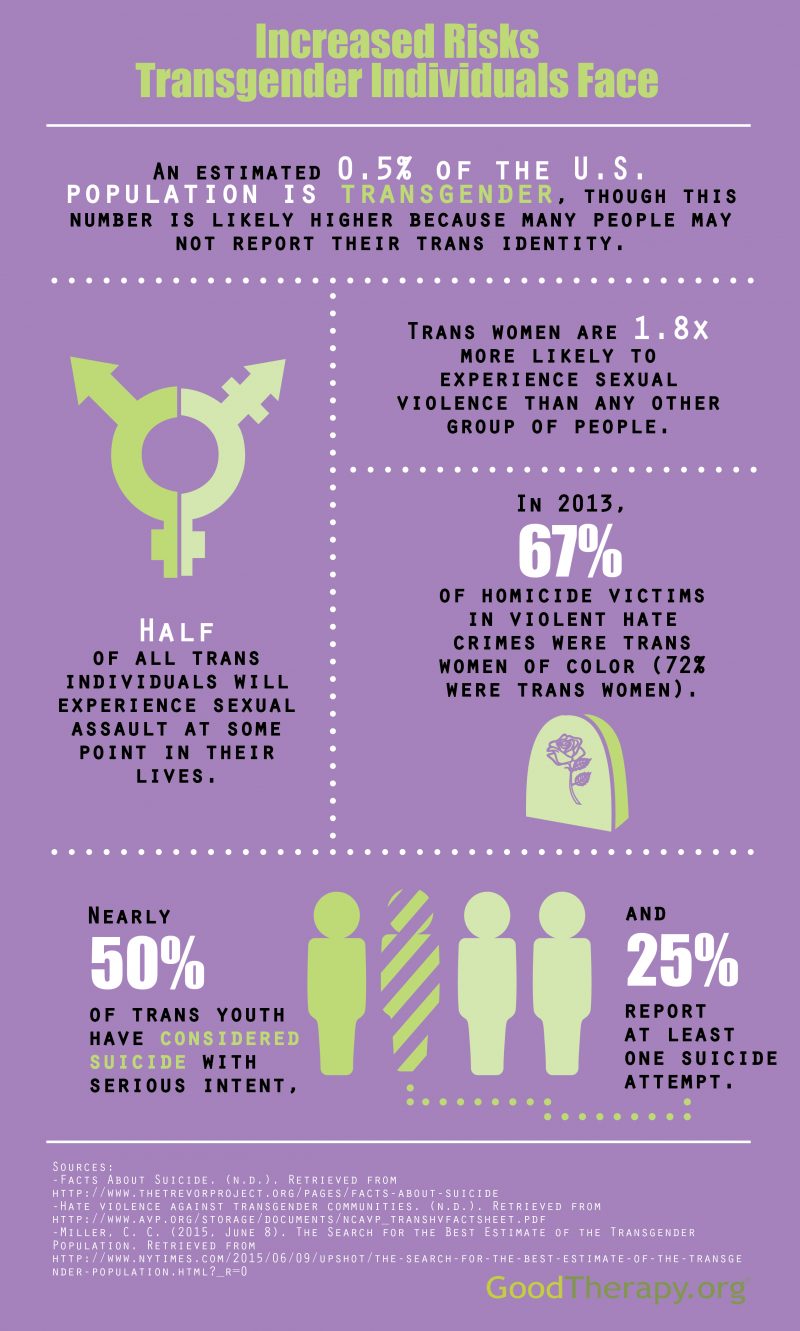
All people deserve a restroom they can use safely, without fear of harassment or violence. According to the NCAVP and Rape Response Services National Statistics, trans people face high rates of homicide, sexual assault, and violence. Trans people of color are at even higher risk: in 2013, 67% of hate violence homicide victims were trans women of color. Preventing trans people from using the facilities they feel most comfortable in may make it necessary for them to put themselves at greater risk (and also possibly out themselves as trans) in order to use the restroom.
The backlash to these rulings, and other similar rulings across the country, has been considerable, especially as transgender students across the country fight similar discriminatory measures for equal access to bathrooms and locker rooms in public schools. Critics point out not only are these laws likely to cause humiliation and distress, they clearly violate the Civil Rights Act.
Several entertainers and organizations have boycotted trips to North Carolina in support of transgender rights, and the Obama administration issued a decree in May 2016 ordering all public schools to allow trans students access to facilities corresponding to their gender identity rather than sex assigned at birth. A number of school districts across the country have refused to accept the decree, citing concerns about boys in girls’ locker rooms and the discomfort of female students.
What these school districts do not seem to address is the discomfort and distress of the transgender students who are required to either use the wrong facilities or change alone in the nurse’s office or other designated facility. In either outcome, these students may face prejudice, harassment, and abuse from other students as well as feelings of shame and isolation, among other issues. Many trans students report avoiding the restrooms entirely, an action that may affect emotional well-being as well as physical health.
Proposed Solutions to Discriminatory Bathroom Policies
Awareness of trans issues is increasing across the nation, and many young trans people have the support and encouragement of their families, but many still do not. Along with the likelihood of discrimination and ostracism at the hands of peers or family members, trans teens and preteens also face the onset of puberty and the emergence of physical features and bodily changes that may lead to gender dysphoria or exacerbate existing feelings. Many teens who wish to take hormones and begin transitioning cannot start this process without parental support. Some have the support of a mental health professional, but many lack even that.
School-level legislation that further denies the identity and existence of transgender youth may contribute to depression, anxiety, and other mental health concerns. It may also increase the risk of suicide in this population, which is already high. Among trans youth, nearly 50% have considered suicide with serious intent, and 25% report at least one attempt. The rates of suicide and other mental health concerns experienced by transgender youth are shown to decrease when they receive acceptance and support.
All-gender restrooms, already prevalent in many countries, may be the logical destination of progress, as gender becomes more understood and the male-female binary is recognized to be an outdated concept.Some point to all-gender or family bathrooms as a solution. While some trans individuals might use these restrooms when they are available, as any other person might, being allowed to only use these restrooms can still be exclusionary and may contribute to feelings of dysphoria. Others say creating bathrooms exclusively for transgender people to use would be an ideal solution, but as Attorney General Loretta Lynch pointed out in a statement announcing a federal lawsuit against North Carolina, “Not so long ago … states had signs about restrooms … keeping people out based upon a distinction without a difference.” Others have similarly drawn comparisons from the bathroom debate to the Jim Crow laws segregating people of color.
Some organizations and companies, such as Target, have responded to these laws by vocalizing their support of trans people with inclusive policies encouraging customers and employees alike to use the restroom that aligns with their gender identity. At Cooper Union College in New York, student activists removed all gendered signs on the bathroom. New placards read “restroom with urinal and stalls” and “restroom with only stalls.” Other colleges have similarly implemented all-gender restrooms with the goal of making public spaces safe and accommodating for everyone. All-gender restrooms also serve to welcome non-binary individuals, who might not feel comfortable in either men’s or women’s restrooms.
Everyone Has the Right to Safety
Many trans people across the nation still cannot use the restroom without facing threats to their personal safety. A woman in Washington, D.C. was assaulted by a security guard when she tried to use the restroom at a grocery store, and students in one North Carolina school district are now allowed to bring pepper spray to campus, which one board member claims may be a “valuable tool” for females who use the restroom on campus. Other schools encourage students to report their transgender classmates if they use the “wrong” bathroom.
Such instances of harassment and prejudice against trans people are likely to do little for the community other than foster fear and transphobia. Even if legislators and others who do not support bathroom use according to gender identity claim they are not targeting transgender people, these measures may invalidate the identity of trans people and perpetuate stigma. They also do not address the high rates of assault and violence trans people experience. Safe public restrooms are a necessity for all, and trans individuals prevented from using the correct restroom may not only face threats to their bodily safety, but also diminished mental and emotional well-being due to stress, anxiety, shame, and dysphoria.
All-gender restrooms, already prevalent in many countries, may be the most logical destination of progress, as gender becomes more understood and the male-female binary is recognized to be an outdated concept. Until then, allowing individuals to choose a restroom based on their gender—and perhaps caring a bit less about who is using what restroom—may be the best solution to an issue that was never really a problem.
References:
- Banchiri, B. (2016, February 23). Charlotte passes transgender rights law: Will North Carolina let it stand? Retrieved from http://www.csmonitor.com/USA/Politics/2016/0223/Charlotte-passes-transgender-rights-law-Will-North-Carolina-let-it-stand
- Bellware, K. (2014, July 18). Gender-neutral bathrooms are quietly becoming the new thing at colleges. Retrieved from http://www.huffingtonpost.com/2014/07/18/gender-neutral-bathrooms-colleges_n_5597362.html
- Borrello, S. (2016, April 22). Sexual assault and domestic violence organizations debunk ‘bathroom predor myth.’ Retrieved from http://abcnews.go.com/US/sexual-assault-domestic-violence-organizations-debunk-bathroom-predator/story?id=38604019
- Carollo, L. (2016, April 25). What happened when I tried to comply with North Carolina’s new bathroom law. Retrieved from http://www.vox.com/2016/4/25/11490498/north-carolina-bathroom-law-transgender
- Changing birth certificate sex designations: State-by-state guidelines. (2015, February 03). Retrieved from http://www.lambdalegal.org/know-your-rights/transgender/changing-birth-certificate-sex-designations
- Cobb, J. (2016, May 30). Opening doors. The New Yorker. Retrieved from http://www.newyorker.com/magazine/2016/05/30/north-carolinas-retrograde-step
- Connelly, J. (2016, February 10). ‘Bathroom bill’ aimed at transgender persons fails in state Senate. Retrieved from http://www.seattlepi.com/local/politics/article/The-bathroom-bill-blocking-toilet-use-by-the-6821841.php
- Facts about suicide. (n.d.). Retrieved from http://www.thetrevorproject.org/pages/facts-about-suicide
Hate violence against transgender communities. (n.d.). Retrieved from http://www.avp.org/storage/documents/ncavp_transhvfactsheet.pdf - Levin, S. (2016, May 12). Obama orders public schools to allow transgender students access to restrooms. Retrieved from http://www.theguardian.com/society/2016/may/13/obama-public-schools-transgender-access-restrooms
- Lopez, G. (2016, April 18). 9 questions about gender identity and being transgender you were too embarrased. Retrieved from http://www.vox.com/2015/4/24/8483561/transgender-gender-identity-expression
- Lowder, J. B. (2016, April 27). Breitbart proves what we already knew: Trans women are not bathroom predators. Retrieved from http://www.slate.com/blogs/outward/2016/04/27/breitbart_helpfully_shows_trans_women_are_not_bathroom_predators_cis_men.html
- Miller, C. C. (2015, June 08). The search for the best estimate of the transgender population. The New York Times. Retrieved from http://www.nytimes.com/2015/06/09/upshot/the-search-for-the-best-estimate-of-the-transgender-population.html?_r=0
- Ng, A. (2016, May 11). North Carolina schools let students bring pepper spray to class–in case transgender students use bathrooms. Retrieved from http://www.nydailynews.com/news/national/n-schools-students-bring-pepper-spray-class-article-1.2633430
- Pearson, M. (2016, May 10). AG Loretta Lynch moves into spotlight with NC bathroom law speech. CNN. Retrieved from http://www.cnn.com/2016/05/10/politics/loretta-lynch-north-carolina
- Rape Response Services National Statistics. (n.d.). Retrieved from http://www.rrsonline.org/?page_id=944
- Redden, M. (2016, March 29). New York college moves to strip gender markings from all bathrooms. The Guardian. Retrieved from http://www.theguardian.com/world/2016/mar/29/gender-bathrooms-cooper-union-college-new-york
- Tan, A. (2016, May 19). Security guard arrested after allegedly assaulting transgender woman trying to use women’s bathroom. ABC News. Retrieved from http://abcnews.go.com/US/security-guard-arrested-allegedly-assaulting-transgender-woman-womens/story?id=39227006
- Transgender Bathroom Hysteria, Cont’d. (2016, April 18). Retrieved from http://www.nytimes.com/2016/04/18/opinion/transgender-bathroom-hysteria-contd.html?_r=4&mtrref=undefined&gwh=459A290B6C63807CACCEAADDE4A5626A&gwt=pay&assetType=opinion
- Understanding the Perpetrator. (n.d.). Retrieved from https://sapac.umich.edu/article/196
 Posttraumatic stress (PTSD) can severely interfere with functioning, resulting in intrusive memories, depression, disrupted sleep, anxiety, and avoidance of situations that bring back memories of the trauma. But the symptoms of some trauma survivors, particularly those who have experienced prolonged abuse or captivity, don’t neatly match traditional symptoms of PTSD. In the 1980s, some therapists and researchers began to advocate for recognition of a new variety of PTSD called complex posttraumatic stress disorder or C-PTSD. Although C-PTSD is not listed in the Diagnostic and Statistical Manual of Mental Disorders, therapists are increasingly recognizing the issue, which requires different treatment and produces different symptoms.
What Is Complex PTSD?
PTSD is a reaction to a threatening event, and the event is usually a single event that occurred for a brief duration. Traumatic events that might cause PTSD include watching a loved one die, witnessing a violent act, rape, assault, and military combat. C-PTSD, by contrast, is more likely to occur when a person experiences multiple or ongoing traumas or when a single trauma lasts for a long time and leads to feelings of captivity. Survivors of concentration camps, people who were regularly abused as children, domestic violence survivors, military personnel who are exposed to ongoing violence, people who have experienced repeated sexual assaults, and kidnapping victims may experience C-PTSD.
While PTSD typically causes disturbances—such as flashbacks, avoidance of locations or situations that remind a person of the event, or chronic fear and depression—to the traumatic event, C-PTSD is more likely to cause identity and personality disturbances in addition to the symptoms of traditional PTSD. This is because people exposed to prolonged trauma may begin to view the trauma as a core part of their identity or as something they caused, and sometimes they might question their own memories—believing, for example, that perhaps the trauma didn’t really happen.
Symptoms of Complex PTSD
C-PTSD has many of the same symptoms as PTSD, including intrusive memories or flashbacks, depression, anxiety, avoidance, and changes in personality. However, people with C-PTSD also experience symptoms that people with PTSD don’t normally have. These include: [fat_widget_trauma_ptsd_right]
- Chronic fear of abandonment. Many people with C-PTSD are diagnosed with an attachment disorder, and neediness, fear of abandonment, and even regression during times of stress are common in C-PTSD.
- Difficulty controlling emotions or changes in personality.
- Disturbances in self-perception and persistent feelings of shame.
- Obsession with the perpetrator and frequently changing perceptions of the perpetrator. A sexual abuse survivor, for example, might go back and forth between viewing the abuser as evil and loving, and might continue an unhealthy entanglement with that person.
- Emotional flashbacks: Rather than intrusively remembering the traumatic event, a person with C-PTSD might instead simply get emotionally overwhelmed and re-experience the emotions he or she felt during the traumatic event without ever actually recalling or thinking about the traumatic event. This is particularly common during periods of stress. A person might, for example, begin sobbing or feel terrified during a minor disagreement with his or her partner.
Treatment for Complex PTSD
Because C-PTSD is a relatively newly recognized condition, there’s still some debate about how it should be treated. Exposure therapy, which is highly effective with PTSD, is still being studied for its effectiveness in treating C-PTSD. As C-PTSD may mean dozens of traumatic memories or years of trauma, some clinicians have argued exposure therapy is impractical. C-PTSD researchers have generally recommended a stage-based treatment approach that includes the following phases:
- Establishing safety and helping the client find ways to feel safe in his or her environment or eliminate dangers in the environment.
- Teaching basic self-regulation skills.
- Encouraging information processing that builds introspection.
- Helping the client to integrate his or her traumatic experiences.
- Encouraging healthy relationships and engagement.
- Strategies designed to reduce distress and increase positive affect.
References:
- Complex PTSD. (n.d.). National Center for PTSD. Retrieved from http://www.ptsd.va.gov/professional/pages/complex-ptsd.asp
- ISTSS complex PTSD treatment guidelines. (n.d.). International Society for Traumatic Stress Studies. Retrieved from http://www.istss.org/AM/Template.cfm?Section=ISTSS_Complex_PTSD_Treatment_Guidelines
- Walker, P. (n.d.). Emotional flashback management in the treatment of complex PTSD.Psychotherapy.net. Retrieved from http://www.psychotherapy.net/article/complex-ptsd
Dear GoodTherapy.org,
My sister has taken advantage of our mother for years. Beginning in her teenage years, she has lied, stolen money, used drugs, left home several times, used physical violence against family members, and run up charges on numerous television and phone accounts. She also drove our mother’s car frequently, with or without permission, and had several traffic accidents, totaling two separate cars, before she could no longer be insured as a driver.
[fat_widget_right]
Each time our mother has insisted she move out, she eventually comes back with some new sob story—her friends stole her money, her boyfriend cheated on her, she lost her job, she’s sick—and she is allowed to move back in. Our mother feels sorry for her because she has a lot of health problems, and she also doesn’t want to abandon her child, but my sister is 26! No matter what is given to her or done for her, she continues to lie, steal, and manipulate. Our mother has to sleep with her wallet under her pillow and shift her money between accounts regularly so my sister cannot access it, and she is still in debt from years of taking care of my sister’s many bills.
My sister is also a constant source of stress to her. She can barely leave home for a weekend without worrying that something will go wrong. For example, last time she tried to take a weekend trip, my sister disappeared for two days after promising to take care of her dogs, so she had to spend hours on the phone trying to find someone to come by and look after them.
How can I convince my mother to stop enabling my sister’s bad behavior? —Sister Act
Dear Sister,
Thank you for your question. Let’s get right to it.
Unfortunately, you may not be able to convince your mother to stop enabling your sister. It sounds as if your mother is well aware of the issues and challenges your sister presents, and is still willing to support her, even at great inconvenience to herself.
The questions to consider with her, however, may include: What about this is working for your mom? What needs of hers are getting met by supporting your sister? My hunch is she has some strong beliefs about what being a good mother means—and that may include supporting her kids through good times and bad. She also may be afraid of what might happen to your sister if she did not support her. Whatever her beliefs, they are contributing to her willingness to continue on in this way. Having an opportunity to understand why she is doing this could be helpful for you.
There is a school of thought that suggests enabling dysfunctional behavior does more damage than engaging in firm boundary setting or “tough love.” However, there are many exceptions based on specific situations, so there is no clear-cut “right” answer.
The next set of questions is harder, but centers on how well this pattern is serving your sister. There is a school of thought that suggests enabling dysfunctional behavior does more damage than engaging in firm boundary setting or “tough love.” However, there are many exceptions based on specific situations, so there is no clear-cut “right” answer. It might be helpful if you and your mother worked with a therapist who has experience with family circumstances similar to the ones you describe. It could give you and your mom a chance to voice your fears and concerns while working with a trained professional on addressing those concerns in ways that feel right for you and for your mom.
It also sounds as if you might benefit from an opportunity to let go of some of the feelings you’ve been carrying about your sister, which therapy can also help with. I hear the concern you have for your mom; I also hear the frustration you have with your sister for her behavior. It is also not unusual for siblings to feel resentment when another sibling “gets away” with certain behaviors. It can feel unfair, at the very least. Harboring negative feelings such as resentment, however, can be toxic and keep us in a state of anger and frustration that ultimately don’t serve us.
For your sake, even if your mother isn’t willing to engage in therapy with you, I suggest exploring it for yourself. You might find ways to engage with your sister and your mother that bring you peace.
Best of luck,
Erika
 As a family systems therapist, it’s been my experience that when parents bring a child to my office due to acting-out behaviors or social challenges, it usually comes back to the dynamic in the parental relationship. Typically, what’s going on (or not) between Mom and Dad is at the root of the issue, regardless of whether the parents are married, separated, or divorced.
Marital dissatisfaction and parental conflict, in my experience, are often correlated with how well children adjust to situations. In addition, parental attitudes and approaches can impact children. Children may experience anxiety, depression, shame, or other issues when conflicted parental relationships result in dysfunctional parenting practices. Parental conflict can result in reduced parental involvement, harsh discipline practices, lack of praise and acknowledgement, and increased parent-child conflict.
[fat_widget_right]
A common scenario that often plays out in families with parental conflict is when a child is blamed and scapegoated by the parents, which in turn may cause the child to act out. This nonadaptive parenting style creates a dynamic of discord that is enmeshed, reciprocal, and reinforcing.
When overt or covert (silent or aggressive) parental conflict is present, there may be a tendency to create “alliances†or “collusions†among family members, which typically only alienates healthy family relationships. Additionally, some parents who do not actively engage in conflict in front of their children may allow their negative feelings toward each other to guide their decisions. These decisions, when motivated by resentment and not the best interests of the children, may be equally harmful.
Naturally, parental conflict also can result in reduced emotional availability toward children. Generally speaking, the lower the level of parental conflict, the more positive parent-child relationships tend to be.
Suggestions for Managing Parental Conflict Around Children
Conflict is a natural part of relationships. It is important for children to see that parents can disagree and work through conflicts. The problem solving that follows occasional conflict between parents can be a healthy thing for children to witness. When parents are able to demonstrate effective problem-solving strategies collaboratively, they model supportive parenting and parental involvement at a much higher level.
The lower the level of parental conflict, the more positive parent-child relationships tend to be.
However, when conflict is chronic and parents aren’t able to come to resolution, it can become problematic from the children’s standpoint.
So what can parents do to demonstrate healthy conflict management in front of their children? Here are some suggestions to consider:
- Try to avoid arguing in front of the children.
- When discussions become intense, take a “time-out†and continue the discussion when kids are not around.
- Set aside time to have discussions when the children are not present (such as when they are in bed, at school, visiting grandparents, etc.).
- Demonstrate courteous and polite behavior with each other in front of the children.
- Take turns talking.
- Actively listen to each other.
- Validate the other parent’s feelings and perspectives, even in times of disagreement.
- Brainstorm possible solutions to the problem.
- Focus on maintaining a positive relationship with the children.
- Articulate that the children are not the issue or even part of the issue.
- Support the other parent’s relationship with the children.
- Be mindful about not sharing too much information with the children about conflict that may be present.
Finally, when trying to resolve conflict, it is important to look at family-of-origin patterns to determine how conflict was resolved in earlier generations, as patterns tend to be passed down in families from generation to generation. Then, it is important for parents to look for patterns in their relationships as well as their own behaviors and motivations.
Ideally, parents should be open to seeking help from a professional, as getting input from an objective third party who is trained to help resolve conflict can be beneficial in identifying ineffective resolution strategies that parents may be engaging in.
 Every system of the body is vulnerable to physical illness. This is common sense. But did you know every system of the body is vulnerable to emotional discord as well? The nervous system, an elaborate network of cells that facilitates communication between our brains and the rest of our bodies, directly links our physical selves to our emotional life. Voluntary muscles, involuntary muscles, and our five senses can all be influenced by the emotional responses of our bodies, so we can manifest a nearly infinite variety of physical responses to stress. While these reactions can sometimes be adaptive and helpful signals (e.g., preparing for flight when in danger), they can also cause distress, leading to visits to doctors.
When our physical symptoms are caused by an injury, bacteria, or an allergen, for instance, medical treatments can work. A visit to primary care, emergency care, or a specialist will likely yield desired results, at least eventually. However, when our physical ailment is caused or worsened by emotional factors, the potential of traditional medicine is limited. At best, a placebo effect may create some relief; at worst, the frustration caused by failed medical treatments can lead our emotion-driven symptoms to worsen.
[fat_widget_right]
In this article, I will identify and elaborate upon four empirically supported ideas that may be useful to all of us. No one is immune to the physical reactions caused by emotional stress, so we are all equally vulnerable to developing medically unexplained physical symptoms when emotions overwhelm our coping capacities. If we can more readily identify them and seek appropriate treatments, we may be able to significantly reduce the burden on ourselves (and our health care system) that these symptoms can cause.
1. Emotional Factors Can Contribute to or Cause a Range of Physical Conditions
Emotional centers in the brain link with many important structures of the body, including our large voluntary muscles (anything you can flex) and our involuntary muscles, such as the gastrointestinal system (Janig, 2003). As you will read below, anxiety can trigger activation in any of these muscles, triggering a huge variety of physical symptoms that can be misdiagnosed as having a purely medical origin.
- Voluntary muscles: When anxiety is channeled into the voluntary muscles of our musculoskeletal system and causes involuntary tensing, a large variety of conditions can result, including fibromyalgia, TMJ, sciatica, tension headache, hyperventilation, muscular pain, tingling hands and feet, choking sensation, cramps, and tremors.
- Involuntary muscles: When anxiety is channeled into the smooth muscles that line the gut, veins, capillaries, arteries, bronchi, and urogenital system, conditions such as hypertension, IBS (stomach acid, spasms, diarrhea, nausea), migraine, ulcerative colitis, reactive airways, bladder spasm, abdominal pain, or sudden urge to urinate or defecate can be caused or worsened.
- Thinking/perception/sensation: High levels of anxiety can disrupt our abilities to think and perceive the world. Symptoms such as dizziness, blurry or tunnel vision, sensations of physical weakness, itching, fainting, tinnitus, and difficulty thinking or speaking can all be caused by dysregulated anxiety.
Any of the symptoms described here, and many more, can be triggered by anxiety-provoking emotional experiences, and may be most effectively diagnosed and treated by the methods discussed below.
2. Emotional Factors Contribute to a Large Percentage of Costly Emergency Visits
Medically unexplained physical symptoms can have a sudden onset and can be terrifying to the person experiencing them, which can lead to visits to emergency services and referrals to specialists. It is important for all health care consumers and practitioners to be aware of the high rate of patients who present with medically unexplained symptoms—and the significant efficacy of a short course of psychotherapy for treating these symptoms.
One unpublished study cited by Abbass, et al. (2010) found that 16% of emergency department (ED) referrals leave the hospital without a medical explanation for their presenting symptoms. This included 75.8% of people who presented with chest pain. Other common health concerns that left the ED without a medical diagnosis include headaches and abdominal pain. Regarding visits to specialists, Abbass (2004) reported on studies that found:
Eighty-four percent of 567 common internal medicine complaints—such as chest pain, dizziness or weakness—yielded no new diagnosis and cost a great deal to investigate. A recent British study found that one quarter of all new specialty referrals studied resulted in no diagnosis. This included almost one-fifth of surgical referrals and over one-third of some medical specialty referrals (p. 6).
According to this data, between 10% and 20% of ED visits and between 20% and 84% of specialist referrals yield no medical explanation, and it seems the most common medically unexplained symptoms can be linked with the bodily manifestations of anxiety described above. Fortunately, advances in mental health assessment and treatment are helping to change these worrisome statistics.
3. Emotional Contributors to Physical Symptoms Can Be Diagnosed Quickly
In his article about “emotion-focused interviewing†to diagnose somatization (the term for the process by which emotional factors affect physical health), psychiatrist and researcher Allan Abbass (2005) provides examples of brief conversations between doctor and patient that help reveal a clear link between emotional upsets and increases in symptoms. This interviewing technique, which has become an important part of my practice, is based on principles and techniques from a model of brief psychodynamic psychotherapy called intensive short-term dynamic psychotherapy, or ISTDP (Davanloo, 2000).
Clinicians who learn ISTDP are trained to monitor a variety of verbal and bodily signals so they can detect an increase or decrease in the physical symptoms as thoughts and feelings are explored during an interview. According to Abbass (2005):
An increase in symptoms with emotional focus suggests that emotions aggravate or directly cause the problems. A decrease in symptoms during the test also suggests a linkage to emotions. Disappearance of the symptoms by bringing emotional experiences to awareness is the best direct evidence that somatization of these emotions was causing the patients symptoms (p. 235).
Abbass suggests this diagnostic process can be accomplished in as little as 15 minutes of conversation. Considering the financial and time costs of the procedures that are often used to diagnose medically unexplained physical symptoms (e.g., fMRI), Abbass makes a compelling case for the utility and efficacy of an emotion-focused interview based on ISTDP that can help establish whether emotional factors are playing a role in physical symptoms.
4. Psychological Treatments Show Cost-Effectiveness
Seeing a psychotherapist to rule out emotional factors earlier in the diagnostic process can save money and heartache, which is especially important because the emotional upset associated with failed medical procedures and treatments can cause symptoms to worsen.
Seeing a psychotherapist to rule out emotional factors earlier in the diagnostic process can save money and heartache, which is especially important because the emotional upset associated with failed medical procedures and treatments can cause symptoms to worsen.
Abbass (2003) calculated an average health care cost reduction of $1,573 per patient by one year after a course of ISTDP. Only two of the seven studies reviewed for cost-effectiveness by Abbass (2003) were specific to medically unexplained physical symptoms (irritable bowel syndrome and chronic functional dyspepsia); however, even those who were being treated specifically for psychological concerns experienced a large reduction in their overall health care cost burden. This is strong evidence for the cost-effectiveness of ISTDP in reducing health care costs for folks with medically unexplained physical symptoms and general mental health concerns.
Another finding that supports this line of research is that the use of ISTDP therapists in the ED described above led to a 69% reduction in ED visits by those who had a very brief course of psychotherapy (3.2 sessions on average). Those who did not have the therapeutic consultation had anywhere from a 15% reduction to a 43% increase in ED use over the course of the next year (Abbass, et al., 2009). Average health care cost savings among the treated group was $910 in the follow-up year (Abbass, et al., 2010). This is strong evidence for the potential advantages of a medical system that takes emotional factors into account, both for those suffering and for the health care system overall.
Looking at the Data and Looking Forward
Thanks to the work of Davanloo, Abbass, and others, we have helpful tools for understanding the ways emotions impact the body and create medically unexplained symptoms. We know medically unexplained symptoms burden the people who experience them and the medical system with lost time, lost resources, dashed hopes, and continued suffering. Finally, we have tools and methods for diagnosing and treating somatization of emotions that have shown efficacy and cost-effectiveness. To me, as Abbass (2004) has argued, these data make the case for the importance of heightened awareness of this information among health care consumers and practitioners.
It is my hope that with greater awareness of the ways emotions can impact health, doctors and patients alike will be more open to referrals to emotion-focused assessment services like the one described by Abbass (2005) and to therapies, such as ISTDP, that have demonstrated efficacy in treating medically unexplained symptoms. However, until this becomes part of standard medical practice, we can advocate for ourselves by asking questions about whether our symptoms could possibly be linked to stress, anxiety, or other issues, and by seeking out appropriate assessments and treatments.
While we should not flip radically in the opposite direction and assume all our physical woes are psychosomatic, we may save ourselves from needless expenditures of time, money, and hope by having an emotion-focused interview early in the diagnostic process to establish whether emotional factors are contributing to our medically unexplained physical issues.
References:
- Abbass, A. (2003). The cost-effectiveness of short-term dynamic psychotherapy. Expert Review of Pharmacoeconomics Outcomes Research, 3, 535-539.
- Abbass, A. (2004). The case for specialty-specific core curriculum on emotions and health. Royal College Outlook, 1, 5-7.
- Abbass, A. (2005). Somatization: Diagnosing it sooner through emotion-focused interviewing. The Journal of Family Practice, 54, 215-224.
- Abbass, A., Campbell, S., Magee, K., & Tarzwell, R. (2009). Intensive short-term dynamic psychotherapy to reduce rates of emergency department visits for patients with medically unexplained physical symptoms: Preliminary evidence from a pre-post intervention study. Canadian Journal of Emergency Medicine, 11, 1-6.
- Abbass, A., Campbell, S., Hann, G., Lenzer, I., Tarzwell, R., & Maxwell, D. (2010). Cost savings of treatment of medically unexplained symptoms using intensive short-term dynamic psychotherapy by a hospital emergency department. Journal of the Academy of Medical Psychology, 1, 34-43.
- Davanloo, H. (2000). Intensive short-term dynamic psychotherapy: Selected papers of Habib Davanloo, MD. Chichester: Wiley.
- Janig, W. (2003). The autonomic nervous system and its coordination by the brain. In Davidson, R. J., Scherer, K. R., & Goldsmith, H. H. (Eds.), Handbook of affective sciences (pp. 135-187). Oxford: Oxford University Press.
Dear GoodTherapy.org,
Our son, who turned 18 last month, is about to graduate from high school. He’s a great kid, an Eagle Scout, and a straight-A student (3.96 grade-point average). He’s the president of his senior class and has multiple full-ride scholarship offers from elite schools across the country, including Stanford and Princeton.
[fat_widget_right]
So why, pray tell, would he possibly want to join the military? This is the dilemma our family faces. Bernie Sanders isn’t president. College isn’t cheap. A quality college education is unaffordable for many families, including ours. By the time our son would complete his service, it seems doubtful at best that opportunities like this will still be waiting for him, and we won’t be in position to help him much. We feel like he is leaving not only free money (and a lot of it) on the table, but also his future, and for what?
His mother and I both see the nobility in wanting to serve our country and we admire him for it, but this decision puts not only his financial future at risk but also, potentially, his life. It’s an unstable world we live in, and not too many people who enlist these days manage to avoid deployment. We’ve tried to talk some sense into our son, but he says he’s made up his mind. Easy to say for someone who has never had to pay for anything in his life.
Please help us. How can we convince our son that going to college is a much better choice than going to war? —Dumbfounded Dad
Dear Dumbfounded,
Thank you for writing. I can’t help but think the answer to your question lies in the emotional undertone of the question itself.
As I’m sure you already know, the teen years are often a roller-coaster for teens and parents alike. It’s a phase marked by intense contradiction, as a burgeoning young adult seeks individuation and freedom while under the care and protection of the very people they are trying to separate from. It’s easy to get lost in the minutiae of curfews, driving privileges, allowances, homework, drugs, sex, and so on.
Though I find it a worthy question to ask, what is really at the heart of this? Usually it’s anxiety or fear. On the parents’ side, there is the fear the child will be somehow unsafe, now or later, and is throwing away a once-in-a-lifetime opportunity. Parents fear that the kid who struggles in school may not be well enough prepared for college later; the kid who experiments with pot may be “setting themselves up for failure†down the road; and the son who says no to full-ride scholarships at elite schools has somehow gone off-track. What the heck is he thinking? That does it, I’m putting my foot down!
The teen, meanwhile, worries about the same thing, only from a different angle. Can I survive and flourish—socially, financially—once I’ve left the nest? If I’m too reliant on mom or dad now, what happens later when I’m working or at college? I can’t rely on them forever. I know they want me to take these scholarships, get an education, but I want a different kind of education. What’s wrong with that? To hell with ’em! I’m on my own!
Anxiety, in other words, rules the day, as each side feels disrespected or abandoned or shut out by the other.
Your letter is full of understandable parental anxiety focused mostly, it seems to me, on the future. He is “potentially†risking his life or possibly throwing away opportunities that may or may not be “waiting for him†later on. One could say these scholarships are once-in-a-lifetime opportunities. You could also say any kid with the smarts to get into these schools with a 3.96 GPA, and with a willingness to take the road less traveled, will likely continue to find opportunities. I know plenty of struggling adults who went to Ivy League schools, and successful people who went to community college, then specialized in grad school or elsewhere later on.
You have, again understandably for a parent, developed a vision for the best path forward for your son. What father wouldn’t want his son to go to Princeton or Stanford? I empathize with your confusion and frustration. I imagine you’re tearing your hair out.
But this is the great challenge of this mind-warping transition phase. As a parent myself, I foresee a time when my daughter will announce to us she has decided to become a doctor or lawyer (or better yet, a psychologist!)—which means, of course, that when she’s 18 she’ll announce to us she’s skipping college to join a punk band or travel to Antarctica to save seals. We want our kids to be safe; they want us to back off so they can test limits, take a bite out of the world, and dance near the edge. This is itself the delicate, anxious dance between teens and parents at this complicated phase.
As I often do in this column, I’ll throw out my 2 cents regarding some practical suggestions, followed by a more psychological angle.
First, talk to your son—as neutrally as possible—about what you’re seeing as the risks involved. The idea here is to model balanced decision making. Make sure he knows your “agenda†is only to talk through the decision with him. Does he know what a rare opportunity these scholarships actually are, how few kids get into these schools, for a free ride, no less? That these schools provide first-rate opportunities for networking and lifelong connection for just about any field of interest? That he could always enlist after getting his undergrad degree, or try college first and then decide? You could also talk about what assistance you can and possibly can’t provide both now and later.
Which branch of the military is he most interested in? What about it, specifically, draws him? What are they offering in terms of higher education down the road? What about any interest in specialty training? Also, to your points about his safety, is he interested in being deployed on dangerous assignments or tours of duty? If the answer is yes, would he be interested in doing some more research, such as talking to veterans who have served where he’s interested in going?
I don’t know your son, so he may or may not be taking some of his cues from you. If he is, try as best you can to be an example of curiosity over judgment, and most of all empathy for what he hopes to gain from the military.
I don’t know your son, so he may or may not be taking some of his cues from you. If he is, try as best you can to be an example of curiosity over judgment, and most of all empathy for what he hopes to gain from the military.
Empathy is the key, saith the psychotherapist. By this, I mean I would try to get as curious as you can about what draws him. Does he like the idea of discipline, training, and order? Is it weaponry and combat he’s interested in? Is it the idea of the safety of a “strong†institution to which he will belong, a new kind of family?
Listen for the hopes and yearnings more than the literal aspects. Then you might—as calmly as you can—explain why this is difficult for you (and possibly your wife). You have your own hopes and wishes for him as a caring dad.
Try to avoid a trap a lot of us fall into, which is playing the “this isn’t normal†card. Example: “It’s not normal for a kid as smart as you to enlist and blow off Stanford; it’s just not rational.†The implication there is he’s weird, an oddball, or worse. It will probably make him dig his heels in even deeper. Make your statements personal, not about “what kids your age normally do†or in the vein of “what’s really best for a guy like you, though clearly you don’t see it, is …†It’s possible he does see it and wants to do something else. Better to say, “Well, here’s what I foresee for you, and why, and I guess I just don’t get it, so help me get it.†Or, “As your dad, it makes me uneasy to think of you in harm’s way. We think that’s rare or never happens, but it does. I’m not saying don’t do it, but I am saying be clear about the risks.†You could also ask the gutsy question of, is his seeking out enlistment a way of compensating for something he felt he never got at home or school? You might also be listening for how he thinks this experiencing will point him toward whatever definition of manhood he has developed.
But again, be respectful, as this is his dream, his decision. You can disagree with it, but I would honor the fact the son you love finds it important.
Parenting can be extremely difficult, and it’s a never-ending duty. But sometimes kids somehow have to do the one thing they know drives us batty. It can be a test to see if they will still be loved by us in spite of their decisions, or that they are capable of making their own decisions completely free from parental influence. If there is any element of rebellion in his decision, try to be understanding rather than dead-set against it, as that puts you in opposition and back in the tug-of-war.
I wish you the best of luck, and encourage you to post any follow-ups to let us know what happens.
Thanks again for writing!
Best wishes,
Darren
 What does wellness look like to you? When you envision someone who is “well†and “healthy,†what comes to mind? What factors do you think influence wellness?
The Substance Abuse and Mental Health Services Administration (SAMHSA) has identified eight dimensions of wellness to focus on to optimize health. The eight dimensions include: emotional, spiritual, intellectual, physical, environmental, financial, occupational, and social. Wellness can be compromised by lack of support, trauma, unhelpful thinking styles, chronic illness/disability, and substance use. The eight dimensions are described below and are accompanied by examples and ideas for improving each area.
1. Emotional
SAMHSA identifies emotional wellness as an ability to cope effectively with life and build satisfying relationships with others. People with healthy emotional wellness feel confident, in control of their feelings and behaviors, and are able to handle life challenges. Working through life challenges can build resiliency as we learn that setbacks can be overcome. Emotional health can be maintained or improved by engaging in regular leisure and recreational activities. Do activities that involve each of your senses: smell, taste, touch, sight, and sound. Listen to music, eat your favorite food, light your favorite candle, play with your pet, and watch your favorite movie or the sunset.
[fat_widget_right]
2. Spiritual
Spiritual wellness is related to your values and beliefs that help you find meaning and purpose in your life. Spiritual wellness may come from activities such as volunteering, self-reflection, meditation, prayer, or spending time in nature. Signs of strong spiritual health include having clear values, a sense of self-confidence, and a feeling of inner peace. To improve your spiritual health, it can help to create a quiet space for solitude and contemplation or a place of curiosity and playfulness. Maintaining a playful, curious attitude can help you find experiences that offer hope, purpose, and meaning.
3. Intellectual
Intellectual wellness is when you recognize your unique talents to be creative and you seek out ways to use your knowledge and skills. When you foster your intellectual wellness, you participate in activities that cultivate mental growth. Reading, doing challenging puzzles such as crosswords or Sudoku, debating issues with others who have opposing viewpoints, learning a new language or musical instrument, trying a new hobby, or teaching and tutoring others are all ways to maintain or improve your intellectual wellness. When you challenge yourself to learn a new skill, you are building your intellectual health. People who pay attention to their intellectual wellness often find that they have better concentration, improved memory, and better critical thinking skills.
4. Physical
Physical wellness is affected by physical activity, healthy nutrition, and adequate sleep. There are many examples of physical activity that range in levels of intensity from light to vigorous. Maintaining your physical health can include yoga, bike riding, jumping rope, engaging in sports, running, walking, jogging, skiing, dancing, tennis, and gardening. Many people use smoking as a coping tool. Unfortunately, this method of coping can lead to a number of physical health problems, including heart disease and cancer, and can increase one’s chances of premature death. SAMHSA states that smoking-related illnesses are related to half of all deaths for people diagnosed with a behavioral health condition.
Environmental wellness is related to the surroundings you occupy. This dimension of health connects your overall well-being to the health of your environment. Your environment, both your social and natural surroundings, can greatly impact how you feel.
5. Environmental
Environmental wellness is related to the surroundings you occupy. This dimension of health connects your overall well-being to the health of your environment. Your environment, both your social and natural surroundings, can greatly impact how you feel. It can be hard to feel good if you are surrounded by clutter and disorganization, or if you feel unsafe in your environment. Pollution, violence, garbage buildup, and water conservation are some of the factors affecting environmental wellness. Ways to manage environmental wellness include creating neighborhood watches, recycling, planting a personal or community garden, purchasing products with minimal packaging, avoiding littering, and conserving energy and water by turning off lights and water when not in use.
6. Financial
Financial wellness is a feeling of satisfaction about your financial situation. Finances are a common stressor for people, so being able to minimize worry about this aspect of your life can enhance your overall wellness. Options for managing financial wellness include having a household budget, starting a savings account and adding to it every month even if it is just a small amount, saving some of your income in an emergency account, cutting back or limiting unnecessary expenses, avoiding credit card debt, donating to a meaningful charity, shopping at thrift stores, utilizing the library for free books and DVDs, and cooking your own meals instead of dining out. Try tracking your spending for a month to see where your money is going and set goals based on what you find.
7. Occupational
Occupational wellness is a sense of satisfaction with your choice of work. Occupational wellness involves balancing work and leisure time, building relationships with coworkers, and managing workplace stress. An occupational wellness goal might include finding work that is meaningful and financially rewarding. Finding work that fits with your values, interests, and skills can help maintain occupational wellness. Consider your office culture and determine how supported you feel; if you discover you feel a lack of support, seek out support from others close to you and be sure to engage in recreational activities that can help balance out work stress.
8. Social
Social wellness is a sense of connectedness and belonging. The social dimension of health involves creating and maintaining a healthy support network. Building a healthy social dimension might involve asking a colleague or acquaintance out for lunch, joining a club or organization, setting healthy boundaries, using good communication skills that are assertive rather than passive or aggressive, being genuine and authentic with others, and treating others in a respectful way.
What dimensions do you feel are your strongest? What areas would you like to work on? If you have areas you would like to improve, seeking out support can be helpful, whether it’s from a friend, family member, or counselor. What would life be like if you optimized all eight dimensions? Setting goals for yourself in each area can help you feel more fulfilled and optimize your health.
Reference:
Substance Abuse and Mental Health Services Administration (SAMHSA). (2016, April 28). The Eight Dimensions of Wellness. Retrieved from http://www.samhsa.gov/wellness-initiative/eight-dimensions-wellness
 The therapeutic relationship can be a very powerful relationship. In fact, power in this relationship is vital, and something ethical therapists should think carefully about. Ideally, the therapist uses the position of authority inherent to the role to empower people in therapy and encourage them toward wellness and autonomy. Unfortunately, this does not always happen. In some cases, therapists have been known to abuse the imbalance of power in the therapeutic relationship. This can of course be harmful to the people they are entrusted to help, who may not know exactly what is happening or what to do about it.
As a person in therapy, trusting your own experience and communicating about it are both essential to the outcome of therapy. If you have fears or doubts about something that happened or how you are being treated, in most cases you should speak with your therapist about these concerns. In turn, any such concerns should be taken seriously and addressed immediately by the therapist.
[fat_widget_right]
Some ways therapists may go astray in the therapeutic relationship include behaviors related to boundaries, to fostering dependence, to their duty of care to you, and to acting in hostile ways. A number of specific things would be red flags. While I will discuss some of them, please know this list is by no means exhaustive, nor can it possibly be. It is important to trust your instincts about how you are being treated.
Boundaries are extremely important in the therapeutic relationship, and many are outlined in the ethical codes mental health practitioners are bound by. It is incumbent upon your therapist to maintain appropriate and professional boundaries; this is one of the ways the therapist fosters trust in the relationship and in the therapeutic process. Maintaining boundaries means your therapist should neither cross boundaries nor allow you to cross them as part of the relationship. The therapeutic relationship should empower you and enrich your life.
Examples of boundaries being crossed include:
- Violating confidentiality: Sharing your information with others, or others’ information with you.
- Attending sessions while compromised: This includes being inebriated, or conducting sessions if the person in therapy is too inebriated to meaningfully engage the therapeutic process.
- Conducting sessions while distracted: This means doing other things, such as running errands, having meals, or answering phone calls.
- Not adhering to expected lengths of sessions: Sessions sometimes run a bit late, but consistently going long or cutting short, or if you don’t know how long sessions are supposed to be, is not respecting boundaries.
- Expecting, asking for, or accepting favors or gifts: Small gestures such as thank-you cards are okay if offered, but should never be expected, and the person in therapy should never feel pressured to give anything.
- Extending invitations or accepting invitations to social events: Your relationship is professional and should be conducted within the confines of professional contexts; while we, as therapists, do sometimes receive invitations to important social events involving people in therapy and generally are very touched and honored by this, we should decline them gracefully to preserve the integrity and safety of the professional relationship, which is our first priority.
- Requesting support for their business: Therapists should not ask for donations, contributions of time or money, or any other support of their business outside of what you owe them directly for your therapy. This includes soliciting reviews for use in their marketing or websites.
- Maintaining multiple relationships: Therapists generally should not be in a therapist role for people with whom they have other significant relationships, or for people with close ties to others the therapist is working with. In small communities with very limited numbers of therapists, this can be difficult, but therapists should work hard to find the best ethical balance they can while preserving the safety of the therapeutic space.
- Any sexual innuendo, requests, pressure, or behavior: Licensed therapists are prohibited from sexual contact with the people they work with in therapy. If your therapist makes sexual overtures to you or encourages them from you, this is a serious violation of trust.
Fostering Dependence
Therapists are ethically obligated to support people in therapy in living full, independent lives to the extent this is possible for them. In some (hopefully few!) cases, therapists have intentionally fostered dependence. As a therapist, my goal is always, as I say, to “work myself out of a job,†because this means the person in therapy has achieved the goals established at the outset and moved into a better space.
Some clues that your therapist may be fostering dependence in the relationship include:
- Pressuring you to cut off ties with important people in your life who support you.
- Encouraging frequent out-of-session contacts with no reasonable clinical justification.
- Responding negatively or dismissively to positive changes you make.
- Having excessive influence over your personal choices—leisure activities, relationships, clothing choices, career choices, etc.
- Pressuring you not to disclose your therapy work to others, or seeking to isolate you from other important people in your life.
- Offering or encouraging you to use illegal or potentially addictive substances outside the boundaries of appropriate prescriptions by a qualified physician or psychiatrist.
For what it’s worth, some of the signs above are hallmarks of emotional abuse. You don’t deserve such abuse from anyone, let alone your therapist.
Deviations from Duty of Care
Therapists have a specific duty of care to you. This includes a legal and ethical duty to work actively toward your welfare and to be responsive to your needs.
Therapists have a specific duty of care to you. This includes a legal and ethical duty to work actively toward your welfare and to be responsive to your needs.
Some specific deviations from a therapist’s duty of care to you might include:
- Failing to respond to suicidal or homicidal ideas you express during sessions, or encouraging such thinking or planning.
- Not listening to your concerns about your well-being or your priorities in this regard, or failing to respond when you voice such concerns.
- Being dishonest or deceptive in regards to the goals, process, or prognosis of your therapy.
- Abandoning you—suddenly terminating therapy without explanation or referrals to other qualified providers, or failing to respond to reasonable needs or requests for support.
Hostile or Abusive Behaviors
Therapists may sometimes need to confront problematic behaviors or hold reasonable expectations regarding behavior of the person in therapy. However, this boundary should never take the shape of openly hostile or abusive behaviors.
Some indications your therapist is engaging in hostile behavior include:
- Expressing excessive anger at you or your behaviors.
- Using language with you or about you that is insulting, demeaning, or inappropriate—using profanity in the therapy room is not particularly uncommon, but this language should never be directed at you in an insulting way or used in ways that are frightening or offensive to you. My rule of thumb is to follow the lead of the person in therapy; if the person chooses to use profanity to express strong feelings, that is fine with me, but I do not use such language outside the context of the person’s own use of it. Strong language, whether profane or not, should not be directed at you in insulting or abusive ways.
- Yelling at you—again, raised voices sometimes accompany the discharge of strong emotions, and this can be fine and even healing at times. However, your therapist should not be yelling at you in demeaning or belittling ways, or ways that feel frightening or upsetting.
- Violating your boundaries—if you set a clear boundary about something you don’t want to discuss, your physical space or touching, or language you find upsetting, this should be respected. It may reasonably happen that your therapist might express an opinion about the clinical benefit of talking about something that feels uncomfortable to you; however, this should be a calm expression that helps you understand and feel supported rather than an angry or confrontational demand.
- Threats—you should not feel threatened by your therapist. Threatening to disclose sensitive information to others, to use it against you inside or outside of therapy, or to terminate therapy if you don’t “toe the line†are red flags. A therapist may need to terminate therapy with you if they believe it is not benefitting you or for other reasons, but this should be handled in a sensitive way that helps you to understand the reasons for it and offers other options.
The scenarios above provide a broad overview of some behaviors that may be indicators of a problematic or abusive therapeutic relationship. In some of these cases, it is conceivable that there might be reasonable clinical justification for certain behaviors. However, if you feel uncomfortable about your therapeutic relationship, you should address that discomfort—it is real, valid, and deserves attention.
If You Have Concerns Regarding Therapy or Your Therapist
If you have concerns about the safety or appropriateness of your therapy relationship, in most cases the best first step is to bring these to the attention of your therapist. In many cases, there may have been a miscommunication of some sort and your therapist will be grateful to you for bringing this to their attention so it can be addressed. (Good therapists want to help you feel better!)
If this does not seem possible or reasonable in your circumstances, you are always free to seek a second opinion from another therapist. Although it’s rarely advisable to have multiple concurrent therapists, one session to consult with a different therapist about how your therapy is going and explore the possibility of changing to a therapist who may be a better fit for you is always a reasonable step.
If you have serious concerns about how you have been treated in therapy, you can contact the licensing board for the type of professional you are working with in your state and ask what your options are. A simple web search should help you find this body. For example, searching for “counselor board state of Indiana†should help you navigate to the relevant authority that can help you with your specific questions or concerns.
 Partnerships between individuals who have the traits or diagnosis of autism spectrum (previously including Asperger’s syndrome) and individuals who do not (often called neurotypical) are often challenging from the outset, based on numerous reports from such couples with whom I work in my psychotherapy practice. Over time, say 15 to 20 years, these couples typically become emotionally disengaged, spar constantly, and have long since stopped having sex or any other kind of intimate touch or even conversation. Communication has become transactional. The business of daily life is all there is.
It is not satisfying to either partner. It is frustrating. It feels as if there is no way to turn things around.
The person on the spectrum (ASD) increasingly feels judged, unappreciated, and anxious. The neurotypical (NT) partner feels dismissed, undervalued, and starved for intimacy. It is more often than not the NT partner who will have the urge to bolt. And bolt it is, because at this point, it feels more like running out of a house on fire than running toward a more fulfilling life. Leaving means stopping the pain. The ASD partner is likely to acknowledge not being happy but is unlikely to suggest or initiate separation.
[fat_widget_right]
When couples come in for counseling at this point, the greatest challenge is to help both partners see that each is feeling isolated and hurt; that there is a mutual experience of being judged (even condemned) without the intent to do harm; and that these very real emotions can bring on serious depression. Usually, I see a profound sense of futility in the words of the NT partner, such as, “I just can’t do this anymore because you never listen to me.†The ASD partner is likely to respond with something like, “That’s what you always say.†It is an immediate object lesson for me in what it is like for this couple when they are at home. They may as well exist on parallel—but never converging—planes. They both respond from within their guarded “under attack†position—once again, as usual, with no prospect for change.
If you see yourself in this brief sketch, there are three important things I would suggest for your consideration before you hire an attorney:
1. It Is Likely Neither of You Is Thinking Clearly at This Point
Years of living at crossed purposes has created patterns of defensiveness and hurt in both of you. This is an excellent point for remembering the wisdom in Einstein’s notion that we don’t solve a problem by using the same kind of thinking that created it. These hardened positions of isolation are unlikely to provide either of you with the ability to see your relationship in a new light.
Understanding that you are both confused and hurt, and that neither of you will immediately see a path for healing, is key. Acknowledge the pain. Feel the sorrow, the frustration, the anger. And give yourselves permission to take a hiatus, defined as a period during which you do your best to be mutually respectful. Take a break from even trying to communicate. Rest. Determine in advance how much time you both need before you come back together, renewed, to make a plan for the future.
2. Divorce Is Not the Only Option to Remaining Married
While it may make sense to want to run from pain and start over by rushing to divorce, it is important to understand the unique composition of this relationship. It is likely there is still real love between you, though it may seem deeply buried in wreckage by this time. It is likely you are aligned philosophically on many things, such as child-rearing principles. Regardless of all the pain, there have also been good times, and you are the repository of each other’s memories. You may feel that you speak different languages when it comes to intimate communication, and to getting your emotional needs met within your marriage, but there may also be a great deal about your marriage that is working well. Do you want to throw away everything before considering alternatives?
Understanding that you are both confused and hurt, and that neither of you will immediately see a path for healing, is key. Acknowledge the pain.
And there are alternatives. Each couple I know works on a plan that provides for transitional phases between the marriage as it is and the future. For example, some couples move into separate bedrooms and create schedules for interacting. Some add a condominium to their housing, and create a plan for who lives where and what the terms are for sharing meals, vacations, and space. Some agree to see others during this time. Others need to know they are both being monogamous for the duration, which is defined clearly to both. At a certain point, once a new kind of equilibrium is reached, couples come together again to define the next phase. Maybe they will keep two residences permanently. Maybe they are ready to discuss divorce. Maybe they need to extend this period of transition until they feel more sure of themselves.
3. Counseling Can Help When You Acknowledge the Role of ASD in Your Communication Problems
Because an ASD/NT couple has unique challenges and characteristics, finding a counselor who understands the experience of the individual on the spectrum as well as the experience of the neurotypical partner in this marriage is a tremendous gift you can give to yourselves. You will have the opportunity to have mediated conversations about the things most important in your lives, and for the first time may begin to understand each other’s perspectives.
The NT partner can see that while the pain is great, there has never been an intention to inflict harm: what has always felt like judgment and rejection actually comes from the ASD partner’s drive to tell the truth and to see fairness. The ASD partner can learn that the NT partner’s needs for intimacy and emotional support are valid and that they are not signs of weakness or a demanding nature.
Counseling may not help any particular couple stay together. Sometimes, however, the great gift of counseling is an understanding that there is tragic loss at the heart of this often ill-fated partnership and that respecting each other and loving each other can develop and survive even if the couple eventually decides to divorce.
This can be done with love, with honor, and in good health.