 If the title of this article threw you off a bit, it’s OK—I understand why it would. After all, forgiveness is quite the hot topic. Religious leaders, spiritual gurus, and even some mental health professionals emphasize the importance of forgiveness as a part of finding true happiness and freedom. I get where they are coming from. I can understand how forgiveness could be beneficial in some circumstances. For example, if a loved one says something uncharacteristically harsh in the heat of an argument, and you would like to keep that person in your life, it may be beneficial to understand that we all sometimes say things we don’t mean when we are upset and to forgive him or her in order to move forward in the relationship.
I work with people who have experienced horrific traumas at the hands of other people. These traumas include acts of sexual abuse, rape, exploitation, and physical and emotional abuse. Some of the perpetrators are relatives and some are not. Regardless, the degree of trauma in each of these cases is significant and has had a major impact on their lives and well-being.
The people I work with in the therapy room are resilient and courageous. They are able to work through their traumas, but many get caught up on one point: They believe they are supposed to forgive the perpetrator but can’t seem to get there.
[fat_widget_trauma_ptsd_right]
This is what I tell them: You don’t have to forgive in order to move on.
Understand that if a person comes in and finds that the word “forgiveness†resonates, I do not discourage it. We roll with it. But often people struggle with this word, and rightfully so. They do not want to imply what happened to them was in any way OK. They don’t want to excuse the perpetrator’s behavior. They feel the perpetrator is not deserving of forgiveness. The worst thing I can do as a therapist is to talk people out of the way they feel.
Emotions are important and automatic. When we can acknowledge and appreciate even the darkest, most negative-feeling emotions, they often soften and release. As soon as I say, “You don’t have to forgive,†the person usually breathes a sigh of relief.
Once we have determined that forgiveness is not necessary, we work on finding a word that will be more congruent for the person in his or her trauma work. I like the word unburdening.Once we have determined that forgiveness is not necessary, we work on finding a word that will be more congruent for the person in his or her trauma work. I like the word unburdening, which is something I first heard in Richard Schwartz’s book Internal Family Systems Therapy. I understand unburdening as a letting-go process. That is, letting go of the power the trauma has over a person, expressing and releasing anger and other strong emotions about what happened without criticism or expectation of what needs to come next. This includes allowing a person to have as much time as is needed to feel whatever he or she is feeling. This may include rage, hate, and resentment, among other emotions.
It is equally important for others to refrain from pushing someone into forgiving a perpetrator. Even if the intention is coming from a good place, trying to get someone who has been violated to forgive can feel like being victimized all over again. Instead, it is more helpful to validate that the person is entitled to his or her feelings. Being a listening ear instead of trying to fix the issue is much more supportive and healing. The person needs to be able to have a voice and express what he or she is feeling and thinking without the fear of judgment.
The brain and body are so intelligent. It is important to allow the natural process of working through trauma to happen and to remove any barriers that may get in the way. This includes the belief we aren’t supposed to feel “negative†emotions or that we have to forgive. Once we remove that expectation, the natural process moves through. Even if someone doesn’t get to a place of forgiveness, he or she can still move on, unburden themselves, and thrive.

Editor’s note: This article represents the first of two parts. The second part, which appears here, moves from awareness to attuned self-compassion, then from compassion to integration.
“Do I contradict myself? Very well, then I contradict myself (I am large, I contain multitudes).†—Walt Whitman, Song of Myself
Those who seek therapy for complex trauma often do so unknowingly. They may first notice depression or anxiety, numbness, spaciness, lack of motivation, or a failure to connect or thrive. They might simply feel stuck, uncomfortable, or confused, either as an individual or in relationship.
Complex trauma refers to the way we organize our “Self†in the wake of ongoing or repeated exposure to interpersonal disconnections (sometimes overt abuse, oppression, or neglect; sometimes simple, unintended, unavoidable misattunements). At its base, complex trauma represents an ability to exist in pieces—an adaptive preservation of Self at any cost. While initially adaptive, this separation from parts of Self sometimes brings confusion in all relationships—internal versus external, Self versus Other, “what should be†versus “what is,†present versus past or future.
We stop cooperating with our “selves.”
Internally, we move from equality to hierarchy, subjugating the very parts we want to protect.
We adapt to each imperfect system (i.e., family of origin) by internalizing the system rulebook and policing ourselves to enforce the system rules. To maintain relationship with caregivers and preserve Self long enough to survive childhood, we contain parts that do not “fit†the system. We dis-integrate. Self organizes against Self, and we become walking dualities: the containing versus the contained, the rigid head versus the chaotic body. It happens automatically to all of us, with extreme reactions happening in extreme adaptations.
[fat_widget_trauma_ptsd_right]
This is the complexity of complex trauma: “missing experience†creates an inability to heal, yearning for unmet needs while protecting against them. Just as we internally separated parts that seek connection from parts that seek safety, we push externally against whatever we need most in life because there is no agreement.
At some level, we wait for the elusive experiential safety that will release us and reverse the process, bringing everything together.
From Disconnection to Autopilot
When ongoing threat remains familiar—when it lives within our homes, permeates the atmosphere, and becomes just another layer of everyday experience—we adapt to it. Assuming we come into the world with particular needs and dispositions, in the tunnel of childhood we often temper parts of Self. We fold and contain in order to fit.
Assuming we come into the world with particular needs and dispositions, in the tunnel of childhood we often temper parts of Self. We fold and contain in order to fit.
Even as infants, we track and respond to nonverbal cues of caregivers. We see their responses to various emotions, and we learn to contain whatever triggers them to fight, flee, or disappear. Often, this includes either particular emotions or emotions in general. We adapt to their system and separate from our bodies to avoid exiled, “unwanted†parts of Self. In this, we also separate from sensory information, becoming insulated against new input and trapped in the adaptation.
In order to adapt to the system, we become the system. We absorb and recreate our caregivers internally. If caregivers judged us, we judge ourselves. If they dismissed or diminished us, we do the same. If they did not know how to see us, we do not know how to see ourselves; we struggle to notice or articulate internal events. We often go into life not knowing how to regulate our bodies (or how to notice basic signals such as hunger). And while the dis-integration proves successfully adaptive, there remains a subtle knowing: a felt experience of disconnection, a subtle background noise, a gentle reminder that some part of us yearns to be remembered and reunited once safety is established.
These are our fragmented lives: parts of Self, surviving independently by turning against other parts Self, enforcing an embargo on that which would heal.
From Autopilot to Self-Awareness
This is just a lens, a way to begin observing our own internal conflicts, differentiating one side from another: one part judging, one part receiving that judgment and feeling it.
This automated containment system protects us from punishment (fight) or abandonment (flight) of others within our original family system(s).
Internal conflicts can look like this:
- “I want to be seen†might be met internally with “You’re too needy. You’re flawed. If you let others see, they will leave you.â€
- “I want to be big†might be met with “You’ll become a target. Stay small to stay safe.â€
- “I want to express my energy†might be met with “You’re too exuberant. You show too much. Stay still or they’ll leave you.â€
- “I feel angry†might be met with “Anger is not allowed. If you show it, they will leave.â€
- “I feel sad†might be met with “You’re weak. If you show it, they will hurt you.â€
- “I want to be taken care of†might become “Nobody will take care of you. You are alone. Do it yourself.â€
- “I want to experience safety with others†might become “Nobody feels safe with you. You will be alone forever. If you want people nearby, you have to keep a safe distance to avoid triggering them.â€
Sometimes the parts we try hardest to contain become most visible to others. We try to hide emotion, and it becomes bigger and louder. This is how we polarize. The containing side attempts to diminish because the other side is amplifying, because it is trapped and simply wants attention. The contained side amplifies because the containing part is attempting to diminish. And so goes the dance.
We land, sometimes, on either side of the conflict. Sometimes we’re the contained part, feeling our own unmet needs on top of feeling trapped. Other times we are that containing part, wanting to survive and meet needs, knowing that if the contained part escapes we will face punishment or abandonment. No matter where our consciousness lands, the other side becomes the villain.
Thank you for your question, which took bravery on your part, I’m sure. I think I get the “I’m a little afraid of your answer†part, as I’m sensing some shame or self-doubt just below the surface of your question—as in, “Am I some kind of freak or something?†I really don’t believe any human phenomenon is freakish once we look close or long enough at the entire context of a person’s life experience. More information would be useful, but it’s possible you’re expressing some aspect of your self-experience from your past. Very often, pain or desire we somehow can’t express or articulate is often “acted out†in various parts of our lives.
[fat_widget_sex_right]
In other words, don’t punish yourself or worry about being “abnormal.†Our sexual preferences come in all sorts of shapes, sizes, varieties, and intensities. There’s a reason Fifty Shades of Grey was wildly successful; submitting to another’s will can be exciting, and even “vanilla†sex is often tinged with a mingling of the tender and the violent. Many men and women love to be spanked, bit, tickled, squeezed, and pinched in all manner of ways, both pleasurable and painful. Even the phrase “penetration†is double-edged, as it suggests both union and intrusion. Many sexual slang words contain this strange combination of eroticism and violence. The line between pain and pleasure, as you may know, is often razor thin if it exists at all in the inscrutable, unconscious potpourri that constitutes human sexuality. (Curiosity of which spurred the foundation of psychology itself.)
There is a hint of a conflict in your question, in that part of you is enjoying these activities, while part of you seems to stand outside and wonder if this is all kosher. I would therefore encourage you to become curious about all this—what it might mean to you emotionally in terms of what it expresses about you and what is so rewarding about it—rather than judge or scold yourself. With practice (such as meditation or quiet reflection), or with the help of a therapist, one can learn to neutrally investigate one’s own desires, fears, sexual preferences, and so forth. Judgment keeps blame in place, while curiosity and self-acceptance can nurture a freer commingling of the wakefulness, unconscious fantasies, and wishes that manifest in sexuality.
Because of the limited information in your question about yourself (understandable), I’m going to guess there are two main concerns about your apparently “unusual†(but actually fairly common) attraction to BDSM. (For readers unfamiliar with this blended acronym, it stands for Bondage & Discipline/Domination & Submission/Sadism & Masochism.) As with so many behaviors, in sex—as I implied above—a person is often divided (loosely) into one who participates and one who observes. Here, your “participant†is having a good time, it sounds like, while the observer is stroking her chin, a bit skeptical, on the horns of some kind of dilemma. And yet this very dividedness may indicate you, at earlier points in your life, had to separate yourself or compartmentalize the desires and wishes that are “contained†or bound in BDSM activity.
Is it that you’re worried your preferences will turn off other people? I wonder if you fear judgment or disapproval or worry that if others do not understand or do not line up with your choices, you might end up alone—or, worse, judged or shamed and also alone, a punishment that is far from pleasurable or exciting.
Is it that you’re worried your preferences will turn off other people? I wonder if you are fearing judgment or disapproval, or have anxiety that if others do not understand or do not line up with your choices, you might end up alone—or, worse, judged or shamed and also alone, a punishment that is far from pleasurable or exciting.
In working with members of the BDSM community, I have found that S&M play both constricts and liberates the person simultaneously, whether one is the S or the M. Many otherwise mild-mannered, even shy people enjoy finding their inner “Master†or “Mistress†and taking control of another, who will (unlike others in “real lifeâ€) listen and submit rather than scoff or move away. Many “M’s†are actually fairly self-directed, sometimes perfectionistic folks who are thrilled at the sensual submission to another’s will, where someone else is (unlike their real-life experience) firmly in the driver’s seat, where decisions and agency is excitingly “handled†by another. Desire that is unexpressed in “real life†is free to play in a sexual context, but diverted or kept under wraps the rest of the time.
So the specific question would be how and if these scenarios both free up and protect something: what gets expressed and what stays tied up (pun sort of intended)? Is there a struggle with shame over your desires or hopes in romantic relationships? Is it that anxiety is “bound†or contained in this role-playing? Were there earlier experiences of being dominated or controlled or punished that weren’t so fun but are now excitingly transformed in the shadows of the bedroom? (This would give a person a sense of mastery or control over past wounded-ness.)
The other concern I have relates to compulsivity, or compulsively maintained rigidity around “roles.†A person once remarked to me in therapy that he liked BDSM because the boundaries were strikingly clear and defined: you do this, I do that, with no gray in between. (Most of our relating to others exists in the gray.) In other words, the rigidity of boundary making was exciting, but his beloved partner was not as enthralled with the role-playing, which started a rift between them that led to the end of the relationship. (Sexuality often serves as a metaphor for one’s emotional attachment patterns to others.) Until this man saw the emotional needs, in therapy, that were “masked†by the role of the M, he couldn’t communicate what he hoped and expected from his partner outside the bedroom. They couldn’t collaboratively find ways to say what they wanted or needed together, as allies. Instead, they got tangled up in power struggles that drove them apart.
So-called “normal†sexuality was ambiguous and confusing to this man. He often felt overly responsible for others’ feelings, and it was hard to ask others for help (at work, for instance). He’d take on more than he could handle most of the time and preferred in his nighttime activities to submit to another person, giving up overbearing responsibility. This was both thrilling and a relief, though it also masked an emotional vulnerability and desire for guidance and support. Only when such needs were sexualized, in a controlled role-playing context, were they safe to express. Otherwise, they stayed repressed.
The downside of rigidity, therefore, is that it is, well, rigid. Meaning there is no fluidity of roles, which might restrict play and lead to emotional frustration for one or both partners. Black and white boundaries are comforting and limiting, which is kind of the point, except that it’s also nice to be able to psychologically grow in relationship as time goes on. This means you may possibly be depriving yourself of a longer-term partner with whom you can grow as a couple, as mutual allies.
There is nothing wrong with these choices, by the way. I’m engaging in a longer-term viewpoint that sees, possibly, the potential to limit one’s developmental expansion with an intimate other, if the script must always stay the same. Again, sexuality becomes a metaphor for how we attach and relate to others.
Whether this means you try to find someone who matches your preference, or try to adapt to a person who has similar but different preferences with whom you can play and experiment and take turns, is of course a highly personal decision. Some would rather be part of a BDSM lifestyle or community, finding a kind of “family†within. In the end, this is one’s own existential choice, which, I believe, no one has the right to judge. Some would rather find ways to loosen those preferences, especially if the other person is loved but has different sexual needs.
But my main point would be to investigate all of the above with compassionate curiosity. In what ways do these activities symbolize emotional surrenders you may have experienced, or wished for but never found? Does the spanking mean there’s excitement in being punished for having sexual desire, or something else? Perhaps you experienced pleasure and pain in equal measure and were taught to conflate the two. Sometimes (but not always) there is correlation in the intensity of the BDSM play—harsh and strict versus light and sensual, for instance—and the emotional intensity found within one’s family of origin. Also, those who are attracted to dominance and submission may have had boundary violations as a child, violations that are replicated in the adult scenarios while being soothed with sexual excitement and pleasure. If this sounds like you, meeting with a therapist could prove very enlightening and beneficial.
I hope this is helpful and perhaps the start of a new and rewarding self-investigation. Thanks for writing!
Best wishes,
Darren

Having a mental health issue can be very isolating. You may feel like no one understands the pain and despair you experience. Because of this, you might keep your condition to yourself, confiding in no one. This is not uncommon.
The stigma surrounding mental health doesn’t help. Many people are hesitant to open up about their struggles out of concern for being judged and thus go to great lengths to hide their conditions from coworkers, friends, even family members.
People with depression and anxiety, among other issues, often isolate because of lack of energy or because they are unsure how to get support. Being open about a mental health condition constitutes taking a risk, which can feel scary. Not everyone may be supportive, some people don’t know how to help, and some people in your life may choose to remain ignorant.
A mental health condition has nothing to do with what kind of person you are. It doesn’t mean you overreact to things, that you’re “just†feeling down, that you’re incompetent, that you’re weak, or that you’re “crazy.†Just as people who struggle with a physical health issue need and deserve support, people with a mental health issue need and deserve the same.
[fat_widget_right]
Contacting a therapist is a great step in the right direction, of course, as a professional is best positioned to help you understand the factors contributing to what you’re feeling and can point you toward helpful resources. He or she can’t replicate the compassion and empathy of close friends or family members, however.
So how can you find the support you need? Here are five considerations to help you get what you need when you need it most.
- Learn as much as you can about your condition so you can explain to others what you experience. Many people’s only source of information about mental health is what is portrayed in the media, which more often than not is inaccurate or even demeaning. But if you can describe what it’s like to live with bipolar, for example, you can inform others and help them understand how they can best support you. By educating yourself, you can educate others.
- Identify someone you think might be a support to you. Whether a friend or family member, this should be a person you trust, who has displayed compassionate tendencies in the past. Again, not everyone will understand, want to understand, or be able to help.
- Think about what you hope to get out of the conversation you will have with this person. Are you looking for someone to vent to (“Work was so rough today that I spent 30 minutes in the bathroom cryingâ€), or would you like help solving a problem (“I’m so anxious that I need help getting to the grocery storeâ€)? Be specific about what you need and why you need it: “I’m feeling really stressed right now and could really use someone to talk to,†or, “My depression is making it hard for me to get out of bed each day and take care of my house and family. Do you have any suggestions?†Practice asking for what you need.
- Recognize that some people may be better at supporting you than others. The first person you confide in may not understand. Keep sharing until you’ve found the person or people who can support you. If someone you asked for help cannot follow through, understand that it’s not something you’re doing wrong. They may be dealing with their own struggles and simply not have enough energy or wisdom to help you with yours.
- Don’t rely on just one person. Try to build a support network, one person at a time. This way, if one friend or your partner can’t talk right away, there are others you can reach out to.
It should not go unacknowledged that, for some people, finding support is exceedingly difficult. People whose pool of family and trusted friends is limited or nonexistent may feel like they have no one to turn to. However, there is always someone who not only will listen but wants to listen—whether it’s a therapist, a pastor or church member, or someone who volunteers for a crisis line. There is always support. The key is summoning the strength to ask for it, something everyone must do at one time or another.
Mental health conditions are very common, so keep sharing; chances are, sooner or later someone you confide in will have dealt with their own struggles. You shouldn’t have to go it alone. Each time you are open about your condition, you decrease the stigma and ignorance surrounding mental health issues. Little by little, we can change the world.

I define an emotional affair as a relationship in which one or both parties are involved in another significant relationship where there is emotional intimacy, sexual chemistry, and romantic feelings, without the relationship having been consummated.
Recent research indicates that 76% of Americans consider a secret emotional relationship to constitute a form of infidelity, highlighting just how seriously these connections are viewed. Frequently in emotional affairs, the partner who didn’t have the affair experiences the same degree of betrayal and breach of trust as he or she would if a spouse had a physical affair. Research shows that individuals often view emotional infidelities as more hurtful than sexual infidelities. At times, an emotional affair can feel even more damaging because someone else has met the partner’s emotional needs.
It can also be helpful to understand that an affair is often not only a discrete event, but a signal that something in the relationship system has broken down. While this does not excuse the betrayal or the pain it causes, emotional and physical affairs alike frequently emerge in relationships where partners feel unable, unsafe, or unequipped to address growing disconnection, unmet needs, or conflict directly.
Current studies show that roughly 60% to 75% of couples stay together after discovering an affair, and your relationship can most certainly survive and perhaps even become even closer than it was before the affair.
At the same time, recovery is not only about repairing the rupture caused by the affair itself. It also involves examining the underlying emotional, structural, and communication patterns that may have created the conditions in which the affair developed. In fact, recent research from 2023 found that nearly 46% of unfaithful partners and 36% of betrayed partners believed their relationship ultimately improved after working through the affair.
Here are some tips to get you back on track:
Tip 1: Be willing to look at the affair in the context of your relationship.
Emotional affairs often start because emotional needs are unmet, the person has low self-esteem, and connecting with others online is a very easy process. Many people in unhappy relationships feel unheard, disconnected and unwanted. If one person is looking outside the relationship to get emotional needs met, it may be likely that person’s needs aren’t being met within the primary relationship. Be willing to honestly consider what had been going on in your significant relationship prior to the beginning of the affair.
Find a Therapist for Relationships

“Joanne” and “Jeff,” both teachers at an international school, recently came to see me for therapy because Jeff had an emotional affair with Eileen, another teacher at the school. When Eileen was in the process of separating from her husband, Jeff had become her confidant, and the relationship deepened from there.
When Joanne found out about the affair, she was furious, hurt, and felt out of control. She made going to therapy a condition of continuing the relationship. As we began to work together, it was revealed that Joanne had given birth to the couple’s first child a year ago. Since that time, Jeff reported feeling left out and uncared for as Joanne had been preoccupied with the baby’s needs. He was missing the easy companionship and enjoyable sex they had before. However, he never told this to Joanne, and she had no way of knowing how Jeff was feeling.
Here, the context of the relationship was the birth of the couple’s first child and Jeff’s feelings of isolation and exclusion when Joanne’s attention was diverted to their baby. Because he didn’t share this with Joanne, his emotional needs went unmet within their relationship. Once this came out in therapy, Joanne was able to acknowledge Jeff’s feelings, and together they came up with strategies for Joanne to meet Jeff’s emotional needs and vice versa.
In this way, the affair can be understood as disrupting an existing pattern that had already been fostering disconnection. While the behavior itself is harmful and must be addressed, it can also bring into focus the relationship habits, avoided conversations, and unmet needs that were present beforehand. Exploring these patterns allows couples to move beyond blame and toward a more complete understanding of their shared dynamic.
Tip 2: Talk about your feelings and needs with your partner without judgment or blame.
This is often easier said than done when strong feelings are present. Accusations can be flung, which rarely help couples resolve anything.
For many couples, these moments are especially difficult because they touch on long-standing fears, including fear of conflict, fear of rejection, or fear of destabilizing the relationship. As a result, important issues may have gone unspoken even before the affair. Developing clear boundaries and building the capacity to tolerate the discomfort of honest conversations are essential steps in changing this pattern.
When I work with couples, I teach a communication model called [nonviolent communication NVC, or compassionate communication as I prefer to call it. Recent research from 2024 shows that NVC training has improved interpersonal relationships among healthcare professionals, reduced workplace conflict, and promoted a culture of empathy and cooperation in high-stress environments.
Using this model, couples learn how to identify and express their feelings and needs to each other without blame, then to make a request of their partner, which can be answered yes or no. I find when people take responsibility for their own feelings and needs and communicate them directly to their partners, they can be heard in a non-defensive way because there is no judgment involved.

It is a very simple model that looks like this:
Observation: I make an observation about what I heard or saw the other person say or do, like a video camera recording the action. A video camera has no judgment or blame; it’s simply recording. The statement starts with, “When you do or say ________ …”
Feelings: I name the feeling I experienced as a result of the observation. An example would be, “When you say I don’t care about you, I feel hurt and misunderstood.”
Needs: This refers to common human needs that we all experience. Examples are needs for acceptance, love, understanding, collaboration, harmony, happiness, peace, etc. Now the model looks like, “When you say I don’t care about you, I feel hurt because I have a need for respect and understanding.”
Request: I then make a request of the other person that can be answered yes or no, using the phrase, “Would you be willing to ________?”
In Jeff and Joanne’s case, after the sentence in the third category of the model (needs), I would ask, “Would you be willing to talk with me more about this without blaming me so I can better understand what you mean?” This puts the whole conversation in a different light and can elicit a very different response than when I’m simply told, “You don’t care about me.”
When an emotional affair has occurred in a relationship, it’s essential that both partners learn to express delicate and vulnerable feelings without judgment so they can get past the accusation phase and arrive at some solutions.
This process is most effective when couples work to move away from rigid roles of villain and victim. While accountability remains crucial, lasting repair often depends on each partner’s willingness to examine both the impact of the affair and the broader relational context in which it occurred.
Tip 3: Be open to coming up with new strategies to solve the underlying problem.

In Joanne and Jeff’s case, the underlying problem was that, since the birth of their son, Jeff had felt excluded and hurt by what he perceived to be Joanne’s inattentiveness. Because Jeff didn’t want to feel more vulnerable, he didn’t express his feelings to Joanne. They first needed to identify the problem and then communicate their feelings and needs to each other.
The rupture caused by an affair, while painful, can also serve as an opportunity to intentionally rebuild the relationship with a healthier framework. This may include redefining boundaries, clarifying expectations, and asking an important question: “What kind of relationship do we each want to create moving forward?” Answering this together can help shift the focus from simply repairing damage to actively designing a more connected and resilient partnership.
Research on trust rebuilding shows that it is a gradual process requiring patience and consistent effort, with both partners needing to feel internal “pro-relationship” motivation rooted in care for their partner.
This paved the way for them to strategize about effective solutions. Jeff might have said, “When I come home from work and tell you about my day and you don’t listen, I feel hurt and dismissed because I have a need to be heard. Would you be willing to tell me when would be a good time for us to talk if you’re busy with the baby?”
Joanne, for her part, would have heard it was important to Jeff to talk about his day, and she may have been willing to make another time. When Jeff swallowed his feelings instead of expressing them, there was no way for Joanne to know there was a problem, so of course no solution could be reached.
Recent studies on relationship interventions show that most couples who receive evidence-based therapy obtain significant results in improving relationship satisfaction, with these effects often sustained at follow-up. Indeed, a relationship can survive an emotional affair if both partners are committed to finding a way past it.
Ultimately, healing from an emotional affair involves holding two truths at once: acknowledging and working through the real hurt and breach of trust, while also examining the relational patterns that made disconnection possible. When couples are able to do both, they are better positioned not only to recover, but to create a relationship that feels more secure, open, and intentional.
If you find this too difficult to do on your own, often just a few sessions of couples therapy can kick-start the process. Meta-analyses show that couples therapy is effective for improving relationship satisfaction, communication skills, and emotional intimacy.
Note: To protect privacy, names in the preceding article have been changed and the dialogues described are a composite.
- Adriani, P. A., Hino, P., Taminato, M., Okuno, M. F. P., Santos, O. V., & Fernandes, H. (2024). Non-violent communication as a technology in interpersonal relationships in health work: A scoping review. BMC Health Services Research, 24, 289. https://doi.org/10.1186/s12913-024-10753-2
- Carr, A. (2025). Couple therapy and systemic interventions for adult-focused problems: The evidence base. Journal of Family Therapy, 47(1), 6-42. https://doi.org/10.1111/1467-6427.12481
- Fincham, F. D., & May, R. W. (2017). Infidelity in romantic relationships. Current Opinion in Psychology, 13, 70-74.
- Institute for Family Studies. (2020). What counts as ‘cheating’ in marriage? Emotional infidelity in a national sample. https://ifstudies.org/blog/what-counts-as-cheating-in-marriage-emotional-infidelity-in-a-national-sample
- Kernová, L., Halamová, J., & Deriglazov, D. (2025). Effectiveness of digital interventions on relationship satisfaction among couples: A systematic review and meta-analysis. BMC Psychology, 13, 1069. https://doi.org/10.1186/s40359-025-03444-y
- Knox, C., & Rempel, J. K. (2024). Rebuilding trust in romantic relationships [Poster presentation]. Society for Personality and Social Psychology Annual Convention, San Diego, CA, USA. https://doi.org/10.17605/OSF.IO/AP26D
- Neilson, E. C., & Maitland, D. W. M. (2025). Acceptance and commitment therapy for couples: A systematic review and meta-analysis. Journal of Contextual Behavioral Science, 36, 100892.
- Rosenberg, M. (2003). Nonviolent communication: A language of life. Encinitas, CA: Puddle Dancer.
- Weiser, D. A., & Weigel, D. J. (2024). Revisiting the charmed circle: A reflexive examination of unanswered questions in the infidelity literature. Social and Personality Psychology Compass, 18(7), e12983. https://doi.org/10.1111/spc3.12983
References:
- Adriani, P. A., Hino, P., Taminato, M., Okuno, M. F. P., Santos, O. V., & Fernandes, H. (2024). Non-violent communication as a technology in interpersonal relationships in health work: A scoping review. BMC Health Services Research, 24, 289. https://doi.org/10.1186/s12913-024-10753-2
- Carr, A. (2025). Couple therapy and systemic interventions for adult-focused problems: The evidence base. Journal of Family Therapy, 47(1), 6-42. https://doi.org/10.1111/1467-6427.12481
- Fincham, F. D., & May, R. W. (2017). Infidelity in romantic relationships. Current Opinion in Psychology, 13, 70-74.
- Institute for Family Studies. (2020). What counts as ‘cheating’ in marriage? Emotional infidelity in a national sample. https://ifstudies.org/blog/what-counts-as-cheating-in-marriage-emotional-infidelity-in-a-national-sample
- Kernová, L., Halamová, J., & Deriglazov, D. (2025). Effectiveness of digital interventions on relationship satisfaction among couples: A systematic review and meta-analysis. BMC Psychology, 13, 1069. https://doi.org/10.1186/s40359-025-03444-y
- Knox, C., & Rempel, J. K. (2024). Rebuilding trust in romantic relationships [Poster presentation]. Society for Personality and Social Psychology Annual Convention, San Diego, CA, USA. https://doi.org/10.17605/OSF.IO/AP26D
- Neilson, E. C., & Maitland, D. W. M. (2025). Acceptance and commitment therapy for couples: A systematic review and meta-analysis. Journal of Contextual Behavioral Science, 36, 100892.
- Rosenberg, M. (2003). Nonviolent communication: A language of life. Encinitas, CA: Puddle Dancer.
- Weiser, D. A., & Weigel, D. J. (2024). Revisiting the charmed circle: A reflexive examination of unanswered questions in the infidelity literature. Social and Personality Psychology Compass, 18(7), e12983. https://doi.org/10.1111/spc3.12983
 Community-oriented policing and transparent decision-making are among several strategies that may boost public trust in police, according to a new study published in Psychological Science in the Public Interest.
High-profile police shootings, complaints of police brutality, and public backlash against police policies have eroded trust in police. According to a Gallup poll conducted in June 2015, public confidence in police is at its lowest point in 22 years. That poll found 25% of Americans have a “great deal†of confidence in the police, 27% reported “quite a lot†of confidence, and 30% reported “some.†Sixteen percent say they have “very little†confidence, and 2% say they have none. The 18% of people who say they have very little or no confidence in police is the highest rate of low confidence in police that Gallup has ever reported.
Restoring Public Trust in Police
Research shows public trust in the police has far-reaching social effects. People who trust the police are more likely to obey the law, report crimes, and willingly serve as witnesses during trials.
[fat_widget_right]Researchers evaluated the effectiveness of a range of policing tactics. Their research showed a “broken windows†approach to policing—which prosecutes petty crimes based on the theory that these crimes support an environment where more serious crimes can occur—may slightly reduce crime, but can also erode trust in police. The researchers suggest public perception of police legitimacy is key for improving relationships between officers and the communities they serve and for reducing crime.
However, the researchers also say crime reduction and quality service may not be enough. Instead, public perception of police is most heavily influenced by the extent to which people believe police make fair decisions and treat people fairly.
To accomplish this goal, the researchers suggest police focus on four points:
- Respect: Police who treat citizens with respect can reassure those citizens that their rights are important.
- Trustworthiness: Police should foster sensitivity to community needs, conveying the message that police are interested in doing what is best for the community.
- Neutrality: Police should use transparent decision-making procedures to demonstrate to the public that their decisions are fair.
- Public participation: The community should be involved in decision-making. When citizens are involved in police strategy, they are more likely to accept and support police procedures.
References:
- How police can regain public trust, according to science. (2015, December 3). Retrieved from http://www.psychologicalscience.org/index.php/news/releases/effective-policing-depends-on-public-trust-science-shows.html
- Jones, J. M. (2015, June 19). In U.S., confidence in police lowest in 22 years. Retrieved from http://www.gallup.com/poll/183704/confidence-police-lowest-years.aspx
- Tyler, T., Goff, P. A., & MacCoun, R. J. (2015, November 23). The impact of psychological science on policing in the United States: Procedural justice, legitimacy, and effective law enforcement. Retrieved from http://www.psychologicalscience.org/index.php/publications/policing.html
 Stress is a state of physical, mental, and emotional strain or tension resulting from adverse or demanding circumstances. It can also be a reaction people experience as they encounter rather routine changes in life, if the changes are frequent and ongoing.
Stress is a normal reaction, but it can have a number of negative effects on the physical body. According to the National Institutes of Health, “long-term stress may contribute to or worsen a range of health problems including digestive disorders, headaches, sleep disorders, and other symptoms. Stress may worsen asthma and has been linked to depression, anxiety, and other mental [conditions].†In addition, stress is known to suppress the human immune system. For all these reasons, it is particularly important for people living with HIV and AIDS to manage the level of stress in their lives.
It’s important to note that the last sentence reads “manage†stress and not “eliminate†stress. For nearly all of us, experiencing a certain level of stress is a routine part of our daily lives. Stress often arises as a response to change, and change, for better or worse, is a constant in most of our lives. So rather than spend time and energy toward eliminating stress, people living with HIV/AIDS could benefit from reducing and managing their stress levels.
Decades of research has shown that both physical and emotional/mental stress suppresses the human immune system. This essay will not focus on how this happens, but it is worthwhile to note that stress reduces the production of T-cells in the body. These are cells that help fight infection. Unfortunately, it is also the class of cells that HIV attacks in infected people. An individual living with HIV/AIDS may have a lowered level of T-cells due to HIV. Ongoing physical and emotional/mental stress will only add to this deficit.
[fat_widget_right]
In my years of experience working with the HIV/AIDS community, I’ve learned many individuals in this group live with additional life stressors and, thus, elevated levels of stress. A few of these stressors include:
- Shame and stigma
- Fear of unwanted disclosure of HIV status
- Managing a complicated medication regimen and numerous medical appointments
- Changes in occupational status
- Changes in financial status
- Chemical addiction
Numerous HIV-positive people have come to me over the years, concerned that ongoing stressors in their lives are causing anxiety and depression. Many seek therapy to help support them with their stressors, but just as many are interested in learning how to relax in the hope of lessening their stress before it adversely affects their immune systems.
Fortunately, there are several easy, low-impact, and free forms of relaxation available, some of which can be taught and practiced during a therapy session. They include:
- Progressive muscle relaxation
- Deep breathing
- Meditation
- Exercise (as low impact as walking) including yoga
- Massage
- Acupuncture
- Healthy diet and sufficient sleep
Massage and acupuncture are often considered complementary or alternative therapies. Both have been offered free of charge to HIV-positive individuals at numerous social service agencies in New York City, among other places. Many people, particularly those living with HIV/AIDS, report that therapeutic touch brings on a deep sense of relaxation and well-being. For those with relatively good physical health, moderate exercise, including walking and yoga, can be a big source of stress reduction. Many people over the years have reported that joining a gym or exercising in a park on a regular basis have helped reduce anxiety and depression symptoms.
Some individuals may find that their stress and tension has brought on anxiety that they feel unable to control despite many attempts to do so. They may seek treatment with psychotropic medications. There are numerous antianxiety psychotropic medications, many of which are widely known by the general public. They include Klonopin, Valium, and Xanax. These medications are all controlled substances and can be obtained only through a prescription.
For both mental and physical health, I have learned from experience to never underestimate the benefits of a good night’s sleep. One of the most common symptoms of stress I hear reported is insomnia. Feeling refreshed and fully awake helps make it easier to handle life’s daily stressors. Without a sufficient amount of sleep, many people experience an impaired ability to concentrate, regulate their emotions, digest food, and stay awake throughout the day.
References:
- Segerstrom, S. C., & Miller, G. E. (July 2004). Psychological Stress and the Human Immune System: A Meta-Analytic Study of 30 Years of Inquiry. Psychological Bulletin of the American Psychological Association, Vol. 130(4), pp. 601-630. Retrieved from http://www.ncbi.nlm.nih.gov/pmc/articles/PMC1361287/
- U.S. Department of Health & Human Services: National Institutes of Health. (n.d.). Stress. Retrieved from https://nccih.nih.gov/health/stress
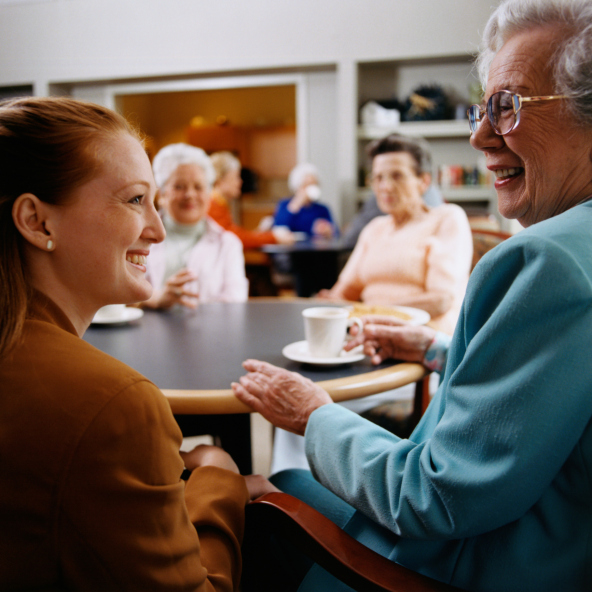 Putting a family member in a nursing home may be one of the toughest decisions families have to make, and unfortunately, the decision for many doesn’t tend to feel “good.†Many hope for a long life of independence, and becoming immobile, senile, or dependent on others is a thought people simply like to avoid. As a psychotherapist who works in a nursing home, I often encounter family members racked with guilt, which has led me to analyze the experience.
Help Them Through the Adaptation Phase
Many of the nursing home residents I speak with openly express their discomfort at being in a nursing home, and some manifest symptoms of depression as a result. In my experience, it is typical for a new resident to struggle with this new environment. After a (sometimes long) transition period, many will begin to adjust. According to an article published in Nursing Research and Practice, this is called the “adaptation phase,†with the typical period of adjustment being cited as three to six months (2013).
[fat_widget_right]During the adaptation phase, a new resident may be struggling to respond to new rules and expectations of the nursing home staff, as well as learning to live with a new group of people. The adjustment period can be really tough, and unfortunately, some seniors may never fully adjust to a nursing home environment.
Help Them Avoid a ‘Loss of Control’
There are a number of ways family members, friends, therapists, and staff can help improve the quality of life of nursing home residents. I am focusing on family members in this article, but if you are looking at this problem from a different perspective, please utilize this advice to help a nursing home resident you care about.
Many nursing home residents I’ve spoken with express feelings of a “loss of control†when they don’t have any say in the facility where they end up living. With that said, one of the first ways to help a senior make the transition to a nursing home is to give the person a chance to evaluate options and make decisions regarding the new residence. Finances may be a huge barrier when looking for care, but giving a family member the right to shop around and choose a residence can help foster a sense of independence and control from the beginning of the transition (2013).
A window can make a big difference in a person’s living space within a nursing home. An article in the Journal of Aging Research says that a window view doesn’t even need to overlook plush greenery to be beneficial. It can simply offer something to look at, such as pedestrians, wildlife, or any landscape (2015). If the resident’s individual room does not offer a window, access to a private space with a window and a view may offer similar benefits. Adding plants to the resident’s room can also create a more personal environment and take away from the medical feel of the room.
Personal items from the resident’s previous home can also create a sense of familiarity and mastery over the experience. This may include pictures, furniture, or comfort items such as blankets. Allowing the resident to personally pick out items to bring to the nursing home can also contribute to the sense of control that can be so important to a healthy adjustment to nursing home living.
Help Them Stay Social
Initially, it can be intimidating to join the other residents in activities, but engaging in social activities and continuing ones enjoyed before the transition can positively affect a resident’s sense of happiness. If you’re a family member, go over the schedule of activities with your loved one and help pick out some that appeal to him or her.
Life in a nursing home is different, but it’s not the end. A person can continue to feel loved and cared for, and offer their love and care in return.One of the best ways to help your family members ease into a nursing home is simply to listen to them. Often, seniors at the nursing home I work in tell me they don’t tell their children or family members about their feelings of depression because they don’t want to burden them. Others say they attempt to tell their family members, but their feelings are dismissed. Many new nursing home residents will experience depressive symptoms and feelings of hopelessness as part of the adjustment phase. Allow your family member to talk about this experience so he or she doesn’t feel further isolated. This may evoke your own guilt or a desire to fix the situation, but remind yourself that your loved one has limited people to talk to, especially about emotions. Your ability to sit and listen will help demonstrate that you care and are available for support.
Lastly, and perhaps most important, provide a sense of hope for your family members. Consider what might increase comfort in the home and offer some options. Listen to their struggles without defending them. Offer them your time and company, share pictures of the family, bring food from home, and remember to tell them how important they are to you. Life in a nursing home is different, but it’s not the end. A person can continue to feel loved and cared for, and offer their love and care in return.
References:
- Degenholtz, H.B., Resnick, A.L., Bulger, N., &Â Chia, L. (2014). Improving quality of life in nursing homes: The structured resident interview approach. Journal of Aging Research, 2014, doi: http://dx.doi.org/10.1155/2014/892679
- Riedl, M., Mantovan, F., &Â Them, C. (2013). Being a nursing home resident: A challenge to one’s identity. Nursing Research and Practice, doi: http://dx.doi.org/10.1155/2013/932381
- Van Hoof J., Verhagen, M.M., Wouters, E.J.M., Marston, H.R., Rijnaard, M.D., &Â Janssen, B.M. (2015). Picture your nursing home: Exploring the sense of home of older residents through photography. Journal of Aging Research, doi: http://dx.doi.org/10.1155/2015/312931
 While there are many benefits to having high intelligence, many managers, supervisors, and other workers—particularly those who work in businesses in which interpersonal relationships are key—have become keenly aware that workplace success may depend on their ability to use another invaluable personality trait: emotional intelligence.
What Is Emotional Intelligence?
The concept of emotional intelligence (EQ) was introduced by psychologists Peter Salovey and John Mayer in a landmark article in 1990. The idea was popularized in 1995 by psychologist and author Daniel Goleman after the release of his book, Emotional Intelligence: Why It Can Matter More than IQ.
Emotional intelligence refers to the capacity to identify, evaluate, and manage emotions in one’s self as well as in other people. While some researchers believe this ability may be trained and developed, other experts suggest emotional intelligence is a trait a person must be born with.
Principles of Emotional Intelligence
[fat_widget_right]A number of theories have emerged to explain the concept of emotional intelligence. Salovey and Mayer developed the ability model, which emphasizes a person’s capacity to understand and use emotional information in social contexts. Konstantin Vasily Petrides developed the trait model, which focuses on how people view their own emotional abilities, and Goleman developed the mixed model, which uses principles from both the ability and trait models.
Though each model has its distinguishing features, the underlying principles of the models are similar. According to Goleman, the key principles of emotional intelligence include:
- Self-awareness – the ability to recognize personal emotions, emotional triggers, and limitations
- Self-regulation – the ability to manage emotions so they do not have a negative effect
- Motivation – an inner drive that comes from the personal joy experienced after an accomplishment
- Empathy – the ability to recognize, understand, and experience the emotions of another person
- Social skills – the ability to interact and negotiate with other individuals in order to find the best way to meet the needs of each person
Emotional Intelligence in the Workplace
Many mental health experts believe emotional intelligence is a valuable asset in the workplace. In certain environments, employees with high levels of emotional intelligence may be better able to cooperate with others, manage work-related stress, solve conflicts within workplace relationships, and learn from previous interpersonal mistakes.
This may not mean high emotional intelligence is beneficial or necessary for all jobs. Studies show that while jobs that require large amounts of interpersonal interaction—for example, sales or real estate jobs—may benefit from workers who possess high emotional intelligence, the opposite is true for occupations that are generally more individualistic, such as a research scientist or an accountant.
In settings where people tend to work alone, people who possess high emotional intelligence may actually perform at a lower level than the average worker because they may be overly concerned about the emotions of other people.
Emotional Intelligence and Leadership
In certain environments, employees with high emotional intelligence may be better able to cooperate with others, manage work-related stress, solve conflicts that may arise within workplace relationships, and learn from previous interpersonal mistakes.Though emotional intelligence may not be necessary for every type of job, it can be a vital trait for most people in leadership positions. To be effective leaders in the workplace, managers, supervisors, and other authority figures must be able to function productively with people under their charge. A good leader is able to create the type of work environment where each person feels relevant and motivated to succeed.
Leaders with high emotional intelligence are able to use their social skills to foster rapport and trust with their employees. They tend to view their team members as individuals with unique abilities, backgrounds, and personalities, rather than as a uniform collective. Effective leaders seek to understand and connect emotionally with their staff—genuinely sharing in their joys as well as their concerns. The ability to build mutual trust and respect can become especially important if an unpopular decision is made within the business setting, but the managers need to keep their teams working efficiently.
Like all other types of relationships, work relationships may experience problems sooner or later. When conflict arises, leaders with high emotional intelligence may be better able to control their own impulses, view the situation from all perspectives, and seek mutually beneficial solutions. Effective leaders are transparent and are not afraid to admit when they are wrong. They are also more likely to try to improve work relationships.
Telltale Signs of Leaders with Low Emotional Intelligence
While leaders with high EQ are more likely to maximize the efforts and output of their employees, leaders with low EQ are more likely to have a negative impact on the productivity of their teams. Leaders with low EQ may display attitudes and behaviors such as:
- Criticizing other people when they mistakes
- Refusing to accept personal responsibility for errors
- Always playing the role of the victim
- Refusing to accept critical feedback
- Using passive, aggressive, or passive-aggressive styles of communication
- Refusing to integrate with the team
- Not being open to others’ opinions
Despite these issues, however, some experts believe emotional intelligence may be trained and developed.
The Potential Downsides of Emotional Intelligence
Though emotional intelligence is usually painted in a positive light and is often considered to be a valuable personality trait, a balanced view of the concept can be important. Emotional intelligence, like any other skill or talent, may be used positively or negatively depending on the intentions of the person wielding the ability.
As people with high EQ are better able to manage their own emotions and evaluate the emotions of others, they have the capacity to be more deceptive and manipulative than other people. Business leaders with high EQ and self-serving motives may toy with the emotions of their employees, using them to climb the corporate ladder with little regard for their workers’ long-term welfare.
Such leaders may also pretend to offer friendship and support, while secretly seeking to undermine the ambitions of team members who could become potential rivals. They may even expose their workers to public embarrassment, shame, or guilt in an effort to reach their own personal goals.
Those seeking to become effective leaders may do well to reflect on the importance of emotional intelligence. Leaders who are eager to hone specific aspects of their emotional intelligence may utilize self-help publications or seek the support of a qualified counselor, therapist, or coach.
References:
- Craemer, M. (n.d.). Emotional intelligence is vital to workplace success. Retrieved from https://www.washington.edu/admin/hr/pod/leaders/orgdev/alliance/articles/EQ_Craemer.pdf
- Deleon, M. (2015, May 8). The importance of emotional intelligence at work. Retrieved from http://www.entrepreneur.com/article/245755
- Grant, A. (2014, January 2). The dark side of emotional intelligence. The Atlantic. Retrieved from http://www.theatlantic.com/health/archive/2014/01/the-dark-side-of-emotional-intelligence/282720/
- Llopis, G. (2012, September 24). 5 ways to lead with emotional intelligence—and boost productivity. Retrieved from http://www.forbes.com/sites/glennllopis/2012/09/24/5-ways-to-lead-with-emotional-intelligence-and-boost-productivity/
- Salovey, P. & Mayer, J. D. (1990). Emotional intelligence. Retrieved from http://www.unh.edu/emotional_intelligence/EIAssets/EmotionalIntelligenceProper/EI1990%20Emotional%20Intelligence.pdf
 Have you ever been in a relationship that felt as though it sapped all of your energy? If so, you may have been in a codependent relationship. Codependency is generally defined as a type of relationship in which one person supports the other in an unhealthy behavior of some kind. This could be enabling someone to maintain an addiction, to not take responsibility for his or her actions, or to become overly reliant on you.
Codependency is often learned in a dysfunctional family environment. There are generally underlying issues that have been ignored or minimized, such as an addiction, physical or sexual abuse, or a family member struggling with a chronic mental health condition. Frequently, the person in the caretaking role disregards personal needs and focuses on providing for the other financially, emotionally, and/or physically. The person being taken care of comes to depend on the caretaker’s help in order to enable him or her to maintain life choices. Feelings in this type of family or relationship are generally repressed, and problems tend to go unacknowledged.
Some of the signs that indicate you might be in a codependent relationship include:
[fat_widget_right]
- Recognizing the harmful behaviors that your partner or loved one is engaging in, but providing for that person in such a way that he/she is not having to suffer consequences.
- Remaining in an unhealthy relationship despite the emotional and psychological toll to your own health.
- Feeling unappreciated, angry, and resentful, but also afraid of retaliation if you stop “rescuing†or taking care of the other individual.
- Difficulties with setting appropriate limits or boundaries in the relationship.
- Putting the needs of others before your own.
- Being overly protective and taking on all responsibility for your partner or loved one.
- Minimizing or denying the problem.
- Having poor communication skills, especially regarding the problem and/or your emotions.
Although the caretaker in the codependent relationship usually has good intentions and generally acts out of a sincere desire to help a partner or loved one, the situation typically ends up backfiring. Over time, the caretaker an start to feel unacknowledged and taken for granted. By constantly protecting the loved one from the consequences of his or her actions, the relied-upon partner actually helps to foster even more of the destructive behaviors. This, in turn, prevents the loved one from experiencing important life lessons and learning to take responsibility.
So how can you stop the unhealthy dynamics of a codependent relationship? A few methods include:
- Setting appropriate boundaries in the relationship. Take stock of your feelings and determine where you will draw the line when offering financial, emotional, and/or physical support.
- Stop rescuing your loved one from the consequences of destructive or inappropriate behaviors. Providing resources for getting help with an addiction, for example, is much more loving than covering up for the person’s actions and watching that person slowly ruin his/her life.
- Spend more time with friends doing activities you enjoy. Broaden your horizons and develop a larger support system that you can turn to when you need someone to depend on.
- Acknowledge your own needs and start implementing more self-care strategies. This is often one of the most difficult things for people on the caretaking end of a codependent relationship to do, but it’s one of the most necessary, too.
- Get help from a mental health professional. Codependent relationships can be difficult to leave or change. If you have been struggling to make changes on your own, contact a therapist to work through these issues in a caring environment.
Although codependent relationships can be extremely challenging, change is possible by following some or all of the methods listed above. A great deal of pain and suffering can be alleviated by learning to set healthier boundaries in order to stop any destructive behaviors and support the growth of the partners or family members involved.
Thanks for your honest letter. This is not at all unusual, what you’re going through, for men especially. In a way, it means you’re growing up and are now ready for some honest-to-goodness soul searching. (Which may have prompted you to write.)
Carl Jung once said it’s only when a person gets a glimpse of their mortality, often in middle age, that therapy begins. We lose some of our youthful illusions, and time becomes more precious.
If I could rephrase your question, it would be, “What really matters to me? And what does sex mean to me? It used to be super exciting but it no longer does the trick, and that’s frightening. Now what?†Some men do find this happening in their mid-40s, though there’s a good chance what is happening is at least as psychologically rooted as it is physiological. Maybe you need something more fulfilling for yourself, out of life, and out of relationships.
[fat_widget_sex_right]
First, the practical. Many men in their mid- to late 40s begin experiencing bodily changes in which the vitality of youth ebbs somewhat; we may need more sleep, experience more aches and pains, dwell a little longer in the depression or anxiety that’s dogged us for years, and so forth. Our devil-may-care resilience loses some of its bounce, and that’s hardly fun for anyone—especially men, many of whom identify strongly with their potency, sexually and otherwise.
You may be experiencing some shame along with fear if you have a history of feeling “not enough.†Many men who turn to sex for emotional self-sustaining often struggle, sometimes unconsciously, with shame and self-doubt. It’s as if our bodies and genitals are rebelling or walking out on the job, and we’re a little ashamed of what’s become so important for us, what we think we need but shouldn’t (pornography, for example).
So, first know you are not alone; much of this is normal for creeping middle age. You may want to get a physical (if you haven’t already) to make sure it’s not a medical issue. In fact, that would be the first thing I’d do, just to be safe. You allude to some erectile dysfunction, which, while not unusual for men your age, is something a medical professional may be able to help with.
I once read an interview with a psychologist who treated men for erectile challenges. She said, “Penises tell us a lot about what their owners are feeling.†Perhaps some of your recent life experience is deflating, in more ways than one; as someone who treats addictions, I can tell you that people often become anxious when repetitive behaviors are no longer the exciting or dynamic outlet they used to be. In a way, this is a sign of maturity, but it can bring anxiety with it.
I once read an interview with a psychologist who treated men for erectile challenges. She said, “Penises tell us a lot about what their owners are feeling.†Perhaps some of your recent life experience is deflating, in more ways than one; as someone who treats addictions, I can tell you that people often become anxious when repetitive behaviors are no longer the exciting or dynamic outlet they used to be. In a way, this is a sign of maturity, but it can bring anxiety with it.
What’s most telling for me—and, granted, I don’t have a whole of background to go on—is that you mention sex but not a partner. The focus, in other words, is on the literal, not the emotional or relationship transactions (love, closeness, trust) that accompany sex. I have always found that sex and attachment (and sex as attachment) to others are interconnected.
Sex, like any interpersonal transaction, never happens in a vacuum. Even men who “love ’em and leave ’em†typically are operating out of strong feelings and fears regarding intimacy; perhaps they fear or are ashamed they want it too much, so they dodge it via flings or porn and such. It may sound strange, but some of the men I help have fallen in love with prostitutes or strippers in ways that, from a distance, may seem delusional. (I am not suggesting this is your issue, mind you, though there are parallels with looking at porn.) What I realized is that they were ashamed of their desires for sex, and their own vulnerable emotional needs, because of how safe it felt attaching to someone who “got†their desires (with a built-in distance that ensured safety). In other words, they were “acting out†their desires without looking closer or exploring them in greater depth, perhaps in therapy or a support group.
I’m going to go out on a limb and say your main challenge here may lie in a kind of loneliness at a gut or soul level that is elusive or out of your awareness. It’s a catch-22 for some men; desire for closer relatedness is shameful (not “masculineâ€), so it gets channeled into sexuality, which is fun and safe due to emotional distance (which porn provides), which is unsatisfying in the long run, leading right back to square one: isolation, shame, and maybe even heartbreak.
We can “decode†our sexuality in a way that helps explain how we connect with others, even friends and family. The man who insists on being on top or on the bottom in bed may take an overly aggressive (or passive) role in all his relationships (or be passive in bed and dominant in the boardroom). The trick of sex is that it’s a pleasurable respite and the height of intimacy.
Graham Greene, one of my favorite novelists, once mentioned in an interview his belief that as men get older, they get more interested in companionship and less in “exciting†sex. The closeness and trust between partners is what’s exciting, not so much the novelty or the literal physical activity. Not that there’s anything at all wrong with the latter. It’s just that we need to be careful not to put all our psychological eggs in one basket; what is “hot†to us starts to shift as we get older and mature, as the emotional side of relationships gain in importance and we start to think about who we might want to have at our side over the longer haul, the end of which—sometimes startlingly—isn’t as far away as it was.
You may want to talk to other men who are going through this; a therapy support group or individual counseling or even online support can be helpful in opening up options, understanding, and recognizing that you’re having a very human experience that we all, in one way or another, must at some point negotiate.
Thanks again for writing.
Darren
 Not all couples plan for a trip down the aisle. Even couples who have been in a relationship for years may choose to forgo tradition and not get married.
Statistics from the Centers for Disease Control and Prevention (CDC) indicate that over the last decade, adult Americans appeared to be steadily falling out of love with marriage. According to the report, the year 2012 saw an average of 6.8 marriages per 1,000 people, a consistent decrease from 7.5 marriages per 1,000 people in 2006 and 8.2 marriages per 1,000 people in 2000.
A 2011 analysis of United States census data conducted by the Pew Research Center found only about 51% of American adults are currently married—a record low. Compare these statistics to the 72% of American adults who were married in 1960, and some social trends may begin to emerge.
A Shift in Public Attitude About Marriage
With numerous studies suggesting healthy marriages promote physical well-being, boost mental health, and protect children from social and educational problems, the following questions may arise: Why do some couples choose not to get married? And what living arrangements are replacing marriages in 21st century America?
[fat_widget_relationships_right]Data from the Pew Research Center analysis suggests age and public attitudes may play significant roles in the current trend to remain unmarried. Of all Americans ages 18-29, only 20% are currently married, compared with 59% in 1960. Whether young adults are completely abandoning marriage or temporarily delaying it is not yet clear. However, evidence suggests young adults today may be focusing on furthering their education or seeking to establish a social foundation before considering marriage. The analysis reveals an increase in the number of college graduates who decide to marry later in life.
Public attitudes toward marriage are also changing. While marriage may have been expected in the past, the current perception is somewhat mixed, with a growing number of people viewing marriage as unnecessary, said Lori Hollander, LCSW-C, BCD, an expert in relationships and marriage. A 2010 Pew Research survey reports almost 40% of Americans believe marriage is becoming obsolete.
“Marriage is no longer looked up to, and being single is no longer looked down upon,†Lori Hollander said.
What factors have contributed to this public shift in perception? The increasingly sophisticated desires of modern-day adults, coupled with the drive to fulfill these desires with as much freedom as possible, may be influential. Bob Hollander, husband of Lori and a relationship therapist for more than 25 years, suggests people simply want more out of life and love.
“Happiness is no longer just about having a full-time job and keeping the bills paid,†Bob Hollander said. “We now see people who are looking beyond mere survival, and the needs that are being met are simply more sophisticated.â€
People in the past may have viewed marriage as an effective way to start a family, build financial stability, or gain happiness, but many modern-day adults are able to meet those needs without a marriage license.
In recent years, single-parent households, single-person households, and cohabitation have all become more popular. Whether the intention to marry is present or not, couples are now moving in together before marriage more than ever before. This trend may be attributed to multiple factors, including:
- A mutual desire to live together
- A desire to experience what marriage to one’s partner may be like
- Financial stress experienced by one or both partners
- A deliberate effort to reduce costs and increase savings
- Proximity to school or place of employment
Tools for a Successful Relationship
According to data from the Pew Research Center, marriage may still be a goal for many Americans, even if it is not among their top priorities. Thirty-six percent of adults report a successful marriage as being one of their most important goals in life, while 48% of Americans say a successful marriage is not most important. A larger portion of adults (53%) view being a good parent as one of their most important goals.
People in the past may have viewed marriage as an effective way to start a family, build financial stability, or gain happiness, but many modern-day adults are able to meet those needs without a marriage license.More than half of Americans surveyed believe marriage does not make a difference in having a fulfilling sex life, being financially secure, feeling happy, reaching a desired social status, or getting ahead in a chosen career.
Stuart B. Fensterheim, LCSW, a specialist in emotionally focused therapy, relationships, and marriage, explains the changing nature of beliefs about healthy relationships.
“For years, people have lived with the idea that relationships are one big guessing game,†Fensterheim said. “On top of that, so many folks now fear that they will have to give up something that they love in order to sustain a marriage. Healthy partnerships are just not that way.â€
Married or not, there are many resources available that may help build a healthy, happy, and lasting relationship. Couples counseling can help take the guesswork out of relationships, set realistic expectations, and teach the skills needed to enable love to grow. Individual partners may also seek the assistance of a qualified therapist if they are experiencing specific personal challenges.
References:
- Centers for Disease Control and Prevention. (2015). National marriage and divorce rate trends. Retrieved from http://www.cdc.gov/nchs/nvss/marriage_divorce_tables.htm
- Cohn, D. (2013). Love and marriage. Retrieved from http://www.pewsocialtrends.org/2013/02/13/love-and-marriage/
- Cohn, D., Passel, J. S., Wang, W. & Livingston, G. (2011). Barely half of U.S. adults are married—a record low. Retrieved from http://www.pewsocialtrends.org/2011/12/14/barely-half-of-u-s-adults-are-married-a-record-low/
- Copen, C. E., Daniels, K. & Mosher, W. D. (2013). First premarital cohabitation in the United States: 2006-2010 national survey of family growth. Retrieved from http://www.cdc.gov/nchs/data/nhsr/nhsr064.pdf
- Copen, C. E., Daniels, K., Vespa, J. & Mosher, W. D. (2012). First marriages in the United States: Data from the 2006-2010 national survey of family growth. Retrieved from http://www.cdc.gov/nchs/data/nhsr/nhsr049.pdf
- Rosenblum, C. (2013, September 13). Living apart together. The New York Times. Retrieved from http://www.nytimes.com/2013/09/15/realestate/living-apart-together.html?pagewanted=all&_r=1