 Parents searching for a safe place for their transgender, gender nonconforming, or nonbinary child usually have a lot of questions. One of the first things parents who reach out to me ask is, “What is gender dysphoria?” This is usually followed by, “How is it affecting my child?”
Understanding gender dysphoria is an important part of the journey to support trans youth. But many parents may not be sure what this concept means. Put simply, gender dysphoria is an internal conflict between the sex a person was assigned at birth and the gender they identify with. It is often described as a feeling of discomfort with the body a person lives in and their deeper sense of gender. This conflict can be seen in many ways. Body dysphoria, depression, anxiety, eating disorders, and self-harming behaviors are a few, but there are others. All of these symptoms can be seen as attempts to manage the deregulation that can occur when a person’s body does not represent their gender.
Gender dysphoria may be first felt in puberty, when physical changes of development begin. Children can experience discomfort before puberty, but these feelings usually become stronger as differences between the physical body and internal sense of gender increase. Imagine knowing you are male, having a masculine sense of self—in a body that begins to develop breasts. This disconnect can cause extreme anguish and anger in adolescents. Many also say they feel trapped. [fat_widget_child_counselor_right]
How Does Dysphoria Manifest?
This internal conflict is different for each person, but it is often seen as depression or anxiety. Looking in the mirror and seeing a body that does not express your internal sense of self can cause pain, unsettled feelings, and disconnect. Psychological pain may show up in a child’s behavior. Many adolescents refuse to attend school and withdraw from social interactions. Your child may drop activities that require physical contact, like sports, and avoid situations where they would need to expose their body, like pool parties.
At its most intense, body dysphoria in teens can lead to suicidal thoughts and attempts, as well as self-harming behaviors and disordered eating. These actions often result from the need to control a body that feels completely out of control and to ease the pain of an internal disconnect. These symptoms are signs that a higher level of care is needed. A therapist trained to offer support to transgender, gender nonconforming, and nonbinary adolescents may be the best person to provide this care.
Help for Gender Dysphoria
A therapist who is well-versed in working with trans youth is vital for creating a safe space for kids and families to address the challenges of gender dysphoria. The goal in therapy is not to change how a person feels or expresses their gender. Rather, it is for children and their parents to explore tools and methods of support for the feelings that surround the distress of not being able to physically express their true self.
It is important for families to develop a dynamic that is informed, supportive, and curious about their child’s journey as they explore their gender. This dynamic can create a space where different expressions of gender can be safely explored. This exploration may help relieve distress that occurs with dysphoria.
It is important for families to develop a dynamic that is informed, supportive, and curious about their child’s journey as they explore their gender.
Some of the first ways this exploration may take place is with social expression. Through social expression, a child or teen can develop their sense of self and affirm their gender identity. Your child may try out different styles of clothing and new hairstyles and ask you to refer to them by pronouns that fit their gender. They may choose a new name or try out several new names before they determine the one that fits best. These expressions can be seen as the first step in aligning themselves with their internal sense of being male, female, some of both, or neither. By supporting your child’s expressions and identity, you can help ease their distress and help them find a deeper and clearer sense of self.
The next step may be medical transition. Medical treatments that help align physical characteristics with gender include:
- Puberty blockers. These help prevent the developmental changes of puberty. They can help reduce distressing changes in trans children who have not yet decided on hormone therapy.
- Hormone therapy. Hormones cause physical changes that support internal gender identity.
- Gender confirmation surgery. Some trans people may pursue surgery to completely match their physical body to their gender, but others may choose certain types of surgery only.
It is important to understand that not all people who identify as transgender, gender nonconforming, or nonbinary are interested in pursuing complete medical transition. They may choose some aspects and reject others. For example, your teen may be interested in hormone therapy but not feel ready for gender confirmation surgery. This personal choice is a part of each person’s transition.
You can help your child by encouraging open discussion and taking their feelings and wishes into account. Ask what your child thinks about medical transition. Do your own research so you can have informed discussions with your child. Careful research can help you help your child make decisions based on accurate information and informed consent.
Exploring these topics can bring up strong emotional reactions. But it is important for both you and your child that you are able to support them during their transition and talk through their options from an informed, caring position instead of a fearful, reactive one. [amazon_affiliate]
Some families may need more help and support to explore these feelings and assist a child who is dealing with the painful reality of gender dysphoria. If you are struggling to find the best way to offer support to your child, you may find it helpful to talk through your feelings with your own therapist or counselor.
References:
- American Psychiatric Association. (2013). Diagnostic and statistical manual of mental disorders (5th ed.). Arlington, VA: American Psychiatric Publishing.
- Rood, B. A., Reisner, S. L., Surace, F. I., Puckett, J. A., Maroney, M. R., & Pantalone, D. W. (2016). Expecting rejection: Understanding the minority stress experiences of transgender and gender nonconforming individuals. Transgender Health, 1(1), 151–164. doi: 10.1089/trgh.2016.0012
- Sherer, I., Baum, J., Ehrensaft, D., & Rosenthal, S. M. (2015, January 1). Affirming gender: Caring for gender-atypical children and adolescents. Contemporary Pediatrics. Retrieved from http://contemporarypediatrics.modernmedicine.com/contemporary-pediatrics/news/affirming-gender-caring-gender-atypical-children-and-adolescents?page=full
- Steensma, T. D., McGuire, J. K., Kreukels, B. P., Beekman, A. J., & Cohen-Kettenis, P.T. (2013). Factors associated with desistence and persistence of childhood gender dysphoria: A quantitative follow-up study. Journal of the American Academy of Child and Adolescent Psychiatry, 52(6), 582-90.
 As much as we would love to envelop our kids in bubble wrap and follow them around everywhere, our job is ultimately to teach them to take care of and stand up for themselves. In recognition of National Child Abuse Prevention Month this April, and because childhood sexual abuse is an important issue to educate children about, I am sharing some tips for teaching kids about sexual abuse and body safety.
Nothing can guarantee our children’s safety, but talking to them about consent and their bodies and teaching them how to find a safe grown-up to tell if abuse does take place can both reduce the risk of abuse happening and prevent further abuse. Having open and ongoing conversations with your children about their bodies can help them feel empowered and confident and show them they have you on their team, no matter what. [fat_widget_right]
1. Make sure you are emotionally regulated first.
First and foremost, do what you can to get emotionally regulated and come from a place of love, not a place of fear. If you are panicking and overly fearful, your kids will pick up on it. As a trauma therapist, I have heard many stories from people who tried to tell their parents about abuse they experienced. Some report their parents responded appropriately, but far more report their parents either didn’t believe them or became so emotionally upset that their feelings became the center of the attention. Rather than the parent staying as regulated as possible so the child could trust them with their feelings, the parent’s trigger took up all the emotional space. This can make the child feel they not only have to navigate through the abuse on their own, but are now responsible for managing their parents’ feelings as well.
Set conversations up with the message, “Your body is awesome, strong, and beautiful, and it is my job as your caregiver to help you have a good relationship with your body and keep it healthy and safe.†Being able to have these conversations from a calm place will help build trust between you and your child. This is not to say the topic is not a difficult one, because it is. But talking about bodies should be as casual and calm as teaching kids to buckle their seat belt or cross the street.
As a trauma therapist, I have heard many stories from people who tried to tell their parents about abuse they experienced. Some report their parents responded appropriately, but far more report their parents either didn’t believe them or became so emotionally upset that their feelings became the center of the attention.
2. Use real names for body parts and start young!
Another difficult topic for many parents is using real names for body parts. Call a penis a “penis,†not a “wee wee.†Call a vagina a “vagina†and not a “hoo hoo.†Giving private parts nicknames implies there is something to be ashamed of. You can talk about how private parts—breasts, vaginas, bottoms, and penises—are very sensitive; you may notice children play with themselves rather casually. You can say to them, “Those parts of our bodies are special, and they can be very sensitive, but they are only for you to touch.â€
It is also important to talk to them about not touching other people’s private parts. This means talking to young children as well. I began talking to my sons about their bodies from the time they were babies. Talking about their bodies casually has given my boys the ability to be comfortable talking to me about their privates. Although these conversations can be awkward and at times, humorous, the fact that my boys can talk to me about their bodies tells me I am a safe person for them to come to. There are countless stories of children not talking to parents or caregivers about abuse because they had no language about it; there was no guidance from healthy, well-boundaried caregivers. Their only guidance was from the perpetrator, who inevitably instilled shame and secrecy.
3. Teach what healthy touch is and is not.
Teaching children what not to do is vital, and talking to them about what healthy touch looks like is also very important. Our pediatrician always says, “The only time it is okay for another person to touch or look at our private parts is when they are keeping us safe, healthy, or clean.†Teaching children what healthy touch looks like gives them a framework for listening to their own intuition about what is not safe or healthy. If you have older teenagers that are starting to experiment with sex, this will be a different conversation. Having continuous conversations about sex and consent is extremely important. We not only have to teach kids about saying no to things, but also what it means for them (and for their partners) to say yes. Sex is pleasurable, and we must be able to be honest about that. Otherwise, they are once again navigating these waters without adult guidance.
4. Let children know they are in charge of their bodies.
Another notion we must come to grips with as parents is that our children are in charge of their own bodies. Think about it—can we control where and when they pee? What and when they eat? Where and when they sleep? No. We can and need to have structure, boundaries, schedules, and rules around these areas, but ultimately, children are in charge of their bodies and need us to teach them how to make good choices about taking care of themselves when we are not around to watch their every move.
If we try to control our children too much, they will learn either to rebel or to submit. This also means they should be in charge of when and to whom they give affection. Not forcing them to give grown-ups a hug or kiss is a way of teaching consent. You can provide alternatives. Give options like “How would you like to say goodbye? An air high five, a fist bump, or just a wave?†I often say, “We don’t have to do anything with our bodies that doesn’t feel right, but we do have to treat people with respect. So, I’d like for you to choose how you want to say goodbye.â€
Teaching children what healthy touch looks like gives them a framework for listening to their own intuition about what is not safe or healthy.
5. Create a culture of believing children and avoid shame-based language.
Encourage children to talk to you if someone ever tries to touch them or coerces them into unhealthy touch. Reassure them you will believe them and help them get through it. Teach them to use their strong voice, and role play saying things like, “It’s not okay for you to touch me like that!†Creating a culture in the family of recognizing shame is also very helpful in creating open lines of communication.
Instead of calling children “bad†when they misbehave in some way, say instead they have made a “bad choice.†Discerning between these two may enable them to continue having open communication with you as they get older. Behavior and character are very important because perpetrators count on children believing the abuse is something they want, asked for, or deserved. Empowering children to believe they are strong, loveable humans, regardless of any mistakes they make, will help.
Thinking about someone hurting our children can feel overwhelming and unbearable. However, all we can do is empower them with language and unconditional love. Having ongoing, calm conversations about consent, their bodies, and healthy touch can reduce their risk of being victimized and empower them to have a healthy relationship with their bodies throughout their lives.
 Approximately 10-13% of school-aged children in the United States experience rejection by their peers. Children who feel rejected may have a higher risk of decreased academic performance, experiencing bullying, or becoming bullies themselves. They can also have higher chances of developing mental health issues including depression and anxiety, behavior problems, and isolation (Nixon, 2010).
The ‘I Am’ Message
Children perceive the world differently than adults. As children interact in social settings, they receive messages about themselves and who they are. For example, if a child gets a B on a test and their parents praise their hard work and good grade, the child might receive the message, “I am smart,†“I am capable,†or “I am loved.†If the parents respond by asking why they didn’t get an A and expressing disappointment, the child might receive the message, “I am stupid,†“I am unworthy,†or “I am a bad person.â€
The “I am†message a child receives might seem extreme for the situation, but in reality, children learn about who they are through interactions with parents, primarily, and peers, secondarily. [fat_widget_right]
When ‘I Am’ Messages Grow Up
Many “I am†messages are carried into teenage years and adulthood, where they affect how a person relates to others at work and in relationships. “I am†messages can also influence behavior and are often reinforced by continued experiences and interactions with others. For example, a teen who received the message “I am unworthy†as a child might stay in an abusive relationship longer than someone who received the message “I am worthy,” because deep within them exists the belief that they are unworthy and do not deserve more respect or better treatment. Being mistreated by their partner reinforces the negative “I am†message that they are not worthy. This can easily become a cycle and develop into a pattern for adult relationships as well.
There is good news for primary caregivers: The parent-child relationship is often the most influential in a child’s life. This means you, as a parent, have the power to help your child. When your child is rejected by peers, remember that your relationship and interactions with them likely have a greater impact than their relationships with peers, because you are their primary caregiver.
When your child is rejected by peers, remember that your relationship and interactions with them likely have a greater impact than their relationships with peers, because you are their primary caregiver.
Tips for Helping Kids Process Rejection
How do you help your child deal with peer rejection? Below are a few things you, as a parent or guardian, can do to help your child when they are rejected by their peers.
- Create a safe space: If your child talks to you about being rejected by their peers, listen to their story without judging or shaming them for not standing up for themselves. If your child does not talk to you about being rejected, but you have noticed they are having a difficult time interacting positively with peers, talk to them about it when they are in a neutral mood. Let them know what you notice, focusing on your observations rather than your feelings, and provide space for them to share their perspective.
- Identify the “I am†message: Make note of the “I am†message your child has received and help them differentiate who they are (“I amâ€) from how they feel (“I feelâ€). Help them gauge their feelings by reflecting on the story they tell and their facial expressions and body language. When you help your child notice how they feel, they will be able to separate their negative feelings from who they are.
- Empower them: Don’t rush to solve problems for your child (even though it might be tempting to do so). Empower them by allowing them to sort through different ideas about how to respond to peer rejection. Value their ideas and ask if they need you to support them in any way. Before you make the teacher aware of the situation, talk to your child about it and hear their perspective on that decision; they may have valid reasons for not involving the teacher.
- Help them connect: Remind them it is impossible to get along with everyone, but people with whom we have a lot in common can be good friends. Help your child identify their likes and dislikes and identify peers who have the same interests. Talk to your child about how to use common interests to approach peers.
- Contact a therapist: If you have tried to help your child but would like more guidance on how to best support them, contact a therapist in your area. Parenting doesn’t come with instructions and clear-cut solutions, so don’t be ashamed to reach out for support. A therapist can be a good option for your child, since they are a neutral person your child can talk to without worrying about how it could impact them in school or at home. One good option is a play therapist, because they can teach your child social skills and coping strategies through play. Eye movement desensitization and reprocessing (EMDR) therapy might also be a good option if your child continues to hold on to negative “I am†messages.
Remember: you have the power to help your child, and your relationship with them is the most influential. If you feel overwhelmed, don’t be afraid to reach out for support. Everyone can use a little help sometimes.
Reference:
- McKown, C., Gumbiner, L. M., Russo, N. M., & Lipton, M. (2009). Social-emotional learning skill, self-regulation, and social competence in typically developing and clinic-referred children. Journal of Clinical Child & Adolescent Psychology, 38(6), 858-871. doi:Â 10.1080/15374410903258934
- Nixon, R. (2010, February 2). Studies reveal why kids get bullied and rejected. Retrieved from https://www.livescience.com/6032-studies-reveal-kids-bullied-rejected.html
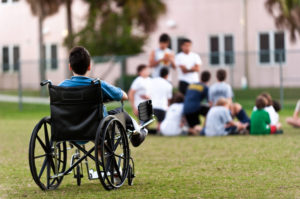 Bullying based on stigma or discrimination can be especially harmful. Bullies may target a child for their weight, religion, disability, or other traits. Â A Developmental Review study says anti-bullying programs are unevenly distributed among sociological categories. The authors say more research on interventions might reduce bullying among specific groups.
Preventing Stigma-Based Bullying
The study screened 8,240 articles published between 2000 and 2015. It included 22 studies addressing 21 different interventions for discriminatory bullying. The study found the number of stigma-based bullying interventions has increased with time. Between 2000 and 2007, only six such programs appeared in peer-reviewed journals. Between 2008 and 2015, researchers published 16 interventions.
[fat_widget_child_counselor_right]
This data suggests investigators are taking the problem more seriously. However, the study found an uneven distribution of programs. Over the last 15 years, programs addressing LGBTQ+ issues have grown more common. Yet the study’s authors located only two programs that directly addressed racism.
Bystander intervention and other generalized anti-bullying approaches have proven successful. Yet programs that target stereotypes might be necessary to fight discriminatory bullying. According to the study authors, they may also help prevent gun violence at schools. Many school shooters have a history of gender-based harassment and/or racial prejudice. Addressing discrimination early on may prevent behaviors from escalating.
Bullying and Mental Health
While some adults treat bullying as a rite of passage, research points to the long-lasting damage the experience can cause. A 2015 study found bullied children were more likely to experience anxiety and depression than survivors of childhood abuse. Research published in 2014 suggests the effects of bullying may extend into adulthood.
According to the Centers for Disease Control and Prevention (CDC), kids who bully are more likely to have:
- harsh parenting
- poor impulse control
- an acceptance of violence
Bullying prevalence estimates vary. The 2015 Youth Behavior Risk Survey found 20% of high schoolers were bullied at school during the previous year. In the same survey, 16% of students said they had been cyberbullied.
References:
- Bullying based on stigma has especially damaging effects. (2018, March 8). ScienceDaily. Retrieved from https://www.sciencedaily.com/releases/2018/03/180308105144.htm
- Earnshaw, V. A., Reisner, S. L., Menino, D. D., Poteat, V. P., Bogart, L. M., Barnes, T. N., & Schuster, M. A. (2018). Stigma-based bullying interventions: A systematic review. Developmental Review. Retrieved from https://www.sciencedirect.com/science/article/pii/S0273229717300138?via%3Dihub
- Prevent bullying. (2017, October 10). Retrieved from https://www.cdc.gov/features/prevent-bullying/index.html
 We are doing something wrong. When thinking of the recent school and mass shootings, whether I’m considering the issue of gun control, mental health awareness, or any other related topic, one thing stands out to me more than anything else: socialization.
How Toxic Masculinity Develops
While I agree we need to evaluate (or re-evaluate) many issues that may contribute to tragedies like the Parkland shooting, one thing likely to contribute to a major generational shift is the way we parent our boys. I am not saying there have not been female school shooters, but no one can deny the staggering difference in the number of male school shooters vs. female.
As a social worker trained in child development, certain trends stand out to me when reading about school shootings. Most school shootings in America are perpetrated by young males. It is common for shooters to have a history of abusing others or of experiencing abuse themselves. They often have a sense of entitlement to specific people (usually female peers) or the attention of a group (again, usually female peers).  Another common trend is a desire for retribution and revenge against those who they feel have wronged them. [fat_widget_child_counselor_right]
My professional opinion is that not all of this phenomenon can be attributed to the way our culture socializes boys—but a lot of it can be. Men in America are generally raised to embody the masculine ideals of Western culture. They are encouraged to be strong and tough. They are told they should always be willing to fight for themselves, their loved ones, and their beliefs. The problem here is not the idea of masculinity, but how we encourage our boys to follow these ideals.
We are damaging our children. We are teaching our sons and daughters that women are weaker and that emotions are a sign of that weakness.
My office overlooks a playground, so I can often hear what is going on in the microcosm below. My attention is frequently caught by disagreements between children. Let’s say someone took a toy out of a child’s hand. The girls will often cry, run to an adult for help, or let the toy theft happen while disappointedly moving on to something else. Sure, some girls are stronger advocates for themselves and will take the toy back, but often they do not. On the other hand, the boys will typically follow their peer, steal the toy back, and continue playing. Sometimes when one boy hits or smacks another, the original victim of the action will return the hit with equal or greater aggression. Again, this is not true for all boys. But most of the time, this is the type of interaction that will play out.
I see how this type of socialization begins both in my office and out in the world. As a society, we can unintentionally instill gender roles into our children through positively reinforcing certain behaviors. Girls are often encouraged to show gentleness and compassion. We often urge our boys to stifle their healthy emotions to avoid appearing weak (or by implication, feminine).
When boys experience bullying, they are typically taught not to cry or talk it out. Instead, we usually teach them to fight back and prove their manhood to those who challenged them. Sure, self-defense is appropriate in certain situations, but I have found we disproportionately encourage our sons to prove their toughness. I rarely see parents validate their sons’ emotional experiences or encourage boys to be in touch with their feelings.
Redefining Masculinity
We are damaging our children by teaching them that women are weaker and that emotions are a sign of that weakness. As teens, boys are socialized by their peers to view their value and sense of self in terms of how many sexual partners they have, how much weight they can lift, how many beers they can drink, and whether they can finish a fight. As adults, men are often encouraged to be aggressive in the boardroom so they are not seen as pushovers. Meanwhile, women with the same aggressive attributes may be shamed and belittled by coworkers for their “nastiness.â€
We need to foster empathy and destigmatize sensitivity in men.
This is where we as a culture and a country need to step up and do right by our children, especially our boys. We need to foster empathy and destigmatize sensitivity in men. (Better yet, let’s validate the feelings of all children, regardless of their gender.) We should allow our boys to cry without making them feel as if they are weak or less worthy of respect when they do. Instead, let’s praise our children for showing their emotions and encourage them to see the strength that comes from doing so. If we work to impart this altered view of masculinity, our sons may not be so quick to hit back when insulted, may not start rumors about girls who reject them, and may not pick up a weapon to punish those who they perceived have done them wrong.
If you have a child who is displaying aggression, or if you would like to look deeper into how gender roles affect your own behavior, therapy can help. You can find a therapist who specializes in aggression, child development, men’s issues, or any other relevant concern.
References:
- Larkin, R. W. (2011). Masculinity, school shooters, and the control of violence. In W. Heitmeyer, H. Haupt, S. Malthaner, & A. Kirschner (Eds.), Control of violence: Historical and international perspectives on violence in modern societies, (pp. 315–344). New York, NY: Springer.
- A study of active shooter incidents, 2000 – 2013. (2013, September 16). U.S. Department of Justice. Retrieved from https://www.fbi.gov/file-repository/active-shooter-study-2000-2013-1.pdf/view
 The number of children taking psychiatric medications has been rising over the last few decades. In 2014, the National Center for Health Statistics estimated 1 in 13 U.S. children between the ages of 6 and 17 takes medication. Many people believed the report was clear evidence that children are overmedicated. Yet a new study challenges that argument.
According to a study published in the Journal of Child and Adolescent Psychopharmacology, children are not overprescribed psychiatric drugs. Instead, the research suggests children who need psychiatric drugs might not be getting them.
Psychiatric Drug Use in Children
[fat_widget_child_counselor_right]
Some people are concerned about the overuse of psychiatric drugs, particularly stimulants such as Ritalin and Adderall. They often cite the increase in drug use as evidence of a problem. Others argue it is possible that more children are developing psychiatric conditions. The increase in drug use could be proportional to the new need.
To analyze the issue, researchers investigated the number of children with a mental health diagnosis. Then they compared that figure to the number of children who are prescribed psychiatric drugs.
Researchers gathered data on 6,351,482 people aged 3-24 years from the IMS LifeLink LRx National Longitudinal Prescription Database. Next, they analyzed prescription rates of three drug classes: antidepressants, stimulants, and antipsychotics. The annual percentage of young people who took drugs in any of the three classes was as follows:
- Ages 3-5 years: 0.8%
- Ages 6-12 years: 5.4%
- Ages 13-18 years: 7.7%
- Ages 19-24 years: 6.0%
Next, researchers compared the known prevalence rates of various psychiatric conditions to the rate at which drugs for these conditions were prescribed. They found that prescription rates are lower than diagnosis rates. For example, about 1 in 8 teens experiences depression each year, but less than 1 in 30 were prescribed antidepressants. About 1 in 12 children have symptoms of ADHD each year, though only 1 in 20 received a stimulant prescription during the study year.
Not all children who have a psychiatric diagnosis need medication. However, the very low rates of medication use suggest children who need medication might not be receiving it.
References:
- Post by former NIMH Director Thomas Insel: Are children overmedicated? (2014, June 06). NIMH. Retrieved from https://www.nimh.nih.gov/about/directors/thomas-insel/blog/2014/are-children-overmedicated.shtml#2
- Sultan, R. S., Correll, C. U., Schoenbaum, M., King, M., Walkup, J. T., & Olfson, M. (2018). National patterns of commonly prescribed psychotropic medications to young people. Journal of Child and Adolescent Psychopharmacology. doi:10.1089/cap.2017.0077
Dear GoodTherapy.org,
My 16-year-old daughter thinks I’m evil. Anytime I try to use discipline, whether it’s asking her to help around the house or do her homework, I get attitude and viciousness. In recent months she has even taken to saying she hates me. Last night she told me, “I hate your (expletive) guts!” Then she called me another expletive and told me to stay out of her life. I am still sobbing as I write this.
[fat_widget_right]
I don’t know what I did to make my daughter treat me like this. I may not be a banner parent, but I do my best to make sure she has what she needs and some of what she wants. She’s really ungrateful and has no respect for me anymore. She has threatened to go live with her dad a few times now (he lives two states away), and I’m just about ready to tell her to go.
It breaks my heart to see my child acting this way toward me and I want to fix our relationship if I can. But I can’t get through to her at all, so I don’t even know where to begin. I feel like a complete failure as a parent. Please help. —She Hates Me
Dear She Hates Me,
The agony of your heartbreak is so clear—it is devastating to have your child speak to you in such a hateful manner. That agony has a way of making things seem worse than they actually are. You end your letter by saying you “feel like a complete failure as a parent,†but you also said you “make sure she has what she needs and some of what she wants.†If you are covering her needs and some of her wants, you are succeeding in at least one area, and I imagine there are other areas of parenting where you are also quite successful.
It sounds like you are unable to trace her behavior back to any particular incident, which is likely making her behavior all the more baffling. Thus, you feel unsure how to approach the issue. This also makes it seem possible that the issue isn’t really you. Sometimes children lash out at their parents even when their angst has little to do with their parents. Parents can be safe targets—friends might decide not to be friends and boyfriends/girlfriends might break up, but parents don’t stop being parents and don’t stop loving their children.
If you are covering her needs and some of her wants, you are succeeding in at least one area, and I imagine there are other areas of parenting where you are also quite successful.
You also mention that her father lives two states away and your daughter has expressed an interest in going to live with him. I’m curious how long he has lived two states away. Is this a more recent development that she might be having a hard time adjusting to? Does she blame you, fairly or unfairly, for the geographical distance? I imagine her request to live with him is quite difficult to hear, but affording her the opportunity to speak openly and honestly about why she is feeling this way might be beneficial to your relationship with one another.
I also find myself feeling curious about what is going on in her life beyond the fact her father lives two states away. Have her relationships with anyone else—friends or significant others—changed? Has there been any kind of change at school? Has her performance in school changed significantly? Examining some of these issues might offer some ideas about other things, outside of your relationship with your daughter, that might be impacting her and how she treats you. If you’re unsure of these potential issues, maybe there is a guidance counselor or teacher at her school that you could check in with.
I wonder if there are any times of relative peace between the two of you in the home. If so, one of these moments might provide a good opportunity to let her know you are concerned about her and are open to listening to anything she might wish to share. Sometimes, approaching someone in the absence of conflict can change the complexion of a typical interaction.
Finally, I would encourage you to consider seeking out your own therapy. Parenting is one of the most intense experiences there is, and going through something like this is incredibly painful. You deserve not only the support a therapeutic relationship can provide, but also the opportunity to brainstorm new strategies for and approaches to connecting with your daughter and healing the relationship.
Best,
 The dreaded nightmare. Your child wakes up in a sweat for the third night in a row, screaming, convinced there are monsters lurking, wanting to cause harm. You are left feeling helpless and concerned. The most you can do is to soothe your child and say it was just a dream.
You might wonder to yourself why the nightmares keep occurring, and more importantly, what you might be able to do about it. If your child experiences nightmares regularly, this article may be helpful.
What Causes Nightmares?
Dreams, good or bad, are not only a vital part of a child’s emotional and cognitive development, but they can also can serve as a map to your child’s inner world.
According to Bay Area child psychologist Alan Siegel, nightmares can be a clear beacon for a parent, guardian, teacher, or counselor, in terms of the psyche, especially when children are faced with stressful changes in their routine or are going through a particularly challenging time. Through childhood development research and personal case studies, Siegel found that anything from the first day of school to changing residence can lead to nightmares. More severe cases may stem from events such as divorce, accidents, or a death in the family. [fat_widget_right]
Humans go through specific stages of development, with the most dramatic occurring during childhood and adolescence. During these stages, there is much emotional, biological and mental intensity, and a great need for balance or comfort. For example, children going to school for the first time will most likely experience stress as their environment is quickly and dramatically changed. Dreams, often in the form of nightmares, may then be more likely to occur during these transitions as the child copes with the new challenges that inevitably must arise in the stages of life.
Dreaming is also a part of our need for homeostasis or balance in our lives, especially during periods of transition and stress. In the book Encountering the Monster: Pathways in Children’s Dreams, psychologist Denyse Beaudet collected over 100 dreams in an 11-week period from 15 preschoolers between the ages of 5 and 6. [amazon_affiliate]
At first the task seemed daunting in that the dreams of children are multifaceted and greatly diverse in content. Further, the dreams of children may subject to modification: for most children, the line between reality and fantasy is very fine, and their gift of imagination can easily alter dream recall.
However, by looking at a series of dreams instead of a single dream, Beaudet was able to mark the evolution in a child’s life in terms of how that child found balance to stressful situations. For example, monster themes, which were quite frequent, could be quite telling in terms of how a child deals with adversaries in dreams and in life. Is the child combative or complacent? Does the child have help or do they feel helpless and alone?
Dreaming is also a part of our need for homeostasis or balance in our lives, especially during periods of transition and stress.
In one particular case, a girl recorded a series of 11 such monster dreams where the focal point included the vehicle in which she moved through the dream. In the first dream, she is being pushed inside a baby carriage while encountering the monster. In later dreams, she rides in a car and then eventually rides a bicycle of her own volition. Although she did not yet know how to ride a bicycle in waking life, it became clear to Beaudet, through working with her dreams, that the child was gaining more control and emotional balance in her life. “From one dream to the next, the various vehicles recur…express(ing) in many ways the experience of movement and displacement in (her) psychic life.â€
Beaudet’s research, mindful of dreams as psychic odysseys, proved to be quite powerful in finding correlations between dreams and childhood development by letting the dreams speak for themselves. In order to do this as Beaudet suggests, we must hold the dreams with curiosity and creativity and without judgment or fear.
Dealing with Recurring Nightmares
But what happens when nightmares occur and cannot be traced clearly to a particular event, or the parent has no idea of the significance of the event causing the nightmare?
Here are some tips that may be helpful for guiding children and their dreams:
- Do not dismiss the dream. The first and most important tool is the ability to listen without judgment. In Kate Adams’ book Unseen Worlds, she shares the importance of her research and work as a receiver of children’s dreams. Many of the children from her cases “retreated into a world of silence until a researcher with a genuine interest came along.” When we give children our attention and care by providing a safe space in which they can talk freely, this helps build trust, connection, and confidence. This is essential, because we want our children to know it is safe to come to us for help and guidance.
- Provide dream journals for children. An artist’s sketchbook with blank pages is a good choice because it evokes freedom to use the imagination. Encourage children to sketch, color, paint, collage, or illustrate their dreams. Older children may also be able to use words to describe their dreams, through poetry, prose, or myth.
- Invite children to share their dreams. A wonderful way to encourage dream sharing is to create a dream-friendly environment. Why not incorporate family dream sharing as part of your morning process? It may be easier for reluctant children to talk about their dreams if family members are discussing their own dreams, too.
- Ask open-ended questions to invite your child’s creativity. If we are open and curious, instead of putting our own beliefs and opinions on what we think our child’s dreams might mean, we show them we are receptive to their thoughts. Allow children to offer their own interpretations without asking leading questions or offering an explanation. Our children often surprise us with their wisdom and resilience.
- Offer reassurance for difficult or troubling dreams. I believe it is essential that we hold space for our children’s dreams and validate their fears. If they are distressed, our comfort and support can help them feel more at ease. Reassurance may be especially important if the disturbing dream involves great injury or death to a loved one.
John Milton writes in Paradise Regained, “The childhood shows the man as morning shows the day.†Can we not also say this about dreams? If we can unflinchingly look into our child’s dreams, are we not bearing witness to the evolution of their soul?
I say that we, as parents, counselors and teachers, cannot afford not to take this journey and use the dream maps of the psyche to guide our way. If you are unsure of how best to support a child in your life, you can find help and support from a qualified and compassionate counselor.
References:
- Adams, K. (2010). Unseen worlds: Looking through the lens of childhood. London, UK: Jessica Kingsley Publishers.
- Beaudet, D. (1990). Encountering the monster: Pathways in children’s dreams. New York, NY: Continuum.
- Bulkeley, K., & Bulkeley, P. M. (2012). Children’s dreams; Understanding the most memorable dreams and nightmares of childhood. Lanham, MD: Rowman & Littlefield Publishers.
- Bulkeley, K., & Siegel, A. (1998). Dreamcatching: Every parent’s guide to exploring and understanding children’s dreams and nightmares. New York, NY: Three Rivers Press.
- Johnson, C. R., & Campbell,  J., Eds. (2016). (Sleep monsters and superheroes: Empowering children through creative dreamplay. Santa Barbara, CA: Praeger.
- Mallon, B. (2002). Dream time with children: Learning to dream, dreaming to learn. London, UK: Jessica Kingsley Publishers.Â
 “I have no friends,†said a recent high school sophomore during an emotional therapy session. She’s not alone—I hear it daily working with adolescent girls. As adults, we often scoff and wonder how this could be. But the truth is, teenagers today feel isolated and more alone than ever. Even in the age of social media, with constant digital connection, lack of deep friendships is creating a secluded void.
While everyone feels lonely from time to time, the number of teenagers who tell me they feel friendless is unnerving. When I probe deeper and ask why they feel this way, and how it happened, similar patterns emerge across the board.
- It starts to unravel in middle school, after successfully navigating friendships in elementary school.
- The unraveling tends to start with a friendship conflict. Sometimes it’s a jealousy situation, sometimes it involves peer pressure or fear, and sometimes it’s a popularity contest.
- Teens feel shunned by former friends, and they can’t seem to get the relationship back on track.
- Teens have a hard time making new friends because they are not sure who is trustworthy.
- Teens feel like social media are a blessing and a curse.
- Teens feel isolated, vulnerable, and alone.
[fat_widget_child_counselor_right]
As adults, we are often quick to think, “Just go make a friend.†Today, it isn’t that easy. There are social media platforms to navigate, reputations to discern, disconnections to hurdle. It can feel overwhelming to start. Whether accurate or not, any perceived challenge can make a teen more likely to not reach out to someone as a friend. For instance, it’s a common perception among teens to view themselves as unlikable. “She doesn’t like me, she never even looks at me in the hallway,†I hear often.
Even in the age of constant virtual connectedness, we live with personal and intimate disconnectedness. Teens can have “friends†on Facebook but often feel left out when others are having fun on Saturday night and they weren’t invited. Classmates may comment on a teen’s Instagram photo but forget to invite them to join a movie night.
Teenage years are hard enough without the extra challenge of feeling friendless.
Social media also provide an inherent friendship killer—competition. That’s what social media are often used for—showing off, looking cool, and stirring envy. Taking a selfie is often work for teens. They may feel the need to look their best from every angle, and it often takes a few tries to get it “right.” When the end result turns out to be a fabulous photo, social media followers may forget that the person in the photo can also have zits, a broken heart, and family conflict.
How can teens learn to have healthy friendships in this competitive, disconnected culture we live in? Here are 10 suggestions you can give your teen:
- Some people are popular only because everyone is afraid of them. That is no way to have friends; that’s a dictatorship! Look around at the people who are friendly, but not super popular—that’s where you’re likely to find the people who stay out of drama.
- Understand that there can be levels of friends. You can have a class friend, a tennis friend, and a best friend. They are all important to your well-being!
- You can’t always find friendship in your phone. Look up and outward. Put your phone away and connect in person. Start with a friendly smile and work up from there to a kind “hello.â€
- Have an acquaintance whom you like? Take a risk and ask them to do something with you. Go to Starbucks, see a movie, do a project. Even if you are scared, ask. Taking risks and asking often deepens relationships.
- Try a new activity. If you are an artist, join Art Club! That is where your kind of people are probably hanging out.
- Don’t be so quick to assume that everyone dislikes you. What do they know about you? Do you walk through the halls with your head down and a distressed look on your face? You could be inadvertently sending an inaccurate impression visually. Maybe lighten up a bit, walk to class with a friendly face, and take a chance by smiling at someone. See what happens as an experiment.
- Look for evidence. Are you sure that person “hates†you? What are the facts? Feelings are not facts—we need to look for actual evidence to support your feelings. Maybe you’ll find you didn’t have all the facts and misread a situation.
- Learn social skills. Find safe topics that everyone likes to talk about such as food, animals, weather, television shows, and holidays. Ask questions, don’t give one-word answers, and be polite. Learn the art of interviewing – it’s essential to get to know someone!
- Be vulnerable. Tell someone something about yourself. Start with a small detail that you don’t care if people know and grow it from there.
- Assume people are good and want to have a friend. Almost everyone wants to be connected.
Teenage years are hard enough without the extra challenge of feeling friendless. Understanding the impact of social media, lack of personal togetherness, and the absence of trust can help adults guide teenagers through the vulnerable emotions of friendship making.
 In our first session, Isabel, an agitated newcomer to therapy, declared: “I can’t stand it when Molly is upset about anything. For 16 years, it’s been my job to keep her happy and make sure nothing interferes with her always feeling good about herself. I get anxious when she’s anxious, and I work very hard to make sure her bad feelings go away. I don’t feel like a good mother unless I make sure Molly never has uncomfortable feelings.â€
At first glance, it’s easy to conclude that Isabel’s comment is the expression of a parent who wants to see their child grow up to be a happy, self-confident person. Indeed, Isabel is dedicated to raising Molly to become a person with high self-regard and the ability to have successful relationships and positive feelings about life. While this is a laudable goal, Isabel’s method for helping Molly attain it is flawed.
[fat_widget_right]
Isabel’s statement captures the viewpoint of many parents who believe good parenting means never letting their child have intolerable feelings. This raises questions about the consequences for children of parents such as Isabel. I am going to explore this parenting experience and look at the potential impact on the children when parents smooth over or facilitate the avoidance of anxieties and other uncomfortable emotions.
Developing Competence with Uncomfortable Feelings
From childhood through adulthood, the ability to tolerate uncomfortable and unwanted feelings is essential for negotiating every kind of relationship. If we learn early on that we have the wherewithal to get through situations that make us uneasy, anxious, unhappy, angry, etc., we are in a good position to manage our lives. This is learned through repeated encounters with these feelings, the successes and failures of dealing with them, and finally the experience of oneself as competent to manage.
By running interference for uncomfortable feelings, Isabel has been depriving Molly of developing her capacity to regulate her own emotions by feeling them and developing comfort with them. This constricts Molly’s ability to relate and leaves her without the necessary experiences that promote resilience and competence with her anxieties. Instead, she must find ways to defend against these unwanted feeling states and/or remain dependent on others to make them tolerable.
The Dance of Anxiety
Isabel has lived her life avoiding her own difficult feelings and now is devoted to protecting Molly from unwanted emotions. For Isabel, Molly’s discomfort or unhappiness is not simply a painful affect that they both must endure; rather, it is a signal that she is failing at her job of mothering. This signal creates intolerable anxieties for Isabel which, along with Molly’s uncomfortable feelings, must be eliminated. The need to protect herself and Molly from such unwanted feelings has become a central dynamic of her mothering.
The difficult issue for both Molly and Isabel is they both require the absence of anxiety. But each makes the other anxious. Molly has been a participant in this mother-daughter dynamic for most of her 16 years. The awareness that her anxiety makes her mother anxious makes her more anxious. This creates the (often unconscious) dilemma of how to both make her mother comfortable and get rid of her own anxiety. As a result, there is a dance of anxiety in which each partner attempts, but often fails, to self-regulate and simultaneously regulate the other.
In our work together, Isabel has come to understand that her anxiety over Molly’s emotional state has created problems for their relationship:
“I know I have to stop constantly taking her emotional temperature,†Isabel said. “Things between us are not so good. She’s getting older and I can see that she has a lot of anxiety about herself and her life. In the past few months, we’ve started fighting. It’s crazy-making. Either she yells at me that I’m controlling her and that I should butt out of her life or she comes to me in an agitated state and needs to be talked off a ledge about something. The thing is, I do help her and then we have a respite and I’m the good mother again and she seems happy—and I am too.â€
I asked Isabel what she thought about Molly’s recent confrontational behaviors. She sighed a large sigh and responded:
When one is deprived of learning to cope with uncomfortable feelings, it is likely that compensatory strategies for dealing with discomfort with others are developed. Relationships must be constructed to elicit positive reactions and avoid creating unwanted feelings. This limits relational possibilities and requires (consciously and unconsciously) the concealing of one’s authentic thoughts and feelings.
“Well, you and I have been talking for some time now and I get that my anxiety over Molly’s feeling states hasn’t given her tools to grow up or take risks and learn that she’s capable of taking care of herself. I know in my head it’s a good thing for Molly that she can assert herself with me. She’s been so dependent on me and I don’t like to admit that I like that. But I can still get scared when she is upset. When she confronts me, I know she is having emotions that are too much for her. I feel so guilty that I become like the scared child I was with my parents and I do whatever she wants so she won’t be upset with me.â€
What Isabel is describing captures two important issues that her behavior with Molly has impacted:
1. Limit setting: Because she can’t tolerate Molly’s unhappiness, Isabel has been unable to set limits for Molly when she experiences Molly’s unhappiness or displeasure with a limit. For example, when Molly gets angry at something Isabel asserts, Isabel can’t manage her own feelings and quickly gives in to make both their bad feelings disappear.
When there are no limits or when the child has too much power or control, she may become frightened (often unconsciously) with being given so much sway over a parent. Feelings of safety and being taken care of are compromised when the caretakers are not in control. Without a safe base growing up, independent actions and thoughts become risky, impeding the process of separation/individuation.
2. Dependency: Difficulties in future relationships are likely as Molly has not learned to self-regulate and has come to rely on significant others to maintain her positive emotional equilibrium, often at the cost of not knowing her own mind.
Relationships are dominated by the need to avoid intolerable feelings. In order to guarantee that others are pleased and no one has unwanted feelings, consideration and knowledge of what one wants is surrendered to others. There is a need to be agreeable, have no differing or opposing thoughts and feelings, and, in general, control the feelings of others to ensure everyone’s happy, satisfied feelings. This creates dependence on others for reassurance and approval of wishes, desires, and choices.
Anxiety About Anxiety
When one is deprived of learning to cope with uncomfortable feelings, it is likely that compensatory strategies for dealing with discomfort with others are developed. Relationships must be constructed to elicit positive reactions and avoid creating unwanted feelings. This limits relational possibilities and requires (consciously and unconsciously) the concealing of one’s authentic thoughts and feelings. In situations where the upset is so unbearable, the need to protect oneself may require hiding these feelings from one’s own conscious awareness, causing dissociation in the service of managing the feelings that emerge in interaction with others.
The dilemma of how to stay anxiety-free may lead Molly to become dependent on her mother for assurances that her life decisions are acceptable and will not create anxiety for either one. If she hands over this process to her mother, she will not develop the ability to regulate her own feelings and she will deprive herself of developing an identity separate from her mother: who she is and what she wants will be determined by the guideline of safety first—no intolerable feelings, not for Molly and not for her mother. It can become unclear who is taking care of whom. If Molly begins to feel trapped by this situation, she may also choose to deal with her discomfort and her mother’s anxiety by detaching from or rejecting her mother. For Molly, both dissociation and detachment would result in disconnection from herself.
Isabel could also deal with her anxiety by dissociating or detaching from Molly. This implies that, for the most part, her feelings about Molly would be largely on hold. While a parent could unconsciously solve the anxiety dance by unconsciously opting to anesthetize themselves, it is hard to imagine that Isabel would, under any circumstances, become so emotionally disconnected from Molly.
Isabel and I have been working on a strategy that requires conscious cooperation with herself. We have been talking about how she can reframe her “bad mother†thoughts to understand that allowing Molly to have her uncomfortable feelings is an act of good mothering that enables Molly to develop the skills to regulate her own feelings. Isabel intellectually understands that she and Molly need to be less dependent on each other for maintaining comfortable feeling states. She also recognizes she is in a symbiotic relationship with Molly that keeps Molly from being able to reflect about her own life and learn about her own wants and needs.
It is painful for Isabel to move beyond her intellectual understanding of her impact on Molly:
“I just don’t know if I can get there. I want to be able to feel like a good mother when I stand by and don’t soothe and reassure Molly. But it’s scary when I’m aware I did something that upsets her and I don’t jump in and make it okay. I’ve been trying, and she seems more anxious and she gets angry at me, which is horrible. I keep telling myself that she has to learn that she can take care of her own feelings. I tell myself she is not responsible to make me feel good. I tell myself over and over. I’m beginning to hear myself, but it’s so, so, so hard to listen to myself. But I do know I have to do this for Molly, even if it seems I’m hurting her. I hope you will stay with me while I keep trying.â€
I will.
Note:Â To protect privacy, names in the preceding article have been changed and the dialogues described are a composite.
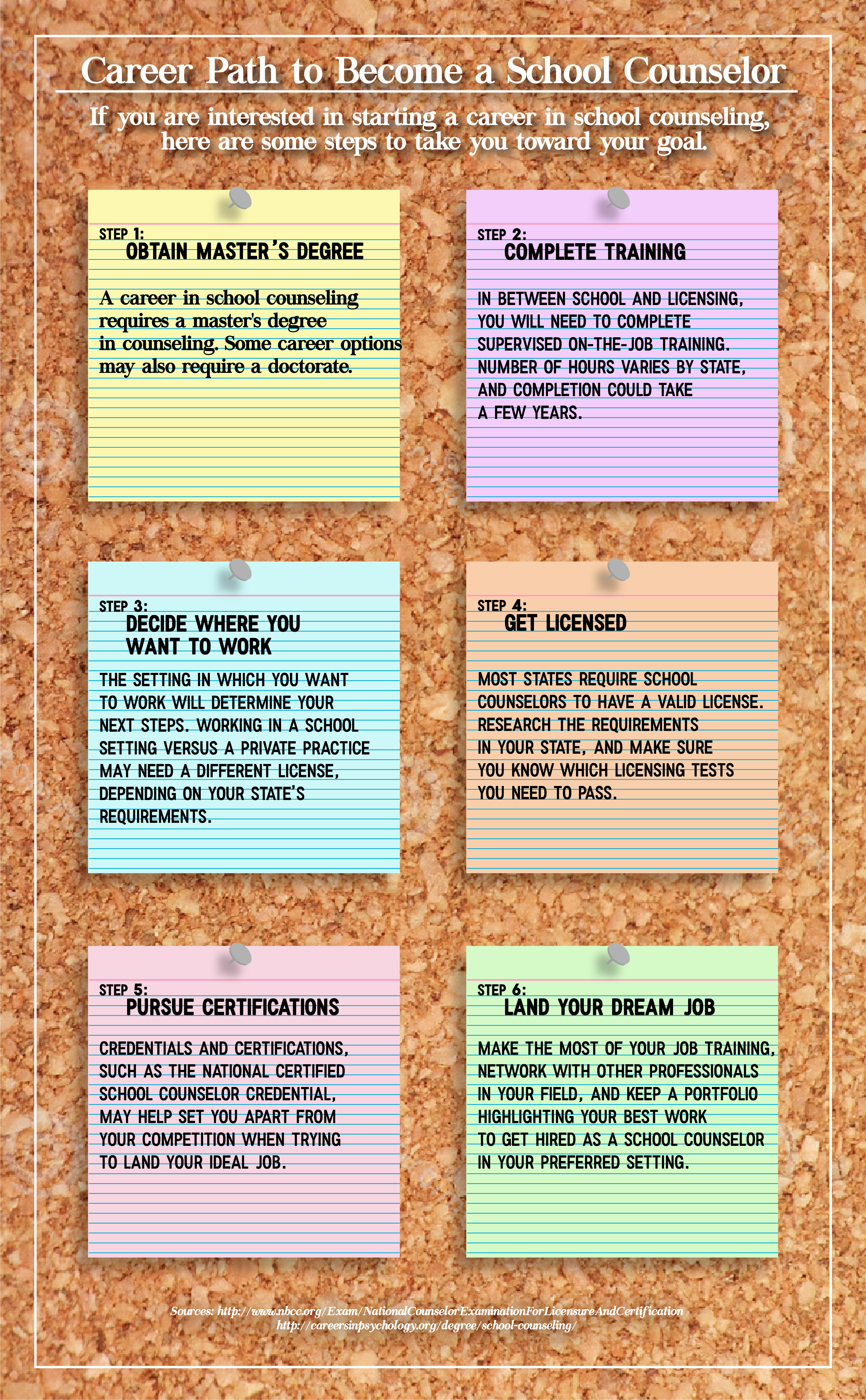
 Do you have strong interpersonal skills and a passion for helping students navigate the world of education? If so, you could excel as a school counselor. School counselors provide resources for students who want to learn how to pursue their academic and professional futures, and they also work with students who have learning difficulties or mood issues that interfere with their success in school. Whether providing K-12 education support, helping undergraduates navigate the world of higher education, or getting students to the next step in graduate school, thousands of opportunities for school counselors exist.
Like many health-related fields, specific requirements for becoming a school counselor can vary from state to state, so check with the American School Counseling Association for details. Otherwise, read on to find out how you can get started.
1. Lay the Foundation with Undergraduate Studies
As with similar fields of study, people intending to become school counselors will need a substantial academic background. Your first step is to decide where you want to go to college and apply. Depending on your current level of education, this could mean applying for an undergraduate or graduate program. While your undergraduate degree is not typically required to be in education or counseling, it is often helpful to choose a major that reflects knowledge and understanding of the theories and practices required for counseling. Students who major in subjects such as psychology, sociology, or counseling may find they have acquired a feel for the work involved with becoming a school counselor, and as an extension, are well prepared for their graduate studies. [fat_widget_right]
2. Get Your Master’s Degree in School Counseling
Depending on your program, receiving a master’s degree means learning counseling and guidance techniques for multiple age groups and ability levels. During this process, which may take 1-2 years, you can explore areas of specialization, such as K-12 education, behavior issues, or education for children with developmental delays. According to US News & World Report, some of the top-rated counseling programs in the country are at University of Maryland, College Park, and University of North Carolina, Greensboro. However, there are many worthwhile programs across the country depending on your preferred home base.
 Infographic by Hannah Johnson
3. Work Under Supervision After Graduation
During or after your study program, you can intern or complete a practicum as part of your course requirements. Many programs set a certain number of these hours for you to complete, either as a graduation requirement or part of your future doctorate studies, if you decide to pursue that course. For example, one school counselor program might require 100 practicum hours, 40 of which are in direct contact with K-12 students. Additionally, to take the licensing exam to become a school counselor, you must have completed hundreds of hours of practicum or internship work.
Get familiar with the day-to-day workings of your site and don’t be afraid to ask your supervisor for any tips or important things to know while working there—it is better to ask more questions than less, especially when you are still in a learning environment.
During your school counseling internship or practicum, you will get hands-on experience in the field, generally at a school site you have chosen. You will perform most of the duties associated with your field under the direct supervision of both an on-site supervisor and your instructor or supervisor on campus. Get familiar with the day-to-day workings of your site, and don’t be afraid to ask your supervisor for any tips or important things to know while working there—it is better to ask more questions than not enough, especially when you are still in a learning environment.
4. Get Licensed as a School Counselor
After completing your educational and working hour requirements, it is time to become a board certified school counselor. First, you will need to know your state’s requirements, as they vary. The National Counselor Examination (NCE) is a 200-item exam you might sit for, as it is required to become licensed in most states. It may also be required for a national license or any potential military work you are interested in doing. The NCE website lists all the requirements for the exam and provides information on where to take it in your state. It’s a good idea to study and prepare for this exam like you would for other important, long-term tests. Find example questions from past exams and consider borrowing or ordering an NCE test prep book, which will contain helpful strategies and tips for passing your NCE successfully.
5. Optional Credentials for School Counselors
Before hiring you, most schools will prefer that you have one to two years of hands-on classroom experience. You may also need to get a teaching certificate or license. Research your state’s teaching certificate requirements, as these can differ depending on the education system. Additionally, you can pursue specializations such as career counseling or an emphasis in students experiencing addiction.
6. Get Hired as a School Counselor
The field of school counseling has many opportunities and benefits: more than 200,000 school counselors are employed every year as of 2014, and the profession has a median salary of $50,000 a year. Most educational institutions, whether K-12 schools or colleges, need counselors. Openings for these positions are generally posted through school districts or university careers sites for internal positions. You might begin your job search by researching where you would like to work and begin looking for school counseling postings in that location or ask your own college counselor for help finding a placement. Sometimes the connections you make during your internship or practicum hours can lead to future employment opportunities.
References:
- Danzinger, P. & Newman, H. (2011). School counseling concentration practicum/internship handbook. William Patterson University College of Education. Retrieved from https://www.wpunj.edu/dotAsset/315254.pdf
- National counselor examination for licensure and certification. (n.d.). National Board for Certified Counselors. Retrieved from http://www.nbcc.org/Exams/NCE
- School and career counselors: Summary. (2017, October 24). Bureau of Labor Statistics. Retrieved from http://www.bls.gov/ooh/community-and-social-service/school-and-career-counselors.htm#tab-1
- School counseling degree programs & schools. (n.d.). Retrieved from http://careersinpsychology.org/degree/school-counseling
- State certification requirements. (n.d.). American School Counselor Association. Retrieved from https://www.schoolcounselor.org/school-counselors-members/careers-roles/state-certification-requirements
 What are social skills?
These are behaviors and other forms of communication necessary to effectively create and maintain relationships. Social skills might include things like initiating conversations, making friends, having good sportsmanship, and handling bullying effectively.
Social skills are one of the most important skills children and adolescents develop, as they often serve as predictors of future success. Researchers from Pennsylvania State University and Duke University found that youth who scored higher on social skills measurements were four times more likely to graduate from an undergraduate institution. Social skills have also been linked to job success, independence, and emotional well-being. Those with adaptive social skills often demonstrate superior ability to observe, problem solve, and respond in social situations.
Though some may believe undeveloped or lacking social skills indicate that a child may be neurodiverse or on the autism spectrum, this is not always the case. Although most children naturally pick up social cues and behaviors, many children do not. Some kids get caught up in gossip, others may simply be impulsive in the way they respond.
It is not uncommon, however, to find children who have been diagnosed with anxiety, depression, autism, ADHD, and other concerns to experience greater challenges with social interaction and relating to others. This is usually the case because symptoms of these conditions are likely to get in the way of their socialization. [fat_widget_right]
The Impact of Underdeveloped Social Skills
Children do not need to be social butterflies. Indeed, each child will have their own personality traits that help inform the way they interact with others. However, positive relationships in life generally help most individuals thrive. Children and teenagers with well-developed social skills are likely to gain confidence in their abilities to approach situations and complete tasks more successfully.
Social skills are one of the most important skills children and adolescents develop, as they often serve as predictors of future success.
It is important for parents to notice and evaluate any difficulties your child faces. Peer rejection, bullying, conflict, social isolation, depression, anger, anxiety, and poor academic performance may all be signs of poor social skills. Addressing these issues when first noticed will help parents, teachers, and other professionals develop a plan to work with the child to improve their behavior or address social skill challenges. This will typically help the child begin to feel better, too.
When any challenges related to social skills and interaction are not addressed, these issues may persist as a child grows up, and they can become severe enough to have a significant impact on interaction, academic performance, and even the ability to enter the workforce and thrive as an adult.
Can Social Skills Be Taught?
I believe it is absolutely possible for children to learn social skills. Parents, teachers, and mental health professionals can all work, independently and/or collaboratively, to help children develop their social skills.
There are many types of social skills, and it is important to know which areas your child needs help with.
The following are the four types of social skills identified in scholarly literature:
- Survival skills:Â Listening, ignoring, following directions
- Interpersonal skills: Sharing, joining a conversation, taking turns talking
- Problem-solving skills:Â Asking for help, deciding what to do/appropriate action to take, recognizing when to apologize
- Conflict resolution skills:Â Dealing with teasing and bullying, losing/being a good sport, handling peer pressure
The teaching of social skills should focus on desirable behaviors. In other words, parents and educators are encouraged to focus on the behaviors they want to see, not the ones they do not want to see. For example, it’s generally a better idea to teach children phrases they can use to start a conversation, rather than telling them something like, “Don’t ignore people when they talk to you!”
It is also important to allow children the opportunity to practice. Social skills are complex and take time to master. Under the right conditions most children will show improvements, but it’s difficult to improve without the chance to practice.
If a child continues to find social skills challenging after parental and classroom assistance and/or is having difficulties with relational conflict or bullying, is impulsive or shy around others, and has difficulties with peer pressure or making social decisions, it may be time to seek professional help.
Social skills are an important aspect of life, so you may want to enroll your child in a social skills group. Groups are a great place to learn social skills because they typically provide direct instruction, modeling, role-playing, team building activities, and positive reinforcement.
There are many types of social skills groups available, and it is important to find the right social skills group for your child or teen. Make sure the group is designed for your child’s age and that it addresses the specific social skills concerns your child has. It is always a good idea to consult with your child’s current therapist (if one is currently working with your child) and the facilitator of the skills group to go over any questions you may have before your child joins the group.
References:
- Goldstein, A. P., & McGinnis, E. (2001). Skillstreaming the adolescent: New strategies and perspectives for teaching prosocial skills. Champaign, IL. Research Press.
- Laugeson, E. A. (2017). PEERS® for young adults: Social skills training for adults with autism spectrum disorder and other social challenges. NY: Routledge.
- Social skills: Promoting positive behavior, academic success, and school safety. (2017, December 20). NASP Center. Retrieved from http://www.naspcenter.org/factsheets/socialskills_fs.html