
Editor’s note: This article represents the first of two parts. The second part, which appears here, moves from awareness to attuned self-compassion, then from compassion to integration.
“Do I contradict myself? Very well, then I contradict myself (I am large, I contain multitudes).” —Walt Whitman, Song of Myself
Those who seek therapy for complex trauma often do so unknowingly. They may first notice depression or anxiety, numbness, spaciness, lack of motivation, or a failure to connect or thrive. They might simply feel stuck, uncomfortable, or confused, either as an individual or in relationship.
Complex trauma refers to the way we organize our “Self” in the wake of ongoing or repeated exposure to interpersonal disconnections (sometimes overt abuse, oppression, or neglect; sometimes simple, unintended, unavoidable misattunements). At its base, complex trauma represents an ability to exist in pieces—an adaptive preservation of Self at any cost. While initially adaptive, this separation from parts of Self sometimes brings confusion in all relationships—internal versus external, Self versus Other, “what should be” versus “what is,” present versus past or future.
We stop cooperating with our “selves.”
Internally, we move from equality to hierarchy, subjugating the very parts we want to protect.
We adapt to each imperfect system (i.e., family of origin) by internalizing the system rulebook and policing ourselves to enforce the system rules. To maintain relationship with caregivers and preserve Self long enough to survive childhood, we contain parts that do not “fit” the system. We dis-integrate. Self organizes against Self, and we become walking dualities: the containing versus the contained, the rigid head versus the chaotic body. It happens automatically to all of us, with extreme reactions happening in extreme adaptations.
[fat_widget_trauma_ptsd_right]
This is the complexity of complex trauma: “missing experience” creates an inability to heal, yearning for unmet needs while protecting against them. Just as we internally separated parts that seek connection from parts that seek safety, we push externally against whatever we need most in life because there is no agreement.
At some level, we wait for the elusive experiential safety that will release us and reverse the process, bringing everything together.
From Disconnection to Autopilot
When ongoing threat remains familiar—when it lives within our homes, permeates the atmosphere, and becomes just another layer of everyday experience—we adapt to it. Assuming we come into the world with particular needs and dispositions, in the tunnel of childhood we often temper parts of Self. We fold and contain in order to fit.
Assuming we come into the world with particular needs and dispositions, in the tunnel of childhood we often temper parts of Self. We fold and contain in order to fit.
Even as infants, we track and respond to nonverbal cues of caregivers. We see their responses to various emotions, and we learn to contain whatever triggers them to fight, flee, or disappear. Often, this includes either particular emotions or emotions in general. We adapt to their system and separate from our bodies to avoid exiled, “unwanted” parts of Self. In this, we also separate from sensory information, becoming insulated against new input and trapped in the adaptation.
In order to adapt to the system, we become the system. We absorb and recreate our caregivers internally. If caregivers judged us, we judge ourselves. If they dismissed or diminished us, we do the same. If they did not know how to see us, we do not know how to see ourselves; we struggle to notice or articulate internal events. We often go into life not knowing how to regulate our bodies (or how to notice basic signals such as hunger). And while the dis-integration proves successfully adaptive, there remains a subtle knowing: a felt experience of disconnection, a subtle background noise, a gentle reminder that some part of us yearns to be remembered and reunited once safety is established.
These are our fragmented lives: parts of Self, surviving independently by turning against other parts Self, enforcing an embargo on that which would heal.
From Autopilot to Self-Awareness
This is just a lens, a way to begin observing our own internal conflicts, differentiating one side from another: one part judging, one part receiving that judgment and feeling it.
This automated containment system protects us from punishment (fight) or abandonment (flight) of others within our original family system(s).
Internal conflicts can look like this:
- “I want to be seen” might be met internally with “You’re too needy. You’re flawed. If you let others see, they will leave you.”
- “I want to be big” might be met with “You’ll become a target. Stay small to stay safe.”
- “I want to express my energy” might be met with “You’re too exuberant. You show too much. Stay still or they’ll leave you.”
- “I feel angry” might be met with “Anger is not allowed. If you show it, they will leave.”
- “I feel sad” might be met with “You’re weak. If you show it, they will hurt you.”
- “I want to be taken care of” might become “Nobody will take care of you. You are alone. Do it yourself.”
- “I want to experience safety with others” might become “Nobody feels safe with you. You will be alone forever. If you want people nearby, you have to keep a safe distance to avoid triggering them.”
Sometimes the parts we try hardest to contain become most visible to others. We try to hide emotion, and it becomes bigger and louder. This is how we polarize. The containing side attempts to diminish because the other side is amplifying, because it is trapped and simply wants attention. The contained side amplifies because the containing part is attempting to diminish. And so goes the dance.
We land, sometimes, on either side of the conflict. Sometimes we’re the contained part, feeling our own unmet needs on top of feeling trapped. Other times we are that containing part, wanting to survive and meet needs, knowing that if the contained part escapes we will face punishment or abandonment. No matter where our consciousness lands, the other side becomes the villain.
 We’ve all had moments where we felt completely spaced out. What is normal, and when do instances of mental escape become a cause for concern? Dissociation, or the feeling of being disconnected or separated from oneself, is a common experience, especially as a means for coping with or escaping from stressful situations.
I like to explain dissociation on a continuum. At one end there is “normal” dissociation, the kind we all do at times. A popular example to describe simple and typical dissociation is driving your car on autopilot and not really paying attention to the road ahead, yet managing to safely make it to your destination. Another example is when you are completely absorbed in a movie until the person next to you reaches for the popcorn and your awareness snaps back to the present moment. These moments of “escape” happen occasionally and are a normal part of the human experience.
A little further down the spectrum is the type of dissociation used as a defense mechanism to cope with stressful situations or feelings of being completely overwhelmed. People will sometimes describe themselves as detached, “out of it,” or even as if they are watching themselves from an out-of-body perspective.
At the other end of the spectrum is a mental health diagnosis called dissociative identity disorder (DID). Previously known as multiple personality disorder, this condition involves dissociation so extensive that it results in a complete split, or compartmentalization, of memories and experiences that ultimately become separate and distinct personalities. Different personalities are often referred to as “alters,” while the main identity is typically called the “host” personality. Together, the various personalities make up a system that initially served to help an individual cope with experiences of extreme and repeated trauma, often including severe sexual or physical abuse at a young age.
[fat_widget_right]
‘Alters’ and Dissociative Identity
DID is often difficult to comprehend, and the multiple personalities within a person with this diagnosis are sometimes hard to recognize or believe until a personality shift is witnessed within the person. Each personality serves some type of purpose for the host person. For example, one alter may be the “playful one,” while another is the “protector” or “helper.” Each alter has his or her own interpretation of events and, often, only certain alters will remember the details of the trauma that occurred.
Different alters typically have their own names and distinct traits. They may speak in different accents and tones, display different mannerisms and body postures, and dress differently from one another. They each have their own idea of how they look, and sometimes it’s vastly different from the host person’s actual appearance.
A person with DID often has alters of different genders than the host person’s true gender, and they may have personalities who are “stuck” at younger ages than the host personality’s actual age. For example, an adult experiencing DID might have an alter personality who is 5 years old and is interested in coloring or playing with dolls. Each alter may have a unique set of talents and hobbies, and some may even speak different languages.
DID After Surviving Trauma
While DID is initially a coping mechanism the brain employs to allow a person to survive extreme trauma, it can lead to difficulties as the host person grows up and tries to interact in a world where this level of dissociation is not widely understood. Individuals with DID are often misperceived and sometimes called liars because the stories or actions of different alters don’t add up.
Although the trauma may have ended, the barriers in the mind remain and can lead to confusion for the individual, who may also experience co-occurring symptoms of depression, anxiety, and posttraumatic stress. Sometimes, certain alters may develop self-destructive patterns, such as drinking excessively, behaving recklessly, and engaging in actions to sabotage the host personality’s efforts to stay healthy. Some alters may have suicidal thoughts or attempts.
A person experiencing DID who ends up in the hospital may often be misdiagnosed since hospital staff may only see a snapshot of the system and issues. Incorrect diagnoses often include major depressive episode, bipolar, substance abuse, and schizophrenia.
The following indicators are often displayed by individuals who experience DID:
- Gaps when recalling daily events
- Repeated mentions of losing time or blacking out
- Wearing clothing they don’t remember purchasing
- Finding themselves somewhere with no knowledge of how they got there
- Finding notes or drawings they don’t remember creating
- Not remembering conversations, events, or experiences with others
How Dissociative Identity Disorder Is Treated
Treatment for DID involves long-term, consistent therapy to break down the “walls” in the mind. This involves gaining an understanding of each alter and processing their various experiences, including those that involve the original trauma. Consistent treatment can sometimes be difficult because certain alters may be resistant or skeptical Some people with DID fear the loss that may occur from “curing” them of their personalities. Rather than getting rid of each personality, the goal is to assimilate the positive and functional aspects of each alter in a way that helps the person feel more balanced and less chaotic.of help. Also, dealing with arising crises within individual personalities may delay the course of trauma treatment. A good rapport between the person in therapy and therapist is essential.
The goal of treatment is often referred to as “integration,” which involves bringing together the fragmented and compartmentalized parts of the person’s memory. Some people with DID fear the loss that may occur from “curing” them of their personalities. Rather than getting rid of each personality, the goal is to assimilate the positive and functional aspects of each alter in a way that helps the person feel more balanced and less chaotic.
While DID can be a complicated and frustrating condition for individuals who live with it, it is important to remember that dissociation is a natural mechanism of the brain and can work as an extraordinary process for ultimately surviving horrific experiences.
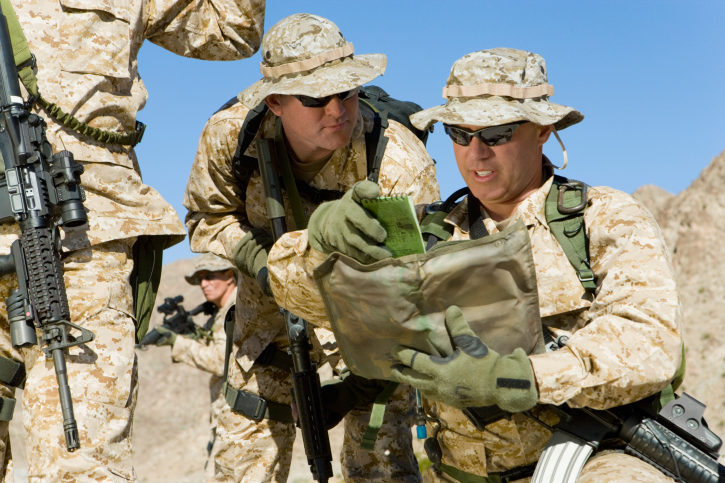 Research on mindfulness shows that it can be beneficial for improving a person’s attention, mood, pain tolerance, and immune function. It can also be used to reduce stress and increase a person’s cognitive functioning. Therapists use it to treat depression, anxiety, drug addiction, and a vast number of other mental health issues. Recently, the practice, rooted in some of the principles of Buddhism, has found an unlikely advocate in the Department of Defense (DoD), which has also started using mindfulness to help soldiers prepare for and return from combat.
Its use in the military is considered somewhat controversial by some, as traditional mindfulness practices are often associated with an opposition to conflict and the promotion of peace.
“Mindfulness can be used as a tool to manage attention, regulate affect, and monitor cognition,” mindfulness practitioner Andrew Archer, LCSW said. “I imagine this form of grounding and centering could prepare people for extremely charged, chaotic environments. However, mindfulness has been best practiced with the act of conscientious objection to war.”
Why Is Mindfulness Taught in the Military?
[fat_widget_right]Proponents of mindfulness training for the military explain that although war is not ideal, it remains a reality for society today. If soldiers must participate in war, they should receive training that will not only help prepare them for combat, but also help them manage the stress and trauma associated with it.
For the military to be successful, soldiers must be able to absorb a large amount of information at once and be able to make quick decisions without succumbing to overwhelm or stress. For this reason, mindfulness-based training programs are being introduced in the military, one of the most visible being Mindfulness-based Mind Fitness Training (MMFT).
MMFT is a 20-hour course designed to increase resilience to stress for those working in high-stress environments. The program is based on the principle of mental fitness. Mentally fit, according to the program, is defined as being efficient in four capacities:
- Attention
- Mental agility
- Situational awareness
- Emotional awareness
Mindfulness training teaches these important skills that not only help soldiers on the battlefield, but also help ease their return home.
Mindfulness Before Combat
The period before a combat deployment for many in the military is highly demanding both mentally and physically. Not only are service members intensively training for their upcoming mission, but they’re also psychologically preparing to leave their families behind and enter into a dangerous environment.
The University of Miami conducted a mindfulness study of 75 soldiers stationed in Hawaii awaiting deployment to Afghanistan. The results of the study indicated that just 8 hours of mindfulness training during an 8-week period helped improve the soldiers’ attention span and prevented their minds from wandering when subjected to tests that measured those factors. The University of Miami study suggests even brief mindfulness training programs may help improve the cognitive functioning of deploying military personnel.
The University of California, San Diego School of Medicine and Naval Health Research Center published a study in May 2014 in the American Journal of Psychiatry that explored whether integrating mindfulness practices to increase mind and body awareness into pre-deployment training could help reduce the occurrence of posttraumatic stress (PTSD), depression, and anxiety in returning soldiers.
During this study, pre-combat Marine infantrymen learned various mindfulness meditation techniques, including interoception, which is the ability to help the body regulate and sustain its homeostasis by cultivating awareness of bodily sensations such as heart rate, stomach tightening, and skin tingling. The Marines then underwent a mock combat scenario with a highly realistic ambush in a scene designed to resemble one they might encounter in the Middle East. The study examined the Marines’ heart and breathing rates and compared the results of those who received mindfulness training to a group that did not. The group that received mindfulness training returned to baseline sooner than those who hadn’t.
Mindfulness After Combat
The U.S. Department of Veterans Affairs (VA) estimates about 1 in 5 Iraq and Afghanistan veterans return experiencing PTSD. With such a high rate of occurrence, it is important that soldiers have access to effective treatment options. Although medication is still highly prescribed, it may not be effective for treating all the emotional and cognitive aspects of PTSD. Mindfulness training, according to the VA’s National Center for PTSD, The U.S. Department of Veterans Affairs (VA) estimates that about 1 in 5 Iraq and Afghanistan veterans return experiencing PTSD. With such a high rate of occurrence, it is important that soldiers have access to effective treatment options. Although medication is still highly prescribed, it may not be effective for treating all the emotional and cognitive aspects of PTSD.however, has been proven to help those experiencing PTSD cope with anxiety and hyperarousal—two conditions commonly reported by returning veterans. Additionally, the National Center for PTSD says mindfulness can be useful either as a complementary or stand-alone treatment.
Virtual mindfulness training programs have also been used to help teach veterans mindfulness practices as well as connect them to a larger veteran community, all in the comfort of their own homes. Coming Home, a project developed by the University of Southern California’s Institute for Creative Technologies and sponsored by the U.S. Army’s Research, Development, and Engineering Command, is a post-deployment transitional support program offered virtually to veterans who are reintegrating into civilian life. Through this program, veterans learn the principles of mindfulness-based stress reduction using an avatar character in the 3D virtual world of Second Life. The program not only helps veterans learn mindfulness and reduce stress, but it also provides a social component, which may be especially valuable for veterans living in areas where they may not have access to services or a larger veteran community locally.
Research continues to reveal benefits mindfulness training provides for soldiers both before and after combat. These benefits in some cases have the potential to be life-saving, both from improved situational awareness and stress resilience during battle and from decreasing the intensity and occurrence of posttraumatic stress symptoms, which are often linked to a high rate of veteran suicides.
References:
- Gregoire, C. (2015, February 18). Mindfulness training improves resilience of active duty soldiers. Huffington Post. Retrieved from: http://www.huffingtonpost.com/2015/02/18/mindfulness-military-_n_6704804.html
- Minds at Attention: Military and Mindfulness. (2015, February 12). University of Miami: College of Arts and Sciences. Retrieved from: http://www.as.miami.edu/news/news-archive/minds-at-attention-military-and-mindfulness.html
- PTSD: National Center for PTSD. (n.d.). Mental Health Effects of Servicing in Afghanistan and Iraq. Retrieved from http://www.ptsd.va.gov/public/PTSD-overview/reintegration/overview-mental-health-effects.asp
- Stanley, E.A. & Schaldach, J.M. (2011 January). Mindfulness-based mind fitness training (MMFT). Mind Fitness Training Institute. Retrieved from: http://www.mind-fitness-training.org/MMFTOverviewNarrative.pdf
- Teaching Veterans Virtually. (2011, April 5). Retrieved from: http://www.mindful.org/news/teaching-veterans-virtually
- University of California, San Diego. (2014, May 16). War and Peace (of Mind): Mindfulness training for military could help them deal with stress. ScienceDaily. Retrieved from www.sciencedaily.com/releases/2014/05/140516092519.htm
- Veterans Relearn Compassion through Meditation. (n.d.) Retrieved from: http://www.mindful.org/the-mindful-society/veterans-relearn-compassion-through-meditation
 The expression, “If it bleeds, it leads,” has been used to characterize media coverage of lurid stories since the early days of newspapers, and today’s around-the-clock news cycle has made avoiding negative news nearly impossible.
The near-constant barrage of stories about disease outbreaks, war, and natural disasters are taking a toll on people who consume the news, said Dr. Mary McNaughton-Cassill, a psychologist who studies the connection between stress and the media.
“What I believe happens to most people is that it adds to a feeling of malaise—a feeling that the world is just not going well,” she said.
Psychologists have studied the connection between repeated exposure to negative news items and an increase in feelings of depression and anxiety among news consumers. Some people may experience compassion fatigue or secondary traumatic stress, becoming less sympathetic to the plight of others over time due to an overabundance of stories of violence and suffering in the media. Others may experience a reaction similar to those who have experienced trauma firsthand.
Connection Between Media Exposure and Acute Stress
A 2013 study looked at the effect of continuous media coverage of the Boston Marathon bombings on a group of respondents from New York City, Boston, and the rest of the United States. A total of 4,675 adults took an Internet-based survey within a two to four-week period after the bombings on April 25, 2013; of that sample, about 10% were directly exposed to the bombing and 9% experienced the lockdown in Boston while police were looking for the suspects. Other respondents without direct exposure to the bombing reported six or more hours of daily media exposure to bombing coverage.
[fat_widget_right]The results indicated those respondents viewing news coverage for six or more hours were nine times more likely to report high acute stress levels than those with minimal media time. Those who had direct exposure had continuous acute stress symptoms but were less likely to exhibit high acute stress, perhaps, as researchers suggest, because emergency responders were on the scene to provide support. Researchers say repeated exposure to traumatic imagery through the media can activate fear circuitry in the brain and cause flashbacks—two precursors to developing posttraumatic stress (PTSD).
E. Alison Holman, PhD, lead author of the study, recognizes the results are correlational and the relationship between media and trauma is complicated.
“There are so many factors one needs to consider—prior life history (trauma, stress, health, social, family circumstances), ongoing post-Boston Marathon Bombing stressors, coping skills, and emotion regulation skills,” Holman said. “It is possible that this could happen, although I would caution that many people have acute stress symptoms that dissipate over time. We are currently looking into the question of quantity (hours) versus content (images, sounds) that might predispose someone to developing lasting posttraumatic stress and other mental health issues. At this point, all I can say is that it seems that both really matter.”
In a 2007 study, 179 college undergraduates were shown a 15-minute news broadcast, followed by a 15-minute relaxation exercise or a 15-minute lecture. The negative feelings induced by the newscast returned to a baseline level only in the group exposed to the relaxation exercise, suggesting that simply diverting attention was not enough to buffer negative feelings.
Coping With Negative News
The ways in which people cope with grim subject matter in the media can be categorized in three ways, McNaughton-Cassill said. The first group—hypervigilant and prone to anxiety—are the most self-selecting of what news they view and will generally tune into a message they agree with.
“If they’re not plugged in, they feel they’re missing something,” she said.
“If your work requires that you engage with frequent media stories—especially if they are of graphic violence—build stress-relieving activities into your routine so that you can counteract the negative effects.” —E. Alison Holman, PhD
The second group may tune out entirely and be unaware of what is going on the world, McNaughton-Cassill said, while the third group—the middle-ground category that most people fall into—is viewing news in a random manner and not consciously thinking about media exposure.
McNaughton-Cassill admits neither extreme is ideal but suggests people should be willing to set limits in terms of how often they check news and what items they choose to pay attention to.
Those who work in journalism may need to take extra precautions to neutralize potentially negative outcomes. Holman cautions people to avoid watching a 24-hour news cycle filled with negative news, as it is often sensationalized for shock value.
“There are studies showing that reporters who are frequently exposed to images of graphic violence report experiencing more mental health-related symptoms, and women may be more vulnerable to having a stronger physiologic stress response than men after subsequent stress when primed with reading negative news articles versus neutral news articles,” Holman said. “If your work requires that you engage with frequent media stories—especially if they are of graphic violence—build stress-relieving activities into your routine so that you can counteract the negative effects.”
Because media outlets are now under immense pressure to produce a continuous stream of news content, it is becoming increasingly difficult to filter out what information represents a legitimate threat and what is more benign.
“The way our memory works, we’re wired to pay attention to negative, scary things,” McNaughton-Cassill said. “The truth is, on objective measures, we’re much better than in the past.”
McNaughton-Cassill sees a silver lining to negative news if it propels people to action and toward contributing a solution to the problem. She suggests a solutions-based approach to counteract the negative aspects of news.
“I think the tagline that is missing in the media is ‘What can we do?’ What is the solution?” she said. “They need to show more people who are trying to solve problems.”
References:
- Holman, E. A., Garfin, D. R., and Silver, R. C. (2013). Media’s role in broadcasting acute stress following the Boston Marathon bombings. Proceedings of the National Academy of Sciences of the United States of America, Vol 111 (1), 93-98. doi:10.1073/pnas.1316265110
- Moeller, S. D. (1999). Compassion Fatigue: How the Media Sell Disease, Famine, War and Death. New York, NY: Routledge.
- Schwarzer, R. (1997). Psychosocial Notebook. Retrieved from http://www.macses.ucsf.edu/research/psychosocial/anxiety.php
- Szabo, A. and Hopkinson, K.L. (2007). Negative psychological effects of watching the news in the television: Relaxation or another intervention may be needed to buffer them! International Journal of Behavioral Medicine, Vol 14 (2), 57-62. doi:10.1007/BF03004169
 The key to having freedom and joy in our lives stems directly from managing our emotions rationally and effectively. Practicing emotional intelligence keeps us intimately connected with our thoughts and their emotional correlates.
However, sometimes certain habits or life occurrences block us from thriving. Understanding these roadblocks can move us one step closer to healing.
It can be argued that we choose our emotions based on what we think. This notion can be a bit of a misnomer. If we can’t point to the thought or belief with awareness—meaning be conscious of it—can we really say we’ve chosen the emotion in question? I think it’s fair to say no. Psychology has long explored human behavior through the stimulus response theory. Basically, it states that we respond to things (or behave) according to the stimuli presented to us. The challenge with this theory is how to incorporate our personal make-up, decision making, and level of personal awareness into this model and show how they all interact with a stimulus to produce a response.
Practicing emotional intelligence requires patience, determination, and strength. All of these qualities are required when learning to “sit with” our emotions. To fully feel emotions that have long been ignored or resisted can prove quite painful. When we don’t have a loving relationship toward our emotions, we can turn them into bad guys or bogeymen we avoid. Ignoring our emotions in this fashion prevents us from fully recognizing what sorts of beliefs and views we hold. This pattern can develop further into chronic, overreactive emotional responses that may not make sense based on the stimuli present.
[fat_widget_right]
A concept that explains this situation is called emotional hijacking. Emotional hijacking occurs when a stimulus activates the “emotional brain” and causes a person to react before that information reaches the neo-cortex. If the information doesn’t reach or get processed by the neo-cortex, reasoning around/with the stimulus in question doesn’t take place. This is important to recognize, as it describes why so many of us feel blindsided and overcome by our emotions. It also explains why so many of us perceive, long after the fact, that an emotion was “irrational.”
While we “choose” our emotions in the sense that what we think leads to what we feel, it’s important to recognize that emotional hijacking is a real phenomenon.
Trauma fits nicely into the concept of emotional hijacking. People who have experienced trauma can find themselves emotionally hijacked on a regular basis. The moment of the traumatic event, the person may have feared for his or her life or safety. Furthermore, he or she may have been unable to get out of the situation and unable to discharge the intense emotional charge of fear and helplessness generated in the moment. This charge gets stuck in the body. Left unprocessed, it can lead to depression, anxiety, and of course emotional hijacking.
Another core aspect of trauma is the formation of mental walls blocking connection with the original hurt. Consciously or unconsciously, a traumatized person learns to avoid anything that may trigger further emotional distress. You can see here that awareness of one’s thoughts isn’t sufficient for healing. One must also learn to re-experience those pent-up emotions in a safe and healthy manner.
While we “choose” our emotions in the sense that what we think leads to what we feel, it’s important to recognize that emotional hijacking is a real phenomenon. When we actively avoid connecting with old hurts and traumas, we set ourselves up for more pain in the future. This two-step process of connecting with our emotions on a bodily level and with the thoughts to which they are connected increases our chances for healing. Learning to acknowledge and eventually accept these emotions helps us live fuller lives.
 As Roger—not his real name—sensed his body, he began to notice a deep contraction in his heart that pained him deeply. He had been hearing from his meditation teachers that he had to stay with it and continue sensing his body no matter what, even if he felt emotional pain.
Given how much faith he had in the method, he followed the instructions diligently, even though his emotional response was too overwhelming to put aside. The pain became so intense that it began to feel like sharp shards of glass inside his chest—and he began experiencing deep rage that turned against himself.
“What is wrong with me that I can’t do this?” he thought. Images of self-injury and hitting himself began to flood his mind. He didn’t know what to do with this level of self-hatred. At the same time, he was determined to stay with his body at all costs.
At that point, he had two opposing forces inside him that kept him frozen in great emotional pain and intrusive mental images. Finally, the intensity became so strong that he jumped up and bolted from the meditation hall, running out toward nature, where he found relief at last.
[fat_widget_trauma_ptsd_right]
Roger’s heart was pounding, and his level of arousal was too much for his nervous system to tolerate. He wept deeply. As a result of his intense meditation, Roger experienced a resurfacing of old trauma that he did not even know he had. This incident happened to Roger many years ago, on the sixth day of a silent 10-day Vipassana retreat. The episode had a big impact on his well-being, and he didn’t learn how to deal with it until years later, after much therapy.
Roger’s experience at the retreat can happen for anyone who engages in deep meditation and carries a great deal of unprocessed or unconscious trauma. “I didn’t even know back then that I had such a level of trauma. I thought everybody had so much difficulty being with themselves, and I naively also thought that meditation was the grand cure-all,” Roger told me during a session.
Although meditation can be a great support for many of us and can even be helpful in dealing with psychological difficulties, it can also trigger traumatic responses that may need further processing. Without appropriate guidance, meditation can be more of a stressor than a support for some people.
Unconscious Trauma
Trauma is the result of our nervous systems being overwhelmed by experiences that we are unable to tolerate and process. This can be the result of a single life-threatening event, or of repeated stressors accumulating over time. Trauma is particularly devastating if we’re young and vulnerable, so early traumatic experiences tend to have deep impacts that, as adults, we may be completely unconscious of. Mindfulness meditation can reopen these old wounds, and without appropriate support, anyone can get lost in these deeply painful experiences.
One common meditation technique that is taught at many mindfulness courses and retreats is the body scan. During this practice, participants bring their attention to their body sensations in a methodical way. This is a great tool to develop sensitivity and self-awareness. However, as we sensitize ourselves to our bodies, we may end up encountering previously unconscious trauma.
Titration Is Key
Titration is a concept borrowed from chemistry that Peter Levine, creator of the Somatic Experiencing method, uses to illustrate how to approach traumatic material. Levine (2010) gives the example that if one were to mix two reactive chemical compounds all at once, the result would be an explosion. However, if one uses a glass valve and mixes them one drop at a time, the result would be safe; each drop creates a small, manageable fizzle.
The same principle applies when working with trauma. If we are able to turn our attention back and forth between sources of support (e.g., pleasant bodily sensations, views, or touch) and the safer edges of a difficult inner experience, we have a much better chance of working effectively with the traumatic material than if we try to simply stay present with the material all at once. This takes a great deal of skill and is very difficult to do without support. If we don’t know how to titrate or skillfully work with the challenging sensations that can arise, we can end up retraumatizing ourselves.
Not All Retreats Are Created Equal
A meditation retreat can be a fantastic way to deepen your meditation practice and develop your capacity to be with experience. Meditation retreats are also great for giving us a continuous experience of presence; during sustained meditation practice, after a couple of days you can experience deep levels of absorption and profound wellness. But not all meditation retreats are the same.
If you know you have trauma and are engaged in serious meditation practice, be cautious and seek help to deal with it.
Depending on the tradition and the teachers, retreat leaders may or may not have psychological experience or expertise with trauma. The good news is that, nowadays, many meditation teachers are informed about trauma, and some even get training in working with it. In order to work with your own trauma at a meditation retreat, flexibility is important. Allowing yourself to deviate from the schedule and seek support with teachers or nature can make all the difference.
The retreat mentioned at the beginning of this article was not very flexible. Its guidelines were strict, and it was designed for people to achieve deep levels of concentration—a format that can be fantastic for someone with a relatively intact ego structure, but retraumatizing for someone with deep trauma, as it was for Roger.
It’s about Staying with Our Experience
Staying with our experience without trying to change it is at the core of mindfulness meditation practice. This practice has many benefits, such as developing self-acceptance and self-awareness. However, staying with ourselves does not mean we have to bear inner torture. If an experience feels overwhelming, it is probably not helpful to stay with it in a continuous way. At this point, finding an external resource such as nature or someone to support us becomes more important than staying directly with the experience.
If you know you have trauma and are engaged in serious meditation practice, be cautious and seek help to deal with it. Part of doing inner work consists of discovering the right balance between challenging and supporting ourselves; when trauma is present, this point tends to be skewed toward either too much challenge or complete avoidance of the situation that triggers the trauma. Neither approach will help you metabolize and transform traumatic psychological imprints. This is why having someone to help you traverse this difficult territory is key.
In sum, mindfulness meditation is a fantastic tool for supporting our well-being, and if taken seriously, it can truly transform our lives. However, because it is a serious practice, it can reopen old wounds in unsuspecting participants, so please be careful and seek the guidance of a trained therapist if you know you have trauma in your background.
Reference:
Levine, P. A. In an Unspoken Voice: How the Body Releases Trauma and Restores Goodness. Berkeley: North Atlantic, 2010.
 Trauma can be defined as an event that falls outside the range of usual human experience that causes distress. Trauma can be either human-made or from natural causes. Examples of human-made trauma include physical or sexual violence, war, car accidents, or witnessing the injury of someone else. Natural traumatic events might include floods, earthquakes, and volcanic eruptions.
The way people experience trauma can be grouped into two types: big T and little t. A big T event is one that most people would consider traumatic, such as a plane crash or sudden and unexpected loss of a loved one. A little t event is one experienced as traumatic at a personal level, such as the loss of a pet or a relationship breakup.
How Your Body Responds to Trauma
When you experience a traumatic event, your body may respond by going through a sequence of six different actions. Many people have heard of the fight-or-flight response, which is part of the larger picture. Each action is thought to be your body’s way of trying to protect you from potential harm. You may experience the full sequence of events or only part of it, depending on the situation. The response varies depending on how severe you think the threat is in relation to your own power to take action.
Trauma Response No. 1: Freeze
[fat_widget_trauma_ptsd_right]During the freeze response, your body stops to heighten your awareness of what’s going on around you. Your hearing and vision will likely seem heightened as your brain attempts to gauge how threatening the situation is.
Trauma Response No. 2: Flight
Once you’ve perceived that a situation is threatening, your body goes into an “alert” mode. Your muscles tense up and your body readies itself to flee if necessary.
Trauma Response No. 3: Fight
The third response many people experience in a traumatic situation is to feel like fighting or confronting the situation or perpetrator. Your heart rate will increase and you may attempt to counteract the danger.
Trauma Response No. 4: Fright
The fright response occurs when your emotions peak with the feeling of fear and your ability to think or concentrate becomes limited. Your body may become immobile, and parts of the event may start to be “blocked out” as you come to realize that there may be no way to escape or counter the situation.
Trauma Response No. 5: Flag
The flagging response is when your biological systems begin to shut down, your blood pressure drops, and your emotions become numbed.
Trauma Response No. 6: Faint
The final response to trauma is fainting, which happens in extreme cases and includes losing the ability to send any messages to your body to take action.
Why Your Brain Holds on to Traumatic Experiences and How To Let Them Go
When I speak with survivors of sexual assault, they often mention experiencing the first or fourth responses and describe feeling frozen or dissociated from the violence happening to their bodies. Trauma survivors often say they aren’t able to remember the entire traumatic event, which makes sense. When you’re scared, unable to concentrate, and your body’s systems are shutting down, it’s highly unlikely that you will remember everything that is going on or recall the order in which things happened. Other people, however, can remember vivid details about the event but still may notice gaps or have trouble accurately describing what happened.
Counseling may not be able to help you fill in all the missing pieces as a result of the trauma, but it can help piece together a fuller image of your life and create greater clarity about where the trauma fits within the bigger picture.Two areas of the brain that manage memory and emotions are commonly affected by traumatic events, which can help explain why memories become fragmented and emotions may feel overwhelming even after the trauma has ended. The brain seems to pick and choose memories and feelings it thinks are the most helpful for your survival, and it wants you to retain that information.
Although your body is designed to protect you during a trauma, your brain might be sending unhelpful messages that keep your body in constant protection mode long after the trauma is over. It’s almost as if your brain thinks if it can hold on to those bits and pieces of scary memories and not let go of all the feelings after a traumatic experience, maybe you will stay safe and not get hurt again. However, constantly remembering the event and feeling worried, numb, and hypervigilant can be exhausting and frustrating. This is when you may feel the need to seek help from a therapist or other mental health professional.
By talking about the event with a counselor, you can process it at your own pace and put words to what you experienced to help your body and mind let go and quit trying to protect you unnecessarily. Counseling may not be able to help you fill in all the missing pieces as a result of the trauma, but it can help piece together a fuller image of your life and create greater clarity about where the trauma fits within the bigger picture.
References:
- Bremner, J. D. (2006). Traumatic stress: effects on the brain. Dialogues in Clinical Neuroscience, 8(4), 445–461.
- Schauer, M., Neuner, F., & Elbert, T. (2011). Narrative exposure therapy (2nd ed.). Cambridge, MA: Hogrefe.
 His name was Zack. Zack was a 150-pound, 2-year-old Newfoundland dog—my buddy. Wild at heart—at best only ever semi-domesticated—he loved nothing more than to escape from our three-quarters-of-an-acre fenced yard and head toward the hundreds of acres of forest and trails that lay just up the road from our house.
I came home from work late one afternoon and discovered Zack was gone. I parked my car, got out, and then heard the screech of brakes, a loud, dull thud, and one heart-breaking yelp. I ran up the road to the crest of the hill and saw that my worst fears had come true. Lying in the road— illuminated by the car’s headlights—was Zack, tongue hanging out from the side of his open and bleeding mouth, his bear-like chest still. He was dead, killed by a car traveling over the crest of the hill, by a driver who could not see him until it was too late. I felt devastated.
For the next several weeks, as I traveled this same road, each time I came over the crest of the hill where this tragedy had occurred, the image of Zack’s lifeless body, lying in the road, involuntarily came to mind accompanied by all the associated feelings of grief. The sight of the crest of the hill had become a trigger for activating painful memories.
A couple of months later, I attended a weekend workshop focused on something called neuro-linguistic programming, or NLP for short. NLP is the study of how thought and language impact and influence personal experience.
[fat_widget_right]
During the NLP training, the two facilitators—Rick and Ricky—asked that we each find a partner to complete an exercise. In this exercise, one person was to act as the “client” and the other as the “therapist.” The client was directed to pick a memory that was still bothering him or her. The therapist was directed to guide the client through the steps of an NLP procedure called the “swish pattern.”
We were told that when using the swish pattern, it was not necessary for the client to reveal the contents of his or her memory to the therapist. This meant the entire process could be completed without the therapist even knowing the client’s issue.
For this exercise, I opted to play the role of client. As the “client,” here are the instructions I received and followed:
- Select a specific “unpleasant memory” you want to change.
- Close your eyes and mentally re-create that unpleasant memory to the best of your ability. Imagine it in detail as if it was happening to you now. Be in the experience and see, hear, and feel what you would if it were happening now. (Note: for this exercise I recalled coming to the crest of the hill, finding Zack dead, and feeling devastated.) This original unpleasant memory will soon become the cue for triggering a new “pleasant substitute memory.”
- Next, create an alternative mental image of what you would prefer to recall—a pleasant substitute for the original, unpleasant memory. (In my case, I wanted the crest of the hill to automatically trigger a pleasant image of a time spent with Zack instead of triggering the unpleasant memory of his lifeless body lying in the road. The pleasant memory I selected was an image of Zack standing on his hind legs, front paws hanging over the fence, black tail wagging, and happy to see me.) Imagine this new alternative “pleasant memory” as if it was happening to you now. Be in the experience and see, hear, and feel what you would if it were happening now. This is now your new substitute pleasant memory.
- Now, once again, imagine a big, bright picture of the unpleasant memory you wish to change (your original cue image). In the bottom right-hand corner of this mental picture, construct a small dark picture of your new “pleasant memory” that you would prefer to experience instead.
- Now, quickly and smoothly expand the small, dark image of the pleasant memory so that it grows to become a big, bright image right in front of you—completely replacing the unpleasant memory. This quick exchange of images (from unpleasant to pleasant) takes about a second. Swap the images in the time it takes you to say, “swish.” The key point is to make the exchange sudden and very fast.
- Repeat steps four and five 10 to 12 times.
I listened attentively and followed all of the therapist’s instructions. This was my first experience with the “swish pattern.” Was it effective? Last week, I drove to the old house. As I passed over the crest of the hill, sure enough, the first memory that came to my mind was the happy image of Zack standing on his hind legs, front paws hanging over the fence, black tail wagging and happy to see me—just like we programmed my mind to do in this exercise first completed a quarter of a century earlier.
Is the swish pattern magic? No. Does it always produce such impressive results? Probably not. But when you have a troubling memory, is it worth giving it a try? Absolutely!
 Editor’s note: This is the first article in a two-part series that explores how the Pixar movie Inside Out offers a compelling and accessible way to look the impact of trauma and dissociation. Part II appears here.
It’s rare that I give homework to people in therapy. In fact, as a trauma therapist specializing in complex trauma, I find that more often than not some homework assignments can be triggering. So it is a very conscious choice when I ask people to do homework in between sessions.
When I do suggest homework, it is often with the emphasis on increasing their calming and relaxation skills, or to provide additional psycho-education surrounding trauma recovery. Structural dissociation theory, eye movement desensitization and reprocessing (EMDR) therapy, and the neurological aspects of trauma’s impact on the brain—these topics can present as “heady” or “too academic.” I always look for a more accessible way to describe such topics. Pixar Animation Studios has provided such an opportunity.
To me, the most effective, powerful, inspiring homework and psycho-education opportunities are more organic and experiential in nature.
With this in mind, I recently began asking some people to watch Pixar’s recent movie release, Inside Out. While this article is neither a review nor a place for spoilers, it is a testament to the power of Inside Out to teach people about trauma and dissociation in an inspiring and open-hearted way.
[fat_widget_trauma_ptsd_right]
The ‘Inside Out’ Story
In Inside Out, a girl named Riley, the 11-year-old main character, is faced with the challenges of moving from her family’s hometown. Her primary emotions, joy, anger, fear, disgust, and sadness, are represented as characters by the same names, each with influence over the “control console” of her mind, also known as “headquarters.”
Often, we “reject” our emotions, or other aspects of the traumas, because it feels too risky or too dangerous to fully realize them at the time of the experiences.
As Riley navigates the events surrounding her family’s move and the associated traumatic stressors, the primary emotion of “Joy” is no longer at the helm. “Sadness” becomes more prevalent, creating more core memories surrounding her distress at the move. By a variety of methods, “Joy” attempts to bring headquarters back to “normal,” meaning “Joy” at the controls, but as “Anger,” “Fear,” and “Disgust” take over, Riley’s internal world, and the personality islands associated with things she enjoyed—family life, friends, and her love of hockey—disintegrate. She shuts down.
It is not until all of the emotional states accept and integrate “Sadness,” solidifying that each emotion has its place, that new core memories can be built and her healing occurs.
So what does Inside Out have to do with trauma recovery? More than perhaps is clear at the onset.
Core Memories
As I have written in previous articles, it is our unprocessed and fragmented memories, the traumas that are “locked” in their state-dependent form, that cause distressing symptoms in our now. Our emotions, as well as what we saw, believed, and somatically experienced, are “frozen in time” and contribute to our distressing symptoms in the present.
Inside Out does an exceptional job of showing how our fully integrated, realized, and healed “core memories” can be stored in our headquarters in ways that are adaptive. Our system does have fully processed memories—that is, all aspects are acknowledged and healed. Pixar describes them as core memories symbolized by translucent spheres mindfully placed in a conveyor-like storage system. That said, when traumas are not fully healed, we have memories that are fragmented and displaced, even rejected.
Rejecting or Banishing an Aspect of Trauma
Often, we “reject” our emotions, or other aspects of the traumas, because it feels too risky or too dangerous to fully realize them at the time of the experiences. This is illustrated in Inside Out, where “Joy” cannot accept “Sadness.” “Joy” rejects her. Similarly, as we move forward in time, we, too, can become phobic toward some aspects of our trauma(s). In Riley’s case, “Sadness” had a very important job and was an important part of her moving from Minnesota. In fact, as Riley moved through her process of daily living, “Sadness” kept trying to push through—to touch the other memories in order to be acknowledged and processed.
It is not until the characters, the other emotions, become more accepting of “Sadness” that the full healing can occur. As Riley’s internal system, headquarters, becomes able to fully accept ALL aspects of the trauma, including what was once rejected or deemed dangerous to fully realize, “Sadness” is able to take its rightful place.
In the context of structural dissociation theory, no longer did Riley’s system have to feel phobic of that part of the experience. Riley could not fully realize and heal the trauma of her move until “Sadness” was acknowledged by her whole system. “Sadness” did have a place, and was key to healing the whole memory.
 Nope, this isn’t a strange riddle where someone is found in the desert in a scuba suit. The answer to the question posed above is actually pretty simple: brain integration.
What is that? Excellent question; I am glad you asked. As you may know, we have two hemispheres of the brain. Neuroscience is a relatively young field, and we are continuing to learn more about the complexity of the brain and its function with time and as research evolves. We do know that there are different roles played by different sides and areas of the brain, and that integrating neural networks appears to be helpful in resolving traumatic memories.
The success of eye movement desensitization and reprocessing (EMDR) in treating trauma and mental health challenges teaches us that alternating right- and left-brain stimulation, via visual, auditory, or tactile experience, helps facilitate emotional processing. Through the simple act of holding something that buzzes between your right and left hand, or listening to something shifting from your right to left ear, a memory that was once charged with emotion can become less distressing. During the process, it is common for relevant associations to arise, for memories of thoughts and body sensations to arise. With support, this process can facilitate lasting and integrated healing.
[fat_widget_trauma_ptsd_right]
Right-left brain stimulation may sound like a scary, science fiction-like process, but I assure you there is no electricity involved in this type of therapy. Your body receives input in the form of sound, touch, or sight, without any added energy.
Along with helping us process emotions, EMDR can help build up positive memories, experience, thoughts, and feelings. We call this resourcing, and use imagined or real resources to cultivate feelings of peace, nurturing, protection, and wisdom. In addition to and as part of processing negative experiences, it is crucial to cultivate the positive, sometimes the opposite of what occurred in the experience of trauma.
Think about your life for a moment and ask yourself: when do I engage in an activity that engages my right and left brain in alternating rhythm? How do I feel before, during, and after the fact? How can I incorporate this information into my healing path?
How do walking, running, and drumming factor in? Think about it for a moment. When you walk, run, or drum, you are using your body in a rhythmic way, alternating the stimulation or use of your right and left brain throughout the activity. Have you ever gone on a hike or run and felt that you were sorting through your thoughts, developing new insights, or becoming less distressed about something? We know that exercise has many benefits; EMDR highlights for us some of the mental and emotional benefits.
There are a million ways to alternate right- and left-brain activation, including dance, yoga, and some tai chi moves. People have naturally gravitated toward right-left movements in many healing rituals across the world. Think of how many sacred rituals involve drums, movement, or voyages on foot. Understanding brain integration, plasticity, and resilience gives us some insight into why these rituals have been effective and why they continue to be passed down through generations.
Think about your life for a moment and ask yourself: when do I engage in an activity that engages my right and left brain in alternating rhythm? How do I feel before, during, and after the fact? How can I incorporate this information into my healing path?
If you are looking to heal from specific traumatic memories, I highly recommend working with a skilled EMDR professional who can provide structure and guide you toward health and resolution. Consider how your own choices outside of therapy can support your process as well. Perhaps you will choose to walk or bike to your therapist’s office this week, or do a little dance after your session. Whatever you choose, may it serve your healing and integration.
 I was recently reading a blog post and noticed that someone in the comment section asked the question: “What does it mean when we refer to someone as a survivor?” We hear about “survivors” of domestic violence and “survivors” of sexual assault all the time, but what does it mean when we refer to people in this way? I thought this was a good question to explore.
The description provided by the National Crime Victim Law Institute states a survivor is “a person who endures adversity, moves through it, and perseveres, or a person with resiliency who remains undefeated.” I like that definition. Below, I describe how this definition applies to the four stages that trauma survivors might experience as they heal.
Stage 1: Silence
People who experience adverse situations, such as a traumatic event involving actual or threatened danger, face incredible challenges. The initial stage following a traumatic event is often a time of silence for the victim. It’s common for recently victimized people to refuse to talk about what happened. This may be due to a number of things, including stigma, isolation, shame, guilt, confusion, or denial about the event.
A person emerging from trauma may have low self-esteem at first and may feel overwhelmed and disconnected from the rest of the world.
Stage 2: Victimhood
[fat_widget_right]Eventually, the traumatized self may start to long for change as the ongoing suffering interferes with daily life tasks and a need to grow and recover begins to form. As this need grows, it allows the person to begin exploring ways to move through the trauma. According to available research, there is often a tug-of-war taking place within the individual between a need to be safe and protect emotions and a need to grow and confront the traumatic memories.
The person may feel compelled to talk openly with everyone about what happened and the suffering he or she experienced. Some people will likely be more willing than others to listen. For people working their way through the stage of victimization, having someone to listen and support them as they process the event can be critical to their ability to move forward into survivorhood. Many people find support groups helpful during this stage and may seek counseling or other support.
Stage 3: Survivorhood
Once a person processes the traumatic event and continues transitioning away from the victim experience, he or she often begins identifying as a survivor. During this stage, a person has had an opportunity to talk about his or her experience and has gained some sense of clarity. He or she may begin to identify the ways in which he/she persevered and the strengths that helped make moving forward possible. The person hasn’t forgotten the event, but he or she has a greater understanding about what the event means and the impact it has made on his or her life.
Reaching the stage of survivorhood doesn’t happen overnight. It may take months or even years to work through the victim stage and reach the point where one feels that the wounds are healing and a sense of relief is possible. Also, the process of healing is not linear. Survivors take one step forward and two steps back sometimes, and moving through it all and persevering may coincide with feeling hopeful one day and damaged and wounded the next. People in the survivor stage tend to spend less and less time feeling wounded as they continue learning new tools and recognizing themselves as resilient.
Stage 4: Thriving and Transcendence
Most people I’ve worked with seem content reaching the stage of survivorhood. They feel like they are managing challenges better and have a greater awareness about themselves and their experiences. Other people, The person hasn’t forgotten the event, but he or she has a greater understanding about what the event means and the impact it has made on his or her life.however, have told me they’re not done growing, and some of them have even said they don’t want to be called a survivor.
This group becomes the thriving group, people who transformed their experiences into a meaningful personal narrative and will not be defined by their adversity. They feel healed and safe, and take appropriate risks in seeking connection with others, such as asking a new neighbor out for coffee. They don’t feel the need to tell their stories unless it benefits someone else. “Thrivers” feel motivated to take part in the community and may seek out volunteer opportunities or other ways to help others.
Of course, this is only one model of healing and one definition of what it means to be a survivor. Every person who experiences a distressing event may have his or her own ideas about what it means to pull through a traumatic time or event.
Reference:
Matsakis, A. (2003). The rape recovery handbook: Step-by-step help for survivors of sexual assault. Oakland, CA: New Harbinger.
 Editor’s note: Steven Hoskinson, MA, MAT (pictured at left) is a consultant and trainer who employs and teaches a mindfulness-based approach to trauma treatment called Organic Intelligence. His continuing education presentation for GoodTherapy.org, titled Organic Intelligence and Exposure Therapy: Implicit Memory Integration Without Flooding, is scheduled for 9 a.m. PDT on July 24, 2015. This event is available at no additional cost to GoodTherapy.org members and is good for two CE credits. For details, or to register, please click here.
I remember in grad school in clinical psych, there was a change in the way heated discussions took place. In particular, ways of winning such discussions became more psychologized. Like the spells cast at Hogwarts, the “You’re PROJECTING!” was one of the more common attacks. The pejorative nature of projection stems from the understanding from Freudian perspectives of projection as one of the more primitive defenses. In his authoritative review of the topic, Vaillant (1992) describes how:
… for Freud, the defenses of denial, distortion, and projection were the defenses of psychosis. At the opposite end of the continuum, sublimation, altruism, humor, and suppression were the defenses of maturity. Between these two groups of defense mechanisms were splitting, hypochondriasis, turning against the self, phantasy, dissociation, repression, isolation, undoing, displacement, and reaction formation—defenses that Freud believed to be the hallmarks of neurosis. (p. 9)

In the understanding of Organic Intelligence (OI), projection—rightly encountered—is instead a uniquely potent means toward reassociation. The protective value of projection from OI’s perspective is honored and respected. Instead of interpreting or unveiling the unconscious process, OI proposes to build state-specific ego-strength until the projection’s value becomes ego-syntonic, and integration becomes a matter of course. It’s the difference between a person feeling vulnerably exposed, and feeling supported and self-discovered.
Rather than providing insight, per se, OI aims to shepherd observable physio-emotional states according to a protocol which aligns with subtle but naturally occurring organismic trends toward increased coherence (a “shaping” paradigm of positive reinforcement). Toward this end, one of the most helpful aspects of Organic Intelligence (OI) as a clinical approach is that, as a systems approach, it clearly defines the three actual and distinct organizational phases of the nervous system: chaos, complexity, and coherence. (This will be discussed during the webinar, and is also covered at OrganicIntelligence.org.) This is important for clinicians because in-the-moment nervous system phase determines the intervention that’s needed. We can see the three phases in this diagram:
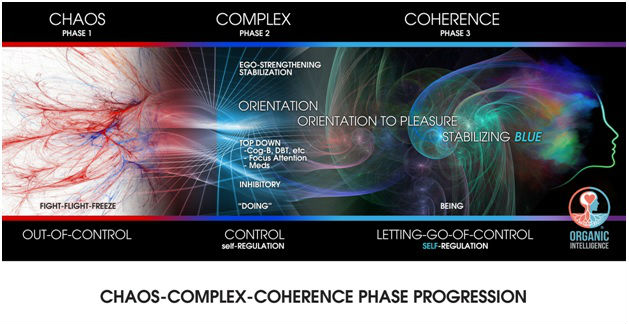
The main question, therefore, becomes attunement. For instance, an ego-strengthening comment, such as, “So you were able to set that boundary with your partner,” could be a helpful reflection when the system is in Phase II— it may support a more positive affective state appropriate to that Phase. In Phase I, such a reflection’s effect would be nullified in the system’s disorganization and tendency to associate things with negative affect or increased intensity. In Phase III, it would create a particular state extrinsically, when the system is intrinsically processing, and thus disrupt all-important intrinsic reorganization. As well as emotionally, interventions must thus be systemically attuned in order to be effective, and OI helps clinicians identify the recognizable signs of these phases in order to provide this deep, organismic attunement.
In particular, the above graphic suggests that ego-strengthening must go hand-in-hand with fundamental mindfulness: that of a basic orientation to reality. This certainly includes the capacity for affect regulation through various mental, physical, or psychological actions—like tools of helpful thinking, behaving, and attentional focus, such as is found with proven tools of cognitive behavioral therapy, dialectical behavior therapy, yoga, moderate exercise, medication, etc. However, the fundamental context for a person’s use of these proven tools is the fundamental awareness of oneself in the moment. On a practical level, OI promotes the particular aspect of mindfulness: attention to the environment through the senses—simply coming back to our senses!
In contemporary psychotherapy—with notable exceptions like those found here, positive psychology, and Ericksonian utilization approaches—the focus of attention most often lands in pathology or the preoccupation with “what’s wrong.”
In contemporary psychotherapy—with notable exceptions like those found here, positive psychology, and Ericksonian utilization approaches—the focus of attention most often lands in pathology or the preoccupation with “what’s wrong.” Elsewhere, I discuss this as a biological reflection of trauma—when the amygdala creates a self-stimulating loop of emergency alert and priming for what’s wrong: “the what’s wrong attention.” Organic Intelligence says: Trauma means unintegrated resource. In other words, what’s wrong is the priming of the attention toward what’s wrong—and this is what’s wrong. However, our neurophysiological system is actually making self-organizing efforts to bring us back to balance all the time. These obvious efforts are mostly missed due to the compulsion to see what’s wrong. Self-soothing remains conceptual until—with the right knowledge and accompaniment—one can change the concept into the lived experience of good feeling in the felt sense. This is the aim of many traditions, including the initial conditions of OI treatment protocols.
[fat_widget_trauma_ptsd_right]
The relationship to projection is clear: given enough here-and-now orientation, one can allow the projection process to occur. If one can allow the projection process to take place, freed from the “it’s wrong” association, then one has the possibility to see the material whose aim is integration. In other words, projection places one’s experience “out there”—at a safe distance, where it can actually help us recollect our relationship to it. Once there is sufficient ego-strength developed, and a sufficient degree of neutral awareness*—one can begin to experience aspects of oneself which are projected. Carl Jung knew this when he said, “Everything that irritates us about others can lead us to an understanding of ourselves.” However, it is of course not only that which irritates which reflects us back to ourselves; it can also be what inspires us, what is admirable, and what is numinous which we can reclaim via projection.
* The work of establishing this ego-strengthening, the stabilization of a relatively neutral, embodied awareness, is a task common to psychotherapy. We recognize that the more disoriented or fragmented the person in therapy, and the fewer the resources available, long-term support is increasingly necessary. Establishing these “initial conditions” may occur over months or years with those who are most disoriented.
Reference:
Vaillant, G.E. (1992). Ego mechanisms of defense: a guide for clinicians and researchers. Washington, DC: American Psychiatric Press.