Thank you for your honesty in describing what sounds like an unbearably painful situation. Alcoholism and addiction basically put both the addicted person and his or her loved ones in an impossible position, where the addicted one is both there and not there, leaving the partner and loved ones to have a “split†experience with, it often seems, two or more personalities. Those who love people with addictions often have a glimpse of the “real†or true person, who is suffering and appears to want help, before the drunk or stoned person appears again: critical or self-centered to the extreme, and hurtful to be around. Thus, by distancing ourselves from the latter, we also seemingly end up abandoning the former—the sober person we fell in love with. This leaves us in a no-win position, where we can stay and feel continually abandoned ourselves (or attacked, or both) or leave and bear the burden of guilt that tells us we are leaving our loved one alone on a deserted island.
It is also devastatingly difficult, if not impossible, to imagine how or why someone would choose drinking or using over family. This is why I like the idea of addiction being a mental health issue, where a person gets to a point where he or she would rather continue to self-destruct and lose everything and everyone than stop and get help. I have lost family members to addiction, so I relate to how absolutely baffling drinking to this degree can be, and how heartbreaking.
[fat_widget_right]
But sometimes things get to such a crisis point that a decision has to be made: namely, do we want to go down with the ship or not? It sounds as though you are choosing sanity, being a good mother, and what often becomes the lesser of two evils: saving oneself, setting a life-preserving boundary against alcoholism, versus rearranging deck chairs on the Titanic. Of course, the ensuing guilt is inevitable, although in truth when a drinking problem reaches such a tragic state, there is little to nothing we can really do anymore and the only real option is to take the lifeboat. By leaving, you are acknowledging the crisis, refusing to minimize it, telling alcoholism you no longer wish to be part of the problem and that you need to protect yourself and your children.
Your husband has long been in a vulnerable situation, and this moment of decision would arrive with or without your presence. The problem is his drinking is killing him, period. Everything else is almost an afterthought. No one can make this decision for him. He must decide whether he wants to stop drinking and live, or keep going and face tragic consequences. Your presence cannot soften these consequences; in fact, your absence may help clarify the starkness of his choice, so I think it’s wise to remove yourself from the situation. No matter how much you have helped him, and with what, the choice remains the same: does he stop or not? This decision and ensuing consequences are out of your control, so in spite of the difficulty you are giving him the dignity of his own choice and allowing him to decide which way he wants to go. You are also setting a good example for everyone by choosing life over insanity and death, though he might not see it that way right now.
I cannot emphasize enough the importance of finding your own support. This is an extremely traumatic situation and likely has been for some time, though that might not be obvious to you; a person’s alcohol or drug problem tends to suck all the oxygen out of the room, hog the mental spotlight as it were, so that the partner forgets that he or she also needs help.
There is no way, of course, to predict any outcome, though it is my great wish that this is the wake-up call your husband needs; people who drink or use are amazingly adept at ignoring or forgetting inconvenient truths, such as the lethality of drinking and using. Perhaps, as human beings, it is near impossible to consider our own demise. But the demise of the relationship, or at least your presence in the house, might, I truly hope, be a stark reminder of the destructiveness of his alcoholism. You are having a healthy response to an extremely toxic situation (alas). I’m sorry to say you ultimately could not save him even if you stayed.
My final point is about your own well-being. I cannot emphasize enough the importance of finding your own support. This is an extremely traumatic situation and likely has been for some time, though that might not be obvious to you; a person’s alcohol or drug problem tends to suck all the oxygen out of the room, hog the mental spotlight as it were, so that the partner forgets that he or she also needs help. Often we buy into the myth that says we are not addicted and therefore strong and resilient, such that no help is needed. To want any support or relief might even be seen as selfish: How can I think of myself at a time like this? But as the airline safety tip goes, give yourself oxygen first so you can better assist your loved one. This is, in fact, what you are doing.
Just from the distressed tone of your letter, I can say with reasonable certainty that I think some counseling and/or group support (Al-Anon, community or spiritual/religious groups for families or spouses) would be extremely valuable. It is too easy to underestimate the damage done to our own psyches by addiction; we often don’t feel it until the dust begins to settle. Then, following the guilt comes rage, hurt, anxiety, sadness, and a whole other cluster of intense emotions—not necessarily in that order. This doesn’t at all signify a person’s “failure to copeâ€; it is, again, a very normal reaction to an abnormally and almost cruelly stressful situation that annihilates love and tenderness, and often hope, to a traumatizing degree. It is a situation, I might add, that often parallels earlier childhood experiences where the nondrinking person became a kind of parentified child, or precocious caregiver, so that this role became second nature, where crushing guilt ensues anytime the person tries to step out of it. But any adult romantic relationship contingent on one-way giving/receiving will sooner or later collapse from imbalance. A thriving, growing love needs mutuality, or at least something in the ballpark. We need to take turns—otherwise the see-saw tips too far in one direction and falls over.
I also often say that a partner going to Al-Anon helps the addicted person too, as it is excellent role modeling.
I’m sorry you are in such a hellacious bind, though I commend you for your courage and stamina in making the sane choice (which can seem insane in the midst of chaos). Your feelings are normal for someone in your position; however, they do not, by any stretch, indicate that you are doing something wrong. It sounds like the kind of wake-up call that has been in the works for some time.
Thanks again for writing.
Darren
 It’s that feeling down in your belly that wiggles and burns, then jumps into your chest as you check your phone for the 10th time for a text from the object of your interest. Fireworks. Electricity. A burning flame. These are all descriptors that often describe passionate, romantic love.
We often hear people say they love someone so much it hurts or that a person can give them “butterflies” in the stomach if they’re in the same room. We think to ourselves, “This person works them up so much. They must really be into them!†The reality, however, is that pain and anxiety are not signs of passion. They are just pain and anxiety. Authentic love should not feel that way.
The Mixed Signals of Romance
In the beginning of a developing relationship, you may feel preoccupied with powerful feelings. Anxiety and excitement feel very similar. However, as a relationship builds, those unnerving feelings can be indicators the relationship is not truly serving you.
[fat_widget_relationships_right]
Anxiety can show up in a number of ways in relationships. Perhaps you worry excessively about what your significant other thinks or feel like you need to be perfect when they are around. You may have irrational thoughts that they might be angry or leave you. You may feel self-conscious around this person, or even panic when things go wrong. This is not how a person should feel in a secure, loving, and supportive relationship.
Are Your Needs Being Met?
It’s not uncommon for someone to become anxious about a relationship when a partner is not meeting their needs. When we feel ignored or not prioritized, it can be unsettling.
You probably have a friend who texts their significant other relentlessly every time they fail to answer the phone, asking where they are, what they’re doing, or instructing the person to call back right away. Your friend may be coming from a place of anxiety and might not feel secure about their partnership. Maybe your friend has reason not to trust their partner. Maybe they are carrying hurt and suspicion from a past breakup. Either way, those rapid-fire texts are not a sign of undying love—they may, instead, indicate anxiousness.
All that angst may feel like over-the-moon passion, but remember: above anything else, your relationship should feel calm and safe.Some degree of anxiety in a relationship is normal. But if you frequently feel nervous about where things stand with your significant other, you may want to pause and think about what’s causing you to feel that way.
Does your partner ignore you for long periods of time? Are they hypercritical or jealous? Maybe they make you feel guilty, give you ultimatums, or become passive-aggressive and irritable. Does your partner act overly flirtatious with others? These are all examples of unhealthy relationship dynamics that can leave people feeling panicky and unnerved. If any of these are behaviors are commonplace in your relationship, you may want to reach out to a couples counselor or rethink your commitment.
From Infatuation to Meaningful Connection
As a relationship develops and moves past the honeymoon phase, lust and novelty should be replaced by trust, commitment, and dependability. These are the true qualifiers of an authentic, long-term connection. A loving relationship should feel secure, reliable, and supportive. You should be able to feel relaxed and open about being accepted as your true self. You should be able to trust your partner to be loyal. You should feel like a priority. Everyone deserves this type of relationship.
All that angst may feel like over-the-moon passion, but remember: above anything else, your relationship should feel calm and safe.
 These days, stress and work often go hand in hand. Many of us can’t even imagine what our jobs would be like if they didn’t stress us out at least a little bit. In fact, a recent survey conducted for the American Institute of Stress found that more than 80% of Americans find at least one aspect of their jobs stressful.
Although many factors contributing to work-related stress are out of one’s control, there are many habits we engage in that can make our work days all the more nerve-racking. Here are nine bad habits at work that could be increasing your job stress, along with some suggestions on ways to overcome them:
1. Procrastination
Waiting until the last possible minute to do something isn’t good for anybody’s nerves. Studies show that people who procrastinate have higher stress levels, lower overall well-being, and poorer performance outcomes than those who tackle a task right away.
The best way to combat procrastination is to just get started. Even if you don’t finish what you start, getting the ball rolling helps and makes the overall project less daunting. Just do it; don’t wait. If you put everything off to the last minute, you’re certain to feel more stressed, not to mention you leave little room for revision or error.
[fat_widget_right]
2. Running Late
Let’s face it: running late is stressful. When you’re already late, it seems like everything takes longer, traffic is heavier, and people move slower. If you are always running late and in a hurry, you’re constantly stressing yourself out. Who wants to start their work day feeling stressed?
Break this habit by getting started 10 or even five minutes earlier. Conceptualize how much time you think you need to get ready, and then simply add 10 minutes (or five) to it. Those extra minutes will provide the leeway you need to help remain calm on the way to work, which inevitably impacts the rest of your day.
3. Not Taking Breaks
To maintain low stress levels, take a break! Breaks are important for maintaining your mental health.
If you think skipping breaks makes you more productive, think again. It can actually have the opposite effect. Studies have shown that taking regular breaks increases both productivity and creativity. Think of the mind like you would a muscle. If you overwork your muscles, they get fatigued. The same goes for your brain. It needs rest, too.
4. Poor Planning
When you leave work at the end of each day, you should have a general outline of tasks for the next morning. If you go in each day without a plan of action, you’ll be less productive, end up wasting time, and increase your stress in the long run when you have difficulty keeping up with your workload.
Decrease your stress by coming to work prepared and acknowledging your duties first thing in the morning or whenever you arrive. One of the last things you should do each day is make a to-do list of work that needs to be done the next day. There are many tools available to help with this, such as a traditional planner or an app that will help you keep you on task (there are several).
5. Focusing on the Negative
If you’re constantly complaining about your boss, your workload, or your coworkers, you’re making your job more difficult. Complaining alone rarely solves anything; it just brings you and those around you down. In the workplace, attitude is very much contagious.
You can’t hate what you do 40-plus hours a week and keep your stress levels low.
Complaining in small amounts can be healthy; it allows us to vent our frustrations and acknowledge our feelings. But when you make a habit of complaining, it can start to wreak havoc on your life and affect your coworkers. To change this habit, consider spending a few moments at the end of each day (after writing your to-do list for tomorrow) thinking and writing down up to three things that were positive about your work day. Maybe you exceeded productivity, maybe you helped a customer, or maybe you helped a coworker with something he or she was struggling with. Jot it down and remove yourself from the negative thought patterns we all fall into when situations in life seem crummy.
6. Hating Your Job
Consider that you will spend almost a third of your adult life at work. If you really can’t stand your job and find yourself dreading every Monday morning, you might want to consider looking for another job or changing careers. You can’t hate what you do 40-plus hours a week and keep your stress levels low.
To change this habit and get your life moving in a direction that brings you greater satisfaction, consider finding a therapist or career counselor to work with. If you meet with a therapist, he or she may be able to help you discover emotional or behavioral issues that contribute to your job dissatisfaction. A career counselor may help you discover something more in line with your values, work ethic, and interests.
7. Bringing Work Home with You
Sometimes, circumstances make working at home unavoidable. When you can, however, leave your work at work.
In modern society, many of us carry our phones, laptops, or tablets with us regularly. This helps us facilitate work in different ways, but it can also take away time spent with family, relaxing, or performing other self-care activities. If you find yourself answering work calls at the dinner table, make an effort to ditch the digital leash. If you can minimize the amount of time you think about work when you aren’t at work, you’ll likely find that your work-related stress will decrease.
8. Sitting All Day
Some studies indicate that working at a desk or sitting at work all day is about as unhealthy as smoking cigarettes. Sitting for prolonged periods puts an incredible amount of pressure on the spine and increases tension within the body. This often manifests as physical stress, which releases the stress hormone cortisol. Cortisol can be responsible for weight gain, physical health problems, and can affect your mental health as well.
The best way to break this habit is to simply get moving. Make it a point to stand for at least one hour a day or do an exercise on your break. Walk around your building, take the stairs throughout the day, or take a walk after dinner. While seated at work, you can also make sure you keep good posture and stretch regularly. Adding some activity throughout the day can also benefit your productivity.
9. Neglecting Work-Life Balance
It’s easy to get caught up in our careers and neglect other areas of our lives. If you find you’re working too much and playing too little, make the time in your life for recreation to help decrease your stress levels. If you’re able to take a vacation, consider it an investment in your health.
It is important to maintain a work-life balance. In addition to recreational activities, consider whether you are making enough time for your family or friends. If you continually focus on work and don’t take care of your other needs, you’re bound to end up feeling stressed. You need to always be practicing self-care or stress will take its toll.
If Work Stress Is Getting the Best of You, Help Is Available
Stress can be detrimental to your health. It is the root cause in many instances of mental and physical health issues, including anxiety, depression, heart disease, sleep disturbances, digestive problems, weight gain/loss, concentration issues, and memory impairment. Interestingly, many researchers also say that work is the most significant cause of stress among American adults.
Breaking the aforementioned habits can help you drastically reduce your work-related stress, but sometimes you might need to do deeper work emotionally, behaviorally, or cognitively to break a negative thought pattern or get back to a place where you can function at your best. Because of this, many therapists and mental health professionals are trained to help people cope with and overcome workplace issues. If you find that work-related stress is impacting your life in a negative way, consider reaching out to a mental health professional to increase your satisfaction and happiness at your current job, or to help you get on the path to a new, more fulfilling one.
References:
- Jaffe, Eric. (2013). Why Wait? The Science Behind Procrastination. Association of Psychological Science. Retrieved from http://www.psychologicalscience.org/index.php/publications/observer/2013/april-13/why-wait-the-science-behind-procrastination.html
- Korkki, Phyllis. (2012, June 16). To Stay on Schedule, Take a Break. The New York Times. Retrieved from http://www.nytimes.com/2012/06/17/jobs/take-breaks-regularly-to-stay-on-schedule-workstation.html?_r=0
- Mayo Clinic Staff. (2013, July 11). Chronic Stress Puts Your Health at Risk. Mayo Clinic. Retrieved from http://www.mayoclinic.org/healthy-living/stress-management/in-depth/stress/art-20046037?pg=1
- Workplace Stress. The American Institute of Stress. Retrieved from http://www.stress.org/workplace-stress/
 A happy event though it is, integrating a new baby into the family is a huge transition. It’s a huge transition for Mom and Dad, of course, but it’s also a huge transition for older children in the family.
The dynamic of the whole family changes when a new baby arrives. The arrival of a new baby can be one of the most traumatic events in a child’s life. It is a significant transition that must be handled with compassion and empathy, lest you risk harming his or her self-worth and sense of security. The integration of a new baby into the family can create an emotional crisis for children. Therefore, children need the assurance of their parents’ love more than ever.
It is completely normal for children to experience jealousy once a new baby arrives, even if the children are excited about having a new baby in the house. The reality is that children will have to adjust to the shift in the amount of attention they receive from their parents. Children may experience this shift as a loss that they grieve. How children adjust to a new baby depends on their temperament and the ease of the transition of integrating the new baby into the family. The goal for parents is to help children manage their jealousy so that, sooner rather than later, love for the new baby can take over.
[fat_widget_right]
The integration of a new baby tends to be most difficult for children 18 months to three years. Children younger than that aren’t as aware, and children older than that typically have other things distracting them. When the time comes for the baby to arrive, parents need to ensure that children do not feel abandoned. Having Mommy go away to the hospital can be traumatic if the children are on the younger side and don’t understand why she left, which may make it more difficult to accept the new addition to the family once the baby is brought home.
It is best to start preparing children for the new arrival before the baby even arrives. The goal is to help children feel connected to the baby and to become enthusiastic about its arrival.
Strategies for Helping Children Embrace a New Sibling
The following are some strategies parents can use to help children adjust to a new sibling:
- Be willing to validate children’s unhappy feelings. Acknowledge the frustration children may feel when a new baby arrives. By acknowledging the challenging parts, children won’t feel the need to bury or suppress their feelings, which is often at the root of misbehavior.
- Focus on what hasn’t changed. Even if they’re exhausted, parents should try to sustain whatever rituals have been established with their children.
- Don’t pressure children into “loving†their new sibling or being a “good big brother/sister.†If children are given time to adjust, they will have more room to bond naturally.
- Offer children the chance to be alone with each parent. One-on-one time with one parent may make less attention from the other more tolerable and remind children that they are still special.
- Create opportunities for children to be recognized. Tell others within earshot how helpful it is when they carry the diaper bag or get the baby powder. Also, remind children how lucky the baby is to have them for an older sibling.
- Recruit help. Enlist the help of a person the child likes or family members to spend time with the children and offer extra time and attention.
- When children are emotionally charged, process big feelings. Regardless of the reason they are upset, the opportunity to express their feelings (crying, yelling, etc.) and be comforted by a parent will help them adjust.
Patiently allowing the time needed for children to adjust to the arrival of a new baby, and providing love and emotional support of their feelings, will help children to recognize that their feelings are accepted and understood. As a result, children may be more likely to accept the arrival of a new sibling and view it as a joyful event.
 Borderline personality (BP) is estimated to affect between 1.5% and 6% of people in the United States. Core features of BP include black-and-white, all-or-nothing thinking, intense, rapidly shifting emotions and difficulties with emotion regulation, challenges in relationships and with self-image, and a tendency toward impulsivity. All of these can exacerbate distress, decrease coping, and make it harder to function socially, at work, and in general. Furthermore, the prevalence of BP in people with chronic pain is significantly greater than in the general population (30%) and is linked to increased pain severity and poorer coping with pain.
Non-suicidal self-injury is a tool frequently used by those with borderline personality in an effort to decrease emotional pain and induce calm. Those who have BP often report both the absence of pain and an increase in well-being or feelings of euphoria when engaging in self-harm, both of which may reinforce the tendency to continue self-harming as a way of coping.
The Pain Paradox
The relationship between pain, self-injury, and BP is complex. Between 70% and 80% of those diagnosed with BP engage in self-injury to distance themselves from painful emotions and distressing thoughts. On the surface, it is perplexing that BP predisposes individuals to not only higher pain tolerance in the face of acute (short-duration) and self-inflicted pain, but lower pain tolerance, as well as greater pain severity and poorer coping, in response to chronic (ongoing) pain.
[fat_widget_right]
The Overlap of Emotional and Physical Pain
Contrary to popular belief, there is no one “pain center†in the brain; multiple brain structures are responsible for the experience of pain. A complex and multifaceted experience, “pain†refers to sensing the location of discomfort, assessing pain severity, registering the quality of pain (e.g., piercing, hot, throbbing, intermittent, etc.), linking to memories related to pain, the emotional response to pain, beliefs one has about the potential for coping with pain, and the ability to devise and follow through with a plan for pain management, among others.
The current and rapidly growing body of research on pain has found that distressing cognitive responses, such as catastrophizing (“I can’t handle this pain; I’m never going to get better!â€) and emotional responses, such as depression and anxiety, can worsen both pain severity and coping, as well as challenge one’s ability to stick with a pain management plan that may require patience, persistence, and possibly a temporary increase in pain severity (such as with physical therapy).
This relationship among thoughts, feelings, and physical sensations and their related brain structures is not one-directional: physical pain tends to increase distressing thoughts and emotions and impair coping; distressing thoughts and feelings and poor coping strategies are linked to worsening physical pain. Relatedly, employing adaptive coping, such as taking good care of one’s body via a healthy diet, exercise, and stress management program, and treating any issues related to anxiety or depression, can improve pain and general well-being.
The Brain and Self-Harm as Self-Medication
Borderline personality is associated with increased rejection sensitivity and a tendency to personalize others’ intentions and emotional states. This is thought to occur in part due to over-activation of the amygdala, a small, almond-shaped structure deep in the brain, and under-activation of the anterior cingulate cortex, or ACC.
The amygdala is involved in the experience of intense, often unpleasant emotions, such as anger and fear, as well as emotional memories. The ACC is involved in, among other things, decision making and regulating emotions. Recent research has found that BP is linked to having less gray matter density in the ACC and more in the amygdala, as well as decreased activity in the ACC and increased activity in the amygdala in response to viewing fearful or angry faces.
Theoretically, in response to perceived social rejection, the ACC should help assess the situation, turn down the volume on intense, negative emotions (calm down the amygdala), and help make a “rational†decision about how to handle the situation. This process is compromised in people with borderline personality. Emotional distress due to social pain is a frequent trigger of self-harm in those with BP.
Repeatedly self-harming is thought to stimulate the release of the body’s opioid and cannabinoid receptors, leading to feelings of increased well-being, relaxation, and euphoria. You may be familiar with the effects of exogenous cannabinoids and opioids (those from a source outside of the body). Opioid pain medications are exogenous opioids, and marijuana contains exogenous cannabinoids (the most well known of which is THC). Both substances can prompt feelings of pleasant detachment, pain relief, and euphoria, among other effects.
Self-harm has also been found to increase the predominance of theta brainwaves, which are associated with light sleep, deep meditation, and dissociation, or feeling disconnected from one’s thoughts and feelings. Other studies have found that those with a history of repetitive self-injury had lower cerebrospinal fluid levels of two neuropeptides (proteins) that are associated with analgesia (pain reduction): beta-endorphin and met-enkephalin. It is unclear if low levels of these neuropeptides result from severe childhood trauma, a biological predisposition, or some combination of these. Thus, self-injury appears to prompt the body to release pain-relieving chemicals and induce a trance-like state that blunts physical and emotional pain.
Challenges in Treating Pain
It remains an unfortunate truth that most medical and mental health professionals generally receive minimal or no education about diagnosing and treating chronic pain unless they pursue specialized postgraduate treatment in this area. Imaging, blood tests, and physical exams frequently fail to isolate a cause for many pain syndromes, which can leave both patients and providers feeling frustrated or on the defensive. In the absence of physical evidence for pain, providers may conclude that a person is reporting pain in an effort to gain attention or assistance from others, referred to as “secondary gain.†Providers may also conclude that overwhelming emotions are the sole cause of physical pain.
There is no definitive answer for why borderline personality would be so much more prevalent in people with chronic pain than in the general population.
Although some people do manufacture or exaggerate reports of pain, and emotional distress can be experienced via physical symptoms, the picture is typically more complex for most of those in pain. Furthermore, advances in genetics, immunology, endocrinology, and brain imaging are revealing biological correlates of many pain syndromes once thought to be purely psychogenic (caused by the mind), such as phantom limb pain, irritable bowel syndrome, chronic fatigue/myalgic encephalomyelitis, and fibromyalgia.
Providers who are not well informed about pain can leave pain sufferers both without a plan for pain management and vulnerable to feeling unheard and invalidated. In addition, those who react dismissively to reports of pain and distress are likely to trigger feelings of rejection and abandonment, particularly in those with borderline personality, who are already more vulnerable to these feelings. Overwhelming painful emotions may worsen pain and decrease the ability to manage it.
Why Is Borderline Personality Common in People with Chronic Pain?
There is no definitive answer for why borderline personality would be so much more prevalent in people with chronic pain than in the general population. Because pain is a complex, mind-brain-body phenomenon, one hypothesis is that pain that feels random or beyond one’s control may induce feelings of depression, hopelessness, helplessness, anger, and anxiety—all of which amp up pain. Invalidation by ill-informed providers is more likely to elicit poor coping, particularly in those who may struggle with coping already.
Reports of increased severity of pain and other bodily symptoms in those with BP are correlated with greater levels of anxiety and depression. When researchers have statistically controlled for anxiety and depression in those who have both BP and pain, symptom severity has been similar to that of those without BP.
Another possible explanation for the greater prevalence of BP in chronic pain is that when under significant and prolonged stress, everyone is vulnerable to psychological regression, or using earlier ways of coping that are not adaptive in adulthood. Factors associated with BP, such splitting or black-and-white thinking, emotional instability, impulsivity, and greater emotional intensity, may become more prominent when dealing with the ongoing stressor of chronic pain. Furthermore, because many who have borderline personality experienced trauma or neglect at a developmental stage prior to being able to express feelings verbally, regulate their emotions, or negotiate relationships skillfully, the regression prompted by pain may be both retraumatizing and leave those with BP or BP traits feeling unable to process overwhelming emotions directly. This distress may be acted out in interpersonal relationships with providers and others. In addition, unexpressed distress may be somatized, or experienced as bodily pain. This does not mean that a person cannot have an actual chronic pain condition and also somatize; the relationship between the two is often difficult to tease apart.
Finally, as stated above, clinicians unfamiliar with chronic pain may respond in a way that reactivates the experience of invalidation that is thought to be an important factor in developing BP.
Although there is no definitive conclusion as of yet about the reasons for the pain paradox in borderline personality, it appears to be the result of a complex relationship among the following: a biological predisposition to greater emotional pain, and a higher pain threshold for acute pain but a lower tolerance for chronic pain; the analgesic effects of self-harming; and the feelings of helplessness and rejection often inherent in the processes of seeking treatment for chronic pain. For those with BP, self-harming may serve what feels like an essential function in relieving emotional pain; yet, the ongoing and intense stress of chronic pain can overwhelm coping resources and diminish the ability to cope with either pain or the social, medical, and interpersonal challenges that accompany it.
References:
- Ducasse, D., Courtet, P., & Olie, E. (2014). Physical and social pains in borderline disorder and neuroanatomical correlates: A systematic review. Current Psychiatry Reports, 16, 443.
- Magerl, W., Burkart, D., Fernandez, A. Schmidt, L. G., & Treede, R. (2012). Persistent antinociception through repeated self-injury in patients with borderline personality disorder. Pain, 153, 575-584.
- Mayo Clinic News Network: Irritable Bowel Syndrome. Retrieved from http://newsnetwork.mayoclinic.org/discussion/mayo-clinic-researchers-find-genetic-clue-to-irritable-bowel-syndrome/
- Minzenberg, M. J., Fan, J., New, A. S., Tang, C. Y., & Siever, L. J. (2008). Frontolimbic structural changes in borderline personality disorder. Journal of Psychiatric Research, 42(9), 727-33.
- National Alliance on Mental Illness (NAMI) – Borderline Personality Disorder. Retrieved from http://www.nami.org/Learn-More/Mental-Health-Conditions/Borderline-Personality-Disorder
- Niedtfeld, I., Schulze, L., Kirsch, P., Herpertz, S. C., Bohus, M., & Schmahl, C. (2010). Affect regulation and pain in borderline personality disorder: a possible link to the understanding of self-injury. Biological Psychiatry, 68, 383-391.
- University of Maryland: Chronic Fatigue Syndrome. Retrieved from http://umm.edu/health/medical/reports/articles/chronic-fatigue-syndrome
- Light, K. C., White, A. T., Tadler, S., Iacob, E., & Light, A. R. (2012). Genetics and gene expression involving stress and distress pathways in fibromyalgia with and without comorbid chronic fatigue syndrome. Pain Research and Treatment. Retrieved from http://www.hindawi.com/journals/prt/2012/427869/
 Congratulations! You’ve made one of the best decisions you can make: asking for help. Whether you’ve decided to get help to control or moderate your use of alcohol or substances, or whether you’ve decided you want to be entirely abstinent, or whether you just want to explore the role that addiction might play in connection to an underlying depression, anxiety, stress, or self-esteem issue, you are being proactive in trying to find someone who can help you. Acknowledging that you need help is never easy, but it’s one of the best things you can do for yourself. Finding the right addiction therapist is just as important as making the decision to get help.
Before determining whether the treatment provider is “expert†enough, you have to decide what type of practitioner you would like to consult. Addiction treatment often involves working with a combination of professionals. Probably the most comprehensive place to start would be to meet with an addiction psychologist for a complete evaluation. However, there are several other types of therapists with the necessary and sufficient experience to get you on your way. It is important to know the differences between these sorts of treatment providers.
People often will begin their search for addiction treatment by consulting an “addiction psychiatrist†or “addiction psychologist.†In actuality, these are two very different kinds of professionals. Knowing the difference is essential. Furthermore, the professions of psychotherapist, social worker, and counselor all have different specialties, and their focus and breadth of treatment can vary considerably. In most instances, their credentials are much less important compared to their experience and the connection you can establish with them. Most therapists would likely agree that the most curative factor in the psychotherapeutic relationship is the rapport that develops between therapist and person in therapy. So while you’re looking for someone you can afford, you are also looking for someone with whom you can connect.
[fat_widget_addiction_right]
What Is an Addiction Psychiatrist?
An addiction psychiatrist is a medical doctor who specializes in treating people with addictive and mental health issues primarily with medicines such as antidepressants, antipsychotics, and medications that help to treat underlying mental health conditions and comorbid issues. While there are many psychiatrists who don’t prescribe medications much and focus primarily on therapy instead, most psychiatrists manage medications and work closely with psychologists and other therapists who will provide the talk therapy treatment. Subsequent psychiatric appointments following an evaluation tend to be short, about 20- to 25-minute med checks; they are mostly concerned with how a person is adjusting to a drug regimen, minimizing side effects, and gauging effectiveness.
Most importantly, an addiction psychiatrist has special training in prescribing medications to help individuals who are struggling with their substance use. It is important to work with an addiction psychiatrist and not just a general psychiatrist when you are trying to determine the nature of your relationship with drugs and alcohol and considering making behavioral changes. An addiction psychiatrist can prescribe medications to help you detox or withdraw from drug and alcohol use, and they can also prescribe medications to help you with cravings, which could avert relapse.
What Is an Addiction Psychologist?
An addiction psychologist, on the other hand, is a doctor but not a medical doctor. Addiction psychologists are trained mental health professionals who can help you explore the role that addiction plays in your life. An addiction psychologist can help you become more aware of your thoughts, feelings, and behaviors, and teach you different ways of dealing with problems through therapeutic approaches such as cognitive behavioral therapy, motivational interviewing, mindfulness-based relapse prevention, 12-step facilitation treatment, and community reinforcement and family training.
Additionally, addiction psychologists let you talk your way through a problem and help you get to the heart of the issue so you can make the necessary changes that will improve your life for the long haul, and not just put a bandage on a major wound. A typical appointment with a psychologist is 50 to 55 minutes.
Other Professionals Who Can Help
There are other types of addiction therapists in addition to psychologists who might be helpful, including social workers and licensed professional counselors. Social workers may have their master’s or doctorate, while licensed professional counselors may have only a master’s-level education, though both are trained in mental health issues to varying degrees. Social workers in particular are trained in obtaining the best social agency support services, and they tend to take a social and networking approach to the treatment of mental health issues.
Psychotherapists may have any of the above degrees or none at all. A psychotherapist is sometimes a catch-all for someone who practices talk therapy, but the therapist may or may not be adequately trained according to the standards of another professional degree or certificate. For example, a psychiatrist or psychologist may describe themselves as a psychotherapist, but so too can a recovery coach or Joe Shmoe because he’s been a “spiritual advisor” ever since he was electrocuted while trying to repair his garage door. That said, many psychotherapists do receive comprehensive training, but it is important that you vet their experience, training, and credentials, as you should with any other therapist. (GoodTherapy.org does this work on your behalf as it has strict educational and training requirements for membership.)
Certified addiction counselors and certified alcohol and drug counselors are just a few of the titles bestowed to professionals who are counselors but not at the educational or academic level of psychiatrists, psychologists, or social workers. Often, these titles vary slightly according to state board guidelines, which can be somewhat less standardized from state to state. They may be no less qualified to treat you, but it is important to see someone who is licensed in his or her professional field. Ideally, your clinician would be qualified as both an addiction counselor and as a licensed mental health professional.
Finding the Right Addiction Therapist
Now that you know the differences between professionals, let’s talk about how to find the right addiction therapist for you. There are two common ways to find a psychiatrist and/or psychologist: (1) research local addiction professionals online, or (2) identify an addiction therapist who is recommended to you by another professional, friend, or family member. Both are perfectly legitimate ways to begin your search for the best match.
Once you think you have found someone, follow these steps to determine if they are competent, credible, and a good match for you. First and foremost, check their credentials to see if they are who they say they are. Make sure they have the associated degree of the professional discipline you personally are looking for. The professional you go to should be licensed, and the license should be up to date and clearly indicated on his or her website or profile listing.
If you think you found someone but they end up not being the right match for you, do not give up hope. It may be important to explain very clearly to this person what it is that you feel you are not getting.
Secondly, whether you want to see an addiction psychologist, psychiatrist, counselor, or psychotherapist, you should determine what expertise the person has in the field of addiction. This can be daunting because, across disciplines, there is no standardized way of determining one’s expertise in addiction. For example, while psychiatrists can be board certified in addiction medicine, addiction psychologists might obtain their proficiency by having (1) additional certification as a certified alcohol and drug counselor, (2) by being a member of the American Psychological Association Division 50 Society of Addiction Psychology, or (3) by having conducted research and published articles on addiction. Moreover, addiction counselors may have a certification through a state board, yet they may lack the background and training that a psychologist receives in mental health issues. This is important because half of all individuals who are diagnosed with a lifetime prevalence of addiction will also be diagnosed with a lifetime prevalence of another comorbid mental health diagnosis. Furthermore, one might not want to see a psychiatrist who specializes in medication management and may not have as much training and experience in the various treatments involving the talk therapies.
Third, check reviews online. There are excellent therapists who don’t yet have reviews online, perhaps because they haven’t had an online presence or because it’s just not ethical to ask for reviews. Many psychotherapists will have colleagues write reviews for them, which is a helpful way of getting recommendations. One bad review can affect someone’s listing significantly, so look carefully at all the reviews to be fair.
Fourth, review the professional’s website and other sites where their practice might be listed to see that they offer “evidenced-based†or “best practices†treatment. While these buzzwords have quite frankly become passé and obsolete as they have been co-opted by marketers, you want to be sure that your therapist at least knows about the most up-to-date evidenced-based treatment approaches. Ask what treatment the professional uses that is evidenced-based, or ask for an opinion on something you’ve learned about, like harm reduction, 12-step facilitation, motivational interviewing, or mindfulness-based stress reduction or relapse prevention.
Fifth, have a phone conversation to see if you feel some sort of connection to your addiction therapist. This may be a feeling of confidence or an inexplicable bond of initial trust, but in either case, feeling secure with your addiction therapist is crucial. It is completely appropriate to say you are shopping for a therapist and that you’d like to speak on the phone to ask some questions or let the person know what is going on to see if it even makes sense to set up an appointment. This also allows the therapist to gauge whether you’re a good fit for him or her, and if not, to offer a referral.
Sixth, make a follow-up appointment where you can meet the person face-to-face and see if your initial instinct was correct. It is also reasonable to meet once or twice before you decide whether to commit to working with the person while you develop a treatment plan together. Remember, most importantly, you are looking for someone you connect with. You and the professional should both believe that the therapist can help. You are looking for someone you can afford, someone with whom you can feel comfortable, and someone you believe can help you.
If you’re lucky, you may get all these steps right on the first try, but many people do not. If you think you found someone, but they end up not being the right match for you, do not give up hope. It may be important to explain very clearly to this person what it is that you feel you are not getting. Often, the difficult experience you are having with the therapist is related to the reason you are in therapy to begin with. In other words, the conflict or problems you are having with your therapist may be the sorts of problems you have in other relationships and could be driving addictive or compulsive behaviors, and now you have an opportunity to work through those issues with a therapist who is trained to help you see your role in the relationship and in other, more important relationships. This is a wonderful opportunity to learn about yourself.
If your therapist shies away from this sort of dialogue, they will not be helpful to you. Sometimes, the match is just not right and you have to find another therapist. The right person is out there; you just might have to work a little harder to find that person.
Conclusion
In summary, because addiction treatment is a unique field, it is essential that your addiction therapist have a solid background in mental health and not just expertise in addiction. Since many of those with a substance use issue in their lifetime will also meet the criteria for another mental health condition, it is clear that these comorbid conditions are interrelated and may fuel each other. This is why it is so important that your therapist be an expert in both domains. When you seek help for addiction, you may experience issues such as depression, anxiety, trauma, attention-deficit hyperactivity, and relationship problems. Addiction therapists who are not licensed, such as recovery coaches and interventionists, can have an important role, but only when mental health professionals who are licensed are supervising and quarterbacking the treatment.
Once you’ve found an addiction therapist who is a good fit and you begin to understand your addiction issues—medical, psychological, and otherwise—you may feel as if a big weight has been lifted off of your shoulders. While most individuals considering stopping or reducing their drug or alcohol use are loath to imagine their lives without the use of alcohol or drugs, many recovering individuals report that their lives are vastly improved and that that their worst days in recovery are far better than their best days using.
 Editor’s note: Steven Hoskinson, MA, MAT (pictured at left) is a consultant and trainer who employs and teaches a mindfulness-based approach to trauma treatment called Organic Intelligence. His continuing education presentation for GoodTherapy.org, titled Organic Intelligence and Exposure Therapy: Implicit Memory Integration Without Flooding, is scheduled for 9 a.m. PDT on July 24, 2015. This event is available at no additional cost to GoodTherapy.org members and is good for two CE credits. For details, or to register, please click here.
I remember in grad school in clinical psych, there was a change in the way heated discussions took place. In particular, ways of winning such discussions became more psychologized. Like the spells cast at Hogwarts, the “You’re PROJECTING!†was one of the more common attacks. The pejorative nature of projection stems from the understanding from Freudian perspectives of projection as one of the more primitive defenses. In his authoritative review of the topic, Vaillant (1992) describes how:
… for Freud, the defenses of denial, distortion, and projection were the defenses of psychosis. At the opposite end of the continuum, sublimation, altruism, humor, and suppression were the defenses of maturity. Between these two groups of defense mechanisms were splitting, hypochondriasis, turning against the self, phantasy, dissociation, repression, isolation, undoing, displacement, and reaction formation—defenses that Freud believed to be the hallmarks of neurosis. (p. 9)

In the understanding of Organic Intelligence (OI), projection—rightly encountered—is instead a uniquely potent means toward reassociation. The protective value of projection from OI’s perspective is honored and respected. Instead of interpreting or unveiling the unconscious process, OI proposes to build state-specific ego-strength until the projection’s value becomes ego-syntonic, and integration becomes a matter of course. It’s the difference between a person feeling vulnerably exposed, and feeling supported and self-discovered.
Rather than providing insight, per se, OI aims to shepherd observable physio-emotional states according to a protocol which aligns with subtle but naturally occurring organismic trends toward increased coherence (a “shaping†paradigm of positive reinforcement). Toward this end, one of the most helpful aspects of Organic Intelligence (OI) as a clinical approach is that, as a systems approach, it clearly defines the three actual and distinct organizational phases of the nervous system: chaos, complexity, and coherence. (This will be discussed during the webinar, and is also covered at OrganicIntelligence.org.) This is important for clinicians because in-the-moment nervous system phase determines the intervention that’s needed. We can see the three phases in this diagram:
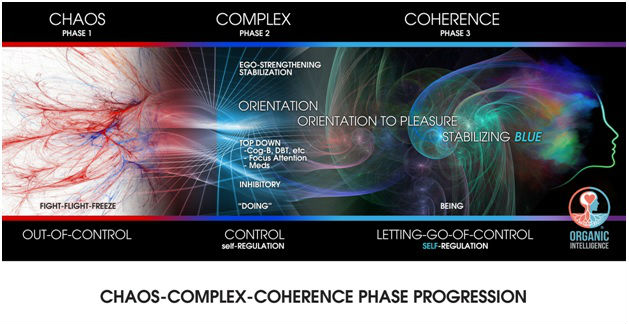
The main question, therefore, becomes attunement. For instance, an ego-strengthening comment, such as, “So you were able to set that boundary with your partner,†could be a helpful reflection when the system is in Phase II— it may support a more positive affective state appropriate to that Phase. In Phase I, such a reflection’s effect would be nullified in the system’s disorganization and tendency to associate things with negative affect or increased intensity. In Phase III, it would create a particular state extrinsically, when the system is intrinsically processing, and thus disrupt all-important intrinsic reorganization. As well as emotionally, interventions must thus be systemically attuned in order to be effective, and OI helps clinicians identify the recognizable signs of these phases in order to provide this deep, organismic attunement.
In particular, the above graphic suggests that ego-strengthening must go hand-in-hand with fundamental mindfulness: that of a basic orientation to reality. This certainly includes the capacity for affect regulation through various mental, physical, or psychological actions—like tools of helpful thinking, behaving, and attentional focus, such as is found with proven tools of cognitive behavioral therapy, dialectical behavior therapy, yoga, moderate exercise, medication, etc. However, the fundamental context for a person’s use of these proven tools is the fundamental awareness of oneself in the moment. On a practical level, OI promotes the particular aspect of mindfulness: attention to the environment through the senses—simply coming back to our senses!
In contemporary psychotherapy—with notable exceptions like those found here, positive psychology, and Ericksonian utilization approaches—the focus of attention most often lands in pathology or the preoccupation with “what’s wrong.â€
In contemporary psychotherapy—with notable exceptions like those found here, positive psychology, and Ericksonian utilization approaches—the focus of attention most often lands in pathology or the preoccupation with “what’s wrong.†Elsewhere, I discuss this as a biological reflection of trauma—when the amygdala creates a self-stimulating loop of emergency alert and priming for what’s wrong: “the what’s wrong attention.†Organic Intelligence says: Trauma means unintegrated resource. In other words, what’s wrong is the priming of the attention toward what’s wrong—and this is what’s wrong. However, our neurophysiological system is actually making self-organizing efforts to bring us back to balance all the time. These obvious efforts are mostly missed due to the compulsion to see what’s wrong. Self-soothing remains conceptual until—with the right knowledge and accompaniment—one can change the concept into the lived experience of good feeling in the felt sense. This is the aim of many traditions, including the initial conditions of OI treatment protocols.
[fat_widget_trauma_ptsd_right]
The relationship to projection is clear: given enough here-and-now orientation, one can allow the projection process to occur. If one can allow the projection process to take place, freed from the “it’s wrong†association, then one has the possibility to see the material whose aim is integration. In other words, projection places one’s experience “out thereâ€â€”at a safe distance, where it can actually help us recollect our relationship to it. Once there is sufficient ego-strength developed, and a sufficient degree of neutral awareness*—one can begin to experience aspects of oneself which are projected. Carl Jung knew this when he said, “Everything that irritates us about others can lead us to an understanding of ourselves.†However, it is of course not only that which irritates which reflects us back to ourselves; it can also be what inspires us, what is admirable, and what is numinous which we can reclaim via projection.
* The work of establishing this ego-strengthening, the stabilization of a relatively neutral, embodied awareness, is a task common to psychotherapy. We recognize that the more disoriented or fragmented the person in therapy, and the fewer the resources available, long-term support is increasingly necessary. Establishing these “initial conditions†may occur over months or years with those who are most disoriented.
Reference:
Vaillant, G.E. (1992). Ego mechanisms of defense: a guide for clinicians and researchers. Washington, DC: American Psychiatric Press.
 In light of the recent Supreme Court decision legalizing same-sex marriage across the nation, there has been a surge in the national dialogue about marriage in general. Although a range of opinions exist in response to the SCOTUS ruling, individuals on both sides of the debate are talking about the meaning and purpose of marriage with fervor and passion.
But why does marriage matter?
Marrying for love and happiness is a fairly recent phenomenon. Previous to democratization, which popularized the notion of individual rights and freedoms around the turn of the 14th century, individuals generally either participated in arranged marriages or married according to cultural norms for their social class, socio-economic status, gender, and/or birth order. Despite the fact individuals have not always prioritized attraction or emotions in marital decisions, modern Americans cherish the romance of marrying for love and happiness, as evidenced by just about every relationship narrative in the media today.
Marriage therapists often assist couples struggling with conflict, pain, or feelings of isolation in their marriage. If the purpose of marriage is to secure long-term personal and relational happiness, have these couples somehow failed?
[fat_widget_relationships_right]
In traditional marital vows from The Book of Common Prayer, couples commit “to have and to hold, from this day forward, for better, for worse, for richer, for poorer, in sickness and in health, until death do us part.†The weight of those words can feel far from romantic: they do not guarantee an image of blissful happiness that is typically associated with modern weddings. Could it be that marriage is not necessarily meant to make us happy?
Duke University ethics professor Stanley Hauerwas suggests that pursuit of marriage for the fulfillment of personal happiness “fails to appreciate the fact that we always marry the wrong person.†Hauwas writes, “We never know whom we marry; we just think we do. Or even if we first marry the right person, just give it a while and he or she will change. For marriage, being [the enormous thing it is] means we are not the same person after we have entered it. The primary challenge of marriage is learning how to love and care for the stranger to whom you find yourself married.â€
Marriage is not merely a means to finding personal happiness; rather, it is an opportunity to demonstrate love to another person (and the family and community associated with that person) even in the midst of unhappiness. Let’s return once again to the traditional marriage vows: Are couples truly willing to embrace their words that marriage means to have and to hold … for worse … for poorer … and in sickness … until death do us part?
Are couples truly willing to embrace their words that marriage means to have and to hold … for worse … for poorer … and in sickness … until death do us part?
Today’s norm in American culture, which may be exacerbated through online dating, is to seek attractive partners with shared interests. It is reasonable to believe that engaging in a romantic relationship with someone who has these qualities will likely result in feelings of happiness, at least for a period of time. However, when inevitable stress or feelings of hurt impact the relationship, will the perceived value of the marriage decrease? Those who ascribe to the belief that the purpose of marriage is to seek happiness place themselves at risk of resentment, anger, or disappointment when their perceived personal needs for happiness in the relationship are not being fulfilled.
If, instead, the intent of marriage is to learn how to love one another and one’s community through sharing life together, happiness may be a welcomed benefit—but not the established primary goal.
Are one’s feelings in marriage irrelevant? Not at all. Spouses must tend to their own emotions and share them with their partners in order to increase intimacy and address relational problems. If one is suffering in marriage (e.g., if one is experiencing abuse, neglect, or addiction), feelings of distress may also be an important indicator that further action is needed.
Happiness is also important in marriage because it is a powerful motivator; couples who feel happy in their relationship will likely have more energy to work through relational challenges, learn relational skills, and seek opportunities to extend care in their marriages, families, and communities.
Individuals who marry tend to be happier than those who do not (Yap, Anusic, and Lucas, 2012). And yet, perhaps the point of marriage isn’t just to be “happily in love,†but rather to learn how to love through the act of continuously committing and extending care to one’s spouse even when circumstances are challenging.
References:
- Hauerwas, S. (1978, April 19). Sex and politics: Bertrand Russell and “human sexuality.†Christian Century, 417-2.
- Love — you’re doing it wrong [Motion picture]. (2012). France: TED.
- Yap, S. C. Y., Anusic, I., & Lucas, R. E. (2012). Does personality moderate reaction and adaptation to major life events? Evidence from the British Household Panel Survey. Journal of Research in Personality.
With the intensity of the feelings you and your husband are experiencing, I imagine two weeks feels like a long time. In reality, and especially considering your husband’s preexisting trust issues, two weeks is a small blip on the radar. My sense is that it is going to take quite a bit more time and work to come back from this.
[fat_widget_relationships_right]
Because it has only been a couple of weeks—and it does sound like there has been some progress made—it seems possible that you two might be able to work this through on your own. However, because trust has always been somewhat of an issue for your husband, it might be valuable to consider partnering with a couples therapist. Couples therapists are trained and experienced in working through issues very similar to the one you and your husband are experiencing.
Trust is not a static quality in relationships; it ebbs and flows throughout the course of a relationship based on personal insecurities, jealousy, life changes, actions that breach trust, and many other things. When the trust levels in a relationship are low, it is important for couples to acknowledge this and work on it. While fluctuations in trust are normal, unaddressed trust issues are a recipe for disaster.
While fluctuations in trust are normal, unaddressed trust issues are a recipe for disaster.
It sounds like you are acknowledging the validity of your husband’s feelings and accepting your role in the situation. This, along with patience and a willingness to continue to work on healing—again, ideally with a therapist—is really all you can do. Hopefully, your husband will also be willing to commit to the process of healing from this experience, as well as a deeper exploration of the trust issues he seems to have brought into your marriage. Getting to the root of his trust issues is an important part of your path forward together, and until you do that, continuing to have compassion for your husband and the pain of his past betrayal is important.
It sounds like recovering from this is going to be a longer and more painful process than you were expecting. While I can’t make any guarantees about outcomes, this could end up leading you and your husband to much deeper trust and greater intimacy.
Respectfully,
Sarah
 Do you resist change?
Do you work hard to maintain the status quo, regardless of its effect on you?
Is it possible that you might better tolerate change if you approached it in small doses?
All too often, when we think of bringing about change in our lives, we consider making choices that have far-reaching effects, with sweeping consequences for ourselves and perhaps others. These seemingly super-sized changes beget long to-do lists of follow-ups and follow-throughs that can leave us overwhelmed and exhausted before we’ve even begun.
Change often ignites fear within us, so much so that we talk about making things happen but do nothing, or we initiate the first few steps only to abandon our goal because things get difficult or we meet with some resistance or it just requires too much of our energy and concentration. Sometimes we pin our hopes and dreams on big change only to discover that the results weren’t as we had imagined.
[fat_widget_right]
Have you ever initiated a big change and then stepped back from it, feeling the need to protect yourself, barricading yourself against the discomfort associated with it?
Have you felt shame or embarrassment at not being able to move forward in the way you had hoped?
This is why it’s so important for us to consider the impact that implementing subtle or small changes can have on us. They, too, can have far-reaching effects.
Some benefits of small change include:
- It is easier to implement.
- It is less difficult to get others to be supportive of small changes.
- Less fallout—subtle changes may not necessitate other changes to follow.
- It provides an opportunity to test the waters and course correct if need be.
- You’re more likely to stay motivated. With small changes, you’re more likely to experience a sense of accomplishment, promoting your next steps (“Since I was able to achieve THAT, why don’t I now try THIS?â€).
Here are some examples of powerful yet subtle changes and what their immediate, noticeable impact might be (in italics):
- Take 10 minutes each night to plan tomorrow’s tasks/activities. This may enable you to go to bed more at ease than you would otherwise, feeling prepared and ready to face the next day.
- Set your clothes out the night before. No scrambling at the last minute to find your favorite shirt! You know what you’re wearing, and it is waiting for you to put it on. As a result, you leave the house on time and feel good about starting your day on the “right foot.â€
- Begin your day with five minutes of gratitude, or choose to consciously set your positive intention for the day. Before facing the world, you orient yourself positively to it. You continue to notice the things that are going right and are aware of the things that support you in your mission.
- Acknowledge your partner for things you formerly took for granted. Your partner ends up feeling validated and may begin acknowledging YOU for the things you do. Your relationship strengthens as a result of this new attention.
- Wake 20 minutes prior to others in your household so you can peacefully drink your coffee with no distractions. You have a few minutes of quiet that can serve as the anchor to your day. You feel more equipped to handle the busyness that ensues thereafter.
- Take an honest lunch hour, instead of snacking at your desk while you continue working. You feel refreshed and more ready to tackle the afternoon’s work. You honor yourself by giving yourself some time to recharge.
- Delegate a task that can be done effectively by someone else. You may empower someone else by helping him or her discover what he/she is capable of handling. You free up your time and energy for more important or challenging items.
- Make your bed each morning. This can provide you with a sense of order. Also, crawling into bed at night can be like unwrapping a lovely gift, making the process more appreciated and special.
- Plan to meet up with friends twice a month. This gives you something to look forward to and ensures that you are devoting attention to the relationships that are important to you.
- Learn something new because you choose to. You will ignite your curiosity, exercise your brain, and challenge yourself to grow.
- Go to sleep a little earlier. Give yourself the opportunity to have more energy, more focus, less hostility, more patience, and improved overall well-being.
- Clean your desk. Feel like the master of your domain. Instead of feeling overwhelm, feel in control. Save time by knowing where things are. Experience the clarity that comes with clearing the surrounding clutter.
- Stretch, walk, or exercise for 15 minutes. Clear your head, release some stress, breathe fully, and become aware of the flexibility and strength of your body.
The majority of the above examples are relatively small behavioral changes that are within your power to execute.
If you have super-sized changes in mind, consider breaking them down into more manageable phases so you stay the course. You can make subtle shifts and adjustments along the way.
Choose what YOUR small change will be and then experience the impact it has. Share your results in the comments section below!
 Anxiety can show itself in many forms. Some can be very painful and impairing, and we may need professional help to deal with them. But anxiety is something that everyone experiences at different times, and there’s something you can do about it.
One powerful tool that can help you navigate anxiety is mindfulness. Being aware of the present moment without judging it, and allowing experience to happen without trying to change it, can free you from the pain of your anxiety as well as help you understand its underlying causes.
But how do you do this? Like anxiety itself, the answer to this question is multifaceted. Anxiety manifests through our moment-to-moment thoughts, emotions, and body sensations. We suffer a great deal when we reject what’s actually happening in our moment-to-moment experience; by recognizing our habits of trying to “get rid of†experience, we can ease unnecessary suffering. What’s more, we can begin to understand the deeper, underlying causes of our anxiety.
[fat_widget_anxiety_right]
Thinking Plays a Big Role
Our thinking patterns greatly influence how we see ourselves, others, and the world at large. As a consequence of our early interactions with caregivers, peers, and society, we create various thought patterns that continue to evolve throughout our lifetimes. Most of the time, we’re unaware of these patterns, so they can end up dictating a great deal of our lives.
For example, if as a child you were repeatedly told by your father that you weren’t good at something (or, conversely, that you were amazing at something), you likely internalized that message and it became part of your identity. You act accordingly and believe you aren’t good enough (or amazing) at that particular activity. And if you find yourself faced with the activity you believe you aren’t good at, you may experience anxiety, and doing the activity may be very difficult. In such situations, it’s as if we become that 6-year-old all over again.
Having a mindfulness practice can help us see our actual process of thinking, giving us some space from our thoughts. The next time you tell yourself that you can’t do something or that it’s too difficult, pay close attention to the tone of voice and words you’re using; you may recognize it as the voice of an influential person growing up. At this point, you may begin to appreciate that the thinking is not really “yours,†but an internalized voice.
With mindfulness, you can become aware of the thoughts without identifying with them. Again, this isn’t easy, and you may take a long time to get there—but it is absolutely possible. The more we practice mindfulness, the more this capacity develops.
What about Feelings?
Emotions are inevitable; we experience them all the time. Some are pleasant, and some are unpleasant. As humans, we tend to avoid the unpleasant ones and grasp for the pleasant ones. When we’re experiencing anxiety, our emotions can be especially difficult to tolerate, and we may try to suppress or get rid of them. The problem is, by doing this we perpetuate a rejection of ourselves, creating a negative feedback loop.
By developing a mindfulness practice, little by little you can begin to tolerate the emotional quality of anxiety, to the point that it becomes manageable. When you allow your experience to be what it is, it loses power over your sense of well-being. As with our thoughts, this skill takes time to learn, but it is very real. They key here is to practice.
Besides anxiety management, another important benefit that comes from emotional mindfulness is that we increase our capacity to know and understand our feelings. Many people experience anxiety because they lack a direct awareness of the emotions behind it. The more we became comfortable with our emotions, the deeper we see behind them and the less influence they have over us.
As you might sense, we miss out on a great sense of aliveness and dynamism when we live in our heads.
Everything Happens in the Body
Our bodies are our main vehicles for moving through life. They carry a tremendous amount of information, yet for the most part in modern society, we’ve lost touch with them. Emotions begin in the body, and so anxiety can show itself in the body, too, in ways such as contraction in the chest, heart palpitations, tightness in the stomach, and so on. As we develop the capacity to sense into our bodies, we can pick up on our different emotions earlier. We can also more easily see the impact others and the environment have on us.
At least in the West, most of us ignore our physical sensations and experience the world through thinking. Some of us take emotional life into account, but very few actually incorporate the body’s experience into our worldview. It makes a tremendous difference in our quality of life when we do. As you might sense, we miss out on a great sense of aliveness and dynamism when we live in our heads.
Ultimately, We Must Integrate All Three
Thoughts, emotions, and body sensations are not discrete, separate categories. The truth is, the three are complex and intertwined, affecting each other in many ways. Practicing mindfulness helps us to notice how our thoughts impact how we feel, how our feelings impact how tense our bodies are, and how our physical experience impacts our thoughts and feelings. The great news is that by becoming aware of any one of these processes, all of them begin to shift, harmonize, and flow.
As I’ve mentioned in previous articles, although it’s possible to practice mindfulness alone, it’s beneficial to have a coach, guide, teacher, or therapist who can help you track your progress and notice when you encounter one of the many pitfalls along the way. Sometimes anxiety can increase when we begin paying attention to our long-ignored experiences. Sometimes anxiety is masking psychological trauma, and opening this up without appropriate support can be counterproductive. If you want to reduce your anxiety and reap the full benefits of mindfulness, seeking guidance is crucial to your practice.
 In my psychotherapy practice, I work with many young adults who come into treatment as they recognize that they haven’t developed the necessary emotional tools to succeed as an adult in the world of work and relationships. In the media and in society, I believe that the emphasis on youth frequently leads us to overlook the experience of parents who become increasingly anxious and depressed as they watch their adult children struggle to create satisfying lives.
Parents often come to see me because they are uncomfortable with their feelings about their adult children. Typically, they worry that their children will never be successful or happy, and they are confused about whether they and/or their child are responsible.
Eric was suffering when he came to see me. He felt his 27-year-old daughter, Holly, was ruining her life and it was causing him great pain. In our first session, he seemed tormented as he told me that Holly “lived in a fantasy world.â€
“She’s been in one rock band or another since middle school and through college,†Eric related. “She plays guitar and she’s good. But so are a lot of kids. She majored in education, and I thought she’d be a music teacher. But since she graduated college, she hasn’t pursued teaching and says she isn’t interested. She keeps auditioning for bands and sometimes gets a gig, but nothing permanent. My wife and I think she’s depressed. We agreed she could move back home after college, but that was more than four years ago. She makes very little money and barely seems to get by on what she makes playing music. I don’t think she is ever going to grow up. She doesn’t seem very happy. My wife and I keep arguing about whether we should give her an ultimatum that she has to get a real job or we won’t keep supporting her. I don’t know … I just don’t know what to do. I think I’ve become more depressed than Holly.â€
[fat_widget_right]
Eric’s situation was familiar to me. Many parents are caught between their desires to love, nurture, and protect their children and their fear that their children don’t have the skills, drive, or emotional strength to enter the adult world and figure out who they are and what they want for themselves. More significantly, these parents frequently find it exceptionally difficult to make demands and behave in ways that evoke their own and their children’s bad feelings. Eric was angry with himself and with Holly. His ambitions and hopes for her were mixed with his feelings about himself and the kind of parent he was and had been.
“I always supported Holly’s musical aspirations,†he said. “I took her to lessons, went to her rock performances, let her bands practice in our garage. I loved every minute of it. I suppose I thought that maybe she’d become a professional, maybe even shared her wish that she’d become a rock star. Now I wonder if I lived in a fantasy world also and didn’t give Holly enough of a taste of reality. Maybe I didn’t help her with reality in other ways. She was always so busy with her music and her friends that my wife and I didn’t ask very much of her. We pretty much said yes to almost everything: music camp, expensive instruments, drove her everywhere. She never had to pay for anything, and we’re not rolling in money. We never even gave her chores, which drove my wife crazy and we fought about that. Maybe I just let her off too easy and now I don’t think she can take care of herself. The problem is, I don’t want to take care of my grown-up daughter as if she were still a child. I feel angry at her and I hate myself for feeling this way.
“No matter how I look at it, I’m a lousy father. If I cut her off, I’m not doing what I should and that makes me bad. But I’m already a bad father because It’s my fault that she doesn’t know how to be a grown-up in the world.â€
Many parents are caught between their desires to love, nurture, and protect their children and their fear that their children don’t have the skills, drive, or emotional strength to enter the adult world and figure out who they are and what they want for themselves.
After many hours of talking with Eric about his relationship to Holly, we began to understand how he and his wife, Ella, had unwittingly undermined Holly’s ability to make her way in the adult world. As I learned about Eric and the early years with his daughter, a picture of two loving parents who were smitten with their daughter emerged. Both Eric and Ella had been raised in very strict, cold families. Eric told me that he and his wife were drawn to each other when they realized that neither of them was raised with feelings of recognition or appreciation from their parents. Eric remembered talking with Ella about how they would be different and give their children extra attention and make them feel special and perfect. In talking with me about this, Eric wondered aloud.
“Maybe we went too far in the other direction,†he said. “Everything that Holly did we delighted in. We oohed and aahed over everything. The smallest thing—a smile, a scribble, a sound—was enough to get us to be gleeful toward her. We were in love. I suppose we went overboard. We married late. When we realized that we would have only one child, we got even more enthusiastic and involved with Holly. We scheduled any activity she asked for; we tried to nurture all her interests and pretty much praised everything she did and made no demands. Now I’m always so irritable with her. I feel critical, but I don’t want her to know. I don’t want to upset her. It’s awful.â€
It became clear that Eric and his wife had never set limits for Holly and that they hadn’t helped her develop a sense of herself that was realistic—i.e., that had both positive and negative aspects. I suggested a hypothesis to Eric: “I think it’s likely that if Holly only received praise, she knew, if only unconsciously, that she wasn’t so completely and totally fantastic. If she couldn’t believe that she was so terrific, it would have been difficult to develop a balanced view of her strengths and weaknesses. If Holly couldn’t trust the good stuff, she probably had a great deal of uncertainty about her abilities. She even might have leaned toward thinking more negatively about herself. I think it is very likely that she is quite anxious about whether she has what it takes to make it in the adult world.â€
I asked Eric what he thought of my hypothesis. After some silence, he replied: “Yes, you have put into words what I haven’t been able to put together. It hurts, but it’s a relief to feel that this all makes sense and maybe now we can figure out how to make things better for all of us.â€
While my hypothesis made sense to Eric and he wanted to find more productive ways to relate to Holly, he found it very difficult to change his behavior toward her. He agreed there would have to be limit setting, but he could not get comfortable with what limits and how to implement them. For example, he thought it would be a good idea to ask Holly to start paying some rent (his wife agreed). But he obsessed about how much, when to begin, and how to bring it up. As we explored his difficulties, some of his resistances became clear.
“I know I should ask for rent, but I’m sure Holly will think I’m mean. I hate that she’ll feel like I’m not supporting her musical aspirations. I don’t want to make it more difficult for her to pursue her music career.â€
Eric and I spent many sessions exploring his conflicts. He had to come to terms with his feelings of meanness and get to a place where, even if it didn’t feel good to him, he could believe that setting limits was helping his daughter by giving her the opportunity to see that she could take care of herself and succeed in the world. Some of the questions I asked Eric to consider were: What is it like for you if Holly thinks you’re mean? Do you think you’re mean? What would you have to tolerate if Holly did think you were mean? Eric also had to reconsider what actually was and wasn’t supportive of Holly’s music career. I asked: “How do you conclude that asking for rent means you’re not supporting her career? Can you consider that (even if she didn’t like it) paying rent could help Holly see herself as able to take care of herself and might give her the confidence she needs to make it in the very competitive world of music?â€
Eric is wrestling with these and many other questions. He and his wife decided to give Holly three months notice to begin to pay rent. As expected, Holly was angry and hurt. She cried and accused her father of not thinking she had what it takes to be a musician. Eric stood his ground (although he reported that he felt like a bad father). He is also working on being aware of his gushing about anything his daughter tells him. He is trying to be more honest with Holly when she acts entitled or does something irritating.
Eric and I continue to work on the difficult feelings that emerge as he asks Holly to be a responsible adult. He is increasingly able to appreciate that this is having a positive effect on Holly. She is paying rent and is talking about substitute teaching. At the same time, she has formed a new band and is writing more music. Without withdrawing all of his involvement, Eric is trying to let Holly become her own cheerleader. The more he sees her taking charge of her life, the better he feels about his limit setting and the more able he is to set limits. This should lay the groundwork for Holly to become more of an adult and for Eric to feel like a “good enough†father.
Note:Â To protect privacy, names in the preceding article have been changed and the dialogues described are a composite.