 Maybe there is an increase of bullying in our society. Maybe there is an increase in awareness. Either way, it is getting a lot of attention these days. Teachers and parents are sensitized to the signs of bullying and are becoming more skilled at breaking the cycle and protecting bullied children. But what happens when the bully is not a classmate or a teammate or a neighbor? What happens when the bully is in the victim’s own home? Recent research in Great Britain suggests the effects are severe and long-term.
Since time immemorial, siblings have pried their way under each other’s skin. Arguing and jockeying for position in the family are part of growing up. The problem is that sometimes parents misunderstand what they are witnessing in their children. What they view as sibling rivalry can actually be bullying. There is a simple way to tell the difference.
[fat_widget_right]
When two children are sparring, it is easy to observe that they are both upset and both engaged in the clash. Parents can intervene and set the rules of engagement, teach the value of mutual respect, and offer children templates for managing disagreements at home and with those they may face in the world outside the home. But when one sibling is bullying another, it is only the bully who is engaged and seeming to delight in the taunting. The bullied child is miserable. The only response for parents is to stop the bullying. Period. There is no false equivalency: they are not equally at fault. There is no need for mutual apology. There is only stopping the aggression and offering solace and protection to the victim.
Most sibling bullying takes the form of name-calling and insults, both of which are passive-aggressive behaviors the bully can deny when confronted. “She’s taking it too seriously!†“She started it!†“If she weren’t such a brat, this would not have happened.†It is never the bully’s fault. The bully loves to play the role of victim. And the bully can be very convincing to parents who are too distracted or too exhausted to figure out what is really going on.
Meanwhile, the victim—for the purposes of this article, we’ll use young girls as our examples—feels unsafe in her own home. She returns from school with dread every day, emotionally defended and prepared for a shellacking by her sister, who can be older or younger than she is. She learns that her parents cannot or will not intervene on her behalf. She feels defenseless and begins to doubt her own perception. It is a form of gaslighting: the bully sibling makes the victim wonder whether she really is the nasty, incompetent, bratty person the bully is telling her she is.
The likely victim in sibling bullying is the child who is sensitive and thoughtful. The bully is likely to have problems which the parents do not see. These can be related to being bullied herself at school, for example, or they can be the result of transferring the effects of her own trauma onto someone else. Often in dysfunctional families where a child feels unsupported or ignored, that child will take it out on a sibling because for any number of reasons she fears that going directly at the parent would crash her own fragile world, regardless of how unpleasant it may be.
There are also other, less obvious, explanations for bullying a sibling. Children can have personality conditions, just as adults can. The Diagnostic and Statistical Manual of Mental Disorders (DSM) offers a diagnosis of oppositional defiant disorder to describe children under the age of 18 who exhibit behaviors devoid of compassion and empathy for others. The adult version of this is antisocial personality. This is a potentially serious problem.
It is a daunting situation for a parent to face the possibility that a child might need psychotherapeutic care. Sometimes, it is more than parents can bear to face. They feel ashamed, somehow responsible, for the behavior of their bullying child. Though bullies crop up more often in families with trauma, alcoholism, or other chronic dysfunction, these components are not always in place. Sometimes, with all the best of support and parental supervision, children need help from professionals. Bullies generally are not happy people, as children or as adults.
If you’re a parent, closely monitor your children’s arguing. Be certain that’s actually what you are seeing. If the playing field is not level and one child enjoys the other child’s distress, you are not looking at normal sibling development. You are looking at bullying, and your role as a parent is to stop it immediately.
But there is plenty of material available to parents to help them disarm bullies. My concern here is with the victim. Often, it is the victim who is told by well-meaning parents either to ignore the bully or to fight back. Neither of these approaches feels possible to the typical victim child. And neither is effective, anyway: ignoring a bully is tantamount to goading her, and fighting back is unrealistic advice for a child whose temperament is neither adversarial nor combative.
She is at risk for low self-esteem, depression, and even self-harm as a result of being bullied by a sibling who renders the home an unsafe place. Where is the victim to go? Children have neither the means nor the power to remove themselves from an environment that is so painful. She is stuck enduring the grief until she can manage to leave home for college or move on to the workforce and her own apartment.
But she is insufficiently prepared. She might develop a sarcastic style, for example, which pushes people away from her when she most needs contact with others and trusted friends. She is deeply wounded. She rejects herself the way her bullying sibling rejected her for all those years. She does not feel lovable. She is deeply sad. And she doesn’t understand why. These consequences can go on for a victim’s entire life. She can forever struggle with self-doubt and negative self-talk, taking over the belittling work of the bully long after both have left home.
A sensitive and talented child can remain hobbled if sibling bullying is left unaddressed. It is not unusual for bully and victim roles to continue well into adulthood. If the victim marries and has her own children, and then finally comes to see it is in her best interest to sever relations with her bullying sibling, her own children and family may condemn her for what they do not understand, and which she is unable to adequately explain.
If you’re a parent, closely monitor your children’s arguing. Be certain that’s actually what you are seeing. If the playing field is not level and one child enjoys the other child’s distress, you are not looking at normal sibling development. You are looking at bullying, and your role as a parent is to stop it immediately. This is in the interest of both the victim and the bully.
If you are an adult struggling with the confusing long-term damage of having been bullied at home, supportive counseling can help you understand yourself better. You can address why you were unable to defend yourself as a child (likely because you didn’t understand what was happening) and that it was your parents’ responsibility to intervene and protect you (which they didn’t, for reasons unique to them). You can also unravel the roots of any current problems you may have with confidence and self-worth. Please don’t be surprised if they derive from the way your sibling treated you as a child. And please be alert to the possibility this behavior may be continuing toward you in the present. Counseling can help you identify ongoing toxic relationships in your family of origin and guide you toward setting boundaries in order to stop behaviors that are harmful to you.
It is unlikely you can disarm a sibling who bullied you as a child and who is now an adult. Adult bullies tend to become ever more adept at the plausible deniability inherent in passive-aggressive behavior (“Oh, that’s not what I meant,†for example, when you try, however cautiously, to hold them accountable for poor behavior). This isn’t to say change isn’t possible.
Finally, it is important to remember that no happy person would choose to bully another, regardless of their insistence that they are happy and you are the problem. Compassion you may feel for the bully can only take you so far, however. You must also take steps to guard yourself from the ongoing effects of their continued disrespect toward you.
Reference:
Bowes, L., Wolke, D., Joinson, C., Lereya, S. T., & Lewis, G. (2014, September 8). Sibling bullying and risk of depression, anxiety, and self-harm: A prospective cohort study. Pediatrics. doi:Â 10.1542/peds.2014-0832
 “[W]hen you’re little, your life is up. The future is up. Everything you want is up. ‘Wait up! Hold up! Shut up! Mom, I’ll clean up! Let me stay up!’ Parents, of course, are just the opposite. Everything is down. ‘Just calm down. Slow down. Come down here. Sit down. Put that down.’ â€
Whenever I think about parenting, I think of the above quote by Jerry Seinfeld from one of his HBO specials. Doesn’t it just speak to the truth about parenting and the dynamic between kids and parents? As a parent, it can often feel like we spend the entire day trying to wrangle our youthful and energetic counterparts. To do that, it is not uncommon to use words such as “no,†“don’t,†and “stop.†But do you notice a common thread? The words and phrases we tend to fall back on are, at their core, negative. What parent wants to spend the whole day saying “no†to their child? What child wants to spend all day hearing “no�
[fat_widget_right]
As parents, many of us want to encourage our children to explore, grow, and learn, all while staying safe. In service of those goals, it is important to set boundaries and help guide our children to make healthy choices. While a quick “no,†“don’t,†or “stop†is often the fastest way to draw those boundaries and address unwanted behavior, it also may limit growth and can build resentment, rebellion, and frustration (on both sides).
So, if not “no,†then what?
1. Reframe the Boundary as a Positive Directive
Saying “no†tells your child what not to do, but does it teach them what you want them to do instead? The answer is—you guessed it—no. You want to both set the boundary and teach the behavior you want to see. Not only will it be a more positive interaction, but your child will know what you want from them in the future. Some examples:
- Instead of saying, “No running in the halls,†say, “We walk in the halls.â€
- Instead of saying, “Don’t bounce the ball inside,†say, “We bounce the ball outside.â€
- Instead of saying, “No candy before dinner,†say, “We eat sweets after dinner.â€
2. Redirect Your Child
Instead of getting into the “no†power struggle, simply redirect your child’s attention to another, more appropriate activity.
What your child sees you doing is likely to have a much greater impact than you telling them what not to do.
3. Model the Appropriate Behavior
As the saying goes, your actions speak louder than your words. What your child sees you doing is likely to have a much greater impact than you telling them what not to do. I can’t tell you how many times I watch my toddler go to grab our dog’s tail and want to yell out, “No, stop!†Instead, I take a moment to walk over and show her how to pet Cooper while saying, “Cooper likes to have his back pet gently.†Or, “See how Mommy is petting Cooper?†You can also model without directly calling attention to it. Remember, your child is always watching you and taking a cue for how to act. As another example, if you don’t want them to have their phone at the table, you should not have your phone at the table.
4. Give Choices
Children like to feel in control of themselves and their surroundings, and hearing “no†can lead to frustration and sometimes power struggles. To help set boundaries but also give your child room for control, offer a choice. Instead of saying, “No throwing the ball in the house,†try saying, “You can either roll the ball in the house or take it outside to throw it.†This is a strategy I frequently use with my toddler. My daughter often likes to walk independently when we are out, but her walk often turns into a sprint and it can be quite dangerous. So, instead of saying, “No running,†I give her a choice to either walk and hold my hand or be carried. I give her the power of choice, and she is often content with the decision she gets to make.
Conclusion
Of course, it is impossible to refrain from negative directives altogether, and sometimes “no†is an important and necessary response to children. However, recognize that both you and your child are likely to feel better and your child will likely learn more if you use some of the strategies above.
For more ideas to help you achieve desired behavioral outcomes with children, contact a licensed therapist who specializes in this area.
Reference:
Callner, M. (1998). Jerry Seinfeld: I’m telling you for the last time. [TV Special]. USA: Home Box Office.
 In my practice, I work with many people who are transgender. The ages of those I’ve worked with over the years range from 5 (yes, 5) to 65, and the single most common complaint I have heard from these individuals is that their loved ones have said or done something that leads them to question the validity of their identity.
To illustrate: teenagers I work with will often tell me that when they approached their parents to talk about identifying as trans, nonbinary, gender nonconforming, or any other identity on the spectrum, their parents’ first response was, “Are you sure this isn’t a phase?†While parents may have meant this harmlessly, and only intended to seek information about what was going on with their child, this language is not validating and is likely to leave the child (or adult) feeling unsupported and as if who they are doesn’t matter.
The phrases below are a few examples of what not to say when a child (or anyone you know!) comes out to as trans. I also offer some suggestions to consider that may lead to a more productive conversation and help your child feel validated and supported.
Here are a few things NOT to say in these situations. I also offer, for your consideration, some suggestions that may lead to a more productive conversation. [fat_widget_right]
“Are you sure this isn’t just a phase?â€
It’s a good idea to avoid this question because it questions the basic understanding your child or teen has of themselves. When I work with parents, I often suggest we simply meet the child where they are right then, without considering how “sure” or “unsure” they may be of their identity. While a few of the people I have worked with have identified differently on the spectrum throughout their lives, none of them considered any of those identifications as a “phase.†I went through a phase of dying my hair pink and wearing studded bracelets. But I did not go through a phase of identifying as female. I have always been aware of my female identity, just as people who are trans are aware of their own identities.
Gender identity is exactly what it says: identity. It is an intrinsic part of who a person is. Would you question a person’s identity based on race or religion and ask them if it was a “phaseâ€? It may be helpful to view gender identity in the same way. If today your child tells you they are trans, then it’s best to go with that until they tell you otherwise.
“Don’t you think you should date a person of X gender first?â€
Gender identity and sexuality are completely different entities. Often, the parents of the people I work with confuse the two. Though they are trying to better understand their child’s disclosure by asking questions like these, they are simultaneously completely misunderstanding what their child is telling them.
Having your child come out to you as transgender or gender nonconforming may be overwhelming, confusing, and emotional, but I implore you to try to see your child’s disclosure as a demonstration of the trust they have in you as a parent.
For example, a transgender man (a person who was assigned female at birth might also identify as FtM (female to male) does not need to have a romantic or sexual relationship with another man in order to know whether he is truly male. Being romantically involved with a man (or person of any gender) does not inform a trans person’s sense of gender identity—in the same way a cisgender woman (person who was assigned female at birth and who identifies as female) would not have to date a man to know she is female, only whether she is sexually attracted to men.
“You are too young.â€
To this, I simply say “Wrong.”
I understand a lot of people may struggle with the idea that young children can know their gender identity at such a young age. Sure, preschool and kindergarten years are a relatively gender-fluid time as it is, and gender roles and stereotypes may be more lax—let’s face it, a 5-year-old boy in a princess dress is likely to receive an “aww†because we assume children are just playing and exploring costumes and ideas rather than figuring out who they are.
However, I do strongly believe that children as young as 2 or 3 years of age can be aware of their gender identity. This awareness may present as an aversion to certain clothes or an attraction to a certain type of style that does not align with the gender they were assigned at birth. Rather than assuming your daughter is a tomboy or your son is just curious about your shoes, I encourage you to be open to the idea that your child may be figuring out who they are. Listen to them, hear their concerns or desires, and above all, please remain open-minded. Encourage their style, gender presentation, and expression, whether it turns out to be simple exploration or early expression of gender identity. The sooner our children know we support them regardless of who they are, the healthier and happier they are likely to be in adulthood.
Having your child come out to you as transgender or gender nonconforming may be overwhelming, confusing, and emotional, but I implore you to try to see your child’s disclosure as a demonstration of the trust they have in you as a parent. This act of sharing, which they may have deliberated over for some time, is likely to leave them feeling vulnerable and open. Keep that in mind as you choose your next steps and words, as they can, and likely will, have a lasting impact on your child and may be a touchstone memory for the rest of their lives.
I believe the most essential and key support system for any child is their family, and I encourage you to openly offer as much love and support as you possibly can. If you would like to talk through what you are feeling, or discover ways of opening a conversation or showing your support, I recommend seeking out a compassionate and qualified therapist or counselor who is trained in working with trans individuals and their families.
 Giving children coping skills for their emotions is one of the most important tasks of parenting. Children lacking these tools may blame others for how they feel or demonstrate how they’re feeling in inappropriate ways. If a child has no words to verbalize their intense emotions, they’re at risk for being emotionally stunted for the rest of their lives. Emotionally arrested adults lack the ability to self-soothe when they’re upset, or to delay lashing out on an impulse.
The following are 12 tips to give your child tools for handling their uncomfortable feelings.
[fat_widget_right]
- Use feeling words when speaking to your child. “Sad†and “disappointed†are feeling words. “What were you thinking?†and “You never listen!†are not.
- Be more curious and less educating. Ask your child to elaborate about their uncomfortable feelings. An example of this is to say, “You seem sad, tell me about it,†not “That’s not a good reason to feel that way.†Don’t shame or scold your child about their feelings, even if your goal is to make them feel better.
- Don’t keep score. “Well, now you know how that feels,†“Well, if you hadn’t …†and “That happened to me and I didn’t feel that way!†are statements that teach kids their feelings are wrong. This may lead to them feeling bad about themselves and becoming defensive.
- Talk about negative emotions being transitory, like the weather, the tides, seasons, or the phases of the moon. Feelings will change; they have to. It’s okay to feel bad. Respect the uncomfortable feeling and remember it will change.
- Get a poster of emojis with the feelings written below each face. Refer to it often.
- Every evening, take turns talking about the pleasant and unpleasant feelings you each experienced that day. Focus on the emotions such as “proud,†“frustrated,†etc., and put less focus on the story or circumstance preceding each feeling.
- Talk about how you handle your own uncomfortable feelings. Perhaps you go to the gym, journal, run, talk to a friend, read, garden, or meditate.
- Help your child write a list of things they can do when they feel uncomfortable emotions. The list may include listening to music, drawing outside with chalk, singing, doing a puzzle, playing a game, writing a letter/email, writing a gratitude list, taking pictures, dancing, talking about it, shooting baskets, hitting a punching bag, skating, coloring, baking something, or making a card for someone. Keep the list where they can use it when they’re upset.
If you handled a situation poorly, apologize and then model forgiving yourself. How you handle your emotions will be your child’s most influential guide. - Create an art corner with supplies so your child can draw, paint, color, collage, or sculpt clay to illustrate how they’re feeling. “Show me how you feel†exercises can encourage your child to use a creative outlet.
- Help your child start an “altered book.†Buy a secondhand hard-bound book, then glue 10 to 20 pages together at a time so the book has thick pages. Show your child how to cut out magazine pictures and collage over the book cover. Then your child can open their personalized altered book and create a collage, painting, or drawing of a feeling on each page. They can add to this work of art whenever they’re feeling a strong emotion. Be sure to stay curious and interested if your child is young, while giving older children and teens privacy to express themselves.
- Do outdoor physical activities with your child. Such activities may include skateboarding, surfing, soccer, catch, tennis, shooting baskets, swimming, yoga at the park, kayaking, hiking, bicycling, rock climbing, etc. Have your child rate an uncomfortable feeling on a scale of 1 to 10 before the activity, then again after they’ve exercised. Even if they only go from a 9 to an 8, praise them for lowering the negative emotion on their own.
- Volunteer together. Model for your child the inner peace that comes from giving back and helping others who are less fortunate. Activities may include helping at a soup kitchen, taking supplies to a homeless shelter, helping out at an animal shelter, making gift bags to give those asking for help at the freeway off-ramp, going on a house-building mission, adopting an elderly person in an assisted-living home, etc. Make giving to others a regular activity. Participating in generosity and feeling appreciated is one of the best antidotes when feeling bad.
Be kind to yourself if you don’t make the most of every opportunity to teach your child about emotions. You will have many chances before they grow up and leave the home. If you handled a situation poorly, apologize and then model forgiving yourself. How you handle your emotions will be your child’s most influential guide.
For more ideas for helping your child manage their emotions, contact a licensed therapist in your area who works with children and parents.
 In my office, I hear angry parents snap in frustration at their kids. “You broke my trust!†“You have to earn my trust back!†“You’ve got to rebuild my trust!â€
These parents are confused and overwhelmed. Most of them mean, “I feel hurt,†“I feel betrayed,†or “I’m disappointed.†Some mean, “I’m not responsible for my feelings, you are!†A few, who parent by retaliation, mean, “You upset me, so now I’m going to show you how it feels!â€
Trust is an emotion, just like love, happiness, or sadness. “You need to rebuild my happiness,†“You broke my joy,†or “You have to earn my love back†would all obviously sound like making someone else responsible for your feelings. In my experience, it often seems harder for parents to be responsible for their own feelings of trust or mistrust than other emotions.
[fat_widget_right]
Because no one can truly be responsible for another person’s feelings, these parents are demanding that a child do something that is impossible to do. Trying to win their parents’ approval by controlling their emotions places a child in an impossible position. They want their parents to love them, yet there is no way to make someone else feel an emotion or to be responsible for another person’s feelings. A child who is continuously placed in this catch-22 learns they can never really earn the love and respect they desire from their parents. They learn the hopeless lesson of trying to make other people feel the way they want them to feel.
On the other hand, parents who model taking personal responsibility for their own feelings teach children how to manage their own emotions without blaming others for how they feel. Consider: “I’m very disappointed you came home past your curfew. I trusted that you would keep your word. For me to feel trust again, I need to set some boundaries. You can count on me to take 10 minutes off your curfew next weekend for every 5 minutes you come home late. So next Saturday night you have to come in 30 minutes earlier.†(Notice the boundary is for the parent—what THEY can be counted on to do, not the child.)
When parents give away responsibility for their feelings, including their trust and mistrust, they model for their children that they, too, can blame others for their feelings.
Rebuilding your feelings of trust in a child requires setting boundaries for yourselves as parents: “I can be counted on to check your homework online every day and to give you the privilege of the Wi-Fi password if it has all been turned in.†“I’m comfortable with you going to your friend’s home after I talk to her parent.†“I will give you permission to take the car after your drug test comes back negative.†“I promise to drive you to the skate park after you’ve kept your room clean for one week.â€
When parents give away responsibility for their feelings, including their trust and mistrust, they model for their children that they, too, can blame others for their feelings. Such parents are also more likely to use shame, guilt, and scolding to try to get their kids to comply with their request. These same parents are often surprised when these tactics are turned back on them by their children. (And when kids blame, scold, and shame their parents for how they feel, it generally sounds less polished and more crude.)
Say what you mean: “I’m disappointed,†“I’m surprised,†“I’m angry.†Then mean what you say: “You can count on me to ______ when I see that you have ______.†Don’t elaborate, lecture, or shame. There’s nothing to be gained in belittlement.
Raising children is difficult. As they grow and individuate, you are likely to experience feelings of surprise, shock, disbelief, even betrayal. None of these emotions is pleasant or comfortable, but all of them represent opportunities to model for your kids how to take responsibility for their own uncomfortable feelings. Knowing you can trust yourself to extend only those privileges that you are comfortable giving may be the best way to reclaim trust you’ve lost.
Dear GoodTherapy.org,
My daughter won’t listen to me! She is 15 and thinks she has everything figured out. She yells at me all the time and says nasty things. I caught her using drugs once, and she’s definitely having sex. She also sneaks out at night sometimes and skips school. This is more than just a rebellious phase. I don’t know where she gets it from, but it’s not me!
[fat_widget_right]
I don’t know what to do about it, either. I want to be a good, supportive mom, but I can’t stand by and watch this. I’m really worried about my daughter’s future. She doesn’t seem to care at all. I would appreciate any insights or practical suggestions you have beyond recommending counseling, as there is no way she would go. —Mystified Mom
Dear Mystified Mom,
Thank you for sharing what sounds like a deeply painful, and even frightening, situation. I imagine it is heartbreaking to hear your daughter yell at you and say nasty things. Seeing her engage in risky behaviors that could have serious consequences likely evokes a sense of anxiety and helplessness.
Sometimes in situations like this, where you can’t control the behavior of someone else, it is best to shift the focus to the only person you can control: you. It is clear from your writing that this is very difficult for you and you do not know what to do. So, while you can’t force your daughter into counseling, you can certainly go. It sounds like you could benefit from the kind of safe and supportive environment that counseling affords. Beyond support for yourself, once a counselor gains a deeper understanding of the dynamics at play, they might be able to offer to some suggestions for ways to connect with your daughter and help her.
Sometimes in situations like this, where you can’t control the behavior of someone else, it is best to shift the focus to the only person you can control: you.
I find myself wondering if you have tried approaching her with concern outside of an incident. When you’ve just caught her doing something she is not allowed to do or when you two are in the middle of an argument, neither one of you is in the best place to have a constructive conversation. However, when there’s relative peace in the home, a conversation can go a lot better. I wonder what would happen if, during such a time, you knocked on her door and asked if she had a minute to talk and simply expressed concern. Perhaps you could try something along the lines of, “It doesn’t seem like you’ve been very happy lately and I’m concerned about you. I know we haven’t been getting along very well, either, but I want you to know you can talk to me. I’m here for you.†Even if she doesn’t jump at the opportunity in the moment, perhaps you are planting a seed that might produce fruit down the road.
I’m also curious how long this behavior has been going on. How significant is the change? For example, did she go from being a fairly obedient child who got along well with you to what you have described or was her behavior always difficult to manage? In thinking back to when all of this started, is there any triggering event you can identify—perhaps a change in the family, a significant loss, a move to a different school? Developing some thoughts about what might have prompted this change in her could also be helpful in trying to understand and connect with her.
Parenting a teenager who is acting out can be incredibly difficult. I hope you will get the support you need for yourself. You just might find it opens you up to some different approaches to connecting with your daughter. Best wishes on this difficult part of your journey.
Kind regards,
 October is National Bullying Prevention Month, a month which lasts all year for many, as bullying is far too common. According to the National Bullying Prevention Center, more than one out of every five students reports being bullied.
There are many reasons bullies tend to target particular individuals, including appearance, race/ethnicity, sexual orientation, or gender identity, but perhaps most motivating of all is the knowledge they can somehow get away with it and that their bullying has the desired effect.
Many people engage in bullying in part to avoid facing their own problems. This is true of children and adults alike. They think that by putting someone down, they will feel better about themselves. They may have difficulty empathizing with their target or be angry about having been bullied themselves. After all, people who have been bullied are more likely to engage in bullying behavior. In many cases, bullying behavior may reflect the insecurities of the person lashing out.
[fat_widget_right]
The potential negative symptoms of being bullied are well-documented. They may include depression, anxiety, suicidal thoughts, loss of expressed interest in activities that used to be fun, health complaints such as headaches and nausea, and a decrease in academic achievement. Children may tend to avoid school or other places where a bully could be present.
What to Do If You’re Being Bullied
If you’re experiencing bullying and are unsure how to respond, start by asking yourself these questions:
- What type of bullying are you experiencing (physical, verbal, psychological, cyber, or a combination)?
- Do you think the person is trying to actually hurt you or just trying to intimidate you?
- How many times has this happened to you? Did it happen only once, does it happen every so often, or is it a daily occurrence?
- Have you tried to ignore this person? If so, did it help?
You have three primary options if you’re being bullied, depending on whether the bullying behavior is violent/aggressive or not: ignore, respond, or tell someone.
If you are being bullied and feel there is no way out, please consider calling the 988 Suicide & Crisis Lifeline (988).
- Ignore: If you notice the bully is just trying to upset you or get a reaction out of you (as opposed to trying to cause physical harm), you can try ignoring the behavior and see if they lose interest. In many cases, the person doing the bullying may just want to feel powerful. Reacting negatively to their behavior may signal to the bully that they are having an effect, propping up their perceived position of power.
- Respond: If you choose to respond to a bully, be mindful of what you say or do, as your response to bullying behavior could lead to you being disciplined or getting into a dangerous situation. Assuming you do not feel unsafe or physically threatened, you may choose to take an assertive stance; talk in a firm manner; and look the bully straight in the eyes and tell them enough is enough. People who bully tend to pick on certain people because they don’t think they’ll be called on it. Do you see bullies pick on people who show no fear? Eye contact, posture, and tone of voice are important. Think about how you would react to someone who spoke to you in an assertive tone. Look at role models you believe are assertive and try to learn from their body language. Just remember that some bullies can use more than just words, so never put yourself in a situation where you may be in physical danger.
- Tell someone: If you feel you are unsafe or that you could get hurt (or even hurt yourself) because of what is happening, talk to someone immediately. If you are a child, talk to an adult—parent, teacher, friend, or school counselor—you can trust. Remember, bullying is so common that the person you talk to likely has gone through this or knows someone who has. More importantly, they can help you identify ways to do something about it.
Five of a group of 37 studies analyzed by Yale School of Medicine researchers reported children who had been bullied were up to nine times more likely to express thoughts of suicide than children who had not experienced bullying. If you are being bullied and feel there is no way out, please consider calling the 988 Suicide & Crisis Lifeline (988). Additionally, these websites may provide helpful resources:
- StompOutBullying.org
- StopBullying.gov
- Pacer.org
Conclusion
The good news is bullying eventually stops, even though you might think it doesn’t. How you respond (or don’t) to bullying may affect how quickly that happens. Remember that you are not the problem; the issues are with the person who is doing the bullying, not with you. You are not alone, and help is always available.
References:
- Bullying statistics. (2016, December 8). Pacer’s National Bullying Prevention Center. Retrieved from http://www.pacer.org/bullying/resources/stats.asp
- Bullying-suicide link explored in new study by researchers at Yale. (2008, July 16). International Journal of Adolescent Medicine and Health, 20(2). Retrieved from https://news.yale.edu/2008/07/16/bullying-suicide-link-explored-new-study-researchers-yale
- Who is likely to become a bully, victim, or both? (2010, July 8). American Psychological Association. Retrieved from http://www.apa.org/news/press/releases/2010/07/bully-victim.aspx
 Contrary to popular belief, witnessing arguments between parents may not always be bad for children. According to new research published in the Journal of Family Psychology, it’s how those arguments are handled that matters.
Children who witness constructive arguments between their parents may benefit from the experience. Compared to children whose parents engage in destructive argument patterns, children exposed to constructive disagreements were more emotionally secure.
Arguing in Front of Children: Conflict Style Matters
The study used data from the Building Strong Families Project, which focused on families with low incomes. These families face many stressors that put them at risk for conflict. Researchers analyzed data collected when children in the study were about 3 years old. Both mothers and fathers answered questions about how they managed conflict, as well as how their children reacted to conflicts between the parents.
The study defined constructive conflict as conflict in which couples stayed focused on a single topic and made progress toward a solution. Constructive conflict also meant avoiding anger and resentment and sticking to the present instead of bringing up past disputes.
Researchers identified the following styles of conflict management: relationships in which both partners managed conflict constructively; relationships in which both partners managed conflict destructively; and relationships in which one partner was more destructive than the other.
[fat_widget_right]They found no correlation between conflict management style and parenting style. This suggests parents could behave lovingly with their children even when they were destructive with their partners. But even when parents were loving, children who witnessed destructive conflicts suffered. Compared to those who witnessed constructive conflict, children who had one destructive parent were more likely to feel emotionally insecure.
Why Some Conflict Can Be Beneficial
Researchers noted that levels of emotional insecurity were lowest among children whose parents both engaged in destructive conflict. This may be because the parents were more likely to separate by the time data was collected. The fact that so few parents fit into this group might also have skewed the data.
Though stereotypes suggest low-income families may have more constructive conflicts due to stress, the study found destructive conflict was relatively uncommon. Both partners were destructive in just 3% of families. More than half of couples both consistently argued constructively.
Therapists interested in supporting families, particularly low-income families, should consider that not all conflict is harmful. Instead, helping families discuss disagreements more constructively may benefit families and children.
References:
- Kopystynska, O., Paschall, K. W., Barnett, M. A., & Curran, M. A. (2017). Patterns of interparental conflict, parenting, and children’s emotional insecurity: A person-centered approach. Journal of Family Psychology. doi:10.1037/fam0000343
- Parents: How you manage conflict has an impact on your kids. (2017, September 20). Retrieved from https://www.sciencedaily.com/releases/2017/09/170920131717.htm
 Exclusion from school, such as through suspension or expulsion, is correlated with psychological distress and increased risk of long-term mental health issues, according to a study published in the journal Psychological Medicine. The study also found children with mental health issues are more likely to experience school exclusion.
School Exclusion and Mental Health Issues
For the study, researchers gathered data on more than 5,000 children who participated in the 2004 British Child and Adolescent Mental Health Surveys, and in the 2007 follow-up. The study included data on school exclusion and on symptoms of mental health conditions such as depression, attention deficit-hyperactivity (ADHD), and anxiety.
Classroom behavioral issues were the most common reason for school exclusion. Children with learning difficulties and mental health diagnoses were more likely than other kids to be excluded from school.
Exclusion from school was correlated with an increase in mental health and learning issues. Three years later, children who had been excluded from school were more likely to have mental health issues. This suggests even a one- or two-day exclusion from school can have long-term psychological consequences.
[fat_widget_right]The study found children living in socioeconomically deprived families and those in poor health were also more likely to be excluded from school. Previous research has found some groups are disproportionately excluded from school. Black children are almost four times more likely than white children to be suspended from school. In the 2013-2014 school year, 18% of black boys and 10% of black girls were suspended from school. This is compared to 5% of white boys and 2% of white girls.
The Consequences of School Exclusion
The study’s authors say being excluded from school can be a significant disruption in the lives of children and parents. Though exclusion might seem like a short-term punishment, its effects can extend far beyond the time of the suspension.
Some research has found school suspensions disrupt a school’s culture and may stigmatize excluded children. According to the 2014 Policy Statement on Expulsion and Suspension Policies in Early Childhood Settings, a joint project of the U.S. Department of Health and Human Services and U.S. Department of Education, students who are excluded from school may be as much as 10 times more likely than other students to drop out of high school.
References:
- Exclusion from school can trigger long-term psychiatric illness. (2017, August 29). Retrieved from https://www.sciencedaily.com/releases/2017/08/170829124507.htm
- Ford, T., Parker, C., Salim, J., Goodman, R., Logan, S., & Henley, W. (2017). The relationship between exclusion from school and mental health: A secondary analysis of the British Child and Adolescent Mental Health Surveys 2004 and 2007. Psychological Medicine, 1-13. doi:10.1017/s003329171700215x
- Spears, V. H. (2015, January 20). Kentucky study suggests that out-of-school suspensions can hamper even unpunished students. Retrieved from http://www.kentucky.com/news/local/education/article44548170.html
- Suspended progress: The harms of suspension and expulsion [PDF]. (2016, May). JustChildren.
- Toppo, G. (2016, June 7). Black students nearly 4x as likely to be suspended. Retrieved from https://www.usatoday.com/story/news/2016/06/07/black-students-nearly-4x-likely-suspended/85526458/
 Considering the outpouring of support and positive feedback I’ve received since my last article, “Emotional Regulation and Children: Tips for Caregivers,†I thought I would continue with a theme of parental support and tips. My job, as a child and family therapist, is to offer support and assistance to parents as they learn to manage their emotions and responses to children while also helping them teach their children how to self-regulate.
The Importance of Boundaries
One of the most important aspects of helping children, adolescents, and even adults manage their own emotions is helping them understand boundaries and their importance. Boundaries are a touchy subject for a lot of people. When talking about boundaries in sessions, I often hear the assumption that boundaries mean hard rules, “mean†rules, or that they are designed to create distance between two or more people.
[fat_widget_right]
But the wonderful thing about boundaries is, while there are indeed some general principles for them, the ways we utilize them are individual and unique to each situation and/or the people involved. An even more wonderful thing about boundaries? They’re easy to use and implement, even with young children. That being said, let’s explore a few techniques that are useful for handling common parenting difficulties while simultaneously supporting little children and their big emotions.
Everyone likes some degree of control, even children. As children learn to navigate the world, figure out their role in life, and learn just what they have power over, they’re going to want to show you they are in control. As this assertion of control often means refusals to listen or follow directions, it can be difficult for parents to navigate.
Take, for example, a morning battle I hear of many parents having with their young, school-age children: what to wear to school. Say your child wants to want to wear their Halloween costume or a tutu over jeans with flip-flops and a poncho, but you want them to wear something more appropriate for school or play. To navigate this struggle, I suggest implementing a boundary that allows the child control within a limitation. Allow them a choice of three outfits you picked. Will they love that? They might not, but it allows them control within reason. If they fight you, the ensuing dialogue could go something like this:
Parent: You can choose from one of these three outfits.
Child: No, I don’t want to wear any of those! I want to wear my costume!
P:  I know you do. It’s a fun and cool costume, and I’m sure you feel very tough and important in it, but you have to pick one of these.
C: WHY?
P: Because sometimes we need to wear things we don’t want to. You know, I would love to wear pajamas to work, but my boss expects me to wear nice clothes. Even though you love this costume, it isn’t Halloween, and it will make it difficult for you to sit properly in class or play at recess. Your teacher and friends will all be dressed in school clothes, and so you need to wear school clothes, too.
C: I don’t want to!
P: I know you don’t, and I see this is hard for you to understand, and that you are frustrated with me for making this rule. But I’m not going to change my mind, so let me know when you decide which of these three outfits you’d like to wear.
By setting a boundary, you are helping your child become familiar with the discomfort and frustration of being told no and learn how to manage this frustration in a healthy and productive way.
By responding in this way, you are setting a solid boundary. Your child learns you will enforce the rule and not change your mind, but also that you understand their frustration with the rule—potentially a rule they have not yet encountered. Though the measure of control they have in the situation may not be ideal, they also learn they still do have the power to make a decision on their own and master the situation, within a certain limitation. This is an important skill for children to learn. By setting a boundary, you are also helping your child become familiar with the discomfort and frustration of being told no and learn how to manage this frustration in a healthy and productive way.
Managing Tantrums
Another common challenge faced by parents and children is learning how to manage tantrums. All of us who spend time around children are likely aware of and dread the “terrible T,” the complete, full-body meltdown that leaves both parent and child exhausted, emotional, and often without a solution.
Everyone handles tantrums differently, but I tend to model them for families as follows:
Child: I don’t want to leave the playground. I don’t want dinner! (Child may begin to cry.)
Parent: I know you don’t want to leave. I can see you are having a very good time playing with your friends, but we have to go home and have dinner.
C: NO! (Your child may say they hate you, hit you, or spit, etc.)
P: Oh, wow. I can see you’re upset and angry at me for making us leave. Is that how you feel right now?
C: Yes.
P: I understand, and it’s okay if you’re mad at me. I still love you very much. But listen, we can’t hit people, ok? Hands are for petting puppies and giving high fives. If you’re going to hit me when it’s time to come home, then we can’t come to the park anymore.
(Child may continue to cry.)
It’s common for children to fight harder when a boundary or limit is put into place. Adults do the same thing. I encourage caregivers to, at this point, get down on the child’s level, hold them close, and show them as much love as they would if the child was behaving well. My philosophy is children need love the most when they are acting their worst.
Here you might say and do the following:
Parent: Okay, Jimmy, let me come down there and give you a big bear hug. Let me help you calm down. Let’s take a big, deep breath, ok? I see how upset you are, and I’m so sorry you’re feeling so many things right now. I know it’s hard to leave, I really do, and you’re being so strong right now.
By this point I find the child has often calmed enough to listen and look you in the eyes—here is where you can get them to hear you, because they know you understand and hear them. You could give them a choice, as in the first example: you might allow them to choose which way to walk home or let them pick dinner if they are able to contain themselves appropriately.
I encourage parents not to pick their child up and put them in the car mid-tantrum, because not only does this tend to create more distress and upset, it rarely ends productively. Sometimes 15 extra minutes at the park, a validating conversation, and some patience goes a long way for you and your child.
An important step in the management of tantrums is validation of the feelings the child is experiencing. Little children have the same feelings we do, but they not only experience them much more intensely and ferociously than adults do, they also lack an adequate understanding of how to manage them. When loving caregivers apply boundaries and limitations in a safe, consistent, and fair way, children learn they will survive the emotional upset and begin to develop the ability to master difficult and unfamiliar experiences.
Learning to apply these boundaries and limitations while validating your child’s feelings is a process that takes practice and consistency. A qualified therapist can help, if you are unsure of where to begin or otherwise having difficulty. Whatever you do, don’t give up!
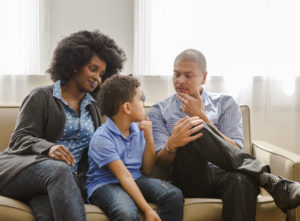 In the wake of terror attacks and acts of violence around the world—such as the white supremacy demonstrations in Charlottesville, Virginia, that led a man to plough a vehicle into a crowd of counter-protesters, killing a woman—many parents may be unsure how to talk to their children about the news.
The American Academy of Pediatrics offers parents several tips. The discussion, the organization says, should begin by asking children what they already know. Parents should offer encouragement and reassurance, maintain a consistent routine, and shield young children from graphic images of violence. They should also monitor children for signs of depression and trauma, such as sleep, behavioral issues, and changes in eating habits.
Many want to talk with their children about race in a way that raises a child’s consciousness without being frightening. Most experts emphasize the need to be honest in an age-appropriate way. Parents must also explore their own feelings about race and racism before attempting to educate their children. Like other challenging conversations, ignoring the issue won’t make it go away. Rather than having one conversation, parents should begin as early as possible, have frequent discussions, and maintain open lines of communication.
The Psychology of the Eclipse: ‘You Just Feel Connected With Everybody’
[fat_widget_right]As excitement about Monday’s solar eclipse increases, some mental health experts say the eclipse can foster a connection. Experiencing something out of the ordinary can break down the usual barriers to connection, fostering a sense of unity and closeness—even with strangers.
Some Companies Want You to Take a Mental Health Day
A mental health day can be as important for good health and job satisfaction as sick leave. Yet, many workers are reluctant to tell their managers they need one. Some companies now encourage employees to take mental health days, citing increases in productivity and job satisfaction among employees with good mental health.
What’s Worse Than Being Unemployed? A Bad Job, Say Researchers
Many workers think long-term unemployment is the most stressful job experience they can have. According to new research, however, staying in a bad job might be worse. Researchers followed people who were unemployed during 2009 and 2010. Those who took “poor quality work†had higher stress levels than those who remained jobless.
Rand Study Recommends Improvements to Mental Health Care for Service Members
A new Rand Corporation study suggests lack of access to quality mental health care remains an issue for current and former soldiers. The study, which surveyed 520 providers, found less than half were able to see people with depression or posttraumatic stress (PTSD) weekly. Instead, they saw these people biweekly or less. This suggests soldiers may not get the consistent care they need to see improvements in mental health.
How White Supremacists Use Victimhood to Recruit
Research on white supremacist groups suggest their members see themselves—not the minority groups they target—as the real victims. They believe white people are the real targets for systemic oppression. In other words, they are prevented from expressing their “white pride,†their victimization erodes self-esteem, and the ongoing victimization of white groups is part of a plan to eliminate the white “race.â€
Now, Manage Your Mental Health and Chronic Conditions With an App
A new smartphone app promises to help middle-age and older adults manage their physical and mental health. The app, which is designed to meet the average technical abilities of older adults, involves three months of training in 10 sessions. The sessions cover health topics such as stress, medication and substance abuse, and the role of mental health in physical health.
 Being the parent of a child with a disability carries with it unique responsibilities, stressors, and rewards. It requires an extra dose of emotional resilience, perseverance, and resourcefulness. Powered by the same (or an even stronger) drive to nurture, protect, and empower their children as parents of kids perceived as normatively abled, parents of children with physical, intellectual, or developmental disabilities such as autism spectrum issues, spina bifida, or Down syndrome often face profound social and systemic prejudices. These “invisible†obstacles can be all the more agonizing when they are unacknowledged.
The Global Partnership for Education notes “children with disabilities remain the most excluded group [when it comes to educational opportunities], discriminated not only because of their disability but also because of lack of understanding and knowledge about its causes, implications, and stigma.†Even parents seeking to support their child with attention-deficit hyperactivity (ADHD) or physical conditions such as blindness or mobility issues can find themselves overwhelmed by the challenges of getting proper testing or access to a restroom or play space. When a child’s disability dovetails with preexisting societal or cultural prejudices related to gender, race, religious affiliation, or sexual identity, the challenges intensify, with an impact on parents that peers, colleagues, and others may not fully comprehend or appreciate.
[fat_widget_right]
As parents of children with disabilities proactively seek information and support and advocate for their children, they may discover frustrating limitations that reinforce a sense of isolation or exclusion and stoke emotions such as grief or anger. As a result of these and other factors, parents seeking support for their special needs children have special needs of their own when it comes to self-care.
Here are some key ways parents of children with disabilities can make self-care a priority:
1. Get support.
- Community support: Find others in your community with whom you feel accepted, celebrated, upheld, and safe. This could mean taking a class that interests you, strengthening your commitment to your faith community, or joining a book club.
- Professional support: Find an individual therapist or coach who can help you work through specific challenges and issues; soothe, manage, and reduce your fears and anxieties; and provide a space for you to grieve, rejoice, or process anger. If you struggle with speaking up for yourself or your child, you may want to focus some of your energies on learning how to be a more vocal and effective advocate.
- Peer mentoring/group support: Look for support groups, in person or online, where you can interface with others who are struggling with similar issues, or whose children are also facing challenges. This can serve multiple functions: it can help you feel supported and connected, it can provide relief as you share your difficulties with others who understand and relate to what you’re going through, and it can help you access important information and resources related to ways others have dealt with and approached similar situations.
Parents of children with disabilities face added pressures and need to acknowledge their limitations and find ways to slow down, let go, and relax control, giving their nervous systems a much-needed rest.
2. Find time to do the things you love.
As the parent of a child with a disability, you likely expend tremendous energy trying to make sure your child has the privileges and opportunities available to other children. When your child’s disability is long-term or involves being vigilant about basic safety needs, the strain can take a toll on your well-being unless you are disciplined about your self-care.
Finding ways to recharge, relax, and experience pleasure in your life is essential. The more balanced, relaxed, and recharged you are, the more patient, caring, and proactive you can be as your child’s protector, nurturer, and advocate. Start with making a list of “Fun Things I Would Do If I Had Time.†You might include activities like going for a bike ride, going to dinner with a friend or partner, painting or journaling, watching a movie, getting a massage, taking a walk outdoors, or going to the gym.
3. Seek and take advantage of respite care services in your city or state.
Some parents of children with disabilities avoid taking advantage of respite care services for their children or feel pressured to “do it all on their own.†They may be anxious about their children not receiving proper or attuned care, or they may feel guilty about needing a break. In fact, allowing yourself and your child to be supported by trained caregivers can offer both of you a positive “time out†from each other, allowing you to hit the figurative reset button. It can help you replenish your emotional resources so you can be stronger and more resilient in your parenting.
4. Meditate.
Meditation can help you slow down, be in the present moment, and let go of trying to fix or control external circumstances, even if only for 5 to 10 minutes a day. There are multiple phone apps available with free or low-fee audio recordings of brief, guided meditations you can do between tasks, while you’re waiting in line at the store, or when you’re taking a bathroom break. These apps have reminders that encourage you to take a few moments out of your day and check in with yourself.
Everyone needs practice letting go of endlessly regenerating thoughts, beliefs, fear-based stories, and regrets in the interest of simply accepting life as it is right now. Parents of children with disabilities face added pressures and need to acknowledge their limitations and find ways to slow down, let go, and relax control, giving their nervous systems a much-needed rest.
In addition to experiencing high levels of chronic stress, anxiety, and depression, parents of children with disabilities are faced with the heartbreaking limitations that exist in a world where not all children are included, considered, and prioritized in the same ways. As you work to confront and overcome these limitations and to secure services, treatments, opportunities, and access for your child that will help them develop and thrive, it’s easy to ignore or minimize your needs. Far from being a self-indulgent luxury, your self-care is a critical necessity.
Reference:
- Children with disabilities. (2017). Retrieved from http://www.globalpartnership.org/focus-areas/children-with-disabilities
- Self-care for parents and caregivers of children with a disability. (2017). Retrieved from https://www.kidcentraltn.com/article/self-care-for-parents-and-caregivers-of-children-with-a-disability