 Would you work a highly demanding, fast-paced job Monday through Friday from 7 a.m. to 3 p.m., take a small break, then work another job that requires intense focus both mentally and physically from 5 p.m. to 10 p.m.? Let’s say the pay sucked. Advancement was dependent on performance, and your coworkers were sometimes enemies. In addition, you had only 20 minutes to eat lunch in a loud, chaotic environment.
Sound appealing? I didn’t think so. But yet we ask our children to do it. Welcome to high school 2015.
Today’s kids are being asked—required, more like—to work in this kind of system. The amount of academic work in a given day, added onto extracurricular activities and homework, has reached an all-time back-breaking load.
[fat_widget_right]
There is a general understanding with kids and parents today: The academic world has changed. When many parents today were in high school, they had homework, yes; but they also had part-time jobs, friends, went to social events, and basically had a life. An academically advanced high school student now has no time for going to the mall with friends, no time for a part-time job (unless he or she gives up a sport or other pursuit), and no time for rest and reflection. Add in social media with its false sense of connection and, simply put, teens are struggling with stress, anxiety, and depression at much higher rates than was experienced 30 years ago. The intended effect of helping our children compete globally by increasing curricula has indeed come at a cost.
Homework, hard work, and perseverance are all good things. Teens should learn to handle tough stuff. But should they learn it while being prescribed antianxiety medication to quell rising fear about not getting into the “right†college? Should they learn it while being prescribed antidepressants because they can’t imagine a happy future given their overwhelmed present?
We as parents and academia are missing the point: We cannot continue to ask teens to handle all of this without giving them the tools to handle it.
Here are eight ways to help your teen:
- Ask about school pressures and then listen with the intention of understanding, not responding and judging. Ask your teen, “What’s it like to be you?â€
- Identify what is causing the most stress in your teen’s life. Is it a specific class, a certain friend, pressure from you? Your teen will answer honestly only if you are listening without judgment.
- Check yourself. How are you handling stress in your life? If the answer is not very well, then this is a great time to learn better stress management for you and your teen. He or she is watching you.
- Teach your teen time management and being focused without distraction.
- Teach relaxation techniques such as deep breathing, stretching, walking, playing with the dog, drawing, or meditation.
- Communicate with a teacher, the school, or the coach (make sure your teen knows you are doing this) to gain further insight into what’s happening. Sometimes this small act can make a huge impact.
- Reduce pressure by discussing your expectations of your teen. Most teens think their parents want them to go to Harvard, but most parents just want their kids to be happy. Talk about it. Are you part of the problem?
- Spend time with your teen doing fun things!
The goal of parenting and educating is to raise responsible and resilient kids. In today’s academic environment, mixed with social changes and pressure, childhood is becoming a stressful phase of life. It is our obligation to empower and teach our children both academically and emotionally how to navigate the challenges.
Reference:
Increased levels of anxiety and depression as teenage experience changes over time. (2012, March 14). Nuffield Foundation. Retrieved from http://www.nuffieldfoundation.org/news/increased-levels-anxiety-and-depression-teenage-experience-changes-over-time
 Circle, circle, dot, dot … if you know how the “vaccination†ends, then you’re just like millions of other people who grew up fearing the dreaded “cooties.” Cooties may not be real, but the emotions that cause children to manufacture invisible bugs certainly are. A small study published in the Journal of Cognitive Neuroscience has uncovered the brain signals associated with cooties.
Does Gender Matter for How Kids Assess Peers?
Researchers began by asking 93 children questions about their attitudes toward peers of the same and opposite sex. They also used functional MRI scans to monitor the brains of 52 participants as they viewed photos of other children.
Researchers found that, in children ages 4 to 7, the amygdala sends more signals in response to photos of opposite-sex peers. These children also ranked same-sex peers more positively, ascribing more positive adjectives even to same-sex children they’d never seen or met. In children nearing puberty (ages 10 to 12), though, researchers noted no gender-based differences in their reaction to peers.
[fat_widget_right]
How Young Children Police Gender
The amygdala plays a number of important roles, but brain research suggests that one of its functions is to react to new things in the environment. In this way, it serves as a sort of “threat detector.†In very young children, opposite-sex peers may be perceived as a threat. Thus, the behavior of the amygdala may help explain the cooties phenomenon that tends to take hold of very young kids.
This doesn’t mean that the brain causes kids to believe in cooties or that cooties are an inevitable part of childhood. But it does suggest that kids may view opposite-sex peers as greater threats, especially in early childhood. As children develop more opposite-sex friendships and become less rigid in their attitudes toward gender, the need for cooties “shots†and the perception of opposite-sex peers as threatening may wane.
This aligns neatly with previous research into gender development in kids. When children first become aware of sex and gender, they may not realize that it’s permanent. Thus, they associate stereotypically gendered behavior—makeup and dresses for girls, football and swords for boys—with biological sex. Some children may not understand that a boy can act like a stereotypical girl but still remain male. This might help explain why kids perceive opposite-sex peers as a threat, and why they feel compelled to “inoculate†themselves.
References:
- Amygdala encodes ‘cooties’ and ‘crushes’ in the developing brain. (2015, April 9). Retrieved from http://www.sciencedaily.com/releases/2015/04/150409120303.htm
- Martin, C. L., and Ruble, D. N. (2013). Patterns of gender development. Annual Review of Psychology, (61), 353-381. doi:10.1146/annurev.psych.093008.100511
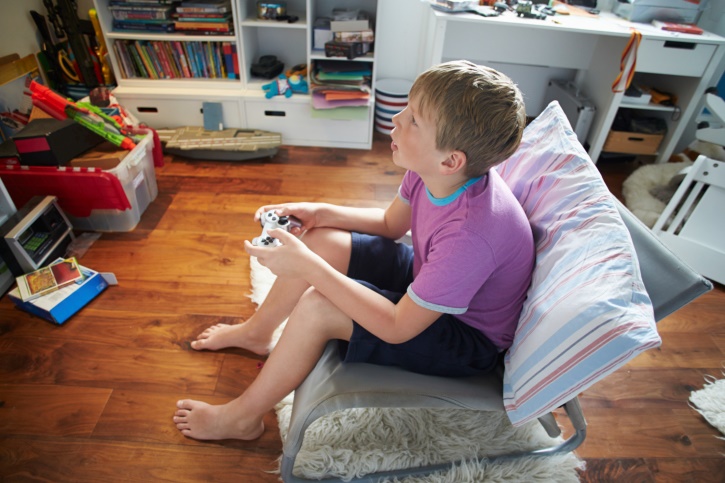 Violence in video games has long concerned parents, who worry about the influence on impressionable minds of controversial games such as Grand Theft Auto. In many games, players score higher when they break the (virtual) law, behave violently toward others, and maximize the pain inflicted on other players.
So pervasive is the idea that violent video games cause violent behavior that a 2010 survey found that 49% of adults believe that violent games can inspire some people to commit real-life atrocities. A study published in Psychology of Popular Media Culture undermines this claim, suggesting that violent video games do not increase violent behavior. Instead, the researchers argue, duration of play is what matters.
Violent Video Games Might Not Cause Violent Behavior
Researchers interviewed about 200 10- and 11-year-olds about their video game-playing habits. They also asked the children’s teachers about their classroom behavior, problem-solving skills, and academic engagement. Two-thirds of the children reported playing video games each day, with boys almost twice as likely as girls to engage in daily game playing. About 10% of children reported playing games for more than three hours each day.
[fat_widget_child_counselor_right]
Children who played video games for less than an hour each day showed lower rates of aggression than children who did not play at all—even when the games in question were violent ones. Children who played for longer than three hours each day, however, had higher levels of aggression and lower levels of academic engagement. The study’s authors argue that their results show that daily video game play is not linked to an increase in aggression. Instead, prolonged play may increase aggression, though the study did not illuminate why this might be.
The Video Game Debate Rages On
Researchers in the study were careful to point out that new technologies often inspire a moral panic. At various times, parents have worried about the effects of violent movies and television, aggressive music lyrics, and even radio shows. With each technological advancement, though, there hasn’t been a sudden new wave of crime.
So, the jury is still out on the effects of video games. Research consistently finds benefits such as an increase in spatial reasoning skills, but some studies have uncovered a correlation between violent games and violent behavior. A 2014 study found that kids ages 8 to 17 who played many violent video games displayed an increase in violent behavior, even three years later. Another study found an increase in violence among teens who played violent video games.
The way a video game affects an individual child may depend on a number of factors, including parental involvement, the child’s personality, how much time the child spends on games, and similar components of a child’s environment.
References:
- 22 charts and graphs on video games and youth violence. (n.d.). Retrieved from http://videogames.procon.org/view.resource.php?resourceID=003627
- Bingham, J. (2015, April 1). Study finds no evidence violent video games make children aggressive. Retrieved from http://www.telegraph.co.uk/news/science/11507576/Study-finds-no-evidence-violent-video-games-make-children-aggressive.html
- Rettner, R. (2014, March 24). Do violent games boost aggression? Study adds fire to debate. Retrieved from http://www.livescience.com/44325-video-games-aggression-debate.html
- Violent video games make teenagers more aggressive, study finds. (2012, October 8). Retrieved from http://www.telegraph.co.uk/technology/video-games/9593188/Violent-video-games-make-teenagers-more-aggressive-study-finds.html
 The continuum of exposure to domestic violence ranges from chronic arguing and yelling to controlling behaviors, threats, and intimidation, to physical threats, threats of suicide or murder, to threats involving weapons, to serious injuries and fatal assaults. While domestic violence takes many forms, there is always a destructive undercurrent of power and control, with offenders commonly and compulsively grasping for in a surrogate what is lacking within themselves: control.
Any pattern of behaviors in intimate relationships marked by coercive control can be a signal or foreshadowing of abuses. And when children are involved, they are always significantly affected, remaining at risk not only of direct victimization but long-term effects stemming from exposure itself.
The Centers for Disease Control and Prevention have reported that in homes where violence between partners occurs, there is a 45% to 60% chance of co-occurring child abuse, a rate 15 times higher than the average. Even when they are not physically attacked, children witness 68% to 80% of domestic assaults.
With April marking National Child Abuse Prevention Month, these numbers are a sobering reminder of the toll a violent environment takes on kids.
[fat_widget_right]
The circumstances of domestic violence leave caregivers, emotionally and otherwise, unavailable and unresponsive, activating a primal fear in kids beneath and between a host of other raw, complex, and unresolved emotions. The pioneering psychiatrist and researcher Daniel Siegel has written, “The mind develops as the brain responds to ongoing experience. … The pattern of firing of neurons is what gives rise to attention, emotion, and memory.†And what fires together—in a combination of overtly violent exposures and the child’s underlying neurobiological experience—wires together.
The unavoidable attention given, emotions felt, and memories imprinted onto a child’s brain in moments of stress become inextricably linked together and forever taint—or else filter—feelings, beliefs, and choices in relationships and all of life. These children are not merely innocent bystanders. They are victims.
We must better understand the psychological aftermath, which can include fear of harm or abandonment, excessive worry, sadness, or guilt, inability to experience empathy or guilt, habitual lying, low frustration tolerance, emotional distancing, poor judgment, shame about the past, and fear about the future.
The unavoidable attention given, emotions felt, and memories imprinted onto a child’s brain in moments of stress become inextricably linked together and forever taint—or else filter—feelings, beliefs, and choices in relationships and all of life. These children are not merely innocent bystanders. They are victims.
Although they may be unintended victims, living within a climate of chronic emotional volatility and near acute incidents of aggression has a way of searing a neurophysiological muddle—painful and isolating emotions existing alongside ongoing and frequently unmet needs for affection and attachment.
Parents who are themselves batterers are more irritable, less involved in child rearing, more likely to use severe and erratic physical punishment, and less able to distinguish their children’s needs from their own. Both parents, regardless of culpability, risk poor emotional attunement with their children and, consequently, a decreased capacity to recognize stress and danger, protective factors which might increase a child’s resiliency.
Compared with other kids, those who have witnessed domestic violence experience far greater incidence of insomnia, bed wetting, verbal, motor, and cognitive issues, learning difficulties, self-harm, aggressive and antisocial behaviors, depression and anxiety, as well as, most troubling, adult domestic violence, with boys often becoming offenders, victims, or both, and girls more likely to become victims (Brown and Bzostek, 2003).
A growing body of literature has revealed that children who have been exposed to domestic violence are more likely than their peers to experience a wide range of difficulties, from anger, oppositional behavior, and disobedience to fear, low self-worth, and withdrawal to poor sibling, peer, and social relationships. Studies have found evidence of much higher rates of pro-violence attitudes, rigid stereotypical gender beliefs involving male privilege, animal abuse, bullying, assault, property destruction, and substance abuse.
A study by Kilpatrick, Litt, and Williams (1997) concluded that witnessing domestic violence is an experience in and of itself sufficiently intense to precipitate posttraumatic stress in children. The ongoing Adverse Childhood Experiences (ACE) Study led by the CDC has classified exposure to domestic violence as one of several adverse childhood experiences contributing to poor quality of life, premature death, as well as risk factors for many of the most common causes of death in the United States.
In addition to the exposure itself, additional factors influence impact, including the nature of the violence, age of the child, elapsed time since exposure, the child’s gender, and presence of physical or sexual abuse.
Children who witness fewer incidents of violence and experience positive interactions between caregivers may be, for instance, less detrimentally impacted than those exposed to frequent and extreme aggression. Younger children exhibit more concerning levels of psychological distress than older, more developmentally mature, children. Children are typically highly anxious and fearful immediately after witnessing an incident of domestic violence and less observably so as time passes, but of course this should not be assumed to indicate an absence of anxiety or fear. Boys exhibit more externalizing behavior problems such as aggression and acting out, while girls exhibit more internalizing behavior problems such as withdrawal and depression.
It nearly goes without saying that children who are exposed to domestic violence and are also physically or sexually abused are at a higher risk for emotional and psychological problems than those who witness such violence and are not physically or sexually abused.
Thank goodness there are protective factors that reduce the worst impacts, including a child’s literacy and overall intelligence, the extent to which the child is outgoing and socially competent, and whether the child has safe and supportive relationships with at least one influential adult (Carlson, 2000; Edleson, 2011; Hughes, et al., 2001). Those surrounding the most difficult situations have opportunity to inject resiliency through academic, emotional, and social support. We must all grapple with whether there are ways we might more effectively intervene within our families, schools, and communities to instigate help and healing.
References:
- Brown, B., and Bzostek, S. (2003, August). Violence in the lives of children. Crosscurrents, 1. Bethesda, MD: Child Trends. Retrieved from http://www.childtrends.org/wp-content/uploads/2003/01/2003-15ViolenceChildren.pdf
- Carlson, B.E. (2000). Children exposed to intimate partner violence: Research findings and implications for intervention. Trauma, Violence, and Abuse, 1 (4), 321-342.
- Edleson, J. (2011). Emerging responses to children exposed to domestic violence. Harrisburg, PA: VAWnet, a project of the National Resource Center on Domestic Violence/Pennsylvania Coalition Against Domestic Violence. Retrieved from http://www.vawnet.org/Assoc_Files_VAWnet/AR_ChildrensExposure.pdf
- Hughes, H. M., Graham-Bermann, S. A., and Gruber, G. (2001). Resilience in children exposed to domestic violence. In S. A. Graham-Bermann (Ed.). Domestic violence in the lives of children (pp. 67-90). Washington, DC: American Psychological Association.
- Kilpatrick, K.L., Litt, M., and Williams, L.M. (1997). Post-traumatic stress disorder in child witness to domestic violence. American Journal of Orthopsychiatry, 67 (4), 639-644.
- Siegel, D., and Hartzell, M. (2004). Parenting from the inside out: How a deeper self-understanding can help you raise children who thrive. New York, NY: Tarcher.
 These days, most of us live with some degree of stress. For kids, between their homework, friends, after-school activities, sports, and worries about getting into college, it’s a whole new era of anxiety. It’s no wonder, then, that the National Institute of Mental Health states that the prevalence of diagnosed anxiety disorders among 13- to 18-year-olds is 25.1%.
If you’re a parent living with an anxious child, you know how tiring and frustrating it can be—for both of you. It’s not easy to live with the kid who’s so stressed out by homework assignments that he ends up throwing the book against the wall, or tearing the papers in frustration, or working until midnight to get it perfect. Or the teen who gets a migraine every time she has to go to school or start a new activity. With a little insight into how they feel, why they act the way they do, and what we can do to help, the job of parenting anxious kids gets a little easier.
How They Feel
Anxiety doesn’t always show up as worry. Sometimes it looks like anger, irritability, sadness, or fear. After a full day at school worrying and obsessing, kids often come home exhausted—and immediately act out.
[fat_widget_child_counselor_right]
Imagine spending an entire day in fight-or-flight mode. That’s when the brain perceives a danger and thus produces adrenaline and stress hormones to prepare for a quick getaway, like a caveman running from a tiger. This causes physical sensations such as dizziness, faster heartbeat, rapid breathing, and sweaty palms. In this state, it’s tough to think clearly or make good, informed decisions. Even the most mature of us might lash out after all that.
Then again, sometimes these struggling kids look like stereotypical “normal†kids—at least at school, where they may crave the approval of the teachers. Keeping very contained gives them a sense of control over their environment, helping to minimize the risk of what they see as danger. But when they come home, everything changes. In the safety of their own room, they might have panic attacks, refuse to follow rules, or get violent.
What This Is NOT
If you lived with this level of stress every day, you’d probably come home and explode, too—and maybe you do. Kids tend to store up their stress and take it out on those they can trust: their parents and family members. Sometimes your home might feel like a battlefield.
What’s important to know is that this is not manipulation. Your child doesn’t want to be this way. It’s easy to think that he or she is acting out in order to get attention, or that if the child were less spoiled, less spiteful, or less rebellious, he or she would stop being “bratty.†But in reality, no one, especially a sensitive kid, would choose to constantly be in trouble.
Anxious children may lose it for a handful of reasons:
- Lack of self-control
- Storing up their frustration until it explodes
- Guilt
- Low self-esteem
- Unconsciously testing parents
How We Can Help
Anxious children generally lack two vital skills for reacting with calm and rationality. The first is regulation, or the ability to calm oneself. The second is self-soothing tools, or alternatives to turn to when their emotional temperature spikes.
The first way parents can help kids regulate is by modeling regulation. The more calm you are, the more they’ll learn from that ability. Research shows that humans’ heart rates attune with the people that they feel close to. So if someone holds us in a loving way, our heartbeats will often increase or decrease to match theirs.
Therefore, one way to help them relax is to reverse-match our activity to theirs. In other words, as they go up, we go down. If their bodies become jerky or uncontrolled, we keep our movements fluid and slow. As their volumes raise, we modulate our voices even more. And if they become angry or even nasty, we remain loving and firm.
Self-soothing tools fall into two main catagories: physical and mental. (These tools require some practice, and only their basics are described here.) Physical tools include breathing and stretching. Check out Dawn Huebner’s book, What To Do When You Worry Too Much, for great examples of how to stretch. Breathing exercises and body movement exercises help reset the inner thermostat. Exercise also helps to calm the body, so throwing a ball, jumping on a trampoline, or dancing around the living room are great ideas for breaks.
Mental self-soothing is achieved by thinking calming thoughts. This can be done with words, like a mantra that replaces the anxious thought. For instance, when a child says, “I can’t do it,†or, “I always screw up,†you can help him or her practice saying, “I just need to try my best.†Ask the child to come up with some alternate statements that make him or her feel better, and practice together.
In addition to words, images can also be self-soothing. Where is your child’s favorite place? Could he or she create an imaginary haven? When feeling stressed, have your child conjure up this “safe space†in his or her mind, whether it’s a sandy beach, flower garden, or private room. Breathing slowly and thinking about a quiet and peaceful place calms the body and soothes the mind.
The Long-Term Upside
These are sensitive kids; that’s why they feel things so deeply. So it’s helpful to remember the flipside of that sensitivity. These are children who tend to be insightful, empathetic, tuned in, passionate, dramatic, and thoughtful. They often thrive in creative pursuits and go on to amazing careers in helping professions. The traits that are so challenging to them now will serve them well as adults. For now, the best we can do is teach them to channel their sensitivity into self-care.
Reference:
Any anxiety disorder among children. (2015). National Institute of Mental Health. Retrieved from http://www.nimh.nih.gov/health/statistics/prevalence/any-anxiety-disorder-among-children.shtml
 Parenting is difficult enough when you feel fantastic, but when you’re struggling with depression, it can seem downright impossible.
It need not be so, though. Experiencing depression doesn’t mean you can’t be an incredible, loving, smart, and effective parent. In fact, in some ways it can make you a better parent. Because of your depression, you may be extra sensitive to your children’s moods and needs. This can be a great thing!
If you’re a parent with depression, here are 10 things worth considering:
- Sometimes “good enough†is perfectly fine. You can’t always give 100%. Some days will be harder than others. You don’t have to be a super-parent every hour of every day.
- Find your tribe. Seek out a group of people who are aware of your condition and can help you through it. This can be an online group, but an in-person group is even better. These are the people you can call when the baby is inconsolable and you’re angry. This is the group that can remind you that your feelings are normal or tell you that you may be overreacting.
- [fat_widget_right]Find a psychiatrist. If you’re pregnant or nursing, you need an expert who understands how antidepressants may be transmitted and how they could affect your child. Don’t go off your medication without talking to a physician. Some antidepressants are safer than others.
- Beware of postpartum depression. Educate yourself on the difference between the baby blues and full-blown postpartum depression or psychosis. If you see signs of postpartum depression or psychosis, contact your doctor immediately. If you have thoughts about hurting your child, go to the nearest emergency room.
- Forgive yourself and your children. Everyone makes mistakes. Be gentle with yourself and the people around you. Depression often masks as agitation, irritability, or anger.
- You are not your condition. Your depression isn’t the only thing about you. It isn’t even the most important thing. You are a parent and may be any number of other things: a partner, a lover, a friend, an employee, a teammate, etc.
- Don’t hesitate to reach out. Ask for help from your spouse or partner, friends, an extended family member, someone from your church or congregation, a family doctor, or a mental health professional. You may need a few minutes to talk, a medication change, or someone to take your kids for a few hours so you can seek out a therapist.
- Lighten things up. Take a break from the news, which tends to focus on heavy and upsetting things. Listen to, read, and watch things that make you feel good, are funny, and don’t stress you out.
- Live fearlessly. Don’t let depression stop you from doing things or meeting people. That can be easier said than done, but get out there, live large, and experience life with your children.
- Let your children in. Depending on their ages, you may want to tell your children different things about your condition. The very youngest of children don’t need to be told anything. Around the age of 4, your mood or visits to your therapist may be noticed. You might explain that mommy or daddy sometimes gets really sad and needs help. You can relate it to when your child gets sad and you hold or comfort him or her. Older children may experience your low moods and take them personally. Here, you can use the word depression. Make sure your child knows it’s not his or her fault, and that you are taking care of yourself. If you have a hospitalization, you may choose to tell your child why you’re gone and how it will help. When your children are in their teens, use your depression as a way of explaining the condition and what to watch for. Encourage them to be open if they feel depressed or hopeless. Let them know that if they want a counselor, you will find them one.
No one expects you (or anyone else) to be perfect or “on†continually. Remember, millions of people around the world are experiencing, or have experienced, depression. You’re not alone.
Of course you are concerned! Anytime we see a behavior like that in a child and she or he is unable or unwilling to explain the change, we fear the worst. Your primary responsibility is to protect your daughter. Your mother and father-in-law may get offended and angry, but that can’t be a reason to ignore your fears.
[fat_widget_right]
Since you are working from intuition, it may be worth looking into having an evaluation done with a good, reputable child therapist to explore if anything has happened with your daughter. It is true that you don’t want to plant ideas in her head, but you also want to find out if something scary or inappropriate has happened and help her process it. A good therapist can do that without planting ideas. It may be that your father-in-law has been inappropriate with her. If so, you will want to connect her with professional supports as soon as possible.
Your mother and father-in-law may get offended and angry, but that can’t be a reason to ignore your fears.
It also might be that she had a bad dream about him and is now scared of him. It may be that he was stern with her and she got upset and doesn’t want to engage with him. Without knowing more, it is hard to know how to proceed. I don’t want to diminish your concerns—until you know for certain that he is a safe person for her, absolutely continue to make sure that you supervise their interactions.
How receptive do you think your mother and father-in-law would be to a conversation that explored whether they had noticed a change in the way your daughter is reacting to him? If you approach it from a place of curiosity rather than accusation, you may be able to learn more. If nothing untoward has happened, they may be concerned and confused as well.
That said, if you want to wait to address any of this with them until you have more information, you can certainly do so. You know your family dynamics and should proceed in the safest way possible for everyone, particularly your daughter.
Best of luck,
Erika
 The foster care system has a disproportionate number of LGBT youth in its care—the result of so many being abandoned by their parents. This often happens at a time when children most need support and guidance, during their preteens and teens when they are figuring out who they will be as adults. It is the ultimate rejection, and the wounds can last a lifetime.
Regardless of whether the parent-child relationship was good or bad before the child came out, being rejected by those who are supposed to love and protect you unconditionally is devastating. Severe damage is done to self-esteem, trust, security, future relationships, and one’s view of the world.
What would cause parents to legally and morally divest themselves of their responsibilities and emotional ties to their children? The answers lie not in the children, but in society and the parents themselves.
[fat_widget_right]
Mothers are often blamed for any perceived flaws in their children. Many men feel it is a mark against their masculinity to produce a gay child. Other parents feel shame due to religious teachings. Still others are upset that their children don’t fit in with socially prescribed gender roles. They seem to forget that gender roles, clothing styles, and what is perceived as masculine or feminine have changed many times throughout history. It is a misguided sense of shame, a shame so extreme at times that it can be relieved only by disconnecting and distancing from the child.
As a society, we encourage shame in both parents and children by denying LGBT people basic civil rights. This makes a powerful statement that they are somehow “less than†and therefore their neglect is more acceptable. This system has been used against minorities throughout time. In most minority groups, however, parents and children share the minority status and therefore parents will protect and guide their children. In contrast, most LGBT kids have heterosexual, cisgendered parents, making the kids minorities within their own families.
When parents feel shamed by their gay, lesbian, bisexual, and transgender kids, they typically blame the child instead of looking at their own feelings. They resolve their discomfort by getting rid of what they perceive as the source—the child. Ironically, the parents end up placing the burden of their child’s care on the very society that created the situation. These now-homeless youth are vulnerable to abuse, drug addiction, and prostitution. They have committed no crime, but are treated worse than criminals. The emotional damage is just as painful.
Even those people who come out to their families as adults often face rejection. Many LGBT people create their own substitute families from close friends, and they may have spouses and their own children. They may be content and feel that they have moved beyond the parental rejection to a place where they are valued and loved. This is perfectly possible. Nevertheless, the love and caring of a mother or father is unique, and rejection from them always leaves a scar.
How do we, as a society, stop this abuse? As with all complex issues, there is no one solution. Change has to come through many channels. The LGBT community and its allies need to continue to work for full civil rights. Parents need more education to learn that there is nothing wrong with them or their children. Schools need to expand their education about the LGBT community and their anti-bullying practices. As a society, we have to see the abandonment of LGBT youth as reprehensible.
We need to believe that ALL children are worthy of love and nurturing, from their families and from their communities.
 The absence of fathers in the lives of their children is not uncommon. David Blankenhorn (1995), author of Fatherless America, wrote, “The United States is becoming an increasingly fatherless society. A generation ago, an American child could reasonably expect to grow up with his father. Today, an American child can reasonably expect not to.â€
As this phenomenon continued to spiral, the 1990s was a time ripe for hundreds of studies of this trend, which has continued. According to a 2011 U.S. Census Bureau study, 24 million children—about one out of every three—do not live with their biological fathers.
The question as to whether absent can be equated with uninvolved has been posed repeatedly over decades by researchers such as Vicky Phares at the University of South Florida and Valarie King and Paul Amato at Pennsylvania State University. It cannot. And yet a number of studies have indicated that nonresident fathers overwhelmingly tend not to engage in frequent contact with their children.
[fat_widget_right]
A preponderance of studies identify at least nine factors influencing a child’s well-being when they do not live with their father—frequency of contact, age and gender of the child, the father’s economic contribution to the child’s life, the quality of the father’s relationship with the child’s mother, socioeconomic variables, education, the quality of the father’s relationship with the child, and the father’s parenting style. Five additional factors I find to be widely neglected are the presence of an alternative, or surrogate, father figure such as a stepfather, variables related to family history, length of time the father has been absent from the child’s home, and the number and presence of siblings.
Back in the ’90s, Phares found signs of increased self-worth in younger children and boys of any age when visits with fathers were frequent and regular, whereas older children and girls of any age showed signs of lower self-worth when visits were more frequent. In her studies, King (1994a) found little support for the hypothesis that father visitation in and of itself has beneficial effects for child well-being, regardless of age or gender, and expressed concern that in circumstances where there exists abuses in the father-child relationship, visitation may do more harm than good.
Rather, King (1994b) pointed to numerous studies that provided evidence that the payment of child support has beneficial effects on educational achievement as well as behavioral adjustment. Several studies have found a stronger influence from economic contributions than any other factor.
Some have studied the quality of the parental relationship in moderating child behavior. One study hypothesized that a child’s contact with his or her nonresident father would decrease the child’s behavior problems when conflict between the father and mother was low, but increase behavior problems when the interparental conflict was high. Fascinatingly, although the hypothesis was supported among boys from divorced families, no support was found among girls (Amato and Rezac, 1994).
Other studies, however, resulted in positive associations of the quality of the parental relationship and child well-being with both boys and girls. For instance, Amato and Gilbreth (1999) noted “several studies have shown that contact with nonresident fathers following divorce is associated with positive outcomes among children when parents have a cooperative relationship but is associated with negative outcomes when parents have a conflicted relationship.â€
Upon examining 63 studies of nonresident fathers and their children’s well-being, Amato and Gilbreth (1999) offered this critique: “Without knowing about the behaviors that transpire between fathers and children during visits, how children feel about these visits, or the context in which these visits occur, it is difficult to make predictions about the effects of contact on specific child outcomes.â€
They asserted that healthy father-child relationships enhance resilience: “When children feel loved and cared for by parents, their sense of emotional security is strengthened. Emotional security, in turn, helps children cope with stress and makes them less vulnerable to anxiety and depression.â€
Many researchers hypothesized that not only the quality of the relationship but the father’s parenting style held significant influence. Amato and Gilbreth (1999) suggested, “The combination of a high level of support with a moderately high level of noncoercive control reflects authoritative parenting—the parenting style most consistently associated with children’s positive development.â€
The extent to which authoritative parenting may positively influence child well-being was illustrated in a study by Young, Miller, Norton, and Hill (1995), who found that “fathers’ intrinsic support—reflected in trust, encouragement, and discussing problems—was positively correlated with children’s life satisfaction, but fathers’ extrinsic support—reflected in going out to dinner, buying things, and seeing movies together—was not related to children’s life satisfaction.â€
A substantial body of empirical research has examined implications of a father’s absence on a child’s well-being, indicating evidence to support the following conclusions: (1) contact with a child does not necessarily have positive benefits; (2) economic contributions to a child have positive benefits; (3) interparental cooperation has positive benefits; (4) positive emotional involvement with a child has positive benefits; and (5) an authoritative parenting style has positive benefits.
At the culminating of significant research back in the ’90s, a wonderful national organization took shape, committed to raising awareness of this issue and increasing the number of involved, responsible, and committed fathers in our country. That organization is the National Fatherhood Initiative, which has a host of wonderful resources available on its website.
References:
- Amato, P.R., and Gilbreth, J.G. (1999, August). Nonresident Fathers and Children’s Well-Being: A Meta-Analysis. Journal of Marriage and the Family, pp. 557-573.
- Amato, P.R., and Rezac, S. (1994). Contact with nonresident parents, interparental conflict, and children’s behavior. Journal of Family Issues, 15, pp. 191-207.
- Blankenhorn, D. (1995). Fatherless America: Confronting our most urgent societal problem. New York: Basic Books.
- King, V. (1994a, March). Nonresident Father Involvement and Child Well-Being: Can Dad’s Make A Difference? Journal of Family Issues, 15 (1), pp. 78-96.
- King, V. (1994b, November). Variation in the Consequences of Nonresident Father Involvement for Children’s Well-Being. Journal of Marriage and the Family, 56, pp. 963-972.
- Phares, V. (1993, December). Father Absence, Mother Love, and Other Family Issues That Need to Be Questioned: Comment on Silverstein (1993). Journal of Family Psychology, 7 (3), pp. 293-300.
- S. Census Bureau (March 2011). Children’s living arrangements and characteristics. Washington D.C.
- Young, M.H., Miller, B.C., Norton, M.C., and Hill. E.J. (1995). The effect of parental supportive behaviors on life satisfaction of adolescent offspring. Journal of Marriage and the Family, 57, pp. 813-822.
 Participation trophies, praising children for no apparent reason, and encouraging every child to feel special are relatively new developments in parenting culture, and most of us have heard members of older generations decry this parenting style. It turns out that debates about how much adoration children should receive constitute more than a generational divide, though. Children whose parents “overvalue†them are more likely to develop narcissism, according to a study published in Proceedings of the National Academy of Sciences.
The Perils of Overvaluing Children
The study—which co-author Brad Bushman says encouraged him to change his own parenting style—recruited 565 Dutch children and their parents. Child participants ranged in age from 7 to 11. Each parent completed a psychological survey every six months over the two-year duration of the study. The surveys asked parents to indicate how strongly they agreed with statements comparing their children to others. For example, a parent might be asked whether his or her child is a good example for others.
Researchers also explored how warmly parents behaved toward their children. Parents answered surveys asking them to indicate whether they took specific steps to make their children feel loved. Children completed similar surveys, indicating whether they agreed or disagreed with statements about their parents’ expressions of warmth and love.
[fat_widget_right]
Researchers then evaluated children’s self-esteem and narcissistic tendencies. Children with high self-esteem believed they were as good and deserving as others. Children with narcissistic tendencies, on the other hand, felt they were better and more special than others. Parents who ranked their children as “more special than other children†or who believed their children deserved more out of life than others had children who scored higher on narcissism measures. Children whose parents were warm and loving were more likely to have high self-esteem, but not narcissistic tendencies.
Researchers believe that parents may tell their children how special they are in an attempt to boost their self-esteem. But children believe what their parents tell them. When parents emphasize that a child is better or more deserving, the child may grow to believe it.
How Much Adoration of Children Is Too Much?
Avoiding excessive adoration doesn’t mean you have to give up praising your child or working to nurture his or her self-esteem. Instead, the study’s authors believe the key is to praise children without making them feel superior to others. This sense of superiority, they say, is what seems to lead to narcissism.
A simple change in parenting style can work wonders. Instead of telling your child he’s the best, smartest, or best-looking, try praising him for his actions and efforts. Compliment your child for working hard to help a friend, for committing extra time to her science project, or for diligently practicing piano. Previous research suggests that praising children for their efforts rather than their results or innate traits encourages them to work harder and be more persistent.
References:
- Avoid ‘overvaluing’ your child to prevent narcissism. (2015, March 11). Retrieved from http://www.medicalnewstoday.com/articles/290687.php
- Collins, N. (2013, February 12). Praise children’s effort, not their intelligence. Retrieved from http://www.telegraph.co.uk/education/educationnews/9862693/Praise-childrens-effort-not-their-intelligence.html
 It happened. You knew it would, but you didn’t think it would happen so quickly. In spite of any hope you had of slowing down the clock, you woke up one day to find that your child is not so childlike anymore. Suddenly, hormones are raging, romantic feelings are developing, and, of course, it doesn’t stop there. Before you know it, your teen may be entering the dating world.
For many, raising a teenager is the most intimidating chapter of parenthood. Discipline becomes increasingly difficult and may feel impossible to maintain. It’s tough to know when to set rules and when to give freedom, when to bend and when to stand firm, when to intervene and when to let live.
Communication is often one of the trickiest minefields to navigate. It’s a struggle to know what to say, when to say it, and how to say it. These conversations and decisions only become more challenging when the time comes for your teen to start dating. As we near the end of Teen Dating Violence Awareness Month, we want to remind parents how important it is to do their part to help prevent teen dating violence and promote healthy relationships.
If you are a parent to a blossoming teen, consider discussing these crucial aspects of relationships with your child before he or she enters into a relationship:
[fat_widget_relationships_right]
1. Define a Healthy Relationship
Be sure to teach your teen about the foundations of a healthy relationship. Explain that a healthy relationship comes from respect, mutual understanding, trust, honesty, communication, and support.
A relationship should consist of healthy boundaries that are established and respected by both partners equally. A good partner will accept you as you are, support your personal choices, and praise you for your achievements. A healthy relationship also allows both partners to maintain outside interests and friendships, and does not hinder the personal freedom of either partner.
2. Describe the Different Types of Abuse and Associated Warning Signs
There are many different types of abuse your teen should be aware of before entering into a relationship. These include physical, emotional, sexual, financial, and digital abuse, as well as stalking.
- Physical abuse occurs when a person uses physical force to harm another, but need not result in visible injuries to qualify. Hitting, kicking, pushing, biting, choking, and using weapons are all forms of physical abuse.
- Emotional abuse can take the form of insults, humiliation, degradation, manipulation, and intimidation. Emotional abuse can involve forced isolation, coercion, or use of fear or guilt to control or belittle.
- Sexual abuse involves any act that directly or indirectly impacts a person’s ability to control their own sexual activity and the conditions surrounding it. It can take many forms, including forced sexual activity, using other means of abuse to pressure one into an activity, and restricting access to condoms or birth control.
- Financial abuse is a form of emotional abuse that uses money or material items as a means of power and control over another person.
- Digital abuse is any form of emotional abuse using technology. A person may use social media, texting, or other technological means to intimidate, manipulate, harass, or bully someone.
- Stalking is persistent harassment, monitoring, following, or watching of another person. These behaviors can be difficult for teens to recognize as abuse, as they may sometimes see it as flattering or believe the other person is engaging in such behaviors only out of love.
If you’re feeling unsure about how to teach your teen to distinguish between a healthy and unhealthy relationship, or if you would like additional resources on the warning signs of relationship abuse or promoting positive relationships, consider visiting loveisrespect.org.
Loveisrespect is a nonprofit organization that works to educate young people about healthy relationships and create a culture free of abuse. Its website offers a wealth of information for teens and parents and provides 24/7 support via phone, text, or chat.
3. Explain the Differences between Lust, Infatuation, and Love
Distinguishing between infatuation and love can be difficult for many adults; imagine how complicated it can be for a teenager who is experiencing many new feelings for the first time. Take a moment to explain to your teen that attraction and desire are physiological responses that can occur separately from emotions.
Make sure he or she understands that infatuation is not the same as love. Infatuation may give us butterflies, goose bumps, and that “can’t eat, can’t sleep” type of feeling, but it isn’t the same as love. Love takes time to grow, whereas infatuation may happen almost instantly.
4. Talk Realistically about Sex
While it may be tempting to skip this conversation, it’s in everyone’s best interests to talk to your teen about sex. Ask yourself whether you want your teen to hear this information from you or someone else.
On its website, the Mayo Clinic suggests turning the topic into a discussion rather than a presentation. Be sure to get your teen’s point of view and let your teen hear all sides from you. Discuss the pros and cons of sex honestly. Talk about questions of ethics, values, and responsibilities associated with personal or religious beliefs.
5. Set Expectations and Boundaries
It is important to set expectations and boundaries you have now regarding your teen dating rather than defining them through confrontation later. Let your teen know any rules you may have, such as curfews, restrictions on who or how they date, who will pay for dates, and any other stipulations you might have. Give your teen an opportunity to contribute to the discussion, which can help foster trust.
6. Offer Your Support
Be sure to let your teen know you support him or her in the dating process. Tell your teen you can drop off or pick up him or her, lend a compassionate and supportive ear when necessary, or help acquire birth control if that fits with your parenting and personal philosophies. However you intend to support your teen, make sure he or she knows that you are available.
7. Use Gender-Inclusive Language that Remains Neutral to Sexual Orientation
When you open the discussion with your teen about relationships and sexuality, consider using gender-inclusive language that remains neutral to sexual orientation. For example, you might say something like, “Are you interested in finding a boyfriend or girlfriend?” rather than automatically assuming your teen has a preference for the opposite sex. Deliver this language with genuine openness and love.
By opening up the possibility of being attracted to both genders right away, you will not only make it easier for your teen to be open with you about his or her sexual orientation, but you’ll likely make your teen feel more comfortable with his or her identity, regardless of who your teen chooses to date.
8. Be Respectful
Most importantly, be respectful when talking to your teen about dating and relationships. If you communicate with your teen in a gentle, nonobtrusive manner that respects his or her individuality, opinions, and beliefs, then your teen will be much more likely to do the same for you. This helps to create a healthy and open line of communication between you and your child and ultimately could improve your teen’s self-esteem.
9. Know When to Ask for Outside Help
There is help available if you’re struggling to talk to your teen about dating and sexuality. In addition to our advice, there are numerous resources available online to help you start a constructive conversation. Additionally, if your teen is experiencing relationship problems and/or your talks about relationships aren’t going well, consider finding a family therapist who can help mediate the conversations and promote emotional intelligence and healthy behaviors. Teaching your kids what it means to be in a healthy relationship is simply too important of a message to leave to chance and may even save his or her life someday.
References:
- Sex education: Talking to your teen about sex. (2017, August 2). Mayo Clinic. Retrieved from http://www.mayoclinic.org/healthy-living/sexual-health/in-depth/sex-education/art-20044034
- Types of abuse. Retrieved from http://www.loveisrespect.org/is-this-abuse/types-of-abuse
 In a culture saturated with violent images, parents naturally worry about their children and the influence of these images on their behavior. The question of whether being exposed to violent images or interacting with violent computer or video games increases the level of violent or aggressive behavior in children is a subject of much research and debate.
Regardless of how children are affected by depictions of violence in media, it is important to remember that even children who are not exposed to violence on television and do not play violent computer or video games are often still aggressive. In fact, all children have the potential to act aggressively; it is part of our human endowment. As parents, it is our job to monitor and intervene in our children’s aggressive activity so that they (and those around them) remain safe. This can be a confusing and difficult task. However, it is made much easier if we ask ourselves a few basic questions and follow some basic guidelines:
[fat_widget_right]
What Is the Difference Between Aggressive Play and Aggressive Behavior?
With aggressive play:
- No one intentionally hurts another physically or emotionally.
- The play between peers in mutual.
- The children playing understand the difference between fantasy and reality.
With aggressive behavior, one or more of the above guidelines is not followed by one or more of the children involved.
Why Do Children Engage in Aggressive Play?
- Children often feel powerless and frustrated by how little agency or control they have in their lives. Aggressive play gives children a sense of control and mastery over their environment.
- It gives children a way to express certain feelings and desires that they may not have access to or can’t yet put into words.
- It helps children work through their developing sense of right and wrong.
How Do I Handle Aggressive Play?
- Try to take a nonjudgmental attitude. Aggression is a normal part of the human condition and of your child’s emotional life.
- Make sure the situation is safe and mutual and that no one is hurt or scared.
- Keep an eye on the level of stimulation; if it gets too high and you worry it will get out of control, step in and stop/redirect the play.
- Take your own comfort into account; we each have a different tolerance level for aggression.
How Do I Handle Aggressive Behavior?
- Like with play, take a nonjudgmental attitude. We don’t want to shame our children with regard to their aggressive feelings (though we do have to intervene with their behavior).
- Point out to your child when play has become behavior. For example: “It looks like Tommy doesn’t want to play anymore,†or, “I am worried what you are doing is not safe.â€
- Try to identify the stressor (if there is one) that is causing the behavior—too much stimulation, difficulty putting feelings into words, etc. If the child is old enough, point out the stressor to the child. Try to resolve stressors when possible (quiet time, giving words to feelings, etc.).
- Set limits! Your child may not be in control of their impulses and may need you to step in.
Some children who behave aggressively need more help feeling safe and in control. When you sense that your child’s aggressive behavior is interfering with the ability to function (at school, with peers or siblings, etc.) or is dangerous or out of control, it may be time to seek professional help from a child therapist or parenting expert. Your child might be struggling with a particularly difficult stressor or developmental challenge and need a bit more help getting back on track.