Therapeutic Play: A Tool in Nurturing Attachment

December 6th, 2010
By Blake Edwards, MSMFT, LMFT

Click here to contact Blake and/or see his GoodTherapy.org Profile


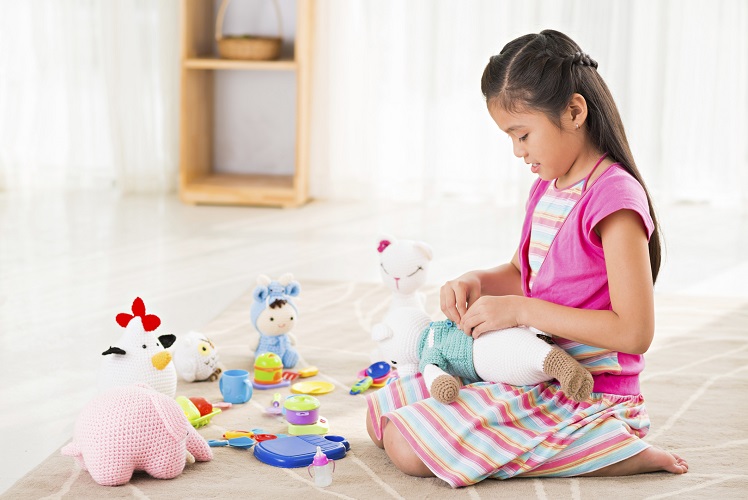
During therapeutic play with children, therapists watch, listen, and interact during moments when a child may be giving voice to images, emotion, and story.

“Image” implies an object or person of attachment from the child’s past, “emotion” implies feelings from past relationships or that the child may be feeling presently and in their current relationships, and “story” implies the coming together of a narrative that all children accumulate pieces of over time.

As children work to make sense of their world, they often try on different ways to language meanings, experiences, and identity. Usually this work occurs in the context of ongoing parent-child relationships, through the form of brief questions and conversation, and meaningful experiences, over years and years.

Sometimes a child’s context, when tumultuous, unpredictable, and even harmful, can deter such work and leave a child with only collected fragments of identity. Those fragments may be confusing and contradictory and may leave a child without the confidence that comes through securely attached relationships with caregivers.

Sandplay therapy and other forms of therapeutic play, both directive and nondirective, are tools in a process of nurturing more secure attachment bonds with caregivers and beginning a journey of co-construction of identity.

Take, for instance, a child who has experienced chronic abuse or neglect begins to settle into a supportive family who can provide consistency and nurturance. Oftentimes families are surprised when a child responds to all their outpourings of love and support through varying modes of ambivalence or avoidance.

In these cases, it is not only the child but also the adults who have a tremendous amount to gain from experiencing the child’s underlying anxiety in a therapeutic context, deriving new, more positive and safe experiences, and working together to develop a new approach and a new narrative to coincide with it.

As therapeutic play facilitates relationship bonding and identity co-construction with caregivers, volatile survival-oriented behaviors often decrease. The words of Susan Johnson, a leading proponent of emotion and attachment focused therapies, ring in my ears: “Emotion must replace emotion.”

A caring, creative, and collaborative approach assists such children and their families—and in the cases of adoption, their new families—in launching a journey of defragmentation, meaning making, and identity formation that may have for years been delayed by a focus on more primal needs.

As children participate in sandplay therapy, I make a point to remain only peripherally engaged in their play, allowing them to take control of their play worlds with minimal interference. I often mirror the degree of participation of caregivers in the room. Over time, caregivers have opportunities to become more involved and less involved in the child’s play as it feels comfortable to them and to the child.

These new fragments of experience and exploration, in the safe presence and amidst dialogue of caregiver(s) and counselor, are building blocks in this co-construction of identity. Images, emotion, and story can emerge in unexpected ways and at unexpected times.

Much of the work of this co-construction is already occurring by this time in the context of a new, safe, and more predictable family home environment. The families supporting these children should be encouraged by signs that emotional and social development is roaring down the tracks once again, much due to the fuel of their care and affections.

Recommended Reading
Gil, E., & Sobol, B. (2000). “Engaging families in therapeutic play.” In C.E. Bailey (Ed.), Children in Therapy: Using the Family as a Resource. NY: W.W. Norton & Company.

© Copyright 2010. All Rights Reserved. Permission to publish granted to GoodTherapy.org. The preceding article was solely written and edited by the author named above. The views and opinions expressed are not necessarily shared by GoodTherapy.org. Questions or concerns about the preceding article can be directed to the author or posted as a comment below.

Print This Post Print This Post

  • Find the Right Therapist

  • Join GoodTherapy.org - Therapist Only
   

Comments

  • Selina December 6th, 2010 at 10:13 PM #1

    That was very interesting, Blake. I’m curious about this now that I’ve read that: how young is too young for therapy? When I see you talk about sandplay I think of toddlers in a sandpit. Are their individual communication skills more important, rather than their chronological age?

  • elaine December 6th, 2010 at 11:22 PM #2

    Fascinating! Absolutely fascinating. It must take a very special skill set to be able to interpret such young minds. Thank you for giving us a window into that world, Blake.

  • Vickie December 7th, 2010 at 5:43 AM #3

    Play therapy was a life changer for my son.

    He was having so many problems in pre school and in school and we just could not figure out what was going on without the help of an adolescent therapsit who helped Blake talk it out and she played and helped he and I both realize some things that were going on with him.

  • Charlotte December 7th, 2010 at 1:13 PM #4

    Blake, you said that the caregivers are in the room. Don’t you think that would influence the child’s behavior in some way and make it harder to get an accurate read on them? I know I behaved differently when my parents were present and when they were not, even at a very young age. I suppose I’m asking why they are there.

  • Jason December 7th, 2010 at 2:39 PM #5

    Is therapy and such things really required for toddlers(if you are talking about them) and such young kids? They are just growing up and it takes a few years for every kid to even understand and adapt to his environment…

  • alexis December 7th, 2010 at 3:30 PM #6

    Charlotte: Speaking as a mother, I imagine a very young child left in a room with a stranger (no offense Blake! I’m looking through the child’s eyes) would get very anxious. How could the therapist do their job if the child is extremely stressed out? Having the caregiver there would make the little one feel more secure and safe. No parent would want to leave their child in that situation. How upsetting that could be for them to be in an unfamiliar environment with a person they don’t know.

  • Blake Edwards December 8th, 2010 at 10:08 AM #7

    Selina, What constitutes therapy can be very different depending on developmental age. It also differs depending on a therapist’s particular training, model, and preferences. What age is too young? This is a very fair question yet one that I am hesitant to state a black-and-white answer to in such a brief forum. I will say that I have tended myself to work only with children of five-years-old and older. Yet, I do work with a play therapist who sees children who are preschoolers. And, I have had colleagues in the past who conducted various forms of therapy with infants and toddlers, in collaboration with their parents, around language development, fine and gross motor development, and those that enhance parental skills around nurturing attachment bonds.

    Charlotte, you raise another fair question regarding the inclusion of parents in the therapy room. This is, again, not a question that I can give fair voice to in such a brief forum. Yet, I will share that I have had more experience myself conducting play therapy with parents present, though there have been many occasions when I have conducted series of sessions with children without their parents present as well as portions of sessions without their parents present.

    To clarify a bit further, I will add that I almost always offer educational and support sessions with the parents without the child or children in the course of therapy. I also almost always conduct some combination of individual and conjoint sessions with children and parents. Finally, I should simply clarify that I operate from a family systems paradigm versus, for instance, an individual psychoanalytic paradigm.

    Therefore, in viewing the family as an emotional unit, I hold the bias that the most effective approach to affecting positive change in one individual–including a child–is to engage broader systemic change via family structures and patterns, especially relating to discipline and nurture. This conceptualization lends itself toward collaborating in-session with more family members rather than less. This, on occasion may include the participation of not only parents, but, in some cases, siblings, grandparents, aunts, uncles, cousins, and others as well.

Leave a Reply

By commenting you acknowledge acceptance of GoodTherapy.org's Terms and Conditions of Use.


*


* = Required fields


Search Our Blog:

Content Author Title


Blog Categories


Find the Right Therapist

Advanced Search | Browse Locations

        therapist Topic Expert  

Recent Comments

  • Penelope: If only it was this easy! My husband and I had an argument lst night and he says that I said something that I did not say, it’s...
  • Carol P: Whoa that seems like it would be a stretch to even Think that these two could process things similarly. They seem so different to me- hwo...
  • georgia: If you ask anyone I guess they would all say that I am the control freak not just in marriage but in pretty much any aspect of my life....
  • Anonymous: Jesus Christ Actually, people don’t want you to take off the mask. Nobody wants to deal with someone else’s baggage or...
  • Laurel: My first thought is to get rid of that sad sack of a boyfriend! Why keep him around when he is dwelling on the past by keeping pics like...