 I’m always happy when couples tell me they’ve been together for 30 or 40 years, even if they happen to be in my office because of a relationship issue. Like aging, relationship issues are inevitable. I like to talk with these enduring couples about what’s kept them going, kept them connected, and where they’ve struggled. I’ve learned that there are some issues that are common to long-term relationships. Some of these are related to life stages—the challenges of aging, changing, medical issues, and the like.
Growing Apart
When you’re young and newly married, it can seem like what you feel and think is going to be the way you’ll always feel and think. Then life happens—education, careers, kids. Time passes. Your focus changes and you concentrate more on outside things and less on your relationship. You get into a routine, devote your energy to simply getting done what needs done, and the playfulness and fun go out of your day-to-day interactions. You aren’t intimately connecting the way you used to.
[fat_widget_relationships_right]
Fast forward 10, 12, or 15 years. All of a sudden you see your life and your life partner differently. Your giddy young love has changed into something you don’t recognize. You feel isolated, walled off, and unsure how to reach out to your partner. You’re each living your own separate life despite sharing a home. You’ve grown apart.
Life Stages and Aging
Everyone handles different life stages in their own unique way. For some, aging is a breeze, even welcomed; for others, not so much. Our self-image and feelings about our bodies can change. Sexuality and our physical abilities change. Even our identity may change.
We don’t feel the same at 45 as we did at 25. At 65, we often wish we felt like we did at 45.
Many couples are unprepared for these changes, and if they’re not talked about, they can cause partners to begin to pull away from one another. Medical issues, menopause, and physical changes can also affect our interactions with a partner.
Keeping Your Connection
So how do we deal with the issues of aging, life stages, and time in a long-term relationship? How do we keep the closeness and connection we had at the beginning? Communication is crucial.
Many couples are unprepared for these changes, and if they’re not talked about, they can cause partners to begin to pull away from one another.
Stay close with your partner by talking as best friends and confidants. Share your worries and fears about the stages of life you’re entering. Open up with each other about how things are changing in your minds and bodies.
Talk about how your relationship is changing, too. Plan together. Take time to dream about what life will be like in the future. What you will do when the kids move out? Will you travel? Take a class together? Take up a new hobby?
Be curious about your partner’s feelings about the changes that come with aging. Adapt to your changing physicality and sexuality. Focus on one another, excluding outside influences, routines, and demands. Make it about your relationship. Be in it together.
Realize that your love has many facets and you need to stay on the same page in all of them. Be vulnerable, show your partner your authentic self, and determine to never give up on yourselves as a couple. Never lose sight of the friendship, kindness, companionship, and playfulness that has allowed you to be together all these years.
Changes are inevitable, but they don’t have to change your relationship for the worse. Consciously choose to move forward together, no matter what the future may hold.
 Seniors who experience excessive fatigue during the day may have more brain atrophy than well-rested seniors, according to a study presented at SLEEP 2016, the 30th Anniversary Meeting of the Associated Professional Sleep Societies (APSS). Researchers found atrophy was greatest in regions of the brain vulnerable to Alzheimer’s and age-related decline, suggesting fatigue could be an early sign of brain degeneration.
The Link Between Fatigue and Brain Atrophy
For their study, researchers worked with 1,374 cognitively normal seniors age 50 and older who participated in the Mayo Clinic Study of Aging. Participants completed surveys of sleepiness and fatigue and underwent magnetic resonance imaging (MRI) brain scans to establish baseline brain functioning.
Participants who reported high levels of daytime sleepiness had lower cognitive scores and more medical problems. They were also more likely to report sleep disturbances, pointing to a correlation between disturbed sleep and daytime fatigue.
Changes in Sleep: Early Dementia Warning Sign?
The study’s authors suggest these results may help doctors identify people at risk for dementia, increasing opportunities for early treatment. Previous research supports this claim. According to the Alzheimer’s Association, changes in sleep habits are common among people with Alzheimer’s. This may be due to the ways Alzheimer’s changes the brain. Some common Alzheimer’s-related sleep changes include:
- Insomnia and disturbed sleep.[fat_widget_right]
- Changes in dreaming patterns. Brain scans show people with dementia spend less time in both dreaming and non-dreaming sleep cycles.
- Changes in the sleep cycle, such as napping during the day, or feeling drowsy during the day.
- Sundowning, an experience characterized by behavioral and cognitive changes late in the afternoon or evening.
In the late stages of Alzheimer’s, seniors may spend as much as 40% of their nights awake, as well as a significant portion of the day sleeping.
The National Sleep Foundation says some age-related changes in sleeping are normal. The foundation recommends 7-8 hours of sleep per night for seniors 65 and older, compared to 7-9 hours for adults younger than 65. The American Academy of Pediatrics is also supporting a new revised recommendation from the American Academy of Sleep Medicine for children’s sleep guidelines. Also presented at SLEEP 2016, these recommendations now include as many as 16 hours of sleep for infants, 14 hours for young children, and 12 hours for school-age children.
References:
- Brooks, M. (2016, June 14). New AASM guideline on optimal sleep for children. Retrieved from http://www.medscape.com/viewarticle/864846
- National Sleep Foundation recommends new sleep times. (2015, February 2). Retrieved from https://sleepfoundation.org/media-center/press-release/national-sleep-foundation-recommends-new-sleep-times
- Sleepiness and fatigue linked to brain atrophy in cognitively normal elderly. (2016, June 14). Retrieved from http://www.eurekalert.org/pub_releases/2016-06/aaos-saf061416.php
- Treatments for sleep changes. (n.d.). Retrieved from http://www.alz.org/alzheimers_disease_10429.asp
 In a previous article, we looked at the role initiation ceremonies play in a culture, and how they help us detach from an outgrown identity and move into one more highly adapted to the present.
In traditional cultures, these ceremonies follow a strict protocol. First communion uses a basic format, and so do bat/bar mitzvahs. Even a bachelor stag party follows a certain sequence of ideas.
For most of us, the transition from midlife into old age isn’t provided with much structure. On the downside, this means it might not be observed or navigated. But on the upside, this leaves a lot of room for an individual experience of initiation. Psychotherapy is a practice in our culture that focuses on the individual. In what follows, we’re going to look at one man’s initiation from midlife to old age. (Names have been changed.)
Howard comes to therapy for relief from depression. He’s in his 70s, burly but fit and well-dressed. During the initial interview, he describes feelings of hopelessness, loss of pleasure, and irritability. His affect—the rise and fall of emotion as he speaks—is mild, but his mood (the “background” feeling) is irritable, not bitter so much as sour, with a sense of disappointment. I ask him if there have been any changes in his life recently. For instance, has he lost anyone? No, he says, not lately, though in the 1980s and ’90s his circle was hit pretty hard by HIV/AIDS. Then he laughs humorlessly and says, “I wouldn’t mind a change, though, to tell you the truth.”
[fat_widget_right]
He tells me he neither recognizes nor appreciates the old man he sees in the mirror. He describes his distaste at noticing age spots, at the continuing loss of skin tone. “I know I’m not a kid anymore,” he asserts, as if I’d accused him of this. “But I still feel like I’m in my 50s.” What are his 50s, I ask. “Like I should still be able to do things. Get up and get out. Meet someone new. But whenever I go out, it’s like I’m invisible.”
When Howard says he can’t believe he’s old, he seems to really internalize it. My impulse is to say, “You’re only as old as you feel,” but I don’t. Instead I sit with curiosity about why I would feel impelled to “rescue” him from old age. I ask him what “old” is. He tells me. It’s material I’ve heard before, and perhaps you have, too: old people can’t, old people don’t.
It’s a description of aging that’s prevalent in our culture, almost cartoon-like because it seems to flatten people out so they’re not quite real. Old age is adjacent to death, so it seems. And even though we don’t know what death is, our fear of it informs all of our other fears. No wonder so many of us avoid recognizing ourselves as old, and feel distress when we do. In a culture characterized by a fear of death, old age can be seen as a stigma—a sign that an individual has beliefs, qualities, or behaviors counter to the culture, and therefore threatening to it. Which might account for Howard’s experience of feeling invisible.
We begin by addressing some of the myths of aging. The first one we tackle is about declining sexuality in both men and women. In Geriatric Mental Health Care, Gary J. Kennedy, MD, notes that “the continuance of sexual activity into late age depends on the life pattern of each person.” Acceptance of a perceived inevitability of loss is linked to both loss of libido and even bodily changes. In How We Die, Anne Karpf cites a study on memory function in aging American and Chinese subjects. The study findings indicate that not only did the Chinese subjects do better on memory testing than their American counterparts, but they performed better than young Chinese adults. The researchers associate these findings to the fact ageism is less prevalent in China than in the United States. Howard and I discuss the idea of self-fulfilling prophecies.
Ageism is the idea that old age will be a mirror image of infancy. In the first stages of development, we acquire skills in sequence—language, mobility, continence, to name a few. Ageism suggests that all of us will, sometime before the end of life, lose those skills along with many others, and that anyone displaying signs of age is experiencing this loss of integrity. I find that Howard has a history of resisting prejudices, including internalized prejudices. I enlist this in our work together.
I ask him about meaningful experiences. This starts a life review—piecemeal at first, but gradually we get a chronology established. We don’t hear about the violent disagreements with his father when he was in his mid-teens, and that were the reason he left Illinois for the west coast, right away. Instead we start with his career as a counselor in a parole office that is both a source of pride and loss for him now in retirement. But eventually we come to his partnership with Don, which ended with Don’s death a decade ago, and to his marriage with Karen when they were both in their 20s, and their two children. Over many sessions, we put together a narrative that extends through seven decades, and that despite having some unsolved mysteries to it—what life doesn’t?—holds together so that meaning can be clearly observed.
One of the effects of such a review is that Howard becomes more grounded in his life—not just its events but its duration. There’s not so much of a disconnect between his actual age and his ownership of that age. He’s just a little bit less inclined to wish it away. For better and for worse, he’s related a history that requires 70-plus years for its unfolding.
As well, this life review places Howard’s own life into the context of his age cohort, and the events which shaped them and which they shaped in turn. Some of these he participated in literally, such as protests against the Vietnam war and his advocacy for ACT UP. His participation in others events is more symbolic but no less real, such as the moon landing and reunification of Germany. We find resources of accomplishment and pride here. In Identity and the Life Cycle, Erik Erikson describes the developmental tasks of later adult life as shifting allegiance from self and our small group to a larger field (“mankind, my kind”). As Howard considers the impact on history of his age cohort—whose accomplishments both include and extend beyond his personal ones—he has the opportunity to locate himself inside and identify with larger movements of life.
Old age is adjacent to death, so it seems. And even though we don’t know what death is, our fear of it informs all of our other fears. No wonder so many of us avoid recognizing ourselves as old, and feel distress when we do. In a culture characterized by a fear of death, old age can be seen as a stigma—a sign that an individual has beliefs, qualities, or behaviors counter to the culture, and therefore threatening to it.
During this stage, I encourage Howard to bring in photographs of meaningful others, and especially of his younger selves. As the conversation grows more intimate, we give names to the earlier versions of Howard. The slim, long-haired teenager is the Poet. The mustached thirty-something exploring a new sexual identity is Robert Redford. The bearded man demonstrating with his younger colleagues at an ACT UP protest is Papa. We marvel at the way one identity succeeded another, taking its turn to be lived. We open up and sit with the interesting problem that even though these identities are no longer the case, they will always be true. Howard is no longer the Poet, and yet Howard carries the Poet and all that identity’s youth and passion within him.
We also look at the fact Howard knows the answers to the questions that puzzled each of his “earlier selves.” He knows, for instance, how the struggle to come to terms with his own sexuality turned out—that struggle was difficult but ultimately rewarding—though the 29-year-old in the photo with Karen doesn’t. As he considers this odd fact, I take the opportunity to wonder out loud if there is an older Howard “up ahead” who knows how Howard resolves his conflicts about old age.
I introduce Howard to Carl Jung’s concept of Self. This is the organizing principle of the psyche, one that initially operates on an unconscious level but with which a conscious relationship can be formed. To illustrate this, I tell Howard a person can have a set of values he lives by without stopping to think about them, but if he becomes aware of what his values are he’s able to live them more effectively, relating to them as he would a blueprint or a compass.
The Self is often personified in fairy tales as the wise old man or woman—think Cinderella’s fairy godmother or Obi-Wan Kenobi of Star Wars. In a rational sense, this combination of wisdom and age speaks to our having lived the earlier stages of our lives and learned through them who we are and what the world is. In an intuitive sense, who I am now and how I’ve lived or not lived so far implies who I will be. That “future self” is implicit in who I am now.
Howard is intrigued by this image of an older self, or Self, from whose point of view his present issues are all resolved one way or another. “I don’t feel so lost,” he says. “In a funny kind of a way, it’s like I already know the answers. It’s just a matter of remembering them.” He’s also interested to think that compared to this image of the Self, he’s the younger of the two. That if the Self is the cumulative image of his full life span, Howard is not there yet.
We look at the fact that if Howard had refused to go on to have new and further experience when he was the Poet, then Robert Redford, Papa, and the others wouldn’t have had their times to be lived. He says about the Self, “I feel like he’s waiting his turn. Like he’s depending on me to live him. I don’t want to let him down.” I reflect the positive nature of such a relationship to the Self. Erikson describes “the acceptance of one’s own and only life cycle,” and Jung refers to participating in “the ego/Self axis.” Both ideas act as guideposts to the same fact, that it’s possible to experience old age with integrity and hope.
In The Measure of My Days, a book of reflections written when she was in her 80s, Florida Scott-Maxwell notes, “Personal immortality may not matter at all. Perhaps our long insistence on it has been our need of spiritual value, and a groping conviction that is our central truth; that we have a share in impersonal greatness.”
If he was the Poet when he was in his 20s and Papa in his 50s, I ask Howard who is he now. He thinks about it, then grins and says, “Well, I guess I’m the Traveler now.” On the spur of the moment he asks if I’ll take a picture of him using his Android phone. I do, and Howard has his first photograph of the Traveler, evidence that he passed this way.
References:
- Erikson, E. (1980). Identity and the Life Cycle. New York: Norton.
- Jung, C.G. (1966). The Practice of Psychotherapy: Essays on the Psychology of the Transference and other Subjects (Collected Works Vol. 16). Princeton, N.J.: Princeton University Press.
- Karpf, A. (2014). How to Age. London: Picador.
- Kennedy, G. J. (2000). Geriatric Mental Health Care. New York: Guilford Press.
- Scott-Maxwell, F. (1968). The Measure of My Days. New York: Penguin Books.
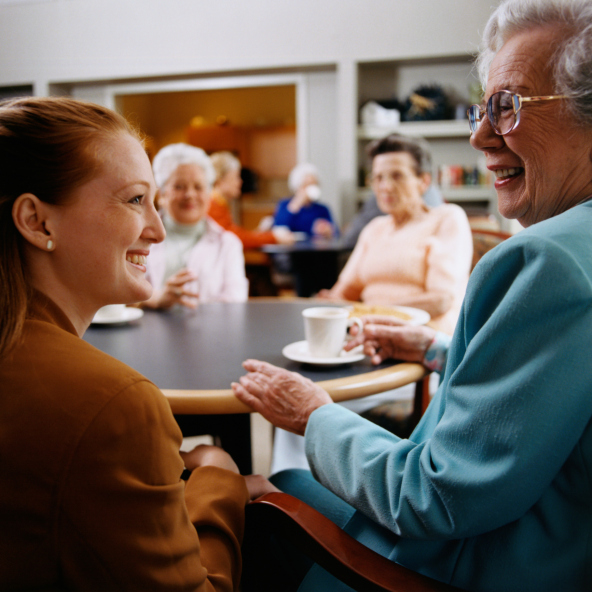 Putting a family member in a nursing home may be one of the toughest decisions families have to make, and unfortunately, the decision for many doesn’t tend to feel “good.” Many hope for a long life of independence, and becoming immobile, senile, or dependent on others is a thought people simply like to avoid. As a psychotherapist who works in a nursing home, I often encounter family members racked with guilt, which has led me to analyze the experience.
Help Them Through the Adaptation Phase
Many of the nursing home residents I speak with openly express their discomfort at being in a nursing home, and some manifest symptoms of depression as a result. In my experience, it is typical for a new resident to struggle with this new environment. After a (sometimes long) transition period, many will begin to adjust. According to an article published in Nursing Research and Practice, this is called the “adaptation phase,” with the typical period of adjustment being cited as three to six months (2013).
[fat_widget_right]During the adaptation phase, a new resident may be struggling to respond to new rules and expectations of the nursing home staff, as well as learning to live with a new group of people. The adjustment period can be really tough, and unfortunately, some seniors may never fully adjust to a nursing home environment.
Help Them Avoid a ‘Loss of Control’
There are a number of ways family members, friends, therapists, and staff can help improve the quality of life of nursing home residents. I am focusing on family members in this article, but if you are looking at this problem from a different perspective, please utilize this advice to help a nursing home resident you care about.
Many nursing home residents I’ve spoken with express feelings of a “loss of control” when they don’t have any say in the facility where they end up living. With that said, one of the first ways to help a senior make the transition to a nursing home is to give the person a chance to evaluate options and make decisions regarding the new residence. Finances may be a huge barrier when looking for care, but giving a family member the right to shop around and choose a residence can help foster a sense of independence and control from the beginning of the transition (2013).
A window can make a big difference in a person’s living space within a nursing home. An article in the Journal of Aging Research says that a window view doesn’t even need to overlook plush greenery to be beneficial. It can simply offer something to look at, such as pedestrians, wildlife, or any landscape (2015). If the resident’s individual room does not offer a window, access to a private space with a window and a view may offer similar benefits. Adding plants to the resident’s room can also create a more personal environment and take away from the medical feel of the room.
Personal items from the resident’s previous home can also create a sense of familiarity and mastery over the experience. This may include pictures, furniture, or comfort items such as blankets. Allowing the resident to personally pick out items to bring to the nursing home can also contribute to the sense of control that can be so important to a healthy adjustment to nursing home living.
Help Them Stay Social
Initially, it can be intimidating to join the other residents in activities, but engaging in social activities and continuing ones enjoyed before the transition can positively affect a resident’s sense of happiness. If you’re a family member, go over the schedule of activities with your loved one and help pick out some that appeal to him or her.
Life in a nursing home is different, but it’s not the end. A person can continue to feel loved and cared for, and offer their love and care in return.One of the best ways to help your family members ease into a nursing home is simply to listen to them. Often, seniors at the nursing home I work in tell me they don’t tell their children or family members about their feelings of depression because they don’t want to burden them. Others say they attempt to tell their family members, but their feelings are dismissed. Many new nursing home residents will experience depressive symptoms and feelings of hopelessness as part of the adjustment phase. Allow your family member to talk about this experience so he or she doesn’t feel further isolated. This may evoke your own guilt or a desire to fix the situation, but remind yourself that your loved one has limited people to talk to, especially about emotions. Your ability to sit and listen will help demonstrate that you care and are available for support.
Lastly, and perhaps most important, provide a sense of hope for your family members. Consider what might increase comfort in the home and offer some options. Listen to their struggles without defending them. Offer them your time and company, share pictures of the family, bring food from home, and remember to tell them how important they are to you. Life in a nursing home is different, but it’s not the end. A person can continue to feel loved and cared for, and offer their love and care in return.
References:
- Degenholtz, H.B., Resnick, A.L., Bulger, N., & Chia, L. (2014). Improving quality of life in nursing homes: The structured resident interview approach. Journal of Aging Research, 2014, doi: http://dx.doi.org/10.1155/2014/892679
- Riedl, M., Mantovan, F., & Them, C. (2013). Being a nursing home resident: A challenge to one’s identity. Nursing Research and Practice, doi: http://dx.doi.org/10.1155/2013/932381
- Van Hoof J., Verhagen, M.M., Wouters, E.J.M., Marston, H.R., Rijnaard, M.D., & Janssen, B.M. (2015). Picture your nursing home: Exploring the sense of home of older residents through photography. Journal of Aging Research, doi: http://dx.doi.org/10.1155/2015/312931
 Older adults may be better than young people at correcting mistakes, according to a study published in Psychological Science. The research contradicts common stereotypes about learning, including the notion that older people are less able to learn than young people.
Does Age Aid Learning?
Researchers wanted to look at both brain activity measures and behavioral components of learning. They recruited 44 young adults around age 24 and 45 older adults around age 74. None of the participants had a history of neurological or psychiatric issues.
Researchers fitted the participants with an electroencephalogram (EEG) cap, then presented them with a series of general knowledge questions (for example, “Which ancient city was home to the Hanging Gardens?”). The investigators encouraged participants to guess when they were unsure, but saying “I don’t know” was also an option. Each participant rated their confidence in each answer on a 7-point scale. Researchers then gave them the correct answer while measuring brain activity.
The trial continued until each participant had made at least 40 errors—20 on high-confidence answers and 20 on low-confidence answers. Older adults needed an average of 244 questions to reach this threshold, while younger adults needed about 230.
In a second trial, researchers removed the EEG cap and retested the participants by asking them 20 questions that produced high-confidence errors, 20 questions that produced low-confidence errors, and 20 unanswered questions.
[fat_widget_right]Older adults got 41% of the questions correct, and younger adults answered 26% correctly. Both groups reported greater confidence in the answers they got right, but older adults reported higher overall confidence in their answers. Older adults also corrected more of their errors in the second trial, suggesting the older age group may be more likely to learn from previous mistakes.
Age, Learning, and the Brain
EEG results showed larger quantities of a P3a component—a brain wave associated with attentive processing—for both age groups when receiving feedback on high-confidence errors compared to low-confidence errors. When receiving feedback on low-confidence errors, older adults produced larger P3a relative to their younger counterparts.
The research team says these findings suggest younger and older adults may display different attention patterns, but older adults may focus more on correcting mistakes. Older adults may also be less susceptible to the hypercorrection effect—a previous finding that says high-confidence errors are more likely to be corrected than low-confidence errors.
In total, older adults corrected more of their mistakes than younger adults, suggesting they may be more adept at updating their existing knowledge with new information than the stereotype about older adults’ cognitive abilities implies.
References:
- Older beats younger when it comes to correcting mistakes. (n.d.). Retrieved from http://www.psychologicalscience.org/index.php/news/releases/older-beats-younger-when-it-comes-to-correcting-mistakes.html
- Older people better at correcting their mistakes. (2015, October 29). Retrieved from http://www.ndtv.com/world-news/older-people-better-at-correcting-their-mistakes-1237735
 Conversion therapy—a controversial and largely discredited practice that attempts to change a person’s sexual orientation—is opposed by most major medical and psychiatric organizations, including the American Academy of Pediatrics, the American Medical Association, the American Counseling Association, and the American Psychological Association. Oregon, California, Illinois, New Jersey, and the District of Columbia have banned the practice for minors, citing concerns about coercion and abuse. But proponents of conversion therapy believe people should be able to change their sexual orientation if they want to, and some see the practice as a form of religious expression.
Now, the federal government has taken a stand on the issue. The Substance Abuse and Mental Health Services Administration (SAMHSA) announced its position October 15th, arguing in favor of providing support to LGBT youth and adults. SAMHSA says a strong professional consensus points toward the perils of conversion therapy, and conversion therapy endorses outdated and incorrect notions about gender and sexuality. The move comes as advocates in many states are working to ban the practice.
Magnetic Brain Stimulation ‘Reduces Belief in God, Prejudice Toward Immigrants’
A study of 39 students suggests transcranial magnetic stimulation (TMS) in the posterial medial frontal cortex of the brain could change beliefs about God and immigrants. Students who underwent TMS expressed fewer hostile attitudes toward immigrants and were less likely to say they believed in God, angels, and heaven.
Study: Attempted Suicide Rises After Weight-Loss Surgery
Weight-loss surgery may increase the risk of suicide, according to a JAMA Surgery study. Researchers found that participants were 50% more likely to attempt suicide after the operation than before it. The researchers say they were unable to determine whether the people studied had regained weight or were dealing with other mental health issues.
Many Seniors Given Antipsychotic Meds, Despite Potential Problems
[fat_widget_right]The number of people ages 80 to 84 who receive prescriptions for antipsychotic drugs is double the rate of prescriptions among people ages 65 to 69. Antipsychotics increase the risk of a number of serious health conditions, including kidney failure and cardiovascular problems, so doctors typically reserve their use only for people with mental health issues severe enough to warrant antipsychotics. Yet more than 75% of seniors had no documented mental health condition in the year studied.
To Age Well, Change How You Feel About Aging
Research is increasingly finding that the way people feel about aging could affect how they age. People who associated negative terms, such as decline and disability, with advanced age are more likely to face health challenges later in life. Those who view aging as an opportunity for personal growth are more likely to experience good health as they age.
Hangovers Cost U.S. Employers a Staggering Amount
In 2010, hangovers cost employers $77 billion thanks to productivity impairments, according to a Centers for Disease Control and Prevention study. When paired with other consequences of excessive alcohol use, such as absenteeism, the figure increases to $90 billion. Overall, alcohol abuse costs the U.S. economy $249 billion a year—a figure that includes property damage due to drunken accidents and crime, health care expenses, alcohol-related deaths, and other factors.
Marijuana Exposure in Utero Has Lifelong Consequences
An animal study that looked at prenatal cannabis consumption in mice suggests marijuana use during pregnancy can have lasting consequences for the developing fetus. Prenatal exposure to cannabis interfered with cannabinoid receptors in the animals’ brains, leading to changes in neuron connectivity and motor function. These changes, the study suggests, can have lifelong effects.
 As the human lifespan grows, many people are now living well into their eighties and nineties. That’s wonderful news, but it comes with new challenges. One of them is the challenge of addressing mental health issues in our aging parents.
Depression is frequent among older adults. The rate of depression in persons over age 65 varies depending on the person’s overall health and living situation, but it can be as high as about 27% (Cswe.org, 2015).
What Causes Aging-Related Depression?
Several factors can contribute to depression in older adults, including:
- Preexisting depression: If you have a parent who has struggled with depression at different points in his or her life, it is more likely to recur as he or she ages. People with untreated depression in the past might have poor life coping skills and a tendency toward negative thinking. As they face the challenges of aging, it may be more difficult to maintain a positive outlook.
- Preexisting anxiety: Individuals with a history of anxiety often become more fearful as they age. (Many individuals become fearful as they age, but this tends to be more pronounced in those with a history of anxiety and worry.) As a result, they often isolate. They don’t go out often and rarely make new friends or participate in social activities. This can lead to depression.
- Difficulty with life review: One of the tasks of healthy aging is to review one’s life, feel proud of the positive contributions, forgive oneself for mistakes, and let go of resentments toward others. Some people have difficulty reviewing their lives. They may get stuck on one or more aspects and dwell. For example, someone may feel he or she did not accomplish enough or continue to hold anger and resentment toward a sibling. All that unfinished business becomes emotionally toxic and may block the person’s ability to feel joyful and at peace.
- Friends and family dying: There was a two-year period in the life of my in-laws (who are in their late eighties) where every time I spoke to them on the phone, they had a death to talk about. This is a unique reality of aging: your friends start to die, one by one. There isn’t always time to properly grieve, and it can lead to feelings that the world is not a happy place anymore. In addition, the death of a spouse or partner is often a huge emotional shock that can lead to overwhelming sadness and confusion. Many older adults wonder what will happen to them without their spouse or partner. The fear and sadness can amplify each other.
- Declining abilities: It’s both frustrating and frightening to realize that you are no longer able to do the things you once did. It’s also a reminder that the end of life is nearer. Many people react to that by clinging to independence rather than by asking for or accepting help. In some cases, declining abilities can lead to isolation, a sense of being useless, and feelings of depression.
For many aging adults, the world can seem like an increasingly confusing place. There are always new technologies and new ways of doing things. Feeling unsure of themselves, older adults may become stubborn and cling to the things they know and are more comfortable with. Keep in mind that for many in this generation, psychotherapy and mental health treatment may not be seen in a positive light, having been stigmatized throughout their lives. Thus, suggesting therapy may seem extreme or even insulting to an aging person, even if he or she would clearly benefit.
How to Support a Depressed Parent
- Respect his or her need for independence, and don’t try to take control.
- Offer love and support; just letting him or her know you care and are available is enough. For many people (young and older), admitting that they are depressed is difficult.
- Delicately suggest one or two visits with a therapist who is experienced in geriatric issues, then leave it up to your parent whether to continue.
- Talk about a friend or someone you know who experienced a time of depression and then recovered. Gently suggest that perhaps it is similarly possible for your parent to improve his or her mood and sense of happiness.
- Learn active listening and empathy skills and become a good listener, without judgment or advice.
Is Medication a Good Option?
Sometimes, medication can be a good option for older persons, and sometimes it can make things worse by affecting cognitive function. It’s important to get a thorough evaluation by a qualified mental health professional who is trained in a variety of treatment approaches.
Watching an aging parent give up and not take good care of himself or herself can be heartbreaking and frustrating. It’s natural to want to insist that your parent get help, but being overly pushy can make things worse. A gentle approach that respects your parent as a competent adult is often the best bet.
Reference:
Gellis, Z. D., & McCracken, S. G. (2015). Mental Health and Older Adults – Chapter 3: Depressive Disorders in Older Adults. Council on Social Work Education. Retrieved from http://www.cswe.org/File.aspx?id=23509
 Earlier this year, a Michigan judge incarcerated three children after they refused to see their father. The children say their father is abusive, but the father claims the mother has initiated a campaign to alienate him from his children. After swift public outcry, the judge released the children, ordering instead that they participate in parental reunification therapy.
Divorced parents often engage in acrimonious custody fights, and some parents may launch extended campaigns to destroy their children’s relationship with the other parent. Parental alienation syndrome, originally coined in the 1980s, remains a controversial diagnosis and is not listed in the DSM-5.
A broken relationship with one parent can be destructive to children, but so can spending time with an abusive parent the child fears. Parental reunification therapy requires children to spend extended periods of time with the alienated parent, often without contact from the other parent. The theory is that this is the only way to break the cycle of parental alienation, but controversy swirls around the practice. Critics say the therapy could be used to force contact with abusive parents, and the treatment may amount to “deprogramming” that can be traumatizing.
Alzheimer’s Disease Consists of 3 Distinct Subtypes, According to UCLA Study
A UCLA study has identified three potential subtypes of Alzheimer’s. Though more research will be necessary, the subtypes could shed light on Alzheimer’s causes as well as potential treatment. Inflammatory Alzheimer’s is characterized by an increase in C-reactive proteins, as well as an increase in serum albumin and globulin levels. Non-inflammatory Alzheimer’s does not produce the same increases, but does lead to other metabolic abnormalities. Cortical Alzheimer’s—which often affects relatively young individuals—affects language first and produces effects that are more widely distributed across the brain.
The Sinister Science of Addiction
Research has long suggested that addiction is a disease rather than a personal failing, and measurable differences in brain chemistry account for much of the behavior associated with addiction. A new video in the Reaction series—a group of videos produced by the American Chemical Society—shows how addiction functions in the brain.
Criminals Acquire Guns Through Social Connections
[fat_widget_right]Popular myths suggest most guns used in crimes are stolen, but new research suggests that friends and family are a more likely option for acquiring guns. Research on the Cook County Jail in Chicago about how jail inmates obtained guns suggests that 60% of the guns were purchased or the product of a trade. Chicago gun laws prohibit selling guns to people with criminal records, so many former inmates are unable to acquire guns at gun stores or through other traditional avenues.
Trial Review Confirms Common Antidepressant is ‘Unsafe and Ineffective’ for Teens
Paroxetine—better known under its brand name of Paxil—has been prescribed to teens to treat depression since 2001, but new research argues the practice should end. Not only was the drug no better than a placebo; it was also potentially dangerous. In 2012, GlaxoSmithKline, the pharmaceutical company that markets the drug, was fined $3 billion for failing to report drug safety information to the Food and Drug Administration and for illegally marketing some of its drugs.
The Psychology of Why People Like Steve Rannazzisi Lie About Having Survived 9/11
A handful of people have been accused of lying about being present at the 9/11 terrorist attacks. This week, comedian Steve Rannazzisi came clean, admitting he had been lying about his presence at the World Trade Center that day. Experts are unsure why some people feel compelled to lie about a history of trauma. Theories include a need to feel involved, a craving for attention, serious mental health issues, and false memories.
More Time Outside Tied to Less Nearsightedness in Children
According to a study of Chinese schoolchildren, spending time outside could reduce the rate of nearsightedness. As many as 90% of Chinese high school graduates are nearsighted. But the study, which followed almost 2,000 schoolchildren for three years, suggests that as little as 45 minutes outside each day could reduce the country’s rate of nearsightedness.
Eating a Lot of Fish May Help Curb Depression Risk—at Least in Europe
 A number of studies have tied Omega-3 fatty acids—present in high quantities of fish—to a potential treatment for depression. A pooled analysis of 26 studies involving 150,278 participants suggests that Europeans who consume fish can reduce their depression risk by as much as 17%. This correlation was found only in European studies. The reduction in depression risk as a result of high fish consumption was higher among men, who saw a 20% reduction. Women’s risk of depression dropped by about 16%.

Love doesn’t check birth certificates, but relationships with a significant age gap can come with unique joys and challenges. Whether your partner is a decade or two older—or younger—understanding these dynamics can help you build a healthy, lasting connection.
A middle-aged man dating a much younger woman has long been a familiar image in American culture, sometimes linked to a midlife crisis or seen as a status symbol. However, age gap relationships aren’t limited to this stereotype. Older women sometimes date younger men, and the archetype of the “cougar” is now part of popular culture. Same-sex couples may also have significant age differences.
Recent research shows that nearly four in ten (39%) Americans have dated someone with an age difference of 10 years or more, indicating these relationships are more common than many people realize. Globally, research from 2024 found that men are on average 2.2 years older than their female partners in North America, with this gap varying significantly across different cultures and countries.
While age alone doesn’t determine whether a relationship is real or meaningful, it can create unique considerations. Navigating the social and emotional aspects of your relationship while addressing generational differences can be challenging—but it can also broaden your perspectives and deepen your appreciation for each other’s life experiences.
Understanding Your Experience
If you’re in an age gap relationship, you may be navigating feelings of uncertainty, excitement, or social judgment. You might notice that friends or family have opinions—sometimes supportive, sometimes not. These emotions and reactions are common. Recognizing your feelings and those of your partner can help you approach the relationship with empathy, clarity, and confidence.
According to Melissa Klass, LMFT, much of the stress in age-gap relationships comes not from the couple themselves but from the reactions around them. “In therapy, I often see couples who feel confident about their connection but begin to question it when friends or family repeatedly raise concerns,” Klass explains. “Part of the work becomes helping partners stay grounded in their own values rather than internalizing outside judgments.”
1. Know When the Age Gap May Be Too Large

Love can be unpredictable, and feelings don’t always follow logic. But a significant age gap can sometimes create legal, social, or practical issues—especially if one partner is under the age of 18. Thirty U.S. states have age gap laws, often called “Romeo and Juliet laws,” which make sexual activity legal if the ages of both participants are close to one another. Even though state laws regarding the general age of consent and age gap laws differ, it is common for people in the United States to assume that sexual activity with someone under 18 is statutory rape. In these cases, the relationship may carry legal consequences, no matter how genuine the emotions.
Even if the relationship is legally sound, consider how the age gap might affect its long-term future. If you want children, think about whether fertility is a concern. For women, fertility begins to decline after age 30 and drops significantly after 35, with pregnancy rates declining notably for those in the 35-39 age group compared to younger women. A father’s age also affects conception chances—partners of men older than 40 take longer to conceive, and it takes around two years on average if the male partner is older than 40, even longer if he’s older than 45.
Lifestyle differences can also be significant. If one partner is just beginning a career while the other is considering retirement, planning for the future together can be more complex.
2. Understand Your Reasons for Dating Across Generations
Before beginning a relationship with someone much younger or older, reflect on your motivations. There’s nothing inherently wrong with dating outside your age group, but patterns can offer insight into your relationship style.
Some people seek the stability or experience of an older partner, while others are drawn to the energy and openness of someone younger. Recent 2025 research found that men dating younger women experienced higher relationship satisfaction than men dating older women, while women showed satisfaction with both older and younger partners. Psychological research indicates that older partners are often drawn to younger partners for feeling valued and appreciated for their experience, gaining renewed energy and fresh perspectives, and benefiting from established confidence and authenticity.
If you notice a consistent pattern in your dating history, it can be worth exploring why. Self-awareness can help ensure you’re building connections for the reasons that truly matter to you.
If you’d like to explore these questions with a professional, you can find a therapist in your area who specializes in relationship dynamics.

Once you’ve reflected on your motivations, the next step is preparing for how your backgrounds may influence your perspectives.
3. Be Ready to Navigate Generational Differences
Even in strong relationships, differences in life stage and cultural touchpoints can surface. You and your partner might have grown up with different music, technology, or social norms. Political views, values, and historical events can shape each person’s perspective.
Generational differences in communication styles can lead to misunderstandings, with older generations favoring face-to-face conversations while younger generations might opt for text messaging and social media interactions. Partners may have divergent tastes in music, technology habits, or social values—for example, a younger partner raised in the digital age might prioritize online connectivity, while an older partner may value face-to-face interaction.
Rather than avoiding these differences, use them as opportunities to learn. Ask about your partner’s experiences and share your own. For more insight, see our guide to family and generational differences.
4. Prepare for Criticism and Outside Opinions
Family, friends, and even strangers may have opinions about your relationship. Some may focus on your partner’s age rather than your shared values and connection. Research shows that age-gap couples (defined as partners separated by more than 10 years) perceive substantially more social disapproval regarding their relationship than couples with minimal or no age gaps. In fact, studies have found that age-discrepant couples report experiencing significantly more social disapproval than individuals in gay or interracial relationships.
Recent surveys show that concerns over what others think decrease with age—nearly a quarter (23%) of Americans ages 18-34 are afraid of what people might think of them if they engaged in age-gap dating, versus 12% of those ages 35-54 and 7% of those ages 55+.

While close loved ones might deserve an explanation, it’s okay to set boundaries with those who offer unsolicited judgments.
“Age-gap couples often feel pressure to defend their relationship in ways other couples do not,” says Melissa Klass, LMFT. “Learning when to explain your choices and when to simply set boundaries can make a significant difference in protecting the relationship.”
Plan a calm, respectful response that reaffirms your commitment without inviting ongoing debate. This can help prevent repeated, draining conversations about the age gap rather than your relationship itself.
5. Avoid Letting Age Define Your Relationship
Age is one factor among many in a relationship. If you focus on it too much—either to justify the relationship or to explain disagreements—it can become a wedge between you. While acknowledging real challenges is important, avoid attributing every difference to age.
Many successful relationships with age differences are built on shared values, interests, and life goals rather than similar birth years. Instead, focus on shared values, mutual respect, and the unique qualities you appreciate in each other. Healthy communication and problem-solving skills matter far more than the number of years between you.
When to Seek Professional Support
Age differences can present challenges, but they can also enrich your relationship with new perspectives and experiences. By approaching the relationship with openness, curiosity, and respect, you can create a strong connection that transcends the numbers.
If age-related differences start to feel overwhelming—whether due to family disapproval, conflicting life goals, or concerns about the future—a therapist can help. Working with a mental health professional can provide a safe space to navigate these issues and strengthen your partnership.
The GoodTherapy Approach
For over 17 years, GoodTherapy has helped people connect with ethical, qualified therapists. If you and your partner want extra support navigating these dynamics, connecting with a qualified therapist who understands the nuances of age gap relationships can make a meaningful difference. Find a therapist near you through GoodTherapy’s trusted directory.
References:
- Ausubel, J., Kramer, S., Shi, A. F., & Hackett, C. (2022). Measuring age differences among different-sex couples: Across religions and 130 countries, men are older than their female partners. Pew Research Center.
- Banbury, S., Pacan, B., Kostadinova, D., Hada, J., Morriss-Roberts, C., Quarcoo, S., & Chandler, C. (2025). The relationship between age-gap relationships/dating, sexual function, relationship satisfaction, sexual self-efficacy and well-being. Sexual and Relationship Therapy, 1–16.
- Gottfried, J., Ševčíková, A., Blinka, L., & Lambert South, A. (2024). Couples age discrepancies in a large-scale European sample: Evolutionary and sociocultural perspectives. Personal Relationships, 31(4), 987–1000.
- Ipsos. (2024). Half of Americans say they have been in a 10+ year age-gap relationship. Retrieved from https://www.ipsos.com/en-us/half-americans-say-they-have-been-10-year-age-gap-relationship
- Julian, C. A. (2025). Age composition of same-sex & different-sex couples, 2023. Family Profiles, FP-25-16. Bowling Green, OH: National Center for Family & Marriage Research.
- Lehmiller, J. J., & Agnew, C. R. (2008). Commitment in age-gap heterosexual romantic relationships: A test of evolutionary and socio-cultural predictions. Psychology of Women Quarterly, 32(1), 74–82.
- National Institute for Health and Care Excellence. (2026). Fertility problems: assessment and treatment (NICE guideline NG257). https://www.nice.org.uk/guidance/ng257 [nice.org.uk]
- Higdon, Michael J. “Queer Teens and Legislative Bullies: The Cruel and Invidious Discrimination Behind Heterosexist Statutory Rape Laws” (Archive). UC Davis Law Review, University of California, Davis. Vol. 42, p. 195–253. 2008. Retrieved on September 13, 2015.
- Scolpino, D., & Steele, H. (2024). Age-Gap Relationship Stigma. Media Education, 21(1), 112-125.
- Your Fertility. (2024). How age matters for your fertility. Australian Government Department of Health. Retrieved from https://www.yourfertility.org.au/everyone/age
 The other day I was supposed to meet a dear old friend. The last few times we had plans, she canceled last minute because her mother, now 86, needed something. I understood, of course. This time she didn’t cancel, but she did tell me we’d have to meet for breakfast and it would have to be a quick one because it was her weekend to have her mother at the house and she didn’t want to leave her alone for long. This time, I opened my mouth.
“It seems like you have put your life on hold a lot lately, and your siblings don’t seem to do that. When do you get to have a life?” I must have struck a chord because she burst into tears.
“There just isn’t time for me,” she said.
Sound familiar?
With a growing number of people living longer and more adult children caring for them, this has become an issue of epic proportion. For those who have assumed the major responsibility of caretaking for an elderly parent (or two), their overwhelming needs can become a full-time job. Women especially fall prey to the feeling that they must take care of those around them before tending to their own needs (though more and more men are also facing this dilemma).
[fat_widget_right]
The analogy I like to use—whether in relation to a child, partner, or dependent elder—is the following: when you are flying on a plane, they tell parents to put their oxygen masks on first, and afterward to put on their child’s. The idea being that, when we first take care of ourselves, we can be better caretakers—not negligent, as we may often feel ourselves to be. Sometimes we are so busy “giving” that we don’t even realize we’ve got nothing left to give!
So, what are some basic guidelines for self-care when you are a caretaker?
- Recognize that the more you give, the more you are expected to give. I observe this phenomenon in all aspects of daily life: the person who takes on the lion’s share will be expected to do more and more, while the absentee parties will be not only exempted from expectations, but often excused with understanding for their lack of participation. To combat this, maintain healthy boundaries. This means sometimes saying “no” to taking a loved one to an appointment and “forcing” them to call a less active sibling or friend who they never want to “bother” (though of course they think nothing of “bothering” you!). It also means scheduling your own activities and sometimes expecting that person to work around your schedule. This isn’t mean; it’s establishing that you have a life and your time and energy need to be honored and valued.
- Dependence creates dependence. Encourage your loved one to be engaged in something he or she enjoys. Ideally it would be great to have at least one activity outside the home (community transportation is often available, so you don’t necessarily have to drive). The person can join a community center, take a class, spend time at another sibling’s house for the weekend, etc. This not only frees up your time, but also helps foster your loved one’s independence and happiness, which makes for a much more harmonious interaction with you.
- Keep in mind that this person may live for a long time and you can’t put your life on hold forever. I have a friend who has been retired since age 62 and has postponed her plan to relocate until her mother passes away. She never dreamed her mother would live so long (she’s now 96!), and now she regrets not having relocated herself and her mother years ago. I’m not suggesting you dump your parent so you can go out partying, but rather that you figure in your own needs as much as his or hers as you plan for the long term as well as the minutiae of daily life.
- Get help! Don’t take on everything yourself. I often hear about parents who want only their adult child (usually a female) to deal with their daily needs. But sometimes it is too much. Get a helper, companion, home aide, or something to spread the care around. Many elderly (and chronically ill people) who are fortunate enough to live in their own homes or their children’s can take for granted what goes into this process. You can also find many useful websites and organizations that can support you in being a caretaker. A support group can be a wonderful addition to your self-care routine.
Many, many people are caring for elderly parents, whether in their own homes or supporting them so they can stay in their homes. Know that you are not alone, and that this can be both a wonderful, enriching experience as well as a deeply challenging one. The more you take care of yourself, the more rewarding—and less depleting—it will be.
 This evening my local newspaper contained this sad headline: “Maryland couple found dead at home.” A husband and wife, both aged 72, died in an apparent murder-suicide. The wife reportedly had a stroke a few years ago, and the husband’s health had recently deteriorated as well, according to the story. The article quoted friends of the family who said that while the husband was devoted to his wife, he had become overwhelmed by the demands of caregiving combined with his own health problems.
No matter the circumstances, this is a tragic story. While reading it, I couldn’t help but think about the difficulty faced by so many caregivers with whom I have worked. Each one expressed absolute determination to care for his or her spouse without assistance, believing that no one else could do it as well. The loyalty, patience, and nurturing care demonstrated by these individuals are admirable, perhaps even saintly. But nobody, even the most patient person on earth, is immune from the effects of putting someone else’s needs above one’s own day after day, week after week, month after month.
[fat_widget_right]
According to WebMD, caregiver burnout is defined as “a state of physical and emotional exhaustion” resulting from the one-sided nature of caring for someone who is chronically ill. The person who is sick does not intend to burden his or her caregiver, but the nature of being unable to care for oneself creates that one-sided dynamic. The spouse who is caring for the ill person may be happy to take on the responsibility of feeding, bathing, and taking his or her loved one to appointments, knowing that were the situation reversed, the other person would gladly oblige. Even so, constant caregiving for a chronically ill spouse can disrupt one’s life in multiple ways. Many caregivers are reluctant to reach out for help, which puts them at risk of burnout.
Help is out there! Caregivers do not have to feel alone.
According to HelpGuide.org, here are some of the signs and symptoms of caregiver stress leading to burnout:
- Anxiety, depression, irritability
- Feeling tired
- Trouble sleeping
- Increased health problems of your own
- Difficulty concentrating
- Increased feelings of resentment about caring for your ill loved one
If you feel that you may have some of these symptoms, please don’t wait to ask for help!
Fortunately, if a caregiver begins to experience some of these symptoms, it is not too late to make changes. The following self-care tips, from CareGiver.org, can reduce caregiver stress and lessen the risk for burnout:
- Practice stress-reduction strategies. Examples include taking a yoga class, learning deep-breathing techniques, meditating, praying, or chanting.
- Get plenty of rest.
- Maintain a routine including nutritious meals and a regular bedtime.
- Exercise! Walk, run, swim, stretch, or take a group exercise class at a local gym. Try to get a minimum of 10 minutes of exercise daily.
- Schedule time off from caregiving. Whether you ask for help from a family member, a friend, a neighbor, someone from your religious community, or hire someone from an agency, it is healthy to take a break.
- Ask for help. People who care about you and your loved one are likely to be glad to offer support.
- Reach out for support to help you with your feelings. Talk to your pastor, a trusted friend, or a counselor. Many communities have support groups for caregivers.
- Remember, you must care for yourself in order to care of someone else. There is nothing selfish about caring for your own health.
Your local department of aging/disabilities can guide you to the resources available in your community. It’s important for your chronically ill loved one that you are taking care of yourself while taking care of him or her. You can also find help here. The National Center on Caregiving has numerous outstanding resources to help you.
To find a therapist for help with caregiver issues/stress, click here.
Your anguish is palpable in your writing. It is also totally understandable; losing a partner after 21 years of marriage is utterly devastating. I don’t think anyone can ever really be prepared for such a loss. It is just too much to try to wrap your head around until it happens. Even then, it can feel almost unreal.
You commented that all you have done is sleep and cry since your husband’s passing, but you followed this up by saying, “at least, that is how it seems.” In reading your follow-up comment, I wondered if, as you were writing this, you realized that you actually have engaged in some other activities in the months since your husband’s death. If this is true, it might be useful to take a look at what those things are and consider what has felt best. Try to do more of those things when you feel up to it. If and when you do have lighter moments, it is possible (though certainly not guaranteed) that you may feel some guilt. This is not uncommon among surviving spouses. It can feel unfair that you are still able to be in this world having positive experiences while your partner is gone. Sometimes, people even feel like their grief serves as a connection to their lost loved ones, and they cling to it as a means of remaining connected.
The loss of loved one is a universal experience, but everyone’s grieving process is unique and there is not a one-size-fits-all approach. That said, many people find bereavement groups to be very healing experiences. Bereavement groups can foster a sense of connection because they allow you to see that other people are living with the same kind of loss that you are. They can instill hope. You may come to see that if the people in your group can make it through their losses, so can you. Group therapy can also be a forum for brainstorming coping techniques as members share some of the ways they have been able to move toward healing.
If a group feels overwhelming, or if you have trouble accessing a bereavement group, consider your own personal grief counseling with a therapist who specializes in this area. Right now you are very understandably suffering, but you do not have to suffer forever, and you do not have to do it alone. You can heal from this, and I wish you all the best in your process.
Kind regards,
Sarah