 During healthy development, children learn that the people around them are mostly safe and trustworthy. Even when they do not get what they want, they eventually learn to self-soothe in many ways as they grow. They may try persuasion or defiance to get what they want or avoid what they do not want, but ultimately they learn that being respectful and cooperative maintains stability. Because the average child’s brain is not easily triggered to extremes, they typically find ways to self-soothe, delay gratification, and self-regulate their emotions.
Either due to traumatic experiences—including abuse or extreme neglect—or developmental anomalies, some kids have intense fight, flight, or freeze responses and little ability to self-soothe. Chronic volatility in family relationships can also set this pattern into motion. Developmental neurobiologist Daniel Siegel (2003) wrote, “The mind develops as the brain responds to ongoing experience.†Problem behavior is a manifestation of well-worn neural and cognitive pathways that translate into reflexive emotional, cognitive, and behavior patterns.
We must learn to detour kids’ domino-effect reactions, which so frequently emanate from underlying fear or shame. Matthew Selekman (1993) wrote that change arises “out of the breaking of patterns, both of thought and action, the interruption of repeating sequences.†Many adults perpetuate volatile cycles of emotion, thought, and behavior unintentionally by interacting with children in ways that trigger further volatility.
[fat_widget_right]
Navigating out of these ruts requires self-control, empathy, and creativity. Explosive and withdrawn behaviors are typically adaptive responses, arising out of needs to be liked, valued, and respected, needs to have some sense of predictability and control, needs to heighten or lessen sensory stimulation, or all of the above. When behaviors are confronted through criticism or control, a defensive neurophysiological response perpetuates the vicious cycle through an emotional display on the outside of feelings being felt on the inside.
Development is a train choo-choo-ing along. When the Polar Express slid out of control on a lake of ice, it took courage, creativity, and collaboration to aim it back onto its tracks. It is important to maintain firm guidance alongside unconditional acceptance, as well as to discern that fine line between what is vital and what is negotiable. Consequently, the need to become defensive and act out may diminish over time if the child finds that it is not needed anymore to be heard or to feel loved.
I describe therapeutic connection in the acronym ATM, in which “A†stands for accommodation, “T†for tracking, and “M†for mirroring. We maximize opportunities for connection when we accommodate our use of words to those used by another, track and intentionally relate with the stories they tell, and mirror body language to the extent that it sends the message, “There is no need for defense. I’m here with you, and I care about you. I’m trying the best I can to know you.†This is part of the way we invest into the relationship account, and when the time comes for withdrawal, those who have done so won’t go for broke.
It is important to maintain firm guidance alongside unconditional acceptance, as well as to discern that fine line between what is vital and what is negotiable.
Children who are withdrawn often need greater affirmation of their strengths and efforts. Mark Twain once wrote, “I can live for two months on a good compliment.†When someone approves of some part of who we are, it is as if that part of us becomes illumined. The need for approval can be compulsive, but just about anything can be. The truth is that we benefit from that sort of love in our lives. We grow better in the light.
Discipline should aim to teach and to train a child. We must not fail to teach facts and skills, for they are pixels in the resolution of a bigger picture. Yet, insight also has its limitations. I believe that there are few better ways to teach or train a child than to immerse him or her in the best experiences that life has to offer: fun, silliness, art, creativity, exercise, work, rest, food, adventure, and relationship—not necessarily in that order. I call these the parenting disciplines. Shared moments equal shared lives.
Children who are explosive may engage easily in power struggles. Before getting hooked in, learn the patterns and try to better anticipate them. Proactively communicate about expectations, limits, and consequences so that they are clear, measurable, and enforceable. When a power struggle is beginning, verbalize guidance authoritatively, then stop talking, and maybe even walk away. Become a broken record, if need be, in reinforcing limits. Play good cop/bad cop, and let established rules and limits do the dirty work.
If you accidentally get stuck in a power struggle, catch yourself, confess it, and end it: “Ah, you hooked me, and I just realized it.†It’s OK to change your mind. It’s also OK to be honest about your own internal ambivalence about a decision, yet to be firm in it. We need not hide these tricks up our sleeves.
Also, be sure that you understand the difference between perpetual tugs-of-war and constructive complaints or requests from your child. Be open to negotiating or changing your mind when there is opportunity to be flexible. Diplomacy and adaptability are fundamental life skills for all of us, skills that are gained via modeling and experience, and we would do well to pass them along to our children.
More than anything, it is important to remain calm and cool-headed when facing difficult behavior. The best strategy is to “seek first to understand and then to be understood.†When people are angry, resistant, and anxious, feeling that someone is attempting to hear and understand them can be calming and helpful.
Many children carry with them legitimate anger, fear, sadness, and shame related to predispositions, situations, and experiences largely out of their control. They need someone to love them in spite of ways they reflexively aggress or distance as they negotiate through ambivalent inclinations. At the end of the day, every child wants to be heard, which is just another way of saying understood, and loved, which is just another way of saying known.
There is a child in your life secretly hoping you will hear and love him or her today. Will you?
References:
- Selekman, M. (1993). Pathways to change: Brief therapy solutions with difficult adolescents. New York: The Guilford Press.
- Hartzell, M., & Siegel, D. (2003). Parenting from the inside out. New York, NY: Tarcher/Penguin.
 Is it OK to allow a child to sleep with his or her parents? This is a hot-button and controversial topic. Some believe there is nothing wrong with parents sharing a bed with their child as long as the parents set aside time for their own intimacy. Others believe that parents who share a bed with their child are setting themselves and the child up for future frustration and failure when it comes time to transition the child to his or her own bed. When the child knows that the parents want him or her to transition but can’t make it happen, he or she may experience guilt and believe he or she is disappointing the parents. Even parents who have difficulty transitioning a child into his or her own bed sometimes have separation issues.
Some people see the terms “co-sleeping†and “bed sharing†as synonymous. They’re not. Co-sleeping is the act of a child sleeping in the same room as the parents, perhaps in a sleeper that attaches to the bed, while bed sharing is sleeping on the same surface.
In many cultures, children have shared a bed with their parents going back centuries. However, co-sleeping and bed sharing have a negative rap in the Unites States.
[fat_widget_child_counselor_right]
As with most things, there are pros and cons. For nursing mothers, bed sharing is often easier and can be done safely. Often, though, there is concern around bed sharing with infants due to the possibility of suffocation.
Some parents struggle with the idea of having an infant sleep apart from them in a separate bed and room. Some believe bed sharing provides the best opportunity for secure attachment. Others disagree.
For parents, the decision to co-sleep or bed-share with a child is a personal one.
There is concern among some that bed sharing does not provide an opportunity for infants to learn how to self-soothe, that it encourages over-reliance on parents when the infant is upset. Another concern is that infants may not learn to fall asleep on their own.
For parents, the decision to co-sleep or bed-share with a child is a personal one. Parents must decide what works best for their family’s needs and structure. Having said that, parents should not have a child sleep with them in order to get their own emotional needs met, or as a solution to an infant’s inability to go to sleep.
Transitioning the Child to His or Her Own Bed
Close connection between parents and their child is crucial to the child’s healthy emotional development. Such a connection helps to facilitate the transition from the family bed to the child’s own. Some suggestions for parents to transition their child back to his or her bed while staying close emotionally include:
- Parents need to remember that weaning a child from the family bed may be upsetting to the child—and that is OK. The child may experience feelings of fear and grief. Parents should help the child work through those feelings. Through the process of providing support and opportunity for the child to express his or her emotions, the child can be expected to become more confident.
- When a child has strong feelings to dissolve, parents can help by allowing him or her to cry or scream. Parents should remind the child that there is no presence of danger. When this happens, the child may be more likely to release his or her feelings and reach a calm state of mind.
- When a child is sad or scared, parents should stay close and listen, which typically helps the child greatly. This allows the parent to stay in close proximity to the child while expressing love and attention as the child expresses his or her feelings. Parents should allow the child to fully engage in the feelings while holding the child close until he or she feels emotionally safe and confident that the parents are watching over him or her.
- Having a bedtime ritual can be helpful for the child in the transition from the family bed to his or her own. It may be helpful if parents can conceptualize the process of the child going from the family bed to his or her own as one with many steps. Each child will need varying amounts of time for this process to come full circle. When parents provide love and caring through this process, the child may slowly release stored feelings of grief and fear. This will allow for the child to cooperate and, eventually, to sleep independently.
- Parents should tell their child they are going to help him or her feel safe enough to sleep in his or her own bed. Saying this shows respect for the child’s intelligence, as children often understand more than parents assume.
When parents help their child feel safe in his or her own bed, at his or her pace, while listening to any feelings expressed along the way, they will typically see the child shed any lingering concerns and successfully transition.
Parenting is a strange deal. It’s one role in life where there is a strong blueprint—we were all children once, and someone got us through those years—but there’s no easing in to it.
In the early days of any new job I’ve had, I’d wear that “training†badge for as long as I could. I’ve always been able to defer to someone above me who had the ultimate responsibility. When I was in retail, there was a manager. As an actor, there was a director. As a young social worker, there was always a supervisor.
A dad can’t say the same about a grandparent. The ultimate responsibility is yours. Even if you’ve been babysitting for years, even if you are the most involved uncle in the world, there is nothing that really prepares you for …
“Waaaaaahhhhh!!!â€
[fat_widget_right]
Read all the books (and blog posts) you want. One’s experience of fatherhood is going to be unique. It has to be, because we all are.
Deciding what kind of father you want to be is important and laughable at the same time. Laughable because the days, weeks, and years are unpredictable. Having a co-parent may make it easier, but it also introduces the unpredictability of another person.
The important part is that you want your parenting to be as intentional as possible.
Natural Parenting May Be Anything but Natural
Our main teacher(s) for this amazing, strange role is the person or people who parented us.
We may think they did an awesome job or a horrendous one, but most likely it was somewhere in between. They were like you in many ways. They were faced with a role they were not trained for, and they did what they felt was best. If you don’t give any thought to evaluating that parenting, and really looking at how you were parented, you’re likely to do one of two things:
- Repeat it
- Do the exact opposite
Either way, you’re not parenting how you want to; you’re going on what you think is “instinctual,†but it’s either defaulted toward or against your parents. Either way, it’s not you who’s doing the parenting.
You are not your parent(s), and your child—take a breath, as this is hard to hear for some dads—is not you.
Parenting Roles Compounded
I’ve heard it said that no two siblings have the same parents. People not only parent differently because of who they are, they do so depending on circumstances and environment. For example, people who were parents in January 2001 were very different parents in January 2002. Where we are with regard to our relationships, our careers, our confidence levels, and the amount of support we have will influence how we parent, just like it influences everything else.
But what kind of father do you want to be to your kids? Are you going to be able to show them that men can be emotional? That men don’t have all the answers all the time and they can’t fix everything?
This isn’t a bad thing. It just is. And it needs to be thought about.
That’s what I mean by intentional parenting.
Many dads co-parenting in the 21st century have noticed their roles shift dramatically from what they observed their fathers doing. More is expected in some ways, and that can be a challenge—especially for men who expected that their roles would be more traditional. It’s not necessarily that everyone is learning new roles outside of tradition; it’s often that their roles are traditional plus.
Many fathers receive the message that they need to make a salary and feed, bathe, and change the baby. (We of course hear this about women, too, as they are often asked to do all they do as mothers and work full time.)
It’s not getting easier for anyone.
It Starts with Knowing Yourself
Intentional parenting can occur before you have the baby as well as after, and it’s ongoing. Some of this seems like common sense. You are probably aware that you’re going to be negotiating many of these roles, especially if you have a partner. You’re constantly figuring out who’s picking up who, when, and where, for example.
But what kind of father do you want to be to your kids? Are you going to be able to show them that men can be emotional? That men don’t have all the answers all the time and they can’t fix everything? Many people grew up with a father who represented the other side of all of that. Many had a remote father who would come in to “save the day†when mom supposedly got “too emotional.”
There are a lot of little and big decisions you’re going to be making every day. Why not have an intention set before embarking on this journey? It may take exorcising some ideas of what a man is and what a father should be. How connected are you to some of the more vulnerable emotions?
Many people have a child and then realize all the stuff they thought they figured out is still there. That’s fine. The important thing is that they are aware enough of their stuff that they realize when it’s getting in the way of being the father they want to be.
Have you decided on the father you intend to become?

As parents, we frequently focus on learning how best to “discipline†our children. Yet I find the greatest challenge in learning how to be, as a parent, disciplined.
Parents must become savvy in the implementation of effective disciplinary strategies that are clear, reasonable, and enforceable, but—more importantly—parents first must test their own discipline as people. Disciplined parenting calls for heightened self-awareness.
Much of the research on parenting styles has studied the ways in which parents are responsive as well as demanding. Responsiveness is about understanding and meeting needs, while demanding-ness is about establishing and enforcing expectations. Skillful parenting in these ways undergirds two fundamental, equally necessary forces in human development: attachment and autonomy.
To the extent we are securely attached, we experience trust and emotional connection which are critical to enhancing our capacity for relating well to others. To the extent we are responsibly autonomous, we are able to self-soothe and engage in independent tasks which are critical to living well in society.
[fat_widget_child_counselor_right]
Parenting challenges such as attention-seeking behaviors and power struggles are nearly always expressions of underlying and unresolved needs functioning toward a child’s development. As parents, we must recognize in facing such behavior that we stand at a crossroads—externally control our children’s behavior or positively influence their intrinsic development?
The American theologian Reinhold Niebuhr became famous for a prayer he often repeated in one form or another: “Lord, grant me the courage to change the things that I can, peace to accept what I cannot, and the wisdom to know the difference.†In the context of parenting, at least, change is about control.
We must learn there are limits to the effectiveness of external control in cultivating the development of our children’s character and resiliency, yet we can provide a great amount of powerful influence.
When kids misbehave, wise parents respond in ways that guide the development of the person hidden underneath the monstrous mood and the impulsive behavior. In other words, we can change the way we respond to our children’s behavior in positive ways that demonstrate greater insight, courage, and skill.
We must understand, for instance, that we cannot purely control our children’s disobedient behavior, refusal to do chores, sneakiness, shyness, moodiness, tantrums, demands, overreactions, unresponsiveness to affections or praise, or unwillingness to participate or connect.
What we can control, however, are the ways in which we establish rules and set limits, link privileges to responsibility, allow space and privacy, show interest and inquire into their lives, provide regular choices, use a calm yet firm voice, give our affections and praise, and plan and spend quality time together.
When kids misbehave, wise parents respond in ways that guide the development of the person hidden underneath the monstrous mood and the impulsive behavior. In other words, we can change the way we respond to our children’s behavior in positive ways that demonstrate greater insight, courage, and skill.
The Couch Potato
Some parents are disengaged from their children’s lives and tend to be emotionally detached, practically uninvolved, and negligent in establishing expectations and guidance. I call these parents “couch potatoes.†They are characterized by unresponsiveness to needs, few demands, and little communication.
There are several ways to traumatize with neglect. Provide food and shelter, if that, but little else. Remain emotionally distant. Be selfish and uncaring. Do not enforce any standards of any kind. Uninvolved parenting practically ensures that a child will fear and sabotage close relationships, experience heightened anxiety, and have significant deficiencies in his or her capacity for empathy and even ethical decision-making.
The Dictator
Some parents are highly demanding of their children but not responsive to their emotional needs. I call them “dictatorial†parents. These parents are generally characterized as more rigid, harsh, and demanding and tend to engage in provocative and punitive forms of discipline.
There are several ways we can make children behave—force, fear, and punishment. Dictatorial tactics serve to overpower a child. These methods may result in the restoration of order and compliance, yet far from nurturing unmet developmental needs, they simply make a child angry, resentful, fearful, and dependent upon force.
The Peer
Some parents are highly responsive to their children’s perceived emotional needs but not very demanding. They are overly responsive to a child’s wants and seldom establish or enforce consistent rules or limits. I call them “peer†parents. Others may characterize them as soft or pathetic in their approach to discipline.
There are several ways we can get children off our backs—whine, appease, avoid. Permissive parents are warm and nurturing with their children, yet may fail to engage in effective guidance. By overvaluing friendliness and undervaluing other aspects and principles, parents may inadvertently reward or reinforce immature or deviant behavior.
The Disciplined Parent
Parents who are highly attuned and responsive to their children’s needs and are also highly demanding of them in guiding them toward maturity and independence are, by necessity, disciplined in their parenting. Disciplined parents are firm but not rigid; they are willing to make an exception when the situation warrants.
Disciplined parenting engages in responsive and restorative discipline that focuses on instilling key values and skills, including self-soothing, delaying gratification, constructive communication, fairness, and citizenship. Disciplined parenting serves to empower a child, focusing on responding to developmental needs (the responsive aspect) and teaching how to make things right after they’ve gone wrong (the restorative aspect).
How would you describe your own approach to parenting and discipline?
 As a therapist, I’ve used eye movement desensitization and reprocessing (EMDR) therapy to treat many adults with mental health issues resulting from trauma. This method of therapy is also safe and effective for children and adolescents, provided that the therapist is skilled and trained in working with this population and in this modality.
What Is EMDR?
When a painful or upsetting experience happens, the memory of the experience sometimes stays “stuck†in the body and mind. Over time, the occurrence may manifest anew in disturbing and invasive ways.
Dr. Ricky Greenwald, a pioneer in developing EMDR therapy for children and teens, describes EMDR as “a non-drug, non-hypnosis psychotherapy procedure. The therapist guides the client in concentrating on a troubling memory or emotion while moving the eyes rapidly back and forth (by following the therapist’s fingers). This rapid eye movement, which occurs naturally during dreaming, seems to speed the client’s movement through the healing process.â€
After experiencing trauma, a child may have recurring nightmares or cope by avoiding things associated with the disturbing experience. For example, a child who experienced a car accident may exhibit defiant behavior when in a vehicle, or protest having to travel in the first place.
[fat_widget_trauma_ptsd_right]
Essentially, EMDR can help the brain “digest†the memory of the traumatic event.
How Does EMDR Help Children?
EMDR is effective and well supported by research evidence for treating children with symptoms accompanying posttraumatic stress (PTSD), attachment issues, dissociation, and self-regulation. It has also been effective in treating symptoms related to guilt, anger, depression, and anxiety, and can be used to boost emotional resources such as confidence and self-esteem.
During the past five years, the World Health Organization and the California Evidence Based-Clearinghouse for Child Welfare recommended two psychotherapies for children, adolescents, and adults with PTSD: trauma-focused cognitive behavioral therapy and EMDR. Of the two modalities, some of the research describes EMDR as “significantly more efficient.†My experience as a therapist echoes these recommendations.
One Therapist’s Experience with EMDR
I have personally witnessed children and teens improve in their overall functioning after being treated with EMDR, sometimes after only a few sessions. These children experienced PTSD symptoms as a result of bullying, psychological abuse, sexual abuse, and invasive medical procedures. Some of these traumas occurred at the hands of someone with malicious intent; others were formed from the child’s perceived intent.
Since our emotional states are a result of how we perceive the world, a child may have stress related to a memory that, to anyone else, would not seem to be a “big deal.†In an effort to help their children “get over it,†parents often tell them things such as, “It’s not that bad,†or, “He wasn’t that mean to you.†But if the experience was traumatic to the child, it was traumatic—period.
Trauma can result from one event, multiple events, or a series of them. These events can cause children to see the world as dangerous and can alter their ability to function. A child may experience anxiety, fear of death, panic, powerlessness, anger, and deep sadness. When the trauma is a result of violence perpetrated by a caregiver they trust, it becomes overwhelming and can cause a child to be in a constant state of worry. This, of course, interferes with the child’s ability to trust or to sustain and maintain relationships.
Therapy can be a scary prospect to a child. When I explain to a child that our brains are amazing things that have the ability to heal themselves, and that I will help their brains do just that, they usually react with curiosity and intrigue and the process becomes much less scary.
What to Look for in an EMDR Therapist
The safety of any treatment modality depends on the practitioner’s aptitude to administer it. A licensed therapist who is fully trained in EMDR is well equipped to help a child or teen. The therapist should have training in how to apply the method to the child’s specific developmental needs and an ability to explain the process to the child in a way he or she will understand. A full history should be obtained from the parents, who should be considered partners in tracking changes in the child as the treatment progresses.
EMDR is often used in combination with other therapeutic modalities, such as art therapy, sand tray therapy, play therapy, yoga therapy, and even animal-assisted therapy. A therapist who offers a multifaceted approach, based on the child’s unique needs and interests, is ideal.
If interested in seeking the help of an EMDR-trained therapist, search GoodTherapy.org’s directory for a therapist near you.
References:
- California Evidence-Based Clearinghouse for Child Welfare. (2010). Retrieved from http://www.cebc4cw.org
- Gomez, A. (2008). Beyond PTSD: Treating depression in children and adolescents using EMDR. Paper presented at the annual meeting of the EMDR International Association, Phoenix, AZ.
- Jaberghaderi, N., Greenwald, R., Rubin, A., Zand, S. O., and Dolatabadi, S. (2004). A comparison of CBT and EMDR for sexually abused Iranian girls. Clinical Psychology and Psychotherapy, 11,358-368.
- Trauma Institute & Child Trauma Institute. (2015). Eye Movement Desensitization & Reprocessing. Retrieved from http://www.childtrauma.com/treatment/emdr/
- World Health Organization. (2013). Guidelines for the Management of Conditions Specifically Related to Stress. Geneva, Switzerland. Retrieved from http://www.ncbi.nlm.nih.gov/books/NBK159725/
 When I work with parents of teenagers, our conversations inevitably turn toward discipline.
“How do get my teen to follow the rules?â€
“My teen won’t clean up after himself. What should I do?â€
“Nothing I do seems to have any effect on her!â€
Discipline with teenagers is complicated. They are at an age where it is important to give them more freedom and responsibility, but many parents feel like they have few tools at their disposal to hold teens accountable. When they were toddlers, a simple “timeout†often sufficed, but now that they are teenagers the solutions don’t feel so simple.
One of the moms at a recent mother-daughter workshop asked me for advice about how to get her daughter to stop being so mean to her little brother. She gets annoyed with him easily and ends up yelling or even pushing and hitting him. I asked her what her usual reaction is, and she said, “I take away her phone for a few daysâ€â€”a common, seemingly reasonable punishment. Then I asked the mom, “So how well does that work?†Her answer was something I hear from parents all the time: it works until the punishment is lifted, but then the behavior starts up again.
[fat_widget_right]
The Difference Between Punishments and Consequences
That’s the problem with some favorite go-to punishments—they make the teen suffer for a little while, but they have little impact on changing the behavior. To create consequences that are more effective, it is important to start with understanding the difference between punishments and consequences. They are not the same. They serve very different purposes, and create very different results.
Punishments are used to impose suffering of some kind and to make it clear who is in control. They are often unrelated to the problem behavior (taking away a phone because your teen was mean to her brother, for example), and they are most often given in moments of anger and frustration. The result of most punishments is that it instills fear and resentment, it makes teens reluctant to admit their mistakes, and most importantly, it has little, if any, effect on future behavior.
Consequences, on the other hand, are designed to teach teens to learn from their mistakes. They encourage good behavior, and teach teens to engage in more proactive problem solving. Ideally, consequences end up teaching teens that they are in control of, and responsible for, their behavior.
Discipline with teenagers is complicated. They are at an age where it is important to give them more freedom and responsibility, but many parents feel like they have few tools at their disposal to hold teens accountable.
How Does That Work in Real Life?
So, what does that look like in the real world? Here are some examples of how you can start using more effective consequences with your family.
Your teen hasn’t been doing chores around the house. Dirty dishes are left in the living room. Dirty towels are left on the bathroom floor, etc.
Instead of: Yelling, lecturing, nagging, taking away the phone, or grounding him …
Try this: Your teen is not respecting your home or taking care of his responsibilities. For one week, he will be responsible for doing ALL family dishes and ALL family laundry. The goal is to understand the effort it takes to take care of a home and learn to respect his role in keeping the house clean.
Your teen is constantly fighting/bickering with her younger brother. She sometimes gets so annoyed with him that she hits or pushes him.
Instead of: Taking away her phone, grounding her for the weekend, or yelling at her …
Try this: In order to repair the harm she has caused in this relationship, your daughter needs to spend time with her little brother—take him to the park, watch a movie with him, read him a story before bed, etc. The goal is to repair the relationship and to learn that her brother doesn’t deserve to be treated that way.
Your teen tells you they failed a test at school.
Instead of: Taking away the phone, grounding them for the weekend, or making them spend all day in the library studying …
Try this: Ask them what the plan is moving forward. Allow your teen to create a plan—talk with the teacher, stay after school for help, ask to retake the test, etc. After they have developed a plan, ask how you can support them. Do they need your help communicating with the teacher? Do they need your help studying? But allow them to create the plan on their own, because this will help them learn they, not you, are responsible for their grades.
Did you notice the favored punishments are often to take away electronics or grounding? There’s a reason parents turn to those so often. They can serve as a great punishment because many teens place such a high value on communicating with friends. These punishments have an initial shock value and serve to make the teen suffer a little and pay attention to what they have done. I am not recommending parents stop using this punishment. It can be very effective to take away a phone or limit a teen’s freedom for the weekend. But it is important to understand that these tactics alone will not have a lasting effect on behavior. As parents, we need to pair these simple punishments with more meaningful consequences if we want our teens to become more aware of their behavior and make lasting changes.
As you decide on a consequence for your teen, remember to ask yourself: what do I want my child to learn from this? Because teaching our teens to reflect, learn from mistakes, and take more responsibility for their actions is ultimately the goal.
You have put your finger on one of the biggest challenges in blended families—the role of stepparents in discipline. There is no single right answer for this question; every family and family situation is unique. You are also a newly blended family and will experience growing pains as you all, kids included, adjust to this major change.
[fat_widget_right]
This may be hard to hear, but marrying your husband does not automatically make you “mom†to his kids. I hear your desire to parent, and I am sure you have so much love and guidance to offer them. If, however, you and your husband are not on the same page about your role, there is no way the kids will follow your lead. Your attempts to parent them without the support of your husband will only lead to confusion and tension and very likely resentment. You can still be a loving, responsible adult in their lives without having to be their parent.
You mention he doesn’t want the kids to have a negative view of you. Perhaps he is nervous that if you take on the role of disciplinarian, it will negatively impact their acceptance of you into the family or create conflict he isn’t ready to handle.
I often recommend to couples who are blending families that they discuss expectations and roles prior to making any major changes. It is not too late, however to have these conversations. I highly recommend that you and your husband enlist the help of a therapist who works with blended families to talk through your concerns. Your husband may have some specific reasons he wants you to stay out of the discipline realm.
You mention he doesn’t want the kids to have a negative view of you. Perhaps he is nervous that if you take on the role of disciplinarian, it will negatively impact their acceptance of you into the family or create conflict he isn’t ready to handle. One of the greatest challenges in blended families is a parent feeling like he or she has to choose between the new spouse and the kids. Your husband might be trying to avoid that dynamic by keeping your relationship with the kids strictly positive. You may or may not agree with those reasons, but talking about them is the first step, and a trained therapist can help nurture and guide that conversation.
It is important for your role in the family to be clear to everyone. You are entitled to respect as a member of the family. With four children approaching the tween and teen years, you can expect many challenges to authority—yours and your husband’s. It is critical that you act as a team with shared understanding and purpose. What that understanding is will depend very much on what works for all of you.
Best of luck!
Erika
 Would you work a highly demanding, fast-paced job Monday through Friday from 7 a.m. to 3 p.m., take a small break, then work another job that requires intense focus both mentally and physically from 5 p.m. to 10 p.m.? Let’s say the pay sucked. Advancement was dependent on performance, and your coworkers were sometimes enemies. In addition, you had only 20 minutes to eat lunch in a loud, chaotic environment.
Sound appealing? I didn’t think so. But yet we ask our children to do it. Welcome to high school 2015.
Today’s kids are being asked—required, more like—to work in this kind of system. The amount of academic work in a given day, added onto extracurricular activities and homework, has reached an all-time back-breaking load.
[fat_widget_right]
There is a general understanding with kids and parents today: The academic world has changed. When many parents today were in high school, they had homework, yes; but they also had part-time jobs, friends, went to social events, and basically had a life. An academically advanced high school student now has no time for going to the mall with friends, no time for a part-time job (unless he or she gives up a sport or other pursuit), and no time for rest and reflection. Add in social media with its false sense of connection and, simply put, teens are struggling with stress, anxiety, and depression at much higher rates than was experienced 30 years ago. The intended effect of helping our children compete globally by increasing curricula has indeed come at a cost.
Homework, hard work, and perseverance are all good things. Teens should learn to handle tough stuff. But should they learn it while being prescribed antianxiety medication to quell rising fear about not getting into the “right†college? Should they learn it while being prescribed antidepressants because they can’t imagine a happy future given their overwhelmed present?
We as parents and academia are missing the point: We cannot continue to ask teens to handle all of this without giving them the tools to handle it.
Here are eight ways to help your teen:
- Ask about school pressures and then listen with the intention of understanding, not responding and judging. Ask your teen, “What’s it like to be you?â€
- Identify what is causing the most stress in your teen’s life. Is it a specific class, a certain friend, pressure from you? Your teen will answer honestly only if you are listening without judgment.
- Check yourself. How are you handling stress in your life? If the answer is not very well, then this is a great time to learn better stress management for you and your teen. He or she is watching you.
- Teach your teen time management and being focused without distraction.
- Teach relaxation techniques such as deep breathing, stretching, walking, playing with the dog, drawing, or meditation.
- Communicate with a teacher, the school, or the coach (make sure your teen knows you are doing this) to gain further insight into what’s happening. Sometimes this small act can make a huge impact.
- Reduce pressure by discussing your expectations of your teen. Most teens think their parents want them to go to Harvard, but most parents just want their kids to be happy. Talk about it. Are you part of the problem?
- Spend time with your teen doing fun things!
The goal of parenting and educating is to raise responsible and resilient kids. In today’s academic environment, mixed with social changes and pressure, childhood is becoming a stressful phase of life. It is our obligation to empower and teach our children both academically and emotionally how to navigate the challenges.
Reference:
Increased levels of anxiety and depression as teenage experience changes over time. (2012, March 14). Nuffield Foundation. Retrieved from http://www.nuffieldfoundation.org/news/increased-levels-anxiety-and-depression-teenage-experience-changes-over-time
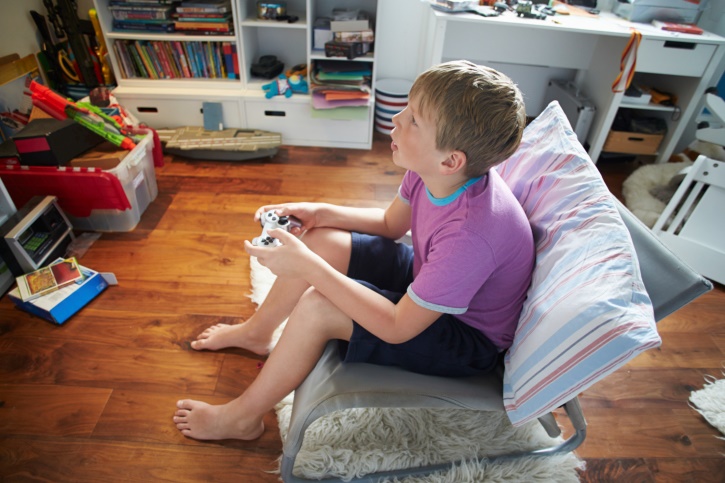 Violence in video games has long concerned parents, who worry about the influence on impressionable minds of controversial games such as Grand Theft Auto. In many games, players score higher when they break the (virtual) law, behave violently toward others, and maximize the pain inflicted on other players.
So pervasive is the idea that violent video games cause violent behavior that a 2010 survey found that 49% of adults believe that violent games can inspire some people to commit real-life atrocities. A study published in Psychology of Popular Media Culture undermines this claim, suggesting that violent video games do not increase violent behavior. Instead, the researchers argue, duration of play is what matters.
Violent Video Games Might Not Cause Violent Behavior
Researchers interviewed about 200 10- and 11-year-olds about their video game-playing habits. They also asked the children’s teachers about their classroom behavior, problem-solving skills, and academic engagement. Two-thirds of the children reported playing video games each day, with boys almost twice as likely as girls to engage in daily game playing. About 10% of children reported playing games for more than three hours each day.
[fat_widget_child_counselor_right]
Children who played video games for less than an hour each day showed lower rates of aggression than children who did not play at all—even when the games in question were violent ones. Children who played for longer than three hours each day, however, had higher levels of aggression and lower levels of academic engagement. The study’s authors argue that their results show that daily video game play is not linked to an increase in aggression. Instead, prolonged play may increase aggression, though the study did not illuminate why this might be.
The Video Game Debate Rages On
Researchers in the study were careful to point out that new technologies often inspire a moral panic. At various times, parents have worried about the effects of violent movies and television, aggressive music lyrics, and even radio shows. With each technological advancement, though, there hasn’t been a sudden new wave of crime.
So, the jury is still out on the effects of video games. Research consistently finds benefits such as an increase in spatial reasoning skills, but some studies have uncovered a correlation between violent games and violent behavior. A 2014 study found that kids ages 8 to 17 who played many violent video games displayed an increase in violent behavior, even three years later. Another study found an increase in violence among teens who played violent video games.
The way a video game affects an individual child may depend on a number of factors, including parental involvement, the child’s personality, how much time the child spends on games, and similar components of a child’s environment.
References:
- 22 charts and graphs on video games and youth violence. (n.d.). Retrieved from http://videogames.procon.org/view.resource.php?resourceID=003627
- Bingham, J. (2015, April 1). Study finds no evidence violent video games make children aggressive. Retrieved from http://www.telegraph.co.uk/news/science/11507576/Study-finds-no-evidence-violent-video-games-make-children-aggressive.html
- Rettner, R. (2014, March 24). Do violent games boost aggression? Study adds fire to debate. Retrieved from http://www.livescience.com/44325-video-games-aggression-debate.html
- Violent video games make teenagers more aggressive, study finds. (2012, October 8). Retrieved from http://www.telegraph.co.uk/technology/video-games/9593188/Violent-video-games-make-teenagers-more-aggressive-study-finds.html
 The continuum of exposure to domestic violence ranges from chronic arguing and yelling to controlling behaviors, threats, and intimidation, to physical threats, threats of suicide or murder, to threats involving weapons, to serious injuries and fatal assaults. While domestic violence takes many forms, there is always a destructive undercurrent of power and control, with offenders commonly and compulsively grasping for in a surrogate what is lacking within themselves: control.
Any pattern of behaviors in intimate relationships marked by coercive control can be a signal or foreshadowing of abuses. And when children are involved, they are always significantly affected, remaining at risk not only of direct victimization but long-term effects stemming from exposure itself.
The Centers for Disease Control and Prevention have reported that in homes where violence between partners occurs, there is a 45% to 60% chance of co-occurring child abuse, a rate 15 times higher than the average. Even when they are not physically attacked, children witness 68% to 80% of domestic assaults.
With April marking National Child Abuse Prevention Month, these numbers are a sobering reminder of the toll a violent environment takes on kids.
[fat_widget_right]
The circumstances of domestic violence leave caregivers, emotionally and otherwise, unavailable and unresponsive, activating a primal fear in kids beneath and between a host of other raw, complex, and unresolved emotions. The pioneering psychiatrist and researcher Daniel Siegel has written, “The mind develops as the brain responds to ongoing experience. … The pattern of firing of neurons is what gives rise to attention, emotion, and memory.†And what fires together—in a combination of overtly violent exposures and the child’s underlying neurobiological experience—wires together.
The unavoidable attention given, emotions felt, and memories imprinted onto a child’s brain in moments of stress become inextricably linked together and forever taint—or else filter—feelings, beliefs, and choices in relationships and all of life. These children are not merely innocent bystanders. They are victims.
We must better understand the psychological aftermath, which can include fear of harm or abandonment, excessive worry, sadness, or guilt, inability to experience empathy or guilt, habitual lying, low frustration tolerance, emotional distancing, poor judgment, shame about the past, and fear about the future.
The unavoidable attention given, emotions felt, and memories imprinted onto a child’s brain in moments of stress become inextricably linked together and forever taint—or else filter—feelings, beliefs, and choices in relationships and all of life. These children are not merely innocent bystanders. They are victims.
Although they may be unintended victims, living within a climate of chronic emotional volatility and near acute incidents of aggression has a way of searing a neurophysiological muddle—painful and isolating emotions existing alongside ongoing and frequently unmet needs for affection and attachment.
Parents who are themselves batterers are more irritable, less involved in child rearing, more likely to use severe and erratic physical punishment, and less able to distinguish their children’s needs from their own. Both parents, regardless of culpability, risk poor emotional attunement with their children and, consequently, a decreased capacity to recognize stress and danger, protective factors which might increase a child’s resiliency.
Compared with other kids, those who have witnessed domestic violence experience far greater incidence of insomnia, bed wetting, verbal, motor, and cognitive issues, learning difficulties, self-harm, aggressive and antisocial behaviors, depression and anxiety, as well as, most troubling, adult domestic violence, with boys often becoming offenders, victims, or both, and girls more likely to become victims (Brown and Bzostek, 2003).
A growing body of literature has revealed that children who have been exposed to domestic violence are more likely than their peers to experience a wide range of difficulties, from anger, oppositional behavior, and disobedience to fear, low self-worth, and withdrawal to poor sibling, peer, and social relationships. Studies have found evidence of much higher rates of pro-violence attitudes, rigid stereotypical gender beliefs involving male privilege, animal abuse, bullying, assault, property destruction, and substance abuse.
A study by Kilpatrick, Litt, and Williams (1997) concluded that witnessing domestic violence is an experience in and of itself sufficiently intense to precipitate posttraumatic stress in children. The ongoing Adverse Childhood Experiences (ACE) Study led by the CDC has classified exposure to domestic violence as one of several adverse childhood experiences contributing to poor quality of life, premature death, as well as risk factors for many of the most common causes of death in the United States.
In addition to the exposure itself, additional factors influence impact, including the nature of the violence, age of the child, elapsed time since exposure, the child’s gender, and presence of physical or sexual abuse.
Children who witness fewer incidents of violence and experience positive interactions between caregivers may be, for instance, less detrimentally impacted than those exposed to frequent and extreme aggression. Younger children exhibit more concerning levels of psychological distress than older, more developmentally mature, children. Children are typically highly anxious and fearful immediately after witnessing an incident of domestic violence and less observably so as time passes, but of course this should not be assumed to indicate an absence of anxiety or fear. Boys exhibit more externalizing behavior problems such as aggression and acting out, while girls exhibit more internalizing behavior problems such as withdrawal and depression.
It nearly goes without saying that children who are exposed to domestic violence and are also physically or sexually abused are at a higher risk for emotional and psychological problems than those who witness such violence and are not physically or sexually abused.
Thank goodness there are protective factors that reduce the worst impacts, including a child’s literacy and overall intelligence, the extent to which the child is outgoing and socially competent, and whether the child has safe and supportive relationships with at least one influential adult (Carlson, 2000; Edleson, 2011; Hughes, et al., 2001). Those surrounding the most difficult situations have opportunity to inject resiliency through academic, emotional, and social support. We must all grapple with whether there are ways we might more effectively intervene within our families, schools, and communities to instigate help and healing.
References:
- Brown, B., and Bzostek, S. (2003, August). Violence in the lives of children. Crosscurrents, 1. Bethesda, MD: Child Trends. Retrieved from http://www.childtrends.org/wp-content/uploads/2003/01/2003-15ViolenceChildren.pdf
- Carlson, B.E. (2000). Children exposed to intimate partner violence: Research findings and implications for intervention. Trauma, Violence, and Abuse, 1 (4), 321-342.
- Edleson, J. (2011). Emerging responses to children exposed to domestic violence. Harrisburg, PA: VAWnet, a project of the National Resource Center on Domestic Violence/Pennsylvania Coalition Against Domestic Violence. Retrieved from http://www.vawnet.org/Assoc_Files_VAWnet/AR_ChildrensExposure.pdf
- Hughes, H. M., Graham-Bermann, S. A., and Gruber, G. (2001). Resilience in children exposed to domestic violence. In S. A. Graham-Bermann (Ed.). Domestic violence in the lives of children (pp. 67-90). Washington, DC: American Psychological Association.
- Kilpatrick, K.L., Litt, M., and Williams, L.M. (1997). Post-traumatic stress disorder in child witness to domestic violence. American Journal of Orthopsychiatry, 67 (4), 639-644.
- Siegel, D., and Hartzell, M. (2004). Parenting from the inside out: How a deeper self-understanding can help you raise children who thrive. New York, NY: Tarcher.
 I recently overheard a young woman bemoaning that her 2-year-old was “too chubby” so she was going to put her on a diet. This started me thinking about people who are unaware of the negative consequences that result from anxieties about how their children appear to the world, especially their weight, body type, and demeanor.
“Teri†began therapy expressing anxiety and depression, mostly about her appearance: “I was an overweight kid, and everyone always made fun of me. I lost a lot of weight by high school, but it was only after I went away to college that I could reinvent myself and feel a little better about how I looked. But I kept on worrying if people liked me. Now I’m a 43-year-old woman and I’m still upset all the time about my weight and my looks. My doctor tells me that I’m not overweight, but I see all those thin, beautiful women out there, and that’s not me. I can’t lose the 15 pounds I keep trying to lose. My husband tells me that I have a great body. But how can that be when I’m not a size 2?â€
Over a number of months, Teri expressed many worries—not only about her physical appearance, but about what people thought of her. Then, about eight months into therapy, Teri began to sob: “The worst thing right now, maybe worse than my gaining two pounds, is … she hates me. My daughter Marni hates me. She should. I’m a terrible mother.â€
[fat_widget_right]
Teri hadn’t spoken much about her 15-year-old daughter. It certainly isn’t unusual for mothers and daughters to be fighting as daughters try to separate during adolescence. I wondered if this was typical mother-daughter separation dynamics, if this was more of Teri’s intense need for positive response, or if something else was going on. I asked Teri to tell me more about why she thought she was such a terrible mother.
“I can’t get it right,†Teri said. “I think Marni is depressed. She always looks unhappy. She’s alone on the computer or watching TV a lot. She goes to a great private school with really great kids from good families. But her friends are so nerdy. She doesn’t care about joining teams or clubs or about much of anything. I can’t believe my daughter doesn’t care at all about what she looks like or how other people think about her. We fight about everything: where she goes, her spending, her friends, what she eats, what she wears. She’s getting fat. I can’t stand it. I don’t like my feelings; mothers shouldn’t feel this way. But Marni isn’t the daughter I imagined I would have.â€
I responded to Teri’s distress: “This sounds so painful for you. I can see how difficult it is for you that Marni isn’t interested in what is so important to you: to have a particular appearance and to be well liked by everyone. Since childhood, nothing has been more vital to you than being thin and popular. Marni is rejecting this as having value for her.â€
Teri responded: “It’s true. It’s scary that she doesn’t understand the trouble she’ll have if she doesn’t make herself socially desirable. You know my family didn’t have much money. Thank goodness my husband and I do well enough. I thought that I could make my daughter happy if I bought her nice clothes, sent her to a prestigious school, and gave her advantages. But somehow it doesn’t matter. I think she’s miserable.”
It made sense to me that Marni, like her mother, hadn’t developed a positive sense of herself. I believed that she experienced Teri’s worries about her as statements about how she wasn’t measuring up to Teri’s standards. This could affect her self-esteem and self-confidence and make her anxious about asserting herself in the world. She was also probably struggling with separation and individuation, trying to be different from her socially anxious mother.
I was concerned about Marni, but I was also concerned for Teri, who loved her daughter and whose anxieties about her mothering were causing her to become more depressed. Knowing that Teri had been ridiculed and had a lot of social anxiety from elementary school on, I thought it would be helpful if she could connect her early experiences with the feelings she was having about herself and her relationship to Marni.
It certainly isn’t unusual for mothers and daughters to be fighting as daughters try to separate during adolescence. I wondered if this was typical mother-daughter separation dynamics, if this was more of Teri’s intense need for positive response, or if something else was going on.
We spent a great deal of time talking about her memories and associations to this time in her life. She spoke about how her mother was an anxious woman with no friends: “I was the center of her world. My father was away a lot, traveling for work. Mom had very little life of her own. She hardly ever left the house. She was always scared of people. I remember when I first went to school, I cried and cried. She told me I would be OK, but I have a very clear memory of her crying and looking scared.â€
“Did you eventually settle in and get comfortable?†I asked.
“No,†Teri said, “I was always scared and the other kids knew it. They tortured me. They would hide my books, call me ‘fatty’ and be mean. I would tell my mother about it, but it would upset her so much, so I eventually stopped talking to her about it.â€
“What would she say to you?†I wondered.
“I don’t exactly remember,†Teri said, “but I know she always told me that I had to smile, make friends, and be nice to people. She said I wasn’t fat and that I looked fine, but I knew I was fat and that I didn’t dress like the other kids.â€
Teri began to cry: “You have no idea what it was like. I was always left out of things. I never had the right look, never got chosen for the team until the end. I finally just became a loner. I was pretty miserable. I guess I was depressed. Wow, I so don’t want Marni to have to go through these things. I’ve never quite put it together before. Of course, I knew I didn’t want Marni to be fat or unpopular because people make fun of you. But as I’m remembering how terribly painful it was for me, maybe I have gotten crazy about how I don’t want it to be that way for her.â€
As I listened, I realized that I didn’t know what Teri actually knew about Marni’s experiences. I asked: “Do you think she has been ridiculed like you were?â€
“I suppose not,†Teri said. “She has more friends and isn’t really fat like I was, just a little overweight.â€
“Are there other differences that you can see between your childhood experiences?†I asked.
“You, know, I’ve never thought of this before,†Teri said, “but I complained to my mother all the time until I realized she couldn’t help me. But Marni never complains about how she is treated by her peers. Hmm … maybe she is having a very different experience than I did. She does seem more OK with her relationships at school than I was. I don’t think she gets mistreated, but I do think she’s depressed.â€
“If you had to guess, what do you think she is depressed about?†I asked.
“Well, I get depressed when I feel bad about myself,†Teri replied. “I suppose she could be feeling bad about herself.â€
“What do you think could be going on that she would have bad self feelings?â€
“I don’t know,†Teri said. “She never puts herself out there so she can receive special good attention or notice or recognition. She does get very good grades.â€
“What about negative attention?†I asked. “Does she ever feel criticized?”
Teri became silent and started to cry again: “Oh, no. It’s me. I’m her biggest critic! I’m always on her, telling her what’s wrong with her. I knew it; I have been a terrible mother.â€
Teri’s sobbing increased, and then, amid sighs, she asked, “What do we do now?”
This was a turning point in Teri’s therapy experience. She was becoming emotionally related to her traumatized child self. As she became increasingly able to emotionally remember her painful experiences, she could consider that the way she related to Marni was intended to protect her daughter from having similar traumatizing experiences. This realization allowed Teri to begin to let go of her “bad mother†feelings and accept that she had tried to be a good one.
Slowly, Teri began to feel less anxious for Marni and more able to see her daughter as someone with her own ways of being in the world. The more she could distinguish her own history and anxiety from Marni’s experiences and feelings, the less anxious each felt. Teri began to see Marni’s relationship with her friends differently. She noticed that, although Marni was alone, she was often on her cell phone or computer talking and laughing with friends. Now Teri could consider that being a good mother meant being attuned to her daughter’s life from her daughter’s point of view. When Teri could distinguish her own subjectivity from Marni’s, she had fewer critical thoughts and was more open to seeing Marni’s experiences as different rather than bad. This meant Teri was projecting less of herself and was beginning to see Marni as a more separate person with her own subjectivity.
Growing up, Teri’s family had not provided her with a view of herself that gave her the internal resources to develop a positive, confident sense of self. She needed to look to externals for positive reactions in order to feel good about herself. Recognizing this, Teri could appreciate how important it is to express positive feelings to Marni about whom she was and what she did in the world.
Teri understood that she had been projecting her standards for popularity and appearance on Marni, and now she had to give Marni the emotional space to develop her own thoughts about how she looked and appeared to the world. This facilitated Marni’s separation-individuation process, as the absence of her mother’s critical projections left more room for Marni to develop her identity, self-esteem, and confidence.
Note:Â To protect privacy, names in the preceding article have been changed and the dialogues described are a composite.
 These days, most of us live with some degree of stress. For kids, between their homework, friends, after-school activities, sports, and worries about getting into college, it’s a whole new era of anxiety. It’s no wonder, then, that the National Institute of Mental Health states that the prevalence of diagnosed anxiety disorders among 13- to 18-year-olds is 25.1%.
If you’re a parent living with an anxious child, you know how tiring and frustrating it can be—for both of you. It’s not easy to live with the kid who’s so stressed out by homework assignments that he ends up throwing the book against the wall, or tearing the papers in frustration, or working until midnight to get it perfect. Or the teen who gets a migraine every time she has to go to school or start a new activity. With a little insight into how they feel, why they act the way they do, and what we can do to help, the job of parenting anxious kids gets a little easier.
How They Feel
Anxiety doesn’t always show up as worry. Sometimes it looks like anger, irritability, sadness, or fear. After a full day at school worrying and obsessing, kids often come home exhausted—and immediately act out.
[fat_widget_child_counselor_right]
Imagine spending an entire day in fight-or-flight mode. That’s when the brain perceives a danger and thus produces adrenaline and stress hormones to prepare for a quick getaway, like a caveman running from a tiger. This causes physical sensations such as dizziness, faster heartbeat, rapid breathing, and sweaty palms. In this state, it’s tough to think clearly or make good, informed decisions. Even the most mature of us might lash out after all that.
Then again, sometimes these struggling kids look like stereotypical “normal†kids—at least at school, where they may crave the approval of the teachers. Keeping very contained gives them a sense of control over their environment, helping to minimize the risk of what they see as danger. But when they come home, everything changes. In the safety of their own room, they might have panic attacks, refuse to follow rules, or get violent.
What This Is NOT
If you lived with this level of stress every day, you’d probably come home and explode, too—and maybe you do. Kids tend to store up their stress and take it out on those they can trust: their parents and family members. Sometimes your home might feel like a battlefield.
What’s important to know is that this is not manipulation. Your child doesn’t want to be this way. It’s easy to think that he or she is acting out in order to get attention, or that if the child were less spoiled, less spiteful, or less rebellious, he or she would stop being “bratty.†But in reality, no one, especially a sensitive kid, would choose to constantly be in trouble.
Anxious children may lose it for a handful of reasons:
- Lack of self-control
- Storing up their frustration until it explodes
- Guilt
- Low self-esteem
- Unconsciously testing parents
How We Can Help
Anxious children generally lack two vital skills for reacting with calm and rationality. The first is regulation, or the ability to calm oneself. The second is self-soothing tools, or alternatives to turn to when their emotional temperature spikes.
The first way parents can help kids regulate is by modeling regulation. The more calm you are, the more they’ll learn from that ability. Research shows that humans’ heart rates attune with the people that they feel close to. So if someone holds us in a loving way, our heartbeats will often increase or decrease to match theirs.
Therefore, one way to help them relax is to reverse-match our activity to theirs. In other words, as they go up, we go down. If their bodies become jerky or uncontrolled, we keep our movements fluid and slow. As their volumes raise, we modulate our voices even more. And if they become angry or even nasty, we remain loving and firm.
Self-soothing tools fall into two main catagories: physical and mental. (These tools require some practice, and only their basics are described here.) Physical tools include breathing and stretching. Check out Dawn Huebner’s book, What To Do When You Worry Too Much, for great examples of how to stretch. Breathing exercises and body movement exercises help reset the inner thermostat. Exercise also helps to calm the body, so throwing a ball, jumping on a trampoline, or dancing around the living room are great ideas for breaks.
Mental self-soothing is achieved by thinking calming thoughts. This can be done with words, like a mantra that replaces the anxious thought. For instance, when a child says, “I can’t do it,†or, “I always screw up,†you can help him or her practice saying, “I just need to try my best.†Ask the child to come up with some alternate statements that make him or her feel better, and practice together.
In addition to words, images can also be self-soothing. Where is your child’s favorite place? Could he or she create an imaginary haven? When feeling stressed, have your child conjure up this “safe space†in his or her mind, whether it’s a sandy beach, flower garden, or private room. Breathing slowly and thinking about a quiet and peaceful place calms the body and soothes the mind.
The Long-Term Upside
These are sensitive kids; that’s why they feel things so deeply. So it’s helpful to remember the flipside of that sensitivity. These are children who tend to be insightful, empathetic, tuned in, passionate, dramatic, and thoughtful. They often thrive in creative pursuits and go on to amazing careers in helping professions. The traits that are so challenging to them now will serve them well as adults. For now, the best we can do is teach them to channel their sensitivity into self-care.
Reference:
Any anxiety disorder among children. (2015). National Institute of Mental Health. Retrieved from http://www.nimh.nih.gov/health/statistics/prevalence/any-anxiety-disorder-among-children.shtml