 Marriage later in life may cause middle-aged women to gain weight, but those who divorce may see improvements in their health, according to a study published in the Journal of Women’s Health. The study tracked marital status and various health measures to explore how marriage affects health.
Health Effects of Marriage in Middle Age
The study evaluated data on 79,094 postmenopausal women who participated in the Women’s Health Initiative Observational Study. Participants ranged in age from 50-79 and were evaluated over the course of three years. Researchers tracked the participants’ weight, waist circumference, blood pressure, smoking history, use of alcohol, exercise habits, and diet.
They then divided women into three groups: women who married or entered a long-term relationship during the study; those who separated or divorced during the study; and those whose marital status did not change—remaining either single or married—during the study period.
All of the women who were unmarried when the study began gained some weight during the study, which is not uncommon as women age. However, women who got married gained an average of two additional pounds more than their unmarried peers. Women who got married and those who remained single both experienced drops in diastolic blood pressure, but single women experienced a greater drop. Single women also drank less alcohol than those who married.
[fat_widget_right]Women who divorced lost weight and increased their physical activity. Women who remained married, by contrast, gained an average of two pounds and saw a decline in physical activity.
Is Marriage Good for Women?
Researchers have long debated the health benefits of marriage. While most research suggests marriage improves men’s health, the data on women is less clear. One study linked marital problems to health issues such as high blood pressure and an increased risk of heart attack for women, but not for men. Another study found married women did not gain the health benefits that married men gained. Women who divorced in their twenties were also less likely than those who stayed married to experience metabolic syndrome.
A study of more than 800,000 married people found married men and women with cancer were more likely to survive.
References:
- Change in marital status post-menopause may impact health. (2017, February 6). Retrieved from https://medicalxpress.com/news/2017-02-health-postmenopausal-women-divorce.html
- Knapton, S. (2015, June 11). Marriage is more beneficial for men than women, study shows. Retrieved from http://www.telegraph.co.uk/science/2016/03/14/marriage-is-more-beneficial-for-men-than-women-study-shows/
- Kutob, R. M., Yuan, N. P., Wertheim, B. C., Sbarra, D. A., Loucks, E. B., Nassir, R., . . . Thomson, C. A. (2017). Relationship between marital transitions, health behaviors, and health indicators of postmenopausal women: Results from the Women’s Health Initiative. Journal of Women’s Health. doi:10.1089/jwh.2016.5925
- Tamkins, T. (2009, March 6). Unhappily ever after: Why bad marriages hurt women’s health. Retrieved from http://www.cnn.com/2009/HEALTH/03/06/marriage.women.heart/index.html?_s=PM%3AHEALTH
 Many people struggle to understand how our culture defines domestic violence. Some believe that to constitute domestic violence, a person must be beaten or violently struck in some way. However, domestic violence behaviors do not necessarily include physical assault. While it may include sexual, emotional, and/or physical abuse, the most consistent component of a domestic violence relationship is an ongoing effort to maintain power and control over one’s partner.
The National Coalition Against Domestic Violence (2016) lists several abusive behaviors that are earmarks of domestic violence:
[fat_widget_right]
- Frequently accusing one’s partner of lying and/or cheating: “You were 15 minutes late getting home. Who were you having sex with?â€
- Controlling finances. For example, the abusive person may make eight times the wage their partner earns, yet insist they split household bills equally. The abusive person may insist they control all the money and offer an allowance they control rather than share equally in financial responsibilities.
- Forcing sexual acts, sometimes minimized with comments such as, “I just had too much to drink,†or, “I knew you really wanted it.â€
- Isolating the person. This can appear in the form of behaving rudely or in other socially inappropriate ways to discourage their partner’s friends and family from wanting to be around them. The abusive person may find ways to keep their partner from spending time with family or friends, monitor their partner’s conversations, and forbid their partner from communicating with others.
- Preventing a partner from working or advancing their education.
- Destroying a partner’s property.
- Hurting, or threatening to hurt, a partner’s pets.
- Belittling a partner for not doing things “right†(in the abusive person’s opinion).
- Intimidating by creating an environment where a partner feels the need to “walk on eggshellsâ€; the world revolves around keeping the abusive person from being disturbed.
- Treating the abusive person’s partner as if their needs and feelings do not exist, or as if they are a servant. At times, the abusive person may promise to change, but their behavior does not improve for long, if at all.
Abusive individuals often want the people they abuse to believe they are at fault: “If you would only ____, I would not get angry. You provoked me. You are crazy.†To be clear, there is nothing any person can say or do that provokes or deserves abuse. While a person may behave in ways that could benefit from modification, those are relationship issues. Domestic violence is not a relationship issue; it is in many cases a criminal act.
Abuse loves when we don’t talk about it; it thrives in silence. By giving a voice to those who feel they have none and talking about their pain, we give abuse nowhere to hide.
In many states, a domestic violence charge does not necessarily need to include touching a partner. Destroying property, stalking, and harassing—including menacing texts and phone calls—can constitute domestic violence. Domestic violence may be addressed in three different types of court: criminal, civil, and family (American Bar Association, 2001). Abusive people will sometimes attempt to pressure or manipulate a partner into dropping charges or to lie to help minimize the consequences of the abusive person’s behavior.
Often, a domestic violence relationship may seem like any happy relationship in the beginning, but becomes more controlling and abusive over time (National Coalition Against Domestic Violence, 2016). Because of this, people who have been abused sometimes report feeling shame for not recognizing the signs of abuse sooner. It is not unusual for someone leaving a domestic violence relationship to state they realized they were in a domestic violence relationship only after they felt it was too late to leave, and that they wanted to leave sooner but did not believe they could materially survive alone. However, many resources are available to assist with safety plans, housing, legal advocacy, and other resources.
Getting Help for Domestic Violence
If you or someone you care about is in a domestic violence relationship, you are not alone. To speak confidentially with a trained advocate, call the National Domestic Violence Hotline at 1-800-799-7233. Live, private chat is also available at http://www.thehotline.org/. Information and thousands of resources, including counseling, across the United States are available to people in an abusive relationship and to friends and family of a person they believe to be in an abusive relationship. Contact a trained therapist if you need further guidance or support.
Abuse loves when we don’t talk about it. It thrives in silence. By giving a voice to those who feel they have none and creating spaces for them to talk about their pain—and offering support as they do so—we give abuse nowhere to hide.
References:
- American Bar Association. (2001). Know your rights: Domestic violence. Retrieved from http://www.americanbar.org/content/dam/aba/migrated/publiced/domviol.authcheckdam.pdf
- National Coalition Against Domestic Violence. (2016). What is domestic violence? Retrieved from http://ncadv.org/learn-more/what-is-domestic-violence
- National Domestic Violence Hotline. (2016). Is this abuse? Retrieved from http://www.thehotline.org/is-this-abuse/
 Most mothers likely want their daughters to develop a positive body image and a healthy sexual self-esteem. However, many moms inadvertently act in ways that are counter to this goal, often because they may feel shy or embarrassed to talk about their bodies and sexuality. This message may, over time, get passed along to their daughters.
What is a healthy sexual self-esteem, exactly? This refers to a person’s ability to connect to their sexual identity and self in an age- and developmentally appropriate way. Healthy sexual self-esteem could mean experiencing our body in a sexual way, enjoying our body sexually, and eventually sharing our body sexually with someone else. Many moms tell me they want to raise their daughters to be like this one day. They want their daughters to feel great about their bodies and to experience pleasure when they are older, in a healthy adult relationship. The question is: how do we get there?
First of all, it may be necessary to reframe the part of you that still believes talking to your daughter about her body and sexuality may be harmful. The research does not support this notion. In a study published in 2008 in the Journal of Adolescent Health, for example, researchers Kohler et al. found that adolescents who received comprehensive sex education were significantly less likely to report teen pregnancy than those who had received abstinence-only education. In fact, abstinence-only education did not reduce the likelihood of engaging in vaginal intercourse, but comprehensive sex education did.
[fat_widget_right]
With the research firmly on the side of talking to your daughter about her sexuality, how do you go about it?
General Tips
- Start early and deliver age-appropriate messages. This conversation is a years-long one. Don’t wait for children to ask questions or initiate, as some may be too embarrassed. As the adult, overcome any discomfort you feel and talk to them.
- Model healthy body image, no matter your shape or size. Reject media images of so-called ideals. Promote a greater picture of health and nutrition rather than focusing on fat or weight specifically. Model appropriate affection with your partner.
- Be real. This means being direct, honest, and conveying the facts alongside a positive and affirming perspective.
Toddler Years
- Put a positive spin on bodily functions (i.e., “You threw up because your body was saying the food you ate did not work well in your body. Your body can be trusted and knows how to protect you!â€).
- Don’t shame their bodies by saying things like, “Go put your clothes on,†or, “Don’t run around the house naked.â€
- Teach them the correct names of body parts: vagina, penis, testicles, etc.
- When the time comes/when they ask, tell them how babies are made. For example: “When a mommy and daddy love each other very much, the mommy’s egg meets the daddy’s sperm and that makes a baby. Then the baby grows in the mommy’s uterus until it’s big enough to come out. When the baby’s ready, the uterus squeezes, and the baby comes out of the vagina. Then mommy’s body goes back to the way it was.â€
Pre-Puberty/Puberty
- Put a positive spin on distressing changes (i.e., “You are becoming a woman! That’s wonderful! Welcome to the world of womanhood.”). At the same time, discuss openly any negative aspects of puberty-related changes rather than glossing over them.
- Tell stories from your childhood—your first period, perhaps, or even embarrassing stories. Show them that you survived and they will, too.
- Don’t shame their bodies with messages like, “You can’t wear that.â€
- Teach them about male and female puberty, natural bodily changes, and the basics of sex.
- Take your daughter to get her first bra. Bring it up; she may be too embarrassed.
- Give her deodorant, a razor, sanitary pads, tampons, etc. Tell her you have noticed she’s becoming a beautiful young woman. Again, pre-empt these things.
Adolescence
- Encourage your daughter to trust her body and to listen to it (i.e., if she gets a stomachache before a test, talk to her about how her body is telling her something).
- Again, don’t shame their bodies. Talk about what messages they want to portray about themselves by the way they dress and appear. Share examples from your own life.
- Talk about relationships as portrayed in books and movies and how those portrayals differ from real life. Talk about couples dynamics and what your child may like/doesn’t like about how relationships are portrayed vs. the reality of relationships.
- Don’t encourage her to hide her wanting to grow up. Pick your battles. If you find out she’s tweezing her eyebrows, it’s not the end of the world. Instead, help her find an article online about eyebrow tweezing (or whatever else) and use this as an opportunity for open discussion. Shaming a child can lead the child to want to hide things from you later.
- Talk to her about her period. Introduce her to the variety of menstrual supplies available and encourage her to explore all of them to discover what works best for her. Tampons may seem scary, for example, but using them may help some adolescents become more comfortable with their bodies. Help her get used to her period as a normative event, not something shameful or secret.
Raising any child is difficult, but raising a daughter may come with its own particular challenges. To promote healthy body image and sexual self-esteem, keep your conversations real and regular, be a trusted resource for accurate information, and model what you want your daughter to aspire to both in and out of relationships.
Reference:
Kohler, P. K., Manhart, L. E., & Lafferty, W. E. (2008). Abstinence-only and comprehensive sex education and the initiation of sexual activity and teen pregnancy. Journal of Adolescent Health, 42, 344-351.
 Female soccer players exposed to stereotypes about their playing ability experienced significant reductions in their dribbling speed, according to a study published in the journal Psychology of Sport and Exercise.
The study is just one amid an increasingly large volume of studies on stereotype threat. Stereotype threat is the tendency of marginalized groups, such as women and people of color, to underperform when they are made consciously aware of stereotypes about their group. For example, a persistent stereotype suggests women are innately less adept at math than men. According to several studies, when women are told scientific research shows gender differences between men and women in math, they often perform worse on math tests.
Stereotype Threat Reduces Female Soccer Players’ Skill
Although women’s sports continue to increase in popularity, stereotypes suggest women are inferior athletes. To test how this affects female performance, scientists from Germany recruited 36 competitive female soccer players from three different Frankfurt soccer clubs. Each participant was timed in a dribbling exercise at the beginning of the experiment.
Each participant read a fake article about soccer. One article discussed the increasing worldwide popularity of soccer, while the other argued that women are inferior soccer players. Next, researchers asked them to indicate, using a 7-point scale, how strongly they believed the statement “I think boys and girls play soccer equally well.â€
[fat_widget_right]Researchers again timed players’ dribbling speed to assess the effects of the stereotype exposure. Women who had read the negative article about women’s athletic ability dribbled more slowly than they did before reading the article.
Stereotypes and Inequality Persist in Women’s Athletics
Female athletes are often exposed to stereotypes and discrimination, even within their own athletic leagues. Earlier this year, five members of the United States women’s soccer team filed a lawsuit alleging gender-based wage discrimination. The suit alleges that, although the team brought in $20 million more in revenue in 2015 than the men’s team, female players are paid about 25% of what male players earn.
References:
- Gorlick, A. (2009, February 24). Stereotype threat harms female, minority performance. Retrieved from http://news.stanford.edu/news/2009/february25/stereotype-threat-harms-latent-ability-022509.html
- Negative stereotypes affect female soccer performance. (2016, July 14). Retrieved from http://www.eurekalert.org/pub_releases/2016-07/e-nsa071416.php
- Quinn, D. M. (2003, January). Women, math, and stereotype threat. Retrieved from http://www.aas.org/cswa/status/2003/JANUARY2003/WomenMathStereotype.html
- U.S. women’s team files wage-discrimination action vs. U.S. Soccer. (2016, April 1). Retrieved from http://espn.go.com/espnw/sports/article/15102506/women-national-team-files-wage-discrimination-action-vs-us-soccer-federation
 According to the Centers for Disease Control and Prevention, in the United States 6.7 million women between the ages of 15 and 55 experience either problems getting pregnant or carrying a pregnancy to term. That is more than 10% of women in this age range. Chances are you or someone you know has experienced or will experience challenges related to fertility.
Infertility often has biological causes, but the emotional effects can be especially devastating for a couple trying to conceive. The National Infertility Association discusses these emotional effects, which may include:
- Irritability
- Trouble sleeping
- Feelings of sadness, anger, guilt, and/or shame
- Difficulty concentrating
- Decrease in or lack of energy
- Feeling numb
In addition to these symptoms, I have noticed the people I work with in therapy experiencing the following:
[fat_widget_trauma_ptsd_right]
- Increase in anxiety and stress levels (especially when going in for fertility treatments)
- Depression (worse when infertility is persistent)
- Frustration
- Worry
- Negative impact on intimacy (physical and emotional) in the relationship
Infertility is traumatic. In addition to depression symptoms, it is quite common that couples experiencing infertility will experience anxiety in response to certain situations or triggers (such as seeing pregnant women, pregnancy tests, babies on TV or in person, etc.). They may experience intense emotion around certain times of the month, particularly the times near ovulation and when a period is due. Going in for fertility treatments may become very triggering and anxiety provoking, particularly if previous interventions failed. Sadness and grieving are common, particularly around holidays and other important life events.
When someone is experiencing infertility, negative beliefs about one’s inadequacy or defectiveness may come up. Both partners may question why their bodies are not functioning like seemingly everyone else’s, especially when those around them are having babies, apparently without any trouble.
If there has been past pregnancy loss, other triggers for anxiety, depression, and intense emotions may come up, including the date a baby was due or times of year associated with the loss. Triggers can seem unrelated or random but still have a profound effect on the emotional reaction of the people going through this difficult situation. For many, infertility feels like riding an emotional roller coaster of anticipation, worry, sadness, grief, and anger.
When someone is experiencing infertility, negative beliefs about one’s inadequacy or defectiveness may come up. Both partners may question why their bodies are not functioning like seemingly everyone else’s, especially when those around them are having babies, apparently without any trouble. People struggling with this issue may question their value and their self-worth can take a major hit, resulting in magnified depression and hopelessness.
The stress and trauma that result from infertility can also have a negative impact on a relationship. Because both partners experience their own challenges in infertility, they may be more prone to snapping at each other, taking things personally, or feeling disconnected.
There are steps people who are experiencing the emotional complications of infertility can take in order to cope and eventually thrive through this major life challenge.
1. Seek Professional Assistance
A mental health professional can help address the symptoms one is likely to encounter when experiencing difficulties related to infertility. Coping skills, trauma work, and couples counseling are just a few of the areas a therapist can help someone to work through to make this difficult path more bearable.
When working with people with infertility issues, I often utilize eye movement desensitization and reprocessing (EMDR) therapy to address negative beliefs about worth and defectiveness. EMDR has also been helpful in addressing and reducing disturbance related to fertility treatments, pregnancy loss, and worries about the future. When trying to get pregnant and while pregnant, stress management is essential in helping the body to be at its best to conceive and carry a baby.
2. Give Yourself a Break from Social Media
Social media can be wonderful, but they can be triggering for someone who is going through infertility. People love to make pregnancy and birth announcements through social media. Someone experiencing infertility may be much more sensitive to these announcements, as they can feel like a reminder of the pain that person is bearing.
If such announcements are triggering, give yourself a break and stay off social media for a while. Work with a therapist to decide when and how you will begin to engage in social media again. Working through some of the trauma and practicing coping skills regularly can help reduce the triggering effect of social media.
3. Acknowledge and Feel Your Feelings
Emotions are meant to be felt. One of the main jobs of an emotion is to alert us that we need to pay attention to something. Emotions can do what they are supposed to do only if we are willing to acknowledge and feel them.
The human body and brain are very good at working through difficult material when we stop avoiding emotions and allow ourselves to feel fully. A therapist can help with learning to tolerate and regulate emotions.
4. Celebrate and Enjoy the Little Things
Infertility can consume your life. From your thoughts to your time to your emotions and your relationship, it seems that there is not an area that infertility does not impact.
With your partner, find reasons to celebrate life. Engage in fun activities that you wouldn’t or won’t be able to do while pregnant or with a newborn. Try to soak up the moments of joy, calm, and fun as they come up. Seek out new hobbies or activities you have wanted to try. It is important to find joy and meaning in life, even when you are going through a difficult time.
References:
- Centers for Disease Control and Prevention (2006-2010). FastStats: Infertility. Retrieved from http://www.cdc.gov/nchs/fastats/fertile.htm
- Dunkel-Schetter, C., & Lobel, M. (1991). Psychological reactions to infertility. In A. L. Stanton and C. A. Dunkel-Schetter (Eds.), Infertility: Perspectives from stress and coping research (pp. 29-57). New York: Plenum.
- The National Infertility Association (2014). Emotional aspects of infertility. Retrieved from http://www.resolve.org/support/Managing-Infertility-Stress/emotional-aspects.html
Despite using protection, you have gotten pregnant; naturally, you are shocked. You are not happy with your boyfriend, he is not a person you want to parent with, and you’re wondering if you even want (or have) to tell him that you are pregnant in the first place. You seem to indicate that your relationship doesn’t promise the stability—emotional and financial—that a child needs and deserves. You are worried but very clear-headed and caring in your analysis of the issues involved in your pregnancy.
[fat_widget_right]
You ask whether you are within your rights to terminate your pregnancy and not tell your boyfriend. As you might know, abortion has been legal in the United States since 1973, when the Supreme Court ruled in Roe v. Wade that women have the right to abort prior to the viability of the fetus. I am not an attorney and nothing I write in this space should be construed as legal advice, but as far as I can tell the Roe v. Wade ruling doesn’t spell out paternal rights, and a little online research suggests that there are no barriers to you making this decision on your own, without your boyfriend’s consent or awareness (Planned Parenthood v. Danforth in 1976 addressed consent, and Planned Parenthood v. Casey in 1992 addressed awareness). Again, do not take anything I’ve written here as gospel. Your question is one that an attorney can and should answer definitively, possibly even over the phone. Please call one. You might also refer to Planned Parenthood, which would either be able to answer your questions or point you to resources that can.
Beyond the legalities, you ask “should it matter†whether your boyfriend knows about your desire to have an abortion. That’s a difficult question that only you can answer.
You do not indicate your age, nor do you ask whether your parents need to know, but for the record, according to Planned Parenthood’s website, there is no parental involvement requirement in New York for persons under 18. (Some states may require one or both parents to consent to an abortion or be informed of it, a requirement that can be waived by a judge.)
Beyond the legalities, you ask “should it matter†whether your boyfriend knows about your desire to have an abortion. That’s a difficult question that only you can answer. The fact you’re grappling with the ethics of it all is a sign, to me, that you are proceeding carefully and thoughtfully.
It seems to me that one of the questions you might be asking yourself is what it means to be a woman in the United States in 2015. There’s a book called Our Bodies, Ourselves, first published in 1973 and updated every few years—the latest edition was released in 2011. You might take a look at it and see if it helps you find peace. The book supports women taking ownership of their bodies, which seems to be one of the many issues you are struggling with.
You ask for reassurance that you are not a “bad person.†You don’t seem like a bad person to me. You seem like a worried and scared young woman who is in a bad spot and trying to figure out the best way out of it. I think you would benefit greatly from speaking to a counselor or therapist who can help guide you through some of the more challenging internal quandaries you face. You write, correctly, that it’s your body and your future that you have to consider when making important life-changing decisions. I salute your warm, level-headed, and thoughtful approach to finding your way.
Good luck! I’m with you in spirit.
Respectfully,
Lynn
 It’s the big question women and men who experience infertility or secondary infertility (infertility after the loss of a baby through miscarriage or stillbirth) ask: “I can’t have kids, so now what?â€
Common questions and fears people have when they learn they can’t have kids include:
I always expected to have children and all my life plans included them. What do I do now?
Who am I if I don’t get to be a parent?
Who am I if I don’t get to raise a living child?
How do I live a fulfilled, happy life when the one I had planned was taken away from me?
Learning you can’t have kids, either for medical reasons or because you just aren’t willing to risk the death of another baby, can create a crisis of identity in even the most balanced and self-assured people.
[fat_widget_right]
So when your plans for life drop out from under your feet and you lose your sense of self, what do you do?
Allow Yourself to Grieve
First and foremost, you need to grieve. Allow yourself to grieve for all the various aspects of this loss. Grieve for:
- The children you always dreamed of raising and will never know.
- The life you had always planned to live.
- The mother or father you expected to be.
- The loss of the certainty and innocence of life.
When children are strongly desired and you learn you can’t have them, it is a deep and profound loss. It requires the process of grieving every bit as much as the death of a loved one does.
Remind Yourself Healing Is a Process, Not an Event
The loss of the dream to have children is big. It leaves an emptiness that feels enormous and endless. Pretending that feeling of emptiness isn’t there would be counterproductive. Lying to oneself never helps matters. Trying to fill that massive expanse in your life left by the children you will never know can feel daunting and overwhelming.
When children are strongly desired and you learn you can’t have them, it is a deep and profound loss. It requires the process of grieving every bit as much as the death of a loved one does.
Be gentle with yourself and don’t pressure yourself to fill that gap immediately. As counterintuitive as it seems, befriend that empty space in your heart. Feel into the spaciousness and find the edges of it. Explore what that loss and emptiness feels like in your body.
This empty feeling is not your enemy. It’s a natural response to this deep and profound loss. This emptiness is a necessary part of healing.
Healing from this loss and creating a life that feels fulfilling and happy won’t happen overnight. It may take years of work and intention. It will be a process of grieving and redefining your life and creating a new identity, but it can and will slowly start to lighten over time.
Find Comfort in the Little Things
True healing is an intentional process. You have to choose to want to heal and take steps toward that. Seek comfort and healing in the little things in life.
Consider starting a gratitude jar and writing down one thing each day that you are grateful for. These don’t have to be big or insightful things; they can be as simple as being grateful for your coffee in the morning or the sunshine on your face.
Allow yourself to notice and appreciate the things about your life that perhaps you wouldn’t be able to enjoy if you had been able to have children. This doesn’t dismiss your longing or love for your children who died or never were. As humans, we are powerful beings, and we have space to both miss what could have been and be appreciative for what is.
Buy yourself flowers.
Sip and enjoy a good cup of coffee or hot cocoa.
Go for a walk in the woods.
Watch your favorite movie or read your favorite book.
Engage in activities that bring even a small amount of light and beauty into your life.
Give Yourself the Gift of Support
If you are fortunate enough to have family or friends who “get†this kind of loss and can be supportive, lean on them. Allow them to be there for you and to love you.
Seek out support groups, women’s groups, or men’s groups to surround yourself with others who can support and encourage you on your journey.
Find a counselor or mentor who will help you walk this rocky, painful path of recreating your sense of self and expectation for life.
Sometimes, finding the right support takes work. You deserve, however, to be supported and loved as you grieve.
Making Meaning Out of Your Life
It’s not about finding a reason why this may have happened. The cliché “there’s a reason for everything†isn’t really all that helpful to many people.
However, choosing to make meaning out of the events of our lives is empowering and healing. Decide what you want to make this loss mean in your life. Decide how you want to use it to create a new life going forward.
Life isn’t what you expected it to be. You may not get to be the person you wanted and planned to be. Choose to make this unexpected and unplanned life meaningful and fulfilling anyway.
You can’t bear children. That is painful and heartbreaking, but it is still possible to live a meaningful, fulfilling, and happy life.
 The notion that women are more emotional—and therefore less rational—than men can be found everywhere from self-help books to Internet message boards. Women’s supposed lack of rationality has been used to justify various forms of discrimination, and even to claim that women are less intelligent than men. A study published in Personality and Social Psychology Bulletin argues not only that women are just as rational as men, but also that there is not a clear dichotomy between emotion and rationality.
Rationality Similar in Men and Women
Researchers presented 6,100 men and women with moral decisions about topics such as lying, abortion, murder, animal research, and torture. For example, one moral dilemma required participants to determine whether it would be acceptable to kill Adolf Hitler to save millions of lives, even if doing so meant killing him before he did anything wrong. Another questioned whether a police officer should be able to torture an alleged bomber to find explosives that could take many lives.
Study results demonstrate that both men and women assessed how various decisions might harm others, engaging in similar levels of rational analysis for each moral conundrum.
Women, Empathy, and Rationality
Historically, empathy and emotion have been treated as the antipode of reason and rationality. The study calls this into question. Researchers found that women displayed more empathy than men, and were more likely to have a “gut-level†negative reaction to harming others. For instance, a woman who agreed it was acceptable to kill Hitler might still feel upset about doing so. [fat_widget_right]
The researchers say their findings are consistent with previous research, which suggest that gender differences in cognitive abilities are either nonexistent or very small. They argue that their results show that emotion does not necessarily preclude rationality. Instead, it’s possible to experience empathy while also behaving rationally.
References:
Women think ‘as rationally’ as men – but also use more gut feeling. (2015, April 8). Retrieved from http://www.medicalnewstoday.com/articles/292019.php
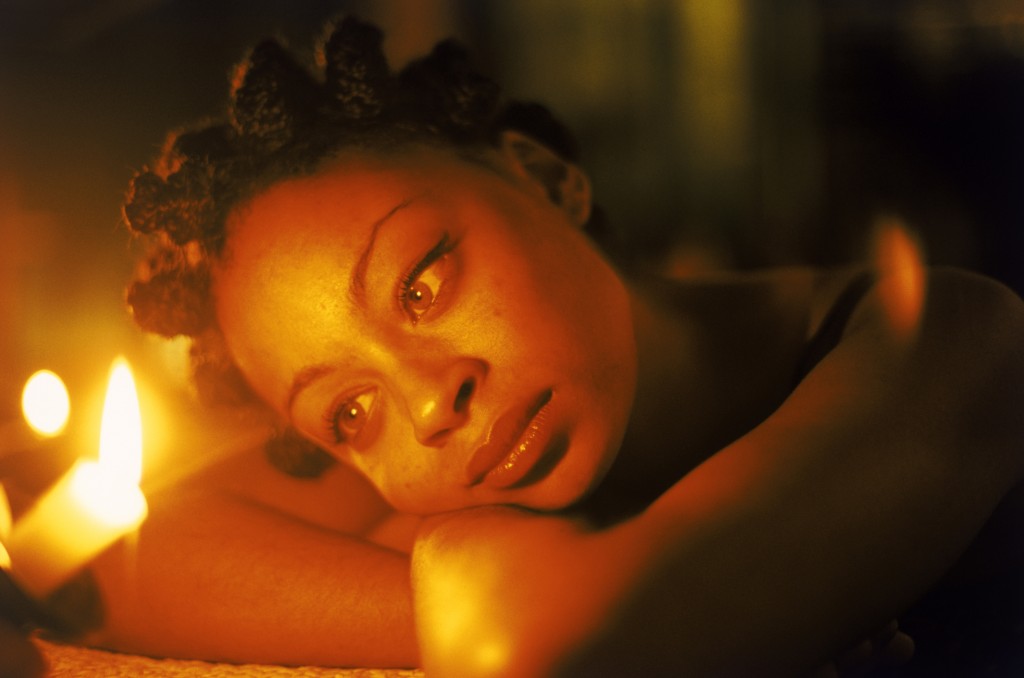 In my practice, I see many mothers who have lost their only children during pregnancy or early infancy. They show up at my office struggling with grief and feelings of isolation. Some also grapple with infertility and the prospect of never being a mother to a living child.
Many of these mothers have been to multiple therapists or support groups, yet their search for adequate support continues. They report feeling like outsiders in support groups where other women talk about their living children or who are pregnant again after experiencing a loss. They talk about struggling to find a therapist who understands the unique experience of being a mother without living children.
Again and again, these mothers share feelings of invisibility and isolation and the intense grief of having empty arms with no children to fill them. More than anything, they want someone to acknowledge the pain of their loss.
Having an awareness of the unique experience of being a mother without living children is vital in supporting these women. Here are some things therapists should consider when supporting a mother without living children.
[fat_widget_grief_right]
There Is No Guarantee of a ‘Rainbow Baby’
It’s common in the world of pregnancy loss to hear talk about “rainbow babies†(babies born after loss). Often there’s an assumption that moms who have experienced loss will go on to have such babies. Many support groups include discussion of mothers desperately trying to get pregnant again.
I call the idea that another baby will fix a woman’s grief the “myth of the rainbow fix.†Even if a mother goes on to have a living child, it won’t replace the baby she lost or miraculously cure her grief.
More importantly, not all moms who have experienced loss have the option to have another child. Many moms are dealing with the knowledge that they physically or emotionally can’t have another baby. Others tried for years and are struggling with infertility. For many, the baby they lost was a “miracle baby†after years of apparent infertility and trying. Some have accepted that they may never have another pregnancy and have been on adoption waiting lists for years.
Not every mother who loses her child to stillbirth or miscarriage will have another child. Making the assumption that they can or will may be detrimental to the emotional health of these mothers.
Many Need Reassurance That They Are Indeed Mothers
Many mothers who have lost their only baby struggle with whether they are “allowed†to claim the title of mother. Their idea of what it means to be a mother has been suddenly and unexpectedly altered. Being able to claim the identity of mother even though their baby did not survive can be a valuable piece of the healing process.
It’s important to work with these women to redefine what “mother†and “mothering†means to them now that their baby is no longer physically here. In what tangible and intangible ways can they continue to mother their child?
Early Loss Does Not Mean a Lesser Loss
Far too often when a mother loses a baby early in pregnancy or has an ectopic pregnancy, her loss experience is minimized. Many women whose babies died in their first trimesters often feel that their grief is dismissed or invalidated through statements like, “It was so early,†“You didn’t really know it yet,†or, “You just found out you were pregnant, so try not to get too down.â€
However, for many women the love and attachment come the moment they know they are pregnant. For others, the attachment and love were formed long before the pregnancy occurred, through years of trying to get pregnant, fertility treatments, or planning to become a mother.
Depth of love has no basis in time.
Questions about Children May Be Difficult to Answer
Many intake assessments and initial sessions for any kind of medical or mental health provider include the question, “Do you have any children?†or “How many children do you have?â€Â For those who haven’t lost a child, this probably seems like a simple and straightforward question. For those who have lost one or more children, it’s often not so simple. Internal debate immediately comes up:
Do I say yes and explain?
Do I say yes, but then what if they ask how old he/she is?
Do I have the energy to go through the story all over again?
Maybe I should just say no, but I always feel so guilty when I do that.
What is his/her reaction going to be if I say I have a child but he/she is dead?
I want to acknowledge my child, but I don’t want to deal with discomfort and that awkward silence.
Gah, I hate this question!
For therapists, I don’t know that there is a good solution for the pain and uncertainty questions like this bring up. However, asking about living children and deceased children separately may make the situation more comfortable for mothers and help them feel more accepted.
Nothing therapists can say or do will completely take away the grief and pain a woman feels after the death of a baby. We can’t fix the ache of not having a living child to hold, raise, and love. As professionals and compassionate human beings, however, we can be more aware and sensitive to the unique experience of being a mother without a living child. Support without judgment or assumptions can go a long way toward healing, not just for these mothers but for anyone in pain.
 Author’s note: This article is written explicitly for women who have been sexually assaulted as teens or adults. Although many of the emotional and psychological issues resulting from rape are shared among all rape victims, survivors of child sexual abuse and people of other genders who have been raped may experience different symptoms from, and have different needs than, those of women.
I rarely meet a woman who has experienced rape and is comfortable using that word. In fact, in my experience most try to avoid it and instead use language such as “I had an incident,†“You could say that he touched me,†or “I had sex with him but didn’t really want to.â€
There is a stigma attached to the word rape that often makes victims feel that if they say it aloud, it somehow means they are tainted or damaged. So let me be clear: While being raped can make you feel you are coming undone, in time it can become a life experience like any other challenge—that is, an experience that allows you to deepen your understanding of yourself and others, helps you grow and develop new skills, and helps you learn that strength and vulnerability are not incompatible. In other words, while being raped can shake your soul initially, with the right help and guidance, it does not have to stay that way forever.
[fat_widget_right]
The stigma surrounding rape is so strong that many expect that the word “victim†not be used. We are told that there are no victims, that instead there are “rape survivors.†Well, I’m going to be a rebel today (as I am most days) and tell you that there are, in fact, victims. If you were raped, you were victimized. That’s the simple truth, whether we like it or not. The sad reality is that according to some estimates, almost one in four adult women will experience some form of sexual assault in their lifetime (Centers for Disease Control and Prevention, 2012); for most, it will feel like a victimization. But with time, psychotherapy, and personal growth, a woman who has been raped can feel empowered again, and eventually feel like her “normal†self—a woman who has had many life experiences: some wonderful, some difficult, but all of which contributed to growth.
There was a great scene in the television show NCIS: Los Angeles recently. Two federal law enforcement officers, Kensi (female) and Deeks (male and Kensi’s boyfriend), were talking when Kensi suddenly became quiet. Something in the conversation seemed to trigger a rape memory for her. Then Deeks said something along the lines of: “I know you want to forget it happened, but it will just keep screaming louder to get your attention until you acknowledge it.â€
That’s what happens with rape. You want to pretend it didn’t happen and move on. I wish it were that simple, but there is something in our psyche that won’t allow that.
Here are five steps to slowly moving forward:
- Acknowledge it. Say aloud that you were raped. It may feel scary at first, but trust me—eventually it will likely feel empowering. In the beginning, it’s important to be selective about whom you tell. Some people are caught up in their own issues and thus unable to respond in an appropriately supportive manner. Your safest bet is a therapist. Many therapists are trained in helping you through rape recovery and are able to be supportive and compassionate. Best friends also tend to be pretty supportive and empathetic listeners. Start with one or, better yet, both. A rape crisis hotline is a good choice, too. (Note: If you were recently raped, going to the hospital for a rape exam and police report is an important first step.)
- Nurture yourself. It is very important to nurture yourself throughout this process. Be kind to yourself (don’t say anything to yourself that you wouldn’t say to a friend who was raped); be gentle with yourself; be patient with yourself; and do healthy things that make you feel good (a scented bubble bath, new hairstyle, exercise and yoga, buying yourself some flowers, etc.).
- Discover how you feel and get it out. There are two options for this step, and doing both is better than just one: write about your rape and talk about it. Talk about your rape with your therapist. Tell the story a few times. Tell it from different angles (for example, one time talk about what you were thinking and feeling, then another time talk about what your rapist was doing and saying). Tell a few more close friends, if you feel comfortable doing so. It’s OK to tell them that you don’t want or expect them to treat you any differently, but that you appreciate their sympathetic listening. Write in a journal. Perhaps even write a letter to your rapist. (In the vast majority of cases, it’s probably best not to send the letter—that’s something you can discuss with your therapist—but the act of writing the letter can be beneficial and help you sort through your feelings.)
- Learn. Learn about what other women have experienced. Learn about what is typical for you to be feeling, even if your experience was unique (and it was). Learn how to acknowledge and tolerate your difficult feelings. How can you do this? My favorite ways are books, workbooks, and support groups. Blogs, too! There is probably a sexual assault treatment center and/or support group in your city. Go check it out. Lean on others.
- Nurture yourself! Go back to Step 2! It can take a few years, and perhaps decades, to work through a rape. (Some might never quite work through it, but the important thing to remember is that it’s possible.) It’s important not to focus on it every day, while at the same time not ignoring your feelings. Staying the course will help you make progress and heal.
In closing, if you were raped, I want to say this: I’m sorry about what happened to you. I’m sorry you have to go through this; no, it isn’t fair. But even without knowing you, I know you can overcome this. The human spirit can overcome a lot and is stronger than you can ever imagine!
Reference:
Centers for Disease Control and Prevention. (2012). Sexual violence; Facts at a glance. Retrieved from www.cdc.gov/violenceprevention
 There’s a broad assumption in our culture that women are just more emotionally intelligent than men. But women’s superior emotional intelligence is anything but a settled fact, in spite of claims of women everywhere to the contrary. Even if women do show more emotional awareness than men, a new study points toward environmental, rather than genetic, influences. According to that research, which was published in the British Journal of Developmental Psychology, mothers may teach girls more about emotions than they teach boys.
Do Boys Learn Less About Emotions Than Girls?
To evaluate differences in the ways parents talk to their children, researchers evaluated 65 Spanish parents of 4- and 6-year-old children. The parents told stories with their children and talked about previous experiences. Girls were more adept at using emotional words—such as happy, sad, and confused—than were boys. Researchers also found that mothers used more expressive words with their daughters than their sons, which might help explain why differences in emotional awareness emerge so early.
Undermining Boys’ Emotional Behavior
This isn’t the first study that has found that parents teach boys to be less emotionally astute than girls. In another study, a baby’s gender was concealed while he or she watched a jack-in-the-box. Observers were then asked to characterize the baby’s emotional reactions. When they thought the baby was a boy, they were more likely to call the reaction angry or aggressive, and girls were more likely to be labeled as fearful, potentially stigmatizing fear for boys. [fat_widget_left]
Some parents may even punish their boys for expressing their emotions, and boys receive intense peer pressure to conform to a masculine social norm that demands disconnection from emotions. The British Journal of Developmental Psychology is just one more piece of research suggesting the ability to feel and express emotions must be taught.
References:
- Kindlon, D. (n.d.). Raising Cain: Protecting the emotional life of boys [PDF]. City Leadership Research Project.
- Mothers nurture emotions in girls over boys, new study finds. (2014, November 12). Retrieved from http://www.eurekalert.org/pub_releases/2014-11/uos-mne110914.php
- Widen, S. C., & Russell, J. A. (2002). Gender and Preschoolers’ Perception of Emotion. Merrill-Palmer Quarterly, 48(3), 248-262. doi: 10.1353/mpq.2002.0013
 Fashion magazines may seem like little more than a diversion from the stress of everyday life, but research has repeatedly demonstrated that reading these periodicals makes women feel terrible. One study found that just three minutes spent paging through a fashion magazine left 70% of women feeling guilty, ashamed, and depressed. Another found that, regardless of the women’s size or physical appearance, women were equally negatively affected by viewing images of very thin models in fashion magazines. Yet women continue to buy millions of fashion magazines every year. A new study suggests that some women might be seeking inspiration to look like the models.
Fashion Magazines and “Thinspirationâ€
To understand why women buy magazines that harm them, researchers recruited 51 female college students to look at fashion magazines. Unlike previous studies that evaluated the effects of reviewing fashion magazines, participants in this study viewed a variety of ads and articles over the course of five days, rather than in a brief burst. Prior to the students’ participation, researchers compiled data on the young women’s magazine reading habits, their body image, body mass index, and how frequently the women compared their bodies with the bodies of others.
After the women viewed 16 pages of fashion magazines, researchers asked them a host of questions about how they felt about the magazines and their bodies. Unsurprisingly, women who compared themselves to the models felt worse about themselves, and were more likely to have dieted during the five days of the study. But some women saw the models as a source of what researchers termed “thinspiration.†They wanted to look more like the models, and viewed this as possible. [fat_widget_left]
Silvia Knobloch-Westerwick, professor of communication at The Ohio State University and the study’s author, notes that previous studies have only looked at women’s reactions when the women viewed advertisements only, not text. Women may develop an affinity for models in such a context, viewing the models as relatable and a source of thinspiration. Of course, looking like a model is unrealistic for the overwhelming majority of women, and with the rampant use of photo editing tools, even the models themselves don’t always look like the finished images we see in magazines.
Knobloch-Westerwick argues that when women understand the effects fashion magazines have, rather than just seeing these periodicals as entertainment, they may be better equipped to combat the magazines’ negative effects.
References:
- The Body Project: Facilitator fact sheet [PDF]. (n.d.). Retrieved from http://www.bodyprojectsupport.org/assets/pdf/materials/facilitator_fact_sheet.pdf
- Why women buy magazines that promote impossible body images. (2014, November 9). Retrieved from http://www.medicalnewstoday.com/releases/285020.php
- Women of all sizes feel badly about their bodies after seeing models. (2007, March 27). Retrieved from http://www.sciencedaily.com/releases/2007/03/070326152704.htm