 People with narcissistic qualities tend to view life in black-and-white: a world of only losers and winners, victims and victimizers. They loathe feeling like losers or victims. In the case of parents with narcissism, they often shunt those roles onto their children.
Why? Because people with narcissism need to be fed. A person with extreme narcissistic tendencies is like a balloon with a hole, endlessly leaking esteem, always needing a refill. Such a person’s air supply: attention. And who better to provide attention than the captive audience of one’s children?
If you had a parent with narcissism, you may have been trained to focus not on your own feelings and needs, but rather on those of your parent. Parents with narcissism may wheedle, confuse, or bully you into attending to them, ignoring their lies, and tiptoeing around their vulnerabilities. They generally need your life to be about them. Some people with narcissism, feeling empty at their core and lacking a healthy sense of self, may steal from your very relationship with yourself.
But you aren’t a child anymore. You have power and options you never had as a child. Here are six ways you can take back your life after a narcissistic upbringing:
[fat_widget_right]
1. See Beyond the Narcissistic Facade
People with narcissism tend to be pretenders. Dwelling in a cyclone of shame, they live in mortal terror of anybody saying the emperor has no clothes. They fear being seen as flawed or ignorant and hate feeling powerless or embarrassed. These fears tend to drive their behavior. To avoid feeling flawed, they have to be the best and insist on perfection from others. To avoid feeling ignorant, they act like know-it-alls and rarely admit they are wrong. To avoid feeling powerless, they act larger than life. And when they feel embarrassed, their volcanic rage may erupt, burying anyone in their path.
When you know this, you can see what drives their outlandish behaviors. You don’t have to take it personally, wondering what you did wrong.
2. Identify Distortions and Double Standards
When people with narcissism make a mistake, they tend to blame others. When you make a mistake, they blame you. When they succeed, they cite their superior character. When you succeed—thus temporarily stealing the spotlight they so crave—they may take credit for your success, call it a fluke, or diminish it by pointing out other times you have failed.
People with narcissism tend to distract and disguise. Like kids caught with their hands in the candy jar, they may try to confuse, belittle, bully, or otherwise avoid responsibility for their actions.
Don’t be taken in. Pay attention to what they do, not what they say. Their words are often attempts to throw you off and make you feel small or doubtful while making themselves feel big. Their arguments are generally not to be taken seriously or even responded to, because if you refute one argument, they may simply come up with another and another.
When they are abusive, manipulative, or withholding, see it for what it is. They are using you to avoid their own issues and satisfy their urges. They may feel entitled to do so. This is not healthy. Nobody is entitled to abuse or use another.
3. If You Are Drawn to People with Narcissistic Qualities, Be Clear About Why
If you have been drawn to people with narcissism, it may be because it is simply a familiar dynamic. But it can also reflect an unconscious hope that if you can find a person with narcissistic tendencies who happens to treat you well, it will make up for what you didn’t get years ago from a parent with narcissism. It is an understandable wish. Yet relationships with people with narcissism are often disappointing and superficial because people with narcissism generally don’t care about treating others well.
You don’t have to deny your desire for justice, validation, or reparation. But you can never get back lost years, nor are you likely to get an apology.
If you feel unfulfilled in a relationship or wonder if a friend or partner has narcissism, ask yourself why you are with them. Do you hope to change or reform them? Do you hope someday they will see how good you are and mend their ways? Pursuing relationships with people with narcissism may simply postpone facing the painful recognition that your parent couldn’t be there for you. Accepting and mourning that unfortunate truth can allow you to focus on what is best for you and pick healthier relationships.
You don’t have to deny your desire for justice, validation, or reparation. But you can never get back lost years, nor are you likely to get an apology. You will almost certainly never be rescued if you wait for it. The only person who can make it right is you, by your choices and by how you treat and view yourself.
4. Use Your Voice
Let’s say, for example, you give a person with narcissism a holiday gift, and they give you nothing. The person with narcissism then says something like, “You’re just trying to make me feel guilty because I didn’t get you anything.” This is classic narcissistic behavior, shifting the attention to you and putting you on the defensive. Simply knowing they are doing this may be enough to help you gain perspective, and you might choose to say nothing. But if you feel that you are shrinking in stature, you may feel better about yourself by speaking up. For example, in a situation like this you could:
- Confront it by saying, “No, that is not why I gave it to you. But now that you mention it, do you feel guilty for not giving me anything?”
- Use humor by taking their accusation about you trying to make them feel guilty and saying something like, “Well, is it working?”
- Be honest and direct by saying, “No, I gave you a card because I wanted to. And now that you mention it, I do feel hurt that you didn’t give me anything.”
Remember, hard as they may try, people with narcissism can never take away your truth, experience, or feelings. They can dispute it, threaten you, and deny it, but they cannot make you give it up. They are projecting on you what they can’t feel in themselves. Don’t take it on.
5. Seek Balance
Being raised by a person with narcissism can throw your life out of balance. One way to regain healthy balance is to do the opposite of what your parents did. For example:
- If you received much criticism and scant praise, you may need to sidestep criticism (including self-criticism) and increase self-acknowledgment.
- If you have been compulsively driving yourself in reaction to people with narcissism who called you lazy, you may want to slow down and focus on quality of life. Conversely, if you have been underperforming in reaction to pressure from people with narcissism, you may want to push yourself beyond your present comfort level.
- If you have felt deprived, allow yourself to desire and receive more.
- If you were not allowed to say no or point out what was wrong, you may need to spend time saying no and focusing on what should change in your relationship, family, workplace, or society.
- If you have been giving people with narcissistic qualities the benefit of the doubt to your own detriment, you may want to start questioning their actions and believe in yourself, perhaps seeking the guidance of a trusted therapist or friend as you do so.
6. Trust Yourself
Your parents may have shamed you when you experimented, asked questions, or expressed your views. This may have led you as a child to become more dependent on them or alienated from yourself. Even in adulthood, you may second-guess yourself, struggle to make decisions, and shy away from taking risks that could enhance your life.
When you have to make a decision or when a challenge arises, ask yourself, “If I knew I was absolutely trustworthy, what would I do?” Then assess how you can make that happen. By assuming you are trustworthy, that your feelings are valuable, and that your intuition is reliable, you can see that you have within yourself all you need to handle challenges—despite what your parents may have tried to make you believe.
If you were raised by a parent with narcissism, you are not alone. Millions of adults have had a parent with narcissistic tendencies. No matter how you were treated as a child, you deserve to be seen, heard, and do what is healthiest for you.
 “Narcissism.” This word is tossed around easily these days. Because people hear it so often, they tend to think they know what it means. This is often what happens when a clinical term enters the vernacular. But take a minute. What is your understanding of the word? Now ask three others the same question. I will bet you end up with four different answers.
Think about conversational use of “psychopath,” “sociopath,” “bipolar“, “OCD“, or “autistic,” to mention a few more. Two of those words have no clinical meaning at all, and the others are not likely to be understood accurately by anyone outside the health professions. Again, definitions likely vary from person to person.
So why is their use so pervasive?
To use a word is to align with a group that agrees tacitly upon its definition: to join the group of people who believe they understand the innuendo of its colloquial usage. You call someone a psychopath, for example, and you believe that others are likely to think you at least mean the person acts without regard to the welfare of others, often in a criminal manner. That’s just a sliver of the actual components of antisocial personality, the real clinical term that describes what people think they are saying with “psychopath,” but no matter. The word “psychopath” is unlikely to fall from the American lexicon anytime soon. The same goes for the slippery common usage of the other terms mentioned above.
[fat_widget_right]
It is also a way to use shorthand to describe more complex thoughts. Speaking in buzz words such as “psychopath” or “narcissist” is to speak with semaphores, abstractions. You assume meaning is implied. Remember, for example, that people visualize different shades of color when you say “red” or “blue.” That’s why we say “crimson,” “scarlet,” “vermillion,” “azure,” “cerulean,” or “sky.” We try to be specific when we describe color in order to communicate accurately. Why not be as specific as possible when describing your own reactions?
Another possible reason for using terms like these is because it might seem more educated to call someone a psychopath rather than a thoughtless and selfish bully. If you really understand something well, however, you are able to explain it to a child. Using impressive words sometimes masks insecurities, and it can also be an unconscious attempt to deflect attention from otherwise vague understanding.
It is not just the language of mental health that gets eviscerated and co-opted in this manner. People often claim that something begs the question, for example, which is a term borrowed from formal logic. (To “beg the question” means to “assume something you’re trying to prove,” instead of proving it. It doesn’t mean forcing the question.)
People say someone is “libel” when they mean responsible, which no doubt makes lawyers cringe. And you hear climate change disparaged as “just a theory,” a dismissal that demonstrates a miscomprehension of the scientific method.
It is difficult to look at any news source without stumbling upon a discussion of the supposed narcissism of Donald Trump. Is it inaccurate to use this word when talking about the Republican candidate for presidency of the United States? His behavior suggests there is a reason the word “narcissist” seems to be everywhere these days. I suggest there are better, more specific words that would describe it with undeniable precision. No diagnosis is required to speak about him in meaningful terms.
When you hear Trump speak, what do you feel? What do you think? When you watch his posture and gestures, what is your reaction? What thoughts does his presentation evoke from you? This is interesting stuff. This is what your friends want to know about you. By providing it, you give them permission to go deeper in their own comments and articulate their own personal responses with greater discernment.
Anyone can apply insight to watching Donald Trump and describe his manner, behavior, and persistent views with knife-like accuracy. Borrowing clinical terms actually dilutes this accuracy. Go for articulating your opinion in your own meaningful language instead.
The Goldwater rule is the colloquial name of an aspect of medical ethics that the American Psychiatric Association developed after certain psychiatrists put forward their purported psychological evaluations of Barry Goldwater, the Republican candidate for the presidency in 1964. These psychiatrists claimed that because of his mental status, he was not fit to be president. He sued for libel and won.
APA ethics have since required diagnoses to be made only when someone is a patient or client, rather than based upon observations of someone in the public eye. This makes many mental health professionals duly wary about making public declarations.
It is certainly worth examining our daily language for hollow words such as “narcissist.” For example, is it really so bad to say “selfish”? Or to describe the way a person’s behavior hurt you or damaged someone else? Speaking your own truth is more powerful than any borrowed term could ever be.
It is clear that times have changed since 1964, when America had three television channels. Today, we have access to so much information about public figures that it is possible to get a profound sense of who a person is without actually having met. In fact, with the current Republican candidate for president, it is likely that mental health professionals know more about him than they know about the interactions and lives of some of the people they meet with in their offices.
So what does this mean with regard to the term “narcissism”?
First of all, there really is a clinical diagnosis called narcissistic personality disorder. Like the other personality issues, it is descriptive of pervasively distressing characteristics which impede an individual’s ability to live a fulfilling and healthy life. Such a diagnosis can be devastating, whether accepted by an individual or denied. It is a difficult path to change. Emotional wreckage lies in the wake of such persons over the course of their lives.
For clinicians who wonder about Trump, for example, there is no shortage of conversation among peers. There is plenty of material to discuss. Whether the APA Goldwater rule should be reviewed seems a fair question, considering so much accurate personal information is available. We can watch people we don’t know personally speak and interact in public. Still, most mental health professionals remain reticent about going public with their thoughts on this subject.
It is certainly worth examining our daily language for hollow words such as “narcissist.” For example, is it really so bad to say “selfish“? Or to describe the way a person’s behavior hurt you or damaged someone else? Speaking your own truth is more powerful than any borrowed term could ever be. Also, your well-considered personal statements convey more information than a word that each person is likely to interpret in a different way. The more code words, such as “narcissist,” we add to our speech, the less likely we are to be fully understood.
The mitigating fact for psychotherapists and other mental health professionals is always this: we can never truly know all that goes on inside the mind and life of another person. We study and train for years and then pass licensure examinations in order to have the privilege of offering what we hope are helpful observations to the people who come to us for help. Good psychotherapists live in deep humility, aware of the great gift of trust placed in them by people in distress.
If we refrain from making cavalier diagnoses, might it not be prudent also for nonprofessionals to consider doing the same? And if the goal of communication is to convey thoughts and feelings and observations to another person as fully as possible, why not go for the accuracy that your own personal vocabulary is able to provide? Describe. Explain. No diagnostic language is necessary. Most people would better understand your own definition of bullying and your views about a person who bullies than they would your description of the same person as “narcissistic.”
 The term “domestic violence” is an umbrella term that encompasses so much more than just physical violence. It involves a pattern of manipulative behaviors meant to control and maintain power over another individual, and it can happen in any type of relationship. While physical and sexual abuse are the most obvious forms of violence, emotional abuse—often referred to as “invisible wounding”—is something many people encounter, whether in childhood or as an adult, and its effects can be every bit as damaging.
Working in the domestic violence department at a local counseling agency, I frequently encountered individuals who were not sure they “deserved” to be seeking services. Many came in at the urgings of friends or family members, but because they had no bruises, broken bones, or black eyes to show, they timidly questioned whether they were in the right place for the right reasons.
[fat_widget_right]
When I teach tools for building self-esteem, I talk a lot about how we all have a little voice in the back of our heads, feeding us messages all day long. That voice is often referred to as “self-talk” and it plays a huge role in how you feel about yourself; however, as one of my recent workshop participants pointed out, that voice may not always feel like your own. Sometimes the messages we repeat in our own thoughts echo the voices and messages we’ve heard from significant figures in our lives, be it a parent, sibling, teacher, partner, spouse, or other individual.
Over time, the negative, hurtful, or discouraging messages we hear from others get internalized and may cause us to doubt our abilities or value. While some harmful messages are well-intended—for example, a parent focusing on why you got a B instead of an A on a test—others are downright mean, shaming, and belittling. They keep us trapped in a place of self-doubt, holding us back from living up to our full potential.
Eventually, emotional abuse takes a toll on your happiness, self-esteem, and ability to trust in yourself. These consequences of emotional abuse can be just as painful and detrimental as a physical blow.
Bullies and individuals who are abusive or narcissistic may intentionally put you down in their attempts to make themselves feel more powerful. This type of emotional abuse tends to happen so gradually and subtly over time that a victim may not even recognize the behavior as abusive until they are stuck in a seemingly hopeless position. Eventually, emotional abuse takes a toll on your happiness, self-esteem, and ability to trust in yourself. These consequences of emotional abuse can be just as painful and detrimental as a physical blow.
Emotional abuse can wreak havoc on a person’s sense of identity and well-being. It can involve verbal abuse—put-downs and name-calling—and any form of belittling or humiliation. Emotional abuse can also include mind games and attempts to make another person feel guilty or at fault via unwarranted jealousy or something called “gaslighting”—manipulating somebody into doubting themselves.
Emotional abuse may also involve making threats—to leave, take away the children, cause physical harm, cut off financial support, or go through with suicide—and can leave an individual feeling isolated as the abusive person attempts to control who the victim sees and talks to. Coupled with the blaming, denial, and minimization that an abusive person may display, these behaviors can make it extremely hard for somebody in an emotionally abusive situation to maintain the confidence and sense of self-worth that is paramount to leading a healthy and fulfilling life.
Recovering from Emotional Abuse
The damage from emotional abuse can be profound and the scars run deep; however, it is possible to take back control of your life. Doing so takes courage and determination. It involves beginning to believe in your worth and starting to let go of the disparaging commentary you’ve incorporated into your inner dialogue. As you gain self-acceptance, you may be better able to stand up for yourself, be assertive, and set healthy boundaries.
If you have been affected by emotional abuse, I encourage you to seek help from an experienced therapist to work through the lingering hurt and trauma as you reclaim your voice. Be advised that while the long-term benefits of standing up to emotional abuse are worthwhile, the short-term setbacks may seem insurmountable. Because an abusive person typically seeks to maintain power and control, your attempts to begin standing up for yourself may be met with resistance and an even greater attempt to break your spirit down. But don’t let this hold you back.
Imagine a balancing scale: As you become healthier and begin standing up for yourself you gain back some control, evening the scale and causing the abusive person to lose some sense of power. The abusive person may increase the attempts to control you in order to raise their end of the scale back up and push your end farther down.
Be aware that these attempts may result in an escalation of abusive behaviors. Where there is emotional abuse, there is an increased risk of potential physical violence, so if you feel unsafe it is especially important to get support in your journey to heal and become empowered. As you learn methods to stay safe and increase self-esteem, you can begin to renounce the negative messages thrown your way and instead acquire your own voice of self-acceptance. With time and effort, you will be able to maintain your position in that balancing scale, sending the message that you will not tolerate being emotionally abused.
 Participation trophies, praising children for no apparent reason, and encouraging every child to feel special are relatively new developments in parenting culture, and most of us have heard members of older generations decry this parenting style. It turns out that debates about how much adoration children should receive constitute more than a generational divide, though. Children whose parents “overvalue” them are more likely to develop narcissism, according to a study published in Proceedings of the National Academy of Sciences.
The Perils of Overvaluing Children
The study—which co-author Brad Bushman says encouraged him to change his own parenting style—recruited 565 Dutch children and their parents. Child participants ranged in age from 7 to 11. Each parent completed a psychological survey every six months over the two-year duration of the study. The surveys asked parents to indicate how strongly they agreed with statements comparing their children to others. For example, a parent might be asked whether his or her child is a good example for others.
Researchers also explored how warmly parents behaved toward their children. Parents answered surveys asking them to indicate whether they took specific steps to make their children feel loved. Children completed similar surveys, indicating whether they agreed or disagreed with statements about their parents’ expressions of warmth and love.
[fat_widget_right]
Researchers then evaluated children’s self-esteem and narcissistic tendencies. Children with high self-esteem believed they were as good and deserving as others. Children with narcissistic tendencies, on the other hand, felt they were better and more special than others. Parents who ranked their children as “more special than other children” or who believed their children deserved more out of life than others had children who scored higher on narcissism measures. Children whose parents were warm and loving were more likely to have high self-esteem, but not narcissistic tendencies.
Researchers believe that parents may tell their children how special they are in an attempt to boost their self-esteem. But children believe what their parents tell them. When parents emphasize that a child is better or more deserving, the child may grow to believe it.
How Much Adoration of Children Is Too Much?
Avoiding excessive adoration doesn’t mean you have to give up praising your child or working to nurture his or her self-esteem. Instead, the study’s authors believe the key is to praise children without making them feel superior to others. This sense of superiority, they say, is what seems to lead to narcissism.
A simple change in parenting style can work wonders. Instead of telling your child he’s the best, smartest, or best-looking, try praising him for his actions and efforts. Compliment your child for working hard to help a friend, for committing extra time to her science project, or for diligently practicing piano. Previous research suggests that praising children for their efforts rather than their results or innate traits encourages them to work harder and be more persistent.
References:
- Avoid ‘overvaluing’ your child to prevent narcissism. (2015, March 11). Retrieved from http://www.medicalnewstoday.com/articles/290687.php
- Collins, N. (2013, February 12). Praise children’s effort, not their intelligence. Retrieved from http://www.telegraph.co.uk/education/educationnews/9862693/Praise-childrens-effort-not-their-intelligence.html
 In my work with people who have survived narcissistic abuse, I find that many have endured a devastating form of emotional abuse called gaslighting.
The film Gaslight (1944), starring Ingrid Bergman and Charles Boyer, is based on a 1938 play from which the term originates. In the movie, Bergman’s character falls head-over-heels in love with her significant other, played by Boyer, a dapper gentleman with classic signs of narcissism. Boyer’s character rushes Ingrid into marriage after a whirlwind romance, before she has any time to process the speed and savvy with which her suitor has wooed her.
Swiftly, the couple is married and moves into a London brownstone, whereby Boyer slowly inflicts an insidious form of emotional abuse that leads Bergman to question if she has lost her sanity, believing her captor as having omnipotent power.
Boyer literally dims the gaslights in their flat every evening, without Bergman knowing that her partner is playing mind games with her. Boyer slips away to the upstairs attic every night to create a climate of unease and brainwashing. When Bergman questions if Boyer has witnessed the flickering lights, he denies having any knowledge of such incidents, and gradually implies and insinuates that Bergman must be “going crazy” or “seeing things.” With time, Bergman believes she is losing her mind because she depends on Boyer as her window to reality.
[fat_widget_right]
The film is an excellent example of how emotional abuse can slowly creep up upon an otherwise healthy, innocent target, only to overwhelm and devour the abused person’s sense of reality, self-confidence, and personal power over time.
Gaslighting in this day and age can exist simply by an abuser denying the confirmation of reality to a target. The abused individual could be a love object, family member, or colleague. Typically, such a lack of validation or confirmation of reality is a slow or insidious process wherein the targeted person gradually comes to doubt his or her sense of what is. Initially, the abused person may question if he or she misunderstood the situation, and often believes that the abuser knows better and has superior comprehension of the circumstances. With time, self-esteem is also stripped of the abused person until he or she realizes he/she has been denied trust and honesty with a loved one.
In my practice, I see many individuals who have endured such abuse either in their families, love, or work relationships. Psychotherapy can be helpful in healing from this form of trauma. Often, healing involves allowing the abused person to narrate his or her story in as much detail as possible, such that the person can in effect master his or her trauma and become empowered to lower the cognitive dissonance that rises oppressively in such an abusive relationship. As mentioned in my prior article on cognitive dissonance, this confusing state of mind occurs when an individual holds two diametrically opposed ideas, and the result is tremendous anxiety, which can include obsessive thoughts, panic attacks, and depression.
Cognitive dissonance can be one of the results of the emotional abuse tactic of gaslighting. Bergman’s character held in her mind that her lover, Boyer, had the best of intentions for Bergman and was protecting her from her own unraveling mind. Doubts slowly crept up in her mind that her lover may have ulterior motives. The horror of fathoming that Boyer’s character could be sociopathic/narcissistic created a suspended state of denial for Bergman, who then further suppressed her own reality of the situation, sinking into utter despair and apparent anxiety and depression.
With the help of a skilled therapist who knows how to support survivors of narcissistic abuse, people can thrive and restore their confidence in themselves. Mastering the trauma by narrating a story helps to synthesize facts, even contradictory and confusing facts/emotions caused by gaslighting and cognitive dissonance. With a compassionate, nonjudging psychotherapist, the abused person then learns or relearns how to trust his or her perception of the abuse history, thereby strengthening the individual to release the trauma and any associated anxiety. Increasing coping skills in moving through anxiety and depression is also essential, in addition to mourning the loss of the abusive relationship.
 Editor’s note: Susan Heitler, PhD is a clinical psychologist specializing in healthy conflict resolution and the author of The Power of Two, a workbook for couples. Her continuing education presentation for GoodTherapy.org, titled Narcissistic Habits: Couples Therapy Treatment Techniques, is scheduled for 9 a.m. Pacific Time on September 19, 2014. The event is available at no additional cost to GoodTherapy.org members and is good for two CE credits. For details, or to register, please click here.
Codependency as a personality diagnosis is a label with significant limitations. Having emerged initially from the world of alcohol and drug treatment, codependence neatly describes the husband who makes excuses to his wife’s friends to cover for his wife’s evening drinking binges. In that context, the husband is acting as a codependent in the sense of fostering his wife’s alcohol dependency. For use beyond the arena of alcohol and drug dependency treatment, however, the term needs an upgrade.
For instance, Jack who is married to a quick-to-anger woman with narcissism, strengthens his wife Julie’s narcissism when he self-smothers his inner voices lest he say something that might arouse Julie’s ire. Similarly, a corporate assistant, Brenda, fosters her boss Peter’s self-defeating workaholic tendencies when she consents to work late hours to help him tackle too many tasks. While Julie’s narcissism and Peter’s work excesses both create problems, the narcissism and workaholic patterns are not “dependencies” in the sense of a drug dependence. So describing Jack or Brenda’s enabling behaviors as codependent stretches the term excessively.
The term enabler—commonly used as a synonym for codependent—may be a more fitting alternative. Jack functions as an enabler when he smothers his own preferences, fostering his wife Julie’s narcissism. Brenda functions as an enabler when she too often works late to help her boss Peter complete the excessive number of work projects he has taken on.
The True Nature of Codependency
Although codependence may be better labeled as enabling, the phenomenon merits further clarification. To this end, I have coined four additional terms that clarify the internal experience of “codependent” enabling: excessive altruism, appendagitis, wishful thinking, and misplaced locus of focus.
While I speak these terms with my tongue somewhat in my cheek, diagnostic language is clinically useful to the extent that it guides therapeutic interventions. These terms, for me, pass that test.

What’s more, the new terminology brings an added bonus to treatment. Clients almost always chuckle when I tell them with exaggerated seriousness, “I’m afraid that you have a quite serious case of wishful thinking” (or either of the other three terms). Humor relaxes them so they are more open to accepting feedback on these self-defeating phenomena.
What Is Excessive Altruism?
Giving feels good. By contrast an excessive inclination to help others through giving—that is, giving more time, money, energy, or affection than feels do-able—incurs a sense of burden.
In healthy partnerships altruism is a two-way street. Hopefully each partner gives and receives ample affection and appreciation, the ultimate contributions of value in relationships. The contributions needn’t be identical: One partner may cook, the other may wash dishes and take out garbage, so long as the contributions are subjectively felt to be of similar value.
When the overall traffic of giving and receiving feels approximately equal from both sides, goodwill prevails. Excessive altruism and/or selfishness, by contrast, unbalance the giving and getting, inviting resentment.
What Is Appendagitis?
Appendagitis characterizes an attachment in which one person serves as another person’s additional appendage. This psychological diagnosis is not to be confused with Epiploic appendagitis, a self-limiting inflammatory process of the epiploic appendices which are small, fat-filled projections along the surface of the colon and rectum.
Psychological appendagitis occurs when individuals shed their own preferences, life goals, and voice, and instead devote all their energies to another, such as a spouse, boss, or friend with needy or narcissistic tendencies. This shift usually is motivated out of a mixture of love and fear that without this shift they may incur the other’s anger and/or lose the relationship.
What Is Wishful Thinking?
Wishful thinking is the cognitive habit of believing that others will change when there is no realistic basis for this hope.
Brenda wishes her boss would become more appreciative of her efforts. She devotes ever-increasing efforts to please him in misplaced hope that someday he will change into a person who expresses gratitude and praise.
[fat_widget_right]Jack likewise wishes that his wife Julie would become less self-centered, entitled to special treatment, and quick to anger, but when Jack tries to discuss these concerns with her, Julie immediately erupts in anger, turning on him with blame that the problems are in fact his fault. Julie’s blaming responses indicate that the likelihood of her making changes is very low.
What Is Misplaced Locus of Focus?
A locus is defined as a place—a center of activity—where something occurs. Misplaced locus of focus means that someone’s attention is riveted to reading another’s thoughts, feelings, and facial expressions, periferalizing their awareness of their own thoughts and feelings, and assuming or guessing what the other person is thinking instead of asking.
Brenda, for example, stayed late at work three nights in a row. When her boss, Peter, was surprised to find her still in the office, she explained, “I thought it would make you less stressed, more relaxed, if I could get this report out before the weekend. I’m here working late because I thought it would make you happy.”
“Actually,” Peter responded, “I want to wait a month before sending the report out. I have more information coming in over the next few weeks that I’ll want to include in it.”
Brenda was disappointed to discover that she not only failed to anticipate Peter’s needs, but also neglected the needs of herself and her friends with whom she had cancelled plans in order to fulfill her boss’s needs.
When Is Helping Others a Good Thing? When Is It Excessive?
Codependent-like behaviors have their healthy variants. Infants and young children for instance depend upon the consistent attentions of parents to stay alive. Parents’ responsivity, attunement, and nurturance contribute positively to the survival and thriving of young children.
At the same time, even parents can go overboard on attending to their young, allowing attunement and nurturing to slip inadvertently into appendagitis. Jack, the devoted husband and dad of four young children, often gets overwhelmed at breakfast time when he asks his wife and each of their children, “What would each of you like for breakfast today?” Bacon for this one, scrambled eggs for that, a fried egg for another, sunny side up with pancakes for the fourth, and French toast for the next. What’s wrong with this picture?
In other large families, parents put cereal and bowls on an accessible shelf where even the younger children can reach the boxes and pour their own, adding fruit, nuts, and milk. Maybe Mom or Dad cooks toast and eggs, and sometimes even pancakes, but only one kind of food is on the menu for everyone.
By catering to each individual’s daily preference, Jack’s excessive altruism is training his children in unrealistic expectations. He is fostering dependence and narcissism instead of training his children to become increasingly independent, to adapt to living as part of a group, and to be considerate of their dad’s time and energies.
Behaviors like altruism become problematic when people dedicate their energies to another person (1) to their own detriment, (2) to the detriment of the receiver and (3) when the other does not want the help.
For instance, Brenda suffers unhealthy appendagitis to the extent to which she allows her contribution of extra work hours to be exploited. Does she get paid? Does she really want to devote these additional hours to work? Also, while she believes she is helping her boss Peter, Brenda may actually be harming him by encouraging his tendencies to take on more and more until he is ready to collapse from stress and fatigue.
What Causes Excessive Altruism, Appendagitis, Wishful Thinking, and Misplaced Locus of Focus?
The all-about you attachment stance of people with the four enabling tendencies described above inadvertently attracts individuals with narcissism who love being the focus of someone’s attention and adulation. A hallmark of narcissism attachment patterns is an all-about-me stance that allows the coupling of enabling and narcissistic habits to seem, initially at least, to dovetail beautifully.
In enabler-narcissist partnerships, all-about-you habits may then be sustained because they seem to attenuate the narcissistic partner’s quickness to criticism, controlling behaviors, and anger. For someone trying to live in relative harmony with a narcissistic partner, these seemingly self-defeating habits may in fact help.
Family of origin can also play a role in creating a template for enabler interactions. Most often, individuals who develop excessive altruism, appendagitis, wishful thinking, and misplaced locus of focus are repeating patterns they observed in their parents’ marriage relationship. A child learns to speak French by hearing French spoken at home. We learn interaction and survival habits the same way, by hearing and observing our parents.
Children also may become highly skilled at enabling habits in order to cope with a narcissistic parent. Parents with narcissism insist that their children ignore their own preferences and become instead what the parent wants them to do and be. The development of enabling habits, like appendagitis, offers children of narcissists less animosity and more positive attention than if they were to interact with the parent in a more emotionally healthy manner. Children learn to do whatever contortions they must to retain the necessary positive attentions of their caretakers. Survival of the bond with the attachment figure is a first priority.
Treatment Implications for Each of These Terms
Excessive altruism, appendagitis, wishful thinking, and misplaced locus of focus each exacerbate the other, creating a vicious downward cycle of circular causation with ever-increasing anger, depression, and relationship dissatisfaction. What can reverse this cycle so that the spin switches upward toward ever-more positive feelings?
Excessive altruism leads to feeling over-burdened and resentful toward those on the receiving end of the giving. Folks with excessive altruism therefore need to learn to balance their giving to others with self-care.
Similarly, people with appendagitis need to refocus their attention on themselves. They need to turn up the volume on their own thoughts and preferences so they can hear their inner drummer. They then need to learn to speak up tactfully and still effectively about what they feel and want. Lastly, they need to learn win-win ways of making decisions so that the partner with narcissisism is less likely to feel disempowered, wrong, or like a loser.
Wishful thinking creates a faulty personal guidance system. Therapy that clarifies the realities regarding the other person’s repeated motivations and behavior patterns enables the development of better life decisions. The narcissistic partner may someday change, but often only after the wishful thinking partner first has begun making decisions based on reality.
Misplaced locus of focus can be reversed with practice drills on utilization of new sentence starters. For example, each time clients use the sentence-starters such as “I feel … ,” “My concern is … ,” and “I would like to … ,” their locus of focus must switch to their own inner feelings and thoughts in order to complete the sentence.
A change of habits seldom comes with a “Get Out of Jail Free” card. As Jack ceases to foster Julie’s narcissism, it therefore is vitally important that Julie be included in the treatment process, preferably in a couples therapy treatment format, so that the two spouses can change and grow simultaneously. If so, Julie and Jack are likely to end up feeling increasingly loving toward each other and happier within themselves. If not, they are likely to end up divorced.
As to Brenda, if she embarks on therapeutic change Brenda may lose interest in continuing to work for Peter. On the other hand, Brenda’s growth could free Peter as well, so that he may enjoy a fuller life less clogged by work.
Words have power. Naming a phenomenon helps to clarify what a phenomenon is and does, and how to attenuate its negative impacts. Each of the playful terms introduced in this article can help therapists to guide their codependent/enabler clients to awareness and correction of the technical mistakes they have been making, leading them toward the more positive emotions and fulfilling relationships that they have come to therapy to discover.
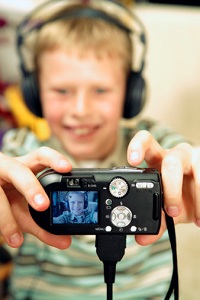 Celebrities do it, regular folks of all ages do it, and several articles and blog posts have been written discussing and analyzing the fascinating trend that is the selfie. It’s a word that has become synonymous with social media, self-love, and in some cases, shocking levels of self-obsession. Justin Bieber, a pop star and trailblazer in the selfie stratosphere, is currently backing a new camera app called “Shots of Me,” which is devoted entirely to the ongoing proliferation of the selfie. And the Oxford Dictionaries Online officially dubbed “selfie” 2013’s Word of the Year.
In case you’ve managed to remain unfamiliar with the term, the selfie consists of any photo taken by the self, of the self, and then posted online, typically via social media sites like Facebook and Instagram. It’s the modern-day self-portrait, and anyone who has access to a camera and the Internet can partake. Over 31 million photos tagged with “#selfie” have been posted to Instagram to date (Walker, 2013), and according to a “nationally representative” report by the Pew Internet & American Life Project, teens are especially caught up in the selfie hype. Approximately 91% of those surveyed have posted at least one selfie (Madden et al., 2013).
Considering the very nature of social media is largely self-focused, with profiles catering to personal descriptions, interests, status updates, photos, and pretty much whatever else a person feels inclined to reveal to the masses, it doesn’t come as a huge surprise that selfies have become so popular. But their prevalence still begs the question: Why are people so obsessed with snapping photos of themselves and posting them online—and what does this say about those who do it?
Selfies: The Good …
Many theories have been shared regarding the widespread popularity of selfies, as well as the context in which some of them have been taken. Some take a more positive slant than others.
An article on Slate.com suggests that “selfies are good for girls,” as they encourage young girls, in particular, to be proud of who they are (Simmons, 2013). Author Rachel Simmons posits that despite the many advances in gender equality, many young girls still grow up with the understanding that being submissive and humble are desirable traits and that to have self-confidence is often seen as being conceited. In contrast to this, the selfie empowers females to celebrate not just their looks but also their accomplishments by shooting “tiny bursts of pride” into cyberspace, thereby encouraging other young women to do the same.
In a New York Times article, Jenna Wortham writes that the selfie is merely a mode of self-expression, and a means of communicating and connecting with others (2013). She also touches on the empowering nature of the selfie when she describes an old black-and-white photo she procured in an antique store of “a female pilot on a mountaintop,” in which the camera is most definitely being held by the woman in the photo.
Wortham stumbled upon a selfie taken decades before the word officially existed, which shows the longstanding human desire to capture ourselves in our moments of personal satisfaction and triumph, with or without the Internet.
… The Bad …
Others, however, view the selfie as a much more problematic reflection of where society stands with regard to self-obsession and sexual objectification. A recent article on Jezebel.com describes them as a “cry for help” (Ryan, 2013).
“Selfies aren’t empowering; they’re a high tech reflection of the… way society teaches women that their most important quality is their physical attractiveness,” writes Erin Gloria Ryan. A Teen Vogue article similarly delves into the “unexpected consequences of selfie-obsession” (Walker, 2013) by examining the potential dangers of a person’s sense of self-worth being tied to pictures posted online and the comments that go along with them.
Researchers in the United Kingdom recently reported that overdoing the selfies may also damage relationships, romantic and otherwise (Miller, 2013). Though it can be intriguing to see the person you’re interested in or involved with feeling confident enough to post selfies, it can also be a deterrent if that person posts too many self-portraits online. According to the researchers, friends, family members, and colleagues may feel alienated if an individual appears overly self-obsessed in social media outlets.
… And the Unsightly
Some even post selfies en route to and while attending funerals, a phenomenon so curious it has its own Tumblr blog: selfiesatfunerals.tumblr.com. The site was created by Jason Feifer, who quite simply states in his introductory video, “There’s some things a man should never do at a funeral.”
The funeral selfie trend doesn’t seem to be more popular with one sex over another; one of the photos on the site depicts a teen girl with styled hair and pouty pink lips sitting in an attention-attracting pose. The words underneath her picture read, “You never appreciate what you have til its [sic] gone. R.I.P. Grandpa, you will be missed,” followed by a sad face and a heart.
Does Selfie Analysis Promote Sexism?
Much of the discussion about selfies is centered on women and young girls who take them, regardless of the reality that plenty of teenage boys and grown men take them, too. One group of guys posted a YouTube video called the “Selfie Song” (Mippey5 Music, 2013). In it, a handful of young men take selfies in various locations and repeat the chorus, “I’m bored, so I’m gonna take a selfie. I’m obsessed. It’s unhealthy. Click, share. I don’t care that I’m a man. I’m gonna take another pic and I’m gonna post to Instagram.”
And yet, attention remains largely focused on the young girls and women who engage in selfie posting.
In September of this year, Kimberly Hall, a mother and women’s ministry leader in Austin, Texas, wrote a letter on her blog “Given Breath” to the teenage girls who post selfies. Hall expressed obvious disdain for the seductive nature of girls’ photos. “Wow—you sure took a bunch of selfies in your skimpy PJs this summer!” wrote Hall.
Although she has since removed the photo, she originally posted the letter with a picture of her three sons on the beach wearing only their swim trunks. Many readers found the photo highly inconsistent with the content of her post—even hypocritical—and following outcry, Hall replaced the photo with one that showed her sons fully clothed and smiling.
The indignant tone of the letter remains online, however. Hall shames girls who photograph themselves in their bathing suits and bedrooms and reprimands them in the name of the purity of her teenage sons. Hall didn’t mention whether her sons had any male friends who were posting summertime selfies, but considering what we know from teen selfie stats from earlier this year, she probably did see several selfie posts from young men. Were those pictures less offensive or worrisome?
Self-Obsession: Who Are You, Anyway?
Self-exploration and analysis are ongoing themes in social media, life in general, and in the field of psychotherapy. Examining our ideas of self and where they originate is a trademark of traditional therapeutic sessions, in which self-love, self-acceptance, and self-compassion are widely encouraged, and each of these traits requires time spent evaluating and developing a deeper understanding of the self.
But what about when someone is so confident—or confused—that he or she feels compelled to post constant selfies in an attempt to gain approval, attention, admiration, and validation? When does the desire to attain self-acceptance via social media shift into a potentially destructive form of self-obsession?
Studies conducted in previous years have attempted to assess whether Facebook promotes narcissism as well as the extent to which narcissistic traits are connected to low self-esteem (Parker-Pope, 2012; Tucker, 2010). In 2010, using the Narcissism Personality Inventory and the Rosenberg Self-Esteem Scale, psychology researcher Soraya Mehdizadeh measured the Facebook activity of 100 college students.
Mehdizadeh’s findings suggest that those with narcissistic behavior and those with low self-esteem are likely to spend over an hour a day on Facebook, and that those who inflate their own reputations or identity in their photos and status updates may very well be doing so to compensate for feelings of inadequacy. Along these lines, yet another concern surrounding selfies is the extent to which the images can be altered and manipulated to project a person’s ideal identity as opposed to his or her real identity.
A nationwide survey of 1,000 girls between the ages of 14 to 17, conducted in 2010 by the Girls Scouts of the USA, revealed that nearly 74% of those asked believe their female peers use social media to make themselves appear “cooler than they really are.” The survey also shared the view that most young women “downplay” their positive traits like intelligence and kindness on their social media profiles. Instead, what gets the bulk of the attention is physical appearance, as is reflected in the selfie.
Of course, the ability to create an online profile that reflects the ideal versus the real you does have a strangely enticing allure: Create a page devoted entirely to yourself; post photos on that page that reflect exactly how you want to be seen, often with carefully calculated camera angles, lighting, and edits; and share this work of social media art with whomever you choose. In other words, you are in control of who others think you are, which may or may not be who you actually are.
Ultimately, the reality is that regardless of the authenticity or lack thereof displayed in people’s profiles, social media sites like Facebook and Instagram are well established as outlets for self-expression and social connection, and they don’t appear to be going anywhere any time soon. Perhaps some simply need a reminder to use them wisely and simmer down on the selfies. After all, there are other people who are worth photographing, too.
References:
- Girl Scouts of the USA. (2010). Who’s that girl? Image and social media survey. (New York, NY). Retrieved from http://www.girlscouts.org/research/publications/stem/image_and_social_media_survey.asp
- Hall, K. (2013, September 3). FYI (if you’re a teenage girl). Given Breath. Retrieved from http://givenbreath.com/2013/09/03/fyi-if-youre-a-teenage-girl/
- Madden, M., Lenhart, A., Cortesi, S., Gasser, U., Duggan, M., Smith, A., and Beaton, M. (2013, May 21). Teens, social media, and privacy. Pew Internet & American Life Project. Retrieved from http://pewinternet.org/Reports/2013/Teens-Social-Media-And-Privacy/Summary-of-Findings.aspx
- Miller, T. (2013, August 12). Too many selfies on Facebook can damage relationships: study. New York Daily News. Retrieved from http://www.nydailynews.com/life-style/selfies-damage-relationships-study-article-1.1424830
- Mippey5 Music. (2013, January 22). Selfie song. YouTube
. Retrieved from http://www.youtube.com/watch?v=y_O7aM0J3CI
- Parker-Pope, T. (2012, May 17). Does Facebook turn people into narcissists? The New York Times. Retrieved from http://well.blogs.nytimes.com/2012/05/17/does-facebook-turn-people-into-narcissists/?_r=0
- Ryan, E. G. (2013, November 22). Selfies aren’t empowering. They’re a cry for help. Jezebel.com. Retrieved from http://jezebel.com/selfies-arent-empowering-theyre-a-cry-for-help-1468965365
- Tucker, J. H. (2010, November 2). Study of Facebook users connects narcissism and low self-esteem. Scientific American. Retrieved from http://www.scientificamerican.com/article.cfm?id=status-update-im-so-glamorous
- Walker, M. (2013). The good, the bad, and the unexpected consequences of selfie-obsession. Teen Vogue. Retrieved from http://www.teenvogue.com/advice/2013-08/selfie-obsession
- Wortham, J. (2013, October 19). My selfie, myself. The New York Times. Retrieved from http://www.nytimes.com/2013/10/20/sunday-review/my-selfie-myself.html
- Simmons, R. (2013, November 20). Selfies are good for girls. Slate.com. Retrieved from http://tinyurl.com/munjlpo
 Healthy narcissism is an accurate picture of the self properly valued, without shame and without overblown estimations. But most of the time when we talk about narcissism we’re thinking about the other kind, where the person thinks he or she is perfect in every way; you are just the opposite, a total loser, and the “Perfect One” is an expert at making sure you feel that way. Now, I’m not saying this is a plot, something done on purpose. It can be unconscious, but that doesn’t make it easier to live with.
Everyone knows a Perfect One, and might even admire the person a little. Perfect Ones are always in the know, or seem to be, but what they know best is how to take the bad feelings they have about themselves and shovel them onto whoever is around and ready to accept them. They lower your feelings about yourself so they can feel better. Putting you down raises them up. And if you’re lacking in self-confidence, you’re their perfect companion.
[fat_widget_right]
Could that be you? If you’re self-confident and aware of your abilities, taking credit when it’s coming to you should be a pleasure. But if you lack self-confidence, accepting a compliment can be pretty hard. Instead of feeling good, you may even feel ashamed. How come? And can you do anything about it? If you sometimes react with feelings of discomfort or shame when you’ve done something really well and been told about it, you may be responding to early feelings of worthlessness that were part of faulty family situations. Maybe your parents lacked self-esteem, too, and passed that on to you, or maybe you’re related to a Perfect One who trained you to be his or her audience, or perhaps you endured bullying in school. Perfect Ones make good bullies.
It could be that when you were a kid you were subjected to the envious feelings of others, so every time someone tells you something good about yourself you don’t believe it, or you expect something bad to happen, because that’s how you’ve been trained, so you’d rather put the spotlight on someone else, and who better than a Perfect One? Perfect Ones expect all compliments to come their way. If this applies to you, try to figure out who around you might be part of the problem. You can talk to them about it, but—even better—you can talk to yourself about it, remembering that what Perfect Ones are saying has more to do with their own feelings about themselves than about you. In fact, if you listen to the negative things they say, you’ll learn a lot about their secret, shameful feelings about themselves, proving that, deep down, they know they’re not really perfect after all.
Shame and narcissism are fellow travelers, a continuum of feelings about the self. Picture a seesaw with shame on the bottom and narcissism on the top. Envy accompanies the up-and-down actions of the seesaw. Perfect Ones feel envy all the time, and process that feeling by making others feel envious so Perfect One can feel superior. Perfect Ones’ feelings of superiority go with the expectation that they are better than everybody else and deserve favorable treatment in the world. They use others to get what they want, they believe they have it coming, and when they don’t get what they think they deserve they react with intense anger, called narcissistic rage. Perfect Ones don’t see others as equals; they see others as tools. Their internal feelings about themselves are unsteady, and they have to work hard to keep feeling good.
We’ve been talking about a make-believe person called Perfect One. The use of the word “one” is important here. Think ONE. A universe of one, where Perfect Ones want YOU to love THEM, but they are not capable of loving you or anyone else back. It’s a pretty cold world when you are the only Perfect One. If you’ve spent any time with Perfect Ones, you may have felt very lonely. Inside, the Perfect Ones feel lonely too, because no one is good enough to share their world. You might feel sorry for them, but don’t let the Perfect Ones take advantage of your ability to feel for others. Perfect Ones are expert manipulators.
After you have learned the game and how it’s played, you can stop playing with Perfect Ones and find humans who aren’t perfect but play fair. You’ll have a better time all around.
Remember my image of the seesaw? Perfect One on top? Well, Perfect One will fall down with a thud when you get off the seesaw. And then you can get back on and come to a good balance with someone else.