 Narcissism is difficult to diagnose and treat. As with all personality issues, the narcissistic traits a person possesses exist on a continuum. Not all people with narcissism are the same, and treatment approaches vary from individual to individual. This article is written as a basic guide for treating a person who either self-identifies as narcissistic, or one you identify as having narcissism.
Please note the steps below may need to be repeated over and over again, and not necessarily in order.
Step 1: Understand Narcissism
The therapist must be well versed on what it means to be in a narcissistic relationship. It is one thing to read about narcissism, another altogether to be in a close relationship with someone with narcissistic qualities. Many therapists have no idea how intoxicating, exciting, and heart-wrenching life with a narcissistic person can be.
Understand that the three main traits of narcissism are sense of entitlement, lack of insight, and lack of empathy.
[fat_widget_right]
Step 2: Build the Therapeutic Alliance
The therapist must require two things from the therapeutic relationship with a person who has narcissistic tendencies: respect and collaboration. Respect for and collaboration with others is challenging—some might say impossible—for people with narcissism. They will be learning how to practice these interpersonal skills in real time, in vivo, in their relationship with the therapist.
Step 3: Identify the Defenses
The narcissistic person’s defenses come in the form of personality modes or personas (think multiple personalities, but different). The therapist must endeavor to help the person identify some of the protective personality modes they use throughout life. Here are some common examples:
- The critic
- The judge
- The detached persona
- The addict
- The womanizer
- The entitled one
- The victim
- The abuser
- The manipulator
- The rage-aholic
- The superior one
- The bored one
Note: This list is not exhaustive. Therapists should work collaboratively with each person to identify their unique defenses.
All of the above-listed personas are protective personalities that people with narcissism use for emotional protection. The two feelings people with narcissism tend to avoid at all costs are neediness and vulnerability.
Step 4: Identify the Underlying Triggers
The underlying schemas are what cause the need for the protective personas. Think of schemas as triggers or buttons that are pushed when someone causes what is known as a “narcissistic wound.†Here are some common triggers experienced by people identified with narcissism:
- Feelings of emotional abandonment
- Feelings of inner defectiveness
- Feelings of lack of control or security
- Sense of emotional deprivation
- Fear of ridicule or shame
Through both role modeling and psychoeducation, you can teach a person with narcissism about the need for re-parenting the early attachment wounds they have experienced.
It is difficult to identify these underlying triggers because you are working with someone who may have low insight and who may be emotionally “split off” or “blocked” from feeling these vulnerable and devastating emotions. You will likely encounter a protective mode before you will identify the underlying “root†of the problem. Understand that the primary emotional experience the person with narcissism is avoiding is a sense of shame. Rather than experience this sense of shame, the person “flips†into a protective mode.
It is important to help the person with narcissism to manage these underlying feelings of shame by teaching self-compassion and offering healthy self-soothing strategies. Also, as you remain in the relationship with the person, being present with them as they dare to “go there,†they will hopefully learn how to experience and process through relational “demons.â€
Step 5: Develop an Inner Healthy Adult/Parent
The job of therapy is to help the person with narcissism learn to re-parent their inner hurt child. The inner child is responding to early attachment trauma or some other type of lack of emotional attunement as a child. Without going into a complete analysis of the causes of narcissism, suffice it to say a developmental component exists.
Developmentally, as a child, the person with narcissism was not properly emotionally regulated in the inter-relationship with the parent(s). This may have caused the child to develop “split off†protective personas as defenses to protect their inner sense of shame.
Teaching the person with narcissism to re-parent their inner hurt child, through the process of imagery, is effective and powerful for initiating healthy change in the person’s inner world.
Step 6: Heal the Inner Child
Even before a person with narcissism learns to re-parent themselves, you, as the therapist, can begin the process by trying to meet their inner hurt child and begin bonding with them. You can be a healthy role model, offering a “corrective emotional experience†for the person. Perhaps you are the only person who has ever been able to reach their inner child in a way that represents safety.
Through both role modeling and psychoeducation, you can teach a person with narcissism about the need for re-parenting the early attachment wounds they have experienced. They may deny they have any such hurts, but explain to them that their behavior “tells on them.†Do not argue with the person; rather, simply state and instruct what is happening.
Step 7: Develop a Recovery Plan
Not only is it essential to heal the inner world of the person with narcissism, it is also important to identify all of the person’s “bottom-line behaviors†and begin a “program of recovery.†In essence, treat the narcissistic symptoms as part of an addiction of sorts that needs to be put in remission.
Here is a list of some possible items to go on the abstinent (“no-fly zoneâ€) list of the person with narcissism:
- Entitlement
- Blame
- Womanizing
- Substance abuse
- Yelling
- Silent treatments
- Dramatic exits
- Passive-aggressive behaviors
- Manipulation
- Defensiveness
Help the person identify their own “go-to†strategies for self-protection.
Conclusion
As you can see, helping a person with narcissism to heal is a challenging endeavor. While you are working within this relationship, make sure you take care of yourself. I will end by offering these final words of advice for self-care:
- Require and model respect.
- Consult often; debrief after each session.
- Exercise and take care of your physical health.
- Do not personalize the behaviors of people with narcissism.
- If you feel defensive, back off, take a deep breath, change something.
- Do not have a power struggle with the person you’re trying to help.
Remember: While it takes hard work to help a person with narcissistic qualities, there is little to be gained from working harder than they do.
 For better or for worse, the holiday season is associated with the giving and receiving of gifts. Gifts are exchanged between those we are close with, including family members and friends. Gifts are exchanged between acquaintances, such as coworkers or local service providers (think mail carrier or hairdresser). Gifts may also be given or received among those with which we have no relationship, or anonymously (adopting a family, donating time or money to a charity).
With so many gifts being passed around in so many contexts, it’s an opportune time to talk about some of the potential issues one must be mindful of when considering gifting within the therapeutic relationship—be it during the holiday season or any other time of year.
It may seem only natural to exchange gifts in therapy. After all, in therapy, a close bond may be established, great care and concern are typically expressed, and when the rapport is strong, there may be a genuine like between the parties. The giving of gifts may also be thought of as a means to show appreciation or honor a special stage in therapy.
[fat_widget_right]
But not so fast. Although gifts may seem appropriate between a person in therapy and their therapist, receiving and giving gifts can be a source of stress for the therapeutic relationship. It can hurt therapeutic progress, and it can have serious consequences. Professional ethics codes typically caution therapists from giving or receiving gifts within a therapy relationship. For example, the American Counseling Association Code of Ethics (2014) advises counselors to consider the therapeutic relationship, monetary value of gifts, and the motivation for accepting or declining gifts from people they serve, and the American Psychological Association Code of Ethics (2010) requires that psychologists avoid personal and financial situations that could create a conflict of interest.
Such standards are meant to protect people in therapy from exploitative or manipulative therapy tactics and relationships. These standards are also meant to protect therapists. For example, if a therapist was presented with a gift of value, they may feel pressured to give preferential treatment or refrain from challenging the gift giver. Exchanging gifts may also suggest or invite a change in the nature of the therapeutic relationship—from a professional relationship to a relationship that is too casual, too friendly, or potentially provocative.
Where some mental health professionals might draw a hard line on gifting in either direction, others may see a sliver of gray area. While there are possible pitfalls and ethical complications to consider, there are also ways in which gifts might legitimately be argued to be potentially helpful and culturally appropriate. For example, if a child draws their therapist a picture, it may be hurtful to the child if the therapist rejects the drawing. Another example: After visiting their homeland, an individual brings their therapist a small gift of tea from their country. It might be unnecessarily complicated to explain why accepting the gift is a bad idea, particularly if giving gifts is a meaningful part of that person’s culture and rejecting it would be counterproductive to therapy goals.
Any licensed mental health professional should be keenly aware of potential ethical entanglements involved in gifting, and it is up to the therapist to determine whether gifting a person in therapy may risk or promote therapeutic growth. Where there is doubt, caution is always the wisest path.
It might also be argued that there are benefits of therapists providing some people, in some circumstances, with certain types of small, symbolic, therapeutic gifts. Such therapeutic gifts might be intended to represent growth and provide ongoing motivation. At the completion of therapy, a small memento may go a long way in maintaining positive change, or serve as a reminder to reach out for help in the future. Additionally, some individuals may have difficulty affording the therapeutic tools, such as journals or books, that are sometimes recommended or assigned as therapy “homework.†In these cases, within reason, a therapist might decide that gifting the individual with a homework tool is justified and appropriate.
Of course, some therapists might reasonably feel uncomfortable providing even therapeutic tools, no matter the circumstances. It’s a position few could fault them for. When therapists do choose to provide people in or completing therapy with these types of small gifts, they must consider the potential ethical issues. Therapists should never give gifts that impede the therapy relationship or promote a harmful or unsafe environment, and must be mindful of issues associated with power and control.
Below are some examples of free or low-value gifts and tools that therapists, in an informal survey, reported having given to people they worked with in the therapy room. The reasons the gifts were deemed to be therapeutically beneficial are also summarized. The general theme was this: in each case, the gift complemented the therapeutic relationship and the journey of the person in therapy.
- Cards. At the end of therapy, some therapists may provide a card highlighting therapy progress and reminding people of the changes they have made. During a termination session, sharing with a person the changes their therapist sees in them may be considered a special and caring way to end the relationship.
- Stones. Some therapists may keep small stones in their office. Stones may be representative of strength, resilience, hardiness, or other qualities. Stones that have flaws may be seen as beautifully imperfect. Allowing people to choose a stone may serve as a symbolic reminder of the person’s strength and imperfect beauty.
- Mandalas. These spiritual or ritual symbols in traditional Indian culture represent wholeness and one’s relationship with the universe. The therapeutic benefits of coloring mandalas may include expanding creativity, building spiritual connection, and enhancing relaxation.
- Journals. Therapists may request that people maintain a journal while in therapy. Journaling can help to organize thoughts, decrease anxiety, and serve as a means for tracking change. Some therapists may provide a simple journal or use time in therapy to create a journal.
- Books. Self-help books can be used separate from therapy or in conjunction with what is being explored in therapy. Therapists may provide a person with a book that is already in their office, one they believe the person would benefit from. Or, as routine practice, therapists may supply books associated with the specific form of therapy being used.
- Metaphors, quotes, or poems. Metaphors or inspirational quotes and poems can be symbolic of the unique qualities or strengths people possess.
- Candles. Candles can inspire relaxation, meditation, and focus. Use of a candle can help people reproduce a space of awareness and insightfulness outside of therapy.
- Music or meditation. Playing a song in session or giving a person a meditation recording may be a special way to acknowledge and maintain clinical progress.
Ultimately, the decision whether to give or accept a gift rests with the individuals involved. Some therapists might not want any part of gifting, while others might leave room for unusual considerations. Under no circumstances should a gift be expected or rewarded. Any licensed mental health professional should be keenly aware of potential ethical entanglements involved in gifting, and it is up to the therapist to determine whether gifting a person in therapy may risk or promote therapeutic growth. Where there is doubt, caution is always the wisest path.
References:
- American Counseling Association. (2014). Code of ethics. Washington, DC: Author.
- American Psychological Association. (2010). Ethical principles of psychologists and code of c Washington, DC: Author.
 As therapists, we know the importance of addressing invisible issues such as stress, depression, and anxiety. But what about dyslexia? Let’s add this one to the list. Did you know that more than 40 million American adults have dyslexia—yet only 2 million know it? It’s likely that 1 in 10 of the people you work with in therapy will have it.
To illustrate why this matters, I’d like to share my story.
As I was growing up, my family never talked about my dyslexia. Although I got help in a public elementary school by means of a tutor named Mary, no one (including myself) understood how this was impacting my life and relationships.
While my school had a plan for me, home was a very different story. My parents separated when I was 6 months old and got a divorce when I was 6 years old. I lived with my mom and sister, who were very close and talked to each other about everything. I didn’t fit in well in our family of three. And unfortunately, no one took the time to try to understand my experience. As a result, I felt quite alone growing up.
[fat_widget_right]
My mother and sister were fast talkers, so their conversations flew right by me. With my unrecognized dyslexia, their joyful ritual of reading and discussing the newspaper each morning at breakfast felt like a tedious chore to me. I went off to school each morning already feeling disconnected. Family dinner conversations also felt strained and out of sync. I couldn’t remember many of the details of my day, so it was hard for me to participate and share entertaining stories the way my sister did. My mother seemed enraptured by everything my sister said. I sat silently at the table and let her do most of the talking. Each day was repetitive and lonely. Somehow my grades were always passable and I never got in trouble, so my mom seemed to think everything was fine with me. We lived in the house together like two ships passing in the night.

I had no real academic problems until I went away to Grinnell College in Iowa, far from where I grew up in Cambridge, Massachusetts. Over time, I began to feel like I was drowning … barely able to keep afloat under the pressure of my classes and sinking grades. Each semester became an endurance battle, an experience that left me feeling depleted and insecure. My mom would get my grades in the mail and immediately question my work ethic. Her mantra to me became, “Please just try, Sarah. For one semester, just try.†I was furious, seething with anger at her, because little did she know—I really was trying. It just wasn’t going very well.
And we still never talked about my dyslexia.
Even after those difficult college years were behind us, the tension persisted between my mother and me. We were not close. I felt angry and misunderstood. My mom wanted to feel connected and reassured. She needed reassurance in order to feel like everything was going to turn out all right in the end. I refused to give her any degree of satisfaction. We were stuck in the quagmire of our mutual misunderstanding.
Eventually, she suggested we see a therapist.
We met several times with an experienced counselor. We talked with him about our fights and frustrations, but we never really delved into the root of the problem. At the time, I still didn’t understand my dyslexia. While I received academic support throughout elementary school, no one ever talked to me about how this processing difference was playing out in my everyday life. In fact, to the best of my recollection the term “dyslexia†was never used. I knew I had a “learning disability†of some kind or other, but this sounded vague, and it wasn’t clear what this actually meant. Adding to that, I didn’t get any support in college, and nobody had ever suggested I needed any. I had this grave misunderstanding that whatever learning difficulty I had, maybe I had grown out of it.
So while we talked with this therapist about all sorts of topics that dealt with the stressors in our relationship, we missed the elephant in the room—namely, the legacy of dyslexia and attention-deficit hyperactivity (better known as ADHD) in our family. Here was this unique moment in time, where my mom and I chose to work on our relationship, and no one knew to talk about learning differences. What a lost opportunity!
My hope and intention is to bring more awareness and consciousness to the therapy community. Just as unrecognized addiction issues can make therapy less effective, I strongly believe that unrecognized learning differences can make therapy a superficial experience—or at the very least incomplete.
Eventually I ended up at the Simmons College School of Social Work in Boston. While I was getting my master’s degree, I visited one of the people I was helping at her home. It was like walking into my grandmother’s house. I saw total disorganization. Papers were strewn everywhere. She had trouble finding necessary everyday things—her purse, wallet, house keys. For me, that was a light-bulb moment. Whatever was troubling her was the same thing my grandmother had. It was ADHD.
Shortly thereafter, I ran into my elementary school tutor, Mary, and asked about our time together. I said to her, “I know I didn’t have dyslexia because I didn’t reverse my letters … so why did we meet?†She looked at me and said, “Oh, but Sarah, you do have dyslexia.†This was another watershed moment. I had dyslexia then, and I still have dyslexia now. It doesn’t go away. At 29 years old, I was finally beginning to understand my family and myself with clarity.
So why am I telling you this story? Realizing that many families must share multigenerational struggles with dyslexia, ADHD, and other learning challenges, I decided to make a film about my efforts to get my family to better understand dyslexia and to look at themselves as well. The result is my award-winning documentary, Read Me Differently. In addition to the film, I have put together a comprehensive viewing guide that provides detailed suggestions about how therapists can best use the film with the people they work with in therapy.
Unfortunately, for me, it wasn’t through therapy that I found insight, information, or relief. Instead, I figured it out though my own almost accidental detective work. Understanding dyslexia doesn’t have to be such an anonymous quest.
My hope and intention is to bring more awareness and consciousness to the therapy community. Just as unrecognized addiction issues can make therapy less effective, I strongly believe that unrecognized learning differences can make therapy a superficial experience—or at the very least incomplete. With more tools and information readily available, therapists can become better informed about addressing these invisible learning differences.
Dyslexia Awareness: Tips for Helping Professionals
Become more informed:
- Talk to your friends and colleagues to learn more about their experiences with dyslexia, ADHD, executive functioning, etc.
- Check out websites such as: understood.org, www.parentseducationnetwork.org, and www.eyetoeyenational.org.
- Watch films such as mine (Read Me Differently) or Being You
- Read books: too many to list!
Keep in mind that the people you work with in therapy may not know if they have learning and/or processing challenges. You may need to take the initiative to help them discover their learning difference.
Conduct a thorough intake of new clients, realizing that not all will be comfortable with filling out a written form. Note: this is a red flag! Go through a written history with the person. Ask questions:
- “Have you ever been identified with a learning difference (dyslexia, ADHD, executive function, etc.)?â€
- “Is there a family history of diagnosed or undiagnosed learning differences?†Follow-up questions: “Do you or anyone in your family have trouble with reading, spelling, written communication, tracking information (i.e., working memory … remembering details, sequencing information in the right order)?â€
- Ask about their school experience. “Did you ever receive extra assistance? Was school easy or hard? Did you get in trouble a lot or fly under the radar?†Explore these responses.
- “Did anyone in your family have trouble staying in school or drop out?â€
- “What can you tell me about your family’s expectations for performance? How did that play out in your family? How did you compare to your siblings or friends? Do you feel like you have met your own expectations (in school, work, family, etc.)?â€
- “Do you use or abuse drugs or alcohol? Is there a family history of drug use/abuse?†(This can be a coping mechanism.)
- “Is there a family history of anxiety, depression, or avoidance?â€
- “How would you rate your self-esteem on a scale of 1 to 10?†(Often, self-esteem is a significant issue for this population.)
- Ask about the person’s work history. “Has there been a lot of stability on the job or have you experienced employment disruptions? What type of work do you do? Is this your top choice or do you feel like an underachiever?†(These are all ways to determine if learning differences are impacting daily life.)
- “How would you rate your communication with friends, family, and coworkers?†(ADHD, working memory, and executive functioning can impact relationships.)
October is Dyslexia Awareness Month. Let’s #saydyslexia and bring visibility to this invisible difference.
Reference:
Conolly, A. (2015). Dyslexia facts and statistics. Retrieved from http://www.austinlearningsolutions.com/blog/38-dyslexia-facts-and-statistics.html
 While recently updating our business practices, my colleague and I had a lengthy conversation regarding cancellation and no-show policies and related fees. I became curious how others, both clinicians and those seeking therapy, feel about this sometimes seemingly taboo topic.
Let me first state my practice’s policy: We request 24 hours’ notice for cancellations. Cancellations made prior to this window are rescheduled with no penalty. Cancellations made without 24 hours’ notice but prior to the start of the session incur a $50 late-cancellation fee. No-shows or cancellations made after the start of the session incur the full fee.
I’m curious what people’s reactions to this policy are. My guess is some may find it too harsh, while others may find it too lenient or too complicated. Many mental health care practitioners’ policies include charging the full fee for any cancellation within a 24- to 48-hour requested window of notice.
[fat_widget_right]
For a long time, I had a hard time justifying collecting money, especially the full fee, for what ultimately amounted to me ending up with “free” time. But as I gained experience, missed appointments added up to a significant loss of income, and I came to recognize that the potential for frustration and resentment was not healthy for the therapeutic relationship.
Knowing I needed to find an effective and fair solution, I decided upon the above policy. My rationale included several factors, the first involving the recognition that the people who choose to work with me are ultimately paying for my time. In general, individuals in therapy tend to come to weekly or, sometimes, every-other-week sessions. Their session time is carved out in my calendar and set aside just for them. If somebody cancels with some notice, I know I have an open hour. I can schedule another appointment, run out and do an errand, or peacefully return calls without watching for a potential latecomer. I have had a hard time charging people a full fee in this situation. The $50 fee for less than 24 hours’ notice, however, feels like a fair compromise. It’s like collecting a deposit to have held the session time.
On the other hand, if someone doesn’t show up at all or communicates a cancellation after the start of the session time, I’m stuck waiting to see if they are running late. At about a quarter after, I spend time trying to get in touch to follow up and reschedule. It doesn’t leave me the freedom to be truly productive with the time and minutes left until my next appointment. Thus, I’m better able to justify collecting a full fee in these instances.
I understand stuff happens—projects at work pop up, kids get sick, tires go flat. Most people respect the policy after a gentle reminder and tend not to have frequent last-minute conflicts or cancellations arise. However, I found that routinely not charging for late cancellations sets a precedent some people end up taking advantage of, and I’ve noticed a trend where the people who cancel late or no-show tend to be chronic offenders.
I understand stuff happens—projects at work pop up, kids get sick, tires go flat. Most people respect the policy after a gentle reminder and tend not to have frequent last-minute conflicts or cancellations arise. However, I found that routinely not charging for late cancellations sets a precedent some people end up taking advantage of, and I’ve noticed a trend where the people who cancel late or no-show tend to be chronic offenders.
The more I contemplated whether it is fair to charge a late-cancellation fee, the more I came to understand that implementing some penalty for late cancellations and no-shows is an important part of the broader scope of the therapeutic work. People seek therapy to improve their overall quality of life, and those who frequently cancel or fail to show up for appointments often demonstrate issues with commitment, accountability, and responsibility in other areas of their lives. I ultimately realized I am doing the people I work with a disservice if I enable them to avoid facing responsibility, and that I am failing to help them develop an understanding that the real world has consequences to various choices and actions.
Instead, I want to model healthy and clear boundaries and empower people to be responsible in their lives and assertive in their ability to communicate regarding their circumstances. Therapy is about helping people to develop a sense of awareness about themselves and how their actions impact those around them.
Therapy tends to be most helpful to people who view their appointments as an important and valuable component of their lives. And for most people, money equals value. When people are willing to make therapy a priority and accept the financial commitment involved, they tend to experience greater and quicker growth and positive change.
Discussion regarding money can be an uncomfortable topic, especially in a therapeutic relationship where connection, support, and compassion are paramount. The collection of money for services—rendered or not—sometimes feels contradictory to the nature of the work, and it is often difficult to navigate the line between the professional and truly caring ends of the relationship. But the handling of and attitude toward these finer details of business are important to the process and worth consideration for all involved. Being confident in and mindful of boundaries and policies, paired with the ability to broach uncomfortable topics, is often where true trust, authenticity, and connection develops—and these are the components that make therapy genuinely helpful.
 Good self-care is a rich package involving more than just getting enough sleep. Self-care involves taking care of yourself both within the context of your helping relationships and in your life outside your work.
The primary question is: What does it take for me to show up for the people I help in a way I feel good about? Give yourself an opportunity to look at your self-care personally and within the therapeutic relationship. Rate yourself in the following areas on a scale of 1 to 10, with 10 meaning you are very good at this aspect of self-care.
Balance
- Maintaining an appropriate workload
- Creating diversity of expressive, recreational, and spiritual activities
- Developing the ability to both savor and serve
- Setting a high priority on self-care
- Attending to your inner balance
[fat_widget_right]
Rest
- Getting enough rest and retreat time
- Planning ahead for times of renewal
- Allowing for goof-off time
- Getting adequate physical exercise
- Being kind and compassionate toward yourself
Satisfaction
- Approaching people you help with an attitude of curiosity—savoring and being nourished by their essential qualities; feeling gratitude
- Appreciating the value and importance of your professional offerings
- Finding novelty in daily routine and resting in the ease of familiar skillfulness
- Feeling a sense of inner satisfaction and pleasure in your work
- Staying in touch with your desire and vision for service
Support
- Using supervision and personal support
- Keeping appropriate records, disclosure forms, and malpractice insurance
- Knowing, accepting, and accommodating for your limitations
- Seeking and using feedback
- Accessing continuing education that is inspiring, informative, and stimulating
Here’s a little more background on some of the items listed in the self-assessment above:
3. Serving and Savoring
The following quote from E. B. White got me to thinking: “I arise in the morning torn between a desire to improve (or save) the world and a desire to enjoy (or savor) the world. This makes it hard to plan the day.†Spending some time walking from one pole to the other in my living room, I became clear that, of course, the choice is not between one or the other—saving or savoring—but finding service in savoring and savoring in service. Taken to an extreme, savoring becomes an ineffective and flat self-indulgence, and taken to the other extreme, serving becomes a desperate and burned-out saving the world. Finding ways to savor—your experiences, beauty, integrity—while you are serving will add richness, nourishment, and satisfaction to your experience of service; and finding ways to serve will add meaning and depth to your appreciation of life.
4. Self-Care as a Priority
A student puts it this way: “I just didn’t get the ethics of this until now. Self-care never even got on my priority list. It was like a luxury or a reward for overworking. Now I understand how my lack of self-care seriously disrupts my ability to be present with my clients. So my question is going to be, ‘What does it take for me to show up for my clients in a way that I feel good about?’ For me, at the most basic level, that means having gotten enough sleep, exercise, and meditation.â€
10. Being Kind and Compassionate Toward Yourself
Secondary traumatic stress refers to the traumatic stress that can be experienced by caregivers as they work with people in pain and suffering. Sometimes this is referred to as compassion fatigue. It is often unrecognized and under-attended. B. Hudnell Stamm writes: “Secondary traumatic stress makes [a demand] on us: to depart from believing in the illusion that we are protected from other’s pain by scientific postures and our ‘white coats.’ I would not suggest that we leave objectivity behind, but that we recognize that our personal passions drive our desires to do this work and our training and good supervision—of our clinical work, or research, or our teaching—helps us keep our balance and objectivity. Objectivity and flintiness are not a guarantee of our training. Nor should they be. The capacity for compassion and empathy seem to be at the core of our ability to do the work and at the core of our ability to be wounded by the work.â€
11. Approaching People You Help with an Attitude of Curiosity
Replacing an anxious “having to know everything†with an attitude of curiosity and attention to what is happening can bring more ease and healing receptiveness for both you and the people you help. Ron Kurtz calls savoring “non-egocentric nourishment.†This is the ability to be nourished by the essential qualities of the people you work with in therapy. This is significantly different from ego pleasure of being a good therapist or making a good intervention or having a great insight. It is a kind of ordinary and transcendent nourishment. It might start with the enjoyment of curiosity and discovery. It might come through seeing the vulnerability or suffering of the other. You are searching for the universal, for the grace and beauty, for some essential good you can see in a person and finding some way you can start to let that fill you up. The people you help will feel your delight and appreciation, and not only will you feel more satisfied and less tired, but your practice will be helping people learn more self-compassion and appreciation.
16. Asking for Support
For helping professionals, asking for help is often felt as a sign of weakness or inadequacy. Think of asking for help as an art. As a colleague said, “Be efficient with your needs. Tell people what you need. Teach people how to leave you alone if they are bugging you. Teach people how to please you if they are taking advantage of you. Teaching can be kind and gentle. The point is to make your needs known in a way they can be met.†When you ask for help and the answer is “no,†ask the person, “If you can’t do this, what could you do?†or, “What part of what I am asking for could you do?†When others ask you for help, practice responding with what, however small, you CAN do, rather than pained excuses for what you can’t do.
18. Knowing Your Limitations
Most often the focus of personal development is on improving in areas of weakness. This is one part of becoming more skillful. But there is another half of skillfulness: accepting and accommodating to limitations. Limitations are important. We all have them. If you are not good at remembering details, it may be more skillful to take time to make clear notes after a session rather than trying to remember things better and getting upset when you don’t. If you know you have a hard time with time boundaries, it may be more skillful to accept this and tell the people you help that you are setting your watch for 10 minutes before the end of the session so it will beep as a reminder to both of you of the time boundary, rather than stressing about going over time.
Once you complete your own personal assessment of how you are doing with your self-care package, I recommend acknowledging the ways you are caring for yourself well. This is a good place to start. Then take a look at the places where you are not doing so well and choose one to three items to make a commitment to improving. Perhaps arrange to check in with someone in a few weeks. The people you help will be all the better for your attention to self-care. Plus, you will likely be happier.
Reference:
Hudnall Stamm, B. (1995). Secondary Traumatic Stress: Self-Care Issues for Clinicians, Researchers and Educators, Preface, p. 1. Brooklandville, MD: Sidran Press.
 We evaluate. That’s what we do. We ask question after question after question, and when we’re not asking questions, we’re noting answers to questions we haven’t asked. We’re so curious, professionally curious. It’s a trained curiosity, and if we’re not careful, a habitual curiosity, a distractive curiosity, a harmful curiosity.
Psychologist James Hillman (1967) warned: “Curiosity awakens curiosity in the other. He then begins to look at himself as an object, to judge himself good or bad, to find faults and place blame for these faults, to develop more superego and ego at the expense of simple awareness, to see himself as a case with a label from the textbook, to consider himself as a problem rather than to feel himself as a soul.â€
There is often a contradiction between my image of a person in therapy through their self-assessment of their issue and my actual experience of the person. There is also a vast gulf between the diagnosable issues as seen through the lens of psychological expertise and the essence, identity, strengths, and hopes of the person before me.
[fat_widget_right]
Therefore, I must cultivate space to come to know the whole person. This begs the question of what “knowing the whole person†entails. But let’s be clear: trained curiosity and assessment are not the soul of psychological change. Therapists mean well, but I know at times even I have strayed outside the bounds of helpfulness. Here are seven ways therapists sometimes irritate people in therapy and get in the way of therapy:
1. Interrogating
When people come into session in the midst of an emotional storm, the last thing they need is to be inundated with endless questions on the basis of an agenda that is likely intended more to fulfill organizational protocols than to promote a foundation of therapeutic empathy and rapport.
Questioning always runs the risk of interrogation. The details learned about people’s lives ever tempt helping professionals toward distraction. There is a distinct difference between a personality and a person, a diagnosis and a destiny. It is our responsibility to stir hope and catalyze strengths rather than to stew history and analyze at length.
2. Pathologizing
The concept of “mental disorder†is rigid and misleading. In short, diagnosis is description, and by and large, mental health diagnosis provides description of “software†issues rather than “hardware,†so to speak. It’s a language of understanding what type of struggle a person is experiencing. When therapists refer to people by these diagnostic labels, we overgeneralize a person’s experience and distance ourselves from a critical resource: the powerful, complex, and fluid process of therapeutic understanding, the power center of effective therapy.
It is our responsibility to stir hope and catalyze strengths rather than to stew history and analyze at length.
One of my professors, Bill Collins, taught me “pathology†is a dangerous categorization of a person’s experience. He contrasted “providing treatment to people†with “puzzling through a process with someone.†He told of one friend whose father, growing up, would never let him finish anything without taking over. His friend would, as his father asked, begin to screw in a nail with a screwdriver, and before he could finish, his father would grab it from him and say, “Oh, just give me that.†Those kinds of experiences, he noted, leave long-lasting impressions on a person in regard to self-worth and competencies. Bill said we are to “help others to unpack their conclusions about who they are.â€
3. Shaming
We ever risk a false sense of expertise about people’s lives against the backdrop of anxiety about our own. If we’re not careful, we may find ourselves reinforcing the tyranny of the perceived should. Should is shame’s accomplice, and therapists must take care not to aid and abet them.
4. Sympathizing
Researcher Brené Brown (2010) rightfully proclaimed, “Empathy fuels connection, while sympathy drives disconnection.†Saying you understand is unhelpful and probably not true. And let’s be honest—it’s usually a ploy to rush people out of their emotionalism, which sends the message, “I really don’t care enough to walk with you through your suffering.â€
5. Lecturing
Psychologist and psychotherapy researcher Les Greenberg (2002) wrote, “Darwin, on jumping back from the strike of a glassed-in snake, having approached it with determination not to start back, noted that his will and reason were powerless against even the imagination of a danger that he had never even experienced. Reason is seldom sufficient to change automatic emergency-based emotional responses.â€
With a surge in cognitive therapies, there has been a surge in their wrongful implementation, with many therapists engaging in power struggles to convince people of faulty beliefs in order for new, more positive truths to simply work some magic ripple effect into their lives.
As an emotion-focused therapist, I have been prone to, for instance, encourage couples to engage in safer, softer, and more emotionally responsive interactions, yet when I have stood on my own soapbox, encouraging them to do so out of pace with their own readiness, I have violated my own guidance. Miller (1986) observed that people will “persist in an action when they perceive that they have personally chosen to do so.â€
6. Babbling
Silence can provoke anxiety, even for therapists, who think they should surely be redirecting, conjecturing, advising. I find myself observing people in therapy watch me watch them watching me watch them. And I have found a power in it. Like a Rorschach ink blot, presence has power in and of itself to nudge a person’s anxiety so it presents and speaks up for itself.
Another of my mentors, Blanche Douglas (2015), wrote: “There was a method in Freud’s madness when he prescribed the analyst be as undefined as possible, not disclosing details about his life and sitting behind the patient out of sight, saying little. This forced the patient to make meaning out of an ambiguous situation, and the only way he could do this was by recourse to his own experiences.â€
7. Methodologizing
If a psychotherapist is lifeless or their technique too technical, their efforts to help may be worthless. Therapy, in this case, is not a relationship but a poor excuse for scientific experimentation. The mechanisms of some psychotherapies undermine their therapeutic value. When we fixate on therapeutic modality, we run great risk of missing prime opportunities to interject the most valuable therapeutic tool we have to offer—ourselves.
Additional reading: The Elements of Good Therapy.
References:
- Brown, B. (Speaker). (2010). Brené Brown: The power of vulnerability [Video file]. Retrieved from https://www.ted.com/talks/brene_brown_on_vulnerability?language=en
- Douglas, B.D. (2015). Therapeutic space and the creation of meaning. Context. Warrington, England, United Kingdom: Association for Family Therapy and Systemic Practice. [Edited by Edwards, B.G.]
- Greenberg, L.S. (2002). Emotion-focused therapy: Coaching clients to work through their feelings. Washington, DC: American Psychological Association.
- Hillman, J. (1967). Insearch: Psychology and religion. New York, NY: Charles Scribner’s Sons.
- Miller, W.R. (1986). Increasing motivation for change. In W.R. Miller & N.H. Heather (Eds.), Addictive behaviors: Processes of change. New York, NY: Plenum.
 Many therapists have dreams of one day starting their own private practice. Following through on these aspirations, however, requires taking a number of things into consideration.
There are definite pros and cons. Having worked as a therapist for a number of community organizations prior to having my own private practice, I can attest to the validity of both. Some of the issues to consider include:
Business Concerns
Starting a private practice requires exploring the laws in your city that apply to owning your own business. You will typically need to obtain a business license from the city you live in and renew it on a yearly basis.
[fat_widget_right]
Work Schedule
Owning your own business means having the freedom to limit the number of days and hours worked. However, you also need to be able to accommodate people when they are available to come in, which may require having to work evenings and/or weekends.
Marketing
Being in private practice requires taking the steps necessary to generate business, which many therapists feel uncomfortable doing. Establishing a web presence is important in order to attract individuals looking for the specific services you offer, the therapeutic approaches you use, and any areas of expertise you may have. Effective ways of advertising include creating a practice website, writing a blog, and maintaining one or more professional profiles on online therapist directories such as GoodTherapy.org. All of these efforts take time and some financial investment.
Insurance Panels
Working with insurance companies can provide an ongoing stream of referrals and new business. Many individuals will contact only therapists who accept their insurance. In addition, many insurance companies will transfer payments electronically into the therapist’s bank account upon request, which can be quicker and easier than receiving checks in the mail and having to make trips to the bank. On the other hand, it can be a lengthy and difficult process becoming a provider for many of the insurance panels out there. The applications are often long and time-consuming to fill out, and they can take anywhere from three to four months to be processed. In some parts of the country, a number of insurance panels may already be saturated, making it difficult to join and limiting the number of individuals you are able to see. Reimbursement rates are also often quite a bit lower than many therapists’ typical rates, and it can often take up to 30 days to get reimbursed. If claims are not submitted in a timely manner and/or there are problems with the claims, this can also slow down the reimbursement process or even prevent the therapist from getting paid. Calling insurance companies to check on claims can also be tedious, as their call lines tend to be busy.
Expenses
Going into private practice requires taking into consideration the overhead and other expenses that apply when one owns a business. Some of the expenses to account for include the need to lease office space; the cost of utilities; furnishing the space; marketing efforts; obtaining office supplies and business cards; and the price of medical, dental, and liability insurance. You will also need to decide whether to do your billing yourself, which can be time-consuming, or hire someone to do it for you. If you are just starting out, you may want to consider subletting an office on a part-time basis (for example, on weekends and/or one or two evenings a week) to start building your practice before quitting your full-time job.
Fluctuating Income
Although a private practice can be profitable, it can also be unpredictable at times. Whereas you are typically guaranteed a certain monthly income when working for an agency or organization, a private practice does not provide the same level of security. The number of individuals seen, as well as the income generated, tends to vary from month to month. It can also take time to build up sufficient business for you to live off of, and you have to set aside money for taxes and/or make quarterly estimated tax payments, as this will not be done for you. You also need to keep in mind you will not get paid for any time off, so you will need to have a cushion set aside in order to account for any vacation or sick time.
Going into private practice can be profitable and rewarding, but it can take a lot of time and energy before you get to that point. The risks associated with any type of business are not for everyone, but the dream of starting your own private practice can become a reality if you are willing to take a leap of faith and put in the work needed in order to succeed.
 Recently, I’ve found myself somewhat annoyed at the Pinterest mental health community. I know some may consider it taboo to disagree with other mental health professionals or, worse, to challenge the beliefs of people who live with mental health conditions, but I feel strongly that many in my profession do a great disservice to the people we serve and our culture by perpetuating the belief mental health issues are mostly biological and always require treatment. What irks me even more is that in a well-intentioned effort to reduce stigma, we may suggest there is relatively little individual choice or personal power in creating an emotionally healthful life for oneself.
I saw a pin on Pinterest recently that read, “Depression is an Illness, not a Choice,†and it made me angry. While a temporary state of depression can sometimes be caused by biological or hormonal factors, such as in the case of premenstrual dysphoria, most forms of depression are not caused by biological factors but rather by social factors, learned thinking styles, and ineffective behavioral choices. The desire to reduce mental health stigma is well-intentioned, but our efforts can be misguided at times, and we have gone overboard.
Here’s why.
[fat_widget_depression_right]
First, feelings of depression and anxiety, among other unpleasant experiences, are a normal part of the human condition. Most of us, at one time or another, have avoided doing something because it made us nervous. Are we all disordered? Do we all need medication? By discounting the fact ups, downs, and difficult emotions can be part of normal human growth and development experiences, we fail to give people the knowledge, support, and tools they need to move past those difficult periods. We label these feelings “disorders,†which can affect how people view themselves and can become a permanent part of their identity and self-concept.
Second, the medical model of labeling feelings as “illnesses†limits recovery options. In American culture, we have been conditioned to believe illnesses require medication. So that’s how we treat them. In other cultures, even some medical illnesses do not necessarily dictate the use of medication. There is an Ayurvedic saying about illness: “When diet is wrong, medicine is of no use. When diet is right, medicine is of no need.†Although diet isn’t the only factor at play, this ancient wisdom underscores the importance of a healthy lifestyle in avoiding illness.
I believe this notion extends to mental health as well. A healthy emotional lifestyle includes learning how to communicate in relationships to increase closeness and social support; it means learning how to believe in your abilities, conquer your fears, and try new things; and it means practicing mind-calming techniques, such as meditation and yoga, and having the courage to heal old wounds while learning how to create your own happiness.
[amazon_affiliate]
I recently interviewed Dr. Barry Duncan, author of What’s Right With You: Debunking Dysfunction and Changing Your Life. He struck a chord with me when he said, “As crazy as it sounds, problems, like depression, also provide possibilities for living our lives differently, for reaching new conclusions. Depression is obviously painful, and it brings attention to the fact we are not happy with some aspect of our lives. The depression, therefore, can be a life-transformation vehicle.â€
I agree wholeheartedly. I have experienced severe depression myself—several episodes, in fact. I have felt suicidal on occasion. Yet, those difficult times helped me. They helped me learn about myself, to seek out support and build relationships, and to have more empathy for others who go through similar challenges. Suffering can be a tool for growth, and personal growth, in turn, can lead to more happiness and inner peace.
As Dr. Duncan puts it, “Depression represents a profound crisis—it calls into question our very identity and how we are conducting our lives. It is at once a crisis point, a real danger and an opportunity for incredible change.â€
By perpetuating the belief depression is an illness, we encourage people to take medication—that in many cases may not help them and can, in some cases, make them worse—without looking at the entire picture of why an individual is depressed and what is truly the best form of help for that person’s unique set of circumstances.
Third, by perpetuating the belief depression is an illness, we encourage people to take medication—that in many cases may not help them and can, in some cases, make them worse (Sparks, J., Duncan, B., Cohen, D., & Antonuccio, D., 2010; Valentstein, E., 1998)—without looking at the entire picture of why an individual is depressed and what is truly the best form of help for that person’s unique set of circumstances. My view is that in a limited number of cases, medication can be beneficial in the short term but only in combination with psychotherapy. Without therapy, the underlying cause of the depression goes unresolved and the person does not acquire the tools to prevent further episodes.
Dr. Duncan makes an excellent point when he talks about how we, in mental health professions, have contributed to perpetuating myths about a biological basis for depression and, in the process, helped pharmaceutical companies create learned helplessness in people. Many people have bought into the notions life should not include struggle and most individuals do not have the strength or creativity to navigate their challenges. We are empathic and do not enjoy seeing the people we serve suffer, so we often suggest medication. The use of antidepressants has consequently skyrocketed over the past two decades, yet two-thirds of Americans still report not being “very happy.†Something isn’t working.
Dr. Duncan surprised me with his next comment, and it gave me pause. He suggested that, perhaps unwittingly, mental health practitioners have bought into the illness model of mental health in part because it sustains our work and income. I had never thought of this before, but it’s a perspective worth examining. I don’t remember ever saying to a person after an intake session: “I think what you are going through is normal. You don’t really need therapy for this.†Hmm …
The Science of Depression
There are many theories about a possible neurological cause of depression, but very little evidence. In spite of advances in research technologies and neuroimaging studies, a biological cause or marker for depression has yet to be found (Duncan, B., 2005).
Further, meta-analytic reviews of medication treatment for depression found the difference between taking medication and a placebo was less than two points on a popular depression scale (Kirsh, I., 2014). One study found that a psychiatrist with a positive therapeutic alliance with his patients was more effective in improving depression symptoms with a placebo than was a psychiatrist with a poor therapeutic alliance administering a real antidepressant drug (Krupnick, J., Sotsky, S. M., Simmens, S., Moyer, J., Elkin, I., Watkins, J., & Pilkonis, P.A., 1996). In other words, relationships may heal more effectively than medication. In its totality, the research shows that except for a small percentage of people with severe depression, medication does not work well to remit most depressions and, in many cases, has adverse effects.
How to Heal Depression
There are many options to consider in treating your depression. Here are a few:
- Make life changes. Sometimes medication allows you to tolerate an intolerable situation. For example, if you have to take medication to cope with your stressful life, it may be time to reevaluate how you live life and perhaps make major changes. One person I work with in therapy decided she would stop being angry and verbally abusive, would learn to have healthy boundaries and say no when appropriate, and discontinue living with a husband who is addicted to alcohol and has a girlfriend on the side. Although this was a difficult time for her, she is much happier now and no longer reports depression symptoms.
- Give it some time. Some episodes of depression spontaneously remit with time. Improvement without treatment ranges from 20% to 60% for a given episode of depression (Duncan, B. 2005).
- Seek psychotherapy. Studies show psychotherapy is more beneficial than medication in the long run. Therapy maintains a positive effect over time, while medication does not. Psychotherapy can help you identify the causes of your depression and develop a more personalized plan for how you can get better. Therapy teaches the skills you need to manage your mood and difficult emotions. Most people report a lasting benefit when they participate in therapy for at least three to six months.
While medication may be the best option in some cases, research tells us psychotherapy is generally a more effective treatment for depression. The effects can last beyond the treatment, and there are few, if any, unwanted side effects. Therefore, in my view, it should be our first line of defense.
References:
- Duncan, B. (2005). What’s Right With You: Debunking Dysfunction and Changing Your Life. Deerfield Beach, FL: Health Communications, Inc.
- Kirsch, I. (2014). Antidepressants and the Placebo Effect. Zeitschrift Fur Psychologie, 222(3), 128–134. http://doi.org/10.1027/2151-2604/a000176
- Krupnick, J. L., Sotsky, S. M., Simmens, S., Moyer, J., Elkin, I., Watkins, J., & Pilkonis, P. A. (1996). The role of the therapeutic alliance in psychotherapy and pharmacotherapy outcome: Findings in the National Institute of Mental Health Treatment of Depression Collaborative Research Program. Journal of Consulting and Clinical Psychology, 64(3), 532-539. doi:10.1037/0022-006x.64.3.532
- Sparks, J., Duncan, B., Cohen, D., & Antonuccio, D. (2010). Psychiatric drugs and common factors: An evaluation of risks and benefits for clinical practice. In B. Duncan, S. Miller, B. Wampold, & M. Hubble (Eds.), The heart and soul of change: Delivering what works in therapy (199-236). Washington, DC: American Psychological Association.
- Valenstein, E. S. Blaming the Brain: The Truth About Drugs and Mental Health. Free Press, 1998.
 Some people differentiate “counseling” from “therapy.†I have practiced in Washington and Texas and have found no clear differentiation in state law, the language of credentialing regulation, or the definitions provided by major national accrediting bodies for the respective professional licenses.
I am currently in Washington state, so I speak from a perspective within these borders. Here, there is no legal protection for the use of the terms “counselor”/”counseling” or “therapist”/”therapy” in and of themselves. Meanwhile, terms such as “social work”/”social worker” (see RCW 18.320), “psychologist,†and related titles and terms are protected by law (see RCW 18.83.020). Because of this, no explicit distinction has been made in law or regulation, that I am aware of, distinguishing “counseling” or “therapy.”
Rather, the scope of practice for particular credentials is deferred by states to the national bodies that accredit graduate counseling programs and provide guidance for standards of professional practice for mental health professionals with specific credentials (LCSW, LPC, LMHC, LMFT, LCPC, etc.). Examples of these accrediting entities include CACREP, COAMFTE, and the APA. Examples of organizations providing guidance for standards of professional practice include NBCC, NASW, AAMFT, AMHCA, and, again, the APA.
[fat_widget_right]
Beyond that, states treat these varying master’s-level clinical practitioners with legal parity, or equivalence, in scope of practice and legal protection.
In Washington state’s new credentialing law, passed in 2008 and rolled out in 2009, “psychotherapist” and “psychotherapy” were more clearly defined, but let’s be clear that the kind of regulatory accountability provided by these defined uses in the law does not apply to the terms “therapy” or “therapists.” I should note that the law also restricts the use of the term “private practice counseling†to sole use by two new categories of unlicensed providers, certified advisors (CA) and certified counselors (CC) (see RCW 18.19.020 and WAC 246-810-010). Can you imagine a law reserving such a term for unlicensed practitioners and placing licensed practitioners in legal limbo for using it?
Further, that 2009 law in and of itself did not explicitly regulate beyond providing new credentialing categories. It did result in executive recommendations in 2011 for scopes of practice, disclosure statements to be provided to people receiving services, and continuing education standards, but these recommendations still have not been translated into regulation (or even a great deal of clarity).
For instance, agency-affiliated counselors (AAC) are credentialed to provide counseling (see RCW 18.19, WAC 246-810), but Washington State Department of Health regulation does not require any academic degree as a minimum educational requirement for this particular credential, so the term “counseling” remains loosely defined and diluted (though not nearly as much as it was in the era of the state’s “registered counselor†credential).
And, whereas some regulatory bodies and insurance companies associate “counseling” with such services as skill-building, coaching, and varying forms of behavioral modification, all I have seen in the language of regulatory code and most insurance coding language are terms such as “skills training,” “psychoeducation,” “rehabilitation,” and the like, and a steering clear of the word “counseling” by itself whenever possible, due to its multitude of uses rendering it nearly descriptively meaningless.
One might think it best, then, to limit the words “counseling” and “counselor” to referring to non-degreed or bachelor’s-level mental health practitioners. Keep in mind, though, that the nature and scope of clinical practice for those credentialed as LPCs (licensed professional counselors), LMHCs (licensed mental health counselors), and LCPCs (licensed clinical professional counselors) has legal parity with master’s-level professions that prefer the terms “therapy” and “therapist” (such as LMFTs, or licensed marriage and family therapists). So while I think it’s fair to say the use of the term “therapy” is more limited, I’d bet LPC, LMHC, and LCPC boards would contend it is unfair to elevate it to a higher educational or professional plane in usage, which may result in viewing such clinicians as less qualified or as providing a less specialized treatment service than, for instance, LMFTs.
While it’s true that there are not, similarly, examples of bachelor’s-level clinicians who are credentialed under the terms “therapy” or “therapist,” it seems to me the terms are used so interchangeably as to be nearly synonymous from a regulatory perspective. Ultimately, I think calling a treatment service “psychotherapy” or “therapy” versus “counseling” has less to do with the methodology used or, in most cases, diagnoses rendered and more to do with permissions related to an as-yet-insufficiently defined scope of practice.
The terms “therapist†and “counselor†are often used interchangeably but are also sometimes used to highlight level of education or credentialing. A credentialed therapist may have had more extensive training and be more broadly credentialed. A counselor may not be credentialed, and may have a bachelor’s degree but no master’s. Of course, a counselor may indeed have a graduate degree and independent license yet simply prefer the words “counselor†and “counseling†to “therapist†and “therapy.â€
For these reasons, I do not think there is a necessary distinction between “counseling” and “therapy” unless clear direction is provided for their usage by a local governing entity or other regulatory body that makes it so. Still, some are adamant that “therapy†is the realm of clinicians with a master’s-level education and above, while “counseling†is the realm of clinicians with a bachelor’s or below.
In many places, authorization to diagnose sets apart master’s- and doctoral-level clinicians from bachelor’s-level clinicians, although within the community mental health system in Washington, a master’s degree alone is insufficient for diagnosis. According to Washington state’s Access to Care Standards (2015) for Medicaid enrollees, one must also meet the state’s legal definition of MHP, or mental health professional (WAC 388-865-0150). Nearly every linguistic distinction and practice limitation has been forged into regulation in order to provide consumer protections requiring that practitioners practice reasonably within their scope of education and training.
The terms “therapist†and “counselor†are often used interchangeably but are also sometimes used to highlight level of education or credentialing. A credentialed therapist may have had more extensive training and be more broadly credentialed. A counselor may not be credentialed, and may have a bachelor’s degree but no master’s. Of course, a counselor may indeed have a graduate degree and independent license yet simply prefer the words “counselor†and “counseling†to “therapist†and “therapy.â€
If you have any questions about a practitioner’s level of education, credentials, or experience, ask them. When I was in private practice, I periodically received phone calls to consult about the nature of the services I provided as well as to inquire about my background and qualifications. I was grateful for these opportunities to provide people with helpful information ensuring that if they did choose to see me, for counseling or for therapy, they would do so with eyes wide open.
A few questions: Do you differentiate between “counseling†and “therapy� Does your state? Especially if you’re a master’s-level practitioner, do you value one term over the other? Please share your thoughts below.
References:
- Revised Code of Washington 18.19.
- Revised Code of Washington 18.83.
- Revised Code of Washington 18.320.
- Second Substitute House Bill 2674, 2008. 60th Legislature, State of Washington.
- State of Washington (January 2015, revised September 2015). State of Washington access to care standards for regional support networks/behavioral health organizations.
- Washington Administrative Code 246-810.
- Washington Administrative Code 388-865.
 Most people drawn to a career in social work have a desire to help those in need. Social workers serve the community by helping people solve and cope with problems in daily life. Clinical social workers may also diagnose and treat mental health conditions, behavioral problems, and emotional issues, similar to therapists and counselors.
Just as social workers can take on many different roles in their field, there is no single route to a career as a social worker. If you are considering a career in social work, be sure to educate yourself in order to determine the best option for you.
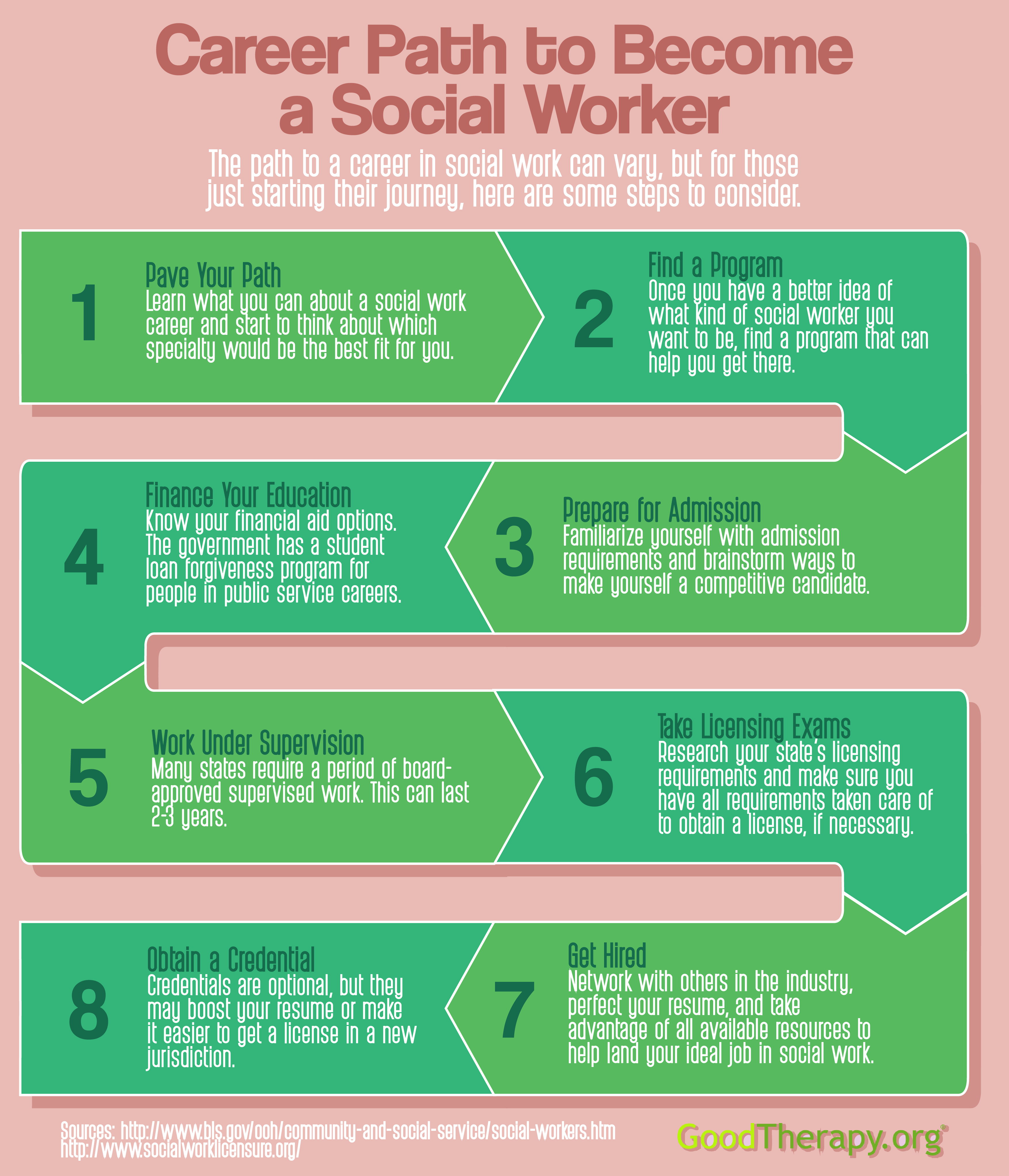
1. Pave Your Path in Social Work
If you are considering becoming a social worker, you can start by learning everything you can about the field. Some ways to learn more about what social workers do include researching online, going to a local library, speaking with a college recruiter, or shadowing a licensed social worker for a day.
Next, examine your aptitude for the career. An effective social worker will typically have high levels of compassion and empathy, strong interpersonal and listening skills, well-developed organizational and problem-solving skills, and good time management.
Although it is not necessary to decide on an area of interest immediately, it may help to research different specialties within social work. Some of these include:An effective social worker will typically have high levels of compassion and empathy, strong interpersonal and listening skills, well-developed organizational and problem-solving skills, and good time management.
- Child and family social workers
- Clinical social workers
- School social workers
- Healthcare social workers
- Geriatric social workers
- Hospice and palliative care social workers
- Medical social workers
- Mental health and substance abuse social workers
2. Find the Right Program for You
When choosing a social work program, it may be helpful to envision a path for your career. Do you want to work in a hospital, public school, or at a non-profit? Do you see yourself more in advocacy or policy change, mental health care, private practice, or the military?
The right program for you will depend upon your chosen path. For example, if you’re interested in clinical work, a program with a clinical concentration may be the best fit.
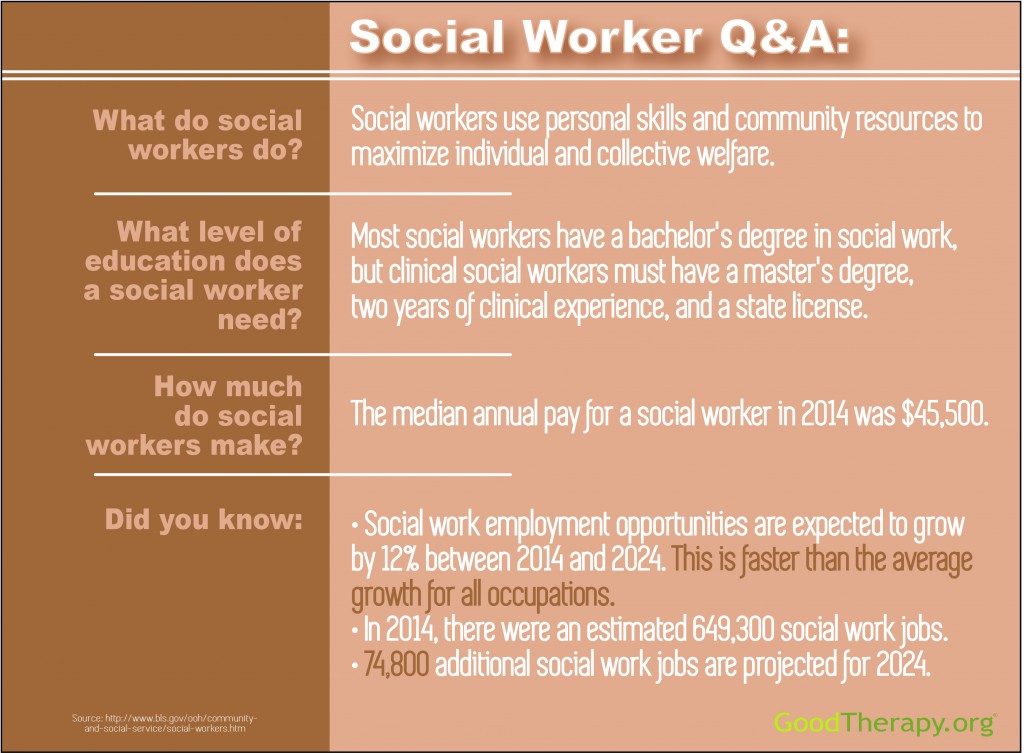
Most entry-level positions will require a bachelor’s degree in social work, though some will accept a related field such as psychology or sociology. To work in the clinical field, a master’s degree is necessary.
In some states, baccalaureate social workers can obtain licensure, but most require a master’s degree. In addition to licensing requirements, there are other advantages of pursuing an advanced social work degree. Master’s level Social Workers (MSWs) often have higher salaries and more career opportunities.
 Infographic by Hannah Johnson
3. Prepare for Admission
Once you have decided on a program and a school, fully understanding and adhering to the admission requirements can make you a competitive candidate. You will need letters of recommendation from people who have known you for at least six months and can easily speak to your skills and attributes.
Volunteer work is an excellent way to show commitment and propensity for social work. Many human service agencies have volunteer opportunities to gain valuable experience. Some students interested in social work choose to volunteer for AmeriCorps, a national community service organization that provides small stipends and education awards in exchange for a service commitment.
[fat_widget_left]An accredited social work undergraduate degree is not necessary for admission to a graduate-level social work program. Any undergraduate degree can be sufficient, but a related field may be preferred.
You can view the directory of accredited social work programs from the Council on Social Work Education here.
4. Finance Your Education
Education can be an expensive investment. Considering financial aid options long before the start of a program can help you get your finances organized. You may qualify for grants, scholarships, or student loans, and some employers may even provide educational assistance. The government also has a student loan forgiveness program available to those who work in the public service field.
5. Work under Supervision after Graduation
In most cases, you will need to work under board-approved supervision for a period of two to three years or 3,000 hours after graduation before applying for state licensure. After receiving a master’s degree, all states require some form of practice for independent clinical licensing if you intend to eventually work in private practice.
Many states require a period of supervised work even for non-clinical positions such as administrative work. It may be necessary to check with your state licensing requirements and your admitted program to know for sure what your requirements will be.
6. Take State Licensing Exams
To become a licensed social worker, learning the licensure requirements in your state is a key step. In the past, many jurisdictions would accept bachelor’s degrees in related fields without accreditation, but most states are moving away from this and do require an accredited degree from the Council on Social Work Education (CSWE) or foreign equivalent for licensure. For those with bachelor’s degrees not CSWE accredited, a master’s degree in social work from an institution that is accredited may be necessary.
In addition to educational requirements, you will also need to work under supervision, take an exam, and possibly be fingerprinted in some states. You can check your state’s requirements here.
In several states, you will need to take the Association of Social Work Boards (ASWB) master’s exam before or after graduation. After completion of all other requirements, you will then take a clinical or advanced generalist exam if necessary.
7. Obtain an Optional Credential
The National Association of Social Workers offers an Academy of Certified Social Workers (ACSW) certification. It is not the same as licensing and does not give any legal authority to practice in any state, but it does provide an additional credential to add to a resume. In some cases, the certification may make it easier to receive a new license in a new jurisdiction.
8. Get Hired
Once you have completed your education and licensing requirements, you’re ready to look for social work jobs. Networking can be helpful for getting to know others in the industry, and spending time perfecting your resume and using all resources available to you can make it easier to land your first social work job or start your own clinical practice. For anyone in a therapist or social work career, staying involved in the community and keeping up with your continuing education requirements can help maintain your licensure and expand your knowledge.
References:
- Bureau of Labor Statistics. (2015, December 17). U.S. Department of Labor. Occupational Outlook Handbook, 2014-15 Edition. Social Workers. Retrieved from http://www.bls.gov/ooh/community-and-social-service/social-workers.htm
- Council on Social Work Education. (CSWE). (n.d.). Directory of Accredited Programs. Retrieved from http://www.cswe.org/Accreditation/Accredited-Programs.aspx
- Federal Student Aid. (2015, December). Public Service Loan Forgiveness Program. Questions and Answers for Federal Student Loan Borrowers. Retrieved from https://studentaid.ed.gov/sites/default/files/public-service-loan-forgiveness-common-questions.pdf
- National Association of Social Workers (NASW). (n.d.). Become a Social Worker: Starting out. Retrieved from http://www.socialworklicensure.org/articles/become-a-social-worker.html#context/api/listings/prefilter
- National Association of Social Workers (NASW). (n.d.). Social Work License Requirements. Retrieved from http://www.socialworklicensure.org/articles/social-work-license-requirements.html
 A colleague of mine, a psychiatric nurse, was working alongside a psychiatrist who would often be insistent about his intention to change a patient’s medication regimen before they even had an opportunity to see the patient together. She recalled that on one such occasion, she boldly interrupted the psychiatrist as he reported his clinical perspective and intentions. “No, doctor,†she urged. “Just because he’s had an increase in psychotic symptoms does not mean we need to increase his risperidone. He’s been on meth all week. We need to prioritize getting him off of the drugs he’s been using before we start changing his meds!â€
The psychiatrist hadn’t seen the bigger picture, had been operating with a kind of clinical tunnel vision out of habit, and her boldness to voice her perspective broadened his, ultimately increasing the quality of the care for the patient. The doctor, for his part, was responsive and did not change the patient’s medication regimen as he had intended.
What Does It Look Like to Promote a Collaborative Care Environment?
Collaborative care involves the sharing of perspective, not necessarily an agreement of perspective. While collaboration in treatment between a nurse and a psychiatrist may in some ways look different than that between a psychotherapist and a psychiatrist, the spirit of the collaboration is necessarily the same—that in our work with people, we naturally and inevitably bring with us our own toolbox of experience, perspective, knowledge, and skills. And to the extent we resign ourselves to treatment in a vacuum, we neglect the person’s treatment, as collaboration is essential, not elective. We each naturally and necessarily engage in our work with people from different angles.
[fat_widget_right]
When the therapist shares the angle of the therapist, the psychiatrist’s perspective widens. When the psychiatrist shares the angle of the psychiatrist, the therapist’s perspective widens.
Think of perspective as standing in a place and looking out over a horizon. As we move about, so changes our available horizon and, thus, our perspective, and yet we are able to take the previously seen horizons with us, aren’t we? In our mind’s eye, in our understanding, we integrate them into our inner map. To acquire a horizon means that one learns to look beyond what is close at hand—not in order to look away from it, but to see it better within a larger whole and in truer proportion.
Therapists, therapeutic case managers, psychologists, psychiatrists, and other mental health clinicians best serve people when they share perspective and responsibility in meeting people’s needs and ensuring therapeutic progress toward established treatment goals.
The horizon of the present is being continually formed, in that, as the philosopher Hans-George Gadamer contended, “we have continually to test our prejudices, and in so doing, adjust our understanding.” This sort of humility is fundamental to good psychotherapeutic and medical treatment.
The purpose of clinical staffing is to aid in service planning, consult on issues of safety and risk, discuss developmental concerns, collaborate on behavior and mental health assessment, address concerning family and social dynamics, consider referral options, and share critical case updates.
Each case presented will typically either qualify as a “consultation” or an “update.” Clinicians usually have only about 15 minutes to staff cases. Here’s how I encourage clinicians to approach clinical staffing and, essentially, all forms of collaborative care:
- Tell the story (brief): Just as the case record documentation should provide a narrative of services rendered, the introduction of a person in a clinical staffing should similarly provide context. Facilitate talk about engagement in services, home and social dynamics, relevant historical considerations, psychological profile, academic, vocational, and/or behavioral functioning, and recent events that may be relevant to any concern.
- Identify concerns (robust): Share clear and present concerns. Use clarifying statements, such as, “I am concerned because __________.” Express particular observations, such as, “I have noticed __________.†Ask specific questions, such as, “Why do you think __________?†Strike a tension between curiosity and clarity. If you fail to bring clarity and direction to a consult, time will waste away.
- Tie services together (summary): It is your responsibility to end discussion about a person by providing specific feedback. Try to summarize any recommendations and clarify the who and what of any follow-up to result from the staffing.
A Caution to All Clinical Professionals
Psychological knowledge and jargon are dangerous, often standing between well-intentioned clinicians and effective mental health treatment. Curiosity always runs the risk of gossip. Clinical case consult groups scattered across our fair land meet frequently and are filled with far too much clutter, too often driven by curiosity rather than care. Jargon and gossip increase tone deafness in clinicians.
We all have our blind spots, and we all get stuck in ruts of routine and habit. And details learned about people’s lives ever tempt therapists, psychiatrists, and the like toward distraction. There is a distinct difference between a personality and a person, a diagnosis and a destiny. It is our responsibility to stir hope and catalyze strengths rather than to stew history and analyze at length.
Effective mental health treatment should always aim to treat the person—the whole person. A collaborative mental health treatment approach should enhance communication of relevant evaluative and ongoing therapeutic feedback, increase clinicians’ adherence to a person’s treatment plan, and reduce risk, frequency of crises, and unnecessary emergency room visits and inpatient stays.
It is important for all mental health providers to be well connected to and collaboratively engaged with multidisciplinary networks to ensure the most effective and integrated treatment that can occur does occur. Therapists, therapeutic case managers, psychologists, psychiatrists, and other mental health clinicians best serve people when they share perspective and responsibility in meeting people’s needs and ensuring therapeutic progress toward established treatment goals.
 “I feel like I am not listened to and that what I say doesn’t count.” “I feel humiliated for speaking up.” “I’m afraid of losing my job if I am critical.” “I’m expected to take care of things that are not my responsibility.” “I feel used and taken advantage of.” “My supervisor can’t change. It’s just the way it is, and I have to accept it.” “It’s hopeless! I’ve tried, and nothing changes.” “Every time I do the right thing, it feels like I get punished.” “I can’t believe my boss doesn’t get how we feel about him and what kind of harm he’s causing.” “My therapist says she wants all kinds of feedback, but when I give her negative feedback, she just turns it around on me.” “My feelings and opinions just aren’t taken seriously.” “It’s just not safe.” “It’s really unjust, but it is more peaceful to just let it go.” “I feel like it is just hopeless to have an effect, so I don’t invest myself.” “I can’t believe it. She just said no. And she’s my friend.” “He’s always too busy.” “There’s no acknowledgement, no follow-up from what I say.” “She must be right.”
Sound familiar?
These are feelings and experiences frequently expressed by people when they are in what I call a down-power role. People in therapy, students, supervisees, employees, medical patients, and parishioners, among others, are in roles with less power and influence than their up-power therapists, teachers, supervisors, employers, doctors, and clergy. This greater power is an automatic accompaniment to professional or positional power and, in fact, is embedded in the up-power role. Role power is earned or assigned. Role power is an add-on to the personal power we all have and need in our lives. Think of it like a scarf or mantle of additional power and responsibility that one puts on when one is in an up-power role.
Often without recognizing it, we may move between up- and down-power roles multiple times in a day. At the dentist, we are down-power. As a teacher, we are up-power. With a police officer, we are down-power. This power difference, although it has vital functional and emotional value, creates relational dynamics that, when misused, are reflected in the italicized statements above.
[fat_widget_right]
Therapist, supervisor, teacher, director, clergy, doctor, police officer: these are the positional power roles that carry an especially strong power difference. The stronger the power difference, the greater the vulnerability and risk for those who are down-power. The strength of the power differential is directly related to the amount of risk.
I use the terminology up-power roles and down-power positions because they are simply directional words, not necessarily evaluative words. By the way, there are other up-power roles in which the power difference is not very great (although still present), or the power difference is temporary—waiter in a restaurant, committee chair, lecturer. Virtually all jobs have some up-power responsibilities for assessment and final decision-making.
The power-differential effects that I want to describe are the relational dynamics that are most potent in high-difference roles, such as teacher, therapist, clergy, supervisor, and director. This information may be useful to you when you are in a challenging down-power position and want to have some positive influence but not get hurt or feel put down. It may also be useful when you are in an up-power role and things aren’t smooth, or you’re getting a lot of pushback, shutdown, passivity, or anger. Reviewing these dynamics can help you make self-corrections that can shift the relationship for the better.
The dynamics are as follows:
- All power/no power
- Skewed impacts
- 150% principle
- Power blindness
- Power with heart
Let’s explore these dynamics in greater depth.
1. All Power/No Power
There is a misconception, based on witnessing or experiencing abuses of power, that up-power means “all power” and down-power means “no power.” This is a self-reinforcing dynamic. The more the up-power person over-identifies with the increased power accompanying their role, the more the down-power person feels powerless and disempowered; meanwhile, the more the down-power person experiences or assumes no power, the more the up-power person experiences or assumes they have all the power.
Without understanding the difference between role power and personal power (and also status power), it is easy and natural to think of role power as if it were personal power. As a therapist, it is not healthy to take a person’s suffering home. Better to leave it at the office. As an airline pilot, it is not healthy to treat your partner and children as if they were staff or passengers under your command.
There are also ways in which people get stuck in an up-power role even when they have taken off their role mantel. A member of the clergy, for example, may not be able to go to a meeting without being expected to hold up-power role responsibilities. We are generally unaware of how frequently we change from up-power roles to down-power positions.
2. Skewed Impacts
In the relationship between up-power and down-power, it is acceptable and a responsibility of the up-power role to give feedback—both positive and challenging. For those in a down-power position, it is fine to give positive feedback, but it can be risky to give negative feedback or even suggestions for what would work better. Challenging feedback can be met with humiliation, putdown, demotion, or even loss of a job.
- Skewed feedback loop: Up-power persons who don’t understand the risk for those in down-power may get a skewed sense of how well they are doing and how well-liked they are, as they receive little negative feedback. A skillful up-power person will seek out challenging feedback and constructive suggestions. Further, this person will be transparent in their communications about how they are responding and why.
- Skewed expectations: We tend to idealize and/or devalue those in up-power roles. Therapists are often unrealistically seen as (and expected to be) perfect. Then when they make a mistake, they are equally unrealistically devalued.
3. 150% Principle
The 150% principle is an important concept. The up-power role is weighted toward responsibility, while the down-power role is weighted toward risk. One of the responsibilities that goes with the up-power role is what I call the 150% principle. While all are 100% responsible for the health of the relationship, the ones in the up-power roles are even more responsible—hence the 150% metaphor.
On a day-to-day basis, this attitude means the person in the up-power role needs to be 50% more active in tracking for and resolving working-relationship problems and issues, earning trust, holding the big picture, demonstrating listening and responding to feedback (especially challenging feedback), attending to safety, and being fair and respectful. This is a tall order, but it is part of using role power wisely and well.
4. Power Blindness
The socially dominant concept of power as force, exploitation, and manipulation often leads people in up-power roles to disown, deny, or downplay their increased power and influence by virtue of their role. This power blindness causes much harm, albeit harm that is subtle, confusing, and difficult to address.
Power blindness is particularly a problem for people in the helping professions: teachers, supervisors, therapists, and clergy, all of whom are often trying to help people heal from the wounds of power abuse and thus should be particularly sensitive to misuses of power. They don’t want to cause harm, yet they frequently fail to understand how their up-power roles heighten their influence, just as turning up the volume on the television increases the sound.
- Heightened influence: A chief judge described writing a memo with a question in it that didn’t ask for an immediate answer, but within minutes there was a knock on her door from one of the judges wanting to respond. Her non-urgent memo had the effect of full volume simply because it came from her. Power blindness also happens in organizations devoted to equality and the avoidance of abuses of power. Role power is not the problem. The problem is how role power is used. For therapists, for example, pretending that they have little or no increased power and influence interferes with their ability to make accurate assessments, see the big picture, take charge as needed, and set and maintain appropriate boundaries. When leaders in organizations don’t recognize or give away the responsibilities that go with their role, the organization may suffer from chaos, confusion, and decreased productivity.
- Friendship/role confusion: When persons in up- and down-power roles are friends, it is even more important to be conscious and aware of the times when one friend is wearing the add-on mantel of role power. The responsibilities of up-power may on occasion need to trump the desires of friendship.
5. Power with Heart
The core of “right use of power†is the ability to stay connected. Staying connected involves standing in your strength while staying in your heart. Both strength and compassion are necessary aspects of power.
When in a down-power position, you can be wiser and less victimized by misuses of power. When you are in an up-power role, you can be more sensitive and responsive to your impact.
Many shadow aspects can interfere with a leader’s ability and even interest in staying in a relationship. Here are two of them: social distance and the ability to take action without interference. Both of these conditions have leadership value. Social distance helps give a leader a view of the whole person or organization that is essential for good care and decision-making. The ability to take action without interference allows the leader to take charge and make difficult decisions that move things along and are for the good of the whole even though not everyone affected agrees. However, in seeing the forest, one’s connection to individual trees can get lost or distorted. Compassion is lost when individuals become cogs in the wheel of progress and financial success.
An unfortunate but natural result of being able to take action without interference is that leaders begin to be more impulsive, more self-oriented, and less respectful in their relationships. Helping professionals and leaders need to understand this dynamic in order to be alert to ways they may unconsciously be losing compassion and connection.
It might be interesting now to go back to the beginning of this article and look at the statements. Can you relate each statement to one or more of the relational dynamics described? Do you have personal experiences with any of these role-power issues? To repeat, understanding and working with these relational dynamics may be empowering, whatever role you are in. When in a down-power position, you can be wiser and less victimized by misuses of power. When you are in an up-power role, you can be more sensitive and responsive to your impact. Staying connected is key. Maybe it’s not so hopeless, after all.