 It’s that feeling down in your belly that wiggles and burns, then jumps into your chest as you check your phone for the 10th time for a text from the object of your interest. Fireworks. Electricity. A burning flame. These are all descriptors that often describe passionate, romantic love.
We often hear people say they love someone so much it hurts or that a person can give them “butterflies” in the stomach if they’re in the same room. We think to ourselves, “This person works them up so much. They must really be into them!†The reality, however, is that pain and anxiety are not signs of passion. They are just pain and anxiety. Authentic love should not feel that way.
The Mixed Signals of Romance
In the beginning of a developing relationship, you may feel preoccupied with powerful feelings. Anxiety and excitement feel very similar. However, as a relationship builds, those unnerving feelings can be indicators the relationship is not truly serving you.
[fat_widget_relationships_right]
Anxiety can show up in a number of ways in relationships. Perhaps you worry excessively about what your significant other thinks or feel like you need to be perfect when they are around. You may have irrational thoughts that they might be angry or leave you. You may feel self-conscious around this person, or even panic when things go wrong. This is not how a person should feel in a secure, loving, and supportive relationship.
Are Your Needs Being Met?
It’s not uncommon for someone to become anxious about a relationship when a partner is not meeting their needs. When we feel ignored or not prioritized, it can be unsettling.
You probably have a friend who texts their significant other relentlessly every time they fail to answer the phone, asking where they are, what they’re doing, or instructing the person to call back right away. Your friend may be coming from a place of anxiety and might not feel secure about their partnership. Maybe your friend has reason not to trust their partner. Maybe they are carrying hurt and suspicion from a past breakup. Either way, those rapid-fire texts are not a sign of undying love—they may, instead, indicate anxiousness.
All that angst may feel like over-the-moon passion, but remember: above anything else, your relationship should feel calm and safe.Some degree of anxiety in a relationship is normal. But if you frequently feel nervous about where things stand with your significant other, you may want to pause and think about what’s causing you to feel that way.
Does your partner ignore you for long periods of time? Are they hypercritical or jealous? Maybe they make you feel guilty, give you ultimatums, or become passive-aggressive and irritable. Does your partner act overly flirtatious with others? These are all examples of unhealthy relationship dynamics that can leave people feeling panicky and unnerved. If any of these are behaviors are commonplace in your relationship, you may want to reach out to a couples counselor or rethink your commitment.
From Infatuation to Meaningful Connection
As a relationship develops and moves past the honeymoon phase, lust and novelty should be replaced by trust, commitment, and dependability. These are the true qualifiers of an authentic, long-term connection. A loving relationship should feel secure, reliable, and supportive. You should be able to feel relaxed and open about being accepted as your true self. You should be able to trust your partner to be loyal. You should feel like a priority. Everyone deserves this type of relationship.
All that angst may feel like over-the-moon passion, but remember: above anything else, your relationship should feel calm and safe.
 Anxiety can show itself in many forms. Some can be very painful and impairing, and we may need professional help to deal with them. But anxiety is something that everyone experiences at different times, and there’s something you can do about it.
One powerful tool that can help you navigate anxiety is mindfulness. Being aware of the present moment without judging it, and allowing experience to happen without trying to change it, can free you from the pain of your anxiety as well as help you understand its underlying causes.
But how do you do this? Like anxiety itself, the answer to this question is multifaceted. Anxiety manifests through our moment-to-moment thoughts, emotions, and body sensations. We suffer a great deal when we reject what’s actually happening in our moment-to-moment experience; by recognizing our habits of trying to “get rid of†experience, we can ease unnecessary suffering. What’s more, we can begin to understand the deeper, underlying causes of our anxiety.
[fat_widget_anxiety_right]
Thinking Plays a Big Role
Our thinking patterns greatly influence how we see ourselves, others, and the world at large. As a consequence of our early interactions with caregivers, peers, and society, we create various thought patterns that continue to evolve throughout our lifetimes. Most of the time, we’re unaware of these patterns, so they can end up dictating a great deal of our lives.
For example, if as a child you were repeatedly told by your father that you weren’t good at something (or, conversely, that you were amazing at something), you likely internalized that message and it became part of your identity. You act accordingly and believe you aren’t good enough (or amazing) at that particular activity. And if you find yourself faced with the activity you believe you aren’t good at, you may experience anxiety, and doing the activity may be very difficult. In such situations, it’s as if we become that 6-year-old all over again.
Having a mindfulness practice can help us see our actual process of thinking, giving us some space from our thoughts. The next time you tell yourself that you can’t do something or that it’s too difficult, pay close attention to the tone of voice and words you’re using; you may recognize it as the voice of an influential person growing up. At this point, you may begin to appreciate that the thinking is not really “yours,†but an internalized voice.
With mindfulness, you can become aware of the thoughts without identifying with them. Again, this isn’t easy, and you may take a long time to get there—but it is absolutely possible. The more we practice mindfulness, the more this capacity develops.
What about Feelings?
Emotions are inevitable; we experience them all the time. Some are pleasant, and some are unpleasant. As humans, we tend to avoid the unpleasant ones and grasp for the pleasant ones. When we’re experiencing anxiety, our emotions can be especially difficult to tolerate, and we may try to suppress or get rid of them. The problem is, by doing this we perpetuate a rejection of ourselves, creating a negative feedback loop.
By developing a mindfulness practice, little by little you can begin to tolerate the emotional quality of anxiety, to the point that it becomes manageable. When you allow your experience to be what it is, it loses power over your sense of well-being. As with our thoughts, this skill takes time to learn, but it is very real. They key here is to practice.
Besides anxiety management, another important benefit that comes from emotional mindfulness is that we increase our capacity to know and understand our feelings. Many people experience anxiety because they lack a direct awareness of the emotions behind it. The more we became comfortable with our emotions, the deeper we see behind them and the less influence they have over us.
As you might sense, we miss out on a great sense of aliveness and dynamism when we live in our heads.
Everything Happens in the Body
Our bodies are our main vehicles for moving through life. They carry a tremendous amount of information, yet for the most part in modern society, we’ve lost touch with them. Emotions begin in the body, and so anxiety can show itself in the body, too, in ways such as contraction in the chest, heart palpitations, tightness in the stomach, and so on. As we develop the capacity to sense into our bodies, we can pick up on our different emotions earlier. We can also more easily see the impact others and the environment have on us.
At least in the West, most of us ignore our physical sensations and experience the world through thinking. Some of us take emotional life into account, but very few actually incorporate the body’s experience into our worldview. It makes a tremendous difference in our quality of life when we do. As you might sense, we miss out on a great sense of aliveness and dynamism when we live in our heads.
Ultimately, We Must Integrate All Three
Thoughts, emotions, and body sensations are not discrete, separate categories. The truth is, the three are complex and intertwined, affecting each other in many ways. Practicing mindfulness helps us to notice how our thoughts impact how we feel, how our feelings impact how tense our bodies are, and how our physical experience impacts our thoughts and feelings. The great news is that by becoming aware of any one of these processes, all of them begin to shift, harmonize, and flow.
As I’ve mentioned in previous articles, although it’s possible to practice mindfulness alone, it’s beneficial to have a coach, guide, teacher, or therapist who can help you track your progress and notice when you encounter one of the many pitfalls along the way. Sometimes anxiety can increase when we begin paying attention to our long-ignored experiences. Sometimes anxiety is masking psychological trauma, and opening this up without appropriate support can be counterproductive. If you want to reduce your anxiety and reap the full benefits of mindfulness, seeking guidance is crucial to your practice.
 Life in today’s fast-paced world is complex, with more stressors and less direct social support than in past generations. Exposure to multiple life stressors has been shown to leave people vulnerable to illness and other negative outcomes, making it all the more important that effective coping strategies are developed and utilized.
One of the most common reactions to stressful life events and transitions is anxiety. One of the most widely reported mental health challenges that people face in the United States, anxiety affects about 40 million adults ages 18 and older.
Common symptoms of anxiety include feelings of panic, fear and uneasiness, difficulty sleeping, muscle tension, cold or sweaty hands/feet, shortness of breath, heart palpitations, restlessness, dry mouth, nausea, dizziness, excessive or unrealistic worry, and avoidance of triggering situations. Temperament and prior experiences with stressors are key determinants of whether a person develops problematic anxiety in response to life events. Though their genetics and past experiences cannot be changed, people can better prepare for the inevitable ups and downs of life by understanding their emotional responses and by nurturing healthy daily practices.
[fat_widget_anxiety_right]
The Fight-or-Flight Response
Fear and anxiety are natural and adaptive responses to stressors. Fear is a reaction to a present danger in the environment, while anxiety refers to the anticipation of some potential threat in the future.
Fear and anxiety are natural and adaptive responses to stressors. Fear is a reaction to a present danger in the environment, while anxiety refers to the anticipation of some potential threat in the future.
When the mind perceives a threat, the nervous system activates the fight-or-flight response. A complex physiological event, the fight-or-flight response mobilizes a person for action in the face of a life-threatening danger. Because the human nervous system does not distinguish between real and imagined threats, this response system can work against a person, resulting in panic and anxiety.
The good news is that our understanding of the biological underpinnings of the fight-or-flight response has led to well-researched, effective treatments and coping methods. Below are some healthy strategies that you can begin to practice right now, regardless of whether this is a time of stress:
- Practice deep breathing, meditation, or relaxation: Breathing and meditation can help you focus on the present moment and reduce ruminative worry and anticipatory anxiety. Regular relaxation exercises lower overall physiological arousal.
- Look back to other stressful times: Reflect on past stressors and remind yourself that stressful periods are temporary and will pass.
- Identify effective coping from the past: You’ve been through tough times in the past. Review what helped you during those times.
- Accept negative feelings: Don’t deny anger, guilt, sadness, or negative feelings. Try to accept and acknowledge your feelings. Journaling can provide a safe space to express and process feelings.
- Engage in active problem solving: Identify aspects of the situation that you have control over and appropriate responses.
- Maintain and utilize supportive relationships: Build loving and warm relationships with trusted others you can lean on during difficult times.
- Get plenty of sleep: Aim to get seven to eight hours of sleep each night. Establish a regular bedtime and wake-up time.
- Exercise: Daily exercise is one of the most effective ways to reduce stress and anxiety. If cleared by your physician to do so, try to exercise vigorously four or more days a week.
- Eat well: Eat a balanced diet, and don’t skip meals and snacks.
- Schedule rest breaks: Set an alarm on your phone to remind you to take a few minutes several times a day to meditate, breathe, or otherwise relax.
- Engage in pleasurable activities: Be sure to carve out time to engage in things you enjoy on a daily basis.
- Avoid caffeine and alcohol.
Everyone goes through difficult and stressful times. It is important to cultivate a robust set of coping strategies to build your resilience and reduce the negative impact of life’s challenges. If you find that you are having trouble coping, consider seeing a therapist or seeking out a support group.
References:
- Holmes, T. H., & Rahe, R. H. (1967). The social readjustment rating scale. The Journal of Psychosomatic Research, 11(2), 213-218.
- Jansen, A. S. P., Nguyen, X. V.,Karpitskiy, V., Mettenleiter, T. C., & Loewy, A. D. (1995). Central command neurons of the sympathetic nervous system: Basis of the fight-or-flight response. Science, 270(5236), 644-646.
- Mineka, S., & Zimbarg, R. (2006). A contemporary learning theory perspective on the etiology of learning disorders: It’s not what you thought it was. American Psychologist, 61(1), 10-26.
 These days, most of us live with some degree of stress. For kids, between their homework, friends, after-school activities, sports, and worries about getting into college, it’s a whole new era of anxiety. It’s no wonder, then, that the National Institute of Mental Health states that the prevalence of diagnosed anxiety disorders among 13- to 18-year-olds is 25.1%.
If you’re a parent living with an anxious child, you know how tiring and frustrating it can be—for both of you. It’s not easy to live with the kid who’s so stressed out by homework assignments that he ends up throwing the book against the wall, or tearing the papers in frustration, or working until midnight to get it perfect. Or the teen who gets a migraine every time she has to go to school or start a new activity. With a little insight into how they feel, why they act the way they do, and what we can do to help, the job of parenting anxious kids gets a little easier.
How They Feel
Anxiety doesn’t always show up as worry. Sometimes it looks like anger, irritability, sadness, or fear. After a full day at school worrying and obsessing, kids often come home exhausted—and immediately act out.
[fat_widget_child_counselor_right]
Imagine spending an entire day in fight-or-flight mode. That’s when the brain perceives a danger and thus produces adrenaline and stress hormones to prepare for a quick getaway, like a caveman running from a tiger. This causes physical sensations such as dizziness, faster heartbeat, rapid breathing, and sweaty palms. In this state, it’s tough to think clearly or make good, informed decisions. Even the most mature of us might lash out after all that.
Then again, sometimes these struggling kids look like stereotypical “normal†kids—at least at school, where they may crave the approval of the teachers. Keeping very contained gives them a sense of control over their environment, helping to minimize the risk of what they see as danger. But when they come home, everything changes. In the safety of their own room, they might have panic attacks, refuse to follow rules, or get violent.
What This Is NOT
If you lived with this level of stress every day, you’d probably come home and explode, too—and maybe you do. Kids tend to store up their stress and take it out on those they can trust: their parents and family members. Sometimes your home might feel like a battlefield.
What’s important to know is that this is not manipulation. Your child doesn’t want to be this way. It’s easy to think that he or she is acting out in order to get attention, or that if the child were less spoiled, less spiteful, or less rebellious, he or she would stop being “bratty.†But in reality, no one, especially a sensitive kid, would choose to constantly be in trouble.
Anxious children may lose it for a handful of reasons:
- Lack of self-control
- Storing up their frustration until it explodes
- Guilt
- Low self-esteem
- Unconsciously testing parents
How We Can Help
Anxious children generally lack two vital skills for reacting with calm and rationality. The first is regulation, or the ability to calm oneself. The second is self-soothing tools, or alternatives to turn to when their emotional temperature spikes.
The first way parents can help kids regulate is by modeling regulation. The more calm you are, the more they’ll learn from that ability. Research shows that humans’ heart rates attune with the people that they feel close to. So if someone holds us in a loving way, our heartbeats will often increase or decrease to match theirs.
Therefore, one way to help them relax is to reverse-match our activity to theirs. In other words, as they go up, we go down. If their bodies become jerky or uncontrolled, we keep our movements fluid and slow. As their volumes raise, we modulate our voices even more. And if they become angry or even nasty, we remain loving and firm.
Self-soothing tools fall into two main catagories: physical and mental. (These tools require some practice, and only their basics are described here.) Physical tools include breathing and stretching. Check out Dawn Huebner’s book, What To Do When You Worry Too Much, for great examples of how to stretch. Breathing exercises and body movement exercises help reset the inner thermostat. Exercise also helps to calm the body, so throwing a ball, jumping on a trampoline, or dancing around the living room are great ideas for breaks.
Mental self-soothing is achieved by thinking calming thoughts. This can be done with words, like a mantra that replaces the anxious thought. For instance, when a child says, “I can’t do it,†or, “I always screw up,†you can help him or her practice saying, “I just need to try my best.†Ask the child to come up with some alternate statements that make him or her feel better, and practice together.
In addition to words, images can also be self-soothing. Where is your child’s favorite place? Could he or she create an imaginary haven? When feeling stressed, have your child conjure up this “safe space†in his or her mind, whether it’s a sandy beach, flower garden, or private room. Breathing slowly and thinking about a quiet and peaceful place calms the body and soothes the mind.
The Long-Term Upside
These are sensitive kids; that’s why they feel things so deeply. So it’s helpful to remember the flipside of that sensitivity. These are children who tend to be insightful, empathetic, tuned in, passionate, dramatic, and thoughtful. They often thrive in creative pursuits and go on to amazing careers in helping professions. The traits that are so challenging to them now will serve them well as adults. For now, the best we can do is teach them to channel their sensitivity into self-care.
Reference:
Any anxiety disorder among children. (2015). National Institute of Mental Health. Retrieved from http://www.nimh.nih.gov/health/statistics/prevalence/any-anxiety-disorder-among-children.shtml
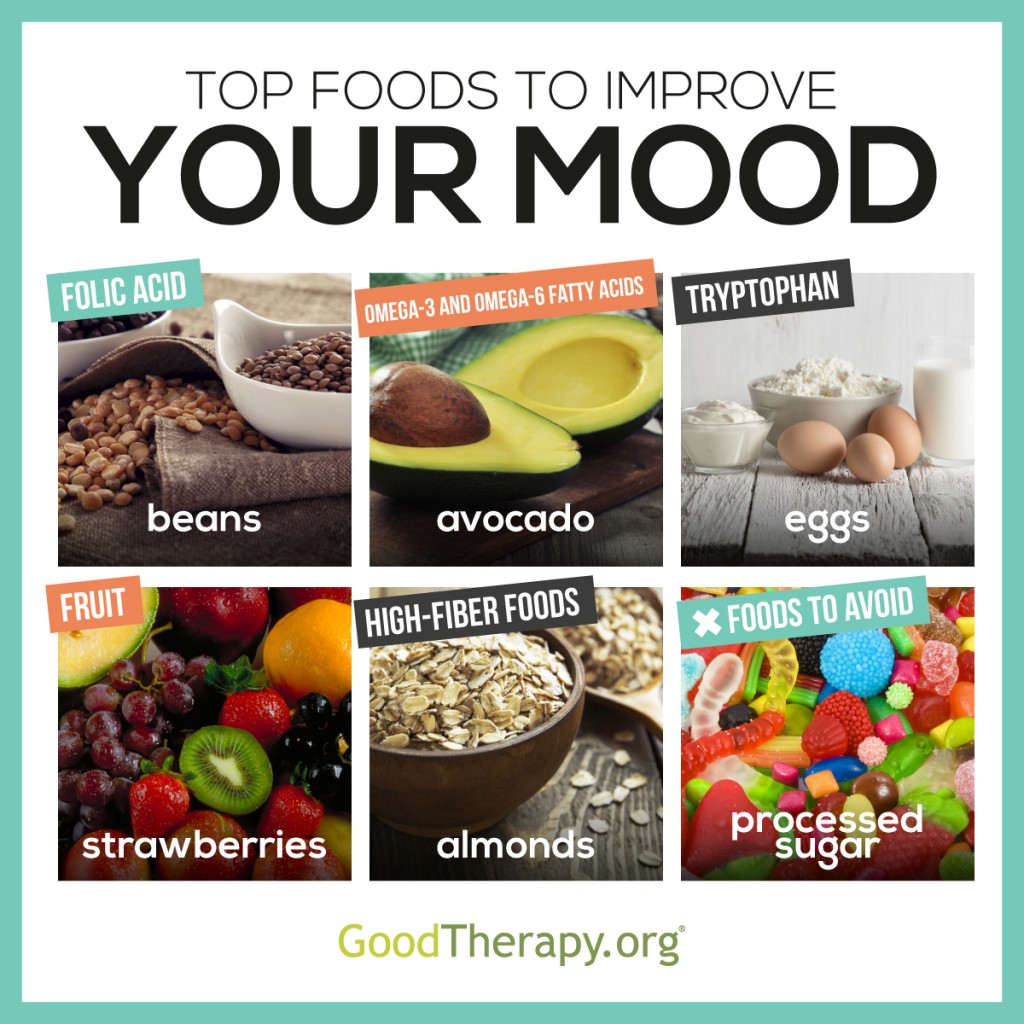
 Stress, depression, and anxiety are complex experiences caused by a variety of factors, including lifestyle, brain chemistry, a history of trauma, and health. Research increasingly points to the role nutrition plays in sound emotional health. While eating a bowl of soy beans and loading up on eggs won’t cure depression, it can certainly help. By pairing the right diet with healthy therapy and—if necessary—medication, you can maximize your chances of quickly feeling better.
Folic Acid
Vitamin B9, also known as folic acid, is probably best known as the nutrient every pregnant woman should eat to prevent neural tube defects. Research also shows that folic acid may help boost mood. One study, for example, found that people with depression tended to be deficient in folic acid. Beans and lentils are excellent sources of folic acid, and you can also get your daily dose of this important nutrient through oatmeal and cereals fortified with folate.[fat_widget_right]
Omega-3 and Omega-6 Fatty Acids
Omega-3 and Omega-6 fatty acids can help improve heart health. Research is still mixed on the effects these fatty acids have on mood, but several studies have shown an improvement in depressive symptoms among people who get high doses of Omega-3 and Omega-6 fatty acids. Even when studies haven’t verified the mood-boosting effects of these fatty acids, they haven’t shown any negative consequences. Fish, nuts, legumes, avocados, flax seed oil, and linseed oil are each high in these important nutrients.
Tryptophan
You might have heard that tryptophan can cause you to doze off after a big Thanksgiving dinner, but it can also help ease anxiety and depression. The body converts tryptophan into serotonin, a neurotransmitter that helps regulate mood and prevent depression. Milk, cheese, eggs, soybeans, tofu, and turkey are all high in tryptophan.
Fruit
There are dozens of reasons to eat more fruit. Fruit’s natural sugars are better for you than the stuff you get from packaged foods, and the relatively low calorie content of most fruits can help you regulate your weight and stave off food cravings. Many fruits can also help boost your mood by boosting serotonin levels. Kiwi, sour cherries, bananas, plantains, plums, pineapples, and tomatoes are each high in serotonin.
High-Fiber Foods
Fiber doesn’t just help you avoid gastrointestinal problems. Some studies have also found that it can boost your mood. High-fiber foods include avocados, whole wheat bread, barley, beans, lentils, almonds, raspberries, pears, oatmeal, and bran muffins.

Foods to Avoid
It can be challenging to eat a healthy diet, and an occasional “cheat†may even boost your mood if you choose something healthy, such as dark chocolate. Some foods can only drag you down, though. These include:
- Alcohol, which is correlated with increased depression and sleepiness.
- Caffeine, which can make you feel jittery and anxious, then lead to sleepiness and depression.
- Processed sugars, which can give a temporary energy boost that quickly yields to a depressive crash.
- Foods containing gluten, especially for those who have celiac disease. Many foods high in folic acid are also high in gluten. Gluten hasn’t been shown to be harmful to most people, but if you have celiac disease, the benefits of gluten-containing foods are outweighed by the risks.
References:
- 15 mood-boosting foods. (n.d.). Retrieved from http://www.prevention.com/food/healthy-eating-tips/food-and-mood-best-foods-make-you-feel-better
- Hainer, R. (2010, June 11). Supplements for depression: What works, what doesn’t. Retrieved from http://www.cnn.com/2010/HEALTH/06/11/supplements.for.depression/
- High-fiber foods. (n.d.). Retrieved from http://www.mayoclinic.org/healthy-living/nutrition-and-healthy-eating/in-depth/high-fiber-foods/art-20050948
- Jefferson, J. W. (2007). Folate for depression. Psychopharm Review, 42(10), 75-81. doi: 10.1097/01.IDT.0000290219.07082.4c
- Nelson, S. (2014, May 19). Study says non-celiac gluten sensitivity may not be real. Retrieved from http://wqad.com/2014/05/19/study-says-non-celiac-gluten-sensitivity-may-not-be-real
- New research reveals that fibre can improve mood. (2002, February 20). Retrieved from http://www.eurekalert.org/pub_releases/2002-02/cu-nrr022002.php
- Treating depression with Omega-3: Encouraging results from largest clinical study. (2010, June 30). Retrieved from http://www.sciencedaily.com/releases/2010/06/100621111238.htm
Share this Image On Your Site
 What if we told you that with a single simple phrase, you could turn a bad day into a great one and turn pessimism into an instantly brightened attitude? You could write “I am beautiful” in the fog on the bathroom mirror. You could repeat Aibileen’s mantra from The Help: “You is kind. You is smart. You is important.” Or, you could print out these nine affirmations and hang them around your home or office, tape them on the dashboard of your car, or commit them to memory to pull out during trying times.
Affirmations are statements that reflect a positive outlook on life, one’s abilities, one’s potential, and more. Because the verb “to affirm” means “to maintain as true” (Dictionary.com), affirmations inherently uphold truths. In other words, by repeating these phrases you aren’t teaching yourself anything new—you’re simply repeating and reinforcing truths. Sometimes it’s difficult to remember that you are kind, smart, and important. You may need to continue to tell yourself those things so your brain can recognize and accept them.
Repeating affirmations can relieve anxiety, ease day-to-day pressure and stress, and even have a positive effect on healing from other mental health issues, like addiction. Don’t believe us? It’s scientifically proven!
[fat_widget_right]
GoodTherapy.org has reported before on the astounding benefits of using affirmations:
- For toddlers with autism, affirmations can increase language development.
- Teens develop a stronger sense of identity when using affirmations.
- Simply stating affirmations in times of stress can increase likelihood of success.
- Self-affirming can help people consume less alcohol.
Add these affirmations to your daily routine, and let us know in the comments how they’re helping you achieve goals, gain self-esteem, and foster positivity in life!
1. I have the strength to face the challenges before me.

2. I am worthy of love and respect.

3. I accept myself with all my imperfections.

4. I recognize my own talents and gifts.

5. I am unique. There is beauty in my differences.

6. I focus on what I can do, not what I can’t.

7. I have value and worth in my community and in society.

8. I am grateful for every learning experience I have had.

9. I can change.

Having a hard time accepting these statements to be true? You’re not alone—many people experience self-esteem issues, low self-worth, or reluctance to accept oneself. Therapy can help. Search the GoodTherapy.org directory for the right therapist for you, and take the first step to making a change in your life.
 Anxiety is a surprisingly common problem in children. If your child has sensory processing issues or sensory hypersensitivity, you may have already witnessed how these can bring about or intensify anxiety. These sensory issues aren’t always limited to one type of sensory input. Hypersensitivity can be found in any sensory system, and affect a person in one, two, or several systems at once. The intensity of experience common to sensory hypersensitivity, sensory processing issues, or other sensory issues can be a challenge for anyone, but for a child it can be overwhelming.
For instance, to children with tactile hypersensitivity, a sock seam might feel like the scratchy side of Velcro on tender skin. A voice that seems perfectly normal to most people might be painfully loud. Children who experience sensory input this intensely may naturally avoid or try to delay situations where they will be overstimulated by the offending sensations.
Anticipating future situations like these naturally leads anxiety-prone children to worry. A child may worry so much that anxiety becomes a day-to-day response. As parents, we are in a very good position to help our children avoid these pitfalls, and to develop good-feeling, healthy habits and attitudes.
There are many positive and healthy ways to manage anxiety that stems from sensory issues. Three examples of anxiety neutralizers are understanding, fun, and mindfulness.
[fat_widget_right]
Understanding
Understanding is key—both understanding oneself, and feeling understood by others. Understanding the relationship between one’s own hypersensitivity and anxiety can be empowering for children. Feeling understood by others, especially by parents, makes a big difference. Both of these will ease fears, and as parent, you are in the perfect position to help.
Feeling Understood
Children need to know that their parents understand where they are coming from, and that they are not being judged. Parents can ask questions, acknowledge their children’s feelings, and help them develop an action plan.
For example, if your child has a fear of leaving the house before school, listen carefully to your child and seek out the underlying problem. Convey that you understand. Help your child express herself using words, so that instead of reacting to her anxieties with a tantrum, she can explain the discomfort. Feeling understood helps your child feel nurtured and supported, and helps promote positive coping skills.
Self-Understanding
Likewise, your child needs to understand himself. Educate your child about his brain function. Explain that a special part of his brain works to keep him safe. When this part of the brain gets a message from a sensory organ (such as the skin, eyes, nose, tongue, or ears), it responds accordingly.
For instance, when nerves on his hand send a message to his brain that the stove feels hot, his brain responds quickly by moving his hand away from the heat. Likewise, if his brain receives a message that something seems wrong or unknown (like intense smells, loud sounds, etc.), his brain does its best to understand (interpret) the sensory information and respond in ways that might keep his body safe.
In people with hypersensitivities, the signals from the sensory organs send some messages to the brain that are intensified, amplified, or confusing. This is why the brain might send a message saying “Be anxious!†to the body so that it will be ready to run, hide, or maybe even fight.
Just knowing the cause of anxiety won’t make it go away, but it’s a beginning. Your child may need the support of a licensed, qualified therapist to develop positive and healthy coping skills, but learning to pay attention to their own feelings when anxious can be very helpful right from the start.
Fun
The sensations linked to having fun can be powerful against worries and sensory intensities. Fun is not a direct antidote to be applied during an emotional crisis or time of heightened anxiety, but rather a component to build upon and reinforce.
Habitual anxiety can distract a child’s natural inclination toward play, humor, and wonder. Facilitate your sensitive and anxious child’s sense of adventure. Point out when you notice joy and positive feelings. Laugh together (but never laugh at your child). Identify and help your child find humor, and use a sense of humor as a positive coping skill.
Mindfulness
Serenity, feeling calm and at peace, is the opposite of anxiety. One way serenity can be found is by breathing naturally and being fully present in the moment. This type of focus on the here-and-now is called mindfulness. Presence of mind comes with practice. For some, mindfulness is second nature. For the rest of us it’s a state we can learn to live in.
There are specific skills and habits that can be adopted to build a more mindful way of living. Mindfulness techniques have been proven to reduce anxiety, which in turn can reduce the intensity of sensory overstimulation. It is worthwhile to make time to teach your children how to focus on the present moment, and to be more mindful.
Learning about your child’s sensitivity or anxiety, communicating your understanding and support, and focusing on positive feelings can go a long way toward promoting excellent mental health. Your attitude as you travel this path is very powerful. Hold firmly the belief that your child can find peace and calmness. This can generate confidence and mastery. Your approach will be reflected in your attitudes and expectations, which can encourage your own efforts and help your child better cope, overcome difficulties, and ultimately thrive.
References:
- Brown, A. P., Marquis, A., Guiffrida, D. A. (2013). Mindfulness-based Interventions in Counseling. Journal of Counseling and Development, 91(1), 96-104.
- Engel-Yeger, B, Dunn, W. (2011). The Relationship Between Sensory Processing Difficulties and Anxiety Level of Healthy Adults. British Journal of Occupational Therapy, 74(5), 210-216.
- Felver, J. C., Doerner, E., Jones, J., Kaye, N. C., Merrell, K. W. (2013). Mindfulness In School Psychology: Applications for intervention and professional practice. Psychology in the Schools, 50(6), 531-547.
- Gourley, L., Wind, C., Henninger, E., Chinitz, S. (2013). Sensory Processing Difficulties, Behavioral Problems, and Parental Stress in a Clinical Population of Young Children. Journal of Child & Family Studies, 22(7), 912-921.
 Most everyone has at least one traumatic memory embedded in their brains. One that still resonates for me was the time my mother left me alone when I was six years old to take the babysitter home. When I looked apprehensive, she told me not to worry. “I’ll be right back,†she said, smiling brightly, and drove off. As it got dark, I became more and more frightened that something had happened to her and she wasn’t coming back.
By the time she returned I was totally terrified. She found me standing outside wailing. She scolded me and took me inside. Years later, whenever my wife was late coming home I would become worried and anxious. My heart would begin to pound, and more than once when she was particularly late, I had a full-blown panic attack.
I know I’m not alone. Some have memories from a car accident, a rape, a natural disaster, a violent parent, a drunk husband, a hospital stay, an assault, the horrors of war. Experiences like these are more common than you might think, with an estimated 60% or more of Americans who have experienced at least one of these at some point in life. Not all of these memories cause people to experience trauma later in life, but they can cause problems for many, and for some they can be debilitating. People with posttraumatic stress (PTSD) can become hypersensitive, with nerves on a permanent state of high alert. Fear and anxiety recur without warning, and nightmares can ruin sleep.
Memories and Trauma
But now there are simple, yet effective, ways to actually erase the traumatic emotions that often accompany these memories so that they can finally be put to rest. Many people can do this work on their own. For more difficult traumatic memories, working with a therapist who specializes in healing trauma can be helpful.
[fat_widget_right]
In his book Hardwiring Happiness: The New Brain Science of Contentment, Calm, and Confidence, neuropsychologist Rick Hanson says, “Your brain was wired in such a way when it evolved, it was primed to learn quickly from bad experiences but not so much from the good ones.†It’s why traumatic memories so often stick in our brains, while positive memories seem to slip away. “It’s an ancient survival mechanism that turned the brain into Velcro for the negative, but Teflon for the positive,†Hanson concludes.
Fortunately, new findings from the field of affective neuroscience can help people heal traumatic memories that can contribute to PTSD, depression, bipolar, and even Alzheimer’s. One of the things we are learning about memories is critically important: Though the brain is particularly good at recording bad memories, they are not permanently locked into the brain’s memory banks, as we once thought. Whenever we actively recall a memory, it transforms and becomes vulnerable to modification.
When we recall a memory it becomes a little unstable and for a window of perhaps two or three hours, it’s possible to modify it before it settles down again, or “reconsolidates,†in the brain. That’s why, paradoxically, recalling bad memories can help us heal from old wounds. Reliving traumatic moments again in a condition of safety can help a person disconnect the memory from the painful “alarm†mechanisms that are the source of so much discomfort.
In the book The Archeology of Mind: Neuroevolutionary Origins of Human Emotions, Jaak Panksepp and Lucy Biven say, “Emotional memories remain forever malleable, subject to influence by future events—through a phenomenon called reconsolidation.†This is the basis of various treatment approaches for healing trauma including prolonged exposure therapy, supportive psychotherapy, emotional freedom techniques (tapping), eye movement desensitization and reprocessing (EMDR), trauma-based cognitive behavior therapy, and MDMA-assisted psychotherapy.
How to HEAL
Based on the latest in neuroscience finds Rick Hanson offers a simple, yet effective, method for rewiring the brain from the negative emotions associated with trauma to the positive emotions associated with health and wellness. In his book, he describes a four step process using the acronym HEAL.
- Have a positive experience.
Step 1 activates a positive mental state, and steps 2, 3, and 4 install it in your brain. In step 1 we notice a positive experience that’s already present in the foreground or background of your awareness. In the example I offered at the beginning, I tuned into an experience where I felt safe and supported, and brought to mind experiences of safety and security.
- Enrich it.
Too often we spend minutes, and sometimes hours and days, ruminating over a negative experience, but we gloss over the positive. Here we take time to deepen the positive experience. I would open myself to the feelings of support I have in my life. I would picture and my wife and friends and the many supports I have, filling my inner conscious with at least 10 to 20 seconds of positive memory.
- Absorb it.
Here we imagine ourselves drinking in the experience. I imagine all my cells being infused with the experience. I feel it sinking into me and becoming part of my brain and all the parts of my being.
- Link positive and negative material.
Hanson describes this as an optional step. We don’t want to become overwhelmed by the negative, but to hold the negative in consciousness while it is infused with the positive. Hanson uses the image of a garden. We imagine the beauty of beautiful flowers we are planting. We become aware of the weeds and gently pull them out so there’s room for growth. He concludes by saying, “Whenever you want, let go of all negative material and rest only in the positive. Then, to continue uprooting the negative material, a few times over the next hour be aware of only neutral or positive things that may have been associated with the negative.
I bought back the memories of being left by my mother and some of the associated experiences of getting anxious whenever someone I cared about was late. Focusing on the negative while activating positive experiences can actually “erase†the fearful feelings from the past. I still remember my mother leaving me alone and being angry with me when she returned, but it doesn’t grab me and shake me up like it used to do and I’m much less anxious when my wife is late coming home.
I describe other techniques for healing old pain in my book, Stress Relief for Men: How to Use the Revolutionary Tools of Energy Healing to Live Well. I often use them along with the ones that Dr. Hanson teaches. In this engaging TED talk Dr. Hanson describes how we can rewire the brain for joy and happiness and heal from trauma. In another show he describes how our mind can change the brain from being Velcro for the negative and Teflon for the positive.
Even when traumatic memories don’t reach a level of discomfort associated with PTSD, they can still be destructive. Hanson notes that unresolved trauma “increases inflammation, weakens your immune system, and wears on your cardiovascular system. No one has to live with traumatic memories from the past. They can truly be healed now and forever.
 In a series of articles on GoodTherapy, I have explored the fact our anger often possesses underlying emotional triggers. My first article began the exploration by pointing out that many anger-management strategies avoid having us confront what might be lurking underneath the anger and frustration. My second article targeted unexpressed sadness as a main culprit of anger. In this article, I will focus on anxiety and how it, too, can turn into anger when left unacknowledged and unexpressed.
Anxiety must be understood as a self-created experience of fear that comes from focusing on the future. Although it can feel a bit like excitement, anxiety can feel debilitating because the focus on the feared future event seemingly paralyzes us. Anxiety takes us out of the present moment and disconnects us from the reality we’re surrounded by. Anxiety is no fun because when we believe bad things will happen, we experience bad things in the present moment. Anxiety’s connection to anger exists on the same plane as anger’s connection to all other emotions, through denial and suppression.
Since anxiety is simply another form of fear, many of us struggle with admitting that we are afraid. Like sadness and guilt, we have been preconditioned early on to deny and ignore our fear. Fear is weakness, it is said. To admit we are afraid is thus tantamount to social suicide. So instead of admitting that we feel anxious, we suppress the energy created, which in turn gets lodged in our bodies. The truth of ignoring our true emotions comes to haunt us, keeping us from living the kind of joyous, fulfilling life we’ve dreamed of.
[fat_widget_anxiety_right]
Anxiety—ALL anxiety—starts in the mind. It begins as a small story of what we believe we lack. Confidence. Patience. Strength. Quite often, we believe we lack the very thing we think we need to be successful. Over time, the story of our perceived lack gets “proven†to us through our immobilized behavior. We stop being assertive and proactive. We stop living, and then, lo and behold, we feel weak and powerless. When not aware of these mini-horror stories and the frenetic energy they create in our bodies, we position ourselves to be overly sensitive, irritable, and angry.
The path to overcoming this anxiety issue masquerading as an “anger issue†will prove ridiculously simple. Slow down. Yup, that’s it. Although simple, I caution people in therapy that the simple process of slowing down is not so easy. The simple comes from the tiny behavioral steps you will adopt; the not-so-easy to do comes from the years of conditioning you will have to overcome.
Slowing down means realigning body with mind. More directly, it means to quiet the mind and focus on just one activity, the activity existent in the present moment. Where anxiety pulls us away from the present moment and into our minds, slowing down brings us back to the body, which always exists in the present moment. Anger that comes from unacknowledged and unexpressed anxiety often boils just beneath the surface. By “surface,†I literally mean the body. Imagine that anxiety is the fuse and some external event acts as the spark. Surrounded by potential sparks, we will explode if we do not actively defuse ourselves.
Pick something sensual to focus on right now. Pick something you can hear, see, taste, smell, or touch. Focus on the sensations that occur in your body as you drink your coffee or listen to the typing in the office. When a thought pops in, and it will, simply tell it, “Not right now, I’m slowing down.†Over time, you will get quite adept at slowing down. When slowed down, we don’t produce the anxiety that then leads to our chronic anger. Becoming masters of our own inner worlds allows us the freedom to respond to reality rather than react to it.
 Many people have heard that anxiety medications can have some serious side effects, such as addiction, memory problems, impaired driving, and sleepiness. But a provocative new study claims that taking anti-anxiety medications leads to greater long-term mortality.
Anxiety is the most common mental health challenge; an estimated 40 million Americans every year experience anxiety. Although contemplating such a serious side effect can be frightening, is one study reason to give up on anti-anxiety medications altogether?
The Study
The study tracked 35,000 people prescribed anxiety medications and compared them to 70,000 people who did not take such drugs. Study participants were tracked for about seven years, on average. Even when the researchers controlled for variables such as socioeconomic class, medical conditions, and age, the group taking the anti-anxiety medications was more likely to die early.
The study’s authors argue that anti-anxiety medications cause four excess deaths per year for every hundred patients. Although the numbers may seem alarming, they’re relatively low. The numbers also reveal nothing about an individual patient’s personal risk of death.
Are Anti-Anxiety Drugs Dangerous?
[fat_widget_right]Every drug poses some risks, and anti-anxiety drugs are no exception. However, it’s important to note that the study tracked long-term use of anxiety medications. Doctors have known for a while that long-term use of certain anti-anxiety drugs carries risks such as cognitive impairments. Many people take anti-anxiety drugs for brief periods of time, and the effects could be different for short-term users.
Although the study’s authors controlled for several factors that could increase long-term mortality, they couldn’t control for everything. It could be that doctors are more likely to prescribe anti-anxiety medications to people with more severe anxiety or that people with severe anxiety are more likely to continue taking medication for years.
Anxiety itself is correlated with a host of health problems that may increase the likelihood of death. The study could simply be tracking the effects of severe, chronic anxiety.
If you take anti-anxiety medication and are worried about the drug’s effects, talk to your doctor. A variety of lifestyle and health factors can alter your relative risks. Your doctor can recommend specific steps to take to reduce your specific risk factors. Because anxiety itself can be damaging to your health, you may find that the risks of anti-anxiety medications don’t outweigh the benefits.
Options for Coping with Anxiety
Although medication can help you fight anxiety, drugs aren’t the only antidote. If you’re concerned about taking medication, consider therapy. Treatments such as cognitive behavioral therapy can aid you in detecting and reversing anxious, negative thoughts.
If you have specific fears, your therapist might use exposure therapy. Your therapist may also recommend other strategies to amplify the effects of therapy, such as meditation, exercise, a healthier diet, or a regular sleep schedule.
The study did not find that antidepressants increase the risk of death, and these drugs can be effective at treating anxiety. Selective serotonin reuptake inhibitors (SSRIs) such as Prozac and Zoloft are popular options, but your doctor might also recommend a nontraditional antidepressant such as Bupropion.
No matter what treatment option you choose, be honest with your treatment provider about your concerns, as well as any specific medical risk factors you have. Only then can you and your doctor properly evaluate the right course of action.
References:
- Facts & statistics. (n.d.). Retrieved from http://www.adaa.org/about-adaa/press-room/facts-statistics
- Raison, C. (2010, March 23). What are the long-term brain effects of Xanax? Retrieved from http://www.cnn.com/2010/HEALTH/expert.q.a/03/23/xanax.long.term.use.raison/index.html?hpt=Mid
- Salzman, C. (2000). Cognitive improvement after benzodiazepine discontinuation. Journal of Clinical Psychopharmacology, 20(1), 99. doi: 10.1097/00004714-200002000-00017
- Weich, S., Pearce, H. L., Croft, P., Singh, S., Crome, I., Bashford, J., & Frisher, M. (2014). Effect of anxiolytic and hypnotic drug prescriptions on mortality hazards: Retrospective cohort study. BMJ, 348. doi: 10.1136/bmj.g1996
 is an important aspect of relationships, which can be incredibly complicated. Being in love doesn’t automatically lead to understanding or responding ideally to another person’s needs. Individuals with anxiety often feel misunderstood or unable to communicate effectively, and they may even avoid situations that require talking about certain topics.
When worry finds its way into your relationship, it can make it difficult to develop or maintain a strong bond with your partner. When you are experiencing fear or anxiety, your tendency may be to push others away, shut down, put up emotional walls, or isolate yourself. It can be a challenge to develop ways to turn to your partner. This can lead to questions, repeated attempts to “understand†what is going on, and this questioning can create feelings of uneasiness or being mistrusted in the anxious person’s partner. Such conflict can leave both partners feeling frustrated or angry.
People with anxiety typically report that their relationships improve once they are able to explain their condition and how it affects them to the important people in their lives.
[fat_widget_left]
Effective reduction strategies can help control anxiety and allow you to challenge your fears more readily. Here are seven basic ones that can help you begin to heal your relationship:
- Be honest. Talk about how your partner can support you when you are experiencing anxiety. Discuss how your anxiety creates tension.
- Don’t shut down. If you have a tendency to distance yourself from others when you’re anxious, make sure they know that the distancing is due to the anxiety and not them. Let them know it is simply a coping strategy.
- Explain what anxiety is and how it impacts you. Describe how it affects your thinking (intrusive and recurring thoughts, effects on decision making) as well as how anxiety manifests in your body (increased blood pressure, muscle tension, sweating). The more specific you can be, the more likely you and your partner will be to develop a plan to address these effects.
- Incorporate more movement into your day. Many studies show the physical and emotional benefits of exercise. Some show that regular exercise can be as effective as (or more so than) medication.
- Challenge your fears. Identify when you are having fear responses and pinpoint possible triggers. Dissecting your fears can make them seem less formidable.
- Listen and reflect. With anxiety, distortions occur. When you are anxious, you may hear only a small portion of what is being said to you before your mind begins to fill in the blanks and get reactive or defensive. By practicing listening skills in nonanxious moments, you can develop skills to use when you become anxious. If you repeat or restate what you heard your partner say, you may listen differently. This can give your partner an opportunity to clarify if your reflection doesn’t match his or her intent.
- Increase physical touch: Try to be more physically affectionate (holding hands, kissing, being close). Physical touch has been hardwired into all of us; each of us needs some level of connection. Discussing your touch needs can inspire dialogue that begins to repair any disconnect.
Each time we find the courage to challenge our fears, new opportunities can arise. What are you willing to challenge yourself to do in order to make your relationships better?