Keeping Your Love Tank Full During the Pandemic
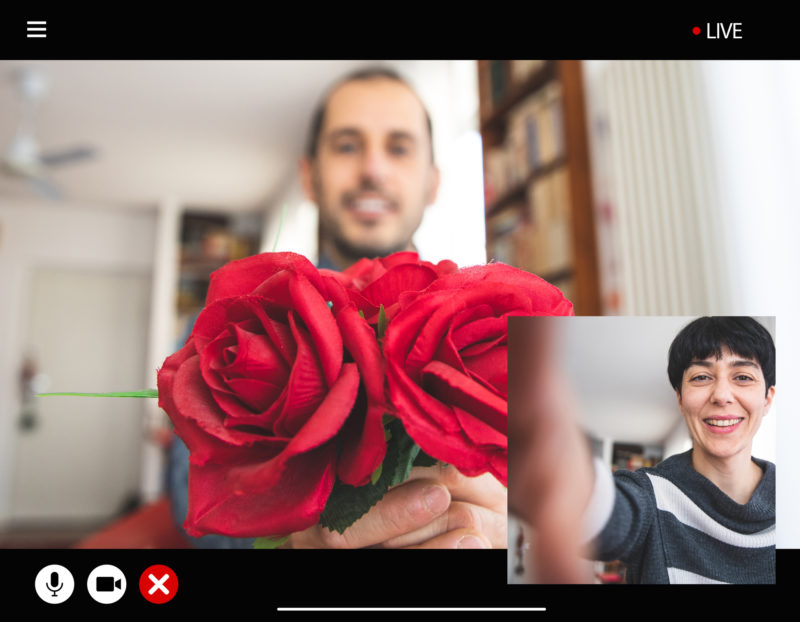
You may have heard this phrase: “Love is not a guarantee.†The idea is that although you love someone, things may not always work out the way you want. This concept goes hand in hand with the Love Tank Theory, which suggests that our ability to love can run on empty if our “love tank” is not being filled. What fills up a love tank? The theory says this happens with frequent emotional connections. Not surprisingly, the coronavirus pandemic has triggered a wave of relationship changes as couples face unexpected hardships and challenges. So how can we keep our love tank full during the pandemic?
The Love Tank Theory
This theory, written about in Dr. Gary Chapman’s book, The Five Love Languages, talks of every person having a love tank. This tank’s fullness is controlled by emotional connections and disconnections and is tampered with throughout day-to-day life.
An Empty Tank
Depending on who each person is in and out of the relationship, a tank is filled and emptied in a variety of ways. Someone’s tank might empty if they are not receiving enough physical affection, acts of service, quality time, words of affirmation, or other love languages native to their heart. What might empty one person’s love tank might not empty another’s. Our tank is drained when our emotional needs in the relationship are not being met. Once the tank is empty for too long, permanent damage can be caused to the relationship. Â
The Impact of the Pandemic on Our Tank
Increased Stress/Anxiety/Worry
For many, the pandemic has brought an influx of stress, anxiety, and worry. There is still quite a bit that is unknown about the pandemic like when it will end or when regular life will return to normal. This has an increasing number of people experiencing fear for what the future holds. This can impact their mental health on a deep level. When our partner does not understand or respond in the way we need, it might drain our tank.
Limit on Physical Interactions
For partners who do not live in the same household or are long-distance, COVID-19 has had a huge impact on physical interactions. Travel restrictions have made it difficult for partners who do not live together to remain closely connected in everyday life. This could also apply to couples where one works in a high-risk environment. For individuals who depend on physical interaction to fill their tank, this could be increasingly draining. This increased remoteness during COVID-19 may also make it harder for those who prefer to receive love as quality time, since the opportunities and the types of quality time that can be spent together are likely diminished quite significantly.Â
How to Refill Our Love Tank:
Intentional Connection
Being intentional with your time together is key to filling your love tank. Each person in the relationship needs to be on the same page about dedicating time to one another. Dedicating time and space to spend interacting with a mutual understanding of its importance for your relationship can be a great way to fill one another’s tank.
Communication
You have heard the phrase “communication is key†before. Open, honest, and intentional communication is essential to keeping our love tanks full. This involves more than just talking about each other’s day. Each person in the relationship should speak honestly about what they are feeling, how the other person makes them feel, and what they need in the relationship. This vulnerability strengthens the bonds of the relationship, giving space for each partner to be seen, known, and loved, and creates a healthy avenue for the expression of hopes and expectations.Â
Relationships take work, especially in circumstances that demand we get creative. COVID-19 has certainly created such demanding circumstances for our relationships. Moving toward one another is an important part of keeping your love tanks full and your relationship satisfying.Â
If you and your partner are struggling during the pandemic, you might consider connecting with a therapist in your area. To start your search, click here.

How to Show Love When You’re Depressed
Learning how to show love when you’re depressed can save your relationships with loved ones. The first step is recognizing that depression looks different on every person, but a common question that comes up is how to show love when you’re depressed. Whether you have been diagnosed or think you might be dealing with depression and have yet to seek help, showing love to those in your life can look different during this season of existence. Learning how to show love when you’re depressed can also vary from person to person. If you or someone you love is trying to manage symptoms of depression, it may be time to consider getting the help of a therapist.
Remain Honest About What You Are Experiencing
A common tendency of someone managing depression is to put walls around certain emotions inside their mind. Unconsciously, depressive episodes can lead someone to unintentionally exclude someone they love from what they are experiencing. Isolating in nature, this mental health issue may cause someone to distance themselves from the people who care about them. Learning how to show love when you’re depressed should involve as much honesty as you feel capable of giving. Remaining honest about what you are experiencing can give the person you love insight and understanding on how to be there for you.
Educate Your Loved Ones
After opening up and being honest with the people you love, you should then educate them on how depression might impact you during this season. By working with a therapist, you can start to put words, descriptions, and reasoning to your depression. With this knowledge, you can learn how to show love when you’re depressed while educating your loved ones on what you’re going through.
Do Your Best to Accept Their Help
When learning how to show love when you’re depressed, try your best to accept help. It can sometimes be frustrating or isolating when your loved ones are offering help, but not in the way you need. If you are unable to describe or put words to what it is that you need from them, do your best to accept the help in the form they are offering it to you. The more people you love that are in your corner, the more help and support you will have as you navigate your depression.
Be Patient with Yourself
When learning how to show love when you’re depressed, you need to spend time loving yourself. While you might not know how to show love to yourself during this time, try and understand that you are doing the best with what you have. Through working with your therapist and accepting the support of your loved ones, you are working toward success and freedom. Being patient with yourself and the pace at which you heal is essential to learning how to show love when you’re depressed.
Get Professional Help
Getting the help of a qualified mental health professional is the key to learning how to show love when you’re depressed. Your therapist can teach you ways to manage and cope with your depression while also getting you connected to the resources you need to conquer it. Rather than trying to help yourself on your own, accept the help of your loved ones and your therapist.
Search for a therapist near you today.Â
 There are a couple things we know about power and relationships: Power is the ability to have influence on others. Power is relational and relationships are messy. We inevitably hurt each other.
Good intentions are essential, but not enough to ensure we are using our power well. Our impact is often different from our intentions. We may be surprised by cultural differences, differing world perspectives, and differing values. We make mistakes, and we may (often accidentally) misuse power. Most misuses of power are made by people who have lots of power due to their roles and privilege, good intentions, lack of awareness about their impact on others, and limited understanding about the dynamics of power.
There are three main reasons why many conflicts escalate and don’t turn out well. We may avoid conflict because it is often associated with loss, pain, and even trauma. We might respond defensively to misunderstandings, hurt, and feedback. And because we most often don’t intend to cause harm, it can be hard to acknowledge or even see when we are responsible for hurt or conflict.
Here’s the good news: Most relationship difficulties can be resolved quickly, and the relationship can be repaired and even grow stronger. When hurt or misunderstood, most people need one or more of the following things. Here is an example: A teacher, trying to promote growth and learning, gave a student some challenging feedback about their presentation. Later, the student came to the teacher confused and hurt by what they had said.
We may avoid conflict because it is often associated with loss, pain, and even trauma. We might respond defensively to misunderstandings, hurt, and feedback.
5 Steps to Repair Any Relationship
1. Acknowledgement
It’s important for someone to have their pain, upset, or confusion acknowledged. “You seemed really upset about my feedback. I realize my words may have been painful. Can you tell me more about what that was like for you?â€
2. Intention
Someone may want to know what your intention was without having you reassign blame or validate your behavior. “I was intending to offer you some useful information about how you were using your voice.†(Please note that this is a short description. If you use only this step, or go too deeply into intention, people may experience this as an excuse.)
3. Apology
They want an apology. Here is a good formula: This is what I regret (specific behavior), and this is what I learned and what I’m doing to make sure it doesn’t happen again. For example, “I regret several things—that I didn’t ask you if this was a good time, didn’t give you a concrete example, and didn’t clarify that it was about how you used your voice, not who you are. Next time, I will be more clear in what I say and check in first about whether this would be a good time.â€
An effective apology is deeply important for healing and repair. For an apology to land well, it needs to be behaviorally specific and involve taking personal responsibility. These are some examples of apologies that don’t get the job done:
- “I’m sorry.†No behavior is named in this apology.
- “I’m sorry you were hurt.†This apology does not take responsibility.
- “I was really busy and didn’t mean to hurt you.†This apology does not take responsibility and neglects any action to repair.
- “What’s your part in this?†This apology shifts blame to the other person.
- “I was maybe a little unskillful.†This apology does not take the issue seriously.
- “I was under a lot of stress and feeling badly at the time.†This apology is defensive.
4. Learning
As you are repairing a relationship with someone, they may want to know what you have learned. People can be very generous when they understand their hurt contributed to learning and growth. “I’ve learned more about what kind of feedback works for you. I will, in the future, ask if this is a good time, and leave time at the end to hear your responses and clear up misunderstandings.â€
5. Repair
When a relationship has been ruptured, an invitation to repair is important and welcome. Although an individual may bring their hopes forward to you, it also can convey a lot of caring when you initiate by asking what would work best for them. “Is there anything I can do that would help repair this relationship?â€
Try this: Think of someone, a friend or someone at work, with whom there has been an unresolved relational difficulty. (Start with a fairly low-stakes relationship and situation.) Try these steps, and see if you can resolve and repair. After the repair is made, ask for feedback from your other person about what you said or offered that was helpful in moving toward understanding and resolution.
 Can you recall an experience of being in a conversation with a friend or at work where people were talking “over†each other? Interesting things might have been said, but you may not have been able to follow the conversation or truly connect with anyone. Was that frustrating? Discouraging? Or what about an experience where someone was asking one question after another, just talking non-stop, and there was no mutual dialogue. How did this feel? Boring? Flat? Tiring?
Nearly all of us may have had the experience where we have been talking, and you can tell the other person is just waiting for us to finish so they can jump in with their story. Did you really feel heard?
When we are not connected in conversation, we can’t truly be in relationship with the person we are talking to. Active listening is about creating that connection. With active listening, conversation can be inspiring, creative, nourishing, and productive.
How Can Active and Engaged Listening Help?
Being actively engaged is both an art and a skill. By remembering that power is the ability to have an effect or to have influence, you can create many choice points in a conversation to use your power to actively engage and influence how the conversation goes. By not using your power to positively influence a conversation, you might be using it to create barriers in your relationships. Often, we unconsciously misuse our power by under-using it. We let things go rather than having the courage to shift communication to be deeper or broader, or simply to help the talk be more fun and interesting.
With active listening, conversation can be inspiring, creative, nourishing, and productive.
Here are some experiments you could try to see how engaged and relationship-oriented you are in your conversations. These all are practices for engaging in active listening.
Active Listening: Demonstrate That You Understand
We want to be understood. We want to know we are being listened to. Demonstrating understanding is not as difficult or complicated as it might seem, and you have probably done it before. You don’t have to repeat every word that was said. Simple phrases like “Got it†or “That sounds exciting†could be all that’s needed. And magically, feeling listened to will encourage the person to go on. This is the first step of active listening. Whether you are in a leadership role or trying to create a conversation with someone you care about, it is good to make sure you are at least practicing this step.
If you want to go to the next level where you are involved in a give-and-take conversation that actively grows the relationship on both sides, here’s some more guidance. This step, beyond active listening, we call engaged listening.
Engaged listening uses three strategies:
1. Connecting Comments
A connecting comment begins with making a link between what the other person is saying and your own experience.
For example: “My version of what you are saying is _________,†or “You are speaking of _________. That makes me think of _________.â€
Making a connecting comment does double duty. It demonstrates that you understand and it offers you a way to include yourself and focus on something that is also of interest to you.
2. Curiosity
When making a connecting comment, you want to be guided by something about what the person is saying or how you are experiencing them that interests you or that you are curious about. Here’s where you can guide the conversation in a desired direction.
For example: “I’m really curious about what got you interested in _________. Could you tell me more?†Or, “I recently had a similar experience, and it made me curious about _________.â€
Demonstrating understanding is not as difficult or complicated as it might seem, and you have probably done it before.
3. Deepening Questions
These are questions that take the conversation deeper and could also be called open-ended questions. Keep in mind questions that can be answered simply by yes or no, or even a few words, generally don’t take you deeper or to a new place. Questions that ask a person to expand on their experience by not leading to a choice (yes or no) will do wonders to keep a conversation from dead-ending. An easy way to try this would be to use questions that start with “how†or “why.â€
You can sense that engaged listening is happening when people are able to demonstrate listening to each other through connecting their experience, bringing themselves into the talk with curiosity, and exploring new ideas through deepening questions.
Here are a few examples:
At Work
“Is your project done yet?â€â€”“No.â€
- Impact: Dead-end and person may feel criticized.
- Instead: “How is your project going?â€â€”“It’s going pretty well.â€
“Are there any obstacles?â€â€”“ No.â€
- Impact: Dead-end and person may feel criticized.
- Instead: “I’m curious about what obstacles you are encountering.”
At a Party
“Who do you know here?â€â€”“Nancy and Jim.â€
- Impact: New question is needed immediately.
- Instead: “How do you know people here?â€Â This opens an opportunity to tell about how you know people at the party. It allows for an answer such as, “I don’t know them through the singing group, I know them through the swim club.â€Â
Where did you grow up? “Minnesota.â€â€”(No pause.) “I saw a good movie this week.â€
- Impact: The person doesn’t feel heard. There is no connecting comment that includes them in how the movie you mention is related to where they grew up. You’ll keep talking, but they won’t likely keep listening.
- Instead: “Where did you grow up?”—“Minnesota.â€â€””Minnesota, eh? You know, that makes me think of a good movie I saw where one of the scenes was in Minnesota. What’s the best movie you’ve seen recently? I really like movies.” You might not have anything to talk about regarding Minnesota, so you can draw the conversation to something that could interest both of you.
“Do you do any kind of exercise?”—“Yes.â€
- Impact:Â Dead-end through a yes or no question.
- Instead: “What kind of exercise is most satisfying to you?”—“Swimming.†Then, follow with an interest of yours: “I’ve really been searching for the right kind of exercise for me. What led you to swimming?”
The keys for engaged listening, as a right use of your power and influence, are to demonstrate you understand, guide the conversation toward a topic that is interesting to you both, make connecting comments that create links between you, and ask “how” or “why” questions to open up new territory. In turn, this leads to healthier and more connected relationships. In addition, you may feel more interested in others and more confident in your ability to use your power toward increased well-being.
If communication issues are negatively impacting your day-to-day life or ability to function, there is help. Search for a therapist in your area who can help you learn and practice strategies to help you connect with others.
 Recently, I was riding in the car with my very spirited three-year-old. I had picked her up early from a play date to race across town. She was very distressed to leave her friend and let me know all about her distress through high-pitched screams. I knew she needed some comfort, a calming voice, and a nurturing tone to help comfort her in her distress.
Do you know what I noticed? It was so hard to give her the comfort she needed because I was having such a strong reaction inside of me. The sound of her cries alone created feelings of angst and anxiety in me. I was also feeling frustration and anger that she had created such a scene as I carried her kicking and screaming out of her friend’s house.
In the moment she was in distress and needed the comfort of her mother, I had to work very hard to manage my own emotions to lean in and appropriately comfort her.
As a therapist, it is easy to lean in and provide comfort, reassurance, and understanding to my clients. The reason it is so easy is that I am not the source of their pain. As they speak of the pain, usually caused by other people or situations in their lives, I can easily elicit feelings of compassion and care without defensiveness. I can do so because there is not a complicated storm of emotion inside of me.
Have I Caused Pain?
When you are the one who caused the pain, and when the hurt in your partner is a result of your actions, the process of offering comfort and compassion is much more complicated. When couples come in to therapy, it is usually because there is hurt between them. Usually, they have been unable to find comfort, care, and compassion in their partner to ease the hurt. They may often conclude that the reason their partner is not able to be there for them in the way they need is either that their partner doesn’t care or that they aren’t capable.
There is a good reason providing comfort can be difficult. Hurting your partner, the one that you love, feels awful. It can be brutally hard to think about, hear about, or see the tears, anger, and pain in your partner and know it’s been caused by you.
Addressing the Pain in Therapy
I remember a couple who came to therapy due to the husband’s affair. His wife was so hurt and angry that whenever she brought up her pain, he would shut down, leave the room, or tell her she “needed to get over it.â€
When asked about his reactions to his wife, he told me “When she brings it up, she is reminding me of the worst thing I have ever done. It can be unbearable to think about.†It can be extremely difficult, and sometimes requires the help of a therapist, to help manage emotions of shame, guilt, and fear when you have hurt your partner. To be there for one’s partner in a comforting and healing way, it is necessary to manage these strong emotions within oneself.
If you are looking to speak to a therapist reach out to one of our therapists in Pittsburgh, PA or find a therapist closer to you.
It can be extremely difficult, and sometimes requires the help of a therapist, to help manage emotions of shame, guilt, and fear when you have hurt your partner.
How to Provide Comfort: 6 Tips
1. Recognize how much your partner needs you. When you are the source of your partner’s pain, it can be easy to think “I’ve caused your pain, I’m the last person you want to comfort you.†Exactly the opposite is often true. If you have caused pain in your partner, you can be one of the most helpful people in comforting that pain.
2. Find a support person. It can be a difficult, daunting, and frustrating process to rebuild and repair a relationship after major hurts have occurred. Your efforts to make things better may be rejected or criticized by your hurting spouse. You may need a therapist to help you manage your emotions of shame, frustration, hopelessness, and rejection in order to keep showing up for your partner in a comforting way. Also, if you feel stuck in your efforts to repair hurts in your relationship, you may need a couples therapist to help guide you.
3. Be flexible with what your partner needs. One day your partner may need to be left alone. The next they may need to be held. When there have been relational hurts, these needs can change by the hour or the day. There is often not a single, foolproof approach that works. Be willing to adapt your approach as your partner’s needs change.
4. Learn what comfort feels like for your partner. There are a lot of ways to provide comfort for your partner. According to Dr. Sue Johnson, physical and emotional closeness from our partner is one of the most powerful ways to experience comfort. Physical closeness can be achieved through being held, hugged, holding hands, or cuddling. Emotional closeness can include the following:
- Providing reassurance: “I love you,†“I am here for you,†“I’m not going anywhere.â€
- Validating the hurt: “Of course this hurt you deeply.â€
- Understanding the hurt: “Tell me more about what you are going through.â€
- Hearing the hurt: “You can tell me how you feel. I want to know.â€
- Showing remorse: “I’m so sorry I hurt you. I’m so sorry you are going through this.â€
A great place to start is, “When you are hurting like this, what helps the most? What do you need from me right now?â€
5. Express a willingness to do whatever it takes. It can be easy to feel like there is nothing you can do to make this better. You may think, “Anything I say only makes things worse†or “I don’t know what to do to make things better.†It can be comforting for your hurt partner to hear “I’m not sure how to help, but I know I want to help.†Let them know that although you might not always know how, you want to make things better, and you are willing to learn how to do that.
6. Open up. Expressing your emotions and showing vulnerabilities may not be your strong suit. However, it can be comforting for your hurting partner to know you are hurting too, and that they are not in this hurt alone. It can be very healing for your partner to hear and see that you hurt because they hurt.
Reference:
Johnson, S., (2008). Hold me tight: Seven conversations for a lifetime of love. New York, NY: Little, Brown and Company.
 “Is couples therapy actually going to work?â€
As a couples therapist, I hear this question a lot. And it’s a valid question. When couples come to therapy, they are usually in pain and in search of relief. If I had a painful illness and the doctor prescribed treatment, my first question would be, “Is this going to work?â€
When I was introduced to emotionally focused couples therapy (EFT), I was relieved to learn of this established method, with a science behind helping couples. And it works. Research shows that EFT helps 70% of couples recover from marital distress. Ninety percent of couples report significant improvements. If I were sitting in a doctor’s office with an illness and was told treatment had a 90% success rate, I would feel relieved.
But despite the success rate of the approach, it is still normal to have some reservations about couples therapy. Before you knock it, though, I recommend learning more about the process. As a marriage counselor, these are some of my thoughts about three of the common reasons people are resistant to couples therapy.
1. People can’t change.
We are who we are, right? In couples therapy, I’m not seeking to change anyone. I’m not trying to help anyone change their personality or their partner. I’m seeking to change the dynamics of the relationship. An EFT therapist helps couples understand and meet each other’s needs in effective ways.
These needs, which EFT therapists call attachment needs, already exist in each person. We aren’t changing a person to create these needs, since they are already a part of each partner. But often these needs go unacknowledged. In other cases, partners attempt to get their needs met in ways that prove ineffective. In EFT therapy, therapists simply help each partner access their emotions and needs in a way that helps them bond. In other words, we are pulling out emotions and needs that already exist but are often covered up with reactivity. We are helping decode this reactivity in order to understand the feelings and needs underneath. By doing this, we can help both partners engage with each other in ways that help them both feel close and connected.
2. My partner won’t do the work.
EFT is not about going home and doing “homework.†In fact, change occurs in the session. Experts have studied the process of change and determined the specific change needed for events to occur. An EFT couples therapist knows these change events and can guide the sessions to help create them. These events help change the way partners view each other and the relationship, which can bring about organic change in the relationship.
In EFT therapy, therapists simply help each partner access their emotions and needs in a way that helps them bond. In other words, we are pulling out emotions and needs that already exist but are often covered up with reactivity. We are helping decode this reactivity in order to understand the feelings and needs underneath.
When these change events occur, couples can shift from feeling distant and disconnected to feeling safe, secure, and connected. When couples feel more connected, reactivity can naturally change and soften outside of the session. This doesn’t mean you shouldn’t go home and try new things, such as planning more date nights or learning new communication tools. It just means the success of therapy doesn’t depend on doing “homework.†In EFT couples therapy, doing the work simply means showing up to the session and engaging in the process.
3. There is too much hurt.
Couples who seek out therapy have often engaged in a series of hurtful behaviors. One or both partners may have felt hurt by the actions of the other. Sometimes, this pain can feel overwhelming. Couples may have engaged in such a negative cycle that they have been unsuccessful in repairing these hurts on their own. The hurt has happened, and the unsuccessful attempts to resolve the hurt often only exacerbate the pain.
EFT therapists work to help couples dismantle their negative cycle so hurts can finally be felt, shared, heard, and healed. Most importantly, the way EFT therapists guide the conversations in therapy allows the emotions from these hurts to be shared in a way that bonds and connects couples. So yes, hurts can actually help bond a couple—when they are dealt with properly.
How Does Change Occur in Couples Therapy?
Jill and Paul came into therapy after years of feeling disconnected. During sessions, Jill described to the couples therapist their nightly routine: Paul retreated to his home office after dinner, while she would watch TV alone in her bedroom. Jill explained that despite her getting upset and angry at Paul for how much he worked, the pattern of loneliness continued. “He doesn’t care about how I feel. He only cares about his work,†Jill concluded.
The therapist helped Paul and Jill unpack the dynamics that led to these familiar lonely nights. The therapist helped Jill shift out of her anger and talk about her sadness regarding their distance. From there, Jill was able to express her desire to feel close and connected to Paul. Jill shared, with sadness, her belief that Paul hid away in his office at night because he wanted to get away from her.
With the therapist’s help, Paul was able to talk about his experience. He shared how through the years, Jill’s angry comments made him feel rejected. As their cycle repeated over and over again, he came to the conclusion that he wasn’t able to give her what she needed. He also explained his feeling that anything he says when Jill is upset only makes things worse. He shared how he wished he knew what could make her happy and that he has started to worry that maybe he doesn’t make her happy anymore. So instead of doing or saying something that may make the situation worse, he goes into his office at night.
Paul’s explanation helped Jill see that Paul pulled away from her not because he didn’t care, but rather, because he cared so much about protecting their relationship that he didn’t want to make things worse.
Many change events that occurred in therapy ultimately helped Jill and Paul get out of their negative cycle and create a way to communicate their needs more clearly and feel more connected to each other.
- They identified the negative cycle occurring between them. They started to recognize the cycle, not each other, as the enemy or problem.
- Paul was able to share his feelings of rejection and his fear that if he did anything to make things worse, Jill might decide to leave him.
- Jill could see the care in Paul’s eyes as he spoke about letting her down. Her belief that “he didn’t care†started to dissipate. She recognized Paul’s retreat as his way of protecting their relationship from further damage.
- Jill was able to express her desire for Paul. In the past, Jill expressed her frustrations of disconnection through anger, which Paul interpreted as rejection. Paul was able to see how upsetting it was for Jill to feel distant from him and how much she still longed for him and desired him.
- Jill was able to communicate her needs for connection more clearly, being mindful of how her anger would shut him down. Paul was able to recognize her frustrations as protests against their disconnection.
- Paul was able to hear Jill’s attachment need of feeling close and connected to him.
- Jill was able to hear Paul’s attachment need of feeling desired by her.
Paul and Jill still found find themselves back in their familiar negative cycle at times. But as a result of the pivotal change events they experienced in therapy, they could more quickly identify the disconnecting cycle between them and find their way out.
When Does Couples Therapy Not Work?
With all of this said, there are some factors that can inhibit therapy success. I like to be realistic with couples about the prognosis of their relationship. If any of the following factors are present, success is less likely.
- Viewing problems as the fault of the partner. If you are not able or willing to look at your own contribution to the problems of the relationship, progress is limited. Couples therapy is an introspective process. It does involve looking within and understanding yourself better. Being introspective can be very difficult for some, and this can hinder the progress of couples therapy.
- There is a competing attachment. If there is an active addiction or ongoing emotional or physical affair, couples therapy may not be helpful.
- There is physical or emotional abuse. A couples therapist cannot create emotional safety if there is abuse present. Safety is crucial for the bonding process.
- One person has checked out of the relationship. Most couples wait a long time before seeking help for their relationship. When couples have been unhappy for so long, sometimes one or both partners have checked out. However, there is still hope for re-engagement, even when this is the case—as long as both partners are willing to invest and commit to a process of reconnection. [amazon_affiliate]
References:
- Johnson, S. (2004). The practice of emotionally focused couples therapy: Creating connection (2nd ed.). New York, NY: Brunner-Routledge.
- Johnson, S. (2008). Hold me tight: Seven conversations for a lifetime of love. New York, NY: Little, Brown, and Company.
 Ever had an argument? Most of us have. But have you stopped to think about why we have arguments?
Arguments in relationships are often based on the emotional response of feeling unheard. You’ve said it a thousand times, and still … nothing changes.
You would think you’d finally be listened to when you said something for the 1001st time. But when that doesn’t happen, when you still feel unheard, you are frustrated. You may even be angry.
Of course you’re frustrated. Of course you’re likely to get mad.
But try not to get mad. This often only makes the argument worse. What’s more, you still may not feel listened to.
Why Aren’t They Listening?
For just a moment, let’s consider things from your partner’s perspective to see how your attempt to be heard is being processed. They may be thinking something like this, “Oh, there they go again. Are they ever going to stop harping on about this? I feel like I’m living in purgatory!” [fat_widget_relationships_right]
They’re not listening because they feel like your repeated attempts to discuss something important is actually you nagging at them. They may feel attacked and accused. They most likely feel defensive. They probably shut down faster than you can say “Jack Robinson.”
So no, they aren’t listening. They may never have been listening. They don’t want to hear blame or criticism.
In the beginning, when you first brought up whatever it was, you likely had no intention of casting blame or criticizing. You just wanted to share something, something you wanted done or changed or understood better. But your partner took it as criticism.
That was not your fault.
Children, particularly children in troubled homes, learn survival habits and skills early. They then take those survival skills into their relationships. In a relationship, these skills may be more of a liability than an asset. But how would someone know otherwise if they’ve only ever known a family who said hurtful things it would have been better to not hear?
There could be a number of reasons behind their interpretation. Maybe they had a parent who did nag at them, possibly mercilessly. Maybe they didn’t get love or validation from that parent, either. If that was the case, it probably made perfect sense to develop the habit of tuning out.
Children, particularly children in troubled homes, learn survival habits and skills early. They then take those survival skills into their relationships. In a relationship, these skills may be more of a liability than an asset. But how would someone know otherwise if they’ve only ever known a family who said hurtful things it would have been better to not hear?
So it’s not their fault, either.
Whose fault is it, then?
It isn’t anyone’s fault.
The sooner both partners realize this, and stop thinking in terms of blame and fault, the sooner the conflict can not only be resolved, but changed permanently.
This leads me to my four-step solution to a problem many couples experience: escalating arguments.
A Four-Step Solution
1. Do something different.
A good way to break a harmful cycle is to try something different. You feel like you’ve said the same thing over and over but still aren’t being heard. Instead of reacting with an explosive outburst, take a deep breath and consider that it might be time to try a new approach.
What are some different things you could do to get your loved one’s attention?
- Send a text or email.
- Better yet, write a note by hand.
- If you feel creative, write a silly song and set it to music.
- Another option is to plan a nice, relaxed dinner together. Over dinner, in a calm, quiet voice, bring up what’s on your mind.
- Try saying what you need to say with a smile, in a calm tone.
There are as many options as there are creative ideas. Let them be surprised at what you come up with.
You might wonder why you need to be “all sunshine and roses” when your partner is the one who isn’t hearing you. You might feel like it isn’t fair.
And maybe it isn’t fair. But answer this: Do you actually want to change the dynamic and finally be heard? Or do you want to keep going in circles, forever?
2. Don’t diminish yourself.
One outcome I hear from people is that somehow they ended up stooping down to the level of the other person. Whether your partner is yelling, speaking in a belittling way, or doing any other unpleasant thing, you have the option of responding in kind or not. You can choose how you react.
A reactor, I often tell the people I work with, is like the knee-jerk reflex. When a doctor taps your knee with the little hammer to check your patellar reflect, your knee kicks out as if it has a mind of its own. That is being reactive. Your knee can’t choose to react in that way.
I encourage you to not be a knee. Decide in advance that you will not lose your temper, that you will not demean yourself by reacting negatively. Instead you’ll keep calm and maintain your dignity and self-respect.
3. Be grateful you had a different experience.Â
To do this, there’s no need to put down your partner. Simply note with gratitude that in your growing-up years you didn’t need to learn to block out painful words of shame or rejection from your parents or caregivers. If you did have that similar experience, be grateful you were able to handle it better. You don’t tune out the people in your life. You don’t ignore requests for help or understanding.
Remember your partner reacts the way they do as a result of bad experience, not choice. Their actions are the product of a habit. They likely don’t even see what they’re doing and how destructive it is. Be grateful that no matter what you’ve been through, you can see how destructive this behavior is. Have compassion and empathy for those who are stuck in a rut of tuning out those they love.
When you reach this step, the first step will be much easier!
4. Breathe and meditate.
There is one final solution that is simple but still amazingly powerful. Slow down your autonomic nervous system and turn off the stress hormone cortisol in your brain, simply by deep breathing.
Research has shown that taking 20 minutes to meditate is great, but this length of time is not necessary. Don’t get me wrong. It’s wonderful if you have 20 minutes to do it. The result we’re looking for here, though, can be achieved by taking only one minute, 10 times a day, to breathe slowly and deeply. Breathe2Relax, an app you can download on your phone, can be tremendously useful for this.
To make this exercise even more powerful, hold positive thoughts in your mind while doing the deep breathing. Even if you only do this for one minute, you can retrain your brain to respond in a healthier way to the irritating situation.
Steven Stosny, the preeminent researcher working with aggressive and uncompassionate men, suggests people visualize, 12 times a day, themselves reacting to stress in a way that makes them feel more valuable. While doing this, note the good feelings that come with reacting in a more valuable, positive way (as opposed to a knee-jerk reaction of irritation).
This means doing the deep breathing while at the same time visualizing—for example, speaking to that tuned-out partner with love and understanding—and noting how good that feels. Repeat this 12 times a day. Stosny explains that this works because it creates a habit, one we can feel good about. And the beautiful thing about habits is that with practice, they become part of us.
If you and your partner are struggling to stop a cycle of arguments, or if one or both of you feel unheard, know there is help available. A qualified, compassionate couples counselor can offer support and guidance as you work through relationship challenges.
Reference:
Stosny, S. (2013). Blue-collar therapy: The nitty-gritty of lasting change. Psychotherapy Networker. 22-20, 54.
Dear GoodTherapy.org,
I’m an ugly guy. I used to look okay, but I got a bad injury when I was 11. The surgeon did his best, but … there’s a reason I don’t leave my house much. Every time I go out, people stare. That’s why the internet has been a haven for me. Nobody knows what I look like because I use a stock photo for my profile pictures.
As you can guess, finding love hasn’t been easy for me. I’ve tried every dating app under the sun and I never get any responses. I know everybody says the inside is what counts, but women see my face and run before I can get a word out. I can’t really blame them, but it’s still frustrating. I’ve been so lonely, you have no idea.
[fat_widget_right]
But five months ago I found the most amazing girl. We met on a film forum and started geeking out about Quentin Tarantino. The more I talked with this girl, the more I liked her. So when she started flirting with me, it was a dream come true. She’s the first girl who has EVER been interested in me. I couldn’t help but flirt back.
We’ve been in a relationship for five months now. She’s asked to meet a few times (we both live near Chicago), but I’ve been putting it off. My girlfriend got a little mad last time and jokingly asked if I was catfishing her. And it hit me: She was right. I am a catfish.
I didn’t post the fake profile picture to lure anyone in, though. I only wanted people to see the real me, which is basically the opposite of catfishing, right? And I’ve been honest with my girlfriend about everything else. But … ever since that talk, I’ve felt so guilty. I know I should tell my girlfriend the truth, but I don’t want to lose her. The one time I tried to bring it up, I panicked and backed out at the last minute.
What should I do? Should I meet up and listen to whatever my girlfriend has to say? Or will we both hurt less if I break up with her from behind the screen? —Accidental Catfisher
Submit Your Own Question to a Therapist
Dear Accidental Catfisher,
I feel for you. Dating in person is rough enough, but virtual dating adds some notable complications. Knowing who and what you can trust online is a challenge, and the potential for catfishing—defined by Merriam-Webster as setting up a “false personal profile on a social networking site for fraudulent or deceptive purposesâ€â€”is one reason that’s so.
You write that you “didn’t post the fake profile picture to lure anyone in,†that you only wanted people to see the “real†you. By that, I assume you mean you wanted people to form their perceptions of you based on your expressions rather than your appearance. That’s understandable. I wonder if, had you revealed early on that your profile photo is an avatar, your love interest would have also understood. Now that things are progressing toward a possible face-to-face meeting, you say you don’t know how to resolve this situation.
Speaking of understandable, your fear of rejection and loss is easy to relate to, as is your panic in the moment with so much at stake. I hear how important this relationship is to you. Relationships call for courage and openness. Writing your letter is both courageous and open of you, which bodes well for your ability to be candid with the people in your life.
I’m not here to tell you what to do. I am here to try to help you understand what your feelings are telling you. For example, the guilt you say you feel may be trying to steer you toward a corrective action—in this case, perhaps fessing up, apologizing, and asking for forgiveness.
You say this is the first time a girl has been interested in you. Relationships are built on authenticity and compassion. Is losing a person who doesn’t value those things above all else really a loss?
I imagine you have placed yourself in her shoes and have considered how you might feel to be told she hadn’t been forthcoming about her appearance. Would that be a problem for you? Would it have been less of a problem early on as opposed to now? Would it be more of a problem to find out in person as opposed to now, over the internet? These are all questions I would want to explore with you in therapy as we thought about how you might proceed.
I would also want to explore some of the self-image concerns I’m hearing, as those concerns may be at the root of everything else that’s going on. You describe yourself with more than a hint of shame, despair, and some longing as well. It’s unfortunate that some of your experiences—being stared at and so on—have reinforced these self-perceptions.
But there’s also clearly a lot to like, based on the fact you have attracted someone special. Those likable things are winning, desirable qualities no matter what. Are they mostly in hiding too? If you feel confident and loving about what’s under the surface, often the surface-level stuff takes care of itself.
You say this is the first time a girl has been interested in you. Relationships are built on authenticity and compassion. Is losing a person who doesn’t value those things above all else really a loss?
So here we are. What’s next? You can disappear and “ghost†her, break up behind the screen, fess up before you meet, or come clean in person. Only you know what is right. Whatever you decide, I recommend that you work with a therapist who will help you face up to yourself and then to others.
I hear that you are reluctant to be “seen.†It’s ultimately what we all want—to be accepted and loved, warts and all. I hope you can offer yourself and your friend some compassion and take the steps necessary to live an authentic life you can feel good about.
Take care,
Lynn Somerstein, PhD, NCPsyA, C-IAYT
 I always find it interesting, from both an ethical and clinical standpoint, that for many people, truth has degrees. There appears to be a spectrum of truth that people see. There is a field of gray between the black and white of “Is this true or not?” This goes for people I know personally as well as those I see in therapy.
What is truth? This is an age-old question. The answer tends to differ, depending on the person you’re asking. As humans, we seem to be able to justify anything. We may make up reasons or excuses to skew the truth or bend the reality of a situation to fulfill what we’re trying to accomplish. We might do this to clear our conscience, ease a sense of shame, or diminish our accountability.  In other words, things are “true†as we perceive them to be true.
What about authenticity? To be authentic means to be genuine, real, true to yourself. There’s that word again: true. To be authentic in a relationship means being real and true to your partner as well as yourself. When we are authentic, we are reliable and trustworthy. But we may each have our own versions of truth, and what we present as authentic, in this scenario.
The Identities We Construct
It never fails to amaze me how many secrets a person can keep from their partner, and for what reasons. My counseling practice for couples contains a “no secrets†policy, and I make couples seeking help aware of this. [fat_widget_relationships_right]
Couples that come for counseling often have many layers of identity. They may present an altered version of themselves that they’ve created to get through their lives. The version of themselves they show to their partner may be far from genuine. Over the years they’ve constructed various personas: parent, employee, friend, child, and partner. These roles can come to feel like the true self. In other words, they become what they have made of themselves.
These personas are often a coping mechanism. They are a form of protection for those who are highly sensitive or easily wounded. People learn to construct an identity that helps shield them from further injury or trauma. They rely on this persona, which may change depending on circumstances, to hide their vulnerability.
This works in some situations, but it fails in others. When people show an edited version of themselves to the world, they often fail to develop areas of personality where they feel weak. As a result, they may not be able to fully evolve, or develop into full personhood.
When someone presents only a constructed version of the self to their partner, no matter how secure they are in the belief they are are being themselves, the relationship may lack an authentic emotional connection.
An edited persona can offer a sense of protection, so people may live under this pretense well into adulthood. An inauthentic self, or multiple selves, can make it easy for a person to adapt to any situation or circumstances. But living this way can create stress, self-doubt, and uncertainty about the future. People are also likely to worry a partner may not be able to love the “real†person inside, if they only know the “false” persona.
Living as a chameleon can cause a person to lose sight of their true nature. What’s more, the relationship itself is less authentic and vulnerable. Connection is important in relationships, both to create a sense of security and allow partners to be honest and vulnerable with one another. When an authentic connection is lacking, the relationship may feel unbalanced and off-kilter. Instead of simply being the best version of themselves, each partner is trying to be the best version of themselves for their partner. But when someone presents only a constructed version of the self, no matter how secure they are in the belief they are are being themselves, the relationship may lack an authentic emotional connection.
It can then become harder to remain focused on the relationship as a priority. Interactions can become strained, and conflict may become more frequent and more difficult to resolve. When conflict occurs, there are many layers to peel back, so getting to the real issue or heart of the matter becomes a challenge.
Working Toward Authenticity
When times get rough and the relationship faces challenges but has no resources to draw on, the constructed persona can begin to crumble under the pressure. The relationship begins to come apart because it has no basis in a real and vulnerable connection.
But repair is not impossible! Couples who seek help to address the problems and fix the relationship, trusting their partner to love who they really are, flaws and all, may find themselves learning to become more authentic and honest.
In therapy, this process can involve stripping away layers of persona to find the real truth (or self) underneath. As these constructs fall, the hidden self comes out. What is left is the raw, vulnerable person who has a real yearning for an emotional connection. All they want is to fix the issues in their relationship. They have a real yearning for an emotional connection. They learn to love that rawness in themselves and their partner. This can take their relationship to a completely new level.
When people decide to be that authentic with one another, it can be a total game-changer. When people learn they can love (and be loved!) for who they are, truly and authentically, they change. Â The conversations change, and the emotions deepen. All of those varying faces a person has shown can be seen as parts that merge into a whole person, once they become vulnerable and authentic to their core.
So the real truth, as I see it, is that there’s only one truth. There’s only one of us. Who we are and who we will become when we are vulnerable, raw, and authentic—that is a truer version of ourselves than we’ve ever known before. Yes, it can be hard, painful, and frustrating to break through to this truth. But what I hear from the people I work with, more often than not, is that doing so is worth all of this. It’s worth everything to live a genuine and authentic life, to have a true relationship with one’s partner.
But this transformation is only possible with a deepened commitment, not only to one’s partner, but also to one’s own self. We must be willing to see it through and live that authentic life. If we can withstand the process, the results can transform us.
If you are finding it difficult to become more authentic, with yourself or with your partner, a compassionate and qualified counselor can help you begin.
 You’ve come to therapy to build healthier relationships with your loved ones. In the process, you surprise yourself by developing a healthier relationship with yourself. You begin to understand your needs and motivations, which helps you see your family, friends, and romantic partners more clearly. You learn to be accountable for yourself, which leads you to alter behavioral patterns and set boundaries that impact communication and connection.
And then you get pushback. The people in your life—even the ones who encourage your desire for self-improvement—aren’t accustomed to your new way of doing things. They continue to react to you as if you were still engaging in previous “bad habits.†They feel uncomfortable when you discuss your emotions. They take it personally when you prioritize your needs over theirs.
Often, this pushback is not a conscious effort to undermine your improvement but a natural response to change. Homeostasis, the inherent tendency to maintain consistency in both our internal and external environments, can keep relationships stuck and constrain growth. With some forethought, though, you can prepare yourself for pushback and keep moving forward.
[fat_widget_right]
- Prepare to feel frustrated when people around you don’t support your self-improvement journey. You know how hard you work each day to replace old habits with healthier ones. You feel the benefits of your efforts and are excited to be on track to creating the life you want. But just because you recognize how far you’ve come and where you’re headed doesn’t mean anyone else will want to join you on your path. They may not be ready for that kind of work, or they may not recognize the value in it. It may even feel threatening to them. So be mindful of your expectations of others and practice acceptance of their current level of self-awareness.
- Prepare to disappoint someone when you set a boundary. If you’ve made a habit out of bending over backward for people and taking on more than your share of responsibility, people will come to expect that of you. Once you learn to say no, coworkers and friends may experience a loss and feel distressed about having to learn a new way to get their needs met. You might feel guilty for contributing to their discomfort, but that shouldn’t negate the significance of choosing to take care of yourself.
- Prepare to seek support outside of your current relationships. Your friends and family may need time to accept and adapt to the new you. You may need to find other people who can help you stay motivated. Look for organizations or support groups that include like-minded people or find a therapist who can support your individual health. Find a way to remind yourself why your effort is important.
If self-care is perceived as selfish, explain to your loved ones how it facilitates providing for their needs. Be willing to teach those around you about the benefits of self-awareness and self-soothing if they’re not prioritized in your community. - Prepare to communicate with those closest to you about your need for support. The people around you may not understand what they can do to support you or how their behavior creates an obstacle. Take the time to help your loved ones understand the evolution you’re experiencing and how you hope to enrich your relationships with them. With greater insight into your needs, perhaps they will be motivated to reinforce your efforts; perhaps they’ll want to make a change of their own.
- Prepare to walk away from relationships or situations that no longer serve you. Once you learn to love and accept yourself for who you really are, it becomes much harder to remain in toxic environments that do nothing but compromise your self-respect. Recognize what you’re willing to tolerate and what is harmful to you. Don’t hesitate to take the opportunity to separate yourself from people and situations that don’t align with the person you’re becoming.
- Prepare to protect your emotional safety within your cultural or family context. Depending on your cultural or family background, patterns of behavior or expectations may exist that cannot be easily influenced. Assuming you’re not in physical danger, you might consider the ways you can assert your needs within the current framework.
To receive validation for your most authentic self, outside support may be your best option. However, identifying even one person on the inside with whom you can share your thoughts and feelings may help you feel less alone. If self-care is perceived as selfish, explain to your loved ones how it facilitates providing for their needs. Be willing to teach those around you about the benefits of self-awareness and self-soothing if they’re not prioritized in your community. Pinpoint the small ways you can safeguard your well-being when large-scale change feels out of reach.
You don’t exist in a vacuum. The contexts you live in and the people who surround you naturally impact your ability to sustain growth. If you approach the intersection of yourself and your environment with an open mind, you can recognize the gaps in your resources and identify the solutions that will keep you on your path to healing.
Dear GoodTherapy.org,
Several years ago, my wife began seeing a therapist. After a year, she asked that I join her for a session. Afterward, I began seeing the same therapist frequently on my own and periodically with my wife (we were having marital issues). After about nine months of this, my wife terminated her relationship with the therapist because she didn’t feel her voice was being heard. She felt the therapist was constantly preaching patience and taking my “side” on most issues.
[fat_widget_right]
I continued to see the therapist for what remained of our marriage (about a year) and beyond and indeed still see her to this day. I just found out that my now ex-wife (we’ve been divorced four months) has reengaged her relationship with this same therapist. Obviously, the divorce is still fresh, but I’m feeling a lot of emotions here and I’m frankly not sure they are justified. I feel betrayed. At a minimum, I think the therapist should have told me that she had taken on my ex as a client again. I also feel uncomfortable moving forward using the same therapist as my ex. Am I justified in these feelings? —Untold Anger
Dear Untold,
Your question raises a number of concerns. The short answer is that your therapist is ethically bound NOT to let you know she is working with your ex-wife. Part of client confidentiality includes not sharing the identity of a person in therapy with another person without the explicit permission of that client.
That said, the way your relationship with this therapist evolved sounds messy. The first moment that may have been confusing was when your wife’s individual therapist also became your individual therapist and also worked with the two of you as a couple. When a therapist works with multiple members of a family system, it is essential that boundaries are clear and all parties are comfortable with the situation. Exploring the benefits and risks prior to engaging in the work is essential. Checking in regularly to ensure everyone’s needs are being met is also important. Working with individuals and working with them as a couple can be beneficial at times, but it also runs the risk of one party feeling as if the therapist is more aligned with their partner and takes their side.
In individual therapy, the alignment between person in therapy and counselor is clear. In couples work, the relationship is the “client,†and it is imperative that neither individual feels marginalized. Managing that well and simultaneously meeting the needs of both individuals and the relationship can be challenging. It seems as if your wife began to feel as if her needs were not being met and took appropriate steps to terminate her relationship with that therapist.
Whether or not your feelings are “justified,†if you are feeling betrayed it is important that you address those feelings with your therapist.
It seems as if you felt aligned with and supported by this therapist until the recent revelation that she was working with your ex. Whether or not your feelings are “justified,†if you are feeling betrayed it is important that you address those feelings with your therapist. Having the opportunity to explore what is contributing to your discomfort could be helpful. You may ultimately decide you are not comfortable moving forward with this particular therapist, or you may discover that you are able to work together. Either way, having a conversation about trust and boundaries seems important.
I do wonder about some of the roots of your discomfort. In theory, your therapist is meeting with each of you as individuals; therefore, there should not be competing alignment concerns. Your sessions would focus on your needs, your ex-wife’s on hers. Given the history you’ve had with this therapist, however, I wonder if perhaps you are concerned about her ability to remain impartial and unbiased. Are you concerned that you may begin to feel the way your wife felt before she terminated their relationship? Might you be worried that this therapist will not be able to compartmentalize information from one of your sessions and bring that bias into the other’s session?
Whatever your concerns, without safety and trust, it is unlikely that your work together would be helpful or beneficial. If you are able to address your concerns, this might be an opportunity to deepen your trust. At the very least, this feels like important feedback for your therapist so she can understand how her choices are impacting your feelings of trust and safety.
Best of luck,
Erika Myers, MS, MEd, LPC, NCC
 Much has been written about unhealthy love and toxic relationships, but what about healthy love? When we think about healthy love in a relationship, what does that look like?
Maya Angelou said “The best love is the one that makes you a better person without changing you into someone other than yourself.†Along those lines, the definition of healthy love, as I have come to understand it in my years of practice, lies in a sense of responsibility to the self.
In other words, healthy love means we are responsible for our own happiness. I am not responsible for my partner’s happiness. I am responsible for ensuring that I am a whole person, that I have a healthy sense of self-identity, and that I can meet my own needs and self-esteem from within. For healthy love to exist between partners, they must first understand and accept that happiness in a relationship depends on whether the people in the relationship have developed (independently) into a whole, secure person.
The following are what I believe to be the seven characteristics of a strong, healthy relationship:
1. A solid sense of self-identity
People in a relationship that is healthy can think independently and are willing and able to articulate their wants and needs to partners. They are able to speak and act from an honest place within themselves. Partners can love themselves unconditionally, accepting the parts of themselves that are easy to love as well as the parts that are not as easy to love. Healthy partners love their own lives while still being open to growth, progress, and evolution with a partner. [fat_widget_right]
2. The ability to compromise
Partners who are open to the idea of seeking mutually gratifying solutions to conflicts are more likely to have a strong, healthy relationship. Healthy partners can acknowledge the validity of their partner’s wants and needs and, even when they do not agree, still respect areas of difference. A cornerstone of compromise is finding solutions that are agreeable to both partners, and healthy relationships are marked by an ability to consider situations from a partner’s side of things.
3. Appropriate trust
This characteristic is one that can be determined at the beginning of a relationship. When both partners are available to begin a relationship, not still attached or otherwise holding on to a previous relationship, trust can be fostered. When trust has the opportunity to grow, partners feel more safe and may be better able to share their innermost thoughts and feelings with each other. They believe in their partner’s ability to listen and help, and there may be a mutual sense of faith that neither will be blindsided by surprises they don’t expect. Trust cultivates a stable relationship with predictability, reliability, and accountability.
4. CommunicationÂ
Let’s be frank here. Even in a strong and healthy relationship, you are not going to agree on everything—and you don’t have to! Being able to express your own feelings or opinions, knowing it’s all right to disagree, and saying what you mean and meaning what you say are all aspects of effective communication. When we are able to communicate effectively with our partners, show compassion and concern for each other, and talk about problems and listen well, we effectively create a road map for a partner to be able to understand and meet our needs. Without this map, we might endlessly wander trying to find out partners, coming close to meeting their needs but never quite succeeding.
5. Loving detachment
Seeing a partner as a capable person is a critical component of healthy relationships. Couples can often confuse the concepts of whether their partner is good at something and whether they are simply capable of doing something. Believing these are the same thing can lead to conflict in a relationship. In reality, most people are capable of doing most things. However, sometimes partners may not be “good†at the things we want them to be good at. Loving detachment means we believe our partners have the ability to take care of themselves and their lives on their own. Allowing and encouraging our partners to have separate interests and maintain meaningful relationships with other people, and respecting their ability to do so, is an important part of loving detachment.
6. An understanding of the reality of love
Love is created, and it requires effort on our parts. The idea of “love at first sight†is romantic, and we may want to believe in it, but in reality, that’s just not the case. Love is not something that is acquired one day by chance. It must be developed with trust, shaped with effort, and fostered with understanding and patience over time. This may not seem idealistic, but it is simply the truth of long-lasting love.
7. An awareness of our attraction to familiarity
Have you ever heard the saying “We marry our parents”? We may not realize it, but many people partner (and eventually marry) someone who reminds them, in some way, of one or both of their parents. This is not necessarily a conscious decision. It’s simply that we tend to be attracted to and connect with people who are comfortable and familiar. So, whether our experiences with our parents are positive or negative or a little of both, we often are drawn to similarities in the partners we choose. If we are aware of this, and in tune with how our relationship with our parents has affected us, we are often better able to understand the type of person we might be attracted to. We might be fulfilling a desire to live out what we have learned as children or to fix what was broken in our childhood through our current relationships. Though we might logically know dysfunctional relationships with our parents cannot be fixed by our current relationships, we may still struggle with this emotionally. Identifying and working on ourselves to resolve any issues remaining from childhood will not guarantee a healthy relationship, but doing so may put us on the road to a better one.
Having a healthy relationship with our partners comes down to one thing—having a healthy relationship with ourselves. When discussing healthy love with the people I work with, I make it clear that I believe a healthy relationship with the self is necessary to have a healthy relationship with others. This healthy relationship with the self includes developing and maintaining a solid self-identity, recognizing our needs and being able to meet them on our own, and allowing our partners to live their own lives while sharing their lives with us. If you would like to explore any of these areas, on your own or with a partner, a compassionate counselor can offer guidance and support.