 Victims of domestic violence will sometimes display specific behaviors or attitudes that make loved ones unsure about how they can help. Please keep in mind that victims of domestic violence are very capable and strong. Their reactions to their experiences are normal, human reactions in the face of abuse and complex emotions, including issues with children, finances, and love and attachment to the abuser, among many other complexities that accompany this type of situation.
Below are five common reactions that victims of domestic violence may exhibit and how you can respond and help.
[fat_widget_right]
1. Denial
In this scenario, the victim is in denial that the abuse is happening. Even though his or her loved ones are noticing abusive behaviors, he/she pretends everything is great.
- How to respond: Start by trying to talk to the individual one on one. Bring up specific examples of behaviors you have noticed that are concerning. Even if he or she brushes it off, reiterate that you are concerned and want him or her to know that you are here, without judgment. Reiterate that you are not judging the person or his/her choices, as feeling judged can be a huge barrier to getting help.
2. Defensiveness
In this scenario, the victim comes to the defense of the abuser and is not open to discussing the abuse or leaving the situation.
- How to respond: Don’t escalate the situation by trying to argue. Be mindful of not saying negative things about the abuser, especially while the victim is feeling defensive, as this usually results in polarization of the victim toward becoming more defensive in favor of the abuser. Instead, listen and validate that he or she is feeling some strong emotion. Let him or her know that you want to do whatever you can to support him/her and that you respect that he/she is in charge of making decisions about his/her life. It is important that the victim feels empowered. Often, victims of domestic violence feel as though others view them as weak or stupid, which just increases the level of defensiveness. Approach the issue again when the person is less defensive.
3. Wishy-Washiness
This is a situation in which the person goes from one extreme to the other. The victim will ask for help and either leave the relationship or express a strong desire to leave. A short time later, he or she justifies the abuser’s behavior and returns to the relationship. This can be very frustrating for loved ones; sometimes, loved ones may feel like giving up on the person.
- How to respond: Don’t give up! It is OK to have boundaries with the person and to share concerns about the situation, but giving up puts the person in a more dangerous situation. If he or she feels there is nowhere to go, the chances of him or her leaving in the future lessens greatly. It is not unusual for a victim of domestic violence to have to leave the relationship several times before he/she can leave for good. Loved ones should hang in there and get their own professional support to cope through this situation.
4. Withdrawal
It is not uncommon for victims of domestic violence to become completely withdrawn and hard for loved ones to access. This could partially be due to the abuser isolating the victim to gain more control over him/her and could be compounded by depression and negative self-views, which is common in victims of domestic violence.
- How to respond: Try to reach out to the victim and be as persistent as is safe. It is important to remember that there are some situations that may increase abuse in a domestic violence situation. It is imperative to know the most ideal times to contact the victim and through which method (cell phone, email, in person, etc.). DO NOT say negative things about the abuser, as it is not uncommon for the abuser to be monitoring the correspondence the victim has with others. Just let the person know you are there for him or her and try to meet with the person in private in order to discuss safety planning and making future contact as safe as possible. See the below response for those who express a desire to leave but have a great deal of fear.
5. Fear
In this scenario, the victim expresses he or she wants to leave, but has fears about leaving. These fears are valid, and major barriers to leaving a violent relationship do exist. Common barriers are threats by the abuser of killing the victim and/or children if he or she leaves, harming pets or children, and financial concerns and constraints, to name only a few.
- How to respond: It is tempting to try to tell the victim there is nothing to be afraid of, but this is invalidating. Instead, let the victim know that the concerns he or she has are reasonable and legitimate. A professional who works with domestic violence is often helpful to figure out the safety and legal issues that exist in these situations. Acknowledge that waiting to leave is sometimes safer than just leaving without a plan. Help the person to get in touch with an organization such as the National Domestic Violence Hotline (1-800-799-7233) to make a plan that will be safe and supported by outside agencies.
Of course, it is important to keep in mind that every situation and person is going to be different. It is not uncommon to see a combination of the above reactions. Keep in mind that these are complex situations that don’t always have simple solutions. If you suspect that someone you love is in an abusive relationship, connect with the National Domestic Violence Hotline, your local domestic violence coalition, or click here for additional suggestions and support.
 Children with attention-deficit hyperactivity (ADHD) often experience intense emotions, behavioral challenges, and low self-esteem. As a result of these experiences, children with this diagnosis may find it difficult to express their emotions and to develop the capabilities needed to control their behavior. In the short term, these issues can make it difficult for the child to have positive experiences that reinforce a sense of self-esteem and self-efficacy. Over the long term, this can have significant implications for their well-being, success, and motivation.
While standard approaches to therapy including medication and behavioral supports are integral to improving outcomes, alternative interventions such as art therapy have proven to be highly effective for addressing some of the innate challenges encountered by children with ADHD. Alternative therapies for ADHD are often overlooked by parents and educators, but there is a wealth of emerging research suggesting that these tools can be instrumental in helping children address some of the core challenges they face every day. For this reason, parents, educators, and counselors should be open to the possibility of using alternative therapies to support the needs of children with this diagnosis.
[fat_widget_child_counselor_right]
One of the most notable alternative therapies available for the treatment of ADHD is art therapy. Art therapy works in a number of different ways to lessen the impact of many of the negative consequences of ADHD. For instance, art therapy, which utilizes a number of different approaches for nonverbal creative expression, can help children with ADHD channel their intense emotions without engaging in verbal outbursts. This nonverbal form of expression provides an outlet for the child, which can quell behavioral difficulties. As the behavior of the child improves, the child may experience more positive feedback from educators, counselors, and parents. Over time, this may have a significant effect on the child’s self-esteem. As the child gains confidence, his or her behavior will improve dramatically, further reinforcing positive outcomes in all areas of development.
Art therapy has also been shown to increase attention span for children with ADHD by providing a source of focus. Art is a natural part of play in children’s development, and often children with ADHD are able to select art projects that interest them. With an art project of their choice, children with ADHD are given an outlet upon which to focus. Although the duration of attention to the project may increase over several sessions, the process is one that builds the capability of the child with ADHD to channel energy in a positive way that results in accomplishment. This also has an impact on the child’s self-esteem. Often children with ADHD are punished for their inability to pay attention or focus. By teaching this basic skill to children, art therapy can provide an important bridge for utilizing focus and attention skills in the classroom and at home.
Art therapy can also provide a foundation for the child to explore his or her identity. This can be a powerful process, as children with ADHD are often defined by labels and behaviors. For children with ADHD, labeling and attention to negative behaviors can make it difficult for the child to define himself or herself in a positive context. Art can connect the child to an inner identity that is positive and therapeutic. By providing this connection, the child can overcome much of the negativity that encompasses much of the child’s daily experience. In short, art can make a child feel good about himself or herself. Although it may take several sessions for children to experience this outcome, providing the foundation for this type of growth will be imperative for helping the child to achieve a better sense of self.
Even though art therapy is a helpful support for many children with ADHD, it is often not offered by schools or therapists. If you believe that your child may benefit from art therapy, you should ask about this intervention and see if educators or therapists working with your child can help. While art therapy will not replace more traditional forms of therapy provided to your child, it may be an important supplemental resource to help build vital social and behavioral skills that are difficult to teach in therapy. Having this additional support can help your child overcome some of the most common deficits associated with ADHD.
 We have all had a case of the blues. You know, those times in our lives where the world looks bleak and things just don’t seem to be going in our favor. No matter how hard we try to turn things around, it seems to end up as wasted effort and all we can do is throw our hands up and ask, “Why me?” But as much as we resist our sadness, anger, frustration, or grief, it is often during these dark moments when we come to realize we have the greatest opportunity for transformation.
Finding yourself in a funk you cannot seem to shake?
Here are 15 tips to transform your bad mood and learn from it in the process:
- Acknowledge and accept it: You have probably heard the phrase “resistance is futile.” Fighting against negative feelings will not make them go away. If you find yourself in a dark room, you will not make it light by pretending it is not dark. You must, at some point, acknowledge that it is dark before you search for light. In order to change your mood, you must first admit to yourself how you are feeling.
- Reframe your bad mood: Every experience can serve as a lesson. When you experience mood changes, examine the triggers behind your emotions and try to reframe your thinking. Emotional reactions can teach us a great deal about our personal values and desires. Rather than see your bad mood as an enemy, reframe it as a friend that’s there to help you learn about yourself and grow as a person.
- Cultivate gratitude: When you find yourself waking up in a bad mood, try focusing on what you are grateful for. Many people tend to focus on a bad event or situation that isn’t unfolding according to plan, rather than looking at all the good things surrounding the event or situation. Taking a few moments to build a simple list of things you are thankful for each day can greatly improve your mood and change your outlook.
- Monitor your thoughts: If you seem to always be in a bad mood, start monitoring your thoughts for negativity. Our thoughts typically precede our emotions. If we consistently engage in negative self-talk, it is virtually impossible to feel good about ourselves. Try to remain aware of your thoughts throughout the day, or consider keeping a journal to help you shift your negative thoughts into positive affirmations.
- Remember, you are not your emotions: It’s easy to get so caught up in emotions that we become them. We often hear people say, “I’m angry,” rather than “I have anger.” Emotions are passing experiences. When we can become the witness consciousness—able to observe closely without reactivity or judgment—and separate ourselves from our emotions, it is easier to stay centered and at peace.
- Exercise: Exercising releases endorphins, which create a positive feeling in the body. Regular exercise has been shown to improve mood, alleviate symptoms of anxiety and depression, and reduce stress.
- Meditate: Meditation not only helps us monitor our thoughts and feelings, but it also brings us into the present moment. Many times, when you are in a bad mood, it might be over something that occurred yesterday or even last week. When we come into the present moment, we can experience a sense of freedom and peace.
- Try something new: The daily grind of life can start to feel mundane, and a lack of stimulation or excitement can contribute to a bad mood. Novelty awakens the senses and sparks our curiosity. Try something you’ve never done and enjoy the benefits of shaking up your routine.
- Talk to someone: Sometimes, simply speaking your thoughts aloud and sharing your feelings with others may help you feel better. Consider talking to someone you trust, such as a friend, family member, or qualified therapist.
- Get creative with your emotion: Emotions are meant to be expressed, not repressed. When you feel like you are in a bad mood, try using your favorite creative means to express your feelings. Write a poem, play an instrument, draw, paint, dance, or craft—whatever moves you.
- Spend time in nature: Spending time outside naturally relieves stress. Sunlight, fresh air, and living plants tend to provide us with a sense of invigoration and aliveness. Going outside also gives us a great excuse to exercise. Try going for a bike ride or a walk or hike in the woods next time you feel down in the dumps.
- Pay it forward: Giving evokes feelings of gratitude and promotes feelings of goodwill. Giving is also known to release oxytocin, a feel-good hormone in the brain. Shifting your focus away from yourself and onto someone you care about may help you gain perspective and feel a stronger connection to others.
- Focus on self-care: When you’re down in the dumps, it is easy to let your self-care regimen fall apart. Taking care of ourselves is essential to making sure that we feel good physically, emotionally, and mentally. Among other important things, make sure you’re eating a healthy diet, getting plenty of rest, and effectively managing your stress.
- Set attainable goals: Studies have shown that people experiencing depression often set unrealistic goals. While setting goals is a great way to motivate oneself, setting unattainable goals will only increase our feelings of dissatisfaction and hopelessness. Consider working with a life coach or therapist to help you create realistic goals and set them into action.
- Forgive yourself: Sometimes when we ask ourselves, “Why am in a bad mood?” we may find it is due to feelings of shame, regret, or guilt over mistakes we have made in the past. Forgiving ourselves is typically more difficult than forgiving others. Remind yourself that you are human and that life is a learning process. Let go of your mistakes and focus on how you can do better in the future.
Know When You Need Help
[fat_widget_right]If you have tried unsuccessfully to improve your mood and nothing seems to work, consider reaching out for help. Depression and chronic bad moods can seriously affect a person’s quality of life and lead to more serious mental health issues. The great news is that depression is highly treatable, with 80% to 90% of those who seek treatment reporting relief. If mood changes persist for a long period of time or you continue to feel down, consider finding a therapist or counselor near you.
References:
- Public Broadcasting Service. (n.d.). Depression out of the shadows. Retrieved from http://www-tc.pbs.org/wgbh/takeonestep/depression/pdf/dep_stats.pdf
- Strunk, D., Lopez, H., & DeRubeis, R. (2006). Depressive symptoms are associated with unrealistic negative predictions of future life events. Behaviour Research and Therapy, 44. Retrieved November 28, 2014, from https://psychology.sas.upenn.edu/system/files/Strunk Behav Res Ther 2006 Negative Predictions.pdf
- Zak PJ, Stanton AA, Ahmadi S (2007). Oxytocin increases generosity in humans. PLoS ONE 2(11): doi:10.1371/journal.pone.0001128
 Sometimes, though, being too protective and/or rigid can backfire and the teen will rebel. The key is to create a balance between dependence and independence as the adolescent slowly transitions to adulthood, typically between the ages of 10 and 25.
While many parents underestimate their teen’s readiness for certain privileges and freedoms, most teens overestimate their readiness to take on certain privileges and responsibilities. I typically tell teens that “freedom equals responsibility,” meaning that one needs to demonstrate responsible behavior before expecting to have certain freedoms. For example, if I am to have the freedom of driving a car, I need to demonstrate that I am responsible enough to follow traffic laws, have my driver’s license, car insurance, etc.
[fat_widget_right]
Parents and teens often experience a push/pull in their relationships when deciding what freedoms are appropriate for the teens to have, which can create a lot of stress within the family system. The fact a teen is motivated to push for more freedom and independence and the parent’s task is to guide and protect the teen means there is often discord. This is a normal part of the process of transitioning from adolescence to adulthood. The transition is a period of regular readjustment and can intensify conflict between parents and teens.
Parents are responsible for instilling values in their children about what is right and what is wrong. Given that teens often feel a sense of entitlement to make their own decisions about issues that impact their lives, it is important for parents to have clarity about the contexts in which they will exercise their authority and in which contexts they will allow more freedom. While teens undoubtedly will make mistakes, parents need to trust them to make some of their own decisions and to learn from their missteps.
There is no way for parents to know for certain if their teen is going to make the wrong choices. The chances of a teen making the right choice are increased when parents believe in the teen’s ability to do so. That said, trust must be earned—and in order to earn trust, teens must act responsibly. In order for teens to grow up, they need to have the opportunity to experience the freedom of making their own decisions (age appropriate) and the opportunity to learn from mistakes. When parents place a certain level of trust in their teen, the teen will be more likely to respect the parents as well as their rules.
 Emotions connect us to each other. They are the barometers that we use throughout the day to determine our well-being and degree of happiness. When we feel sad or lonely, these feelings can lead us to seek out comfort and companionship from friends or family. When angry or hurt, these emotions can indicate that we need to try to change our circumstances in order to feel better. For some people, however, their emotional life tends to resemble more of a roller coaster than a barometer, with ups and downs that leave them feeling wiped out and drained. These feelings may cause them to act impulsively, without stopping to consider the consequences. They become so caught up in the waves of their emotions that they may do and say things they later regret. If you struggle at times with your emotional well-being and would like to learn to get your feelings under control, the following are some considerations and skills that may help:
1. Think before you act.
When we feel carried away by the strength of our emotions, we can sometimes throw caution to the wind and act in rash and irresponsible ways, especially if we are feeling angry or hurt. Taking a few deep breaths to calm down before responding to someone who has upset us can give us a chance to catch our breath and think through the situation.
2. Consider the bigger picture.
When we get caught up in our day-to-day dramas, we often forget that which is most meaningful to us. When we feel upset, trying to look at the situation from a different perspective can offer us an opportunity to gain insight, into either the other person’s point of view or the wider panorama of our lives. Is winning another argument more important in the long run than trying to maintain loving relationships with our partners?
3. Change your circumstances whenever possible.
If you are truly unhappy in your relationship or your job, consider the fact your emotions may be trying to give you a wake-up call. Tune into your heart and follow your inner calling. If your relationship has been having more downs than ups recently, couples counseling may be a good option to help you get back on track. If you feel as though your job has been causing you more heartache than fulfillment, looking for another one or seeking training in another field might be the best course of action.
4. Practice radical acceptance.
Regardless of how well we care for ourselves, there will always be situations that arise that are upsetting for us. Accepting those challenges as an integral part of life can assist us in creating a greater sense of peace.
5. Take up journaling.
If you experience a lot of emotional ups and downs throughout the day, journaling can be a helpful exercise. Writing down the struggles that you have been facing can help to get them off your chest and give you more peace of mind.
6. Learn to forgive.
Holding grudges and resentment toward another can be extremely toxic for our mental and physical health and well-being. By releasing our inner anger and bitterness, we can open ourselves up to greater compassion and love toward others, as well as toward ourselves.
7. Sit with your emotions.
When you experience a lot of emotional turmoil, try to spend a few moments sitting down and tuning into your feelings. Let go of your thoughts surrounding the emotions and focus on the actual sensations arising in your body. For example, if you are feeling angry, where are you feeling the anger? Does it manifest as a tight ball in your stomach or as tension or clenching in your jaw? Wherever you feel your body contracting around the sensation, spend a few moments just breathing into that feeling.
8. Practice mindfulness.
Our emotions can feel like a roller coaster ride when we allow our thoughts and fantasies to get the better of us. When we think negative thoughts, these affect our emotions in powerful and negative ways. Rather than imagining the worst-case scenario or replaying over and over again an unpleasant memory, practice being mindful of what is happening in the moment and letting go of any thoughts of the past or future.
9. Share your feelings with others.
Rather than stuffing your emotions inside, express them to others whenever you can. If you are feeling upset about an incident that occurred with a loved one, allow yourself some time to cool down and consider the situation more rationally. Then try to share your emotions to get them off your chest and reach a better understanding.
Reach out to one of our therapists in Dallas, TX or find a therapist closer to you.
Learning to deal with our emotions in a healthy way, rather than letting them run our lives, can make a tremendous difference in our ability to maintain a sense of stability and inner peace. If you are still struggling with managing your emotional well-being after trying some or all of these skills, you may want to consider meeting with a compassionate therapist who can lead you on the road to a healthier and happier state of mind.
 Children and teens with attention-deficit hyperactivity (ADHD) often have difficulty in social situations. They may frequently get into conflicts with peers, have trouble developing and sustaining friendships, or experience other social difficulties. In some instances, these difficulties may be due primarily to symptoms associated with ADHD, such as difficulty focusing, resisting impulses, or other self-regulation issues.
Difficulty focusing impedes individuals with ADHD in that they may not hear everything that is being said or otherwise communicated. As a result, they may miss social cues or relevant information to sustain conversations. In some instances, individuals may “zone out” and be perceived by peers as being uninterested. In other situations, children and teens may be focused on what they want to say and not allow peers to fully contribute to conversations and social interactions. Individuals who have trouble managing impulses to say something, trouble sitting still, or difficulty resisting other impulses often struggle in social situations because peers may find certain actions annoying or irritating.
ADHD does not always occur by itself. There are high comorbidities with anxiety, depression, learning issues, and other conditions. Thus, in some instances, symptoms from co-occurring conditions exacerbate the effect that ADHD symptoms have on social interactions.
Here are a few strategies to help your child/teen with social skills:
[fat_widget_child_counselor_right]
- Practice good social skills and behavior at home. If your child/teen is engaging in problematic behavior (i.e., interrupting others, doing something annoying on purpose, being unfocused when having a conversation with you), have a conversation about how these types of behaviors can make it difficult at school and socially. It is best to bring it up when an issue isn’t occurring in the moment. Once you have this initial conversation, figure out a way that is amenable to your child/teen to gently point out when problematic behavior is occurring. Over time, this will help your child or teen learn to recognize when he or she is doing something he/she shouldn’t be doing, and may ultimately lead to it not happening in the first place. You have to be careful, though, that you are pointing things out in a constructive way and that your child/teen views it that way. If the child/teen feels that you are hounding him or her about things, he/she may become upset and, in time, develop negative feelings toward you. Do not embarrass your child/teen; speak privately about problematic behavior that you observe. Don’t bring things up in front of friends or siblings.
- For certain behaviors, you could collaboratively develop a signal that you could use to convey to your child/teen that you are observing something problematic. For instance, if your child/teen chews with his or her mouth open, set up a signal where you hold up your hand and give a two-second gesture, signaling to him or her that he/she needs to chew with mouth closed. As another example, if your child/teen frequently interrupts conversations, set up a signal where you raise one finger when he or she interrupts, signaling to wait for an appropriate time to speak.
- Model good behavior for your child/teen. If you interrupt your child/teen, use foul language, do things intentionally that are annoying, or engage in other negative behaviors, chances are your child/teen will follow your example. It makes it much harder to explain and enforce to your child/teen that such behaviors are wrong if you continue to do them yourself.
Learning and using good social skills is a process, and having a safe environment to practice is important. At the same time, it is vital that any practicing or pointing out of negative behaviors is carried out in a constructive way to avoid any negative impact on your relationship with your child/teen or his or her self-esteem. If you feel that your child/teen is struggling significantly with social skills, seeking out a therapist or counselor or social skills therapy groups can greatly help your child/teen improve on these issues.
 A broken heart has become synonymous with the pain of romantic rejection and bad relationships. According to a new Michigan State University study, though, a bad marriage could quite literally break your heart—especially if you’re female.
Can Your Relationship Affect Your Heart Health?
Researchers decided to look at the effects of a bad marriage in older couples, since most marriage counseling and research into marital quality focuses on young people. They analyzed five years of data from the National Social Life, Health and Aging project, looking at about 1,200 married women and men ranging in age from 57 to 85. Participants answered questions about the quality of their marriages, in addition to undergoing lab tests and reporting their symptoms of and risks for cardiovascular disease.
The researchers found that people in bad marriages were more likely to have cardiovascular problems. They also learned that a bad marriage affects heart health more than a good marriage, and that women in bad marriages suffer more negative cardiovascular effects than men in bad marriages. They speculate that this may be because women are more likely to internalize negative feelings and to become depressed. The negative effects of a bad marriage on heart health increase with advancing age. [fat_widget_relationships_right]
Researchers also found that heart disease itself could harm marriages, but only for women, not for men. They point out that previous research has found that women are more likely to care for sick spouses than to receive care when they are sick. Consequently, married women with heart disease may get less support and be subject to more stress than married men with heart disease.
Heart disease is the leading cause of death for people in the United States, and it kills more women than all forms of cancer combined, according to the American Heart Association.
References:
- About heart disease in women. (n.d.). Retrieved from https://www.goredforwomen.org/home/about-heart-disease-in-women/
- Bad marriage, broken heart? (2014, November 19). Retrieved from http://www.sciencedaily.com/releases/2014/11/141119204855.htm
 When soldiers are killed in battle, families grieve and nations mourn for some of their bravest citizens. However, wars claim thousands of lives even decades after agreements have been reached and treaties are signed. According to the U.S. Department of Veterans Affairs (VA), approximately 22 military veterans commit suicide each day in the United States. While physical injuries obtained during military service are often immediately addressed, deep psychological wounds may go untreated for years—silently festering into suicidal ideation or other mental health issues.
Mental toughness is a highly valued trait in the military. Fresh military recruits train for months to toughen themselves physically and mentally because combat situations expose soldiers to many traumatic events such as being shot at, seeing a friend get shot, or seeing death up close and personal.
Despite their diligent efforts to prepare, some soldiers are not able to cope with the intense trauma they may encounter in combat. As a result, they can become severely scarred emotionally and psychologically. With mental injuries left unaddressed or simply ignored, many military veterans discover that going home may be even more difficult than going to war.
Military Suicide Rates
Veteran suicide statistics obtained from the Department of Veterans Affairs indicate that a veteran commits suicide approximately every 65 minutes. This rate translates to over 8000 suicides per year. And as astounding as these figures are, they are likely underestimated. The data used to determine the high rate of veteran suicide in the U.S. has been challenged numerous times as it was obtained from residents of only 21 of 50 American states. Some of the largest states with high veteran populations, including California and Texas, were not included in the Department of Veterans Affairs’ report on military suicide rates.
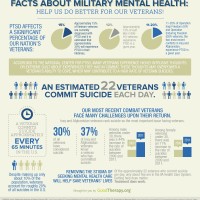
Suicide rates among veterans are much higher than those among American civilians. Approximately 20% of all suicides in the U.S. are committed by current or former military personnel, despite the fact that veterans make up only 10% of the population.
While resources for treating posttraumatic stress (PTSD), depression, and other hallmark psychological injuries are available, only 56% of qualified Operation Enduring Freedom/Operation Iraqi Freedom (OEF/OIF) veterans make use of them (2013). Similarly, of the reported 22 veterans who commit suicide each day, only 5 are in the Veterans Affairs Health Care system.
The good news is that we know when veterans do get help, it makes a difference. In 2007, the Veterans Health Administration launched an intensive suicide prevention effort and has since reported a decrease in:
- Overall rates of suicide among veterans with mental health conditions.
- Rates of suicide in the 12 months following a survived suicide attempt among veterans.
- Rates of suicide for veterans ages 35-64, which is one of the highest risk groups.
- An overall decrease in non-fatal suicide attempts.
The Stigma of Mental Health Care in the Military
Mental health issues and the receipt of mental health care treatment can be highly stigmatized within the military. The military promotes ideals such as self-sufficiency, endurance, mental fortitude, and strength, values that also support the notion—however unfair—that those seeking mental health treatment are deficient, dependent, or weak.
Factors that significantly affect service members’ decisions to seek mental health treatment may include:
- How higher-ranking officers and non-commissioned officers talk about mental health treatment.
- The belief that seeking mental health treatment will have negative repercussions on a service member or veteran’s career.
- The gender of the service member or veteran.
- The marital status of a service member or veteran.
- His or her military occupational specialty (MOS).
- Public expectations of how service members and veterans are supposed to cope with trauma.
Stigmas surrounding mental health treatment, both in the military and outside of it, greatly reduce the number of at-risk veterans that will seek treatment. Lisa Danylchuk, EdM, LMFT, E-RYT, an Oakland, California-based therapist and posttraumatic stress Topic Expert, believes, “Stigmas like these can increase feelings of shame and isolation, which can increase feelings of depression and decrease the likelihood that a depressed or suicidal person will reach out for help.”
In addition to these social pressures, veterans may believe that seeking treatment goes against their core principles and will damage their very identity.
Mental Health Issues Veterans Face When They Come Home
The Department of Veterans Affairs posits that posttraumatic stress, anxiety, depression, bipolar tendencies, and substance abuse are among the most common mental health issues affecting veterans of OEF and OIF.
When members of the armed forces return home, they often experience difficulties with reintegration. The 2014 Iraq and Afghanistan Veterans of America (IAVA) Member Survey states that loss of identity and mental health concerns were two of the top three challenges service members faced when transitioning out of the military. Of the 2,089 Iraq and Afghanistan combat veterans who completed the survey, 53% reported having a mental health injury.
Traumatic brain injury (TBI) is another health concern for veterans that has received much attention from the medical community in recent years, due primarily to the high number of OEF and OIF veterans who have endured blasts and injuries to the head and returned home with symptoms of TBI.
TBI may occur as the result of striking the head with an object, hitting the head during a fall, or, as is usually the case with combat veterans, the head being affected by a nearby blast or explosion. TBI can result in numerous health concerns, including emotional, behavioral, cognitive, and physical deficits. Records indicate that 18% of IAVA Member Survey responders were diagnosed with traumatic brain injury and have reported an increase in anger as well as changes in their personality.
Depression and anxiety are also major concerns for veterans. The Anxiety and Depression Association of America explains that veterans may feel out of sync with family and friends, but they should try to avoid social isolation. When veterans are cut off from social support, depressed thoughts may quickly lead to suicidal ideation. According to the IAVA Member Survey, 31% of Iraq and Afghanistan veterans have contemplated taking their own life since joining the military, compared to only 6% prior to joining.
Veteran Mental Health Resources
Though many veterans will experience their greatest mental health struggle after combat, in recent years, a number of mental health services and programs have been established specifically to aid military veterans. Many services within the VA Health Care system are free of charge, and many local mental health professionals and agencies offer their expertise at a reduced cost to veterans. If you are a current or former service member experiencing mental health issues, please reach out to these available resources for assistance:
- Call the Veterans Crisis Line at 988. Press 1 to speak to a Department of Veterans Affairs responder. People reaching out for assistance can also chat online or send a text message to 838255. Loved ones of veterans are encouraged to use the crisis line too.[fat_widget_right]
- Enroll in and obtain VA Health Care, which provides access to numerous mental health services at affordable rates or free of charge depending on the veteran’s economic and discharge status.
- Participate in regular post-deployment screenings that attempt to assess the mental health of military personnel after their service and encourage fellow veterans to do the same. These post-deployment screenings are designed to identify risk factors and gather data to help other veterans.
- Seek a qualified local therapist who can offer personalized care. Many therapists have specialized training to help those experiencing PTSD.
- Reach out to local support groups and veteran service organizations. Support from fellow veterans can aid in successful mental health treatment.
Family members and friends can also help veterans cope with their psychological wounds. Danylchuk encourages veterans to seek mental and emotional support not only professionally, but also within their social circles. Danylchuk recommends to friends and family members of veterans, “Listen with a non-judgmental ear, but don’t push someone to talk about something they are not ready to share. Encourage mindfulness practices like yoga, meditation, tai chi, and qigong. Remind veterans that they are having a normal reaction to an extreme experience, and that their experiences of anxiety, depression, and/or PTSD do not mean something negative about them; it just means they are still processing parts of their experience.”
References:
- Anxiety and Depression Association of America. (n.d.). Tips for soldiers and veterans. Retrieved November 15, 2014, from http://www.adaa.org/living-with-anxiety/military-military-families/tips-soldiers-and-veterans
- Bagalman, E. (2013). Mental disorders among OEF/OIF veterans using VA health care: Facts and figures. Retrieved from http://fas.org/sgp/crs/misc/R41921.pdf
- Iraq and Afghanistan Veterans of America. (2014). 2014 IAVA member survey. Retrieved from http://media.iava.org/IAVA_Member_Survey_2014.pdf
- Kemp, J., & Bossarte, R. ( 2012 ). Suicide data report, 2012. Retrieved from http://www.va.gov/opa/docs/suicide-data-report-2012-final.pdf
- Miggantz, E. L. (2014). Stigma of mental health care in the military. Retrieved from http://www.med.navy.mil/sites/nmcsd/nccosc/healthProfessionalsV2/reports/Documents/Stigma%20White%20Paper.pdf
- United States Department of Veterans Affairs, Employee Education System. (2010). Traumatic brain injury. Retrieved from http://www.publichealth.va.gov/docs/vhi/traumatic-brain-injury-vhi.pdf
- United States Department of Veterans Affairs. (2011). VA suicide prevention program. Retrieved from http://www.goyourownway.org/GOYOUROWNWAY/DOCUMENTS/VETERANS/VA%20Suicide%20Prevention%20Fact%20Sheet.pdf
- United States Department of Veterans Affairs. (2014). How common is PTSD? Retrieved November 15, 2014, from http://www.ptsd.va.gov/public/PTSD-overview/basics/how-common-is-ptsd.asp
- United States Department of Veterans Affairs. (2014). Polytrauma/TBI system of care. Retrieved November 15, 2014, from http://www.polytrauma.va.gov/understanding-tbi/
Cognitive behavioral therapy (CBT) seeks to help people identify negative or unhealthy thoughts, replace those thoughts with healthier thoughts, and in so doing, change their behavior and feelings. People don’t have to spend endless sessions discussing painful childhood memories, and the formulaic nature of CBT offers some people reassurance.
Preliminary studies of CBT showed impressive improvements in symptoms of conditions ranging from depression to personality disorders, leading to a surge in therapists who offered CBT. This type of therapy continues to be one of the most widely used evidence-based treatments available.
According to famed British psychologist Oliver James, though, CBT is a “scam” that does little to address underlying psychological issues. James, a psychodynamic therapist, argues that until people understand what led to their psychological troubles, those troubles are likely to reoccur.
GoodTherapy.org CEO and founder Noah Rubinstein, LMFT, LMHC, takes a similar stance with regards to addressing underlying issues in therapy.
“I am certainly not an expert on what research has shown about the efficacy of CBT, and I certainly don’t want to throw the baby out with the bathwater. CBT is an evidence-based, short-term therapy that has helped many people. However, on a theoretical level, I’ve always considered CBT to be a surface-level treatment rather than a method for lasting changes,” Rubinstein said. “In my experience, the only way to make lasting change is to help people tend compassionately to the more vulnerable feelings that protective functions, or defense mechanisms—such as depression, anxiety, self-criticism, anger, or addiction—are shielding us from.”
CBT’s Short-Term Effectiveness
There’s no question about CBT’s short-term effectiveness; even James admits that people receiving CBT can see remarkable improvements in a short period of time. So effective is CBT in the short term, in fact, that CBT self-help manuals such as David Burns’s The Feeling Good Handbook have become bestsellers. Because CBT teaches people how to detect and stop automatic negative thoughts, it’s especially popular for treating depression and anxiety. Some therapists, regardless of therapeutic modality, even insist that their clients use CBT principles to treat these conditions.
Can Short-Term Behavioral Interventions Provide Lasting Results?
When researchers evaluate the long-term effects of CBT, the treatment looks less promising. James points out that psychodynamic psychotherapy yields better results in the long term because it helps people address the root causes of their distress. Several studies support this claim. For example, a 2003 meta-analysis that compared CBT and psychodynamic therapy for depression across several studies found that people who used psychodynamic therapy had larger improvements. Another study of marriage therapy evaluated the effects of behavioral versus insight-oriented marital interventions. CBT relies on behavioral interventions, while psychodynamic therapy is built on insight. Thirty-eight percent of couples who used the behavioral strategies were divorced four years later, compared to just 3% of couples who relied on insight-based approaches.
Rubinstein takes the view that conditions such as depression and anxiety protect us from the vulnerable feelings associated with the true source of our distress.
“For example,” Rubinstein said, “the man with depression who’s shut down, can’t get out of the bed in the morning, and has given up might be protecting himself from trying, failing, and once again feeling that terrible worthlessness he’s felt in the past.” Like James, Rubinstein sees CBT as a short-term fix that “helps to eliminate the problematic, surface-level protective behavior.”
Indeed, one of the selling points of CBT is that it doesn’t require a long-term commitment to therapy. Many CBT programs take only a few months, and some promise near-immediate results. A study published in Psychological Medicine in 2008, though, found that long-term approaches may be preferable. That study compared long-term psychodynamic therapy to two short-term therapies: short-term psychodynamic therapy and solution-focused therapy. While the short-term approaches produced more immediate results, those results faded over time. At the three-year mark, people who had undergone long-term therapy saw more improvements. Although this study didn’t evaluate CBT, it does suggest that dedicating more time to gaining insight can be valuable. [fat_widget_left]
Laura Reagan, LCSW-C, a GoodTherapy.org Topic Expert on trauma and posttraumatic stress, blends CBT with a variety of other techniques. She sees CBT techniques as effective and essential, though she acknowledges that CBT may not be best for addressing long-term issues.
“In my practice with trauma survivors, focusing only on changing thoughts and behaviors through CBT without using a more depth-oriented approach will result in only temporary improvement of symptoms which are likely to return, as the underlying problem has not been addressed. I use CBT skills as part of my work with clients to challenge negative cognitions about the traumatic events experienced.”
Rubinstein agrees that underlying problems need to be addressed for lasting change, “I don’t agree with everything Freud postulated, but he did believe that if you eliminate a defense mechanism, another will take its place, and I think that is the problem with CBT in terms of its long-term effectiveness. Therapies that help people to resolve the deeper and more vulnerable feelings that fuel defense mechanisms offer potential for long-lasting change.”
Is It a Scam?
While CBT doesn’t work for everyone, it’s far from a scam. James is a well-respected therapist, but he’s also a practitioner of psychodynamic therapy, so his opinion is by no means free of bias. While some studies have shown that psychodynamic therapy is more effective in the long term, others show that the two approaches are equally effective. Few studies show that CBT doesn’t work at all, and several studies suggest that CBT can work in the long term. A study that evaluated people who had been treated with CBT for social anxiety found that, even three years later, they were able to use what they had learned in CBT to more effectively cope with anxiety. A 2006 review of recent studies found that CBT may help reduce depression relapse rates, particularly when researchers compare the effects of CBT to the effects of medication alone.
Carey Heller, PsyD, a GoodTherapy.org ADHD Topic Expert who uses CBT as well as other forms of therapy in his practice, highlights the importance of a strong therapeutic alliance. He explains, “Many studies have shown that the quality of the relationship between the therapist and the patient/client is one of the best predictors of treatment outcome. Thus, the specific type of treatment, whether it is CBT, psychodynamic, or an integrative approach, is not the only determining factor in whether treatment will be successful for a specific individual. I feel it is more important to find a clinician who you feel comfortable with and can look at your unique needs in determining the best treatment approach to help you rather than just seeking out a specific type of treatment on your own.”
References:
- Hope, Jenny. (2014, November 10). ‘CBT is a scam and a waste of money’: Popular talking therapy is not a long-term solution, says leading psychologist. Retrieved from http://www.dailymail.co.uk/health/article-2828509/CBT-scam-waste-money-Popular-talking-therapy-not-long-term-solution-says-leading-psychologist.html
- Kendall, P. C., & Southam-Gerow, M. A. (1996). Long-term follow-up of a cognitive–behavioral therapy for anxiety-disordered youth. Journal of Consulting and Clinical Psychology, 64. Retrieved from http://dx.doi.org/10.1037/0022-006X.64.4.724
- Knekt, P., Lindfors, O., Härkänen, T., Välikoski, M., Virtala, E., Laaksonen, M., . . . Renlund, C. (2008). Randomized trial on the effectiveness of long-and short-term psychodynamic psychotherapy and solution-focused therapy on psychiatric symptoms during a 3-year follow-up. Psychological Medicine, 38(05). doi: 10.1017/S003329170700164X
- Leichsenring, F. (2003). The Effectiveness of Psychodynamic Therapy and Cognitive Behavior Therapy in the Treatment of Personality Disorders: A Meta-Analysis. American Journal of Psychiatry, 160(7), 1223-1232. doi: 10.1176/appi.ajp.160.7.1223
- Snyder, D. K., Wills, R. M., & Grady-Fletcher, A. (1991). Long-term effectiveness of behavioral versus insight-oriented marital therapy: A 4-year follow-up study. Journal of Consulting and Clinical Psychology,59(1), 138-141. doi: 10.1037//0022-006X.59.1.138
 In my first meeting with Nora and Jeff, Nora told me (actually, she was yelling and crying): “He’s so passive, he’s driving me crazy. Jeff never lets me know what he’s thinking. He doesn’t make clear what he wants; when we disagree, he doesn’t explain what he thinks or feels.” As I got to know Nora and Jeff, I could imagine that most people would describe Jeff as a passive person—not actively taking part, compliant, meek. But I have come to understand that, more accurately, Jeff is a person in hiding.
While both Nora and Jeff contributed to the difficulties in their relationship, I am going to focus on Jeff.
Passivity as Protective Hiding
Several months into my work with the couple, this particular session was not the typical discussion of the vicious circle where Jeff’s passivity evokes Nora’s anger which makes Jeff more passive and around they go. Instead, Jeff started the session. Looking frightened but sounding more filled with feelings than usual, he told Nora: “I’m tired of this fighting. I’ve tried so hard to give you what you want, to be the good guy. All you do is criticize me and make me feel like the bad guy. You’re always screaming, but now I do feel like the bad one. This isn’t me. I’m always the good guy. I can’t stand that you don’t see me that way anymore. I don’t know what to do.”
[fat_widget_right]
In my work with Jeff and Nora, I learned a lot about Jeff’s need to hide and came to understand his passivity as his way of hiding himself to stay safe. Jeff projected a self to the world that was easygoing, undemanding, and kind. In our sessions, Jeff slowly revealed how this was not how he felt about himself: “I can’t say I like myself very much or think very highly of myself. I don’t know. Maybe it has to do with having such critical parents. They were horrible. They always laughed about my appearance: look at his big ears; his voice is so squeaky; ooh, he’s so hairy. They made me feel ashamed. They didn’t like my friends, complained about how I ate, dressed, ugh, everything. I finally learned to tune them out. From the time I was, I guess, about 8 or 9, I stopped reacting. I suppose I do that with everyone now.”
Nora started to cry softly in response to Jeff: “I had no idea; you never told me any of this. I’m so sorry your parents were so mean to you.”
Jeff looked shocked by Nora’s tears and words: “I don’t want you to feel sorry for me. I hate that! I can’t stand it. Now you both are going to think there is something wrong with me. I never should have said anything.”
Jeff’s “saying something” was the start of expressing his “true self,” which his false self had kept hidden and safe from harm. His false self had been engaging with a world that could be emotionally destructive and dangerous. Consequently, Jeff wasn’t totally familiar with the Jeff who had been kept in hiding. He had done a good job of protecting his young self from intolerable feelings of shame, hurt, and rage. Unfortunately, with the “true self” in hiding, there was little opportunity for Jeff to grow and develop through relationships in the real world.
False-Self Interference with Good, ‘True-Self’ Feelings
The false self develops as an adaptation that protects the individual and makes it possible for the “true self” to go into hiding. Often, the development of the false self is unconscious, and the individual may not be aware that this defense is protecting him (or her) from intolerable feelings. Over time, awareness may develop that the “me” who is acting in the world is “not me.” As these “not me” feelings get stronger, the feelings of being loved, being successful, deserving of recognition, etc., cannot be felt as me, or as the “true self.” It is, after all, “not me” who is loved, admired, or successful. This leaves no room for good self-feelings and frequently results in increased hiding to diminish the risks of being seen and known.
As the individual becomes increasingly aware of the false self adaptation, he (or she) is also aware that he (or she) may not know what will appear when the “true self” begins to emerge. It feels risky to be vulnerable and speak one’s feelings. How the person will be responded to is an unknown. The false self emerged early in development and was successful in protecting the person from intolerable feelings. Now that the false self no longer protects so well, it takes courage to begin to allow the true self to emerge. There are no assurances that the old shaming ways that required the adaptation to a false self won’t be repeated. Jeff’s relating of his early experiences with his parents, his shame, and his negative self-feelings were a brave expression of his “true self.”
Interference with Intimacy
To be intimate with another assumes a personal closeness, familiarity, and a knowing of the other. Jeff and Nora had difficulty being intimate because Jeff was in hiding and Nora had no sense of a real other self to relate to. In one session, Nora turned to Jeff and described her struggle: “I think I love you, I want to love you, but sometimes I don’t know who you are. I want this to work, but I rarely feel I know what you want.”
Sadly, no matter what loving or affectionate feelings Nora might have been able to feel for Jeff, he felt it was “not me” who was being loved. As a false self, he had no way to experience that Nora’s loving feelings had anything to do with what was true or real about him. As Jeff became more interested in shedding his false self and developing his “true self,” he was handicapped in his ability to be intimate since he didn’t feel he was a person of substance with thoughts, feelings, needs, and desires with which he could relate to Nora. It takes a strong desire and a good deal of courage to overcome the anxiety of risking a repeat of the shame and hurt as one begins to let oneself know what they are feeling and then allow the vulnerability to share oneself with significant others and then ultimately the world. Jeff is working on this with Nora and is making slow but steady progress.
Interference with Self-Knowledge
Who am I? What do I want, think, need, believe? What do I like, hate, fear, love? These are only some of the basic questions we wrestle with as we grow and develop our identities. When we grow up in an environment that feels dangerous or destructive, we need to find a safe way to protect ourselves from mistreatment and intolerable feelings. But when we adapt to a false self, we frequently miss the opportunity to develop the answers to these questions.
Who we know ourselves to be is based on the accumulation of our continuing experiences of the interactions between ourselves and others. This relational dialogue—all these back-and-forth responses—are the building blocks of self-knowledge. We develop the ability to self-reflect and think about self and other. We discover what we want and don’t want. We learn how to get what we want and from whom. But we can’t do this when we keep ourselves hidden from the world. The “true self” must participate in these interactions if we are to come to know who we are.
The development of a sense of identity—this is who I am; this is what I know and feel about me—helps us to locate ourselves in the world. The sense of self that we carry with us, including feelings of confidence and self-esteem, are constantly evolving as we engage in our relationships in the world. When we sequester our “true self” to keep it safe, it loses the opportunity to have “true self” experiences, which are the building blocks of identity. The false self may have kept Jeff safe from intolerable feelings, but it deprived him of becoming a person who could see himself and be seen as a person with a large number of positive and negative attributes (valuable, funny, smart, stubborn, courageous, mean, loving, etc.).
Jeff and Nora have a lot of work to do individually and with each other if they are going to be able to develop a trusting, loving, intimate relationship. When our defenses no longer protect us, as when Jeff’s false self no longer protected him from intolerable feelings of shame, badness, and anger, we become more motivated to make changes in the way we think about ourselves as individuals and in relationships. Jeff’s growing awareness of how hiding himself was damaging not only to his relationship with Nora, but also to himself, became a driver of his openness to learning the ways in which hiding himself was having severe consequences in his life.
Note: To protect privacy, names in the preceding article have been changed and the dialogues described are a composite.
 Popular wisdom suggests that a messy work space is the product of a creative and unique mind. At least one study has found support for this claim, noting that a messy space can be a source of creativity and inspiration. If you’re concerned about promoting an ethical environment, though, it might be time to rethink your work space. According to a collection of three different Rice University studies, the feelings of disgust associated with an unclean work space might give rise to unethical behavior.
How Disgust Changes Behavior
Disgust helps protect people from dangerous or questionable situations. The disgust you feel when looking at rotten food, for example, prevents you from eating a potentially toxic meal. The study’s authors speculated that disgust might make people more self-interested, decreasing their willingness to help or notice others. After all, disgust can be an overpowering emotion that provokes an immediate desire to escape the disgusting situation.
Ethics and Disgust
To test their hypothesis about how disgust affects behavior, researchers induced disgust in nearly 600 participants. In one trial, participants contemplated “disgusting” products such as cat litter, incontinence products, and anti-diarrhea medication. Researchers asked a second group to write an essay about their most disgusting memory, and a third group watched a toilet scene from the movie Trainspotting.
After inducing feelings of disgust, researchers administered a series of tests to evaluate participants’ willingness to lie and cheat for financial benefit. Those who reported higher levels of disgust were also more likely to lie, cheat, and engage in other self-centered behaviors. [fat_widget_left]
In a second trial, researchers induced a state of disgust, then asked participants to contemplate various household cleaners. Participants who evaluated the cleaners were no more likely to engage in dishonest behavior than those who did not experience disgust.
The study’s authors believe their results point to the value of a clean environment. When people feel disgusted by their surroundings, they’re less likely to behave ethically. But when that disgust is “cleaned”—either metaphorically, by thinking about cleaning products, or literally, by removing the source of the disgust—people may behave more ethically.
A 2008 sociological experiment made a similar observation after evaluating the effects of urban disorder, such as litter and graffiti, on people’s behavior. Researchers found that passersby were more likely to participate in vandalism and other minor infractions in environments where these kinds of activities were already taking place. This study was based on the “broken windows theory,” introduced in the early 1980s by Dr. George Kelling to explain how dilapidated areas, like abandoned buildings with broken windows, inspire further vandalism.
Of course, an unclean environment that doesn’t promote disgust, such as a slightly disheveled desk, is unlikely to lead to unethical behavior. For managers, parents, and other people who perpetually ask others to clean up their mess, though, this study provides one more point in favor of a clean work space.
References:
- Can the can. (2008, November 20). Retrieved from http://www.economist.com/node/12630201
- Falk, J. (2014, November 13). Rice U. study: Disgust leads people to lie and cheat; cleanliness promotes ethical behavior. Retrieved from http://news.rice.edu/2014/11/13/rice-u-study-disgust-leads-people-to-lie-and-cheat-cleanliness-promotes-ethical-behavior/
 There’s a broad assumption in our culture that women are just more emotionally intelligent than men. But women’s superior emotional intelligence is anything but a settled fact, in spite of claims of women everywhere to the contrary. Even if women do show more emotional awareness than men, a new study points toward environmental, rather than genetic, influences. According to that research, which was published in the British Journal of Developmental Psychology, mothers may teach girls more about emotions than they teach boys.
Do Boys Learn Less About Emotions Than Girls?
To evaluate differences in the ways parents talk to their children, researchers evaluated 65 Spanish parents of 4- and 6-year-old children. The parents told stories with their children and talked about previous experiences. Girls were more adept at using emotional words—such as happy, sad, and confused—than were boys. Researchers also found that mothers used more expressive words with their daughters than their sons, which might help explain why differences in emotional awareness emerge so early.
Undermining Boys’ Emotional Behavior
This isn’t the first study that has found that parents teach boys to be less emotionally astute than girls. In another study, a baby’s gender was concealed while he or she watched a jack-in-the-box. Observers were then asked to characterize the baby’s emotional reactions. When they thought the baby was a boy, they were more likely to call the reaction angry or aggressive, and girls were more likely to be labeled as fearful, potentially stigmatizing fear for boys. [fat_widget_left]
Some parents may even punish their boys for expressing their emotions, and boys receive intense peer pressure to conform to a masculine social norm that demands disconnection from emotions. The British Journal of Developmental Psychology is just one more piece of research suggesting the ability to feel and express emotions must be taught.
References:
- Kindlon, D. (n.d.). Raising Cain: Protecting the emotional life of boys [PDF]. City Leadership Research Project.
- Mothers nurture emotions in girls over boys, new study finds. (2014, November 12). Retrieved from http://www.eurekalert.org/pub_releases/2014-11/uos-mne110914.php
- Widen, S. C., & Russell, J. A. (2002). Gender and Preschoolers’ Perception of Emotion. Merrill-Palmer Quarterly, 48(3), 248-262. doi: 10.1353/mpq.2002.0013