Integrating live animals into the therapeutic process has been gaining recognition as a viable and effective approach in a clinical setting. Equine-assisted therapy is a widely popular form of therapy that has shown remarkable results with clients who do not respond well to other types of treatment. Similarly, children who are resistant to traditional therapies have demonstrated improvement in animal-assisted therapies. For individuals who experience disassociation, animals represent an unconditional source of love and acceptance. For people who may have experienced early life trauma, especially trauma or abuse that undermined attachment relationships, animals can replace missing secure attachment bonds.
Although animals as therapy adjuncts, even pets, can help reduce anxiety, depression, loneliness, and isolation, owning or working with an animal may not be a viable option for everyone in need. Therefore, stuffed animals, which represent a source of comfort in times of stress for young people, may serve as a suitable replacement. Rose M. Barlow of the Department of Psychology at Boise State University in Idaho wanted to see if stuffed animals would serve clients equally as well as live animals. In a recent study, Barlow surveyed a sample of high and low dissociative female college students and those with dissociative identity disorder (DID) about attachment to live and stuffed animals. She found that the DID women had significantly stronger attachments to both live and stuffed animals than any of the other women. She also found that those with high dissociation and those with DID reported higher levels of attachment to stuffed animals than live animals when compared to the low dissociative group.
The findings of this study have several important clinical implications. Even though comorbid issues such as depression, anxiety, and bipolar were not considered in this research, the evidence suggests that stuffed animals may be particularly helpful to those with high levels of dissociation. Because symptoms of dissociation, even disorganized attachment, can begin in childhood and result from emotionally unavailable parents, divorce, or abuse, integrating stuffed animals into therapy for young children can provide a sense of security and help to rebuild impaired attachment bonds. “Animals, live or stuffed, can aid therapy for both children and adults by providing a way to experience and express emotions, a feeling of unconditional support, and grounding,†Barlow said.
Reference:
Barlow, Rose M., Lisa DeMarni Cromer, Hannah Prairie Caron, and Jennifer J. Freyd. Comparison of normative and diagnosed dissociation on attachment to companion animals and stuffed animals. Psychological Trauma: Theory, Research, Practice & Policy 4.5 (2012): 501-06. Print.

The average age of sexual initiation is roughly between 16 and 19. Although some teens wait until much later, many begin engaging in sexual behavior before the age of 15. Numerous studies have looked at the negative consequences associated with early sexual initiation, such as emotional problems, HIV/AIDS, pregnancy, and intimate partner violence. But recently, researchers at the University of Texas looked at how sexual-initiation age could benefit people later in life. In a study led by Paige Harden, 1,659 sibling pairs were evaluated from middle adolescence through young adulthood. They were asked when they began having sexual intercourse, how many partners they had, and, if they were in current relationships, how happy they were.
Harden found that the participants who were in satisfying, committed relationships in adulthood were those that started having sex in their late teens or early twenties. These individuals reported less relationship conflict and more respect, affection, and love for their partners than the participants who had earlier sexual-initiation ages. Harden tested this outcome further by including factors such as physical appearance, body mass index, and education and came up with the same results. She believes that people who begin sexual activity after they have reached physical and cognitive maturity may make better partner decisions and be more discriminating in their choices. They may also have stronger communication skills that can benefit their overall relationship.
The results of this study don’t suggest that earlier sexual initiation can increase negative outcomes. Rather, these findings demonstrate that being a late bloomer can act as a protective factor. “We still don’t understand precisely why delaying sexual intercourse is correlated with more satisfied adult relationships,†Harden said. She hopes that future research will look at the flip side of her study, and in particular if early sexual activity among teens decreases their chances of having satisfying, positive relationships in adulthood.
Reference:
Ochsner, David. Does true love wait? Age of first sexual experience predicts romantic outcomes in adulthood. (n.d.): n. pag. The University of Texas at Austin. 18 Oct. 2012. Web. 18 Oct. 2012. http://www.utexas.edu/news/2012/10/18/does-true-love-wait-age-of-first-sexual-experience-predicts-romantic-outcomes-in-adulthood/
People who are discriminated against cope with that discrimination in various ways. Although some cope adaptively and use strategies that are constructive and empowering when they are faced with adversity, others turn to maladaptive coping mechanisms. One such mechanism is the use and abuse of alcohol and drugs. Racial discrimination has been shown to be related to increased drug and alcohol use, but has not been proven to be the cause of the increase. So why is it that some people use alcohol and drugs to cope while others do not? Meg Gerrard of the Norris Cotton Cancer Center at Dartmouth Medical School in New Hampshire wanted to explore this question further. In a recent study, Gerrard looked at whether people used drugs/alcohol as a method of coping consistent with their habitual coping strategies, or if they believed that substance use would decrease their feelings of stress and negativity stemming from the discrimination.
Gerrard conducted three separate studies designed to elicit feelings of discrimination among a sample of African-American adolescents. In her third study, she followed the level of substance use for eight years to determine the long-term influence of the discrimination-use relationship. She found that the participants who felt that substance use was an acceptable way to cope with problems were more likely to use drugs/alcohol when they felt discriminated against than those who did not endorse substance use. Over time, the results revealed that those who did support substance use as a method of coping continued to use drugs/alcohol throughout adolescence and into early adulthood, while those who never supported this belief did not. These findings suggest that adopting substance-use behaviors early on can lead to long-term maladaptive coping strategies for some individuals.
The findings from this study were gathered only from African-American participants. Future work should look at the coping-discrimination dynamic among other minority individuals, as evidence exists that prejudice and discrimination increases stress across all ethnicities. Gerrard noted that one domain that was not examined in her study was the effect of parental support. When parents teach their children how to handle stressful situations prior to their occurrence, children have a better chance of dealing with challenges such as discrimination in productive and adaptive ways rather than trying to relieve the stress with drugs or alcohol. Research should explore the buffering effects that family and parental support can have on this segment of the population. Until then, these studies demonstrate that acceptance of maladaptive coping strategies can increase negative behavior in people facing discrimination. “The current studies also provide evidence that use-as-coping is not caused by discrimination—instead, it increases the relation between discrimination and subsequent substance use,†Gerrard said.
Reference:
Gerrard, Meg, Michelle L. Stock, Megan E. Roberts, Frederick X. Gibbons, Ross E. O’Hara, Chih-Yuan Weng, and Thomas A. Wills. Coping with racial discrimination: The role of substance use. Psychology of Addictive Behaviors 26.3 (2012): 550-60. Print.
 Depression makes it difficult to function in daily life, but adding discrimination to the equation makes it even more troublesome.
A new study in the journal The Lancet stated that out of the 1,082 adult participants with major depressive disorder, 79% reported that they have experienced discrimination. People who experienced discrimination while depressed had more depressive episodes, social difficulties, and issues finding and keeping a job. They also were less likely to reveal a diagnosis of depression.
These results suggest that more works needs to be done in the area of preventing discrimination and eliminating stigma. Discrimination can prevent people with depression, who may be worried about disclosing their diagnosis, from getting the help they need. While getting a job and growing social networks can help fight depression symptoms, those pursuits become more challenging in the face of discrimination.
How, specifically, does discrimination affect people with depression? How can the general public be more understanding? And what options do people with depression have? Mental health experts and other professionals have some answers.
Dr. David Sack, CEO of Elements Behavioral Health and Promises Treatment Centers, said by email that sensitivity toward people with depression often is lacking.
“The most common example has to do with intolerance toward peers/friends/relatives that comes from not understanding that depression is a disease that the individual cannot simply will themselves out of,†he said.
Sack said a supervisor might question an employee’s motivation and commitment due to symptoms of depression, even if those symptoms don’t reflect how the employee really is.
“How often have we heard that this or that person claims that they are depressed just so they can get time off from work or won’t have to take responsibility for mistakes they’ve made?†Sack said.
Although many people know the basics of depression thanks to widespread awareness initiatives, prejudice, bias, and stigma still are rampant.
Viola Drancoli, a clinical psychologist, said in an email that friends and family members of people with depression might exhibit discriminatory behavior with them because they may feel drained from being around someone who expresses sadness, pessimism, irritability, and a lack of motivation.
This could push someone with depression into isolation. A person with depression might prefer being alone so he or she doesn’t have to attempt to hide feelings from others.
“The social isolation often starts a vicious cycle in which the (client’s) negative outlook on life is reaffirmed, they feel let down by family and friends, and symptoms may worsen,†Drancoli said. “This is especially dangerous for individuals who have suicidal ideations and need support and monitoring.â€
Drancoli said it’s important for family and friends to be supportive. She suggests volunteering to help out with chores that might be difficult for someone with depression to complete when he or she is struggling to function, as well as patiently listening without judgment. Loved ones can gently encourage a person with depression to exercise as well, as this has been shown to boost mood.
People with depression who believe they have been discriminated against have the law on their side. Sack said that discrimination against people with any disabilities, including mental issues such as depression, is forbidden by the Americans with Disabilities Act. The civil rights law, enacted in 1990, defines disability as “a physical or mental impairment that substantially limits a major life activity.†Some states have additional laws against discriminatory behavior.
“An individual who is concerned about discrimination at work will want to speak with their supervisor or the director of human resources first,†Sack said. “Most companies have strong policies to promote fairness and nondiscrimination.â€
Justine Lisser, a senior attorney advisor in the Office of Communications & Legislative Affairs at the U.S. Equal Employment Opportunity Commission, said by email that if an employer has at least 15 employees, it must abide by the ADA. Employers need to provide “reasonable accommodations†for people with disabilities, as long as the employer isn’t deeply burdened as a result.
“For example, if a person with depression is hired for a position that requires an 8 a.m. start time, but due to the effects of (antidepressant) medication the person could not start until 10 a.m., it would be a reasonable accommodation to permit the employee with depression to start at 10 a.m., assuming that it would not cause an undue hardship for the employer,†Lisser said.
The EEOC has successfully enforced employee discrimination laws in a few cases involving people with mental health issues. In one case, a sales associate at a video retailer experienced harassment because of his social anxiety disorder and depression. His employer was ordered to pay $70,000 to settle the discrimination suit, according to an EEOC press release from March 2012.
The first generation of antipsychotic medications, known as the typical antipsychotics, has demonstrated great effectiveness in treating a variety of mental health issues. Schizophrenia is the most frequent cause for the prescription of a typical antipsychotic. These typical antipsychotics also cause a variety of side effects, including sleep disturbances and movement disorders.
Tremors and loss of muscle tone can sometimes become so severe that patients have to discontinue treatment. More recently, the atypical antipsychotics have offered the same clinical results with fewer side effects. However, the side effects that can occur with this class of medications are troubling in their own right.
Although the reasons aren’t clear, atypical antipsychotics can lead to serious metabolic side effects. Prolonged use of these medications can result in obesity and even diabetes. Zyprexa (olanzapine) has the greatest risk of causing harmful metabolic effects. Previous research has indicated that a little-understood relationship between atypical antipsychotics, glucose, and insulin is responsible for weight gain and fat accumulation in those who take atypical antipsychotics.
At Penn State University, researchers conducted a study with live rats to better understand how and why antipsychotic medications lead to changes in human metabolism. One group of rats received daily Zyprexa for several weeks, while another group had a single, acute dose of the drug. The rats given the single dose exhibited an almost immediate drop in their activity levels, without a matching decrease in food intake.
In essence, these rats took in more nutrition than necessary. At the same time, significant changes to insulin meant that the extra calories were converted into fat stores. The acute responses were also observed in the chronically-dosed rats. Surprisingly, the rats did not all gain significant amounts of weight. Still, the body composition of these rats changed in drastic way whether they gained weight or not. Fatty tissue as a proportion of body weight increased steadily for the first three weeks of the study before plateauing. Similar effects have been observed in humans in small studies.
Measurable and significant weight gain is the primary concern when prescribing an atypical antipsychotic. It is arguably the most serious side effect, as increased body mass raises the risk of numerous chronic health problems. However, the rat study at Penn State showed that even without large weight gains, body composition can change in distinctly unhealthy ways. More fatty tissue leads to altered hormone levels and potentially more plaque in the blood stream. This study makes a strong case that patients taking atypical antipsychotics, especially Zyprexa, should have regular blood work to ensure healthy insulin and glucose levels.
References:
- Albaugh, V.L., Judson, J.G., She, P., Lang, C.H., Maresca, K.P., Joyal, J.L, and Lynch, C.J. (2011). Olanzapine promotes fat accumulation in male rats by decreasing physical activity, repartitioning energy and increasing adipose tissue lipogenesis while impairing lipolysis. Molecular Psychiatry, 16, (5), 569-581.
- Olanzapine – PubMed Health. (n.d.). National Center for Biotechnology Information. Retrieved from http://www.ncbi.nlm.nih.gov/pubmedhealth/PMH0000161/
One of the reasons many children do not tell anyone about being sexually abused is because they fear that their loved ones will not believe them. Often, their abuser is a friend or family member, and although children may know that what occurred is wrong, they may be confused and worried that their caregivers will think they have misconstrued the behavior. Children who feel neglected or maltreated by caregivers may feel reluctant to disclose abuse, and many abusers threaten children, creating more reasons for nondisclosure. However, when children do reveal abuse, getting them to explain the abuse in a way sufficient to lead to prosecution can be challenging.
Various methods of interrogation are used on child-abuse victims, including open-ended questions, yes/no questions, “What happened?†questions, and “How did that make you feel?†questions. For the most part, open-ended questions and “what†questions tend to provide the least amount of detail. Children often are unable to articulate the details of their abuse. And while “how†questions that prompt children to reveal their physical reactions and feelings allow them to detail their personal experience in great detail, this is the most rarely used form of interrogation. To explore which method would provide the most accurate recollection of abuse and elicit emotional responses that could demonstrate credibility to jurors, judges, and therapists, Thomas D. Lyon of the Department of Psychology at the University of Southern California recently examined transcripts from more than 100 child-abuse cases.
Lyon discovered that when children were asked closed-ended questions such as yes/no, their responses were narrow and they exhibited little emotion. Similarly, when they were asked “What happened?†they were hesitant to reveal details and appeared emotionally undisturbed. But when children were asked how the abuse made them feel and what their physical reactions were, the responses were extremely vivid and consistent. They demonstrated emotional responses and used words such as angry, sad, afraid, confused, “sick to my stomach,†and dirty. They manifested facial and physical reactions that allowed those interviewing them to see the damage of the abuse in ways that the children could not articulate when prompted with direct questioning. “Children can be surprisingly articulate about their reactions to sexual abuse, despite their apparent lack of affect in describing the abuse itself,†Lyon said. He hopes that these findings will motivate interviewers, prosecutors, and mental health professionals to evaluate physical and emotional reactions of abuse as a means to gather details from child sexual abuse victims.
Reference:
Lyon, Thomas D., Nicholas Scurich, Karen Choi, Sally Handmaker, and Rebecca Blank. ‘How did you feel?’: Increasing child sexual abuse witnesses’ production of evaluative information. Law and Human Behavior 36.5 (2012): 448-57. Print.
 One of the basic ingredients of good psychotherapy is being understood. People often do not consider what it means for a therapist to understand. Ideas vary from one school of therapy to another—even from one therapist to another.
Some look for understanding through causes. How did you get to be the person you are? What early experiences may have taken part in forming your personality?
Some therapists focus on understanding in a manner rooted in biology. Do you have a shortage of neurotransmitters that are designed to make you feel happy—to give you a sense of well-being?
Others are more interested in understanding what you experience as you go through the world. What does it feel like to be in your shoes—to have your anxieties, loves, fears, and hopes?
Most therapists use a combination of these modes, as well as many others I haven’t mentioned. In my view, there is a critical part of understanding that provides a profound respect for your humanity—a sort of understanding that is familiar to all of us, but is not an ordinary part of the therapeutic literature.
I’m referring to the process of understanding a person precisely how that person understands himself or herself. I believe the modes of understanding that I have mentioned are critical, but having someone see you in the way you see yourself is foremost. There is subtle disrespect in a therapist’s bypassing your self-understanding toward an investigation that lies beneath—whether it be unconscious phenomena, biochemistry, or even felt experience—as your experience in the world is not quite the same as your evaluation of it.
[fat_widget_right]It’s true that we all have blind spots, and therapists are in a position to notice things we may not. We collaborate with our therapists to investigate the mysteries of the unconscious, the unknown, and what we don’t understand about ourselves. That quest has been a part of therapy since its inception. But wouldn’t it make sense for therapist and person in therapy to have dialogue about that first?
For example, does your understanding of self-discovery differ from that of your therapist? Presumably, nobody is the expert when it comes the most important human questions—those that matter most to us. Therapists in their craft have something to teach: Sigmund Freud’s technique ignited a passion for self-inquiry lasting more than 100 years and still burning. However, the extent to which you may have something to teach often is overlooked.
Following one of Freud’s favorite metaphors, as the archaeologist penetrates beneath the earth’s surface, the psychoanalyst does the same with the mind. In a descending excavation, the height of great aspirations—the astronomer’s sky—may be inappropriately understood.
Therapists can become preoccupied with your biases and misconceptions. They may lose sight of the independent dignity of what you see. What are the things you love and hold dear? Why do you love them? What are the things that guide your life? Love? Family? Truth? Beauty? Security? What are your highest aspirations? Your virtues? Strengths? What are your opinions about the most important things? The universe? And how do you understand your place in it?
Many therapists develop understandings of people in therapy in relation to these questions. However, it might be a mistake to believe these investigations lead only to an illusory superstructure under which your real truth lies. These questions are integral to being human and hold an independent dignity. They cannot be reduced to something else. It is a terrific advantage if your therapist welcomes the things that are most dear to you and understands them on your terms with the utmost seriousness.

Most people experience some form of irrational fear or anxiety, and many are concerned about germs and disease in particular. Amid a flurry of films and media reports about antibiotic-resistant infections and life-threatening flu strains, it’s easy to understand why some people actively worry about what they touch and breathe.
While concern about germs can motivate people to make health-conscious decisions such as frequently washing their hands, a serious germ phobia can drastically alter how a person functions and engages with society. Even actor and television host Howie Mandel concedes he has been unable to shake the grip of mysophobia—the technical term for fear of germs. Phobias are differentiated from general fears by degree. A person who is concerned about germs might wash his or her hands or get a flu shot, but a germ phobia can interfere with every area of life. Phobias are treatable, and people experiencing them should seek medical or psychological assistance.
[fat_widget_right]
Symptoms
The primary symptom of mysophobia is an irrational fear of germs. This can manifest differently in different people. One person, for example, might be fixated on a specific germ or disease, while another person might be afraid of germs and dirt in general. Common behaviors associated with mysophobia include:
- Compulsive hand washing
- Excessive use of disinfectants and antibacterial soap
- Fear of physical contact with others
- Extreme fear of getting sick
- Reacting with extreme fear to media reports of new diseases
- Fear of certain locations, such as doctor’s offices and airplanes, where germs or sick people might be present or confined
Effects
Mysophobia doesn’t simply inspire fear and avoidance. The phobia can be all-encompassing and life-altering. While people with mysophobia often recognize that their reactions are irrational, they can’t control them. They may avoid going out in public, developing intimate relationships, or eating food they did not cook. Because mysophobia affects so much of a person’s life, it can lead to other mental health issues such as depression, social isolation, and anxiety. Complete avoidance of germs can actually contribute to the development of health problems. Overuse of antibacterial and disinfectant products has been implicated in the spread of new, resistant infections, and children who are not exposed to germs are more likely to develop allergies.
Causes
No one knows exactly why people develop phobias, but mental health experts have developed a few theories. Some believe that people are more likely to develop phobias that protect from danger. These phobias include germ phobias, fear of large animals, and fear of heights. People who develop phobias may take these natural fears too far and react with extreme anxiety, placing them in danger they are believed to be trying to avoid.
Early experiences also can make a person more likely to develop a phobia. Childhood illness, the death of a parent, or painful medical procedures can condition a person to be extremely fearful of germs and to take extreme measures to avoid them. Phobias also tend to run in families; they may be genetic or simply learned from parents.
Treatment
Phobias are highly treatable and often require only a few sessions with a qualified mental health professional. Cognitive behavioral therapy, which helps people to reframe intrusive and phobic thoughts, can be extremely beneficial. Desensitization, a process whereby a person is slowly exposed to a frightening stimulus, also is highly effective. Some doctors may prescribe anti-anxiety medications to help people with mysophobia cope with their fears during treatment or to enable them to function in public. Some clients also experience success with hypnotherapy, often in only two or three sessions.
References:
- Audesirk, T., Audesirk, G., Byers, B. E. (2008). Biology: Life on earth with physiology. Upper Saddle River, NJ: Pearson Prentice Hall.
- Overcoming your Fear of Germs. (n.d.). Fear of Germs. Retrieved from http://www.fearofgerms.com/
- Kring, A. M., Johnson, S. L., Davison, G. C., Neale, J. M. (2010). Abnormal psychology. Hoboken, NJ: John Wiley & Sons.
- Phobias. (n.d.). U.S. National Library of Medicine. Retrieved from http://www.nlm.nih.gov/medlineplus/phobias.html
 This is the third in a series of articles designed to explore some of the issues and concerns that arise around what is currently called Asperger’s syndrome, which will soon be incorporated into the broader spectrum of autism disorder when the new Diagnostic and Statistical Manual of Mental Disorders (DSM-5) is published in 2013.
I had a client we’ll call Brian, a man in his mid-thirties with a diagnosis of Asperger’s syndrome who came to me to discuss what he referred to as “issues he was having with people at work.â€
It is not an unusual request for a person with Asperger’s to want to work on the confusion that surrounds social interactions in general. Interactions at work often are more challenging because in the office, not only do the normal social protocols apply, but there often is an additional layer of a particular corporate culture overlaid upon this basic structure, invisibly directing everything.
Bryan was a pleasant and engaging man. He held good eye contact, spoke with precision, and demonstrated a light touch with humor. His demeanor changed, though, when I asked him about his colleagues in the office where he worked as a certified public accountant.
A quiet earnestness overcame him. He spoke clearly and without breaking to collect his thoughts or in expectation of response. He discussed one individual after another in great detail, including information about the kind of work they did, their areas of responsibility, and where they stood in the hierarchy. This was precisely the sort of information I expected to get from Brian on the topic of work relationships.
Then, however, he began to speak of his colleagues in more personal terms. He knew who was married and who was single. He knew who had children, their names and ages, and the schools they attended. Brian told me who had recently vacationed and where they had gone; who golfed and who played tennis; who had iPhones and who used Androids. He knew the makes and models of everyone’s cars. He knew the names of spouses. He knew which neighborhoods his coworkers called home. He even knew who had housekeepers and who did not.
It might appear surprising on first glance to read that I was given such detailed and personal information about others from a man with Asperger’s who came into my office with self-identified problems related to interpersonal relationships. But I have seen this before. Once you look at this apparent contradiction in another light, you may recognize it, too.
I’m talking about the illusion of friendship.
Further discussion with Brian demonstrated to me that he had gleaned all this information about his coworkers not from interactions with them over time, the way you or I might imagine getting to know the people we work with. Instead, Brian had developed his extensive knowledge of everyone around him by listening and even eavesdropping on conversations others were having around him, but in which he had not once been involved personally.
And he was having problems with his coworkers when he would make a statement revealing his knowledge about a person, info he had no apparently legitimate way of knowing. People became uncomfortable around him because of this and withdrew from him, which left him utterly confused.
Of course, this became the starting point for our work together. Brian had to learn about the ways that acquaintanceships and friendships develop over time. Importantly, he also had to learn the concept of reciprocity: It is not enough to know things about another person, but one must also share personal information about oneself as well in the give-and-take manner of casual conversation. This is how trust develops between people. This is the foundation from which we can make a statement such as, “Oh, yes, I know Brian,†with legitimacy.
Brian had to learn that knowing confidential or intimate facts about another person without that reciprocity was considered socially gauche, and that it had the potential even to be frightening to some individuals. Brian had to learn the difference between having friends and having the illusion that he had friends.
Once we began to tease this distinction apart, Brian began making progress in his social interactions. We used role-playing techniques and many “what-if†exercises, and Brian’s distress around the topic of his work environment noticeably decreased over time.
What was once considered a rarity—step-siblings, step-parents, and step-in-laws—has become more common than not. When couples marry, there is a very good chance that one of them brings an extended family that branches by halves and steps. And if that couple winds up divorcing, the tree splinters even further. Because there is no biological bond that obligates a step-family member to stay in contact with other steps, the rules of engagement can be confusing and tense. In a recent article, marriage experts explain how to navigate the rocky road of step-relationships after divorce.
Take, for example, the case of an ex-wife who spent decades raising her step-children. Should she continue the relationship with these nonbiological children, even though she has no legal claim to them? Mary T. Kelly, a marriage therapist from Colorado, notes that often step-children can be a contributing factor to divorce. Many blended-family parents disagree over how to raise his, hers, and their children. Tension that exists between step-children and step-parents seems like normal childhood rebellion, but in many cases may actually run deeper.
Paul Hokemeyer, a New York therapist, says couples and children need to determine if they want those relationships to continue after divorce. Many children may not be permitted to make contact with their ex-step-parents while they are minors, but can make the choice whether to have a relationship with that significant person when they reach adulthood. Even step-grandparents get caught in the mix when step-families divorce. Grandparents who become attached to step-grandchildren, only to have them taken away, may not be willing to invest as much into future step-family members.
One Massachusetts psychologist, Patricia Papemow, recommends that clients try to initiate contact through letters rather than personal visits or phone calls. It is important for step-children to be allowed to have time to process the shift in the relationship on their own terms. Letting them know a step-parent is there through cards and letters is a noninvasive and subtle way to continue contact and keep the door open for future communication. Regardless of how an individual chooses to stay in contact with their step-children, Hokemeyer insists that they review their motives so that all parties will be receptive. “Make sure that you are acting out of genuine love and concern for the other person, and not out of anger and attempts to manipulate,†Hokemeyer says. Following these tips could help step-exes maintain important family ties in a world of ever-changing family dynamics.
Reference:
Gootman, Elissa. When branches tangle in a stepfamily tree. (n.d.): n. pag. The New York Times. 3 Oct. 2012. Web. 8 Oct. 2012. http://www.nytimes.com/2012/10/04/fashion/-step-family-trees-with-tangled-branches.html?pagewanted=all&_r=0
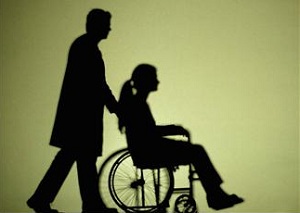
There are many parallels between living with a disability and dealing with an uninvited house guest. If you have ever had an uninvited house guest, I am sure you remember moments when things may have been uncertain and, at times, tense or uncomfortable. At the very least, having an uninvited guest requires some adjustments, much like living with a disability.
An uninvited guest may arrive unannounced, leaving no time to plan or prepare. Likewise, in many cases people living with disability have little or no time to plan for the many changes to come. While there may have been no way to prevent the disability and requisite life changes, having time to prepare—psychologically and literally—can make a huge difference in a person’s ability to adapt and cope.
A period of psychological adjustment is required for a person who has a disability, his or her spouse/partner, parents, and other family members. The adjustment process people frequently talk about resembles the grief process in many ways. Like the grief process, people often experience feelings in what seem to be stages. Similar to the grief process, this adaptation process usually begins with a period of denial.
Denial
In my work with couples and families living with multiple sclerosis, I often hear concerns that one person seems to be “stuck in denial.†To people who have moved through the initial denial stage, it may seem as if their loved one is not progressing as quickly as others. The truth is, different people work through this period of adjustment differently, and it takes as long as it takes. The denial stage usually happens at the time of diagnosis or disability, and may come up again at other times. For example, in a progressive illness, if one begins to lose mobility or other limitations arise, the initial stage of the adjustment process may be triggered again.
It may seem clear to a caregiver/partner or family member who has been helping someone walk even short distances that a mobility device is needed (cane, walker, scooter). For the person who is having mobility difficulty, admitting that it is time to talk to a doctor about a mobility device may affect his or her identity, hope for recovery, or future progress. If so, working through the denial and bargaining, and then later stages of adaptation, may be necessary. It is not unusual to see all members of the family triggered by new developments that start the process over.
Denial is believed to be a protective measure that prevents us from becoming emotionally overwhelmed. Denial slows down the process of coping with traumatic events, giving us more time to psychologically prepare ourselves for the onslaught of feelings. The process of denial, known as a defense mechanism, should not be rushed or sabotaged by well-meaning loved ones who are at a different place in the adaptation process. Doing so can cause the person who needs more time to become emotionally overwhelmed without the necessary skills to cope effectively.
Coping skills: A person with disability and his or her family members should try to be empathetic and understand things from the perspective of others. Be honest, but gentle, about your perceptions. Choose the time to discuss these issues carefully—not when either of you are tired, frustrated, or angry. Always talk to your loved one(s) before bringing up concerns with doctors or other professionals. Caregivers and family members should keep in mind that their needs are important, too. Take care of yourself and make sure you have plenty of support. When children are involved, be very careful what and how you share information with them. Children need to hear things based on what is appropriate for their age and stage of development. Ask for guidance from a professional if you are unsure how much to tell children or how to talk to them about disability.
Bargaining
The stage that usually follows denial is bargaining. During this time, people often are looking for second opinions, alternative therapies, and other remedies. It can also be a time when we promise the gods that we will turn our lives around if given a second chance without the disability or diagnosis.
It is true that finding the best medical providers, keeping a positive outlook, and staying informed of new research and possibilities is important. However, this can also be a time when people are vulnerable to scams and false promises. Unfortunately, there are a lot of companies and people who offer products and services that guarantee outcomes without doing the necessary research required to back up those assurances.
It is a good idea to check out any new or experimental treatments carefully before trying them—particularly if there is a large commitment of money, resources, or time involved. Check with local and national nonprofit organizations that provide services to people with your specific issue or health challenge. Agencies such as the National MS Society, American Cancer Society, and others often have information about ancillary and alternative therapies. They may be able to send you information or answer your questions.
Coping skills: Make decisions together based on facts. Find local and national organizations that you trust to support you and provide well-researched information. Be sure that any second opinions or ancillary providers have access to all the information you have from other providers. In some cases, taking medications or treatment without being fully aware of how they interact with your other treatment can be life-threatening. Make a commitment to fully investigate any new or experimental treatments before deciding to try it. Ask for and check references when appropriate. Verify the credentials of all providers before visiting them. At some point, you may have to accept a new reality that you had not planned for and do not welcome. If you have prolonged difficulty coping with the diagnosis or prognosis, find support from a professional or support group to help you with the transition.
Over the next few months, I will explore additional aspects of disability, how it affects the lives and relationships of the people involved, and ways of coping with these situations. If you have ideas to share about how you have effectively coped with any of the situations presented, please join the discussion by leaving comments below. Likewise, if you have questions, feel free to ask for input from others who read the blog.
The benzodiazepines are a class of drugs typically prescribed for the treatment of anxiety or chronic seizure. They work by slowing the electrical activity in the brain, resulting in a sedative effect. Doctors may prescribe these drugs for brief or prolonged periods, or simply as needed—such as in the event of a panic attack. The potential adverse effects of benzodiazepines are fairly well understood by the medical community. People may experience drowsiness, headache, dizziness, and an unsteady feeling. High doses have an intoxicating effect similar to alcohol consumption.
However, the effect of chronic low doses of medications like Xanax (alprazolam) and Klonopin (clonazepam) on human tissue and organs is still to be determined. Previous studies have suggested that long-term administration of benzodiazepines may weaken the immune system, although no conclusive evidence of such a link exists.
A clinical experiment with rats tested the effects of Klonopin and Xanax on stressed and nonstressed male rats. The stress procedure involved confining the rats to a small mesh cage for 2.5 hours each morning. Some rats received Klonopin, some Xanax, and others only a control solution of distilled water. The study continued for four weeks, after which the rats were euthanized and the clinicians carefully examined them. The research team was most interested in the health of the immune system, and they primarily investigated lymph glands and blood cell counts. The findings have implications for the treatment of anxiety in humans.
Both stressed and nonstressed rats showed immune system deficits after treatment with either Klonopin or Xanax. Rats treated with Xanax demonstrated the most serious deficits, possibly because of the medication’s unique chemical structure. Because of the experimental design, researchers were able to distinguish between immune deficiencies caused by stress alone and those caused by medication. Nonstressed, medicated rats showed less decline than their stressed counterparts, but the decline was still clinically meaningful. It’s worth noting also that these rats received relatively low doses of medication. Continued administration beyond four weeks might reveal even more profound immune system effects.
These results argue for more caution when prescribing anti-anxiety medications. Both Xanax and Klonopin appear to degrade the immune system in distinct ways. Overall, Klonopin’s effects were less severe than those of Xanax, but were still worrisome. Patients with already compromised immune systems may want to avoid this class of medications if possible. Otherwise, Klonopin may be the safest choice. In addition, short-term use of the drug is definitely preferable to a long-term prescription.
References:
- Elmesallamy, G. E., Abass, M. A., Refat, N., and Atta, A. H. (2011). Differential effects of alprazolam and clonazepam on the immune system and blood vessels of non-stressed and stressed adult male albino rats. Interdisciplinary Toxicology, 4(3), 132-143.
- PubMed Health [Internet]. (n.d.). Bethesda (MD): National Library of Medicine. Alprazolam. Retrieved from http://www.ncbi.nlm.nih.gov/pubmedhealth/PMH0000807/