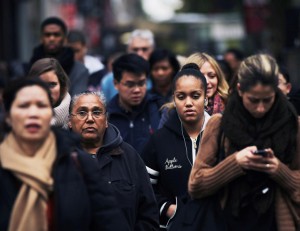
 As we covered in last month’s article on microaggressions, they are often subtle, racial insults by well-intentioned people. And they’re experienced by people of color on a regular, sometimes daily, basis. One study found that 96% of African-Americans reported that they experienced microaggressions within the previous year.
Some of the most common microaggressions that racial minorities experience are:
- When shopping or dining, the assumption that they are service workers rather than customers.
- The assumption that minorities are likely thieves and thus are followed around retail stores. A black woman shared that this happens to her “at least once a week at places where I am receiving some kind of service.â€
- Critical and offensive comments, stated as fact, on how minorities talk, dress, or style their hair. For example: comments that a person is “too loud†or “speaks so well,†as though it is unexpected from someone of their culture.
- Not understanding racial and cultural differences and assuming that racial minorities are the same ethnicity. For example, when my Japanese friend moved to Chinatown, people constantly asked her if she felt “at home.†She’s not Chinese. It’s not the same.
- Assuming that all Latinos speak Spanish. No other ethnic group in the United States is expected to be bilingual.
- Asking, “What are you?†when unable to identify his or her racial or ethnic background.
[fat_widget_right]
While there are individual instances of microaggressions, there are also environmental ones. These are microaggressions that occur and are supported on a larger, societal scale:
- The Oscars is a perfect example of the environmental aspects of microaggression. An all-white actor/actress nominee selection for the Academy Awards ceremony sends the message that white is the standard and the only important perspective or influence there is.
- The constant bombardment of feisty, neck-rolling black women in media as a standard and accepted representation of black women.
- Questioning and challenging the need for minority spaces within larger organizations that are dominated by the majority. For example, when I was planning a meeting for social workers of color (in a predominantly white organization), I heard the comment, “This offensive. This is wrong.â€
- Finally, the denial by people in the majority of racial experiences is a cornerstone of microaggressions.
What can be done about it? A multipronged approach is needed. First, people inflicting the pain need to stop. As in any relationship, when someone is hurt, the person who caused the hurt needs to stop the painful action, apologize, and commit to not repeating it.
Of course, this is easier said than done. Change is a long process, just like in relationships. Mistakes will be made, and painful interactions will continue to occur. But making a commitment not to engage in microaggressions is a useful start.
Here are some concrete steps and important considerations:
Stop and Think Before Speaking
How will your comment be received? Does the setting make a difference? Is it something you should say to another person?
I recently had a white friend ask me about commenting on a black woman’s hair. She knew that hair was an important and sensitive topic in the black community, and she wanted to be respectful in complimenting this woman’s hair. We talked it through and discussed what she wanted to say, why she wanted to say it, and her relationship with the woman. It seemed “safe†to compliment the woman’s hair.
Context Matters
And then I asked about the environment. Where would they be and who else would be present? Those factors can have a big impact; in this case, it changed my perspective. Suddenly a compliment no longer was “safe†and felt different when singled out to one black woman in a room of white women.
For the record, when my friend approached me to ask her question and have this discussion, she prefaced it by saying she wanted to ask me something related to race and understood if I didn’t want to have the conversation with her. She didn’t act on her privilege and assume that she could ask me anything because she’s white and I’m black. This is very different than when people approach minorities and ask them questions about race assuming that they will represent their entire race—another form of microaggression.
For those of us on the receiving end of microaggressions, we need to acknowledge its impact on us. Constant exposure to microaggressions has a significant toll on the physical and mental health of racial minorities. Research demonstrates that the cumulative effects of microaggressions are devastating. They can lead to feelings of isolation, self-doubt, and frustration.
Recognize It for What It Is
We need to acknowledge a microaggression for what it is. To ignore or dismiss it allows it to fester within us, causing harm to who we are as people. This isn’t to say it should be at the forefront of our minds each day, or that you need to confront everything you experience. But it does mean that you need to be aware that this happens and has an effect. Then you can prepare to deal with it.
Awareness Is Key
There are some situations and environments where you may experience microaggressions more frequently. If you are in an environment where you are the “only,†this may be one of those situations. Be aware of this so you can prepare for those times.
Do a Self-Inventory
The hardest part of dealing with microaggressions is that they are easily deniable.
I just like your hairstyle. What’s the big deal?
OK, so you don’t speak Spanish. It was an honest mistake. Don’t overreact!
These are common responses when calling out microaggressions. When you experience a microaggression, there’s something inside you telling you that you’ve been hurt. Perhaps you get a knot in your stomach, flashes of warmth, an instant headache, or a voice saying, “That’s not right.†Often there is some physical experience that acts as a red flag for you. Pay attention to it.
Seek Support
Have someone in your corner who sees and understands microaggressions. You need someone you can talk to and explain what happened, your feelings, and to do some reality testing with. Because the offender and bystanders will likely deny and even become defensive about microaggressions, you need someone you can talk to without defending your experience.
If you don’t feel comfortable talking to someone in your life, seeking the guidance of a qualified therapist can help you sort through your feelings about your experiences.
Let It Out
Don’t let the self-doubt, anger, or frustration eat away at you or cause you more harm. Whether it’s walking, talking, screaming, crying, or running, find a way to let the pain out. After you’ve done this, you’ll be able to think clearly and decide on your next plan of action.
To Confront or Not Confront?
There are pros and cons to this, particularly in work settings, often placing us in a catch-22. Each circumstance and each person is different. What you need in your life changes with time and environment. Be compassionate and flexible with yourself as you make the decision to confront or not confront a microaggression.
The societal and environmental aspects of microaggressions need to change. Though it may seem overwhelming trying to change centuries-long systems of oppression, “never doubt that a small group of thoughtful, committed citizens can change the world; indeed, it’s the only thing that ever has†(Margaret Mead).
References:
- Klonoff, E. A., & Landrine, H. (1999). Cross-validation of the schedule of racist events. Journal of Black Psychology, 25, pp. 231-254.
- Pierce, C., Carew, J., Pierce-Gonzalez, D., & Willis, D. (1978). An experiment in racism: TV commercials. In C. Pierce (Ed.), Television and education, 62-88. Beverly Hills, CA: Sage.
- Steele, C. M., Spencer, S. J., & Aronson, J. (2002). Contending with group image: The psychology of stereotype and social identity threat. In M. Zanna (Ed.), Advances in experimental social psychology, 23, pp. 379-440. New York: Academic Press.
- Sue, D. W., Capodilupo, C. M., Torino, G. C., Bucceri, J. M., Holder, A. M. B., Nadal, K. L., & Esquilin, M. (2007). Racial microaggressions in everyday life: Implications for clinical practice, American Psychologist, 62(4), pp. 271-286.
 A rich body of research confirms that men interrupt women more frequently than they interrupt men. According to a new study, though, it’s not just men who are the problem. Both men and women feel entitled to interrupt women more frequently than they interrupt men.
Men, Women, and Interruptions
Researchers wanted to check for several potential gender differences in communication style, most notably the tendency to interrupt a conversation partner. Forty participants—20 male and 20 female—each had a three-minute conversation with one male and one female conversation partner.
The conversation partners were trained to code the conversations for a host of words and conversational styles, including the use of personal pronouns, hedge statements, adverbs, dependent clauses, empty filler, and interruptions. When researchers examined the conversations, they found that subjects who talked with a woman interrupted more frequently—regardless of the gender of the subject.
[fat_widget_right]
Gender Differences in Communication?
We’ve all heard endless claims—in pop psychology books, in fashion magazines, and virtually everywhere else—suggesting that men and women communicate so differently that they might as well be speaking different languages. This study, however, suggests that may not be true. In addition to analyzing interruption patterns, researchers also looked at the specific words and parts of speech speakers used. When talking to a woman, participants tended to use more dependent clauses. These parts of speech are typically part of longer, more complex sentences.
Researchers speculate that participants who spoke to a woman anticipated that the woman would use more flowery language. Just as you might simplify your speech when talking to a child or develop a subtle accent when talking to someone with an accent, subjects might have thought that women were going to use more developed language, and therefore used such language themselves. Despite these subtle adjustments in the way both men and women spoke to women, though, researchers did not find differences in the way men and women spoke. If the researchers’ interpretation is correct, then, both men and women expect women to speak differently, even when they don’t.
Social scientists have long argued that gender discrimination is structural and systemic, which means both men and women participate in sexism even when they don’t mean to. The notion that women play a role in silencing other women’s voices may help bolster this claim.
References:
- Hancock, A. B. (2014). Influence of communication partner’s gender on language. Journal of Language and Social Psychology. doi: 10.1177/0261927X14533197
- Robb, A. (2014, May 14). Women get interrupted more — even by other women. Retrieved from http://www.newrepublic.com/article/117757/gender-language-differences-women-get-interrupted-more
 The ongoing dispute in Congress over a recent pay equality bill has reignited discussions about discrimination in the workplace. As political pundits debate the causes of discrimination, minority groups who live with unfair treatment experience the consequences. Disparate treatment isn’t just a moral problem, though. It can also lead to serious individual and societal consequences.
No. 1: Poor Performance
People who are exposed to stereotypes about their group tend to live up to those stereotypes, often leading to poor performance. A concept called “stereotype threat†explains this phenomenon. Numerous studies have found that, when a member of a minority group is reminded of a stereotype about his or her group, that person is more likely to under-perform. A woman who reads a book claiming that women are innately bad at math immediately prior to taking a standardized test, for example, will likely do worse on the test than she otherwise would.
Stereotype threat is so strong that sometimes minorities do not even need to be reminded of a stereotype. Simply drawing attention to group membership—by asking them to check the sex or race box on a test—can trigger stereotype threat.
No. 2: Physical Health Problems
It should come as no surprise that discrimination is stressful to those who experience it. Doctors already know that stress increases the lifetime risk of heart attack, stroke, cancer, diabetes, and a host of other health and medical issues. New research suggests that discrimination-related stress may be even more dangerous.
A 2008 study found that, among African-Americans, race-related stress was a stronger predictor of health problems than other sources of stress. Such research may help shed light on ongoing health disparities between whites and blacks. On average, white men live about seven years longer than black men, and racial minorities are more vulnerable to chronic health problems and terminal illnesses. Perhaps such disparities are the direct result of a lifetime of stress.
[fat_widget_right]No. 3: Mental Health Problems
Discrimination is inherently stressful, and stress increases a person’s risk for developing depression, anxiety, and similar mental health challenges. The rates of anxiety issues are significantly higher among women than men, and women are more than twice as likely as men to develop posttraumatic stress.
While a variety of factors play a role in these differences, discrimination could be one. Women are significantly more likely to suffer abuse than men, with one in three women experiencing a sexual assault at some point in her life. Such abuse is a significant risk factor for posttraumatic stress, and may also play a role in other mental health challenges.
No. 4: Drug Use
The U.S. Substance Abuse and Mental Health Services Administration estimates that drug abuse costs in excess of $500 billion annually. Discrimination may be one factor that helps inflate this number. A 2010 study found that the experience of gender discrimination increased a woman’s likelihood of using hard drugs, even when a woman didn’t report experiencing stress as a result of such discrimination.
No. 5: Self-Sabotage
When people doubt their ability to perform well, they may develop explanations to explain poor performance that don’t harm their self-esteem. One common mechanism is self-sabotage. For example, a student who worries about his ability to do well on a math test might go out drinking the night before so that he can blame his poor performance on a hangover. Several recent studies have shown that the experience of discrimination increases the likelihood of self-sabotage.
One of the most unfortunate consequences of of discrimination is that they may serve to increase discrimination. A minority student who repeatedly sabotages himself may be blamed for his under-performance, even when such self-sabotage is his way of coping with racism. A woman who experiences sexual violence might develop posttraumatic stress or turn to drugs.
Such mental health consequences could then be used to justify denying the woman resources or opportunities. By becoming more aware of the risks of discrimination, it’s possible to minimize its effects and steadily work toward a world free of oppression.
References:
- Chakraborty, A. (2002). Does racial discrimination cause mental illness? The British Journal of Psychiatry, 180(6), 475-477. doi: 10.1192/bjp.180.6.475
- Discrimination may harm your health. (2012, January 16). Retrieved from http://www.sciencedaily.com/releases/2012/01/120112134332.htm
- Fox, M. (2012, April 17). Study shows why US blacks die younger. Retrieved from http://www.nationaljournal.com/healthcare/study-shows-why-us-blacks-die-younger-20120417
- Physiological & psychological impact of racism and discrimination for African-Americans. (n.d.). Retrieved from http://www.apa.org/pi/oema/resources/ethnicity-health/racism-stress.aspx
- Ro, A., & Choi, K. (2010). Effects of gender discrimination and reported stress on drug use among racially/ethnically diverse women in Northern California. Women’s Health Issues, 20(3), 211-218. doi: 10.1016/j.whi.2010.02.002
- Substance abuse prevention dollars and cents: A cost-benefit analysis [PDF]. (2008). Washington, D.C.: Substance Abuse and Mental Health Services Administration.
- What are the consequences of stereotype threat? (n.d.). Retrieved from http://www.reducingstereotypethreat.org/consequences.html
- Women, trauma, and PTSD. (n.d.). Retrieved from http://www.ptsd.va.gov/public/PTSD-overview/women/women-trauma-and-ptsd.asp
 I was getting my morning cup of coffee, and while waiting to pay I saw others hand their money to the clerk and leave. When I attempted to do the same, another clerk rudely stated to me that she was helping someone. So I waited in line, watching others who came in after me be served before me. As I walked back to my office, a wave of emotions ran through me. Initially I was fuming. Why should I have to wait when others didn’t? Is it because I’m black? Was she being discriminatory? I thought to myself.
This is a place that I frequent with regularity, even going out of my way to get my coffee there because the staff is usually very friendly. So I began to doubt myself. The clerk who was rude was a different clerk than the one who took the people’s money. Was she a new employee? Did she not know that she could just take my money? Or maybe she was just having a bad day? My mind was racing with questions.
There I was, vacillating between anger and doubt and confusion from a seemingly simple interaction. This swirl of emotions is par for the course when you’re a minority or part of an oppressed group. We encounter these thoughts and questions and anxieties and doubts about the meaning or intent of others’ actions on a regular basis.
This is not to say others are always being racist/sexist/heterosexist/fill-in-the-blank. On the contrary, many times they aren’t. But this process of questioning and wondering is what we go through on a daily basis. We have to feel, review, and process these little interactions all the time, and it is an incredible weight to carry.
“Samantha,†who works at a law firm, is often asked if she’s bringing a date to social functions. Initially her coworkers asked her occasionally, but now it seems like multiple people, including her boss, are hounding her every time there’s a function. She isn’t out as a lesbian at work and wonders why her colleagues keep asking her about her private life. Are they trying to find out if she’s gay? If they do find out, will she lose her job? Or do they just want to know her personally? Samantha doesn’t know, but the thoughts and questions are a constant presence for her.
[fat_widget_right]
Whenever you are part of a minority that regularly interacts with the majority, there are additional layers of thought and emotional processing that occurs. There is so much unconscious and invisible energy that goes toward deciphering the intent and motives of others. And then there are our own emotions while we consider what, if any, action to take. As we consider our options, we also consider any possible consequences or retribution. If Samantha brings a female date to the next happy hour, will people treat her differently? Will work become uncomfortable and unpleasant? Will it affect her boss’ perception and perhaps review of her? All of this requires a significant amount of emotional and even physical energy that can be exhausting.
So what can you do about it? As overwhelming as this is, there are ways to move through it. The first step is to acknowledge the burdens that you carry. Acknowledge that there are times when being a woman or gay or Muslim or Latino (or part of any minority group) is challenging. Acknowledge that being part of a minority means constantly attempting to discern people and situations that are discriminating against you from those who are not. There are times when it is difficult, if not impossible, to determine, while at other times it can be crystal clear. Acknowledge that this continuous questioning in your mind exists.
The next important step is to manage and cope with these emotions and experiences. Find friends and family members to talk to. Determine who will be supportive and understanding of you and your experiences and talk with them. Writing is another excellent way to cope with your emotions. It allows you to express your emotions without holding them inside and gives you a much-needed release. Exercise is another great coping mechanism. It is a physical way to expel your anger, sadness, and frustration. Go for a run, speed walk around the block, or do push-ups in your office to release the emotions.
Letting go is the final and most important step. This is an acquired skill and something that takes practice. Acknowledging and coping with the challenges are useful in managing your day-to-day life. But the ability to let go of the pain, anger, and confusion allows to you be more joyful and not hold onto the painful experiences that may occur throughout your day. Some people use prayer or meditation to let go. Others can let go after they exercise and feel the release in their body. Talking to someone who understands and has similar experiences helps me to let go. I also find that practicing gratitude and appreciation for what is good in my life helps me to let go.
What works for you? How do you manage the thoughts, emotions, and anxieties that come from being a minority?
 Many who live with disabilities are burdened by a chronic sense of shame that can be as difficult to live with as the actual disability. Shame is not the same as guilt. Shame is persistent and represents how we feel about ourselves (“I am a shame and disgraceâ€) rather than how we feel about something we did or did not do (“I feel guilty and embarrassedâ€).
The term “ashamed†is often used interchangeably with “humiliated.†Shame may be the result of humiliation, but not humility. Humiliation entails stripping a person of his or her sense or worth—of wounding the person’s very being. Humility is more a sense of meekness or equality with others. Dr. Brené Brown has been researching shame and vulnerability for a few years, asking people how they experience shame. Many say it makes them feel small and vulnerable; it includes an almost physical sensation of being kicked in the gut; it takes them to place that feels wounded; and they want to disappear.
How does this happen? How do we begin to feel wounded? Small? Vulnerable? Shamed? Humiliated? It is usually a response to something that happens to us—that is done to us. We are somehow victimized, humiliated, or traumatized by the actions of a person or people who inflict injury upon our sense of self—our very being.
This wounding may be intentional or inadvertent: The shame of a child whose first-grade teacher refused to allow her to go to the bathroom, resulting in an accident in her clothes in front of the whole class. The man who can’t read well enough to complete a job application being verbally harangued by an uncaring receptionist in front of an office full of people. A person in a wheelchair who is “holding up the line†for an elevator when a busy executive is in a hurry. The family with an older autistic child boarding an airplane in advance while others accuse them of making excuses to avoid waiting.
Regardless of the source, this pervasive sense of shame can result in a lifetime of fear, avoidance, and anxiety when faced with issues that trigger similar feelings. The triggers may be subtle and seemingly unconnected, but that feeling of being diminished remains.
For the first-grader who was humiliated by the refusal of her teacher to allow her to go to the bathroom, triggers may transfer to a dislike for authority figures, issues with toileting, or avoidance of school.
The man with difficulty reading who was humiliated by the lack of awareness or disregard of the receptionist may avoid looking for work, find that he is defensive with people working in offices, or resist going to the doctor if it requires filling out forms.
A person in a wheelchair who was humiliated due to holding up the elevator and inconveniencing the busy executive may avoid leaving home, resist taking the safety precautions necessary in a busy location, or feel “less than†people in white-collar jobs.
The family of the child with autism may avoid traveling by plane, become defensive when in need of special treatment, or limit interactions with people waiting in line.
I recommend that those who have feelings of shame learn more about the causes and triggers by getting professional help to address these feelings. Two types of therapy—EFT (emotional freedom technique, aka tapping) and EMDR (eye-movement desensitization reprocessing)—may reduce or eliminate shame reactions.
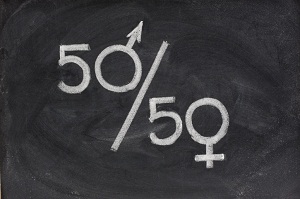 The state of Washington has been working for several years to change the language in its laws to gender-neutral terms. If legislation passes as expected, no longer will there be penmanship, freshmen, and watchmen. Instead, Washington will have handwriting, first-year students, and security guards.
Several other states have followed suit, with about half making moves toward gender-neutral language. Such language is often lampooned as politically correct and excessively burdensome, but research shows that language affects perceptions. Perceptions, in turn, affect behavior, and using gender-neutral language can be a meaningful move toward gender equality.
The Pervasiveness of Gendered Language
Gendered language is so common that it’s difficult for some people to even notice it. From job postings to laws, words such as policeman, councilman, mankind, and fireman abound. This omnipresence of gendered language may be part of the problem. When people stop noticing gendered language, it’s easier to think of male as the default. People who do a double-take when they see words such as policewoman or police officer may be doing so because there’s an incongruence between what their expectation of a police officer is—a male—and the possibility of a woman filling the role. The more frequently gendered language occurs, the more likely it is that people develop male as the prototype for a particular role.
This can affect a wide range of behaviors and lead to subtle biases. A company that posts a job seeking an ombudsman, for example, may envision a male in the role because of the use of gendered language. This can give women a slight disadvantage when they seek out the job because women applicants don’t completely match the hiring manager’s vision for a future employee. The person in charge of hiring may never even be aware of this subtle bias, but this doesn’t mean it’s not there.
Effects on Women
From the time they’re children, women experience an onslaught of gendered language, and this can subtly alter their perceptions of themselves. Even women report that their prototype of police officers and firefighters is male, and this may be due in part to gendered language.
Gender conditioning can affect the choices men and women make, and when women grow up learning that they’re not the ideal image of a particular role, their options are limited.
Male as Default
The use of terms such as mankind is particularly problematic because it treats men as the default. When “man†is used to refer to “all of us,†women are completely excluded, even if the term is intended to be gender-neutral. Thus, men are established as the norm against which everything is judged, and women are treated as deviant from this norm.
Real-life examples of this can be found in the long-time medical practice of using only male research subjects—a practice that has changed over the past few years.
Setting an Example
While gender-neutral language can seem frustrating and cumbersome at first, this is primarily because it’s new, not because there’s anything particularly onerous about its use. When states establish gender-neutral language, they help this language become part of the common lexicon and set an example demonstrating that gender-neutral language is just as easy to use as gendered language.
References:
- Carmon, I. (n.d.). The effects of gendered language in job ads. Jezebel. Retrieved from http://jezebel.com/5803238/the-effects-of-gendered-language-in-job-ads
- Lacorte, R. (2013, February 3). State moves toward gender-neutral language. The Seattle Times. Retrieved from http://seattletimes.com/html/localnews/2020282616_genderneutralxml.html
- Leaper, C., & Bigler, R. S. (2004). Gendered Language and Sexist Thought. Monographs of the Society for Research in Child Development, 69(1), 128-142. doi: 10.1111/j.0037-976X.2004.00283.x
For decades, research addressing the mental health of gay men has grouped bisexual and gay men together. This is a disservice to the LGBTQ community, and to bisexual men in particular. There are significant differences in behavior, identity, and attractions between gay and bisexual men. While gay men are attracted to other men and identify as homosexual, bisexual men can be attracted to either sex. And although it has been shown that disclosure of sexuality is beneficial to mental health for gay and bisexual men, bisexual men are more likely to conceal their sexuality than gay men. Therefore, they report lower levels of psychological well-being. This could be due to the fact that many bisexual men are in committed relationships to women and are torn between their desire for that relationship and their attraction to men. Or perhaps bisexual men are at war with their own homophobia.
To explore why bisexual men do not reveal their sexuality as often as gay men, Eric W. Schrimshaw of the Department of Sociomedical Sciences at the Mailman School of Public Health at Columbia University in New York recently conducted an online survey of 203 bisexual men. He asked them about their levels of social support, mental health, internalized homophobia, and general demographics. He found that the men with the highest incomes were most likely to conceal their sexuality. This was also the case for men in committed relationships with women or those who identified as heterosexual. Concealment was also associated with more frequent female sexual encounters for bisexual men. Overall, the men that concealed their sexuality had poorer mental health than those who disclosed their sexuality.
Schrimshaw believes that these findings underscore the delicate nature of sexuality for bisexual men. Internalizing homophobic beliefs and lack of emotional support may be more dangerous to the psychological well-being of bisexual men than concealment alone. However, concealment can indirectly affect those domains. Although disclosure appears to be beneficial for gay men, this may not always be the case for bisexual men. Rather than interventions that focus on encouraging men to disclose their bisexuality, “Interventions addressing concerns about concealment, emotional support, and internalized homophobia may be more beneficial for increasing the mental health of bisexual men,†said Schrimshaw.
Reference:
Schrimshaw, E. W., Siegel, K., Downing, M. J., Jr., and Parsons, J. T. (2012). Disclosure and concealment of sexual orientation and the mental health of non-gay-identified, behaviorally bisexual men. Journal of Consulting and Clinical Psychology. Advance online publication. doi: 10.1037/a0031272
Family therapy can help families and couples overcome challenges with interpersonal relationships. Many issues that families and couples face become volatile and hostile without the help of learning how to constructively communicate and problem-solve. Relationship issues do not discriminate, and people of all cultures and races are vulnerable to family conflicts. This does not mean that people of every ethnicity embrace family therapy equally. In fact, African-Americans are far less likely than white people to seek out therapy for family problems. The reasons for this are many, and could include limited access to care, financial restrictions, mistrust of mental health professionals, and fear of stigma associated with counseling.
Cadmona A. Hall of the Marriage and Family Counseling Center at the Adler School of Professional Psychology in Illinois wanted to examine the specific barriers preventing African-Americans from seeking treatment. In a recent study, Hall interviewed nine participants and found that stigma presented the biggest obstacle to treatment. Resilience was the most common personality trait that helped the participants overcome the stigma. Hall believes that African-Americans are more likely to be resilient, having had to surmount the atrocities of slavery and the injustices of discrimination. This ability to overcome could have been an underlying force that led the participants to seek out help despite the barriers.
Hall also noted that eight of the nine individuals in her study were affiliated with the college where the counseling clinic was located. Having knowledge of and access to the services could have increased the willingness in this sample of participants. Another appealing aspect of the university clinic was the sliding fee scale, which was cited as a very beneficial aspect. Mistrust, which was listed as a barrier to treatment seeking, was addressed when the participants realized that their sessions were confidential and they felt comfortable enough to build rapport with their therapists. This was critical in setting them at ease and ensuring they would return to complete therapy. Although the sample size used here was small and lacking diversity, it was able to provide insight into the factors that prevent African-Americans from seeking out therapy. “As clinicians increase sensitivity and understanding of the unique features of African-Americans, they will have an increased ability to engage that population in therapy and increase quality of care,†Hall said.
Reference:
Hall, Cadmona A., and Jonathan G. Sandberg. “We shall overcomeâ€: A qualitative exploratory study of the experiences of African-Americans who overcame barriers to engage in family therapy. American Journal of Family Therapy 40.5 (2012): 445-58. Print.
People who are discriminated against cope with that discrimination in various ways. Although some cope adaptively and use strategies that are constructive and empowering when they are faced with adversity, others turn to maladaptive coping mechanisms. One such mechanism is the use and abuse of alcohol and drugs. Racial discrimination has been shown to be related to increased drug and alcohol use, but has not been proven to be the cause of the increase. So why is it that some people use alcohol and drugs to cope while others do not? Meg Gerrard of the Norris Cotton Cancer Center at Dartmouth Medical School in New Hampshire wanted to explore this question further. In a recent study, Gerrard looked at whether people used drugs/alcohol as a method of coping consistent with their habitual coping strategies, or if they believed that substance use would decrease their feelings of stress and negativity stemming from the discrimination.
Gerrard conducted three separate studies designed to elicit feelings of discrimination among a sample of African-American adolescents. In her third study, she followed the level of substance use for eight years to determine the long-term influence of the discrimination-use relationship. She found that the participants who felt that substance use was an acceptable way to cope with problems were more likely to use drugs/alcohol when they felt discriminated against than those who did not endorse substance use. Over time, the results revealed that those who did support substance use as a method of coping continued to use drugs/alcohol throughout adolescence and into early adulthood, while those who never supported this belief did not. These findings suggest that adopting substance-use behaviors early on can lead to long-term maladaptive coping strategies for some individuals.
The findings from this study were gathered only from African-American participants. Future work should look at the coping-discrimination dynamic among other minority individuals, as evidence exists that prejudice and discrimination increases stress across all ethnicities. Gerrard noted that one domain that was not examined in her study was the effect of parental support. When parents teach their children how to handle stressful situations prior to their occurrence, children have a better chance of dealing with challenges such as discrimination in productive and adaptive ways rather than trying to relieve the stress with drugs or alcohol. Research should explore the buffering effects that family and parental support can have on this segment of the population. Until then, these studies demonstrate that acceptance of maladaptive coping strategies can increase negative behavior in people facing discrimination. “The current studies also provide evidence that use-as-coping is not caused by discrimination—instead, it increases the relation between discrimination and subsequent substance use,†Gerrard said.
Reference:
Gerrard, Meg, Michelle L. Stock, Megan E. Roberts, Frederick X. Gibbons, Ross E. O’Hara, Chih-Yuan Weng, and Thomas A. Wills. Coping with racial discrimination: The role of substance use. Psychology of Addictive Behaviors 26.3 (2012): 550-60. Print.
 Depression makes it difficult to function in daily life, but adding discrimination to the equation makes it even more troublesome.
A new study in the journal The Lancet stated that out of the 1,082 adult participants with major depressive disorder, 79% reported that they have experienced discrimination. People who experienced discrimination while depressed had more depressive episodes, social difficulties, and issues finding and keeping a job. They also were less likely to reveal a diagnosis of depression.
These results suggest that more works needs to be done in the area of preventing discrimination and eliminating stigma. Discrimination can prevent people with depression, who may be worried about disclosing their diagnosis, from getting the help they need. While getting a job and growing social networks can help fight depression symptoms, those pursuits become more challenging in the face of discrimination.
How, specifically, does discrimination affect people with depression? How can the general public be more understanding? And what options do people with depression have? Mental health experts and other professionals have some answers.
Dr. David Sack, CEO of Elements Behavioral Health and Promises Treatment Centers, said by email that sensitivity toward people with depression often is lacking.
“The most common example has to do with intolerance toward peers/friends/relatives that comes from not understanding that depression is a disease that the individual cannot simply will themselves out of,†he said.
Sack said a supervisor might question an employee’s motivation and commitment due to symptoms of depression, even if those symptoms don’t reflect how the employee really is.
“How often have we heard that this or that person claims that they are depressed just so they can get time off from work or won’t have to take responsibility for mistakes they’ve made?†Sack said.
Although many people know the basics of depression thanks to widespread awareness initiatives, prejudice, bias, and stigma still are rampant.
Viola Drancoli, a clinical psychologist, said in an email that friends and family members of people with depression might exhibit discriminatory behavior with them because they may feel drained from being around someone who expresses sadness, pessimism, irritability, and a lack of motivation.
This could push someone with depression into isolation. A person with depression might prefer being alone so he or she doesn’t have to attempt to hide feelings from others.
“The social isolation often starts a vicious cycle in which the (client’s) negative outlook on life is reaffirmed, they feel let down by family and friends, and symptoms may worsen,†Drancoli said. “This is especially dangerous for individuals who have suicidal ideations and need support and monitoring.â€
Drancoli said it’s important for family and friends to be supportive. She suggests volunteering to help out with chores that might be difficult for someone with depression to complete when he or she is struggling to function, as well as patiently listening without judgment. Loved ones can gently encourage a person with depression to exercise as well, as this has been shown to boost mood.
People with depression who believe they have been discriminated against have the law on their side. Sack said that discrimination against people with any disabilities, including mental issues such as depression, is forbidden by the Americans with Disabilities Act. The civil rights law, enacted in 1990, defines disability as “a physical or mental impairment that substantially limits a major life activity.†Some states have additional laws against discriminatory behavior.
“An individual who is concerned about discrimination at work will want to speak with their supervisor or the director of human resources first,†Sack said. “Most companies have strong policies to promote fairness and nondiscrimination.â€
Justine Lisser, a senior attorney advisor in the Office of Communications & Legislative Affairs at the U.S. Equal Employment Opportunity Commission, said by email that if an employer has at least 15 employees, it must abide by the ADA. Employers need to provide “reasonable accommodations†for people with disabilities, as long as the employer isn’t deeply burdened as a result.
“For example, if a person with depression is hired for a position that requires an 8 a.m. start time, but due to the effects of (antidepressant) medication the person could not start until 10 a.m., it would be a reasonable accommodation to permit the employee with depression to start at 10 a.m., assuming that it would not cause an undue hardship for the employer,†Lisser said.
The EEOC has successfully enforced employee discrimination laws in a few cases involving people with mental health issues. In one case, a sales associate at a video retailer experienced harassment because of his social anxiety disorder and depression. His employer was ordered to pay $70,000 to settle the discrimination suit, according to an EEOC press release from March 2012.
 How many times have you found yourself in the situation of being worried or anxious about sharing a part of yourself with others? Too often we’re forced to choose one part of ourselves that we want to share over another part that might be equally as important. This can be extreme or subtle.
For example, teenagers who are both gay and Christian might feel like they can’t be both at the same time. These conflicting identities create a bind for them. At church the young person might be given a very direct message that being gay is wrong. For these teens they know that if they want to celebrate their Christianity with their community, they need to pretend to be straight. Gay community can be equally as complicated. After years of oppression from churches many people who are gay, lesbian, bisexual, transgender, or queer have struggled with Christianity. In this situation these teens might not feel able to express their strong religious beliefs within the gay community. For them, there is no place where they feel totally accepted, totally themselves. This example of split identities is very clear; however, sometimes the ways in which we’re forced to hide parts of ourselves is much more subtle.
In my work, I frequently find men who are struggling with a conflict of identity around gender and gender role. What happens when a straight man has interests or beliefs that are labeled as feminine? For example, if he doesn’t want to fight or he prefers conversations with women over watching sports with men. In our culture there is an assumption that men are going to act masculine. Often men are forced to hide parts of their identity that are not seen as masculine enough. This identity bind is much more subtle but still painful.
We face situations like these every day. Our identities have many facets including our ethnicity, race, religion, and sexual orientation as well as other ways we define ourselves, such as pacifist, good listener, or caregiver. Each of us has parts of our identities that we feel comfortable sharing with strangers and other parts that we only want to share with friends. There are things we are proud of and things we are ashamed of. Our identities are multidimensional; they have many layers and many meanings. Sometimes these identities are hierarchical, and one identity may be more important than all of the others. Understanding what our own multidimensional identity looks like can help us in those moments when not sharing our full self makes us feel invisible.
How do you introduce yourself to someone new after you tell them your name? In the United States we often use our professions to describe who we are to other people, “I’m a teacher/lawyer/electrician/therapist/writer.†As a culture we put a lot of value on employment and jobs, so much that sometimes our jobs become our identities. If you could describe yourself to a stranger as something other than your occupation, what would it be? Maybe it would be a description of an important relationship, such as “I’m a dad/mom/sister/uncle/grandma.†These are only two ways in which we might identify ourselves.
Take a moment and list the first five of your identities that you can think of. What made the top five? Are you surprised at any of the ones that are there? Are there any identities missing that you wish were on that top five list? And are there any identities on your list that you have felt you need to hide?
Being proud of ourselves is often much harder than it sounds. We live in a world filled with expectations, some spoken and some unspoken. But just because a part of our identity can’t be seen does not mean that it’s not there. It does mean that you might have to work a little bit harder to give it it’s time in the sun—to find a safe space to share the parts of you that feel invisible. Finding these spaces is an important step towards integrating our identities and feeling whole.
Related articles:
Gender Rules: How Does That Make You Feel?
Learning How to Support Gay Students
The Tiger Hunter
Racism and prejudice are issues that are at the forefront of social concern today. Ethnic differences are causing riots, uprisings, and loss of life in nations throughout the world, including our own. Classic conditioning is a theory that suggests that individuals learn racism and prejudice through exposure to events by either experiencing them personally or observing them. Once a perspective is formed, it can be reinforced through continual verbal, visual, or actual cues. For instance, a person who has a fearful encounter with someone from another race may later see others exhibit fear, thus reinforcing their opinion and prejudice of that race. Likewise, this effect can be reversed if this same person goes on to experience positive situations with people of the other race. Either way, discrimination and prejudice are learned at a very young age and unless it is reversed, can lead to significant stress and anxiety. People who are discriminated against based on their religion, race, or sexual preference often face obstacles in many areas of their lives. Finding a career, a job, or school can be a challenging experience for people who are faced with prejudice and discrimination.
To identify how different ethnic groups learn racism and how it is perceived across different races, David Rollock, Associate Professor of the Department of Psychological Sciences at Purdue University, recently conducted a study involving participants who were African American, White, Asian, and Hispanic. The 282 participants ranged in age from 17 to 61 years old and responded to a questionnaire that asked them about their experiences with prejudice. They were instructed to report their emotional responses to various interracial encounters, positive and negative.
Rollock discovered that the White participants had the strongest negative emotions as a result of bad interracial experiences, while other races experienced lower levels of negativity. The findings also showed that Whites reported fear as the most common response to negative interracial experiences, regardless of whether they were verbal, observed, or physically experienced. Whites and African Americans had similar levels of anxiety, but these levels were much lower than levels found in the Asian and Hispanic participants.
Although all the participants exhibited anger as a result of interracial experiences, it was minimal. Rollock also found that some of the participants had positive interracial experiences that decreased their prejudice, but the effect was minimal. Rollock added, “Interestingly, people from different ethnic and sex groups did not appear to ‘learn’ their adverse race-elicited emotions in different ways, suggesting that strategies that build or reduce adverse race-elicited emotion for members of one group should be similarly effective with other groups.†This finding could help clinicians who are dealing with victims and perpetrators of racial intolerance. By understanding that the mechanism that leads to prejudice and racism is similar across all races, mental health professionals should be able to help most people overcome these obstacles, regardless of their ethnicity.
Reference:
Conger, A. J., Dygdon, J. A., Rollock, D. (2012). Conditioned emotional responses in racial prejudice. Ethnic & Racial Studies 35.2, 298-319.