 Play therapy has become a very important element of my work with families and children. In this article, I hope to give you parents some idea of how powerful play can be as an intervention as well as some ideas of how to utilize play with your own children.
Play Therapy at Work
It is Father’s Day as I write this article and I am reminded of one particular case where play therapy had a profound impact on a family. This family had a child with severe autism. They were unable to manage him at home and he was living at the residential treatment facility where I worked. The child in question was very routine-oriented, and he had an extremely restricted range of activities in which he would engage. If he wasn’t repeatedly watching small snippets of Disney videos, he wasn’t happy.
[fat_widget_right]
To make matters worse, if he wasn’t happy, he tended to throw tantrums, or hit and bite those around him. As a result of these behaviors, not only could he not live at home, but the family was challenged to even have him home for short visits. They had to put the entire house on lockdown to prevent their son from wandering away, and at least one of them had to take time off of work to stay up all night to supervise their son.
When this child came onto my caseload, another therapist and I decided we wanted to work with the family to improve the quality of their interactions with their son and make their time together less stressful and challenging. We decided to use a therapy called Theraplay to accomplish this. We did several sessions with the child in which we exposed him to various new activities. We made note of what he liked, what he disliked, and what he just didn’t seem to get (but didn’t hate).
We expected to see a lot of behaviors due to the change in routine, but that wasn’t the case. We quickly found that there were a number of activities that the child seemed to enjoy. Furthermore, we found that a number of activities that he didn’t understand at first he learned and started to enjoy in subsequent sessions. Pretty soon, we had a list of about 20-or-so activities that required minimal material (about $20 of stuff from the dollar store) that he enjoyed. We could easily keep the child happily engaged for over 30 minutes at a time.
We then started doing sessions with the family at their house. First, they watched as we played with their son. Then we started showing them how to do the games. During the course of this session, we were demonstrating a modified version of catch. The child tended to want to catch the ball when thrown to him, but would then walk over and hand the ball back to us instead of throwing it. We learned that playing catch over a table got the child to actually throw the ball back.
As we were demonstrating this, he started throwing the ball to his dad and playing catch with him. Dad immediately started tearing up. He said, “This is the first time I’ve ever had a catch with my child.” There was not a dry eye in the room after that. What father doesn’t want to have a catch with his son? Imagine having to wait 17 years to make that happen. It was an unexpected, but awesome outcome of our therapy.
The Importance of Play in Development
Play is one of the fundamental ways in which children learn. Through play, they learn to how to connect or form secure attachments to others. The quality of the relationships children have growing up will impact the quality of the relationships they form as adults. So it stands to reason that good, quality play as a child can lead to quality relationships in adulthood.
Through play, children learn how to self-regulate. We get excited as we play games with each other, but then we learn how to self-calm and soothe to continue to excel at the games we play. We learn when it is appropriate to get excited and when we need to calm. In fact, I find that using play with children who have problems with regulation is a fantastic way to teach them impulse control and self-control.
Finally, through play, we learn how to socialize. We learn such things as taking turns, cooperation, and competition. We learn about rules and creativity. Through play we develop the basic skills that allow us to navigate the challenges that life presents us. Kids who don’t play are often at a great social disadvantage compared to kids who play.
Guidelines for Play
Ok, so play is important. However, the best play has some structure. To maximize the impact of play on your child’s behaviors, here are some basic guidelines to follow.
- Play with your child. When engaging in play, do things that involve interaction between you and your child. It’s not enough to simply be in the room (what I call proctoring). It’s great to sit with children as they do a puzzle, but it’s better to do the puzzle with them. You want to promote that social-emotional connection with you. You want to make yourself a source of never ending reinforcement in your child’s eyes. So, do activities that promote things like touch and eye contact (something the typical child with autism might be struggling with and need practice to do or tolerate). Make the time your child spends with you silly and fun; watch how your child positively responds to you in other situations.
- Keep it simple and developmentally appropriate. Make sure the activities you do with your child are geared towards their mental and emotional age. In the example at the beginning of the article, even though the child was 17, he enjoyed things like holding hands, rocking, and singing “Row Your Boat.” He enjoyed the sensory nature of the rocking, as well as the familiarity of the song. Other teenagers might enjoy singing and dancing with you to music they like. Again, focus on enhancing the connection between yourself and the child.
- It’s ok to be silly (in fact, it’s recommended)! The games I play with my kids (at home and at work) aren’t complicated. In fact, on the face of it they are pretty silly. I find that even with more resistant, morose children, silliness draws them in. There’s something about being silly with someone else that just brings down defenses. Besides, taking time to relax, laugh, and be a little silly is FUN! It’s a marvelous way to spend some time.
- Inexpensive is better! It’s very easy to spend a lot of money on toys. Heck, expensive toys can be great (I adore my Xbox). but for the types of interaction I’m thinking about, expensive toys are unnecessary. Blowing a feather back and forth, blowing bubbles, playing clapping games, or playing “red light, green light” require very little in the way of materials. Be creative and see what kinds of things are sitting around your house and look to those for inspiration. Have you ever seen a young child at Christmas? They open up all their expensive presents and spend most of the time playing with wrapping paper and boxes. Tap into that instinct with your child and you will be well on your way to successful play.
Ways to Use Play Therapeutically
Here are some more ideas on how to structure play sessions with your child to get specific results.
Planned sessions to increase engagement: While my usual play style is typically to improvise with whatever is at hand and make things up as I go along, I find that planning out sessions can be helpful when trying to engage with a child. I simply make a list of 5 to 10 activities that I want to do before I do the session and try to at least get through those. I make note of what activities seemed to get the child to respond positively to me so I can use them again later. If I don’t do this, I tend to more easily get shut down by the child if he/she doesn’t immediately engage with me. I focus on activities that promote touch, eye contact, and positive sensory experiences. Good examples are singing/clapping games, blowing up a balloon while the child holds the balloon, and blowing a feather back and forth between your hands and the child’s hands.
Repeated sessions to increase skills: If I am trying to help a child acquire or improve a skill, then I want to focus on repeating activities between sessions instead of changing things up frequently. Repeated exposure is good for skill acquisition. For example, I often use play to teach deep breathing through things like blowing bubbles, singing, and a game called “monkey ride” (in which I put a stuffed monkey on the child’s belly and then have him take a deep breath in and give the monkey a “ride” up to my hand which I place a couple of inches about the monkey’s head). I will repeat these games and variations of them through several sessions until the child has mastered belly breathing.
Short sessions for planned breaks from difficult tasks (The head cooler): When a child gets upset, frustrated, or anxious during specific situations, play can be a great way to manage this. For instance, a lot of my kids have problems around homework. They get upset if there’s too much, or if they don’t understand it. Some can’t make themselves take a break before the homework is complete. These children then get so upset they couldn’t do the work even if they wanted to. The poor parents are stuck not only trying to calm an upset child, but also facing daunting task of getting the child to return to finish the dreaded homework. Hours of this every night can be a major stressor for the whole family.
To counteract this, I suggest trying many short spurts. The parent works with the child to do homework, but also watches the child for the initial signs of agitation, frustration, or upset. As soon as the parent or child notices those signs, they take a short break. During the break, they spend just a few minutes doing something fun and silly (no video games or other major distractions). The goal of the activities is to allow the child’s head to “cool off.” Once calm, the child returns to the homework with a clear head. Families that have been successful in doing this find that not only are there fewer fights and tantrums around homework, but that more homework is getting done in less time.
The bottom line is that play is important. The more challenges you face with your child, the more important it is to put time aside every day to have some positive interactions. Be silly and have fun. Please share in the comments section your ideas for play or any questions you might have. In the meantime, play more with your kids and remember to BREATHE. You’ve got this!
Play therapy is widely recognized as an effective therapeutic approach for children who are unable or unwilling to communicate their psychological distress. Elementary-aged children represent an especially vulnerable segment of the population when it comes to mental health barriers. First, it is during these formative years that behavior patterns are set. Children who have psychological problems early on tend to have higher rates of substance misuse, aggression, risk-taking behavior, and academic challenges than their peers. Additionally, many young children who have attention-deficit hyperactivity disorder, obsessive compulsive disorder, posttraumatic stress, autism, or other difficulties may have significant academic challenges and can benefit greatly from effective and meaningful in-school therapy.
But believing in the viability of play therapy and delivering it are two different things. Many school counselors report significant barriers to play therapy. Christine Ebrahim of the Department of Counseling at Loyola University in New York wanted to take a closer look at the barriers that counselors faced and how they overcame them. Ebrahim enlisted 359 elementary school counselors from the American School Counselor Association and had them complete online surveys regarding barriers to play therapy. The participants reported barriers such as time, space allocation, financial resources, and administrative and parental support. However, nearly all the counselors who cited these obstacles also described how they overcame them. For instance, they used their own money for supplies when they could not get funding, moved sessions to alternative locations when space was limited, and provided education about the benefits of play therapy when administrative and parental support was lacking.
One barrier was more difficult to surmount: the limited availability of play therapy training. “In looking at the data, most counselors identified specifically a lack of training as their primary problem,” Ebrahim said. Play therapy courses are not part of the curriculum at all colleges. Therefore, counselors are forced to learn through textbooks or online, or they must pay for training out of their own pockets. These results are promising in that they suggest that counselors are willing to do whatever it takes to offer play therapy to students in need. However, Ebrahim believes the findings clearly demonstrate that elementary school counselors are in desperate need of more professional play therapy training.
Reference:
Ebrahim, C., Steen, R. L., Paradise, L. (2012). Overcoming school counselors’ barriers to play therapy. International Journal of Play Therapy. Advance online publication. doi: 10.1037/a0029791
Play is an important part of a child’s development. It enables them to engage creativity and learn necessary social skills. Children are often introduced to concepts like sharing, taking turns, and working together when they participate in group play. This critical time of development allows children to learn how to practice patience, empathy, and other necessary social skills. Although the research on play has demonstrated the many benefits, such as creativity and emotional maturity, few studies have looked at how creativity exhibited through play affects storytelling and divergent thinking, two aspects that further emotional regulation and enhance psychological development.
To address this, Jessica Hoffman and Sandra Russ of the Department of Psychology at Case Western Reserve University conducted a study involving 61 young girls in kindergarten through fourth grade. The team used the Affect in Play Scale to assess the girls’ mood processes and cognitive behaviors as they construed narratives. The researchers also relied on parent reports to measure emotional regulation and evaluated the girls for divergent thinking abilities throughout the task. They found the pretend play allowed the girls to express creativity that directly increased their divergent thinking abilities. The creative play enhanced storytelling skills of the participants and allowed them to express high levels of emotional regulation. The team also explored how executive functioning was affected by creative play but found no relationship.
Hoffman noted that the participants in this study were typically performing young girls and believes that additional research on clinical and nonclinical participants would further add to the limited literature on the many positive influences of pretend play. She said, “Overall, results of this study are promising with regards to the associations between pretend play and other important life skills for children.” With play therapy and other creative approaches receiving more attention in recent years, understanding the forces behind these often successful treatment methods is vital for clinicians interested in using these techniques.
Reference:
Hoffan, J., Russ, S. (2012). Pretend play, creativity, and emotion regulation in children. Psychology of Aesthetics, Creativity and the Arts 6.2, 175-184.
Dyadic play therapy is a form of play therapy that allows parents who have themselves suffered trauma, the opportunity to address their own symptoms and attend to the strained attachment with their child. But very often, the parents are resistant to this form of treatment. “For adult survivors of childhood trauma, psychotherapy can be both necessary and highly threatening,” said Mirisse F. Foroughe and Robert T. Muller of York University. The researchers authored a paper that explains the obstacles and benefits to dyadic play therapy. “The conditions and processes of dyadic play therapy may be experienced as threatening to parents by triggering early memories of intra-familial trauma while challenging avoidant defenses. Yet these very processes may be helpful in facilitating therapeutic change.”
Parents with traumatic childhoods may see the tools used by their children in play therapy, such as toys and artwork, as triggers for their own pain and may experience overwhelming and frightening memories and emotions. “Dyadic play therapy, with its focus on parent-child attachment, tends to activate the attachment system, making the process of therapy especially challenging for those who are much more comfortable closing themselves off from painful relational experiences.” The authors advise clinicians to realize this and take the necessary steps to be prepared for varying reactions from parents.
Several components of play therapy can prevent progress for parents. “In contrast to individual psychotherapy, the dyadic condition also inherently places the parent in a position of vulnerability, in part because they are ‘under the spotlight’ as a parent but also because, with the child present, the parent cannot dismiss attachment-related issues as readily.” However, they added that the benefits of this type of therapy can be enormous, for both the child and the parent. They said, “The pattern of interactions between parent and child often brings the parent’s own trauma history to light, and, with the acceptance and support of the therapist through this process, the parent can then become an agent of change in the parent-child relationship.”
Reference:
Foroughe, M. F., & Muller, R. T. (2011, March 28). Dismissing (Avoidant) Attachment and Trauma in Dyadic Parent-Child Psychotherapy. Psychological Trauma: Theory, Research, Practice, and Policy. Advance online publication. doi: 10.1037/a0023061
Play is serious business!
–Caitlin ‘Cake’ Gateaux
I was asked by the US Play Coalition research committee to collect personal statements about ideas and beliefs that are connected to the question, what is play?
How we define play and its value is shaped by many personal, historical, and cultural influences. Darell Hammond, in his recently published book, KaBOOM! How One Man Built a Movement to Save Play, writes about the reality of a play deficit in our communities. He calls on those of us who recognize the value of play (and there aren’t enough of us out there, he says) to take action steps that will lead to a greater recognition of play’s value while brightening each child’s life and create playful communities for all ages no matter where we live. (more…)
 Without playing with fantasy, no creative work has ever yet come to birth. The debt we owe to the play of imagination if incalculable.
-C.G. Jung
Jung wrote about the need for finding and living our myth, our story, as he grew older, he wrote his most important works and found his own unique ways to play. We need new stories that weave playfulness, gratitude, and compassion for self and others. Re-writing your myth or story can help you understand more fully your core values. Your story reflects your uniqueness and the many gifts you have to offer others. If you fully expressed your values, how would others see you? Would it change your life in some way?
A life story re-told:
Playful Kingdom
A little girl sat reading alone and wistfully looking out the window of her bedroom –dreaming, flying to places far beyond the confines of her sanctuary. She spent as much of her time as possible outside playing—skipping, riding her bike, walking and exploring, traveling by bus around the local area, dancing and choreographing shows on the spot for the neighborhood, creating puppets, puppet shows, and theatre, observing animals and recording their behavior, making lists of local plants, and gently tending and feeding them.
When it was time to come inside, the little girl would walk up the stairs to her room and settle in for a long read or daydream or she would travel by foot to a community building in her neighborhood where she could read and even borrow books whenever she liked.
She flew out her window whenever her Spirit wanted to soar beyond the earthly bound. Her visits to various realms allowed her to remain playful in her own kingdom where life was not always easy; a large part of her kingdom was at war with itself. The little girl’s imagination, dreams, and playfulness provided her with the needed support and fearlessness to move forward.
She listened to her dreams, acted, and found she wanted more of life. Her dreams brought her news that led her down many paths both harrowing and heart-y. Because she never left her playfulness behind, the little girl’s dreams provided a landscape to travel in and return to as she wandered earth. Many fellow travelers dismissed dreams and their own unique natures in favor of others’ visions for them.
The little girl grew in power and authority. She began to blend her own unique vision with what she had learned from her teachers about dreams and their importance in creating a playful life filled with meaning.
She married and became Queen to her King. Her children and grandchildren thrived and played. Each morning dreams were told and listened to, reflected on, acted upon for the benefit of all.
Dreams foretold of changes big and small for the Kingdom. Masterful communication secured peace. Instead of fighting or retreating as in past conflicts the Queen, her King, and past foes stood shoulder-to-shoulder and met for the first time. Foe became friend. A playful path of risk-taking and foolishness replaced a deep ravine.
Now that you have read one woman’s personal mythology, I invite you to write your story in any way that feels right to you.
Some ways to get started:
- Re-write a favorite children’s book story or nursery rhyme and write yourself in as the lead character.
- If you keep a dream journal, open one of your journals and see what dream finds you again. Re-write the plot, scenes, characters, location, and conflict in the dreamscape and see what happens.
- Change the lyrics to a favorite song and add lyrics that tell the story of your life’s journey. See what happens as you play with the words, rhymes, and melody.
Questions for you to consider as your write your story/myth:
- What is your story or myth?
- What have been your struggles?
- Have you celebrated your transformations?
- Are you shedding your skin or thickening your woolen coat?
- Who are your supporters?
- What do you fear?
- What do you easily move toward?
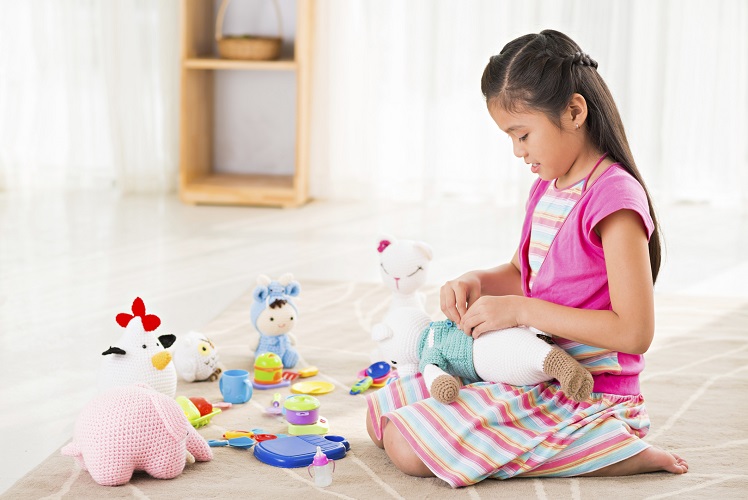
During therapeutic play with children, therapists watch, listen, and interact during moments when a child may be giving voice to images, emotion, and story.
“Image” implies an object or person of attachment from the child’s past, “emotion” implies feelings from past relationships or that the child may be feeling in current relationships or in the moment, and “story” implies the coming together of a narrative that all children accumulate piece-by-piece over time.
As children work to make sense of their world, they often try on different ways to communicate meanings, experiences, and identity. Usually this work occurs in the context of ongoing parent-child relationships, through the form of brief questions and conversation, and meaningful experiences over years and years.
Sometimes a child’s context, when tumultuous, unpredictable, and even harmful, can deter such work and leave a child with only collected fragments of identity. Those fragments may be confusing and contradictory and may leave a child without the confidence that comes through securely attached relationships with caregivers.
Sandplay therapy and other forms of therapeutic play, both directive and nondirective, are tools in a process of nurturing more secure attachment bonds with caregivers and beginning a journey of co-construction of identity.
[fat_widget_child_counselor_right]Take, for instance, a child who, after experiencing chronic abuse or neglect, begins to settle into a supportive family who can provide consistency and nurturance. Oftentimes families are surprised when a child responds to all their outpourings of love and support through varying modes of ambivalence or avoidance. In these cases, it is not only the child, but also the adults who have a tremendous amount to gain from experiencing the child’s underlying anxiety in a therapeutic context, deriving new, more positive and safe experiences, and working together to develop a new approach and a new narrative to coincide with it.
As therapeutic play facilitates relationship-bonding and identity co-construction with caregivers, volatile survival-oriented behaviors often decrease. The words of Susan Johnson, a leading proponent of emotionally focused therapies, ring in my ears: “Emotion must replace emotion.”
A caring, creative, and collaborative approach assists such children and their families—and in the cases of adoption, their new families—in launching a journey of defragmentation, meaning-making, and identity formation that may have for years been delayed by a focus on more primal needs.
Over time, caregivers have opportunities to become more involved and less involved in the child’s play as it feels comfortable to them and to the child.
As children participate in sandplay therapy, I make a point to remain only peripherally engaged in their play, allowing them to take control of their play worlds with minimal interference. I often mirror the degree of participation of caregivers in the room. Over time, caregivers have opportunities to become more involved and less involved in the child’s play as it feels comfortable to them and to the child.
These new fragments of experience and exploration, in the safe presence and amidst dialogue from caregiver(s) and counselor, are building blocks in this co-construction of identity. Images, emotion, and story can emerge in unexpected ways and at unexpected times.
Much of the work of this co-construction is already occurring by this time in the context of a new, safe, and more predictable family home environment. The families supporting these children should be encouraged by signs that emotional and social development is roaring down the tracks once again, much due to the fuel of their care and affections.
Recommended Reading
Gil, E. and Sobol, B. (2000). “Engaging families in therapeutic play.” In C.E. Bailey (Ed.), Children in Therapy: Using the Family as a Resource. NY: W.W. Norton & Company.