 “That’s so Zen,†people say, meaning peaceful, accepting, and soothing. But what is Zen, exactly? You might picture a room filled with fluffy pillows decorated in blues and grays, lavender incense, and synthesizer sound waves punctuated by gongs. I’d probably like hanging out on those pillows, but Zen is much more than relaxation. It’s a way of life emphasizing the value of meditation and intuition, and realizing one’s true nature—the purpose of Zen.
We complain about stress, about losing ourselves in the hectic din of constant activity, always on the go, busy, and in touch. We even sleep with our phones kept handy on the nightstand, so we can be available 24/7. That is too much stress, but stress is not only a bad guy, it’s a good guy, too, often supporting growth.
[fat_widget_right]
Think of how stress helps in the gym. Muscles get bigger with resistance training—which is a form of stress (on the muscles). “No strain, no gain†and “use it or lose it†are popular refrains, but we have to find the optimal amount of strain that promotes growth. We need to work those biceps with the proper weight. Too much will tear our muscles, and too little will leave us with spaghetti arms. This is where a trainer in the gym, or a meditation teacher, a spiritual leader, or a psychotherapist, can come in handy, making sure that the stress you’re experiencing is optimal, be it physical, cognitive, spiritual, or emotional. We need to balance stress and relaxation.
Zen practitioners develop a sense of balance, as well as simplicity, order, and harmony. Right diet, regular exercise, enough sleep, right livelihood, and mindfulness activities such as meditation, yoga, prayer, and other techniques help us recover from too much stress. When we quiet the mind and the body, we have a better chance of finding the true self. That’s the goal of Zen—finding the deep self, who you really are, a key to a more rewarding life, and why psychotherapists often include meditation techniques as part of their treatment plan, although it is not a replacement for psychotherapy.
Zen is a peaceful way of life which avoids killing or harming another living thing, shuns stealing, promotes sexual responsibility, and practices truthful speech that does not hurt anyone. Drinking and drugging, anything that diminishes consciousness, is to be avoided. The Shakyamuni Buddha simplified what a Zen life looks like when he said that Zen means “to do no evil, to cultivate the good, and to purify one’s mind.†These are down-to-earth principles which help us live the good life, without too much stress.
A central aspect of Zen is meditation. Often it’s wise to start a meditation practice by resolving to meditate every day, at the same time if possible, and for a period of perhaps five minutes, so when your meditation time is over you want more and you’re ready to start again the next day. You can use a timer, if you wish; just choose a sound that you like. There are some really good apps for that! You can gradually lengthen the time spent meditating.
Meditation practice is simply sitting quietly while maintaining good posture and focusing on one thing, often the breath. Watching the outbreath is emphasized because the outbreath is a relaxing breath by its nature. We breathe out, let go, and then wait through the pause and on to the next breath, a bead in the necklace of your life’s breaths.
While you meditate and focus on the breath, you try not to get caught in the endless thoughts, stories, and fantasies that our brains are constantly spinning. Each time you catch sight of your thoughts, you simply say “thinking without judgment,†and then you return your attention to the breath. The “without judgment†part? I say it twice; it’s that important. NO JUDGMENT. Meditation is not a self-improvement program. It is a getting-to-know-and-accept-yourself program, after which you can get to know and accept other people, too.
People often get angry with themselves when they catch themselves thinking instead of meditating. They might feel like failures, but it’s exactly the opposite. Catching yourself thinking is the sweet spot. You didn’t do something bad, but just the reverse—you noticed, you woke up and were aware; this is the essence of meditation, the gentle road to mindfulness which leads inside to your true nature. Mindfulness is an extended awareness, throughout the day, noticing, not simply reacting.
Meditation reduces stress by increasing positive feelings and decreasing anxiety. As you get to know yourself better and learn to treat yourself and others with greater kindness, your ability to navigate your emotional reactions with more skillfulness also leads to a greater ability to get along with yourself and with others. Self-acceptance, again, is key.
There have been many scientific investigations into the benefits of mindfulness. An early one was the relaxation response developed by Dr. Herbert Benson, who founded the Mind-Body Institute, affiliated with Harvard University. He reports that meditation produces healthful changes in metabolism, heart rate, respiration, blood pressure, and brain chemistry. The National Institutes of Health concur. Other findings reveal that long-term meditators have increased grey matter in their brains, and an increase in alpha-wave activity.
Meditation can be an important part of your daily life. With patience, you will reap great benefits of consciousness and emotional development. Following basic Zen principles of compassion and nonviolence, and establishing a regular meditation practice, makes for a satisfying life with less stress—and provides the tools to handle stress when you need to. A Zen mind-set can go a long way toward teaching us to deal with stress. You don’t have to make a huge change to gain its benefits.
Recommended reading:
- The Wisdom of No Escape by Pema Chodron
- The Trauma of Everyday Life: A Guide to Inner Peace by Mark Epstein
- Peace Is Every Step: The Path of Mindfulness in Everyday Life by Thich Nhat Hanh, Arnold Kotler, and H. H. the Dalai LamaÂ
- Mind and Life: Discussions with the Dalai Lama on the Nature of Reality by Pier Luigi Luisi with Zara Houshmand
 Known as the body’s natural “feel-good†chemicals, endorphins stimulate feelings of pleasure, well-being, and pain relief, making them an essential component in a balanced, happy life. Endorphins are neurotransmitters secreted in response to stress and pain, which we all feel from time to time.
Thankfully, there are a variety of ways to tap into the mood-boosting, stress-relieving benefits of endorphins and get their full, opiate-like effect flowing. Though endorphins are commonly associated with the “runner’s high†achieved through vigorous exercise, the positive mood shifts associated with them don’t necessarily require strenuous physical activity.
The following are seven endorphin-boosting activities to turn to in times of trouble, or when you just need a little lift.
1. Exercise
 By moving your body and increasing your heart rate with cardiovascular exercise, you can stimulate the production of endorphins in the bloodstream. As soon as the heart starts pumping and sweat glands start perspiring, the rush of feel-good chemicals kicks in to reduce the brain’s perception of pain. However, you may have to push through that initial stage of discomfort to fully experience the endorphin-induced exercise high.
As an added bonus, if you’re trying to kick a harmful habit, exercise is considered a highly effective coping mechanism in most forms of addiction recovery; the natural endorphin high offers respite from incessant cravings for drugs, alcohol, or junk food.
So take an exercise class, go for a run or a bike ride, or do some calisthenics (lunges, squats, leg lifts, etc.) in your spare time. Cleaning, gardening, yard work, or something as simple as a brisk walk or a midday session of yoga or deep breathing and stretching will also kick endorphins into gear.
2. Eat chocolate and chili peppers
 Chocolate is celebrated cross-culturally as a pleasurable indulgence, and endorphin release is just one of many reasons to enjoy its blissful effects on the body. The mood-boosting and inflammation-reducing benefits of chocolate consumption are well established and widely used to justify indulging in it regularly (Stoppler, 2007).
If you can stand the heat, chili peppers are another edible endorphin releaser. According to researchers, chili peppers contain a chemical called capsaicin that triggers the pain-relieving, feel-good effect in response to this fiery food’s heat—the hotter the pepper, the better (Carollo, 2012).
And, of course, there’s always the dark chocolate-chili pepper combination. From rich hot chocolate drinks to chocolate bars that blend the two, a number of options are available if you’d like to sample this combo for a double dose of endorphin release.
3. Drink wine
 While this is only applicable to individuals who are of age to consume alcohol legally, several studies can confirm: wine can enhance those feel-good chemicals.
According to research published in the Journal of Neuroscience, enjoying a small amount of alcohol, especially wine, at the end of the day can boost endorphins (Ireland, 2014). Both red and white wine contain antioxidants, and red wine contains resveratrol, which has been shown to reduce inflammation, slow the aging process, and protect against arterial damage (Hendrick, 2010; Mayo Clinic, 2011).
Another study published in Science Translational Medicine examined the effects of alcohol-induced endorphins on the brains of social drinkers and “problem drinkers.†They concluded that endorphins play an enormous role in the desire to keep drinking once the initial rush of feel-good chemicals have been released. This is true for social and problem drinkers, though those who are prone to addiction will be more likely to drink to excess (Simon, 2012).
So be mindful and drink in moderation when indulging in this pastime. One to two glasses should suffice to get you basking in the mood-enhancing, ethanol-endorphin glow.
4. Have sex
 Engaging in regular sexual activity feels good, relieves stress, and releases endorphins. In fact, endorphins are largely responsible for the anxiety– and pain-reducing effects of sex (Newsmax Health, 2013).
The endorphins produced during sexual arousal and shared affection also stimulate the production of oxytocin, aptly referred to as the “love hormone,†as well as other neurochemicals like dopamine (Stoppler, 2007). The combination of these chemicals creates a blissed-out, deeply satisfying sensation throughout the body during and after sexual contact.
(This tip is for consenting adults who are practicing safe sex.)
5. Get a massage
 Touch-oriented modes of healing and pain management such as acupuncture, massage, chiropractic adjustments, and hydrotherapy are known to stimulate endorphin release (O’Sullivan). This is part of what makes these treatments so popular—they leave you feeling relaxed, relieved, and revived. Plus, you don’t have to do anything but sit or lie down and let the good feelings flow.
6. Meditate
 Simply relaxing and focusing the mind on meditation triggers the release of endorphins and also helps increase dopamine, serotonin, and melatonin. This cocktail of chemicals flooding the bloodstream leaves the meditator feeling calm, happy, and content. One study found the effects of running and meditation on mood to be very similar—both activities produce endorphins and lead to positive feelings (Harte, Eifert, and Smith, 1995).
For someone new to meditation, the following tips may help you ease into its pleasing effects.
- Find a quiet spot free from distraction. Ideally, this will be a place where you can sit or lie down comfortably.
- Consider lighting a candle and/or listening to soothing music.
- Shift your attention away from the myriad thoughts and worries that tend to flood the mind in the initial moments of meditation. Repeating a simple mantra may help.
- Breathe slowly, deeply, and consciously. Allow your breath to guide you into a state of deep awareness and relaxation.
7. Laugh
 Laughing lifts the spirits and relieves tension. This is somewhat of a given for anyone who has ever experienced a good belly laugh. But did you know that part of the reason laughing feels so good is because of the endorphins that stream through your system when you do?
According to research presented at a meeting of the American Physiological Society (2006), just knowing that laughter is coming boosts endorphins and sets the feel-good vibes in motion. Stress reduction and improved immune functioning are added perks of letting loose with laughter.
References:
- American Physiological Society. (2006, April 3). Just the expectation of a mirthful laughter experience boosts endorphins 27 percent, HGH 87 percent. Phys.org. Retrieved from http://phys.org/news63293074.html
- Carollo, K. (2012, February 20). The world’s hottest pepper: Brings pleasure and pain relief. ABC News. Retrieved from http://abcnews.go.com/Health/capsaicin-ingredient-hot-peppers-offers-medical-benefits/story?id=15727011
- Harte, J. L., Eifert, G. H., and Smith, R. (1995, June). The effects of running and meditation on beta-endorphin, corticotropin-releasing hormone and cortisol in plasma, and on mood. Biological Psychology, 40, (3), 251-265. Retrieved from http://www.sciencedirect.com/science/article/pii/030105119505118T
- Hendrick, B. (2010, August 4). Resveratrol may slow aging in humans: plant extract resveratrol suppresses inflammation, study finds. WebMD Health News. Retrieved from http://www.webmd.com/healthy-aging/news/20100804/resveratrol-may-suppress-inflammation-in-humans
- Ireland, K. (2014, February 10). How to boost endorphins. Livestrong.com. Retrieved from http://www.livestrong.com/article/88275-boost-endorphins/
- Mayo Clinic. (2011, March 4). Red wine and resveratrol: good for your heart? Diseases and Conditions. Retrieved from http://www.mayoclinic.org/diseases-conditions/heart-disease/in-depth/red-wine/ART-20048281
- Newsmax Health. (2013, July 8). Regular sex makes you look 7 years younger: researcher. Retrieved from http://www.newsmaxhealth.com/Health-News/sex-aging-health-benefits-endorphins/2013/07/08/id/513728
- O’Sullivan, B. What are endorphins? The Road to Health Newsletter. Retrieved from http://www.road-to-health.com/64/What_are_Endorphins_.html
- Simon, G. (2012, January 18). Alcohol and endorphins: ‘feel good’ chemical key to problem drinking? Counselling Resource. Retrieved from http://counsellingresource.com/features/2012/01/18/endorphins-and-alcohol/
- Stoppler, M. C. (2007, March 15). Endorphins: natural pain and stress fighters. MedicineNet.com. Retrieved from http://www.medicinenet.com/script/main/art.asp?articlekey=55001
- WebMD. (2012, July 23). Exercise and depression. Retrieved from http://www.webmd.com/depression/guide/exercise-depression
 Recently I watched a YouTube video of comedian Louis CK being interviewed by Conan O’Brien in which he was discussing his reasons for not allowing his kids have cell phones. It was really funny but also quite profound. He talked about how cell phones (and other gadgets) prevent us from feeling sadness. He described an experience he had while driving down the road listening to the radio. He said a song came on that reminded him of his past and made him sad. He noticed the urge to pick up his phone and text his friends in an effort to derail the emotion. Instead, he decided to let the emotion come. He said he pulled over on the side of the road and cried, then felt a surge of happiness afterward, which he explained as gratitude for his ability to feel. He pointed out how when we cut off our ability to feel sad, we cut off our ability to feel happy, too. We coast along in an emotionally dulled state, not feeling too much of anything.
How often we distract ourselves with technology, eating, substances, sex, shopping—and the list goes on—when we feel a pang of sadness heading toward us. It’s understandable; sadness doesn’t feel especially good. But there is a price to avoiding it. When we don’t allow ourselves to feel sad, we stunt the intensity of our other emotions (including joy and happiness) as well. It’s impossible to selectively repress an emotion, so when we limit one, we limit them all. Also, by dodging sadness, we may lose confidence in our ability to handle difficulty. We may start to think sadness is too much for us to deal with, and facing it becomes an overwhelming proposition. However, when we allow ourselves to move toward difficult emotions, we are reminded that we can handle it, and that it usually isn’t as bad as we expected. In my experience as a chronic sadness avoider, I find that when I move toward the emotion instead of running as fast as I can away from it, I’m often surprised by how quickly the sadness comes and goes. I’m reminded that emotions are like waves; they start small, build, crest, then begin to subside. Of course, some waves are bigger than others and go on for longer, and they may return over and over again; but they are usually less difficult to navigate than I expected.
I’ve also come to believe that by avoiding sadness, we stunt our ability to connect with others. In times of profound sadness, I’m reminded of the commonalities of the human experience. It is something we feel physically in a similar way. The throat feels restricted and sometimes painful; there is a pressured feeling in the chest; an empty feeling in the stomach; sometimes we cry. By allowing myself to experience sadness, I’m able to feel more compassion for others. From this compassion comes a sense of gratitude and equanimity. When we move through life emotionally numbed out, we are likely to feel disconnected and alone. Western culture makes it really hard not to avoid emotions. There are so many enticing distractions immediately available and pushed on us every day. Attending to emotion is definitely moving against the cultural current.
[fat_widget_left]Finally, by allowing ourselves to fully experience all of our emotions, we have the opportunity to connect with inner wisdom that informs us about who we are and what we need. For example, recently a client in my practice felt a wave of sadness and allowed herself to explore it in the session. Through this process, she identified her feelings of loss around a disappointing relationship with a parent. As she sat with this emotion and allowed it to run its full course, she uncovered a need to accept this reality—that her parent couldn’t and would never be the ideal parent she had always wanted. Even though this was a tough realization, it allowed her to move forward exploring ways she could parent herself as an adult rather than being paralyzed by a desire for what was not possible.
As an experiment, consider intentionally focusing on your emotional “waves†for a few days. See if you can identify your urge to avoid or distract (whether you choose to distract or not), and if a good moment presents itself, spend some time sitting with it, observing what it is like for you to feel this and reflecting on what information or insights you glean from it. You may benefit from journaling about these experiences as well.
Practically speaking, most of us won’t be able to be mindful of every emotion that comes our way. The realities of our lives interfere with that. Maybe we feel a wave of sadness coming during the middle of a business meeting or in a conversation with our boss when it would be to our detriment to allow the feeling to take hold. Also, emotions are always present and quickly shift and change, so to be constantly mindful would be a full-time job. There are as many ways of practicing emotional mindfulness as there are people, but I can tell you how I do it. When I notice a particularly strong emotion present at a time when it isn’t in my best interests to fully allow it, I make some time later to recall the incident that triggered it and allow the emotion to come forward again. Though it isn’t “in the moment,†I’m often able to recreate it in a context that works better for me. Also, at times when I start to feel sad and there is an opportunity to allow the feeling, I create some space for it by minimizing distractions and choosing not to pick up my cell phone or look up something random on the Internet (my frequent go-to escapes). I also work on not judging myself harshly when I avoid emotions; after all, I am human, and humans by nature don’t like to feel pain.
 As discussed in the overview of dialectical behavior therapy (DBT), the first of the four primary DBT modules is core mindfulness. Derived largely from Eastern zen philosophies and Western contemplative practices, mindfulness forms the foundation for the other three DBT modules of interpersonal effectiveness, distress tolerance, and emotion regulation.
Mindfulness is the practice of observing one’s emotions and environment, describing feelings and experiences, and fully participating in the moment. By learning and incorporating mindfulness skills, clients become more aware of their feelings, thoughts, impulses, and behaviors. This awareness empowers the individual to better regulate his or her emotions and choose more appropriate actions.
[fat_widget_right]
Three States of Mind
A central concept of core mindfulness in DBT is that there are three states of mind: the logical mind, the emotional mind, and the wise mind. In Cognitive-Behavioral Treatment of Borderline Personality Disorder, DBT founder Dr. Marsha Linehan explains that mindfulness helps achieve the wise mind state, which is a balance between the logical (or “coolâ€) state of mind and the emotional (or “hotâ€) state of mind. In the wise mind, the individual considers things rationally while factoring in his or her feelings. This enables the person to acknowledge intense emotions in a nonjudgmental manner while making healthier behavioral choices.
“What†and “How†Mindfulness Skills
In DBT, the practice of core mindfulness is taught through “what†skills and “how†skills, i.e., what can we do to become mindful and how should we do it? The three “what†skills are observing, describing, and participating. The observing skill refers to observing the current environment and events, as well as the client’s own sensations, thoughts, and feelings—without describing or judging him or her. This process helps prevent impulsive reactions and the triggering of negative emotions and internal dialogues.
The second step is to describe what has been observed and experienced, being careful to express facts rather than interpretations. For example, the client might say, “I am feeling frustrated with the complexity of this project,†rather than, “I am too stupid to complete this project.â€
The third “what†skill is participation, wherein the individual is fully engaged in the present moment. The focus is on the discussion one is engaged in, or the event he or she is attending, rather than allowing the mind to wander about past incidents or future possibilities—which generally increases feelings of agitation.
In practicing the “what†skills, it is critical to employ the “how†skills, which explain how to perform the “what†skills: nonjudgmentally, one-mindfully, and effectively. The nonjudgmental skill helps neutralize the common tendency to label experiences and feelings as “good†or “bad.†In applying this skill, the individual describes the key facts of the experience rather than his or her feelings and judgments about it.
The second “how†skill, one-mindfulness, refers to focusing 100% attention on the present situation rather than multitasking—in other words, participating mindfully as opposed to mindlessly. This skill is helpful in breaking the habit of dwelling on negative thought patterns, which tends to prolong and aggravate distressing emotions.
Finally, the effectiveness skill enhances the capability to select behaviors that are consistent with achieving goals rather than deliberating on what is fair or unfair, and how things “should be.†The idea is to take productive and goal-oriented actions instead of being caught up in a cycle of negative thinking and behaviors.
Mindfulness can be a challenging skill for some people to develop. Many of us have become accustomed to focusing on something that has already happened or may occur in the future, rather than what is happening right in front of us. With training and practice, however, core mindfulness enables clients to become more flexible in their thinking and avoid being controlled by their emotions. It can help reduce the tendency to react negatively based on internal triggers, allowing clients to be fully present in the moment and engage in more productive behaviors.
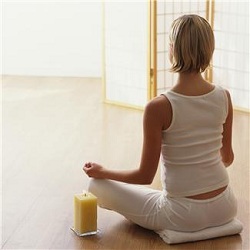 I almost always suggest to clients that they learn focused abdominal breathing and practice a minimum of 5 minutes every day; for the best results, I recommend they practice 20 or more minutes per day. Sometimes they look at me funny and ask “You mean all I have to do is just breathe and everything will be better?†I tell them that no, everything is not going to magically change to exactly what you want in life, but learning and practicing focused abdominal breathing every day WILL do this for you:
1) Special breathing techniques can help reduce physical pain. Often when people are in pain, they breathe in a very shallow, disordered pattern. They also may frequently hold their breath without even realizing it. These are mostly unconscious protective reactions to pain, but they can actually increase the level of pain. Several recent scientific studies have shown that breathing at a slower rate from the diaphragm can significantly reduce sensations of pain.
2) Breathing helps to properly balance oxygen and carbon dioxide levels in the body. Breathing properly from the diaphragm will:
•   Fuel energy production
•   Improve focus and concentration
•   Increase relaxation and calmness
•   Reduce tension and anxiety
•   Eliminate toxins
•   Strengthen the immune system
•   Improve bowel function
•   Lower blood pressure
•   Increase metabolism, aiding in digestion and weight loss
On the other hand, not breathing correctly can cause problems for a number of systems in the body, including the immune, circulatory, endocrine, and nervous systems. Improper breathing can produce various symptoms including:
•   Difficulty focusing attention
•   Dizziness
•   Numbness
•   Anxiety
•   Chest pain
•   Digestive problems
•   Irritable bowel
•   Neck and shoulder pain
3) Breathing releases emotional energy that is trapped in the body. People with anxiety and/or depression are almost always (and I mean 99.9% of the time) either breathing very shallowly or frequently holding their breath. Holding the breath is one of the most common ways that people stop emotions from coming up (think about the last time you tried not to cry, feel afraid, or get angry). Once you hold in an emotion it stays trapped in your body, until you release it. Breathing allows stifled, buried emotions to finally start to surface and be released.
4) Breathing keeps you in the present moment, instead of the past or the future. People with depression are often stuck in thoughts about the past, and people with anxiety are stuck in thoughts about the future. When you’re concentrating on your breathing, you are paying attention to your body sensations, the sound of your breath, and the process of breathing, all of which are happening RIGHT NOW. When you’re paying full attention to RIGHT NOW, you take AWAY energy and attention from the thoughts about the past or future. When you bring your attention to NOW, you automatically feel calmer.
Using the breath is a way to learn how the body and mind are connected. This is why I teach proper breathing to clients. Thoughts are directly related to feelings in the body and likewise, body sensations give rise to thought patterns in the mind. Mind and body are in a constant dance of influence, and it is important for people to learn that they have more choice and control in the matter than they thought.
Basic Instructions for Focused Abdominal Breathing
More than likely, if you are experiencing depression, anxiety, or pain, you are breathing shallowly from your upper chest. You want to train yourself to breath from your diaphragm/abdomen. Although it’s most effective to have someone teach you the process in person, here are the basic steps:
1)Â Sit in a comfortable upright position with your back against your chair and your feet on the ground. Keep your back straight, but let your shoulders and the rest or your body be very relaxed.
2) Place your left hand on your abdomen. Imagine that the entire area from your lower abdomen up to your chest is one large, rectangular balloon. Now, start by exhaling as completely as possible. Empty out as much air as possible. Your left hand will move inwards as the “balloon†area deflates. Now, slowly and gently, inhale, imagining that you are filling the balloon starting from the bottom, all the way up to the top. When you are breathing correctly from your abdomen, your lower abdomen will inflate, followed by your chest expanding, and your left hand will be pushed outward. Your shoulders will not go up, they will stay in place. When you inhaled did your hand move? Or did your shoulders go up instead? If your shoulders rise up when you inhale, you are breathing from your upper chest. Exhale and try again. This type of breathing may take a little practice to get the flow going. Work on this step until you can fill and empty the “balloon†completely. Then add the next steps.
3) Now that you are breathing abdominally, relax into a natural breathing rate. Your body will take over the breathing and settle into its own rate and depth. Your job is to just observe your breathing. Focus your attention on the tip of your nose and intently notice the pressure, temperature, and sensations of the air passing in and out of your nose. If it helps you to focus, you may also silently say “breathing in†on your inhalation and “breathing out†on your exhalation. Do this focusing for 5 minutes a day to start with, and work up to 20 minutes or more per day.
4) During your focused breathing session, especially when you first start practicing, you will more than likely notice that you are thinking about something else other than breathing. Thoughts have intruded into your mind and distracted your attention. When this happens, try not to react with any emotion (such as frustration). Just gently and silently allow the thoughts to drift upwards far away in to the sky like a soap bubble and then turn your attention back to your breath. At first you will find yourself re-directing your attention many, many times each session. Over time you’ll be able to maintain focus on your breathing for longer and longer periods of time and it will get easier to let go of intruding thoughts. It will even become easier to let go of unhelpful thoughts you have during the rest of the day (such as disturbing thoughts of the past or worrisome thoughts of the future). The most important thing is to keep doing the focused breathing every day, no matter what.
Open, full, unrestricted, unobstructed breathing is very important for your physical, mental and emotional health. It is something simple that can make a very big difference in your life. There are many things in life that we have no control of, so doesn’t it make sense to do the things we can have some control over? You can actively affect your own physiology and mental/emotional state just by mastering the art of breathing, focusing, and being present.
Related articles:
Deep Breathing and Guided Imagery
Alcohol and Anxiety: Not As Helpful As You Think
Managing Your Moods Through Mindfulness
 “Why are you out of bed?â€
“I’m scared.â€
“What are you afraid of?â€
“There’s a monster under my bed!â€
“There are no monsters. Go back to bed.â€
“Nooooooo, I’m scared.â€
Sound familiar? Almost every parent has done this. Holding a little hand, down on your hands and knees with a flashlight to prove there is nothing under the bed—unless you count the stray sock, a missing toy, and a few dust bunnies.
Your little one thinks you are a superhero. You faced the monster and saved the day, or in this case, the night. With imagination tamed, feeling safe and secure, your child falls asleep.
Imagination is an amazing thing. Children hone it to a fine art. With a towel on their shoulders and a leap from the couch, they fly!! They feed you imaginary sandwiches and wipe imaginary crumbs from your chin. They introduce you to friends only they can see. They scare themselves at bedtime. Years pass, towels are used for bathing, imaginary sandwiches and friends are forgotten. Monsters no longer hide under the bed. Reality replaces imagination.
Or does it? Many adults continue to exercise their imagination. They don’t have towels on their shoulders or imaginary friends, but they do believe in monsters created entirely with their imagination. Your child, no longer afraid of monsters, is a teenager now. You worry she doesn’t take school seriously, or her current boyfriend is a bad influence, or her college fund isn’t going to be enough. Get the picture?
Adults may not imagine monsters under the bed, but they do imagine a multitude of scenarios that would scare Freddy Krueger, and it’s socially acceptable. A vivid imagination is never questioned if the name is changed from imagination to worry. It is commonly accepted that everyone worries; it’s part of being a responsible adult. How else can you be prepared when the unthinkable happens? If you have played out the worst-case scenarios in your mind, you are ready to deal with them.
Worry is as useful for you as monsters under the bed were for your child. You make things up in your head, believe them, and scare yourself. Who will take you by the hand, shine the flashlight on your imaginary fears, and make them disappear?
Worry is using your thinking to predict the future or to continue to relive the past. Predictions rarely come true, and if they do, worry did not change the outcome. It only made you miserable before the outcome happened. How much have you changed the past by worrying about it? Unless you conquered time travel, it doesn’t work. The past is past. It doesn’t change and it doesn’t cause you pain unless you bring it into your present by thinking about it. So the monsters (worries) of the future and the past are simply you using your imagination to scare yourself. Seems a bit silly, doesn’t it?
Worry (scaring yourself with your imagination) raises your level of tension and lowers your mood. From that low state of mind you expect to find solutions to your problems. It won’t happen. High tension and low mood doesn’t make for good problem solving—ever. Recognizing that you are scaring yourself helps the worries go away. You shine the flashlight on your fears and recognize they are imaginary. From a calmer state of mind, you deal with problems as they occur rather than in the future or the past.
Related articles:
Don’t Worry – Be Happy!
Self-Soothe in Your Own Compassionate Hammock
Mindfulness Practice: Learning to Live in the Moment
 In counseling, many of the ways to address anger can also be used as tools to address anxiety. Deep breathing is one such tool. Getting that full, deep breath of oxygen will indeed help both our mind and body. Sadly, we may not stop to focus on our breathing or take in enough of that good oxygen. Furthermore, in times of distress, rapid breathing is more likely and will not help the thinking process or our ability to calmly make decisions.
When I sit in session and show clients that taking that breath is a bit more than a second or two process, they seem confused. Yet nearly everyone reports feeling remarkably calmer after trying it. Personally, I like to close my eyes so I am not focused on what is around me. Imagine as you take in that full breath through your nose that you are soaking in positive energy. Hold it a second or two, and then slowly breathe it out through your mouth. This is not a race. In fact, try to expel it slowly. Slowing down your breathing will mean you are slowing down your mind and body.
[fat_widget_anxiety_right]
Now, in the process of this deep breathing, let’s add some guided imagery. For this, think of a calm place. I would like this to be somewhere you feel relaxed and positive. For me, it is the beach. I want you to see yourself there without having to focus on where else you may need to be or other things you may need to be doing.
Experience as many of the senses as possible. For example, sitting on the sand, I can feel it between my toes. I can feel the warmth of the sun on my arms. I can smell the cool beach air and the scent of suntan lotion, and I can hear the gentle crashing of the waves and even children playing off in the background. I can also see the beauty of the area, as I watch the birds in the distance over the water. The beach is a calming place for me, so as I take in my deep breaths, I imagine soaking in the warmth and wonder of it, even as I am in my car, home, or wherever I am practicing.
The more senses you can envision, the easier it is to remain focused in the moment. Some people choose amusement parks or other loud venues. That’s okay as long you can focus and keep to your steady breathing pattern. The goal here is to consciously and intentionally slow our minds down while adding these positive and relaxing components. When asked if you should practice this when anxiety is creeping up, I say to try and practice these tools at least a few times a day. I don’t want you to have to wait until the anxiety is noticeable. Rather, if we are practicing relaxation, we will not only be in a better position to deal with it in those moments, but hopefully even fend some of it off in the first place via a calmer, more relaxed you.
Your mind is indeed a powerful tool. We hear about sharpening it with memory exercises and such to enhance our cognitive skills, but what about teaching it to relax? We live in a fast-paced society where expectations can be massive and relaxation is not taught in school. Rather, we learn how to be better students and thus more successful human beings. You need to teach your mind and body to calm down and be okay with relaxing once in awhile.

We breathe all the time, right? So, what’s the big deal?
Most of us are not breathing properly throughout our days for optimum health and well-being. Most of us have poor posture, we sit at our desks for long periods of time, slump in our seats, stare at screens, move very little… This is a problem for much of the population.
If grief is added on top of those bad habits, our situation becomes even more difficult. Grieving on its own makes us feel like we want to be slumped down, curled into a ball. It makes us want to protect our hearts. The chaotic yet static state sometimes even stops our breath entirely. If you are grieving, you may notice that your breathing is very shallow, or that you are holding your breath without even realizing it. You may suddenly find yourself gasping for a breath, as if you’ve been under water, reaching for the surface. This is not abnormal in grieving. Grief affects every part of us, including our breathing. Here is your chance to learn to breathe through grief.
[fat_widget_right]
Finding a quiet time at any point in your day to simply breathe can be a wonderfully healing tool. Anytime you notice that you are feeling anxious, particularly tired, or that you are holding your breath, take a moment—right then and there—to breathe.
Stoplights make good cues to practice your breathing as well. In addition to helping you notice your breath and serving as reminders to practice your breathing exercises, breathing at stoplights can help to counteract the stress we experience when we are confronted with the stress of the rest of the world—other drivers, traffic jams, errands that must be run—while we are in the midst of our grief. Inside your car, you can create a space of calm and peace simply with your breath. Practicing your breathing, and any other coping techniques, when you are calm, helps you be able to put them to use when you need them, such in the midst of anxiety or a panic attack (also not uncommon in grief).
Additionally, noticing your breath and increasing your use of breathing practices can also help you to become more mindful of your own thoughts and feelings, giving you a sense of control and stability in an otherwise incredibly chaotic time of life. The more you notice how you feel, what your thought patterns are, how your body is affected by your responses to the world around you, your grief experience, your thoughts and feelings, the less out of control you can begin to feel. A greater sense of calm and control can help you along your healing process.
Many people are told, “Take a deep breath.†But in my practice, I have found that when I ask people to show me how they take a deep breath, they often suck in their stomachs and fill up their chests. This is actually the opposite of deep breathing. Breathing this way restricts our lungs’ ability to take in oxygen and to release carbon dioxide. The result is an excess of CO2 in our bodies. Not inhaling enough oxygen and failing to exhale enough CO2 can create fatigue, mental fog, and decreased tissue function. For a grieving person, this can intensify many of the normal grief reactions that we go through as part of the grief experience. Breathing deeply and fully can be a helpful tool to decrease stress, increase clarity of thought and help to counteract fatigue. Not only that, but chest breathing stimulates our sympathetic nervous system—our fight or flight stress response. Think about it: When we are startled, what do we do? We open our mouths with a sharp intake of a chest breath. This alerts our brains that there is a danger. Breathing into our chests stimulates the very response we are trying to counteract. Learning to take deep belly breaths is essential to decreasing anxiety and getting more oxygen to the brain.
Read on to learn some simple but truly effective breathing exercises to decrease anxiety, clear your mind, and counteract some of the natural symptoms of grief.
Breathing Exercise: Just Breathe
This is an exercise in simply noticing your breath, helping you to become more aware and mindful of your own breath as it moves in and out of your body.
- To begin, sit in any comfortable position, on the floor or on a chair, with your spine long and straight but not stiff.
- Find a comfortable position for your hands, either folded gently in your lap or resting on your thighs or knees—palms up or down, whichever feels right to you.
- You may close your eyes if that feels comfortable. If not, find a spot on the floor a few feet in front of you and allow your gaze to soften. As you sit, begin to notice the temperature of the air on your skin, notice any sounds you may hear within or outside the room. Begin to notice your body’s weight as it is supported by the chair or the floor. Notice the feel of the floor or the chair under your sitting bones, under your legs. Notice the feel of the floor beneath your feet. Expand your awareness to noticing the sensations of your entire body without feeling the need to change anything, simply notice.
- Now, begin to notice and follow the movement of your breath as it moves in and out of your body, as you inhale and exhale. As you inhale, notice the temperature and the vibration of the air as it flows through your nasal passages, down your throat and trachea, on its way into your lungs. Notice the different sensations of your belly, your ribs, and your chest as they gently expand. As you exhale, notice the temperature of the air, the movement of the tiny hairs of your nose, the feeling of your lungs empty of air as it leaves your body. Simply notice these things and any other sensations that occur as you continue to breathe, easily and naturally, in and out.
- Simply notice your breath as it moves in and out of your body without the need to change anything at all. Just Breathe.
Breathing Exercise: Simple Deep Breathing
For this breathing practice, sit in a comfortable position with your hands relaxed, either in your lap or resting on your thighs or knees. Then begin.
- Relax your shoulders. Pull them up toward your ears, and then roll them back and down, creating space between your shoulders and your ears. Allow your shoulders to relax.
- Breathe normally in and out for a few breaths. Notice how your belly rises and falls easily as you breathe naturally. Your chest should not expand a great deal as you breathe in and out. If you like, you can place a hand on your abdomen to help notice the movement as you breathe in and out.
- When you are ready, breathe in—and on the next exhalation, breathe out slowly from your nose, counting to five. During this exhalation, tighten your abdominal muscles, and pull your diaphragm inward, toward your spine, squeezing all the excess air out of your body. When all the air is squeezed out, pause for two counts, and inhale slowly again, to the count of five, allowing your belly to expand as you breathe in. A very useful tip in learning to breathe deep into your belly is to imagine you are about to take a deep inhalation of your most favorite smell. When we smell something delicious, we almost always instinctively belly breathe.
- If you are comfortable doing so, close your eyes and continue to repeat this easy deep belly breath for 5 to 10 times.
- If you find that your mind wanders during this exercise, don’t worry. Simply bring your focus back to your breathing and begin your counts to 5 again.
- You may find it helpful to think of a happy color (such as yellow or pink) or a calming color (like blue or green) as you breathe in and a dreary color (like grey or tan) as you breathe out. Or, you might choose to imagine breathing in a calming pleasant emotion such as peace or love as you inhale and breathing out stress or anxiety as you exhale.
- As your awareness of your breath increases, it will become easier to practice your deep breathing without focusing so much of your attention on it.
Breathing Exercise: The Three-Part Breath
The three-part breath is a specific breathing technique used in many yoga practices and can be very useful in times of stress or whenever you need to relax. This type of breathing triggers your parasympathetic nervous system or the “relaxation response” (the opposite of the fight/flight stress response) and allows your body and mind to more easily release stress and tension. It is physiologically impossible for your body to be in a stress mode when you practice the deep three-part breath.
Obviously, you can’t breathe this way all the time, but when you do, it can help you think more clearly and decide on another coping skill or something else you can do to move away from the anxiety you may currently be feeling. Or you may decide to use the breath to sit with the pain of grief. This is okay too. Calmness in the midst of pain can help us know that we can survive the next moment, and then the next.
- Again, find your comfortable sitting position, allowing your hands to be relaxed. The three-part breath may also be done lying down. Practicing this breath while lying in bed before sleep is a good choice if you have difficulty clearing your mind and falling to sleep.
- To begin, inhale normally. Then, with your mouth closed, exhale slowly through your nose as you did with the simple deep breathing exercises, using your abdominal muscles to pull your diaphragm inward. Squeeze all the stale, excess air completely out of your lungs.
- As you prepare for your next inhalation, imagine your upper body as a large pitcher. As you inhale, you are filling the pitcher from bottom to top.
- First, fill the diaphragm and lower belly, allowing them to expand and completely fill with air. You can use the “smelling something delicious†tip here as you begin to fill your lower lungs with air, allowing your belly to expand.
- Next, continue to allow your “pitcher†to fill as you notice the lower, and then the upper, parts of the ribcage expanding outward and up.
- Next, fill the upper lungs, noticing the chest expanding, the collar bones and shoulders rising, as your pitcher is filled completely to the top.
- Pause for 2 beats.
- Exhale the opposite way, allowing the “pitcher†to empty from top to bottom.
- Slowly exhale, allowing the shoulders and collar bones to slowly drop, the chest to deflate, the ribs to move inward. Again, pull your diaphragm in, using it to completely empty the air from the bottom of the lungs.
- Repeat the process, refilling the pitcher slowly from bottom to top. Continue with the complete and full exhalations and inhalations, emptying and filling your pitcher.
- The three parts are bottom, middle, top—expanding and contracting as you slowly and completely fill your body with fresh, cell-nourishing, life-giving oxygen and then slowly and completely empty it of carbon dioxide, toxins, and tension held in the body and mind.
- As you increase your practice and the muscle movements become familiar, you may wish to add the counting of your breaths or your color visualizations. Ideally, the exhalations should be about twice as long as the inhalations. Initially, if you count to five as you inhale and exhale, gradually try to make your exhalations to the count of six, then seven, then eight, and so on until you feel more comfortable lengthening your exhalations.
If you feel dizzy or lightheaded while practicing the three-part breath, or any other breathing exercise, stop the practice immediately and allow your breathing to go back to normal. Sometimes if we are not used to a great deal of oxygen, the change can cause lightheadedness or dizziness. Know your own body and be mindful of the changes you notice.
I hope that these breathing lessons may help you through your grief journey and beyond. Just breathe.
 “Life will give you whatever experience is most helpful for the evolution of your consciousness. How do you know this is the experience you need? Because this is the experience you are having at this moment.” – Eckhart Tolle
If you are reading this, the demons haven’t won. Facing your demons is part of life. From the earliest moments when you might have been hungry and the breast or bottle wasn’t immediately available, to later life crises like divorce, death, job loss, financial hardship, illness, and other challenges, everyone is beset with demons. When things are particularly rough, it may seem as if the demons are winning. But as long as you’re still living and breathing, you are the victor.
[fat_widget_right]
It’s important to remember just how resilient you are, especially in the midst of an invasion. When I say invasion, I mean those times when you feel so overwhelmed by life you think you simply can not stand another minute; when the emotional pain, grief, or hopelessness is all you can see. At those moments, it is crucial to remember how time-limited everything really is, including you.
Demons are excellent shape-shifters and can morph from one torturous form to another in the blink of an eye. A few of the guises they assume include:
- Fear of rejection
- Worthlessness
- False pride
- Anxiety
- Failure
- Pain
- Jealousy
- Anger
- Depression
- Giving up on oneself
Even if you live a long life, it will still be a relatively short span in the body. Being incarnate is fraught with all sorts of experiences. When the less appealing ones visit, it’s best to welcome them with open arms, as counter-intuitive as that may seem. By denying what is really happening for you, or repressing your feelings with addictions or unhealthy habits, you forgo the opportunity to grow. You miss the chance to spar with scary thoughts, ugly impulses, or overwhelming grief, all of which move you into a more evolved and compassionate place.
There are still many people out there, and I don’t mean drug dealers, who will offer you a way around your misery. Advertisers will tell you life can be rosy if only you buy X, Y, or Z. Some New-Agers will claim a quick way to nirvana, and there are myriad options for dulling one’s pain with obsessive-compulsive behaviors of all kinds. Don’t be beguiled by their dog and pony show. Who would turn away an easy way out from pain? Sign me up! I’d love to think there was some quick panacea. Although, after 40 years of studying psychology, religion, and philosophy, I truly believe the only way out is through.
That does not mean you have to weather every storm alone. This is the time to ask for and graciously accept help. Whether it is from a friend, relative, therapist, hotline, clergy-person, or 12-step group, please avail yourself of any support you can. That many of us were brought up with that old Calvinist ethic of independence and self-sufficiency does not mean we are limited in our healing options. If you were traveling west in a covered wagon then you definitely needed to be one tough cookie. But most modern folks are not braving a physical, material wilderness.
In some accounts, when the Buddha was under the Bodhi tree seeking enlightenment, the demons came. He tried to fight them off for days. Finally, realizing that, at best, they would reach an impasse, he invited them to sit with him. I like to think of this as the Buddha inviting his demons to tea. Take a page from the Buddha’s book and befriend your demons. Undoubtedly, you will learn something, and develop more resilience in the process.
Jung, Sigmund Freud‘s disciple, believed each of us has a shadow side and we need to embrace it to be fully human, alive, and whole. By inviting your demons to tea, you establish ownership of your shadow. You bravely go where many fear to tread. You have the guts to face your anger, fear, jealousy, lack of self-acceptance, guilt, and anything else you deem unacceptable.
By dancing with the demons you reclaim your power. If you keep trying to bury them, you unconsciously feed each one and it comes out in projection, attributing all your own issues to others. Everyone does this to some degree, but being unaware of doing it is problematic.
It takes guts to face your demons. Luckily, everyone has the innate capacity to tread this rocky path, and already has. Have you been ill? Divorced? Child of divorced parents? Child of an alcoholic or addict? Moved to a place where you knew no one? Weathered a financial storm? Been estranged from family? Experienced the death of a loved one? If so, you faced your demons.
You courageously soldiered on. It was not easy or fun, but you persevered, even when you thought the pain would never stop. Slowly but surely, it abated. At first, you may not have even noticed the subtle lessening of your anger, anxiety, or grief, but as the weeks and months wore on you started to feel more alive and open. That resiliency supports you through every challenge, allowing you to stretch beyond what you thought your limits were, and finding more capacity to bear what you thought was unbearable.
You are here for the whole enchilada, not just the kittens and rainbows. The sooner you embrace the totality of life with its highs, lows, and everything in between, the sooner you will find some measure of peace. Practicing affirmations, self-soothing thoughts, or a comforting prayer or mantra, will ease you through those trying times everyone has.
No one is exempt, no matter what their life looks like, or what story they tell you. Every life is mix of treasures and traumas. By persevering, speaking lovingly to yourself when the going gets rough, and assuming the best, you will make it to the other side.
Just like all the molecules in you and around you, things are constantly moving and shifting. Whatever you feel at this moment won’t last. It can’t. That’s what makes life so interesting and bittersweet. By embracing the vicissitudes of life with compassion for yourself and others, you allow yourself to fully experience whatever is happening to you right now. Yes, this is also known as mindfulness, acceptance, and liberation.
 While there are a multitude of distractions and amusements available to anyone with a library card, it is not unusual to go through periods of boredom when not even the most scintillating book, movie, or conversation will sate the crankiness demon. At those times, it is best to stop whatever you are doing and simply sit with what is. Are you feeling annoyed, frustrated, agitated, sad, or self-critical? Welcome whatever comes up. Investigate it. Do something paradoxical and try to increase the feeling. This may sound counter-productive, but it will actually help you figure out what is going on. If you let yourself go deeply into your boredom the underlying issue will surface. Once it does, ask yourself how you want to handle it. Consciously choose to explore your thoughts and feelings though journaling, talking with someone (friend, relative, clergy, or therapist), or simply breathing, meditating, and allowing them.
Boredom is uncomfortable, and it is natural to want to banish it immediately. By exploring what is going on right this minute, you allow yourself to relax with what’s coming up. It is only a feeling. You have probably felt every emotion before, whether fear, joy, anger, love, anxiety, sadness, or grief, and you’re still alive.
Boredom is often a code word for something else. It seems to appear when your internal state is so strong that anything external loses its power to divert you. The irritability comes from wanting relief from those simmering uncomfortable feelings and knowing the only way out is through. When nothing feels right or good, just breathing can be a refuge.
No one likes feeling irritable, bored, or restless. Nor should you. Perhaps, the purpose of these annoying feelings is to wake you out of a funk. Sometimes, an unpleasant state of mind is necessary when routine ways of being and doing have sucked the novelty out of life. Variety does spice things up, and without it living can lose its luster. Whether it’s trying different foods, listening to new music, taking a drive to an unknown locale, or going to an art opening, mixing things up helps you thrive. In addition to creating new neural pathways, unpredictability and spontaneity create a sense of surprise and delight. Of course, it has to be the right amount. Too much novelty and you feel groundless; too little and you’re bored.
Maintaining emotional balance is not easy. Life, with all its demands, intrudes on the best laid plans. So, boredom, restlessness, and groundlessness appear. Re-grounding yourself can be as easy as feeling your body sitting, standing, or moving, eating something mindfully, looking out a window and really seeing what meets your gaze, taking a walk, calling a friend, listening to music, writing in your journal, or anything else that uses some of that irritable energy. Even meditation, not an easy feat when you are feeling crabby, is helpful, since it reminds you this is merely a passing state you can label and release. Actually, you are not really releasing the state as much as your attachment to it.
Boredom, restlessness, and groundlessness are simply different terms for feeling temporarily stuck and uncomfortable. You will not stay in this state of mind. Everything changes, and that is what makes life so interesting. You never know what’s next. By sitting with what is, or actively shaking things up a bit, you practice mindfulness or self-determination. Sometimes, one will work better than the other. It’s always good to have a few arrows in your quiver since one day sitting with your feelings will be the right choice, and another day doing something proactively will work.
The following grounding techniques utilize your ability to actively focus attention on something external to distract you from whatever thoughts and feelings seem unpleasant, overwhelming, or boring:
- 5-4-3-2-1 meditation. Wherever you are, notice 5 things you can see, then 5 things you can hear, and then 5 things you can physically feel. Continue with four things in each category, then 3 things in each category, then 2 and, finally, 1. Allow about 15 minutes to complete one full cycle. It is preferable to find new things, but not necessary.
- Another 5-4-3-2-1 meditation. Wherever you are, notice 5 objects, 5 colors, 5 shapes, and 5 textures, then 4 in each category, then 3, then 2, and 1.
- Think of all the vocabulary words you can remember from another language you studied.
- Recall your favorite foods, places you have visited, movies, books, or music.
- Recite a poem you memorized as a child.
- Describe in minute detail a mundane activity you do every day, like brushing your teeth: I pick up the toothbrush, I turn on the water, I wet the toothbrush, I put toothpaste on the toothbrush, etc.
- Imagine a time when you felt very safe and describe it in great detail, using all five senses.
- Sing a song.
- Build a sanctuary in your head. Add as much detail as possible.
- Focus on where your body is contacting the floor, a chair, or bed. Breathe into that place.
- Widen and stretch your fingers and toes. Relax them and repeat.
- Repeat a prayer, affirmation, or mantra. Use a rosary or mala beads to help anchor the repetitions.
- Count backwards by threes from one hundred.
- List how many things you can do, from the mundane to the most sophisticated.
- Play old car games in your head, like Geography (where you say the name of a place and use the last letter of that place as the first letter of your next one) or I Packed My Trunk and In It I Put an A (apple), a B (beta endorphin), a C (color wheel), to Z, going through the whole alphabet, starting from A each time you add another letter.
- Look out the window and notice subtle color differences in the sky, cloud configurations, trees and branches, or the various shapes and sizes of leaves.
Feel your breath. Remind yourself that you are alive, and whatever you are feeling is part of life. You are here to feel it all.
Related articles:
How to Use Curiosity as a Cure for Relationship Boredom
Boredom and the Longing for Connection
Learn to Sit with Discomfort in Your Life
 I have a confession to make: I do not believe you can feel happy 24/7, any more than you can feel anything every minute for your entire life. We are designed to feel a broad spectrum of emotions because, so far, they have kept us safe and helped perpetuate the human race.
We all know how something that feels bad can actually redound to your highest good in the future. But, being the hedonists I think we are designed to be, we naturally avoid pain and seek pleasure. What if sitting with discomfort helped us make peace with it—increased our frustration tolerance and our ability to accept life as it is?
As Albert Ellis used to say, it is a choice between short-term hedonism and long-term hedonism. If we forego the pleasure of the moment, we can reap greater benefits in the future. In today’s society, delaying gratification is not popular; however, when we learn to sit with what we don’t like, we can actually build emotional muscle and handle the next challenge with greater ease.
When we feel anxious, for example, our first inclination is often for relief, which usually consists of avoidance. We can distract ourselves with TV, video games, pornography, food, alcohol, drugs (including prescription psychotropics), gambling, and other things that may create new problems; or, we can do the last thing we instinctively gravitate toward: sit with the feeling. Yes, just allow it. Breathe into it. Can you feel the discomfort physically? If so, notice its characteristics. Is your breathing shallow? Is your back tense? Do you feel a headache coming on? Is your jaw clenched? Are your shoulders hunched up? Is your abdomen tight? Breathe into whatever you notice.
[fat_widget_right]Give yourself permission to feel your feelings. With practice, it may help you accept yourself and your reality. By resting in awareness, you stop fighting what is true for you now and open to the possibility that it is all OK. You can handle what you do not like.
Many intelligent and insightful souls—such as the Buddha, Ram Dass, and Eckhart Tolle—have encouraged us to be here now. That means being with whatever comes up. Your job is not to like everything, but to be aware and open. Luckily, this becomes easier when you remind yourself that everything passes—the pleasant and the unpleasant.
It is crucial to understand that the goal here is not to figure out why you are feeling what you are feeling, but to stay with the discomfort. You may even want to cultivate some curiosity about what you are feeling.
Granted, mindfulness practice is counter-intuitive, but when you are fully in the moment, you can relax into what is. Resisting your feelings often increases them and their power. No harm will come to you if you embrace your feelings, though it may be uncomfortable. In time, you may notice a feeling or sensation and, rather than avoid it, you can label and accept it. Another great benefit of this practice is that by gently and lovingly accepting where you are, you may become more compassionate with yourself and others.
Impermanence is the name of the game. Nothing lasts—good or bad. You may not care to remind yourself of that in the middle of an ice cream sundae (though it might make you more appreciative and increase your enjoyment), but it is helpful to remember when times are tough.
Once you allow yourself to be with what is true for you now, remember this quote from Haruki Murakami: “Pain is inevitable. Suffering is optional.†By resisting the urge to rate your feelings—or yourself as bad for having them—you will begin to know the peace that comes from acceptance, and your discomfort will not morph into suffering.
Here is an exercise to help you on your path to emotional freedom:
- Consciously stop yourself a few times a day to do an internal check.
- What am I feeling now?
- Can I allow this feeling, whether physical, emotional or spiritual, without trying to repress it or distract myself from it?
- Stay with whatever comes up, especially if you don’t like it.
- Try to label what you are experiencing. For example: tightness in the throat, muscle spasms in the low back, tension in the jaw, etc.
- Name your emotions as if you were simply observing them—anxiety, sadness, anger, resentment, grief, etc.
- Breathe into any area of discomfort, and keep drawing your breath there until you feel it relax.
You can immerse yourself in Buddhist thought by reading books by Pema Chodron, and listening to podcasts on iTunes, such as: “A Quiet Mind,” “The I.D. Project,” or interviews on Sounds True.
Reference:
- Murakami, H., & Gabriel, P. (2008). What I talk about when I talk about running: A memoir. New York, NY: Alfred A. Knopf.
 You might have heard that “love is the glue†that holds us together. I’d like to make a case for mindfulness as a similar connecting agent. In thinking of the work I am passionate about offering at Counseling on Capitol Hill, I’ve discovered that the various offerings have a common theme. What is it that couples counseling, Positive Discipline parent education, individual therapy, mindfulness coaching, and Family Therapy have in common?
Each of these offerings are about relationships, with ourselves, partners, kids, spirituality, and community. All of these relationships or domains depend on capacity and resilience.
When a child breaks a treasured dish, or tracks mud onto a newly-cleaned floor, it takes resilience to remember our compassionate self. If we see the experience of what is happening as larger than our capacity to tolerate, we send ourselves into crisis mode. In fight or flight mode, we don’t have access to clear thinking, empathy, or compassion. It is a good bet that if we are not prepared to handle this common occurrence, we will say or do something that we will regret.
[fat_widget_right]
What helps us develop capacity and resilience? The practice of mindfulness—with regard to our thoughts, emotions, sensations, and more—allows us to develop these abilities. Take the basic practice of awareness and counting of the breath, where we sit and bring attention to our normal breathing (available in most introductory books and articles, and demonstrated on my website’s mindfulness page). We set a timer for five minutes. During that time we note our “out breath†and our “in breath.†As with most attempts at concentration, we soon notice distracting noises, thoughts, and smells. We become aware of what is distracting us and then return to the simple focus on breath. Although it is a simple act, it is a very powerful way to develop resilience and capacity over time.
One wonderful and commonly-reported experience is that after meditating daily for a few weeks, we discover humor around the troubling eddies of thought that our minds often get stuck in. When my mind takes me back down familiar routes of thinking during mindfulness practice, I often chuckle at myself, noticing the dogged and familiar tendency before returning to my chosen focus. Humor is a sign that the door to resilience and greater capacity has been cracked open. What once took up my whole mind and started a heated reaction of frustration is now a bit smaller and doesn’t take up all the space.
I have seen similar developments in capacity with couples when they become familiar with their old patterns of disconnection. Once that pattern is named, it is easier to recognize. Sometimes a funny name helps too: we don’t want to go down that “toilet bowl†again! Another way of talking about capacity is how we say that we gain “distance†from things. Mindfulness practice and emotionally focused couples therapy both help create a bit of distance from and awareness of troubling patterns of disconnection.
Positive Discipline parent education (PD) also calls on us to maintain the space between ourselves as adults and the children and teens who we care about. PD is based on the observation that most negative behavior is based on a child’s mistaken belief about themselves or a mistaken attempt at getting a need met. For example, a child’s persistence might become annoying when they are acting on the mistake belief, “I don’t matter unless I am the center of attention.†Again, our work of developing capacity and resilience leads us to recognize the pattern and not get pulled into reacting to it.
Mindfulness coaching, individual, and family therapy also offer us the opportunity to recognize patterns and respond to ourselves and our loved ones with greater capacity. Greater capacity—knowing that we are not defined by a particular thought, behavior, or experience—allows us to have greater compassion. We’ve come full circle, as it is clear that our increased resilience is based on seeing who we are in relationship to our experience, rather than what happens. With increase capacity and resilience, it is a short leap to the belief that we are all trying to connect with others and our desires, and that sometimes we forget that others are good people in the same game.
Though it takes practice to entertain and maintain this perspective, through it we are able to approach and find balance in all five domains of relationship: personal, partnership, parenting, community, and spirituality. Instead of having to practice and maintain five things at once like a circus performer, we can intentionally choose to be in a few of our experiences each day. No matter how many times we get pulled off center, we can always choose to pull out one of the practices that helps us reground, relax, and relate. Whether you do mindfulness practice, therapy, playtime, tai chi, dancing, yoga, walking, cooking, or more as a way to feel better and reintegrate your five domains, your loving attention to yourself is developing more resilience and capacity in yourself and in the world. Keep up the good work!