 Parenting is difficult enough when you feel fantastic, but when you’re struggling with depression, it can seem downright impossible.
It need not be so, though. Experiencing depression doesn’t mean you can’t be an incredible, loving, smart, and effective parent. In fact, in some ways it can make you a better parent. Because of your depression, you may be extra sensitive to your children’s moods and needs. This can be a great thing!
If you’re a parent with depression, here are 10 things worth considering:
- Sometimes “good enough†is perfectly fine. You can’t always give 100%. Some days will be harder than others. You don’t have to be a super-parent every hour of every day.
- Find your tribe. Seek out a group of people who are aware of your condition and can help you through it. This can be an online group, but an in-person group is even better. These are the people you can call when the baby is inconsolable and you’re angry. This is the group that can remind you that your feelings are normal or tell you that you may be overreacting.
- [fat_widget_right]Find a psychiatrist. If you’re pregnant or nursing, you need an expert who understands how antidepressants may be transmitted and how they could affect your child. Don’t go off your medication without talking to a physician. Some antidepressants are safer than others.
- Beware of postpartum depression. Educate yourself on the difference between the baby blues and full-blown postpartum depression or psychosis. If you see signs of postpartum depression or psychosis, contact your doctor immediately. If you have thoughts about hurting your child, go to the nearest emergency room.
- Forgive yourself and your children. Everyone makes mistakes. Be gentle with yourself and the people around you. Depression often masks as agitation, irritability, or anger.
- You are not your condition. Your depression isn’t the only thing about you. It isn’t even the most important thing. You are a parent and may be any number of other things: a partner, a lover, a friend, an employee, a teammate, etc.
- Don’t hesitate to reach out. Ask for help from your spouse or partner, friends, an extended family member, someone from your church or congregation, a family doctor, or a mental health professional. You may need a few minutes to talk, a medication change, or someone to take your kids for a few hours so you can seek out a therapist.
- Lighten things up. Take a break from the news, which tends to focus on heavy and upsetting things. Listen to, read, and watch things that make you feel good, are funny, and don’t stress you out.
- Live fearlessly. Don’t let depression stop you from doing things or meeting people. That can be easier said than done, but get out there, live large, and experience life with your children.
- Let your children in. Depending on their ages, you may want to tell your children different things about your condition. The very youngest of children don’t need to be told anything. Around the age of 4, your mood or visits to your therapist may be noticed. You might explain that mommy or daddy sometimes gets really sad and needs help. You can relate it to when your child gets sad and you hold or comfort him or her. Older children may experience your low moods and take them personally. Here, you can use the word depression. Make sure your child knows it’s not his or her fault, and that you are taking care of yourself. If you have a hospitalization, you may choose to tell your child why you’re gone and how it will help. When your children are in their teens, use your depression as a way of explaining the condition and what to watch for. Encourage them to be open if they feel depressed or hopeless. Let them know that if they want a counselor, you will find them one.
No one expects you (or anyone else) to be perfect or “on†continually. Remember, millions of people around the world are experiencing, or have experienced, depression. You’re not alone.
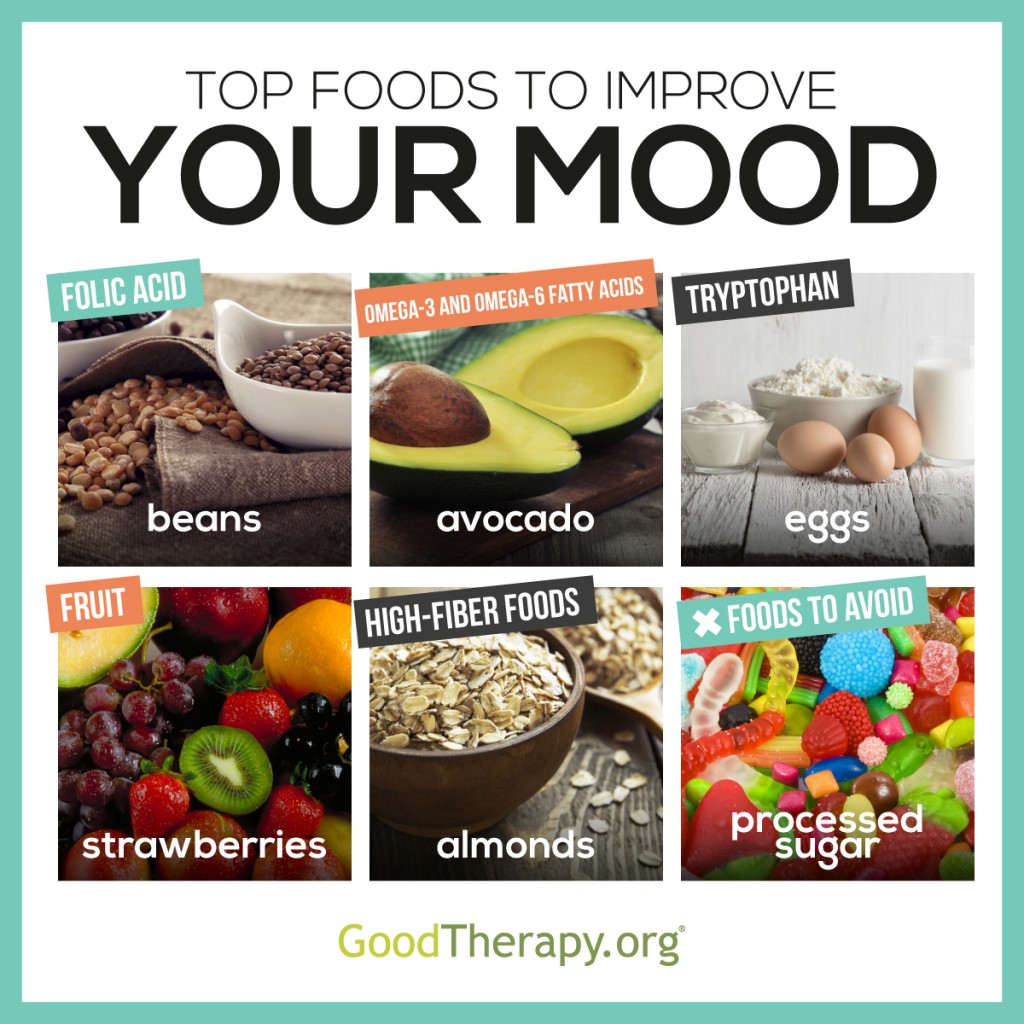
 Stress, depression, and anxiety are complex experiences caused by a variety of factors, including lifestyle, brain chemistry, a history of trauma, and health. Research increasingly points to the role nutrition plays in sound emotional health. While eating a bowl of soy beans and loading up on eggs won’t cure depression, it can certainly help. By pairing the right diet with healthy therapy and—if necessary—medication, you can maximize your chances of quickly feeling better.
Folic Acid
Vitamin B9, also known as folic acid, is probably best known as the nutrient every pregnant woman should eat to prevent neural tube defects. Research also shows that folic acid may help boost mood. One study, for example, found that people with depression tended to be deficient in folic acid. Beans and lentils are excellent sources of folic acid, and you can also get your daily dose of this important nutrient through oatmeal and cereals fortified with folate.[fat_widget_right]
Omega-3 and Omega-6 Fatty Acids
Omega-3 and Omega-6 fatty acids can help improve heart health. Research is still mixed on the effects these fatty acids have on mood, but several studies have shown an improvement in depressive symptoms among people who get high doses of Omega-3 and Omega-6 fatty acids. Even when studies haven’t verified the mood-boosting effects of these fatty acids, they haven’t shown any negative consequences. Fish, nuts, legumes, avocados, flax seed oil, and linseed oil are each high in these important nutrients.
Tryptophan
You might have heard that tryptophan can cause you to doze off after a big Thanksgiving dinner, but it can also help ease anxiety and depression. The body converts tryptophan into serotonin, a neurotransmitter that helps regulate mood and prevent depression. Milk, cheese, eggs, soybeans, tofu, and turkey are all high in tryptophan.
Fruit
There are dozens of reasons to eat more fruit. Fruit’s natural sugars are better for you than the stuff you get from packaged foods, and the relatively low calorie content of most fruits can help you regulate your weight and stave off food cravings. Many fruits can also help boost your mood by boosting serotonin levels. Kiwi, sour cherries, bananas, plantains, plums, pineapples, and tomatoes are each high in serotonin.
High-Fiber Foods
Fiber doesn’t just help you avoid gastrointestinal problems. Some studies have also found that it can boost your mood. High-fiber foods include avocados, whole wheat bread, barley, beans, lentils, almonds, raspberries, pears, oatmeal, and bran muffins.
Foods to Avoid
It can be challenging to eat a healthy diet, and an occasional “cheat†may even boost your mood if you choose something healthy, such as dark chocolate. Some foods can only drag you down, though. These include:
- Alcohol, which is correlated with increased depression and sleepiness.
- Caffeine, which can make you feel jittery and anxious, then lead to sleepiness and depression.
- Processed sugars, which can give a temporary energy boost that quickly yields to a depressive crash.
- Foods containing gluten, especially for those who have celiac disease. Many foods high in folic acid are also high in gluten. Gluten hasn’t been shown to be harmful to most people, but if you have celiac disease, the benefits of gluten-containing foods are outweighed by the risks.
References:
- 15 mood-boosting foods. (n.d.). Retrieved from http://www.prevention.com/food/healthy-eating-tips/food-and-mood-best-foods-make-you-feel-better
- Hainer, R. (2010, June 11). Supplements for depression: What works, what doesn’t. Retrieved from http://www.cnn.com/2010/HEALTH/06/11/supplements.for.depression/
- High-fiber foods. (n.d.). Retrieved from http://www.mayoclinic.org/healthy-living/nutrition-and-healthy-eating/in-depth/high-fiber-foods/art-20050948
- Jefferson, J. W. (2007). Folate for depression. Psychopharm Review, 42(10), 75-81. doi: 10.1097/01.IDT.0000290219.07082.4c
- Nelson, S. (2014, May 19). Study says non-celiac gluten sensitivity may not be real. Retrieved from http://wqad.com/2014/05/19/study-says-non-celiac-gluten-sensitivity-may-not-be-real
- New research reveals that fibre can improve mood. (2002, February 20). Retrieved from http://www.eurekalert.org/pub_releases/2002-02/cu-nrr022002.php
- Treating depression with Omega-3: Encouraging results from largest clinical study. (2010, June 30). Retrieved from http://www.sciencedaily.com/releases/2010/06/100621111238.htm
Let me start off by saying, I hear you! I actually recently noticed that watching too much news was getting me down a bit, too. I cut back and shifted my focus to other, more uplifting things and I feel some relief. That may or may not work for you. It seems like you are haunted by this on a deeper level and feel a strong sense of duty to be well informed about the world around you.
I wonder if at least part of the answer for you could be getting more involved. You mentioned knowing that there are good people doing good things in the world, but you indicate that you aren’t really exposed to them. Is there an organization near you that you could get involved with that works on a cause that you feel strongly about? There are many different options. You could volunteer in a soup kitchen or homeless shelter, work behind the scenes in fundraising or public relations, or get involved in activism on a grassroots or legislative level. Contributing to the betterment of the world and surrounding yourself with people who are also committed to that cause might help you to find some much-needed hope and inspiration.
[fat_widget_left]
I also find myself feeling curious about what else is going on in your life. Are there other things, on a more personal level, that are getting you down? Sometimes when we are unhappy with our own lives, it can be even harder to endure the tragedy and injustices of the world.
At some point, sadly, all of us need to come to terms with the fact there is much suffering and cruelty in the world and we’re largely powerless to change the balance. There is so much love and joy, yet simultaneously so much pain and misery. In the same way many of us are compelled to face our own mortality, we also have an opportunity to find some meaning in the face of all the suffering. Along the lines of Viktor Frankl‘s book, Man’s Search for Meaning, in which he wrote, “What is to give light must endure burning,” you might benefit to see that there is silver lining of sorts to all this suffering. If it were not for suffering, we would not grow and become more evolved beings; likewise, joy could not exist without its counterpart, pain.
You are clearly a sensitive being, like many of us who don’t have defense mechanisms strong enough to keep us happily oblivious and in denial. Therefore, it’s even more important for you to do your deeper work to identify and truly care for the “weight on your soul.” Doing this will help you find some meaning in it all, keep you persevering, and give you some sense of hope.
Partnering with a therapist to explore your thoughts and feelings about the world, and your place in it, could be helpful in sorting some of this out. Engaging in therapy might help you to create some positive changes in yourself and the world around you, and I suspect that would make you feel much less dejected—maybe even happy (or happier).
Kind regards,
Sarah
Share this Image On Your Site
Thank you for your question. Boy, oh boy were you put through the wringer. My heart ached to read of your experiences. I suppose the short version of my answer would be to see a therapist soon as you can, if only for the reason that you mention suicidality from your teens and depression today. This is not to be alarmist, but depression is something you don’t want to go unaddressed for long, more a sign of trauma than any “character issues.â€
Clearly, your mother’s traumatic flight and your dad’s withdrawal left psychological scars that now need attending. This is not to blame anyone; the tragedy of mental health issues (you mentioned your father’s depression) is that those afflicted often end up passing on their condition by creating, as the authority figure in the home, a psychological mood or atmosphere of depression, anxiety, etc., which children are liable to absorb. They don’t call them the “formative years†for nothing. These wounds are passed along from generation to generation until someone has the courage to say “enough†and get some professional help. The good news is that you are young and in an excellent position to get help, and in so doing, start life over again and find contentment and purposeful living. Your experience, believe it or not, can be a vehicle for compassion and empathy for others down the road.
I am a fan of author and psychoanalyst George Atwood, who says in his excellent book The Abyss of Madness that, to paraphrase, people become depressed when depressing things happen to them. There are so many ways in which your trauma would upend anyone’s psyche. The most common question people ask me is, “Is this normal?†I usually say I gave up on normal a long time ago. Also, we therapists can relate to the childhoods and suffering of the people we work with more than we sometimes let on.
[fat_widget_left]
Yet another wounding occurs when the abandonment pain is not acknowledged or permitted to “exist.†A depressed parent may withdraw for self-protection and neglect the child, who cannot help but take it personally. Of course, as a young adult you now want to drink alcohol and blot it all out. What happened was wounding indeed, but not only were you alone with the abandonment, but you also had no one to even acknowledge or help you cope with its scarring legacy. Thus you were in the impossible situation in that you couldn’t have or not have these feelings; the terrible loneliness you experienced was compounded by not having a caring witness to empathize and help bear your very understandable feelings—a kind of solitary confinement.
You sound like a psychologically resilient person who survived a very difficult upbringing, who cares enough to do something about it now. I would encourage you look for a therapist who understands the kind of trauma you experienced, someone who is willing to be patient with you as these injuries to selfhood—which, actually, you seem to have borne quite nobly or you wouldn’t even be writing—begin to heal. Consuming vast quantities of drink or drugs is understandably tempting, but I encourage you not to. In the end, it will only erode your self-esteem and, in a sense, repeat the abuse by neglecting the hurt that needs a safe place for healing. You’re worth the effort (even if it doesn’t always feel like it). Thanks again for writing.
All my best,
Darren
 Editor’s note: Tempus Bell is a continuing contributor to the Share Your Story feature on The Good Therapy Blog. Tempus Bell’s previous article is Stigma: Come at Me, If You Can!
Just the other day I made a choice to stop going to a therapist that I haven’t seen in over three months. I stopped going to this therapist because they told me when I called to make a scheduled appointment that they were going to have to ask the therapist if they wanted to see me again because I have a record of canceling. This made me feel really uncomfortable to go back to them. It made me feel as if I was more of a dollar sign then a person with a mental illness.
I am in the process of finding a new doctor, but until I do I am looking online for free help, at the urging of my previous therapist. Did you know that there are workbooks online that are for specific mental illness and mental problems? Why do you have to pay all this money and insurance and doctor fees when you can go online and find the same kind of information you would get from your doctor?
It’s hard for me to find a therapist because first I have to like them, second I have to feel like they understand me and like me, and third I have to feel like I’m not a money bank to this organization. If those don’t line up, then I won’t go back. I have seen a total of three therapists and two psychiatrists in my life. I do not have a history of going to a lot of doctors and messing up the relationship. I’m actually really skeptical of doctors and hospitals because I feel like it’s always about the money and not really about my illness and me.
So to help myself in the meantime, until I find a doctor, I have downloaded some cognitive behavioral therapy workbooks to help me understand where my anger and depression come from, other than my mental illness. CBT therapy is a form of treatment that focuses on the relationship between thoughts, feelings, and behaviors. So it’s a therapy that helps you understand why you think something, how you think it, and how to help you try not to think those thoughts anymore. CBT has been helping me since I never understand where my anger comes from. It seems to come over me out of nowhere and I’m just always angry for nothing. But by writing things down and going through the workbooks, I can look back and actually see the trigger of my anger or depression.
When I was seeing my last therapist, she gave me handouts from a skills-training manual for treating borderline disorder. While she said she didn’t think I had borderline personality, she thought that the worksheets and handout she gave me would help me in my situation. I recently rediscovered them and thought to myself, if she can print out something from a website and give it to me as homework, why can’t I do the same thing?
I started to search Google for bipolar worksheets, anxiety worksheets, and anger worksheets, and that’s when I came across cognitive behavioral therapy and related worksheets online. I printed out two sheets: one for anger, and one for depression. The worksheets have homework that takes a whole week to do, and after that week you go back, look at what you did, and try to put together the pieces of how you feeling the week before.
Consistency is not my strong suit, but I know that I need to figure out what my triggers are and why I’m feeling the way I am. These worksheets haven’t cured me, but they have put in perspective the possible reasons for my anger and depression, other than my mental illness. I can’t do anything about my mental illness other than take medicine and go to therapy, but if I don’t want to take medicine and go to therapy what else can I do?
I find the trigger and let it go.
Here are some websites that I’ve found for worksheets on CBT training and other worksheet help. Good luck my friends, and please tell me if you know where I’m coming from!
- http://www.getselfhelp.co.uk/freedownloads2.htm
- http://psychology.tools/download-therapy-worksheets.html
- http://www.therapistaid.com/therapy-worksheets/cbt/none
OhTemp writes a blog called Bipolar, Unemployed, and Lost, which you can read at bipolarunemployedlost.com.
Depression can make people feel like a dark cloud hovers over them, while the sun shines brightly on the rest of the world. According to the U.S. Department of Health and Human Services, major depression affects approximately 14.8 million American adults each year, and as many as 1 in 33 children and 1 in 8 adolescents experiences clinical depression.
When people feel like they don’t have the strength to pull themselves out from under the shadow of depression, there are many therapeutic options to choose from. Depression is a highly treatable mental health condition with 80% to 90% of those who seek treatment reporting relief.
One of the most popular forms of behavioral therapy used to treat depression is cognitive behavioral therapy (CBT). Cognitive behavioral therapy techniques are routinely used to treat depression by focusing on a person’s internal dialogue and how it affects his or her behavior.
What Is Cognitive Behavioral Therapy (CBT)?
CBT is a blend of two types of therapies: cognitive therapy and behavioral therapy. Cognitive behavioral therapy has proven to be effective for a wide range of mental health conditions including anxiety, eating disorders, and depression. Cognitive therapy focuses on how our thought patterns and belief systems affect our mood and actions, while behavioral therapy aims to transform unhealthy habits and behavior patterns.
How Do CBT Techniques Help with Depression?
Cognitive behavioral therapy focuses on the present moment, concerned more with the thoughts and behaviors themselves rather than their origins. A therapist using CBT techniques might assist a person in therapy for depression by first educating him or her about automatic thoughts, known as cognitive distortions, and then by teaching the person to monitor themselves for such thoughts.
Cognitive distortions are irrational or inflated thoughts and beliefs that cause a person to have a distorted and often negative view of reality. These distortions often reinforce negative thought patterns and perpetuate mental states like anxiety and depression. Some common dysfunctional thinking patterns include all-or-nothing thinking, over-generalization, “should†statements (ruminating about the way things should be or how you expect them to be, not as they are), and personalization.
Negative thinking and behaviors often precipitate depression. CBT techniques can help people in therapy restructure their thought patterns and alter their behavior to alleviate depressive symptoms.
For example, a person experiencing depression may have an automatic thought such as “I am worthless and things are hopeless.†A cognitive behavioral therapist would help this person reframe the thought to something more realistic like, “I may have made some mistakes, but I am learning. I do have value as a person regardless of my imperfections.â€
Another CBT technique for depression is pleasant activity scheduling. This involves scheduling healthy activities into your life that you enjoy—perhaps for 30 minutes a day, 3 hours a week, or whatever your schedule allows. You might read a book, ride a bike, or go for coffee with your friends. Whatever yours may be, pleasant activities create more positive feelings of joy and well-being in your life.
Is CBT Effective for Treating Depression?
Studies have shown that psychotherapy is at least as effective as antidepressants for individuals experiencing mild to moderate depression. In fact, varying degrees of depression can often be treated with psychotherapy alone, without the use of psychotropic medication. However, individuals experiencing severe depression may have a more difficult time utilizing cognitive behavioral therapy techniques alone and may require medication in addition to therapy to transform debilitating symptoms.
Therapeutic outcomes are improved by people’s capacity for self-motivation, introspection, and recognition that they have the power to change their lives—conditions which may not be met depending on the severity and root cause of a person’s depression.
Limitations of Cognitive Behavioral Therapy for Treating Depression
Some therapists don’t see CBT as the most effective method for treating depression because they believe deep-seated trauma and other circumstances may require a more long-term approach to treat effectively. California-based psychotherapist Cynthia W. Lubow, MS, MFT, for example, is one of many who share this opinion. “While there are cognitive elements of the work that I or any therapist does, I find that they are mostly helpful at the end of therapy when people are mostly resolved and doing well, or when people really are very psychologically healthy and just need a little guidance,†she said.
Lubow believes that CBT techniques are difficult to administer in those dealing with severe depression and that other therapies should be utilized first until the person is stabilized. “Trying to do [CBT] with people who are depressed or severely depressed because of trauma, abuse, or chemical issues is pointless. … They need intervention with their emotional state, including reprocessing trauma and resource building and strengthening before they can get to the cognitive and behavioral changes,†she said.
Therapy Is a Great First Step in Treating Depression
Just as depression is multifaceted, so is its treatment. If you are experiencing symptoms of depression, a great first step to take is to find a therapist you’re comfortable with who can help you understand your depression. [fat_widget_right]
Cognitive behavioral therapy is just one of many options for helping an individual experiencing depression, and it may or may not be the best one for you. Regardless of modality, therapy can help you reduce stress, gain perspective, learn to talk about your feelings, and change your thought and behavior patterns. Regardless of what type of therapy you and your therapist choose, there is much to be gained from seeking help and learning more about the mental health issues affecting your quality of life.
References:
- Depression Statistics. Retrieved from Depression and Bipolar Support Alliance. http://www.dbsalliance.org/site/PageServer?pagename=education_statistics_depression
- Duckworth, Ken M.D. & Freeman, Jacob M.D. (2012).Cognitive Behavioral Therapy. National Alliance on Mental Illness. Retrieved from http://www.nami.org/Content/NavigationMenu/Inform_Yourself/About_Mental_Illness/About_Treatments_and_Supports/Cognitive_Behavioral_Therapy1.htm
- Facts on access to medications for people with depressive, bipolar and anxiety illnesses: The policymaker’s resource. (n.d.). National Alliance on Mental Illness. Retrieved December 8, 2014, from http://www.nami.org/Content/NavigationMenu/Inform_Yourself/About_Public_Policy/Policy_Research_Institute/Policymakers_Toolkit/Facts_on_Access_to_Medications_Policymakers_Res
- Goldberg, Joseph. (2012). Cognitive Behavioral Therapy for Depression. WebMD. Retrieved from http://www.webmd.com/depression/guide/cognitive-behavioral-therapy-for-depression
 “Can I recover from depression without antidepressants?”
This is a question that many people ask me. They search the web, talk to their doctors, and seek alternative treatments, hoping that they can recover “on their own.†The answer to this question is both simple and very complicated. It often depends on the severity and persistence of depressive symptoms. Few people, in my experience, recover spontaneously and fully from depression entirely on their own. Reaching out for help is an important part of the recovery process. But getting help can take many forms, and what works for one person may not be the answer for another.
Studies show that psychotherapy can be as effective as medication in improving depressive symptoms, and the benefits tend to persist after treatment ends. Therapy addresses the root causes of depression, such as unresolved grief, anxiety, early childhood trauma, negative thinking, poor self-image, loss of meaning, and relationship difficulties. Therapy can also help to improve coping skills and resilience. But for severe or persistent depression, both therapy and medication may be needed for a complete recovery. This article will talk about what individuals should consider when deciding whether to take antidepressants for treatment of depression or whether another approach might work as well.
[fat_widget_depression_right]
1. Severe, debilitating depression warrants a consultation with a doctor.
When a person comes into my office complaining that he or she is depressed, it is important to assess the severity of the depression. Severe depression with suicidal thoughts needs to be taken much more seriously and warrants a consultation with a medical professional regarding possible medication. Severe depression is a life-threatening condition and should be treated as such.
In addition, depression with severe insomnia may require medication. Without adequate sleep, it is extremely difficult to recover from depression. There are strategies that can greatly improve sleep in some cases, but if sleep does not improve quickly, medication may be required to prevent a worsening of depressive symptoms.
2. There are effective non-drug treatment options for mild to moderate depression.
Many people with mild to moderate depression, where sleep is adequate, can recover from depression with talk therapy and adjunctive strategies such as exercise, improved nutrition, mindfulness techniques, sunlight or light therapy, support from friends, family or a support group, and lifestyle changes. All individuals with depression should rule out a medical issue which may contribute to their depressed mood. Many medical problems, including vitamin deficiencies and hormone imbalances, can contribute to depression. Getting a thorough physical exam to rule out a medical cause is important.
If there is no clear medical cause, psychotherapy which focuses on improving self-care, reengaging in pleasurable and meaningful activities, and managing negative thoughts can be helpful in many cases. Working on issues that are impacting relationships with friends, loved ones, and family can also greatly relieve depression in some individuals. And for some, exploring and resolving unresolved grief or early childhood trauma may be important. Other approaches that can contribute to recovery include bodywork, acupuncture or other alternative medical approaches, meditation, yoga, or spiritual exploration.
3. Taking medication for depression, when needed, should not be viewed as a failure.
However, it is important to recognize that depression is an issue as serious as diabetes, epilepsy, or even cancer. Because it involves mood, thoughts, and behavior, it can often be treated through those channels. But there are also genetic and environmental factors that make some individuals susceptible to depression and which may result in a more persistent condition that is more difficult to treat.
Just as other conditions sometimes require medication for their treatment, depression may also require medication to fully resolve. And it is important to recover fully rather than settle for persistent mild depression. Persistent depression can become chronic and more severe over time as the brain becomes accustomed to the depressed state. Therapy and medication combined have the highest success rate in terms of resolving depression, and when therapy alone is not sufficient, it may help to consult with a doctor or psychiatrist to discuss medication options.
It is important to remember that, when it comes to treating depression, there is no prize for recovering “better†than another person. Recovering without therapy, without medication—literally “on your own”—does not earn you any awards. The prize is being emotionally healthy. It’s important to recognize the impact that our society’s attitudes toward mental health conditions, psychotherapy, and psychotropic medications may have on your decision-making. How you recover is a personal choice, based on your own needs in consultation with trusted professionals. Your choice should be made from a place of compassion and self-love.
For help with depression, find a therapist in your area.
References:
- De Jonghe, F., Kool, S., Aalst, G., et al (2001). Combining psychotherapy and antidepressants in the treatment of depression. Journal of Affective Disorders, 64, 217-229.
- De Maat S, Dekker J, Schoevers R, De Jonghe F. Relative efficacy of psychotherapy and pharmacotherapy in the treatment of depression: a meta-analysis. Psychother Res. 2006; 16(5): 562–572.
- Spielmans, G. (2011, October 1). Antidepressants Versus Psychotherapy for Depression. Retrieved October 18, 2014, from http://pro.psychcentral.com/antidepressants-versus-psychotherapy-for-depression/004942.html
 The matter of trust is always a burning issue, especially nowadays when technology has taken over the bigger part of our lives. With the development of social media, we forgot how to talk to each other, and replaced our real life communication with calls, chats, and videos. We think we have the company of friends and lovers, but when the Internet goes dark, we face the terrifying reality—our virtual worlds are just an excuse to avoid complete solitude.
One of the biggest problems we face while using the Internet is jealousy. It starts with simple comments, “likes,†and then progresses to messages and even calls. If there were a way to check your better half, would you do it? Does online chatting constitute cheating?
Many stories start with flowers and chocolate, mine was no different. I met my husband in college, where both of us were studying programming. It is not news that there are few girls in that field, and I was lucky to catch the best boy in our group.
Soon after graduation, we got married and moved to New York. Things were going pretty well except that we hardly saw each other. He joined an international company and was constantly away. Quite a common story, you might say, but it wasn’t just distance that set us apart—there was technology.
I could not stop thinking of what he was doing and with whom he was talking when he was not with me. One time I caught him chatting with another woman, and I was foolish enough to start spying on him. In reality, though, I had neither time nor money to hire a private detective to follow him to Japan, so I bought a spying pen, which indicated his GPS location and recorded his surroundings, but in practical terms, it was nothing but a waste of money. I didn’t know how to make my husband carry it with him all the time; moreover, I couldn’t hear anything because of the wind. Eventually, the battery charge got so low that I had to ditch that idea. [fat_widget_left]
Next, I took my friend’s advice to use a mobile spying app. It was quite a simple thing to use: I downloaded the file and installed it on his iPhone, then I could track his messages, calls, his GPS location. I became obsessed, lost sleep, could hardly work, and was even admitted to a hospital.
You probably want to know if he was actually cheating. There was a girl—his coworker—I saw them taking pictures together, which he deleted before coming home. I could see those pics through my spying app; I tracked his messages, and I knew how many times he called her, but I could not prove that they were involved in an affair.
Spending all my money on shrinks, I got lost completely. I couldn’t sleep and one of the shrinks I went to told me I had neurosis—symptoms of anxiety, depression, and obsessive behavior. He told me to visit another doctor who gave me antidepressants. It’s easy to become addicted to those pills, though, and they don’t really cure the real problem. I felt better, but I knew that I felt so only because of the drugs, so I stopped using them, and then it all changed into a nightmare.
There was a time when I couldn’t even work, and my mom had to take me to my parents’ house where I stayed for a whole week while my husband was in Indonesia. I knew one thing: I needed help, real help that surprisingly came from no one else but my husband. He got back and called my mother. He pestered me for information, as he couldn’t understand the reason for my behavior. When suddenly I cracked and told him everything, he just started crying. He confessed that there was a crush and that on one occasion he had almost taken it too far. Nevertheless, I was the reason he was interested in her. My depression led me to neglect self-care, and I had no interest in making love or spending romantic time together. He thought there was no more love left from me, and he was also stressed because he was under risk of getting fired. I pushed him off and abandoned him when he needed me most. I was so wrapped up with thoughts of jealousy, I thought only about myself, when the person I loved the most was devastated.
I relied on technology to reveal the truth, when all I had to do was to talk with him upfront.  Eventually, we figured out a way to stay together—he quit his job and found a new one in the city. Surprisingly, we needed no recovery therapy, our main medicine was honesty and love.
Although my story has a happy ending, I really think that love and technology do not match. Because it is true, as the author Frank Crane wrote, “You may be deceived if you trust too much, but you will live in torment if you don’t trust anyone.â€
Paula Green is an IT professional who currently works as a writer for a college writing service.
 While stigma still surrounds nearly every mental health issue imaginable, some are plagued more than others. Depression continues to be one of the least discussed mental health issues, though it is possibly the most commonly experienced. Not all causes of depression are apparent or even existent; it can start to affect the brain chemistry of anyone at any time, and many people are often unaware that it has become an issue.
Because apathy and a sense of numbness are common side effects of depression, it can be extremely difficult to seek help or even start caring about recovery. Luckily, some people do enter therapy for help with depression and have reduced their symptoms and experienced healing. And many people are in the process of doing so now.
[fat_widget_right]
It’s important to hear stories from people during all stages of depression, which is why we’re continuing our series of articles that recognize blogs about mental health issues with this roundup of depression-related blogs. We look for writers who, like us, are dedicated to eliminating stigma around mental health issues and educating others about their personal experiences. The authors featured below share this passion, and we encourage you to check out their sites!
A Splintered Mind (DouglasCootey.com)
Douglas Cootey writes that he started blogging to achieve three things: reducing stigma, connecting with others who experienced similar mental health issues, and improving as a writer. His blog addresses ADHD and depression with refreshing self-awareness, positivity, and humor. “Thinking negatively was making me miserable,†writes Cootey. “It took years of hard work to change how I looked at life, but now I feel quite optimistic. I see optimism as a mindset that opens windows of opportunity and solutions and negativity as a mindset that closes those windows.†Among the many reasons we admire A Splintered Mind is its dedication to therapy as a method for healing (Cootey says he “strongly advocates†for cognitive behavioral therapy) and support for mental health treatment without medication.
Depression Marathon (DepressionMarathon.blogspot.com)
Etta is a runner and health professional who created Depression Marathon as a way to combat stigma and record her treatment and recovery from depression. Studies show that exercise can have a significant positive impact on mental health, and Etta exemplifies this effect. “Running is so much a part of my life,†she writes. “It keeps me balanced and mentally healthy.†For anyone experiencing depression and looking to incorporate physical fitness into a treatment plan, Depression Marathon is an inspirational account of one woman’s journey in self-reformation.
Lawyers with Depression (LawyersWithDepression.com)
With a title like Lawyers with Depression, it might seem like this blog is appealing to a severely narrow niche. Don’t be fooled, though—every post contains some universal wisdom or helpful perspective on the experience of depression. “The 25 Paradoxes of Depression,†for instance, articulates some common symptoms associated with depression in terms many people aren’t able to voice. The primary author of Lawyers with Depression is Dan, a lawyer in Buffalo, New York. Dan also works with an organization in Buffalo called Compeer, which pairs mentors with individuals experiencing mental health issues.
Hyperbole and a Half (HyperboleAndAHalf.blogspot.com.au)
Ever heard someone say, “clean ALL THE THINGS!â€? This phrase, which has become a meme both on the Internet and offline, comes from this webcomic and blog by Allie Brosh. Specifically, it comes from a blog post from 2010 called “This Is Why I’ll Never Be an Adult,†in which Brosh hilariously details the relatable process of rededicating herself to productivity and adulthood, subsequently failing or rebelling, and cycling back to her original fervor and commitment. Pick any one of Brosh’s hundreds of illustrated blog posts and you’ll find they all contain her signature wit, humor, and poignancy—whether she’s talking about her dogs, ADHD and depression, or that one time she ate an entire cake and got terribly sick. It’s impossible not to be entertained by Hyperbole and a Half, but you’ll probably also find her posts heartwarming and wonderfully truthful. (Note: All ages can appreciate this blog, but many posts do contain swear words.)
Daisies and Bruises (DaisiesAndBruises.com)
As her brief bio states, Daisies and Bruises is “the product of a 29-year-old named Erin finding her way after she lost most of her youth to severe depression.†After years of depression, self-harm, and several suicide attempts, Erin entered a residential treatment center and experiences many types of therapy, including cognitive behavioral therapy, art therapy, and horticultural therapy. When she accepted that her depression was treatable, she started finding her voice and being able to heal and share her journey. “I realize I’m one of the lucky ones,†Erin writes. “For every person that regains their life back from depression, there are ten in the background that never do … I’m not out of the woods yet, but I’m really getting there. Read along, learn from my experiences, share yours with me, and together we can make it through.â€
Give the above authors some of your time and appreciation by visiting their sites. We know there are many more blogs related to depression that we’ve missed—what are some of your favorites? Let us know by sending an email to inquiries@goodtherapy.org, and we will check it out!
Thanks for the letter and your thoughtful questions. I am very pleased that you reached out, seeking advice on what to do.
You ask if it’s possible to become dependent on therapy, and as much as I would like to offer a simple answer, the honest answer is much more complex. Many people come to rely on the insight of their therapist and the relationship they foster in the safe confines of the therapy room. However, it is the responsibility of the ethical therapist to create conditions that do not foster or encourage dependence, and to do his or her part in helping a person in therapy learn to function and perhaps even thrive without the therapist.
The point of therapy is not to keep people in therapy indefinitely; if a person is not getting better or otherwise seeing desired results, the therapist has an ethical obligation to stop working with that person. Therapists are also bound by an ethics code that does not allow them to benefit financially if the person isn’t benefiting therapeutically. Additionally, you are always free to choose when you end therapy, unless you are court ordered to attend. On the other hand, many people maintain a relationship with a therapist long term and go in for “tune-ups†when needed—which, of course, is not the same as being “dependent.â€
[fat_widget_left]
Beyond any ethical obligations, please know that good therapists thrive off of people getting better. If it was about making money, most therapists would chose a different profession. Most therapists truly care about the well-being of the people they work with. That’s why they do what they do.
As for medication, yes, some meds can be addictive after long-term use. I am not a psychiatrist, so I can’t speak to which medications specifically. There is certainly a lot of fear about becoming dependent on medication, and I understand that fear. However, if you were to seek out therapy and/or medication, the clinician or physician you work with can discuss with you, at length, which medications might work best without being addictive. Also, you have a say in your treatment, so if you want to change or eliminate medication (should you decide to use it), that is always your choice. It is imperative to remember to only make changes under a doctor’s supervision, however.
You ask whether you can get better on your own. That is a question I can’t really answer. There are anecdotal accounts of people who defeated depression without the use of therapy and/or medication, but there are a lot more who did it with the assistance of a mental health professional and/or medication. I believe the best and fastest healing of the things that ail us comes through relationships. Research has consistently shown that people who go to therapy and use medication have better and long-term recovery from their mental health/emotional concerns.
I’m curious, though, whether your desire to avoid therapy has less to do with cost and more to do with stigma. There’s nothing wrong or bad about needing therapy; many people do, including therapists themselves. Even just a session or two of therapy often yields insight and healing that can help a person move forward. I challenge you to view the possibility of therapy in such a light.
I suggest that you interview some therapists; ask them about their methods, how they feel about the use of medication, and how long the people they see usually remain in therapy. The foundation of a good therapeutic relationship is trust, and trust is fostered through honest communication. You can begin building that bridge immediately simply by openly expressing your concerns and sharing your fears. You have every right to ask as many questions as you have, and a good therapist will do his or her best to address and alleviate your concerns. Even if you decide ultimately not to pursue therapy, at least you will have explored all your options.
Sincerely,
Lisa
 Fall and winter bring cooler nights and darker mornings. Along with the temperature and light changes, many people are also dealing with back-to-school changes for themselves or their children. There are changes in schedules, routines, expectations, and even relationships.
Though many people consider spring to be a time of new beginnings, autumn is that for many people. It is a time of reflection on the summer and the year thus far, as well as a time of preparation for the winter and upcoming holidays. As we enter the harvest season, consider the physical, emotional, and relational ways you may be affected by this transition.
The impact of light and temperature on the human body is profound. We all need some level of light and warmth for our bodies to survive and thrive. Autumn, for some parts of the world, marks a change in both light and warmth as we approach colder and darker days.
Consider the ideal temperature and amount of light that you physically desire. Do you love the bright sun and hot weather? Or do you prefer cooler temperatures with less intense sunlight? Are you more active now than you were two months ago? Or are you struggling to be physically active? Whatever your preference, the change in season will affect you. Understanding and responding to your needs will help you prepare for whatever season is approaching.
[fat_widget_right]
Many people struggle with seasonal affective mood issues, commonly referred to as seasonal affective disorder (SAD)—a depression related to the change in seasons. For most, this begins in fall and continues through the winter months. It’s marked by moodiness, low energy, difficulty sleeping, a lack of interest in activities and relationships, feeling hopeless, and an overall sense of depression. Known more casually as “the winter blues,†SAD can have a significant impact on your mood and relationships. If you are more irritable, withdrawn, or moody during the winter months, the time to plan and prepare is now.
“Vanessa†called me at the beginning of August wanting therapy to plan for the winter. I was impressed that she was being so proactive. “I can’t do winter like that again,†she told me when I praised her. She wasn’t willing to experience another winter feeling as low as she did last year, so she wanted to do it differently this time.
To help you prepare for the upcoming season, ask yourself the following questions:
- Do you find yourself sleeping more? Are you struggling to get out of bed?
- Is it harder or easier to exercise now?
- Do you feel less patient? Are you easily annoyed or irritated?
- Do you feel more energized and productive?
- Has there been a shift or change in any of your relationships in recent weeks?
- Are you actively involved in your relationships?
Answering these questions could give you some insight about how the change in season may or may not be affecting you. Regardless of whether you are affected by SAD, there are three key points that will help you navigate and manage any seasonal changes.
- Exercise, exercise, exercise. Moving your body on a regular basis has far-reaching, positive effects on your physical and emotional health. You don’t need to train for a marathon. Walking around your neighborhood, doing push-ups, running around outside with children—these all have the same benefit.
- Get more light. Everyone needs to be exposed to sunlight on a daily basis. Since many jobs can be done indoors, this often takes effort. But the benefits are great, physically and emotionally. Our bodies absorb vitamin D, important to our health, from sunlight. And the energy and emotional boost that we get from a few minutes in the sun can be exceptional.
- Talk it out. All transitions have their challenges, and it’s always easier when you’re talking to someone about it. Whether you’re talking to a friend, coworker, or therapist, let someone into your inner thoughts and experiences.
What works best for you as you enter a new season? What tips or techniques do you have to share with others? Share your experiences with us. Let’s learn from each other!