 Those of you who’ve read my chapter in the anthology Goddess Shift: Women Leading for a Change know that I have had plenty of personal experience with depression, and that I have a unique relationship with it. I believe this has been an enormous help to me in helping others with depression. So I thought it might be useful to share some of what I do when I get depressed.
What resolves depression is grieving losses and traumas, changing brain chemistry, changing life circumstances, and time. What I have written below is more about what I do to cope during the process of resolution. This is not a complete list, by any means, but it is key for me and I hope you find it useful for you or someone you know.
[fat_widget_right]
1. Stay in bed, and give in to the exhaustion and lack of motivation.
This is a tricky call because spending time in bed, sleeping, isolating, crying, etc., can sometimes be the worst thing for depression, and can exacerbate and prolong it. Sometimes the best thing I can do to cope with depression is to keep busy. My mother used to tell me when I was growing up that when she got depressed, she’d clean out a closet. Many of us have noticed that when we have to keep functioning—keep parenting, working, or whatever—we actually get through the depression better. When busy is what helps, I try to accomplish something satisfying.
On the other hand, depression can be a sign that we need rest. Though giving up and not functioning can be the exact opposite of what’s helpful at times, other times it can be exactly what is needed for my brain to begin to heal. If I have the time the sense that I need a break from life, I will try this. It doesn’t necessarily make me feel better, and may even make me more aware of the pain I’m in. But I use the time to rest, think, write in a journal, and express my feelings, and within a few hours or days I am usually more ready to join life. Sometimes I’m ready because I feel better, and sometimes just because I’m bored with lying around. If it doesn’t go that way, I force myself to get up and join life and try to heal another way. The call on whether to rest or get busy has to come from experience with yourself, intuition, and experimenting.
2. Force myself to exercise.
Exercise is one of the hardest things to do when I’m depressed, and yet it is one of the absolute proven ways to feel better. Few people when they’re depressed love getting up and exercising, but most people feel better after they do it. You probably already know it does all the right things for brain chemistry, and can be as effective as medication. The trick is not to think about it. As soon as I start to think about it, I talk myself out of it. I have to “just do it†without thinking about it. The form or exercise should be rewarding in itself—walking amid nature, in interesting parts of the city, or with a friend, dancing, Zumba (if that’s your thing; it’s not mine), or cycling—whatever involves movement and increased heart rate for a sustained period of time.
3. Fantasize about something so amazing that it might give me pleasure.
My mind is my best friend. It can comfort me, figure out solutions to problems, entertain me, and take me traveling anywhere in the world or anywhere I can imagine, even if it doesn’t exist. I can virtually travel to the ocean, listen to the waves wash rhythmically to the shore, and feel the blue, salty water lap at my feet, the sand squishing between my toes. I can take care of dying people in India, go canyoning in France, raft in Idaho, live in an RV, go to Sundance, live on a farm, study painting at a retreat in Vermont … OK, these are random things and maybe not what you want to fantasize about, but something might give you a little pleasure or relief, and if you let your mind explore, you might find what it is for you. It’s free; you can do it anytime, and your mind responds to what you imagine the same way it does to what you see.
4. Look for pleasure through my senses.
Pleasure is incompatible with depression. Anywhere I can find pleasure, as long as it doesn’t hurt me or anyone else, it’s a good thing. The gift of being alive is our bodies, and that means our senses and our emotions. I remind myself of that and consider what would feel good: a hot bath, gently scratching my head, walking, smelling cinnamon, stroking my cat, tasting something delicious, hugging someone I love, lying on pine needles, putting my hand over my heart and feeling the warmth and protection from that, singing to music I love … whatever harmlessly gives me pleasure—even a little—I go toward that.
5. Talk to someone about whatever I need to complain about.
This is one of the most important options for me, but also one of the harder ones to arrange. People have to be available, capable, and in the mood. Fortunately, I cultivate people who can and want to do this well when I need it, including my own therapist.
I would love to hear from you about what helps you when you are depressed.
 Often partners are convinced that they are excellent listeners. However, when asked, many partners are unable to give an adequate summary of what their partner was saying. Partners aren’t always conscious of their tendency to plan what they are going to say next.
Some partners are busy preparing a defense if the other partner is listing complaints or has been very upset. Here, the inability to listen redirects the focus away from the talking partner toward the listener, and the conversation becomes more about the listener’s point of view instead of the partner talking about his or her problem. Often this development will cause the initiator to get even more upset, and the conversation can easily develop into a back-and-forth, escalating argument about who is right and wrong and what the point of the discussion is.
In this article, I am going to highlight what active listening entails. If you find yourself thinking you and your partner have communication problems, and aren’t quite sure about how to fix them, I want you to know that practicing active listening can greatly improve how you communicate and will ultimately help your relationship.
[fat_widget_relationships_right]
- Listening is a relationship skill most of us haven’t learned. Active listening is, if practiced and mastered, the best gift you can give your partner.
- Listening is an activity where you are not just waiting for your turn to speak. This kind of listening means you are concentrating on and making an effort to understand your partner’s point of view and how she/he is thinking and feeling.
- Listening is an emotional skill that is a lot harder than engaging in counter-complaints when your partner lists her/his complaints. My best advice is to be aware of your best intentions and why the relationship is important to you.
- Listening shows you are engaged and interested in what your partner has to say.
- Listening also entails paying attention to your own and your partner’s body language. Eye contact is especially important to show you care. Reading your partner’s body language can give you clues as to how she/he feels.
- Listening shows you can manage your emotions and wait for your turn. Practice calming yourself by reminding yourself that this is more about your partner than about you. This is the ultimate gift you can give your partner when she/he is distressed. This should be combined with eye contact to show your partner that her/his opinions and emotions are important to you.
- Asking questions is a better listening tool than explaining what you think about your partner’s problem. A good listener knows the value of asking clarifying questions, thus helping your partner talk more about her/his problem.
- Giving a summary or recap of what your partner just said is an excellent way to show your genuine willingness to understand your partner.
- When you listen to your partner talking about her/his distress, you might feel a strong urge to fix your partner’s problem right away. However, offering a solution isn’t always the best thing to do before you have heard your partner out. We all know the frustrations when we are met with, “Why don’t you …†remarks before we are done explaining. This can show that the listener finds it hard to witness the partner’s distress, ultimately disincentivizing the partner from talking about her/his problem.
As an effective listener, you are able to help your partner discover her/his feelings about a particular problem she/he is having. When you are able to set your own emotions aside for the time being, you can rest assured that the probability of your partner being able to listen, when you have something to talk about later, will be a lot higher.
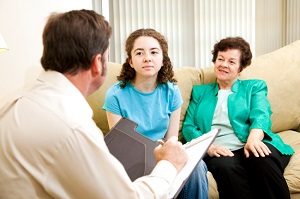 Counselors and their work are changing and developing constantly. Some counselors are choosing to work in one particular area of home-based counseling with children and families. These families are comprised of varying cultural and socio-economic status. Because working with these families is often inconsistent, sporadic, or engaged in crisis, the traits of a professional working in this area include positive “rapport, warmth, optimism, humor, and commitment†[4].
There are several advantages of performing in-home therapy, including, as a therapist, being able to build rapport, observe child and family functions outside of an office setting, make assessments, and model consistency and routine [3]. Additionally, research is showing that children in families who attend more sessions in therapy (approximately greater than 50%) have better outcomes than those families with poor attendance, [1]. It is more efficient or convenient at times for the counselor to come to the client, given transportation issues or hectic schedules.
The disadvantages for in-home counseling include safety concerns for both therapist and family, as well as lack of consistency. It can also require extra scheduling time (accounting for travel) [3].
Unfortunately, there is not a singular theory that can encompass the needs for home-based therapy. Instead, home-based therapy combines techniques cognitive behavioral therapy, multisystemic therapy, social leaning theory, solution-focused therapy, and psychoeducation for families [2]. These provide additional barriers for counselors doing this work, because they must be trained in several areas and remain flexible when executing them on a case-by-case basis.
Personally, I recommend that in-home counselors create their unique approaches to working with children and families. At the same time, I recommend that they remember basic ethics training. I have titled the professionals in this field “unconventional counselors.†We are those counselors who are trained, licensed, and affiliated with certain larger entities. We act as our own strongest agent of change.
Here’s a list that might be helpful for a first-time home-based therapist:
- Create your own personalized “on-the-go†counselor toolkit. Each counselor toolkit is going to be different based on your client population and your own therapeutic strengths. The more you are genuine to your own self, the more honest your toolkit is going to be.
- Be prepared and well-trained in flexibility. This is not the kind of position that you take lightly, nor is it one in which you participate in routine hours or appointments. Be ready to have at least two back-up plans in case your scheduled day does not go as planned.
- Clients that receive in-home counseling are notorious for inconsistency, whether that manifests with appointments, progression, or regression.
- Supervision, supervision, supervision. Adopting the role of an in-home counselor is based in a familial approach. In our world, however, a familial approach does not mean a family of origin. This may include other professionals (caseworkers), fictive kin (long-term friends of the family), foster parents, and alternate community supports. An ethical “unconventional counselor†will always seek consultation and professional supervision from other professionals.
References:
- Carrasco, J. M., & Fox, R. A. (2012). Varying treatment intensity in a home-based parent and child therapy program for families living in poverty: A Randomized Clinic Trial. Journal of Community Psychology, 40, (621-630). doi:10.1002/jcop.21492
- Macchi, C. R. & O’Conner, N. O. (2010). Common Components of Home-Based Family Therapy models: The HBFT Partnership in Kansas. Contemporary Family Therapy, 32, 444-458. doi: 10.1007/s10591-010-9127-1.
- Morris, J. (2003). The home visit in family therapy. Journal of Family Psychotherapy, 14(3), 95-99. doi:10.10.1300/J085v14n03_06
- Thompson, S. J., Bender, K., Lantry, J., & Flynn, P. M. (2007). Treatment engagement: Building therapeutic alliance in home-based treatment with adolescents and their families. Contemporary Family Therapy: An International Journal, 29(1-2), 39-55. doi:10.1007/s10591-007-9030-6
 Shock. Disbelief. Anger. Disappointment. These are just a few of the emotions you may have experienced when you discovered that your child viewed pornography.
Twenty years ago, you had to go out of your way to obtain pornography. Today, it is accessible at the click of a button. More innocence is lost earlier and earlier in today’s world. Because pornography is everywhere, seeing it is difficult to avoid—indeed, overexposure is an issue for many. Greater exposure to sexually oriented media (e.g., soap operas, music videos, reality television) contributes to adolescents developing the impression that “everybody is doing it.†Kids can also develop skewed perceptions regarding infidelity, abortion, sexually transmitted disease, and divorce, among other things.
Most figures suggest that the average age of initial porn exposure is around 11, but there is research that puts the number closer to 8. Sexual objectification impacts the mental and physical health of our children. When girls are objectified, they are often not viewed as people with dignity. Research also suggests that there is a significant relationship between pornography consumption and violence.
So when you discover that a child has viewed pornography, how should you respond as a parent? How do you prevent recurrence of viewing?
Questions to Ask Yourself Before the Conversation
- What is your ultimate goal for the formation of your child’s sexual attitudes?
- What do you model in your own intimate relationships?
What Not to Do When Confronting Your Child
- Do not jump to conclusions or overreact. You want to be a healthy advocate for your child’s well-being.
- Do not express extreme anger. Acknowledge mistakes.
- Do not shame the child with your words or actions. This can lead to the child acting out in unhealthy ways as an adult.
Questions to Ask Your Child
Keep in mind that if the person who introduced pornography to your child was at least four years older, it may be an unlawful act. If you’re unsure, contact local authorities.
- When was the first time that you saw this kind of thing?
- Have you viewed it with anyone else?
- How often do you view it? (Frequency matters; desensitization and overstimulation can occur, which can lead to unhealthy coping and relationship patterns.)
- Just what, exactly, did you see? (Be a trusted confidant for your child. He or she may be embarrassed and confused, so be gentle and patient.)
- What questions do you have? (They may be embarrassed to ask.)
- Who or what may have influenced you?
- Do you understand why this matters and why I am taking this seriously? (Position yourself to be the child’s advocate.)
- Has anything in your home encouraged this? (Be open and not defensive.)
Prevention of Future Occurrences
- Behavioral modification: Know media-based triggers, and limit time online or in front of the TV.
- Develop a family mission statement of appropriate use of computers, social media, television, movies, and books.
- Cognitive modification: Teach your child a healthy view of sexuality.
- Emotive modification: Teach your child the emotional attachment that comes with a sexual relationship. More is caught than taught by parents, so guard your home and your hearts and minds. Parents are still the No. 1 influence in a child’s life.
- Know your kids and what they’re engaging with in their life. Set boundaries and monitor use of social media, books, etc.
- Use software and parental controls on all Internet-based devices.
 May is Mental Health Awareness Month, a time to recognize a range of issues—depression, bipolar, and schizophrenia among them—and the effects they have not only on the people personally experiencing and struggling with them, but on society at large. But what does it mean to be aware of mental health, exactly, and how does that awareness manifest?
Events in the news regularly challenge our perceptions of mental health, or what we may perceive as a deficit thereof. From the marathon bombings in Boston to the Newtown tragedy to the discovery of three women held in captivity in Cleveland for nearly a decade, some of the most compelling stories in recent times have been widely associated with mental health concerns. In some cases these concerns relate to victims, in others to perpetrators of violent acts. In almost all cases, though, an initial wave of outrage gives way to apathy and disconnect as the story fades from public consciousness.
While dedicating a month to mental health awareness is nice, it’s clearly not enough. We wanted to know what our Topic Experts had to say about the matter, so we asked them the following questions: What does mental health awareness mean to you as a mental health practitioner? Is awareness, in your estimation, on the rise or decreasing in recent years? Why? What obstacles do therapists and nontherapists alike face in their efforts to increase awareness of mental health issues? What can be done to combat stigma?
Their responses follow:
- Sarah Swenson (autism spectrum): “I work as a psychotherapist with gifted children and adults. This is one of the most underserved populations in the entire area of mental health. Gifted children are routinely misdiagnosed with ADHD, OCD, impulse control disorder, and even disorders of the personality. Often, these children are medicated. This creates a chain of events with effects that extend well into the future. … It is not only to the general public that the topic of mental health awareness is significant. It is also of importance to our health care providers and the medical schools that train new practitioners. Only through the addition of coursework in the identification and clinical presentations of intellectual giftedness will the tide turn. If physicians know what they are looking at, their diagnoses and referrals will change, and children who need no medication in the first place will benefit because they will no longer be medicated into altered states that create negative environments for their giftedness to blossom and grow.â€
- Tom Wooldridge (systems theory / therapy and family-of-origin issues): “What is mental health awareness? For me, it has two components. First, we pay attention to our own mental health. What is the legacy of mental illness in my own family-of-origin and how does it affect my day-to-day life? How am I dealing with the experiences—both positive and negative—that I had growing up? What is my attitude toward my own emotional difficulties? Am I able to relate to them nonjudgmentally and with compassion? Second, we recognize the impact of mental illness and emotional suffering on those around us—friends, family, and the larger community—and begin to struggle with the question of how this awareness can inform our day-to-day lives. What are our attitudes toward those we encounter who are struggling with severe mental illness? Over time, we hope to find ways to support them in their struggles and to recognize our ultimate interconnectedness.â€
- Stephen L. Salter (values clarification / eating and food issues): “The efforts of the mental health awareness project, while coming from a caring place, can do more to obscure awareness than promote it. Sure, it might be useful to understand ‘bipolar’ and ‘depression,’ but the effort becomes counterproductive if it is not contextualized within the much larger question, ‘What does it mean to be human?’ Perhaps we’d be better served to offer a month contemplating that question. We assign some really strange names to people—like ‘schizophrenic.’ More often than not, it further exiles the ‘mentally ill’ into a class of otherness. To truly understand mental health, the first diagnosis must always be human.â€
- Deb Hirschhorn (relationships and marriage): “The stigma must come out of ‘mental health’ in people’s minds. The recent mass murderers needed help long before they became adults—and the help came too little, too late if it came at all. Here is what should happen instead: School counselors should be vigilant and then call parents in to discuss their children when something seems not right about a child. However—and this is a big however—it should be handled in a way that does not make the parents feel ‘one-down,’ but rather with great humility and kindness on the counselor’s part. The message should be sympathetic to whatever the parents and child may be experiencing. After all, if the child is being bullied at school or excluded from cliques, the child may need help with social skills and the parents may themselves not be strong in this area. This is nothing to be ashamed of: We all have our strengths and our weaknesses, and that point should be made to them. I, for example, can’t sing on key to save my life, and these parents may be great musicians. Not everyone is great in the social area, parents included, and even ones who have those skills may not have the skill of passing it on to their children. School counselors should be referring such children as soon as the problem becomes evident, even as early as kindergarten, and the referral should be geared toward handling difficult social and academic situations, dealing with abuse at home, and self-esteem building. It should not automatically include a prescription for medication. Therapists of all stripes must recognize the inherent value in talk therapy so that we can promote that message to the public.â€
- Deborah Klinger (eating and food issues): “I believe that mental health awareness is increasing. High school counselors whom I’ve come in contact with are knowledgeable and concerned about students’ mental health issues, and the universities in my area have excellent campus counseling services that liaise with psychotherapists in the community. None of this was the case when I was in high school or college. The National Association of Mental Illness (NAMI) holds local family-to-family support groups for family members of mentally ill persons. And I hear mention and discussion of depression, bipolar, eating disorders, etc., everywhere—in national news media, online, and in day-to-day conversation. Not only has awareness of mental health issues increased, but so has understanding and acceptance.â€
- Lynn Somerstein (object relations): “Thanks for asking about mental health awareness. I am sad people remain largely uninformed about mental health issues and are often reluctant to seek help because of the stigma that still comes with the territory. Treatment should be made more available, too, to those who want help but can’t afford it. Many therapists make private, sliding-scale arrangements for those without health insurance, but what we really need is better government health care and education about the many different avenues available—from talk therapies to medication.â€
- Olga Gonithellis (creative blocks): “Reflect, talk, act! This month is an excellent opportunity for every one of us to reflect upon the importance of mental health, to start talking, and to take action. One of the common misconceptions is that talking about it creates it. There is an irrational fear that by sharing knowledge and information about mental illness, one will reinforce its existence. However, opening up communication and sharing facts and experiences are helpful tools in dealing with all sorts of psychiatric conditions, from depression to panic and from body dysmorphia to schizophrenia. Using my area of interest as an example, there is growing scientific research regarding the prevalence of psychiatric issues in performers and creative individuals. By encouraging a genuine curiosity about this topic, we are able to dispel myths and to discover realities. Artists have been able to receive help and guidance on concerns such as performance anxiety, low self-esteem associated with stress in the entertainment industry, the connection between mood and creativity, and more. Similarly, there are many other topics related to what impacts mental health that need to be addressed in our homes, our schools, and our communities. However, without awareness and a nonjudgmental approach, we will not get very far. Let us use this month as a chance to reflect, talk, and act!â€
- Andre S. Judice (posttraumatic stress / trauma and energy psychology): “Mental health awareness is the recognition that our psychological well-being is an important part of our own health, productivity, and happiness, as well as the well-being of our communities. In my opinion, mental health awareness is on the rise in our country. Certainly, recent events across our nation have called this issue to the forefront as we are forced to consider the motivations of people who set out to harm others. Unfortunately, it seems that to this day in our culture too few people understand the factors that contribute to or hamper good mental health. On the other hand, our efforts to increase people’s awareness of these factors, as well as the various ways that we can each be more psychologically well, seem to be taking hold. … I believe that one obstacle to increasing mental health awareness is in the various belief systems (be they entrenched family beliefs, religious beliefs, or other beliefs held by a given group) that lead people to adhere to ineffective and antiquated value systems in which others are told that they don’t need outside assistance but merely willpower to be better and help from within the group itself. In these situations, people needing more effective ways to improve their mental well-being miss important assistance and opportunities. Certainly, stigma associated with reaching out for help is another obstacle which seems best resolved with increasing numbers of people being open about their own utilization of mental help support systems.â€
- Shannon McQuade (addictions and compulsions): “It would be helpful to simply acknowledge that we all have a nervous system that, like anything else in the body, can break down. We are all at risk for mental health issues. Like cancer, some are more vulnerable than others. Many people have been rushed to the emergency room believing they were having a heart attack, only to discover that they were actually having a panic attack. A mental assessment should be part of a regular doctor visit, with referrals made to specialists as needed. If everyone was being screened as though it were no big deal, we would see attitudes change. Additionally, an increasing number of mental health professionals are ‘coming out of the closet’ and risking exposure to put a face on mental health issues, letting people know that we (myself included) who struggle with these issues can lead full, happy, productive lives if we have the right resources. Dr. Marsha Linehan, developer of dialectical behavior therapy, announced in 2011 that she had struggled with borderline personality issues, a diagnosis that carries a very heavy stigma and is difficult to treat. Though she had been apprehensive in sharing this (with good reason) early in her career, she decided that sharing her experience and recovery would bring hope to others. I think this a great example of self-disclosure that is helpful to our clients and to the public in general.â€
- Marian Stansbury (imago relationship therapy): “It appears the awareness of mental health has been increasing over the years, especially influenced by people like Oprah. Being aware of not only what we’re feeling in our bodies, but also in our emotions and in our thoughts, is critical for good mental health. An obstacle to this is when we judge ourselves as having something wrong with us and then have too much embarrassment or shame to ask for the support we need. Or, we worry about what others would think if they found out. Just as we go to medical doctors when we have pains in our bodies, it’s important to seek out mental health professionals when we’re having disturbing emotions and/or relationships. A quick quiz to assess our mental health: (1) Do we scan our bodies for tension and ask what might be causing us to tighten up? (2) Do we use the principles of rational thinking that will lead to more positive emotions? (3) Do we check our emotional levels each day? (4) Do we ask ourselves how we’re treating others? How we’re treating ourselves? These aspects all comprise good mental health. Meditation and exercise are two important ways to be more mentally aware and to assess these different aspects.â€
- J. D. Murphy (drug and alcohol addiction): “Tragedies such as that seen in the recent Newtown school shooting that continue to make the headlines over recent months and years leads this therapist to conclude that the progress needed in the treatment of mental illness is far from where it needs to be! This despite the growing availability of effective treatment, mental health professionals, and treatment facilities. One would have to question if this escalation is due, at least in part, to the stigma that many place upon the thought of being considered to have a mental illness, or, for that matter, to even have a family member or close friend who is challenged by such. Undoubtedly, recent cutbacks in the funding of programs designed to provide treatment for those struggling with a mental or addictive disorder has and continues to have an adverse impact on these populations. Schools, communities, organizations, churches, and, yes, even governmental entities must begin to work together in more effective efforts to raise awareness, normalize, destigmatize, provide funding for and treat such individuals.â€
- Angela Lee Skurtu (relational psychotherapy and sexuality / sex therapy): “Mental health awareness includes both awareness of the number of people affected by mental health issues and the need for affordable interventions. For example, major depression affects approximately 14.8 million American adults every year. The National Institute of Mental Heath (NIMH) reports that it is the leading cause of disability in the U.S. for adults and teens. However, many insurance plans will not provide a minimum number of therapy sessions for mental health. … Other obstacles include public perceptions of therapy and a tendency for bad therapy to have wide ripple effects. When clients experience bad therapy, they share that information with others. This further reinforces the stigma already attached to mental health. Compound this with images of therapy in the media, and we have further misunderstandings. … To combat stigma, we need to improve our field. We need to increase funding for research and consistently publish new research in magazines aimed toward the public. We need to put that research into practice in our daily treatment. When we get better at treating mental health issues, people will see the value of what we do and mental health diagnoses will be seen as what they are: health issues that benefit from treatment.â€
- Kelley Garry Marschall (worry): “Part of therapy is meeting people ‘where they are at.’ And these days, people are incredibly busy. Folks worry they’re not doing enough at home, work, and in their communities. Mental health clinicians hanging on to the gold standard of workday office appointments as the only way to help people is no longer meeting people where they are. It just creates more stress. We can email, Skype, and talk on the phone with our physicians about our physical health; why not talk to our clinician about our mental health? If practitioners can be less ‘couch bound’ and more open, with a client’s permission, to using multiple modes of communication to help people, the more accessible, open, and everyday mental health becomes. Tossing the couch may help the stigma fade away in the bright sunshine of everyday accessibility.â€
- Tonya Lapido (relational psychotherapy and multicultural concerns): “In 2004, none of my clients referred their friends or family to me. People said the same thing over and over: ‘You’re a great therapist but I’m not telling anyone that I’m in therapy.’ Previously, our society equated mental health with ‘being crazy.’ While some maintain that perspective, it is also countered with the understanding of mental health as part of health. The discussion of wellness and work/life balance brings mental health to the forefront as an aspect of life that needs attention. … I recently attended a large business luncheon. I was the only therapist, and as I described my services the conversation quickly turned to the stigma associated with therapy. Three people stood up and said that they had previously been in therapy and found it useful. They weren’t shunned but applauded. Everyone literally applauded them for being open about their experience with mental health. … Though some stigma remains around mental health and its treatment, our society is moving in the right direction. In 2013, I have seen a rise in word-of-mouth referrals in my practice. People are telling others not only about the benefits of therapy but also that they themselves are in therapy!â€
- Irene Hansen Savarese (communication problems): “Awareness of self is essential for change. May is Mental Health Awareness Month. As a marriage counselor and a relationship specialist, awareness of self in my work with couples and families stands out. … When clients ask a therapist for help, they are very much aware that something in their relationship isn’t right. Often partners are focused on what the other is doing wrong or not doing right. They’ll tell me that they don’t feel understood and that they don’t feel respected by their partner. Most partners feel that they have tried everything to fix their partner in the hope of fixing their relationship. … In my initial sessions with partners, I talk about the importance of each partner developing an awareness of himself or herself rather than focusing on what the other should be doing differently. I also look at how they react to each other in conflict situations and whether they manage to keep connected and engaged. These are important first steps to ensure an attitude conducive to partners being able to reach out to each other and work as a team.â€
- Sarah Noel (person-centered / Rogerian therapy): “As I see it, mental health awareness is about educating the public on mental health issues, treatment options, and success stories. The more information people have about mental health issues, the better able they will be to recognize signs and symptoms, in both themselves and others. Further, the more information people have about treatment options and success stories, the more hope they will have. Hope is a powerful thing and often leads people to therapy. … Like many issues, I think the stigma associated with mental health issues has declined as awareness has increased. I think one way to continue the decline of stigma is to look at ‘mental illness’ in context. For example, a child who is raised by neglectful, unloving parents may become fiercely independent, requiring little from anyone. This is incredibly adaptive behavior that will allow this child to survive; however, taken into adulthood this behavior can create myriad personal and professional relationship issues. Failure to succeed personally and/or professionally might lead to depression. Understanding ‘mental illness’ as something that was once adaptive but simply no longer works is empowering, not stigmatizing—if you were able to adapt in the past, you can do so again.â€
What do you think about what our Topic Experts shared? What does mental health awareness mean to you? Let us know your thoughts in the comments section below.
Experiencing such discomfort when there is seemingly no reason for the discomfort can be confusing, and even a little scary. You may be comforted to know that it is also quite common. We all have vague feelings of unrest at times, and they often pass just as quickly and mysteriously as they arrived. However, it sounds like this is something that you have been struggling with for a while now, and perhaps it is even intensifying. When these feelings persist, I believe it is a cue that it is time to enlist some support in sorting things out. Partnering with a therapist can provide the supportive relationship and the dedicated time and space to explore this.
Over the years, I’ve had many people come in for therapy with much the same scenario you presented—committed relationship, good job, and stable finances, but unhappy, perpetually anxious, or, as you say, unable to relax. It typically doesn’t take too much probing before we are able to identify one or more areas in someone’s life where there is dissatisfaction. Thoroughly exploring these areas creates an opportunity to develop insight into the source of the unrest. Once there is a deeper understanding of what is actually happening, concrete steps can be taken to address it. Sometimes the solution is less concrete, however. For some, the dilemma is more existential in nature—they are seeking answers to questions about the meaning and purpose of life. In these cases, therapy provides an opportunity to explore these questions while providing the support that may be needed when no definitive answers materialize.
Though I can’t be sure what exactly is causing your unrest, I sense that you have reached a level of frustration that is pushing you to address it. You took the brave step of writing in with your question. I encourage you to continue taking brave steps and find a therapist who can help you sort through what you are experiencing. It might be scary and even painful, but in the end, you just might find yourself able to relax.
Sincerely,
Sarah
 With the magnitude of demands placed on special needs families, siblings of special needs children can often feel overlooked and in need of emotional support. A “special needs child†is defined as having a medical, developmental, or neurological challenges, or another type of disability which impacts the entire family system, thereby requiring special supports (i.e. medical, educational, etc.). In many families where such challenges are present, it’s inevitable that the added stress impacts not only parents and the child in question, but also typically developing siblings. In fact, rates of depression, anxiety, and chronic stress are higher for the special needs family. But with adequate supports, such impediments can be reduced. Special needs disabilities can run the gamut from severely disabling conditions, such as cerebral palsy, in which a child is wheelchair bound and cannot speak, to a high-functioning child with an “invisible†disability, such as attention deficit (ADHD) or dyslexia.
Special needs siblings may feel the following:
- guilt about being a “typically†developing youngster;
- embarrassment about a sibling’s behavior in front of friends;
- frustration that the sibling may not be able to relate or play at the same level;
- worries about the health and survival of the sibling, and the impact of responsibility placed upon the sibling once parents become elderly;
- resentment that attention/services are diverted to the special needs sibling;
- loneliness, or a feeling that peers may not understand what they are going through;
- parentification in caretaking role of sibling, should parents not have adequate support/resources or emotional attunement to the sibling. It would make sense that special needs siblings might be at higher risk for depression and anxiety if they do not have support and resources available.
Your child may benefit from a referral to a competent and compassionate psychotherapist who specializes in special needs family therapy. It is of vital importance to special needs parents is to look for the following symptoms in siblings of special needs children:
- feelings of hopelessness, marked depressed or anxious mood for more days than not, isolation and withdrawal from peers, or a drop in grades or absence from school;
- marked increase in irritability;
- insomnia, appetite changes, panic attacks, and any clear behavioral/mood change that is in sharp contrast to the child’s typical baseline mood/behavior.
Likewise, if any parent/caregiver exhibits the above symptoms, I recommend seeing a family psychotherapist as soon as possible.
There are also many benefits and unique experiences for siblings of special needs children, however. They have the opportunity to learn caregiving and sensitivity that many of their peers may not experience.
Special needs siblings may also feel the following:
- higher level of maturity than peers, given the opportunities to practice empathy and patience with the special needs sibling;
- ability to embrace cultural diversity as relates to special needs and families that are not “typicalâ€;
- protectiveness of the sibling, should he or she be in a position of bullying;
- pride in milestones accomplished by the special needs sibling;
- tolerance of people’s differences;
- increased emotional intelligence and insight to the human condition;
- opportunities to be involved in a strong family unit that focuses time and attention on all family members;
- loyalty to and cohesiveness with the family unit;
- gratitude for health and vitality;
- appreciation for siblings’ gifts/strengths, in light of any challenges;
- social adeptness: the sibling often is quite gifted in reading social cues and relating to people, having had much practice “translating†the world to the special needs sibling;
- resilience: they have also had much practice in managing adversity; they are often well-prepared for the real world, having had to problem-solve and endure challenge as a young person;
- creativity and resourcefulness: Siblings often must creatively problem solve strategies to help special needs families work around the special needs child (i.e. researching wheelchair friendly restaurants, creating a music CD for a blind sibling, etc.)
- mindfulness, focus, and gratitude: many siblings have found a peaceful emotional state as they accept the challenges and advantages that accompany a special needs family.
It is true that there are an equal or greater number of positives and opportunities for the special needs sibling, when given the appropriate support and resources. Several websites and references are listed at the end of this article to support the special needs sibling in acquiring appropriate support to thrive and embrace being a special needs family member. The following objectives are also of great importance for special needs parents, in an effort to ameliorate the stress involved with being a member of a special needs family:
- Provide ample one-on-one attention to all children in the family, not just the special needs child.
- Maintain high standards and expectations for all children, and, as much as possible, an expectation for all children in the household to abide by the same rules, consequences, and privileges.
- Be able to describe the special needs child’s disability to your “typical†child in a developmentally sensitive manner. Allow your child to ask questions about medical/educational/etc. interventions, course of treatment, what to expect long-term, etc. Be aware that preschool-age and younger may have a difficult time understanding and may need play/art therapy with a trained professional to assist in understanding the disability and answering any questions the child has. Older children (school-age) may wonder if the disability is contagious, and may need reassurance that they can’t “catch†the disability. Teens may need help with their mixed feelings of loyalty and embarrassment, as peer relationships become increasingly more important. Children of all ages may wrestle with guilt that they do not struggle with the same challenge as their siblings, and may even feel a pressure to achieve greater accomplishments to compensate for any “deficits†in their sibling.
- Reassure your typically developing child that his/her sibling is receiving the services he/she needs to develop optimally, that it is not their fault that their sibling has a disability, and that it is paramount to be a unique individual with her/his own unique dreams and gifts. Take the pressure off siblings and practice stress management activities like deep breathing, journaling, family discussions, and family fun.
- Family fun is really important. Find ways the entire family can bond together and laugh, whether you do something like swimming, hiking, singing, Pictionary, or whatever common-ground activity brings smiles, laughter, and family unity.
- Connect your typically developing child with a support group for special needs siblings to reduce isolation, increase validation, and reduce stress (see #5 in Resources, below).
- Acknowledge any concerns siblings may feel or demonstrate in behavior, and do not hesitate to enroll your child/family in a supportive psychotherapy program for the entire family.
- Model self-care as a parent; get your own psychotherapy, self-care regimen, and support, engage in stress-reduction activities, and include your family or designate a quiet time where everyone practices meditation, deep breathing, yoga, listening to music, etc.
- Allow typically developing siblings to have their own activities, which are specific to their talents and interests. Help them to flourish by attending sporting events, cheering them on, and encouraging friends and family to do the same. Honor each family member with rewards for unique gifts and talents (winning a spelling bee, scoring a goal in soccer, etc.). Pay attention to each family member and celebrate everyone’s successes and triumphs.
Most importantly, keep communication open with regular family meetings to problem solve about communication issues, chores, etc. Then take the opportunity to play a family game, laugh, dance, sing, and bond. As parents, keep a positive spin on being a special needs family; your situation does not have to be one of drudgery.
On the contrary, with the right resources and supports in place, life can be deeply meaningful, full of purpose, and imbued with unconditional love. Gifts and talents not detected before are discovered and embraced. Life can actually be beautiful. It is up to the parent to set the tone, to take the “emotional read†on the family, and link the family up with resources and supports, which make a world of difference in supporting the emotional health of the special needs family.
Resources for special needs siblings:
- Siblingsupport.org: for a listing of support groups for special needs siblings and how to get a group up and running in your community
- Thearc.org: sibling support network
- med.umich.edu/yourchild/topics/specneed.htm: University of Michigan link for special needs families
- friendshipcircle.org/blog/2013/04/25/the-importance-of-parental-support-and-guidance-for-special-needs-siblings/: Article with resources for sibling support The Friendship Circle website
- nytimes.com/2001/03/06/health/06SIBL.html: Article from New York Times (2001) in support of special needs siblings
- Meyer, Donald and Vadasy, Patricia. (2008). Sibshops: Workshops for Siblings of Children with Special Needs (Revised Edition), Brookes Publishing Co.
- Meyer Donald. (1997). Views from Our Shoes: Growing Up with a Brother or Sister with Special Needs, Woodbine House.
- Meyer, Donald. (2005). The Sibling Slam Book: What it’s Really Like to have a Brother or Sister with Special Needs, Woodbine House.
- Bleach, Fiona. (2002). Everybody is Different: A Book for Young People Who Have Brothers or Sisters with Autism
- Gordon, Michael. (1992). My Brother is a World-Class Pain: A Sibling’s Guide to ADHD-Hyperactivity
- Stuve-Bodeen, Stephanie and Devito, Pam. (1998). We’ll Paint the Octopus Red
- Choldenko, Gennifer. (2004). Al Capone Does My Shirts
- The Sibling Information Network Newsletter: for quarterly support for special needs families
The new revision of the Diagnostic and Statistical Manual of Mental Disorders (DSM), the long-standing resource of mental health diagnoses, has been met with criticism from virtually every corner of mental health advocacy. Despite the often-aggressive criticism of the DSM, however, many mental health experts were surprised when the National Institute of Mental Health, which is the largest organization of mental health research, and a significant source of funding for mental health researchers, issued a statement that was harshly critical of the updated manual, the DSM-V.
Headlines in the popular press have treated this development as a shock to the mental health world and a complete torpedoing of the DSM. The reality, however, turns out to be a lot more nuanced. The NIMH is not withdrawing support for the DSM-V. Instead, it is developing its own mental health diagnostic system that it believes will be more useful than the DSM. The NIMH’s statements about the DSM in recent months have been very critical, and a statement on the NIMH website reads, in part, “Patients with mental disorders deserve better.”
The NIMH’s Concerns
The NIMH has raised several concerns about the new DSM-V in particular, as well as general traditions in diagnosing mental health issues. Particularly troubling to the NIMH is the fact that mental health diagnoses are based primarily upon symptoms, and that experts diagnose diseases based upon agreed-to symptoms rather than tests, such as blood work. This, argues the NIMH, makes the diagnostic standards in the NIMH less valid than diagnostic standards in other areas of medicine.
Noah Rubinstein, GoodTherapy.org founder and CEO, said, “It makes sense that NIMH, in its support of the disease model of mental health, would focus on biological markers rather than symptomology, and thus reject the DSM-V. However, the purpose of the DSM‘s historical focus on symptoms is to remain atheoretical and preclude any explanation about the etiology of the various diagnoses.â€
Biological Psychiatry
The NIMH’s new mental health diagnostic guidelines might not please many critics of the DSM. The new model will focus on biological psychiatry, a field that understands mental health disorders as diseases caused by problems with brain chemistry or the nervous system. “For many of the syndromes listed in the DSM, underlying causes have always been up for interpretation, and the APA has not wanted to take a theoretical stance,†Rubinstein said. The NIMH intends to work on uncovering genetic markers for mental illness as well as brain pathways and nervous system functions that can contribute to the development of mental illness. Diagnostic criteria will then be based around biological functions rather than similar symptoms.
But there are reasons to hesitate about this approach. “Indeed, there are some mental health disorders that could be argued as purely biologically based,†Rubinstein said. “However, many of the issues that bring people to therapy do not necessarily have biochemical origins. These issues include adjusting to life changes, grief, self-esteem issues, anger, relationship problems, certain forms of dysthymia, anxiety, and many others.†Rubinstein predicts that, “unfortunately, as problematic as the APA’s DSM-V is, NIMH’s version will do no better.â€
What It All Means
For generations, psychiatry has diagnosed patients based upon symptoms, and disorders have been treated as similar when they have similar symptoms. Under the NIMH model, however, two disorders that seem quite similar might fit into completely different diagnostic categories. The change also could mean that the NIMH will be less likely to fund research that does not focus on biological psychiatry.
This change could be a problem for some philosophies of mental health. Treatment that focuses on altering a person’s environment while also treating his or her brain—for example, by encouraging meditation and the development of relationship skills in conjunction with antidepressants—might begin to fall by the wayside.
“There is so much interplay between the environment and biochemistry—between what happens to us, around us, and inside of us,” Rubinstein said. “It is illogical to claim, for example, that the cause of a person’s depression is biochemical, when the biochemical imbalance could just as well be a result of spouse abandonment. In other words, biochemical imbalance can just as easily be viewed as a symptom.â€
What Happens Next?
There’s no way to predict how the NIMH’s diagnostic criteria will end up looking. It may be that some illnesses don’t neatly fit into a single category or that researchers can’t yet determine the physical causes of some disorders. It could be that some disorders are a product of environment, and it’s likely that many disorders are likely the result of a complex interaction between the environment and the genes.
Rubinstein seems optimistic that this interaction may be considered soon. “I imagine that future research will try to tease out what comes first, the biochemical change or the environmental event, in an effort to identify true mental health issues,†he said. But he acknowledges that this work is “complicated, and perhaps impossible,†and ultimately, until this research is accomplished, he says “the NIMH diagnostic guidelines will remain biased, limited, and inaccurate.â€
Rubinstein is not alone. Mental health advocates who argue in favor of holistic approaches to treatment are unlikely to be satisfied by the NIMH’s position. Some advocates have objected that the DSM pathologizes normal behavior or that the addition of new diagnoses is an attempt to label everyone as mentally ill. The NIMH’s approach doesn’t answer this critique, but it is likely a welcome answer to advocates who have long argued that the DSM‘s diagnostic criteria are unscientific.
References:
- Grohol, J. M., Psy.D. (n.d.). Did the NIMH withdraw support for the DSM-5? No. Psych Central.com. Retrieved from http://psychcentral.com/blog/archives/2013/05/07/did-the-nimh-withdraw-support-for-the-dsm-5-no/
- Transforming diagnosis. (2013, April 29). NIMH RSS. Retrieved from http://www.nimh.nih.gov/about/director/2013/transforming-diagnosis.shtml
 The green-eyed monster of envy is often viewed as an emotion that leads to bad behavior. Envy can also be painful for those experiencing it. Longing for a new home or enviously watching friends post vacation photos on Facebook can slowly eat away at your self-esteem and harm your relationships with others.
Envy and jealousy may be used interchangeably, but there’s actually a meaningful distinction. While jealousy is the fear of losing something you already have – such as a spouse – envy is pain over something you don’t have – a flashy car, a perfect family, or a good marriage. Social networking can increase envy, and the media often fuels feelings of envy by parading an endless supply of things you do not, or cannot, have. You don’t have to permanently live with envy. There are several things you can do to cope with the overwhelming emotions that come with it.
[fat_widget_right]Deconstruct It
When you feel that first pang of envy, don’t ignore it, but don’t continue feeding it. Instead, try to deconstruct it. What’s really behind the envy? Envy can tell you a lot about what you want – a vacation, a successful spouse, a new job. And if you listen to your feelings of envy and interrogate them, you’re more likely to arrive at useful information about yourself. Question why you’re feeling envy, what is missing in your own life, and if any other emotions – such as anxiety or frustration – could partially account for your envious feelings.
Focus on Gratitude
You might not have a million dollar beach house, but you do have something to be grateful for; everyone does. Rather than fixating on what you don’t have, make gratitude a long-term strategy. Make a list of things you’re grateful for – no matter how small – each day. And when you feel pangs of envy, replace each envious thought with a moment of gratitude for something fabulous about your own life.
Get a Reality Check
When you’re marveling at someone’s social networking profile or alumni newsletter update, it’s easy to forget that everyone has a public and private face. We all strive to put our best face forward. That classmate or co-worker who seems to have an amazing life may be secretly struggling. Don’t believe the hype about other people. Instead, realize that everyone struggles with something and you might not know what the inside view of another person’s life is.
Decide What You Want
Rather than wallowing in envy, resolve to take steps to get your own life on track. Envy can be a positive emotion when it empowers healthy goal-setting. When you’re feeling envious, ask yourself what it is about another person’s life that you envy, then make a list of the steps you can take to reach your goals. By taking a minuscule step every day, you can get on track to have the life you want, of which you can be proud.
Help Others
While there may always be people who have things you don’t have, there are also almost certainly people who have much less than you. Helping others can offer an effective perspective adjustment. It also feels good all on its own. Try volunteering at a homeless shelter or soup kitchen, and use your volunteer experience as an opportunity to take stock of all you have instead of all that you’re lacking.
References:
- Controlling envy. (n.d.). Dr. Phil.com. Retrieved from http://drphil.com/articles/article/340
- Keeping envy and jealousy under control. (n.d.). University of Rochester Medical Center. Retrieved from http://www.urmc.rochester.edu/encyclopedia/content.aspx?ContentTypeID=1
- Matousek, M. (2012, May 29). When friends get rich or famous (or both). Psychology Today. Retrieved from http://www.psychologytoday.com/blog/ethical-wisdom/201205/when-friends-get-rich-or-famous-or-both
 Transitions: What Are They? Why Are They Difficult for Children with Autism?
A transition occurs when there is some sort of change to the parameters of an activity or situation, such as going from one activity to a different activity or changing plans. For example, going from playing computer to doing homework, riding the school bus home, going on vacation, going out for ice cream with dad when you planned on doing that with mom — all represent examples of transition situations.
The problem with transitions is that either something is ending, or something is beginning. Often, this means going from doing something preferred to doing something nonpreferred. Â This can be problematic for just about anyone. For the autistic individual who is very driven by being comfortable, being obligated to stop doing preferred, comfortable activities is even tougher. After all, why would one want to stop playing a favorite video game just to take a bath?
As for all human beings, as well as for individuals on the spectrum, transitions mean uncertainty. Increased uncertainty means increased anxiety. New situations mean different rules and expectations. Rigidness and routine adherence are coping characteristics of autism, and these serve to reduce uncertainty, thereby reducing anxiety. These qualities tend to make transition situations that much more difficult.
Here are a few things you, as a parent, can do to make transitions a little easier for yourself and your child.
Scheduling: Planning Ahead to Reduce Anxiety
Since uncertainty and the anxiety that goes with it is a large part of the problem with transitions, it makes sense that reducing uncertainty might make transitions easier. Scheduling is an easy way of doing this.
Providing your child with a schedule does two things: It allows your child to have a better sense of what is going to happen in the future, and provides a better sense of control over his life (if you make him a part of the scheduling process).
Here are some tips to maximize the effectiveness of your scheduling strategy:
- Schedules should be understandable. Make sure the schedule is written in such a way that the child can read/utilize it. Use pictures instead of words if that will make things more concrete for him/her.
- Schedules need to be seen to be effective. Make sure the schedule is easily available or can be carried by your child so they can refer to it whenever they need to do so.
- Scheduling should be a collaborative activity. Whenever possible, give your child both choices of activities and the order in which they will be done. This increases your child’s sense of control and reduces uncertainty and anxiety.
The “Ease-in†Proactive Warning Strategy
Give your child as much warning as possible about upcoming transitions. Instead of just springing change on your child with little or no warning, give him/her time to mentally process and prepare for the change. Making the sudden mental shift from one activity to another can just be too much for some kids.
Give your child progressive reminders of the upcoming change. So, 10 to 15 minutes before the transition is going to occur, tell your child of what is going to happen, when it is going to happen, and what they need to do. Do this again a few more times, maybe at five minutes and two minutes. You can also do this when the activity itself hasn’t changed but other details of the activity have changed (change in time, who’s going, order of activities, etc.) Giving repeated reminders of what is going to occur beforehand helps reduce uncertainty and alleviate anxiety for your child.
Priming: Setting Expectations ahead of Time
This strategy is simply a variation of the “ease-in†strategy. This is where you review what is going to happen and what the expectations are before going into a given situation. The difference between this and the “ease-in†is that this is done just prior to the transition. It puts your expectations forefront in your child’s mind and makes it more likely that they will remember them. It’s not a guarantee they will follow directions, but it stacks the deck in your favor.
I often use this for more familiar activities. For example, every time I take my kids to the store, I say the following:
“OK kids, we are about to go in the store. Let’s review the rules. We are here to buy [x] and [y]. If you are good, I may get you [z]. Please keep your hands and feet to yourselves. Follow my directions. We will use the bathroom as soon as we get in and that’s it. Finally, if you can’t see me, I can’t see you, so let’s stay together.â€
I’ve said this or something like this before every shopping trip with my kids for years. They can sometimes recite it with me. My kids have learned to stay with me in the store. They don’t ask to go to the bathroom 15 times during a shopping trip. They generally behave well, and earn treats as a result. It was not always so easy.
“Grandma’s Law:†The Power of the Premack Principle
The premack principle, or “grandma’s law,†refers to alternating between nonpreferred and preferred activities. In essence, it’s “if you want dessert, you need to finish your vegetables.†By doing this, you can always give your child something to which to look forward, even when he/she has to do something they don’t like doing. This strategy both reduces uncertainty and increases compliance through increased motivation (people are more willing to do nonpreferred activities if this gets them access to or leads to preferred activities).
Incidentally, premacking works really well with scheduling. Alternating between preferred and non-preferred activities will increase the power and motivation of the schedule. This, in turn, will make it easier for your child to make the transitions.
One Last Piece of Advice
These strategies work really well together. Furthermore, the more consistently they are used the better they work. To get this to happen, it behooves you, as parents, to train the other caregivers in your child’s life as to how best to guide them through transition situations. When the child’s parents, teachers, babysitters, home health therapists, etc., are all doing the same thing, your child is going to experience less uncertainty and, therefore, less stress. This, in turn, should result in fewer negative behaviors and better transitions.
I hope you found this information useful and that it makes life with your child a little easier. As always, remember to breathe… you got this.
 Chances are most of what you think you know about therapy is misrepresented in the media. Why? Because pop culture’s idea of what goes on in the therapy room is largely based on fictional therapists. In short, good TV and movies depict bad therapy. The dramas—made famous by fictional therapists—that interest viewers portray the qualities that would be harmful to real-life people in therapy (and most likely would get those therapists in legal trouble).
Below are the top five lies that you may have learned about therapists on television and in movies, followed by a more realistic view of therapy:
Lie No. 1: Therapists can’t be trusted to keep your secrets or respect your privacy. Television and movie therapists are often portrayed as devious or self-serving. On Mad Men, Don Draper’s wife was seeing psychiatrist Dr. Arnold Wayne, who then reported the details of their sessions to Draper (this one tops the list).
The reality: Therapists are ethically bound to maintain confidentiality. What is said in a therapy session will never be shared with anyone else without your permission. The exception to this rule is when someone is in danger, as in the case of child abuse, for example. Legitimate therapists will explain the limitations of confidentiality at your first session.
[fat_widget_right] Lie No. 2: Therapists’ foibles, oddities, and mistakes are the norm. The media often portray therapists as incompetent, either because they are pompous or because they just aren’t effective in therapy. Sometimes they’re depicted simply as being off-the-wall. The most obvious example of an incompetent therapist is the delusional Tobias Fünke on Arrested Development—a failed psychiatrist with multiple phobias and a total blindness to the problems in his marriage and family. Mind you, Tobias is a hilarious character (and that is the point)—but there’s nothing therapist-like about him.
The reality: Therapists are highly educated, normal people. In general, therapists hold either a doctorate or a master’s degree in psychology or a subspecialty (such as marriage and family therapy), and they are required to take continuing education courses on a regular basis to keep their skills and licenses current—a license is required in most states. Therapists are bound by the ethical standards of their profession as well as by local and federal laws. While perfection might be desired by a person in therapy, therapists are human just like everyone else.
Lie No. 3: Your therapist will fix your problems. Fictional therapists on TV and in movies tell people in therapy what to do, taking for granted they “have the answer.†Even Dr. Phil (who is not fictional) primarily lectures and offers advice on his show.
The reality: A good therapist will assist you in finding your own answers. Your therapist might occasionally offer a suggestion about changing a behavior, or give you “homework†to try out between sessions (this isn’t advice, but a directive). It is much more likely that if you ask your therapist for advice, he or she will help you explore your own inner knowledge about what is best for you in a given situation. Each therapist has his or her own style. And there are different therapies that prescribe a more direct vs. indirect approach.
Lie No. 4: Your therapist will become very involved in your life as your on-call crisis manager. Many TV therapists are portrayed as being intimately involved in the day-to-day dramas of people’s lives, taking endless phone calls to help the client resolve a sticky situation. In the comedies Analyze This and What About Bob? this concept is taken to an extreme, as the therapists become overly involved and react defensively to people’s needy behaviors.
The reality: Therapists maintain therapeutic boundaries in order for therapy to be effective. The therapist will explain his/her policies at your first visit. Most likely, your interaction with your therapist will be limited to scheduled visits, which are typically just once a week, but short five- or 10-minute calls between sessions are usually not prohibited (this is an individual therapist courtesy). Therapists often do respond to crisis calls when deemed appropriate to do so. It is good practice to ask your therapist how he or she handles these issues if you are uncertain.
Lie No. 5: Your therapist might become romantically or sexually involved with you. It’s easy to think, from the examples we see on TV and in the movies, that most therapists end up in romantic entanglements with people in treatment. As an example, in the blockbuster romance The Prince of Tides, the psychiatrist played by Barbra Streisand begins therapy with her client’s brother and eventually has a sexual fling with him.
The reality: Therapists are ethically bound to avoid dual relationships or sexual contact with people in therapy. A dual relationship refers to a situation in which the therapist interacts with a person in therapy in a way that may be harmful to the person. In general, this is highly frowned upon by therapeutic ethics. No therapist should engage in a romantic or sexual relationship with you while you are in treatment with him/her.
“My therapist told me the way to achieve true inner peace is to finish what I start. So far today, I have finished two bags of M&M’s and a chocolate cake. I feel better already.â€
—Dave Barry
So, how are you supposed to feel safe and keep pace with all these potential issues? First of all, it’s your therapist’s responsibility to handle sticky situations correctly and within the laws that govern them. Mental health professionals are required, ethically and legally, to explain these issues to you before the process of therapy begins. Typically, you will be asked to read and sign a detailed document (usually called an “informed consent†or “disclosureâ€) that describes the therapist’s way of practicing and his/her ethical and legal obligations. If you have questions, you can also contact your state licensing board, as it is set up to protect your rights.
Reference:
Squiddo (2013), Retrieved May 5, 2013, http://www.squidoo.com/psyquotes by Jaktraks.
 We all know an adrenaline junkie: the friend who jumps out of airplanes for fun, the sibling who spends her time traveling to war-ravaged countries, or the co-worker who spends her weekends speeding on a motorcycle. Adrenaline rushes are readily available at just about every turn. A number of factors can affect whether a person ends up a risk taker or a quiet homebody, but there’s evidence that a little risk-taking now and again is good for almost everyone.
Effects on the Brain
Risk-taking causes real changes in the brain, which might account for why risk-takers quickly seem to become adrenaline addicts. Major risks release adrenaline, which can lead to a quick rush, and dopamine, which causes intense feelings of pleasure. While these chemicals contribute to a powerful high in most people, the feelings can be especially addictive to people who are struggling with feelings of sadness or depression. Over time, risk-taking can function much like a drug. Risk-takers may need bigger risks to get the same rush, and mundane daily activities can start to seem boring and painful.
Personality
Personality plays a major role in an individual’s propensity for risk-taking behavior. While it might seem like those who worry excessively don’t make for ideal risk-takers, some studies indicate that people who score high on neuroticism – a combination of anxiety, moodiness, and worry – are more likely to become risk-takers. The data is not conclusive, though, and some studies have found that risk-takers actually score lower on measures of neuroticism than the general population.
Personality can also affect the kinds of risks a person is willing to take. The dedicated smoker might be terrified of heights, driving, or illness, without ever recognizing that smoking is a risky behavior. Some adrenaline junkies have a preferred risk-taking behavior, and this could be correlated with personality. People who love novelty, for example, might travel to dangerous locations, while people who are highly physical might get their adrenaline rush from rock climbing or mountain biking.
Culture and Peers
Cultural influences play a huge role in whether or not people are willing to take risks. As travel – particularly to remote locations – has become a part of the educational path of middle class students, more and more students are willing to travel to potentially risky locations. Peer pressure plays a huge role in risk-taking, and study after study has shown that people are more likely to take risks in a group setting.
Benefits of Risk-Taking
While some risky behaviors might not be worth their potential consequences, risk-taking in small doses is almost universally beneficial for your brain and mental health. Novel experiences can help to ward off depression and reinvigorate a stale relationship. Risk-taking is often a necessary prerequisite for starting a new business or launching a new career, and the excitement associated with uncertainty can be a powerful antidote to boredom and even depression. Because dopamine produces a natural high, risk-taking behaviors can help you get a positive mood and a new perspective without the risks associated with drug use.
References:
- Adrenaline rush: The science of risk. (n.d.). Museum of Science, Boston. Retrieved from http://www.mos.org/imax/adrenaline-rush
- Gardner, M., & Steinberg, L. (2005). Peer Influence on Risk Taking, Risk Preference, and Risky Decision Making in Adolescence and Adulthood: An Experimental Study. Developmental Psychology, 41(4), 625-635. doi: 10.1037/0012-1649.41.4.625
- Park, A. (n.d.). Why we take risks — it’s the dopamine. Time. Retrieved December 30, 2008, from http://www.time.com/time/health/article/0,8599,1869106,00.html