Thank you for writing. I am so sorry this happened to you. It frankly makes my blood boil. This breach and exploitation is exactly what therapists are never supposed to do. To me, it’s akin to incest. I’m glad you’re reaching out about it. Despite whatever conflicted feelings you might be having, please know that this was not your fault in any way. Maintaining that professional wall and keeping the boundary between healer and client is solely the responsibility of the therapist. Psychological safety and doing no harm is our top priority. It’s heartbreaking that your therapist so violated the sanctity of the relationship.
Of course, from a psychological viewpoint, this kind of gross violation of boundaries and trust will bring up all kinds of conflicted and traumatic feelings for the client. (This is one of many reasons that such a breach indicates the therapist has lost her way in the profession.) What’s especially tragic is that this experience may have parallel emotional resonance for those who were abused or neglected as children. One of the most common misperceptions by victims of such abuse is that they think, somehow, in a desperate effort to make sense of a painfully chaotic phenomenon, that they “caused†or “brought on†the abuse. Therapy is set up so that it really is all about the client; when this kind of abuse transpires, how can the client help but think (among other things) that the violation is somehow “about me� Trust me: This is about a malpracticing therapist.
The feelings you’re having are quite understandable; however—and I hate to say this—they most likely won’t just go away on their own. You allude to this in your letter in that, five years hence, the pain lingers. In a way, it means you have a communicative psyche that needs some sustained, loving attention; you deserve the care and guidance of a competent therapist to help you heal. The fact other therapists wanted you to press charges may be a sign of how seriously we take our oath as healers—it’s enraging when we hear of violations of that oath. However, you are not obligated to do anything that feels too scary or overwhelming. You may want to press charges at some point, you may not. That doesn’t seem to be what you’re needing right now, and such a decision can come later, if ever. It’s not your job to “police†anyone. We don’t want to create a situation wherein we “blame the victim.â€
The first step is a healing process wherein you can reintegrate and reconnect with whatever had to be dissociated or sacrificed to live with the hurt of this abuse. Other decisions will likely follow of their own accord.
I’m curious as to your statement that “most people don’t believe a woman can abuse another woman.†Since that falls outside the range of my own experience, I would want to know more about that, i.e. who “most people†are. Most people in your circle of family and friends? Potential authorities who would evaluate this case? Has your mistreatment at the hands of others ever been doubted?
You are alluding to what I call the double whammy of trauma—first there is the painful abuse itself, and then (and this is often what causes the real hurt and disruption) the denial or minimization of the abuse. It’s possible that we can heal from hurtful events if those who participated acknowledge both the event and their participation, followed by their amending such behaviors. With the repetition of abuse and denial, and no commitment by the abusers to cease, we begin to wonder if we are in fact “exaggerating†or even “crazy.†A painful split emerges between mind and body, as we doubt our own perceptions, memories, and physical reality. This takes a lot of time to heal, to reconnect with and trust our own emotional experience and intuition, but repair is possible. Your perspective on these events may shift once the fractures begin to heal.
You may need to tell your therapist—and I’m hoping you have one you trust, or want to find one—that you’re not interested in pursuing any reporting or recriminatory actions just now. It sounds like you need now to put yourself first, make sense of what happened, and engage in a healing process with someone who will cherish the trust you give to him or her. It is a privilege for us to be trusted, and it’s something we have to earn. Don’t feel in any hurry—in fact, I’d encourage you to go at a pace that feels right to you.
I’m sorry this happened, but so glad you wrote in. I hope this answer helped in some small way. Please don’t give up on finding the right person, in spite of this awful breach. Warmest good wishes to you.
Kind regards,
Darren
 Following a traumatic event, several symptoms may arise in a person. Posttraumatic stress manifests in a variety of ways: reexperiencing the trauma via nightmares and flashbacks, avoidance of people and places that trigger memories of the event, elevated states of anxiety and arousal, and being in near-constant fight-or-flight mode, to name a few. These symptoms may last days, weeks, months, or years following traumatic experiences such as wartime combat, childhood abuse, rape, kidnapping, natural disaster, traumatic injury, or sudden death of a loved one.
Processing the emotions tied to these memories is often unsettling, and recovering from traumatic experiences typically requires a great deal of support and guidance. The good news is that there are several websites and organizations devoted to helping those who have been subject to trauma. Many are geared toward military veterans; however, plenty of sites focus on recovery for those who were victims of other forms of trauma, such as abuse or assault, whether as children or adults.
[fat_widget_trauma_ptsd_right]
We’ve compiled a list of the 10 best online resources for PTSD and trauma—GoodTherapy.org excluded—in 2013. As with our previous top 10 lists, our selections are based on quality and depth of content, presentation, and functionality.
- National Center for PTSD: The U.S. Department of Veterans Affairs hosts this site dedicated to research and education on trauma and PTSD in the lives of veterans. There is an informational section for veterans and their loved ones, as well as for professionals who are researching and providing care for those experiencing PTSD.
- Make the Connection: This site focuses specifically on offering “shared experiences and support†for veterans. The emphasis is on the power of support in the recovery process; veterans can locate local resources and access a wide range of information on dealing with PTSD as well as transitioning from service, the death of family or friends, and alcohol or drug problems. The video gallery features several personal stories of military veterans who have found hope and recovery in spite of flashbacks and other experiences. Online self-assessment screenings are also available to determine if a veteran has PTSD, depression, or a substance-abuse issue.
- Posttraumatic Stress Disorder Alliance: This network of professional and advocacy organizations has come together to provide an array of educational resources for those experiencing PTSD and their friends and family. In addition to combat veterans, the site is geared toward those who have experienced rape, physical assault, other forms of sexual assault, domestic or intimate partner violence, serious injury or accident, shooting or stabbing, sudden death of a loved one, childhood illness, witnessing a serious crime, and natural disaster. The PTSD Alliance also offers two free, downloadable booklets in their “resource center†to guide people through recovery.
- Gift From Within: This international nonprofit for survivors of trauma and victimization is in its 20th year of service. The site is rich with resources, information, and useful tools for those recovering from trauma of many kinds. In the “trauma support†section, tips from survivors for therapists, guided meditations, and stories from “support pals†can be accessed. In the bookstore, visitors can sift through a number of titles organized by topics, such as children and teens; healing and recovery from illness; healing and recovery for survivors and supporters; PTSD treatment, trauma, and violence; sexual abuse—male and female; and sexual assault, rape, and domestic violence. There are also DVDs on PTSD available for purchase.
- Real Warriors: Another site devoted to combat veterans and their loved ones, Real Warriors is an engaging, content-rich resource for help with the “invisible wounds†of war. The general message is that no one goes into combat and comes home unchanged, and that cultivating resilience and “real strength†is essential to recovery. Videos and podcasts are available for viewing and download, and veterans are encouraged to reach out and get the help they need. Several veterans share their personal stories of PTSD on the site, and others are encouraged to do the same. There is also a military crisis line and live chat number for those who need immediate assistance.
- My PTSD: This site is primarily a network of forums for those who are experiencing PTSD. Specific forums are designated for combat, domestic violence, sexual abuse, and traumatic stress, as well as a general PTSD discussion thread. There are also smaller threads for topics such as book clubs, events, studies and research, and recommending trauma physicians. In the “articles†section of the site, several insightful pieces are available on a variety of helpful topics such as finding negative core beliefs, recovery, effective treatments for PTSD, and treating the trauma of rape with cognitive behavioral therapy, among others.
- Trauma Survivors Network: In partnership with hospitals across the United States, the American Trauma Society created this community-oriented network of people and their families recovering from trauma. Through the Trauma Survivors Network, people can access local trauma center information, peer support groups, peer visitation opportunities, a parent and family handbook, survivor stories, a community forum, and more. TSN’s “NextSteps†program helps survivors to become autonomous self-managers while recovering from trauma. There is also a “family class†for those who are in caregiver and support roles for those who are experiencing PTSD.
- Sidran Institute: The Sidran Institute is a nonprofit organization devoted to helping people understand and recover from PTSD, dissociation, and co-occurring issues such as substance abuse, self-harm, and suicidal ideation. The site offers educational articles, resources, and information for adults, adolescents, and children who have survived trauma, as well as for schools, community support groups, and mental health and victims services professionals. Trainings are also available through the site for those who wish to deepen their knowledge of PTSD and other trauma-related issues.
- PTSD Association: Along with being greeted by a PTSD self-assessment test, visitors to this site will find a large body of useful information pertaining to PTSD. Founded by Ute Lawrence-Fisher, who survived the “most horrific car pile-up in Canadian history†in 1999, the PTSD Association aims to help those who are recovering from trauma to reclaim their lives. Clinical information, personal stories, coping strategies, and related links are among the resources available.
- National Child Traumatic Stress Network: With informational sections for parents and caregivers, medical professionals, military children and their families, and educators, the National Child Traumatic Stress Network (NCTSN) covers all bases of child traumatic stress. Established by the U.S. Congress in 2000, the NCTSN offers guidance, tools, and links for coping with and recovering from neglect, natural disasters, sexual or physical abuse, terrorism, grief, refugee and war-zone trauma, traumatic illness, early childhood trauma, and school, community, or domestic violence. Numbers for various child and adolescent crisis lines are also provided.
Have a website you would like to see in our Top 10? Recommend it here.
 In 1982, sociologists Pepper Schwartz and Philip Blumstein published American Couples: Money, Work, Sex, the first major study of its kind to compare gay male, lesbian, and heterosexual couples on basic issues such as sex, communication, and money. Among many other findings, their research showed that lesbian couples had less frequent sex than anyone else. And thus was born the trope of “lesbian bed death.†A majority of comparative studies in the past 30 years have replicated these results, although a few have found no differences between lesbian and heterosexual couples.
Over the decades, though, those of us who first publicized the American Couples findings have come to doubt them. More specifically, we have questioned whether “sexual frequency†is the most valuable measure of the sexual health of a relationship, whether our views and definitions of sex may be inherently heterocentric, even phallocentric. However, until recently we had nothing but our theories—and the incontrovertible data showing that female couples have less sex. The stereotype of “lesbian sex†became … cuddling, even the stereotypes that lesbians have of themselves. Never mind that the frontiers of BDSM, polyamory, and erotic gender bending were explored by lesbian and bisexual women long before most heterosexual women had a clue. Let’s forget the gay and bisexual female sex radicals, from Virginia Masters to Betty Dodson to Tristan Taormino. Lesbian sex, when not thought of as entertainment for men, has come to be seen as tepid and a little bit boring.
But now, finally, someone has done the research that explores the questions raised by feminist sexologists. At the annual conference of the Society for the Scientific Study of Sex (SSSS), which I attended for the first time in many years, I discovered that an abundance of the smartest young researchers in sexology are women, many of them queer women. One of them, Dr. Karen Blair, presented research that tested several measures of “sexual well-being,†not just frequency. She compared more than 800 men and women in relationships, about equal numbers of lesbians, gay men, heterosexual men, and heterosexual women, and asked questions about sexual frequency, duration of each sexual encounter, types of sexual acts, and orgasms.
Sure enough, as measured by frequency lesbians fell behind the others. Only about 15% of the lesbians had sex more than twice a week, compared to 50% or more of the others, and about 40% said there were weeks when they had no sex at all, compared to less than 20% of the rest of the sample. But if you looked at how long each sexual encounter lasted, women in same-sex relationships were champs. Gay men and especially male and female heterosexuals reported typical sexual encounters of a half hour or less, often much less. Lesbians, on the other hand, described sexual sessions lasting upward of 30 minutes, and nearly 10% reported encounters of two hours or more. This is our first hint that the measure of “sexual frequency†is inadequate. Perhaps lesbians have lower frequency because if each sexual encounter involves extended periods of sensual and sexual activity, it is harder to find time for sex. And if sex is that intense, maybe you don’t need or desire it as frequently. Maybe some of the other needs that genital sex fills—such as the need for intimacy and closeness—CAN be fulfilled by cuddling.
Blair’s other results are also food for thought. Not surprisingly, the most frequent sexual activity engaged in by heterosexual men and women was penile-vaginal intercourse, with the most common among gay men and lesbians being giving and receiving oral sex. More surprising was the finding that heterosexual women were most likely to say they did not always have an orgasm during partner sex—and lesbians, of all four groups, most frequently reported not only orgasms but multiple orgasms most frequently. Perhaps lesbians have sex less frequently because—due to those extended sessions and an abundance of oral sex—they tend to not only climax, but climax repeatedly on a regular basis. Looked at from this perspective, the “lesbian bed death†trope is clearly inappropriate and grossly misleading.
All participants in Blair’s study reported similar levels of sexual satisfaction, regardless of their orientation, and other comparison studies have shown a similar result. This is an interesting finding, considering that heterosexual women report fewer orgasms than lesbians, and that a common complaint of heterosexual women is that their partners do not spend enough time on foreplay. Do heterosexual women trade consistent orgasm for frequency? Do they care? The neuroscientist Sari van Anders, who rocked a plenary at SSSS with her research on hormones and neurotransmitters, provided a clue to the last question. Van Anders included both lesbians and heterosexual women in her research on the relationship of hormones to sexual behavior, and she found that heterosexual women did not expect orgasm during sex, while lesbians took having an orgasm in partnered sex for granted. Perhaps our expectations are shaped by our experiences, and “satisfaction†may have more to do with what we think is realistic than what is ideal.
So what does this mean about “lesbian bed death� Sexual frequency declines in all long-term relationships, just a bit more drastically for women with women. Is frequency the only measure we should be looking at? Blair’s research suggests not. For lesbians, it seems just as satisfying to have fewer sexual encounters, to spend more time on each one, and to know that both partners will have at least one orgasm when they do choose to have sex. For many women, exchanging quantity for quality may seem an exchange worth making. What’s so bad about that?
To go a little deeper, if we throw out ‘frequency’ as the sole or even most important measure of sexual health, we see differences in sexual style that vary by sexual orientation but also by gender, and contrasting these dimensions gives us new insights. Lesbian sexuality could be thought of as what women do when they construct sexual scripts without male influence, while the sexual styles of women who have sex with men reflect how sex is constructed when there is a need to balance both male and female sexual styles. Lesbians construct sex as less frequent but more prolonged, intense, and orgasmic. Heterosexual women are content with fewer orgasms and more frequent genital encounters. Many heterosexual women dream of what in heterosexual terms is called “foreplay†but for lesbians is a routine part of sex—a lot of touching and oral genital contact. Do lesbians dream of quickies and sexual encounters where you go straight for the crotch?
There is tremendous variety, of course, in women’s sexual preferences, and the stereotypes I’ve created based on Blair’s study are grossly reductionistic. But there is something to be looked at here, something involving gender, the purposes served by genital sexual contact, clues that will help us learn more about human sexuality in gender.
But we will only learn it when we stop using terms such as “lesbian bed death†and start to look at all sexual styles as equal but different, instead of privileging certain types of sex over others. Sex is not a competition; it’s a rich and diverse activity whose mystery we have only begun to comprehend.
 Addiction occurs when a person becomes physically or psychologically dependent on a substance, thing, or activity, generally leading to withdrawal symptoms when it is unavailable. Many people engage in potentially addictive behaviors recreationally, but when those behaviors are abused to the point of interfering with day-to-day functioning at work, in the classroom, at home, or in relationships, it becomes a serious issue that may require intervention and treatment.
Faces & Voices of Recovery claims on its site that more than 21 million people experience addiction and are not yet in recovery, and according to the National Council on Alcoholism and Drug Dependence, approximately 17.6 million people in the United States experience alcohol abuse or dependence, along with millions more who partake in risky behaviors such as binge drinking. The all-consuming nature of addiction takes a physical, mental, and emotional toll on the addicted person and on those who love and care for him or her. It follows that recovering from addiction takes time, dedication, and support—and ultimately, the addicted person must be the one to summon the resolution and determination to make a full recovery.
[fat_widget_addiction_right]
Thankfully, there are several resources available for coping with addiction, be it yours or that of someone you care about. We’ve compiled a list of the 10 best ones—GoodTherapy.org excluded—for 2013. As with our previous top 10 lists, our selections are based on quality and depth of content, presentation, and functionality.
- National Institute on Drug Abuse (NIDA): This multifaceted, government-run site offers several informational resources and links for those who are experiencing addiction, those affected by another’s addiction, and those who work with addictions in clinical or community support settings. The site emphasizes the importance of using science-based approaches to understanding and treating drug abuse and addiction, and is committed to facilitating the rapid dissemination of the latest in addiction-related research.
- National Institute on Drug Abuse for Teens: NIDA for Teens provides numerous links and resources pertaining to drug abuse among adolescents ages 11 through 15. The site features the “Sara Bellum Blog,†geared toward teenagers who may be experiencing peer pressure and are wishing to educate themselves about drugs. There are also basic drug facts, lesson plans and activities materials for educators, and informational pages to guide parents in keeping their children drug free.
- Substance Abuse and Mental Health Services Administration (SAMHSA): SAMHSA, a U.S. Department of Health and Human Services organization, aims to reduce the impact of substance abuse and mental health issues. The goal of the site is to make information, services, and research related to substance abuse and mental health issues readily available to the public. A “Find Help†page is particularly useful for those who are in need of services or seeking help for a friend or loved one in crisis.
- National Institute on Alcohol Abuse and Alcoholism: The National Institutes of Health (NIH) offer this site specifically for those who are affected by alcohol abuse and alcoholism. It provides research-based statistics and information on the varying degrees of alcohol usage and what constitutes abuse, as well as the effects of alcohol on physical health. There are links to publications, including journals, reports, brochures, and fact sheets, presentations and videocasts, classroom resources, and clinical manuals, as well as to research initiatives and opportunities for grant funding.
- Sober Nation: This is another site geared toward those who are recovering from addiction or seeking guidance and support in the withdrawal process. Several articles and posts share personal stories of addiction and recovery; the discussion forums offer a sense of community; and the “Sober Nation Store†offers apparel for those who wish to wear their recovery proudly. There is also a free, 24-hour addiction hotline for those seeking immediate help.
- The Addiction Recovery Guide: This “online guide to drug and alcohol addiction recovery†offers several pages of helpful insight and information for people in recovery. For people who think they may be experiencing addiction, there are links to personal evaluations for alcohol and drug use. The site also offers links to treatment options, programs and resources, medications used in treating addiction, holistic approaches to addiction, a message board, and a “Beyond Recovery†section for those looking for assistance in maintaining sobriety, securing housing and employment, and pursuing higher education.
- Al-Anon Family Groups: Al-Anon is known for its devotion to its stated purpose of providing “strength and hope for friends and families of problem drinkers.†The site offers helpful quizzes and information to assess whether you are affected by someone else’s drinking. There are also specific sections for professionals and teens which offer insight on how Al-Anon works and how to approach teenagers who show signs of alcohol abuse.
- The Partnership at Drugfree.org: Along with a helpline and other resources to aid in preventing, intervening in, and treating and recovering from addiction, this site offers a comprehensive “Drug Guide†that features detailed information on more than 40 commonly abused narcotics. Readers also have access to a variety of community education tools, tips, programs, and other information, including useful videos for training and educational purposes. For parents seeking immediate help in dealing with an addicted child, there is a “Parents’ Toll-Free Helpline†as well as a collection of materials guiding parents and loved ones through the intervention process.
- Faces & Voices of Recovery: This online community is devoted to providing help, guidance, and support for those who are recovering from addiction, and encourages such individuals to share their stories and join the movement to advocate for reduced addiction stigma. On the landing page, visitors will find links to videos and stories of people in recovery along with a webinar series on the importance of living in “safe, sober, and peer-supportive environments†while in recovery. Recovery-themed merchandise—including shirts, hats, and mugs bearing the slogan “Got recovery?â€â€”and reading materials can be purchased in the online store.
- National Council on Alcoholism and Drug Dependence, Inc. (NCADD): This comprehensive site offers numerous informational resources for parents, youth, recovering people, and their family and friends, as well as self-tests for adults and teens who wish to assess whether they are addicted to alcohol or drugs. NCADD also advocates for increased community awareness and support of addiction and provides location-specific treatment referrals to those in need.
Nominate another website for our Top 10 awards here.
 As a clinical psychologist and certified addictions counselor, I see husbands, wives, and partners in individual or couples therapy on a daily basis grappling with the decision to leave or divorce their spouse or partner. Therapists have long referred to the three “A’s†of divorce as legitimate reasons to consider ending a relationship when the behavior of one’s partner is clearly destructive, abusive, or there is no reason to believe it will improve. Psychologists have suggested that the top three reasons for divorce are abuse, addiction, and affairs.
Researchers have long reported that financial problems are the top area of conflict for most couples, and that communication is the second most-cited reason for marital discord. While that may be true, these problems pale in comparison to the severe and devastating consequences resulting from abuse, addiction, and affairs.
When people ask me whether they should leave their partner or initiate divorce proceedings, very often it is because of one of the above. Any one of these issues, in and of itself, can be severe enough to make the answer to this question simple, yet it is an intensely personal and complex choice and the decision must be made in the context of careful consideration for oneself, one’s family, and the state and federal laws pertaining to the behavior. It is of utmost importance that, when faced with a partner who is engaged in these behaviors, one consults a professional and receives support, education, and counseling.
These are not decisions that should be made in a vacuum—or alone. As the social creatures and pack animals that we are, we have evolved over time to need and rely on social supports to better understand ourselves and the situations in which we find ourselves. Seeking help and support is a necessary, if not sufficient, first step in making the right decision for ourselves when coping with addiction, affairs, or abuse.
Many people do recover. While keeping safety in mind first and foremost, any one instance of the three “A’s†may be something that couples can bounce back from if they receive enough help and support.
[fat_widget_left]One person with whom I worked found that she began to have feelings for a man she met online who was living in another state. She had no physical relationship with this man, but she continued to be connected with him for two years in what she later determined to be an emotional affair. When she and her husband finally entered couples therapy, she was able to confess her feelings for this man and her “emotional infidelity,” and end the affair promptly. She was able to work on what led her to stray from her husband and to articulate the ways in which she felt she was not getting her needs met at home and in their relationship, and they were able to make changes in order to save their marriage.
Another case of forgiving a violation of the three “A’s†involved a couple in which the man was physically abusive. He would block his wife’s exit from a door when she wanted to leave the house, jealously hack into her email, listen to her phone messages, and place restrictions on when she could go out and with whom she could spend time. At one point, he shoved her and she fell, almost bumping her head on a coffee table. While these are considered abusive behaviors in most states and punishable by law, the couple was able to learn about the definition of abuse—physical, sexual, and emotional—and the man fully engaged in individual and group counseling. He found a local therapist who ran groups for men with anger and physical abuse problems, enrolled in that program, and worked hard on himself for two years to save his marriage and family.
Often, couples enter counseling when marriages are on the brink and it becomes clear that one or both partners need individual counseling before the couples work can be successful. This last case is an obvious example where individual therapy would be essential at the start. The husband in this instance began individual therapy and conjoint group therapy, focusing on anger management and coping skills. Most importantly, he was able to identify and stop the abusive behavior, and the couple was able to resume their progress in couples counseling. After significant time and work, they were able to salvage their relationship and the marriage. This involved the wife’s ability to forgive and trust her husband again, of course, but also the husband’s ability to express his anger toward her in a more acceptable, healthy, and helpful way. The wife certainly needed her own individual therapy before she was even close to being willing to begin the couples counseling.
Addiction may be no different from affairs and abuse in this regard. When one’s addiction is severe, it is clearly grounds for ending a relationship or getting a divorce, but by no means is this always the case. When a husband, wife, or partner adequately addresses his or her drug and alcohol issues or other addictive issues, such as shopping addiction, gambling, or love or sex addiction, a couple can recover from the hurt, shame, and consequences of the addictive behaviors.
Many people are familiar with the quote, “We’re not responsible for falling down, but we are responsible for getting back up.†This is a wonderful analogy for the “disease†model of addiction. If you are walking along, don’t see a hole, and you fall in it, it isn’t your fault. It is, however, your responsibility to get up, to get out of the hole or ask for help. An individual with an addiction is not responsible for having the disease. It is sometimes a hereditary illness, a brain disease characterized by chronic relapse with psychosocial, biological, personal, and cultural origins. However, once someone knows that they have an addiction, they are responsible for picking themselves up, getting treatment, avoiding people, places, and things associated with their addiction, and working a program of recovery involving therapy, meetings, and the use of a support network such as a 12-step fellowship.
A few important things to remember: The three “A’s†and the behaviors surrounding them need to cease right away. In some cases this can be a work in progress, but in others it can’t. Physical, sexual, and emotional abuse needs to stop immediately. Some of these behaviors are obviously illegal and nonnegotiable. There is no way to continue an affair and work on one’s marriage at the same time. Individuals need a comprehensive assessment and evaluation to determine the appropriate level of care and to engage in the level of treatment and support that will keep them and others safe. After this is determined, if treatment is not working adequately and that level of treatment is deemed insufficient, then the individual will need to step up his or her treatment to a higher level of care.
Often, separation is a good idea as couples learn about the addiction, affairs, or abuse. A healthy separation can enable individuals to focus on their treatment and come together as needed when both are ready. This sort of separation enables both parties and their family to recognize that recovery is an individual’s responsibility and it is also a family affair. Whether children or extended family know explicitly about what is going on, to be sure, they are all affected. So when an individual begins recovery, so too does the family, and each member of the family may need support and/or counseling.
It is a spouse’s or partner’s responsibility to communicate to his or her partner what is acceptable and what is not. It is also incumbent on a spouse or partner to become educated about the law, about the disease of addiction, and to learn as much about the psychological underpinnings of the three “A’s†and these sorts of behaviors as possible. It is a partner’s responsibility to communicate as clearly as possible about what he or she believes is going on and to insist that his or her partner get help.
Rarely is anyone able to work through these sorts of problems without the support of professional help. Finding someone to help you and your spouse these days is very easy, however. GoodTherapy.org’s therapist directory is a great place to start. You can also contact your local city or state psychological society or association. Speak with a physician or friend you know who has been in counseling and ask them or their therapist for a referral. Most local therapists are willing to consult at no charge over the phone to help you determine if they might be a good match for you or your spouse.
 Celebrities do it, regular folks of all ages do it, and several articles and blog posts have been written discussing and analyzing the fascinating trend that is the selfie. It’s a word that has become synonymous with social media, self-love, and in some cases, shocking levels of self-obsession. Justin Bieber, a pop star and trailblazer in the selfie stratosphere, is currently backing a new camera app called “Shots of Me,†which is devoted entirely to the ongoing proliferation of the selfie. And the Oxford Dictionaries Online officially dubbed “selfie†2013’s Word of the Year.
In case you’ve managed to remain unfamiliar with the term, the selfie consists of any photo taken by the self, of the self, and then posted online, typically via social media sites like Facebook and Instagram. It’s the modern-day self-portrait, and anyone who has access to a camera and the Internet can partake. Over 31 million photos tagged with “#selfie†have been posted to Instagram to date (Walker, 2013), and according to a “nationally representative†report by the Pew Internet & American Life Project, teens are especially caught up in the selfie hype. Approximately 91% of those surveyed have posted at least one selfie (Madden et al., 2013).
Considering the very nature of social media is largely self-focused, with profiles catering to personal descriptions, interests, status updates, photos, and pretty much whatever else a person feels inclined to reveal to the masses, it doesn’t come as a huge surprise that selfies have become so popular. But their prevalence still begs the question: Why are people so obsessed with snapping photos of themselves and posting them online—and what does this say about those who do it?
Selfies: The Good …
Many theories have been shared regarding the widespread popularity of selfies, as well as the context in which some of them have been taken. Some take a more positive slant than others.
An article on Slate.com suggests that “selfies are good for girls,†as they encourage young girls, in particular, to be proud of who they are (Simmons, 2013). Author Rachel Simmons posits that despite the many advances in gender equality, many young girls still grow up with the understanding that being submissive and humble are desirable traits and that to have self-confidence is often seen as being conceited. In contrast to this, the selfie empowers females to celebrate not just their looks but also their accomplishments by shooting “tiny bursts of pride†into cyberspace, thereby encouraging other young women to do the same.
In a New York Times article, Jenna Wortham writes that the selfie is merely a mode of self-expression, and a means of communicating and connecting with others (2013). She also touches on the empowering nature of the selfie when she describes an old black-and-white photo she procured in an antique store of “a female pilot on a mountaintop,†in which the camera is most definitely being held by the woman in the photo.
Wortham stumbled upon a selfie taken decades before the word officially existed, which shows the longstanding human desire to capture ourselves in our moments of personal satisfaction and triumph, with or without the Internet.
… The Bad …
Others, however, view the selfie as a much more problematic reflection of where society stands with regard to self-obsession and sexual objectification. A recent article on Jezebel.com describes them as a “cry for help†(Ryan, 2013).
“Selfies aren’t empowering; they’re a high tech reflection of the… way society teaches women that their most important quality is their physical attractiveness,†writes Erin Gloria Ryan. A Teen Vogue article similarly delves into the “unexpected consequences of selfie-obsession†(Walker, 2013) by examining the potential dangers of a person’s sense of self-worth being tied to pictures posted online and the comments that go along with them.
Researchers in the United Kingdom recently reported that overdoing the selfies may also damage relationships, romantic and otherwise (Miller, 2013). Though it can be intriguing to see the person you’re interested in or involved with feeling confident enough to post selfies, it can also be a deterrent if that person posts too many self-portraits online. According to the researchers, friends, family members, and colleagues may feel alienated if an individual appears overly self-obsessed in social media outlets.
… And the Unsightly
Some even post selfies en route to and while attending funerals, a phenomenon so curious it has its own Tumblr blog: selfiesatfunerals.tumblr.com. The site was created by Jason Feifer, who quite simply states in his introductory video, “There’s some things a man should never do at a funeral.â€
The funeral selfie trend doesn’t seem to be more popular with one sex over another; one of the photos on the site depicts a teen girl with styled hair and pouty pink lips sitting in an attention-attracting pose. The words underneath her picture read, “You never appreciate what you have til its [sic] gone. R.I.P. Grandpa, you will be missed,†followed by a sad face and a heart.
Does Selfie Analysis Promote Sexism?
Much of the discussion about selfies is centered on women and young girls who take them, regardless of the reality that plenty of teenage boys and grown men take them, too. One group of guys posted a YouTube video called the “Selfie Song†(Mippey5 Music, 2013). In it, a handful of young men take selfies in various locations and repeat the chorus, “I’m bored, so I’m gonna take a selfie. I’m obsessed. It’s unhealthy. Click, share. I don’t care that I’m a man. I’m gonna take another pic and I’m gonna post to Instagram.â€
And yet, attention remains largely focused on the young girls and women who engage in selfie posting.
In September of this year, Kimberly Hall, a mother and women’s ministry leader in Austin, Texas, wrote a letter on her blog “Given Breath†to the teenage girls who post selfies. Hall expressed obvious disdain for the seductive nature of girls’ photos. “Wow—you sure took a bunch of selfies in your skimpy PJs this summer!†wrote Hall.
Although she has since removed the photo, she originally posted the letter with a picture of her three sons on the beach wearing only their swim trunks. Many readers found the photo highly inconsistent with the content of her post—even hypocritical—and following outcry, Hall replaced the photo with one that showed her sons fully clothed and smiling.
The indignant tone of the letter remains online, however. Hall shames girls who photograph themselves in their bathing suits and bedrooms and reprimands them in the name of the purity of her teenage sons. Hall didn’t mention whether her sons had any male friends who were posting summertime selfies, but considering what we know from teen selfie stats from earlier this year, she probably did see several selfie posts from young men. Were those pictures less offensive or worrisome?
Self-Obsession: Who Are You, Anyway?
Self-exploration and analysis are ongoing themes in social media, life in general, and in the field of psychotherapy. Examining our ideas of self and where they originate is a trademark of traditional therapeutic sessions, in which self-love, self-acceptance, and self-compassion are widely encouraged, and each of these traits requires time spent evaluating and developing a deeper understanding of the self.
But what about when someone is so confident—or confused—that he or she feels compelled to post constant selfies in an attempt to gain approval, attention, admiration, and validation? When does the desire to attain self-acceptance via social media shift into a potentially destructive form of self-obsession?
Studies conducted in previous years have attempted to assess whether Facebook promotes narcissism as well as the extent to which narcissistic traits are connected to low self-esteem (Parker-Pope, 2012; Tucker, 2010). In 2010, using the Narcissism Personality Inventory and the Rosenberg Self-Esteem Scale, psychology researcher Soraya Mehdizadeh measured the Facebook activity of 100 college students.
Mehdizadeh’s findings suggest that those with narcissistic behavior and those with low self-esteem are likely to spend over an hour a day on Facebook, and that those who inflate their own reputations or identity in their photos and status updates may very well be doing so to compensate for feelings of inadequacy. Along these lines, yet another concern surrounding selfies is the extent to which the images can be altered and manipulated to project a person’s ideal identity as opposed to his or her real identity.
A nationwide survey of 1,000 girls between the ages of 14 to 17, conducted in 2010 by the Girls Scouts of the USA, revealed that nearly 74% of those asked believe their female peers use social media to make themselves appear “cooler than they really are.†The survey also shared the view that most young women “downplay†their positive traits like intelligence and kindness on their social media profiles. Instead, what gets the bulk of the attention is physical appearance, as is reflected in the selfie.
Of course, the ability to create an online profile that reflects the ideal versus the real you does have a strangely enticing allure: Create a page devoted entirely to yourself; post photos on that page that reflect exactly how you want to be seen, often with carefully calculated camera angles, lighting, and edits; and share this work of social media art with whomever you  choose. In other words, you are in control of who others think you are, which may or may not be who you actually are.
Ultimately, the reality is that regardless of the authenticity or lack thereof displayed in people’s profiles, social media sites like Facebook and Instagram are well established as outlets for self-expression and social connection, and they don’t appear to be going anywhere any time soon. Perhaps some simply need a reminder to use them wisely and simmer down on the selfies. After all, there are other people who are worth photographing, too.
References:
- Girl Scouts of the USA. (2010). Who’s that girl? Image and social media survey. (New York, NY). Retrieved from http://www.girlscouts.org/research/publications/stem/image_and_social_media_survey.asp
- Hall, K. (2013, September 3). FYI (if you’re a teenage girl). Given Breath. Retrieved from http://givenbreath.com/2013/09/03/fyi-if-youre-a-teenage-girl/
- Madden, M., Lenhart, A., Cortesi, S., Gasser, U., Duggan, M., Smith, A., and Beaton, M. (2013, May 21). Teens, social media, and privacy. Pew Internet & American Life Project. Retrieved from http://pewinternet.org/Reports/2013/Teens-Social-Media-And-Privacy/Summary-of-Findings.aspx
- Miller, T. (2013, August 12). Too many selfies on Facebook can damage relationships: study. New York Daily News. Retrieved from http://www.nydailynews.com/life-style/selfies-damage-relationships-study-article-1.1424830
- Mippey5 Music. (2013, January 22). Selfie song. YouTube
. Retrieved from http://www.youtube.com/watch?v=y_O7aM0J3CI
- Parker-Pope, T. (2012, May 17). Does Facebook turn people into narcissists? The New York Times. Retrieved from http://well.blogs.nytimes.com/2012/05/17/does-facebook-turn-people-into-narcissists/?_r=0
- Ryan, E. G. (2013, November 22). Selfies aren’t empowering. They’re a cry for help. Jezebel.com. Retrieved from http://jezebel.com/selfies-arent-empowering-theyre-a-cry-for-help-1468965365
- Tucker, J. H. (2010, November 2). Study of Facebook users connects narcissism and low self-esteem. Scientific American. Retrieved from http://www.scientificamerican.com/article.cfm?id=status-update-im-so-glamorous
- Walker, M. (2013). The good, the bad, and the unexpected consequences of selfie-obsession. Teen Vogue. Retrieved from http://www.teenvogue.com/advice/2013-08/selfie-obsession
- Wortham, J. (2013, October 19). My selfie, myself. The New York Times. Retrieved from http://www.nytimes.com/2013/10/20/sunday-review/my-selfie-myself.html
- Simmons, R. (2013, November 20). Selfies are good for girls. Slate.com. Retrieved from http://tinyurl.com/munjlpo
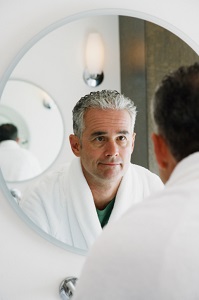 “Your visions will become clear only when you can look into your own heart. Who looks outside, dreams; who looks inside, awakes.†– Carl Jung
One thing is certain: each person has his or her own views, thoughts, and emotions. Even though we are so different, we experience similar patterns of self-analysis which make up who we are today. These patterns are typically created by the end result of our behaviors and viewed either negatively or favorably by our strongest critic, the almighty self. It’s amazing how our growth is determined by how the self translates our actions.
Self-awareness is the ability to formulate a summary of our behavior based on past and current thoughts and emotions. It allows us to understand what’s going on in our heads and why. Self-victimization, on the other hand, prevents us from accepting that we’re responsible for it, and for what we do as a result.
[fat_widget_right]
Being self-aware is the ability to see our true selves without blinders. This is the first step in being true to one’s self. It requires empathy, patience, strength, humility, and love. One of the hardest things to do is see one’s self as fallible, but that is what we are. We all make mistakes and we all have our triumphs. The great ones are capable of seeing both extremes in oneself and learning how to merge them together to make them a better individual.
As humans we generally spend our life living within the two hemispheres or poles of self-thought. On one side, we play out our lives as victims due to painful events in our past and learn to feel powerless when confronting obstacles. These thoughts are considered indications of victimization behavior, and may look different for each individual:
- Justifying events and ways in which you were wronged
- Complaining about a difficult event in life without looking at the role you played in the circumstance
- Obsessing about sad events to justify negative behaviors and feelings of anger, sadness, and shame
- Vocalizing and telling sad stories to gain approval and avoid potential judgment
- Taking the stance that others need to change for things to improve
In the other hemisphere dwell our thoughts of empowerment, which require self-awareness. The following are indications that you are practicing self-empowerment:
- Consciously allowing your self to let go of thoughts of victimization
- Taking responsibility for your role in difficult events from the past
- Responding proactively in the future based on your education and experience of past events
- Establishing emotional competence and development instead of relying on others to fill this void
- Taking full responsibility and course of action for your decisions
- Taking the stance that change will only happen when we work on our internal and external self
The fundamental difference between self-awareness and self-victimization pertains to our acknowledgment that we have been hurt. Self-awareness is about observing our response to what happened; self-victimization is about feeding into the story of what happened.
Tips to Achieve Self-Awareness
- Strive for emotional awareness—understand what you are feeling and what is being triggered within so you can appropriately assess what is occurring and how to respond in an effective way/space that voids previously negative responses and patterns.
- Recognize negative and damaging thoughts/cognitions so you can censor them.
- Recognize your behavior tendencies and possible patterns to make appropriate adjustments prior to negative actions and/or outbursts.
- Come to terms and learn about your expectations, beliefs, and assumptions which affect the path and actions you choose.
- Regardless of past events and patterns, accept responsibility for your actions and the role you played in the outcome.
 Recently, my son told me of a situation he had decided to avoid. To sum it up, he said, “I’d rather protect than subject.” I thought this encompassed many lessons in a concise way.
How often do we subject ourselves to situations we know will be unpleasant? How often do we choose to see people we know will deplete us, go to an event we would really rather skip, or say yes when every cell is screaming no?
[fat_widget_right]
Healthy self-care depends on our ability to set boundaries. Assertively creating the life you want includes saying no—and sticking to it, as opposed to saying no and letting people cajole you into saying yes. By staying true to your goal of treating yourself well, you can push out of the comfort zone of not disappointing anyone and actually say no as many times as is necessary for someone to hear you. Typically, this takes a few repetitions. The good news is you just have to repeat yourself. There’s no need to say it in a different way. The easiest response is often, “I am sorry I won’t be able to do that; I have other plans.” No one needs to know what your plans are. You may want to spend the afternoon staring into space, writing a dissertation, or taking a nap. It doesn’t matter. Just saying the same sentence again and again in a kind, patient, gentle way will do the trick.
Good self-care also requires a willingness to look at one’s life and see where it could be more balanced. Are you spending an inordinate amount of time at work? Are you experiencing compassion fatigue from caring for a relative? Does your life feel swamped with errands and chores? Are you studying into the wee hours? Exercising to a state of exhaustion? By taking a look at the major areas of your life, you can quickly see if you are giving short shrift to rest, relaxation, social time, solitude, quiet, dancing, nature, journaling, music, or anything else that rejuvenates your body, mind, and spirit. Start by carving out even five minutes to sit quietly, have a cup of tea, or close your eyes. Making the conscious decision to take time to be still can be far more challenging than staying on the activity treadmill. Once you give yourself the gift of stopping and simply being, the rewards will keep you coming back.
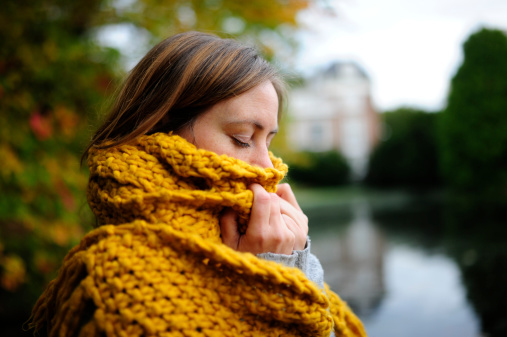
Protecting yourself from your own internal litany of self-criticism is also important. How do you talk to yourself? Are you quick to put yourself down? Sometimes, protecting yourself means learning to be more tender with your own feelings, including your emotional responses to life’s slings and arrows. Creating an inner dialogue of supportive, positive, loving messages will have a profound effect on your relationship with yourself. A good way to start is to read a list of affirmations and write down a few that really resonate with you. I am especially fond of Louise Hay’s approach: Look in the mirror every day and say, “I love you. I really, really love you.” As supremely simple as this sounds, it is amazingly powerful.
On a more mundane level, self-protection entails daily rituals of eating, sleeping, and getting some fresh air. How conscientious are you with these basic life tasks? Most Americans get far too little sleep, which sets the stage for disease, crankiness, and deep fatigue. How is your diet? Are you eating five to nine servings of fruits and vegetables a day? It is not that hard to do. Try a handful of baby carrots, a bowl of bean soup, some fruit and cereal, a stir-fry or salad. Each of these foods will improve your mood, bolster your immune system, and provide you with the energy you need to better navigate your day. Make eating well a priority and watch your sense of well-being improve. While you are at it, make sure you eat frequently enough. Eating infrequently is another emotional saboteur, as low blood-sugar levels wreak havoc on your ability to feel stable, patient, and resilient. So, don’t let more than four hours pass without a snack or meal—and please eat breakfast.
On the topic of food, there is an ever-increasing amount of research being done on the beneficial effects of probiotics on all aspects of health—especially immunity and mood. Whether you eat sauerkraut, tempeh, yogurt, kefir, cheese, or dark chocolate (yes, chocolate is a fermented food), having some of these every day ensures a healthy gut.
Last, but not least, being aware of how things affect you is crucial to doing everything I’ve mentioned. Whether it is awareness of how you respond to someone’s tone of voice and asking them to speak to you differently, paying attention to feeling tired and actually going to sleep, or eating before you are starving, the greater your awareness, the greater the chances you will take better care of yourself. If you find yourself rushing through your day, try to carve out some solitude for yourself. By sitting with your breath and watching the parade of thoughts as they pass across your mind, you soothe your nervous system and begin to understand the transitory nature of everything.
Remember, you are a work in progress. The next time you think you have subjected yourself to someone or something that was disturbing, unhealthy, or even toxic, use it as an opportunity to be more aware in the future. Growth and change happen incrementally. Be thankful you could be aware of the situation’s effect on you, and resolve to head it off at the pass the next time.
 During a discussion in my Family Studies class, we talked about the different type of families and why there are issues in the family. I couldn’t help but to think about my situation and my own family issues, and, instantly, lack of communication came into my head as a reason why there are issues in some families.
The reason I chose lack of communication as the main catalyst for families falling apart is that I’ve experienced it personally. I was born in the West African country of Sierra Leone. I lived there with my mom and dad until I was about 8 years of age and was brought to America and my mother’s younger sister was given custody of me. She became my mother and I became her child. Things seemed perfect, and to my family back home I was living the best life there is. I was in the land where everyone wanted to be—America.
And everything was great, because it was the two of us together; she loved me like I was her very own child and I loved her, for she was now my mother. It wasn’t until a third person—a man—was added to our family that we were divided. Everything started falling apart because I was left in the dark. Things were never shared between my new mother and me. We still communicated; however, the things that should have been shared and talked about were deemed too taboo to be spoken off. As she decided to be with this man, nothing was discussed with me. Even though I was a child I still believed that if someone else is to be a part of my life, I deserved some input.
When I was in high school, during my 10th grade year, she decided that we were going to move in with the man. Once again, it was as if my opinion did not matter—I was never asked about how I felt about moving in with this man, or whether I even wanted to move in with him. My mother was simply focused on her well-being, which drastically divided us. I figured, if she was not involving me in life’s big decisions then why should I let her know what was going on in my life?
We continued to live together, yet we were so far apart. We never talked about anything pertaining to what issues I was having in school or things that were going on in my life. There were times we would go out to the movies or out shopping like the “normal” mother and daughter, but during those times when we were supposed to have bonding experiences, all we would talk about was the weather. Sometimes we didn’t even say much of anything to each other. We drifted so far apart that now our relationship is nonexistent.
For so long I felt nothing but rage and anger. Questions filled my heart. Why was she with him? With everything in me I hated him because of what he did to me while she wasn’t around—all the rude comments he would make and sexual advances toward me. There was so much hatred in me! It transferred over to her as well; if only she would have asked how I felt about us living with him, maybe I would have shared more with her.
Breaking the Silence
I eventually told her everything that happened in that house while she wasn’t around: his rude comments, as well as his sexual harassment. More secrets came out, and things that for so many years I held inside and had never spoken of to anyone. She asked, “Why now?” She wanted to know why I waited so long to tell her. I said, “I know it’s not the ‘right’ time to tell you because you’ve been in the relationship for so long, but it is never too late for someone to know the truth.”
I did not go to a professional therapist per se. I had therapy from an older friend who had his master’s in psychology. He was the first person I talked to about the problems I was dealing with. He helped me face my issues, rather than ignoring them like I’ve always done. Before, I would avoid issues by not talking about them or by dismissing them. Before opening up to him I always buried the pain, anger, hurt, rage, and fear. But he helped me to take on all these emotions firsthand. So I decided to talk to my mother about everything I went through as a child—how I felt like my feelings did not matter, and how she chose her husband over me, always.
The process helped me, because rather than doing what I always did as a child—that is, either avoiding the situation or completely dismissing—I was able to express everything that for so long I kept bottled up inside of me. I was finally able to TALK about it. After releasing years and years of emotions, I was finally able to let go. My mother finally understood where I was coming from—why for so many years we never really had a relationship, why I was never fond of her husband, and why I disliked him so much.
Peace, Healing, and God
Today, I am on my own. I have my own apartment, I go to school full time, and I am working to be successful. I have yet to know what my mother did about her relationship with the man. She wanted us to sit and talk as a family about everything that happened in that house, but I said no; I needed time to truly let go of everything. I needed time to find me, I need time to heal—and healing begins by finally talking about it). I don’t know what the future holds for us, but it is my prayer that things get better and that she finally realizes the man she chose is not healthy for her life.
While our communication is minimal, I try to keep a relationship with my mother, mostly because of God. I believe that whatever is tied here on earth has been bound in Heaven. I want to be able to live my life without anger, without rage. I want peace. I want to be forgiven for my mistakes because I was not the perfect child, and I’m still not a perfect person. Most of all I want to be able to forgive, and I don’t want anything to come between me and my blessings from God because of me not communicating to the woman who raised me.
For the rest of my life, I don’t have to be angry any more. I don’t have to feel afraid or hold things in. I can live my life the way I want to, and the way I feel is best for my well-being. And although my relationship with my mother has forever changed, now at least she knows why things are the way they are between us. I have no regrets about anything.
Thanks for your question. I can imagine your chagrin at your husband shifting from what sounds like frequent acquiescence to “no more Mr. Doormat.†The problem, however, is that in his new “take no prisoners†approach he has become rigid and defensive. At least in some areas; you say he is loving and affectionate, though the defensiveness sounds anything but. Is there a particular topic that seems to trigger his hard-line stands?
I don’t know if you’re familiar with the impressive work of John Gottman and Julie Schwartz Gottman, but they list defensiveness and stonewalling as two of the “Four (marital) Horsemen of the Apocalypse.†(Contempt and criticism are the others.) Because compromise and flexibility are key to an evolving relationship, I can understand your frustration and hurt feelings. Good you’re addressing it, otherwise resentment and withdrawal may ensue. It sounds like you are starting to feel what he felt in his previous marriages, except in this new casting you are expected to say “OK†to everything, and clearly that is not going to work.
I guess one question I would have is, does he really understand how his new attitude is hurting you? I suppose from a psychodynamic point of view one might say he is defending against feelings of unworthiness and low self-esteem, but he is shifting all of the focus on the outside instead of processing the hurt feelings that may still remain from his previous marriage. You say he is dealing with insecurity, shame, and regret from his previous marriage, all painful, yes—but something to share with you in a tender way, or with a therapist to process and move beyond these internal reactions. (I’m not sure why I’m saying this, but intuitively I sense it might be good for him to find a male therapist to discuss this with, or even a men’s therapy group to find his own voice in all this, without having to go to extremes.)
In any event, it is never a good idea to meet rigidity with rigidity, at least when it comes to relationships (we can see how great it works in the nation’s capital, too). Lasting intimacy rests on trust, and trust requires vulnerability, acknowledgment, mutuality, and an atmosphere of empathy. Your husband seems empathically disconnected from his behavior, which forces you to pull back to protect yourself. I suggest you sit down and tell him how you feel when he acts in such a defensive manner. Try to focus on your own feelings, as opposed to “you’re being defensive,†etc. I find it more effective to say “it really hurts and feels like you don’t care when you …†The hope is that he will listen with his heart and understand that he is harming his beloved with this new stance (the flip side of total acquiescence), and will be motivated to change. Finally, if nothing else works, some marriage counseling might help you talk to each other in a way that breeds closeness rather than hurt. Thanks again for writing.
Respectfully,
Darren
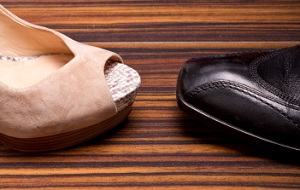 Recently I was walking through the grocery store, stopped in the deodorant section, and found myself dismayed. The women’s deodorants didn’t appeal to me at all—too pink, too delicate, too flowery-smelling—and I couldn’t bring myself to pick one up. Yet my other options, the men’s deodorants, were distinctly off-limits. What a fraud I would be, were I to even pick up one of these black, musky-smelling containers of sweat-defying deodorant. So there I was, stuck in the middle of a decision that seemed so silly and small yet so huge at the same time.
Maybe a similar monologue has run through your head, or you’ve heard a similar story from someone you know or love.
We live in a society that demands for us to choose, around every corner, what box to check. For those who have begun to understand that gender may be an ambiguous presence inside them, making sense of what’s true on the inside and what’s fabricated from the outside is a difficult process. Even coming to terms with that nagging sense that you may not be like most other people is a feat of grand proportion. If you’re reading this and this describes you, just know that you’re not alone—more and more people are discovering a similar thing about themselves.
Gender identity is a term that describes the way you relate to your gender most authentically. Gender expression is the way you choose to outwardly express this sense of identity (and note that these two things can be different). When we talk about gender identity, questioning, and the process of working through this, we’re talking about finding what’s true for yourself on the inside, reconciling this with your biological sex, and any expectations the outside world may have for your gender expression.
There are many different ways to identify and express yourself, and so finding what feels authentic for you can be a much larger process than simply determining whether you feel more male or more female. For many, ambiguity plays a central role in how they identify, and making a cut-and-dry statement about identity is nearly impossible. Others feel very clearly that their most authentic experience is to live as another gender.
Ultimately, it’s important to understand that gender is complex and cannot be reduced to two polarities. I’ve been exposed to different ways of visualizing gender, including as a spectrum, a continuum, and a web; all highlight the fact that there is a lot of space for you to explore in the realm of gender. Wherever you find yourself, if it feels right, is absolutely acceptable.
In my work with people who are exploring the complexity of gender in their lives, we often start with the question of where to be amidst this grand universe of gender. When do you feel most authentically you? What aspects of different genders do you like or dislike? Do you like being different, or would you rather be able to fit in more? Is androgyny appealing to you? Do labels help or hurt you? These are a launching point for many, many other questions and discussions surrounding the idea of gender and how it plays out in each individual’s life.
At different points along the process it becomes necessary to focus on the internalized sense of judgment, shame, or oppression often present in people questioning their gender identity. We all have it, no matter who we are, simply because we live in a society that generates phobia based on gender ambiguity. We have all been led to believe that there is something wrong if a person either can’t be coded into a gender, or if a person is clearly expressing themselves as the “wrong†gender.
As much as we intellectually understand that there is nothing wrong with these scenarios, something inside us wells up with a very uncomfortable and deep sense of shame that can be challenging to transform. Unraveling these feelings so that we can clearly see that it’s a product of faulty messaging and not about us, nor our fault, is paramount to developing a sense of empowerment.
If you’re experiencing some of this shame, or simply a feeling of wanting to keep everything hidden, what do you do?
- Shine a light into the dark recesses of your experience. Shame builds on itself when we don’t talk about things, so the simple act of sharing your story with someone you trust can be monumentally freeing. This experience can reinforce two things: that you’re a normal human who embodies basic goodness, and that you don’t have to feel overpowered by your shame. In essence, you have control.
- Talk with someone who can help you analyze the external and internal messages you’re holding about yourself. Our minds fill in the blanks with reasoning when we feel something but don’t know why. So when we feel put off because someone gave us a strange look, or because someone misgendered us, our minds go into a flurry of activity to help us make sense of our feelings. We come up with a reason for their reaction, and often times this reason is based upon messages we’ve encountered in the world. Often they were things we were led to believe early on in our lives about who we are, whereas other times the messages are things we’ve taken in as a belief because if we didn’t believe them, we would be too disconnected from society. Our psyches ultimately want connection, and things that threaten that connection are formed into aspects of the self that need repair. We assume that something needs to be repaired, or that there’s something wrong with who we are. In both cases, there is a message about the self that needs reframing, and this is where the deeper work of therapy can be really helpful.
- Practice being with these uncomfortable feelings. Again, this is where working with a therapist can be invaluable. We need to develop our own ability to tolerate the deep discomfort of shame, and until we do this we won’t be able to transform these feelings into something positive. Learning to tolerate discomfort is a subtle and sometimes slow process that requires compassion, patience, space, and the presence of someone who can be a helpful guide.
- From tolerance to acceptance. Gender roles and norms haven’t changed much in the last several hundred years, and some of this is attributed to brain-based gender differences. New research is being done on the brain structure of people who identify as transgender, and there is evidence to support the idea that the brain structure of transgender people is different than that of people who are cisgendered (people whose gender identity is congruent with their biological sex, i.e., a biologically born female who identifies as female). There’s also a growing camp of researchers who argue that culture and nurturing actually shape the way we behave. So, if we assume that both of these sides are valid, we can put to rest some of the questioning around why and concentrate on the idea that what’s right for you is right. Once we can accept this and discern fabricated ideals from true ideals, we can move through the world from an empowered place where being different than the norm is totally worth it. Being in this place is what connects us to others, and this connection is what effects change in society.
- Have a good vent about the superficiality of gender messaging in our society. Complain away! There’s a lot that needs changing, and at the very least you can look at all of these things with someone who gets it. Most people can relate with the feeling of being placed in a box that doesn’t fit who they really are.
For those dwelling in climates prone to the dark, chilly days of fall and winter, it is widely understood that along with changes in the natural world, seasonal shifts in mood and temperament are also likely to occur. These shifts may be more drastic and debilitating for some than for others, and when seasonally induced woes weigh too heavily on a person, he or she may be diagnosed with conditions like depression or seasonal affective disorder (SAD). While such diagnoses have become quite common, people are just recognizing consensus among researchers that a person’s season of birth appears to increase the chances that a person will develop these or other mental health conditions.
Typically, a person’s birthdate is given astrological significance in the form of a zodiac sign, but not necessarily predictive powers when it comes to psychological well-being. There was a time not so long ago when the study of astrology was considered to be of scholarly and scientific value in treating physical maladies, but few modern-day doctors still refer to the celestial bodies when determining diagnoses and treatment conditions (Wolfson, 2013). However, a connection between season of birth and certain mental health conditions has been observed by a number of researchers in recent years. The primary finding of this vein of research is that being born in the fall, winter, and spring increases the chances of mental and emotional instability.
The most widely researched correlation is the heightened likelihood of developing schizophrenia if a person is born in the darker, colder months of the year—winter, primarily. Over 200 studies have confirmed this correlation since 1929 (Wolfson, 2013), including one study which revealed that being born in the Northern Hemisphere in either winter or spring may increase the tendency toward schizophrenic symptoms (Davies, Welham, Chant, Fuller Torrey, and McGrath, 2003).
In this particular study, researchers compared winter/spring versus summer/autumn births using data from eight preexisting studies of 126,196 people who had been diagnosed with schizophrenia and 86,605,807 “general population births.†The subjects were located in 27 sites across the Northern Hemisphere, and the positive correlation between schizophrenia and winter/springtime birth as well as latitude-based weather conditions was reported as “small but significant†(Davies et al., 2003).
Further studies reveal that a similar connection exists between season of birth and SAD. Pjrek et al. (2004) discovered a notable link with being born in the fall and winter and experiencing “melancholic depression†during those times of year as an adult. This finding inspired additional research that explored and confirmed the apparent correlation of SAD and season of birth (Pjrek et al., 2007).
Yet another study conducted in England examined the correlation between season of birth and schizophrenia, bipolar, and recurrent depression in “the largest cohort of English patients collected to date†(Disanto et al., 2012). Once again, they found that those born during darker days and colder temperatures were more likely to develop these conditions later in life. Specifically, cases of schizophrenia and bipolar were found to be at their peak in those born in January, and at their lowest rate of occurrence in July, August, and September births. A slight deviation from the fall-winter-early spring correlation was their discovery that those born in May appeared to be particularly susceptible to recurrent episodes of depression.
Overall, the message seems to be that a large portion of the population is primed to experience what are commonly known as mood disorders from birth; ultimately, the only ones who are not at a high inborn risk of developing these conditions are those whose birthdays are in the sunshine-rich summer months. This has led some researchers in England to theorize that vitamin D deficiency—whether in the biological mother or in the child after birth—factors in to these findings (Disanto et al., 2012). So the explanation for this phenomenon could be as simple as less exposure to sunlight depriving a person of sunnier brain chemistry from birth. These same researchers also posit that environmental exposure to viral or bacterial strains on the part of the mother during these times of year may play a part in their children’s psychological development.
Another widely held theory, shared by neuroscientist Chris Ciarleglio in a recent article published in The Atlantic, suggests that “developing in a certain season seems to imprint your circadian clock,†which is known to have a strong influence on mental and emotional well-being (Wolfson, 2013; Foster and Roenneberg, 2008).
Of course, it remains to be fully understood how much of our mood-related makeup and behavior is hardwired at birth, and how much of it is determined by outside factors like family, childhood experiences, education, and financial lack or privilege. Regardless, the findings of these studies spark intriguing inquiries regarding what, exactly, it means to experience depression, schizophrenic hallucinations, and swings in emotional state characteristic of bipolar—plus how much can or should be done to prevent these conditions if they are, in fact, imprinted at birth.
References:
- Davies, G., Welham, J., Chant, D., Fuller Torrey, E., and McGrath, J. (2003). A systematic review and meta-analysis of Northern Hemisphere season of birth studies in schizophrenia. Schizophrenia Bulletin, 29(3), 587-593. Retrieved from  http://schizophreniabulletin.oxfordjournals.org/content/29/3/587.full.pdf
- Disanto, G., Morahan, J. M., Lacey, M. V., DeLuca, G. C., Giovannoni, G., Ebers, G. C., Ramagopalan, S. V. (2012, April 4). Seasonal distribution of psychiatric births in England. PLOS One. doi: 10.1371/journal.pone.0034866. Retrieved from http://www.plosone.org/article/info%3Adoi%2F10.1371%2Fjournal.pone.0034866
- Foster, R. G., and Roenneberg, T. (2008, September 9). Human responses to the geophysical daily, annual, and lunar cycles. Current Biology, 18(17), R784-R794. doi: 10.1016/j.cub.2008.07.003. Abstract retrieved from http://www.ncbi.nlm.nih.gov/pubmed/18786384
- Pjrek, E., Winkler, D., Praschak-Rieder, N., Willeit, M., Stastny, J., Konstantinidis, A., and Kasper, S. (2004, October). Seasonality of birth in seasonal affective disorder. Journal of Clinical Psychiatry, 65(10), 1389-1393. Abstract retrieved from http://www.ncbi.nlm.nih.gov/pubmed/15491243
- Pjrek, E., Winkler, D., Praschak-Rieder, N., Willeit, M., Stastny, J., Konstantinidis, A., and Kasper, S. (2007, October). Season of birth in siblings of patients with seasonal affective disorder. A test of the parental conception habits hypothesis. European Archives of Psychiatry and Clinical Neuroscience, 257(7), 358-382. Abstract retrieved from http://www.ncbi.nlm.nih.gov/pubmed/17902009
- Wolfson, E. (2013, November 15). Your zodiac sign, your health. The Atlantic. Retrieved from http://www.theatlantic.com/health/archive/2013/11/your-zodiac-sign-your-health/281358/