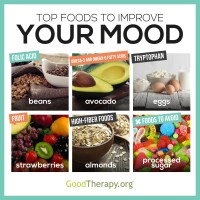
 Stress, depression, and anxiety are complex experiences caused by a variety of factors, including lifestyle, brain chemistry, a history of trauma, and health. Research increasingly points to the role nutrition plays in sound emotional health. While eating a bowl of soy beans and loading up on eggs won’t cure depression, it can certainly help. By pairing the right diet with healthy therapy and—if necessary—medication, you can maximize your chances of quickly feeling better.
Folic Acid
Vitamin B9, also known as folic acid, is probably best known as the nutrient every pregnant woman should eat to prevent neural tube defects. Research also shows that folic acid may help boost mood. One study, for example, found that people with depression tended to be deficient in folic acid. Beans and lentils are excellent sources of folic acid, and you can also get your daily dose of this important nutrient through oatmeal and cereals fortified with folate.[fat_widget_right]
Omega-3 and Omega-6 Fatty Acids
Omega-3 and Omega-6 fatty acids can help improve heart health. Research is still mixed on the effects these fatty acids have on mood, but several studies have shown an improvement in depressive symptoms among people who get high doses of Omega-3 and Omega-6 fatty acids. Even when studies haven’t verified the mood-boosting effects of these fatty acids, they haven’t shown any negative consequences. Fish, nuts, legumes, avocados, flax seed oil, and linseed oil are each high in these important nutrients.
Tryptophan
You might have heard that tryptophan can cause you to doze off after a big Thanksgiving dinner, but it can also help ease anxiety and depression. The body converts tryptophan into serotonin, a neurotransmitter that helps regulate mood and prevent depression. Milk, cheese, eggs, soybeans, tofu, and turkey are all high in tryptophan.
Fruit
There are dozens of reasons to eat more fruit. Fruit’s natural sugars are better for you than the stuff you get from packaged foods, and the relatively low calorie content of most fruits can help you regulate your weight and stave off food cravings. Many fruits can also help boost your mood by boosting serotonin levels. Kiwi, sour cherries, bananas, plantains, plums, pineapples, and tomatoes are each high in serotonin.
High-Fiber Foods
Fiber doesn’t just help you avoid gastrointestinal problems. Some studies have also found that it can boost your mood. High-fiber foods include avocados, whole wheat bread, barley, beans, lentils, almonds, raspberries, pears, oatmeal, and bran muffins.
Foods to Avoid
It can be challenging to eat a healthy diet, and an occasional “cheat†may even boost your mood if you choose something healthy, such as dark chocolate. Some foods can only drag you down, though. These include:
- Alcohol, which is correlated with increased depression and sleepiness.
- Caffeine, which can make you feel jittery and anxious, then lead to sleepiness and depression.
- Processed sugars, which can give a temporary energy boost that quickly yields to a depressive crash.
- Foods containing gluten, especially for those who have celiac disease. Many foods high in folic acid are also high in gluten. Gluten hasn’t been shown to be harmful to most people, but if you have celiac disease, the benefits of gluten-containing foods are outweighed by the risks.
References:
- 15 mood-boosting foods. (n.d.). Retrieved from http://www.prevention.com/food/healthy-eating-tips/food-and-mood-best-foods-make-you-feel-better
- Hainer, R. (2010, June 11). Supplements for depression: What works, what doesn’t. Retrieved from http://www.cnn.com/2010/HEALTH/06/11/supplements.for.depression/
- High-fiber foods. (n.d.). Retrieved from http://www.mayoclinic.org/healthy-living/nutrition-and-healthy-eating/in-depth/high-fiber-foods/art-20050948
- Jefferson, J. W. (2007). Folate for depression. Psychopharm Review, 42(10), 75-81. doi: 10.1097/01.IDT.0000290219.07082.4c
- Nelson, S. (2014, May 19). Study says non-celiac gluten sensitivity may not be real. Retrieved from http://wqad.com/2014/05/19/study-says-non-celiac-gluten-sensitivity-may-not-be-real
- New research reveals that fibre can improve mood. (2002, February 20). Retrieved from http://www.eurekalert.org/pub_releases/2002-02/cu-nrr022002.php
- Treating depression with Omega-3: Encouraging results from largest clinical study. (2010, June 30). Retrieved from http://www.sciencedaily.com/releases/2010/06/100621111238.htm
 The foster care system has a disproportionate number of LGBT youth in its care—the result of so many being abandoned by their parents. This often happens at a time when children most need support and guidance, during their preteens and teens when they are figuring out who they will be as adults. It is the ultimate rejection, and the wounds can last a lifetime.
Regardless of whether the parent-child relationship was good or bad before the child came out, being rejected by those who are supposed to love and protect you unconditionally is devastating. Severe damage is done to self-esteem, trust, security, future relationships, and one’s view of the world.
What would cause parents to legally and morally divest themselves of their responsibilities and emotional ties to their children? The answers lie not in the children, but in society and the parents themselves.
[fat_widget_right]
Mothers are often blamed for any perceived flaws in their children. Many men feel it is a mark against their masculinity to produce a gay child. Other parents feel shame due to religious teachings. Still others are upset that their children don’t fit in with socially prescribed gender roles. They seem to forget that gender roles, clothing styles, and what is perceived as masculine or feminine have changed many times throughout history. It is a misguided sense of shame, a shame so extreme at times that it can be relieved only by disconnecting and distancing from the child.
As a society, we encourage shame in both parents and children by denying LGBT people basic civil rights. This makes a powerful statement that they are somehow “less than†and therefore their neglect is more acceptable. This system has been used against minorities throughout time. In most minority groups, however, parents and children share the minority status and therefore parents will protect and guide their children. In contrast, most LGBT kids have heterosexual, cisgendered parents, making the kids minorities within their own families.
When parents feel shamed by their gay, lesbian, bisexual, and transgender kids, they typically blame the child instead of looking at their own feelings. They resolve their discomfort by getting rid of what they perceive as the source—the child. Ironically, the parents end up placing the burden of their child’s care on the very society that created the situation. These now-homeless youth are vulnerable to abuse, drug addiction, and prostitution. They have committed no crime, but are treated worse than criminals. The emotional damage is just as painful.
Even those people who come out to their families as adults often face rejection. Many LGBT people create their own substitute families from close friends, and they may have spouses and their own children. They may be content and feel that they have moved beyond the parental rejection to a place where they are valued and loved. This is perfectly possible. Nevertheless, the love and caring of a mother or father is unique, and rejection from them always leaves a scar.
How do we, as a society, stop this abuse? As with all complex issues, there is no one solution. Change has to come through many channels. The LGBT community and its allies need to continue to work for full civil rights. Parents need more education to learn that there is nothing wrong with them or their children. Schools need to expand their education about the LGBT community and their anti-bullying practices. As a society, we have to see the abandonment of LGBT youth as reprehensible.
We need to believe that ALL children are worthy of love and nurturing, from their families and from their communities.
Confidence is something we all struggle with from time to time. We want to feel sure of ourselves, but those little whispers of self-doubt show up whenever we want to put ourselves out there, take risks, or try something new. They tell us to play it safe and do things the way we’ve always done them to avoid getting hurt, embarrassed, or rejected, but you don’t always have to listen to them. In fact, doing things your conscience deems unsafe or out-of-the-norm is a great way to build confidence.
Cultivating confidence is the first step toward healthy self-esteem and personal growth, but it isn’t easy for most people. In order to foster confidence, you may have to do something you’ve never done or think in a way you haven’t thought. This can be scary, but know that cognitive restructuring and adjusting behaviors are essential parts of many types of effective therapy.
To help you on your journey to become more confident, here are eight suggestions to get you started:
[fat_widget_right]
1. Face a Fear
Fear is usually at the root of a lack of self-confidence. When you’re scared of the outcome of something, you aren’t likely to go into it feeling assured. Until you face your fear head-on, it controls you and makes the voice of self-doubt louder.
Think about a fear you faced and recall how you felt afterward. Perhaps you felt liberated and proud; you might have even wanted to do the thing you were afraid of again.
Make a commitment to do something that scares you every day, once a week, or once a month and watch your confidence quickly grow.
2. Befriend Failure
If you haven’t failed, you haven’t tried. In order to truly be successful, you have to be comfortable with the possibility of failure. The more you fail, the more you’ll learn and grow. Accept your mistakes and use them to propel you forward.
Failure often seems like the end of the road, but it’s probably just the beginning. Once you accept the initial disappointment, you’ll be able to move forward better equipped to succeed the next time. By taking risks and being willing to fail, you’ll learn to believe in yourself and your capabilities.
3. Doubt Your Doubt
Doubt is the enemy of confidence. It keeps us feeling uncertain and, sometimes, even makes us a bit cynical. If you start doubting yourself, counteract it by doubting your doubt. Question the truth of what your doubt is saying to you.
Perhaps your doubt is saying, “Oh, I’m really not good at this.†Question those limiting beliefs whenever they arise. You’ll likely realize there aren’t many facts to back up the doubtful assertion.
4. Affirm Your Strengths, Talents, and Accomplishments
People who lack self-confidence tend to focus more on their weaknesses than their strengths. Make a list of your strengths, talents, and accomplishments. Be honest with yourself and try reading from this list daily to remind you of your greatness.
Don’t hesitate to write something like, “I am beautiful and wonderful” in red lipstick on your mirror. Though it may seem cliché, it works. We tend to believe in messages we are constantly exposed to—just ask an advertising executive.
Your confidence is influenced tremendously by your daily thoughts, especially recurring thoughts. Consistency is key to lasting change. If you want to be more confident, make a habit of reminding yourself of your unique gifts and abilities.
5. Embody Confidence
Fake it ’til you make it. Ever heard that phrase?
If you want to be more confident, feel more confident. When you find yourself feeling nervous and unsure, stop for a moment, close your eyes, and think of a time when you felt confident and self-assured. Use all of your senses to bring you back to that moment. In doing this, you’ll be more able to cultivate that feeling in the present moment.
Also, consider your posture. Choose a body posture that looks and feels confident. Next, think about your clothing and style. Dress to impress—yourself! Dress in a way that makes you feel good. If you look good to you, you’ll feel good, and feeling good often leads to higher self-confidence.
6. Listen to Empowering Music
Music is a great for evoking emotion. When you want to feel more confident, turn on some music that lifts you up.
If you’ve never used music to inspire motivation, we suggest these confidence-inducing songs:
- “Eye of the Tiger†by Survivor
- “Ain’t No Mountain High Enough†by Marvin Gaye and Tammi Terrell
- “We Will Rock You†by Queen
- “Perfect†by Pink
- “Happy†by Pharrell Williams
- “I Will Survive†by Gloria Gaynor
- “Living on a Prayer†by Bon Jovi
- “I Feel Good†by James Brown
- “Survivor†by Destiny’s Child
- “Just the Way You Are†by Bruno Mars
- “Lose Yourself†by Eminem
- “Beautiful Day†by U2
Press play on one of these tracks and turn the volume up before a workout, job interview, date, or some other event that requires you to summon confidence.
7. Set a Realistic Goal and Take Action to Achieve It
Your achievements contribute greatly to your feelings of self-confidence. By making a commitment and following through with it, you’ll learn to trust yourself and your abilities more.
Often, we make extreme resolutions—think New Year’s resolutions—that require broad, sweeping change. Then we don’t stick to them. It happens every year: people who exercise once a month try to exercise an hour each day and almost inevitably make it about a week or two before they give up. By not following through on a commitment we make to ourselves, we lose trust and faith in our abilities, and our confidence suffers as a result.
New habits take a significant amount of time, effort, and dedication to cultivate. When setting new goals, be realistic and make sure that your goals are attainable. Start slowly and set small goals that you can build on. By following through with your commitments, no matter how small, you’ll learn to trust yourself and gain confidence in what you’re capable of achieving.
8. Make a Difference
Do something to give back and contribute to society. Consider volunteering or making a donation to your favorite charity. Do something for someone else. It doesn’t have to be a major contribution; even something as simple as helping your elderly neighbor carry her groceries will make you feel good (and more valuable).
By making a personal contribution, it reminds you that your individual choices have an impact on the world. Realizing your true significance as an individual will empower you and increase your feelings of self-confidence.
Choose One Suggestion from Our List and Give It a Shot
If you really want to be more confident, consider choosing just one of the suggestions above that resonates with you. Even if it seems quirky, try it. Focus on one thing at a time and adjust a simple thought or behavior and it could go a long way toward building your confidence.
If you try to do too much at once, you may become overwhelmed. Remember that confidence is a state of trust, which, like any therapeutic relationship, takes time to build. Be patient with yourself and know the journey begins with one step. Take baby steps and, before you know it, you will arrive at your destination feeling confident and capable.
 Have you ever tried to shed an old, troublesome habit? Ever made a New Year’s resolution you couldn’t keep? If so, welcome to the human race. And welcome to your brain.
We Are Creatures of Habit
A few weeks ago, I made a mixture of nuts and dried fruit and settled in for a few minutes of television in the evening. The next night, I did the same. By the third night, I was craving the nuts as I contemplated watching a show I had recorded. I was astonished how quickly I had developed the nutty TV habit. I felt like Pavlov’s dog, salivating when the bell rang. Or, in my case, salivating as I thought of TV, now associated with my new favorite snack.
While on the first night I was genuinely hungry, by the third I was eating out of habit, mindlessly heading to the nuts even though I was still pretty full from dinner. Neuroscience gives us insight into the power of habit in our lives—and why we can become victims of our own habitual behaviors.
The Anatomy of Habit
Everything we do, feel, or think is reflected in circuits of neurons in our brains. Neurons, or brain cells, communicate with each other at a gap, called the synapse. One neuron releases chemicals—neurotransmitters—into the synaptic space, where it is picked up by the receptors of the next neuron. There are billions of neurons in the human brain; each neuron connects with up to 10,000 other neurons, resulting in trillions of synaptic connections. These interconnected neurons become circuits that underlie our habits.
[fat_widget_right]
The more we do something—eat nuts while watching TV, ride a bike, play an instrument, study a new language—the stronger the neuronal circuit becomes that supports that habit. Donald Hebb, a Canadian neuroscientist in the 1940s, noted that once a circuit of neurons is formed, when one neuron fires, the others fire as well—strengthening the whole circuit. This has come to be known as Hebbian theory: “Neurons that fire together wire together.†Circuits of neurons maintain our habits, and our habits strengthen those neuronal circuits. The bio-behavioral influence goes both ways.
You Are What You Do
Scientists have shown that experience changes the connection between neurons. Everything you do changes your brain. If I continue my nightly TV-with-nuts ritual, that habit will become “wired†into my neuronal circuits. My behavior will change the structure of my brain. This is a rather sobering thought. From this perspective, you are what you do … so be careful what you do!
The more you do something, the more likely you are to do it in the future. The habit-driven brain doesn’t distinguish between good and problematic behaviors; it just builds repeated behaviors, thoughts, and feelings into stronger and stronger neuronal circuits. So what’s a person to do? Are we doomed to live on automatic pilot, driven by our lower brain and our habits?
While my nuts-and-TV behavior affects only me, other habits can cause damage to relationships. If I repetitively treat my husband with disrespect, that behavior becomes a part of who I am in the relationship. And it may evoke a less-than-ideal response in him, creating a negative relational dance that can erode our bond. We then become victims of our own relationship behaviors.
Prisoners of Our Habits?
We do have a choice: We can mindlessly play out problematic behaviors over and over again, becoming essentially prisoners of our own habits. Or we can step back, use our higher brains, and reflect on our actions. After three nights of my new TV-nuts habit, I realized I was acting like an automaton, and I didn’t like it. So I made a choice, using my prefrontal cortex, the part of my brain that allows me to think about what I do. I thought about the extra calories and, more importantly, the fact I didn’t want to engage in mindless eating. I stopped my habit in its tracks. Now if I decide to eat nuts, it’s when I’m actually hungry, not because I’m Pavlov’s salivating dog.
In my marriage, I work hard not to act mindlessly or to get caught up in habits of emotional reactivity. I try to think about my higher goals and to behave in accordance with my values. I don’t have to be a prisoner of my automatic response. I have learned to pause, take a breath, and think about how I want to be in my relationship. I have the power to choose, and the ability to change when I fall into thoughtless relational habits.
We Are Creatures of Change and Adaptation
It turns out that although we are creatures of habit, humans are also creatures of change and adaptation. Our brains are constantly changing in response to our changing environment. Our adaptability is the secret to our success as a species. The challenge is to harness our adaptability and use it toward positive ends, to make choices about who we want to be in our world.
You don’t have complete freedom to create yourself; you do come with genetic gifts and limitations, or temperament. But you have a lot more power to become the person you want to be than you might think. You are not predetermined by your genes. The secret is neuroplasticity, the ability of the brain to change.
Until a decade or so ago, neuroscientists thought that neuroplasticity was possible only in children’s brains. Indeed, the young brain is highly adaptable and shaped by experience, changing and growing with the nurturance (or lack of it) a child receives from parents and other caregivers. Everything is new to a young child; he or she absorbs it all, and is molded by the world around. (This is the nurture part of nature-and-nurture that makes us who we are.)
In recent years, scientists have made the amazing discovery that the adult brain is also plastic (changeable); we can learn and grow—changing our brains in the process—throughout life. And, it turns out, experience not only changes the connections between neurons, it affects the expression of genes. Genes are turned on or off by experience and environment (this is called epigenetics).
This remarkable new perspective on the adult brain’s capacity for change is heartening to those of us who want to keep growing and learning as we age. It is empowering to know that we can change bad habits and learn new skills throughout life; we don’t have to be victims of our past or of our genes. But it’s much harder for the adult brain to change than the child’s brain. With all of our wired-in habits, we have to work at what comes naturally to the young child.
Neuroplasticity Is a Double-Edged Sword
Neuroplasticity is responsible for both habits and change. Since everything you do changes your brain, you can get trapped in habits by doing them over and over—or you can make a decision to change those habits, choose a new path, and create new habits that are more in keeping with your values. You can live mindlessly, on automatic pilot. Or you can choose a different path and live in a more mindful way. The choice is yours.
 The absence of fathers in the lives of their children is not uncommon. David Blankenhorn (1995), author of Fatherless America, wrote, “The United States is becoming an increasingly fatherless society. A generation ago, an American child could reasonably expect to grow up with his father. Today, an American child can reasonably expect not to.â€
As this phenomenon continued to spiral, the 1990s was a time ripe for hundreds of studies of this trend, which has continued. According to a 2011 U.S. Census Bureau study, 24 million children—about one out of every three—do not live with their biological fathers.
The question as to whether absent can be equated with uninvolved has been posed repeatedly over decades by researchers such as Vicky Phares at the University of South Florida and Valarie King and Paul Amato at Pennsylvania State University. It cannot. And yet a number of studies have indicated that nonresident fathers overwhelmingly tend not to engage in frequent contact with their children.
[fat_widget_right]
A preponderance of studies identify at least nine factors influencing a child’s well-being when they do not live with their father—frequency of contact, age and gender of the child, the father’s economic contribution to the child’s life, the quality of the father’s relationship with the child’s mother, socioeconomic variables, education, the quality of the father’s relationship with the child, and the father’s parenting style. Five additional factors I find to be widely neglected are the presence of an alternative, or surrogate, father figure such as a stepfather, variables related to family history, length of time the father has been absent from the child’s home, and the number and presence of siblings.
Back in the ’90s, Phares found signs of increased self-worth in younger children and boys of any age when visits with fathers were frequent and regular, whereas older children and girls of any age showed signs of lower self-worth when visits were more frequent. In her studies, King (1994a) found little support for the hypothesis that father visitation in and of itself has beneficial effects for child well-being, regardless of age or gender, and expressed concern that in circumstances where there exists abuses in the father-child relationship, visitation may do more harm than good.
Rather, King (1994b) pointed to numerous studies that provided evidence that the payment of child support has beneficial effects on educational achievement as well as behavioral adjustment. Several studies have found a stronger influence from economic contributions than any other factor.
Some have studied the quality of the parental relationship in moderating child behavior. One study hypothesized that a child’s contact with his or her nonresident father would decrease the child’s behavior problems when conflict between the father and mother was low, but increase behavior problems when the interparental conflict was high. Fascinatingly, although the hypothesis was supported among boys from divorced families, no support was found among girls (Amato and Rezac, 1994).
Other studies, however, resulted in positive associations of the quality of the parental relationship and child well-being with both boys and girls. For instance, Amato and Gilbreth (1999) noted “several studies have shown that contact with nonresident fathers following divorce is associated with positive outcomes among children when parents have a cooperative relationship but is associated with negative outcomes when parents have a conflicted relationship.â€
Upon examining 63 studies of nonresident fathers and their children’s well-being, Amato and Gilbreth (1999) offered this critique: “Without knowing about the behaviors that transpire between fathers and children during visits, how children feel about these visits, or the context in which these visits occur, it is difficult to make predictions about the effects of contact on specific child outcomes.â€
They asserted that healthy father-child relationships enhance resilience: “When children feel loved and cared for by parents, their sense of emotional security is strengthened. Emotional security, in turn, helps children cope with stress and makes them less vulnerable to anxiety and depression.â€
Many researchers hypothesized that not only the quality of the relationship but the father’s parenting style held significant influence. Amato and Gilbreth (1999) suggested, “The combination of a high level of support with a moderately high level of noncoercive control reflects authoritative parenting—the parenting style most consistently associated with children’s positive development.â€
The extent to which authoritative parenting may positively influence child well-being was illustrated in a study by Young, Miller, Norton, and Hill (1995), who found that “fathers’ intrinsic support—reflected in trust, encouragement, and discussing problems—was positively correlated with children’s life satisfaction, but fathers’ extrinsic support—reflected in going out to dinner, buying things, and seeing movies together—was not related to children’s life satisfaction.â€
A substantial body of empirical research has examined implications of a father’s absence on a child’s well-being, indicating evidence to support the following conclusions: (1) contact with a child does not necessarily have positive benefits; (2) economic contributions to a child have positive benefits; (3) interparental cooperation has positive benefits; (4) positive emotional involvement with a child has positive benefits; and (5) an authoritative parenting style has positive benefits.
At the culminating of significant research back in the ’90s, a wonderful national organization took shape, committed to raising awareness of this issue and increasing the number of involved, responsible, and committed fathers in our country. That organization is the National Fatherhood Initiative, which has a host of wonderful resources available on its website.
References:
- Amato, P.R., and Gilbreth, J.G. (1999, August). Nonresident Fathers and Children’s Well-Being: A Meta-Analysis. Journal of Marriage and the Family, pp. 557-573.
- Amato, P.R., and Rezac, S. (1994). Contact with nonresident parents, interparental conflict, and children’s behavior. Journal of Family Issues, 15, pp. 191-207.
- Blankenhorn, D. (1995). Fatherless America: Confronting our most urgent societal problem. New York: Basic Books.
- King, V. (1994a, March). Nonresident Father Involvement and Child Well-Being: Can Dad’s Make A Difference? Journal of Family Issues, 15 (1), pp. 78-96.
- King, V. (1994b, November). Variation in the Consequences of Nonresident Father Involvement for Children’s Well-Being. Journal of Marriage and the Family, 56, pp. 963-972.
- Phares, V. (1993, December). Father Absence, Mother Love, and Other Family Issues That Need to Be Questioned: Comment on Silverstein (1993). Journal of Family Psychology, 7 (3), pp. 293-300.
- S. Census Bureau (March 2011). Children’s living arrangements and characteristics. Washington D.C.
- Young, M.H., Miller, B.C., Norton, M.C., and Hill. E.J. (1995). The effect of parental supportive behaviors on life satisfaction of adolescent offspring. Journal of Marriage and the Family, 57, pp. 813-822.
 Whether you read, saw, loved, or hated Fifty Shades of Grey, there’s no denying that its release started a larger conversation about BDSM in popular culture. It’s important for us to acknowledge that—even if we’re embarrassed by it; even if we think it’s better left a dark, sexy mystery—because according to the research, anywhere between 2% and 62% of the population is interested in BDSM (Sagarin, 2015).
BDSM is my favorite acronym because it’s so multifaceted: its letter pairings stand for bondage and discipline, dominance and submission, and sadism and masochism. It could be said that the underlying element across all these terminologies is power, and in fact, some kinksters call what they’re doing “power play.â€
Any time we’re playing with power, however, we need to be aware of the potential misuse or abuse of that power. Fortunately, many in the adult BDSM community employ an ethics mantra to help those new to the scene, or even more seasoned practitioners, feel comfortable testing limits. Their guiding principles are “safe, sane, and consensual.â€
[fat_widget_sex_right]
What do we mean when we’re talking about safety, sanity, and consent? This guide will define those concepts and give examples of responsible power play between adult partners. While it’s not necessary to label them as such, I may reference two types of play partner throughout this article: “Doms,†or dominant partners, and “subs,†or submissive partners. Play partners who occupy either or both roles are known as “switches.â€
1. Safety
Some people who enjoy kink aren’t into gadgetry or fancy equipment, but others are. Some obvious equipment with the potential for damage are sensory deprivation masks, urethral sounds, genital clamps, and suspension devices, but even simpler tools such as rope, belts, or paddles could leave lasting damage or even prove fatal if play partners aren’t adequately prepared. Study up—not just on use of your equipment, but on basic human anatomy, too. Some parts of the body, like on the back near the kidneys, are riskier places to be struck. Consider the risk of losing circulation if you’re playing with rope or handcuffs, and have a backup plan for freeing your partner if you’re tying up or cuffing him or her. Make sure your partner can breathe if you’re using a ball gag or mask. Practice whipping pillows before using human partners; practice tying basic knots before attempting more intricate bondage. Minimize burn risks if you’re playing with hot wax.
These might sound like a lot of rules, but if your partner trusts you with his or her body, you need to be able to trust yourself, too. Emotional safety is as important as physical safety when it comes to sex and power play, which brings us to the second item of the BDSM ethics code.
2. Sanity
Whether I’m doing trauma work with people in individual therapy or facilitating classroom discussions about healthy relationships, I want to make sure that I’m maintaining an atmosphere of emotional safety. The rationale and context may be different, but the concept of emotional safety is absolutely critical for responsible BDSM exploration. Emotional safety exists in environments where you’re sharing only what feels safe and will be respected. In BDSM practice, this requires considerable introspection on the part of both dominant and submissive partners. Ask yourself: are the activities we’re engaging in going to open emotional wounds, and do I trust my partner to take care of me in a state of vulnerability? Do I have a handle on my sadism, and am I capable of balancing it with loving kindness? Am I doing this because I enjoy it, or out of a sense of guilt or obligation? Check in with yourself and your partner, and don’t be afraid to set limits based on what feels emotionally safe for you. Play only with partners with whom you know your limits will be respected. Do not equate genuine cruelty with kink.
If establishing limits ahead of time is tricky because you don’t know what your limits are, another way to ensure sanity and safety is to agree on a “safeword†for moments when things no longer feel safe or OK. In many cases, this word is never used, but there’s no shame in having one handy. The use of a safeword connects to the third and final descriptor in the BDSM ethics code.
Check in with yourself and your partner, and don’t be afraid to set limits based on what feels emotionally safe for you. Play only with partners with whom you know your limits will be respected. Do not equate genuine cruelty with kink.
3. Consent
Most forms of BDSM involve the creative surrender or takeover of control; however, this works harmoniously only between two or more consenting partners. Establishing consent may seem murky when people are playing out fantasies that involve force or domination, but there are many ways to ensure your partner is enjoying his or her experience. Agreeing on a safeword is important, as is respect between partners.
The idea of respect may seem confusing or even comical if humiliation or shame is integral to your fantasy. Rather than focusing on respectful words or behaviors, we can think of respect as an overall commitment to mutual safety and pleasure. Submissive partners are responsible for communicating their own limits, and Dom(me)s should be committed to the quality of their subs’ experiences. Look at your partner’s face; look at his or her body language. Notice any tension that exists for you alone or between you and your partner. Trust your gut.
Ethical Sex and Kink
I was surprised that I enjoyed much of the Fifty Shades movie, despite being a die-hard feminist and despite critiques I had read about the book it’s based on. The lead submissive character was empowered—I enjoyed her business meeting-style negotiations about what conditions she would and would not tolerate, and I often found the Dom/sub banter witty and endearing. There are definitely conversations to be had about their struggle for power, but it’s hard to arrive at any agreement about power, inside or outside the bedroom. The questions I used to critique the film’s responsible portrayal of BDSM include: “Were the sex acts safe? Were they sane? Were they consensual?â€
It’s worth asking those questions about your own sex acts, whether you’re exploring kink with a new partner or you’ve been practicing BDSM for many years. With proper introspection comes the responsible use of power. Even when perceived danger is part of the sex appeal, it’s important not to blur the line between fantasy and reality. I hope these guidelines can aid you in your quest for ethical fun and pleasure!
References:
- The Community-Academic Consortium for Research on Alternative Sexualities (CARAS). https://carasresearch.org/
- Copulsky, D. (2015). Consent and safety basics for kink & BDSM [comic]. Sex Positive Education. Retrieved from http://www.sexedplus.com/consent-safety-basics-for-kink-bdsm/
- Sagarin, B. (2015). The surprising psychology of BDSM. Psychology Today. Retrieved from https://www.psychologytoday.com/blog/the-wide-wide-world-psychology/201502/the-surprising-psychology-bdsm
 I recently spoke with a young colleague who had just completed training to become a certified sexual addiction therapist (CSAT). She was astonished to hear my stories of what I jokingly refer to as the golden age of phone sex, which I’d say lasted from the mid-seventies, when I worked on a suicide prevention hotline, until about 1998, when the Internet was starting to really take flight.
You may be wondering why the suicide hotline I worked for bears mentioning. There were often callers to the hotline, usually male, who upon hearing a female ask, “How can I help you?†would begin to speak breathlessly about a “huge problem†they had. Our London-born supervisor referred derisively to these fellows as “wankers†and taught us ways to extricate ourselves from, ahem, conversations with them.
By the early eighties, I had ceased taking hotline calls and started practicing as a licensed therapist in my office in West Hollywood, California. Some of the people I helped had issues with obsessive phone sex. Some, again usually male, would spend hours or even days languishing at home or work paying to talk and talk and talk about sex, usually culminating in—you guessed it—masturbation. Neither party, of course, could see the other, so imagination was in full play.
[fat_widget_sex_right]
Frantic wives would call me after they clapped eyes on preposterous phone bills to 1-900 lines. Their husbands would call the next hour or appear reluctantly at my office, struggling with whether they actually had a problem with this potentially addictive (and highly expensive) behavior.
There was big money to be made by investors who snapped up and promoted 1-900 numbers with suggestive three-, four-, and seven-letter words rounding them out—not to mention resourceful women, young and not-so-young, who craftily embodied and impersonated the young subjects of glossy photos in the back pages of men’s magazines. Many people found the lure of “risk-free†phone sex with readily available strangers to be too hard to resist, spending countless hours and thousands of dollars maintaining their compulsive tele-sex habits.
How things have changed with the rise of the Internet and smartphones! Although traditional phone sex lines still exist and some thrive, no longer are people tethered to cumbersome wall sockets that keep them in their bedrooms or office cubicles. We have apps that use GPS to find sex partners near us as easily and anonymously as we locate a good Japanese restaurant. Phone sex is now often fully visual, streaming from hand to cell tower to satellite and back in the blink of an eye. Not only can it be addictive, it’s often free—in a financial sense.
Phone- and web-based sex can be profoundly costly when it comes to the toll on real-life relationships. Live video streaming or face time might be great for those of us who want to commune with a traveling partner or see and interact with grandkids on the other side of the continent. But what kind of effect does pornography and for-profit sex chat have for those who struggle with marital fidelity and remaining sexually sober? For those with a propensity for addictive escape and risky sexual behavior, it’s a whole new world of problems.
If you need some help navigating it, contact a therapist near you. It might prove to be the best call you’ve made in a long time.
 Your mental health affects your overall health more than you may realize. When you are stressed out, angry, or sad, your body suffers, too—whether it be in the form of digestive issues, headaches, back pain, or any number of other physical symptoms.
Most people I meet in my practice want to improve their well-being and increase their daily happiness, but they often feel powerless to make it happen. It can be easy to fall into the trap of thinking that our problems are entirely outside our control or caused by other people. Simply by changing our own actions and establishing new habits, many things may begin to improve. When you are happy and at peace, your body feels better and you’re able to respond to challenging situations in more effective ways.
Unfortunately, many people turn to pills to achieve that outcome. According to the Centers for Disease Control and Prevention (2011), about 35 million adults in the United States take antidepressant medication. Medication alone generally won’t make a person feel better, but there is a great deal of research to support the effectiveness of psychotherapy and lifestyle changes, and medication in combination with those things has been shown to be helpful for some people.
Here are five things you can do to start feeling better without the aid of pharmaceuticals:
1. Exercise
I love my workout videos. In one of my favorites, fitness trainer Jillian Michaels says, “When you feel strong in your body, you feel strong in your mind.†I agree, and so does mental health research! Numerous studies have linked regular exercise to improvements in mood and decreased anxiety (e.g., Childs and de Wit, 2014; Aguedelo et. al., 2014; and Shoenfeld et. al., 2013).
[fat_widget_right]
In essence, exercising helps your brain chemicals to work correctly. When they do, many things about your health and well-being improve. Exercise is so good for mental health that, in many studies, it has been shown to be as effective as antidepressant medication (e.g., Blumenthal et. al., 1999). I frequently recommend at least 45 minutes of vigorous exercise—think workout class or a run/jog in the park—about five times a week. Making this part of your routine can help lift your mood, decrease anxiety, boost self-confidence, reduce negative thinking and worries, and improve sleep. Plus, it’s one of the best anti-aging secrets! When you exercise, your body is more effectively oxygenated, which helps prevent signs of aging.
2. Eat ‘Happy’ Foods
“Happy” foods—foods that either improve mood or help to make you feel calmer—can be a bit of a catch-22 because some of these foods help in the moment but make things worse in the long run. These foods are what we often call “comfort foods,†such as macaroni and cheese, pie, and fries. They do work to make you feel better quickly, so they’re an easy trap to fall into.
Researchers believe that comfort foods may be comforting because they alter the brain’s response to sadness. A better strategy, however, is to make a habit of eating foods that build up the brain’s “good chemicals†over time and keep them at healthy levels. These are the foods we often call “super foods,†such as wild salmon (or other fish high in omega-3s but low in mercury), berries (especially blueberries), whole grains, green vegetables (kale is the king of them all), avocado, nuts, and seeds.
3. Volunteer or Make a New Friend
Social support is one of the best predictors of health and longevity. Volunteering is a great way to both get out of your own head (spending too much time in your head may lead to excessive worrying) and to make new friends. Resolve to make at least one new friend this year, and volunteer at least a few hours a month.
4. Understand Your Thinking Style
One of the reasons we sometimes get into a funk—and we all do from time to time—is that we make “thinking errors.†To eliminate these errors, familiarize yourself with what they are and begin to notice when you do them. Thinking errors (sometimes called “unhelpful thinking stylesâ€) can lead to anger, sadness, anxiety, frustration, and low self-esteem.
Below are a few examples:
- Taking things personally: Most people’s reactions to you are about them, not you. For example, if your boss is short-tempered and demanding, it’s more likely related to his or her personality style than to your work performance. If you take it personally, you are likely to begin feeling angry, nervous, or depressed. If instead you can see it for what it is—a particular personality and communication style—you can focus on learning effective ways to work with this type of person.
- Catastrophizing: That’s the fancy name for “making a mountain out of a molehill.†If someone dies, that’s catastrophic, but almost anything short of that is simply a problem to be solved, a challenge to overcome, or something to be understood. When you notice yourself using language like “terrible,†“awful,†and “horrible,†you are probably catastrophizing. Time to shift your words! Instead of saying, “This is horrible! How will I get to work if they can’t fix my car today?†you can say, “Darn, this is really inconvenient, so I need to find a way to solve this problem. Let me start thinking of possible solutions. Maybe my friend Martha can give me a ride.†Here’s another example: Instead of thinking, “It’s terrible that Sophie is so rude to us at meetings,†think to yourself, “Sophie’s rudeness is unpleasant, but maybe she’s not very good at dealing with pressure. I’ll just be kind to her and try to get to know her better. Maybe eventually that will help improve things.â€
- Making assumptions and jumping to conclusions: I don’t have any data on this, but I’m pretty sure this leads to many divorces. Partners (on both sides) are very good at making assumptions about the other partners’ thinking, behavior, and intent, and often jump to conclusions. One of my favorite questions in marital therapy is, “Did you ever ask him/her if that’s what he/she was thinking, intended, meant, etc.?†People generally do not check their assumptions, and most of the time their assumptions are wrong.
5. Get Some Sleep
We’re back to the brain chemicals! Your brain needs to sleep because that’s how it regenerates and keeps itself filled with happy brain chemicals. If you are not sleeping well, it can contribute to developing mental health issues or exacerbating existing ones.
Working with a therapist can help you learn effective techniques to calm your mind and relax your body after a busy day.
References:
- Aguedelo, L.Z., Femenia, T., Orhan, F., et. al. (2014). Skeletal muscle PGC-1α1 modulates kynurenine metabolism and mediates resilience to stress-induced depression. Cell, 159 (1): 33-45. Retrieved from http://www.cell.com/cell/abstract/S0092-8674(14)01049-6
- Blumenthal, J.A., Babyak, M.A., Moore, K.A., Craighead, W.E., Herman, S., Khatri, P., Waugh, R., Napolitano, M.A., Forman, L.M., Appelbaum, M., Doraiswamy, P.M., and Krishnan, K.R. (1999). Effects of exercise training on older patients with major depression. Archives of Internal Medicine, 159: 19, 2349-56.
- Childs, E., and de Wit, H. (2014). Regular exercise is associated with emotional resilience to acute stress in healthy adults. Frontiers in Physiology. 5: 161. Retrieved from http://ncbi.nlm.nih.gov/pmc/articles/PMC4013452/pdf/fphys-05-00161.pdf
- Pratt, L.A., Brody, D.J., and Giuping, G. (2011). Antidepressant Use in Persons Aged 12 and Over: United States, 2005-2008. Centers for Disease Control and Prevention: NCHS Data Brief, 76. Retrieved from http://www.cdc.gov/nchs/data/databriefs/db76.pdf
- Schoenfeld, T.J., Rada, P., Pieruzzini, P.R., Hsuesh, B., and Gould, E. (2013). Physical exercise prevents stress-induced activation of granule neurons and enhances local inhibitory mechanisms in the dentate gyrus. The Journal of Neuroscience. 33 (18): 7770-7777. Retrieved from http://www.jneurosci.org/content/33/18/7770.abstract
 Participation trophies, praising children for no apparent reason, and encouraging every child to feel special are relatively new developments in parenting culture, and most of us have heard members of older generations decry this parenting style. It turns out that debates about how much adoration children should receive constitute more than a generational divide, though. Children whose parents “overvalue†them are more likely to develop narcissism, according to a study published in Proceedings of the National Academy of Sciences.
The Perils of Overvaluing Children
The study—which co-author Brad Bushman says encouraged him to change his own parenting style—recruited 565 Dutch children and their parents. Child participants ranged in age from 7 to 11. Each parent completed a psychological survey every six months over the two-year duration of the study. The surveys asked parents to indicate how strongly they agreed with statements comparing their children to others. For example, a parent might be asked whether his or her child is a good example for others.
Researchers also explored how warmly parents behaved toward their children. Parents answered surveys asking them to indicate whether they took specific steps to make their children feel loved. Children completed similar surveys, indicating whether they agreed or disagreed with statements about their parents’ expressions of warmth and love.
[fat_widget_right]
Researchers then evaluated children’s self-esteem and narcissistic tendencies. Children with high self-esteem believed they were as good and deserving as others. Children with narcissistic tendencies, on the other hand, felt they were better and more special than others. Parents who ranked their children as “more special than other children†or who believed their children deserved more out of life than others had children who scored higher on narcissism measures. Children whose parents were warm and loving were more likely to have high self-esteem, but not narcissistic tendencies.
Researchers believe that parents may tell their children how special they are in an attempt to boost their self-esteem. But children believe what their parents tell them. When parents emphasize that a child is better or more deserving, the child may grow to believe it.
How Much Adoration of Children Is Too Much?
Avoiding excessive adoration doesn’t mean you have to give up praising your child or working to nurture his or her self-esteem. Instead, the study’s authors believe the key is to praise children without making them feel superior to others. This sense of superiority, they say, is what seems to lead to narcissism.
A simple change in parenting style can work wonders. Instead of telling your child he’s the best, smartest, or best-looking, try praising him for his actions and efforts. Compliment your child for working hard to help a friend, for committing extra time to her science project, or for diligently practicing piano. Previous research suggests that praising children for their efforts rather than their results or innate traits encourages them to work harder and be more persistent.
References:
- Avoid ‘overvaluing’ your child to prevent narcissism. (2015, March 11). Retrieved from http://www.medicalnewstoday.com/articles/290687.php
- Collins, N. (2013, February 12). Praise children’s effort, not their intelligence. Retrieved from http://www.telegraph.co.uk/education/educationnews/9862693/Praise-childrens-effort-not-their-intelligence.html
 Why is it so difficult for some people to allow themselves to be helped? If there was a spectrum on which one end was total independence and the other was complete dependence, where would you say you fall? Ideally, it would be somewhere in the middle or fluidly moving back and forth along the spectrum as circumstances required. But many people get stuck at the independence end of the spectrum and only rarely dare to ask for assistance.
We are all influenced by societal beliefs about independence and dependence. However, those who are rigidly independent may need to look more closely at their personal experiences as dependent children in order to uncover their deep resistance to accepting help from others.
Independence is a healthy and important aspect of human development. It’s also supported by many popular beliefs:
- Independence is freedom. You’re free to think for yourself, make your own choices, and do what you want without anyone stopping you.
- Independence is powerful. You have the power to take care of yourself without having to rely on anyone else.
- Independence is safety. It’s safer to rely on yourself than on people who could prove unreliable or untrustworthy.
- Independence is respected. Independence is venerated in movies and books. The iconic hero is the lone wolf: strong, silent, and alone.
[fat_widget_right]
All of these beliefs contain truth, but not the whole truth.
Freedom at What Cost?
Rigidly independent people may be free to do what they want, but they have to do it alone. Healthy relationships require both partners to sometimes give up control and put the other partner’s needs first. By relying only on themselves, rigidly independent people actually limit their lives. They cannot accomplish large tasks that require the assistance of others. They limit their life experiences by missing out on camping trips, concerts, hobbies, and other shared life events. Rigidly independent people also limit their own emotional and intellectual growth by resisting the knowledge and input of others.
Are You Really Safer?
While taking care of yourself does increase your safety, your safety increases even more when you have a network of friends, family, and public services that you can rely on in times of need. The rigidly independent sometimes endanger themselves by being unwilling to accept assistance. Think of the elderly person who refuses to accept a caregiver and then accidentally burns the house down; the teen who drives drunk because he or she is unwilling to call a parent for help; or the woman who is too proud of her independence to ask a friend to walk her to her car late at night.
Who Feels Respected?
People respect independence, but not when it’s unyielding. People respect those who respect them back. Rigid independence devalues the contributions of others; it implies that they have nothing to offer you; and it disrespects their skills, wisdom, and generosity.
However, even those who are aware of the benefits of letting go of their rigid independence may find themselves unable to do so. For these people, this may be the time to examine their own negative views and possible past experiences with dependency. A person who experienced shame, danger, or betrayal as a child may not have the ability as an adult to find safe, trustworthy people to rely on.
We were all completely dependent on others when we were small children—and may need to be again as we age or become disabled. But even if we don’t require physical assistance, the fact is people still need each other. There’s no shame in it. Find safe people and let go of rigid independence … because we all need a little help sometimes.
“No one can whistle a symphony. It takes a whole orchestra to play it.†—H.E. Luccock
 In my practice, I see many mothers who have lost their only children during pregnancy or early infancy. They show up at my office struggling with grief and feelings of isolation. Some also grapple with infertility and the prospect of never being a mother to a living child.
Many of these mothers have been to multiple therapists or support groups, yet their search for adequate support continues. They report feeling like outsiders in support groups where other women talk about their living children or who are pregnant again after experiencing a loss. They talk about struggling to find a therapist who understands the unique experience of being a mother without living children.
Again and again, these mothers share feelings of invisibility and isolation and the intense grief of having empty arms with no children to fill them. More than anything, they want someone to acknowledge the pain of their loss.
Having an awareness of the unique experience of being a mother without living children is vital in supporting these women. Here are some things therapists should consider when supporting a mother without living children.
[fat_widget_grief_right]
There Is No Guarantee of a ‘Rainbow Baby’
It’s common in the world of pregnancy loss to hear talk about “rainbow babies†(babies born after loss). Often there’s an assumption that moms who have experienced loss will go on to have such babies. Many support groups include discussion of mothers desperately trying to get pregnant again.
I call the idea that another baby will fix a woman’s grief the “myth of the rainbow fix.†Even if a mother goes on to have a living child, it won’t replace the baby she lost or miraculously cure her grief.
More importantly, not all moms who have experienced loss have the option to have another child. Many moms are dealing with the knowledge that they physically or emotionally can’t have another baby. Others tried for years and are struggling with infertility. For many, the baby they lost was a “miracle baby†after years of apparent infertility and trying. Some have accepted that they may never have another pregnancy and have been on adoption waiting lists for years.
Not every mother who loses her child to stillbirth or miscarriage will have another child. Making the assumption that they can or will may be detrimental to the emotional health of these mothers.
Many Need Reassurance That They Are Indeed Mothers
Many mothers who have lost their only baby struggle with whether they are “allowed†to claim the title of mother. Their idea of what it means to be a mother has been suddenly and unexpectedly altered. Being able to claim the identity of mother even though their baby did not survive can be a valuable piece of the healing process.
It’s important to work with these women to redefine what “mother†and “mothering†means to them now that their baby is no longer physically here. In what tangible and intangible ways can they continue to mother their child?
Early Loss Does Not Mean a Lesser Loss
Far too often when a mother loses a baby early in pregnancy or has an ectopic pregnancy, her loss experience is minimized. Many women whose babies died in their first trimesters often feel that their grief is dismissed or invalidated through statements like, “It was so early,†“You didn’t really know it yet,†or, “You just found out you were pregnant, so try not to get too down.â€
However, for many women the love and attachment come the moment they know they are pregnant. For others, the attachment and love were formed long before the pregnancy occurred, through years of trying to get pregnant, fertility treatments, or planning to become a mother.
Depth of love has no basis in time.
Questions about Children May Be Difficult to Answer
Many intake assessments and initial sessions for any kind of medical or mental health provider include the question, “Do you have any children?†or “How many children do you have?â€Â For those who haven’t lost a child, this probably seems like a simple and straightforward question. For those who have lost one or more children, it’s often not so simple. Internal debate immediately comes up:
Do I say yes and explain?
Do I say yes, but then what if they ask how old he/she is?
Do I have the energy to go through the story all over again?
Maybe I should just say no, but I always feel so guilty when I do that.
What is his/her reaction going to be if I say I have a child but he/she is dead?
I want to acknowledge my child, but I don’t want to deal with discomfort and that awkward silence.
Gah, I hate this question!
For therapists, I don’t know that there is a good solution for the pain and uncertainty questions like this bring up. However, asking about living children and deceased children separately may make the situation more comfortable for mothers and help them feel more accepted.
Nothing therapists can say or do will completely take away the grief and pain a woman feels after the death of a baby. We can’t fix the ache of not having a living child to hold, raise, and love. As professionals and compassionate human beings, however, we can be more aware and sensitive to the unique experience of being a mother without a living child. Support without judgment or assumptions can go a long way toward healing, not just for these mothers but for anyone in pain.
Let me start off by saying, I hear you! I actually recently noticed that watching too much news was getting me down a bit, too. I cut back and shifted my focus to other, more uplifting things and I feel some relief. That may or may not work for you. It seems like you are haunted by this on a deeper level and feel a strong sense of duty to be well informed about the world around you.
I wonder if at least part of the answer for you could be getting more involved. You mentioned knowing that there are good people doing good things in the world, but you indicate that you aren’t really exposed to them. Is there an organization near you that you could get involved with that works on a cause that you feel strongly about? There are many different options. You could volunteer in a soup kitchen or homeless shelter, work behind the scenes in fundraising or public relations, or get involved in activism on a grassroots or legislative level. Contributing to the betterment of the world and surrounding yourself with people who are also committed to that cause might help you to find some much-needed hope and inspiration.
[fat_widget_left]
I also find myself feeling curious about what else is going on in your life. Are there other things, on a more personal level, that are getting you down? Sometimes when we are unhappy with our own lives, it can be even harder to endure the tragedy and injustices of the world.
At some point, sadly, all of us need to come to terms with the fact there is much suffering and cruelty in the world and we’re largely powerless to change the balance. There is so much love and joy, yet simultaneously so much pain and misery. In the same way many of us are compelled to face our own mortality, we also have an opportunity to find some meaning in the face of all the suffering. Along the lines of Viktor Frankl‘s book, Man’s Search for Meaning, in which he wrote, “What is to give light must endure burning,” you might benefit to see that there is silver lining of sorts to all this suffering. If it were not for suffering, we would not grow and become more evolved beings; likewise, joy could not exist without its counterpart, pain.
You are clearly a sensitive being, like many of us who don’t have defense mechanisms strong enough to keep us happily oblivious and in denial. Therefore, it’s even more important for you to do your deeper work to identify and truly care for the “weight on your soul.” Doing this will help you find some meaning in it all, keep you persevering, and give you some sense of hope.
Partnering with a therapist to explore your thoughts and feelings about the world, and your place in it, could be helpful in sorting some of this out. Engaging in therapy might help you to create some positive changes in yourself and the world around you, and I suspect that would make you feel much less dejected—maybe even happy (or happier).
Kind regards,
Sarah