 When we think of sex therapy, we generally assume this takes place with (and is for) adults or couples. This neglects the importance of helping our children understand sexuality and their bodies.
If you are a parent, an aunt or uncle, or a much older sibling, you know that when it comes to the subject of sex and children, we walk around on eggshells. Children are sexual beings from the day they are born, though, and in depriving them of sexual knowledge and their own natural expressions we do them an injustice, often stunting their sexual development and growth.
We worry about overstimulation: that we are somehow being voyeuristic when we encourage kids to talk about sex. We worry that we might encourage or victimize them by educating and informing them. As educators, we worry about not having the parental permission. We assume, also, that many children live in a world where they are protected from sexually explicit material. I think we know that even the most protected child is exposed to sexual material in one form or another. Parents cannot monitor everything, but we can provide kids with tools to make informed choices and to process what they see, hear, and read.
[fat_widget_child_counselor_right]
It’s important to recognize that children are sexual beings. Children explore their bodies alone and with each other. This is normal behavior and should not be shamed or shunned. I am referring here to masturbation and mutual exploration (i.e. playing “doctor” or “house.”) Please note: I am not referring to sexual play between two or more youths of disparate age, or an adult with a child. Age is key here. A child is naturally inquisitive and curious about his or her body; an older individual should not exploit this. It is important to know, however, that same-age or close-in-age peer exploration is a part of natural and normal sexual development.
It’s important to recognize that children are sexual beings. Children explore their bodies alone and with each other.Â
An example I make is of two girls, age 8, who are found being sexual in bed. The parents decide to punish the girls, separating them from future play dates. The parents are confused and shocked, perceiving this behavior to be wrong.
It is important to know, also, that exploration is often done with a peer of the same sex.
Punishment and shunning of normal and natural behaviors, including masturbation, may lead to shame and guilt about sexuality in adulthood, and confusion and embarrassment throughout development.
A great book to read on this matter is Sex, Therapy, and Kids: Addressing Their Concerns Through Talk and Play, by Sharon Lamb. If you are feeling ill-equipped, under-informed, or worrisome about talking about sex, it is important to know that when we’re silent, kids aren’t getting the adult guidance and help they need.
When we are silent in response to sexual material brought up by children, we mimic and reproduce the world the child is exposed to every day, one that excites and confuses him or her and provides little space for processing. As adults, it is important for us to take the lead and teach.
Seeking a trained psychotherapist in the area of sexuality can also be a great place to start.
Despite the perceived over-diagnosis and over-medication of ADHD among children, not addressing attention, hyperactivity, and impulsivity problems is also problematic. Kids whose symptoms interfere with their schoolwork and social lives—whether they’re diagnosed with ADHD or not—can benefit from working with a counselor or cognitive behavioral therapist to establish healthier behavior patterns. Untreated, ADHD can interfere with a student’s ability to succeed in school, driving them elsewhere to establish themselves and find ‘positive’ feedback. It also is associated with high impulsivity, a trait that increases the likeliness of both substance abuse and crime. The worst-case scenario of untreated ADHD was exhibited in a new study of Swedish prison inmates. In the study, a higher-than-average percentage of convicts met diagnostic criteria for ADHD, and while most had shown trouble since childhood, few received attention and even fewer received treatment.
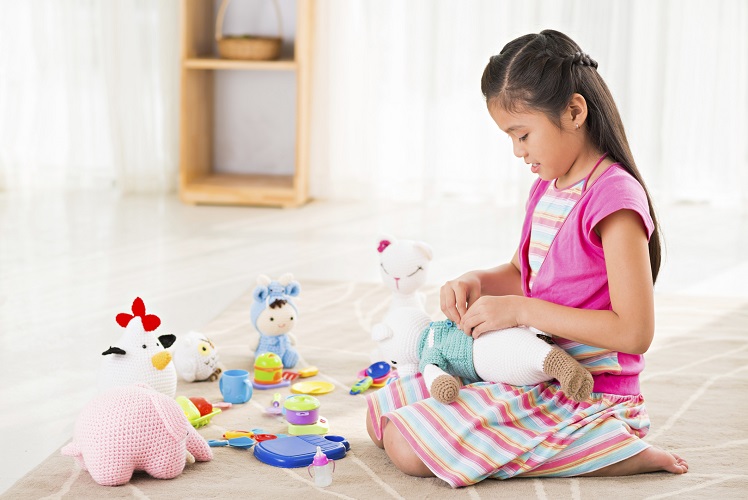
During therapeutic play with children, therapists watch, listen, and interact during moments when a child may be giving voice to images, emotion, and story.
“Image†implies an object or person of attachment from the child’s past, “emotion†implies feelings from past relationships or that the child may be feeling in current relationships or in the moment, and “story†implies the coming together of a narrative that all children accumulate piece-by-piece over time.
As children work to make sense of their world, they often try on different ways to communicate meanings, experiences, and identity. Usually this work occurs in the context of ongoing parent-child relationships, through the form of brief questions and conversation, and meaningful experiences over years and years.
Sometimes a child’s context, when tumultuous, unpredictable, and even harmful, can deter such work and leave a child with only collected fragments of identity. Those fragments may be confusing and contradictory and may leave a child without the confidence that comes through securely attached relationships with caregivers.
Sandplay therapy and other forms of therapeutic play, both directive and nondirective, are tools in a process of nurturing more secure attachment bonds with caregivers and beginning a journey of co-construction of identity.
[fat_widget_child_counselor_right]Take, for instance, a child who, after experiencing chronic abuse or neglect, begins to settle into a supportive family who can provide consistency and nurturance. Oftentimes families are surprised when a child responds to all their outpourings of love and support through varying modes of ambivalence or avoidance. In these cases, it is not only the child, but also the adults who have a tremendous amount to gain from experiencing the child’s underlying anxiety in a therapeutic context, deriving new, more positive and safe experiences, and working together to develop a new approach and a new narrative to coincide with it.
As therapeutic play facilitates relationship-bonding and identity co-construction with caregivers, volatile survival-oriented behaviors often decrease. The words of Susan Johnson, a leading proponent of emotionally focused therapies, ring in my ears: “Emotion must replace emotion.â€
A caring, creative, and collaborative approach assists such children and their families—and in the cases of adoption, their new families—in launching a journey of defragmentation, meaning-making, and identity formation that may have for years been delayed by a focus on more primal needs.
Over time, caregivers have opportunities to become more involved and less involved in the child’s play as it feels comfortable to them and to the child.
As children participate in sandplay therapy, I make a point to remain only peripherally engaged in their play, allowing them to take control of their play worlds with minimal interference. I often mirror the degree of participation of caregivers in the room. Over time, caregivers have opportunities to become more involved and less involved in the child’s play as it feels comfortable to them and to the child.
These new fragments of experience and exploration, in the safe presence and amidst dialogue from caregiver(s) and counselor, are building blocks in this co-construction of identity. Images, emotion, and story can emerge in unexpected ways and at unexpected times.
Much of the work of this co-construction is already occurring by this time in the context of a new, safe, and more predictable family home environment. The families supporting these children should be encouraged by signs that emotional and social development is roaring down the tracks once again, much due to the fuel of their care and affections.
Recommended Reading
Gil, E. and Sobol, B. (2000). “Engaging families in therapeutic play.†In C.E. Bailey (Ed.), Children in Therapy: Using the Family as a Resource. NY: W.W. Norton & Company.
 Temper tantrums can be very frustrating to deal with. All children have a temper tantrum at one point in time or another. They can happen in the home, school, in grocery stores, although they may not necessarily happen when the child is at another person’s house.
Temper tantrums are a child’s way of expressing anger and frustration at not getting what he or she desires, when there is difficulty expressing feelings, or when he or she know that the tantrum will result in getting what he or she wants.
Parents can be easily frustrated because the tantrums are not always easily dealt with, especially when the tantrum happens in the grocery store. That seems to be more like the child egging on the parents to actually follow through with what the parents say they will do.
Are tantrums a test from the child to the parent? It could be. When a parent is telling a child that he or she can’t do something if he or she has a tantrum, a child will definitely test that theory. When the tantrums happen, the child is looking at the parent to see if the parent is going to follow through with what is said. When the tantrum is “successful” and the parent gives in, then the child knows that tantrums result in getting his or her way.
When the tantrum is not successful the parents don’t give in, they follow through with what was said and the child learns that the tantrum is not the way to deal with things. That’s a hard thing, mostly for the parent. The child can whine, scream, yell and go on for what seems like hours. At the point that the child continues with the tantrum behavior and does not appear to give up, is when the parent tends to give in which only reinforces that the tantrum is the way to go.
Helpful hints:
- Don’t give in. When the tantrum is not given the attention that is needed to work, the tantrum will fade. As a parent, you will still want to observe your child so they don’t get hurt, or hurt others from their tantrum, but still do not give in.
- Stay calm. It is difficult to stay calm when a child is having a tantrum but you are the parent, the adult, and still know what’s best for your child. If you have your spouse around, and you are getting frustrated, then do a “tag out†but still both parents stay calm.
- Speak calmly to your child: that helps to keep you in control of the situation. The child could get louder, but speaking calmly can help shorten the behavior. You can say that when the tantrum is done, then we can talk about the situation.
- Let your child know what is expected of him or her when they go into the grocery store or other place or activity. You can also let them know that if there is a tantrum then they will not be able to do something later. This is where the follow through needs to happen, so when you say this, make sure the action can be followed through.
- Validate feelings. When the tantrum is done, tell your child that you knew he was able to regain control.
- When a child does not have a tantrum where her or she normally would, provide praise for that. That will help increase improved behavior and her own confidence that she does not need to have a tantrum and will be alright when she doesn’t have one.
 I often say, when explaining eating disorders, that someday I’m going to invent the Eating Disorder Board Game. I certainly don’t mean to make light of eating disorders. They are serious conditions that cause tremendous pain to those to have them and to their loved ones. I am a big believer in analogies’ abilities to explain thoughts and behaviors involved in eating disorders.
The Eating Disorder Board Game is one that I use to illustrate one of the salient issues involved in an eating disorder. Arrested psychological development is common in young people who develop eating disorders. Imagine a board game that begins at birth. Each player starts with a given temperament, or set of genetic markers that give them certain characteristics, and a given degree of emotional sensitivity.
As they move around the board, they learn, via the spaces they land on and the cards they draw, about their family environment and life circumstances. They can receive what they need in order to move on to the next stage of development. Things required to move to new spaces or stages symbolize secure infant attachment, attunement, protection, unconditional love and acceptance, caregivers who put their children’s needs ahead of their want.
However, they may not get all of those things, or some are cancelled out by other factors, such as traumatic experiences. So they may have to go back several spaces or lose turns. Players with certain sets of factors are statistically more likely to develop eating disorders.
Eventually, players get to adolescence and then the launching phase of life, wherein they are ready to leave home and move out into the world. At this point on the board there is a special feature. You know those circles of spaces on some board games where you get stuck going round and round while the other players continue around the board, and you have to roll exactly a certain number in order to get out?
Well, in the Eating Disorder Board Game, the majority of players who acquire eating disorders get stuck in that circle. What this illustrates is one common function of an eating disorder: enabling a person who has been deprived of what they need to develop. It substitutes real emotional nourishment in order to navigate the rocky transition from childhood to adulthood to do the impossible: to continue to move forward in life while barely progressing to psychological and emotional maturity.
Eating disorders often emerge in middle and high school because one’s psychic infrastructure—a sense of self, competence, and worth, a toolbox of interpersonal and emotional coping skills —isn’t adequate to support the weight of the demands of this stage of development. At this juncture, life gets much bigger as peers take on greater importance and family takes on less. Kids without a solid infrastructure are vulnerable to developing maladaptive coping mechanisms to help them organize the muddle around or within themselves.
Body and weight can become easy, logical focal points for a tweener or teenager who hears self-deprecating talk about being “so fat†and stinging criticism from other kids who are something other than slender. The malleable teenage brain, still developing its frontal lobs, is at risk for making decisions that don’t align with wellness when under social pressure. Arrival at the conclusion that appearance is the ticket to being liked, and to be fat leads to becoming alone and unloved may ring truest for their circumstances at the time.
In the Eating Disorders Board Game, players whose nature is emotionally sensitive or whose genetic makeup predisposes them to anxiety, to poor self-esteem, to a high degree of sensitivity to perceived rejection, and to perfectionism are vulnerable to eating disorders. All other vulnerabilities are enhanced in children whose family provides, as the creator of Dialectical Behavioral Therapy (DBT) Marsha Linehan describes it, an “emotionally invalidating environment.”
An emotionally invalidating environment can comprise a variety of situations. Parents who are absorbed with chronic illness in the family, either of one parent or another sibling, may distribute attention unequally throughout the family or household. If both parents grew up in families that were emotionally invalidating, they may repeat the pattern of their childhood home. If neither parent was born with or developed a high level of emotional sensitivity, they may not see or understand the needs of the emotionally sensitive child.
An emotionally invalidating environment can also involve parents whose behavior is overtly harmful to their child. If one or both parents have problems with an addiction of some sort, life at home likely mirrors the chronic illness scenario with added accountability and security issues. If one of or both of the parents are verbally, physically and/or sexually abusive, and the child is left without a protective guardian between the two, this forms an emotionally invalidating environment as well. Addiction and abuse have a wide variety of relationships in families. They may combine in a variety of ways to create different degrees of safety and validation for children.
The range of factors that can make up an emotionally invalidating home environment is broad. The less obvious these factors, the more puzzling the origins and function of an eating disorder. But the presence of an eating disorder more often than not indicates the absence of some crucial ingredients in the child’s infrastructure.
Fortunately, in the Eating Disorder Board Game, when a player stuck in the circle at the border of adolescence and adulthood rolls the right number on the dice he or she exits the circle on the Road to Recovery. This road can be long and filled with setbacks. But is paved with lots of help from skilled professionals, and self-help programs and literature.
The player is accompanied by many other pieces on the board: loving family, supportive friends, and other players making their way along. There are no losers in this game, and it doesn’t matter who arrives at the end of the Road to Recovery first. Players are all in the game together, and the only way to lose is to stop playing before reaching the end.

Cutting is the physical expression of hidden mental pain. Children may begin cutting or engaging in other forms of self-harm when their mental pain reaches a level that they can no longer deal with. While some children may find positive ways of coping with such pain, others seek negative coping methods including self-harm or drug use. Mental pain can be the result of built-up stress, past traumatic events, hurt feelings, rejection by peers, abandonment by significant others, or other life stressors.
Is My Child Just Trying to Get Attention?
If your child cuts in places that you can see and does not try to hide their wounds, then it is likely that, consciously or subconsciously, they are trying to let you know they are in pain. If they cut, or threaten to cut, in front of you, then they are likely crying for help. If your child has been hiding their cuts for a long period of time and has not told anyone about it, then they are likely trying to deal with their pain privately and are not seeking attention.
[fat_widget_right]
Why Do Children Cut?
This behavior, while it may appear to have no benefit, may actually provide several means to cope. I know what you are thinking: cutting hurts, right? Not for the cutter; for them, it actually releases pain. It allows the person who cuts to express how they are feeling on the inside by letting it outside. The chemical reactions that go on when people cut themselves make the behavior addictive. Once the person who cuts is used to dealing with pain in this way, it is hard for them to choose alternative coping methods. When a child who cuts becomes upset, they may go to the behavior as automatically as a person with alcoholism would turn to drinking to deal with a stressful day.
What Not to Do
It is important not to label self-harming behavior as “bad” or tell your child that they are doing something “wrong.” This kind of reaction will only make the child feel ashamed and desire to cut more to get rid of those negative feelings. Telling your child, “Just stop it,†is just as ineffective. Tell your child that you understand they are going through some difficult things, and that you want to find a way to help them.
Getting Help
Often when we ask teens, “What’s wrong?†they will invariably respond, “Nothing.†Many teens have a hard time opening up, especially to their parents. This is partially because it’s just not “cool,†or because they have a hard time bringing up certain topics our of fear that they will be misunderstood or get in trouble. It is important that they have someone who they are comfortable talking to, whether it is a family member, a friend, or a therapist. When looking for a therapist, it is important to find one whom your child will feel comfortable with so that your child can learn to release their pain in a healthy way.
Resources for Parents and Children
- GoodTherapy.org’s What To Do If You Are In Crisis
- Hollander, Micheal. (2008). Helping teens who cut: Understanding and ending self-injury. New York, NY: The Guilford Press.
- S.A.F.E. Alternatives/Self-Abuse Finally Ends (www.selfinjury.com or 1-800-DONT-CUT)
 Parents often ask me to describe what options they have for their post-divorce living arrangements. In addition to the many ways it is possible for children go back and forth between two residences, there is also the possibility of having children stay in the home they are currently living in while the parents move in and out. This is sometimes described as “the children get the house,†“bird nesting,†or just “nesting.â€
The Advantages
- Said to be child-centric: it focuses on the needs of the children.
- Children are able to continue to live in their home for a greater sense of stability.
-  Minimizes the difficulty for children of living in two places, like forgetting homework, toys, clothing, or other belongings at the other parent’s home.
- Parents might be better able to handle the experience of moving back and forth between their residences than the children might be.
How It Works
The parents move in and out of the home according to the parenting plan they have established. This might include a situation where one parent spends the night with the children. The other parent comes to the house when the first parent goes to work and is at the home until the working parent comes home, often after dinner. The daytime parent then goes to their “other†residence. This arrangement could change depending on which parent is spending the night with the children.
Alternately, one parent can live in the home with the children for one week, then the other lives with them the following week. This is what as known as a week on/week off arrangement.
In a 2003 case in Ontario, Canada (Greenough v Greenough), the judge court-ordered parents to implement a bird nesting arrangement—which they had not requested—until the hearings on the case could continue.
In the case record, Justice Quinn wrote:
“The court made a bird’s nest custody arrangement in which the children (aged 3 and 5 years) remained in the home, with the mother staying in the home during the week and the father on the weekend. I think that the benefits of a bird’s nest order are best achieved where the children are able to stay in the matrimonial home, particularly if it has been the only residence that they have known…
“Time and time again I have seen cases (and this is one) where the children are being treated as Frisbees. In general, parents do not seem to appreciate the gross disruption to which children are subjected where one of the parents has frequent access. In this regard, I do not believe there must be evidence that the children are suffering before the court is free to act. To me, it is a matter of common sense. At the risk of falling prey to simplistic generalities, I am of the view that, given a choice, I do not see why anyone would select a living arrangement which involved so much movement from house to house.”
Justice Quinn clearly saw the advantages to the children of living in the home they were most familiar with and of having little change in their day-to-day lives, and saw the role of the court as instrumental in advancing this option on behalf of the children.
The Disadvantages
- It is expensive. Unless the parents are able to share the residence in which the children do not live, they are looking at having three residences, one for the children and one for each parent when they are not living with the children.
- It requires a large degree of civility between the parents and the ability to get along and make decisions together. In general, the absence of conflict is the best indicator of resiliency for children, both in a marriage and post-divorce. A bird nesting situation, especially, cannot work if there is conflict. Co-parents who choose this model might consider working with a mediator or other professional who can assist in discussing the fine-tuning necessary to make the arrangement workable.
- It does not take into consideration what would happen when one or both parents enter a new relationship. Even before this aspect of “moving on†occurs post-divorce, both parents often need to individuate from each other and establish separate lives in order to disentangle from the marriage relationship they had with each other. Bird nesting does not adequately foster this aspect of divorcing.
- House rules: in order for parents’ movements to occur in a non-disruptive manner, both parents would need to have similar rules and house cleaning sensibilities. “House rules” need to be established to avoid creating a situation where children need to remember which rules are in place on which days, or at which times, depending on which parent is “on.â€
These lists are not exhaustive. Clearly, bird nesting is not for everyone. The question remains whether it is for even doable for a small percentage of divorcing families. We do know that when parents live in close proximity to each other, when the children have easy access between homes, and are not subject to ongoing conflict, children of divorced families are quite resilient and do as well as children from families where there is no divorce. This might be a solution that is just shy of bird nesting: good neighbors.
 Self-esteem is a relational term. It describes a relationship between you and yourself. Having a solid sense of esteem for yourself puts you squarely in a partnership that is nurturing and accepting, as well as motivating and energizing.
Where does this relationship with you come from? How is it determined?
The answer for most of us is that our earliest relationships in life set the tone for our inner dialogue. This is good news, because it means that we can explore the origins of low self-esteem and intentionally create new relationships that fuel a more positive view of ourselves. Our childhood does not have to be our destiny.
Let’s explore how early relationships might affect self-esteem by looking at three different ways parents discipline their children: authoritarian, permissive, and authoritative. Of course, parenting consists of more than just discipline, but the methods parents use to teach children right from wrong can have effects that last well into adulthood.
Let’s look at these three typical styles of discipline, and see how they’re likely to affect self-esteem.
1. Authoritarian: In this style, parents are the ultimate and only authority. They rule with an iron hand, and they are obeyed out of fear. Children who disobey the rules – which might be arbitrary or systematic, fair or unreasonable, known ahead of time or stepped on by accident – are punished. The form of punishment can vary, but punishment is the expected outcome of rule-breaking.
This style of discipline can be likened to a military dictatorship. No one gets to vote, and the law is handed down from above. Punishment is swift and merciless.
Children raised with authoritarian parents learn to obey rules, but they do not learn to listen to their intuition or pay attention their own feelings. Their thoughts, values, and opinions are treated as irrelevant by important others. So they learn to treat themselves this way over time.
As adults, children raised in authoritarian homes are likely to have a great deal of self-discipline, but little self-knowledge and generally poor self-esteem. Since their inner workings were apparently irrelevant to their caregivers, they minimize their inner lives and maximize “shoulds†in their self-talk. Such people are intimately familiar with “shoulds.â€
2. Permissive: A permissive family is sort of like a country without leadership: it’s a free-for-all, and anarchy reigns. This is terrifying for children, no matter how much kids seem to want their own way. In order to feel secure, children need to know that someone bigger, stronger, and hopefully smarter than them is in charge.
When there are no guidelines or boundaries set around children’s behavior, they come to believe that they do not matter enough for parents to care what they do. They wonder how much they are loved if no one seems to notice whether they’re home at 10 p.m.
It is as natural as clouds for children to conclude that they are unworthy when parented permissively. They may conclude that if they were smarter, prettier, nicer, better in some way then maybe the parent would care. Parental structure lends identity and purpose to a household.
Children of permissive parents often grow into adults who feel lonely, alienated, and unworthy. Their self-esteem is injured by a failure of visibility. They experienced themselves as basically invisible to important others at a time when they needed help to discover who they were, and that they mattered as people.
Permissive parents may sometimes decide to set rules, but children test the boundaries and they often do not stick. As with Authoritarian parenting, the rules are apt to change at the whim of the ruler. This conveys the message that the world is a confusing and untrustworthy place.
3. Authoritative: Authoritative parents have something in common with the rulers of a democratic country. They assume responsibility for leadership, but all citizens have a vote. Children of authoritative parents know where the boundaries are, and they are free to express displeasure with the rules, even if their wishes do not always carry the day.
Authoritative parents use reasonable, age-appropriate punishment that fits the “crime.” Children know ahead of time exactly what will happen if they break the rules, and why. There’s no wondering whether or how they’ll be punished on that particular occasion.
Unexpected punishments and resulting confusion can occur within the other two styles of discipline. Though the rules are consistent and dependable, they’re also flexible enough to accommodate unusual circumstances. For example, a child gets to stay up an hour past her usual bedtime to attend an event that has special importance to her.
Children of authoritative parents enjoy a sense of security about themselves and the world in general. They are more likely to be able to trust others, as well as themselves. They experience the world as a place that makes sense, and others as generally fair and reasonable. They make choices about their behavior, understanding consequences, and develop non-neurotic self-discipline.
It is easy to see why children of authoritative parents have a leg up on others in the self-esteem department. Their objections to the rules are acknowledged and considered. And their good deeds are rewarded as often as the no-no’s are punished.
In other words, children of authoritative parents feel seen and valued for who they are. They know that they matter to important others. Therefore, they matter to themselves. This is the foundation of self-esteem.
All these styles of discipline fall along a continuum. Most parents practice some blend of these, and it is also possible to have one parent with a discipline preference that does not match the other’s.The more often parents are able to discipline with an authoritative style, the more their children will develop good habits, a sense of security, and healthy self-esteem.
 Codependency is a pattern of behaviors and beliefs learned by children of dysfunctional families while they are growing up. These behaviors and beliefs can be helpful to the family unit, because they enable it to survive, and the child learns to depend on those behaviors in order to manage in the family system. Unfortunately, in the long run these behaviors are very harmful to the child.
That’s a lot of words to clarify. First of all, exactly what is a dysfunctional family? It can be defined in many ways. For this purpose, a dysfunctional family consists of one or both parents who have issues that seriously interfere with their functioning as parents and partners. Some of these issues include alcoholism or other drug addictions, mental disorders like bipolar or schizophrenia, or physical abuse. Children growing up with impaired parents in these painful family systems learn codependent behaviors and beliefs because at least one child has to assume some of the duties normally performed by a parent—or else the family is in total chaos. So one child steps up to the plate and begins to overfunction. This child becomes the “family hero.”
If Mom is too drunk to fix dinner, the hero child takes care of it. After dinner, the other children may need help with their homework, to have a permission slip signed, or need someone to talk to about being bullied at school. Again, the “hero child” steps in. The more the parent or parents underfunction, the more the “hero child” overfunctions. The non-alcoholic parent may need a confidante about their problems with the dysfunctional parent, and again, the “hero child” assumes that role. Thus, some of the tasks get done, and the family survives.
The Consequences of Being the “Family Hero”
How does taking on all of this adult responsibility affect the “hero child?” From the outside, they appear to be doing great. Mature beyond their years, they are responsible, want to do what is right, anticipate the needs of others, and do whatever they can to please everyone they meet. Inside, though, they are an endless sea of pain. The “hero child” feels overwhelmed by tasks way beyond their maturity level, and since performing like an adult is impossible, they feel chronically inadequate.
They are so busy anticipating and meeting the needs of others that they lose their sense of self and identity in the process. They work harder and harder to keep everybody and everything under control. Since this is also impossible, the harder they work, the angrier and more frustrated they feel. Of course, they keep these feelings inside. They quickly learn that expressing a negative feeling causes an explosion in an addicted family. The last thing they want to do is add more chaos to the house. Thus, the “hero” suffers through hideous family scenes, and later, everyone behaves as though nothing ever happened. This makes the “hero” feel isolated, crazy, and question their judgment. Since the “hero child” often becomes a confidante for the other parent, the boundaries in their relationships become all mixed up.
All of these behaviors become automatic in the “hero” and persist into adulthood, where they cause all sorts of problems. The “family hero” believes that he is responsible for everybody and everything. He believes that he knows and can fix what is wrong with other people. He believes that the needs of others are more important than his and that he must help everyone who needs it. Boundaries in his adult relationships do not exist. He believes he should not talk about what is going on, that he should not feel, and that he cannot trust anyone. Under stress, the hero overfunctions desperately until he is exhausted.
The next article will explain how these automatic behaviors and beliefs affect the adult “family hero,” whom we will call the codependent. Keep in mind, these same behaviors and beliefs that cause so much pain and suffering in adulthood enabled the co-dependent to survive as a child. We will call them survival consequences, and the idea of changing any of these can be terrifying to the codependent.
Perceived favoritism on the part of a mother can cause long-term psychological effects on all her children well into adulthood, according to new research. Gerontologist Karl Pillemer from Cornell University looked at 275 mothers and their 671 adult children and found that in families with a perceived sense of favoritism, children were more likely to exhibit depressive symptoms as adults. Interesting, this applied to both the favored children and non-favored children. The study found that it’s not the type of treatment each child receives that matters so much as being raised in an environment where a sense of unequal treatment is present.
Many children grow up facing distinct challenges within their family lives, though some are presented with pronounced difficulty that may have the potential to negatively impact the child’s adult life. The suicide of a parent during childhood is a markedly traumatic experience that may require special care and therapy treatment, and professionals have been interested in the effects of such an event on children for some time. In a study performed at Johns Hopkins Children’s Center, researchers recently investigated the potential impact of parental suicide on children’s own likelihood of committing the same deed later on in life.
[fat_widget_right]
To carry out the study, researchers focused on statistical data that spanned over the course of thirty years for a group of people in Sweden. Parents involved in the data had either died through suicide, through an accident, or through an illness, or were still alive. The children of these parents were then analyzed for their subsequent rates of psychiatric hospitalization, convictions of violent crime, and death. The study found that children whose parent died through suicide were three times as likely as children with living parents to commit suicide themselves, though this discrepancy disappeared when the children were eighteen or older at the time of the parent’s death. Children whose parent died in an accident while the child was thirteen years of age or younger were twice as likely as kids with living parents to commit suicide, and this tendency likewise disappeared in children of older ages. The death of a parent as the result of illness did not seem to have any impact on suicide rates. (more…)
 It is common for children and adolescents in foster care and adoptive situations to exhibit challenging behaviors, some of which can be severe. It is equally common for parents providing care to these children to become upset and overwhelmed by what they see.
Before parents reach the point where they themselves may have a behavioral episode, I always remind them to remember the environment that their child came from. By remembering what this child was experiencing during their formative years, we can better understand the behaviors we are seeing now.
Understanding a Child’s History
Most likely, a child entering foster care is coming from a situation that may have consisted of severe neglect, physical abuse, sexual abuse, orphanage care, parental mental health issues, parents with addiction problems, or ongoing abandonment, to name a few. As a result, it makes sense that we see similar behaviors in children that they most likely experienced from their parents. These include:
- Withdrawn or depressed mood
- Lack of understanding regarding consequences
- Physical aggression towards others or animals
- Sexually acting out
- Anger
- Lack of impulse control
- Difficulty connecting with others
- Property destruction
- Emotional sensitivity
- Self-harm
Because these children did not have a comforting, loving, and secure environment as their “stable base,†they can appear lost, distrustful, and angry. These children are not “bad†or “damaged†like they may appear initially. Instead, they are simply having a normal reaction to the negative past experiences of their lives. Because of this, it is important to have a clear understanding of your child’s history in order to better understand what you are seeing now.
By gaining a deep understanding of your child’s experiences, you will be more competent as a parent and better able to work with the child in a calm and therapeutic manner. The good news is that these children can and will change with the security, warmth, and structure they can receive from a positive and therapeutic parent.
Creating a Therapeutic Environment
One of the most common burnout factors I experience with parents is lack of emotional reciprocity from the child, accompanied by destructive and targeted behaviors. We must remember that children and adolescents often “act out†when they are scared. This doesn’t necessarily mean they are scared of their foster parents, but it could mean they are terrified of being in a new environment and not knowing what to expect next.
Based on their history, it could make sense that the child would expect the worse and view everyone in their life as a potential threat. At that point, it doesn’t matter whether their foster or adoptive parent has the best intentions, a nice house with their own room, supportive siblings, or the best pet. What matters in that moment are the parent’s skills to create a therapeutic environment for that child to be able to succeed and thrive.
What does it mean to have a “therapeutic environment?” It does not mean you have a perfect family without any natural conflict. Instead, therapeutic in this context describes the positive and directed manner with which the parent is able to respond to situations. It is the response that determines the success of the intervention. In order to have an appropriate response, the parent must be self-aware enough of their own triggers and issues to be able to know whether they are responding to their children’s behaviors out of their own insecurities and fear or out of intentional positive parenting that will benefit the child.
This process of self-awareness can be quite a feat in itself. It is a critical step for parents to undertake when working with children that have trauma histories and need a little extra support. It may be necessary for the parent to take a self inventory of their own issues, parenting values, and childhood experiences that impacted who they are today. By taking this inventory, the parent can self-reflect on what responses they received from their own parent when they had a scraped knee, perfect report card, or just a bad day. By taking a self-inventory, the parent can understand where their own gut reactions come from in stressful parenting situations, and where some of their own learned behavior may have been developed.
Therapeutic parenting is about setting firm boundaries in a manner that is gentle enough to appeal to the child’s emotional needs and developmental stage, and strong enough to ensure felt security.
Basic Parenting Skills for Adopted and Foster Children
These basic therapeutic parenting skills are important in successfully responding to situations, as well as being proactive:
- Calm tone and facial expressions
- Use of positive rewards for desired behavior
- No use of sarcasm, physical punishment, or other negative measures
- Understanding and open attitude
- Clear rules and expectations
- Implementing firm structure and boundaries
- Consistency in rule-implementation and consequences
- Follow through, follow through, follow through every time
Therapeutic parenting is about setting firm boundaries in a manner that is gentle enough to appeal to the child’s emotional needs and developmental stage, and strong enough to ensure felt security. Following through with what you say you are going to do is also critically important. This teaches the child that they can trust what you say. They learn by your modeling that there are consequences for choices they make. By implementing positive and therapeutic parenting techniques, the parent will feel safer in their environment and so will the child. The hard part is implementation—it is much easier said than done.
In addition, there will inevitably be times you don’t implement these techniques as you would like to. When you slip as a parent it is important to acknowledge it. Apologize if you did something wrong or explain what happened. These “mistakes†are opportunities for you to demonstrate that you are human and you accept accountability—a social skill your child will benefit from having as well.
The best thing a parent can do when their child engages in this behavior is to remain calm and consistent. By doing so, the parent creates a safe space for the child to know that despite their behaviors, they are cared about in a consistent and structured environment. It is likely that a new foster or adoptive child will not show the love and affection that a parent is seeking. It is also likely that the child may be resentful of the situation and not act or appear appreciative of the parent’s efforts. When this occurs, it is important for you as the parent to remember, “It isn’t about me.†Use this as your mantra during behavioral episodes. Your job is not to save them, but to help guide them in their own journey of growth and self-awareness.
Persevering Through the Process
In the beginning period of a placement, which can last years, it is common for there to be steep peaks and valleys of behavior, usually quite frequently for the first year, at least. However, if the parent can stick with it and persevere through the difficult behaviors, the reward can be great. Over time, with consistency and warmth, a child can build trust and a sense of security with themselves and the rest of the world. The parent will start to see more mild peaks and valleys of behaviors, until a baseline is eventually reached—not without the occasional slip up, of course!
With a greater understanding and self-awareness on part of the parent, behavior will come to be an expected and natural part of a process, which can result in a child who has the opportunity for a life they wouldn’t have been able to live before. In my opinion, witnessing that type of positive change in a growing individual is one of the most rewarding things you can do. Good luck!
Parents who are struggling with managing the behavior of an adopted or foster child may find individual or family therapy helpful. Reach out to a licensed, compassionate therapist here.