 “In the beginner’s mind there are many possibilities, but in the expert’s there are few.†―Shunryu Suzuki
To view life with a beginner’s mind is to look at the world through the eyes of a child. The world becomes a place that is full of curiosity and wonder. I’ve witnessed this when I watch children at play. Sometimes they are amazed, open, and playful, but at other times they may be sad, restless and cranky. Yet no matter their mood, there is almost always a willingness to start anew: they are open to the next experience.
In contrast, we as adults can be guarded and cautious with our feelings. We tend to turn away from pain, and when joy arises, we want to cling to it. This conditional way of approaching life can have a negative impact on our emotional well-being, as it tends to create a limited sense of self and a narrow view of the world.
How can we meet life with a beginner’s mind—one that is open, curious, and compassionate toward not just ourselves, but all of life? [fat_widget_right]
Look at the world through a child’s eyes.
Sit with a young child for even a few moments and your perspective on life can shift. Children look at the world with eyes of interest and fascination, drawing joy from the experience of playing in the snow or simply watching leaves being blown by the wind. They also readily feel and express all emotions. Children cry when sad, laugh when happy, express anger when disappointed or scared, and play when the opportunity presents itself. In short, they experience life fully, with few expectations or judgments about how things should or shouldn’t be.
When we put away childish things, we lose our innocence and wonder.
“We don’t have to create joy. It’s an innate quality that at times is hidden or dormant. As innocent babies we all have a natural joy. When we’re not overwhelmed by stress and suffering this natural state becomes revealed.†—James Baraz
As we move from adolescence into adulthood, we often lose our connection to our natural joy and openness, the sense of wonder we experienced as children. It’s as if somewhere along the passage to adulthood, we learned that being authentic and experiencing life fully was no longer acceptable.
When we lose our ability to be open to what’s happening, we often instead find ourselves trying to manage and control things, people, and experiences that are beyond our control. We no longer maintain a connection with the joy, vibrancy, and realness contained in every moment of life but connect instead with our thoughts about how life should be. This attempt to control is reactive and is often driven by our aversion to what is happening in our lives.
 Our ability to see life as a mixture of pain and joy allows us to experience life to its fullest extent. We learn to open to joy when it arrives, to take it in through our senses and appreciate it, with the knowledge it is a visitor that comes and goes.
By cutting off our vibrant connection to life and diving into the murky world of thoughts, judgments, anxiety, and worry, we lose access to what is healing, joyful and transformational. Sometimes, we can become stuck in this virtual world and lose sight of reality.
Coming back into balance with life.
“And could you keep your heart in wonder at the daily miracles of your life, your pain would not seem less wondrous than your joy.” —Kahlil Gibran
The truth is that life is not divided solely into sorrow and joy. Neither of these extremes reflects the reality of life. Together, they represent life as it is. Our ability to see life as a mixture of pain and joy allows us to experience life to its fullest extent. We learn to open to joy when it arrives, to take it in through our senses and appreciate it, with the knowledge that it is a visitor who comes and goes.
Eventually we learn to do the same with all other experiences and open ourselves to all feelings: sadness, anger, joy, happiness, and grief. We stay present in the face of pain and sorrow and respond with compassion and kindness. The power of the compassionate heart is such that it helps us stay open to painful experiences in ways that can heal and transform us. It is when we open ourselves to pain that we realize how precious life can be and that we don’t know when it will end. In doing so, we may learn how to better appreciate life, with all its joys and sorrows, instead of avoiding certain experiences.
Sometimes joy is felt when we are at our most vulnerable because that is when our hearts and mind are open to taking in life as it is.Â
I’d like to share a personal example of a challenging and painful time I went through with my family.
In 1997, I waited with my son and family in the coronary care unit of the hospital where my father had been admitted. His prognosis was grim, and we had all come together to support each other and our mother. In possession of the painful knowledge that our father was dying, it was challenging to stay present, and we were all caught up in a state of worry, grief, and fear.
Eventually someone said something—I can’t tell you what was said—and what happened next took us all by surprise: My son, who was 4, laughed out loud.
I don’t know what he saw or heard that elicited such a joyful response, but that isn’t important. What is important is that the sound of his laughter was like a balm to our broken hearts. It wasn’t just my family who was affected by it. His laughter, like a ray of sunshine on a cloudy day, shifted the energy in the room. It didn’t make the sadness or the deep hurt of losing a loved one go away, but it helped us to see that there can still be joy, even in the midst of deep pain and sorrow. In that moment I could see that life is a truly a miracle, filled with both joys and sorrows.
I believe that to be present and open to experiencing all of these joys and sorrows truly is a blessing.
May you be well.
 How do you react when you’re in pain? Do you resist it, ignore it, or push it away? Do you get consumed by it? Would you like to learn a more healing and compassionate way to respond?
To be alive means we feel happiness, joy, sorrow, and pain. Most of us want to feel happiness and all the other positive feelings, but pain? Not so much. Pain, though, is a natural part of life. It shows up physically, such as when we’re injured, sick, or aging, or as the emotional pain of frustration, sadness, loss, or sorrow. It also arises when we’re consumed by some mind state, such as anxiety or depression.
How Resistance to Pain Creates Suffering
“Resistance creates suffering. Stress happens when your mind resists what is. The only problem in your life is your mind’s resistance to life as it unfolds.†—Dan Millman, author and personal development lecturer
Whether it’s physical, emotional, or mental, staying open and present to pain is challenging. What makes it so isn’t the actual sensation of pain; it’s the way we react to it. We catastrophize, worry, or ruminate about what happened, what it means, and how it will affect our future. Sometimes we go into mental gymnastics, trying to figure out how to make it go away. We use our energy in ways that are exhausting and don’t help. This only fuels the pain, morphing what might have been a temporary period of pain into a longer one.
[fat_widget_right]
These reactions stop us from seeing when we’re caught in some belief or story about how life needs to be in order for us to be happy. If I’m always wanting to please others and neglect myself in the process, I can’t possibly be happy. Fearing rejection or the loss of a loving connection can keep me engaged in behaviors and patterns that are unhealthy and hurtful.
They can also show up as addictions, distractions, or unhealthy mind states, including:
- Overeating to subdue or numb the pain
- Self-medicating with alcohol and/or drugs
- Avoidance strategies such as video games, gossip, shopping, etc.
- Ruminating (getting caught in thoughts, stories, judgments, and opinions about how life should be)
Can you see how these patterned ways of reacting to pain can create deep suffering?
So how do we help ourselves?
How Resistance Manifests
The first step is to become aware of when and how we’re reacting/resisting pain. I like the way Christopher Germer, a clinical psychologist and author, describes the resistance that shows up when emotional pain arises. In his book The Mindful Path to Self-Compassion, he describes the series of internal dialogues that occur when a pain is present as follows:
“I don’t like this feeling!â€
“I wish I didn’t have this feeling.â€
“I shouldn’t have this feeling.â€
“I’m wrong to have this feeling.â€
“I’m bad!â€
Have you found yourself reacting similarly? Did it intensify the pain?
When we get stuck in these reactive cycles, we cut off from the very source that helps us heal and reconnect with life.
Moving from Reacting to Responding
The practice of mindfulness, and specifically self-compassion, helps us soften the resistance. We stop trying to escape, control, or ignore the pain and instead open to it. Staying present, we begin to investigate, through the practice of nonjudgmental awareness and kindness, how our body reacts to pain (tightening/tension); how our thoughts are affected (fear, anger, aversion); and what emotions are in need of attention and loving acceptance.
This pausing to connect is a pivotal moment, one where we’re shifting from reacting to responding. Deepening our exploration, we can practice the following steps:
- Connect with the breath. Notice areas of tightness, tension, or pain in the body. Send a compassionate, soothing breath to the parts of the body that are distressed.
- Close your eyes. Notice if there’s some fear-based belief operating in the background. Try not to get hooked in the story. Instead, gently focus on the breath, allowing the rhythm to soothe the body and emotions.
- Acknowledge the feelings that are present and notice where they show up in your body. Sometimes sadness is felt in the heart area, anxiety in the stomach, anger as a tightening of the muscles. See if you can soften around what you’re feeling.
- Place your hand on your heart as a gesture of love and compassion. Imagine the hurt as a small child in need of affection and attention. Surround the child/hurt in a warm embrace.
- If overwhelmed by emotional pain, go for a walk, focus on the sensation of your body moving, and breathe in and out with each step.
- Take in the sounds of nature or listen to calming music. Let the sounds move through you, soothing the hurt/pain.
- Take a restorative yoga class to help you learn to attune to body, mind, and heart in ways that restore balance and promote healing.
This is a powerful, transformative, and healing approach that helps us stay present to the pain and challenges we all face in life. Most of all, it helps us stay open to all of life’s joys and sorrows—and that is what makes life worth living.
May you live with ease and peace.
 “You yourself, as much as anybody else in the entire universe, deserve your love and affection.†—Buddha
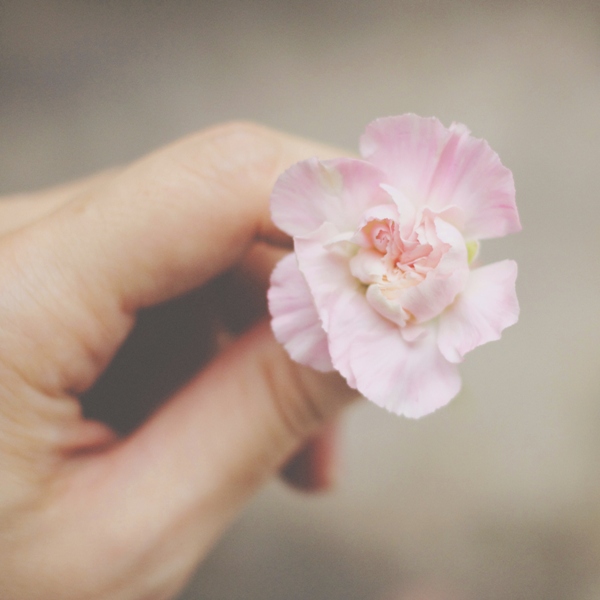
As I write this, I can feel anxiety in my entire body; my legs are restless, my toes are tapping, and there are butterflies in my stomach twirling and diving, with some going on bombing missions. Thoughts are flying across the screen of my mind at the speed of light. My inner dialogue/landscape is one of charred wood and dead grass as I search to find the “right†words that will enlighten readers. In this barren wasteland of blank thoughts, I see a little pink flower that seems to be calling from afar, but, alas, it’s not to be! It’s only a figment of my imagination.
In my mind, I see no other recourse than to surrender and shout out, “I give up! This is too hard!†while another voice suggests, “Don’t you think this would be a great time to rearrange the furniture?†All the while, the wise part of me looks on with patience and compassion, nodding her head as she says, “Now, my dear, you know what you need to do.â€
[fat_widget_right]
I do know what I need to do, but I still wonder why, after all these years of writing, a deadline can bring up feelings of dread similar to those you get when the dentist informs you that you’re in need of a root canal. Unfortunately, I know the answer to this; and no, I am not as wise as Yoda! I happen to be very well acquainted with the inner critic, and I know that as soon as there’s a deadline looming on the horizon, the inner critic perks up, rubs her hands together with glee, laughs maniacally, and shouts with jubilation, “I knew sooner or later you’d need my help!†Hearing this, I turn to her, send her an imaginary bow of acknowledgment, and say, “It’s OK. I appreciate the offer, but I can do this on my own.†I lovingly guide her back to the meditation cushion and ask her to help by sending thoughts of loving kindness and compassion.
Unveiling the Inner Critic
“While others may fool us with stories, lies, and misinformation, the biggest deceptions happen within our very own heads!†—Dana Nourie
We all have an inner critic that gets activated when there is a sign of trouble or danger on the horizon. It shows up when we’re most vulnerable, fearful, or sad. It’s the scolding, critical, manipulative, and intimidating inner voice that is trying to help us stay safe. It can also sound like background noise; the voice is there, but we’ve gotten so used to it that we don’t hear it. When we don’t notice this inner dialogue, we may end up believing these thoughts, which creates even deeper suffering. So it’s important to recognize when the inner critic is present.
Below are just a few examples of how the inner critic shows up:
- The controller: This is the voice that constantly demands action. It can say things like, “You’re a lazy slob! Get up and do those dishes right now!†or, “Hurry up and finish that project or you’ll be fired!â€
- The judge: This is the voice that sits on the high bench, evaluating and finding fault with your performance before you even begin the task. For example, you’re going to a new part of town and don’t have a good sense of direction. The judge immediately perks up, telling you, “You’re so hopeless with directions! You couldn’t find your way out of a paper bag!â€
- The voice of doom and gloom: This is the fearful voice that’s always sending messages filled with shame and doubt. So you might have brought a beautiful dress that you’ve been longing to wear, and as you look in the mirror, this part starts sending warnings of upcoming failure. “Are you sure you really want to wear THAT? You’re going to be the laughingstock of the party!â€
See the Vulnerability Beneath the Defense
Sometimes it helps to visualize the inner critic as a scared child. Most of us would respond with compassion if we saw a child suffering. Sometimes when I notice the critical self-talk in action, I’ll envision the fear as a child. I see the inner critic as a little girl who’s wearing an oversized lab coat and a hard hat. She stands anxiously watching over a grid with many blinking, colorful lights. While the grid contains a kaleidoscope of beautiful flashing colors, the inner critic ignores the beauty and instead is waiting for the moment when the grid flashes red.
Why red? Because it represents danger. (Think of stop signs, traffic lights, hazard lights, and ambulances.) When the illusion of trouble enters the mind, the grid flashes red, an alarm goes off, and a loud voice starts the countdown toward self-destruction. The inner critic immediately goes to work trying to avert danger in any way she can, and the negative self-talk begins. So the inner critic will say things such as, “You’re such a loser! No wonder creative thoughts don’t stick around! I’d leave too, if I could!†If I believe these thoughts, I might get paralyzed and stop myself from doing something that helps others and brings me joy. If instead I learn to look beyond the critical self-talk, I can begin to connect with the vulnerability beneath the defenses.
If I look beyond the inner critic and defensive stance, I see the feelings of vulnerability and fear. There’s fear of failure—that I won’t accomplish the task correctly or that I’ll lose my connection to what matters most. When I pause to connect through the practice of mindfulness and recognize that fear is present, I can begin to respond in ways that are healing and compassionate. This clear seeing of what is really happening beyond views of good/bad is essential in order for us to soothe the inner critic.
Before we get there, let’s take a deeper look at why and how fear triggers the inner critic.
Fear: False Evidence Appearing Real
We all face fear at one time or another. Sometimes many times a day! Fear shows up for the major events of our lives. It also shows up for the small, everyday activities, such as not getting to an appointment on time, getting into an argument with a close friend, etc. What transforms the fear into suffering isn’t the feeling itself; it’s how we react to it.
It’s also important to note that when fear arises it triggers our fight, flight, and freeze or submit response, which was essential for the survival of our species. After all, if our ancestors weren’t alert to the dangers they faced when they were out hunting for food, we wouldn’t be here today.
The problem is that most of the threats we face are intense reactions that go off when our self-concept is threatened. This makes sense, as we are social animals and our connection to each other and life is important to our well-being. However, when we react as if our very life is threatened, we end up adding suffering to what is often a moment of pain. As Dr. Kristin Neff writes in her book Self-Compassion: The Proven Power of Being Kind to Yourself:
We confuse our thoughts and representations of ourselves for our actual selves, meaning that when our self-image is under siege, we react as if our very existence is threatened. When this happens, our threat defense system uses the same strategies to stay safe as follows:
- Fight: We turn on ourselves, we criticize, blame, shame, and belittle ourselves.
- Flight: Feeling anxious and agitated, we seek to numb the pain by using distractions such as food, alcohol, gambling, or other distractions.
- Freeze: We get caught up in a holding pattern of thoughts. We ruminate on what we see as our inadequacies and weaknesses.
- Submit: We resign ourselves and accept our harsh and critical self-judgment, which leaves us feeling unworthy and ashamed.
This overreaction can leave us feeling highly anxious, depressed, and angry with ourselves, others, and the world, and this can lead us to limit our experiences in life and relationships.
How the Inner Critic Limits Our Lived Experience
“We get identified with patterns of thought and this leads to repetitive behaviors, these repetitive behaviors become who we are. We stop growing because we limit out experiences.†—Steve Armstrong, dharma talk on Greeting Visitors to the Mind
The truth is that we hurt ourselves when we lock ourselves in a mental cage, and the sad part is that the fear we are trying to avoid is in the cage with us.
I remember listening to a talk by meditation teacher Tara Brach on how fear affects us. She shared a moving story about a white tiger called Mohini, who lived in a 12-by-12-foot rectangular cage at the zoo in Washington, D.C. The tiger spent her days restlessly pacing within the small enclosure, and eventually the staff and biologists worked to create a natural habitat for her. This was a beautiful space with hills, trees, and a pond to swim in.
When Mohini was transferred to her new surroundings, everyone expected she would feel free to explore this wide-open space. The moment she was released, she “immediately sought refuge in a corner of the compound, where she lived for the remainder of her life. Mohini paced and paced in that corner until an area 12 by 12 feet was worn bare of grass.â€
We similarly confine ourselves to certain patterns that limit our ability to fully experience life. The inner critic becomes the gatekeeper—in charge of keeping us contained within these limits, where there is an illusion of safety. The truth is that we hurt ourselves when we lock ourselves in a mental cage, and the sad part is that the fear we are trying to avoid is in the cage with us. Recognizing how we’re reacting to the inner critic, to our thoughts and feelings, is an important step toward helping ourselves reconnect to this moment. Just as important is our ability to practice self-compassion in the face of pain.
Self-Compassion Helps Soothe the Inner Critic
“With self-compassion, we give ourselves the same kindness and care we’d give to a good friend.†—Dr. Kristin Neff
Dr. Neff describes self-compassion as “quieting of one’s inner critic and replacing it with a voice of support, understanding, and care for one’s self.†So we treat ourselves with the same compassion and kindness we show others who are suffering. This can be challenging, as our defenses were developed over many years and show up as patterns of behavior that often stop us from being vulnerable. What helps us to shift out of these patterns is meeting our experience with mindfulness, acceptance, and compassion. As Neff points out in her book, there are three elements to the practice, as follows:
Practicing self-kindness, we:
- Let go of pursuing perfection
- Accept that, in life, things don’t always go according to plan
- Learn to recognize and accept that pain is a part of life
- Meet pain with kindness and compassion instead of self-condemnation and harsh judgment
Common humanity means that we:
- Are all vulnerable, earthly, and imperfect beings
- Suffering and feelings of inadequacy are felt by everyone, and this is part of our shared human experience.
- We all walk the path of life together; sometimes the path is smooth and pleasant, and sometimes it’s unpleasant; strewn with obstacles and challenges.
We meet our moment-to-moment experience by:
- Observing our moment-to-moment experience (thoughts, feelings, and behaviors) in a nonjudgmental manner
- Noticing how these thoughts affect our body, mind, and heart
- If we’re overwhelmed, we help ourselves by practicing mindfulness of breathing (shift your attention from thoughts to the sensation of the breath coming in and the breath flowing out).
- As we feel more centered, we can begin to notice how emotions are affecting our body (emotions are felt as physical sensations in the body). We allow the thoughts to be there without feeding them.
- Noticing tension, emotional or physical pain, we bring a feeling of kindness and compassion to our experience and begin to soften around the tension.
- Sending love to the inner critic or the part of us that is caught up in thoughts, stories, or limiting beliefs
Mindfulness and Compassion Foster Healing and Growth
Mindfulness and self-compassion help us to see how we are limiting ourselves. We see and feel the barriers we’re constructing around our hearts, and in seeing them we can begin to explore what is happening within the mind that’s causing us to build the wall. We free our hearts as we explore with a real desire to understand, to open to the pain and meet it with compassion and loving kindness. This leads us to have moments of mindfulness, where the mind is free of ruminating, judging, planning, and obsessing, and a mind that is free of torment is loving, clear, understanding, equanimous, and easeful.
As I write this last line, I pause to check in with the inner critic. I see that she’s still sitting on the meditation cushion, sending thoughts of loving kindness, and on her face is a look of profound peace.
 “I slept and dreamt that life was joy. I awoke and saw that life was service. I acted and behold, service was joy.†—Rabindranath Tagore
One of the ways we come into balance and connection with each other and life is by giving from the heart. When we give to others, whether it’s an act of kindness, generosity, or compassion, it helps us live from the heart instead of the ego.
Living from the ego is painful and exhausting. It’s like feeding a hungry monster that’s never satisfied. Ego craves, pursues, and clings to status, approval, material wealth, and control. It views the world through the eyes of fear—constantly evaluating, judging, and acting in ways that are self-centered, defensive, and protective. Ego is about getting more, which leaves little room for generosity or compassion.
In contrast, generosity requires that we open our hearts to the world and each other. We accept that in life there are challenges, and we meet these challenges with humility, patience, and compassion. This is the work of the spiritual warrior, to open our hearts and allow ourselves to be vulnerable. In doing this, we open ourselves fully to life, love, and relationships.
[fat_widget_right]
The practice of generosity also helps us let go of striving and pursuing things. When we stop striving, we begin to see, value, and respond to what’s happening in the present moment in ways that are healthy and healing. This movement from striving, to be present and open to life, is what nourishes the heart. In responding and valuing our connection to others and the world, we let go of an “us-versus-them†mentality. Our priority shifts from attaining things to appreciating what we have and being open to share with others.
Greed vs. Generosity
“Thoughts rooted in greed, hatred and delusion lead to disharmony and suffering. Thoughts rooted in generosity, loving-friendliness, compassion and wisdom lead to harmony and peace.†—The Buddha
The opposite of generosity is greed. When we view life through the eyes of greed, our hearts are closed off and we suffer. We become small, fearful, and contracted, and view ourselves as lacking some elusive thing (material, spiritual, emotional, physical). This is much like the character Scrooge, who lived a lonely, bitter, and resentful life. On the outside, Scrooge appeared to be a grumpy, mean-spirited, and stingy man, but under this tough exterior was a fearful and vulnerable person who wanted connection but was afraid of it.
If we’re honest with ourselves, each of us has moments where we engage in Scrooge-like behavior. We get caught up in a “me, mine, I†mentality. We compare ourselves to others and either feel superior or inferior/inadequate. When we act in ways that feed the ego/greed, we lose our vital connection to the life around and within us. Generosity, which opens our hearts to each other and life, falls by the wayside.
Joy Arises from a Generous Heart
“There is no exercise better for the heart than reaching down and lifting people up.†—John Holmes
In the book The How of Happiness, author Sonja Lyubomirsky states that “being kind and generous leads us to perceive others more positively and more charitably. It fosters a heightened sense of interdependence and cooperation in our social community.â€
Generosity is a quality of kindness, of living from a place of abundance. When we act with kindness and generosity, we see the world through a clear lens that isn’t clouded by fear, wanting, or clinging. Our eyes are open to see life as it is, instead of how we want it to be. When we interact with others, our connection is genuine and based on a sincere concern for each other’s well-being. We see people instead of judgments or labels.
This may sound confusing at first, but think about it. How many times do you interact with people without really seeing them? When you go to the grocery store, do you see a“person†or a “cashier”? What about your spouse/significant other? Do you see the living, feeling, vulnerable loved one, or do you see a “service providerâ€? Generosity allows us to cultivate a heart-to-heart connection.
Start a Generosity Movement and Watch What Happens
“To live a pure unselfish life, one must count nothing as one’s own in the midst of abundance.†—The Buddha
I’d love for us to start a generosity movement where the goal is to act from a place of goodwill and give without expecting anything back. I’m not advocating that we give up all our worldly goods, and it’s not about giving to the point of depriving ourselves. It’s about living a balanced life and sharing with others. Too often we live from the viewpoint of “me, mine, and I.” When we do something or give to others, we expect to get something in return. Sometimes we’re not even aware of this expectation. We only become aware of it when a feeling of resentment arises, or when we feel as if we’re taken for granted. If instead we offered time, care, a hug, etc., from place of generosity, we may experience a warm feeling inside and in the live connection that is present in the moment of sharing.
Being generous arises from the heart, not the wallet. We don’t need to have material wealth in order to be generous. The only requirement is a willingness to open our hearts, to see life as it is, and to interact with others from a place of compassion and love. Some examples of generous acts are:
- Do a household chore without being asked.
- Offer to buy lunch for someone.
- If someone is in need of emotional support, set aside what you’re doing and listen with compassion.
- Hold or open the door for someone (it doesn’t matter if they thank you; what matters is the intention to be kind and generous).
- Tell your loved ones what you appreciate about them (this is a beautiful gift, as you’re letting them know you value them).
- Spend time listening to your children and try to see the world through their eyes before offering advice.
- Take time out of your busy schedule to spend quality time with a loved one.
- Smile at a stranger.
- When you ask, “How are you?†look into the person’s eyes and take time to truly listen with an attitude of curiosity and compassion.
For this week, pick a few activities from the list above and be mindful of your experience. Remember that generosity awakens goodness in the heart and this helps us open to life, love, and relationships.
May you be well!
 “In love we face challenges and in embracing these challenges, conflicts, and dark places, there is immense potential for transformation.†– J. Welwood
When conflict happens in your relationship, how do you react? Do you fly under the radar hoping to avoid detection, or come out fighting and go on the defensive?
Relationships can be wonderful, uplifting, and joyful, as well as challenging, painful, and destructive. When things are great and we’re getting along there is a feeling of deep connection and safety. But when there’s a sign of pain, misunderstanding, or disconnection, defenses are triggered and vulnerability goes into hiding. When conflict is viewed as a threat and met with defensiveness we get stuck in a power struggle that takes our relationship on an emotional rollercoaster ride.
Conflict isn’t a threat to your relationship. Sometimes we view conflict as a threat and respond to it as if it’s a sign that our relationship is in need of fixing or that one of us is at fault. In reality, conflict isn’t the problem—it’s how we meet conflict that becomes the problem.
Why We Don’t See Eye to Eye
When two people who grew up in two different homes decide to make a life together, conflict is going to happen. Each of us comes into relationship with different ways of seeing the world and when these perspectives clash, we encounter conflict. It isn’t about right or wrong; it’s about perception and how we see the world.
For example, if you grew up with a parent or sibling(s) who yelled and criticized you when they were angry, and this scared or frustrated you as a child, you might have learned to avoid angry confrontations at all costs. Now, in your present day relationship, if your partner gets angry your defensive reaction might be to ignore, shut down, or try to get your partner to calm down.
While your partner might benefit from learning how to tone down his/her anger, it’s also possible that your reaction to anger needs to change. The same goes for the partner who is angry—they may have grown up in a family where their needs weren’t being met so they learned that in order to be heard they had to yell, sulk, or complain.
If you both continue to meet this situation with defensiveness, then you’ll be mired in a power struggle that fills your relationship with negativity and resentment. If, on the other hand, you meet conflict with a willingness to listen and an intention to understand, and have empathy for each other, then there’s a potential for healing and growth to happen.
Shift from Conflict to Connection
Learning to become a healing partner takes patience, time, and commitment. Dr. Harville Hendrix, the founder of Imago Relationship Therapy, states that couples have the potential to become healing partners. He says, “It’s in relationship we are wounded so it’s in relationship we can heal.â€
Learning to become a healing partner is what helps us develop a safe, intimate, and loving relationship. To get there it takes practice, patience, and a willingness to be vulnerable.
It’s when we learn to soften our defenses and become vulnerable and open that we begin to connect in a way that creates a feeling of safety, love, and connection. It only takes one partner to shift out of the power struggle and into connection. Below are some steps you can take toward helping yourself, your partner, and the relationship.
Steps to help soothe reactivity and calm difficult emotions:
- Develop awareness of your triggers. Notice when your body goes into flight, fight, flee mode. (I.e. rapid heartbeat, shallow breathing, muscles tensing, etc.)
- Take time out to soothe reactive emotions.
- During the time out, don’t dwell or analyze what happened. Let go of thoughts and stories and take care of yourself.
- Connect with your breathing. Breathe in and out slowly, and attune to the sensation of the breath flowing in and out of your body.
- As you breathe, scan through your body and soften the places that are tense.
- Feel a sense of self-compassion as you acknowledge feelings of hurt.
- Engage in activities that help alleviate stress, such as exercising, walking, meditating, or doing yoga.
- Once you are less reactive, see if you can connect with the need or hurt that’s beneath the trigger. Notice if you’re hooked into a story about what your partner’s intention was when you got triggered. Use the line, “What I told myself was_____. For example: “What I told myself when you were late to pick me up was that I’m not important to you.â€
- Share what was going on for you (your feelings and needs) without blaming, criticizing, or attacking your partner. Use “I†statements and take responsibility for your reactivity. For example, “I feel hurt when we make plans and aren’t able to follow through.â€
- Learn how to use intentional dialogue as a healing way to connect and learn about each other’s triggers, needs, and hurts. During this exercise, one person speaks as the other person listens with the intention of understanding, validating, and empathizing with the other, then switch.
- Feel compassion toward yourself and your partner when conflict happens.
- Be patient as you learn how to shift from a reactive response to one that heals and connects.
Meet Conflict with Acceptance, Understanding, and Empathy
Conflict in relationships is a catalyst for healing and growth. Learning to approach it in a healing way is challenging. It takes time, patience, and practice. In the end, if you want to develop an intimate, safe, and loving relationship, then it’s essential that you learn to approach it as an opportunity for healing and growth.
Remember, we come into relationship with past hurts, unmet needs, defenses, and parts of us that are in need of growth. When we let go of defenses and open our hearts to each other in a relationship, we create an opportunity for both of us to heal and grow—as individuals and as a couple—as we journey together through life.
May you have love, joy, and peace in your life.
 Love and compassion are necessities, not luxuries. Without them humanity cannot survive. -Dalai Lama
In life we encounter many different experiences. Some are joyful and uplifting, and others are painful and challenging. When we encounter joy, there is a yearning to have it last forever, but when there’s pain our first reaction is to avoid, ignore, or push it away. When we react to joy or pain with any form of resistance—clinging to joy, pushing away or ignoring pain—we suffer. What helps us walk through our suffering and the suffering of others is to become aware of when we are reacting to pain and learn to transform this reaction into a compassionate, caring response.
Cultivating a Compassionate Response
My first encounter in learning to confront suffering with compassion was many years ago, when I held a position as an intern at a center for survivors of domestic violence. In this environment, I learned a great deal about extreme suffering, as the women I encountered lived in a hostile, aggressive, and sometimes dangerous environment. In the beginning I felt overwhelmed just trying to learn how to help people deal with life-threatening, painful situations while remaining objective. Working in this setting was stressful, and I recall leaving the center in tears as I watched clients return to hostile and oftentimes dangerous situations. It brought up deep feelings of helplessness, frustration, and judgment.
[fat_widget_right]
In helping these survivors, my initial reaction was to try and fix, change, or in some way rescue them. This was a reactive response as I was trying to get the pain (theirs and mine) to subside, and guess what? It didn’t work! It only increased my own feelings of helplessness and didn’t create the supportive, compassionate environment that promotes healing and empowerment. Luckily, I had a compassionate, patient, and wonderful supervisor who taught me that providing a nonjudgmental presence, connecting with an open heart, and having compassion towards the person, and myself, as I listened to their stories was what healed. This meant I had to let go of trying to control the outcome and allow myself to be present with their pain and my own. It was a growth experience that continues to help me in my professional and personal life.
Opening Heart and Mind Helps Connect and Heal
Running groups for survivors of domestic violence, I hear stories about physical, emotional, and verbal abuse. These stories are traumatic and heart-breaking. They all share a common theme of fear, loss of identity, and confusion. The shared experience of having to set aside their needs in an attempt to meet the needs of a controlling partner, whose wants and expectations are insatiable and unrealistic, left them with a sense of low self-worth, shame, and suffering. What helps them heal and become empowered is their ability to let go of judgment, share their stories in a supportive environment, and learn to develop a practice of self-care and compassion.
What Gets in the Way of Compassion
As we travel through life we will encounter pain. It might be through the loss of a loved one, the end of a relationship, or recovery from a severe illness. Or perhaps it’s the small stuff that brings up feelings of shame, inadequacy, or worthlessness. When this happens, the tendency is to get lost in judgment; we beat ourselves or others up in an attempt to stop the pain. This only intensifies our suffering. Caught in this reactive response we forget that there’s a real need to treat ourselves with kindness, love, and compassion. When we turn towards suffering with compassion it helps us heal and reconnect with life.
The Practice of Compassion
In helping people learn the skill of transforming reactivity into a compassionate and caring response, I use the example of a hurt child or a pet. I ask them how they would help a child who is sad or a pet that is hurt. What would that response look like? They usually state they’d give the child or pet a hug and comfort them with kind words or a gentle touch. Our deepest need, when we are in pain, is compassion; this is what helps us heal. It is not a luxury, it’s a necessity! This turning towards pain, with an open heart and the intention to heal, is what helps us to live life fully.
Developing Self-Compassion
Becoming aware of when we are reacting or in any way judging ourselves is the first step. The second step is to become present with how our bodies, minds, and hearts are responding to the experience of pain. Setting an intention to be kind towards ourselves and let go of reacting is what helps us to connect with compassion.
The following are some steps you can take towards developing a caring and compassionate practice:
- Awareness is the first step! Notice when you are reactive or triggered. Your body sends signals when reactivity happens. You might feel blood rushing to your face or a tensing up of the hands or body. Your breathing may be shallow and your thoughts may be filled with judgment.
- Connect with the present moment by letting go of thoughts and focusing on the sensation of the breath as it comes in and out of your body, or focus on feeling the ground beneath your feet. This helps to slow down reactivity and calm the mind.
- Place your hand on your heart in acknowledgment of the difficulty you are facing in this moment. Imagine the placing of the hand on the heart as symbolic of opening the heart to compassion or sending healing to the hurt place inside.
- Visualize yourself held or embraced by a spiritual figure or someone who loves you.
- Allow yourself to take in the healing sensation of compassion until you feel calmer and more connected to the present moment.
When we allow ourselves to care for ourselves and others, it is a profound act of kindness that refills the heart, energizes the body, and nourishes the soul. In that moment of opening our hearts to self and others, we recognize the immense healing power of compassion and reconnect with life and love.
May you be free from suffering.
May your heart be filled with compassion.