 The term “enabler†has gained widespread recognition and use in popular culture and media over the past several decades. It is a label that can result in a great deal of anxiety and guilt for anyone who has been accused of being, or suspects that they may be, an enabler.
In its original context, enabling refers to a pattern within the families of people addicted to alcohol and drugs, wherein the family members excuse, justify, ignore, deny, and smooth over the addiction. This notoriously allows the addicted person to avoid facing the full consequences of his or her addiction, and the addiction is able to continue.
In a wider sense, enabling can describe a pattern of behavior that becomes organized among the family and friends of not just an addicted person, but any person who is exhibiting poor choices that harm themselves or others and for which they are not being held responsible.
[fat_widget_right]
Who are enablers? Enablers can be romantic partners, ex-partners, parents, adult children, siblings, or friends. The one thing that all enablers have in common is this: they love someone who is out of control, and they find themselves taking more responsibility for the actions of that person than the person is taking for themselves.
The one thing that all enablers have in common is this: they love someone who is out of control, and they find themselves taking more responsibility for the actions of that person than the person is taking for themselves.
Who is enabled? The enabled person may be one who is refusing to take on responsibilities he or she would otherwise be expected to take on in the course of age- and stage-appropriate development. The enabled person may be exhibiting a range of poor choices with alcohol and drugs, ranging from abuse to addiction. This may also encompass poor choices around so-called “soft addictions†such as gambling, pornography, or excessive video gaming. He or she may refuse, or appear unable, to fulfill normative roles of adulthood. If a parent, he or she may underperform or disregard the responsibilities of parenthood. He or she may frequently disrupt romantic partnerships. The enabled person often displays poor money management, as well as disorganized academic and/or career-planning choices. He or she may quit or be fired from a series of promising jobs and educational or training programs. The enabled person often describes himself/herself as a victim of circumstances or of other people.
The enabled person’s behavior elicits a great deal of anxiety within the people who love him or her. This creates a dysfunctional system into which people who are close to, love, or care for the person can become enmeshed: compelled to organize their own behavior around the needs and choices of the enabled person.
Some who use the term “enabler†do so with a heavily negative judgment against the person who fulfills the role. It is commonly believed that enablers are knowingly, even willingly, complicit in the actions of the person they are enabling; that enablers support and condone the negative choices of the person they are enabling.
This is far from true. Enablers do not like or feel OK with what the enabled person is doing. To the contrary, enablers are often the ones most affected by, and most disturbed by, the negative behaviors of the enabled person. They feel extremely anxious about the destructive consequences that the enabled person could face.
Consider the following quotes from self-described enablers in therapy:
- “If I kicked him out, he would be homeless. He’s so irresponsible with money, he could never make it on his own. What else am I supposed to do?â€
- “Every time I’ve tried to talk to her about her addiction to those pills, she’s gone on an even worse binge, and I’m afraid she will overdose.â€
- “I know I shouldn’t have paid for his lawyer after the third DUI, but if he went to jail, he would lose his job.â€
- “Every time she and her boyfriend fight, she crashes here. I let her because I know he can be violent, and I don’t want her to be hurt. I wish she would leave him for good.â€
In other words, enablers detest the behaviors of the enabled, but they fear the consequences of those behaviors even more. They are locked into a lose-lose position in the family. Setting boundaries feels like a punishment, a rejection, or an abandonment of the person they love. Enablers may struggle with the guilt they would feel if the person they’re enabling were “left alone†to be hurt and damaged by the real consequences of their actions. In some instances, enablers are also protecting themselves and/or children from those consequences.
Enabling, therefore, is a distorted attempt to solve problems. Enablers desperately desire to find a solution to the issues at hand, but their attempts to do so are severely limited by the dysfunctional family system.
Enablers frequently find themselves thinking things like:
- “If only I can keep this person going through their current crisis, it will buy us another day.â€
- “If I can’t change what they’ve done, at least I can help limit the damage of that choice.â€
- “Maybe my loved one will wake up and come to his or her senses. Maybe a real solution is waiting right around the next corner.â€
Enabling has the effect of releasing the enabled person from having to take responsibility for his or her behavior. Enabling means that someone else will always fix, solve, or make the consequences go away. When someone is in the throes of an addiction or other grossly dysfunctional behavior pattern, he or she begins to rely on the resources available. Enabled persons will come to expect that their behaviors are disconnected from consequences or negative outcomes. Enabled persons may even begin to hold their enabling family members in “emotional hostage†in order to keep this pattern going. They may learn to manipulate their enablers in order to ensure that the help and support keep coming.
In this kind of a system, everybody loses by inches. The enabler is desperate to prevent one enormous crisis, but winds up experiencing a constant state of stress as he or she attempts to manage each smaller daily crisis. Enablers generally are aware that they are being taken advantage of in some way; they often report feeling frustrated, unappreciated, and resentful.
The enabled person becomes stuck in a role in which he or she feels incompetent, incapable, disempowered, dependent, and ineffectual. He or she may gradually accept a self-concept that includes these negative traits, destroying self-esteem.
How, then, does the enabled person also “lose� The enabled person may wish he or she felt in control of themselves, particularly with regard to addiction; but lacking the life experience and lessons that facing consequences brings, they may not know how to break those patterns. They may not have had the benefit of true self-reflection and self-evaluation of their behaviors. The enabled person becomes stuck in a role in which he or she feels incompetent, incapable, disempowered, dependent, and ineffectual. He or she may gradually accept a self-concept that includes these negative traits, destroying self-esteem and rendering the person even less likely to suddenly do a 180 and become responsible and self-sufficient in the future. The enabled person may essentially be prevented from building the skills and motivation he or she needs in order to practice responsibility and reach his or her full potential. Because the enabler(s) will always solve problems for them, the enabled person does not learn how to solve their problems themselves.
By this point, you may be thinking, “I can see some of the ways I have been enabling my loved one. What now?â€
You must accept that while your enabling behaviors come from a place of love, enabling is an ineffective way of solving problems at best; debilitating to all involved at worst. You may buy another day or prevent another emergency, but in the end, you are only postponing the real solution.
The key to breaking the pattern of enabling is to return responsibility to the person it belongs to. This involves setting boundaries between yourself and your loved one. You can no longer attempt to take on responsibility for anyone else’s actions but your own. Your loved one’s choices are (and have always been) his or hers. Your loved one’s outcomes and consequences, as well, belong to him or her alone.
The enabled person lives in the same world, with the same rules, as everybody else. Managing their world for them means that they don’t learn to manage themselves within the world. He or she is very likely to have untapped internal and external resources which have not been utilized because the enabling pattern has short-circuited their growth.
When you set boundaries, you release your need to control the outcomes that your loved one experiences. You allow your loved one the chance to connect his or her own choices to the positive and negative experiences that naturally follow. Their choices, their consequences, and what they do or don’t learn from them are all on their side of the boundary.
On your side of the boundary, this means that you must learn to cope with, and internally manage, the anxiety of not being in control of your loved one. Many recovering enablers find that they must rely on their own sources of support to help them overcome the urge to control and enable. The fear of your loved one being hurt can be so overwhelming that setting boundaries and stepping back can be panic-inducing. Receiving counseling for further insight and support in this area is highly recommended.
When you stop enabling, this does not mean that you stop loving the person. It does not even mean that you cannot help him or her.
When you stop enabling, this does not mean that you stop loving the person. It does not even mean that you cannot help him or her. There is a difference between healthy help and enabling. Healthy help involves providing information, encouragement, and coaching to your loved one. You may give your loved one contact information for doctors, counselors, lawyers, or rehabilitation programs, without feeling the need to force him or her to accept this help. You may discuss with your loved one what the possible consequences of actions might be, without feeling as if you must make sure they make the choice you want them to make. Healthy help puts your loved one in control and allows you to take a secondary role.
Enabling is essentially love turned to fear, and help turned to control. The effects of enabling are toxic to all involved. With a solid understanding of what enabling is, and what it is not, there is hope for families who are acting out this pattern. An experienced individual and/or family counselor can be a valuable source of support for anyone who is looking to break enabling patterns.
 I was not far from the shore in the fickle, warm Gulf of Mexico, a place I love. I was swimming, enjoying the sun, feeling deeply at peace. I loved the smell of the water, the feel of the air. I was carefree and at ease, like a butterfly on honeysuckle.
Then I was ambushed by a whirlpool, kidnapped from my reverie. I wasn’t paying attention, and I swam right into it, caught before I knew it was there. I’m a strong swimmer, and expected to swim out of the vortex and get back to shore, but I couldn’t. Each time I made it to the edge of the circle, I was forced back by the whirlpool. Each time I thought I was making my escape, I was sucked back in. I kept trying, but I couldn’t get out. I was getting scared. What if I drowned?
[fat_widget_right]
I didn’t know it then, but built into every whirlpool is a backdoor, a path to survival, but when you’re in the middle of a whirlpool you can’t see it—you need someone outside, someone standing on the shore, to see you’re in trouble, to help find the solution, to show you the path so you’ll survive.
Lucky for me, there was a lifeguard standing on the shore; I screamed to him for help and he saw what was happening. I expected him to swim to me and rescue me, carry me out of the ocean like you see in the movies. I was prepared to be grateful—but that’s not what happened at all. Instead, he waded in a bit, careful not to get caught in the whirlpool himself, and pointed at something. I was angry; why didn’t he save me? I didn’t know what he was pointing at, but he insisted that I pay attention and pointed again until I saw the path out of that swift, inexorable current.
He was showing me how to escape, how to save myself.
This is like the therapist/client relationship, like what happens when I’m helping a client. I have a different perspective on what’s happening, even if I had a similar experience sometime in the past, in my own life, but to help I will stay slightly apart, so as not to get caught in the whirlpool. I will feel for you, but I’ll keep those feelings in check. It’s almost like being in two places at once—feeling close to your experience but a bit apart, too.
Inside your own whirlpool, you just can’t see. You don’t know what’s happening. Maybe you’ll even have the feeling that you’ve been through something like this before, but you don’t know what to do about it. With relationships, for instance, the kind where you split up and make up, over and over again. Each new breakup feels like other breakups in the past—you keep on breaking up/making up with the same person, and never make it to shore.
I will stand with you but a little to the side. We’ll find your path together, but then you must swim out yourself. I’ll help, but you have to do the work.
Sometimes people get very angry about that: If I know the answer, why don’t I just tell you? If I really cared I would rescue you, right?
I remember when I was in therapy myself. I was about 30 years old, recently divorced, mother of an infant, full-time social worker, and struggling financially. I did not know how to get out. I was stuck. I could not believe how I had arrived in such a miserable place, so I started treatment. I was almost completely hopeless.
My therapist listened to me, felt for and with me, showed me some of my less healthy habits, expanded my ways of thinking, and adjusted my vision. She loved me. She did not quit on me and did not let me quit on myself, either. She did not carry me out of my misery, but she was a positive example and helper, and I emerged, eventually, with a better understanding of the world and my place in it, so I could find my path and make it to shore. You can, too.
 The diagnosis of “borderline personality disorder†carries profound stigma for many people. Even some mental health professionals use the term pejoratively, which is not difficult considering that the diagnosis itself implies that someone’s personality is flawed. In reality, the flaw lies within the diagnosis—not to mention all the painful and agitating symptoms that come with it.
I will go into more depth about these challenges, but first a definition is in order.
What Is ‘Borderline Personality Disorder’?
People who are diagnosed with borderline personality tend to have problems with unstable self-image, moods, and relationships. They may experience suicidal thoughts, self-harming behaviors, displays of anger or irritability, and periods of intense sadness or despair called “dysphoria†(the opposite of euphoria).
To receive a diagnosis of borderline personality, a person must meet at least five of the nine characteristics below. Keep in mind while reading the list that, in order to qualify for the diagnosis, the person’s symptoms must be longstanding and inflexible, not just occasional ways of relating to life:
- “Frantic†attempts to avoid abandonment
- Intense and turbulent relationships, with a tendency to alternate between seeing the other person as all good or all bad
- Unstable sense of self, which could lead to radical changes in major aspects of identity such as career, religion, or sexual orientation
- Frequent suicidal thoughts or self-harming behaviors, such as cutting
- Impulsive behaviors in at least two other areas, such as substance abuse or binge eating
- Wild mood swings with extremes of anxiety, irritability, or dysphoria
- Persistent feelings of emptiness
- Intense anger or rage that is often close to the surface
- Brief periods of paranoia or dissociation when under stress
I have seen more than one writer refer to borderline personality as the equivalent of emotional hemophilia: when a person with borderline personality experiences a hurt, even a small one, the emotional bleeding is profuse. The suicide rate for people with borderline personality is about 10%. Most people—up to 90%, by some estimates—with borderline experienced neglect or abuse, particularly sexual abuse, during childhood. Individuals with borderline personality commonly view themselves as inherently defective, bad, or broken.
For many years, borderline personality disorder was considered untreatable. Now, decades of research and treatments have illuminated the errors in such thinking. For one thing, we know that many people “grow out†of the disorder as they age. For another, a great many people with the diagnosis respond positively to treatments such as dialectical behavior therapy.
Stigma and Borderline Personality
All personality disorder diagnoses are controversial. The mere phrase “personality disorder†situates the problem in the person’s personality, rather than neurology or life stressors (including trauma). GoodTherapy.org’s founder, Noah Rubinstein, LMFT, has even explained why he views personality disorder diagnoses to be flawed:
“I believe that by labeling a person as personality disordered or, in its more gentle form, stating that a person has a personality disorder, we are essentially claiming one’s personality, their person-hood, their essence, is fundamentally flawed. What else are we, other than our personality? Such a diagnosis is very, if not absolutely, likely to produce more shame, worthlessness, and rejection in a person who probably has enough of it already.â€
I agree with his analysis. In some ways, the situation is even worse for people diagnosed with borderline personality. Any mental health diagnosis can engender feelings of shame, or of being “fundamentally flawed.†On top of that, feelings of shame and badness are both symptoms and consequences of borderline personality. This can create a vicious cycle, as if the diagnostic label alone confirms the feelings of defectiveness that came well before the diagnosis.
Too often, some mental health professionals add to the stigma. It is well known that some clinicians have applied the label “borderline†merely because they do not see an individual improving, or the individual poses challenges such as expressing overt anger toward the therapist. For some therapists, it is easier to blame the client for treatment’s lack of success than it is to look at the clinician’s own inability to help.
Another source of stigma concerns others’ tendencies to judge the person, rather than the person’s behaviors. Some, though certainly not all, people with borderline personality may cope or express their pain in ways that hurt those around them. They may yell or even be physically violent, make unrealistic demands, display intense sadness or anger at what seems a disproportionately small provocation, or even attempt suicide or hurt themselves in ways that make another person feel manipulated.
It helps to keep in mind the fundamental, excruciating pain that often underlies borderline personality disorder. Marsha Linehan, the psychologist who created dialectical behavior therapy, compares the behaviors of people with borderline personality disorder to those of people with painful cancer who will do anything to reduce their pain. The cancer patients may cry, scream, or attempt to “manipulate†others in order to get their pain medication. But we seldom view their efforts negatively, because we understand their abject suffering. Their behaviors make sense.
So, Should the Diagnosis Be Abolished?
I agree with other critics that the label “borderline personality disorder†can compound an already painful situation for people, especially the newly diagnosed. But I also find value in the diagnosis—not the name, but the concept.
Before diagnosis, people with borderline personality often feel bewildered. They may deeply experience their internal chaos yet find that few people understand. I have worked clinically with many people who felt soothed when they learned their problems fell into a distinct category that millions of other people shared. These people felt they were no longer alone.
Once people have a name for a condition, they can more easily find information about challenges and ways to heal. They can find other likeminded people in online support groups. Also, diagnoses enable clinicians to better treat people. Clinicians can draw from a large body of research on borderline personality to identify the best treatment options for individual clients.
The diagnostic label deserves to be changed, but the construct itself should remain, as long as it is supported by continued research. Some researchers, like the psychologist Judith Herman, think that borderline personality actually is a type of posttraumatic stress, and should be reclassified as such. But the idea has not gained much momentum in the field of psychiatric diagnosis.
Changing the name, too, is a pipe dream for now. The American Psychiatric Association only months ago released its first overhaul in almost 20 years of the Diagnostic and Statistical Manual of Mental Disorders, and the group never seriously considered altering the name. That is a shame. The name of a diagnosis should describe the problem—in this case, problems regulating emotions—not the personality. Others have proposed alternate names. My preferred label is one proposed by Dr. Linehan, “Emotion Dysregulation Disorder.â€
What Can We Do to Diminish the Stigma?
Use the word “borderline†appropriately. Do not use the word “borderline†as an insult. This especially applies to mental health professionals. I have worked in the mental health field for almost 20 years, and it is disheartening how many times I have heard a professional say “She is so borderline,†or “What a borderline.†Borderline is an adjective to describe a series of symptoms, not a person. And it certainly is not a noun.
Be clear that stigma is undeserved. When we discuss how stigmatizing the diagnosis of borderline personality can be, it is necessary to make clear that the stigma is unfounded. Despite appearances or assumptions, the label does not truly mean that somebody’s personality is flawed. We need not buy into the pejorative meaning.
Exercise compassion. Whether you know somebody with borderline personality or have the symptoms yourself, always keep in mind the underlying pain and anger that can drive behaviors. This is not to say that people with borderline personality are not responsible for their behaviors and cannot make changes. Rather, a compassionate stance helps diminish shame. It also emphasizes the possibility that people can learn more constructive ways to manage their emotions.
Avoid stereotypes. The diagnosis of borderline personality captures a very heterogeneous group. Only five of the nine diagnostic criteria are required for a diagnosis. Two people with the diagnosis could have only one symptom in common. In fact, there are 256 different possible symptom combinations for borderline issues, and every person who has been diagnosed with borderline personality has his or her own unique stories.
Maintain hope. As I noted above, borderline personality need not be a lifelong struggle. The symptoms of borderline personality often mellow with age. Borderline personality disorder, as a diagnosis, also has the advantage of garnering significant attention among researchers, clinicians, and grant funders. New discoveries continue to be made.
More and more, we learn about effective ways to treat people who are diagnosed with borderline personality. These gains in knowledge lead to more hope: hope for people to heal, and hope for the condition, by whatever name, to elicit less stigma and more understanding.
References:
- American Psychiatric Association. (2013). The diagnostic and statistical manual of mental disorders – 5. Washington, DC: Author.
- Gunderson, J. G., Stout, R. L., McGlasham, T. H., Shea, T., Morey, L., Grilo, C. M., Zanarini, M. C. et al. (2011). Ten-year course of borderline personality disorder: Psychopathology and function from the Collaborative Longitudinal Personality Disorders Study. Archives of General Psychiatry, 68, 827 – 837.
- Leichsenring, F., Leibling, E., Kruse, J., New, A. S., & Leweke, F. (2011). Borderline personality disorder. The Lancet, 9759, 1 – 7.
- Lilienfeld, S. O., & Arkowitz, H. (2012). Diagnosis of borderline personality disorder is often flawed. Scientific American. http://www.scientificamerican.com/article.cfm?id=the-truth-about-borderline
- Linehan, M. M. (1993). Cognitive behavioral treatment for borderline personality disorder. New York: Guilford.
 Transpersonal therapy can be a powerful framework for using the expressive arts, such as music, drama, and visual art. But many people are unfamiliar with transpersonal therapy. You may be wondering what this term means and how it relates to expressive arts processes. Here’s what you need to know about transpersonal psychology and how it connects with expressive therapies.
What Is Transpersonal Therapy?
You have probably heard of the so-called “three forces of psychologyâ€: behavioral, psychoanalytic, and humanistic. The classic examples that come to mind are Pavlov and his dog (behavioral); Freud’s dream interpretations (psychoanalytic); and Carl Rogers’ use of “unconditional positive regard†(humanistic). These examples are the stereotype of each of these psychological orientations. In truth, most therapists these days are influenced by more than one of the “three forces.â€
And now, introducing transpersonal therapy (circa 1960s)—the fourth wave of psychology. The word “transpersonal†literally means “beyond the personalâ€â€”what Ken Wilber has described as “personal plus.†That is, it includes all of the personal and individual aspects of our experience, including our thoughts, physical sensations, and emotions, but it also moves beyond this personal framework to address our spiritual experience. Naropa University’s transpersonal counseling program clarifies this by including “mystical or religious experiences, intuition, different states of consciousness, creativity, and contemplative practice.â€
Transpersonal psychology is also unique in its focus on wellness rather than pathology. A key idea in transpersonal therapy is the belief that all humans, under the right circumstances, will move naturally toward a state of wellness and wholeness. The role of the therapist is to guide the individual in this move toward wholeness by acting as a facilitator and not an expert.
Expressive Arts in Transpersonal Therapy
The expressive arts and transpersonal therapy make a great team because they are both focused on exploring a wider range of possibility outside traditional talk therapy. Expressive arts therapies can include:
- Art therapy
- Movement or dance therapy
- Drama therapy or psychodrama
- Music therapy
- Sand tray therapy
- Journaling or poetry therapy
Your specific experience in doing expressive arts with a transpersonal therapist will vary depending on your own creative interests, the therapist’s background and training, and the problems for which you are seeking help. In some cases, one expressive process might blend with another. For example, you might sculpt and paint a series of masks showing the different aspects of your personality, then create a skit in which you use the masks to act out a scene. You might then also write a journal entry or poem describing your experience of producing the skit. All of these actions would be undertaken with the guidance and support of your therapist. And, of course, any creative processes that you engage within transpersonal therapy will be handled with care by your therapist. Your therapist will assist you in exploring the emotional, intellectual, and spiritual meanings that you find in these processes.
In many instances, your therapist may encourage you to engage in imaginal processes. This term refers to an ability to relate to your own artwork, music, or writing as if it is a messenger. For example, using an imaginal process with visual art might mean that after you’ve painted a dragon-like creature, your therapist will help you to create a dramatic or written dialogue in which the dragon itself is given a voice.
Another common technique in transpersonal expressive therapies is to explore archetypes, evocative symbols that are found throughout human history. Some basic archetypes include the magician, the wise old woman, the hero, and the trickster. These symbols and their relationship to your own situation can be explored with various expressive arts practices such as journaling, visual art, drama, or sand tray therapy.
While some of you might prefer a more direct approach that is planned and structured with clear homework assignments, such as cognitive behavioral therapy, others might prefer the looseness of a more organic process that lends itself to the transpersonal realm. If you are lucky, you might even find a therapist who is skilled at applying an eclectic approach, combining different therapies for a dynamic outcome.
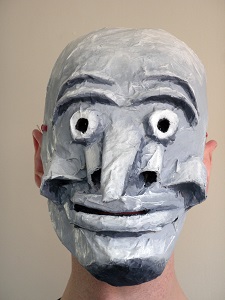 A baby first focuses on the faces of those around them. Hard-wired to recognize our caregivers, at a primal level, we all understand the human face communicates information. Understanding the messages others are sending us can even be essential to survival. Cover a face and the transformation can be mildly unnerving, terrifying, or even extremely funny. A face that is covered denies us access to the signals we are used to seeing and sends out new signals or messages for us to interpret.
A mask-making session can afford fertile ground in an expressive therapy setting for both client and therapist. Making a mask invites the creator to explore various aspects of his or her own persona. The activity can be revealing because it takes the mask maker out of the realm of words and employs imagination and nonverbal action.
Exploiting the Mind-Body Connection
One mask-making technique involves molding clay into facial features and then applying materials such as paper mache, celluclay, or various molding cloths over the top of the sculpted mask face. The tactile process of modeling clay with hands, fingers, and palms can provide a powerful connection to deep-rooted feelings through the tactile, nonverbal (somatic) experience of working physically with the clay. The body can hold all kinds of memories from the past, and by engaging in this nonverbal activity the imagination of the mask maker may find new ways to communicate hidden thoughts, feelings, and memories through the creation of meaningful symbols that are shaped into the clay as the mask evolves.
During the process, through verbal or nonverbal communication, the therapist may help the client to experience and consciously come to terms with these previously locked up and hidden memories. This can happen as the feelings or memories emerge during the mask-making session or sometimes in later sessions when the mask, made by the client, is used in other ways.
Finding Joy Through Creativity
Many memories and the feelings associated with them are difficult and painful, but it’s also true that the result may well be the reclamation of joyful creativity. When we are children, we play with abandon; it’s part of the learning process. The ability to playfully explore the world within as well as the environment that surrounds is often lost as we age into adulthood. It becomes prey to many cultural pressures and sometimes to misinterpreted parental reprimands.
A parent may react strongly to a child playfully exploring a shiny object such as a sharp knife. The child may then interpret the reprimand as being connected to their natural interest and creative exploration process and assume that this is a “wrong behavior.†A little bit of their creative energy then gets locked up with some repressed feelings and lost joyfulness. We all want to be loved and protected by our parents; when we are children, our survival depends on it.
Mask making and working with masks in a therapeutic situation can help unlock that playfulness and sense of creative adventure through the process of remembering moments, such as the one just described, and revisiting the feelings that accompany such memories.
Out of the Nowhere and into the Here
Besides being a therapeutic tool, mask making can be a simple pleasure on its own. Adults engaged in busy and demanding lives don’t often have or take time to engage in a hands-on creative process. By simply indulging in the mask-making process, the participant can reopen doors and creative pathways long ago forgotten. There’s an age-old nursery rhyme that goes:
Where did you come from, baby dear?
Out of the nowhere, and into the here.
Our creations are like our babies. The simple act of bringing an object, in this case a mask, “out of the nowhere and into the here†can be a liberating process in and of itself.
The Rich Tradition of Mask Making
For more than 12,000 years, human beings have been making and using masks. We find the earliest evidence of this on the walls of caves around the world. At the Trois-Frères (“three brothersâ€) site in France, a figure considered to be a male shaman is depicted on the wall of the cave, wearing a large, antlered stag’s head. The headpiece mask has the face of an owl superimposed over the facial area with wolf-like ears and a long goat’s beard.
Masks can capture a state of mind. They evoke, memorialize, reveal, and conceal all at the same time. Even the most simply constructed masks can powerfully transform the face. The inanimate mask comes to life when worn. It becomes charged with a life force from within the wearer. Shamans and healers around the globe today, as well as the shamans of the ancient world depicted on caves so long ago, all understand the magic of making and using masks.
We can heal and be healed through integration by using our innate gift of imagination and our ability to create. Masks are a powerful tool in the process of healing and the journey toward wholeness.
References:
- Science Magazine (July 6, 2001): Vol. 293 no. 5527 pp. 51-52. DOI: 10.1126/science.1062331. Artistic Creativity and the Brain: Zeki, Semir.
- Sivin, Carole, (1986). Maskmaking. Worcester, Massachusetts: Davis Publications, Inc.
- Quest Magazine (January – February 2004): Spirit and Art: and the Puzzles of Paradox. James, Van. Retrieved July 20, 2013 from: http://www.theosophical.org/publications/1238.
 You’ve probably seen videos of big, furious guys going after little guys. It doesn’t look like a fair fight at first, but there can be surprises—and sometimes the little guys win. I’ve been studying tai chi, learning how people can defeat themselves by misusing their energy and losing their center of balance.
Sometimes life feels like a wrestling match. We’ve all been there—stuck with someone who is just relentlessly on the attack, who pushes all our buttons looking for a fight. “Arlene†grew up like that, and for a long time she equated rage with strength because her parents did. In her family, people fought to prove that they were powerful and in control. They did this because they needed to take their anger out on other people, and because they believed they lived in a dog-eat-dog world and they wanted everybody else to live there, too. Arlene couldn’t bear to live in a world like that. She worked hard and long, and with therapy, yoga, and the help of her husband’s patience and good nature, she learned to have better control of her anger. She found out that the world can be very different. She learned how to walk away from meaningless fights.
[fat_widget_right]
Sometimes, anger is justified. If someone stomps on your foot, you might yell. If you grew up in a bad neighborhood anger can be a protection, but if you stay angry long enough, everywhere you look you’ll find something or someone who makes you mad. For some people, getting mad can be a circular process—the madder you are, the madder you get—until there’s just no stopping. A few people seem predisposed to anger; they are just born that way.
Which brings us to “Ramona.†She thinks everyone is against her, so she fights with everybody, which turns people against her and kind of proves she’s right. If someone makes an innocent joke, she often takes it the wrong way; she gets upset if she thinks people aren’t paying her enough attention or giving her the admiration she feels she deserves. It’s all about her. She takes everything literally, feels threatened, and has little sense of humor. She’s controlling—it’s her way or the highway. Ramona is always angry and disappointed.
This is tough on her friends, family, and coworkers. Ramona needs to be adored and obeyed, and if she doesn’t get what she wants, she goes into a rage. Some people admire her; she is smart, talented, and can be very funny. Many people are scared of her; they don’t tell her what they think because she yells long and loud, so they just clam up and ride out the storm.
One day Arlene was hired at Ramona’s workplace, and the two of them were put in the same unit. When the unit met for its weekly conference, their supervisor, “Alonzo,†led off the meeting, saying the company needed to make more sales. Ramona spoke at length about improving the business and had plenty of ideas, some very good ones, but she wasn’t interested in listening to anyone else and interrupted when other people were talking. She interrupted Arlene, too, who called her on it, and then Ramona went on the attack and yelled at Arlene. Other members of the group tensed up, anticipating a shouting match, but Arlene had a different tactic. She said she admired much of what Ramona thought, but wanted to hear what others had to say and to share her own ideas, too. Ramona got very angry and screamed even more at Arlene, who just listened. The other members of the meeting were watching Arlene. After the meeting was over, Arlene told Ramona not to yell at her anymore.
There was another meeting. Ramona yelled at Arlene again. Arlene had previously warned Ramona that the next time Ramona started yelling Arlene would leave the meeting, which is exactly what happened. Arlene got up and walked out, ending the meeting.
Alonzo called Arlene into his office and asked what happened. Arlene said, “Ramona never stops talking and yelling, and a lot of people don’t like it but they’re too scared to say anything. I tried over and over to get her to stop, but she didn’t listen. She’s always like this. So I just walked away.â€
“Why didn’t you yell back?†Alonzo asked. “Were you too scared?â€
Arlene answered, “No, she doesn’t scare me. I just refuse to be yelled at, so I walked out. Yelling back at her would never work; it would be a shouting match, and I don’t like yelling anyway. I simply told Ramona that if she yelled at me I wasn’t going to shout back or stand around and listen to her scream, either—I was going to leave, which is exactly what I did.â€
“Don’t you stand up for yourself?†Alonzo said.
“Leaving was standing up for myself,†she replied. “This argument was basically meaningless. If we don’t agree, we can discuss things, but not Ramona. She just likes to yell. I mean, yelling? What are we, in junior high?†Alonzo agreed that Ramona was out of line.
Alonzo transferred Ramona to a position where her intelligence and creativity were called into play, but where she didn’t have to work with others. It was a horizontal move, not the promotion that Ramona thought she deserved and that Arlene got—she took over Alonzo’s job when he was promoted.
Arlene won. Ramona defeated herself.
 People in good relationships have developed the habit of looking out for their partner’s kindnesses and considerate actions. They succeed at preventing oversights and bad moods from interfering with their affections. When this “positive perspective†is not present or insufficient, couples are more likely to have trouble managing conflict, maintaining a sense of the relationship being in their own best interests, or gaining shared meaning from their involvement.
A state of “positive sentiment override†creates an atmosphere that allows couples to handle difficulties and stress while continuing to feel they are on the same side. Couples who offer consistent support to each other experience a connection that sees them through even when they are rushed, cranky, or feeling harried.
[fat_widget_right]
Negative interactions predictably breed more negativity. This positive state of sentiment override develops when couples have a strong enough friendship to overlook or shrug off moments of irritability or distraction.
For example, when one partner is facing a tough meeting at work, the other person texts afterward to ask how it went. Later at dinner, when it turns out the partner who sent the text forgot to pick up a key ingredient for the meal, the couple solves the problem together and comes up with a different menu.
However, when one person goes off to work after mentioning it will be a difficult day, and he or she never hears from the partner nor is asked about his or her day upon getting home, it becomes more difficult to be understanding when the partner said he or she would stop at the store and yet neglected to buy something important. Then the person who had the hard day at work is more likely to think, “My partner is basically a selfish person.†That thought creates emotions that lead to criticism and bickering instead of mutual support. Each person ends up feeling alone and unhappy.
Of course, this is just one mundane example. Relationship patterns are made up of many interactions repeated over time. Any couple can fall into the kind of difficult exchange described here, but couples who function well can bounce back with statements such as, “I’m sorry, I screwed up. I forgot to ask about that meeting. My day ran away with me, too! Can we catch up now? I’ll pull a snack together for us.â€
The danger of negative sentiment override is that the couple gets into a habit of failing to make these kinds of repairs to the relationship. Instead, each person retreats to a separate corner, each feeling self-protective and neglected. It becomes an uphill climb to re-establish positive sentiments when the negative experiences are repetitive. Members of a couple that loses positive perspective no longer naturally assume the best of their partner’s intentions; instead, they ask fewer questions, talk less with each other, and attribute negative motivation to their partner.
Our minds are built to seek evidence for the way the world looks to us, and we operate with many mental filters all the time; otherwise, we would be completely over-stimulated and would never get anything done. When one or both partners begin viewing the relationship through a negative lens, it is always easy to find evidence that our parent is a flawed and imperfect human being. We are more likely to notice the coffee grounds spilled on the counter, lights left on, and to resent the inevitable accommodations we have to make in order to live with another person. Says Dr. John Gottman: “I was not able to crack the code to saving marriages until I started to analyze what went right in happy marriages.â€
 Many years ago, I was betrayed by a friend I admired. If I had been asked to forgive her, my immediate answer would have been, “No.†But if someone had asked if I wanted to be free from the anguish and distress that I felt from her betrayal, I would have shouted, “Yes!â€
Forgiveness is more than releasing your hands from the neck of the person who hurt you. It is truly about releasing your hands from your own neck. Forgiveness is about your own freedom from the grip of pain caused by someone else. In reality, forgiveness has nothing to do with the other person; it’s about you. Forgiveness does not need to be asked for because it isn’t done for the sake of the “offender.†It’s done for our own healing and well-being.
[fat_widget_right]
It goes without saying that when we’re considering forgiveness, it is because we’ve been hurt, wronged, or betrayed. Someone has done something to us that caused us pain. A pivotal component of forgiveness is the recognition of the intensity of your pain. You have to sit in and with your pain. You can’t ignore, rationalize, or wish it away. You must simply let it be. You can talk, journal, cry, or scream about the hurt and painful emotions, but they must be allowed to surface.
Another key step to forgiveness is in understanding how the pain and betrayal affected you. Pain isn’t an isolated experience or emotion. When we are hurt, it affects all aspects of ourselves and our relationships. Consider a man who just learned that his wife was cheating on him. Understandably, he is hurt, sad, and angry. He also has trouble focusing at work, his patience with his children is low, and he begins to withdraw from his friends because he is too embarrassed to discuss his wife’s infidelity. His emotions go beyond his wife’s betrayal; now the pain seeps into other relationships.
Part of understanding the intensity and depth of the pain is in comprehending how your pain affects you in other ways. Ask yourself the following questions:
- Have your feelings of betrayal and sadness spilled into other relationships?
- Has it affected how you view yourself?
- Are you less willing to be emotionally intimate and vulnerable with people because you’ve been hurt?
- How are you restricted or imprisoned by this pain?
Take time to write, think, or talk about your answers to these questions. Revisit the questions over time, perhaps at three months, six months, and one year. Have your answers changed? Do you notice anything different each time you answer? Are your feelings the same or have they shifted?
You cannot simply decide to forgive someone and expect it to be done. It takes time, compassion for yourself, and the support of others to work through the pain that you endured. Often when we are hurt or grieving, there is internal pressure and external pressure from family, friends, and society to “get over itâ€: “It’s been six months; why haven’t you forgiven him for cheating? Are you still upset about what she said to you?†These statements suggest a time limit for moving on after being hurt, but everyone has a different time frame. What takes one person two weeks to forgive may take another person one year to forgive. We all have our personal and individual processes of forgiveness that cannot be rushed.
When you are in the process of forgiveness, it is crucial that you have compassion toward yourself. Enlisting the support of people who are also compassionate toward you and will not rush your process is also beneficial.
Once you’ve acknowledged your pain and you understand how it has affected you, you can ask yourself: What do I need in order to be free from this pain?
What are your stories and experiences of forgiveness? How have you been able to forgive? When have you struggled or been unable to forgive? I want to hear from you!
 Art therapy is a specialized area of mental health that uses art materials and the creative process to explore emotions, reduce anxiety, increase self-esteem, and resolve other psychological conflicts. The American Art Therapy Association states that art therapy can be an effective mental health treatment for individuals who have experienced depression, trauma, medical illness, and social difficulties. Making art in therapy can be a way to achieve personal insight as well as healing.
There’s more to art therapy than simply “drawing your feelings.†Art therapists are trained to lead people through the creative process in a therapeutic way. Just as your doctor may prescribe a medication or behavioral change to aid your physical healing, your art therapist offers art-based therapy interventions that are tailored to your needs. As with every aspect of therapy, the choice to engage with specific types of materials will ultimately be up to you.
“Art washes from the soul the dust of everyday life.†—Pablo Picasso
In this article, we’ll take a look at some of the top questions people have about art therapy.
Q: Do I need art training or experience to participate in art therapy?
A: No art experience is necessary for you. Your art therapist is highly trained in visual art as well as psychology, and he or she will guide you in the process of creating art using specific types of materials. All you need is a willingness to experiment and explore.
Q: What kind of training should my art therapist have?
A: Art therapy is a profession that requires at least a master’s degree in a program with specific art therapy components.[fat_widget_right]While expressive arts therapists are trained in art therapy, there is also the designation of art therapist whereby the therapist studies only art therapy. There are also associations that offer certification as a supplement to your education, rather than a degree. Many art therapists have an art therapy credential called an ATR that indicates they are registered with the national art therapy credentials board.
Q: What kind of art will I make in art therapy?
A: It depends on your interests as well as the therapeutic benefits of certain types of art for your situation. Art therapy can include a wide range of art materials and processes. Your sessions could potentially include activities such as working with clay, painting, making a mask, creating a visual journal, and assembling a collage. Most often, the focus will be on the process rather than creating a finished art product.
Q: Do I get to keep the artwork that I make in art therapy? Will the art therapist show it to anyone else?
A: Your artwork is your creation and always belongs to you. Some people choose to keep the finished artwork, while others may decide to leave it in the care of the art therapist. Your art therapist will not show your artwork to anyone without your permission. The code of ethics followed by art therapists specifies that an art therapist must safeguard a client’s art creations the same way he/she would protect any other privileged information.
Q: Why are some art materials more appropriate for my situation than others? What does it mean to have an art therapist prescribe an art process for me?
A: Art materials have inherent healing qualities, but some are more appropriate for certain types of situations. For example, there is a therapeutic difference between using colored pencils, which are very dry and controlled, as opposed to watercolor paint, which is extremely wet and difficult to control. Your art therapist has specialized training in assessing which materials to suggest based on the issues you are facing, your frame of mind during the session, and other factors. Art therapists also have an extensive personal background in studio art, making them personally familiar with the use of specific types of art materials so that they can guide you through any difficulties that may arise in the creative process.
Q: Will the art therapist “interpret†my artwork?
A: Art therapists can use a variety of approaches, just as counselors or psychotherapists may utilize different approaches. It is not customary for a therapist to interpret your art. In a humanistic or transpersonal approach to art therapy, the focus will be on the personal meaning that you find within your own creative work, rather than an arbitrary meaning imposed by the therapist. You are the expert on your own artwork and creative process, and the art therapist’s role is to facilitate explorations of your work rather than to analyze or interpret it.
Reference:
Pablo Picasso Quotes—Art as Therapy. (2010, October 10). Retrieved May 6, 2013, from quotes: http://www.arttherapyblog.com/c/art-quotes/#ixzz2SYtZgGua
 “Paradoxically, the ability to be alone is the condition for the ability to love.†– Eric Fromm, The Art of Loving
Self-Nurture through Self-Mirroring
Finding a way to emotionally take care of ourselves when we are alone is an individual process of self-discovery. One way to truthfully see ourselves is through collage therapy. Collage therapy is a simple form of art therapy that does not require drawing or painting. It can help you see your inner life in a fresh way. We all project personal meaning onto everything we see. If we are having trouble verbalizing what we are feeling, we can mirror our emotions through spontaneous collage.
Choosing imagery spontaneously, and then seeing what feelings and ideas arise, can incite new understanding about what you unconsciously believe about yourself and how you feel about your life. Whenever you feel strong feelings that you do not fully understand, take a few moments to spontaneously choose some imagery from an old magazine. Cut out and glue your pictures down without much thought. Then take a few minutes to contemplate what you have chosen.
The Loneliness of Individuation
As we learn to express ourselves more authentically, our particularity asserts itself into our life, and we may begin to feel misunderstood by those around us. Many years ago, I put together a spontaneous collage about loneliness when I was discovering my true life path. At the time, I was discovering new strengths and gifts inside of myself and I excitedly tried to share my newly discovered authenticity with the people in my life. But few at the time seemed to understand what I was going through. I was mistakenly looking outside of myself to be mirrored for my inner truths.
I was not yet devoted to mirroring myself to myself. I was still looking for validation from the outside. I was still looking for other people to help me feel good about myself. Sitting alone with ourselves is not always easy. Difficult emotions that we do not want to feel tend to come into our awareness when we are quiet and alone. We can mistake these uncomfortable feelings as loneliness instead of seeing the emotional awareness that is trying to rise. It is during such times of emotional discomfort that is becomes easy to fall into unhealthy distractions. Thinking we are lonely, we may want to spend time with people in ways that are not healthy or meaningful to divert our attention away from what feels emotionally uncomfortable inside.
Instead of spending time in ways that are merely distracting us from what we feel, we could turn towards our inner strength and creativity during our alone time instead. Being alone is a fruitful time to tend to our emotions in order to understand how we feel on a more truthful level. When we start to see our deeper thoughts and feelings more carefully—in the outer projection of our collage—we realize that we have a distinctiveness that wants to reveal itself. We consider that we may never be able to rely on other people to know the total depths of who we are, but we can choose to know ourselves profoundly. When we realize that we need to do our own inner work, without insisting on validation from others, we may begin to feel lonely.
Strength in Loneliness
As we become more authentically expressive and self-examining of all our feelings, we might find that some of the relationships we have been hiding in no longer support our fullest self-expression. Some people do not leave unhealthy relationships because they fear loneliness more that they fear abuse. If we have felt abandoned, shunned, or ignored for expressing our true feelings as children, the loneliness of true self-expression can be a primal place of fear. The genuine loneliness of authenticity can feel piercing to the core when we have received little validation for how we felt in the past.
Our authentic self-expression can feel like it is the exact place where we have not been loved in the past, yet it is this very place where we need to learn how to love ourselves. As we progressively delve into our uniqueness, however, we grow to understand that we can find self-love and emotional strength in the aloneness of our unique personhood. As we become more honest about expressing the truth of our feelings, the fear of not being loved and accepted can intensify at first. But it is in our most alone places, when we are willing to stay in supportive witness to our arising truths, that we can find the love we crave.
Emotional Self-Connection Heals Loneliness
It is our own emotional self-connection that heals loneliness. We can be surrounded by people, but if we are not authentically expressing who we are, we will feel lonely. When we feel authentically connected to ourselves, we feel connected with others. When we begin to know who we truly are, we can reach out for help in ways that are healing instead of hindering to our emotional growth. We can start to build a support system that can help us further develop into our unique strengths in the world.
We can extend ourselves in healthy ways towards genuine friendships with people on similar life paths. When we are in touch with our deeper truths we will start to gravitate towards people who nurture their own unique personhood and who respect our individuality. As we come to know how to soothe our painful feelings without demanding that other people do it for us, we deepen into a self-nurturance that is kind and mature. We can choose to become deeply present to our emotional life. As we tend to our own emotional needs, we discover the warmth and abiding friendship of the true self.
I’m so impressed with you! First of all, in spite of your fear of being judged, you have taken the very courageous step of writing in with your question. Second, it sounds like the daydreaming and fantasizing have served as a very adaptive behavior—you have been able to get some relief from the depression and low self-esteem by escaping into your imagination. Unfortunately, it seems like this coping strategy has taken on a life its own and become somewhat of an impediment to your ability to function in your daily life.
In some ways, what you are describing isn’t completely dissimilar to how substance-abuse issues can develop—someone is in discomfort, seeks relief in alcohol or drugs in order to escape the discomfort, and ultimately comes to depend on the substance to an extent that it interferes with life. That said, one critical difference between what you are describing and substance abuse is that there is quite likely some real value in what you are using to escape. Most successful people begin their journey toward success by imagining it—they dream about their success and then they begin creating goals (and working toward them) that will move them toward their dream. I suspect that the life you have created in your imagination is closer to the life you desire than your actual, current life is. If my suspicion is accurate, then it makes sense to do what you can to start moving toward the life you have imagined for yourself.
Given your struggles with depression and self-esteem, you might be thinking: easier said than done! This is certainly true, but it does not mean that it is impossible to live a life closer to the one you imagine; it simply means that you need to get treatment to address the depression and self-esteem. Right now, these issues might be all that is keeping you from working on making your fantasy life a reality.
This brings me to your fear of disclosing your fantasy world to a therapist. First, there is no shame in the fantasy life that you have created; in fact, I believe it will ultimately serve as a road map to move you to the life you have been dreaming about. However, if you are still feeling anxious about sharing this world with a therapist, know that you don’t have to in a first, second or even third session. In fact, I would say if disclosing it is so anxiety provoking that it is preventing you from seeking treatment, do not disclose it until you are confident that you have a trusting, therapeutic relationship with a therapist. Sometimes when people disclose too much before a really strong working alliance is established, they feel exposed and vulnerable to an intolerable degree and they leave therapy prematurely.
You can avoid this by finding a therapist who you believe could be a good fit for you and setting up an initial session. You might even set up an initial session with a couple of different therapists and see who you feel most comfortable with. Once you believe you have a good match, work on building a strong therapeutic relationship and when you feel ready, open up about your fantasy life. As the depression and self-esteem issues begin to be addressed and you open up about your fantasies, you just might find that these very fantasies will become your road map and your therapist will serve as a supportive guide as you follow the map to your dreams.
All my best,
Sarah
 Created by Dr. William Glasser, reality therapy and its theoretical underpinning of choice theory provide a wonderful lens through which to help clients evaluate their needs. Individuals are thought to have five basic needs that their behaviors seek to satisfy in order for them to be happy and fulfilled. These are: survival or self-preservation; love and belonging; achievement; independence or freedom; and fun. All behavior is believed to be an attempt to meet these needs—even when the behavior is unhealthy or harmful (Glasser).
Having children and adults evaluate their needs has multiple benefits. It immediately shows the therapist or counselor what is in abundance in these five areas of the client’s world and what is lacking. It provokes client awareness and a highly relevant dialogue, and is empowering for clients in that it helps them to see they are usually the catalyst of any hoped-for change.
In working with children, I utilize a graphing utility, designed by Arlin Peterson, called Pete’s Pathogram (Peterson). The five basic needs are depicted on the “X†axis, and the “Y†axis shows the degree to which the need is being met with a range from 0 (not met) to 10 (totally met). Children “score†their needs with me on the paper graph. Inner-city schoolchildren will often score themselves with a 3 or 4 on the “survival†need.
When asked a series of question that seek to provoke self-reflection, a conversation will usually ensue about the dangerous neighborhood in which they live, fears of gangs, shootings, violence in the home, and sometimes shortages of food. Counselor/therapist and children can process these very real fears and discuss if there is a way to improve the degree to which a need is being met. For instance, asking a child why that score is low and what it would take to make that survival need score a 5 might encourage a conversation about a move to a different neighborhood, their being alone less frequently in the home, providing them an additional meal at school, or having their parents come in for counseling. One by one, clients score each need.
Utilization of this exercise provides an opportunity for immediate insight into the client’s life at a profound level. As counselor/therapist and client reflect on the degree to which a need is being met, the balance or imbalance of the five basic needs in the client’s life becomes apparent. This exercise works extremely well with adults also. The workaholic will score himself/herself a 10 on the achievement need, but he or she will most likely rate low for love and belonging, fun, and freedom.
The evaluative, self-reflective, and internalizing elements of this exercise are extremely rich, in my opinion. Clients are supported to identify ways they can create change for the better. As with the creation of one’s quality world through the use of pictures and words (explained in my first blog), the client’s active role in examining the five basic needs with the therapist can rapidly provide rich content with which to work.
References:
- Peterson, Arlin V. (2008). Pete’s Pathogram. Action Printing, U.S.
- Glasser, William (1998). Choice Theory. A New Psychology of Personal Freedom. HarperCollins Publishers, Inc., N.Y.