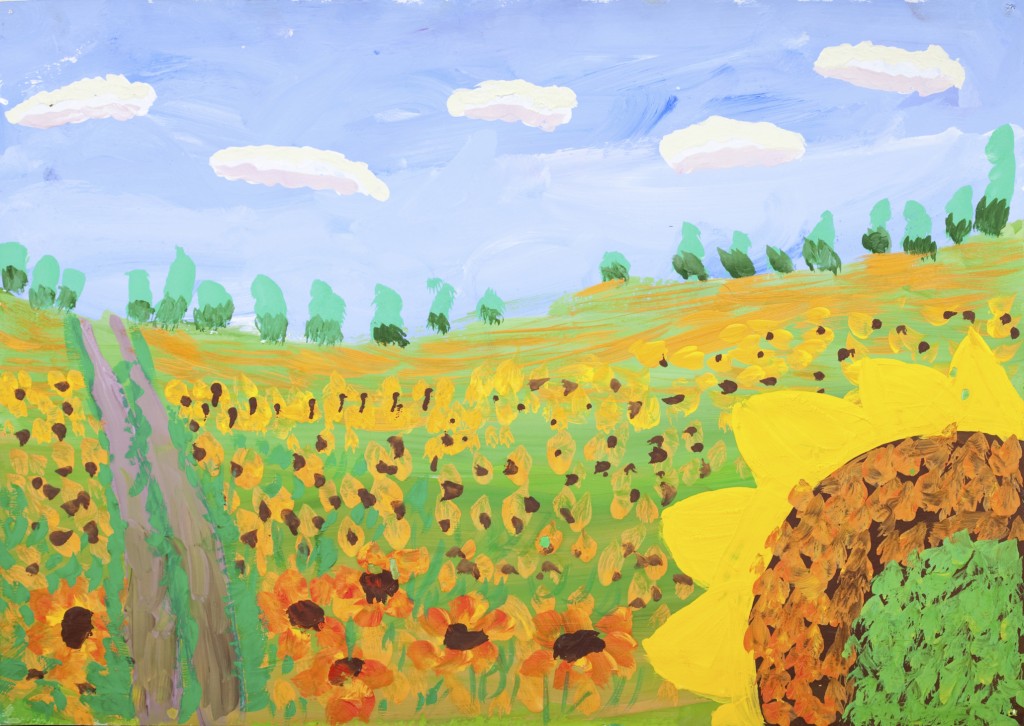
 “It is so difficult to put the complexities of the trauma recovery process into words—artwork does this much better!” – Joan Turkus, M.D.
Posttraumatic stress (PTSD) is a condition that is, unfortunately, quite common in modern society. Statistics show that 70% of adults in the United States have experienced some form of traumatic event at some time in their lives and that up to 20% of this population will go on to develop PTSD. If you have undergone trauma, you are not alone. While many forms of therapy continue to emerge to treat those who have experienced trauma, art therapy is one that has been proven by a number of studies to be effective in dealing with the aftereffects of trauma. Whether you are a survivor of abuse, war, natural disaster, or another traumatic event, art therapy will likely be able to help you heal.
[fat_widget_trauma_ptsd_right]
Breaking the Silence
A common occurrence after a person has experienced trauma is a hesitancy or inability to discuss the incident out loud or verbally, even with a professional therapist. Repressing all thoughts and feelings is one reason this can happen. In expressive arts therapy, words are not necessary; much can be achieved without them. Expressive arts therapy moves the client and therapist from the traditional talk therapy roles and into a process that may be less provocative. The medium serves as a bridge between you and the therapist, allowing exploration to occur at a comfortable pace.
Each medium is carefully selected by the therapist to support giving voice to your experience. You don’t have to strain to say the right thing; the medium can speak for you and act as a support for your experience. Some emotions may be better expressed through art than through verbal language anyway. While you may not be able to put what you feel into words, viewing your work in front of you is something else entirely—something that can lead to your healing.
Journey to the Unconscious
Repression, or the brain’s attempt to send difficult thoughts straight into the unconscious, supports clients in handling their trauma. This phenomenon is observed frequently in trauma victims, who claim to have no recollections of the disturbing events. Many experts view art therapy as a way to tap into these unconscious thoughts and memories and bring them to the surface, so that individuals can heal and reconcile them.
You’re probably familiar with the left-brain and right-brain theory, which has been common knowledge among the general public for quite some time now. The act of creative expression utilizes the right-brain hemisphere. What’s interesting is that the right brain is also where visual memories are stored. Many theorize that the two are therefore very closely linked and that this is one of the reasons that art therapy has been so successful at uncovering repressed, unconscious images.
Helping Children Heal
Although art therapy has been proven to be a successful treatment for people of all ages, research shows that it has been particularly effective in the treatment of children. Various developmental theories claim that children do not fully develop verbal skills until adolescence, and it is therefore no surprise that your child may better respond to a creative outlet for self-expression than a chat with a therapist.
Seeking the right treatment for you or your child following a trauma is often frustrating, particularly when you do not know where to turn. While it is important to read about all of your options, if you or your child has experienced any form of trauma, then art therapy may be helpful.
References:
- Art therapy. (2011). Retrieved July 15, 2012, from Trauma Recovery Center: http://www.traumarecoverycenter.com/art_therapy.html
- Art therapy. (n.d.). Retrieved July 15, 2012, from Casa Palmera: http://www.casapalmera.com/articles/art-therapy/
Art therapy what is it? (n.d.). Retrieved July 15, 2012, from CRC Health Group: http://www.crchealth.com/types-of-therapy/what-is-art-therapy/ - Clatch, M. (2012, January 1). Trauma recovery through art and play therapy. Retrieved July 15, 2012, from Courage to Connect Therapeutic Center: http://www.couragetoconnecttherapy.com/trauma-recovery-through-art-and-play-therapy
- Malchiodi, C. (2012, February 22). Art therapy shows promise in treatment of PTSD & trauma. Retrieved July 15, 2012, from Art Therapy: http://www.arttherapyblog.com/ptsd/ptsd-treatment-showing-promise/#more-26
- Malchiodi, C. (2012, March 6). Trauma-informed expressive arts therapy. Retrieved July 15, 2012, from Psychology Today: http://www.psychologytoday.com/blog/the-healing-arts/201203/trauma-informed-expressive-arts-therapy
- Rosenthal, M. (n.d.). PTSD statistics. Retrieved July 15, 2012, from Heal My PTSD: http://healmyptsd.com/education/post-traumatic-stress-disorder-statistics
 As you may know, eye movement desensitization and reprocessing (EMDR) is a research- and evidence-based therapy created by Francine Shapiro, Ph.D., over 20 years ago. An integrative model, EMDR is comprehensive, including aspects of multiple psychotherapeutic approaches. With this in mind, equine experiential activities, such as those found in equine-assisted psychotherapy (EAP), support and help to facilitate EMDR’s eight-phased model, while also maintaining fidelity to standard protocol.
The EquiLateral™ protocol is brought with a deep respect and understanding of EMDR but also the power of equine-assisted therapy. I am constantly reminded that EMDR and equine-assisted therapy both have the ability to support and often deepen a client’s ability to access where those traumas are stored. In my 10 years of experience as an EMDR therapist, I am still constantly amazed and inspired by the depth of healing that can be reached through EMDR, let alone through horses, who are often our most powerful and forgiving teachers.
Current research emphasizes the importance of maintaining fidelity to EMDR’s eight-phased approach. Nevertheless, in doing so, EMDR “may be implemented in more than one way as long as the broad goals of each phase are achieved” (www.emdria.org).
EquiLateral™ is the first equine-assisted EMDR protocol. We are still doing EMDR but are incorporating equine-assisted experiences within the eight-phased, three-prong, standard EMDR protocol. For more information on this approach to healing trauma, please visit my website: www.dragonflyinternationaltherapy.com
Horses, Comfort, and PTSD
Horses are prey animals. What this means is that they are highly in tune with their environment, readily noticing changes in the world around them and being able to respond to what they notice and actively seek what horseman Buck Brannaman describes as their wanting to return to “peace.” When in this energetic state, their nervous systems are settled and calm. They can readily focus on just being in the world, in the moment, which for them means grazing, moving 20+ miles a day, and relating with herd members. In contrast, when sensing danger, their peace is threatened, and their nervous system becomes activated enabling them to react, primarily through flight, although sometimes through fight or freeze, for self-preservation.
If you are a trauma survivor or know someone who struggles with posttraumatic stress, perhaps you can relate. Our bodies have the capacity to do as horses do, react, respond, then calm down and return to “peace.” But, we humans often learned to “stuff,” “repress,” “deny” what happened when all the body really wants to do is release and move through those feelings and body sensations. Doing so actually helps the trauma memory settle in, to release the “charge” that the body stores about what happened. By nature, horses, like all animals, know how to do this.
But, when trauma is still locked in the body and blocked, our nervous systems don’t return to a baseline of calm and peace. Instead, the fight, flight, or freeze that was experienced at the time of the event continues to remain activated, leading one to feel on alert, hypersensitive, anxious, easily agitated, or constantly “on,” making it challenging and often nearly impossible to relax.
That said, horses know how to relax. But, they also instinctively know to be alert and flee when threatened. They are preyed upon in the wild and are really in tune to danger, of any kind, including that which threatens their physical and even emotional safety, and that sense of comfort and peace that is their baseline state of being. And if you are a trauma survivor, all you want is peace and comfort as well. And this is just the beginning of why the horse and the trauma survivor may just “get” each other.
In light of the powerful connection between horses and trauma survivors, I am consistently shown the power of horses to help heal humans, especially through the integration of EMDR and equine-assisted therapy via this protocol.
Keep an eye out for the Part 2 of this post coming soon!
Related articles:
EMDR: Symptoms and Phases
Common Therapy Approaches to Help You Heal from Trauma
How Trauma Impacts My Sense of “Me-Ness” – Part II
Adults who have survived childhood abuse are more likely to experience mental health problems than those who were not abused during their youth. Depression, anxiety, panic, posttraumatic stress, eating and food issues, and substance abuse are just some of the psychological conditions that these survivors face. Another consequence of childhood abuse is diminished physical health. Research has shown that negative psychological well-being decreases physical health and can lead to serious health problems, including hypertension and heart disease. But few studies have examined how specific types of childhood abuse affect physical health directly.
To address this gap in research, Cathy Spatz Widom, Ph.D., of the Psychology Department at John Jay College at the City University of New York recently conducted a study that sought to determine the link between three individual types of abuse and later physical health problems. Widom analyzed data from adults who had been abused prior to their 12th birthday. The average age of the participants was 41. Each participant underwent a complete physical examination and blood test in adulthood. Based on documented reports of the abuse, Widom compared how sexual abuse, neglect/maltreatment, and physical abuse in childhood affected the participants’ health in adulthood.
She found that the adults who had experienced neglect and maltreatment had poorer oral and visual health as well as impaired airflow and increased risk for diabetes. The adult survivors of sexual abuse were more likely than the other participants to develop oral health issues and hepatitis C. They also had higher rates of HIV and malnutrition. Those who had survived physical abuse were also at increased risk for malnutrition and diabetes. Although some of these conditions could be attributed to maladaptive coping techniques, such as smoking, drug or alcohol use, and poor nutrition, the findings clearly show that adults who have survived childhood abuse are still at increased risk for significant physical health problems. Widom believes that these findings have strong clinical implications. She said, “Understanding the mechanisms that place abused and neglected children at higher risk for these adult physical health outcomes will help focus these efforts.”
Reference:
Widom, C. S., Czaja, S. J., Bentley, T., Johnson, M. S. (2012). A prospective investigation of physical health outcomes in abused and neglected children: New findings from a 30-year follow-up. American Journal of Public Health, 102.6, 1135-1144.
 All too often, compromised energy levels are a lingering impact of traumatic experiences, particularly ongoing or frequent traumatic events in childhood.
Compromised energy means that you simply do not have enough energy to tackle certain tasks. In addition, traumatic experiences often prevent people from learning how to manage their energy levels. This encompasses everything from recognizing when you are running low on energy to knowing how to build an energy reservoir and stamina.
Understanding Energy
Take a quick moment and think about all the energy it took to get through today. Think about the physical energy, as well as emotional and mental energy. Of these three types of energy, physical energy is possibly the most obvious. We have all experienced times when we were simply too tired to engage in a task because our physical energy was just not up to it. Many factors, including sleep, nutrition, exercise, medications, and substance use, can impact your physical energy level.
These factors also impact your emotional and mental energy levels. Emotional energy is used when you interact with emotions, whether in a productive or unhealthy manner. You use emotional energy when you identify an emotion, express it, act on it, calm it, understand it, and so on. Mental energy is the energy you use when thinking, planning, making logical decisions, and following through with your decisions and plans.
When traumatic life events have “stunted” your development of energy management tools, it is important to include learning these skills in your healing work. Broadly speaking, there are three categories of skills you will want to learn for each of the types of energy: the skills necessary for monitoring your energy level, those needed in order to manage your energy, and those that will increase the staying power of your energy.
Monitoring Your Energy Levels
How aware are you of your physical, emotional, and mental energies? Is there one type of energy that you are more aware of? Do you recognize when these energy levels are full and geared up for action, when they are at their midpoint, or when you are close to being empty? Or do you only become aware of your energy level when you are past empty and burnt out? Becoming aware of energy levels before you hit burnout will allow you to refuel before you run out of energy.
Physical energy can be a great one to start practicing these skills with. Take some time throughout the day—maybe every hour or two—and check in with yourself. How awake or tired are you? How full or hungry?
Imagine your energy levels as a gas gauge with marks at full, ¾ full, ½ full, ¼ full, and empty. When you check in with each of these physical experiences, determine where you fit on that scale. Are you past the point of energy, but not quite tired? Are you not full but not hungry? By figuring out where you’re at, you can determine what you need to do to manage your energy and satiation levels: take a nap, go on a walk, eat a snack, say no to the offer of a snack, or whatever works for you.
Managing Your Energy
Once you can identify your energy levels, you can determine what you need to do to keep your energy at workable and beneficial levels. Let’s look at emotional energy. Say your emotional energy is still at the ¾ full mark, despite it being late in the day. Maybe now would be a good time to call a friend and extend support. Maybe you can take time to reflect on, process, or journal about a recent upsetting experience.
If you notice that your emotional energy is close to empty, but you still have a few emotionally taxing tasks to do, it would be wise to carve out a bit of time to refuel yourself. Reach out to an emotionally supportive friend, take a break and head to an emotionally restorative place in nature (even if it is just smelling the neighbor’s roses), or take a few moments to breathe deeply, read an encouraging piece of prose or poetry, and so on. If you become aware that you have experienced several days on empty, you may want to consider dedicating your weekend to replenishing, rather than extending, your emotional energy.
Building Energy Reserves and Stamina
If learning how to replenish your energy reserves is one side of a coin, then building stamina is the other. This skill requires a great deal of gentleness and care: many survivors of trauma push themselves to have too much stamina, not allowing themselves to honor their limits.
With this in mind, building your stamina is nonetheless an important pursuit. Just like building physical stamina, developing a deeper mental energy reservoir requires practice in small increments. When you notice that you are approaching empty, but not quite there yet—somewhere just less than ¼ full—gather your mental energy and sustain your focus and effort for another 10 to 15 minutes. Rather than exiting the activity to replenish your energy level, stay engaged and practice hanging in there. If you simply do not have enough mental energy to stay with your current task, try switching to a less demanding activity that still engages your mental energy.
Use Energy to Bring Healing to Your Life
Feel free to play with these ideas and apply the ones that resonate with you. Practice each type of skill (monitoring, replenishing, and building stamina) with each type of energy (physical, emotional, and mental). Be as creative as you can be and brainstorm additional ways to grow these skills. In so doing, you reclaim crucial abilities and further your healing.
Practice these skills in a safe environment and in a manner that can only benefit you. Never do anything in the name of healing that could actually bring damage to you. As always, keep in mind that you do not need to heal on your own. Reach out to support groups, loving friends, supportive family, and trained professionals. We are all here to help you grow.
 The process of trauma recovery includes developing a narrative to one’s history, compartmentalizing who is accountable for what, and integrating old material into a new paradigm. Intrafamilial abuse, particularly child abuse, is often layered and complex. The locus of the early stages of the work tends to be the perpetrator of physical, sexual, or emotional injury. However, throughout the progression those who failed to protect slowly come into focus.
Survivors express uncertainty around the parent who did not harm them but did not protect them either. As therapists, our energy is directed towards ensuring that the burden of abuse lies in the hands of the perpetrator. Clarity and relief are common responses to unraveling culpability.
The circumstances under which there is a nonoffending parent (or community) who also failed to protect a child can complicate recovery. Clients report strong feelings towards those who did not keep them safe and express confusion about who or what this person is. “Are they an abuser? Did they love me? If they did how could they have allowed this to happen? How can you watch your own child being abused and not intervene? Is there something wrong with me?”
Abuse in its various forms can sometimes be less convoluted than the failure to act, respond, or protect. It is a complex endeavor to absorb exactly how one can avoid acting in response to someone harming a child. Professionals such as teachers, therapists, or anyone who has regular contact with children are required to report suspected abuse.
In some states, law enforcement is required to intervene on some level with domestic violence, while child protective services views domestic violence as a threat to the well-being of the children in the home. Implicit in such requirements is that there is some culpability in failing to protect. Yet defining nonoffending parents can be arduous for both clients and therapists.
Perhaps our task as helping professionals is to develop our own understanding of parents who, for whatever reason, do not or cannot protect their own children. I often find myself aligned with my clients’ confusion. While not always completely clear or simple to define, categorizing abusive acts as wrong seems more clear than failure to protect, and even more so if the person who did not intervene was a parent.
There appears to be some collective agreement that those outside of the family have a responsibility in safeguarding those who cannot defend themselves. It feels a bit more muddled in applying these rules to family members. How do we define a parent who is otherwise loving and warm but has knowledge of the abuse and does not intervene? Even if the parent is disengaged or emotionally absent, how do we work with our clients in defining them? Is a failure to act a form of abuse in itself, or is the nonoffending parent a victim as well?
The ethics of community response to failure to protect remains convoluted. In addition, working with our clients in understanding this aspect of their story is a delicate pursuit. The circumstances of the client’s story can occasionally provide the answers to our questions. Most of the time, context fosters few explanations. Perhaps in this case, the conclusion lies within the question — bemusement exists because this is a complex issue.
Normalizing a lack of clarity and difficulty in compartmentalizing the nonoffending parent or family member is difficult for all of us, not only the survivor. Hopefully, acknowledgment of the layers and intricacies of intrafamilial abuse is a starting point for all of us, and at least survivors have a partner in their journey for answers.
 If you want to make God laugh, tell him your plans.
-Woody Allen
No matter who you are, things will happen that throw you off-kilter. Life intrudes on inner peace with an uncanny regularity. It may be your boss, spouse or partner, children, house, parents, finances, health, or even a freaky weather event, but life has its own trajectory, and no one can know what new challenge awaits.
Luckily, there are many ways to regain equilibrium. Trial and error, plumbing your depths to see what really works for you, and discerning the differences between various situations that trigger your sympathetic nervous system—your fight or flight reaction—are all very helpful in developing an emotional first aid kit.
When you find you have strayed from your center, allow the imbalance. Just notice what is going on emotionally, physically, and mentally. What are you telling yourself about this experience? Are you ready to regroup, or do you need a bit more time to explore what is happening? Sometimes, the hardest thing is allowing yourself to totter emotionally, to grieve or feel angry, overwhelmed, or exhausted. Whatever is happening, it won’t last.
Ten Tips For Emergency Emotional First Aid
Since it is easy to get thrown off-kilter when you are shocked or surprised by unwelcome news, you may want to try these techniques as first responses:
- Take slow, deep breaths, and allow a little extra time to exhale.
- Remind yourself that this, too, shall pass.
- Allow space for all of your feelings.
- Have faith in yourself. The truth is that you can handle more than you might believe at this particular moment. You can use prayer or meditation for added support and to access your belief in a greater power.
- Don’t take anything personally.
- Try to stick with your routine, even if you are feeling dazed or numb. Having a routine will anchor you.
- Eat, sleep, and get some fresh air.
- Picture your 6-year-old self, and lovingly embrace that child. Gently reassure the frightened little being inside.
- Connect with someone, such as a friend or family member, a therapist or neighbor, even a stranger on a local hot line.
- Understand that you are here for everything, good and bad. Visualize yourself as a river of experiences, and let life flow without judgment.
Reading this list takes only a few minutes, but actually working through each item builds resiliency and will help you keep going, one second at a time. Sometimes, just existing during a traumatic experience is the best you can do and remembering that as time passes, your perspective will change. For now, it is best to accept the present, do what you can, and choose to believe everything is happening for your highest good.
If or when you are ready to re-center, reach out to a trusted friend, relative, clergy person, or therapist. Speak honestly and openly. Being heard and understood is one of the most bonding, loving, and freeing experiences you can have, but you have to ask for help. If this has been hard for you in the past, break out of your old rut of being super-independent and pick up the phone. Find a therapist in my area.
If company doesn’t fit the bill, try some solitude. Silence can be soothing and afford you the opportunity to integrate what you have experienced. If that feels overwhelming, try a guided meditation. There are numerous free podcasts on iTunes, like Meditation Oasis, A Quiet Mind, or The Meditation Podcast. If you have the time, try a soothing Yoga Nidra practice—this is a guided practice of yogic sleep, where you are in the liminal space between waking and sleeping, and involves no knowledge of yoga postures. (My favorite is available free from iTunes through Elsie’s Yoga Podcast, episode #62.)
Take a bath with Epsom salts and lavender oil. The magnesium sulfate in the salts will quiet any muscle tension, and the essential oil—about six to eight drops—will calm your mind and act as a pain reliever.
Read something inspirational. Try some poetry, or escape with a novel. Reading is both relaxing and engaging. If audio books work better for you, check some out from the library and download them to your iTunes so you’ll have a ready supply.
Music really can soothe the savage breast, as the playwright William Congreve suggested in the late 17th century. Find something that works for you: it may be hard rock, or hemi-synch. Sanskrit chants can be remarkably helpful, as they bathe you in mantras designed to calm your nervous system. Chanting them yourself will bring even greater benefits, as making the sounds activates different parts of the mouth that correspond to different areas in your brain. The simplest one is om, a sound that is said to embody all sounds.
Moving your body takes the kinks out emotionally, too. Even if the last thing you feel like doing is dancing, yoga, or taking a walk, just do something for five minutes as an experiment. If you feel better, do another five minutes.
Allow nature to work its magic. Dr. Samuel Hahnemann, the father of homeopathic medicine, wrote that eating well, sleeping enough, and getting fresh air are essential to good health, mentally and physically. Don’t underestimate their value.
Rebalance with a favorite ritual, like making yourself a cup of tea and sipping it slowly.
People who have suffered childhood trauma are at increased risk for psychological problems resulting from extreme stress. Borderline personality disorder (BPD) is one such condition that has been linked to severe childhood trauma. When the trauma is inflicted by a caregiver, the child’s ability to cope is significantly impaired. The effects of unhealthy coping, attachment dysfunction, and emotional regulation can affect many areas of the child’s life as they continue into adulthood. Affect dysregulation is the inability to control one’s moods and emotions and has been linked to BPD and other mental illnesses. Underregulation of emotions is expressed by lack of control, extreme emotional overwhelm; while overregulation is the result of numbing and is exhibited by an inability to express emotions. To determine which of these factors is more indicative of BPD in adults who suffered trauma during childhood by their primary caregiver (TPC), Annemiek van Dijke of the Delta Psychiatric Hospital in the Netherlands conducted a study of 472 clients with a diagnosis of BPD.
The participants’ levels of affect regulation were documented and they were evaluated for various forms of TPC, including sexual abuse, physical abuse, and emotional trauma. Van Dijke found that 63% of the participants had experienced some form of TPC and that those with underregulation had more symptoms of BPD than the participants with overregulated affect. Although the study did not consider other factors that could influence BPD, such as family history, other traumas, and the mental health of the caregivers, the results clearly emphasize the importance of examining emotional regulation, and specifically underregulation, in clients with a history of TPC.
The findings also showed that the participants with TPC were at increased risk for posttraumatic stress (PTSD). But Van Dijke noted that no research has been conducted to determine exactly how specific forms of TPC affect the severity of PTSD symptoms or how they are indirectly affected through affect regulation as a result of TPC. In sum, Van Dijke believes that these results can benefit clients who have suffered TPC by educating clinicians on the importance of helping clients build more secure relationships and develop healthier emotional expressions.
Reference:
Van Dijke, A., Ford, J. D., van Son, M., Frank, L., & van der Hart, O. (2012). Association of childhood-trauma-by-primary caregiver and affect dysregulation with borderline personality disorder symptoms in adulthood. Psychological Trauma: Theory, Research, Practice, and Policy. Advance online publication. doi: 10.1037/a0027256
For combat veterans, posttraumatic stress disorder (PTSD) is an all too common psychiatric condition. The symptoms of PTSD include high anxiety, a heightened state of arousal, aggression, and sleep disturbances. Many with PTSD report feelings similar to combat situations, as if they never really left the battlefield. When it is accompanied by moderate or major depression, those with PTSD are notoriously unresponsive to traditional therapies and medications. Self-injurious and self-destructive behaviors, even psychotic behaviors, are not uncommon events for the most severely affected veterans. Finding new and better treatment protocols is therefore essential.
Recent research indicates that Abilify (aripiprazole), a relatively new antipsychotic medication, may represent a moderately more successful approach for treating PTSD and major depressive disorder in veterans. Study authors performed a retrospective review of veterans’ charts to determine what effect, if any, the introduction of Abilify had on these patients’ PTSD and depression scores. A total of 27 charts were analyzed. Many of these patients were also receiving traditional antidepressants, anti-anxiety medications, or psychotherapy. All consented to participate in research on the use of Abilify to manage their symptoms. Most had shown very little or no response to their prior courses of treatment.
The study consisted of a 12-week trial of Abilify, with regular monitoring for side effects or improvements in mood. The overall positive response rate, both in terms of PTSD and depression, were rather low. At the end of 12 weeks, about 20% of these veterans showed significant improvement in their depression. Likewise, 37% showed improvement in their PTSD symptoms. These are not excellent results, but historically this population has been very resistant to most clinical approaches. Any improvement over failed techniques is worthwhile, and even small improvements to quality of life are deemed worth pursuing. Furthermore, Abilify has no potential for abuse and relatively few side effects. It is much better tolerated than many of the traditional antidepressants and anti-anxiety medications.
PTSD makes readjustment to civilian life an uphill battle for many veterans. Too many find themselves in a cycle of fear, self-loathing, anger, depression, and substance abuse. Abilify, originally developed as a first-line treatment for schizophrenic patients, has shown the potential to ease the symptoms of PTSD in at least some of these veterans. More research is needed, but the outlook is promising.
References
Richardson, J.D., Fikretoglu, D., Liu, A., McIntosh, D. (2011). Aripiprazole augmentation in the treatment of military-related PTSD with major depression: a retrospective chart review. BMC Psychiatry, 11, 86.
 A perception of artists as eccentric, different, and living on the social periphery seems to precede this group outside of therapy and, likely, within the context of treatment as well. There seems to be an unspoken premise that ingenuity is motivated by pain or pathology, or at least some might argue there is a sort of affiliation. Some might assume that this relationship is causal: that trauma causes creativity and thus most artists are contending with some type of affliction. An alternative possibility may be that art is not necessarily motivated by pain; rather the capacity for creative inspiration is something that is brought into the recovery process by those who have such inclinations. In other words, some survivors who are able to express through art may have access to a recovery tool that others do not.
The explanation for eccentricity may serve those outside of the life of the creative in the collective search for continuity versus holding a truth for the individual. Cultural positions regarding gender, race, and other demographic variables have been acknowledged as significant in how therapy plays out as well as having a significant impact on people as they attempt to navigate their lives and define themselves. To postulate art as a product of illness likely has implications within the therapeutic context and thus may be worthy of evaluation. Regarding creative inspiration as a resiliency factor in the same way as personality traits, support systems, and solid attachment histories could be relevant in our approach with this population. The focus here will be in identifying the ways in which creativity can respond to trauma and mitigate its effects while simultaneously acting as a supportive tool.
Traumatic symptoms place significant demand on individuals’ emotional lives; the persistence and intensity of flashbacks, nightmares, hypervigilance, and other challenges can be unrelenting. Repeated images of disturbing aspects of events, difficulty relating to others, and emotional flooding are clearly something to be contended with for survivors. Distortions in reality such as feeling generally distrustful of others, feeling generally unsafe, or even varying degrees of psychosis are also indicators that integration of painful material has not occurred. Digestion and piecing together the historical puzzle are necessary components of feeling better. Access to creativity may assist in regulating affect while working towards making sense of trauma.
The drive to write or perform music or dance, act, paint, or draw seems to exist or not exist in someone. Perhaps to some extent it can be cultivated; however it appears we all come to the table with our own idiosyncratic gifts. Creative motivation is often described as an illusive and illogical propellant that tends not to yield financial and social gain. The reward seems to be internal and is related not only to the product (i.e. a painting, story, piece of music) but to the process. Engagement in developing something creative (much like I am attempting to do now) can have a dissociative feel; there is a disconnect from reality and a hyperfocus that is quite distinctive (I refer to this as the creative stupor). There is an openness in the process, a permission to explore the unspoken, to be childlike, and to express with depth and abandonment.
The intersection of painful events and the creative process either in the context of therapy or outside of it can be salubrious in that both the art and the person benefit. [fat_widget_left]Barriers in discussing dark, shameful, or disturbing information can be softened with creativity; in fact it seems to be a conduit for undigested material. The juxtaposition of style and history may influence the artistic product, but the experience of engaging with art is most relevant to this topic. It appears to facilitate a connection to the extreme, which is what characterizes traumatic injury. The disengagement from reality while simultaneously connecting to experience may offer a unique means of working through unprocessed material. Additionally, themes presented in the artistic product may provide insight to both therapist and client as to where the focus of the work belongs or where the individual is stuck.
Explanations for phenomena logically influence our response to them. Defining the creative process or artistic product as a function of pathology likely effects the cultural response to art as well as the therapeutic context. The identification of those within this demographic as having a unique tool to inform us as their clinician as well as to aid in their process could foster a dynamic shift in the work we do. Conceptually, eccentricities in people, whether it be through art, a mathematical gift, or idiosyncratic ways of thinking could all be potential resiliency factors. This doesn’t imply that we assume our clients should use their gift therapeutically, rather that we maintain curiosity and openness to it while allowing it to inform our work.
Related articles:
Healing Through Expressive Arts Therapy
Shadow Work: Transforming Emotional Suffering into Freedom
Reasons why Trauma Treatment & Recovery might Be a Bad Idea
 Traumatic experiences and the trauma healing process can expose the shrapnel from what feels like perpetually open wounds. Time lost to history and recovery, missed opportunities, broken relationships, and a delay in building life’s foundation can be negative side effects of traumatic experiences.
Therapists and people who have experienced trauma are able to identify, with ease, what may seem like irreversible damage or pain. However, it is simple to overlook the pieces of people’s trauma stories that are peppered with traces of hope and with a certain innocence that runs counter to what many of them have survived. This article will reflect on what people in therapy have shared with me. Through their eyes, these are the gifts of trauma:
Gratitude
We can begin with the basics. Survivors regularly express gratitude, disbelief even, for the fact that they are still living. Operating from this premise provides a great deal of delight in each day received. While it may sound cliché, perhaps this is so because of the ordinariness of what is being conveyed; it seems natural that life would be lived with greater enthusiasm in the face of its uncertainty. However, near-death experiences do not appear to be a necessary condition for people to begin to appreciate each new day; rather, being confronted with suffering, fear, or an assault on one’s humanity appear to be more relevant to our ability to appreciate existence.
Enjoying Simple Pleasures
Despite the real struggle associated with trauma recovery, there is often a simultaneous increase in a person’s capacity to enjoy the mundane. A blue sky, a delicate fragrance, a small act of compassion, the subtleties of nature, and the innocence of children and animals are often noted as having significance. Perhaps the sweetness of normalcy is illuminated when confronted with certain kinds of darkness.
Enhanced Awareness and Intuition
Survivors of trauma regularly inform me of what they experience as something akin to having superpowers. The capacity to feel things other people can’t, to identify either the goodness or inherent evil in someone just by looking at them, or to “predict” interpersonal outcomes are some of the new-found abilities people have described. People who have experienced trauma often indicate that they are able to pick up on covert human behaviors, and there is a great deal of trust in their capacity to intuit. Oftentimes, these powers really do exist; survivors have developed a discriminating aptitude for picking up on environmental cues that may have significance to them. A clinical explanation could be hypervigilence; however, people do not necessarily experience this skill negatively and are often quite opposed to this capacity diminishing.
Sense of Surprise and Enchantment
Finally, survivors often work from the assumption that, at some point, things will go awry. There is a sense of something lurking, and they conclude that something will happen that will take them out emotionally (or physically). The consequence of being right is the devastation of experiencing their truth (i.e., the world is not safe, I will never be happy) as real. However, when things go well, even smoothly, a genuine sense of surprise and enchantment is rendered.
[fat_widget_left]Feelings of defeat, pain, and innocence lost can be simple to identify following trauma’s destructive trail, while the search for a trailhead to peace can feel insurmountable. Throughout the witnessing of people’s narratives, I have discovered that there are nuggets of their remaining truth that may linger under the surface. During the process of unfolding and unpacking their stories, honoring each component of truth can facilitate a sense of hope for those who have none. In addition, some people are fully aware of what their trauma has provided them and do not want to lose these new strengths; they may have concerns about admitting this to themselves or the therapist.
Identification of trauma gifts throughout one’s story provides a platform for discussing this in a nonpathologizing way. It may also allow therapists to assist people in letting go of vigilance while embracing intuition, releasing pain while maintaining gratitude, and experiencing safety while holding on to joy.
 Love is one of the most elemental of emotions. It is a building block of some of our deepest relationships and a component in many of our happiest days. Yet the ability to freely give and receive love is a fragile skill, which traumatic experiences can all too easily dent or damage.
Learning how to be loved is a vital part of your healing. Here are a few things to think about as you regain your ability to accept someone’s care, concern, and nurturing.
Part of learning how to be loved again is learning how to interact with people who express kindness, care, concern, nurture, and attention. Because you have experienced a traumatic experience, you have learned that people are capable of great cruelty. To avoid experiencing cruelty again, a part of your mind may have decided to ensure that you will never be hurt again. One of the ways that your mind tries to protect you from future cruelty is to assume that people are dangerous. This assumption in turn results in you leaning towards mistrust, avoiding vulnerability, and shying away from emotional intimacy.
[fat_widget_right]
One way to practice opening yourself up to love is to practice opening yourself up to trust, vulnerability, and intimacy. But you have to make sure that you are practicing this with a safe person: someone who will not be cruel, let alone abusive, to you.
First, assess the level of vulnerability you open yourself up to if you take in the token of love.
- A compliment from a coworker is a token of kindness that carries with it a low level of vulnerability.
- Accepting a birthday present from a friend is an expression of care that has a bit more risk.
- Taking in a statement of love from a nonabusive romantic partner is a higher level of vulnerability.
- Accepting a dinner invitation from a friend who has been cruel may be a much higher level of vulnerability than taking in a statement of love from a partner who has been trustworthy.
Once you assess the level of vulnerability, take a moment and decide if this is a level of vulnerability you are safe with. If the vulnerability exceeds your level of healing, claim your right to do what is wisest for you, and back off or decline the token of love.
Consider the giver’s genuineness and accuracy. Is this someone with whom you have enough history to know their usual level of genuineness and accuracy? If you’re not sure, consider only accepting an expression of love that is low on your level of vulnerability. If you do have enough history with this person, then let their history of genuineness and accuracy help you decide whether to take in the expression of care, concern, or love. Someone who has proven to be genuine, truthful, and accurate is most likely extending an expression of love that is worthy of trust.
Consider whether there could be an ulterior motive. How would the giver of this token of love benefit from you accepting it? Could this benefit be damaging to you? When accepting an expression of love that makes you beholden or indebted to someone, think long and hard whether there could be an ulterior motive on the behalf of the giver.
If the expression of care is within your range of vulnerability, and is from a genuine and accurate person who does not have a damaging ulterior motive, then take in the love. Practice taking a deep breath while reminding yourself that you are actively healing one of the most fundamental of skills. Recognize that this is a moment in which you are being cared for, loved, and nurtured. Try not to miss these moments of kindness and care.
If you can believe the giver’s statements of friendship, respect, or love, then rejoice in the fact that someone believes these positive things about you. If believing these messages of love is out of your reach right now, then simply practice listening. Avoid disagreeing and don’t rebut the person’s opinions of you. Give voice to your gratitude, and express your thankfulness for this token of love.
If you are working on your healing with a therapist, try using that relationship to practice accepting care. I hope you have experienced your therapist to be the kind of genuine, accurate person with whom it will be safe to practice accepting love. Those questions about how you are, how your week was, and so on, are not just the standard questions of therapy: they are also tiny moments when therapeutic care and concern are being expressed. If nothing else, practice listening to these statements of care without disagreeing. I encourage you to take in the warmth of your therapist.
Cannabis use issues (also known as Cannabis Use Disorder, or CUD) are on the rise among military veterans with posttraumatic stress (PTSD). “Indeed, rates of PTSD diagnoses among veterans increased 60% between 2002 and 2007, and rates of CUD diagnoses within the Veterans Affairs (VA) hospital system increased more than 50% between 2002 and 2009,” said Marcel O. Bonn-Miller of the National Center for PTSD and Center for Health Care Evaluation at the VA Palo Alto Health Care System in California. However, when these vets enter treatment and discontinue their cannabis use, their symptoms linger.
Anxiety increases when individuals stop using cannabis to cope with their symptoms, but until now, the cessation of cannabis in relation to PTSD symptoms had not been explored fully. To address this gap, Bonn-Miller and his colleagues conducted a study on veterans who entered treatment for PTSD with a CUD and theorized that they would have smaller treatment gains after abstaining from cannabis use than veterans without a CUD.
The researchers evaluated 260 male veterans that were receiving inpatient treatment for PTSD. They assessed the veterans at two different times over eight years, using the PTSD Checklist-Military Version. They found that the veterans who had CUD realized less change in symptom severity than those without. “Specifically, individuals with a CUD diagnosis who discontinued use, compared with those without a CUD diagnosis, had lower levels of change in total PTSD symptoms, PTSD avoidance/numbing symptoms, and PTSD hyperarousal symptoms,” said Bonn-Miller.
“In addition to these results being statistically significant, they are clinically meaningful.” In particular, those with CUD saw treatment gains similar to veterans who received no treatment at all. Additionally, with more states legalizing cannabis for medicinal purposes, veterans with PTSD who use cannabis may be unknowingly negatively impacting their recovery. This study also demonstrates the relationship between PTSD and cannabis use, underscoring the importance of further research in this area. Bonn-Miller added that clinicians should provide their clients with adaptive coping techniques before they recommend cannabis cessation for the purpose of treating PTSD.
Reference:
Bonn-Miller, M. O., Boden, M. T., Vujanovic, A. A., & Drescher, K. D. (2011, December 19). Prospective Investigation of the Impact of Cannabis Use Disorders on Posttraumatic Stress Disorder Symptoms Among Veterans in Residential Treatment. Psychological Trauma: Theory, Research, Practice, and Policy. Advance online publication. doi: 10.1037/a0026621