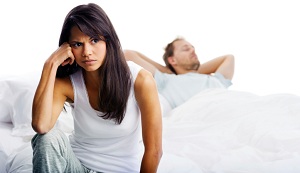
 The new movie This is 40 has a lot of people talking. It is not only crass and funny, but also controversial. The two main characters in the movie reveal that they have secretly fantasized about killing each other. The wife admits to her husband that she has thought about poisoning him with a cupcake. The husband, on the other hand, tells his wife that he had contemplated putting her through a wood chipper. And as they share their morbid fantasies, the married lovers lie in bed looking relaxed and playful. Their fantasies, detailed in the warm light of their bedroom and the safety of a loving relationship, are as far from threatening as they could be. But what does it say about their relationship that they actually do have fantasies like this?
According to Benjamin Karney, a psychology professor at the University of California in Los Angeles, people who fantasize about killing their spouse, or about being a widow or widower, may do so because it allows them to escape taking blame for the failure of the marriage. They may think of it as an escape from a difficult marriage, but an escape without blame. It is not clear how many married couples have these types of fantasies. Rarely do you hear a spouse ask their husband or wife, “Do you ever think of killing me?â€Â But it doesn’t mean it never happens. Violence of any kind, including intimate partner violence, is not something to joke about. Rates of partner homicide are startlingly high. But the movie does show that communication styles can say a lot about a relationship, even when that communication is murderous.
Howard Markman, a psychology professor and co-director of the Center for Marital and Family Studies at the University of Denver, said that when the stars of the movie had their gruesome conversation, they were playful and intimate with each other. In fact, the whole topic of murder began with the wife wanting to discuss their conflicts. The husband, who was anxious and worried that another conflict would erupt, chose to use humor as a way to broach the subject. According to Markman, this type of strategy, even without the wood chipper or poison cupcake, can indicate a successful relationship.  “They still need to talk about her initial question, but this is a great model for couples,” said Markman. “It starts out negative, but then turns positive.” The movie is raising a few eyebrows; that’s for sure. But it also shows us that there is no one model for a successful marriage.
Reference:
Coe, Alexis. The truth of ‘This Is 40’: It’s actually not weird to want your spouse to die. (n.d.): n. pag. The Atlantic. 20 Dec. 2012. Web. 20 Dec. 2012. http://www.theatlantic.com/sexes/archive/2012/12/the-truth-of-this-is-40-its-actually-not-weird-to-want-your-spouse-to-die/266479/
 Being married to the same person for a long time can be quite an achievement. But for many older couples, the celebration of a long life together is overshadowed by health issues, caregiver stress, and lack of independence. Tensions can run high when one spouse is no longer able to care for themselves or tend to their partner’s needs the way they used to. But experts say there are a number of things that couples in their golden years, and their children can do to keep the marriage happy, healthy, and firing on all pistons. One of the first tips that experts give is for children, especially those who have assumed the role of caregiver, to butt out! “Couples who have been together for 60 years tend to have worked out ways to manage conflict – or they wouldn’t still be together,†said psychologist Dr. Gordon Herz from Wisconsin.
In fact, most experts agree that couples who could benefit from some third party direction would be better off consulting a relationship therapist rather than their own children. Some studies suggest marital therapy is most beneficial for older couples because that is when change is most difficult. Lifestyle changes, social changes and physical changes make the older years some of the most stressful. Marriage therapy can help individuals work through their challenges and continue to have a happy and healthy relationship.
Even if couples are struggling with physical and cognitive problems, intimacy is still one of the core elements of a strong relationship. Holding hands, cuddling, or engaging in an activity together can help couples bolster intimacy. But experts also warn not to spend too much time together. As couples age, they tend to be less active and spend more time with each other and not socializing with other people. This is particularly true if one spouse is disabled in some way. It is important for each spouse to take time to care for themselves and rejuvenate their bodies and minds so that they can be fully plugged in when they interact with each other. One recommendation is for spouses, especially those who feel dependent on others, to take time to volunteer in a way that allows them to feel productive and useful. This will improve their well-being and will spill over into their relationship with their spouse.
Reference:
Seliger, Susan. In the middle: Helping unhappy couples. (n.d.): n. pag. The New York Times. 18 Dec. 2012. Web. 19 Dec. 2012. http://newoldage.blogs.nytimes.com/2012/12/18/in-the-middle-helping-unhappy-couples/
 The Diagnostic and Statistical Manual of Mental Disorders serves as the “bible†of mental health practitioners, who rely on it to match diagnostic criteria with behaviors. The American Psychiatric Association periodically examines trends in mental health conditions and recent scientific evidence to revamp the criteria. The latest edition, the DSM-5, is slated for release in May 2013, and the APA recently approved several changes.
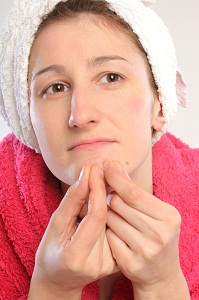
Among the new diagnoses is excoriation, which is associated with chronic skin-picking. The issue is most common among women between the ages of 30 and 45. It’s classified as an impulse control disorder and is related to obsessive compulsion.
[fat_widget_right]
What Is Excoriation?
Although excoriation disorder is the name of the new “official†diagnosis, the issue has been studied for years—sometimes called neurotic excoriation, compulsive skin-picking, dermatillomania, and psychogenic skin-picking. The issue was not included in previous editions of the DSM because it is believed to sometimes be a symptom of another issue.
Skin-picking is common among people with autism spectrum as well as obsessive compulsion. When it does not co-occur with another issue, however, it qualifies for its own diagnosis. Symptoms of the issue include compulsive skin-picking that leads to injuries or wounds as well as stress. Skin-picking is relatively common. Some people pick their skin to the point of bleeding or pain by popping pimples, picking at hangnails, or peeling scabs.
Controversy Surrounding Diagnosis
Whenever the APA adopts new diagnoses or symptoms, there is always some controversy, and excoriation is no exception. Although the diagnosis has received considerably less attention than some other changes, some mental health experts have expressed concern. Because excoriation often is a symptom of an underlying issue, a separate diagnosis might stigmatize people by giving them multiple diagnoses when only one is necessary.
Some clinicians have argued that excoriation does not meet the criteria for a mental health diagnosis and is more akin to a habit. By creating diagnostic criteria for a habit, the DSM might eventually have to include other habits. However, excoriation does sometimes occur on its own, and people with the condition can experience considerable distress, so the APA opted to include it.
How Excoriation Is Treated
When compulsive skin-picking occurs, it’s important to rule out a potential medical cause such as allergies or infection. Occasionally, skin conditions can superficially resemble symptoms of excoriation. Further, excoriation can cause dermatological problems, so patients frequently need dermatological treatment along with mental health treatment.
Antidepressants are the first line of treatment for excoriation. Opioid antagonist medications, which interfere with the body’s ability to respond to endorphins and opioids, also are sometimes effective. Because compulsive skin-picking often co-occurs with anxiety, anti-anxiety medications can be helpful.
Psychotherapy that helps people develop better approaches for dealing with anxiety, enables them to develop better impulse control, and helps patients cope with changes to appearance as a result of excoriation is also a typical part of treatment.
References:
- American Psychological Association. APA concise dictionary of psychology. Washington, DC: American Psychological Association, 2009. Print.
- Brauser, D. (2012, December 3). Experts react to DSM-5 Approval. Medscape Reference. Retrieved from http://www.medscape.com/viewarticle/775526
- Colman, A. M. (2006). Oxford dictionary of psychology. New York, NY: Oxford University Press.
- Neurotic excoriations. (2012, June 27). Medscape Reference. Retrieved from http://emedicine.medscape.com/article/1122042-overview
- Neurotic excoriation. (n.d.). SkinPick. Retrieved from http://www.skinpick.com/neurotic-excoriation
 In the spectrum of human emotions, jealousy is almost certainly one of the most complex, frustrating, and uncomfortable. This cocktail of anger, sadness, suspicion, and envy can destroy relationships, cause bouts of depression and anxiety, and even lead to serious violence or—in extreme cases—homicide. While jealousy and envy are sometimes used synonymously, jealousy refers to the fear of losing someone or something you value, while envy is resentment over something you don’t have but want. Jealousy is probably a hard-wired emotion that humans have developed through evolution. Evolutionary psychologists have written extensively about the role jealousy plays in mating strategies. But even emotions with genetic underpinnings only manifest in certain environments, and there are several factors that make jealousy more likely to surface.
Fear of Being Replaced
People don’t normally experience jealousy unless they feel threatened by another person or entity. Sibling jealousy is usually caused by a child’s fear that the parents will replace him or her with a new sibling or love another sibling more. In romantic relationships, jealousy is typically triggered by a third party. The third party doesn’t have to actually pose a threat; the mere perception of a threat is enough to get the wheels of jealousy turning.
Individual Psychological Factors
Like almost every other emotion and relationship problem, jealousy is heavily affected by individual factors. Past experience can increase a person’s likelihood of being jealous. An adult whose parents modeled jealousy may tend more toward jealousy, and a person who has been betrayed by a lover might be more prone to suspicion. Traits such as anxiety can also affect jealousy. People who tend to worry a lot are more likely to worry about losing a loved one.
Relationship Quality
Some people are more prone to jealousy than others, but virtually everyone is more jealous in an unstable or unloving relationship. After all, jealousy is centered on the fear of losing someone. If you’re unsure of your spouse’s love or your child is unclear whether you love him or her as much as a new sibling, jealousy is much more likely to become explosive. Indeed, in relationships that are already troubled, jealousy may be the final nail. Because jealousy is heavily influenced by the quality of a relationship, practicing loving communication and taking time out for one another is an excellent way to protect against severe jealousy.
The unique dynamics of a relationship can also affect jealous feelings. When there’s a mismatch in relationship styles, it can be a recipe for jealousy. Attachment plays a significant role in jealousy, and people with insecure attachment styles can be more jealous than people who are securely attached. For example, a husband who needs a lot of attention and reassurance might be more prone to jealousy if his wife tends to like her personal space. A highly social husband might make his more introverted wife jealous, particularly if she’s not used to having the large number of close relationships he has.
Preventing Jealousy
Jealousy is not always a negative emotion. It can alert you to a deficit in your relationship and help you become mindful of potential outside threats. After all, sometimes you really are in danger of losing your mate. But when jealousy takes over or occurs for no apparent reason, it can be highly destructive. Couples experiencing problems with jealousy may benefit from couples therapy. Other ways to minimize jealousy include:
- Talking directly and openly about feelings
- Discussing strategies to minimize jealousy
- Practicing honesty in interpersonal relationships
- Examining whether the jealousy is caused by external or internal factors
- Working to improve lacking elements within the relationship
- Taking time to make the other person feel special and valued
References:
- Allen, J. (2000). Romantic jealousy: The role of attachment style and social comparison processes in the violent expression of romantic jealousy. Leicester: University of Leicester.
- Springer, S. (n.d.). Jealousy is a dangerous sword. Clinical Psychology Associates. Retrieved from http://cpancf.com/articles_files/jealousyinrelationships.asp
 Sleep apnea is an issue that causes pauses in breathing throughout the sleep cycle. This issue can cause people to awaken frequently, snore loudly, and experience disturbances in their dreams. The condition is potentially life-threatening because it can interfere with the brain’s oxygen supply.
But people experiencing sleep apnea aren’t just stuck dealing with its physical effects. They may also experience mental health challenges.
Depression
A study by the Centers for Disease Control and Prevention found that people with sleep apnea were more likely to experience depression than people in the general population. Disturbances in sleep can affect mental health, and the stress of having a serious medical condition is sufficient to send some people into depression. But sleep apnea is particularly likely to interfere with mental health because of the reduced oxygen supply to the brain at night, which can alter brain functioning and thus increase a person’s likelihood of developing depression.
Anxiety
The fact sleep apnea affects people while they’re sleeping—a time when people are supposed to be at peace—can be particularly jarring. Some people have to wear special masks connected to continuous positive airway pressure (CPAP) machines to ensure that they breathe normally throughout the night, and the threat of breathing problems can cause severe anxiety. This anxiety, in turn, may make sleep problems worse, and sleep deprivation can contribute to both depression and anxiety, a vicious cycle for people with sleep apnea.
Relationship Problems
For many people, the first sign that they have sleep apnea is a spouse’s complaints about snoring. Even extremely supportive spouses might not want to listen to a person with sleep apnea snore all night, and some people with the condition end up sleeping in separate bedrooms. This can decrease opportunities for intimacy and increase relationship dissatisfaction, contributing to stress for both parties.
Changes in Dreams
Many mental health professionals believe dreams are an opportunity to process the events of the day and to encode memories. Dreams also provide a testing ground for anxiety-inducing scenarios, long-term goals, and everyday interactions. Because people with sleep apnea awaken frequently, they may be unable to enter the rapid eye movement (REM) sleep that is necessary for dreaming. Among people who do not enter or remain in REM sleep, there may be a number of mental health problems, ranging from anxiety to difficulty with memory.
Cognitive Impairment
If you can’t sleep, can’t dream, and are worried about a chronic medical condition, it’s not surprising that you might have difficulty concentrating. People with sleep apnea may be exhausted during the day and have trouble focusing on important tasks, including job-related activities. Sleep problems can alter mood, making people with sleep apnea jumpy or quick-tempered, and making it more difficult for them to navigate the challenges of everyday life.
Many of the problems associated with sleep apnea are interconnected, and stress during the day can make sleep apnea worse at night. There are effective treatments, though you might have to try several approaches before something works. If you have sleep problems, consult your doctor.
References:
- Lyon, L. (2009, August 24). 7 things that make sleep apnea worse. US News. Retrieved from http://health.usnews.com/health-news/family-health/articles/2009/08/24/7-things-that-make-sleep-apnea-worse
- Sleep and mental health. (n.d.). Harvard Health Publications. Retrieved from http://www.health.harvard.edu/newsletters/Harvard_Mental_Health_Letter/2009/July/Sleep-and-mental-health
- Sleep apnea can cause depression. (n.d.). New Technology Publishing, Inc. Retrieved from http://www.healthyresources.com/sleep/apnea/articles/depress.html
 According to Diane Falzone, author of a recent column, the “deployment sex pact†is a long-standing military arrangement. Essentially, the pact gives permission for partners to engage in sexual relations with someone other than their spouses during long periods of deployment. There are no hard and fast rules; each couple makes guidelines that are acceptable to them. Falzone, however, believes such agreements may cause more pain than pleasure.
When Falzone first wrote about it, she had readers who were for it and others who vehemently opposed it. Some wrote that vows were vows and deployment doesn’t change that. Others stated that permission to have sex satisfies natural, biological urges without putting the relationship at risk. Falzone begs to differ, even though she believes every couple has the right to determine the limits of their own relationship. “But it’s my belief that if you cannot be faithful for the 10-18 months of a given deployment, perhaps you should reconsider the fundamentals of what makes a relationship,†she said.
Having guidelines and regulations in the military is one thing, but extending them to infidelity within the marriage is another entirely. And what about discipline? Doesn’t the military teach discipline, restraint, and sacrifice? If a soldier can adhere to those tenets in the field, can’t he or she uphold those same character traits within his or her marriage?
Relationships are founded on trust and honesty. Even if partners believe they might be OK with the idea of a sex pact initially, they may find themselves becoming secretly jealous of their spouses. A deployed partner might develop romantic feelings for someone else and not be willing to divulge that information to his or her spouse. The military marriage and potentially other relationships could be at risk, and there are additional threats such as sexually transmitted disease and unintended pregnancy. Falzone believes finding love is hard enough. She suggests that when you do find that special someone, don’t commit to conditional infidelity—commit to being faithful.
Reference:
Falzone, Diane. Should military marriages include a “deployment sex pact� (n.d.): n. pag. Fox News. 26 Nov. 2012. Web. 26 Nov. 2012. http://www.foxnews.com/opinion/2012/11/26/military-marriages-and-deployment-sex-pact/
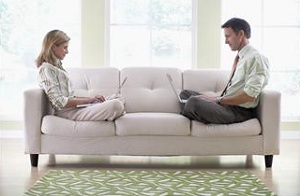 In an increasingly connected world, most people have an account on at least one social networking platform, and many people use social networking as their primary means of communication with friends and family. Most of us are aware that social networking poses some dicey questions in romantic relationships—whether to “friend†exes, whether to share private conversations with partners, what constitutes flirting, how much information about a relationship is acceptable to share online, and so on—but social networking is primarily an avenue for connecting with nonromantic friends.
Is social networking changing friendship as we know it? Research hints that the answer is yes.
Reduced Investment
Facebook provides bountiful opportunities for “friendingâ€â€”a term we owe to social networking—and many people have hundreds or even thousands of online friends. Historically, people have had 150 to 200 people in their circle of acquaintances, on average, and only a few close friends. But Facebook, for example, allows people to “friend†others without making much investment. This could change the way people approach friendship. Where friendship previously required time, effort, and a lot of conversation, it now seemingly requires only a click of a button. This has the potential to broaden the number of people a person may consider his or her friends, while significantly reducing the number who fit the more traditional traits associated with close friendship.
Changed Boundaries
Although some social networking sites offer options that allow people to limit the viewers on certain posts, people tend to post things to everyone on their friends list. This serves to alter the boundaries of traditional acquaintance relationships. Your boss might read about your difficult pregnancy, and an old college professor might hear about your difficulties in your marriage. Conversely, when people use only social networks to communicate with their close friends, they limit the intimacy and detail of their conversations because—despite the compromised boundaries brought about by social networking—there are still some things that most people won’t post online, even if they’d share these things with close friends.
Social networks also make it much easier to share controversial opinions with friends and acquaintances. Many of us have friends with whom we would never discuss politics or religion. But the endless political jockeying on Facebook and Twitter makes it much more likely that people will engage with their political foes. Depending on how these conversations are handled, they can increase conflict or even destroy friendships, or they can promote understanding and mutual respect.
Reaching Out
Starting a new friendship can be challenging, particularly for adults who are no longer in school or who don’t have a large pool of co-workers. For shy people and those seeking new friends, social networking provides an easy way to make the first overture of friendship. By simply clicking the “add friend†button, people can convey that they’re interested in getting to know someone, reducing a traditional barrier to friendship.
Changing Face Time
In-person communication with friends has always been an important part of friendship. Social networking might reduce the frequency of face-to-face contact. One study found that 10% of social networking friends ranked as “close†had never actually met in person. Social networking also changes how people spend face time with friends; they may spend time together perusing others’ social network profiles or discussing what they’ve seen online rather than catching up on one another’s lives.
References:
- Novotney, A. (n.d.). R U friends 4 real? American Psychological Association. Retrieved from http://www.apa.org/monitor/2012/02/friends.aspx
- Is social networking changing the face of friendship? (2007, September 14). ScienceDaily. Retrieved from http://www.sciencedaily.com/releases/2007/09/070912161147.htm

We all know the feeling, but few of us want to talk about it. Shame often runs our lives and undermines our relationships, but we often keep it hidden. We’re ashamed of being ashamed. I felt it today when my wife reminded me of something I had said to her that was unkind. I pride myself on being a sensitive, caring man, and when she pointed out this shortcoming, I could feel the shame rise up in me. I felt myself getting warm. My first thought was, “I didn’t do it.” My first words were, “I never said it.” I felt confused and off balance. I wanted to run away and hide. I wanted to disappear.
I was awash in my shame, but I tried to cover my discomfort. Shame is such a wretched feeling, most of us try and deny we are feeling it, hoping that if we don’t look at it, shame will magically disappear. But shame is stubborn. The more we deny it, the more it sticks to us like glue.
Recent research shows that shame is conceptualized as a multidimensional construct, manifesting in various physical and emotional ways. Shame manifests physically in a wide variety of forms. “The person may hide their eyes; lower their gaze; blush; bite their lips or tongue; present a forced smile; or fidget,” psychotherapist Marc Miller said. Other responses may include irritability, annoyance, defensiveness, exaggeration, or denial. Research indicates that the strongest correlates of shame across studies include individual differences in nonacceptance of negative emotions and expressive suppression. Because the effect of shame often interferes with our ability to think clearly, we may experience confusion, being at a loss for words, or a blank mind.
“Man is the only animal that blushes,” Mark Twain once said. “Or needs to.” He reminds us how central shame is to the human experience.
Find a Therapist

When couples come to me for counseling, they rarely mention shame as a cause for their difficulty. Yet I’ve found that shame is a major factor of relationship problems. Research shows that shame can have a severe negative impact on intimate relationships, leading to negative shame loops between partners. We know that couples often fight about money and sex. He gets angry when she spends money on things he thinks are not important. Underneath his anger we often find feelings of inadequacy. Beneath her spending patterns may be feelings of loneliness and unworthiness.
Key Insight: Nathanael Schlect, Licensed Associate Counselor “Shame often operates alongside other vulnerabilities such as fear, grief, or insecurity rather than existing in isolation.”
One partner wants more sex, and the other feels tired or withdrawn. One gets angry. The other feels hurt. Shame is rarely discussed, but is always present. One may feel like a lousy lover. The other may feel unattractive.
Recent umbrella reviews show that a relative majority of studies conceptualize shame as a multidimensional construct, representing what Helen B. Lewis, a pioneer in recognizing the importance of shame to psychotherapy, argued was an entire family of emotions. This family includes humiliation, embarrassment, feelings of low self-esteem, belittlement, and stigmatization. Shame is often experienced as a critical inner voice that judges us as “damaged goods,” inadequate, inferior, or worthless.
Shame in Men and Women

I’ve found the things that trigger shame differ in men and women. Research confirms that gender stereotypes maintain that women experience more guilt and shame than men, with meta-analyses showing small but significant gender differences (d = -0.29 for shame). Women often feel shame when they are unable to do all the things they think they should do. They must be a good mother, a sexy wife, a successful breadwinner, a caring friend, a good sister, and more. Studies show that women avoid the shame they may have if others observe that they overestimated themselves, while men do not seem to be similarly shame averse, possibly due to different societal expectations where men are expected to be overconfident.
The list is smaller for men. Shame usually manifests when we don’t feel strong. Dr. Brené Brown, an expert on shame, says, “While women are faced with a web of many layered, competing, and conflicting expectations, there seems to be one major expectation for men—do NOT appear weak.”
I’ve also found that men and women often react to shame differently. Research indicates larger gender gaps in shame with trait versus state scales, and gender differences in shame about domains such as the body, sex, and food tend to be larger than other domains. While individual responses to shame vary widely and are not strictly gender-bound, often women often blame themselves when they feel ashamed. They look embarrassed. They turn inward. Men often blame others when they feel ashamed. They often look angry. They may explode outward.
Key Insight: Nathanael Schlect, Licensed Associate Counselor “While patterns can differ across socialization, people of any gender may turn shame inward or outward depending on personality, history, and context.”
In fact, male violence is often an attempt to ward off shame. Recent research shows masculinity threats lead to emotions including shame, guilt, and a reduction in empathy, and these masculinity threats predict harmful behaviors such as men’s aggression, sexual violence, anxiety, shame, self-harm, and homophobic attitudes. Dr. James Gilligan has spent more than 30 years researching anger and violence in men. His research traces the role that shame plays in the etiology of murder and shows how feelings of shame cause violent and vengeful behavior. He says, “I have yet to see a serious act of violence that was not provoked by the experience of feeling shamed and humiliated, disrespected and ridiculed, and that did not represent the attempt to prevent or undo this ‘loss of face.’ ” Respect is important to all of us, but for men it is essential. Recent research on masculinity and violence shows that when men were targets of partner violence, many described feelings of weakness and shame, reflecting assumptions that men should be dominant and not victimized. Feeling disrespected or “dissed” can cause a man to strike out in rage.

Self-Disclosure and Empathy
The most difficult thing in the world to do when we are feeling down on ourselves is to admit how we feel. Yet self-disclosure is what we need to do to stop the cycle of shame and blame that so many of us get caught up with. Recent research on intimacy shows that self-disclosure, a fundamental component of intimacy, occurs only when vulnerability is met with acceptance rather than rejection. However, shame disrupts this process by inhibiting vulnerability and promoting defensive strategies. It’s harder than hell to say to my wife, “You’re right, what I said was unkind. I’m sorry.” But that’s the key to washing the shame away.
Attachment research shows that shame loops within couple relationships may not only be triggered by negative cues, such as criticism from a partner, but can also innocently be triggered by a partner seeking connection or even offering comfort. It feels counterintuitive. We’re afraid that if we admit our faults, we’ll feel even more ashamed. But the opposite is true. The more we’re able to say, “Yes, I messed up,” or, “Yes, I made a mistake,” or, “Yes, I’m sorry for what I said,” the better we feel about ourselves.
We all know the good feeling we get when we can own our mistakes and be forgiven. But that takes empathy on the part of our partner. Our partner has to be able to feel with us, not blame us or put us down. Recent clinical trials of Emotionally Focused Couple Therapy show significant improvements in intimacy and reductions in shame when couples learn to address these dynamics. For men, it often means admitting our weakness. And for women, it means accepting that we can still be strong, adequate men, even when we are weak.
Men need also to practice empathy with the women in our lives. We have to understand the things we do that shame them, the subtle ways we may put them down. And we all need to be more empathic with ourselves. We don’t have to be successful at everything, all the time. We don’t have to be strong all the time and hide our weakness. We can learn to love and accept the wonderful, flawed, human beings we all are.
References:
- Mirzazade, Z., Molazade, J., & Hadianfard, H. (2025). The effect of emotionally focused couple therapy (EFCT) on shame and intimacy in couples: a randomized controlled trial (RCT). BMC Psychology, 13, 1111. https://doi.org/10.1186/s40359-025-03415-3
- Frediani, M. J., et al. (2024). Seeking connection can trigger shame loops in couples: An attachment-based understanding. Family Process, 63(1), 34-47. https://doi.org/10.1111/famp.12888
- Vescio, T. K., et al. (2025). Masculinity threats sequentially arouse public discomfort, anger, and positive attitudes toward sexual violence. Personality and Social Psychology Bulletin, 51(1), 3-20. https://doi.org/10.1177/01461672231179431
- Stanaland, A., Gaither, S., & Gassman-Pines, A. (2023). When is masculinity “fragile”? An expectancy-discrepancy-threat model of masculine identity. Personality and Social Psychology Review, 27(4), 285-315. https://doi.org/10.1177/10888683221141176
- Swerdlow, B. A., Sandel, D. B., & Johnson, S. L. (2023). Shame on me for needing you. Emotion, 23(3), 737-752. https://doi.org/10.1037/emo0001109
- O’Donnell, S., et al. (2024). Masculinity and violence interconnectedness: Defining and reconciling the gender paradox among men with cumulative lifetime violence histories. SAGE Open, 14(3), 21582440241266998. https://doi.org/10.1177/21582440241266998
- Else-Quest, N. M., Higgins, A., Allison, C., & Morton, L. C. (2012). Gender differences in self-conscious emotional experience: A meta-analysis. Psychological Bulletin, 138(5), 947-981. https://doi.org/10.1037/a0027930
- DeSantis, A. J., Eshelman, L. R., & Messman, T. L. (2025). Emotional dysregulation, anger, and masculinity in men who have experienced lifetime sexual violence. Journal of Interpersonal Violence, 40(21-22), 5199-5222. https://doi.org/10.1177/08862605241301790
- Deshmukh, A., Mehta, R., & Acar, Z. (2024). Perceived criticism and intimacy avoidance in couples: The mediating role of shame. Research and Practice in Couple Therapy, 2(1), 1-10. https://doi.org/10.61838/rpct.2.1.1
- Bardi, L., et al. (2024). Conceptualization and assessment of shame experience and regulation: An umbrella review of synthesis studies. Clinical Psychology Review, 113, 102436. https://doi.org/10.1016/j.cpr.2024.102436
 Since the beginning of recorded history, people have been forecasting the end of the world. In biblical times, many people believed that Jesus would return in a few short years, and religions throughout the world have cautioned people to repent and prepare for the end of days for as long as there have been religions.
In modern times, with science gaining popular acceptance and doomsday scenarios falling outside the mainstream, such beliefs can seem highly unorthodox. But the Daily Mail reports that 22% of Americans believe the world will end in their lifetime, and the belief that a religious figure will return to “save†a chosen few is still commonplace. The National Geographic Channel has dedicated a popular television series to people who believe the world may soon end: Doomsday Preppers follows individuals—sometimes referred to as survivalists—and their families as they plan and prepare for the end of civilization.
Psychology can offer some insight into this phenomenon.
Risk and Preparedness
We live in an increasingly complex and often frightening world. Massive tsunamis can kill thousands, and electrical outages can cripple a city, state, or country. The threat of nuclear war is omnipresent, and protests around the world can make government and order seem increasingly unstable. Many people actively fear the prospect of terrorist attacks, pandemics, fuel shortages, and societal or economic collapse.
Most people prepare to some degree for “what-if†scenarios. People buy flood insurance, swarm the grocery store before a storm, and buy generators to ensure their businesses can keep running if there’s a power outage. The difference between those who take it to the extreme—such as doomsday preppers—and those who simply plan for a rainy day may simply be a matter of degree.
Trauma and Experience
People who believe in conspiracies and doomsday scenarios likely would caution that, if they’re right, they don’t look so strange after all. And when a person’s experiences are taken into account, their worries may even seem justified. A person who has experienced war might be more frightened that war could end the world, while trauma victims and people with posttraumatic stress may have more difficulty assessing risk.
Belief Systems
People tend to accept evidence that supports their belief systems and ignore evidence that doesn’t—a phenomenon called confirmation bias. In some cases, people may believe conspiracy theories because these theories support their most fundamental or earliest-established beliefs. A person whose mother claims to have been kidnapped by aliens might, for example, fervently cling to a belief in aliens because believing in aliens allows him to believe his mother. A highly religious person who believes she experienced a prophecy that the world will soon end is unlikely to abandon such a belief because doing so undermines her religious experience.
Once a doomsday scenario or conspiracy theory becomes part of a person’s belief system, he or she is unlikely to abandon it even in the face of conflicting evidence. This isn’t unique to doomsday preppers. We all have things we believe without evidence, sometimes even in the face of contradictory evidence.
Mental Health Conditions
Some people who believe in conspiracy theories and end-of-days scenarios may be experiencing a mental health issue. Conditions that can contribute to such beliefs include:
- Schizophrenia, which can result in delusions and hallucinations that could convince a person the end of the world is near or that an entity is out to get him or her.
- Paranoid personality disorder, which manifests as constant suspicion, often in the form of fear of the government.
- Persecutory delusion, which may cause a person to believe that another person or entity is out to get him or her and will not stop until harm is done.
References:
- Cruz, N. (2012, April 3). National Geographic’s troubling, addictive show about survivalists. Slate. Retrieved from http://www.slate.com/blogs/browbeat/2012/04/03/doomsday_preppers_on_national_geographic_is_the_survivalist_reality_show_exploitative_.html
- Guyatt, N. (2007). Have a nice doomsday: Why millions of Americans are looking forward to the end of the world. New York, NY: Harper Perennial.
- Hanlon, C. (2012, May 2). 22% of Americans believe world will end in their lifetime (and 10% think the apocalypse is coming this year). Mail Online. Retrieved from http://www.dailymail.co.uk/news/article-2138449/The-end-nigh–Americans-think-world-end-year.html
 Two weeks removed from a Halloween that inspired thousands of people to dress as reality television’s Honey Boo Boo, child beauty pageants have again entered the national consciousness. From small festival- and fair-based competitions to elaborate, expensive, national endeavors, child beauty pageants are a $5 billion industry. Parents who enroll their children in such pageants fiercely defend them as the child’s choice, and many participants—particularly on pageant-centered shows such as TLC’s Toddlers & Tiaras—seem thrilled to be involved. But what effects do beauty pageants have on children and their impressionable minds?
[fat_widget_right]
Why Children Enter Beauty Pageants
Children are the masters of fantastical ideas, so it’s no wonder that many girls involved in the pageant circuits relish spending a few days a year as Cinderella. But children can’t enter pageants without their parents’ blessing, so involvement ultimately hinges on parental choice rather than the child’s. In a new paper published in the Journal of the American Academy of Child and Adolescent Psychiatry, University of Arizona professor Martina M. Cartwright emphasizes this point. She calls the phenomenon “princess by proxy,†explaining that the real attraction of pageants is for parents who can gain social status, self-esteem, and money when their children participate.
Potential Effects of Beauty Pageants: Eating Disorders and Body-Image Distortion
Pageants, particularly those designed for younger children, focus primarily on appearance, attire, and perceived “cuteness.†Talent competitions occur in some pageants and often are a secondary component of the experience. Thus, pageants suggest to young children that there is value in focusing on their appearance as judged through the eyes of others. This can lead to significant body-image distortions, and adults who once participated in child beauty pageants may experience low self-esteem and poor body image.
As with most adult pageants, child pageants often require crash dieting. Parents may encourage children to quickly lose weight so they can fit into small costumes or display tiny bodies in swimsuit-centered fitness competitions. Some parents put their kids on crash diets designed to help them gain energy and enthusiasm. These diets may consist solely of sugary snacks and sports drinks for several days. This can harm both short- and long-term health and teaches children unhealthy approaches to food that can contribute to the development of eating disorders.
Beauty Pageants and the Sexualization of Young Girls
Sexualization is the tendency to view oneself as a sex object, and children who participate in beauty pageants are sexualized very early. Children may dress in highly suggestive costumes and learn that they gain attention and status when sexualized. This may lead to premature sexual activity and can teach the unfortunate lesson that women’s worth is determined at least in part by their status as sex objects.
The Unhealthy Values Built by Beauty Contests
While some pageants are brief events that require little preparation, the world of pageants can be cutthroat and extremely competitive. Children learn a host of unhealthy values, including the desire to defeat their competition at all costs. Tantrums and meltdowns—by children and parents alike—are common backstage at beauty pageants, and long-term participation in pageants can teach children that their primary source of worth is how many pageants they win and how “beautiful†they are perceived to be. Academic achievement, empathy, social skills, athletic pursuits, and other age-appropriate activities may take a backseat in the world of pageants. And because precious few pageant participants grow up to become models or entertainers, this early experience can stunt their development by focusing their attention on something they are unlikely to be able to do as adults.
References:
- Giroux, H. A. (2009, May 11). Child beauty pageants: A scene from the “other America.” Truthout. Retrieved from http://archive.truthout.org/051109A
- Sinpetru, L. (n.d.). Child beauty pageants foster adult body dissatisfaction, eating disorders. Softpedia. Retrieved from http://news.softpedia.com/news/Child-Beauty-Pageants-Foster-Adult-Body-Dissatisfaction-Eating-Disorders-302540.shtml

The average age of sexual initiation is roughly between 16 and 19. Although some teens wait until much later, many begin engaging in sexual behavior before the age of 15. Numerous studies have looked at the negative consequences associated with early sexual initiation, such as emotional problems, HIV/AIDS, pregnancy, and intimate partner violence. But recently, researchers at the University of Texas looked at how sexual-initiation age could benefit people later in life. In a study led by Paige Harden, 1,659 sibling pairs were evaluated from middle adolescence through young adulthood. They were asked when they began having sexual intercourse, how many partners they had, and, if they were in current relationships, how happy they were.
Harden found that the participants who were in satisfying, committed relationships in adulthood were those that started having sex in their late teens or early twenties. These individuals reported less relationship conflict and more respect, affection, and love for their partners than the participants who had earlier sexual-initiation ages. Harden tested this outcome further by including factors such as physical appearance, body mass index, and education and came up with the same results. She believes that people who begin sexual activity after they have reached physical and cognitive maturity may make better partner decisions and be more discriminating in their choices. They may also have stronger communication skills that can benefit their overall relationship.
The results of this study don’t suggest that earlier sexual initiation can increase negative outcomes. Rather, these findings demonstrate that being a late bloomer can act as a protective factor. “We still don’t understand precisely why delaying sexual intercourse is correlated with more satisfied adult relationships,†Harden said. She hopes that future research will look at the flip side of her study, and in particular if early sexual activity among teens decreases their chances of having satisfying, positive relationships in adulthood.
Reference:
Ochsner, David. Does true love wait? Age of first sexual experience predicts romantic outcomes in adulthood. (n.d.): n. pag. The University of Texas at Austin. 18 Oct. 2012. Web. 18 Oct. 2012. http://www.utexas.edu/news/2012/10/18/does-true-love-wait-age-of-first-sexual-experience-predicts-romantic-outcomes-in-adulthood/
 Depression makes it difficult to function in daily life, but adding discrimination to the equation makes it even more troublesome.
A new study in the journal The Lancet stated that out of the 1,082 adult participants with major depressive disorder, 79% reported that they have experienced discrimination. People who experienced discrimination while depressed had more depressive episodes, social difficulties, and issues finding and keeping a job. They also were less likely to reveal a diagnosis of depression.
These results suggest that more works needs to be done in the area of preventing discrimination and eliminating stigma. Discrimination can prevent people with depression, who may be worried about disclosing their diagnosis, from getting the help they need. While getting a job and growing social networks can help fight depression symptoms, those pursuits become more challenging in the face of discrimination.
How, specifically, does discrimination affect people with depression? How can the general public be more understanding? And what options do people with depression have? Mental health experts and other professionals have some answers.
Dr. David Sack, CEO of Elements Behavioral Health and Promises Treatment Centers, said by email that sensitivity toward people with depression often is lacking.
“The most common example has to do with intolerance toward peers/friends/relatives that comes from not understanding that depression is a disease that the individual cannot simply will themselves out of,†he said.
Sack said a supervisor might question an employee’s motivation and commitment due to symptoms of depression, even if those symptoms don’t reflect how the employee really is.
“How often have we heard that this or that person claims that they are depressed just so they can get time off from work or won’t have to take responsibility for mistakes they’ve made?†Sack said.
Although many people know the basics of depression thanks to widespread awareness initiatives, prejudice, bias, and stigma still are rampant.
Viola Drancoli, a clinical psychologist, said in an email that friends and family members of people with depression might exhibit discriminatory behavior with them because they may feel drained from being around someone who expresses sadness, pessimism, irritability, and a lack of motivation.
This could push someone with depression into isolation. A person with depression might prefer being alone so he or she doesn’t have to attempt to hide feelings from others.
“The social isolation often starts a vicious cycle in which the (client’s) negative outlook on life is reaffirmed, they feel let down by family and friends, and symptoms may worsen,†Drancoli said. “This is especially dangerous for individuals who have suicidal ideations and need support and monitoring.â€
Drancoli said it’s important for family and friends to be supportive. She suggests volunteering to help out with chores that might be difficult for someone with depression to complete when he or she is struggling to function, as well as patiently listening without judgment. Loved ones can gently encourage a person with depression to exercise as well, as this has been shown to boost mood.
People with depression who believe they have been discriminated against have the law on their side. Sack said that discrimination against people with any disabilities, including mental issues such as depression, is forbidden by the Americans with Disabilities Act. The civil rights law, enacted in 1990, defines disability as “a physical or mental impairment that substantially limits a major life activity.†Some states have additional laws against discriminatory behavior.
“An individual who is concerned about discrimination at work will want to speak with their supervisor or the director of human resources first,†Sack said. “Most companies have strong policies to promote fairness and nondiscrimination.â€
Justine Lisser, a senior attorney advisor in the Office of Communications & Legislative Affairs at the U.S. Equal Employment Opportunity Commission, said by email that if an employer has at least 15 employees, it must abide by the ADA. Employers need to provide “reasonable accommodations†for people with disabilities, as long as the employer isn’t deeply burdened as a result.
“For example, if a person with depression is hired for a position that requires an 8 a.m. start time, but due to the effects of (antidepressant) medication the person could not start until 10 a.m., it would be a reasonable accommodation to permit the employee with depression to start at 10 a.m., assuming that it would not cause an undue hardship for the employer,†Lisser said.
The EEOC has successfully enforced employee discrimination laws in a few cases involving people with mental health issues. In one case, a sales associate at a video retailer experienced harassment because of his social anxiety disorder and depression. His employer was ordered to pay $70,000 to settle the discrimination suit, according to an EEOC press release from March 2012.