 In my first meeting with Nora and Jeff, Nora told me (actually, she was yelling and crying): “He’s so passive, he’s driving me crazy. Jeff never lets me know what he’s thinking. He doesn’t make clear what he wants; when we disagree, he doesn’t explain what he thinks or feels.” As I got to know Nora and Jeff, I could imagine that most people would describe Jeff as a passive person—not actively taking part, compliant, meek. But I have come to understand that, more accurately, Jeff is a person in hiding.
While both Nora and Jeff contributed to the difficulties in their relationship, I am going to focus on Jeff.
Passivity as Protective Hiding
Several months into my work with the couple, this particular session was not the typical discussion of the vicious circle where Jeff’s passivity evokes Nora’s anger which makes Jeff more passive and around they go. Instead, Jeff started the session. Looking frightened but sounding more filled with feelings than usual, he told Nora: “I’m tired of this fighting. I’ve tried so hard to give you what you want, to be the good guy. All you do is criticize me and make me feel like the bad guy. You’re always screaming, but now I do feel like the bad one. This isn’t me. I’m always the good guy. I can’t stand that you don’t see me that way anymore. I don’t know what to do.”
[fat_widget_right]
In my work with Jeff and Nora, I learned a lot about Jeff’s need to hide and came to understand his passivity as his way of hiding himself to stay safe. Jeff projected a self to the world that was easygoing, undemanding, and kind. In our sessions, Jeff slowly revealed how this was not how he felt about himself: “I can’t say I like myself very much or think very highly of myself. I don’t know. Maybe it has to do with having such critical parents. They were horrible. They always laughed about my appearance: look at his big ears; his voice is so squeaky; ooh, he’s so hairy. They made me feel ashamed. They didn’t like my friends, complained about how I ate, dressed, ugh, everything. I finally learned to tune them out. From the time I was, I guess, about 8 or 9, I stopped reacting. I suppose I do that with everyone now.”
Nora started to cry softly in response to Jeff: “I had no idea; you never told me any of this. I’m so sorry your parents were so mean to you.”
Jeff looked shocked by Nora’s tears and words: “I don’t want you to feel sorry for me. I hate that! I can’t stand it. Now you both are going to think there is something wrong with me. I never should have said anything.”
Jeff’s “saying something” was the start of expressing his “true self,” which his false self had kept hidden and safe from harm. His false self had been engaging with a world that could be emotionally destructive and dangerous. Consequently, Jeff wasn’t totally familiar with the Jeff who had been kept in hiding. He had done a good job of protecting his young self from intolerable feelings of shame, hurt, and rage. Unfortunately, with the “true self” in hiding, there was little opportunity for Jeff to grow and develop through relationships in the real world.
False-Self Interference with Good, ‘True-Self’ Feelings
The false self develops as an adaptation that protects the individual and makes it possible for the “true self” to go into hiding. Often, the development of the false self is unconscious, and the individual may not be aware that this defense is protecting him (or her) from intolerable feelings. Over time, awareness may develop that the “me” who is acting in the world is “not me.” As these “not me” feelings get stronger, the feelings of being loved, being successful, deserving of recognition, etc., cannot be felt as me, or as the “true self.” It is, after all, “not me” who is loved, admired, or successful. This leaves no room for good self-feelings and frequently results in increased hiding to diminish the risks of being seen and known.
As the individual becomes increasingly aware of the false self adaptation, he (or she) is also aware that he (or she) may not know what will appear when the “true self” begins to emerge. It feels risky to be vulnerable and speak one’s feelings. How the person will be responded to is an unknown. The false self emerged early in development and was successful in protecting the person from intolerable feelings. Now that the false self no longer protects so well, it takes courage to begin to allow the true self to emerge. There are no assurances that the old shaming ways that required the adaptation to a false self won’t be repeated. Jeff’s relating of his early experiences with his parents, his shame, and his negative self-feelings were a brave expression of his “true self.”
Interference with Intimacy
To be intimate with another assumes a personal closeness, familiarity, and a knowing of the other. Jeff and Nora had difficulty being intimate because Jeff was in hiding and Nora had no sense of a real other self to relate to. In one session, Nora turned to Jeff and described her struggle: “I think I love you, I want to love you, but sometimes I don’t know who you are. I want this to work, but I rarely feel I know what you want.”
Sadly, no matter what loving or affectionate feelings Nora might have been able to feel for Jeff, he felt it was “not me” who was being loved. As a false self, he had no way to experience that Nora’s loving feelings had anything to do with what was true or real about him. As Jeff became more interested in shedding his false self and developing his “true self,” he was handicapped in his ability to be intimate since he didn’t feel he was a person of substance with thoughts, feelings, needs, and desires with which he could relate to Nora. It takes a strong desire and a good deal of courage to overcome the anxiety of risking a repeat of the shame and hurt as one begins to let oneself know what they are feeling and then allow the vulnerability to share oneself with significant others and then ultimately the world. Jeff is working on this with Nora and is making slow but steady progress.
Interference with Self-Knowledge
Who am I? What do I want, think, need, believe? What do I like, hate, fear, love? These are only some of the basic questions we wrestle with as we grow and develop our identities. When we grow up in an environment that feels dangerous or destructive, we need to find a safe way to protect ourselves from mistreatment and intolerable feelings. But when we adapt to a false self, we frequently miss the opportunity to develop the answers to these questions.
Who we know ourselves to be is based on the accumulation of our continuing experiences of the interactions between ourselves and others. This relational dialogue—all these back-and-forth responses—are the building blocks of self-knowledge. We develop the ability to self-reflect and think about self and other. We discover what we want and don’t want. We learn how to get what we want and from whom. But we can’t do this when we keep ourselves hidden from the world. The “true self” must participate in these interactions if we are to come to know who we are.
The development of a sense of identity—this is who I am; this is what I know and feel about me—helps us to locate ourselves in the world. The sense of self that we carry with us, including feelings of confidence and self-esteem, are constantly evolving as we engage in our relationships in the world. When we sequester our “true self” to keep it safe, it loses the opportunity to have “true self” experiences, which are the building blocks of identity. The false self may have kept Jeff safe from intolerable feelings, but it deprived him of becoming a person who could see himself and be seen as a person with a large number of positive and negative attributes (valuable, funny, smart, stubborn, courageous, mean, loving, etc.).
Jeff and Nora have a lot of work to do individually and with each other if they are going to be able to develop a trusting, loving, intimate relationship. When our defenses no longer protect us, as when Jeff’s false self no longer protected him from intolerable feelings of shame, badness, and anger, we become more motivated to make changes in the way we think about ourselves as individuals and in relationships. Jeff’s growing awareness of how hiding himself was damaging not only to his relationship with Nora, but also to himself, became a driver of his openness to learning the ways in which hiding himself was having severe consequences in his life.
Note: To protect privacy, names in the preceding article have been changed and the dialogues described are a composite.
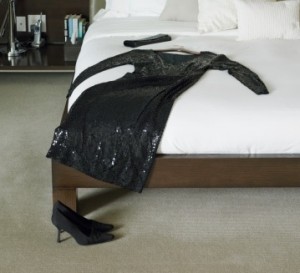
A long time ago, my (much older) bachelor next-door neighbor confided in me that his pleasure in life was purely “sartorial.” Unfamiliar with the term, I ran to my dictionary and learned sartorial meant “pertaining to clothing, especially men’s.” But this distinguished college professor was—his clothes appeared unremarkable, plain, and masculine.
As we became better and better friends, he confessed to me that his sartorial interests were with feminine clothing, and that he had been wearing female lingerie under his tweed suits for many years. He lamented that he had lost his last girlfriend years before when “the allure of her panties reared its satin head.” What offered a sexual turn-on for him was a turn-off for her.
He wanted my help with shopping for dresses, but I was wearing work shirts and overalls—this was the early 1970s, and nobody condemned me for dressing like a male farm worker! Since I couldn’t offer shopping assistance, I spent time with him and listened.
Find a Therapist for Sex / Sexuality

Since that time, I’ve learned much more about cross-dressing, now more commonly referred to as gender expression that varies from societal expectations. Cross-dressing itself is simply a clinical term, and most people who cross-dress do not have transvestic disorder. [UPDATED: It’s important to distinguish between cross-dressing as personal expression and transvestic disorder as defined in clinical contexts].
Research shows that 87% of male cross-dressers describe themselves as heterosexual, and 60% were married at the time of survey. Rather than choosing “macho professions to hide,” many people simply work in various fields while managing their personal expression separately from their professional identity.
Current understanding recognizes that cross-dressing exists on a spectrum of gender expression, distinct from gender identity. Transvestic disorder occurs when cross-dressing causes significant distress or impairment to daily life, but this represents only a small subset of people who engage in cross-dressing behaviors.
I don’t know what happened to Henry. I know he yearned for a female partner who would understand. He especially hoped that one day he would marry a woman who could accept him with all his quirks and proclivities. Back then I don’t believe there was as much support available as there is now.

Individuals reading this while exploring their gender expression might be concerned about being discovered. This fear is shared by many people who cross-dress. Rather than outdated resources, current support includes professional therapy specifically trained in gender and sexuality issues, as well as evidence-based online communities and educational materials. Modern gender-affirming care emphasizes patient-centered approaches and coordination between providers to optimize outcomes.
but it can help you find peace with yourself, especially if your intimate relationships are being adversely affected. Support groups and psychotherapy aimed at self-acceptance and reducing risky behaviors can be particularly helpful.
So, what if you’re a wife or girlfriend discovering your partner’s gender expression? I recommend a 90-day “chill” period before taking any drastic measures.
Talk to them about what they do and why. Current research-based resources for partners include educational materials from professional organizations and evidence-based support groups]. Research shows that a quarter of women report at least occasional positive responses to their partner’s cross-dressing, and acceptance is often linked to discovering the behavior before marriage and having open communication about it.

Professional support organizations continue to provide resources for cross-dressers and their families, offering everything from education to community support]. Organizations like Tri-Ess (Society for the Second Self) serve as educational, social, and support groups for heterosexual cross-dressers, their partners, and their families.
One wife told me years ago that it would have been easier to accept her husband if he announced he was gay. She felt scared she would lose “the butch part of him—the manly part.” That didn’t happen. Over time, she came to terms with it: “There are worse things he could be doing, and I’ve found he’s the same guy I fell in love with before he broke out the Little Bo Peep outfit for Halloween. I don’t always condone his fashion statements, but I don’t need to divorce him, either.”
Modern relationship research emphasizes that successful navigation of these issues requires open communication, education, and often professional support for both partners. Studies indicate that relationships can maintain quality and satisfaction when both partners engage in maintenance activities that buffer challenges and focus on relationship positives].
References:
- Docter, R. F., & Prince, V. (1997). Transvestism: A survey of 1032 cross-dressers. Archives of Sexual Behavior, 26(6), 589-605. https://doi.org/10.1023/A:1024572209266
- Psychology Today. (2024). Transvestic disorder. https://www.psychologytoday.com/us/conditions/transvestic-disorder
- Bullough, V. L., & Weinberg, T. S. (1994). Women in relationships with cross-dressing men: A descriptive study from a nonclinical setting. Archives of Sexual Behavior, 23(5), 515-530.
- Coleman, E., Radix, A. E., Bouman, W. P., Brown, G. R., de Vries, A. L. C., Deutsch, M. B., … & Arcelus, J. (2022). Standards of Care for the Health of Transgender and Gender Diverse People, Version 8. International Journal of Transgender Health, 23(sup1), S1-S259.
- Moini, J., & Ahangari, R. (2024). Cross-dressers. In Foundations of the Mind, Brain, and Behavioral Relationships (pp. 285-290). Academic Press.
- Tri-Ess (Society for the Second Self). (2024). Educational and support resources for cross-dressers and families. https://www.triess.org/
- McCann, E., Brown, M., & McCormick, F. (2021). The quality and satisfaction of romantic relationships in transgender people: A systematic review of the literature. International Journal of Transgender Health, 22(1-2), 4-22.
 I recently agreed to do part of an online course in LGBT studies. I’m doing the “B”: bisexuality. They had a hard time finding someone to do it; no one thought they could fill the time with enough info on the subject! After all, we still live in a world where a lot of people think there is “no such thing” as bisexuality.
The more I dig, the more I feel that understanding bisexuality is the key to understanding a LOT of things about sexual orientation, behavior, attractions, and gender itself. Here are 10 things I’ve learned so far:
[fat_widget_sex_right]
- There are more bisexual people than gay and lesbian people. That’s right. Not only does bisexuality exist, those who self-label as bi outnumber those who identify as gay or lesbian. A 2011 study in The Journal of Sexual Medicine found that 3.1% of respondents in a national survey said they were bi and only 2.5% lesbian or gay. Other studies have found similar results.
- Younger people embrace the identity more than older people. Lisa Diamond and Ritch Savin-Williams’ research shows that people under 40, and especially those under 30, think it’s no big deal to acknowledge attractions to both men and women. But then again, young people tend to think marriage equality is a no-brainer, too.
- Women may be more bisexual than men—or they just accept it more. About 15 years ago, Meredith Chivers did lab research showing that women—regardless of their sexual identity—respond more to bisexual erotica than men. And recent analyses of national youth surveys by Nanette Gartrell show about 15% of adolescent girls have had a same-sex experience, not just attractions.
- But men may be catching up. Savin-Williams is doing research on “mostly heterosexual” men—those with a little bit of same-sex attraction and behavior. There are a LOT of them. And Diamond, once an advocate of the position that women were more bisexual and fluid than men, recently published a paper called “I Was Wrong—Men Are Pretty Darn Fluid Too.”
- Bisexuals threaten heterosexuals because they “blur the line.” In case you haven’t noticed, many heterosexuals still fear and reject gay people. They want to distance from same-sex attraction in every way. If the world is divided neatly into two “camps”—those who are 100% heterosexual and those 100% gay—that’s easy. But if there is a third group, people who are attracted to both men and women, it’s harder to draw the line and make that separation.
- Bisexuals threaten gay people because they represent the ability to hide behind “heterosexual privilege.” Lesbians and gay men often fear they cannot compete with heterosexual privilege in a relationship, and many suspect that anyone who self-labels as “bisexual” will eventually find the lure of a “normal” life too tempting. Some see bisexuals as potential traitors—and heartbreakers.
- This double “biphobia” leaves bisexuals without a community. The “B” in LGBT is only grudgingly accepted. Bisexuals would normally seek solace from their “queer” tribe—but there is sometimes only marginal acceptance by the tribe.
- There is a tremendous pressure to “lie” if you are bisexual. Only 23% of self-identified bisexuals tell others. It’s easier to just let people assume that if you are with an opposite-sex partner you are straight and if you are with a same sex partner you are gay.
- This leads to “bi-invisibility.” “Biphobia” is the irrational fear of bisexuality. “Bi-invisibility” is the denial that bisexuals exist and being blind to the existence of bisexuality. Until recently, this was argued in the scientific literature about bisexuality, and it is the most common public misconception about bisexuality. But bisexuals themselves may unwittingly help to maintain bi-invisibility by not “coming out.” After all, arguably the single most important thing that advanced gay rights in the past 40 years was gays and lesbians becoming more public.
- Bi-invisibility is also maintained by “bi-erasure.” Bi-erasure is the cultural tendency to refuse to acknowledge bisexuals even when they proclaim their bisexuality. How many people think Rock Hudson gay and Marlon Brando straight? Both talked openly about attractions and sexual experiences with men as well as women. Larry King’s fumbling interview of Anna Paquin is not unusual. For reasons that mystify, many people have such a hard time wrapping their heads around the idea that someone could be attracted to both genders—or that gender might not matter—that they just erase the possibility from their worlds!
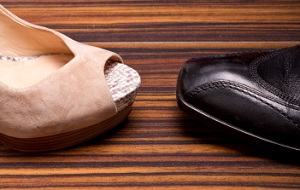 Recently I was walking through the grocery store, stopped in the deodorant section, and found myself dismayed. The women’s deodorants didn’t appeal to me at all—too pink, too delicate, too flowery-smelling—and I couldn’t bring myself to pick one up. Yet my other options, the men’s deodorants, were distinctly off-limits. What a fraud I would be, were I to even pick up one of these black, musky-smelling containers of sweat-defying deodorant. So there I was, stuck in the middle of a decision that seemed so silly and small yet so huge at the same time.
Maybe a similar monologue has run through your head, or you’ve heard a similar story from someone you know or love.
We live in a society that demands for us to choose, around every corner, what box to check. For those who have begun to understand that gender may be an ambiguous presence inside them, making sense of what’s true on the inside and what’s fabricated from the outside is a difficult process. Even coming to terms with that nagging sense that you may not be like most other people is a feat of grand proportion. If you’re reading this and this describes you, just know that you’re not alone—more and more people are discovering a similar thing about themselves.
Gender identity is a term that describes the way you relate to your gender most authentically. Gender expression is the way you choose to outwardly express this sense of identity (and note that these two things can be different). When we talk about gender identity, questioning, and the process of working through this, we’re talking about finding what’s true for yourself on the inside, reconciling this with your biological sex, and any expectations the outside world may have for your gender expression.
There are many different ways to identify and express yourself, and so finding what feels authentic for you can be a much larger process than simply determining whether you feel more male or more female. For many, ambiguity plays a central role in how they identify, and making a cut-and-dry statement about identity is nearly impossible. Others feel very clearly that their most authentic experience is to live as another gender.
Ultimately, it’s important to understand that gender is complex and cannot be reduced to two polarities. I’ve been exposed to different ways of visualizing gender, including as a spectrum, a continuum, and a web; all highlight the fact that there is a lot of space for you to explore in the realm of gender. Wherever you find yourself, if it feels right, is absolutely acceptable.
In my work with people who are exploring the complexity of gender in their lives, we often start with the question of where to be amidst this grand universe of gender. When do you feel most authentically you? What aspects of different genders do you like or dislike? Do you like being different, or would you rather be able to fit in more? Is androgyny appealing to you? Do labels help or hurt you? These are a launching point for many, many other questions and discussions surrounding the idea of gender and how it plays out in each individual’s life.
At different points along the process it becomes necessary to focus on the internalized sense of judgment, shame, or oppression often present in people questioning their gender identity. We all have it, no matter who we are, simply because we live in a society that generates phobia based on gender ambiguity. We have all been led to believe that there is something wrong if a person either can’t be coded into a gender, or if a person is clearly expressing themselves as the “wrong” gender.
As much as we intellectually understand that there is nothing wrong with these scenarios, something inside us wells up with a very uncomfortable and deep sense of shame that can be challenging to transform. Unraveling these feelings so that we can clearly see that it’s a product of faulty messaging and not about us, nor our fault, is paramount to developing a sense of empowerment.
If you’re experiencing some of this shame, or simply a feeling of wanting to keep everything hidden, what do you do?
- Shine a light into the dark recesses of your experience. Shame builds on itself when we don’t talk about things, so the simple act of sharing your story with someone you trust can be monumentally freeing. This experience can reinforce two things: that you’re a normal human who embodies basic goodness, and that you don’t have to feel overpowered by your shame. In essence, you have control.
- Talk with someone who can help you analyze the external and internal messages you’re holding about yourself. Our minds fill in the blanks with reasoning when we feel something but don’t know why. So when we feel put off because someone gave us a strange look, or because someone misgendered us, our minds go into a flurry of activity to help us make sense of our feelings. We come up with a reason for their reaction, and often times this reason is based upon messages we’ve encountered in the world. Often they were things we were led to believe early on in our lives about who we are, whereas other times the messages are things we’ve taken in as a belief because if we didn’t believe them, we would be too disconnected from society. Our psyches ultimately want connection, and things that threaten that connection are formed into aspects of the self that need repair. We assume that something needs to be repaired, or that there’s something wrong with who we are. In both cases, there is a message about the self that needs reframing, and this is where the deeper work of therapy can be really helpful.
- Practice being with these uncomfortable feelings. Again, this is where working with a therapist can be invaluable. We need to develop our own ability to tolerate the deep discomfort of shame, and until we do this we won’t be able to transform these feelings into something positive. Learning to tolerate discomfort is a subtle and sometimes slow process that requires compassion, patience, space, and the presence of someone who can be a helpful guide.
- From tolerance to acceptance. Gender roles and norms haven’t changed much in the last several hundred years, and some of this is attributed to brain-based gender differences. New research is being done on the brain structure of people who identify as transgender, and there is evidence to support the idea that the brain structure of transgender people is different than that of people who are cisgendered (people whose gender identity is congruent with their biological sex, i.e., a biologically born female who identifies as female). There’s also a growing camp of researchers who argue that culture and nurturing actually shape the way we behave. So, if we assume that both of these sides are valid, we can put to rest some of the questioning around why and concentrate on the idea that what’s right for you is right. Once we can accept this and discern fabricated ideals from true ideals, we can move through the world from an empowered place where being different than the norm is totally worth it. Being in this place is what connects us to others, and this connection is what effects change in society.
- Have a good vent about the superficiality of gender messaging in our society. Complain away! There’s a lot that needs changing, and at the very least you can look at all of these things with someone who gets it. Most people can relate with the feeling of being placed in a box that doesn’t fit who they really are.
 Last weekend I went to see the musical Wicked and found myself thinking about perception and self-acceptance. The show, based on a book of the same title, is the story of The Wizard of Oz as told from the perspective of Elphaba, the wicked witch of the west. From the beginning, the reimagining of this story questions the power of how we see things, and what happens when that perception is shifted. Our heroine is now the vilified underdog who was born with green skin instead of the sweet, young girl from Kansas.
In the play, the wizard himself speaks at great length about the power of perception. He acknowledges that the only power he really has is that other people believe he is powerful. His entire identity relies on the power of perception. The film version of the wizard is exposed by Toto to be just a man behind a curtain. Fallible and even a little bit tacky, his identity is based not on an internal sense of who he is, but on how others see him. When we actually meet the great and powerful Oz, he feels inauthentic.
We all have inside of us a “person behind the curtain.” For some, it’s an internal voice that doles out judgments aimed at others or internally at ourselves. From behind the curtain, we watch to see how people see us and if it matches the version of ourselves we want to put out into the world. Our internal wizard feeds on fear and anxiety. What will people think? How do I compare to others? It can be exhausting, working so hard to not feel rejection or judgment. In all of the hustle and bustle, it’s easy to lose track of our authentic selves.
The practice of radical self-acceptance provides an alternative perspective from which to view ourselves. It’s a way to interrupt the voice of self-judgment that comes from the “person behind the curtain.” Clinical psychologist Tara Brach writes that “wanting and fearing are natural energies. … But when they become the core of our identity, we lose sight of the fullness of our being.” (2003, p. 20) Brach points out that having feelings or fear, anxiety, jealousy, and envy is natural; it’s part of being human. Experiencing these feelings is not something that we need to be ashamed of. In fact, when we judge them and try to push them away, we can become stuck in a cycle of self-judgment. From a perspective of radical acceptance, internalizing these feelings into our identity can inhibit our ability to fully be ourselves, our ability to be authentic.
[fat_widget_right]
In the story of Wicked, Elphaba spends her life as an outcast because of her green skin. This experience of suffering impacts her view of the world and who she grows up to be. Because of her differences, Elphaba cannot live behind a curtain as easily as the wizard. By accepting herself and the things that have happened to her, she is an example of the practice of radical acceptance. Elphaba never tries to be perfect or to be someone who everyone likes; instead, she tries to be her whole self.
Accepting our whole selves is not a cop-out to justify not making changes in our lives. Carl Rogers points out, “The curious paradox is that when I accept myself just as I am, then I can change.” (p. 38) The act of acceptance is a powerful one, and a difficult one. The practice of radical self-acceptance acknowledges and holds lovingly our whole selves. This includes the parts of us that we don’t like, the parts that we’re ashamed of, and the parts that we don’t want to share with others. What if it were OK that we’re not perfect? What if we strove instead to be whole?
How a story is told changes the meaning of what we hear. In Wicked, we’re asked to see things from a different perspective, and we learn things about the villain in the story that change everything. Suddenly, good and bad are harder to determine. Real life is like that, too; it can be messy, murky, and beautiful all at the same time. In our own lives, we are the authors of the story. We get to decide how we want to see ourselves. Challenging our self-judgments and accepting all parts of ourselves can help us stay connected to our own authenticity.
Reference:
Brach, T. (2003). Radical acceptance: Embracing your life with the heart of a buddha. New York: Bantam Bell.
 A name, or identity, is a powerful thing. It is a descriptor that allows people to make quick judgments and assumptions about us. While we can understand the harm of assumptions, for the human mind it is a fast way to categorize a lot of information in a short amount of time. Assumptions also give us social context for the “rules” we need to interact with new and different people.
If you are at an event and you overhear someone talking about their upcoming church event, you might make an assumption about them. Based on that assumption you may speak differently to them. Perhaps you would avoid using curse words, for instance. Or, you may avoid interacting with them altogether.
Names and identities are our first impressions. How we dress, the way we wear our hair, how we behave, and even where we go all begins with our identity and what we call ourselves. Whether it is religion, sexuality, or gender, if it is part of an identity then it will influence how you present yourself to the world and how you interact with the world. The critical factors in creating an identity are that it describes who you are and it is self-chosen.
Identity Describes Who You Are
Our names and identities describe who we currently are. It is a present-day representation of how we perceive ourselves in this world. During my first day of high school, our gym teacher took attendance. She paused when she came to a girl who she had taught since kindergarten and asked, “Is it still Susie, or is it Susan now?” Upon the transition to high school and young adulthood the teacher recognized that the student may no longer see herself as a child and may prefer a different name to the one she previously used.
The name and identity that we have at 15 years old may be different than when we are 25 or 50 years old. As we grow, change, and have new experiences what we call ourselves may change as well.
Identity Is Self-Chosen
The second important point about our identity is that it is self-chosen. Other people may give us names (e.g. our parents) and labels (e.g. society) but an identity can only come from us. An identity represents how we perceive ourselves and how we want other people to perceive us. A label is a descriptor given to us by others based on their stereotypes of us.
My father is from Nigeria (African) and my mother is from Mississippi (African-American). I am truly African-American as a blend and product of them. There are many times when I publically call myself African-American, but I also call myself black, more privately, as that term resonates with me. For me, black describes the uniqueness of my culture: growing up American, but also as a first-generation American in many ways. Black describes the complexity of my experience in a way that African-American does not.
Depending on the situation and circumstance what we call ourselves may change. Perhaps our identity changes over time. What once resonated with us no longer does. Identity is a personal process and decision about what you call yourself. It is a process that is complex and full and fluid. It may change with time, or it may change with the environment or circumstance.
For example, I make a distinction between what I am comfortable with publicly versus privately. I am uncomfortable with some people calling me black and I use the term African-American publically. Similar to people who use familiar and formal names, different relationships have different ways of relating to each other.
Consider taking time to review your own identity. What names and identities do you have today? Is your identity based on your relationships (i.e. sister, partner, father, etc.)? Is it based on your work? Is it based on your religion? Or your sexuality?
What creates the identity that you have today? Is it different than it was 10 years ago? Do you think that it will be different 10 years from now? Share your thoughts and experiences with us; we want to hear from you!
 “The greatest hazard of all, losing one’s self, can occur very quietly in the world, as if it were nothing at all. No other loss can occur so quietly; any other loss—an arm, a leg, five dollars, a wife, etc.—is sure to be noticed.” ―Søren Kierkegaard
So often, people come to therapy seeking to “find themselves,” typically after a tragedy has occurred or some major shift has taken place in life and they realize they have somehow “lost” themselves along the way. But there is another way of losing oneself that is more insidious, more subtle, and can be even more damaging. This is what I call self-erosion.
[fat_widget_right]
Self-erosion occurs over a period of time and happens so quietly that the person doesn’t even realize it’s happening. Self-erosion happens when we are so busy doing other things—such as working, going to school, raising kids, and being in incompatible relationships—that we slowly lose touch with who we are. Our lives become so much about what we do, how we contribute, and what we offer the world that we lose touch with who we are. The tragedy of the self-erosion experience is that when we finally come face to face with the reality that we have no idea who we are anymore, we have no idea where to start.
You might be experiencing self-erosion if you have noticed any of the following:
- You don’t know what you like to do for fun.
- You can’t remember the last time you had a really good laugh.
- Your identity is tied to what you do (“I’m Jane’s mom,” “I’m a therapist,” “I’m a CEO,” and so on).
- You rarely take time for yourself.
If you are experiencing any of these, it is likely that you have lost touch with yourself. You may be very content with your life in many ways, but in some ways you find yourself longing for more. Whatever that “more” consists of is very personal and different for everyone, but the important thing is that you get back in touch with it.
Start with allowing yourself to do something you’ve always liked but don’t do often, whether that is taking a long, luxurious bath or going for a walk. It may be hiding away in a coffee shop and reading a book you have wanted to read but haven’t made time for. Maybe it will be going to Baskin-Robbins and trying every flavor until you find just the right one for you. Spend some time reflecting on all the things you used to do and greatly enjoyed, even when you were a child. You may find some keys to things that bring back the spark to your eyes, the joy to your living, and the passion in your existence.
The path to finding yourself does not have to begin at the crossroads of crisis; you can decide to own your life anytime you choose. I hope you choose today—this moment—to begin.
 I was talking recently with a friend about surviving the “terrible twos” and she made a joking comment about how she couldn’t wait to do it again in the teen years. That got me thinking about the parallels between those two phases of life and how we react to them in similar ways.
In part, the “terribles” are a social construct. We are primed to expect as parents that those will be the most difficult stages of our parenting. Popular culture proliferates this idea through television shows and movies. Parents share “war stories” of toddlers and teens acting out. That said, there is some truth to the hype. In both phases, kids seem to challenge authority, push limits, and demand control and privacy. Frustration tolerance (for both kids and parents) is low. Relationships can get strained. Parents may feel pushed away. I’ve heard parents refer to both stages of life as a time when some alien creature seemed to come in and take the place of a previously loving, cooperative child.
What we don’t really hear a lot about is the important function that those phases serve in our children’s development.
For both the twos and the teens, the testing of limits, challenging authority, and trying to establish control all serve important developmental functions. Psychologist Erik Erikson, in his eight-stage model of development, identified specific tasks we navigate as we grow and develop. He suggested that successfully mastering the skills in each stage leads to healthy growth and development, whereas not doing so leads to issues that could impede healthy development.
According to Erikson, toddlers around age 2 are tasked with developing independence and a sense of control over their bodies. Potty training is an important piece of this puzzle, as is learning to control elements in their environment. If the 2- to 3-year-old is able to develop a sense of his or her ability to regulate his or her body, to do things for himself/herself, and to feel confident in his or her ability to do both of those, he/she develops a healthy sense of autonomy. If the child is not able to, shame and doubt in himself/herself and his or her abilities may result. So, when that previously loving, snugly, even-tempered little one starts refusing to comply with basic requests, when there is a major meltdown of nuclear proportions due to Mom or Dad putting the sock on the wrong foot first, these are actually signs that your child is exactly where he or she needs to be.
For teens, the task is to develop a strong sense of individual identity. Teens are trying to figure out who they are and what their place in the world, independent of others, should be. Establishing an identity for most teens means defining what they are not. Usually, that includes establishing beyond a shadow of a doubt that they are not their parents.
Sometimes the only way for them to declare that they are their own selves is to pull away from their parents. They may challenge expectations and rules. It’s not unusual to see a teen reject an activity or a goal because he or she fears that it was what the parents wanted for him or her, not what he or she wanted. The drive to figure out who he or she is, what he or she wants, what he or she believes, and what matters to him or her are all important elements of this stage. Usually, this means challenging conventions, testing out different identities until he or she finds one that fits, and pushing against authority as he or she seeks independence. It can lead to withdrawal, mood swings, and parents not being sure which child is going to show up at the table for dinner.
These stages are important. These stages are hard—for both parents and kids. The distancing that can be necessary for independence and autonomy to develop can be really painful. We, and they, feel the loss keenly. The undercurrents of our conflicts usually contain the messages “I want my child back” for parents or “I’m feeling alone and scared” for kids. The behaviors might manifest differently (a toddler tantrum is very different than a teen tantrum), but our role as parents is the same.
Just when our kids are pushing us away the hardest is when it is most important for us to reassure them that we aren’t going anywhere. We need to give them space to explore, but not withdraw from them. They can push and yell and pout and cry and withdraw—but if we can be constants for them, if our parental love can be consistent, stable, and unconditional, we help them have the confidence to navigate these important tasks, and we help ensure that they will find their way back to us eventually.
How do we do this? One way is by allowing them more choices (though choices we can live with) and helping our kids accept the consequences of those choices. This can be as basic as letting the toddler choose which pants to wear (as opposed to whether to wear pants at all), or the teen to choose when to do homework (as opposed to not doing it at all). We give them increasing autonomy over choices in their world that are age appropriate, that are not likely to have dire consequences, and that give them a sense of having some control over their own lives.
The second task for us is to avoid judging their choices. Sometimes they have to learn the hard way. The teen who chooses to do homework late at night, falls asleep, and doesn’t finish does not need to be scolded for choosing poorly. Instead, we can ask how that worked for him or her, if there’s anything he or she wants to change, and how we can help. That keeps an open dialogue, conveys that we respect his or her ability to make good choices, and can reduce defensiveness.
It isn’t easy. Often, we’re feeling hurt and scared and helpless too. It helps to remember, though, that it isn’t about us. We aren’t terrible, mean parents because we made him or her wear shoes on the correct feet or held him or her to a curfew. The challenge is to hold boundaries with a firm but loving hand and not react to the testing of those boundaries with fear, anger, frustration, or sadness. If we respond to our children with consistency, patience, warmth, and compassion as they work through these stages, we might find that the twos and the teens aren’t so terrible after all.
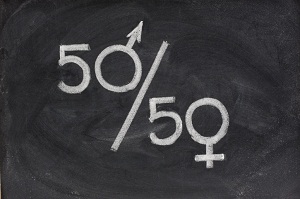 The state of Washington has been working for several years to change the language in its laws to gender-neutral terms. If legislation passes as expected, no longer will there be penmanship, freshmen, and watchmen. Instead, Washington will have handwriting, first-year students, and security guards.
Several other states have followed suit, with about half making moves toward gender-neutral language. Such language is often lampooned as politically correct and excessively burdensome, but research shows that language affects perceptions. Perceptions, in turn, affect behavior, and using gender-neutral language can be a meaningful move toward gender equality.
The Pervasiveness of Gendered Language
Gendered language is so common that it’s difficult for some people to even notice it. From job postings to laws, words such as policeman, councilman, mankind, and fireman abound. This omnipresence of gendered language may be part of the problem. When people stop noticing gendered language, it’s easier to think of male as the default. People who do a double-take when they see words such as policewoman or police officer may be doing so because there’s an incongruence between what their expectation of a police officer is—a male—and the possibility of a woman filling the role. The more frequently gendered language occurs, the more likely it is that people develop male as the prototype for a particular role.
This can affect a wide range of behaviors and lead to subtle biases. A company that posts a job seeking an ombudsman, for example, may envision a male in the role because of the use of gendered language. This can give women a slight disadvantage when they seek out the job because women applicants don’t completely match the hiring manager’s vision for a future employee. The person in charge of hiring may never even be aware of this subtle bias, but this doesn’t mean it’s not there.
Effects on Women
From the time they’re children, women experience an onslaught of gendered language, and this can subtly alter their perceptions of themselves. Even women report that their prototype of police officers and firefighters is male, and this may be due in part to gendered language.
Gender conditioning can affect the choices men and women make, and when women grow up learning that they’re not the ideal image of a particular role, their options are limited.
Male as Default
The use of terms such as mankind is particularly problematic because it treats men as the default. When “man” is used to refer to “all of us,” women are completely excluded, even if the term is intended to be gender-neutral. Thus, men are established as the norm against which everything is judged, and women are treated as deviant from this norm.
Real-life examples of this can be found in the long-time medical practice of using only male research subjects—a practice that has changed over the past few years.
Setting an Example
While gender-neutral language can seem frustrating and cumbersome at first, this is primarily because it’s new, not because there’s anything particularly onerous about its use. When states establish gender-neutral language, they help this language become part of the common lexicon and set an example demonstrating that gender-neutral language is just as easy to use as gendered language.
References:
- Carmon, I. (n.d.). The effects of gendered language in job ads. Jezebel. Retrieved from http://jezebel.com/5803238/the-effects-of-gendered-language-in-job-ads
- Lacorte, R. (2013, February 3). State moves toward gender-neutral language. The Seattle Times. Retrieved from http://seattletimes.com/html/localnews/2020282616_genderneutralxml.html
- Leaper, C., & Bigler, R. S. (2004). Gendered Language and Sexist Thought. Monographs of the Society for Research in Child Development, 69(1), 128-142. doi: 10.1111/j.0037-976X.2004.00283.x
 In a world saturated with sexual imagery, appeals to the effects of sexual attraction, and arguments about the way sex affects society, it is difficult for some people to believe that not everyone harbors an interest in sex or feels sexual attraction. But asexuality undermines common beliefs that sexual feelings are universal. While there have always been people who felt little or no sexual desire or attraction to others, the concept of asexuality is relatively new.
Is Asexuality a Sexual Orientation?
It’s easy to confuse asexuality with celibacy or discomfort with sex, but asexuality is distinctly different. While celibacy may be a choice or a result of life circumstances, asexuality is driven by a lack of sexual attraction. People who are uncomfortable with or intimidated by sex generally still feel sexual attraction, even if they are unable to act on it. Asexual people, however, are not interested in sexual relationships with other people. They may still form long-term commitments and get married, but these relationships are typically built around mutual respect and affection rather than sexual attraction.
Asexual people frequently are faced with intrusive questions about why they are uninterested in sex, and some people point to the fact asexual people may later identify as a different orientation or may begin identifying as asexual after engaging in sexual relationships. Asexuality advocacy groups, however, point out that this does not mean that asexuality is not a distinct orientation. Heterosexual people occasionally engage in homosexual relationships, and some people change their sexual orientation later in life. Asexuality seems to function like other orientations, and people who identify as asexual emphasize the importance of respecting asexuality as an orientation, not a mental “disorder,” temporary choice, or product of sexual trauma.
The Path to Asexuality
There is a lot of sexual pressure in our culture. Many asexual people begin to identify as asexual only after having romantic relationships and sexual experiences. Sometimes asexual people have sex to please partners they care about, perhaps because of social pressure or because they haven’t yet learned to consider their own desires. The common denominator among asexual people, however, is no desire for sexual relationships.
This does not mean that asexual people aren’t affectionate or that they can’t engage in romantic relationships. Some asexual people show affection to their partners by massaging them, kissing them, holding hands, or participating in other nonsexual physical practices.
Asexual people who discover their orientation while involved in a romantic relationship often have a difficult road to navigate. There are a variety of ways to deal with disparities in sexual interest, and while some relationships end due to asexuality, partners sometimes agree to arrangements that allow both members of a couple to express their sexuality in a way that is comfortable for them.
Differences in Feelings and Expression
Asexual is not a type of person, just as heterosexual and homosexual people don’t represent specific “types.” The expression of asexuality varies greatly from person to person. Many asexual people experience strong attractions to others and enjoy spending time with specific partners. However, their attractions aren’t fulfilled by sexual interactions. Others experience regular sexual arousal, but feel no need to act on that arousal. Some asexual people find sex extremely off-putting, while others are simply disinterested.
References:
- Gordon, O. (2012, November 11). The moment I realized I was asexual. The Telegraph. Retrieved from http://www.telegraph.co.uk/women/9651265/The-moment-I-realised-I-was-asexual.html
- Overview. (n.d.). The Asexual Visibility and Education Network. Retrieved from http://www.asexuality.org/home/overview.html
For decades, research addressing the mental health of gay men has grouped bisexual and gay men together. This is a disservice to the LGBTQ community, and to bisexual men in particular. There are significant differences in behavior, identity, and attractions between gay and bisexual men. While gay men are attracted to other men and identify as homosexual, bisexual men can be attracted to either sex. And although it has been shown that disclosure of sexuality is beneficial to mental health for gay and bisexual men, bisexual men are more likely to conceal their sexuality than gay men. Therefore, they report lower levels of psychological well-being. This could be due to the fact that many bisexual men are in committed relationships to women and are torn between their desire for that relationship and their attraction to men. Or perhaps bisexual men are at war with their own homophobia.
To explore why bisexual men do not reveal their sexuality as often as gay men, Eric W. Schrimshaw of the Department of Sociomedical Sciences at the Mailman School of Public Health at Columbia University in New York recently conducted an online survey of 203 bisexual men. He asked them about their levels of social support, mental health, internalized homophobia, and general demographics. He found that the men with the highest incomes were most likely to conceal their sexuality. This was also the case for men in committed relationships with women or those who identified as heterosexual. Concealment was also associated with more frequent female sexual encounters for bisexual men. Overall, the men that concealed their sexuality had poorer mental health than those who disclosed their sexuality.
Schrimshaw believes that these findings underscore the delicate nature of sexuality for bisexual men. Internalizing homophobic beliefs and lack of emotional support may be more dangerous to the psychological well-being of bisexual men than concealment alone. However, concealment can indirectly affect those domains. Although disclosure appears to be beneficial for gay men, this may not always be the case for bisexual men. Rather than interventions that focus on encouraging men to disclose their bisexuality, “Interventions addressing concerns about concealment, emotional support, and internalized homophobia may be more beneficial for increasing the mental health of bisexual men,” said Schrimshaw.
Reference:
Schrimshaw, E. W., Siegel, K., Downing, M. J., Jr., and Parsons, J. T. (2012). Disclosure and concealment of sexual orientation and the mental health of non-gay-identified, behaviorally bisexual men. Journal of Consulting and Clinical Psychology. Advance online publication. doi: 10.1037/a0031272
Sexism is overtly exhibited in nearly every aspect of modern society. Women and adolescent girls, in particular, are especially likely to experience the deleterious effects of sexism. Whether it is a model in a magazine, an actress on television, or a mannequin in a store window, images of how women should look, dress, act, and even react are everywhere. Adhering to society’s unrealistic and often varied models of the ideal woman makes it difficult for women to find and accept their own identities and bodies. In fact, the sexist beliefs associated with women, both negative and positive, have been linked to numerous physical and mental health issues for women, including depression, anxiety, binging, purging, and anorexia. Young women are also heavily influenced by the opinions and judgments of those closest to them, including their family members, friends, and coworkers. Understanding how the beliefs of others and internalization of those beliefs affects a woman’s body image is necessary in order to help women overcome any challenges related to self-worth, self-esteem, and positive self-image.
[fat_widget_right]
Debra L. Oswald of the Department of Psychology at Marquette University in Wisconsin wanted to explore the negative and positive (hostile and benevolent) sexist attitudes toward young women and how these attitudes affected their beliefs about their own body images. In one study, Oswald assessed how a father’s benevolent sexist beliefs, those that positively affirmed the traditional female role and appearance, shaped daughters’ self-image. In a second study, Oswald looked at how subtle and overt hostile sexism affected self-image. She found that overall, hostile sexism from peers, friends, and family members led to negative body esteem. However, hostile sexism from parents did not. Oswald also discovered that a father’s benevolent sexism was directly linked to positive body esteem in daughters. This finding is concerning because it suggests that although young women may feel good about themselves when they conform to traditional female roles, when they step out of those roles, they may be met with hostile sexism which could decrease their sense of self-esteem and negatively affect body image. The results of this study also imply that sexism contributes greatly to a woman’s physical and mental self-image. “We hope this research highlights the complexity of these cultural beliefs and encourages researchers and clinicians to take this wider cultural context into consideration when examining and treating women’s body esteem issues,” said Oswald.
Reference:
- Oswald, Debra L., Stephen L. Franzoi, and Katherine A. Frost. Experiencing sexism and young women’s body esteem. Journal of Social & Clinical Psychology 31.10 (2012): 1112-137. Print.