 We all, at one time or another, use food for soothing. Eating is a pleasurable experience. The problem lies in using food for comfort rather than dealing with our emotions because food only provides a temporary escape only to have emotions resurface again and again. For may people, they are taught from a young age that emotions are not meant to be expressed, but just dealt with on their own and to move on with a brave face. This is, in most cases, not done in malice, but for the sheer fact that we are uncomfortable with emotion. We are uncomfortable with our own emotions and certainly more uncomfortable with that of others. This begins a dangerous cycle, especially if you are trying to manage your weight. When we eat to soothe feelings while trying to lose weight, it begins a cycle of shame, guilt and self-loathing that pushes us further into the emotional abyss. So, let’s HALT the BS!
H- Hungry. If you are hungry, by all means eat. Choosing a balanced meal or snack rather than something high in fat or sugar, will be more satisfying.
A- Angry. Deal with the anger directly, if at all possible. Otherwise resentment will build and become overwhelming. If it isn’t possible to deal with the anger in a direct or healthy way, find a physical outlet like a walk.
L- Lonely. Engage in social activities. When we are lonely, some people have the tendency to withdraw, which just makes the loneliness worse. Call someone or get out of the house even if you don’t have anyone to go with you.
T- Tired or Thirsty.
- Tired- Get plenty of sleep on a regular basis. If you are tired and aren’t able to nap, get moving. The more physical activity you have, the more energetic you will feel.
- Thirsty. I add another T here because dehydration often masks itself as hunger. Make sure you are getting plenty of water; yes, plain water every day.
B- Bored. If you are bored, try the distraction technique. Find something, anything to occupy you for 15 minutes and get you away from food. The likelihood that you will still want to eat after 15 minutes greatly diminishes. If at that point, you still want to eat, go ahead, but make it a snack, not a treat.
S- Stressed or Sad.
- Stressed- So often, the stress and anxiety that accompany stress are soothed greatly by food. The problem is, when you stop eating, the stress comes back. Find something soothing to cope with stress that does not involve food like reading, a bath, talking to a friend, etc.
- Sad- I add another S here because this is a big one. It is more difficult to cope with sadness than some of the other emotions. Try any of the other coping skills discussed like spending time with others and engaging in self-nurturing activities. In winter months, make sure you get enough sun exposure. Incorporating exercise and laughter can also be helpful. If the sadness continues, seek out a counselor in your area.
While this can seem like an overwhelming pattern to change, take it one step at a time. Even the smallest changes can add up. Just remember that unless you address each of these issues directly, you will continue the same cycle. The more you practice the new skills, the more successful you will be in changing your patterns. It is about progress, not perfection!
Related Articles:
Eating Disorders and the Internet
The Role of Self-Acceptance in Eating Recovery
Vulnerability and Eating Disorders
 One of the most prevalent and harmful misconceptions about eating disorders is that they are all about vanity. Many people believe that sufferers are vain, beauty-obsessed brats that could easily recover if they’d simply stop looking in the mirror and get over their need to be pretty. This isn’t even close to the truth. As someone who has been personally offended by this belief, I wanted to share my story and my thoughts to hopefully shed some light on the vanity myth.
Before anorexia took hold of my life, I believe I had a pretty unusual level of self-esteem when it came to my body and looks. Sure, I had my days when I scowled at my reflection. They often occurred in dance class when I pranced around in my leotard amidst a room of mirrors. With a naturally lean frame and a fast metabolism, I was used to eating what I wanted and easily keeping in shape with my hobbies and lifestyle. I had been called skinny my entire life, and I actually hated it because it was usually said with a derogatory tone. In fact, there were times were I actually felt guilty about being thin and liking the way I looked. How messed up is that? It was so rare among my peers for someone to be satisfied with their looks and to truly love their body that I felt completely awkward and tried my best to always avoid the subject.
In college, after a series of unfortunate, traumatic events, everything changed. Within a few months I went from having good self-esteem and body image to completely loathing my entire being. How did this happen? Nobody had called me fat, I was never teased about my looks, and I didn’t get the sudden urge to pursue a runway career either. No, this wasn’t about beauty. This wasn’t about being thin. It was about becoming trapped in a “perfect storm.”
Eating disorders are about control, fear, anger, punishment, avoidance, rebellion, needs, security; I could go on and on. They don’t instantly develop over night. The circumstances have to be just right, just like the circumstances of nature that contribute to the development of a “perfect storm,” where all the elements of location, air temperature, wind speed, and direction, levels of condensation, and evaporation. For an eating disorder to develop, it usually takes a vulnerable personality, usually one with heightened emotional sensitivity and perfectionist tendencies. It often involves one or several difficult life changes, like abuse, the death of a loved one, or the start of a new school. Finally, the beauty-obsessed society we live in, the one that values physical appearance more than anything else, creates the recipe for disaster.
To the person with an eating disorder, many of these factors are not apparent. That’s why, when you ask them what they’re feeling, most often the answer is,”Fat.” When you explain to them that fat isn’t a feeling, the next answer is most likely, “I don’t know what I’m feeling.” This discrepancy is where the vanity-myth is born. The person with the eating disorder focuses on their body in order to avoid focusing on all the deep, dark, seemingly uncontrollable and overwhelming feelings and circumstances that lie beneath the surface. The endless pursuit of beauty becomes the scapegoat for dealing with society.
What is beauty to you? Can you even put it into words? The first definition that appears in my dictionary states that beauty, as a noun, is “a combination of qualities, such as shape, color, or form, that pleases the aesthetic senses.” Following this is the definition for the adjective version: “denoting something intended to make a woman more attractive.” Hmm. More attractive than what? More attractive than she already is? More like the air-brushed celebrities that you see in magazines? It is no coincidence that the number of eating disorders is rising drastically. The idea of the perfect body is being forced upon us earlier and earlier in life. While capitalizing on the beauty within, instilling body-appreciation at any size, and drastically altering the size-zero ideal won’t eliminate eating disorders, it is certainly a step in the right direction.
 I was thinking about the phrase, “Food is love”; thinking about how this idea came to be. I often hear people say that food is a means by which their mothers or grandmothers expressed their love for family members. Sometimes their stories conjure images of warm kitchens filled with wonderful smells and family members connecting over delicious meals. But sometimes they’ll tell me things like, “She would keep putting food on my plate, even after I said I was full,” or, “It would hurt her feelings if someone didn’t eat everything she gave them.” When I hear things like this, I think not of love, but of boundary violations and invalidation of the eater’s feelings and needs.
To consider the notion of food as love, it’s important to clarify what love is. I like the definition M. Scott Peck offers in his book, The Road Less Traveled. Peck defines love not as a feeling, but as “the will to extend one’s self for the purpose of nurturing one’s own or another’s spiritual growth.” In other words, love is the willingness to go beyond our comfort zones in service of what is best for ourselves or another.
From this perspective, we see how a caregiver loving a child instills in that child the awareness of his or her own worth, value and lovableness. When we are young, we can’t feed ourselves. We are fed by our caregivers, and the act of being fed, of receiving physical nourishment from our caregivers, is entwined with receiving emotional nurturing. If, as infants, our signs of hunger are recognized and we are put to the breast or cuddled with a bottle, our caregiver gazing into our eyes, we learn from the beginnings of our lives that our needs matter, that they are being seen and heard and honored and that someone is looking out for us. The relationship between feeder and eater is tender and sweet. Our caregivers are feeding us, whether or not it’s convenient for them, because we need nourishment and our needs matter. Being fed is an act of being loved.
As we grow, we learn words for the experiences of hunger and fullness. The transaction between child and caregiver is a dance that shapes our awareness of being seen and heard. If we say we are hungry, and then we are fed or are gently told that dinner will be soon and we’re given a snack to tide us over, and if we say we are full and are validated in stopping eating, our trust in our perceptions is strengthened. If we are made to wait until mealtime regardless of how hungry we are, or if we are told to clean our plates even after we are full, we can construe that our internal experiences of hunger or fullness are wrong, unimportant, or even nonexistent.
If we are raised by someone who uses food to express her caring for us (and I say “her” because it’s usually a woman in this role) by feeding us without regard for how much food we actually need, it can become easy to confuse the overriding of our bodies’ signals that we are full with being loved. We might confuse focusing on the feelings of the person feeding us rather than our own needs, with love. We may find ourselves in relationships as adults in which we subjugate our own needs to the other person’s feelings.
As we get older and become more able to fend for ourselves, we learn to feed ourselves, perhaps first with snacks, and later with meals. We develop our own internal relationships between the “feeder” part of us and the “eater” part of us. If we see eating as a relationship between these parts of self, one in which we express to ourselves the importance of our health and well-being, then the “feeder” part will be attuned to the “eater” part, noticing our hunger and attending to our nutritional needs. If eating is about soothing ourselves emotionally or molding our bodies into a certain size or shape, then the “feeder” part is operating in response to cues other than our bodies’ needs, and the “eater” part can come to desire food for reasons other than physical sustenance.
Our relationships with food offer important clues to the nature of our relationships with ourselves, and changing our relationships with food can be instrumental in changing our relationships with ourselves. Feeding ourselves as a nurturing parent would a child, honoring our needs for nutrition with compassion, attending to both our emotional needs for comfort and soothing and our physical needs for nourishment, can communicate to ourselves that we deserve time, attention, and care, whether we believe it or not. And the more we do it—the more our “feeder” parts tend to our “eater” parts in this way—the more we’ll believe it. If food is love, then eating is the most important thing we do.
 Let’s face it, hardly anybody has a completely healthy relationship with food. Unfortunately for our society, disordered eating is the norm, whether it’s crash dieting, stress eating, or whatever else you want to call it. Because of this, it can be really hard for someone in danger of developing an eating disorder to recognize the slippery slope of the diet they’re on until they’re well on their way down. Clearly, not everyone who diets develops an eating disorder, but research does show that 35% of occasional dieters become pathological dieters, and as many as 25% of those diets will progress into full-blown eating disorders. So when does dieting become dangerous? What’s the difference between a diet and an eating disorder? Sometimes the line is an awfully thin one.
A typical diet begins with a longing to lose weight. Often, this longing is coupled with a genuine wish to improve overall health and nutrition. A typical diet ends when either the weight goal is achieved or the dieter stops due to some inadequacy of the regime—too many restrictions, too few calories, etc. An eating disorder often begins the same way—with a longing to lose weight. In fact, 80% to 90% of eating disorders begin with a diet … but that diet never ends. The transition from diet to disorder has no one purpose and no one cause.
While diets are about food and weight, eating disorders become much, much more than that. Food and weight become all-powerful, and people with eating disorders use both in an attempt to better their lives (by gaining a sense of control, numbing painful emotions, earning approval or acceptance, etc.). Eating disorders do not end when a weight goal is reached because a new one will always be set. One begins to believe and behave as if “the perfect body” is attainable, and will strive for this allusion no matter what. Over time, a person’s self-esteem and general outlook on life become dependent on weight and appearance. At that point, nothing else matters.
A common danger in assessment by a professional not familiar with eating disorders is that too much emphasis is placed on a person’s weight and other physical symptoms. While these factors are often good indicators of a problem, they are not always “alarming enough,” if present at all. Equally important, if not more important, are the symptoms that cannot be seen—the symptoms in the mind. The psychological disturbances that both cause and perpetuate eating disorders are often the most difficult to treat. It’s important to understand that although someone does not fit all the criteria for a specific eating disorder, such as anorexia, bulimia, or compulsive overeating, they can still be doing a great deal of damage to their body, mind, and soul.
In a world where not being on a diet is abnormal, and restraint is a sought-after skill, being healthy and loving your body can almost feel awkward. I’m reminded of a scene in the movie Mean Girls when new girl Cady enters public school for the first time after growing up in Africa for 16 years. While her new friends nitpick their appearances in the mirror, Cady muses to herself, “I used to think there was just fat and skinny. Apparently, there’s a lot of things that can be wrong with your body.“ It’s an unfortunate message, but a true one. The body-confident girls and guys are few and far between.
What about you? Are you balancing the thin line between diet and disorder? Do you feel preoccupied with food, weight, calories, or a desire to be thinner? Do you feel the need to rigidly control your food intake or exercise schedule? Don’t let these obsessions rob you of another minute, day, or year of your life. Remember, you’re most beautiful when you are confident and accepting of yourself, just as you are. Then and only then will you be able to make positive, lasting changes in your life.
 I am half way through the year-long Level 1 of the Internal Family Systems (IFS) training. IFS is a psychotherapeutic modality used for helping people and their therapists understand and solve the problems that bring them to therapy. And IFS helps make sense of the seemingly irrational world of eating disorders. I’d had some exposure to and experience using IFS prior to enrolling in the training, but the training is giving me a broader and deeper understanding not only of IFS, but also of how we humans work. I’m finding the process exhilarating!
IFS has little to do with families in the conventional sense. It’s based on family systems theory, which is based on general systems theory. Systems theory is a way of conceptualizing and understanding how living things work via understanding the interdependence of living things, e.g., an ecosystem. Any given group of people unconsciously operates according to the rules that govern all systems. Family systems theory, the basis of my field of study and licensure, provides a means of understanding how and why people develop certain problems. The problem is regarded as a symptom of imbalance within the family system, and an attempt by the system to correct that imbalance, given the circumstances. IFS, in turn, focuses on our internal systems, which operate internally as a family operates externally and as do all larger systems.
The basic concept of IFS is that we all have many different parts of ourselves. These different parts have different perspectives and thus often have different beliefs and goals. Poet Walt Whitman was referring to this innate multiplicity when he said, “Do I contradict myself? Very well, then I contradict myself, I am large, I contain multitudes.”
How often have you found yourself saying, “Part of me knows I should do ‘X’, but another part of me wants to do ‘Y’,” or, “Intellectually, I understand ’Y,’ but emotionally, I feel ‘Z’.” This is our instinctive awareness that we don’t operate as a unified whole. Yes, we contradict ourselves, and this is normal!
There are several different models of therapy that involve working with different parts of self. IFS focuses on the naturally protective function of parts of ourselves, and what those parts are trying to protect us from. There is no such thing as a bad part. When I first learned about IFS, this idea resonated with me because many years ago, long before I knew that I would one day be a therapist, I was seeing a therapist who said, “I believe that people are self-protective, not self-destructive.” I learned from her that even when we do things that are bad for us, our original intent is to protect ourselves from emotional discomfort or pain. And when it comes to disordered eating, protecting one’s self from emotional pain becomes the number- one priority. Undereating, overeating, purging, exercising compulsively—these behaviors are intended to increase pleasant feeling states or decrease unpleasant ones. The longer one relies on these behaviors, the more complicated things become, because more parts get involved.
But where does this pain come from? When someone with anorexia feels anxious if she eats a normal amount of food, how did she come to acquire this anxiety? She would say that she is worried that the food is turning into fat, or that she’ll never stop eating. But why would she worry about such things, so much so that she denies herself the necessary food for her well being? Undereating is a behavior of a part that wants to protect her from the anxiety, no matter the cost to her health. What this part doesn’t know is that the anxiety comes from another part, and that the part that holds the anxiety is probably a younger part, a part that has memories of and emotions from experiences of long ago. For example, this part may hold memories and pain from things like hurt and shame due to being rejected by other kids, or of fear of not being loved by a parent because the parent put so much emphasis on her getting straight A’s that she came to believe that this was what made her loveable, to experiences involving verbal, physical or sexual abuse. These parts are referred to in IFS as “exiles,” and it’s the job of protective parts to keep these younger parts, well, exiled.
This is why simply trying to change eating behaviors won’t work in the long run. As long as the internal system is arranged in such a way that some parts are keeping other parts exiled in order to protect the person from pain, any behavior changes will be superficial and temporary. Some protective parts are really good at making rules and like to be good students and will follow an eating plan and work hard in therapy, but eventually, exiled parts will get triggered and the parts that engage in eating disordered behaviors will come to the rescue.
So, how to get out of this predicament? IFS also focuses on our true, core Self, which is not a part, but rather an essence. And distilled to its simplest form, IFS says that healing comes when we connect to parts of ourselves from Self. Self is, by nature, compassionate and curious and non-judgmental. When protective parts are seen and heard by Self, they can lead us to the exiled parts. When exiled parts are seen and heard by Self, they can get unstuck from the past and healed. And a trained therapist can guide the process of connecting someone with eating problems to his or her disordered eater parts from his or her Self, engendering not just behavior change, but true healing. Ultimately, all parts will reside with one another and Self in harmony. Yes, we are multitudes!
 Imagine a life where you are continually tormented by an inner dialogue that screams of your worthlessness, your hideous appearance, and your pitiful, meaningless existence. Imagine a life where you mange your day solely around food, either by avoiding it, getting rid of it, or consuming as much of it as you can. Imagine spending your birthday in a psychiatric ward, perhaps too sick and too weak to even stand up on your own. And now imagine that there is a very strong part of you that wants to be worse. This is the horrible trap of an eating disorder.
One of the most difficult aspects of eating disorder treatment is the mind-boggling fact that those suffering would often do almost anything to cling to their disease. As much as part of them wants to be happy and healthy and free from the constant torture, there is another part, often referred to as “the eating disorder self”, that convinces the sufferer that they will be nothing without it. When your eating disorder becomes your identity, medicals markers used to gauge its severity, such as amenorrhea (absence of menses in women), or the body mass index scale, are looked upon as levels of achievement. When you’re trapped in this mindset, worse really does seem better.
Throughout the years that I struggled with anorexia, I used the presence of my period as a way to prove to myself that I was still safe, that I still had weight to lose. Some individuals will stop menstruating fairly quickly after substantial weight loss, others, myself included, can maintain dangerously low weights yet continue to menstruate. I remember my therapist and my doctor both diagnosing me with anorexia nervosa, but I had seen and memorized what the Diagnostic and Statistical Manual of Mental Disorders said about anorexia. I had to lose my period to be “officially” classified. The diagnosis went in my charts nonetheless. Yet, I had this strange longing to fit the bill, to really be able to call myself anorexic, because it meant that at least I was doing something right. If I failed at everything else in life, at least I would master my eating disorder. I would be the best anorexic I could be.
I wanted to be the thinnest in the room, the sickest, and many times over I did hold that title. It became my prize, my sense of accomplishment. I became quite accustomed to the label “skinny, blonde girl.” Anorexia became my identity and when recovery (and the inevitable weight gain) threatened that, I would panic and slip right back into the disordered behaviors. Who would I be without it? I needed this disease to survive, or so my eating disorder constantly told me.
It is a very sick way of thinking, I know, but I also know that I was not alone in thinking. I have spent a great deal of time among other eating disordered individuals, and there is a definite cognitive pattern when it comes to symptoms and diagnostic labels. In short, it seems the worse you are, the better you feel. I can’t count how many times I’ve heard people with bulimia wish they had the “control” of their treatment peers with anorexia, and those who compulsively overeat long for the ability to easily purge like those with bulimia. There is an unfortunate perceived hierarchy among patients, with the “purity” and “cleanliness” of anorexia appearing to outrank the “hedonistic” behaviors of bulimia or compulsive eating. But in reality, they are all equally serious, and all deadly. Whether you’re starving or stuffing or purging, your eating disorder is a distraction, a desperate attempt to control the un-controllable.
Eating disorders, in general, are very control-focused. Whether it’s an attempt to control anxiety, or anger, or relationships, they trigger and feed off of the competitive and perfectionist personality traits that many sufferers share. I thought that if more control equaled more medical complications, so be it. But the crux of the matter is that sufferers inevitably reach a point, often quite quickly, where the lotus of control shifts completely out of their hands, and into the hands of the eating disorder.
It’s too hard to battle an eating disorder alone. Reaching out is the first step in successful recovery. Share your secret with a trusted friend or family member. Even that act of sharing a secret can often relieve some of the pain. Seek professional help. There are people who have been in your shoes and are willing to guide you out of the darkness. Hope is real. Recovery is real.
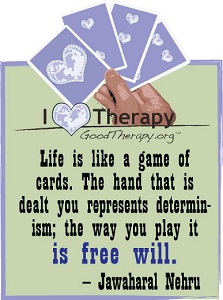 One of the cornerstones of Acceptance and Commitment Therapy (ACT) is the concept of workability. The aim of ACT is for our clients to create a rich, meaningful, and vibrant life. Workability is how we determine whether a client’s behaviors are serving that end. Usually, people know when their behaviors are not working for them, but because they are often fused with their thoughts, they may have a hard time acting any other way. Instead of bringing them closer to the life they want, their behaviors are more or less a means of struggling with or avoiding painful thoughts and feelings. To demonstrate how this might appear in a therapy session I’d like to present the case of Samantha (Of course names and details have been altered to protect confidentiality):
Samantha is in her late twenties, single, no children, has her own apartment in a suburban neighborhood, a cat, a steady job for the last year and a half, an unused gym membership, and hasn’t been on a date in four years. She complains about her female co-workers being “fake” and “slutty” yet she secretly wants to be like them and to be liked by them. Any time an opportunity arises where she is invited to attend a happy hour with work people, she has an excuse not to attend. She then goes home and cries before opening a pint of ice cream and watching pre-recorded episodes of “fill-in-the-blank-reality-television.” (more…)
Vulnerability is an emotion that affects individuals suffering from eating disorders in a multitude of ways. It is the opposite of being in control and a state of mind not particularly comfortable for people suffering from this mental health issue. Feeling vulnerable is an uncomfortable feeling for many of us, but even more so for individuals suffering from an eating disorder. Not feeling in control often acts as a trigger that begins the destructive cycle of disordered eating. A trigger is any input that a person receives; either from their environmental or an internal thought that creates an uncomfortable feeling.
It is important to note, for these individuals their eating disorder is what allows them to cope with emotions. As a whole, individuals suffering from an eating disorder tend to view things in black and white terms; meaning their behaviors and thoughts are either right or wrong/good or bad. This strict thinking pattern leaves little room for ambiguity. Ambiguity is not only part of being vulnerable, but also part of everyday life, so it is important to learn how to navigate through it. (more…)
 Recent interest in sexual addiction has drawn attention to a variation called sexual anorexia. Also called sexual “acting in,” sexual anorexia is characterized by a severe aversion to sexual contact and the obsessive avoidance of sex. Other signs of sexual anorexia include:
- Shame and loathing after sex
- Rigid, judgmental attitudes about sex
- Excessive fear about sexually transmitted disease
- Body distortion
- Obsessive self-doubt
- Self-destructive behaviors to limit, stop, or avoid sex
- Episodes of sexually acting out or sexual “binges”
Deprivation creates the illusion of control. In food anorexia, the person refuses to eat, controlling exactly what goes in her body; in sexual anorexia the person denies access to sexual penetration and emotional contact. Convinced that “no one can hurt me if I don’t let them in,” sexual anorexics experience an emotional wasting away as they become increasingly isolated.
Much like bulimics, sexual anorexics may enact a “binge and purge” cycle. Individuals may go through periods of extreme deprivation of sex followed by promiscuous sexual behavior. Sexual addicts, in an attempt to control their compulsive behavior, may even enforce an anorexic phase—born out of self-hatred, or as punishment or atonement for sexual acting out. In Ready to Heal: Women Facing Love, Sex, and Relationship Addiction, Kelly McDaniel writes, “Sexual anorexia is an extreme aversion to closeness, and sexual addiction is an objectification of the other person that makes closeness impossible.”
Other compulsive deprivation behaviors such as hoarding, being a workaholic, debting, and saving may accompany sexual anorexia. Sexual anorexics also may be overweight or obese, as eating can soothe their anxiety and protect them from the advances of others by making them appear sexually undesirable.
People who are this terrified of human contact can have sustained serious wounds of abuse. This could be an obvious trauma, such as sexual abuse by a parent or caretaker, or by the more covert injury of a negligent, disinterested parent. Infants and children need consistent attention and love from their caregivers, and the absence of these can be just as damaging as abuse. It is particularly devastating when a child, wounded at the hands of a parent, realizes there is no one to turn to for solace. This corruption of trust and safety teaches the child to fear their own need to be connected to others.
People with sexual anorexia and other intimacy issues long for affection, but they have learned through trauma that they are undeserving of love and that others cannot be trusted. Because of how horribly they have been wronged by others, rigid isolation appears to be the only way to feel safe.
Reaching out for help can be very difficult for someone who has been unable to depend on others, but it is essential for recovery. Support groups can help a person to feel less alone and can strengthen his or her capacity for intimate connection with others. Individual therapy can help people with sexual anorexia explore their pain and mistrust of others, and can create a corrective, caring relationship with a stable other.
Further reading:
Carnes, Patrick. (1997). Sexual anorexia: Overcoming sexual self-hatred. Center City, MN: Hazelden.
Katehakis, Alexandra. (2010). Erotic intelligence: Igniting hot, healthy sex while in recovery from sex addiction. Deerfield Beach, FL: HCI.
McDaniel, Kelly. (2008). Ready to heal: Women facing love, sex, and relationship addictions. Carefree, AZ: Gentle Path Press.
 I often say, when explaining eating disorders, that someday I’m going to invent the Eating Disorder Board Game. I certainly don’t mean to make light of eating disorders. They are serious conditions that cause tremendous pain to those to have them and to their loved ones. I am a big believer in analogies’ abilities to explain thoughts and behaviors involved in eating disorders.
The Eating Disorder Board Game is one that I use to illustrate one of the salient issues involved in an eating disorder. Arrested psychological development is common in young people who develop eating disorders. Imagine a board game that begins at birth. Each player starts with a given temperament, or set of genetic markers that give them certain characteristics, and a given degree of emotional sensitivity.
As they move around the board, they learn, via the spaces they land on and the cards they draw, about their family environment and life circumstances. They can receive what they need in order to move on to the next stage of development. Things required to move to new spaces or stages symbolize secure infant attachment, attunement, protection, unconditional love and acceptance, caregivers who put their children’s needs ahead of their want.
However, they may not get all of those things, or some are cancelled out by other factors, such as traumatic experiences. So they may have to go back several spaces or lose turns. Players with certain sets of factors are statistically more likely to develop eating disorders.
Eventually, players get to adolescence and then the launching phase of life, wherein they are ready to leave home and move out into the world. At this point on the board there is a special feature. You know those circles of spaces on some board games where you get stuck going round and round while the other players continue around the board, and you have to roll exactly a certain number in order to get out?
Well, in the Eating Disorder Board Game, the majority of players who acquire eating disorders get stuck in that circle. What this illustrates is one common function of an eating disorder: enabling a person who has been deprived of what they need to develop. It substitutes real emotional nourishment in order to navigate the rocky transition from childhood to adulthood to do the impossible: to continue to move forward in life while barely progressing to psychological and emotional maturity.
Eating disorders often emerge in middle and high school because one’s psychic infrastructure—a sense of self, competence, and worth, a toolbox of interpersonal and emotional coping skills —isn’t adequate to support the weight of the demands of this stage of development. At this juncture, life gets much bigger as peers take on greater importance and family takes on less. Kids without a solid infrastructure are vulnerable to developing maladaptive coping mechanisms to help them organize the muddle around or within themselves.
Body and weight can become easy, logical focal points for a tweener or teenager who hears self-deprecating talk about being “so fat” and stinging criticism from other kids who are something other than slender. The malleable teenage brain, still developing its frontal lobs, is at risk for making decisions that don’t align with wellness when under social pressure. Arrival at the conclusion that appearance is the ticket to being liked, and to be fat leads to becoming alone and unloved may ring truest for their circumstances at the time.
In the Eating Disorders Board Game, players whose nature is emotionally sensitive or whose genetic makeup predisposes them to anxiety, to poor self-esteem, to a high degree of sensitivity to perceived rejection, and to perfectionism are vulnerable to eating disorders. All other vulnerabilities are enhanced in children whose family provides, as the creator of Dialectical Behavioral Therapy (DBT) Marsha Linehan describes it, an “emotionally invalidating environment.”
An emotionally invalidating environment can comprise a variety of situations. Parents who are absorbed with chronic illness in the family, either of one parent or another sibling, may distribute attention unequally throughout the family or household. If both parents grew up in families that were emotionally invalidating, they may repeat the pattern of their childhood home. If neither parent was born with or developed a high level of emotional sensitivity, they may not see or understand the needs of the emotionally sensitive child.
An emotionally invalidating environment can also involve parents whose behavior is overtly harmful to their child. If one or both parents have problems with an addiction of some sort, life at home likely mirrors the chronic illness scenario with added accountability and security issues. If one of or both of the parents are verbally, physically and/or sexually abusive, and the child is left without a protective guardian between the two, this forms an emotionally invalidating environment as well. Addiction and abuse have a wide variety of relationships in families. They may combine in a variety of ways to create different degrees of safety and validation for children.
The range of factors that can make up an emotionally invalidating home environment is broad. The less obvious these factors, the more puzzling the origins and function of an eating disorder. But the presence of an eating disorder more often than not indicates the absence of some crucial ingredients in the child’s infrastructure.
Fortunately, in the Eating Disorder Board Game, when a player stuck in the circle at the border of adolescence and adulthood rolls the right number on the dice he or she exits the circle on the Road to Recovery. This road can be long and filled with setbacks. But is paved with lots of help from skilled professionals, and self-help programs and literature.
The player is accompanied by many other pieces on the board: loving family, supportive friends, and other players making their way along. There are no losers in this game, and it doesn’t matter who arrives at the end of the Road to Recovery first. Players are all in the game together, and the only way to lose is to stop playing before reaching the end.
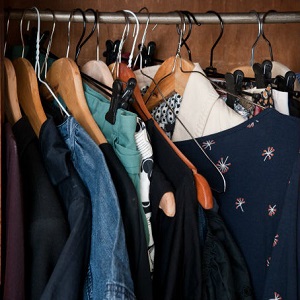 While working in my office in the summer, on a hot day, I had cause to consider the clothing I was wearing. My office is on the second floor, and by mid-afternoon the sun had moved over to my side of the building. Even with the AC blasting, it gets swelteringly hot.
I wear sleeveless tops and skirts or capri pants, and sandals. This isn’t so for everyone. I know lots of people who do not like the heat. I find that people who come to see me for help with eating disorders have their own unique set of concerns, activated by the hot weather. I know that folks who have larger bodies, or are obese, often will feel hotter, simply because the adipose tissue provides insulation, in much the same way that very thin people or people with anorexia are more sensitive to the cold.
And I’ll digress here a moment, and say that when I make reference to people with larger-bodies, I strive to use language that isn’t charged with judgment. To refer to a person as fat is usually considered an epithet rather than a statement of fact. Webster’s Dictionary defines fat, when used as an adjective and applied to a person, as “having large amounts of excess flesh.” To people who experience eating disorders, it goes beyond that, to a sense of being unlovable, unacceptable, unwanted, and, ultimately, in danger of being utterly alone.
Which brings me back to hot weather and clothing: some of the large-bodied people I work with come to sessions in jeans in 95°F weather. This looks horribly uncomfortable. There was a time when I was in the throes of a binge eating issue. My body was much larger than it is now. The inseams of my jeans would develop holes where my thighs rubbed together. The waistbands and snaps pressed painfully into the flesh of my belly. I hated cool weather because it meant I couldn’t wear light, loose clothing. So when I sit in my office across from some one whose body has large amounts of “flesh” and see them in jeans, I can’t imagine that they are comfortable. When appropriate, I ask why they are dressed so heavily in such heat.
People give varying answers. Some have to do with their dislike of shopping due to how disheartening it can be to find plus-sized clothing in stores. Others can’t stand dealing with the difficulty of finding appropriately-sized clothes. One such person I work with wears plus-sized petites, another wears a much smaller size on top than on the bottom. Clothes shopping makes them feel at odds with what is “normal.”
Shopping for clothing brings up shame some people spend lots of energy trying to ignore. Webster’s defines shame as, “a painful feeling of humiliation or distress caused by the consciousness of wrong or foolish behavior,” and, “a loss of respect or esteem; dishonor.” In this case, the “wrong or foolish behavior,” as decided by social norms, is the size and shape of their bodies.
This body-shame isn’t limited to people with a large body in our society. I often hear complaints about finding satisfactory clothing from people who have bulimia or anorexia. They reportedly try on several outfits before they can leave the house, because everything makes them “look fat.”
People with anorexia routinely say that they can’t stand the feel of clothing that lays against the skin of their hips and legs, so they buy pants that fit loosely and might wear a belt to hold them up. Conversely, I know people with bulimia who tell me that wearing baggy clothes makes them look as big as the clothing, so they only feel comfortable in clothing that is form-fitting.
Body-shame is commonly focused on specific regions of the body. I’ve had people tell me, “I don’t show my legs,” or “Nobody sees my arms.” One individual with life-threatening anorexia told me that no matter how much weight she loses, her thighs are too big. Another said that, although everyone tells her she is emaciated, she has “rolls” on her stomach and waist that are “disgusting.” When she and I discussed this further, I discovered that these were the skin folds that appeared when she sat down. Yet another, whose anorexia manifests most prominently in compulsive exercise, is quite muscular with a very low body fat percentage. She said she sits up very straight because she is so self-conscious about the size of her stomach.
Clothing and vanity are both normal parts of human life. But there’s a fine line between “normal” (there’s that word again) attentiveness to appearance, and serious obsession or shame. For a person who experiences shame, their body image is inseparable from his or her character and worth.
Consequently, clothing choices aren’t based on physical comfort but, rather, psychological comfort: the comfort that comes from knowing their legs or arms or stomach are covered, even if it means wearing jeans in 95°F weather. I’ve been encouraging the people who are larger-bodied to go shopping for light, pretty summer clothing. My hope for everyone I work with, is that they choose clothing in the spirit of physical comfort and body acceptance.
 Long after eating patterns and weight have stabilized, many women with an eating-disorder continue to struggle with issues of body image. In fact, body dissatisfaction has become so prevalent, many authors propose it has sadly become simply part of the female experience. Body dissatisfaction is believed to be one of the highest predictors in adolescent girls who go on to develop an eating disorder.
The National Eating Disorders Association (NEDA) defines negative body image as:
[fat_widget_right]
- A distorted perception of your shape—you perceive parts of your body unlike they really are
- You are convinced that only other people are attractive and that your body size or shape is a sign of personal failure
- You feel ashamed, self-conscious, and anxious about your body
- You feel uncomfortable or awkward in your body
I am a psychotherapist who specializes in the treatment of adolescents and women with eating disorders. For several years I have been leading body-image therapy groups in my outpatient practice. What follows are some of the group topics we cover as well as resources and activities I have found useful for helping people with their body image.
Generally, the group therapy series is focused on improving body image and runs for eight to ten sessions, as outlined below:
Session 1: My Body Relationship.
How do I feel about my body? To introduce this topic, group members participate in an art activity exploring how they feel about different parts of their bodies—from head to toenails. When asked to voice to the group the body part they like most, frequently the women will speak about a part that allows them to pleasantly experience some aspect of life, for example: “My hands—because I love to play the piano.” This activity allows members to recognize that some parts of their body are just fine, in their eyes. It’s not all body hatred. Great! We can build on this.
Leslea Newman’s book SomeBody to Love: A Guide to Loving the Body You Have (1991) has journaling exercises to help people creatively work toward repairing a broken relationship with the body. She recommends writing love letters, having dialogues with body parts, speaking compliments into the mirror, and more.
Session 2: Create a Vision.
How do I want to feel inside this body? If I felt this way, how would I move differently, how would I interact with others differently, what would this free me to do and experience? Using guided visualization, to step into and experience this vision, allows each person to plant and hold in their awareness a goal to guide them in the work ahead.
Session 3: Contributing Factors.
How did I come to define beauty? What experiences and messages contributed to my personal body opinions? Using a time-line, each group member looks at significant life events and paralleling patterns of weight and feelings about the body. The women in group often speak of having felt “different” from their peers. They feel dissimilar in their relationships with one another and with food. They also feel ambivalence about their developing bodies. We take a critical look at the media and the conflicting messages received from advertising. NEDA offers a number of handouts useful in facilitating this discussion.
Session 4: Body Talk.
What’s being said inside my head? How we talk to ourselves and what is said has a powerful effect on how we feel. Thomas Cash, PhD, in The Body Image Workbook: An eight-Step Program for Learning to Like Your Looks (2008) tells us this talk is often self-defeating, derogatory, and distorted rather than realistic. His book and audio program provide people with specific steps and tools to help them become aware of their negative body talk and begin to transform these messages.
Session 5: Body as Camouflage.
What do I hide with my body? To explore this dynamic, each group member creates a collage with magazine clippings portraying the “inside me/outside me.” People have used this activity to explore their beliefs about what others assume and expect of them, the image they try to portray, and then what they really feel like on the inside. We explore how they have used their bodies to protect or distract them from certain feelings and what it has been like to live with such a dichotomy.
Session 6: Body as a Vehicle.
What can I do and experience, thanks to my body? Sondra Kronberg, RD, writes, “True body power is the power of the body to accomplish tasks and be the vehicle through which to experience life” (Fall, 2002). As a group, we meet for a nature walk, adapted from the chapter called “Sensual Walk,” in Working with Groups to Explore Food & Body Connections: Eating Issues, Body Image, Size Acceptance, Self-Care (1996). In silence, we mindfully pay attention to the titillation of all of the senses: “Notice the smell of air, the feel of the elements, the textures beneath your feet, the views along your route, the taste on your lips, the ever-changing sounds in the background or foreground” (1996). In processing the experience, we talk about beginning a new relationship with our bodies by celebrating all the amazing things our bodies do for us and allow us to experience. Using Thomas Cash’s chapter called “Adult Pleasant Activities List” (1996), members are asked to mindfully and joyfully experience something from the list each day for the next week.
Session 7: Body as Container.
What is this spirit, this essence-of-me that lives inside my body? Kronberg goes on to write about the importance of helping our clients find their “real beauty,” that is the beauty “stored inside of them” (2002, Fall). During this session, group members create a word and picture collage of favorite things, causes they passionately believe in, relationships that matter most, compliments received, qualities of character they admire in themselves. This activity is often a favorite and reminds participants that they are so much more than the size of their clothes.
Session 8: Body as a Rich Source of Wisdom.
What can I learn if I slow down and listen to my body? This session opens with a deep-breathing exercise to practice being still, quiet, and focused. We then explore “gut instinct”—where and how we experience it in our bodies and how we have used this information to reliably guide us. Members are also invited to explore feeling states in the same way. Using a body outline on paper, members draw where in their bodies they feel anger, sadness, or loneliness, noting the size, color, and shape of each, and what distinguishes one from the other.
Session 9: Body Respect.
I can honor and take care of my body. This is a brainstorming session of all the things we can do to take care of and nurture our physical selves. Belleruth Naparestek’s affirmations are used from A Meditation for Relaxation and Wellness.
The following is excerpted from her beautiful work:
- I thank my body for all it has done for me in the past and all it will do for me in the future.
- I am learning to trust my body and to make good use of the information it offers me.
- More and more I will save my energy for what truly matters to me.
- I am aware that with each breath in I am sending precious oxygen and rich nutrients to the places in my body that need them.
- I welcome my ability to listen to the wisdom of my body and sense what it needs—telling me to rest, pace my energy, and take gentle good care of myself.
- More and more I can understand that my body is my ally, my oldest friend, and steadiest companion.
Body image work is a critical step in full recovery from an eating disorder.
Recommended Reading:
- The Body Image Workbook by Thomas Cash, PhD
- The Body Myth by Margo Maine, PhD & Joe Kelly
- Eating in the Light of the Moon by Anita Johnston, PhD
- A Meditation for Relaxation & Wellness (CD) by Belleruth Naparstek
- SomeBody to Love by Leslea Newman
- Transforming Body Image: Learning to Love the Body You Have by Marcia G. Hutchinson, EdD
- Working with Groups to Explore Food & Body Connections by S. Christian, Editor
References:
- Kronberg, Sondra. (2002, Fall). Nourishing a Healthy Body Image: A Nutritionist’s Perspective. Perspective.
- Levine, Paula. (1993). The Meaning of the 3D’s, Eating Disorders & Awareness Prevention. Perspective.
- Naparstek, Belleruth. (2002). A Meditation for Relaxation & Wellness. Akron, OH: Health Journeys.
- Ressler, Adrienne. (2006, May) A Body to Die For: Advanced Training in the Treatment of Eating Disorders & Body Image Disturbance in Women. Perspective.
- Hawkins, Nicole. (2009). Battling Our Bodies: Understanding and Overcoming Negative Body Images. Center for Change. Retrieved from: http://centerforchange.com/content/battling-our-bodies-understanding-and-overcoming-negative-body-images