 Here are a couple of questions for you. What happens inside you when you when you read or listen to the daily litany of abuse of power, suffering, injustice, murder, war, and destruction of the earth? What do you do when someone close to you has been hurt by unethical actions?
Asking around, these are the things I’ve heard.
“I just get numb because I don’t think I could bear the amount of pain I would feel.”
“Well, I get mad at the news companies because they just seem to look for the bad stuff and don’t give us a balance. There’s good stuff happening too, but I guess that doesn’t sell.”
“I find I can’t see violent movies anymore even if they are Academy Award winners. Hurts too much.”
“I glaze over so I can subdue my feelings.”
“I feel so upset and helpless that it turns to hopelessness. When it’s hopeless, I disempower myself because there’s nothing useful I can do anyway, so why bother?”
“When something gets to me, I can’t sleep at night.”
“I feel disappointed in people. We know better than what we do.”
“I just don’t read the paper or listen to the news anymore. I don’t want to support this kind of newscasting.”
“I try to offset the bad news with looking at the bright side. I think I do this too quickly in an effort to avoid feeling bad.”
[fat_widget_right]
Do any or many of these responses feel familiar to you? Anything you want to add?
Of course, how we deal with human suffering is one of the universal core life questions that each of us must find an answer to. This question has two dimensions—how will you BE with suffering and what will you DO about it? This article speaks to the kinds of inner doing that can help you be with terrible and disturbing things.
Recently, I was singing in a chanting group. One of our songs was a lament. We were to let go in wailing sounds for some minutes, and then we sang the words of the lament. Stefan Waligur, the leader, reminded us that wailing and keening are an historic and current form of individual and group response to suffering, grief, and injustice. Wailing is often, though not always, the work of women on behalf of the whole community or the whole family. Wailing walls. Wailing in the streets. Wailing over the bodies of the dead. For many people and many cultures, this is the appropriate way to respond to terrible things.
For me, the lamenting sounds felt good and relieving. I was surprised because I tend toward stoically managing my feelings. Lamenting as a chant made it more acceptable for me. It felt good to let my whole body move and sound with the expression of deep grief. Stefan suggested we should make a place for group laments in response to a school shooting, flood, or insurrection.
Public or private lamenting, full of sound and movement, is a good antidote to the responses of fury, numbness, and hopelessness that have become our normal reactions.
My friend Robert said he noticed he regularly shut down about, as he called it, “news of the terrible.” He now has a practice of covering his eyes with his hands and taking a moment to let his grief travel through his body and soul after hearing something distressing. He says it helps him stay alive and real. When you numb yourself about bad stuff, you numb yourself about good stuff, too. Numbing is not selective.
Public or private lamenting, full of sound and movement, is a good antidote to the responses of fury, numbness, and hopelessness that have become our normal reactions.
A study comparing meditation masters and ordinary people in terms of how they respond to disturbing images found that the people in both groups responded to the disturbing images with an equal level of pain and upset. The only difference was that the meditation masters were more resilient and returned to their normal state of equanimity much sooner. Their emotions were quick spikes, whereas the non-meditators stayed in their distress for a significantly longer time. I think regular lamenting could have the same effect of increasing resilience.
My friend Charna suggests a Buddhist practice of consciously breathing in suffering and breathing out love. “We live in a field of energy,†she says. “When I focus on the suffering-and-love exchange, I feel like I am keeping my own system healthy and contributing to the health of the energy field.”
The TV series Nova has a program about the earth atmosphere that showed equipment measuring a remarkably constant global electronic signature of 8 megahertz. This is kept regular by the spikes of lightning that are constantly spread through the atmosphere, steadying the electrical charge. Globally, there are some 8,640,000 lightning flashes worldwide every day! It seems even nature keeps in balance by quick energy spikes.
The process of consciously lamenting could be an often-missing link to maintaining personal balance and resilience. It could help us stay emotionally open and respond to news of the terrible with grief and lamenting instead of rage, numbing, and hopelessness.
Please try making a place for lamenting in your life, and let me know in the comments section what you find out.
Feeling angry is an incredibly natural response to the feelings of betrayal that come from infidelity. Your husband broke your trust. Your relationship has been damaged. All of this is very real and comes with legitimate emotional reactions.
Anger is a powerful emotion, and it can mask other feelings. I’m guessing you are also tremendously hurt. Anger may feel like a safer way to manage your pain, but it will slow your healing. Admitting and confronting the pain behind the anger is essential, and it requires vulnerability—which is hard when you are dealing with this kind of breach of trust.
[fat_widget_relationships_left]
Time, of course, helps in the healing process. I wonder, though, what it is you might need from your husband to help you with that healing. I’m guessing that right now apologetic words and acts of contrition are not helping you let go and move on. Often, when we have been hurt, we need to feel that the other person truly understands the pain we are experiencing and gets how serious the emotional pain and betrayal really are. Your husband may think he has accepted responsibility and gets how hurt you are, but it can take time for the empathy you need to feel from him to actually be heard and felt in a meaningful way. Until that happens, the rest of the healing—grieving, letting go, reconnecting—can’t really move forward.
There are many ways people choose to apologize, and some really are better than others. “I’m sorry†alone rarely makes us feel better. “I’m sorry for everything†can also feel general and unsatisfying. If, however, we hear, “I’m sorry for doing [specific action] and making you feel [accurate reflection of feeling],†we can feel understood and see that person showing empathy and taking responsibility, which helps us move forward.
While you are waiting to feel that empathy, however, there are steps you can take to reduce your distress. Although your husband’s actions created this situation, his actions alone won’t necessarily change it. Ultimately, that is because other people cannot make us feel a certain way—we have a part in choosing our own reactions. What we feel often comes from the meaning we make of an event. What does this affair mean to you? What are you telling yourself about it?
For example, are you telling yourself that his affair means he doesn’t love you or doesn’t love you enough? Are you dealing with fear that it will happen again? Are you stuck on the message, “I didn’t deserve this. How could he do this to me? This isn’t right� By uncovering those messages, you can look at the ones that are keeping you stuck in a place of anger and work to let those go. This will take time and work. You can’t just flip the angry/not angry switch. Having an open conversation with your husband about the time you need to work through your thoughts and feelings can be helpful. Letting him know what you need from him during that time can help engage him in the healing process and also start the two of you working toward becoming partners again.
One common message that betrayed spouses struggle with is, “It’s not fair. He/She had an affair and ‘gets away’ with it because I want to stay married.†That is a fallacy that keeps you stuck in an angry, resentful place. In truth, nobody is getting away with anything. Both of you have lost the relationship you had. You are suffering, and he is likely aware that his actions are at the root of that suffering. If he cares about you, that awareness is a source of pain for him. Also, you “get†to be the forgiving spouse, and he is stuck being the one who “did you wrong.†That’s not a fun role to play no matter how deserved it might be. I don’t say this to minimize your pain. You are entitled to feel angry and hurt. If, however, you are able to recognize that he may be in pain as well, you may have an opportunity to connect with each other.
The past cannot be undone. So, you are faced with a choice. If you truly want to stay with him and rebuild a relationship together, you are going to need to choose to let it go. You are going to have to focus on the good that is between you, to let the balance of a life together outweigh the pain of infidelity. You are going to have to connect with each other on a deeper level and recognize that you are both suffering without focusing on laying blame for that suffering at his feet.
The impulse to lash out and hurt when we’ve been hurt is very human but ultimately not helpful if you want to reconnect. You say you don’t want to lose him, but something has been lost. The relationship you had prior to the affair is lost. It is OK to need some time to grieve that loss. It is also OK (and I strongly recommend) that you get some help with all of this. I urge you and your husband to find a couples counselor who can work with you on how to reconnect after an affair. You can build something together, and it can be something beautiful, but it will be something new. You cannot go back to the place you were before, and wishing for that is going to keep you stuck in this place of pain and, yes, anger.
Best of luck,
Erika
 As more information becomes available about Elliot Rodgers, the man who allegedly killed six people in California, the media continues to focus on what his therapist did or did not do right. Therapy can and does help people who struggle with challenges such as isolation and anger, but therapists face serious ethical challenges when faced with potentially dangerous clients.
The Importance of Confidentiality
Confidentiality is the bedrock of healthy and productive therapy. Many people have fleeting angry thoughts, and it’s common to speak in hyperbole, such as in the instance that a teenager tells her therapist that she wishes her mother were dead. Mandating that any violent thought or feeling be immediately reported, then, could be an overreaction that lands nonviolent people in trouble.
Some therapists are concerned that more stringent reporting requirements could undermine good therapy. People who desperately need help may opt not to seek therapy if they are worried that doing so will land them in jail or a psychiatric hospital. People who are currently in therapy may not be fully honest with their therapists if they sense that one wrong word will cause them to be reported to the authorities. Further, targeting people with mental health issues cannot fully solve the problem, since not all spree killers experience mental health issues. In fact, people with mental health issues are more likely to be crime victims than crime perpetrators.
[fat_widget_right]
The Consequences of Reporting
Despite therapists’ best efforts to maintain confidentiality and offer extraordinary care, they have an ethical duty to protect general public and report clients who make clear and specific threats of violence. The decision to report isn’t always an easy one, though. State reporting requirements vary, and therapists must determine the appropriate person or authority to report the threat to.
The consequences to a client’s life of such a report can be powerful and long-lasting. Most police officers don’t get mental health training. Calling a client’s family or spouse is not always helpful, particularly if the family is unsupportive of the client’s attempts to get better in therapy. A client who is in serious distress may make police officers feel threatened. Several people who have had suicidal thoughts or tendencies have been shot by police in the last year.
Given the risks to which clients are exposed when their therapists report them, some therapists avoid reporting until they know a threat is imminent, and by then it may be too late. There’s only so much that law enforcement can do to stop a crime, and even the best therapist can’t talk someone out of a spree killing.
Improving Care for People with Anger Issues
Joshua Nash, a GoodTherapy.org anger Topic Expert, emphasizes that people who are at risk of harming others need better care and that mental health training could begin to improve outcomes for troubled therapy clients. He explained to GoodTherapy.org,
“If we continue to view these incidents as ‘anger management‘ concerns, we fail to see the underlying issues at play. All too often anger results from unexpressed emotions and the unacknowledged irrational beliefs that spawned them. Carrying around a core belief of one’s worthlessness and powerlessness can certainly serve as a powder keg for future explosions. A direction I would love to see the mental health field move towards is an increased focus on psychoeducation for all personnel that come into contact with high risk individuals. Learning to differentiate genuine peace and calm from a forced, affected ‘okayness’ might just prevent further tragedies from occurring.â€
References:
- Experts fear proposed N.Y. gun law might hinder therapy. (2013, January 15). Retrieved from http://www.usatoday.com/story/news/nation/2013/01/15/ny-gun-law-therapy/1836323/
- Fact sheets. (n.d.). Retrieved from http://depts.washington.edu/mhreport/facts_violence.php
- Goldberg, J. (2014, May 25). Christian Alberto Sierra, Purcellville teenager threatening suicide, shot, killed by police. Retrieved from http://www.wjla.com/articles/2014/05/christian-alberto-sierra-purcellville-teenager-threatening-suicide-shot-killed-by-police-103465.html
- Palmer, B. (n.d.). Elliot Rodger was seeing multiple therapists. Why couldn’t they stop him? Retrieved from http://www.slate.com/articles/health_and_science/medical_examiner/2014/05/elliot_rodger_therapists_why_did_they_and_law_enforcement_fail_to_recognize.html
 Death is a subject that is generally off-limits in our society. We spend much of our time denying its existence and its inexorable approach, even though we all realize that we will die “some day.†For the most part, however, we try to convince ourselves that the day is far away and we operate from the premise that we are invincible—until the wheel of fate rolls around to show us just how vulnerable we really are.
We imagine that our loved ones will always be there for us, and often fail to take the time to let them know just how much we really care about them. This fact was recently driven home to me when a very dear friend finally lost the battle he’d been waging against cancer for the past year. Although I called and visited him regularly, I struggled with watching him age before my eyes and melt down to a frail, skeletal version of his once-healthy self. He unfortunately passed away before I really had a chance to say goodbye and tell him how much he’d meant to me.
During challenging moments such as these, we realize just how precious and fleeting our lives really are. We tend to take for granted many of the factors that contribute to our happiness, such as our health, our homes, and our families and friends. In the blink of an eye, our worlds can come crashing down as we come to realize just how weak and defenseless we are against the casualties of time.
[fat_widget_grief_right]
In addition, we frequently feel as though we cannot communicate our pain to others, as the grieving process is not truly honored in our society. After a short amount of time, we are expected to pick ourselves up and carry on with our lives as though nothing had happened. As death is such a taboo subject, others often feel awkward talking to us about our loss, which can leave us feeling cut off from our friends and acquaintances and alone with our suffering.
In other cultures around the world, they have special ceremonies and rituals designed to celebrate the ancestors who have gone before them. They keep them alive in their hearts and souls by dedicating holidays to remember them by. They share stories about the loved ones they have lost, honoring their lives and rejoicing in their passing on to a higher plane. These rituals can be of genuine help in assisting the families and individuals left behind to come to terms with death.
When a loved one dies, we mourn the loss of his or her companionship and presence in our lives, and feel bereft by the void that is left behind. We often regret not having shared with them our deepest feelings or having allowed ourselves to be more open and vulnerable with them. In some cases, we may also be left with unresolved issues if we have not come to terms with our underlying emotions, such as anger or resentment, toward the person who died.
These feelings can continue to haunt us long after the individual’s death, making it difficult in some cases to get on with our lives. This was the case for one of the persons I worked with, a person who harbored considerable hatred toward his father for the abuse that he had suffered at his hands. He grew up feeling unwanted and unlovable and thought that he was somehow to blame for his father’s abusive nature. He was consumed by bitterness for many years after his father’s death, which prevented him from being able to enjoy his life despite having a loving wife and a beautiful home.
His inner world was an ongoing nightmare until he started to gain a new perspective during the therapeutic process by realizing that he had not been to blame for his father’s abusive nature and that he had ended up internalizing many of the same dynamics himself. He came to see that his father probably had his own inner demons to contend with and had unfortunately just been repeating the cycle that likely had been going on for generations in his family.
As his compassion grew, he started to open up his heart to forgiveness. This played a huge role in his ability to heal and let go of the hatred that he had held onto for so long. Paying a visit to his father’s grave was the final ritual that allowed him to let go of his past and to start to move forward again in his life, with a newfound sense of compassion for his own human imperfections as well as those of his father.
Although we have not all grown up in abusive environments, we can all relate to this story on some level, as we have a tendency to carry some anger and hatred toward others regarding unresolved past wounds. These feelings of bitterness prevent us from being able to fully inhabit the present moment, as we ruminate on the pain that we’ve experienced and continually perpetuate our suffering. However, we can never find peace or joy in our lives as long as we are holding onto grudges for past wrongdoings. The resentment we feel ultimately hurts us much more than the person who initially caused us harm. And if the individual we hold a grudge against has died, this can compound our problem, as we tend to internalize this anger, thereby hurting ourselves even more.
Our psychological health therefore depends on our ability to forgive others. But we also have an even greater need to forgive ourselves for our own past transgressions and learn from them the lessons that we were intended to learn in order to move beyond them. Constantly beating ourselves up for something we have done in the past will not change what happened, but it will affect our ability to be happy and to truly love and accept ourselves now.
We are all human beings with imperfections and failings that we can learn from. As we open our hearts and begin to forgive and accept the aspects of ourselves that we have previously judged and rejected, we become more compassionate and loving toward ourselves as well as others. We learn to truly live our lives fully, rather than just surviving or waiting for a misfortune to hit us. We experience grief and pain, but we also become able to love with all our hearts. We start to drink deeply from the well of compassion that nourishes all who draw near and connects us on a deep level—the level of our own humanity.
 In a series of articles on GoodTherapy, I have explored the fact our anger often possesses underlying emotional triggers. My first article began the exploration by pointing out that many anger-management strategies avoid having us confront what might be lurking underneath the anger and frustration. My second article targeted unexpressed sadness as a main culprit of anger. In this article, I will focus on anxiety and how it, too, can turn into anger when left unacknowledged and unexpressed.
Anxiety must be understood as a self-created experience of fear that comes from focusing on the future. Although it can feel a bit like excitement, anxiety can feel debilitating because the focus on the feared future event seemingly paralyzes us. Anxiety takes us out of the present moment and disconnects us from the reality we’re surrounded by. Anxiety is no fun because when we believe bad things will happen, we experience bad things in the present moment. Anxiety’s connection to anger exists on the same plane as anger’s connection to all other emotions, through denial and suppression.
Since anxiety is simply another form of fear, many of us struggle with admitting that we are afraid. Like sadness and guilt, we have been preconditioned early on to deny and ignore our fear. Fear is weakness, it is said. To admit we are afraid is thus tantamount to social suicide. So instead of admitting that we feel anxious, we suppress the energy created, which in turn gets lodged in our bodies. The truth of ignoring our true emotions comes to haunt us, keeping us from living the kind of joyous, fulfilling life we’ve dreamed of.
[fat_widget_anxiety_right]
Anxiety—ALL anxiety—starts in the mind. It begins as a small story of what we believe we lack. Confidence. Patience. Strength. Quite often, we believe we lack the very thing we think we need to be successful. Over time, the story of our perceived lack gets “proven†to us through our immobilized behavior. We stop being assertive and proactive. We stop living, and then, lo and behold, we feel weak and powerless. When not aware of these mini-horror stories and the frenetic energy they create in our bodies, we position ourselves to be overly sensitive, irritable, and angry.
The path to overcoming this anxiety issue masquerading as an “anger issue†will prove ridiculously simple. Slow down. Yup, that’s it. Although simple, I caution people in therapy that the simple process of slowing down is not so easy. The simple comes from the tiny behavioral steps you will adopt; the not-so-easy to do comes from the years of conditioning you will have to overcome.
Slowing down means realigning body with mind. More directly, it means to quiet the mind and focus on just one activity, the activity existent in the present moment. Where anxiety pulls us away from the present moment and into our minds, slowing down brings us back to the body, which always exists in the present moment. Anger that comes from unacknowledged and unexpressed anxiety often boils just beneath the surface. By “surface,†I literally mean the body. Imagine that anxiety is the fuse and some external event acts as the spark. Surrounded by potential sparks, we will explode if we do not actively defuse ourselves.
Pick something sensual to focus on right now. Pick something you can hear, see, taste, smell, or touch. Focus on the sensations that occur in your body as you drink your coffee or listen to the typing in the office. When a thought pops in, and it will, simply tell it, “Not right now, I’m slowing down.†Over time, you will get quite adept at slowing down. When slowed down, we don’t produce the anxiety that then leads to our chronic anger. Becoming masters of our own inner worlds allows us the freedom to respond to reality rather than react to it.
 When I was in college, my friend Matt hit an old woman with his car and killed her. Every time he passes the street where she died, he remembers what happened and feels scared and sad. She died on a dark and windy night; it was raining hard. She came out from between two cars, suddenly, into the middle of the street, probably in a hurry and trying to avoid getting too wet.
Matt didn’t see her, didn’t know she was there until the moment of impact. He stopped his car, tried to help her, and called for the police and an ambulance, but it was too late. He is filled with remorse and has nightmares. Even if it was a mistake, he killed someone’s mother and grandmother. Matt lives feeling sorry, but he cannot make up for this tragedy.
Matt’s story, of course, is not unique—many similar tragedies unfold every day. The lives of all involved and their families are permanently stained. How will they sleep? How will they come to terms with what happened, even though it may have been an accident? Are friends and relatives of the deceased ever able to accept the tragic consequences, or should they extract revenge? What would that look like? Perhaps as time passes they no longer feel angry, although they will probably carry the sad memory of the incident forever. History can’t be changed, but the way we relate to it and remember sometimes can be.
[fat_widget_right]
A person can’t be brought back to life, but there are circumstances that are less dire and sometimes our feelings about what happened can change. I’m thinking here about breach of trust, about infidelity, about people who thoughtlessly hurt the people they love. In a moment, or maybe a series of moments, they have an affair, and then, after some time, they are caught by their partner. “I’m sorry,†they might say. “It didn’t mean anything. I didn’t mean it.†And perhaps they are genuinely regretful, filled with remorse, about the loss of trust they’ve caused, about the wound to their relationship.
Is their remorse worth anything? Should they suffer, to make up for the suffering they’ve caused? Is it possible to make up for anything?
Can they ever be trusted again? Can they trust themselves, can their partners trust them, or will there always be questions? “Where did you go?†“Who were you with?†“How come you’re home so late?†“Who were you just talking to on the phone?â€
In the Dear GoodTherapy.org section of this site, there are many people asking themselves, “Can I forgive?†“Can I ever trust again?†“How can I get even?†These are unbearable, painful, suffering questions—tears seem to seep through the Internet and onto these pages.
I started off with examples of a woman who was killed in a car accident. An affair is not a car accident—nobody dies—but there is a murder of trust. My friend Matt lost trust in himself after the accident and never wanted to drive again, although he had to and does, regularly. The people writing about their partners’ infidelity lose trust in their partners and in themselves, too. Seems paradoxical, doesn’t it? They ask, “What do I do now?†“Should I leave?†“Get divorced?†“End the relationship?†“Should I forgive?†“I want revenge! I want them to know what I suffered. I want them to suffer even more than I did!â€
Who deserves revenge? Maybe people who have been wronged feel like they do, but the cycle of revenge can be endless—eyes for eyes until we are all blind. So I think no one deserves revenge, really, even if you feel like you do, even if you’ve been treated unfairly, even if people or circumstances have been horribly mean to you. Do what helps you live your life well now.
Destroying trust is a hateful action, and sometimes people take a long time to get over it, but we need to get on with our lives, to make ourselves whole. You know what they say: “Living well is the best revenge.â€

In my introductory article on anger management, I introduced you to the notion that anger management per se often misses the mark. Spending all our time and energy handling our anger in more productive, pro-social ways can get tiring if we constantly have anger bubbling up that needs to be managed. Wouldn’t it be nice, for once, to be able to sit back and enjoy yourself rather than constantly spin inside your managerial role? It’s not too good to be true, but you must know going in that getting to this place will take considerable effort at first. Perseverance, patience, and kindness will serve you well in this endeavor.
To begin, we must understand the nature of anger. When not experienced as a secondary emotion (more on this shortly), anger occurs as a result of being a part of or witnessing a wrong. If we or a loved one are in harm’s way, the energy we call anger wells up, leading to two things: (1) an often laser-like focus on the wrong occurring and (2) increased energy to do something about it. We can view anger in this sense as organically pro-social. It occurs in relation to harm that we think must be prevented or averted. Barring any illegal, immoral, or self-harming act, expression of this type of anger can generally be viewed favorably. Sometimes called “righteous anger,†imagine Jesus routing out the bankers from the temple to get an image of what I’m referring to here.
[fat_widget_right]
As you may have already guessed, the vast majority of the anger we experience on a regular basis does not fit into the first category described above. Rather, the anger we generally need to “manage†falls into the category described as a secondary emotion. In brief, a secondary emotion is one that emanates from a judgment about a primary emotion. They generally occur due to our unwillingness to fully accept and feel the primary emotion. The primary emotion is usually one that feels physically uncomfortable and might also have a social stigma attached that reinforces the tendency to keep it held in. Sadness, guilt, anxiety, and fear are most often the primary emotions that get transformed into anger. As a result of judging and therefore suppressing their full expression, their energy “becomes†anger.
In my next article, I will cover in greater detail how to work with fear and anxiety. In this article, I wish to focus on sadness. Sadness occurs when we have lost something significant. Losing a job or the death of a loved one are obvious causes of sadness, but all too often we do not catch the more subtle triggers. At its core, we experience sadness when we’ve lost something that supports our self-identity. The reason sadness hurts is because we’re experiencing the absence of a psychological part of ourselves, not unlike losing a limb.
Feeling our sadness is important because it sanctifies the thing lost. Sadness fully expressed allows us to honor the missing aspect in our lives. This process reinforces the importance of reengaging in life so that we may begin cultivating the missing value. Not feeling our sadness prevents us from accessing the importance of the thing lost. Once we inquire into our sadness with kind curiosity, we will find that some value or quality is missing.
So how do you put all of this information into practical use? We’re all fond of steps, and I’m not here to disappoint:
- When you get angry, sit down and begin to feel the energy in your body. Rather than ranting and raving, start taking stock of your bodily tension. (Yes, this is very difficult at first. With practice you’ll get better, I promise.) Once some of the energy has subsided, ask yourself what you’re sad about. Usually something specific—and quite often completely unrelated to the thing that caused you to be angry in the first place—pops in.
- Once you’ve accessed the trigger of your sadness, it’s time to feel sad. I can already hear you grumbling. I know, feeling sadness isn’t pleasant, and that’s why so many of us avoid the sensation. A little trick I learned, and teach, is to say “yes†or nod your head when the sensation of sadness is felt. Acknowledging our emotion in this way makes it easier to access. Now, fully feel the sadness without judging or commenting. (This part is a bit difficult as well. It takes much practice to learn to feel our physical sensations without any accompanying thoughts.)
- Once the sadness has subsided—and it will subside—you can begin the process of inquiry. Ask yourself what was lost. If it’s not obvious, look to core values that you prize, such as kindness, fairness, support, etc. Often, we get angry when these core values aren’t experienced in ourselves or in our relationships.
- Patience and honesty in this process will often lead you to the missing value. Now that you’ve found it, it’s simply a matter of going out into the world and cultivating the very quality that went missing in the first place. This might look like being kind to coworkers, patience with your children, or being gentle with yourself when you make a mistake. Regardless of the quality expressed, your sense of power and accomplishment will increase.
Although the above steps are simply laid out, it will take you a few goes before you really get a handle on the entire process. We’ve come a long way from talking about anger. To bring that aspect back, recognize now that underneath much of our anger is a sense of powerlessness in the face of losing something sacred. When we re-access that missing component, we reclaim our power and, ultimately, our sense of peace.
 “I hate you!†4-year-old Carly screams at her mother. Some moms might react by grabbing their daughter and spanking her on the bottom, or screaming, “You are a bad girl!†or telling her, “That’s a bad word, we don’t say things like that,†or starting to cry and admonishing, “You hurt Mommy’s feelings.†There are many ways children learn to think of their angry or hateful feelings as bad even though anger and hate are normal human feelings. Too frequently, families don’t differentiate between expressing these feelings through words and acting on them. When families succeed in outlawing feelings of anger and hate and don’t teach their children appropriate ways of expressing their feelings, they limit the child’s ability to be aware that he or she has these feelings and to use them successfully. These limitations seriously interfere with the ability to become a person who can navigate life and relationships with a full range of feelings and self states.
Several years ago, I received a call from Frank, who made an appointment. In our first session, he was clear that he wasn’t sure he needed therapy, but his wife thought he should see a therapist because he seemed so unhappy with everything. He told me that he thought his wife was probably right, that he wasn’t very happy. “But I don’t think I’m depressed,†he said. “You know, I just do my life. I share responsibility for my 10-year-old son, who I love. I have a job that helps to pay the bills, but I don’t care much about it one way or the other. I’ve been married for 14 years and my relationship is OK, even though my wife keeps complaining that I don’t seem happy. She can be a nag, but that’s fine—I’m used to it. I’m OK.â€
[fat_widget_right]
I commiserated with Frank that it seemed his wife had sent him to therapy and that he didn’t really feel that it was something he wanted or needed. He responded, “That’s so true, but I guess I don’t really know what I want or need. My wife always seems to know what I should do more than I do. So I’ll give it a try.â€
Frank and I began our work, and since Frank didn’t have any specific complaints, I thought it would be useful for him to tell me his life story.
Frank described his childhood as “the usual—no real problems.†In one session, he recalled, “My mother taught me to be thoughtful about people. She was anxious and always worried about what other people thought. It was most important that I treat her with utmost respect. I always did what she said; I was very aware of not wanting her to feel embarrassed by my behavior.†In another session, he spoke of his mother: “She could get very hurt if I disobeyed or said no in any way. I remember when I was 6 or 7, I wanted so badly to go to my friend’s house to play with these action figures he just got. She wouldn’t let me go because my father was away on business and she didn’t want to be alone. I think I said something like, ‘Please, it’s not fair. It’s only for a few hours.’ She got very upset with me and started crying, ‘How could you be so mean to me and hurt me like this? How dare you say I’m not fair?’ I felt terrible. I couldn’t stand to see her hurt.â€
Frank’s father, a successful litigator, was always involved in his work. Frank understood that his job was to be there for his mother and keep her emotionally comfortable. Any attempt to protest or “do his own thing†would be met with the mother’s hurt and Frank’s remorse. He learned early how to be a “good son.†When I asked Frank if he ever felt angry with his mother, he looked startled. “Why would I be angry at her?†he said. “I was the bad one. I hurt her. Besides, I could never feel angry with her. She never said so, but it wasn’t allowed. I think it would have destroyed her.â€
Frank’s demeanor in our sessions was usually slouched over, talking quietly, mostly in a matter-of-fact way. When he spoke about high school, he perked up and began to describe doing well academically and feeling good about it. But then those feelings disappeared as he explained, “In my junior year I was thinking about going away to college and started to talk to my parents about it. My mother said I would be better off going to college at home and my dad agreed. I remember him saying that he appreciated my being at home with his being away for business so much and that it would be good for me to live at home and save the family some money.†Frank looked sad and said, “You know, maybe I did get kind of depressed then. I know I didn’t have a choice. It seemed that was just the way things were, not something to have feelings about. I never applied to schools away from home. I lived at home all through college but got my own apartment when I graduated. My parents found one for me in the neighborhood where they lived.â€
I asked Frank, “What do you mean when you say you had no choice?†He looked perplexed and seemed to have trouble responding. “I don’t know. It wasn’t something that I would have thought about once they said no. They said no and that was that. I suppose I never gave it a second thought.â€
“What do you imagine would have happened if you did give it a second thought?†I asked.
“It’s not conceivable,†he said.
“Just try to let yourself imagine and see what you think of.â€
“I don’t know …â€
“It’s OK not to know. But I really would like you to try.â€
“Well, let’s see. I feel like crying. … Maybe I would have cried.â€
“What do you imagine you would have cried about?â€
“Hmm. I would have been sad that I couldn’t go away to college.â€
“Why do you think you would have been sad?â€
“I don’t know. Maybe I would have liked to go away and was unhappy that I couldn’t.â€
“I remember you told me about wanting to go with your friend when you were 6 or so and you told your mother that it wasn’t fair that you couldn’t. Do you think this could have been a similar feeling?â€
Frank began to cry softly, “Oh yes, yes, that’s it. I couldn’t go with my friend, I couldn’t go away to college, and I couldn’t do a lot of things. It wasn’t fair.†Frank put his head in his hands, and his crying got louder.
“It’s very sad. You learned not to protest and to accept the life your parents prescribed for you,†I said.
After this session, Frank and I began to look at this pattern of accepting what was put in front of him, choosing what was pleasing for others and opting for paths that were least likely to create conflict or stir up feelings of anger.
We are currently talking about Frank’s relationship with his wife and son. He is more curious about his wife’s description that he’s “always unhappy†and is considering what he could be unhappy about. He recognizes that feelings have been accumulating about his life that he has never been free to feel or express. This worries Frank. “What if I know what I want or think or feel? What happens if I start to get angry at the people I love? Oh, my god! What if I even hate them?†These are frightening thoughts, and we are working on Frank becoming more comfortable bringing more of himself into his relationships. Frank had an “a-ha!†moment when it occurred to him that maybe his son doesn’t listen to him because he can’t say no to him. Frank told me with great surprise, “I’ve been afraid to get angry with him, so I just say yes, and I haven’t been tuned into myself. You know, I can see now—I do feel angry!â€
Frank is scared but also excited about the possibilities of developing his voice and getting comfortable with his feelings. We have much more talking to do, and we will take it slowly. Frank will be anxious as he grows and develops and tests his new thoughts and feelings in the world. But each success in voicing his authentic self will make his next attempt to be the person he is becoming feel a little less frightening. With continued work, Frank can get comfortable enough with himself in the world.
Frank’s story is not unique. Many children grow up in families where they learn, consciously and/or unconsciously, that feelings of anger and hate are bad. They may be unaware that they are fighting within themselves not to feel these feelings. As they mature, they are handicapped. They can’t know themselves or be themselves or use these feelings to help make choices. For example, they won’t be clear that they are being treated badly, or that it’s OK to compete to get what they want, or, like Frank, that it’s necessary to say “no†to help a child learn to accept “no†and limits.
Children who grow up believing that anger and hate are bad usually believe that if they have these feelings they will DO something bad or act in a hateful or rageful manner. But feelings do not have to be acted upon, or can be acted upon in appropriate and nondestructive ways. If we don’t have a full range of feelings available to us, we are at risk of not knowing what we want and who we are—and of having limited lives and relationships.
Editor’s note: Names in the preceding narrative were changed to protect privacy.
 “In love we face challenges and in embracing these challenges, conflicts, and dark places, there is immense potential for transformation.†– J. Welwood
When conflict happens in your relationship, how do you react? Do you fly under the radar hoping to avoid detection, or come out fighting and go on the defensive?
Relationships can be wonderful, uplifting, and joyful, as well as challenging, painful, and destructive. When things are great and we’re getting along there is a feeling of deep connection and safety. But when there’s a sign of pain, misunderstanding, or disconnection, defenses are triggered and vulnerability goes into hiding. When conflict is viewed as a threat and met with defensiveness we get stuck in a power struggle that takes our relationship on an emotional rollercoaster ride.
Conflict isn’t a threat to your relationship. Sometimes we view conflict as a threat and respond to it as if it’s a sign that our relationship is in need of fixing or that one of us is at fault. In reality, conflict isn’t the problem—it’s how we meet conflict that becomes the problem.
Why We Don’t See Eye to Eye
When two people who grew up in two different homes decide to make a life together, conflict is going to happen. Each of us comes into relationship with different ways of seeing the world and when these perspectives clash, we encounter conflict. It isn’t about right or wrong; it’s about perception and how we see the world.
For example, if you grew up with a parent or sibling(s) who yelled and criticized you when they were angry, and this scared or frustrated you as a child, you might have learned to avoid angry confrontations at all costs. Now, in your present day relationship, if your partner gets angry your defensive reaction might be to ignore, shut down, or try to get your partner to calm down.
While your partner might benefit from learning how to tone down his/her anger, it’s also possible that your reaction to anger needs to change. The same goes for the partner who is angry—they may have grown up in a family where their needs weren’t being met so they learned that in order to be heard they had to yell, sulk, or complain.
If you both continue to meet this situation with defensiveness, then you’ll be mired in a power struggle that fills your relationship with negativity and resentment. If, on the other hand, you meet conflict with a willingness to listen and an intention to understand, and have empathy for each other, then there’s a potential for healing and growth to happen.
Shift from Conflict to Connection
Learning to become a healing partner takes patience, time, and commitment. Dr. Harville Hendrix, the founder of Imago Relationship Therapy, states that couples have the potential to become healing partners. He says, “It’s in relationship we are wounded so it’s in relationship we can heal.â€
Learning to become a healing partner is what helps us develop a safe, intimate, and loving relationship. To get there it takes practice, patience, and a willingness to be vulnerable.
It’s when we learn to soften our defenses and become vulnerable and open that we begin to connect in a way that creates a feeling of safety, love, and connection. It only takes one partner to shift out of the power struggle and into connection. Below are some steps you can take toward helping yourself, your partner, and the relationship.
Steps to help soothe reactivity and calm difficult emotions:
- Develop awareness of your triggers. Notice when your body goes into flight, fight, flee mode. (I.e. rapid heartbeat, shallow breathing, muscles tensing, etc.)
- Take time out to soothe reactive emotions.
- During the time out, don’t dwell or analyze what happened. Let go of thoughts and stories and take care of yourself.
- Connect with your breathing. Breathe in and out slowly, and attune to the sensation of the breath flowing in and out of your body.
- As you breathe, scan through your body and soften the places that are tense.
- Feel a sense of self-compassion as you acknowledge feelings of hurt.
- Engage in activities that help alleviate stress, such as exercising, walking, meditating, or doing yoga.
- Once you are less reactive, see if you can connect with the need or hurt that’s beneath the trigger. Notice if you’re hooked into a story about what your partner’s intention was when you got triggered. Use the line, “What I told myself was_____. For example: “What I told myself when you were late to pick me up was that I’m not important to you.â€
- Share what was going on for you (your feelings and needs) without blaming, criticizing, or attacking your partner. Use “I†statements and take responsibility for your reactivity. For example, “I feel hurt when we make plans and aren’t able to follow through.â€
- Learn how to use intentional dialogue as a healing way to connect and learn about each other’s triggers, needs, and hurts. During this exercise, one person speaks as the other person listens with the intention of understanding, validating, and empathizing with the other, then switch.
- Feel compassion toward yourself and your partner when conflict happens.
- Be patient as you learn how to shift from a reactive response to one that heals and connects.
Meet Conflict with Acceptance, Understanding, and Empathy
Conflict in relationships is a catalyst for healing and growth. Learning to approach it in a healing way is challenging. It takes time, patience, and practice. In the end, if you want to develop an intimate, safe, and loving relationship, then it’s essential that you learn to approach it as an opportunity for healing and growth.
Remember, we come into relationship with past hurts, unmet needs, defenses, and parts of us that are in need of growth. When we let go of defenses and open our hearts to each other in a relationship, we create an opportunity for both of us to heal and grow—as individuals and as a couple—as we journey together through life.
May you have love, joy, and peace in your life.

Experiencing anger in your relationship is not a sign that your relationship is doomed to fail.
Anger is an emotion that we all experience, and it signifies that something has to be done. Conflict really has a purpose, and the purpose is mutual understanding, according to relationship researcher Dr. John Gottman. Anger makes you aware that there is a problem. How you deal with your anger can become a big part of the problem. For some couples, anger can make it nearly impossible to figure out what the problem is and how to fix it.
For most couples, anger itself is not the problem. What becomes problematic is how partners deal with their anger and how well they deal with their partner’s. Research shows that 69% of problems in a relationship are unsolvable, emphasizing that couples must learn to manage conflict rather than eliminate it entirely.
Dealing with Your Anger
Managing your own anger effectively is the first step toward healthier relationship dynamics. Research shows that anger is often a secondary emotion which covers up more vulnerable feelings such as embarrassment, sadness, and hopelessness. Understanding this can help you address the root causes of your emotional responses.

Take time out to calm yourself enough to think about what you are angry about. Taking a break is the best way to keep a bad argument from getting worse, with pauses ranging from 20 minutes to 24 hours to allow both partners to cool down.
Own your anger. Remind yourself that your anger belongs to you and that it is telling you something about yourself. Anger is often directed at your partner, but your anger belongs to you, even when it’s triggered by your partner’s behavior. You can have valid complaints about your partner’s actions, but the emotion is yours.
If the anger is your own, then it follows that you are in control. Accept that you are in control. Your next step is to think about what your anger is about. Again, try to focus on yourself, not your partner’s wrongdoing. I’m not saying that your partner is right. I am saying that you need to focus on yourself so you can express yourself to your partner, allowing you to work together to find solutions.
See your thoughts and emotions as your perspective, and at the same time try to keep in mind that your partner has his or her own perspective that will always be different from yours—after all, you are two different people with different experiences. Thinking like this will help you stay calm through the process of dealing with your emotions.
What are your angry thoughts? Try to follow your thoughts to get a full picture. It may help to write down what, exactly, happened that led to you feeling angry.

Consider what other emotions are involved. Research on anger and emotion regulation shows that anger often serves as a defensive response to protect against more vulnerable primary emotions. Examples of primary emotions are feeling sad, afraid, hurt, or rejected. Anger activates when something stands between us and the gratification of our demands, serving as a defensive system. Vulnerability is often seen as weakness; many of us were brought up to ignore vulnerabilities and push through problems.
Anger can feel like relief as emotional energy is released and vulnerabilities are pushed away from awareness. Being angry at your partner is sometimes easier than facing fear of rejection. However, the consequences of reacting with anger in a relationship can be severe. We know this at work; screaming at colleagues is most likely going to get us fired.
Key Insight: Nathanael Schlect, Licensed Associate Counselor “Anger can feel like relief as emotional energy is released and vulnerabilities are pushed away from awareness.”
Dealing with Your Partner’s Anger
This guidance applies to relationships where both partners feel safe. If anger includes intimidation, coercion, or physical harm, professional support is important

Dealing with your partner’s anger is a totally different process. I suggest that you help your partner calm down and go through the process described above.
Your part is to be supportive, listen actively, and ask clarifying questions. (See other articles I have written on The Good Therapy Blog about communicating effectively and especially active listening.) As the listener, you must create a safe space for the speaker with no judging or arguing, showing genuine interest and allowing them time to fully communicate their concerns.
Remind yourself that your partner is coming from his or her perspective and personal experiences. Your own perspective and feelings are not important at this time. If you are able to do this for your partner, I can assure you that you will see big, positive changes in your relationship. Perhaps your partner will initially react with surprise and even anger that you are changing your steps of the dance you have danced together for so many years of fighting. However, if you keep up your end of the relationship and focus on being the best partner you can be, your partner will eventually follow and give you the same courtesy when you are upset and need support.
The happiest and most successful couples don’t avoid conflict, fear or anger – they just know how to fight fairly and productively. Research from the Gottman Institute shows that effective couples use “repair attempts” during conflicts—small gestures like humor, affection, or expressions of empathy to de-escalate tension and maintain connection.
In an ideal world, partners will take turns being upset. In the real world, we often get upset at the same time. This is where repair work becomes important. Practice apologizing, stay calm, and remind yourself why you are in the relationship and that you are in control of how you express your emotions.
Stable and happy couples maintain a ratio of about 5 positive interactions for every 1 negative interaction, which helps buffer against conflict and builds emotional connection. This research-backed principle can guide couples in maintaining relationship health even during difficult periods.
Key Insight: Nathanael Schlect, Licensed Associate Counselor “In couples work, the goal isn’t to eliminate anger, it’s to slow it down enough that the hurt underneath can be heard.”
References:
- Blair, R. J. R. (2012). Considering anger from a cognitive neuroscience perspective. Wiley Interdisciplinary Reviews: Cognitive Science, 3(1), 65-74. https://www.ncbi.nlm.nih.gov/pmc/articles/PMC3260787/
- Gottman, J., & Gottman, J. S. (2024). Fight Right: How Successful Couples Turn Conflict into Connection. Harmony Books.
- Gottman, J. M. (2024). Managing vs. resolving conflict in relationships: 3 essential blueprints for couples. The Gottman Institute. https://www.gottman.com/blog/managing-vs-resolving-conflict-relationships/
- Larsson, J., Bjureberg, J., Zhao, X., & Hesser, H. (2024). The inner workings of anger: A network analysis of anger and emotion regulation. Journal of Clinical Psychology, 80(2), 437-455.
- National Institute of Mental Health. (2024). Novel treatment helps children with severe irritability. https://www.nimh.nih.gov/news/science-updates/2024/novel-treatment-helps-children-with-severe-irritability
- Pop, G. V., Nechita, D. M., Miu, A. C., & Szentágotai-Tătar, A. (2025). Anger and emotion regulation strategies: A meta-analysis. Scientific Reports, 15(1), 6931.
- Tharp, J. A., Zerwas, F. K., Mauss, I. B., & Chen, S. (2025). Power, emotion appropriateness norms, and regulation of anger and sadness. Emotion. Advance online publication.
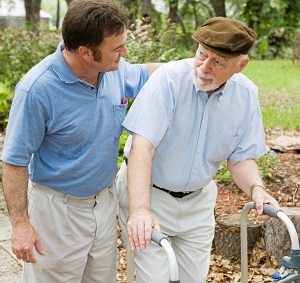 The work of caregivers is difficult, at best. This is particularly true for those who provide care before they start the workday and after they come home in the evening. I am often amazed by the stories I hear from caregivers.
I recently learned something from a group member that I want to pass along to other caregivers. It is so simple that it may seem unlikely to make a difference. But don’t let the simplicity of it fool you—the people in our group totally got it when she talked about it. Had I tried to teach it to them in the language of a therapist, I doubt the result would have been a collective “wow.â€
Managing Resentment and Anger as a Caregiver
The question of how to manage resentment is frequently a theme in our support group. Caregivers grapple with guilt about experiencing resentment—both regarding the unfairness of being thrust into the role of caring for their partner or spouse, and about spending more time as a caregiver and less as a partner/spouse.
Most are clear that the resentment and anger they feel is directed toward the ailment or disability, but we all know how easy it is for our anger and resentment to spill over into other areas or be misdirected. The last thing most caregivers want to do is allow their resentment or anger to taint their relationships with those they care for.
Someone in our group raised this issue again recently: How do we deal with the seething resentment that we feel? How do we prevent this rage from spilling over into our relationships?
It was clear that everyone in the room knew what he was talking about. Everyone responded with the perfunctory nods of agreement and reminders to breathe, be grateful, and hang in there. These are veteran caregivers who already do most of the things recommended for self-care:Â exercising, setting boundaries, eating well, getting as much rest as possible, etc. The urgency of their desire to address this issue was apparent.
How Do We Change Our Feelings?
Luckily, one of the women who had asked the same question in the past spoke up. She shared that she had intuitively discovered something that helped. She talked about how she had automatically shifted her feelings one day while helping with an unpleasant task. This generous soul has granted me permission to share this with you.
What my friend found was that by focusing on the process of what she was doing—by mindfully paying attention to each tiny step in the task at hand—she was able to change her feelings. She inadvertently alleviated the resentment and dread!
She changed her thoughts from, “I hate this; this is horrible. I can’t believe I have to do this every day and night for the rest of my life†to, “Okay, now I need to do this… put this here, then take it over there. Next I do that… yes, like that. Oh, that was much better than last time.â€
As she explained it, my friend was able to “relax her brain, much like releasing a tightened fist.†By relaxing her brain, she was able to release the resentment and dread. She described it as letting go—releasing the breath that she had been holding. And in doing so, she discovered how to give up her resentment and anger.
Attention Is Key
Remember that when you truly focus your attention to the task, the switch to thinking mindfully about your action results in a change in your feelings and behavior. By forcing her attention to the minute processes of her admittedly unpleasant task, my friend also gained control over her emotions. She stopped the negative thoughts. Your mind can only hold one thought at a time. What you choose to think about creates your emotions.
It is your choice. Choose to focus on the process—the actions. That is mindfulness. By changing your focus to each step of the process (whether washing dishes, filing, changing a catheter, or meditating) you are also altering your feelings.
It takes practice. Begin with something easy, like learning to laser focus on your breathing. Feel the air going into your nostrils, your stomach rising, the air moving through your head and into your lungs, and then moving back up and out of your nose.
Next, try mindfully taking a bath or shower. Feel the water on your skin, smell the soap… feel the cloth in your hands and your hands moving over your body. Don’t allow your mind to wander to other things. Keep it contained in the actions and senses.
Finally, try this when doing a difficult task. Make your thoughts about what you are doing step by step. There is no room for thoughts that create dread and resentment.
Try it, and let us know how it works for you!
 You’ve probably seen videos of big, furious guys going after little guys. It doesn’t look like a fair fight at first, but there can be surprises—and sometimes the little guys win. I’ve been studying tai chi, learning how people can defeat themselves by misusing their energy and losing their center of balance.
Sometimes life feels like a wrestling match. We’ve all been there—stuck with someone who is just relentlessly on the attack, who pushes all our buttons looking for a fight. “Arlene†grew up like that, and for a long time she equated rage with strength because her parents did. In her family, people fought to prove that they were powerful and in control. They did this because they needed to take their anger out on other people, and because they believed they lived in a dog-eat-dog world and they wanted everybody else to live there, too. Arlene couldn’t bear to live in a world like that. She worked hard and long, and with therapy, yoga, and the help of her husband’s patience and good nature, she learned to have better control of her anger. She found out that the world can be very different. She learned how to walk away from meaningless fights.
[fat_widget_right]
Sometimes, anger is justified. If someone stomps on your foot, you might yell. If you grew up in a bad neighborhood anger can be a protection, but if you stay angry long enough, everywhere you look you’ll find something or someone who makes you mad. For some people, getting mad can be a circular process—the madder you are, the madder you get—until there’s just no stopping. A few people seem predisposed to anger; they are just born that way.
Which brings us to “Ramona.†She thinks everyone is against her, so she fights with everybody, which turns people against her and kind of proves she’s right. If someone makes an innocent joke, she often takes it the wrong way; she gets upset if she thinks people aren’t paying her enough attention or giving her the admiration she feels she deserves. It’s all about her. She takes everything literally, feels threatened, and has little sense of humor. She’s controlling—it’s her way or the highway. Ramona is always angry and disappointed.
This is tough on her friends, family, and coworkers. Ramona needs to be adored and obeyed, and if she doesn’t get what she wants, she goes into a rage. Some people admire her; she is smart, talented, and can be very funny. Many people are scared of her; they don’t tell her what they think because she yells long and loud, so they just clam up and ride out the storm.
One day Arlene was hired at Ramona’s workplace, and the two of them were put in the same unit. When the unit met for its weekly conference, their supervisor, “Alonzo,†led off the meeting, saying the company needed to make more sales. Ramona spoke at length about improving the business and had plenty of ideas, some very good ones, but she wasn’t interested in listening to anyone else and interrupted when other people were talking. She interrupted Arlene, too, who called her on it, and then Ramona went on the attack and yelled at Arlene. Other members of the group tensed up, anticipating a shouting match, but Arlene had a different tactic. She said she admired much of what Ramona thought, but wanted to hear what others had to say and to share her own ideas, too. Ramona got very angry and screamed even more at Arlene, who just listened. The other members of the meeting were watching Arlene. After the meeting was over, Arlene told Ramona not to yell at her anymore.
There was another meeting. Ramona yelled at Arlene again. Arlene had previously warned Ramona that the next time Ramona started yelling Arlene would leave the meeting, which is exactly what happened. Arlene got up and walked out, ending the meeting.
Alonzo called Arlene into his office and asked what happened. Arlene said, “Ramona never stops talking and yelling, and a lot of people don’t like it but they’re too scared to say anything. I tried over and over to get her to stop, but she didn’t listen. She’s always like this. So I just walked away.â€
“Why didn’t you yell back?†Alonzo asked. “Were you too scared?â€
Arlene answered, “No, she doesn’t scare me. I just refuse to be yelled at, so I walked out. Yelling back at her would never work; it would be a shouting match, and I don’t like yelling anyway. I simply told Ramona that if she yelled at me I wasn’t going to shout back or stand around and listen to her scream, either—I was going to leave, which is exactly what I did.â€
“Don’t you stand up for yourself?†Alonzo said.
“Leaving was standing up for myself,†she replied. “This argument was basically meaningless. If we don’t agree, we can discuss things, but not Ramona. She just likes to yell. I mean, yelling? What are we, in junior high?†Alonzo agreed that Ramona was out of line.
Alonzo transferred Ramona to a position where her intelligence and creativity were called into play, but where she didn’t have to work with others. It was a horizontal move, not the promotion that Ramona thought she deserved and that Arlene got—she took over Alonzo’s job when he was promoted.
Arlene won. Ramona defeated herself.