 A rich body of research confirms that men interrupt women more frequently than they interrupt men. According to a new study, though, it’s not just men who are the problem. Both men and women feel entitled to interrupt women more frequently than they interrupt men.
Men, Women, and Interruptions
Researchers wanted to check for several potential gender differences in communication style, most notably the tendency to interrupt a conversation partner. Forty participants—20 male and 20 female—each had a three-minute conversation with one male and one female conversation partner.
The conversation partners were trained to code the conversations for a host of words and conversational styles, including the use of personal pronouns, hedge statements, adverbs, dependent clauses, empty filler, and interruptions. When researchers examined the conversations, they found that subjects who talked with a woman interrupted more frequently—regardless of the gender of the subject.
[fat_widget_right]
Gender Differences in Communication?
We’ve all heard endless claims—in pop psychology books, in fashion magazines, and virtually everywhere else—suggesting that men and women communicate so differently that they might as well be speaking different languages. This study, however, suggests that may not be true. In addition to analyzing interruption patterns, researchers also looked at the specific words and parts of speech speakers used. When talking to a woman, participants tended to use more dependent clauses. These parts of speech are typically part of longer, more complex sentences.
Researchers speculate that participants who spoke to a woman anticipated that the woman would use more flowery language. Just as you might simplify your speech when talking to a child or develop a subtle accent when talking to someone with an accent, subjects might have thought that women were going to use more developed language, and therefore used such language themselves. Despite these subtle adjustments in the way both men and women spoke to women, though, researchers did not find differences in the way men and women spoke. If the researchers’ interpretation is correct, then, both men and women expect women to speak differently, even when they don’t.
Social scientists have long argued that gender discrimination is structural and systemic, which means both men and women participate in sexism even when they don’t mean to. The notion that women play a role in silencing other women’s voices may help bolster this claim.
References:
- Hancock, A. B. (2014). Influence of communication partner’s gender on language. Journal of Language and Social Psychology. doi: 10.1177/0261927X14533197
- Robb, A. (2014, May 14). Women get interrupted more — even by other women. Retrieved from http://www.newrepublic.com/article/117757/gender-language-differences-women-get-interrupted-more
 Today’s world is filled with messages on how to date, but frankly, most of what we hear is creating heartache after heartache for women. After even one heartbreak, a woman might find herself distancing herself emotionally, having problems connecting, or experiencing trust issues.
The examples in pop culture are numerous. On this past season of ABC’s The Bachelor, for example, viewers watched as women became physically involved with the leading man. In the words of one participant, when they kissed, all the issues in her mind “disappeared.†Several women during the season described delving into a fast, physical relationship, while the emotional relationship was missing something.
What we are seeing is that many women are first looking for a physical connection and then asking themselves: Do I really like him? Are we really compatible? Do we really want the same things in life? Unfortunately, once we develop a strong physical or sexual connection and become infatuated, our brains start to convince many of us that the answers to the above questions are yes, when in fact they may be no.
[fat_widget_relationships_right]
Why does this happen? According to researcher Helen E. Fisher, individuals who are “falling in love†experience elevated concentrations of central dopamine and norepinephrine along with lower levels of serotonin, which tends to mean they obsessively focus their thoughts and attentions on one another and, more importantly, on their partner’s positive attributes rather than the negative ones (p. 416). Once that “falling†feeling has diminished, as it generally does over the next few months, individuals begin to notice deficits more rapidly than before.
So now we have a situation where a woman is emotionally invested and connected with a man, but experiences confusion about whether they are actually compatible or share the same values or goals. To protect her heart, she tries to convince herself that they are a good match and that they want the same things in life. But she may still hear that “little voice†telling her that something is not right.
Ladies! Consider the following advice to protect your heart, make smart dating decisions, and more easily find the person you may be searching for:
- Take the physical relationship slowly. Very slowly. Even kissing.
- Get to know him deeply. Find out if you share the same life goals and values. What kind of lifestyle does he envision? What are his thoughts on marriage and commitment? (Hint: If he tells you he has commitment issues and you are looking for commitment, then back away now.) Do you share the same family values? Do you see eye to eye on religion and spirituality? These are the types of answers you want.
- Believe that you can know whether you have chemistry with him before you are physical. Many people ask me, “But if we do not have a sexual relationship at first, how do I know if we will have sexual chemistry?†Do you long to kiss him? Do you want to reach out and hug him? Do you stare into each other’s eyes? If the answer to these questions is yes, then you can relax your anxiety because you do, in fact, have sexual chemistry. You can work on whatever sexual issues may arise once you have built a solid relationship.
- If a little voice inside of you is telling you that it’s not right, pay attention to that voice and try to figure out why it feels that way. What is it saying? What are the red flags you are picking up? Why are you staying in a relationship if your gut is telling you it’s not right? Are you afraid of being alone? Do you wonder if you will ever find Mr. Right?
- Be OK with being alone for a while. If you have a need to be in a relationship, you may settle or convince yourself that he is what you want out of fear of going without anyone. While you’re with Mr. Wrong, you won’t be emotionally available and open to meeting Mr. Right.
If we take care to protect our hearts and open ourselves up safely and slowly, we will reduce our possibility of getting hurt. Opening yourself up too much, too quickly may create a pattern of distrust or emotional guardedness with others, making it hard for you to find “the one,†even if he is standing right in front of you. Taking the time to open yourself up slowly and protecting your body and feelings will let you lead with your head so that your heart can follow.
Reference:
- Fisher, H. E., Aron, A., Mashek, D., Li, H., and L. Brown (2002). Archives of Sexual Behavior. Vol. 31, No. 5. Pp. 413-419.
 Have you ever experienced pain during sex? If so, you are not alone. According to a Huffington Post report from a National Survey of Sexual Health and Behavior study, 30% of all women ages 18 to 50 experienced painful sexual intercourse during their last sexual encounter.
What Causes Painful Sex?
Painful sex can be attributed to variety of possible reasons. Some women experience pain after giving natural birth due to scar tissue that forms after tearing or cutting of the vaginal walls.
Other women develop a condition of vaginal muscle atrophy or atrophic vaginitis According to Medical News Today, up to 75% of women will experience this problem after menopause. The conditions involves vaginal dryness, irritation, painful sex, and changes to the appearance of the vagina.
If you are experiencing painful sex, there are many other potential causes of pain that can be assessed with proper treatment. Ideally, the best treatment option is a combination of medical treatment, physical therapy, and sex therapy.
Medical Treatment
[fat_widget_sex_right]Initially, it is helpful to get assessed by your primary care physician, gynecologist, or urologist. One challenge women face when seeking medical treatment is working with a doctor who is not familiar with the available options for painful sex.
It is important to seek a medical professional who specializes in the area of sex. Doctors who know about this field are more likely to collaborate with other potential resources and offer more specific medications that are designed to help in this area.
Pelvic Floor Physical Therapy
In addition to medical treatment, many women seek the help of a physical therapist who specializes in pelvic floor work. You can find these specialists at the Women’s Health website.
Physical therapists help women in several ways. First, they spend more time assessing the entire area including potential problems with the hips, groin, and urinary tract. Second, they offer specific exercises women can use to strengthen their vaginal muscles both in and out of sessions. Third, they teach internal stretching exercises that help sex become less painful over time.
Sex Therapy
As a final option, sex therapy can be used to help incorporate partners into treatment. Some women have difficulty transitioning exercises from the physical therapy room to the sexual relationship.
In sex therapy, clients are taught how to make exercises a more fun part of their sexual experience. It also helps women transition treatment from a solo endeavor (she is fixing her sexual problem) to a partnership (the couple is developing a better sex life).
Sex therapists can also help women who are burdened by psychological anxiety as a result of painful sex. Women report feelings of anxiety about potential pain that could happen, even when the pain is not present. If you are experiencing pain during sex, please don’t wait to get help.
 For many women, having a baby is a long-awaited blessing. You have been carrying a baby for nine (or even 10) months; you might have been trying to become pregnant for a while; and your entire world changes from being a couple to being a family. Several weeks after delivering a baby, women can begin to resume sexual intimacy.
However, few women bounce back so quickly. Many women feel that their body has changed and have conflicting feelings about sexual intimacy. Here are some very common postpartum sexual concerns for women, as well as some tips to overcome them:
1. Directly following childbirth, women may be somewhat traumatized by the childbirth itself.
Cheryl Beck, Nursing Professor at the University of Connecticut, conducted a study and found that up to 34% of women experience some sort of trauma during childbirth (Beck 2008). Following childbirth, women may experience posttraumatic stress (PTSD) symptoms such as anxiety, panic, or insomnia.
This traumatic experience could lead to anxious feelings about your vagina in general, and it is not uncommon for women to be anxious about penetration. This type of anxiety may go away on its own once you resume intercourse, but if it doesn’t, it might be helpful to seek support from a therapist who specializes in PTSD.
2. New mothers are often exhausted, sleep-deprived, and fatigued.
Due to the feeding schedule and short sleeping periods of infants, many new parents only get two or three hours of sleep in a row. Fatigue for both mothers and fathers can lead to feelings of depression and relationship conflict. Decreased sleep can lead to increased arguing and feelings of irritability.
More relationship conflict can also make it less likely partners will feel like having sex. After a period of adjustment, many couples find that their amount of sleep increases and that they have adapted to the change. Try talking to a counselor if relationship issues persist.
3. Adjusting to a new role as a parent can make it difficult for partners to have the energy to fulfill each other’s needs as well as the new baby’s.
Many women embrace motherhood and put all their energy into being a loving, caring, fully engaged parent. At the end of the day, it may be somewhat challenging to transition back into the role of romantic partner.
It can help if both partners make it a goal to set aside quality time to spend together doing things that don’t involve your baby. Do a hobby or an activity you used to do together, and try to take advantage of a babysitter when the grandparents come to visit. Keeping up the romantic relationship will be paramount in the success of your growing family.
[fat_widget_left]
4. Postpartum depression can make it even more difficult to adjust to parenthood.
Postpartum depression occurs in approximately 15% of women. Symptoms of postpartum depression include lack of energy, fatigue, insomnia, loss of appetite, thoughts of suicide, or thoughts of harming one’s baby. Depression on any level decreases feelings of desire and interest in intimacy. If you are having these feelings, contact your doctor right away. Medications and therapy can significantly help.
5. After giving birth, you may not feel like being touched.
Having an infant cling to you for most of the day and night can be pleasant and fulfilling. However, many women do not wish to be touched further, especially on their breasts (if breastfeeding), once baby is asleep for the night. Instead, it might be far preferable to shower and have a few minutes to yourself.
In addition, women are receiving oxytocin from cuddling with the infant so they are less likely to need cuddling and intimacy from their partners. This feeling of not wanting to be touched usually improves after a few months when babies nurse less frequently, sleep through the night, and women have started to return to a more regular schedule.
6. A decrease in sexual desire is common, regardless of type of delivery.
Whether they gave birth by vaginal delivery or C-section, most women report a decrease in sexual desire. According to the website Healthline, a woman creates more estrogen in the first months of pregnancy than in the rest of her entire life combined. After giving birth, however, estrogen levels plummet very quickly to pre-pregnancy levels. Estrogen is an important hormone in sexual desire and arousal, and decrease in sexual desire is a common effect of the rapid decrease in these levels.
In addition to estrogen changes, prolactin, a hormone secreted in the brain that causes milk letdown, increases when you are breastfeeding. When prolactin is elevated, testosterone and estrogen is suppressed, causing low libido and vaginal dryness. The vaginal walls may become frail and narrow. Hormonal birth controls can also worsen vaginal dryness, so consider speaking to your doctor about non-hormonal birth controls such as an intrauterine device (IUD) in order to offset these issues.
7. Many women experience difficulty with arousal and orgasm after giving birth.
Due to lowered levels of estrogen, fatigue, possible depression, and constant contact with an infant, many women report lower levels of arousal. Try much more extended foreplay (45 minutes to an hour) to give yourself more time than usual to become aroused. And although lubricant can be good, give your body sufficient time to try to get lubricated on its own. Listen to your body if it is telling you it is not ready for intercourse just yet.
8) For many women, childbirth may involve an episiotomy, stitches, tearing, or C-section. Many women find that they are anxious about resuming sexual activity because of the physical trauma their bodies have been through. Additionally, some women experience urinary incontinence and flatulence as a result of childbirth. These two conditions, and the possible embarrassment related to them, can make some women avoid sex. These two issues usually resolve themselves after six months, so talk to your doctor if these are a concern for you.
9. Vaginal pain may occur with intercourse.Â
Whether you give birth vaginally or by C-section, vaginal pain is likely to happen (most likely due to the hormone changes). The good news is that recent research from University of California San Francisco shows that childbirth does not appear to affect a woman’s long-term sexual functioning (Fehniger, J.E.).
As long as your medical provider has given you approval to resume sex, take it slow, make sure you are adequately lubricated, and rest assured that any pain should be significantly improved within a few months. Try using a silicone-based lubricant for vaginal dryness. Some women may benefit from a vaginal moisturizer or an estrogen cream.
In addition, having more sex will likely help. Vaginal atrophy, when the walls of the vagina narrow and thin, can occur after long periods of time without sex. Having more frequent intercourse will help the vagina bounce back into shape. Of course, speak to your medical provider if the discomfort does not improve after a few months.
Having a baby is a wonderful time, but sometimes, sexual problems can be embarrassing or leave women feeling like they are alone in their problem. I hope that this overview was helpful and that you receive the support you need to resume your intimate relationship after adding a new addition to your family.
Resources:
- Beck, C., Watson, S. (2008). Impact of birth trauma on breast-feeding: A tale of two pathways. Nursing Research, 57(4). Retrieved from https://www.ncbi.nlm.nih.gov/pubmed/18641491
- Fehniger, J. E., Brown, J.S., Creasman, J. M., Van Den Eeden, S. K., Thom, D. H., Subak, L. L., & Huang, A. J. (2013, November 19). Childbirth and female sexual function later in life. Obstetrics and Gynecology, 122(5). Retrieved from https://www.ncbi.nlm.nih.gov/pubmed/24104776
- Moore, K., Watson, K. (n.d.). What do you want to know about pregnancy? Healthline. Retrieved from https://www.healthline.com/health/pregnancy
 One of the common themes I come across when working with mothers experiencing depression and anxiety is perfectionism and people-pleasing. Moms get worn out when they are trying to make everyone happy all the time.
There are often good reasons for a tendency to be over-responsible for the feelings of others. Many of us come from families where there was an unspoken expectation that a child must be “good,†because one or both parents were unable to tolerate the challenge of even normal childhood misbehavior. Or sometimes, children develop an unconscious habit of caretaking for others as a way to get their own needs met.
However this pattern develops, it likely served a valuable purpose, which is why it became second nature. Children learn to intuit the moods, thoughts, and feelings of others. They modify their own behavior in an attempt to manage the responses of others. Often, this behavior is rewarded. Who doesn’t appreciate the helpful child who asks her mom if she needs a hug when she seems sad, or goes and plays quietly in her room when there is tension between her parents?
People-pleasing behavior is rewarded by friends and family, at work, and at school. A people-pleaser is there for her friends when they need support and earns the love and trust of her partner. She knows what to say and when to say it, at least most of the time. The cost of this unconscious caretaking is a loss of connection to the self. When your thoughts are focused on intuiting what others want and need, and your actions are focused on pleasing others, there is little space to experience your own feelings, thoughts, and needs. You may not even notice when your needs go unmet or when emotions are pulling for your attention. Sometimes, these unmet needs and unfelt emotions cause physical symptoms—headaches, back or stomach problems, or other tension-related difficulties. These symptoms temporarily draw our attention back to ourselves, making it harder to attend to others and focusing more attention on ourselves and our discomfort.
Having children can push what is already a difficult emotional burden into overdrive, creating anxiety, depression, exhaustion, and even worse physical manifestations. While you may have been able to keep your friends, employer, partner, and family happy before, when a baby comes into the picture, a whole new level of exhaustion ensues. Now you’re sleep-deprived, have a baby whose needs are never-ending, a partner who is stressed out, and it is truly impossible to make everyone happy. This is when, for a lot of moms, things hit a crisis point. Anxiety becomes unmanageable, or exhaustion leads to crippling depression. However, it is also an opportunity to address a long-standing pattern of behavior that has prevented you from taking care of yourself. It is a necessity to learn to increase your attunement to yourself and to let go of unconscious patterns of caretaking.
Looking at how these patterns play out in everyday life can be illuminating. You may discover that ways in which you are caring for others are based on assumptions of what people want or need from you, and that these assumptions are often wrong. You may find that your unconscious perpetual caretaking actually makes you less available when others truly do want or need something from you. So often, people-pleasing behavior leaves us resentful and feeling less generous to those we love. Compulsive caretaking can actually make us less available to others in concrete ways.
One way to begin to address people-pleasing is to become aware of how much of your thinking takes the form of “I should.†It is important to examine all the thoughts about what you should be doing/saying/feeling. Who says you “should� What will happen if you don’t? What do you really want to do? One way of improving self-care and reducing people-pleasing is to challenge the “shoulds†whenever you become aware of them. Another is to check in with people about what they really do want and need from you, and more carefully balance the stated needs of others with what you truly need to do to take care of yourself. And making conscious choices to do for others is emotionally quite different from unconscious caretaking. It is done in the spirit of generosity, not because it is what you are supposed to do.
Learning to tune into your own feelings and needs and becoming conscious of making choices to balance them against your sense of responsibility to others is one of the most powerful ways to regain a sense of personal power. Regaining a sense of power in your life helps make you a better, stronger, and healthier mom and partner.
 Most of my blogs over the years have been written for people who are already sexually active and have experience with pivi (penis-in-vagina intercourse). Today I’m going to address young (and perhaps not-so-young) women who are interested in losing their virginity. (I hope guys will read this as well—virgins or not.)
Losing your virginity is not a topic that most of us bandy around in casual conversation. But I’ve been privileged over the years to hear thousands of descriptions, most of them about experiences that were awkward, clumsy, and sometimes painful. It doesn’t need to be that way.
I heartily recommend that your first sexual partner be someone who is gentle and kind, with a good sense of humor. And please, please, please don’t be drunk or high your first time. Take it from me: Couples who do it sober have a happier and safer experience!
Losing your virginity with your sweetheart and soulmate would be a lovely option, but most of us no-longer-virgins are not even in touch with the person we did it with for the first time. One of the keys to having wonderful sex is knowing your own body.
Regular readers may have read comments recently from older women who are enjoying sex more and more the older they become. One reader celebrates post-menopause as a time when she knows her body well enough to say yea or nay in ways that her lover can truly understand. Another writes about discovering new delights about her body as she ages. Whatever your age, consider yourself at the start of a fascinating journey!
If you masturbate, you have an advantage in this department. If you haven’t explored your body this way yet, not to worry. I suggest you try for a time when you have 30 minutes to yourself or when you’re tucked under the covers for bed. First, wash your hands, then moisten your fingers. (I mistyped “finders†here—how perfect!) Let your fingers “find†pleasing places on your body—everywhere except your genitals.
Relax, breathe, and allow yourself to spend at least 10 minutes exploring up and down your body. You might want to imagine that your lover’s fingers/finders are discovering erogenous zones that you weren’t aware of before. Then, let your focus shift to the area between your legs, with your fingers gliding up and down and around your vulva, the outside part of what’s between your legs, as opposed to the vagina, where tampons and penises (sometimes) go.
Next, get your finger extremely wet (saliva works fine) so you can venture inside. Slowly inch your finger inside, allowing yourself to feel what your finger is “finding†inside as well as what your vagina might be feeling. Some women may want to explore more deeply, while others might feel quite nervous and hesitant. If you’re in this camp, this might be a good place to stop for now. Congratulate yourself for taking this important step and consider venturing a bit farther the next time.
If you’re eager to press on, let your finger keep going. Remember to breathe, and continue to ask yourself what your vagina is feeling and experiencing. You might want to consider adding a second finger, especially if you anticipate pivi.
I highly recommend a wonderful book by my colleague Lonnie Barbach, called For Yourself, about masturbation. Female virgins and nonvirgins alike may benefit from carving out pleasurable time “for themselves.â€
If all of this seems too overwhelming, maybe it’s not the right time in your life to be losing your virginity. Millions of lesbians will attest that there are numerous ways that you and a partner can enjoy one another sexually without a penis going into your vagina!
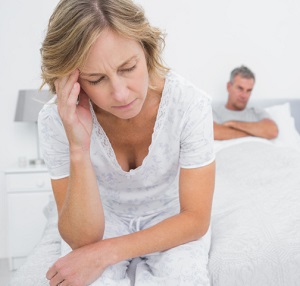 Does menopause or a hysterectomy quash or quicken your sex life? This question applies not only to those of us who might face these, but also to the romantic partners who love and live with many of us. Since our most important sexual organ is between our ears and not our legs, I believe our interest in sex (libido) is largely dependent on our beliefs about sex and what we can and should expect.
In my practice, I work with many older women who have read about increasing their estrogen levels in order to improve their sexual experiences and increase their sexual desire. Some swear by bioidentical hormones, while some declare that testosterone (T) is their favorite “hormone of desire.†(Susan Rako’s popular book bearing this title swears by T, but she backs her theory with personal anecdotes and no scientific data whatsoever.)
In 1985, researcher Barbara Sherwin wondered if lack of testosterone caused problems with libido. She discovered that administering T to women who had undergone hysterectomies enhanced the intensity of their sexual desire and increased frequency of sexual fantasies. But there was no evidence the hormone had affected their physiological response, so its effect was more motivational than physical.
There have been few well-designed studies of sexual interest in healthy people. Most studies of sexual problems have come from women who consulted their physician because of some health concern and thus had issues of some kind already. When well-known sexologist Alfred Kinsey and his colleagues spoke to women throughout their life cycles, they found that as age increased there was a distinct decline in the frequency of intercourse. But there was no decline in solitary self-pleasuring until well after age 60.
Among people I’ve talked to about sex, I’ve found over the years that men report a greater loss of sexual interest between 45 and 55 than women do; perhaps that’s why some of these women are masturbating! Many women over the course of menopause do report some decrease in intercourse and vaginal lubrication, but not in solitary sexual enjoyment when utilizing one of the many intimate lubricants available. Hooray for the slippery stuff!
A high percentage of our feelings about sex are determined by the culture that surrounds us. I once read about a study of aging women in a small village in Thailand. Some of them experienced a decline in libido, but they celebrated this, perceiving it as a welcome release from having to worry about sex. So while uterine changes may cause some lessening of sexual desire, not everyone experiences it and not everyone who does experience it considers it a problem.
I once worked with a young, single woman who underwent surgical menopause when she was in her late twenties. (I don’t recall whether her ovaries were removed.) She initially lost interest in sex, but when she regained her libido she began to lament that men were no longer interested in dating her. She would sit in my office and weep: “I’ve lost my mojo!†I scoured professional journals and spoke to colleagues about how the surgery might have affected her level of sexual attractiveness or desirability, and finally read about a study of monkeys that showed that males were no longer attracted to females who had hysterectomies. But when vaginal secretions containing pheromones from “intact†females were rubbed on the ones who had hysterectomies, males regained interest.
Pheromone secretion aromas are sexually stimulating, and after hysterectomy they are no longer produced in females. We do, of course, need to be careful about drawing conclusions about human sexuality from animal studies such as this, since so much of our sexuality is psychological and sociological. But popular magazines have recently published findings that seem to show that men “rate†women they’re watching on video who are ovulating as “more attractive†than women of a similar age and appearance who are in other stages of their menstrual cycle.
However, it isn’t as simple as no womb, no pheromones, no sex. Many older women are seen as sexy and are enjoying as much sex as they want. I guess we’re more complicated than monkeys!
 Women face overwhelming pressure to meet an often unrealizable “beauty†ideal. The result is that 80% of women report being unhappy with their appearance, and three-quarters of all women engage in some form of disordered eating such as crash dieting or skipping meals. Many companies have capitalized on this trend, offering a veritable cornucopia of products designed to “fix†women’s perceived flaws.
The advertisements for these products, however, frequently leave women feeling bad about themselves, particularly when images in these ads contain unrealistically “perfect†women. The overwhelming majority of cosmetic and clothing advertisements are digitally enhanced. Even Beyoncé fell victim to this practice, often called photoshopping, getting into a public dispute with H&M in early 2013 when the clothing retailer altered images of her modeling swimwear. But women are increasingly aware of the effects of digitally manipulated advertisements, and some retailers are abandoning the practice of presenting women with unrealistic images.
Photoshopping and Other Tricks
Although women continue to be bombarded with unrealistic—and perhaps even fake—images of models, the tide is slowly turning against photoshopping. Debenhams, a major British department store, recently announced that it will no longer manipulate images, even releasing photos demonstrating the “before†and “after†effects its previous photoshopping efforts had on models’ appearance. The National Advertising Division, an organization that makes recommendations for advertisers, has advocated for an outright ban on photoshopping in cosmetic advertisements.
Advertising tricks aren’t limited to photoshopping, though. The right lighting, heavy makeup, and clever clothing placement can leave models looking very different from how they look in real life. Some tricks mislead women about the effects of products featured in advertisements. Mascara manufacturers, for example, may resort to the use of false lashes or lash extensions to make the product look much more effective than it actually is. Women who buy the product are then left feeling like there’s something wrong with them because they can’t look like the model in the advertisement.
The Effects of Advertisements
Numerous studies have documented the negative effects that advertisements have on women, even when women know the ads have been altered. Women feel worse about themselves, for example, after reading advertisement-laden fashion magazines. Some women even resort to cutting out photos of extremely thin models as “thinspiration†for crash diets. According to research by sociologist Jean Kilbourne, regular exposure to advertisements can contribute to internalized sexism. Women may begin to see their appearance as the primary source of their worth, neglecting other interests in favor of the perpetual pursuit of aesthetic perfection.
Keeping Self-Esteem Intact
Even if photoshopping is banned, women will be exposed to images of models who have been heavily made up, who benefit from excellent lighting, and whose appearance differs substantially from the average woman. Although this practice can feel unfair and even overwhelming, women can take steps to empower themselves and avoid the self-esteem-crushing effects of unrealistic ideals. These include:
- Avoiding magazines that are focused primarily on beauty or that contain a lot of advertisements
- Turning off the television during commercial breaks
- Contacting retailers and cosmetic manufacturers to complain when advertisements are misleading or psychologically damaging
- Focusing on health and physical fitness rather than weight loss
- Critically evaluating claims made in product commercials and ads
- Focusing on valuing the self for personality traits rather than appearance
- Steering conversations with friends away from diets, makeup, and body shaming
References:
- Edwards, J. (2011, December 16). US moves toward banning photoshop in cosmetics ads. Business Insider. Retrieved from http://www.businessinsider.com/us-moves-toward-banning-use-of-photoshop-in-cosmetics-ads-2011-12
- ExtremeTech. (2011, December 16). US Watchdog Bans Photoshopping in Cosmetic Ads. Retrieved from http://www.extremetech.com/extreme/109375-us-bans-photoshop-use-in-cosmetics-ads
- Grey, J. (2013, May 30). Beyonce outraged that H&M intended to photoshop her bootyliciousness. Business Insider. Retrieved from http://www.businessinsider.com/beyonc-outraged-at-hm-photoshop-2013-5
- Helping your daughter see through advertising. (n.d.). Discover Your Daughter. Retrieved from http://www.discoveryourdaughter.com/for-your-daughter/self-esteem/helping-your-daughter-see-through-advertising
- Kilbourne, J. (2000). Can’t buy my love: How advertising changes the way we think and feel. New York, NY: Simon & Schuster.
- Ross, C. C., MD. (n.d.). Why do women hate their bodies? Psych Central.com. Retrieved from http://psychcentral.com/blog/archives/2012/06/02/why-do-women-hate-their-bodies/
- Three out of four American women have disordered eating, survey suggests. (2008, April 23). ScienceDaily. Retrieved from http://www.sciencedaily.com/releases/2008/04/080422202514.htm
- Women’s magazines and the cult of hypocrisy. (2012, July 5). Women’s Media Center. Retrieved from http://www.womensmediacenter.com/feature/entry/womens-magazines-and-the-cult-of-hypocrisy
 But in his new book, What Do Women Want?, New York Times journalist Dan Bergner argues that women might actually find monogamy more challenging than men—and studies backing this claim are beginning to pile up.
Older Studies
Sex researchers often point to studies to prove that men crave novelty more than women. One popular study presents a college student with an attractive stranger and then asks the student if he or she would be willing to have no-strings-attached sex with the stranger. Unsurprisingly, men are more likely to say yes to the tryst than women. But critics have argued that these studies neglect important cultural factors. Women, for example, might be afraid of being alone with a stranger or feel ashamed of their sexual desires. Without controlling for these issues, self-reports don’t provide much insight.
Sex and Culture
The belief that men are more sexual than women hasn’t always been so popular. In the Victorian era, for example, mental health researchers argued that women were much more sexual than men, and women were more likely to be diagnosed with hypersexuality than men. Religious texts present stories of promiscuous women, and sometimes portray women as the more sexual sex, advocating for measures to control women’s sexuality.
Beliefs about sex and sexual behaviors are heavily influenced by sex. In a world where women are penalized for enjoying sex or behaving in a promiscuous fashion, they may be less likely to express sexual desire. And when men are told that they’re more promiscuous or sexual than women, it may serve as a self-fulfilling prophecy.
Recent Research
Recent research is calling conventional wisdom about monogamous women and promiscuous men into question. One recent study, for example, found that women were more aroused by fantasies involving sex with strangers, and a second showed that women favored pornographic images that were novel over those that were familiar.
Losing Interest
Bergner emphasizes that women are more likely to lose interest in sex with their partners than men are, and argues that this may mean monogamy is harder for women than for men. The fact women lose interest in sex has often been used as evidence that they’re less sexual than men. However, it could be that they’re simply less interested in sex with their partners and still entertain an active fantasy life involving new partners. Statistics on infidelity vary, but women and men usually have similar rates, and some studies even claim that women cheat more often than men.
Future Research
Scientists have long sought the holy grail of sexuality treatment: a pill that will increase women’s sexual desire. Some women’s advocates have argued that the fact there’s no female equivalent of Viagra is the product of cultural influence; many women are desperate for something that can bring their libidos back. But it may be that the issue has little to do with biology and everything to do with boredom. Research into how to recharge sexual desire in a stale relationship could be the next step toward helping both men and women maintain satisfying sex lives in monogamous relationships.
References:
- Bergner, D. (2013, May 26). Unexcited? There may be a pill for that. The New York Times. Retrieved from http://www.nytimes.com/2013/05/26/magazine/unexcited-there-may-be-a-pill-for-that.html?pagewanted=all
- Dawson, S. J., Suschinsky, K. D., & Lalumière, M. L. (2013). Habituation of sexual responses in men and women: A test of the preparation hypothesis of women’s genital responses. The Journal of Sexual Medicine, 10(4), 990-1000.
- Marcotte, A. (2013, May 23). Women struggle with monogamy more than men. XX Factor. Retrieved from http://www.slate.com/blogs/xx_factor/2013/05/23/nytimes_on_lybrido_women_get_bored_with_monogamy_faster_than_men.html
- Valenti, J. (2009). The purity myth: How America’s obsession with virginity is hurting young women. Berkeley, CA: Seal Press.
You are not alone in your dilemma, and it is a tough one. You’ve prepared yourself and created the kind of life you want for your future family. Unfortunately, “if you build it, they will come†doesn’t really work when it comes to finding a partner and having children.
In my work with couples, particularly couples who have recently become parents, I see how difficult it is for many of them to maintain a solid partner relationship while attending to their new parenting duties. This is exponentially more difficult for couples who do not have a solid foundation to their relationship. I hear your very real fears, and generally, when we are driven by fear we don’t always make the best choices. If you rush into a commitment with someone so that you can have a child by a specific deadline, you risk overlooking some incompatibilities that may be problematic in the future.
You are right, however, that time is a factor, and I am wondering if you’ve considered alternatives to your original dream of finding a great partner and starting a family together. One of the biggest challenges of your dream is that you don’t really have control over how it works out. You can’t simply will the right guy into existence, you can’t ensure that he will be the kind of partner and co-parent you want, and you can’t guarantee that you will be able to conceive a healthy child together in the right amount of time.
With so many things out of your control, it would be natural to feel helpless, frustrated, anxious, and stressed—not a great frame of mind for dating. It might be helpful to open yourself up to some alternative plans. Instead of an all-or-nothing approach, would you consider, for example, waiting for the right partner and adopting or fostering if your childbearing “window†had passed? Would you consider having a child by yourself and on your own timeline? What options would you consider? What elements can you let go of?
Having alternative plans that you can live with can relieve some of the pressure you are feeling and, very likely, the men you are dating may be feeling as well. By all means, keep pursuing your original dream, but knowing that you have alternative plans that work for you might help you relax. Incidentally, chances are much greater that you will attract the kind of man you want when you are relaxed and content rather than stressed and anxious.
To really open yourself up to alternatives, however, you may need to take some time to process and accept that your original dream might not come true. There is a grieving process involved in this that can be painful but ultimately freeing. You don’t have to do it alone. You can get support from friends and family, or work with a therapist to come to terms with the very real loss that comes from letting go of the vision of the life you expected to lead. It can be a difficult but powerful process. Mourning the loss of a future you hoped to have can ultimately lead you to a place of being able to accept and embrace the future you will have.
Best of luck!
Erika
 “Art washes away from the soul the dust of everyday life.†—Pablo Picasso
I am privileged to work with new moms in my private practice. It is tremendously gratifying to help women and their families move through what can be one of the most challenging life transitions—that of parenthood. In my work with mothers, I see many women who experience perinatal mood/anxiety issues (PMADs), perinatal loss (miscarriage), fertility challenges, and traumatic birth situations (see prior articles on these subjects on my GoodTherapy.org profile page). Most often, interventions with moms are a combination of evidence-based cognitive behavioral work and interpersonal approach to assist the client in full recovery. I have also found great benefit in the use of expressive arts to assist this population in healing.
Expressive arts therapies are defined as the use of creative arts (art, dance, music, writing, drama) as a form of psychotherapy. The process of art making is emphasized versus the final product. In my practice, I employ the use of visual arts and crafts as a powerful intervention with clients of all ages. Although I am not an art therapist, I believe the use of art intervention is incredibly meaningful and assists in recovery from PMADs.
The American Art Therapy Association defines art therapy as a practice as “the therapeutic use of art making, within a professional relationship, by people who experience illness, trauma, or challenges in living, and by people who seek personal development.†Art therapy itself is considered a specific subspecialty in the field of psychology/counseling and requires an intensive registration and education process. With either expressive arts intervention or art therapy, the client does not need to have prior art training and need not feel pressured to produce a masterpiece. Again, the focus of the intervention is the process, not necessarily the product outcome.
I was initially exposed to the power of art to heal trauma in the drawings of child survivors of domestic violence in a San Diego shelter when I first began my career in clinical social work 20 years ago. In graduate school, I worked with a registered art therapist in a hospice setting, counseling children and families who experienced the loss of a loved one due to terminal illness. Art intervention was the primary modality in individual, group, and family work.
Moving forward through my career, most every setting I have been employed in involved the use of art as an intervention and source of healing. School and clinic-based settings provided ample opportunity to continue to bring art and creativity to the therapy process for children and adults managing depression, anxiety, trauma recovery, loss, life transitions, divorce, social skills issues, and medical traumas.
Art intervention is incredibly helpful for trauma survivors and those recovering from life challenges (including for clients feeling a sense of PTSD from perinatal depression). Art allows the right brain to be balanced and integrated with the rational, logical left brain. The bilateral movement of the hand moving across the page (mimicking the back-and-forth motion of EMDR) in turn assists in releasing trauma and integrating the experience in the brain.
Typically I will invite my client to participate in an art intervention at a point in her healing process in which she is beginning to feel the first glimpses of recovery. Sleep is beginning to be restored, mood is lifting, and anxiety is starting containment. Prior to art intervention, I will have helped to stabilize any crisis, link my client with other helping professionals and extended support networks (psychiatrists, lactation consultants, doulas, support groups, family support), and work with her to attain a level of recovery in which her focus and concentration are improving, along with her mood health. She may begin an exercise regimen; she may have hired a doula (caregiver) or enlisted the assistance of her extended family with baby care. She is beginning to feel biochemical relief, perhaps with the assistance of an SSRI, improving her nutrition with omega-3 fish oils, and she is sleeping for at least five consecutive hours (a full sleep cycle which restores serotonin).
Art interventions which I find particularly helpful for new moms contending with PMADs (which can also be adapted to other populations) can be created in individual or group modalities. Significant others of new moms may also participate in a couple/family session. The following are suggestions for use with new moms recovering from PMADs:
- Treasure Map; A Compass to Guide Me
Materials needed: colored pencils/markers, large poster paper.
Have client draw images of symbols which represent the wishes she hopes to manifest (for example, “good health/vitality†may be a sunshine image); encourage client to add powerful affirmation to the page (“I am reclaiming the best of my health and vitalityâ€) and label each image. Invite client to post “treasure map†in a prominent location in her house to be reminded of the goals she is setting for herself in active manifestation.
Purpose: a visual guide to affirm client’s goals and provide reassurance.
- Magazine Photo Collage; A Lantern to Light the Way
Materials needed: magazines with a variety of images, large butcher/poster paper.
Have client select images from magazines which represent her new identity transformation as a mother, or use theme in intervention above to guide client in goal attainment for self-care and balance as a new mom. Discuss images and invite client to verbalize how the images are important and meaningful to her.
Purpose: validation and support with role transition to new motherhood.
- Masks; Outside/Inside Worlds
Materials needed: preformed paper/cardboard face masks (available in craft supply stores), feathers, colored markers, beads, yarn.
Ask client to create one mask which demonstrates how she presents to the “outside world.†The second mask will reflect how she feels “inside†as a new mom. Discuss how masks are similar and different and why. What is the purpose of each emotional mask?
Purpose: identifying how feelings inside often do not match what we show to the outside world.
- Sculpy Figurines; Talismans of Strength and Courage
Materials needed: sculpy clay, paint, paintbrushes.
Invite client to create image out of sculpy clay (that which can be baked and hardened at a later time, then painted). The image can be a symbol of new motherhood, an image of mother/baby, or an object representing courage and healing (perhaps a bead for a charm bracelet or necklace). Once completed, client gets to keep the object in a special place as a reminder of her strength and courage in her healing process.
Purpose: a transitional object/symbol of the work the client is doing in psychotherapy and a tangible representation of her inner strength and courage.
- Journals; Drawing Out My Feelings
Materials needed: art journal, colored pencils/markers/paint/paintbrushes.
Many clients prefer to draw feelings in lieu of writing about feelings. Invite client to create image of her birth experience using vibrant color of her choice, and to narrate her story of the experience. This exercise is especially helpful in working with survivors of birth trauma. It is also helpful to add second exercise of an image in which client creates a symbol on paper representing healing and recovery.
Purpose: Recording emotions (written or drawn/painted) allows a container for the client to “place†her feelings so she is less overwhelmed. She is able to “master†any traumas by telling her story and her experience.
- Beaded Jewelry (Bracelet, Necklace); Embrace Motherhood Beads
Materials needed: array of bead supplies (beads, bracelet/necklace wires, etc.).
Invite client to create jewelry representing her new identity as a mother, her connection with her child.
Purpose: affirmation of new role and connection/attachment to new baby.
- New Mom Memory Box/Book; The New Me
Materials needed: shoebox, construction paper, markers/pens/paints, any supply to decorate a box or album.
Assist client with decorating a special box to hold keepsakes (photos, poems, cards, etc.) as she becomes a new mother. A scrapbook can be a similar project. Discuss her identity transformation and the joys/positives of this new life role.
Purpose: recording the most transformational journey a woman can ever go through and celebrating it.
- Mandala Drawing; Drawing the Soul
Materials needed: paper, pastels, paints, pencils/pens.
Mandalas are circular images from ancient cultures and religions which represent the power of one’s healing process (see Mandala book). Invite client to create a mandala with the materials of her choice.
Purpose: for client to enjoy process (versus product) of art making and generating an image which represents healing and recovery; practicing self-care through creativity flow.
- Dream Catcher; Rest for the Weary
Materials needed: paper plate, yarn, beads, feather, single-hole punch, scotch tape.
Assist client in constructing a native American dreamcatcher, which can symbolically protect her from nightmares and scary, intrusive thoughts at night. Discuss the dreamcatcher as symbol of nighttime inner peace and tranquility.
Purpose: Most moms with PMADs have horrible sleep initially and need comfort at night. This craft is a great visual to calm the nerves and assuage the soul. Add some lavender- and vanilla-scented oil to the dreamcatcher, and invite client to place above her bed.
- Worry Dolls; A Place to Leave My Worry
Materials needed: clothespin, yarn, tongue depressors, colored pens, fabric scraps.
Invite client to create a Guatemalan worry doll which can hold her worries before she goes to sleep at night or when she begins her day (see The Kid’s Multicultural Art Book).
Purpose: Women with PMADs are anxious. They need a “container†in which to place their worries and fears; worry doll may represent transitional object of the therapist in between sessions.
“The aim of art is not to represent the outward appearance of things, but their inner significance.†—Aristotle, 384-322 B.C.
The following are books and websites which have been, and continue to be, a source of inspiration and enlightenment:
- Allen, Pat (1995). Art Is a Way of Knowing, Shambala.
- England, Pam (1998). Birthing from Within: The Extraordinary Guide to Childbirth Preparation,Partera Press.
- Fincher, Susanne (2009). The Mandala Workbook: A Creative Guide for Self-Exploration, Balance, and Well-Being.
- Malchiodi, Cathy (2006). The Art Therapy Sourcebook, McGraw-Hill.
- Malchiodi, Cathy (2006). The Soul’s Palette: Drawing on Art’s Transformative Power,Shambala.
- McNiff, Shaun (1992). Art as Medicine,Shambala.
- Terzian, Alexandria (1993). The Kid’s Multicultural Art Book: Art and Craft Experiences from Around the World,Williamson Publishing Company.
- Arttherapy.org:Â American Art Therapy Association.
- Atwb.org : Art Therapy Without Borders: Promoting international art therapy initiatives in mental health, health care, and education worldwide.
 Ask any armchair psychologist whether men or women are more sexual, and you’ll likely get an absolute proclamation that men are more visual, think about sex more often, and have more partners. These “facts†play into cultural mythology, that ties manhood to sexuality, and treats women as the fairer, less sexual sex. But research is increasingly showing that the things we all think we know about men and sex just aren’t true.
[fat_widget_right]
Thinking About Sex
Many of us have heard the claim that men think about sex every seven seconds or every 15 seconds. But this statistic may be little more than a myth. A 2011 study found that men think about sex, on average, only 18 times a day—several thousand times less frequently than popular statistics claim. In fact, men think about sex only slightly more than they think about sleep, which crosses their mind 11 times a day, and as frequently as food, which also makes an appearance in their thoughts 18 times a day. But, according to the study, men still tend to think about sex more frequently than women. The women in the study thought about sex about 10 times a day, with individual numbers ranging from zero to 140 times daily. Individual men, by contrast, thought about sex between zero and 388 times each day.
Number of Sexual Partners
Men tend to claim more sexual partners than women, but upon careful examination, statistics on the lifetime average number of partners fall apart. Unless more men than women are gay or are having sex with a few of the same very sexually active women who aren’t represented in surveys, the averages for men and women can’t differ so dramatically. Several studies have shown that men are more likely to inflate their number of partners, while women are more likely to shave a few off the top.
Desire for Adventure
One famous study asked men and women if they’d be willing to sleep with an attractive stranger. A large portion of men said yes, while few of the women did. This study is often used to support the idea that men crave multiple sexual partners or new sexual experiences. But studies that ask men their desires don’t measure actual behavior. Men may say that they’re willing to sleep with an attractive stranger simply because this is the cultural expectation. Women may be hesitant to say that they’d have sex with a stranger because they don’t want to be perceived as promiscuous.
Are Men More Visual?
We’ve all heard that men are more visual than women, and this is used as justification for everything from looking at porn to ogling strangers. While most research does show that men are more visually stimulated than women, the interpretation of this data is much more complicated than it seems. One 2008 study, for example, emphasizes that sociological factors play a strong role in men’s visual stimulation. Men are taught from an early age to emphasize physical appearance, and the same study found that men tend to be more aroused by contexts in which they can objectify another person—a tendency that is probably learned.
Sex and Masculinity
Myths about men’s sexuality tend to stick around because they make sense in light of social roles and gender ideology. Although women are becoming increasingly sexually assertive, sexuality in women is still less acceptable than men, and women are often taught to feel some shame about sex; this can affect what they report to researchers and whether they share sexual thoughts. Sex-based myths can make women feel that sexual feelings are deviant and abnormal, and can support puritanical ideas about women and sex. But men are also harmed. Men who don’t meet masculine ideals by being hypersexual or craving multiple partners can feel less manly, while men who want a healthy sexual relationship with a single partner may feel pressure to engage in promiscuous or objectifying behavior.
References:
- Jordan-Young, R. M. (2010). Brain storm: The flaws in the science of sex differences. Cambridge, MA: Harvard University Press.
- Kolata, G. (2007, August 12). The myth, the math, the sex. The New York Times. Retrieved from http://www.nytimes.com/2007/08/12/weekinreview/12kolata.html
- Men more willing to have sex with stranger than females: Study. (2011, September 04). Indian Express. Retrieved from http://www.indianexpress.com/news/men-more-willing-to-have-sex-with-stranger-than-females-study/841459
- Men think about sex just 19 times a day – nearly as much as food. (2011, November 29). The Telegraph. Retrieved from www.telegraph.co.uk/health/healthnews/8924988/Men-think-about-sex-just-19-times-a-day-nearly-as-much-as-food.html
- Rupp, H. A., & Wallen, K. (2008). Sex Differences in Response to Visual Sexual Stimuli: A Review. Archives of Sexual Behavior, 37(2), 206-218. doi: 10.1007/s10508-007-9217-9