We are in the midst of January. One way to combat the cabin fever of winter and the shorter daylight hours for those across the northern hemisphere is to turn to creative processes.
In 2010, during one of the worst blizzards in New York history, many people bundled up and went outdoors with their cell phones or digital cameras to capture the beauty of the pristine snow against the textured backdrop of the urban environment. Some captured the absurdity of humans struggling against Mother Nature in their fight to dig out and return to ‘normal’ as soon as possible.
Contrast often gets our attention. It can be very dramatic. Drama can cause a variety of experiences such as: awe, giddiness, fear, and sometimes shock.
Coping with an experience generally falls into three categories:
- engaging in the experience
- avoiding it
- overcompensating for it
After the blizzard, some people gave into the experience and engaged with the snow. Some people avoided it by staying away from the region or staying indoors. Others got caught up in the ‘expectation’ that the Department of Sanitation would handle what Mother Nature was delivering. When those in charge fell short, the situation heated up, not enough to melt the snow but in finding someone to blame.
The ‘unexpected’ can cause a range of feelings in humans, from joy to fear. The ways in which people cope are specific to them, to their early life experiences, their stage in life, and their future concerns. Most people had an experience flowing somewhere in-between. In some people the unexpected contrast of the heavy snow sparked their creativity. Others felt shutdown. In extreme cases their basic survival was threatened because support vehicles could not get down snow-packed side streets. Mother Nature is not fair in how she delivers her impact. She just does. Just as a bobcat in the wild does not discern which animal to take down for its next meal, Mother Nature spares some and hits others hard without reason.
In art, the contrast between the dark pigment of charcoal against light or absence of pigment on paper can create drama that is compelling to the eye. The self-portraits of Kathe Kollwitz and Egon Schiele are good examples of this. In Kathe Kollwitz’s work, drama is created by the contrast of not only the pigment but of the pressure applied to the paper, and the use of contrasting line to define and imply action or the lack of it. In Schiele’s numerous self-portraits, intensity is created by the placement of thick, dark, lines which define and the almost absence of pigment in other areas. Schiele’s self-portraits express his willingness to expose himself literally and figuratively on paper and canvas. If you Google an ‘image’ search for Kollwitz or Schiele and self-portraits, you will find very expressive examples of contrast in: texture, line, form shape and subject matter. You may find the experience exhilarating. You may find some of the artwork off-putting. The art may trigger feelings like the snow did for many New Yorkers.
In art, as in life, all drama or complete void cannot be tolerated for too long. The experience would be overwhelming. Many people have had an experience of contrast that shakes their lives and shapes them forever, for example: the profound loss of someone or something, a traumatic experience, relationship issues, a sense that something is holding them back from living fully, or an expectation that life has let them down. Uncontrollable anxiety that flares up and takes over, or depression that has an emotional base so deep that it limits the simple pleasures in life are indicators that life is being coped with rather than lived. Most of life is lived in the flow somewhere in-between contrasting poles of drama and void, in the blended parts of life where life is fluid, where creativity and hope are accessible.
 One way to understand the healing journey is to think of growing from a place of victimization to survival, and ultimately, to thriving. While a person has had no choice about being victimized, he or she does have a choice about growing through these stages.
Regardless of what the traumatic event was, where or when it occurred, there was a period of time when victimization occurred. This victimization is not something one should feel guilt or shame about, rather it is a factual reality to understand, accept, and grow through. When an individual cannot or does not grow through the period of victimization, one can think of this person as being stuck within the victim stage.
An individual in the victim stage feels as though he or she is still in the trauma—no matter how long ago the actual traumatic incident(s) occurred. The sense of being in that moment of time permeates the person’s feelings, thoughts, and behaviors and even his or her sense of self. It is common for an individual in this stage to avoid many emotions while experiencing in abundance feelings of helplessness, vulnerability, fragility, self-pity, numbness, defeat, shame, self-hatred, and discouragement. The person might feel out of control or angry, want to hide and hope to be rescued. The individual often believes he or she lacks choices and has few possibilities and a shortened future. This combination of thoughts leads to little planning for the future and a preoccupation with the past.
In addition, the individual may feel plagued by memories of the event, particularly if he or she is struggling with flashbacks. Common behaviors that arise out of these thoughts and feelings are self-destructive ones such as addictions or a pervasive passivity. While most individuals, even those who have been stuck within this stage for quite some time, do not desire to be within the victimization stage, some individuals do experience secondary gains (such as love, support, attention, assistance) from being within this victim stage.
[fat_widget_trauma_ptsd_left]These benefits can also become intertwined with the individual’s way of life and identity, making it all the more difficult to grow through this phase. Just as some individuals struggle with leaving this stage, some individuals struggle with being in this stage and try to avoid acknowledging the truth of the victimization. Neither approach is healthy, because true recovery can only occur when ones has dwelt within and then healed out of this stage.
Once a person has grown through the victim stage, he or she enters into the survivor stage, which is the time when one begins to feel strong and confident and to truly believe that there are resources and choices. A key realization of this stage is that an individual has gotten through the trauma intact, or mostly intact, and is indeed outside of it. This understanding allows the person to begin integrating the trauma into his or her life story, to take control of life, and to recognize potential for change and growth.
For many, a sense of satisfaction accompanies this realization as does a shift into an emotional state that has less suffering, less pain, less guilt, and definitely less depression. Many of the difficult emotions decrease, and though this is not necessarily a happy phase of life, moments of happiness will start to occur more often. As one progresses through this stage, living one day at a time increasingly becomes a primary focus. Coping from day to day and acting upon a commitment to healing, trusting, and restoring relationships becomes the essence of healing.
The thriver stage crystallizes the growth of the survivor stage and takes one’s healing to the point where he or she has general satisfaction with life as well as a sense that ordinary life is both interesting and enjoyable. Commitment to moving forward, to taking care of one’s physical health, to investing in one’s career, relationships, and love and life allow these gains to occur. On an emotional level, feelings of strength, empowerment, compassion, resilience, and self-determination eclipse the emotions experienced within the victim stage. In addition a renewed sense of joy, peace, and happiness arises because one has grown, despite the traumatic experience, and is living well.
It is within this thriver stage that a person’s thinking becomes less pessimistic; he or she begins to think and believe that that there are long-term options, that there is a point to planning for the future, and he or she begins to recognize and embrace new possibilities. This living well is also exemplified in an ability to connect with others who are suffering, to accept imperfections in loved ones, and to reach out to others. Life is once again rich in meaningful relationships which help the person find a sense of meaning and purpose. If any symptoms of posttraumatic stress or other issues remain, the individual has learned how to effectively cope with these symptoms. Ultimately, he or she perceives him- or herself as more than a victim. One recognizes him- or herself as a valuable individual who, though tempered by tragedy, has risen and moved beyond the trauma.
 This is the first of a two-part article series about a men’s therapy group I conduct on a weekly basis. This men’s group was established a little over a year ago, and consists of eight members. The group is an excellent example of men’s issues in contemporary America—their roles as men in a complicated world, their relationships, and their emotional and psychological struggles. As a psychotherapist who has worked with men in various settings for over 30 years, I am continuously impressed and deeply touched by these men—their honesty in dealing with difficult life problems, their ability to be vulnerable and to openly share deep emotional struggles, their compassion and empathy with each other, their courage to embrace their individuality, and to make difficult changes when necessary.
In this blog entry I’ll talk about the importance of this type of group and the major issues and concerns addressed in the group. I believe these observations will highlight some of the most pressing concerns that men face today, in a world where there is no clear definition of a man’s role—actually, there are often conflicting expectations and unreasonable demands.
Where do men turn today to get help and support for their struggles with feelings, relationships, stress, and other problems? Some men are fortunate in having strong, supportive relationships with a spouse or life partner, loving family members they can talk to, and sometimes a church group or other support system. However, studies suggest that a majority of men struggle in silence. They may be socially isolated, their marital and other relationship problems may result in an inability to talk things over, and a combination of fear and shame inhibit them from reaching out to others. Most men are averse to therapy or professional counseling, where they are asked to talk about their feelings and communicate in a manner that is often foreign to them. Our job, as men, is to protect and provide for others, we’re the hunters and warriors. We are not designed biologically or neurologically to sit in an office and talk about our vulnerabilities.
Fortunately, men are finding new ways to join together to talk and share their struggles with other men. There is a new psychology of men today, informed by recent findings from cultural anthropology, modern brain science, social psychology, and other fields. Men are finding therapists who specialize in working with men’s issues, and more men’s therapy groups are available today than ever before.
[fat_widget_left]This men’s therapy group meets weekly for two hours. The men range in age from their early 20s to early 60s with the average age at about 44. All but two are married, one is in a long term relationship. All work full-time jobs, some professional, some blue collar. Why did they decide to join a men’s group? All of the men had concerns about relationships. Some of them struggle with life stress, anger, anxiety, and depression. Many of them were dealing with self-doubt and shame, not feeling good enough about themselves as men.
This is a process oriented psychotherapy group. That means that we focus on the here and now, what actually happens in the group between the members. We talk about feelings that come up in the group, their emotional responses to each other, and the kind of relationships that develop between them. We start each group session with a check-in. Each group member talks for two minutes about their week—any problem areas or concerns that come up during the week—and they claim time if they want to spend more time talking about a specific issue or problem area. Usually, three or four of the men claim time. After everyone checks in, we focus on the men who claim time.
As they talk about their current concerns—relationship problems, work issues, etc.—the other men and I intervene with various comments. The comments range from suggestions to confrontations. Suggestions by other group members are common (men are the decision makers and fixers, they love to come up with solutions). The men have learned to make supportive and empathetic statements; after a year together, they easily relate to each other. They often talk about how reassuring it is that other men have the same kind of problems and feelings. At times, the men will challenge each other with confrontational statements. For example, when John is “in his head,†intellectualizing and rationalizing, avoiding his fears and shame regarding his relationship with his wife, group members will confront him by telling him to “get out of your head,†and get real with his feelings. Often they tell each other how they relate or identify with specific feelings, and situations.
The membership in this group has been remarkably stable. Five of the men have been in the group since it was established a little over a year ago. The other three joined the group about seven months ago. They have developed very close, supportive, even loving relationships. I was amazed the first time I heard one of the men say to the others “I love you guys.†These days, that type of statement is almost commonplace. They talk about how they look forward to the group each week. They frequently contact each other between sessions to talk about an emerging problem, or just to check-in with one another. I encourage them to bring these conversations back to the group, and this happens frequently without my prompting. The men even get together for dinner, and then talk about their conversations during the next group session.
It’s a joy to work with these men. They are often good-natured, there’s plenty of joking around before and during each group session; yet they can get very serious, talking about their deepest fears and self-doubts. They are not afraid to be intimate, hugging each other after every group, and they often congregate in the parking lot after sessions to continue some discussions. I’ve seen progress at different levels for each of the men; some report improved relationships, many talk about feeling better about themselves and their lives.
There are times I wish I was a member, and not the therapist.
Many people are so unhappy that they find a therapist or counselor to work through their struggles. Plenty more people are content enough with their lives. But some are truly happy. Where does that happiness come from? Does money buy it? Self-confidence? Safety? Support systems? A fulfilling job? Pets? Everyone’s combination of life experience is different, but repeated studies have identified that some groups tend to be happier than others. Recent studies have looked a bit closer at the happiness quotient of two specific (though very different) groups: people who live in “walkable†neighborhoods, and people who are involved in church. Both had one major factor in common: human relationships.
First, churchgoers. Religion’s “secret ingredient†for making people happy, says the study, is the social ties people build when involved in a religious community. This is not to say that private spirituality is without positive psychological value; past studies have found that spirituality reduces both stress and depression. But those who attend church and build relationships there are consistently happier than those who attend and do not build relationships. Second, the study on walkable neighborhoods and well-being. Walkable neighborhoods provide easy access to post offices, parks, restaurants, playgrounds, barbershops, and club meeting venues. People who live in walkable neighborhoods tend to build “social capital†– they are more likely to meet people, become involved in community volunteer work, build relationships through that work, and ultimately feel happier. (more…)
 Couples get together because they believe in the idea of happiness. Couples stay together because they still believe they can achieve it. People in relationships pretty much want the same things: love, security, trust.
As a couples counselor, I believe there is a way to create a great relationship, but there’s no way to build one unless you fully understand your deeper feelings and those of your partner. You might be saying to yourself, “Of course I understand my wife. She won’t let me forget what I need to know about her.†You may think this is understanding, but I call it avoiding something you are tired of hearing. Understanding is something very different.
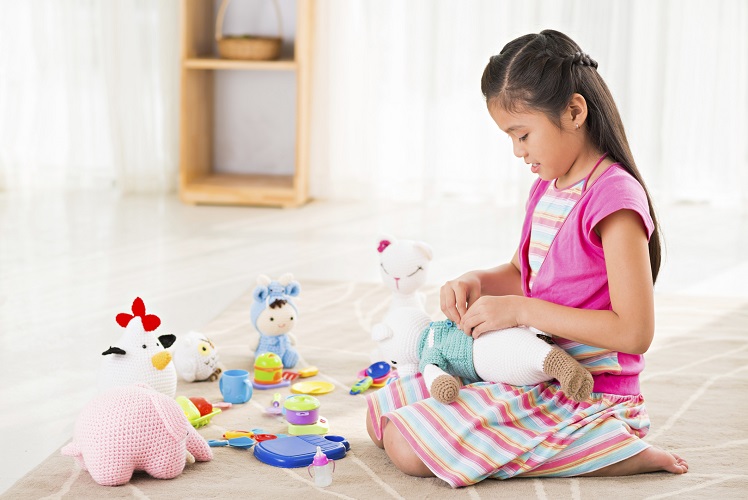
During therapeutic play with children, therapists watch, listen, and interact during moments when a child may be giving voice to images, emotion, and story.
“Image†implies an object or person of attachment from the child’s past, “emotion†implies feelings from past relationships or that the child may be feeling in current relationships or in the moment, and “story†implies the coming together of a narrative that all children accumulate piece-by-piece over time.
As children work to make sense of their world, they often try on different ways to communicate meanings, experiences, and identity. Usually this work occurs in the context of ongoing parent-child relationships, through the form of brief questions and conversation, and meaningful experiences over years and years.
Sometimes a child’s context, when tumultuous, unpredictable, and even harmful, can deter such work and leave a child with only collected fragments of identity. Those fragments may be confusing and contradictory and may leave a child without the confidence that comes through securely attached relationships with caregivers.
Sandplay therapy and other forms of therapeutic play, both directive and nondirective, are tools in a process of nurturing more secure attachment bonds with caregivers and beginning a journey of co-construction of identity.
[fat_widget_child_counselor_right]Take, for instance, a child who, after experiencing chronic abuse or neglect, begins to settle into a supportive family who can provide consistency and nurturance. Oftentimes families are surprised when a child responds to all their outpourings of love and support through varying modes of ambivalence or avoidance. In these cases, it is not only the child, but also the adults who have a tremendous amount to gain from experiencing the child’s underlying anxiety in a therapeutic context, deriving new, more positive and safe experiences, and working together to develop a new approach and a new narrative to coincide with it.
As therapeutic play facilitates relationship-bonding and identity co-construction with caregivers, volatile survival-oriented behaviors often decrease. The words of Susan Johnson, a leading proponent of emotionally focused therapies, ring in my ears: “Emotion must replace emotion.â€
A caring, creative, and collaborative approach assists such children and their families—and in the cases of adoption, their new families—in launching a journey of defragmentation, meaning-making, and identity formation that may have for years been delayed by a focus on more primal needs.
Over time, caregivers have opportunities to become more involved and less involved in the child’s play as it feels comfortable to them and to the child.
As children participate in sandplay therapy, I make a point to remain only peripherally engaged in their play, allowing them to take control of their play worlds with minimal interference. I often mirror the degree of participation of caregivers in the room. Over time, caregivers have opportunities to become more involved and less involved in the child’s play as it feels comfortable to them and to the child.
These new fragments of experience and exploration, in the safe presence and amidst dialogue from caregiver(s) and counselor, are building blocks in this co-construction of identity. Images, emotion, and story can emerge in unexpected ways and at unexpected times.
Much of the work of this co-construction is already occurring by this time in the context of a new, safe, and more predictable family home environment. The families supporting these children should be encouraged by signs that emotional and social development is roaring down the tracks once again, much due to the fuel of their care and affections.
Recommended Reading
Gil, E. and Sobol, B. (2000). “Engaging families in therapeutic play.†In C.E. Bailey (Ed.), Children in Therapy: Using the Family as a Resource. NY: W.W. Norton & Company.
When a baby is born the process of Separation/Individuation begins. First, baby and mother are one. Mother has the wish to love and protect her baby. She wants to keep her from physical and emotional harm. She bonds with her baby and these loving and protective feelings give mother pleasure as she enjoys the closeness and the wonderful feeling of oneness (symbiosis). Baby thrives with this oneness and is blissful. As baby grows and develops, the oneness will become twoness in which baby suffers the reality of a separate mother who no longer responds to every need. Mother also suffers from the loss of her own blissful feelings of oneness. Over time, as the child separates and individuates, both mother and child begin to experience the rewards of a mutual relationship between two different and separate individuals. When this process goes awry, the developing adult may find herself in conflict. She wants to be independent but also likes being taken care of. She may be concerned that asserting her individuality would result in her mother being hurt or upset. This may also lead to fear that mother’s love and approval could be jeopardized. These kinds of conflicts can interfere with the child’s becoming a person who feels she knows what she wants and how to get it.
 An expression I have heard many a time is, “If you don’t have anything nice to say, then don’t say anything at all.” While I agree that it’s wise to avoid venting aimlessly at someone, shared input does not have to be neutral or nice either. I don’t want to withhold valuable information because I am afraid of how it will be received.
Let’s look at an example: I often reach out to peers when I am looking for support and feedback, not only in the form of kind words, but also through honest and constructive insight and ideas. When ideas are shared in a way that demonstrates compassion and interest, I am more likely to take it in. On the other hand, when I receive feedback that is shared in a mean, sarcastic, or patronizing way, I may react to that and miss a wonderful opportunity for growth.
When anger comes into play, it’s easy to miss the message. If I can avoid feeling defensive or upset, I may be able to hear the message and respond in an appropriate way. If the other person’s anger degrades me or devalues my position, I am more likely to feel the anger, respond in kind, and miss the message.
So how do we do we best express ourselves in the heat of the moment? These situations are tough. Often times, backing out and returning to the conversation later may make it easier to be heard. Realize that when our heart rates increase, there comes a point where the chemicals flooding our bodies will overwhelm the thinking process. At such a point, we lose our ability to best express our wants and needs in an appropriate way.
If you are the recipient of the other person’s anger, and you elect to stay engaged in the conversation, be sure to really think about the message you want to convey. Take a few deep breaths to center yourself. Resist the urge to respond in anger. Your message is not yet lost. Remember that the words you are hearing and the display of anger are not your issue, but a struggle of the other person. Calmly let the person know you are having difficulty listening and may be missing the message. If you say this in a believable way, without a sarcastic or negative tone, the other person may calm down. This will probably confuse the angry person, who is likely expecting a counterattack of some sort.
It can help to agree with some point of the other person’s argument before sharing your own. When sharing your points, humble yourself. Ask if what you are trying to convey is coming out the right way, because maybe you are not doing your best. Take responsibility for your actions or statements. For most people, this candor is refreshing.
Before you start a difficult conversation, tell yourself that you will be able to successfully express your wants and needs in a positive and calm way to best be heard. Stop sabotaging your efforts with statements like, “It won’t work,” “I won’t be heard,” or “I can’t calm down.” You can do this. Your calm and positive attitude has to lead the way.
 What is the relationship between having a problem with your significant other and not having individuated successfully?
Successful individuation means that you have navigated into young adulthood and developed a sense of your unique self. Moreover, you have developed a comfort with that self, and are not easily swayed when faced with the pull from your parents and early significant others to be someone other than who you are. This means you can tolerate the feeling that others may not fully agree with or approve of your choices, feelings, desires, actions, or beliefs.
If you have not successfully individuated—and this is always a matter of degree—you will have difficulty asserting yourself in significant relationships and may experience anxiety and lack of self-esteem or self-confidence as you engage in your life.
There are many ways that problems can arise between couples when one or both partners have had problems individuating. “Dan” and “Laura” are a composite couple, based on the couples I work with in couples therapy. Their relationship illustrates the kinds of dynamics that can interfere with optimal functioning in a relationship.
Dan and Lara’s Relationship
Dan and Lara are both 24 years old. They met during their senior year of college. After dating casually for about three months, they thought of themselves as a couple and agreed to an exclusive relationship. They describe themselves as happy together; they share interests, and assume they will marry in the coming year. They entered couples therapy when Lara started to feel anxious about getting married. Dan was surprised by Lara’s feelings and feared that Lara would leave him. He couldn’t make sense of why, when they didn’t fight and they seemed so compatible, Lara would have any worries.[fat_widget_relationships_left]
As we talked in couples therapy, Lara began to express some of her worries. She worried about the fact that Dan always agreed with her. He never expressed any wishes for different friends, entertainment choices, or political ideas. At first Lara thought it was great that they didn’t fight and she always got what she wanted. When Dan and Lara moved in together, Dan was fine with anything Lara wanted to do to decorate the apartment.
After a while, Lara began to wish for more collaboration. When she asked Dan what he would like, he always replied, “Whatever you want is okay with me.â€Â In our sessions, Lara realized that this left her feeling uneasy and wondering, “Where is Dan? Who is Dan?”
Dan was surprised to learn about Lara’s feelings. He said he felt that Lara had very clear ideas about what she wanted and he didn’t, so it was fine with him. He said he sensed that the choices that Lara made were very important to her and that she would not like to be required to do things or choose things that were different from her own wishes. This was okay with Dan. His thinking was that there was no point in making Lara angry if the choice was of no consequence to him.
Let’s look at Dan and Lara’s individuation experiences so we can see what sense of self each person brought into the relationship, and how the interaction between these selves plays out to create the ways Lara and Dan relate.
Dan’s Individuation Experience
Dan described his relationship with his parents as very close. He felt they appreciated and approved of his choices. But as we explored his early life, it became apparent that Dan’s parents were very controlling and had very definite ideas about the right and wrong ways to do things. For example, they insisted that Dan go out for sports, even though he recalled that he really preferred to play music.
Thinking back, he remembered that he didn’t want to fight with his parents. When he would express his own wishes, they would respond to him in a dismissive way, leaving him uncertain about his ability to make good choices for himself. Over time, he learned to enjoy his parents’ admiration for being the son they wanted, rather than risk their negative feelings to become his own unique self. In our work together, Dan realized that as long as there was no conflict in his relationship with his parents, he could feel good about himself. Conflict made him question the validity of his ideas and jeopardized his feelings of self-confidence and self-esteem.
He soon recognized how this pattern was repeating itself with Lara. The sense of self that predominated in his relationship with Lara was that he was loveable and admirable as long as he didn’t create conflict. He believed that she, like his parents, seemed to know what was right. If he could rely on her to make choices for him, there would be no conflict. He could maintain feelings of competence and self-worth as long as Lara was happy with him. With any sense of unhappiness on her part, Dan’s self-esteem diminished and he became anxious and self-critical.
Lara’s Individuation Experience
Lara’s experiences with individuation were very different from Dan’s. Lara’s parents were also very controlling, but unlike Dan, she didn’t become the person her parents wanted her to be. She remembers being 8 or 9 and getting into fights with her mother over her power to chose what to wear to school. She decided to stop fighting, wear her mother’s choice, and then bring what she wanted to wear and change at school.
Over time, she developed strategies to avoid conflict with her parents and to do what she wanted. She didn’t share her feelings with them, and relied on friends and her grandmother to be able to express what her parents didn’t want to hear. Her friends and grandmother played an important role in her development of self-confidence and self-worth. Her grandmother admired her take-charge approach to her life, and they became confidantes. By the time she was in high school, Lara’s grandmother was turning to her for advice. This had a large influence on Lara’s belief that she had good ideas, could trust herself to know what she wanted and that the things she wanted were right. The sense of self that predominated in her relationship with Dan was that she was competent and knew what was right. She felt loved and approved of when this perception was validated.
This article is part II of a three-part series. Part I introduced the first phase of healing, the safety phase.
 As you pass out of the first phase of healing, you may feel as though you have a new lease on life and want to step out of your healing journey.
While you have more than every right to do this, the first phase is ultimately not sufficient to bring whole and complete healing. The real and perceived safety that you established within the first phase of healing—within yourself, with the people in your life, and in your physical environment—becomes the foundation that allows you to grow into the second phase of healing. In this second phase of healing, the actual traumatic experience is grappled with through remembering and mourning.
Integrating Traumatic Events into Your Personal History
Remembering allows you to address your trauma story by placing the event, or events, into your life history. This is giving your memories temporal dimensions. Due to the physiological processes that are “online” during a traumatic experience, the subsequent memories can seem to float outside of time and space rather than being rooted in the timeline of your life. To truly heal and integrate the reality of your traumatic event, the experience needs to settle into your life history.
To achieve this, a therapist can work with you to review your life before the traumatic event, the circumstances that led up to the trauma, and life after the trauma. Such a life review includes looking at others’ reactions, as well as acknowledging and healing from secondary wounding experiences.
By engaging in this emotional work, you transform the traumatic event from something that was done to you into something that is a part of your life experience. Rooting the traumatic event into your collective life history enables you to reclaim yourself—not the trauma—as the main character in your life, and allows your personal meaning of the trauma to come to the surface.
Reconstructing Trauma Memories
Once the experience of trauma is rooted as a part of your life experience—as an event that has a sense of time and space—the next step is to reconstruct the traumatic event. This is not memory recovery work: no memory is created where there is none. Instead, your therapist will work with whatever memory you have, regardless of length or detail. The purpose is to transform the trauma memory from a frozen moment of terror into a memory that reveals your feelings about and interpretation of the event.
This work is done one small piece at a time, with the guidance, support, and assistance of a competent professional. Despite the therapist being “the expert,” you, the survivor, have the final say about the pace of this work. The end result for most survivors is that their trauma story is no longer one of humiliation and shame, but rather one of virtue and dignity.
Remembering the traumatic event or events and connecting them to words and emotions enables you to mourn what you have lost. While trauma may or may not result in physical loss, it always results in psychological losses. Emotionally connecting with your losses is a courageous act. It can feel scary or even terrifying, because this acknowledgment can confirm the finality of the losses.
Moving Beyond the Second Phase
For many, the work of remembering, mourning, and grieving feels endless, regardless of the actual amount of time this phase encompasses. Keep in mind that there is no set time limit to this phase. Every survivor spends a different amount of time in this second phase of healing, but it cannot be skipped nor rushed.
Survivors will know that they are nearing the end of the second phase of healing when, as Dr. Judith Herman states, “It occurs to the survivor that perhaps the trauma is not the most important, or even the most interesting, part of her life story…when the patient reclaims her own history and feels renewed hope and energy for engagement with life. Time starts to move again…the traumatic experience truly belongs to the past. At this point, the survivor faces the tasks of rebuilding her life in the present and pursuing her aspirations for the future.â€
A new study published in Psychological Science links anger to increased motivation for reward, a feature that some might associate with more positive emotions. Interestingly, this study doesn’t just link anger in general with motivation in general: instead, people actually showed the strongest desire for specific items they associated with anger. The study’s authors relate this tendency to evolution: if food supply is limited, for example, those who feel food-related anger will fight harder to win that food. This backs up one of the chief understandings behind anger management therapy: that anger is a healthy part of adult life, which helps us protect ourselves and meet our needs. But like any strong emotion, there are both healthy and unhealthy ways of channeling it.
 Recent interest in sexual addiction has drawn attention to a variation called sexual anorexia. Also called sexual “acting in,” sexual anorexia is characterized by a severe aversion to sexual contact and the obsessive avoidance of sex. Other signs of sexual anorexia include:
- Shame and loathing after sex
- Rigid, judgmental attitudes about sex
- Excessive fear about sexually transmitted disease
- Body distortion
- Obsessive self-doubt
- Self-destructive behaviors to limit, stop, or avoid sex
- Episodes of sexually acting out or sexual “bingesâ€
Deprivation creates the illusion of control. In food anorexia, the person refuses to eat, controlling exactly what goes in her body; in sexual anorexia the person denies access to sexual penetration and emotional contact. Convinced that “no one can hurt me if I don’t let them in,” sexual anorexics experience an emotional wasting away as they become increasingly isolated.
Much like bulimics, sexual anorexics may enact a “binge and purge†cycle. Individuals may go through periods of extreme deprivation of sex followed by promiscuous sexual behavior. Sexual addicts, in an attempt to control their compulsive behavior, may even enforce an anorexic phase—born out of self-hatred, or as punishment or atonement for sexual acting out. In Ready to Heal: Women Facing Love, Sex, and Relationship Addiction, Kelly McDaniel writes, “Sexual anorexia is an extreme aversion to closeness, and sexual addiction is an objectification of the other person that makes closeness impossible.â€
Other compulsive deprivation behaviors such as hoarding, being a workaholic, debting, and saving may accompany sexual anorexia. Sexual anorexics also may be overweight or obese, as eating can soothe their anxiety and protect them from the advances of others by making them appear sexually undesirable.
People who are this terrified of human contact can have sustained serious wounds of abuse. This could be an obvious trauma, such as sexual abuse by a parent or caretaker, or by the more covert injury of a negligent, disinterested parent. Infants and children need consistent attention and love from their caregivers, and the absence of these can be just as damaging as abuse. It is particularly devastating when a child, wounded at the hands of a parent, realizes there is no one to turn to for solace. This corruption of trust and safety teaches the child to fear their own need to be connected to others.
People with sexual anorexia and other intimacy issues long for affection, but they have learned through trauma that they are undeserving of love and that others cannot be trusted. Because of how horribly they have been wronged by others, rigid isolation appears to be the only way to feel safe.
Reaching out for help can be very difficult for someone who has been unable to depend on others, but it is essential for recovery. Support groups can help a person to feel less alone and can strengthen his or her capacity for intimate connection with others. Individual therapy can help people with sexual anorexia explore their pain and mistrust of others, and can create a corrective, caring relationship with a stable other.
Further reading:
Carnes, Patrick. (1997). Sexual anorexia: Overcoming sexual self-hatred. Center City, MN: Hazelden.
Katehakis, Alexandra. (2010). Erotic intelligence: Igniting hot, healthy sex while in recovery from sex addiction. Deerfield Beach, FL: HCI.
McDaniel, Kelly. (2008). Ready to heal: Women facing love, sex, and relationship addictions. Carefree, AZ: Gentle Path Press.