 According to the results of a recent study, men who have experienced childhood maltreatment and stress prefer romantic partners who are heavy rather than thin. Jason M. Fletcher of the Department of Health Policy and Management at the Yale School of Public Health in Connecticut chose to extend the research on resource scarcity which suggests that people who have experienced abuse, neglect, or maltreatment are drawn to heavier body types because of the perceived ability of that body type to provide resources.
However, until now, few studies have looked at potential differences between types of childhood stress and their independent impact on body type preference. Additionally, little research has been devoted to the preference of men versus women. Therefore, Fletcher studied male and female teenage participants and evaluated their body type preferences during high school and into early adulthood. He looked at their childhood experiences of stress, abuse, neglect, maltreatment, socioeconomic status, and other factors to arrive at his findings.
The results revealed two distinct and unique patterns. First, men who had a history of neglect, abuse, or maltreatment of any kind tended to be attracted to obese women rather than thin women. The severity of the abuse was directly associated with the increased body mass index (BMI) of the women men chose as partners. This result supports existing research in this area.
However, in contrast to some of the literature on this topic, the women with abuse or neglect histories were more likely to be romantically attracted to thin men rather than heavy or obese men. Fletcher believes that for many women, the visible appearance of strength, as exhibited by a chest-waist ratio, may be a better indicator of resource availability than BMI alone.
“Overall these results in part confirm previous work on body type preference,†said Fletcher, “But also suggest opportunities for future research.†One area of research that could further strengthen our understanding of the neglect-partner preference association is to focus on sexual abuse, emotional abuse, and physical abuse independently and determine what influence, if any, the body type of the perpetrator has on survivors’ mate preferences.
Reference:
Fletcher, J.M., Tefft, N. (2013). The long-term effects of stress on partner weight characteristics. PLoS ONE 8(6): e66353. doi:10.1371/journal.pone.0066353
 But in his new book, What Do Women Want?, New York Times journalist Dan Bergner argues that women might actually find monogamy more challenging than men—and studies backing this claim are beginning to pile up.
Older Studies
Sex researchers often point to studies to prove that men crave novelty more than women. One popular study presents a college student with an attractive stranger and then asks the student if he or she would be willing to have no-strings-attached sex with the stranger. Unsurprisingly, men are more likely to say yes to the tryst than women. But critics have argued that these studies neglect important cultural factors. Women, for example, might be afraid of being alone with a stranger or feel ashamed of their sexual desires. Without controlling for these issues, self-reports don’t provide much insight.
Sex and Culture
The belief that men are more sexual than women hasn’t always been so popular. In the Victorian era, for example, mental health researchers argued that women were much more sexual than men, and women were more likely to be diagnosed with hypersexuality than men. Religious texts present stories of promiscuous women, and sometimes portray women as the more sexual sex, advocating for measures to control women’s sexuality.
Beliefs about sex and sexual behaviors are heavily influenced by sex. In a world where women are penalized for enjoying sex or behaving in a promiscuous fashion, they may be less likely to express sexual desire. And when men are told that they’re more promiscuous or sexual than women, it may serve as a self-fulfilling prophecy.
Recent Research
Recent research is calling conventional wisdom about monogamous women and promiscuous men into question. One recent study, for example, found that women were more aroused by fantasies involving sex with strangers, and a second showed that women favored pornographic images that were novel over those that were familiar.
Losing Interest
Bergner emphasizes that women are more likely to lose interest in sex with their partners than men are, and argues that this may mean monogamy is harder for women than for men. The fact women lose interest in sex has often been used as evidence that they’re less sexual than men. However, it could be that they’re simply less interested in sex with their partners and still entertain an active fantasy life involving new partners. Statistics on infidelity vary, but women and men usually have similar rates, and some studies even claim that women cheat more often than men.
Future Research
Scientists have long sought the holy grail of sexuality treatment: a pill that will increase women’s sexual desire. Some women’s advocates have argued that the fact there’s no female equivalent of Viagra is the product of cultural influence; many women are desperate for something that can bring their libidos back. But it may be that the issue has little to do with biology and everything to do with boredom. Research into how to recharge sexual desire in a stale relationship could be the next step toward helping both men and women maintain satisfying sex lives in monogamous relationships.
References:
- Bergner, D. (2013, May 26). Unexcited? There may be a pill for that. The New York Times. Retrieved from http://www.nytimes.com/2013/05/26/magazine/unexcited-there-may-be-a-pill-for-that.html?pagewanted=all
- Dawson, S. J., Suschinsky, K. D., & Lalumière, M. L. (2013). Habituation of sexual responses in men and women: A test of the preparation hypothesis of women’s genital responses. The Journal of Sexual Medicine, 10(4), 990-1000.
- Marcotte, A. (2013, May 23). Women struggle with monogamy more than men. XX Factor. Retrieved from http://www.slate.com/blogs/xx_factor/2013/05/23/nytimes_on_lybrido_women_get_bored_with_monogamy_faster_than_men.html
- Valenti, J. (2009). The purity myth: How America’s obsession with virginity is hurting young women. Berkeley, CA: Seal Press.
 Ask any armchair psychologist whether men or women are more sexual, and you’ll likely get an absolute proclamation that men are more visual, think about sex more often, and have more partners. These “facts†play into cultural mythology, that ties manhood to sexuality, and treats women as the fairer, less sexual sex. But research is increasingly showing that the things we all think we know about men and sex just aren’t true.
[fat_widget_right]
Thinking About Sex
Many of us have heard the claim that men think about sex every seven seconds or every 15 seconds. But this statistic may be little more than a myth. A 2011 study found that men think about sex, on average, only 18 times a day—several thousand times less frequently than popular statistics claim. In fact, men think about sex only slightly more than they think about sleep, which crosses their mind 11 times a day, and as frequently as food, which also makes an appearance in their thoughts 18 times a day. But, according to the study, men still tend to think about sex more frequently than women. The women in the study thought about sex about 10 times a day, with individual numbers ranging from zero to 140 times daily. Individual men, by contrast, thought about sex between zero and 388 times each day.
Number of Sexual Partners
Men tend to claim more sexual partners than women, but upon careful examination, statistics on the lifetime average number of partners fall apart. Unless more men than women are gay or are having sex with a few of the same very sexually active women who aren’t represented in surveys, the averages for men and women can’t differ so dramatically. Several studies have shown that men are more likely to inflate their number of partners, while women are more likely to shave a few off the top.
Desire for Adventure
One famous study asked men and women if they’d be willing to sleep with an attractive stranger. A large portion of men said yes, while few of the women did. This study is often used to support the idea that men crave multiple sexual partners or new sexual experiences. But studies that ask men their desires don’t measure actual behavior. Men may say that they’re willing to sleep with an attractive stranger simply because this is the cultural expectation. Women may be hesitant to say that they’d have sex with a stranger because they don’t want to be perceived as promiscuous.
Are Men More Visual?
We’ve all heard that men are more visual than women, and this is used as justification for everything from looking at porn to ogling strangers. While most research does show that men are more visually stimulated than women, the interpretation of this data is much more complicated than it seems. One 2008 study, for example, emphasizes that sociological factors play a strong role in men’s visual stimulation. Men are taught from an early age to emphasize physical appearance, and the same study found that men tend to be more aroused by contexts in which they can objectify another person—a tendency that is probably learned.
Sex and Masculinity
Myths about men’s sexuality tend to stick around because they make sense in light of social roles and gender ideology. Although women are becoming increasingly sexually assertive, sexuality in women is still less acceptable than men, and women are often taught to feel some shame about sex; this can affect what they report to researchers and whether they share sexual thoughts. Sex-based myths can make women feel that sexual feelings are deviant and abnormal, and can support puritanical ideas about women and sex. But men are also harmed. Men who don’t meet masculine ideals by being hypersexual or craving multiple partners can feel less manly, while men who want a healthy sexual relationship with a single partner may feel pressure to engage in promiscuous or objectifying behavior.
References:
- Jordan-Young, R. M. (2010). Brain storm: The flaws in the science of sex differences. Cambridge, MA: Harvard University Press.
- Kolata, G. (2007, August 12). The myth, the math, the sex. The New York Times. Retrieved from http://www.nytimes.com/2007/08/12/weekinreview/12kolata.html
- Men more willing to have sex with stranger than females: Study. (2011, September 04). Indian Express. Retrieved from http://www.indianexpress.com/news/men-more-willing-to-have-sex-with-stranger-than-females-study/841459
- Men think about sex just 19 times a day – nearly as much as food. (2011, November 29). The Telegraph. Retrieved from www.telegraph.co.uk/health/healthnews/8924988/Men-think-about-sex-just-19-times-a-day-nearly-as-much-as-food.html
- Rupp, H. A., & Wallen, K. (2008). Sex Differences in Response to Visual Sexual Stimuli: A Review. Archives of Sexual Behavior, 37(2), 206-218. doi: 10.1007/s10508-007-9217-9
 I was convinced that Joe Smith—not his real name, of course—wrote his letter V’s wrong in the second grade, and I thought it helpful to inform him of such. After all, he needed all the help he could get, and I thought, as a precocious 7-year-old girl, I had a monopoly on how to craft the most beautiful V on paper—how clueless could Joe be, after all?
Much has been written in recent times about how learning styles are different, neurologically, between girls and boys. As a mother of two boys, this subject matter has come to the forefront in my own household and, in fact, smacked me in the face on occasion (metaphorically speaking). Eons past, I recall being able to sit (with ease and no second thought), criss-cross-apple-sauce, and keep my hands to myself during circle time. What was the problem with these darned, squirrely boys who just couldn’t sit still and wiggled and squirmed, waiting with bated breath for recess?
Well, fast-forward 35 years and enter my life as a mother of two boys. What a wake-up call it’s been! What an honor, privilege, and learning process it has been, and continues to be, to nurture, guide, and educate my precious boys. I am so sorry to Joe Smith and for my judgment of his V’s! Humor me with the following, if you are reading this, dear Joe.
Our culture at large needs to do more to support boys and their unique hardwiring in educational settings. Although my sons have the advantage of great teachers and a nationally respected school district, the structure of our educational system does not favor boys’ unique learning styles. For those with financial and geographical barriers to accessing educational support services (tutoring, etc.), the circumstances are much more grim. We, as a nation, are failing our young men in the area of educational support. And we need to change that.
Studies utilizing PET scans and MRIs show that boys learn very differently than girls. One of the pioneers studying gender learning-style differences, Michael Gurian, reports several key factors differentiating girl/boy learning:
- Boys show more areas in the brain dedicated to spatial-mechanical strengths, whereas girls generally demonstrate a focus on verbal-emotive processing.
- Girls are generally hardwired to be less impulsive, enabling them to sit still, focus, read, and write at an earlier age than boys.
- Boys are often misdiagnosed with learning disabilities and attention-deficit issues when educators are not aware of the delicate neurology of the male developing brain.
- Boys’ brains need more rest times during a day of learning. When bored, boys tend to “zone out†more than girls and require rest periods before reengaging in learning.
- Boys are hardwired to be single-task focused, whereas girls’ hardwiring demonstrates strength in multitasking. Transitions are more difficult for boys due to this lateralization of the brain versus typical female cross-communication of brain hemispheres.
- Less oxytocin in the brain of males leads to more aggression and playful rough-housing. Girls, on the other hand, are more predisposed to cooperative negotiation, have a much easier time with impulse control, and can sit “criss-cross-apple-sauce†in the reading circle with ease. Many boys have a difficult time sitting still to hear the teacher’s story, as they are movement-driven (kinesthetic) in their learning process (research and findings cited from Gurian, 2006).
It is no surprise that in one study by Gurian (2005), 75% of students in a special education classroom were boys. The vast majority of special education student populations are, in fact, boys. This finding is curious in that it highlights the following: Boys are diagnosed with learning disabilities at a much higher rate than girls due to possibly 1) educational settings that do not support boy-friendly learning environments, 2) boys’ neurochemistry is different and more vulnerable than that of girls, thus indicating the need for adequate educational support for both boys’ and girls’ learning styles, and 3) evidence of hyperactive behavior is more prevalent in boys, thus, perhaps, a bias more toward referral to special education for boys (Hallahan and Kauffman, 2003).
Taking into consideration the many variables that affect learning style, including culture, family environment, resilience, and temperament as it relates to motivation, genetics, and uterine environment during gestation, among other factors, researchers recommend the following tips for ensuring a boy-friendly educational environment:
- Boys are energized and motivated by movement. Teaching styles that encourage the experiential/kinesthetic learning modality support boys’ natural biochemistry, helping them to stay engaged and focused. My son’s magnificent teacher sings with her class and plays guitar; she discovers earthworms and creates ice castles with her students. She is amazing. I only wish all boys could have Mrs. Overstreet as their teacher.
- Spatial-visual tools (pictures/graphics) assist with boys’ neurological needs in achieving literacy. Storyboards depicting images a boy is imagining can assist with translating story into words.
- “Boys do their best work when teachers establish authentic purpose and meaningful, real-life connections.†(Gurian, 2006). Topics of learning particularly interesting to boys include ideas they can directly apply to their lives (science projects involving the germination of a seed, etc.).
- Single-gender groupings for projects can be beneficial. Girls tend to verbalize during problem solving via cooperation and interactive learning. Boys are single-task driven neurologically, and enjoy a gentle banter that may include a camaraderie of innocuous, aggressive male bonding in the form of sarcastic (but innocent) put-downs and/or rough-housing (kinesthetic bonding not unlike playing football or karate).
- Allow boys to choose topics in reading that appeal to them (superheroes, nonfiction works, etc.).
- Ensure the presence of positive male role models (teachers, parents, extended family, tutors, community leaders, etc.) who emphasize the importance of education.
- Parental assistance with homework accountability. Help your son stay organized by overseeing weekly assignments and highlighting the importance of a designated homework time after allowing for kinesthetic movement and discharging of school-day stresses.
The above suggestions are by no means exhaustive but are applicable in educational settings, meriting further consideration to support boys in their journey toward self-confidence, purpose, and authentic contribution to society.
As a mother of two boys, I am both honored and obligated to ensure that my sons have the most appropriate supports to guide and engage them in their formal education. Much change is needed to help our future generations of boys to emerge from grades K-12 with confidence as they follow their dreams into adulthood.
For more on boys’ learning styles, please see:
- Gurian, M. & Stevens, K. (2005). The Minds of Boys: Saving Our Sons from Falling Behind in School and Life. San Francisco: Jossey-Bass.
- Gurian, M. (2006). The Wonder of Boys. New York: Tarcher-Putnam.
- James, Abigail Norfleet (2007).Teaching the Male Brain: How Boys Think, Feel, and Learn in School.
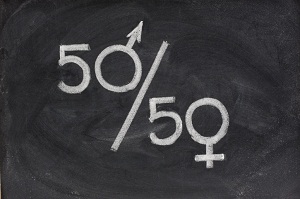 The state of Washington has been working for several years to change the language in its laws to gender-neutral terms. If legislation passes as expected, no longer will there be penmanship, freshmen, and watchmen. Instead, Washington will have handwriting, first-year students, and security guards.
Several other states have followed suit, with about half making moves toward gender-neutral language. Such language is often lampooned as politically correct and excessively burdensome, but research shows that language affects perceptions. Perceptions, in turn, affect behavior, and using gender-neutral language can be a meaningful move toward gender equality.
The Pervasiveness of Gendered Language
Gendered language is so common that it’s difficult for some people to even notice it. From job postings to laws, words such as policeman, councilman, mankind, and fireman abound. This omnipresence of gendered language may be part of the problem. When people stop noticing gendered language, it’s easier to think of male as the default. People who do a double-take when they see words such as policewoman or police officer may be doing so because there’s an incongruence between what their expectation of a police officer is—a male—and the possibility of a woman filling the role. The more frequently gendered language occurs, the more likely it is that people develop male as the prototype for a particular role.
This can affect a wide range of behaviors and lead to subtle biases. A company that posts a job seeking an ombudsman, for example, may envision a male in the role because of the use of gendered language. This can give women a slight disadvantage when they seek out the job because women applicants don’t completely match the hiring manager’s vision for a future employee. The person in charge of hiring may never even be aware of this subtle bias, but this doesn’t mean it’s not there.
Effects on Women
From the time they’re children, women experience an onslaught of gendered language, and this can subtly alter their perceptions of themselves. Even women report that their prototype of police officers and firefighters is male, and this may be due in part to gendered language.
Gender conditioning can affect the choices men and women make, and when women grow up learning that they’re not the ideal image of a particular role, their options are limited.
Male as Default
The use of terms such as mankind is particularly problematic because it treats men as the default. When “man†is used to refer to “all of us,†women are completely excluded, even if the term is intended to be gender-neutral. Thus, men are established as the norm against which everything is judged, and women are treated as deviant from this norm.
Real-life examples of this can be found in the long-time medical practice of using only male research subjects—a practice that has changed over the past few years.
Setting an Example
While gender-neutral language can seem frustrating and cumbersome at first, this is primarily because it’s new, not because there’s anything particularly onerous about its use. When states establish gender-neutral language, they help this language become part of the common lexicon and set an example demonstrating that gender-neutral language is just as easy to use as gendered language.
References:
- Carmon, I. (n.d.). The effects of gendered language in job ads. Jezebel. Retrieved from http://jezebel.com/5803238/the-effects-of-gendered-language-in-job-ads
- Lacorte, R. (2013, February 3). State moves toward gender-neutral language. The Seattle Times. Retrieved from http://seattletimes.com/html/localnews/2020282616_genderneutralxml.html
- Leaper, C., & Bigler, R. S. (2004). Gendered Language and Sexist Thought. Monographs of the Society for Research in Child Development, 69(1), 128-142. doi: 10.1111/j.0037-976X.2004.00283.x
 According to comScore, which measures Internet traffic, 66% of Internet-using men between the ages of 18 and 34 look at online pornography at least once a month. Does it really matter if you watch pornography? Does it really impact marriages and relationships? Two-thirds of divorce lawyers say the Internet has played a significant role in divorces within the past year, with excessive interest in online pornography contributing to more than half of such cases. That does not even speak to the impact pornography has on physical and emotional intimacy in relationships.
Consider these five reasons pornography can hurt your love relationship:
- Men who view pornography can experience “sexual anorexiaâ€! What? Indeed, the results of a study in Italy that surveyed 28,000 porn users seem to corroborate the notion that too much porn has a negative impact on sexual performance. Apparently, men become so accustomed to the unrealistic images they see in pornography that they can no longer get erections. Many men don’t realize their brain’s sensitivity is declining toward “normal†sex because web-based erotica delivers endless dopamine hits—making erection and climax possible where normal encounters would not. When they try to have actual intercourse and cannot, they understandably panic. The brain changes that cause porn-induced erectile dysfunction arise from actual, physical addiction processes (among them, numbing of the pleasure response of the brain).
- With porn, partners are always willing and ready for sex! Where sexual drive varies in individuals, porn creates the unrealistic illusion that your partner should always be ready, willing, and able. Imagine the pressure this puts on your partner. It leaves no room for emotional connection, real-life circumstances, and the fun of pursuing each other in ways that are meaningful to each other rather than with only one objective in mind. If your partner has had a tough day at work, fought traffic, made dinner, taken care of the kids, done laundry, and prepared the family for the next day but then felt too tired for sex and consequently got replaced by porn, is this going to build intimacy or destroy it?
- Porn creates scenarios that just aren’t real! Here are some conclusions from a study by the surgeon general: The values expressed in pornography clash with the family concept, and potentially undermine the traditional values that favor marriage, family, and children. Pornographic scripts dwell on sexual engagements of parties who have just met, who are in no way attached or committed to each other, and who will part shortly, never to meet again. Sexual gratification in pornography is not a function of emotional attachment, of kindness, of caring, and especially not of continuance of the relationship, as such continuance would translate into responsibilities, curtailments, and costs. Now what if I told you that study was conducted in 1986? Consider how much more widespread pornography is today with the Internet, social media, etc. Porn sets up couples and families to fail because as one becomes more immersed in the false “reality,†true reality suffers and is shamed.
- Real-life partners can’t compete with embellished pornography! Porn creates an environment in which everyone is beautiful or handsome. Body parts are perfect, accentuated, and responsive in extreme satisfaction. How can anyone’s spouse or partner compete with that? If someone is indulging in hours of pornography, how can it not affect his or her reality when looking at a spouse or partner? The partner will begin to feel inadequate, judged, and compared, and might shut down or withdraw. This only leads to more disconnect on both parts and, for the one viewing porn, can start the path to even more sexual dysfunction.
- It is not only the partner who can’t live up to the porn standards! So you view pornography, watch how “perfect†things are, how every encounter is desired and accepted, every act brings mutual satisfaction, and the performance never fails, never disappoints. How can anyone live up to that? The truth is, you can’t—and you are not supposed to. In a true relationship, you accept each other for who you are, you make it special for each other, and there is understanding and compassion, not fear and judgment. Pornography is NOT reality, and forcing oneself to watch unrealistic situations over and over and then expecting yourself to perform the same way is setting yourself and your partner up for disappointment.
This is the reality of the impact pornography has on your loved one and your love life. There is the argument that moderation is the key, but too many studies show that it typically does not stay at moderation—it escalates, requires more intensity to meet sexual gratification, begins to have a negative impact on sexual experience with your partner, and eventually causes a disconnect in relationships that is difficult to overcome.
Sure, it is easy to brush it off and say it won’t happen to you, but before coming to that conclusion, take an honest look at what pornography has already done in your life, in your partner’s life, in the area of hiding the habit, shame on you and your partner … if you want a truly honest response, have an open mind to what your partner thinks of your viewing of pornography. Based on real studies, real facts, real impacts on relationships, what are you going to do? It is never too late to get help through counseling, support groups, and accountability to begin the path of personal and relational healing.

We all know the feeling, but few of us want to talk about it. Shame often runs our lives and undermines our relationships, but we often keep it hidden. We’re ashamed of being ashamed. I felt it today when my wife reminded me of something I had said to her that was unkind. I pride myself on being a sensitive, caring man, and when she pointed out this shortcoming, I could feel the shame rise up in me. I felt myself getting warm. My first thought was, “I didn’t do it.” My first words were, “I never said it.” I felt confused and off balance. I wanted to run away and hide. I wanted to disappear.
I was awash in my shame, but I tried to cover my discomfort. Shame is such a wretched feeling, most of us try and deny we are feeling it, hoping that if we don’t look at it, shame will magically disappear. But shame is stubborn. The more we deny it, the more it sticks to us like glue.
Recent research shows that shame is conceptualized as a multidimensional construct, manifesting in various physical and emotional ways. Shame manifests physically in a wide variety of forms. “The person may hide their eyes; lower their gaze; blush; bite their lips or tongue; present a forced smile; or fidget,” psychotherapist Marc Miller said. Other responses may include irritability, annoyance, defensiveness, exaggeration, or denial. Research indicates that the strongest correlates of shame across studies include individual differences in nonacceptance of negative emotions and expressive suppression. Because the effect of shame often interferes with our ability to think clearly, we may experience confusion, being at a loss for words, or a blank mind.
“Man is the only animal that blushes,” Mark Twain once said. “Or needs to.” He reminds us how central shame is to the human experience.
Find a Therapist

When couples come to me for counseling, they rarely mention shame as a cause for their difficulty. Yet I’ve found that shame is a major factor of relationship problems. Research shows that shame can have a severe negative impact on intimate relationships, leading to negative shame loops between partners. We know that couples often fight about money and sex. He gets angry when she spends money on things he thinks are not important. Underneath his anger we often find feelings of inadequacy. Beneath her spending patterns may be feelings of loneliness and unworthiness.
Key Insight: Nathanael Schlect, Licensed Associate Counselor “Shame often operates alongside other vulnerabilities such as fear, grief, or insecurity rather than existing in isolation.”
One partner wants more sex, and the other feels tired or withdrawn. One gets angry. The other feels hurt. Shame is rarely discussed, but is always present. One may feel like a lousy lover. The other may feel unattractive.
Recent umbrella reviews show that a relative majority of studies conceptualize shame as a multidimensional construct, representing what Helen B. Lewis, a pioneer in recognizing the importance of shame to psychotherapy, argued was an entire family of emotions. This family includes humiliation, embarrassment, feelings of low self-esteem, belittlement, and stigmatization. Shame is often experienced as a critical inner voice that judges us as “damaged goods,” inadequate, inferior, or worthless.
Shame in Men and Women

I’ve found the things that trigger shame differ in men and women. Research confirms that gender stereotypes maintain that women experience more guilt and shame than men, with meta-analyses showing small but significant gender differences (d = -0.29 for shame). Women often feel shame when they are unable to do all the things they think they should do. They must be a good mother, a sexy wife, a successful breadwinner, a caring friend, a good sister, and more. Studies show that women avoid the shame they may have if others observe that they overestimated themselves, while men do not seem to be similarly shame averse, possibly due to different societal expectations where men are expected to be overconfident.
The list is smaller for men. Shame usually manifests when we don’t feel strong. Dr. Brené Brown, an expert on shame, says, “While women are faced with a web of many layered, competing, and conflicting expectations, there seems to be one major expectation for men—do NOT appear weak.”
I’ve also found that men and women often react to shame differently. Research indicates larger gender gaps in shame with trait versus state scales, and gender differences in shame about domains such as the body, sex, and food tend to be larger than other domains. While individual responses to shame vary widely and are not strictly gender-bound, often women often blame themselves when they feel ashamed. They look embarrassed. They turn inward. Men often blame others when they feel ashamed. They often look angry. They may explode outward.
Key Insight: Nathanael Schlect, Licensed Associate Counselor “While patterns can differ across socialization, people of any gender may turn shame inward or outward depending on personality, history, and context.”
In fact, male violence is often an attempt to ward off shame. Recent research shows masculinity threats lead to emotions including shame, guilt, and a reduction in empathy, and these masculinity threats predict harmful behaviors such as men’s aggression, sexual violence, anxiety, shame, self-harm, and homophobic attitudes. Dr. James Gilligan has spent more than 30 years researching anger and violence in men. His research traces the role that shame plays in the etiology of murder and shows how feelings of shame cause violent and vengeful behavior. He says, “I have yet to see a serious act of violence that was not provoked by the experience of feeling shamed and humiliated, disrespected and ridiculed, and that did not represent the attempt to prevent or undo this ‘loss of face.’ ” Respect is important to all of us, but for men it is essential. Recent research on masculinity and violence shows that when men were targets of partner violence, many described feelings of weakness and shame, reflecting assumptions that men should be dominant and not victimized. Feeling disrespected or “dissed” can cause a man to strike out in rage.

Self-Disclosure and Empathy
The most difficult thing in the world to do when we are feeling down on ourselves is to admit how we feel. Yet self-disclosure is what we need to do to stop the cycle of shame and blame that so many of us get caught up with. Recent research on intimacy shows that self-disclosure, a fundamental component of intimacy, occurs only when vulnerability is met with acceptance rather than rejection. However, shame disrupts this process by inhibiting vulnerability and promoting defensive strategies. It’s harder than hell to say to my wife, “You’re right, what I said was unkind. I’m sorry.” But that’s the key to washing the shame away.
Attachment research shows that shame loops within couple relationships may not only be triggered by negative cues, such as criticism from a partner, but can also innocently be triggered by a partner seeking connection or even offering comfort. It feels counterintuitive. We’re afraid that if we admit our faults, we’ll feel even more ashamed. But the opposite is true. The more we’re able to say, “Yes, I messed up,” or, “Yes, I made a mistake,” or, “Yes, I’m sorry for what I said,” the better we feel about ourselves.
We all know the good feeling we get when we can own our mistakes and be forgiven. But that takes empathy on the part of our partner. Our partner has to be able to feel with us, not blame us or put us down. Recent clinical trials of Emotionally Focused Couple Therapy show significant improvements in intimacy and reductions in shame when couples learn to address these dynamics. For men, it often means admitting our weakness. And for women, it means accepting that we can still be strong, adequate men, even when we are weak.
Men need also to practice empathy with the women in our lives. We have to understand the things we do that shame them, the subtle ways we may put them down. And we all need to be more empathic with ourselves. We don’t have to be successful at everything, all the time. We don’t have to be strong all the time and hide our weakness. We can learn to love and accept the wonderful, flawed, human beings we all are.
References:
- Mirzazade, Z., Molazade, J., & Hadianfard, H. (2025). The effect of emotionally focused couple therapy (EFCT) on shame and intimacy in couples: a randomized controlled trial (RCT). BMC Psychology, 13, 1111. https://doi.org/10.1186/s40359-025-03415-3
- Frediani, M. J., et al. (2024). Seeking connection can trigger shame loops in couples: An attachment-based understanding. Family Process, 63(1), 34-47. https://doi.org/10.1111/famp.12888
- Vescio, T. K., et al. (2025). Masculinity threats sequentially arouse public discomfort, anger, and positive attitudes toward sexual violence. Personality and Social Psychology Bulletin, 51(1), 3-20. https://doi.org/10.1177/01461672231179431
- Stanaland, A., Gaither, S., & Gassman-Pines, A. (2023). When is masculinity “fragile”? An expectancy-discrepancy-threat model of masculine identity. Personality and Social Psychology Review, 27(4), 285-315. https://doi.org/10.1177/10888683221141176
- Swerdlow, B. A., Sandel, D. B., & Johnson, S. L. (2023). Shame on me for needing you. Emotion, 23(3), 737-752. https://doi.org/10.1037/emo0001109
- O’Donnell, S., et al. (2024). Masculinity and violence interconnectedness: Defining and reconciling the gender paradox among men with cumulative lifetime violence histories. SAGE Open, 14(3), 21582440241266998. https://doi.org/10.1177/21582440241266998
- Else-Quest, N. M., Higgins, A., Allison, C., & Morton, L. C. (2012). Gender differences in self-conscious emotional experience: A meta-analysis. Psychological Bulletin, 138(5), 947-981. https://doi.org/10.1037/a0027930
- DeSantis, A. J., Eshelman, L. R., & Messman, T. L. (2025). Emotional dysregulation, anger, and masculinity in men who have experienced lifetime sexual violence. Journal of Interpersonal Violence, 40(21-22), 5199-5222. https://doi.org/10.1177/08862605241301790
- Deshmukh, A., Mehta, R., & Acar, Z. (2024). Perceived criticism and intimacy avoidance in couples: The mediating role of shame. Research and Practice in Couple Therapy, 2(1), 1-10. https://doi.org/10.61838/rpct.2.1.1
- Bardi, L., et al. (2024). Conceptualization and assessment of shame experience and regulation: An umbrella review of synthesis studies. Clinical Psychology Review, 113, 102436. https://doi.org/10.1016/j.cpr.2024.102436

Sports generally are viewed as harmless pursuits, a source of social interaction and bonding, exercise, and stress relief. But in recent years, highly publicized incidents of fan violence have raised concerns about the culture surrounding sports. The vicious 2011 beating attack on Bryan Stow at Dodger Stadium in Los Angeles is just one such example. Alcohol-fueled fights and skirmishes are increasingly common at all levels of competition, from playgrounds to professional leagues. Most people who have attended a sporting event have witnessed at least one example of an out-of-control fan.
What’s behind this surge in violence? The problem may not be the nature of sports themselves, but rather the way society treats sports in conjunction with personal factors. A closer look at some factors that may contribute to fan violence:
Overidentification
For many sports fans, their teams of choice become a proxy for their own identities. Overidentifying personally with a favorite team may be a contributing factor to sports violence. A person who watches a favorite team lose, or witnesses an unfavorable referee call, may behave as if he or she has personally suffered. The advent of Facebook and other social media, as well as message boards and other gathering places for fans, may make it difficult to disengage from favorite teams or let go of bad memories. These platforms also provide more access to inflammatory views from rival teams’ fans, fueling deep feelings of loyalty, protectiveness, and anger that boil to the surface amid the emotional current of a live game.
Alcohol
Alcohol plays a significant role in many fan altercations. At National Football League games in 2011, more than 7,000 fans were ejected for inappropriate or violent behavior. Some fans spend all morning and afternoon tailgating and drinking with friends before watching the event and then celebrating—or grieving—afterward. People often are intoxicated before even entering a venue. The feelings of deep loyalty and anger that many fans feel can be exacerbated by alcohol consumption.
Hypermasculine Culture
Despite years of progress toward gender equality, many men feel pressured to meet expectations of traditionally masculine behavior. Sports can be a significant platform for masculine identity, and people who identify with hypermasculine culture may be more likely to attend sports events. Combined with adrenaline, overidentification, and ready access to fans with opposing allegiances, some men may be inclined to be violent when exposed to triggers. Likewise, women in hypermasculine environments that promote disrespectful or violent behavior may also be more inclined to engage in it.
Sociological Factors
Certain people are at a greater risk of engaging in violent behavior. People who have experienced a recent stress such as job loss, the death of a loved one, or a perceived humiliation are already on edge and more likely to react emotionally. Many people attend sporting events to alleviate stress. However, when a favored team loses, a person is heckled, or a person loses a significant bet associated with a game’s outcome, stress may explode into rage.
Group Dynamics
Millions of people attend sporting events every year, and the vast majority never commit a violent act. When 100,000 people pack a stadium, though, the odds are high that a number of them are under the influence of alcohol. Combine this with an emotional, hypermasculine environment and exposure to opposing sentiment, and you’ve created a recipe for fan violence. Proactive measures such as reporting inappropriate behavior immediately, limiting alcohol intake, and actively encouraging sportsmanship among peer groups, can help address an increasingly challenging threat to our enjoyment of sporting events.
References:
- Aguirre, B. E. (2008). Sports fan violence in North America. Contemporary Sociology: A Journal of Reviews, 37(2), 157-158. doi: 10.1177/009430610803700235
- Associated Press. (2012, May 31). Witnesses describe violent scene. ESPN. Retrieved from http://espn.go.com/los-angeles/mlb/story/_/id/7991565/witnesses-depict-violent-scene-bryan-stow-beating
- Handwerk, B. (n.d.). Sports riots: The psychology of fan mayhem. National Geographic. Retrieved from http://news.nationalgeographic.com/news/2005/06/0620_050620_sportsriots.html
 Let’s face it: Every woman on the planet knows about hormonal cycles. They’re difficult to ignore. Most men, on the other hand, are taught from the time they are born that being manly means denying anything in us that might be viewed as “feminine.†I still remember the taunts when I was a kid. “What’s the matter with you, Diamond, you throw like a girl.†Or, “Look, he’s going to cry, just like a little girl.â€
It’s no wonder guys grow up convinced that we’re not “hormonal.†But is that true? Many of us know intellectually that we have hormones. We know we’ve got testosterone. Many of us have a vague idea that we also have estrogen coursing through our bloodstream—a fact we’d like to ignore. Hormonal cycles? That sounds too “fem†for many of us to even contemplate.
Midlife Hormonal Changes
I first began to recognize that there might be more going on inside me when I began doing research on andropause, or male menopause, in the early 1990s. I was seeing changes going on with midlife men at my health clinic that seemed similar to what I saw with women going through menopause. Many of the men were having “night sweats†and “hot flashes.†Others were on an emotional rollercoaster, up one minute and down the next. Some were having unexplained joint pain, and others were having problems becoming aroused or having intercourse.
[fat_widget_right]
I began interviewing midlife men and women to find out what they were experiencing. Most of the men thought the idea that they were “hormonal†was ridiculous. Most of the women had a different view. “Well, it’s about time you guys finally figured out you’re hormonal,†one woman told me. Eventually, I interviewed more than 1,000 men and women, and 30,000 filled out a questionnaire I developed. The results were published in my books, Male Menopause, in 1997, and Surviving Male Menopause: A Guide for Women and Men, in 2000.
Do Men Have Hormonal Cycles?
Although most of us now accept that women and men have “male†and “female†hormones, it is more difficult to accept that men also have hormonal cycles. According to endocrinologist Dr. Estelle Ramey, professor at Georgetown University Medical School, “The evidence of them may be less dramatic, but the monthly changes are no less real.†But if men do have hormonal cycles, why don’t they recognize or talk about them? Dr. Ramey believes it is because men respond to their cycles in a way that is a function of their “culturally acquired self-image. They deny them.†This denial is the main reason she believes the largely male scientific and medical communities have taken so long to recognize hormonal cycles in men.
Winifred Cutler is one of the world’s leading experts on hormonal cycles. She has published more than 35 scientific papers, is co-inventor on five patents, and has authored eight books, including Love Cycles: The Science of Intimacy. “Now it is known that men show a hormonal rhythm,†she says. “A rhythm I call the hormonal symphony of men.â€
A cycle might last a few minutes, a day, a week, a month, a season, a year, or a lifetime. When we go to sleep, our testosterone levels rise hour by hour until, by the time we awaken, they are at their highest (morning erections, anyone?). By the early and late morning, our levels typically level off and begin to decline. By late afternoon, our testosterone is usually at its lowest ebb. No wonder it’s more difficult for me to get up for the “afternoon delight†my wife thinks is wonderful, while I’m more interested in a morning romp.
Men’s hormones cycle throughout the year. In studies conducted in the United States, France, and Australia, it was found that men secrete their highest levels of sex hormones in October and their lowest levels in April. There was a 16% increase in testosterone levels from April to October and a 22% decline from October to April. Interestingly, although Australia, for example, is in its springtime when France and the United States are in their autumn, men in all three parts of the world showed a similar pattern of peaks in October and valleys in April.
Men also have monthly hormonal cycles, though there are some interesting differences and similarities between women’s and men’s cycles. Women’s monthly cycles are more predictable and synchronous. Women who live in close proximity find that their monthly cycles begin to align. Men’s cycles seem to be more unpredictable and individual. A study of young men showed that the majority had a discernible cycle of testosterone with repeating rises and falls, but each man who did show a cycle had a cycle unique to himself.
“Testosterone levels oscillate every 15 to 20 minutes in men, and also follow daily, seasonal, and annual rhythms,†says Theresa L. Crenshaw, author of The Alchemy of Love and Lust. “The morning highs, daily fluctuations, and seasonal cycles whip men around. Think about the moment-to-moment impact of testosterone levels firing and spiking all over the place during the day and what this must be doing to a man’s temperament. Men who so strongly need to feel in control are in fact in much less control than they realize. No wonder they can be so, well, testy!â€[fat_widget_right]
I suspect that we’d all be better off if we recognized that men, like women, have our own challenges dealing with our hormones. The great philosophers tell us to “know thyself.†Knowing and accepting our hormonal cycles may be the most important knowing we can have about what it means to be a man.
 The oldest profession in the world has undergone a makeover in recent years. Although subtle, the changes to prostitution are having ripple effects. The business that used to be marketed on street corners and in seedy bars has gone high class. Escorts that provide sexual services are available as companions for outings, family gatherings, business functions and other events that are usually reserved for significant others. And the lure of having a date for these important occasions, and being guaranteed sex, is becoming irresistible for many men. However, the men who pay for sex are discovering that it is not just the sex they really want but the love and intimacy that come with it.
Researchers from George Washington University conducted an online examination of conversations between clients and escorts and found that of the 2,442 posts, many were about things other than sex. The authors believe that the transition from sex to pseudo-relationship that is emerging in the world of prostitution is due in large part to the mock dating services that escort companies provide as part of the overall package. Men enter into an agreement for companionship and sex but may soon find that the close, personal conversations and comforting presence of the escort cause them to fall in love. Christine Milrod, a sexologist and coauthor of the study, says this is especially true when a client patronizes the same escort repeatedly.
The popularity of this “girlfriend experience†of sex for hire can blur the lines between sexual satisfaction and relationship attachment. Although many of the men surveyed said that they hire sexual escorts primarily for the sex, they enjoyed the fact that the women were obligated to engage in conversations with them. They also liked being able to explore sexual fantasies that they might not otherwise have an opportunity to explore. The fact that an emotional and intimate connection may develop is merely a byproduct of this novel approach to prostitution. The authors added, “Like any other commercially packaged leisure activity, intimacy is now readily available for a price.â€
Reference:
Bennet-Smith, Meredith. (Sept. 4, 2012). Men who pay for sex may also be hoping to find true love, study finds. Huffington Post. Retrieved Sept. 6, 2012, from http://www.huffingtonpost.com/2012/09/04/men-paying-for-sex-may-also-looking-true-love-study_n_1854372.html
 We all experience losses, big and little, throughout our lives. When enduring a big loss, people fall into patterns that may be considered masculine or feminine ways of reacting.
Men and women tend to process their losses differently, but the way they grieve is affected by many other factors besides gender, such as culture, personality, and temperament. Grief and loss are experienced in unique ways by each individual.
A generalization about gender differences in grieving would be that men tend to focus on feelings of guilt and anger. They are likely to spend more time thinking than feeling. They also tend to act independently rather than rely on others.
Women typically need more support and are expressive with their emotions, which is behavior we tend to associate with grief and loss. However, there is no cookie cutter approach to mourning. In recent years, experts like Kenneth Doka, PhD, have recategorized these types as intuitive and instrumental grief.
Intuitive grief can be associated with our generalizations of the way that women grieve, which includes the following:
- Strong, affective reactions (waves of powerful emotions)
- Expressions that mirror feelings (more like an open book)
Moving forward involves exploring and expressing feelings, progressing through the pain in order to heal.
Instrumental grief can be associated with the masculine way of grieving, which includes the following:
- More thinking than feeling (an inward, quiet process, less expression of emotions)
- Being physical, expressing grief through doing something (I could not fix my son, but
I can fix this broken fence)
So how do you help someone who doesn’t want to talk or ask for help?
- Use logical analysis—figuring out problems by breaking them down into manageable steps (to be less overwhelming)
- Gather information—on new roles (in your household, family, work, etc), supports, faith, to do lists, etc., in order to start implementing
- Use humor—It has much of the same release as crying does, and it’s still okay to laugh
- Provide diversions/distractions—list all supports and assign them to categories
- Good doers (who could take care of the pet, get the paper, etc.)
- Good listeners
- Good respite (who could take a break from the grief and will not ask you about your loss)
Instrumental grievers would benefit more from groups that focus on a how-to (like being a single parent), adventure based, informal or educational, than a traditional support group.
Like any other model for grief, there are several tools you can use with variations for each person. There are always ways to help. You can start by figuring out which support is needed and offer it. And if you need help, ask for what you need. Just know that there is never a wrong way to grieve.
Women have been stereotypically defined as being more emotional than men. In popular culture, women are depicted as being more emotionally volatile, often erupting into fits of sadness, anger, despair or jealousy much more frequently than their male counterparts. But is this portrayal scientifically accurate? Research has shown that there are differences in how men and women emotionally respond to situations. However, little research has addressed the core self-conscious emotions (SCE) of men and women and how they differ. Nicole M. Else-Quest of the Department of Psychology at the University of Maryland in Baltimore sought to debunk the myth that women have less emotional regulation than men. She recently conducted a study that compared male and female levels of embarrassment, shame, guilt, and pride in data gathered from over 300 studies.
[fat_widget_right]
Existing research has shown that women and men differ in their risks for some mental health issues such as depression, food and eating issues, anxiety, and self-worth. How men and women experience SCEs has a direct influence on their likelihood of developing these and other psychological problems. Else-Quest analyzed over 200,000 self-reports and found that for the most part, women and men had similar levels of SCEs. The results revealed slightly higher levels of guilt and shame in the women, but minimal differences in pride and embarrassment. Else-Quest also looked at age as a factor because men and women tend to exhibit the first signs of depression, anxiety, and low self-esteem at different ages. She found that although there were relatively few differences in SCEs in early childhood, women reported higher levels of SCEs, primarily shame and guilt, during adolescence.
Overall, Else-Quest discovered that women experienced the highest levels of guilt and shame when they were asked about sex, food and eating, body image, or the environment. Although the rates of SCEs in these areas were only slightly higher for women than men, these results support existing research regarding women’s emotional perceptions about sex, body image, and eating problems. Else-Quest concluded by saying that even though women had minimally elevated levels of guilt and shame, the men and women reported levels of pride and embarrassment that were virtually identical. She added, “These findings contribute to the literature demonstrating that blanket stereotypes about women’s greater emotionality are inaccurate.â€
Reference:
Else-Quest, N. M., Higgins, A., Allison, C., Morton, L. C. (2012). Gender differences in self-conscious emotional experience: A meta-analysis. Psychological Bulletin. Advance online publication. doi: 10.1037/a0027930