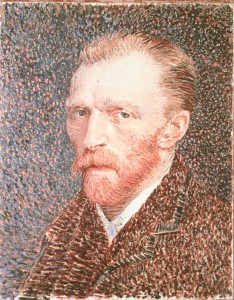
 Is it so strange to want to chronicle and capture your changing visage through the years in the form of artistically altered photographs? There has been a lot of conversation in recent months surrounding people who obsessively photograph themselves and post those pictures online for all to see, otherwise known as the selfie trend.
Even we jumped on the bandwagon of speculation about what’s really going on with this phenomenon. The self is fascinating; after all, it’s who you are. We seek a deeper understanding of this inward being in a variety of ways: journaling, creative expression, conversation, counseling, and, yes, the self-portrait.
Throughout history, artists have devoted themselves to this eye-catching craft of self-understanding. Vincent Van Gogh and Frida Kahlo are just two examples of the myriad artists who became renowned for their ability to capture the self in compelling portraits.
From 1886 to 1889, Van Gogh painted over 30 canvases of himself, and Kahlo, who began her work in self-portraiture while recovering from a debilitating accident in a full body cast, produced 55. She is quoted as having said, “I paint myself because I am often alone and I am the subject I know best†(Frida Kahlo Foundation, 2002–2013).
These days, though the painted canvas is still prevalent in self-portraiture, the artistic rendering of the self via photograph is being snapped and shared by the millions—on Facebook, on Instagram, and in the professional photography world, as well. Depression, grief, loss, injury, and navigating the rises and falls of the human journey have inspired countless works of photographic art involving the photographer as subject. Following are just a few examples of this self-centered form of modern artistry—and healing.
Self-Portrait for Depression
[fat_widget_left]One man, 20-year-old Christian Hopkins, uses photography as a way of dealing with depression. His self-portraits include surreal images of several hands being trapped inside his skin, wings made with fragile materials protruding from his shoulder blades, one showing his left wing broken and in pieces, the other very sparse but intact.
He is also shown with a fabricated slit through the throat made of a zipper with strands of black yarn mimicking blood. The photos are haunting, but most importantly, Hopkins says they help him process the complicated emotional experience of his bouts of depression.
Self-Portrait for Feeling Powerless and Stuck
Ben Zank, a New York-based photographer, chronicles his feelings of “being powerless, stuck, being free again, etc.†in a series of self-portraits featuring natural elements colliding with the confining aspects of human existence. In one of these, he is shown lying face down on a paved road with the two yellow stripes running directly over his head; in another, he is trapped between two icy rocks, struggling to break free.
He also photographed himself with his head wrapped in twine and tied to a tree, as well as with lengths of twine tied around his fingers and anchored to the ground. Both of these scenes seem to reflect the experience of being stuck.
Self-Portrait for Debilitating Injuries
Following repeated knee injuries, former-dancer-turned-photographer Ingrid Endel photographs herself in stunning dance-oriented poses. The Australian artist creates surreal imagery that beautifully captures the sense of loss associated with no longer being able to perform as a dancer, as well as the joy of discovering another art form through which she can express herself.
The photographs show her body in a variety of outdoor scenes: lifting off the ground with legs wrapped in vines; leaning (or falling?) backward in a dancer’s pose with electric red cords protruding in all directions from her chest; and being enveloped in cocoon-like cobwebs while contorted on the forest floor.
Endel includes photographs of her moments of stillness in which she appears to be accepting and embracing her body as-is; one in particular shows her looking perfectly content while engaged in a stretching pose in the middle of a body of water.
Self-Portrait for Personal Change and Transformation
Another way to use the self-portrait is to process normal, yet significant, changes in life, which can become stressful if not handled healthfully. One woman, Sophia Starzenski, a photographer based in Buenos Aires, took photos of her near-naked body as she moved through pregnancy.
The photographs reveal her steadily expanding belly throughout the nine months of being with child, and the final shot shows her with two-month-old babe in arms. By capturing the raw beauty of this commonplace transformation, Starzenski presents the changing female body as a work of art—something to be celebrated and shared rather than hidden and shamed.
Self-Portrait for Illness and Grief
Still others use the self-portrait as a means of coping with insurmountable changes in the lives of their loved ones, which inevitably affect them, too. When his wife Jennifer was diagnosed with breast cancer, Angelo Merendino chose to document the experience through photographs taken mainly of his wife, although he appears in a few of them.
The series starts with the couple looking healthy and happy, drinking while sitting on a front stoop, and then lying in bed together with serene smiles and an intimate embrace. The photographs grow increasingly bleak, however, as Merendino captures his wife’s physical deterioration and eventual death on camera.
Though they depict illness, grief, and loss, the photographs also show the beauty of family coming together in trying times and of final moments treasured and savored. Following his wife’s passing, Merendino published a book of the images, The Battle We Didn’t Choose: My Wife’s Fight with Breast Cancer, and went on to start a non-profit called The Love You Share (theloveyoushare.org) as a means of providing financial assistance to women battling breast cancer.
The Tutu Project (thetutuproject.com), which “began in 2003 as a lark,†is another instance of a man using self-portrait photography to deal with life in general and eventually, with his wife’s breast cancer. When his wife Linda was diagnosed in 2006, Bob Carey began taking his ongoing photographs of himself wearing only a pink tutu to a new level. As a means of alleviating his own emotional distress and lifting Linda’s spirits, he traveled the United States—and Italy—snapping pink tutu photos in various places.
Their story inspired a video created by Deutsche Telekom in Germany (below); in it, Linda says, “It just makes me laugh, to see my husband dancing around in a pink tutu. It helps me be positive. The more I laugh, the better I feel.â€
To help support other women who are in need of funds beyond what insurance provides as they navigate the breast cancer experience, the couple established The Carey Foundation in 2012 (careyfoundation.org), and they continue to spread the simple pleasure of the pink tutu in Ballerina, a hardcover collection of Bob’s self-portraits and the stories behind them.
PhotoTherapy: How Self-Portraits Heal
Judy Weiser, director of the PhotoTherapy Centre in Vancouver, British Columbia, as well as psychologist, art therapist, and author, has spent over 35 years exploring, developing, and implementing “PhotoTherapy†techniques. On the PhotoTherapy Centre’s website (phototherapy-centre.com), Weiser details extensively the therapeutic benefits of photography in its various forms.
Regarding the self-portrait as a mode of healing, she says, “Since issues connected to self-esteem, self-knowledge, self-confidence, and self-acceptance lie at the core of most clients’ problems, being able to see themselves for themselves, unfiltered by the input or feedback of others, can be a very powerful and therapeutically beneficial encounter.†She goes on to explain how this in-depth confrontation and exploration of the self through photography is known to catalyze “deep process work in therapy situations.â€
Though the PhotoTherapy Centre now exists primarily as an archival collection of online information and resources, Weiser still provides training opportunities for mental health professionals in the techniques of PhotoTherapy, as well as social media support and guidance via the Centre’s Facebook group.
References:
- Frida Kahlo Foundation. (2002–2013). Frida Kahlo biography. Retrieved from http://www.frida-kahlo-foundation.org/biography.html
- Weiser, J. (2001–2013). The techniques of PhotoTherapy. Retrieved from http://www.phototherapy-centre.com/self_portraits.htm
 Mental health issues carry such a stigma that few people wish to talk about their experiences at a psychiatric ward. I am learning involuntary commitments are rarely necessary but are frequently directed by emergency room (ER) physicians who do not know how to deal with mental health issues. I share this experience so others know what happens when someone is committed to a mental institution. My opinions are not meant to be medical advice. Talk all medical issues over with a dedicated, concerned, and compassionate health care professional.
It Began with the Itching
The hydromorphone pill I had been prescribed for pain from a hysterectomy made me itch. Five days later the dysphoria set in. Dysphoria is an emotional state, sometimes instigated by medication, often indicated by restlessness, anxiety, and depression. The next day the anger followed. Finally, suicidal ideation took up camp in my mind. All I could think about was how relieving a long swim in the ocean would be to make the thoughts go away.
My nephew had committed suicide two years before. In reading up on suicide, I had learned those who take their own lives don’t understand suicide is a long-term solution to a short-term problem. The “sane†part of my brain continually played this mantra, keeping me from moving from ideation to suicidal intent. There are numerous definitions of suicidal ideation versus suicidal intent, and these often overlap. I refer to Carmel McAuliffe: “Suicidal ideation is a low-risk, common factor among nonclinical population samples…. Ideation may only become a risk factor for attempted or completed suicide when it is comorbid with rarer risk factors such as a dichotomous thinking style and in the absence of certain protective factors such as social support.†[fat_widget_right]
I asked a neighbor for help, which was the first thing I did correctly: seek help from a trusted person when you are in distress. My primary care physician (PCP) was called. This, on the other hand, was my first mistake; my surgeon should have been called first. Your surgeon’s office should encourage people to call with questions/issues at any time. If they don’t tell you this, do it anyway. My PCP directed me to my local emergency room.
I agreed to go, as I naively thought my local hospital would be able to address my medical issues. Drug-induced dysphoria is not considered a mental illness, but at your ER, you will be committed to a psychiatric ward, either voluntarily or involuntarily, “for your safety,†even though this may not be the best option for you. It is the best option for the ER staff as they are not experts in mental health.
My husband took me to the emergency room—second thing done correctly: always bring with you an advocate who can think rationally on their feet. My medications were given to the ER nurse, which was the third thing I did right. Take your meds or a list with you to the hospital.
One-Way Transport to a Psychiatric Hospital
My husband left the room so I could be examined by the ER physician. This was mistake number six. Keep your advocate with you at all times. I was asked about suicidal ideation, but not suicidal intent. None of my pain medication was discussed, even though it was known I was post-operative. A search on Medscape.com and Epocrates.com show that suicidal ideation is a known adverse reaction of bupropion (one of my medications) and dysphoria is a known adverse reaction of hydromorphone. I have since learned it is the responsibility of the person committed to monitor adverse reactions to drugs as every person’s body reacts differently to medications. Your doctor has no responsibility to share this information with you.
After a few questions about my mental state, I was asked if I would voluntarily commit myself to a mental institution. I said no, because I believed the root of the problem was physiological, not psychological. I was told I could go home if I agree to a day program and, though I wasn’t sure how this would address the physiological issue, I was open to the idea.
I then learned the day center did not have a place for me to lie down, so this option was not physically possible being that I was one-week postoperative. This was another mistake. Because of my “uncooperative behavior,†the ER physician filed a Section 12a on me, which in the state of Massachusetts meant I was then involuntarily committed to a mental institution of its choosing.
A guard was put at my door. I repeatedly tried to get the ER staff to understand my problem was physiological, not psychological. I am assured that my medical needs will be addressed at the psychiatric ward. The vice president and executive director of the hospital said she was sure that by the following week, she and I would meet again and I would thank her for the care I have received at the psychiatric hospital. This proved to be grossly inaccurate.
Stark Reality of a Mental Institution
The dysphoria and suicidal ideation abated by 11 a.m. At 6:30 p.m. I was transported by ambulance to the psychiatric hospital. Mental institutions are exactly how movies portray them: stark, cold, and dark, with stale air. Strapped to an ambulance gurney, I rolled through the unadorned white corridors. As the first set of automatic doors opened and slowly closed, I realized my children, husband, friends, and family were no longer available to me. When the second set of locked doors clicked shut, my freedom of movement and privacy left. As the third set of doors slammed behind me, dignity, respect, and even intelligence were stripped from me.
From then on, I wore only the label of “mentally ill.â€
After being checked in, I was assigned a hospital gown for sleeping, towels, and one blanket. I was not allowed a bra, as I might hang myself with it. No dental floss, as I might slit my wrists. No iPod because of the headphone wires… and the list goes on.
The acting physician came in, reviewed the pain medications I was taking, and prescribed the same ones again. As he left, I said, “Out of curiosity, should the hydromorphone make me itch?†He stopped and said, “You are allergic to it.†So it was the hydromorphone that I was allergic to! That was the fourth thing I did right: ask endless questions of your physicians. Do not fear them; fear the mistakes they could make. I would have been prescribed the harmful drug again.
Always Cooperate
I remember years ago reading that if you are ever involuntarily admitted to a mental institution, cooperate at every level. I made a series of requests, which were refused—food, ibuprofen, tea, and constipation medicine—because at that point it was too late in the evening to have them approved. By then, I must have seemed like an unreasonable patient, so I went to bed to stare at the ceiling until daylight. My roommate slept restlessly. I started taking notes in order to provide my husband with concrete examples of how my medical needs had not been met. Another thing done right: take notes. I recorded times and who I had spoken to.
 My Psych Team Does Their Job
At 9 a.m., I fought to find my breakfast tray in the cafeteria. Breakfast consisted of pancakes dripping in syrup along with sausages, which I knew my body would not process. Kind Nurse1 brought me a bowl of oatmeal, and a dietician came over to discuss what I could eat. She said, “Ok, we will start providing them to you tomorrow,†and I thought, “Tomorrow? What am I supposed to do today?†I remained quiet. When lunch arrived, I saw it was a peanut butter and jelly sandwich. I explained I was allergic to peanut butter, thanked the attendant, and went back to my room.
My “support team†met with me later. My intake report, which I subsequently requested, indicated I was “helpless, hopeless, and suicidal.†Later I learned my poor mental state was attributed to my not looking the admitting ER physician in the eye (while I was lying on a hospital bed). This was yet another mistake of mine. Make sure you look all interviewers in the eyes so they realize you are in full control of your mental state. At the meeting with my support team, the hospital psychiatrist held my intake report and asked me why I was there. I told them it was because of an allergic reaction to hydromorphone.
An activity coordinator asked, “What are your goals during your stay?†I was ready for this question, as while I was in the ER I used the hospital Wi-Fi to get an idea of what to expect, since I had never been to a psych ward. I replied, “To finish chapter three of the book I am writing.† I’ve since been informed that this could be interpreted as “Delusional Disorder, Grandiose Type,†since no one there knew I was a well-published university professor.
My only identity, according to my team, was “mentally ill with suicidal tendencies.†Wouldn’t I rather work on anxiety or other problems, they asked. I remained committed to chapter three of my book (with all due respect). “Well, ok,†they said, “there are board games, cards, and art you can do if you prefer. Maybe you would like a group session.â€
Here is a reminder to mental health providers: people do not automatically lose their intelligence once they enter your facility. (I have come up with several other pieces of advice, which you can see here.)
My Husband Advocates for Me
By midday a hospital human rights officer had arrived and said my husband filed a complaint. From that moment forward my care changed dramatically. My meals were brought to my room with food I could actually eat (that day, not the next), and drinks were supplied without my asking, including warm prune juice. Â I received fruit and vegetables for grazing on throughout the day. I got my iPod back, and I was given privileges for outside air twice daily. I refused group therapy because of pain, but I could ask for ibuprofen for breakthrough pain as well as milk of magnesia for constipation. I also received dental floss, and Kind Nurse2 provided tea twice in the evening. When I explained I needed a sleeping pill, Kind Nurse2 called the doctor immediately and I got an OTC sleeping pill.
You do have rights. If you feel they have been violated, have your advocate talk to the human rights officer.
Released
On the morning of my third day, I was asked to sign discharge papers which said I suffer from MDD, major depressive disorder. I refused. I asked the hospital psychiatric doctor whether my file stated I had an allergic reaction to hydromorphone. The answer was no. I asked for it to be added but did not stick around to see that it was.
I was released at 11:45 a.m., 52 hours after walking into my local ER. Ever so happy to see my husband, I finally let myself cry.
Five Lessons Learned
- Bring an advocate when seeking medical care. Four different doctors misdiagnosed my symptoms. Don’t fear your doctors; fear the mistakes they may make. Ask questions! Have your advocate ask the questions and take notes if you can’t. Have your advocate fight for your rights.
- Immediately call your physician or a poison control center if you or a loved one has ANY reaction to a medication, common or not (blurred vision, itching, hives, euphoria, dysphoria, anger, etc.). Epocrates.com and Medscape.com are good places to consult about side effects and drugs combinations that should be monitored closely.
- Share this mantra or a similar one with everyone you love, especially young adults: Suicide is a long-term solution to a short-term problem. Have a support system in place of people you trust; you never know when you might need them.
- Cooperate at all times if you are misdiagnosed and admitted to a psychiatric ward. Agitation and despondency support the diagnosis. While confined, your job is to relax; your advocate’s job is to fight on your behalf to get you out. Have your advocate bring magazines, newspapers, or something to keep you busy, and be prepared to get caught up on 2-3 days of reading.
- Know what is in your medical records. Ask to see them and make sure they are in a language/terms you understand. This is your right.
My surgeon later confirmed the hydromorphone likely caused the dsyphoria/suicidal ideation. If you are wondering, I did not abuse the pain medication. At admittance, eight days after surgery, the psych ward counted 20 pills left in the bottle out of a prescription of 30. I have been told the type of reaction I had is rare, but I wonder how many times this type of issue is misdiagnosed.
In this experience, I made mistakes more than I did things right, and I have made this report so you don’t make similar mistakes. Please pass on my story so others are educated likewise.
Dr. Rummel is an associate professor of marketing and innovations at a well-known university in the northeast. She holds a BS in Chemical Engineering, as well as an MBA, in addition to her PhD. She has two wonderful teens, a puppy, and a devoted husband. Mental health issues, especially depression, run in her family, but deter none of her family members from living full lives. She shares her experience in the hope that the health care industry will be the first to demystify mental health issues. Only then can the general public appreciate the commonality of temporary and long-term mental illnesses.
Reference:
McAuliffe, Carmel M. (2002). Archives of Suicide Research. 6:325-338, p. 336.
 Freshman year of college was a difficult time for me. Many things had changed, I was away from home for the first time, I was not among close friends, and my course load was semi-difficult for me to adjust to. With all that going on, there was a noticeable change to my appearance that I couldn’t identify with. There was a round reddish raised sore on my left cheek. I tried to recall in my mind if I had done something to myself to cause this, but nothing came to mind.
Combing my hair in the mirror also became unnerving, because it had begun to fall out more than that average 100 strands a day. My scalp was visible. I figured out where the hair was disappearing from; I was balding on a section of my scalp.
I knew I had been stressing from school and being homesick, but I couldn’t figure out why my skin and scalp were being affected by my stress. That’s when I really began to panic. My mother suggested I come home so my grandmother, who was a registered nurse, could take a look and see what was happening. I was on the next thing smoking going home.
As my grandmother examined my face and scalp, she was clueless about my condition. She concluded that I needed to see a dermatologist. A couple of days later, I was in the doctor’s office being poked and prodded as if I were a science project.
The diagnosis: discoid lupus. It was determined that I didn’t have systemic lupus—there were traits, but I definitely had discoid. I didn’t understand what discoid lupus was, so my reaction was nothing more than a head nod and wondering, “Now what?â€
My dermatologist did not have a sound of urgency or true concern in his voice, so I made myself believe that this wasn’t very serious and I would be just fine. The information that I gained from that appointment was:
- There is no certain cause for this disease.
- This disease is more prevalent in African-American women than Caucasians.
- It can affect my face and scalp.
I was handed some cream for my face and told my hair would grow back. That was the end of the appointment. I never saw that dermatologist again, and I put the thought of lupus out of my mind.
Almost twenty years passed; my life was moving along. Planning a wedding brought on demanding pressures that I had not anticipated. Day by day, my face began to show signs of redness, and hair was falling out. I believed that I was having an acne breakout and needed to wash my hair because it was falling out.
I had not thought about symptoms of discoid lupus, so in my mind that was not a possibility. Dismissing all the signs, I went on with my wedding and honeymoon, which happened without a hitch. Coming back to reality, I decided it was time to see a dermatologist.
What I feared became true: my discoid lupus had awakened from its 20-year nap. This time it came with a vengeance. Instead of one lesion, I had several on my face and ears, and my scalp was bald in more than one area. Depression began to set in because I couldn’t understand why it came back ten times worse than before.
If I could identify two things I overlooked during both of my episodes, they would be my high stress level and the symptoms I was experiencing at the time. Looking back, I was under some unbelievable stress both times, and I dismissed the rashes and hair falling out as just a natural aspect of my life.
I have discoid lupus, which, whether active or dormant, is for life. I must pay attention to those little things—stress, fatigue, rashes, hair falling out, etc—in order to gain control of this outbreak, which will limit the hair loss and skin abrasions.
As an African-American female diagnosed with a form of lupus, I have pointed out some important factors that I feel everyone should remember:
- Know your family history. If someone in your family has a form a lupus, being tested may be wise for you.
- Get informed. Asking a professional the 5 W’s is a great way to start to learn as much as you can about lupus:
Who can get lupus?
What is lupus?
When does lupus flare up?
Where on/in your body does lupus affect?
Why is there not a cure for lupus?
The more you know, the better prepared you are for your flare ups. - Pay attention to symptoms you may have and the various changes that may take place with your body.
- Be sure to take your medication and visit your physician(s) regularly. Don’t be afraid to ask as many questions as you can.
- If you have to be out in the sun, make sure you wear sunscreen or a hat, or use an umbrella to keep yourself protected.
- Make sure your family is educated, as well. You should not have to live with lupus by yourself.
- Try to make your life as stress-free as possible.
Today, I am happy to report that my discoid lupus is under control. It hasn’t taken a nap, but it’s not wide awake, either. I see my rheumatologist and dermatologist regularly and I am sure to take my medication and stay out of the sun. Although my face has cleared, and my hair is growing back slowly and finely, I still live with caution.
But I feel blessed that I have my life. As an educator, I have taken on the topic of lupus as if it were a thesis paper for me. Research is the main focus to gain a greater understanding. A great place to obtain information about lupus and its various forms is the Lupus Foundation of America.
Genesa Page is a high school business education teacher at Mirabeau B. Lamar High School, an International Baccalaureate World School in Houston, TX. She has been teaching since 2005.
According to a new study led by Panayotes Demakakos of the Department of Epidemiology and Public Health at University College London, older people with depression walk slower than their peers who do not have depression. Gait speed, or the speed that a person walks, is influenced by a host of factors, including physical ability, range of motion, musculoskeletal health, and mental health. Although there has been some evidence that psychological conditions can affect gait by way of diminished physical health, there is little research focused on examining a direct link between gait speed and psychological health, and in particular, depression.
Demakakos wanted to explore how depression and gait speed were related and also to evaluate whether their influence was bidirectional. In particular, Demakakos wanted to find out if older individuals with depression had slower gait speeds than those without, and if slow gait speeds predicted depression in older individuals.
Using a sample of 4,581 individuals over age 60, Demakakos measured depressive symptoms and gait speed across a six-year period. The results revealed that people with slow gait speeds had a higher risk of developing depression in the two years following assessment than those with average gait speeds. Further, Demakakos also discovered that depressive symptoms were directly linked to slow gait speeds.
The results can be interpreted in many ways. First, as people age, they experience declines in physical health and mobility. These factors can decrease gait speed and by limiting physical ability, can eventually erode mental well-being and put people at risk for depression. Second, as depressive symptoms increase, physical mobility can become impaired, pain can increase and fatigue can set in, all of which combine to decrease walking speed.
The results presented here were consistent even after demographic factors such as marital status, socioeconomic status, and gender were taken into consideration. In sum, this study shows that gait speed could act as an early indicator for depression. Demakakos added, “These findings point to depression as a modifiable risk that needs to be targeted by disability prevention programs at older ages.â€
Reference:
Demakakos, P., Cooper, R., Hamer, M., de Oliveira, C., Hardy, R., et al. (2013). The bidirectional association between depressive symptoms and gait speed: Evidence from the English Longitudinal Study of Ageing (ELSA). PLoS ONE 8(7): e68632. doi:10.1371/journal.pone.0068632
It has been well established that adverse childhood experiences (ACE) result in negative outcomes. People who have experienced neglect, emotional abuse, domestic violence, childhood sexual abuse, physical abuse, or other traumatic events in childhood are at increased risk for psychological and physical illnesses.
Divorce, death of a parent, caregiver mental illness, and other environmental factors also place children at increased risk for negative behaviors, including smoking, drug use, and sexual risk taking. Psychological illnesses such as post-traumatic stress, depression, anxiety and even suicidal ideation are often associated with ACE.
Some research has even suggested that ACE increases the likelihood of cancer and other chronic illnesses by way of risky and maladaptive behavior and through changes in physiological and biological elements during childhood. Specifically, incidences of lung cancer and heart disease have been found to be higher in people with ACE most often as a result of smoking. However, until now, no study has looked specifically at how ACE affects risk of all cancers in childhood and adulthood.
Monique J. Brown of the Department of Family Medicine and Population Health at the Virginia Commonwealth University School of Medicine in Virginia wanted to examine whether or not ACEs increased overall risk of cancer. Brown assessed a large sample of participants and evaluated their ACE in relation to either cancer in childhood or adulthood.
She found that over 60% of all the participants had experienced at least one ACE and nearly 10% had a history of cancer. Of all the types of ACE, childhood sexual abuse was the most common in those with adult cancer, but appeared to have little impact on childhood cancer. The rate of cancer prevalence among the participants with ACE was much higher than the national average of 4.2% and suggests that ACE, and in particular, childhood sexual abuse, has a strong indirect impact on cancer risk in adulthood.
Brown was unable to find any evidence of ACE influencing childhood cancer risk, which suggests that biological and physiological effects of ACE may have less of an impact on overall health than the behavioral and emotional impacts of ACEs. Brown believes that these results reveal a particular segment of the population in need of early intervention. She added, “More research should focus on the impact of sexual abuse ACEs and adverse health outcomes.â€
Reference:
Brown, M.J., Thacker, L.R., Cohen, S.A. (2013). Association between adverse childhood experiences and diagnosis of cancer. PLoS ONE 8(6): e65524. doi:10.1371/journal.pone.0065524
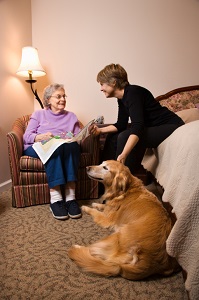 Talk to any pet lover and he or she will tell you that pets make life richer and better. But pets aren’t just a source of fun and an occasional source of extra work. Animals can play important roles in helping people recover from illness, making medical visits less stressful, and relieving social isolation. Although a wide variety of animals have been used in therapeutic settings, therapy dogs are the most popular option, and there’s strong evidence that a therapy dog can make a huge difference in a person’s quality of life.
What Are Therapy Dogs?
A therapy dog is any dog used in a therapeutic setting to improve treatment outcomes. Some are trained to complete specific tasks, while others are just well-behaved dogs. There’s no specific breed, size, or age requirement for a dog to become a therapy dog. Some are raised and specifically trained to provide therapeutic services, while others are just pets visiting a nursing home or rehabilitation center over the weekend.
What Do They Do?
Therapy dogs are hugely diverse and can fill a wide variety of functions. Some visit people living in nursing homes and respite facilities, providing companionship and a brief opportunity to pet an animal. Others work with children in crisis. For example, some child-abuse centers provide a chance for children to talk to therapy dogs, rather than people, about their abuse. Some prisons have established therapeutic pet-ownership programs in which a prisoner cares for an abandoned or unwanted dog or puppy. Some dogs are highly trained and work as seizure-alert dogs for people with epilepsy or as assistance dogs for people with sensory limitations. Dogs also have been used to help war veterans experiencing posttraumatic stress and other issues. These dogs sometimes undergo years of training before they’re placed with an owner.
What Are the Benefits?
Dogs have a soothing effect on people. The simple act of petting a dog can ease symptoms of depression and anxiety. The benefits of therapy dogs are overwhelming, and include:
- Increasing independence
- Decreasing symptoms of anxiety, depression, and other mental health issues
- Reducing stress
- Improving physical health
- Providing companionship for lonely or isolated people
- Providing a safe opportunity for people—particularly children—to talk about uncomfortable topics
- Providing comfort to people who are anxious about receiving medical care
Can Your Dog Be a Therapy Dog?
There are several organizations that certify dogs as therapy dogs, but not all dogs are certified. Some nursing homes, for example, recruit owners of well-behaved dogs to bring their dogs in a few times a week or month. In most cases, though, your dog will need to pass a temperament test and show no signs of aggression or fear toward people or other animals. Some dogs may need more intense training. For example, therapy dogs that work with children might have to learn how to tolerate being hugged tightly and master the art of not jumping on a rambunctious child.
Guide dogs usually undergo a year or two of training before moving in with a permanent owner. Several organizations recruit families who are willing to put in the time and effort to train a guide dog. However, they have to give up the dog when it’s time for him or her to move in with a permanent owner.
References:
- Getting started. (n.d.). Therapy Dogs International. Retrieved from http://www.tdi-dog.org/About.aspx?Page=Getting+Started
- Perceptions of the impact of pet therapy on residents/patients and staff in facilities visited by therapy dogs [PDF]. (n.d.). Flanders: Therapy Dogs International.
- Walsh, P. G., & Mertin, P. G. (1994). The Training of Pets as Therapy Dogs in a Women’s Prison: A Pilot Study. Anthrozoos: A Multidisciplinary Journal of The Interactions of People & Animals, 7(2), 124-128. doi: 10.2752/089279394787002014
- What is a therapy dog? (n.d.). Therapy Dogs of Vermont. Retrieved from http://www.therapydogs.org/index.php?option=com_content
 Counselors and their work are changing and developing constantly. Some counselors are choosing to work in one particular area of home-based counseling with children and families. These families are comprised of varying cultural and socio-economic status. Because working with these families is often inconsistent, sporadic, or engaged in crisis, the traits of a professional working in this area include positive “rapport, warmth, optimism, humor, and commitment†[4].
There are several advantages of performing in-home therapy, including, as a therapist, being able to build rapport, observe child and family functions outside of an office setting, make assessments, and model consistency and routine [3]. Additionally, research is showing that children in families who attend more sessions in therapy (approximately greater than 50%) have better outcomes than those families with poor attendance, [1]. It is more efficient or convenient at times for the counselor to come to the client, given transportation issues or hectic schedules.
The disadvantages for in-home counseling include safety concerns for both therapist and family, as well as lack of consistency. It can also require extra scheduling time (accounting for travel) [3].
Unfortunately, there is not a singular theory that can encompass the needs for home-based therapy. Instead, home-based therapy combines techniques cognitive behavioral therapy, multisystemic therapy, social leaning theory, solution-focused therapy, and psychoeducation for families [2]. These provide additional barriers for counselors doing this work, because they must be trained in several areas and remain flexible when executing them on a case-by-case basis.
Personally, I recommend that in-home counselors create their unique approaches to working with children and families. At the same time, I recommend that they remember basic ethics training. I have titled the professionals in this field “unconventional counselors.†We are those counselors who are trained, licensed, and affiliated with certain larger entities. We act as our own strongest agent of change.
Here’s a list that might be helpful for a first-time home-based therapist:
- Create your own personalized “on-the-go†counselor toolkit. Each counselor toolkit is going to be different based on your client population and your own therapeutic strengths. The more you are genuine to your own self, the more honest your toolkit is going to be.
- Be prepared and well-trained in flexibility. This is not the kind of position that you take lightly, nor is it one in which you participate in routine hours or appointments. Be ready to have at least two back-up plans in case your scheduled day does not go as planned.
- Clients that receive in-home counseling are notorious for inconsistency, whether that manifests with appointments, progression, or regression.
- Supervision, supervision, supervision. Adopting the role of an in-home counselor is based in a familial approach. In our world, however, a familial approach does not mean a family of origin. This may include other professionals (caseworkers), fictive kin (long-term friends of the family), foster parents, and alternate community supports. An ethical “unconventional counselor†will always seek consultation and professional supervision from other professionals.
References:
- Carrasco, J. M., & Fox, R. A. (2012). Varying treatment intensity in a home-based parent and child therapy program for families living in poverty: A Randomized Clinic Trial. Journal of Community Psychology, 40, (621-630). doi:10.1002/jcop.21492
- Macchi, C. R. & O’Conner, N. O. (2010). Common Components of Home-Based Family Therapy models: The HBFT Partnership in Kansas. Contemporary Family Therapy, 32, 444-458. doi: 10.1007/s10591-010-9127-1.
- Morris, J. (2003). The home visit in family therapy. Journal of Family Psychotherapy, 14(3), 95-99. doi:10.10.1300/J085v14n03_06
- Thompson, S. J., Bender, K., Lantry, J., & Flynn, P. M. (2007). Treatment engagement: Building therapeutic alliance in home-based treatment with adolescents and their families. Contemporary Family Therapy: An International Journal, 29(1-2), 39-55. doi:10.1007/s10591-007-9030-6
Individuals with Parkinson’s disease (PD) often have personality features that mimic those found in depression, anxiety, and even obsessive compulsion (OC). Behaviors such as extreme punctuality, perfectionism, rigidity, harm avoidance, and unwillingness to seek out novel experiences are common in all of these illnesses. New research has begun to explore whether or not any of these personality types are common in people with PD and, if so, whether any of these traits act as predictors of PD, or merely comorbid symptoms. To look at the relationships between PD and personality traits further, Alessandra Nicoletti of the Department of Hygiene, Public Health, and Neuroscience at the University of Catania in Italy recently conducted a study involving 100 clients with PD and 100 without. She evaluated the personality traits of all of the participants and found that OC was present in 40% of the PD participants and 10% of the non-PD participants.
Nicoletti noted that OC personality and Parkinsonian personality both present with similar cognitive and behavioral traits. She believes that even though there is an overlap in symptoms, it has not been shown that OC personality predicts later Parkinson’s. However, some research has suggested a predictive quality in OC personality for future OC. Nicoletti believes the shared traits present in both personality types are the result of similar neurological circuitry, rather than genetic predisposition to Parkinson’s.
The second most common personality type was depressive, accounting for 14 PD participants and four control participants. This personality is characterized by avoidant behaviors and negative affect, which can also be present in individuals with PD alone. Nicoletti added, “Considering the well known high prevalence of depression among the PD patients, we are aware that in some case distinguishing between these two conditions can be difficult.†She hopes that future work will examine this personality type and others more thoroughly in order to establish whether they provide an early indication of Parkinson’s risk or they merely exist as comorbid conditions.
Reference:
- Nicoletti, A., Luca, A., Raciti, L., Contrafatto, D., Bruno, E., et al. (2013). Obsessive compulsive personality disorder and Parkinson’s disease. PLoS ONE 8(1): e54822. doi:10.1371/journal.pone.0054822
Family burden is a term that encompasses all of the challenges that may exist for an individual who lives with someone who has experienced a significant illness, particularly a long-term illness. Even if the illness does not require that the family member provide care for their loved one, the emotional toll that the illness can have on the family is part of the overall burden. Additionally, any caregiving responsibilities and financial, relational, and personal effects are considered part of family burden. Because family caregiving is becoming increasingly popular and more individuals are living for longer periods with physical and mental illnesses, it is imperative to understand how family burden affects the caregivers and even significant others who do not have to provide care. Therefore, Edel Ennis of the School of Psychology at the University of Ulster in the UK recently conducted a study that explored the relationship between family health, family burden, and participant psychological well-being.
Ennis considered the type of illness, noting that some illnesses such as bipolar, dementia, and Alzheimer’s are particularly emotionally taxing on family members, the relationship between the participant and ill family member, marital status, income, and gender. After examining over 3,000 participants, Ennis found a direct and distinct relationship between family burden and individual mental health. Specifically, the higher the perceived family burden was; the worse the psychological well-being of the participant. For women, high family burden was related to increased risk for depression. For men and women, low income, and singlehood were risk factors for increased stress and poor mood. Ennis believes that limited finances and lack of other people in the home to provide support could explain this finding.
One result that was unexpected was that the participant’s relationship to the ill family member did not affect overall psychological well-being. Previous research has suggested that caring for a spouse is often more emotionally depleting than caring for a parent or child. However, in this study, that was not the case. But, Ennis did find that younger caregivers were more vulnerable to negative psychological outcomes. For all the participants, higher family burden was reported for family member mental health problems versus physical health problems. In conclusion, this study shows that individuals living with an ill family member, even those who do not directly provide care, are at risk for psychological problems and should be targeted for interventions. Ennis added, “This is essential given the increasing numbers of individuals requiring additional support, and the increasing reliance on the family to provide this support.â€
Reference:
Ennis E., Bunting, B.P. (2013). Family burden, family health and personal mental health. BMC Public Health 13: 255. Published online 2013 March 21. doi: 10.1186/1471-2458-13-255
 Humans have been making music ever since they realized that tapping two sticks together could create an engaging beat. Music can foster feelings of joy, unleash our creativity, and is often a key feature of our most enjoyable social gatherings. Ever versatile, music can set the tone for romance or relaxation, and can impel us to move our bodies, whether for exercise or self-expression.
In the mid-twentieth century, music therapy emerged as a discipline, and the development of modern technologies has since shed new light on how music can change the structure and function of the brain, improve mood, and help us recover after a stroke.
[fat_widget_right]
Music and the Brain
One thing we have learned is that music is processed by a number of different areas of the brain, including ones involved in spoken language. Learning to play music changes the structure of our brains in a way that is somewhat analogous to how physical exercise tones our muscles and makes us stronger and more dexterous. A number of studies with healthy and clinical samples have shown temporary cognitive benefits associated with listening to pleasant music, including improved information processing speed, reasoning, attention and memory, and creativity.
In some studies, verbal material that was presented in a musical context was learned and recalled better than spoken verbal material. Music therapy has also helped people who have had strokes to improve their gait, mood, speech, social interactions, and to reduce visual neglect.
Music Therapy and Visual Processing
Visual neglect is the inability to recognize objects in part of the visual field due to lesions in the visual cortex. Specifically, a lesion in one hemisphere produces neglect in the opposite visual field (so a stroke in the left visual cortex would result in one being unable recognize objects in the right visual field, and vice versa). In one study of stroke patients experiencing visual neglect, listening to pleasant music resulted in both better mood and a statistically significant improvement in their ability to describe the color and shape of geometric objects presented via computer. No such effects were observed when patients sat in silence or when they were presented with music that they did not like.
Further examination with functional magnetic resonance imaging (fMRI) confirmed that listening to pleasant music activated a number of different brain areas, including those involved in visual processing.
Memory, Attention, and Mood
The same team conducted another study, this time with 60 patients who had recently suffered a stroke. Participants were randomly assigned to one of three groups: a music group, an audio book group, or a control group receiving neither intervention. All groups otherwise received standard medical treatments. Those in the two audio groups were allowed to select either the music or audio books of their choice and were asked to listen for an hour daily for two months, and then more on their own after the intervention period ended.
Listening to music was associated with greater recovery of verbal memory and focused attention in the music group versus the other two. Furthermore, the music group participants had significantly less depression and confusion than those in the control group. This benefit was seen within the first three months of listening.
The act of listening to music has been associated with a number of benefits, including on mood, cognition, and physical functioning in healthy people and in clinical samples, such as those who have suffered a stroke.
Those in the music group reported that listening helped them relax, increased their motor activity, and improved their moods. In both the music and audio book groups, participants said the experiences provided positive stimulation. Preliminary imaging results suggest that listening to music following a stroke may result in observable changes to the structure and function of the brain that enhance recovery.
The researchers speculate that the short-term cognitive benefits of music therapy post-stroke may be related to effects on the brain’s reward system and effects on the neurotransmitter dopamine, but the long-term effect is more likely due to improvements in mood somehow impacting improvements in verbal memory and attention. Music may also mitigate the negative effects of stress on the brain and body, and impact other neurotransmitters that play a role in recovery.
The act of listening to music has been associated with a number of benefits, including on mood, cognition, and physical functioning in healthy people and in clinical samples, such as those who have suffered a stroke. Although we are still learning about how and why music helps, it is worth making time for music to move your body, engage your mind, and soothe your soul.
References:
- American Music Therapy Association: http://www.musictherapy.org
- Thaut, M., & McIntosh, G. (2010). How Music Helps to Heal the Injured Brain. Therapeutic Use Crescendos Thanks to Advances in Brain Science. Cerebrum. http://dana.org/news/cerebrum/detail.aspx?id=26122
- Sarkamo, T., & Soto, D. (2012). Music listening after stroke: Beneficial effects and potential neural mechanisms. Ann. N.Y. Acad. Sci., 1252, 266–281.
 In a highly anticipated interview with Oprah Winfrey, famed cyclist Lance Armstrong has finally come clean about the allegations of doping that have haunted him for much of his unparalleled career. Armstrong, who in August 2012 was stripped of his record seven Tour de France victories and banned from competitive cycling due to mounting evidence of performance-enhancing drug use, is just one in a long line of athletes—most notably baseball players—who have either confessed to using performance enhancers or whose images have been tarnished by credible allegations of doping.
It’s no secret that many athletes will go to any length for a competitive edge, but performance-enhancing drugs carry numerous health risks, including baldness, impotence, infertility, addiction, psychiatric issues, hypertension, liver problems, and numerous other issues.
In a world where athletes who use performance-enhancing drugs always seem to get caught, often with disastrous consequences for their careers, what would compel an athlete to risk not only his or her health but livelihood as well?
Perfectionism and Pressure to Perform
Competitive sports can be cutthroat. Fans, coaches, and sponsors have high expectations for athletes, and hold in high regard records and never-been-done-before, seemingly superhuman feats. These expectations are frequently unrealistic, but can place considerable pressure on athletes. People in the upper echelons of athletics are often perfectionists to begin with; after all, it’s not easy to make it to the top. These perfectionist tendencies can make performance-enhancing drugs seem not only justified, but necessary.
Particularly when the competition uses performance-enhancing drugs, a dedicated athlete might feel like he or she has no choice. If the competition has an unfair advantage, taking drugs may seem less like cheating and more like leveling the playing field.
Peer Pressure
Particularly as more and more athletes admit to the use of performance-enhancing drugs, it can seem like sport is full of doping. Athletes may experience peer pressure from friends, teammates, and coaches, who may suggest that they can’t keep up with their competitors if they don’t use drugs. Peer pressure can also come in indirect ways. When athletes are criticized by peers, they might feel like their only hope for improvement can come in a vial or pill. Coaches, teammates, and even physicians or trainers may be complicit in doping.
Financial Issues
Not all athletes are wealthy. Particularly among Olympic athletes, financial gain often comes in the form of sponsorships, not from the sport or league. Many athletes spend years paying coaches, trainers, and gyms, and may get deep in debt covering the costs of developing into one of the best at what they do. Athletes are much more likely to get cushy sponsorship deals and contracts when they break records or win competitions. Particularly when an athlete knows or believes that other successful people in his or her field are using performance-enhancing drugs, they might seem like the most attractive or likely way to get out of debt and into financial security.
Secrecy
Although many athletes are regularly drug-tested, dopers try to stay one step ahead of the science. Many athletes have devised novel ways to avoid being caught, and in a high-stakes world, it’s easy to believe you can outsmart the testing mechanisms. Indeed, many athletes have managed to do just that for years, so the risk might seem worth it to an athlete under immense pressure.
References:
- Oprah: Lance Armstrong confesses. (2013, January 16). ESPN. Retrieved from http://espn.go.com/sports/endurance/story/_/id/8845599/oprah-winfrey-confirms-lance-armstrong-admitted-doping
- Performance-enhancing drugs: Know the risks. (2012, December 12). Mayo Clinic. Retrieved from http://www.mayoclinic.com/health/performance-enhancing-drugs/HQ01105
- Shermer, M. (2008, March 31). The doping dilemma. Scientific American. Retrieved from http://www.scientificamerican.com/article.cfm?id=the-doping-dilemma
- Shermer, M. (2009, September 07). Why athletes dope. The Huffington Post. Retrieved from http://www.huffingtonpost.com/michael-shermer/why-athletes-dope_b_278861.html
In recent years, support of psychodynamic psychotherapy for the treatment of schizophrenia spectrum and other forms of psychosis has diminished. This is not entirely a result of lack of validity or efficacy, but rather an investigative shift from traditional methods of therapy to more novel approaches. However, according to a recent study led by Bent Rosenbaum of the Department of Psychology at the University of Copenhagen in Denmark, psychodynamic therapy is still one of the most effective forms of treatment.
Rosenbaum compared treatment as usual (TaU) to TaU with supportive psychodynamic psychotherapy (SPP) in a sample of 269 adults admitted for psychosis. The participants were measured for global functioning and symptom severity before, during, and after the two-year treatment period. Rosenbaum found that the SPP group improved far more than the TaU group with respect to all levels of functioning and symptoms of psychosis. Over the course of two years of treatment, there were significant gains on social functioning and significant decreases on maladaptive symptoms for the participants in the SPP group.
These findings demonstrate that psychodynamic therapy and the core elements associated with that approach can still adequately serve the needs of many individuals with schizophrenia and other psychotic issues. Rosenbaum believes that when working with psychotic clients, clinicians should focus on the fundamental aspects of psychodynamic therapy. This includes overcoming obstacles to emotional processing, mental functioning relating to sense of self, and the development and maintenance of relational bonds. Cognitive development and attention to the present should also be incorporated to ensure maximum benefits for clients who struggle with these issues.
Rosenbaum hopes that this research will bring clinicians back to SPP and approaches of that kind. “It furthers recovery when it is used as a supplement to medical and social treatment modalities.†He added, “SPP should thus be taken into account as a modality in future research and treatment.†Doing so will open avenues of treatment for clients with varying levels of mental illness.
Reference:
Rosenbaum, Bent, Susanne Harder, Per Knudsen, Anne Koster, Anne Lindhardt, Matilde Lajer, Kristian Valbak, and Gerda Winther. Supportive psychodynamic psychotherapy versus treatment as usual for first-episode psychosis: Two-year outcome. Psychiatry: Interpersonal & Biological Processes 75.4 (2012): 331-41. Print