 The world of children can seem like a foreign culture, featuring values and rules that may appear quite different from those that govern the adult world. Even from a young age, though, children observe adult behavior and incorporate what adults do into their own repertoires. Thus, children’s worlds are often simple reflections of what they’ve seen from the adults in their lives. According to a new study, the sponge-like ability of children to pick up on adult emotional cues, particularly those for anger, begins very early.
How Children Respond to Adult Emotions
Toddlers grow up quickly, morphing from babies who know little about their worlds to preschoolers with large vocabularies, strong manipulation skills, and a keen understanding of social norms. To evaluate what young toddlers know about adult emotions, researchers from the University of Washington studied 150 15-month-old toddlers. The children sat on their parents’ laps while watching an experimenter show them how to play with various toys. Each toy featured movable parts that made sounds when manipulated in specific ways, such as a box that buzzed when experimenters touched it with a wooden stick.
The children were enthusiastic observers, eagerly watching the experimenter show them how to use the toys. As the children’s interest increased, a second experimenter, known as the “emoter,†entered the room. The emoter loudly and angrily complained, calling the toys annoying, while the first experimenter continued to demonstrate the use of the toys. Thereafter, the children could play with the toys. In one group, the emoter either left the room or turned around. The other group of children had to play with the toys in the presence of the angry emoter.
The children who were allowed to play with the toys without being viewed by the emoter were enthusiastic participants, eagerly grabbing the toys and playing with them. Children who had to play with the toys in the presence of the emoter, though, were more hesitant, even though the emoter maintained a neutral expression and did not further comment on the toys. When these children did finally reach for the toys, they were less likely to repeat the steps the experimenter had demonstrated to them.
Emotion and Development
The study’s authors note that a number of factors could influence the children’s reactions. For example, children from high-conflict households might be less affected by anger, and therefore more likely to play even in the presence of an angry “emoter.†Children’s individual temperaments can also affect the way they react in the face of adult anger. Researchers, though, argue that their study shows that very young toddlers have sophisticated emotion-detection skills, and that these skills enable them to adjust their behaviors based on the reactions of adult observers. [fat_widget_child_counselor_left]
Researchers also found a link between impulsive behavior and reactions to anger. Children who rated high on measures of impulsivity on the Early Childhood Behavior Questionnaire were more likely to ignore angry adults, suggesting that impulsive behavior begins early and might inhibit the ability to read emotional cues.
For adults and parents who find themselves frustrated by the challenging behavior of toddlers, this study serves as a powerful message. Adult anger can inhibit children’s behavior, and even very young children want to avoid the disapproval of adults, including adult strangers.
References:
Toddlers regulate behavior to avoid making adults angry. (2014, October 7). Retrieved from http://www.sciencedaily.com/releases/2014/10/141007131422.htm
 Battle Hymn of the Tiger Mother, Amy Chua’s controversial 2011 book, advocates a highly controlling and often punitive style of parenting. A new study that looked specifically at this “tiger parent†style of parenting has found that it increases problem behaviors in children and may lead to mental health concerns.
How Punitive Parenting Affects Children
Previous research suggests that Chinese parenting styles differ from American parenting styles. Many Chinese parents believe that controlling their children’s behavior is a sign of support and love. Consequently, some Chinese parents show less affection toward their children while behaving in more controlling ways—a parenting style commonly known as authoritarian parenting.
Although past research has suggested that this parenting style is damaging to American children, cultural norms play a huge part in influencing the way parenting affects children. Cixin Wang, a professor at the Graduate School of Education at UC Riverside, grew up in China and wanted to examine whether authoritarian parenting styles were hard on Chinese children. [fat_widget_right]
The study surveyed 589 middle and high school students in Hangzhou, China. Children reported on their parents’ parenting style and behavior, as well as their own academic performance, self-esteem, and behavior. Children with punitive “tiger†parents had lower self-esteem and more difficulty adjusting to the demands of school. They also displayed more problem behaviors and were more likely to experience depression. Psychological control techniques, particularly withdrawing love, were especially problematic. These kinds of psychological control techniques are similar to those advocated by Chua in her book.
Which Parenting Style Is Best?
Though the study found that punitive parenting negatively affected children, excessive permissiveness by parents was also linked to negative outcomes for kids. Previous research on Western children has uncovered similar correlations. Child psychologists often measure parenting style by evaluating two factors: warmth and control. Parents deficient in either behavior tend to generate worse outcomes for kids. For example, parents who are low in warmth and control may tend to be neglectful.
While the latest study did not provide information about the “right†parenting style for Chinese children, it does suggest that Chinese children have similar needs to the American kids from other studies. Research on parenting demonstrates that authoritative parents who are high on both warmth and control get the best outcomes.
References:
- Hold on, tiger mom: Punitive parenting may lead to mental health risks. (2014, September 23). Retrieved from http://www.sciencedaily.com/releases/2014/09/140922130745.htm
- Parenting styles: A guide for the science-minded. (n.d.). Retrieved from http://www.parentingscience.com/parenting-styles.html
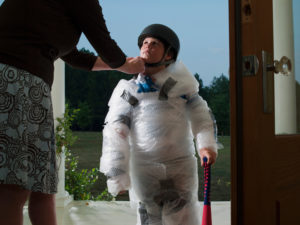 A child changes everything. As a parent, you start seeing things from a completely different perspective. Whereas you would not have bothered before about cars driving too fast on a suburban street, now you find yourself yelling out, “Slow down, there’re kids in this neighborhood!â€
Being a parent brings on a new sense of responsibility. At least one study shows that dads start spending more time at the office after having a child, working harder, hoping for a promotion. Another group of studies show that stress increases significantly for new parents, and some even suggest that, because of the added stress, parents are not much happier than their childless counterparts.
Ah, responsibility. You hold that little bundle of sleepless joy in your arms, and tell them, “I will never let anything happen to you. I promise. I will dedicate my life to you, and you will be the happiest person to ever walk this earth.†However, raising the smartest, happiest, and most amazing human being is a lot of work. Just keeping a child alive is huge responsibility!
The constant pressure can lead you to over-parent your child. Your desire to shield and protect them at all times allows the child little room for making mistakes.
Children, and people in general, learn best from experience. If a parent constantly guides a child to assure the child’s success, then the child may not know what to do when left to their own devices.
A common sign of over-parenting is when parents express worries in the form of instructions. For example: “Don’t fall!†How does that statement reduce the child’s chances of falling? Another one: “Be good.†Instead of helping your child succeed, these vague statements communicate mistrust in the child’s abilities.
[fat_widget_right]
Another sign of over-parenting is when a parent rushes in to fix a child’s problems to avoid the child becoming upset. When a child loses a toy, they get a new one. When a pet dies, and parents are overwhelmed with their child’s feelings of grief, they might rush to the pet store for a new animal to replace their child’s best friend.
So, what’s a loving parent to do? What if the parent has a superpower to foresee danger. Should the parent not give warnings? Step in to save the day?
Here are some suggestions on how to step back so your child can step up:
- Keep your fears in check. Having a child feels as if your heart is walking around outside your body—all you want to do is keep it safe. Instead of expressing your fears to your child, give things a positive spin. “Wow, those are a lot of heavy plates you are holding!†builds your child’s confidence. If your child needs help, provide specific suggestions. “Hold the plates with both hands†may be enough. If you find yourself providing too much anxiety-filled feedback, you may be overdoing it.
- Think about the realistic worst-case scenario. Fear keeps us safe. That’s why fear makes us think about the worst that could happen. But how hurt can your child really get if they run too fast or swings too high? How sick can they become from playing with someone who has the sniffles? Give your child room to learn their own limits. The child may need to fall once or twice to find out.
- Allow your child to experience upset feelings. Although you want to raise the happiest kid, your child will experience disappointment, frustration, and grief. When you experience these feelings, you don’t usually want someone to just fix it. It helps much more to be listened to and feel “felt.†Let your child tell you about their feelings. Connect with the child without immediate suggestions or solutions. For your child, it is often more important to know you are available than it is to know you will fix all of their problems. And, learning to remain calm when things aren’t going well builds the child’s stress tolerance.
Above all, remember that your child will benefit from learning to figure things out. A child will be more careful holding an ice cream cone after dropping it once. And if it’s their emotional well-being you are looking out for, keep in mind that the way in which your child is able to overcome difficulties is what will make them feel successful and empowered. Our children are often stronger, wiser, and more responsible than we think.
 You look over at your lovely daughter and think to yourself how time flies. Gazing at her with love, you notice red marks and lines on her youthful arms. Immediate panic sets in; you reach over with shock and say, “What is this?!†Your parental urgency sounds like terror, and your daughter pulls away quickly and rebuffs your concern. She retreats to her room, and you are left wondering where you went wrong and concerned that she’s in danger.
As much as it’s an unwanted membership, you’ve just joined with other parents who have children who cut. You may not even know that’s what you’ve exposed, but most likely it is. If your child has been acting more irritable, overwhelmed, and on edge, be aware of the signs of potential self-harm. Generally, the signs distinct to a person who cuts include:
- Wearing long sleeves in warm weather. People who cut themselves usually hide the evidence.
- Wearing a multitude of bracelets to cover their wrists. Again to hide the evidence, not necessarily to be in fashion.
- A teen who explains away marks and cuts in unlikely ways, such as “cat scratches†when you don’t own a cat.
The biggest question becomes, then, what do we do as parents? Here are some suggestions to help you parent through this challenging time:
[fat_widget_right]
- Don’t freak out. This is the hardest part for parents, but a necessary one with teens. If you freak out, they freak out. They are just as afraid of their behavior as you are, and if they see you unable to control yourself and handle it, how is there hope for them to cope? Instead, breathe, think it through, and speak calmly.
- Check your anxiety. How do you handle your anxiety? Do they see you cope in healthy ways or do you create maladaptive behaviors as well? Are you stressed all the time, yell at everyone, and otherwise handle life poorly? Remember, they are watching you.
- Ask them if they want to talk about it, and create opportunities for them to talk. Forcing teens to talk is a recipe for disaster. Instead, be available and let them know repeatedly that you are there to listen if they want to talk. They will appreciate that they can choose to talk or not, and that you are accessible. Create time and opportunities to engage with them.
- Don’t embarrass them by telling all your friends. As much as being secretive is damaging, so is telling everyone you know because YOU can’t handle it. This is the time to put your teen’s feelings first and care for them without alerting the media.
- Know your limits. If this is too much to handle, seek help for your teen. Self-harm is relatively newly acknowledged and understood as a coping mechanism. A mental health provider can provide guidance and teach appropriate techniques to help your teen handle life.
- Don’t tell them to stop cutting. Telling your teen to “knock it off†or “don’t do it again†is simply asking for rebellion. Although that’s how we feel and what we want to say, it’s best to understand the behavior fully before seeking demands.
- Create a plan. This is a great time to create a plan for healthy coping mechanisms. Brainstorm with your teen alternative solutions during stressful times. Maybe they can go for a walk, call a friend, bake a cake, draw, listen to music, watch a movie, or journal. This can be a fun activity to do together—use your creativity!
- Spend one-on-one time with your teen. Kids spell love: T-I-M-E. Make time.
Discovering that your teen cuts may lead to panic and unease. How you handle yourself during this scary time can create a path to peace or leave a destructive wake. Checking yourself and your own anxiety can be a powerful tool to teaching your teen how to do it, too.
 Over the past few years since starting my private practice, I have seen and worked with numerous families where a divorce was either in progress or had already occurred and child-custody disputes were in progress. Sometimes, one parent will alienate a child from the other parent out of anger, desire for revenge, jealousy, feelings of betrayal, rejection, etc. The child becomes enmeshed with the alienating parent and believes he or she must align with the alienating parent. The child may also actively participate in the process of alienating the other parent. This phenomenon is known as parental alienation syndrome (PAS).
When I observe families struggling with this type of dynamic, it brings to my awareness the victimizing nature of parental alienation syndrome for the child and the parent being alienated. The child wants to be loyal to both parents, and when he or she feels an “invisible loyalty†to one, it creates a high level of anxiety for him or her. This is a war the child cannot win.
Often, the parent affected by PAS will say negative things about the other parent to the child, with the objective of alienating the other parent from the child. The child can become virtually brainwashed into believing that the other parent deserves to be alienated, and may actively participate in denigrating the parent being alienated. The parent being alienated often feels protective, but is unable to stop the negative impact of PAS on the child and the relationship with the child. The biggest victim in this scenario is the child, as he or she will suffer the most from the fallout.
Parental alienation syndrome steals the bond and security that the child once experienced with the parent being alienated. In addition, PAS typically involves destructive behaviors such as manipulation, lying, and deprivation. Parental alienation syndrome robs a child of the ability to trust others as well as his or her own perceptions about life. In other words, he or she begins to distrust himself/herself as well as carry guilt. Parental alienation syndrome puts a child in a position of believing that the love and bond he or she has with a parent is contingent upon sacrificing the other parent, and they actively participate in protecting the parent responsible for alienating the other.
[fat_widget_right]
If PAS is successful, the long-term emotional impact on a child may severely limit his or her ability to form healthy relationships and to develop emotional attachment to others. In addition, PAS may have a negative impact on a child’s self-esteem and confidence, which affects a child’s general attitude about life.
Parents must recognize that when they decide to divorce and children are involved, their relationship is not ending; it’s changing. Despite the charged emotions that often surface between parents who are divorcing, they must still collaborate about what is in the best interest of their child. The “tug of war†that PAS creates for a child with one or both parents should be avoided at all costs.
The following are some things parents can do to successfully challenge the alienating parent in the phenomenon of PAS:
- A home-study course called Breakthrough Parenting has been known to help parents being alienated to successfully challenge the parent doing the alienating.
- Remain objective and nonreactive to the alienating parent. If the parent being alienated becomes reactive, it gives the alienating parent power to prove that the parent being alienated is unstable.
- Be willing to stay persistent in the process of challenging the parent doing the alienating in front of a judge. This process can take a significant amount of time.
- Be willing to take on the financial expense of legally challenging the parent doing the alienating.
- Seek help from a family attorney who has experience dealing with PAS.
- Get educated about how the court system works and become familiar with the law as it applies to the case at hand. Some parents have been known to represent themselves (after educating themselves on how the courts work and how the law applies to their case).
- Devise a parenting plan showing how the child will be cared for and then present it to the court.
- Always remain focused on the objective of having the child’s best interest at heart.
- Avoid taking a “victim†stance.
- Document, document, document.
- Make a conscious effort to avoid causing friction with the alienating parent.
- Focus on the present and enjoy spending time with the child without saying anything negative to the child about the alienating parent.
- Follow through on picking up the child, and/or follow through with all obligations to the child.
- Avoid violating court orders.
- Have a strong sense of character and show integrity toward the alienating parent.
 In helping children, adolescents, and even adults with attention-deficit hyperactivity (ADHD), a checklist is a basic but extremely effective tool if used properly. Checklists are helpful in remembering to complete tasks, staying on track with budgeting time, and maintaining a record.
Here are a few common uses for checklists among those affected by ADHD:
- Listing items that need to be completed as part of a morning routine (such as brushing teeth, packing lunch, making the bed, or double-checking a backpack for homework).
- Tracking things that need to be done before bed (putting clothes out for the morning, etc.).
- Tracking items that need to be packed at the end of the school or work day to go home (binders, folders, books, lunch box, etc.).
- Staying abreast of tasks that need to be completed at work.
- Tracking homework assignments that need to be completed each night.
- Keeping track of items that need to be packed for a trip.
- As a schedule for completing specific tasks within an allotted period of time.
Here are some suggestions on how to display a checklist:
- App on smartphone, iPod, iPad, etc., such as Wunderlist, Reminders, To-Do.
- Large whiteboard in bedroom, bathroom, or other area.
- Laminated piece of paper that can be used again.
- Piece of paper that can be copied.
- Notepad that can be carried around.
- On a commonly used mirror.
- Sticky notes in different parts of the room/living space corresponding to specific tasks.
Over time, individuals often learn to internalize the idea of a checklist and may be able to carry out routine tasks successfully without having to continue to rely on a physical checklist.
A sample checklist for a morning routine:
__ Brush teeth
__ Shower
__ Make bed
__ Get dressed
__ Eat breakfast
__ Pack backpack
One can include specific time-frame goals for tasks to be completed as well (i.e., “pack backpack – 7:45 a.m.”).
A sample checklist for homework assignments:
__ Math: worksheet (10 minutes)
__ English: chapters 4 and 5 (30 minutes)
__ Science: short-answer questions (20 minutes)
A sample checklist for daily work tasks:
__ 9 a.m. to 10 a.m.: Proposal project
__ 10 a.m. to 10:15 a.m.: Break
__ 10:15 a.m. to 11:45 a.m.: Meeting
__ 11:45 a.m. to 12:30 p.m.: Return phone calls/email
__ 12:30 p.m. to 1:30 p.m.: Lunch
__ 1:30 p.m. to 3 p.m.: Finish inventory
__ 3 p.m. to 4:30 p.m.: Review of accounts
__ 4:30 p.m. to 5 p.m.: Return phone calls/email
When creating a checklist, there are a few important things to keep in mind. First, make sure that the creation of a checklist does not take a large amount of time. Also be sure that the way the checklist is set up is easy to follow. It is important not to force the use of a specific checklist on a child, adolescent, or adult; this goes for most strategies and tools. Try to work collaboratively with the person, get his or her input, and figure out a compromise that includes his or her ideas. If you do this, an individual is more likely to use the checklist.
If you try a checklist and it doesn’t work well, examine what did not work. It may lead to revamping how the checklist is created, displayed, or used. In other situations, it may mean finding an alternative strategy.
 Sleep is not only important for your child’s rest and rejuvenation, good sleep is essential to healthy development. Sleep problems affect a child’s mood, ability to cope, and academic performance. Sufficient sleep can promote emotional resilience and keener senses.
Quality vs. Quantity
Sleep scientists tell us that preschoolers need 11 to 13 hours of sleep each night, while children ages 5 to 12 need 10 to 11 hours. Making sure your child gets enough sleep can be a demanding task, but it’s one that reaps almost instant rewards. Well-rested children learn better, play better, and even sleep better the next night.
However, sleep is gauged by both quantity and quality. Scientists view our nightly slumber in terms of the stages of brain-wave activity and physiology that punctuate the course of a night’s sleep. These stages progress in predictable patterns known as sleep cycles. Sleep quality is a way of evaluating the health of our sleep cycles.
Sleep Cycle
A typical sleep cycle starts when your child feels drowsy, resulting in light sleep. Next, he or she enters a longer period of deep sleep, which is followed by a shorter period of rapid eye movement (REM) sleep. He or she dreams during REM sleep, and then the cycle begins again, starting with drowsiness or very light sleep. Your child will go through four to six (or more) sleep cycles during the night.
If his or her sleep is disturbed mid-cycle, and/or he or she has incomplete sleep cycles, or if he or she sleeps too lightly or wakes too easily, his or her sleep quality will be poor, independent of number of hours of sleep. This may lead to mood swings and/or difficulty with concentration, and over time, long-term health can be threatened.
[fat_widget_child_counselor_right]
Sleep Solutions
Here are five strategies that may help your child get the quantity and quality of sleep he or she needs:
1. Dim the lights.
Surprisingly, it’s not simply seeing light that wakes us in the morning. In fact, it is a specific wavelength of blue light that starts the process. Sunlight, as well as the light emitted by fluorescent bulbs, television, and computer and smart phone screens, contains blue wavelengths that trigger a waking response in our brains.
Exposing your child to these artificial light sources during the hour before bed can make falling asleep harder, and diminish the quality of sleep by curtailing the production of the sleep hormone melatonin. Even nonfluorescent lights can trigger this effect when the source is overhead, so avoiding the use of ceiling lights and tall floor lamps can help.
In place of watching nighttime TV and movies, have your child listen to stories. The tradition of reading bedtime stories out loud is perfect. If you are not in the mood to read, try an electronic book or gentle music.
For an older child who uses a computer or other electronics at night for homework, consider using an app or program that both dims screens at sunset and adjusts the output spectrum to include very little blue. The app will typically return the screen to its normal color mode and brightness at sunrise. The app described is shareware called f.lux.
2. Provide a calm environment.
A calming, soothing bedroom environment can be remarkably effective in helping your child fall asleep. To create a peaceful environment, reduce visual stimuli. If you are thinking of painting or redecorating, try using calm or soft colors. Set lamps on low bedside tables. Reducing clutter can help, too.
To provide a calm environment when siblings share a room, try a white-noise machine, or, if necessary, remove one child until the other can sleep well on his or her own.
If sleep is especially difficult to attain, stricter measures may be needed. Associating the bed with sleep can make a big difference and change how your child relates with his or her sleep environment. This entails pairing the bed with the activity of sleep, similar to how Ivan Pavlov paired a bell with meal time in his famous dog experiments.
Pairing the bed with sleep means that your child must use his or her bed only for sleeping—not to watch television in, eat in, or even play on. That way, whether he or she sees or lies in bed, his or her body will know the bed is meant for sleep. If sleep continues to be elusive, it may be time to seek the help of a licensed mental health or medical professional.
3. Establish a routine and stick with it.
A bedtime routine means consistently doing the same activities before bed, at or very close to the same time, every night. The activities can be as simple as teeth-brushing and pajama donning, as typical as a bedtime story, or as elaborate as a scented bath, followed by soothing music and a back massage. Whether simple or elaborate, a consistently applied routine will help your child have an easier time falling asleep and staying asleep.
A sleep routine also supports the circadian clock in your child’s brain. This is because over time your child’s brain associates the time of day and bedtime prep activities with sleep, so when the routine is started, the brain gears up for sleep while he or she completes the bedtime tasks.
One word of caution: a bedtime routine can be easier to establish than maintain. It helps if everyone in the household is on board. To set the stage for success, create a sleep schedule that can be consistently manageable, even if a parent is absent or the child is away from home.
An optimal routine starts the countdown between 30 and 60 minutes before bedtime. Timing is basic to routines, and while some flexibility is great, keeping bedtime at 9 p.m. or earlier is strongly recommended for children 12 and younger.
4. Substitute soda or hot chocolate with chamomile tea or warm milk.
What goes into your child’s body can impact how he or she sleeps, and understanding how different foods impact sleep can have life-long benefits.
Chamomile tea and warm milk each have ingredients that promote relaxation. Even if your child can fall asleep after drinking caffeine, his or her sleep cycles may not be as complete.
Teach your child to understand and respect his or her body. A healthy body supports healthy sleep. For example, he or she may need exercise during the day in order to sleep well at night.
Also, naps count. If your child still needs a nap, to have real value the nap must be at the right time. An optimal duration and time for napping is about 30 minutes between 2 p.m. and 5 p.m. Avoid napping between 7 a.m. and noon or after 6 p.m.
5. Teach your child how to self-soothe and relax.
Children get stressed too, and worries or tension can make it difficult to fall and stay asleep. In part, this is because stress is correlated with high cortisol levels, and high cortisol can inhibit sleep. However, when your child’s body moves into a relaxed state, cortisol levels reduce.
A healthy bedtime routine can reduce anxiety associated with sleep. Soothing and relaxation exercises don’t need to take a lot of time out of the routine. Adding just five to 10 minutes of a relaxing activity can make a difference. Relaxation techniques can include a muscle tension/relaxation exercise, a guided visualization, or listening to gentle music.
Massage and similar modalities can also help (for some children, a back rub is always welcome). Likewise, warm baths have long been believed to help induce asleep, and they’re a great part of the bedtime routine.
There’s another benefit to bedtime baths. They’re not only a way to keep your child clean and cozy, science has shown that a result of bathing is a drop in core body temperature, which helps to start the sleep cycle. An ideal bath time is first on the routine, at least an hour prior to sleep, so that your child’s body has time to cool down before he or she hits the sheets.
Research has demonstrated that a lavender scent can be effective at promoting relaxation, and thus works as a sleep aid. Try a drop of lavender essential oil in the bath water, or place a few on drops on the shower floor (scent will rise).
References:
- Abbott, S. M., Arnold, J. M., Chang, Q., Miao, H., Ota, N., Cecala, C., … Gillette, M. (2013, August). Signals from the Brainstem Sleep/Wake Centers Regulate Behavioral Timing via the Circadian Clock. PLoS ONE, 8(8), 1-11.
- BBC Worldwide Ltd. (2009). Films on Demand collection. 10 things you should know about sleep.
- Institute of Medicine (US) Committee on Sleep Medicine and Research; Colten HR, Altevogt BM, editors. Sleep Disorders and Sleep Deprivation: An Unmet Public Health Problem. Washington (DC): National Academies Press (US); 2006. 2, Sleep Physiology. RetrievedAugust 16, 2014, from: http://www.ncbi.nlm.nih.gov/books/NBK19956/
- Meltzer, L. (2010, Jul-Sep). Key procedural elements for the treatment of behavioral insomnia of childhood. Chart. Behavioral Sleep Medicine, 8(3), 177.
- Mindell, J. A., Meltzer, L. J., Carskadon, M. A., Chervin, R. D. (2009, August). Developmental Aspects of Sleep Hygiene: Findings from the 2004 National Sleep Foundation Sleep in America Poll. Sleep Medicine, 10(7), 771-779.
- National Sleep Foundation (2014). Children and Sleep. Retrieved August 13, 2014, from http://sleepfoundation.org/sleep-topics/children-and-sleep
Fear is a pretty ordinary human emotion. When we experience it, though, it feels anything but ordinary. How we respond to our fears can shape the way we live our lives and the people we are.
As children, we learn a great deal about fear from our parents. A parent’s fear for the child helps the child learn not to run into the street, that the iron is hot, that the electrical outlet is dangerous, etc. However, a parent’s fear may also teach the child that it is scary to go down the slide, to stay with the babysitter, to go to school, to have a sleepover, etc. In these situations, the parent is often frightened, but he or she doesn’t want to feel afraid and doesn’t want the child to experience fear, either. So, to get rid of unwanted feelings, the message is “don’t do it.†This is a different message from “yes, it’s scary, but you can do it anyway.â€
Taryn was a scared child who developed into a scared adult who makes safe life choices. She came to see me because she was unhappy with her life. At 29, she was a music teacher in a suburban public school, unmarried, who lived and worked in the town next to where she grew up and where her parents still resided. She had been an “A†student in high school, and went to the local state college where she got her master’s degree in music education. In our first session, she told me: “I really wanted to be a singer. But my parents always discouraged me, saying it was no way to make a living. They encouraged me to be a teacher. I got a scholarship for college, and it wasn’t hard to get my teaching job. I lived at home the first three years I taught, and now I share an apartment with a roommate. I feel so bored. I date occasionally, but every day seems the same as the last one. I just don’t know what I want; I just know I feel empty and blah.â€
As Taryn and I worked together and I got to know more about her life, past and present, I could visualize Taryn as a precocious little girl: cute, smart, and lively. She had memories of happy times with her parents—being read to, singing in the car, feeling their pride in how well she did in school. She also had memories of sleep problems, fear of going to school, and a lot of worries. In particular, she talked about not being able to fall asleep on her own until she was 10 and her parents having to stay in her room until she fell asleep. She also had separation anxiety around school, sleepovers, and in general when she felt her parents were out of contact. She recalled: “When I was 12, my friends were going away to camp for two weeks and I started to think about going too. I remember telling my parents that I was worried that I would be homesick. They encouraged me not to go and said it was silly for me to put myself through the worry. When I decided to stay home, I thought they were more relieved than I was.”
[fat_widget_right]
Taryn’s experience illustrates growing up with parents who are unable to contain their anxiety. To manage their feelings, anxious parents typically need their children to share their anxiety. As long as the child is anxious, the parent can feel less anxious and expect that the child will refrain from taking risks. The parent’s anxious demeanor and behavior communicate life lessons to the child: it’s not OK to take risks; it’s not OK to feel anxious; one must act in ways to get rid of the anxiety rather than feel the feelings and see what happens when action is taken.
Being a parent is by definition anxiety producing. No one teaches us how to parent. We have no road maps about how to respond to our children’s behaviors and feelings. Moreover, we have no set of instructions to help us manage our feelings. Frequently, we rely on our experiences in our families of origin to model what we should do and not do in raising our children. It is rare to hear of a parent who says to their anxious young adult child, “Don’t be an anxious parent like me. Try to contain your anxiety with your child and help him to get comfortable with all his feelings so he can go into the world and take risks. I didn’t help you with that, but maybe you can be a better parent.”
Some of us realize that it would be helpful to our children to provide them with an experience different from the one we had growing up. Glenn is the father of 4-year-old Callie. He is very aware of his tendency to worry and get anxious in the face of any possible danger. He is also aware that he is repeating with Callie the over-involved, hovering, scared demeanor that his mother had with him. In therapy, he wanted help with containing his anxiety and not communicating his fears to Callie: “When I take her to the playground, I can feel myself becoming scared and vigilant when she approaches the slide or starts running around. I think to myself, ‘Oh, no, she’s going to get hurt, I have to stop her.’ It takes so much self-control to keep my mouth shut and I don’t always succeed. I also am having conflict with my wife because I don’t want to put Callie in preschool. I keep thinking how sad and abandoned she will feel. My wife thinks I’m nuts. Maybe I am.â€
Fortunately, Glenn has the ability to understand that his anxious behavior doesn’t serve Callie. He has been thinking about Callie’s future and his worries: “I can see myself holding her back in all kinds of ways. I know how scared I was trying new things. I can imagine going along with her fears. Like if she’s timid socially or nervous about trying out for a sports team, I know I’ll think of my fears as a kid and not be able to help her. I want her to be strong, able to go away to college rather than go to a commuter school like I did. I want a different experience for her.â€
Even if Glenn is not yet able to change his feelings, he has been trying to alter some of his behaviors. We have agreed to work together to see if Glenn’s feelings can move closer to what he is able to know intellectually. Glenn is highly motivated. His ability to recognize the way his anxiety developed from his parents’ communications to him, his memory of his conflicts about wanting more but being terrified of the risks, and his desire to not repeat this pattern with his daughter are extremely motivating.
Worry, fear, anxiety—they serve as important warning signs that keep us safe. But if we think of the fight-or-flight continuum, parents who always signal their children to flee are, in many life circumstances, depriving their children of the diversity life has to offer. Not only are they being denied access to the wide variety of ways to participate in the world, they are being robbed of the ability to develop into individuals who are resilient, confident, and know what they want and how to get it. If parents can respond to a child with the reassuring idea that it is OK to be afraid and still choose to take risks and explore the world, they will be helping the child to learn that fear is to be respected and considered, but is not always a signal for saying no to the scary but exciting and fascinating new experiences that make us the unique individuals we keep becoming.
Note:Â To protect privacy, names in the preceding article have been changed and the dialogues described are a composite.
 Parenthood makes worry inevitable, but the threats parents worry about change with each generation. The National Poll on Children’s Health, conducted annually by the University of Michigan C.S. Mott Children’s Hospital, is a phone survey that asks a nationwide sample of adults to list the top 10 threats faced by children in their communities, as well as for children across the country.
The most recent poll suggests that violence and health are ongoing concerns for most parents. Over the years, obesity tends to top the list of concerns among those polled, along with bullying and substance abuse, and this year’s poll brings gun-related injuries and school violence into the mix.
What Do Parents Fear?
When parents were surveyed on the biggest threats to children across the United States, 55% put childhood obesity on the list, making childhood obesity the greatest concern of all.
The top 10 “big problems†affecting children nationwide, according to adults surveyed, include:
[fat_widget_left]
1. Childhood obesity – 55%
2. Bullying – 52%
3. Substance abuse – 49%
4. Smoking – 47%
5. Violence at school – 44%
6. Child abuse – 42%
7. Alcohol abuse – 41%
8. Internet safety – 40%
9. Gun-related injuries – 39%
10. Teen pregnancy – 37%
Adults frequently expressed different concerns for children living in their local communities. Childhood obesity still topped the list, with 29% of parents ranking it as a major local threat.
The top 10 biggest local threats included:
1. Childhood obesity – 29%
2. Smoking – 26%
3. Drug abuse – 26%
4. Bullying – 23%
5. Stress – 22%
6. Alcohol abuse – 19%
7. Internet safety – 18%
8. Child abuse and neglect – 18%
9. Teen pregnancy – 16%
10. Not enough physical activity – 15%
The Most Common Threats for Children
Parents’ fears can be influenced by media coverage of frightening events, such as mass shootings. In some cases, parental fear is reflective of common threats. Child abuse, for example, is startlingly common, with more than 6 million cases reported to state child protection organizations in 2012.
Parents don’t always worry about the biggest threats, though. Some leading causes of childhood deaths didn’t make the list. Among babies, the leading causes of death are sudden infant death syndrome (SIDS), developmental and congenital conditions, and low birth weight. Among children ages 1–14, cancer, developmental and genetic conditions, and accidents are the leading causes of death. Suicide, homicide, and accidents top the list among older teenagers.
Though parents’ worries might not always directly reflect the threats their children face, it makes sense that parents might feel anxious in general. In 2013, UNICEF rated child welfare in industrialized countries. The U.S. had the second-highest child poverty rate, and overall, the U.S. ranked 26 out of 29 countries on measures of child welfare.
References:
- Child abuse and neglect stats. (2014, August). Retrieved from https://www.firststar.org/library/national-statistics.aspx
- Death among children and adolescents. (2012, August 1). Retrieved from http://www.nlm.nih.gov/medlineplus/ency/article/001915.htm
- School violence, gun-related injury among top 10 child health concerns nationally. (2014, August 11). Retrieved from http://www.mottchildren.org/news/archive/201408/school-violence-gun-related-injury-among-top-10-child-health
- Schwayder, M. (2013, April 11). UNICEF report on child well-being shows U.S. near bottom of list. Retrieved from http://www.ibtimes.com/unicef-report-child-well-being-shows-us-near-bottom-list-1186975
 The signs for identifying that your child is being bullied are vast and often nuanced. Children often feel ashamed about being a target at school, so you may have to read between the lines to find out what is going on.
Perhaps your child is more quiet than usual. Tummy aches are becoming more frequent, and so are other excuses to miss school. They don’t like riding the bus. Whatever the case, you realize something is wrong, and as his or her parent, you can’t sit back and watch it go on anymore.
Before you head to school to sort things out, it’s worth exploring strategies on how to stop or prevent bullying. The following tips may help you address bullying in a smart and effective way:
[fat_widget_child_counselor_right]
- Keep your friends close. Making allies at your child’s school is key in helping your bullied child. School personnel often more quickly minimize bullying than admit that it occurs in their classrooms. If you are a good advocate for your child, you may address any issues head-on. Before you speak to your child’s teacher(s), think about how they may receive your feedback. Instead of telling a teacher what is happening in his or her classroom, ask. Tell the teacher about your suspicions, but don’t make it seem like you’re telling the teacher what to do. Compel the teacher to want to help you by being his or her ally.
- Keep your “enemies” closer. Is there a kid in your child’s classroom who seems to be the leader or bullying instigator? Find out whom your child dislikes the most in class—and why—and talk to that child’s parents. See if you can connect with them on a personal level. You may learn that the children have more in common than they think. By connecting with the kid’s parents, you’re leading by example.
- Play detective. Investigate what is driving the bullies. Is your child shy? Is it about your child’s appearance? Quirky interests? Children can be very cruel. And because of their developmentally appropriate black-and-white thinking, they often fall into an us-vs.-them mentality. Anybody who is different may be seen as a threat. Find out what can help your child connect with others without compromising your child’s uniqueness.
- Recognize your child’s strengths. When children have stronger self-image, they are bothered less by what bullies say about them. What are your child’s strengths? Allow your child to see that he or she is unique, special in his or her own way. Nobody else in class may be able to identify 50 types of dinosaurs. Maybe others don’t wear glasses because they aren’t as good readers. Whatever your child’s disadvantage, there is usually an advantage to balance it.
- Help your child shine. Find ways in which your child can exhibit his or her strengths at school. Encourage joining an after-school club he or she is likely to excel in. Or maybe your child has a cool dad. A friend told me that they were able to put an end to bullying after the dad went to school to do a presentation on martial arts. Dad did some impressive kicks, and his child was cool by association. They didn’t plan it that way, but it worked out!
- Find out how your child really feels. Allow your child to vent with you. Don’t immediately offer suggestions. Label his or her feelings, and say them back to him/her. Children who are able to identify feelings are typically better at managing their emotions. Ask questions, and let your child talk even when you know the answer, or what your response will be. This way, your child will learn to process thoughts on his or her own, which will help him/her feel empowered.
- Allow your child to grow from the experience. Being a victim of bullying may cause serious stress in children. With your help, it can be an experience with a positive lesson. Your child can learn how to turn a bad situation into an opportunity. The child can discover that his or her worth doesn’t depend on what others say. And you can show your child that you will always be there to support him or her.
- Consider seeking the support of a counselor. Particularly if the bullying (and its effects) are more severe, seeking the help of an experienced child counselor or therapist can help address emotional concerns and point you and your child toward appropriate remedies.
 Editor’s note: If you or someone you know is in crisis, please click here for information about seeking help.
Cutting is a popular way for teens to self-injure without the intent of suicide. Using scissors, razor blades, pins, pens, or other sharp objects, some teenagers puncture or cut their skin in various places on the body. If you’re a parent, you are probably wondering, “Why would they do that?†The answers may surprise and scare you.
Simply put, cutting is a maladaptive coping mechanism during times of stress and anxiety that is rarely accompanied by suicidal thoughts. According to the American Association for Marriage and Family Therapy, self-harming behavior such as cutting has no single cause. It does not discriminate across cultural and socioeconomic levels, but the behavior is predominately carried out by females.
Reasons behind teen cutting are varied. Often it can be categorized by those who already feel numb as a way to experience intense emotion and pain. Numbness may be due to being emotionally overwhelmed for too long, which almost short-circuits the system into a feeling of dullness—neither happy nor sad. Teens who feel numb often identify that the only way to feel alive is to cut.
Another way to categorize cutting is as a release of emotions, similar to a drain when the sink is overflowing. Teens who feel burdened by stress, anxiety, depression, and other emotions may use cutting to vent the unwanted leftovers of those difficult feelings.
Other reasons for cutting include an intense and overriding feeling of aloneness, feeling helpless, and feeling the need to punish or blame for something that happened.
[fat_widget_child_counselor_right]
The theory behind why teens use cutting as a coping mechanism reasons that endorphins play a major role. When teens cut, endorphins rapidly invade the bloodstream, resulting in a feeling of pleasure and relief. For some teens, the cutting and the endorphin release make them feel “high.â€
Take for example, a 16-year-old girl who is a high academic achiever, member of the elite volleyball team, and a positive role model for her younger sisters. She is an all-around overachiever, earning money babysitting and as a lifeguard, striving to excel in school to make sure she gets into a prominent university. Her volleyball team travels on the weekends, and she is looked at as a leader to the other members. In addition, she volunteers at her church and with her community. She dresses well and in fashion, and is always attempting to make sure her hair is perfect. Although she doesn’t love her body, she knows it could be worse, since she’s an athlete and in somewhat decent shape physically.
Emotionally, however, she’s not in shape, nor positive, nor excelling. She is overburdened by academia, struggling to achieve all A’s in her advanced classes. She has to study from the minute she gets home from school until volleyball practice, and then more upon returning. She is not sure her grades will get her into a “good enough†college. She is worried that her best friend is mad at her, and she’s certain that her father hates her. To make matters worse, her right knee has been bothering her, but she doesn’t tell anyone for fear that her team will be mad at her. She has had to cancel when invited out because she had too much homework and she promised her best friend she’d be available if she needed to talk.
At first glance, this teen seems to have a full and rich life, with opportunity abounding. However, she’s so overwhelmed that at night she uses her desk scissors to slice her wrists repeatedly. To make sure no one suspects anything, she hides the bloody tissues at the bottom of the trash can. She wears stacks of bracelets to cover the damage so no one asks. She doesn’t know what else can release the pressure she feels from school, family, friends, and her team. She heard about cutting during lunch a few years ago, and now uses scissors to pour her emotions out.
This is real life for some teens. As much as parents are disgusted by the idea, and instinctively react with shock about what their child has done to their body, it is an unwanted aftereffect of overworked, overscheduled, overwhelmed children. Never before have we put the same amount of pressure on our children and teens to succeed academically, socially, and beyond.
While it may not make sense that they cut their bodies, it makes sense that they find a way to release the pressure. Without learning new coping skills and understanding their triggers, teens often end up alone in their pressure-cooker lives. Through counseling, teens can learn how to handle distress, how to prioritize in their lives, and how to communicate about their feelings.
 Two-thirds of parents admit to spanking their children, and 81% of parents say that it’s sometimes acceptable to spank children. Yet study after study has shown the deleterious effects of spanking. A recent CNN article highlighted some of the worst effects of spanking, and parenting experts continue to emphasize that spanking is not an appropriate discipline strategy.
Spanking and the Child’s Brain
Severe spankings may undermine brain development. One recent study, for example, found that children who were frequently spanked, often with objects like belts, at least 12 times a year for 3 years or more had less gray matter in areas of the brain linked to mental health challenges and addiction. Another study found that children who were spanked by their mothers had fewer cognitive skills compared to other children. Researchers suggest this may be because children who are spanked don’t learn to control their own behavior. Rather than learning impulse control and other important skills, these children are perpetually afraid of being punished by external authorities and may to defer to authority as a result.Â
[fat_widget_right]
Other Negative Effects of Spanking
“Many parents spank when they are angry, which essentially teaches children that it’s okay for them to hit if they are large enough and angry enough,†says Grace Malonai, PhD, LPCC, a GoodTherapy.org parenting Topic Expert. Research backs Malonai up, with studies repeatedly finding that spanking increases aggression and antisocial behavior. One study found that children were 50% more likely to be aggressive by age 5 if they had been spanked more than twice in the previous month. Another study found a link between spanking and adult criminal behavior.
Parents who spank their children argue that some behaviors are so bad that spanking is the only way to teach children to avoid them. Malonai says this is wrong. “If your goal is to change behavior, spanking doesn’t work. In general, punishment has a very low effectiveness rate.” In addition to its ineffectiveness, Malonai points out that spanking can be damaging to the relationship between parent and child, “because spanking may teach a child to be afraid of his or her parent, which can reduce trust and sense of safety.†This lack of trust and safety in childhood influences the attachment style that the child develops, thus influencing his or her relationship patterns throughout life.
Parents who remain unconvinced of the connection between spanking and aggression should note that there are many other reasons not to spank. A 2013 study that found that children who were spanked by their fathers were more likely to have language and vocabulary problems. The same study also found that spanked children were more likely to behave defiantly.
In 2006, the United Nations Committee on the Rights of the Child moved to end spanking around the world, calling spanking violence against children.
References:
- Castillo, M. (2013, October 21). Spanking young kids linked to aggressive behavior, language woes by age 9. Retrieved from http://www.cbsnews.com/news/spanking-young-kids-linked-to-aggressive-behavior-language-woes-by-age-9/
- Kovac, S. (2014, July 23). Spanking the gray matter out of our kids. Retrieved from http://www.cnn.com/2014/07/23/health/effects-spanking-brain/
- Park, A. (2010, May 03). The long-term effects of spanking. Retrieved from http://content.time.com/time/magazine/article/0%2C9171%2C1983895%2C00.html
- Smith, B. L. (2012, April). The case against spanking. Retrieved from http://www.apa.org/monitor/2012/04/spanking.aspx
- Spanking children slows cognitive development and increases risk of criminal behavior, expert says. (2013, December 11). Retrieved from http://www.sciencedaily.com/releases/2013/12/131211103958.htm
- Tomoda, A., Suzuki, H., Rabi, K., Sheu, Y., Polcari, A., & Teicher, M. H. (2009). Reduced prefrontal cortical gray matter volume in young adults exposed to harsh corporal punishment. NeuroImage, 47, T66-T71. doi: 10.1016/j.neuroimage.2009.03.005