 Mental health issues carry such a stigma that few people wish to talk about their experiences at a psychiatric ward. I am learning involuntary commitments are rarely necessary but are frequently directed by emergency room (ER) physicians who do not know how to deal with mental health issues. I share this experience so others know what happens when someone is committed to a mental institution. My opinions are not meant to be medical advice. Talk all medical issues over with a dedicated, concerned, and compassionate health care professional.
It Began with the Itching
The hydromorphone pill I had been prescribed for pain from a hysterectomy made me itch. Five days later the dysphoria set in. Dysphoria is an emotional state, sometimes instigated by medication, often indicated by restlessness, anxiety, and depression. The next day the anger followed. Finally, suicidal ideation took up camp in my mind. All I could think about was how relieving a long swim in the ocean would be to make the thoughts go away.
My nephew had committed suicide two years before. In reading up on suicide, I had learned those who take their own lives don’t understand suicide is a long-term solution to a short-term problem. The “sane” part of my brain continually played this mantra, keeping me from moving from ideation to suicidal intent. There are numerous definitions of suicidal ideation versus suicidal intent, and these often overlap. I refer to Carmel McAuliffe: “Suicidal ideation is a low-risk, common factor among nonclinical population samples…. Ideation may only become a risk factor for attempted or completed suicide when it is comorbid with rarer risk factors such as a dichotomous thinking style and in the absence of certain protective factors such as social support.” [fat_widget_right]
I asked a neighbor for help, which was the first thing I did correctly: seek help from a trusted person when you are in distress. My primary care physician (PCP) was called. This, on the other hand, was my first mistake; my surgeon should have been called first. Your surgeon’s office should encourage people to call with questions/issues at any time. If they don’t tell you this, do it anyway. My PCP directed me to my local emergency room.
I agreed to go, as I naively thought my local hospital would be able to address my medical issues. Drug-induced dysphoria is not considered a mental illness, but at your ER, you will be committed to a psychiatric ward, either voluntarily or involuntarily, “for your safety,” even though this may not be the best option for you. It is the best option for the ER staff as they are not experts in mental health.
My husband took me to the emergency room—second thing done correctly: always bring with you an advocate who can think rationally on their feet. My medications were given to the ER nurse, which was the third thing I did right. Take your meds or a list with you to the hospital.
One-Way Transport to a Psychiatric Hospital
My husband left the room so I could be examined by the ER physician. This was mistake number six. Keep your advocate with you at all times. I was asked about suicidal ideation, but not suicidal intent. None of my pain medication was discussed, even though it was known I was post-operative. A search on Medscape.com and Epocrates.com show that suicidal ideation is a known adverse reaction of bupropion (one of my medications) and dysphoria is a known adverse reaction of hydromorphone. I have since learned it is the responsibility of the person committed to monitor adverse reactions to drugs as every person’s body reacts differently to medications. Your doctor has no responsibility to share this information with you.
After a few questions about my mental state, I was asked if I would voluntarily commit myself to a mental institution. I said no, because I believed the root of the problem was physiological, not psychological. I was told I could go home if I agree to a day program and, though I wasn’t sure how this would address the physiological issue, I was open to the idea.
I then learned the day center did not have a place for me to lie down, so this option was not physically possible being that I was one-week postoperative. This was another mistake. Because of my “uncooperative behavior,” the ER physician filed a Section 12a on me, which in the state of Massachusetts meant I was then involuntarily committed to a mental institution of its choosing.
A guard was put at my door. I repeatedly tried to get the ER staff to understand my problem was physiological, not psychological. I am assured that my medical needs will be addressed at the psychiatric ward. The vice president and executive director of the hospital said she was sure that by the following week, she and I would meet again and I would thank her for the care I have received at the psychiatric hospital. This proved to be grossly inaccurate.
Stark Reality of a Mental Institution
The dysphoria and suicidal ideation abated by 11 a.m. At 6:30 p.m. I was transported by ambulance to the psychiatric hospital. Mental institutions are exactly how movies portray them: stark, cold, and dark, with stale air. Strapped to an ambulance gurney, I rolled through the unadorned white corridors. As the first set of automatic doors opened and slowly closed, I realized my children, husband, friends, and family were no longer available to me. When the second set of locked doors clicked shut, my freedom of movement and privacy left. As the third set of doors slammed behind me, dignity, respect, and even intelligence were stripped from me.
From then on, I wore only the label of “mentally ill.”
After being checked in, I was assigned a hospital gown for sleeping, towels, and one blanket. I was not allowed a bra, as I might hang myself with it. No dental floss, as I might slit my wrists. No iPod because of the headphone wires… and the list goes on.
The acting physician came in, reviewed the pain medications I was taking, and prescribed the same ones again. As he left, I said, “Out of curiosity, should the hydromorphone make me itch?” He stopped and said, “You are allergic to it.” So it was the hydromorphone that I was allergic to! That was the fourth thing I did right: ask endless questions of your physicians. Do not fear them; fear the mistakes they could make. I would have been prescribed the harmful drug again.
Always Cooperate
I remember years ago reading that if you are ever involuntarily admitted to a mental institution, cooperate at every level. I made a series of requests, which were refused—food, ibuprofen, tea, and constipation medicine—because at that point it was too late in the evening to have them approved. By then, I must have seemed like an unreasonable patient, so I went to bed to stare at the ceiling until daylight. My roommate slept restlessly. I started taking notes in order to provide my husband with concrete examples of how my medical needs had not been met. Another thing done right: take notes. I recorded times and who I had spoken to.
My Psych Team Does Their Job
At 9 a.m., I fought to find my breakfast tray in the cafeteria. Breakfast consisted of pancakes dripping in syrup along with sausages, which I knew my body would not process. Kind Nurse1 brought me a bowl of oatmeal, and a dietician came over to discuss what I could eat. She said, “Ok, we will start providing them to you tomorrow,” and I thought, “Tomorrow? What am I supposed to do today?” I remained quiet. When lunch arrived, I saw it was a peanut butter and jelly sandwich. I explained I was allergic to peanut butter, thanked the attendant, and went back to my room.
My “support team” met with me later. My intake report, which I subsequently requested, indicated I was “helpless, hopeless, and suicidal.” Later I learned my poor mental state was attributed to my not looking the admitting ER physician in the eye (while I was lying on a hospital bed). This was yet another mistake of mine. Make sure you look all interviewers in the eyes so they realize you are in full control of your mental state. At the meeting with my support team, the hospital psychiatrist held my intake report and asked me why I was there. I told them it was because of an allergic reaction to hydromorphone.
An activity coordinator asked, “What are your goals during your stay?” I was ready for this question, as while I was in the ER I used the hospital Wi-Fi to get an idea of what to expect, since I had never been to a psych ward. I replied, “To finish chapter three of the book I am writing.” I’ve since been informed that this could be interpreted as “Delusional Disorder, Grandiose Type,” since no one there knew I was a well-published university professor.
My only identity, according to my team, was “mentally ill with suicidal tendencies.” Wouldn’t I rather work on anxiety or other problems, they asked. I remained committed to chapter three of my book (with all due respect). “Well, ok,” they said, “there are board games, cards, and art you can do if you prefer. Maybe you would like a group session.”
Here is a reminder to mental health providers: people do not automatically lose their intelligence once they enter your facility. (I have come up with several other pieces of advice, which you can see here.)
My Husband Advocates for Me
By midday a hospital human rights officer had arrived and said my husband filed a complaint. From that moment forward my care changed dramatically. My meals were brought to my room with food I could actually eat (that day, not the next), and drinks were supplied without my asking, including warm prune juice. I received fruit and vegetables for grazing on throughout the day. I got my iPod back, and I was given privileges for outside air twice daily. I refused group therapy because of pain, but I could ask for ibuprofen for breakthrough pain as well as milk of magnesia for constipation. I also received dental floss, and Kind Nurse2 provided tea twice in the evening. When I explained I needed a sleeping pill, Kind Nurse2 called the doctor immediately and I got an OTC sleeping pill.
You do have rights. If you feel they have been violated, have your advocate talk to the human rights officer.
Released
On the morning of my third day, I was asked to sign discharge papers which said I suffer from MDD, major depressive disorder. I refused. I asked the hospital psychiatric doctor whether my file stated I had an allergic reaction to hydromorphone. The answer was no. I asked for it to be added but did not stick around to see that it was.
I was released at 11:45 a.m., 52 hours after walking into my local ER. Ever so happy to see my husband, I finally let myself cry.
Five Lessons Learned
- Bring an advocate when seeking medical care. Four different doctors misdiagnosed my symptoms. Don’t fear your doctors; fear the mistakes they may make. Ask questions! Have your advocate ask the questions and take notes if you can’t. Have your advocate fight for your rights.
- Immediately call your physician or a poison control center if you or a loved one has ANY reaction to a medication, common or not (blurred vision, itching, hives, euphoria, dysphoria, anger, etc.). Epocrates.com and Medscape.com are good places to consult about side effects and drugs combinations that should be monitored closely.
- Share this mantra or a similar one with everyone you love, especially young adults: Suicide is a long-term solution to a short-term problem. Have a support system in place of people you trust; you never know when you might need them.
- Cooperate at all times if you are misdiagnosed and admitted to a psychiatric ward. Agitation and despondency support the diagnosis. While confined, your job is to relax; your advocate’s job is to fight on your behalf to get you out. Have your advocate bring magazines, newspapers, or something to keep you busy, and be prepared to get caught up on 2-3 days of reading.
- Know what is in your medical records. Ask to see them and make sure they are in a language/terms you understand. This is your right.
My surgeon later confirmed the hydromorphone likely caused the dsyphoria/suicidal ideation. If you are wondering, I did not abuse the pain medication. At admittance, eight days after surgery, the psych ward counted 20 pills left in the bottle out of a prescription of 30. I have been told the type of reaction I had is rare, but I wonder how many times this type of issue is misdiagnosed.
In this experience, I made mistakes more than I did things right, and I have made this report so you don’t make similar mistakes. Please pass on my story so others are educated likewise.
Dr. Rummel is an associate professor of marketing and innovations at a well-known university in the northeast. She holds a BS in Chemical Engineering, as well as an MBA, in addition to her PhD. She has two wonderful teens, a puppy, and a devoted husband. Mental health issues, especially depression, run in her family, but deter none of her family members from living full lives. She shares her experience in the hope that the health care industry will be the first to demystify mental health issues. Only then can the general public appreciate the commonality of temporary and long-term mental illnesses.
Reference:
McAuliffe, Carmel M. (2002). Archives of Suicide Research. 6:325-338, p. 336.
 Even the most honest people are faced with lying when they are depressed. This is yet another indignity adding to the suffering of depression. The most obvious and pervasive example is the frequent, daily question, “How are you?” It is a social convention to greet friends, strangers, and acquaintances with this question. Frankly, most of us lie in response to this question, or at least shade or limit the truth, because people generally don’t want to hear the true answer when they ask. Convention tells us to answer, “I’m fine, thanks; how are you?” For most people most of the time, this isn’t a big deal. It’s just a formality that facilitates greeting people, and is understood as a friendly hello. It’s not generally a problem because mostly people are fine, and don’t need to tell someone about the rash on their butt or the dog poo they stepped in.
But for a depressed person, the lies required for social convention are constant, and they create more and more isolation and separateness from other people. They reinforce a sense of having a shameful secret that no one wants to know or help them resolve. It reinforces a sense of being a burden or unlovable. All of these thoughts are common in depression, and to have them reinforced all day long by multiple people is crushing. Many people deal with it by isolating themselves from others if they can.
Of course, we all expect to lie to store clerks and other strangers, or even coworkers or neighbors, when they ask how we are and the truthful answer is too personal. But what about when a doctor asks—or clergy, someone we’re dating, our parents, our children, or our friends? What if what we are thinking is, “I hate myself,” “I’m disgusting,” “I’m a failure,” “Everyone would be better off if I were dead,” “I can’t stand the emotional pain anymore,” or even “Day after day I can barely get out of bed, and when I do, I can’t do anything—I’m neglecting my children and spouse, doing a terrible job at work, and have no interest or joy in anything”?
[fat_widget_left]If people say these thoughts aloud, they are likely to get an upsetting response. Some will tell them they don’t really feel that way, or shouldn’t feel that way. Some will try to cheer them up. Others will shame or blame them for how they suffer. Many will get scared; some may laugh. Some will distance themselves. Even some inexperienced therapists may get distracted by their fear of suicide and shift focus to keeping the person alive rather than addressing the pain. Good friends may listen and care, but if the condition is chronic, they get tired of listening to the same scary, depressing point of view that is their friend’s experience.
Here’s an example of the kind of conversation depressed people have all the time, in this case between friends. The italics indicate unspoken thoughts.
Friend: “Hi, how are you?”
Depressed person: I feel like crap, but if I say that, she’ll think I’m being negative and tease me about being Eeyore. I don’t want to alienate her or make her depressed, and I also don’t want to answer a lot of questions to explain or justify how I feel. I’d better act like I’m OK. Maybe she won’t notice. “I’m fine, how are you?”
Friend: She doesn’t look good, but I don’t want to pry, and I don’t know what to do if I find out she’s not OK, so I’ll just wait for her to tell me what’s wrong. Exercise would probably help her—maybe I can inspire her. “I’m good—just had a great workout.”
Depressed person: Oh, god, she thinks I’m a fat slug. I don’t have the energy to brush my teeth, much less work out. I’m a worthless piece of crap. I’ll never be a normal person like her. Everyone else just goes on with their lives, and everything would go on the same way without me. I’m really not a participant in life; I’m just dead weight. “Wow, that’s awesome. I have to get back to the gym, too. How’re the kids?”
Friend: If I entertain her with stories, maybe it will cheer her up …
Depressed person (tuning in and out of stories): I’ve told her how crappy I felt—or some of it—both times I’ve seen her recently. If she knows I’m still depressed, she’ll probably be bored and overwhelmed and won’t want to see me again until I feel better. Maybe I can just talk about one problem. “Yeah, I really worry about my kids. Henry punched a kid at school the other day …”
The depressed person walks away from the visit feeling alone in her secret life and drained from keeping the secret.
This is one of the most important reasons to find an experienced, qualified depression therapist when depression lasts longer than a few weeks. It’s essential to be able to tell someone the whole truth about how much you’re suffering, without concern that the person will discount you, disbelieve, judge, get distracted by fear about what you are saying, or respond with boredom, irritation, or impatience. As obvious as that may sound, not many people can do this for others.

Experiencing anger in your relationship is not a sign that your relationship is doomed to fail.
Anger is an emotion that we all experience, and it signifies that something has to be done. Conflict really has a purpose, and the purpose is mutual understanding, according to relationship researcher Dr. John Gottman. Anger makes you aware that there is a problem. How you deal with your anger can become a big part of the problem. For some couples, anger can make it nearly impossible to figure out what the problem is and how to fix it.
For most couples, anger itself is not the problem. What becomes problematic is how partners deal with their anger and how well they deal with their partner’s. Research shows that 69% of problems in a relationship are unsolvable, emphasizing that couples must learn to manage conflict rather than eliminate it entirely.
Dealing with Your Anger
Managing your own anger effectively is the first step toward healthier relationship dynamics. Research shows that anger is often a secondary emotion which covers up more vulnerable feelings such as embarrassment, sadness, and hopelessness. Understanding this can help you address the root causes of your emotional responses.

Take time out to calm yourself enough to think about what you are angry about. Taking a break is the best way to keep a bad argument from getting worse, with pauses ranging from 20 minutes to 24 hours to allow both partners to cool down.
Own your anger. Remind yourself that your anger belongs to you and that it is telling you something about yourself. Anger is often directed at your partner, but your anger belongs to you, even when it’s triggered by your partner’s behavior. You can have valid complaints about your partner’s actions, but the emotion is yours.
If the anger is your own, then it follows that you are in control. Accept that you are in control. Your next step is to think about what your anger is about. Again, try to focus on yourself, not your partner’s wrongdoing. I’m not saying that your partner is right. I am saying that you need to focus on yourself so you can express yourself to your partner, allowing you to work together to find solutions.
See your thoughts and emotions as your perspective, and at the same time try to keep in mind that your partner has his or her own perspective that will always be different from yours—after all, you are two different people with different experiences. Thinking like this will help you stay calm through the process of dealing with your emotions.
What are your angry thoughts? Try to follow your thoughts to get a full picture. It may help to write down what, exactly, happened that led to you feeling angry.

Consider what other emotions are involved. Research on anger and emotion regulation shows that anger often serves as a defensive response to protect against more vulnerable primary emotions. Examples of primary emotions are feeling sad, afraid, hurt, or rejected. Anger activates when something stands between us and the gratification of our demands, serving as a defensive system. Vulnerability is often seen as weakness; many of us were brought up to ignore vulnerabilities and push through problems.
Anger can feel like relief as emotional energy is released and vulnerabilities are pushed away from awareness. Being angry at your partner is sometimes easier than facing fear of rejection. However, the consequences of reacting with anger in a relationship can be severe. We know this at work; screaming at colleagues is most likely going to get us fired.
Key Insight: Nathanael Schlect, Licensed Associate Counselor “Anger can feel like relief as emotional energy is released and vulnerabilities are pushed away from awareness.”
Dealing with Your Partner’s Anger
This guidance applies to relationships where both partners feel safe. If anger includes intimidation, coercion, or physical harm, professional support is important

Dealing with your partner’s anger is a totally different process. I suggest that you help your partner calm down and go through the process described above.
Your part is to be supportive, listen actively, and ask clarifying questions. (See other articles I have written on The Good Therapy Blog about communicating effectively and especially active listening.) As the listener, you must create a safe space for the speaker with no judging or arguing, showing genuine interest and allowing them time to fully communicate their concerns.
Remind yourself that your partner is coming from his or her perspective and personal experiences. Your own perspective and feelings are not important at this time. If you are able to do this for your partner, I can assure you that you will see big, positive changes in your relationship. Perhaps your partner will initially react with surprise and even anger that you are changing your steps of the dance you have danced together for so many years of fighting. However, if you keep up your end of the relationship and focus on being the best partner you can be, your partner will eventually follow and give you the same courtesy when you are upset and need support.
The happiest and most successful couples don’t avoid conflict, fear or anger – they just know how to fight fairly and productively. Research from the Gottman Institute shows that effective couples use “repair attempts” during conflicts—small gestures like humor, affection, or expressions of empathy to de-escalate tension and maintain connection.
In an ideal world, partners will take turns being upset. In the real world, we often get upset at the same time. This is where repair work becomes important. Practice apologizing, stay calm, and remind yourself why you are in the relationship and that you are in control of how you express your emotions.
Stable and happy couples maintain a ratio of about 5 positive interactions for every 1 negative interaction, which helps buffer against conflict and builds emotional connection. This research-backed principle can guide couples in maintaining relationship health even during difficult periods.
Key Insight: Nathanael Schlect, Licensed Associate Counselor “In couples work, the goal isn’t to eliminate anger, it’s to slow it down enough that the hurt underneath can be heard.”
References:
- Blair, R. J. R. (2012). Considering anger from a cognitive neuroscience perspective. Wiley Interdisciplinary Reviews: Cognitive Science, 3(1), 65-74. https://www.ncbi.nlm.nih.gov/pmc/articles/PMC3260787/
- Gottman, J., & Gottman, J. S. (2024). Fight Right: How Successful Couples Turn Conflict into Connection. Harmony Books.
- Gottman, J. M. (2024). Managing vs. resolving conflict in relationships: 3 essential blueprints for couples. The Gottman Institute. https://www.gottman.com/blog/managing-vs-resolving-conflict-relationships/
- Larsson, J., Bjureberg, J., Zhao, X., & Hesser, H. (2024). The inner workings of anger: A network analysis of anger and emotion regulation. Journal of Clinical Psychology, 80(2), 437-455.
- National Institute of Mental Health. (2024). Novel treatment helps children with severe irritability. https://www.nimh.nih.gov/news/science-updates/2024/novel-treatment-helps-children-with-severe-irritability
- Pop, G. V., Nechita, D. M., Miu, A. C., & Szentágotai-Tătar, A. (2025). Anger and emotion regulation strategies: A meta-analysis. Scientific Reports, 15(1), 6931.
- Tharp, J. A., Zerwas, F. K., Mauss, I. B., & Chen, S. (2025). Power, emotion appropriateness norms, and regulation of anger and sadness. Emotion. Advance online publication.
 You’re not paranoid if they really are out to get you. More than 50 years after Ernest Hemingway committed suicide, we know that Hemingway was being tracked and hounded by the FBI, but this revelation seems less significant in a culture dominated by surveillance.
Edward Snowden’s recent revelations about NSA spying have sparked a vigorous public debate, and employers routinely spy on their employees by tracking their email, logging their chats, and checking their Facebooks. Walk down any street or enter any convenience store and the odds are good that there’s a camera filming you. The line between public and private behavior is increasingly blurred. Some people are willing to sacrifice a bit of privacy to feel safer, but what about the psychological effects of all this surveillance?
Decreased Trust in Government
It makes sense that people might feel more afraid of their government when they think they’re being watched, but the effects go deeper. One study found that when people identified with a leader, their trust in that leader actually decreased when they found out they were being watched. Another study found that people’s willingness to put up with surveillance decreases when they realize that they are the ones being watched instead of a mysterious bad guy.
Increased Stress
A sense of privacy can play a significant role in the control people feel over their lives. We all have private thoughts and behaviors that we’d rather keep under wraps, but mass surveillance makes this much more challenging. A hastily typed email message or unfortunate Facebook update can suddenly become public knowledge. As far back as 1996, researchers found that people felt a loss of control when they knew they were being watched.
The mental health effects don’t end there, though. Researchers have found that as surveillance increases, so does anxiety. Anxiety can lead to a host of health conditions, including high blood pressure, obesity, respiratory problems, gastrointestinal problems, and even cancer.
Effects on Relationships
Social networking, email, and text messaging play major roles in helping to maintain relationships with friends and family, especially across geographic distances. When people know they’re being watched, though, they tend to be more circumspect with their communications. What was once a sarcastic inside joke might become something that, taken out of context, reads like a threat. As the zone of privacy around a relationship diminishes, so too might people’s willingness to foster real intimacy and shared understandings.
Conformity
Researchers have known for decades that people tend to conform to what observers expect. In the 1960s, Stanley Milgram demonstrated that research subjects would willingly shock another person—even to the point of putting the person’s life in danger—if told to do so by an authority figure. When people know they’re being watched, they may subtly alter their behavior and communication to meet the expectations of the watcher. For an office worker, this might mean avoiding creative problem-solving. In political life, though, the effects can be even more damaging. The surveillance efforts of dictatorships have traditionally inhibited public involvement in government and shut down opposition. It may be that even in a democracy, surveillance limits dissent.
References:
- Anxiety and physical illness. (2012, July). Harvard Health Publications. Retrieved from http://www.health.harvard.edu/newsletters/Harvard_Womens_Health_Watch/2008/July/Anxiety_and_physical_illness
- Anxious people more likely to develop aggressive cancer, study finds. (2012, April 26). Metro. Retrieved from http://metro.co.uk/2012/04/26/anxious-people-more-likely-to-develop-aggressive-cancer-study-finds-404181/
- Beaumont, P. (n.d.). Fresh claim over role the FBI played in suicide of Ernest Hemingway. The Guardian. Retrieved from http://www.theguardian.com/books/2011/jul/03/fbi-and-ernest-hemingway
- Borland, J. (2007, August 08). Maybe surveillance is bad, after all. Wired.com. Retrieved from http://www.wired.com/threatlevel/2007/08/maybe-surveilla/
- Smith, M. (1992). Employee stress and health complaints in jobs with and without electronic performance monitoring. Applied Ergonomics, 23(1), 17-27. doi: 10.1016/0003-6870(92)90006-H
- Stanton, J. M., & Barnes-Farrell, J. L. (1996). Effects of electronic performance monitoring on personal control, task satisfaction, and task performance. Journal of Applied Psychology, 81(6), 738-745. doi: 10.1037//0021-9010.81.6.738
- Subašić, E., Reynolds, K. J., Turner, J. C., Veenstra, K. E., & Haslam, S. A. (2011). Leadership, power and the use of surveillance: Implications of shared social identity for leaders’ capacity to influence. The Leadership Quarterly, 22(1), 170-181. doi: 10.1016/j.leaqua.2010.12.014
- York, J. C. (2013, June 25). The chilling effects of surveillance. AlJazeera. Retrieved from http://www.aljazeera.com/indepth/opinion/2013/06/201362574347243214.html
Spontaneous remission refers to the achievement of subclinical levels of physical or psychological symptoms of a specific condition without the aid of psychological, medical, or pharmacological treatment. In depression, spontaneous remission has been the topic of recent research, with an emphasis on the role and necessity of treatment. Some research has suggested that intervention is not necessary to achieve remission in all cases, while other research has underscored the importance of mental health treatment for depression.
To explore this issue further, Harvey A. Whiteford of the Policy and Evaluation Group at the Queensland Centre for Mental Health Research in Australia recently conducted an analysis on 19 existing studies to determine the rate of spontaneous remission in untreated major depression. Whiteford found looked at adults, children, and elderly individuals with depression that were waitlisted or who served as controls in clinical studies. He evaluated remission based on symptom severity over a one year period.
The results revealed that 23% of adults will experience remission of depression without treatment in three months, 32% in six months and 53% in a year. Whiteford found that children and adolescents were more likely to achieve remission without treatment than adults. They also achieved remission sooner than adults did during the 12-month period.
When symptom severity was examined, it was revealed that individuals with severe symptoms were 25% less likely to remit than those with only mild symptoms of depression. Factors that affect symptom severity, along with personal treatment preferences and barriers to treatment, could also affect remission and choice to treat. Although not explored in this study, these factors should be examined in future work.
The findings presented here provide new direction for clinicians working with depressed clients. The results support a wait and see approach for treating some cases of depression, and in particular, cases with mild and moderate symptoms. Doing so could make critical resources more available to high risk clients.
Whiteford added, “Resources should be directed towards those with greatest need, for example those experiencing more severe depression and those whose symptoms are likely to persist or reoccur.” These findings are novel and because this research is a relatively new avenue of exploration, these results should be further validated before suggestions are fully implemented in clinical settings.
Reference:
Whiteford, H. A., et al. (2013). Estimating remission from untreated major depression: A systematic review and meta-analysis. Psychological Medicine 43.8 (2013): 1569-85. ProQuest. Web.
 In the classic television series The X-Files, FBI agents attempt to uncover a conspiracy between aliens from another world and the U.S. government. Ideas about aliens vary from culture to culture and can be heavily influenced by the media, but the phenomenon of so-called alien abductions is relatively new in human history.
In 1997, the year the Hale-Bopp comet blasted past Earth, belief in alien conspiracies was at an all-time high. Sixty-four percent of respondents to a CNN poll said they believed aliens had made contact with humans, with 50% claiming that aliens had abducted humans. The concept of alien abductions is well-established in American consciousness, but psychological research may be able to offer a more mundane explanation for widespread belief in so-called abductions.
Sleep Paralysis
When you sleep, your body freezes your limbs, decreasing the likelihood that you leap from the bed or injure yourself in your dreams. But sometimes sleep paralysis goes a little haywire and people wake up unable to move. This can trigger an assortment of bizarre, dream-like hallucinations. People who already believe in aliens may, in this semi-conscious state, interpret lights and sounds from outside as alien visitors. Upon returning to sleep, these memories can become even more lucid through further dreams about aliens. Because sleep paralysis can be so frightening, though, people who experience it and then dream about aliens may interpret their experiences as real.
Brain Disturbances
The brain can do all kinds of strange things that seem real in the moment. After all, it’s the source of dreams, false memories, and hallucinations. Researchers have found that electrical stimulation of the temporal lobe can produce images and experiences that some people may interpret as alien abductions. A seizure in the temporal lobe is sufficient to trigger abduction-like sensations, so it may be that some people’s memories of abductions are in fact memories of seizures.
Mental Health Issues
Many people who report alien abductions are healthy, high-functioning individuals. Some, however, have a mental health issue that clouds their ability to distinguish fantasy from reality. Delusional issues are particularly likely to result in alien abduction memories, but research has also shown a correlation between alien abduction reports and schizotypal personality. People with schizotypal personality are often perceived by others as eccentric, and typically have unusual beliefs. They sometimes engage in magical thinking, and may experience problems with perception. This may lead to interpreting an experience as an alien abduction.
Memory Difficulties
The memory can play a host of tricks on you. It doesn’t act as a recording device, carefully cataloging every life event. Instead, the memory is highly susceptible to suggestion, belief, and fantasy. In some cases, it’s possible people may misremember dreams as reality or interpret a strange experience, such as a house shaking due to an earthquake, as an alien abduction. Cognitive biases can further distort memory. Confirmation bias, for example, is the tendency to see evidence for something you already believe. If you believe aliens abduct people and then have a frightening nighttime experience with a bright light, you may be tempted to fit this experience into what you already know, seeing it as evidence of an alien abduction.
But What If It’s Real?
There are plenty of scientists who are convinced there is life on other planets. No one can say with certainty whether aliens have visited our planet. Some psychologists, such as John Mack, have studied abduction phenomena, taking the stories to be true at face value. This field of psychology, called parapsychology, has gained a cult following among devotees of aliens and the UFO culture. Parapsychologists are interested in the effects of apparent abductions and the ways the trauma of a memory of abduction affects the brain.
References:
- Cromie, W. J. (2005, September 22). Alien abduction claims explained. Harvard Gazette. Retrieved from http://www.news.harvard.edu/gazette/2005/09.22/11-alien.html
- Gurstelle, E. (2011, November 10). The psychology of alien abduction — an altered state of consciousness? The PsychMinder. Retrieved from http://psychminder.com/2011/11/10/alien-abduction/
- Poll: U.S. hiding knowledge of aliens. (1997, June 15). CNN. Retrieved from http://www.cnn.com/US/9706/15/ufo.poll/
- The psychology and neuroscience of alien abduction. (n.d.). Kuro5hin. Retrieved from http://www.kuro5hin.org/story/2002/9/1/14038/46155
Negative self-views and self-appraisals are commonly associated with depressive symptoms. Individuals with major depression, as well as those with depression related to bipolar, often experience low self-esteem, feelings of worthlessness, and overall negative self-concept while in their depressive states. In contrast to these feelings, high levels of self-esteem, goal attainment, and motivation are often evident preceding or during manic episodes.
But according to the results of a new study led by Hana Pavlickova of the School of Psychology at the University of Wales Bangor, negative self-beliefs can also predict manic episodes in people with bipolar. Pavlickova theorized that the comorbidity of both positive and negative affect might exist during periods of no symptoms and also during periods when symptoms were present. Understanding how this overlap affects each mood state could help determine when manic or depressive episodes might occur and also could provide opportunities for intervention prior to those episodes.
For her study, Pavlickova evaluated 253 participants with bipolar several times over the course of 18 months. She looked at depressive and manic symptoms and how self-esteem, self-appraisals, internalization, externalization, and other behaviors influenced the symptoms.
The results revealed that self-esteem was most strongly associated with both mood states. In particular, low self-esteem was linked to depression and high self-esteem to mania. However, negative self-esteem, although highly predictive of depressive symptoms, also indirectly predicted manic episodes. Pavlickova discovered that although cross-sectional data indicated a direct association between negative self-esteem and depression, longitudinally, negative self-esteem was weakly but clearly associated with mania.
She explains this finding by suggesting that individuals with bipolar may overcompensate for feelings of negative self-worth by actively avoiding any depressive emotions and engaging in high levels of externalizing, which could provoke manic behaviors and symptoms. These results are novel in that they demonstrate the overlapping relationship of negative self-evaluations in bipolar. Pavlickova added, “In terms of clinical implications, the findings accentuate the importance of the therapeutic management of negative self-concept shared by both depression and mania in bipolar disorder.”
Reference:
Pavlickova, H., et al. (2013). Symptom-specific self-referential cognitive processes in bipolar disorder: A longitudinal analysis. Psychological Medicine 43.9 (2013): 1895-907. ProQuest. Web.
Schizophrenia is often diagnosed after someone has a psychotic episode. When someone who has had a psychotic episode initially seeks treatment, however, he or she may have had a prolonged duration of untreated psychosis (DUP). This period of time has been theorized to significantly impact later symptom severity and even progression, prognosis, and outcome.
Surprisingly, even though this theory has been introduced and explored, few studies have looked at the relationship between DUP and symptoms via a long-term follow-up. Therefore, Dr. Wing Chung Chang of the Department of Psychiatry at the University of Hong Kong in China recently led a study examining the long-term effects of DUP on executive function in a sample of 93 adults with schizophrenia.
The participants ranged in age between 18 and 55, and were evaluated extensively when they first presented for treatment for psychosis. They were followed up with several other assessments over the course of the next three years. Chang measured executive functions and looked at various aspects of cognitive function and memory.
The results revealed that when compared to nonpsychotic control participants, the participants with psychosis had large deficits in areas of memory. Chang found that visual memory was especially impaired in the participants with psychosis and that verbal memory continued to experience deficits over the three-year period. Additionally, the length of DUP was directly predictive of symptom severity and outcome at three years.
Chang believes this study supports other research that demonstrates a link between DUP and illness outcome. The longer an individual experiences psychosis, the more likely they are to have a worse illness trajectory, more severe symptoms, and more impairment to cognitive capacities. Chang said, “Our findings provided further supportive evidence that delayed treatment to first-episode psychosis is associated with poorer cognitive and clinical outcomes.”
In sum, this study extends existing research into this topic by demonstrating the long-term negative effects of psychosis on cognitive function, especially verbal memory. Future work could fortify this area of research by extending the study duration even further and by examining particular shifts in cognitive deficits and how they relate to DUP.
Reference:
Chang, W. C., et al. (2013). Impacts of duration of untreated psychosis on cognition and negative symptoms in first-episode schizophrenia: A 3-year prospective follow-up study. Psychological Medicine 43.9 (2013): 1883-93. ProQuest. Web.
The number of incarcerated individuals with mental health issues is disproportionately high. Not all people who commit an offense have psychological problems, but those that do often go without care prior to being introduced to the criminal justice system. Having a better understanding of the relationship between offending and mental health issues could help in the development of interventions and identification measures aimed at those most at risk for mental health issues and criminal offense behaviors.
To capture a more accurate picture of the prevalence of psychological problems among offenders, Vera A. Morgan of the School of Psychiatry and Clinical Neurosciences at the University of Western Australia recently led a study that analyzed data from a birth cohort spanning 15 years.
Morgan found that of those who were born during that time, over 116,000 had been arrested and over 40,000 had been registered as receiving psychiatric care. Of those who received psychiatric care, 32.1% were in the criminal justice system. The most common psychological issues in this group were substance abuse and schizophrenia. A combination of these two significantly increased the likelihood of being arrested.
When Morgan looked solely at arrest records, she found that over 11% had a psychological issue, 6.5% had substance abuse issues, and almost 2% had a diagnosis of schizophrenia. When she looked at other mental health issues, Morgan found that personality issues accounted for 35.9% of arrests, and 29.2% of all arrests were among people with psychological conditions other than substance misuse, schizophrenia, or personality issues. For many, being arrested led to their first contact with mental health services.
“Given a growing proportion of schizophrenia offenders being arrested prior to their first contact with psychiatric services, there are important implications for mental health and criminal justice policy and practice,” said Morgan. The development of programs designed to identify mental health issues prior to entering or at the threshold of the doorway into the criminal justice system should be explored in future work. Doing so has the potential to reach individuals most in need of mental health care and also to decrease the risk of offending by those with mental health issues, and in particular, substance abuse and schizophrenia.
Reference:
Morgan, V. A., et al. (2013). A whole-of-population study of the prevalence and patterns of criminal offending in people with schizophrenia and other mental illness. Psychological Medicine 43.9 (2013): 1869-80. ProQuest. Web.
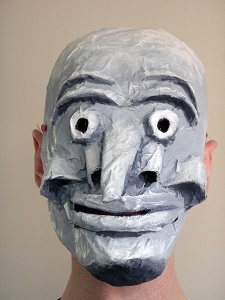 A baby first focuses on the faces of those around them. Hard-wired to recognize our caregivers, at a primal level, we all understand the human face communicates information. Understanding the messages others are sending us can even be essential to survival. Cover a face and the transformation can be mildly unnerving, terrifying, or even extremely funny. A face that is covered denies us access to the signals we are used to seeing and sends out new signals or messages for us to interpret.
A mask-making session can afford fertile ground in an expressive therapy setting for both client and therapist. Making a mask invites the creator to explore various aspects of his or her own persona. The activity can be revealing because it takes the mask maker out of the realm of words and employs imagination and nonverbal action.
Exploiting the Mind-Body Connection
One mask-making technique involves molding clay into facial features and then applying materials such as paper mache, celluclay, or various molding cloths over the top of the sculpted mask face. The tactile process of modeling clay with hands, fingers, and palms can provide a powerful connection to deep-rooted feelings through the tactile, nonverbal (somatic) experience of working physically with the clay. The body can hold all kinds of memories from the past, and by engaging in this nonverbal activity the imagination of the mask maker may find new ways to communicate hidden thoughts, feelings, and memories through the creation of meaningful symbols that are shaped into the clay as the mask evolves.
During the process, through verbal or nonverbal communication, the therapist may help the client to experience and consciously come to terms with these previously locked up and hidden memories. This can happen as the feelings or memories emerge during the mask-making session or sometimes in later sessions when the mask, made by the client, is used in other ways.
Finding Joy Through Creativity
Many memories and the feelings associated with them are difficult and painful, but it’s also true that the result may well be the reclamation of joyful creativity. When we are children, we play with abandon; it’s part of the learning process. The ability to playfully explore the world within as well as the environment that surrounds is often lost as we age into adulthood. It becomes prey to many cultural pressures and sometimes to misinterpreted parental reprimands.
A parent may react strongly to a child playfully exploring a shiny object such as a sharp knife. The child may then interpret the reprimand as being connected to their natural interest and creative exploration process and assume that this is a “wrong behavior.” A little bit of their creative energy then gets locked up with some repressed feelings and lost joyfulness. We all want to be loved and protected by our parents; when we are children, our survival depends on it.
Mask making and working with masks in a therapeutic situation can help unlock that playfulness and sense of creative adventure through the process of remembering moments, such as the one just described, and revisiting the feelings that accompany such memories.
Out of the Nowhere and into the Here
Besides being a therapeutic tool, mask making can be a simple pleasure on its own. Adults engaged in busy and demanding lives don’t often have or take time to engage in a hands-on creative process. By simply indulging in the mask-making process, the participant can reopen doors and creative pathways long ago forgotten. There’s an age-old nursery rhyme that goes:
Where did you come from, baby dear?
Out of the nowhere, and into the here.
Our creations are like our babies. The simple act of bringing an object, in this case a mask, “out of the nowhere and into the here” can be a liberating process in and of itself.
The Rich Tradition of Mask Making
For more than 12,000 years, human beings have been making and using masks. We find the earliest evidence of this on the walls of caves around the world. At the Trois-Frères (“three brothers”) site in France, a figure considered to be a male shaman is depicted on the wall of the cave, wearing a large, antlered stag’s head. The headpiece mask has the face of an owl superimposed over the facial area with wolf-like ears and a long goat’s beard.
Masks can capture a state of mind. They evoke, memorialize, reveal, and conceal all at the same time. Even the most simply constructed masks can powerfully transform the face. The inanimate mask comes to life when worn. It becomes charged with a life force from within the wearer. Shamans and healers around the globe today, as well as the shamans of the ancient world depicted on caves so long ago, all understand the magic of making and using masks.
We can heal and be healed through integration by using our innate gift of imagination and our ability to create. Masks are a powerful tool in the process of healing and the journey toward wholeness.
References:
- Science Magazine (July 6, 2001): Vol. 293 no. 5527 pp. 51-52. DOI: 10.1126/science.1062331. Artistic Creativity and the Brain: Zeki, Semir.
- Sivin, Carole, (1986). Maskmaking. Worcester, Massachusetts: Davis Publications, Inc.
- Quest Magazine (January – February 2004): Spirit and Art: and the Puzzles of Paradox. James, Van. Retrieved July 20, 2013 from: http://www.theosophical.org/publications/1238.
 Freshman year of college was a difficult time for me. Many things had changed, I was away from home for the first time, I was not among close friends, and my course load was semi-difficult for me to adjust to. With all that going on, there was a noticeable change to my appearance that I couldn’t identify with. There was a round reddish raised sore on my left cheek. I tried to recall in my mind if I had done something to myself to cause this, but nothing came to mind.
Combing my hair in the mirror also became unnerving, because it had begun to fall out more than that average 100 strands a day. My scalp was visible. I figured out where the hair was disappearing from; I was balding on a section of my scalp.
I knew I had been stressing from school and being homesick, but I couldn’t figure out why my skin and scalp were being affected by my stress. That’s when I really began to panic. My mother suggested I come home so my grandmother, who was a registered nurse, could take a look and see what was happening. I was on the next thing smoking going home.
As my grandmother examined my face and scalp, she was clueless about my condition. She concluded that I needed to see a dermatologist. A couple of days later, I was in the doctor’s office being poked and prodded as if I were a science project.
The diagnosis: discoid lupus. It was determined that I didn’t have systemic lupus—there were traits, but I definitely had discoid. I didn’t understand what discoid lupus was, so my reaction was nothing more than a head nod and wondering, “Now what?”
My dermatologist did not have a sound of urgency or true concern in his voice, so I made myself believe that this wasn’t very serious and I would be just fine. The information that I gained from that appointment was:
- There is no certain cause for this disease.
- This disease is more prevalent in African-American women than Caucasians.
- It can affect my face and scalp.
I was handed some cream for my face and told my hair would grow back. That was the end of the appointment. I never saw that dermatologist again, and I put the thought of lupus out of my mind.
Almost twenty years passed; my life was moving along. Planning a wedding brought on demanding pressures that I had not anticipated. Day by day, my face began to show signs of redness, and hair was falling out. I believed that I was having an acne breakout and needed to wash my hair because it was falling out.
I had not thought about symptoms of discoid lupus, so in my mind that was not a possibility. Dismissing all the signs, I went on with my wedding and honeymoon, which happened without a hitch. Coming back to reality, I decided it was time to see a dermatologist.
What I feared became true: my discoid lupus had awakened from its 20-year nap. This time it came with a vengeance. Instead of one lesion, I had several on my face and ears, and my scalp was bald in more than one area. Depression began to set in because I couldn’t understand why it came back ten times worse than before.
If I could identify two things I overlooked during both of my episodes, they would be my high stress level and the symptoms I was experiencing at the time. Looking back, I was under some unbelievable stress both times, and I dismissed the rashes and hair falling out as just a natural aspect of my life.
I have discoid lupus, which, whether active or dormant, is for life. I must pay attention to those little things—stress, fatigue, rashes, hair falling out, etc—in order to gain control of this outbreak, which will limit the hair loss and skin abrasions.
As an African-American female diagnosed with a form of lupus, I have pointed out some important factors that I feel everyone should remember:
- Know your family history. If someone in your family has a form a lupus, being tested may be wise for you.
- Get informed. Asking a professional the 5 W’s is a great way to start to learn as much as you can about lupus:
Who can get lupus?
What is lupus?
When does lupus flare up?
Where on/in your body does lupus affect?
Why is there not a cure for lupus?
The more you know, the better prepared you are for your flare ups. - Pay attention to symptoms you may have and the various changes that may take place with your body.
- Be sure to take your medication and visit your physician(s) regularly. Don’t be afraid to ask as many questions as you can.
- If you have to be out in the sun, make sure you wear sunscreen or a hat, or use an umbrella to keep yourself protected.
- Make sure your family is educated, as well. You should not have to live with lupus by yourself.
- Try to make your life as stress-free as possible.
Today, I am happy to report that my discoid lupus is under control. It hasn’t taken a nap, but it’s not wide awake, either. I see my rheumatologist and dermatologist regularly and I am sure to take my medication and stay out of the sun. Although my face has cleared, and my hair is growing back slowly and finely, I still live with caution.
But I feel blessed that I have my life. As an educator, I have taken on the topic of lupus as if it were a thesis paper for me. Research is the main focus to gain a greater understanding. A great place to obtain information about lupus and its various forms is the Lupus Foundation of America.
Genesa Page is a high school business education teacher at Mirabeau B. Lamar High School, an International Baccalaureate World School in Houston, TX. She has been teaching since 2005.
 No one is immune to trauma, and it is not something that we can always prevent. Life is traumatic. We cannot really plan for disasters, car accidents, loss, and other traumatic events that tend to take place in our lives. One study found that among the population in the Netherlands, 80.7% of participants had experienced a traumatic event (de Vries and Olff, 2009). The study goes on to state that this rate is comparable to the rate of traumatic events experienced in the in the United States. Human beings, no matter how strong, become vulnerable when they experience high levels of stress. Experiencing a traumatic event does not necessarily mean a person will develop posttraumatic stress, but it makes a person more likely to.
People experience trauma to varying degrees. Regardless of the degree of trauma experienced, the journey through trauma recovery can be an emotionally intense process which can, at times, seem daunting. I have noticed four similarities among people who are working through trauma that I felt would be beneficial to write about, as I see these traits so consistently.
- Feeling alone and vulnerable: I have had people tell me that experiencing a traumatic event leaves them feeling alone and vulnerable. This is very normal. As I mentioned above, no one is immune to trauma, and even people with a strong sense of self and high self-confidence can find themselves feeling as though they are wandering through the dark alone, with no idea where they are going. I cannot stress enough the importance of having a good support network as one works through trauma. It can make all the difference in the world, especially if one is willing to talk about what they are going through and accept support from others. Wandering around in the dark is terrifying, and we all need other people sometimes to help us get through the dark so we can reach the light.
- [fat_widget_trauma_ptsd_right]Experiencing intense emotion: A common experience of someone who has experienced a traumatic event is intense emotion, sometimes at unexpected times and without any known trigger. I have had many people mention that sometimes they will cry for “no reason” or suddenly become angry or afraid, which confuses and sometimes scares them. It is understandable that this would be confusing and scary, but it is normal and just part of the process of working through trauma. Intense emotions and trauma go hand-in-hand, and part of healing is allowing oneself to experience the emotions that come up. I believe that our brains and bodies are perfectly able to work through trauma, but it takes some pain to get to the healing. Trauma is like having an injury—such as a broken bone. In order to heal properly, that bone may have to be reset, which can be very painful. Through the healing process, the bone might continue to cause the person pain, but as the healing progresses, the bone should hurt less as long as it has the proper support and care. Emotions are usually where the pain is for people with trauma. Being willing to experience emotion, and learning skills to appropriately cope, can make those emotions much more bearable and easier to work through. Like a physical injury, when trauma is receiving the proper treatment and support, it will begin to hurt less.
- Having disturbing thoughts and/or flashbacks of the trauma: I don’t think I have seen one traumatized person who did not have disturbing thoughts, flashbacks, or both about the traumatic event. This is what trauma does: it tends to stick in one’s brain and pop up, uninvited, whenever it wants. This is nothing to be ashamed of, and this is where support can be helpful in the form of trusted loved ones, support groups, and trauma professionals. There are skills available which tend to be quite effective in addressing these thoughts and flashbacks.
- Feeling as though it will never get better: Hopelessness is one of the (unfortunately) common side effects of trauma. The good news is that there are excellent therapeutic interventions that are proven effective in treating trauma. I have treated people who experienced years of severe trauma who have found relief and have been able to have a normal, healthy life. There are several options for treatment, and finding a good therapist who is skilled in treating trauma can make all the difference. It does not matter how long ago the trauma happened or how severe it is. There is always hope for recovery!
Of course, this list is not exclusive.
It is so important that people dealing with trauma know that they are not alone in what they are experiencing and to know there is hope for recovery.
Reference:
De Vries, G.J., and Olff, M. (2009). The lifetime prevelance of traumatic events and posttraumatic stress disorder in the Netherlands. J Trauma Stress, 22 (4), pp. 259-267.