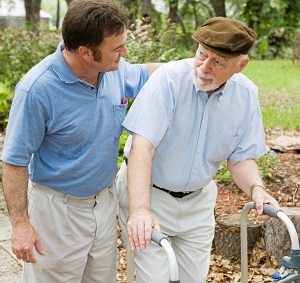
 The work of caregivers is difficult, at best. This is particularly true for those who provide care before they start the workday and after they come home in the evening. I am often amazed by the stories I hear from caregivers.
I recently learned something from a group member that I want to pass along to other caregivers. It is so simple that it may seem unlikely to make a difference. But don’t let the simplicity of it fool you—the people in our group totally got it when she talked about it. Had I tried to teach it to them in the language of a therapist, I doubt the result would have been a collective “wow.â€
Managing Resentment and Anger as a Caregiver
The question of how to manage resentment is frequently a theme in our support group. Caregivers grapple with guilt about experiencing resentment—both regarding the unfairness of being thrust into the role of caring for their partner or spouse, and about spending more time as a caregiver and less as a partner/spouse.
Most are clear that the resentment and anger they feel is directed toward the ailment or disability, but we all know how easy it is for our anger and resentment to spill over into other areas or be misdirected. The last thing most caregivers want to do is allow their resentment or anger to taint their relationships with those they care for.
Someone in our group raised this issue again recently: How do we deal with the seething resentment that we feel? How do we prevent this rage from spilling over into our relationships?
It was clear that everyone in the room knew what he was talking about. Everyone responded with the perfunctory nods of agreement and reminders to breathe, be grateful, and hang in there. These are veteran caregivers who already do most of the things recommended for self-care:Â exercising, setting boundaries, eating well, getting as much rest as possible, etc. The urgency of their desire to address this issue was apparent.
How Do We Change Our Feelings?
Luckily, one of the women who had asked the same question in the past spoke up. She shared that she had intuitively discovered something that helped. She talked about how she had automatically shifted her feelings one day while helping with an unpleasant task. This generous soul has granted me permission to share this with you.
What my friend found was that by focusing on the process of what she was doing—by mindfully paying attention to each tiny step in the task at hand—she was able to change her feelings. She inadvertently alleviated the resentment and dread!
She changed her thoughts from, “I hate this; this is horrible. I can’t believe I have to do this every day and night for the rest of my life†to, “Okay, now I need to do this… put this here, then take it over there. Next I do that… yes, like that. Oh, that was much better than last time.â€
As she explained it, my friend was able to “relax her brain, much like releasing a tightened fist.†By relaxing her brain, she was able to release the resentment and dread. She described it as letting go—releasing the breath that she had been holding. And in doing so, she discovered how to give up her resentment and anger.
Attention Is Key
Remember that when you truly focus your attention to the task, the switch to thinking mindfully about your action results in a change in your feelings and behavior. By forcing her attention to the minute processes of her admittedly unpleasant task, my friend also gained control over her emotions. She stopped the negative thoughts. Your mind can only hold one thought at a time. What you choose to think about creates your emotions.
It is your choice. Choose to focus on the process—the actions. That is mindfulness. By changing your focus to each step of the process (whether washing dishes, filing, changing a catheter, or meditating) you are also altering your feelings.
It takes practice. Begin with something easy, like learning to laser focus on your breathing. Feel the air going into your nostrils, your stomach rising, the air moving through your head and into your lungs, and then moving back up and out of your nose.
Next, try mindfully taking a bath or shower. Feel the water on your skin, smell the soap… feel the cloth in your hands and your hands moving over your body. Don’t allow your mind to wander to other things. Keep it contained in the actions and senses.
Finally, try this when doing a difficult task. Make your thoughts about what you are doing step by step. There is no room for thoughts that create dread and resentment.
Try it, and let us know how it works for you!
 The ignorance about mental health issues that continues to exist among otherwise intelligent individuals is perplexing. In today’s modern world, with continuously increasing tolerance for human differences, many of yesterday’s taboos have become today’s facts of life. Issues from racism to sexual identity have been stridently tackled and, while much work remains to be done, we have come miles. The recent Supreme Court ruling regarding gay marriage is a perfect example of how far we have come.
However, there still remains what some have referred to as “the last taboo.†Namely, depression continues to be one of the most stigmatized mental health issues out there. This is ironic, given that by the year 2020, according to the Centers for Disease Control and Prevention, depression is estimated to be the second most common health problem in the world. Further, because of the unjustified stigma that still exists, a large percentage of those who experience depression will not be treated.
So, what is the missing piece to this puzzle? Why is the message not resonating with the greater population? Why is stigma still so prevalent in our society? As mental health practitioners and social advocates, what can we do to eradicate this social dilemma?
When it comes to obtaining treatment for medical ailments as benign as the common cold, people don’t think twice about running to the doctor, or the acupuncturist, and spending the money on treatments to feel better. So, why do so many who suffer from depression continue to hesitate, despite all of the treatment options available?
[fat_widget_right]In addition to the externalized stigma or discrimination toward those with mental health issues that exists in society, there comes internalized stigma, or self-shame. This makes the experience of mental health issues all the more devastating. Many times, it is the internalized shame that stops people from acknowledging psychological problems and receiving treatment, since many see it as akin to admitting that they are weak or damaged in some way.
According to the U.S. Preventive Services Task Force, a panel that sets treatment guidelines for primary care physicians, an estimated 6% of teens in the United States suffer from clinical depression, yet most go undiagnosed and, therefore, untreated. This information alone strongly indicates a dire need to raise awareness.
But where do we start?
How about with the media? Instead of programs like Criminal Minds perpetuating the stereotype of schizophrenia as a violent disease, let’s have some intelligent programming that humanizes mental health issues. What Will and Grace did for sexual identity, perhaps the same can be done for depression. Since we are a society so attached to the media, why not take advantage of the opportunity to educate people?
We can also begin in our school system, making mental health education a part of the curriculum. As has been discovered in other areas such as sex education, knowledge can be a powerful tool in prevention. Why is it that when we learned about Abraham Lincoln in social studies, or Walt Whitman in literature class, we learned almost everything about them except the fact that they experienced psychological problems? Why were these facts omitted from the textbooks and class lectures? We need to make stigma a thing of the past and teach our future leaders of tomorrow that it is okay to recognize, and seek treatment for, the experience of clinical depression and other mental conditions.
Before we begin with the masses, let us also first look at ourselves as therapists and mental health caregivers. We must look at our own core beliefs and biases, which can directly affect the work we do. We may be unknowingly perpetuating the stigma of depression and other psychological issues. Change must begin within the mental health community. To change others’ minds, we must first change our own.
References:
- Depression statistics (2008). Retrieved April 3, 2009 from: http://depression.emedtv.com/depression/depression-statistics.html
- Panel: All teens should be tested for depression. (2009). The Associated Press. Retrieved from: http://www.msnbc.msn.com/id/29945008/
 You’ve probably seen videos of big, furious guys going after little guys. It doesn’t look like a fair fight at first, but there can be surprises—and sometimes the little guys win. I’ve been studying tai chi, learning how people can defeat themselves by misusing their energy and losing their center of balance.
Sometimes life feels like a wrestling match. We’ve all been there—stuck with someone who is just relentlessly on the attack, who pushes all our buttons looking for a fight. “Arlene†grew up like that, and for a long time she equated rage with strength because her parents did. In her family, people fought to prove that they were powerful and in control. They did this because they needed to take their anger out on other people, and because they believed they lived in a dog-eat-dog world and they wanted everybody else to live there, too. Arlene couldn’t bear to live in a world like that. She worked hard and long, and with therapy, yoga, and the help of her husband’s patience and good nature, she learned to have better control of her anger. She found out that the world can be very different. She learned how to walk away from meaningless fights.
[fat_widget_right]
Sometimes, anger is justified. If someone stomps on your foot, you might yell. If you grew up in a bad neighborhood anger can be a protection, but if you stay angry long enough, everywhere you look you’ll find something or someone who makes you mad. For some people, getting mad can be a circular process—the madder you are, the madder you get—until there’s just no stopping. A few people seem predisposed to anger; they are just born that way.
Which brings us to “Ramona.†She thinks everyone is against her, so she fights with everybody, which turns people against her and kind of proves she’s right. If someone makes an innocent joke, she often takes it the wrong way; she gets upset if she thinks people aren’t paying her enough attention or giving her the admiration she feels she deserves. It’s all about her. She takes everything literally, feels threatened, and has little sense of humor. She’s controlling—it’s her way or the highway. Ramona is always angry and disappointed.
This is tough on her friends, family, and coworkers. Ramona needs to be adored and obeyed, and if she doesn’t get what she wants, she goes into a rage. Some people admire her; she is smart, talented, and can be very funny. Many people are scared of her; they don’t tell her what they think because she yells long and loud, so they just clam up and ride out the storm.
One day Arlene was hired at Ramona’s workplace, and the two of them were put in the same unit. When the unit met for its weekly conference, their supervisor, “Alonzo,†led off the meeting, saying the company needed to make more sales. Ramona spoke at length about improving the business and had plenty of ideas, some very good ones, but she wasn’t interested in listening to anyone else and interrupted when other people were talking. She interrupted Arlene, too, who called her on it, and then Ramona went on the attack and yelled at Arlene. Other members of the group tensed up, anticipating a shouting match, but Arlene had a different tactic. She said she admired much of what Ramona thought, but wanted to hear what others had to say and to share her own ideas, too. Ramona got very angry and screamed even more at Arlene, who just listened. The other members of the meeting were watching Arlene. After the meeting was over, Arlene told Ramona not to yell at her anymore.
There was another meeting. Ramona yelled at Arlene again. Arlene had previously warned Ramona that the next time Ramona started yelling Arlene would leave the meeting, which is exactly what happened. Arlene got up and walked out, ending the meeting.
Alonzo called Arlene into his office and asked what happened. Arlene said, “Ramona never stops talking and yelling, and a lot of people don’t like it but they’re too scared to say anything. I tried over and over to get her to stop, but she didn’t listen. She’s always like this. So I just walked away.â€
“Why didn’t you yell back?†Alonzo asked. “Were you too scared?â€
Arlene answered, “No, she doesn’t scare me. I just refuse to be yelled at, so I walked out. Yelling back at her would never work; it would be a shouting match, and I don’t like yelling anyway. I simply told Ramona that if she yelled at me I wasn’t going to shout back or stand around and listen to her scream, either—I was going to leave, which is exactly what I did.â€
“Don’t you stand up for yourself?†Alonzo said.
“Leaving was standing up for myself,†she replied. “This argument was basically meaningless. If we don’t agree, we can discuss things, but not Ramona. She just likes to yell. I mean, yelling? What are we, in junior high?†Alonzo agreed that Ramona was out of line.
Alonzo transferred Ramona to a position where her intelligence and creativity were called into play, but where she didn’t have to work with others. It was a horizontal move, not the promotion that Ramona thought she deserved and that Arlene got—she took over Alonzo’s job when he was promoted.
Arlene won. Ramona defeated herself.
 Most of my blogs over the years have been written for people who are already sexually active and have experience with pivi (penis-in-vagina intercourse). Today I’m going to address young (and perhaps not-so-young) women who are interested in losing their virginity. (I hope guys will read this as well—virgins or not.)
Losing your virginity is not a topic that most of us bandy around in casual conversation. But I’ve been privileged over the years to hear thousands of descriptions, most of them about experiences that were awkward, clumsy, and sometimes painful. It doesn’t need to be that way.
I heartily recommend that your first sexual partner be someone who is gentle and kind, with a good sense of humor. And please, please, please don’t be drunk or high your first time. Take it from me: Couples who do it sober have a happier and safer experience!
Losing your virginity with your sweetheart and soulmate would be a lovely option, but most of us no-longer-virgins are not even in touch with the person we did it with for the first time. One of the keys to having wonderful sex is knowing your own body.
Regular readers may have read comments recently from older women who are enjoying sex more and more the older they become. One reader celebrates post-menopause as a time when she knows her body well enough to say yea or nay in ways that her lover can truly understand. Another writes about discovering new delights about her body as she ages. Whatever your age, consider yourself at the start of a fascinating journey!
If you masturbate, you have an advantage in this department. If you haven’t explored your body this way yet, not to worry. I suggest you try for a time when you have 30 minutes to yourself or when you’re tucked under the covers for bed. First, wash your hands, then moisten your fingers. (I mistyped “finders†here—how perfect!) Let your fingers “find†pleasing places on your body—everywhere except your genitals.
Relax, breathe, and allow yourself to spend at least 10 minutes exploring up and down your body. You might want to imagine that your lover’s fingers/finders are discovering erogenous zones that you weren’t aware of before. Then, let your focus shift to the area between your legs, with your fingers gliding up and down and around your vulva, the outside part of what’s between your legs, as opposed to the vagina, where tampons and penises (sometimes) go.
Next, get your finger extremely wet (saliva works fine) so you can venture inside. Slowly inch your finger inside, allowing yourself to feel what your finger is “finding†inside as well as what your vagina might be feeling. Some women may want to explore more deeply, while others might feel quite nervous and hesitant. If you’re in this camp, this might be a good place to stop for now. Congratulate yourself for taking this important step and consider venturing a bit farther the next time.
If you’re eager to press on, let your finger keep going. Remember to breathe, and continue to ask yourself what your vagina is feeling and experiencing. You might want to consider adding a second finger, especially if you anticipate pivi.
I highly recommend a wonderful book by my colleague Lonnie Barbach, called For Yourself, about masturbation. Female virgins and nonvirgins alike may benefit from carving out pleasurable time “for themselves.â€
If all of this seems too overwhelming, maybe it’s not the right time in your life to be losing your virginity. Millions of lesbians will attest that there are numerous ways that you and a partner can enjoy one another sexually without a penis going into your vagina!
 I see many people who struggle with self-esteem issues. In fact, self-esteem issues and depression almost always occur together. Which one causes the other is not always clear, but the majority of people seem to have the self-esteem issues first.
People often tell me they want to die—because they “shouldn’t exist,†were “never wanted,†never “fit in,†are a “burden,†“don’t deserve anything,†or even have the feeling they “did something horrible†but don’t know what.
Generally, this viewpoint comes from something that happened when the person was very young. We now know that even embryos traveling down the fallopian tube are being affected by their environment in ways that have implications for physical and emotional health throughout the rest of their lives.
[fat_widget_right]
To work with this, sometimes I ask people if they deserved to live (or die) when they were an embryo, then a fetus, then a newborn, etc. Most people see themselves as innocent and deserving to live at some point. Going through this exercise helps them see that there was a time they could have compassion for themselves, rather than blame or condemnation. For others, as we advance in age, we come to a place where they can no longer say they were innocent and deserved to live. That can lead us to the origin of the issue. If they can’t say they were good anymore after age 2, 4, 10, or whatever, then we look for what happened at that age to change that. Almost always, it was some kind of abuse or trauma.
For example, I saw a woman who wanted to die and believed she didn’t deserve to live, despite the fact she was a kind, giving, loving person. She was severely depressed and obsessed about suicide. She told me if therapy didn’t work, she was going to kill herself. One of the things I did was to take her through this exercise. She reluctantly conceded that she was innocent as an embryo, fetus, and newborn. When we got to 2, she said she deserved to die at that point. When we explored it, she said something happened then to change this, but she didn’t know what. Few people have conscious memories from that age, so early memories can be challenging to resolve.
But then she said she had an image, but she was sure it didn’t happen—”it couldn’t have happened.” The image was of a sexual assault from a family member. It was very specific and unusual. We processed the image as if it was a memory with EMDR, and she felt enormous relief. She no longer thought she was so bad that she didn’t deserve to live. She finally saw that she had done nothing wrong and the shame wasn’t hers. It belonged to the adult perpetrator.
Others blame themselves for their parents’ divorce, or for their parents’ lost lives after marrying each other only because of the pregnancy. People blame themselves for being the gender the parent didn’t want, for their mother dying in childbirth, or for their parent’s depression. When children try to make sense of something that feels terrible in their world, and no one helps them, they tend to think they caused the problem. So many innocent children grow up feeling guilt, shame, and self-hatred because of this. Sometimes, they don’t even remember why. Once they can connect their adult perspective with their child beliefs, they see that it’s unreasonable to punish themselves the rest of their lives because when they were too young to be responsible, their parents made the choices they did.
So if you think you are bad, disgusting, undeserving, unlovable, or inadequate, were you so as an embryo? A fetus? A newborn? An infant? A crawling baby? A walking toddler? A talking toddler? When did you become unforgivable, and why?
Bulimia nervosa is an eating issue that can be assessed using a variety of diagnostic tools. Because there are many different measures to evaluate bulimia, some researchers believe that overestimation or underestimation of bulimia exists. To cloud the issue further, a large majority of people who have symptoms of bulimia often have comorbid psychological conditions, including mood problems, anxiety, depression, and drug or alcohol use.
Less than half of the individuals who demonstrate bulimic symptoms seek treatment for them. Although many do enter treatment for comorbid issues, the bulimia is often discovered secondarily and does not always receive the attention it deserves. Bulimia can lead to serious negative health outcomes and even suicide. For clinicians to identify those most at risk and intervene at the earliest point possible, it is imperative that consistency in symptom assessment and diagnosis be achieved.
Katie Sandberg of the Department of Education Specialties at Loyola University in Maryland wanted to test the reliability, consistency and validity of the six most commonly used tools for assessing bulimia. She conducted an analysis of existing research involving studies using the Eating Disorder Examination (EDE), the Eating Attitudes Test (EAT), the Eating Disorder Inventory-3 (EDI-3), the Body Shape Questionnaire (BSQ), the Bulimic Investigatory Test, Edinburgh (BITE), and the Three-Factor Eating Questionnaire (TFEQ).
Sandberg found that all six measures were able to assess bulimic symptoms with relative accuracy, but in unique ways. Based on symptoms of purging, binging, laxative use, and overall body dissatisfaction, she found that the EDI and the EAT were the most reliable at assessing bulimia. When she looked at body dissatisfaction, the BSQ and the EDE emerged as the most reliable tools.
In sum, Sandberg believes these findings show the importance of utilizing multiple screening tools when evaluating clients for bulimia. She said, “The best way for clinicians and researchers to document treatment effects is to use a multitude of high-quality instruments to achieve triangulation.†Further, she believes implementing screening tools before and during treatment can provide clinicians with accurate measures of progress and can help clients and clinicians identify persistent symptoms that need further attention.
Reference:
Sandberg, Katie, and Bradley T. Erford. “Choosing Assessment Instruments for Bulimia Practice and Outcome Research.” Journal of Counseling and Development : JCD 91.3 (2013): 367-79. ProQuest. Web. 26 July 2013.
It sounds like you have been a tremendous source of love, strength, and support for your girlfriend in her battle with depression. That takes incredible patience and compassion, but it can also take a toll on you. In cases of chronic depression, it is very common for partners to begin to feel more like caretakers than anything else. Very often, when one takes on the role of caretaker, it becomes such a consuming task that the caretaker loses touch with himself/herself. It’s a positive sign that you seem to have a solid sense not only of where she is, but also where you are. It also seems like you have come to the realization that this situation is not sustainable and that something must change. So the question, as you insightfully pose, is where do you go from here?
You’ve asked some really important questions about yourself: “Am I codependent?†“What’s my issue?†“What steps can or should I take?†These questions are as important as they are complicated. I strongly encourage you to begin your own therapy. Developing a strong therapeutic relationship with a clinician will afford you a much-needed opportunity to focus on yourself. You’ve managed to take care of your girlfriend and remain connected enough to yourself to come up with these questions. A trusted therapist will help you thoroughly explore these questions, develop insights, and create and implement a plan of action. You might also want to look for a caretakers’ support group. The burden on caretakers is significant, and there is great therapeutic value in realizing you are not alone. You’ve been shouldering a significant burden on your own for years; it sounds like you are ready to let someone help you carry the load.
You mention that your girlfriend’s medication does not seem to be helping her. The specific mention of medication but not therapy makes me wonder whether your girlfriend is in therapy. If she is not, I would suggest you encourage her to begin therapy, in addition to the medication treatment. Medication treats symptoms, but it doesn’t address all of the problems that often underlie depression. In order for her to have a chance at any kind of substantive change and lasting relief, she needs to be working on these issues in therapy. Also, it is very important that a psychiatrist, and not a general practitioner, be managing her medication. Psychiatrists are the experts in the medical treatment of depression, and they will be able to provide better care than a general practitioner.
Also, if her depression has lasted for years with no improvement, it might be time to look at changing the treatment plan. This could mean adding individual and/or group therapy to her treatment regimen, trying a new therapeutic approach, or making a change to her medication. Consider suggesting that she talk about these possibilities with her psychiatrist and therapist (if she has one). If, after years of treatment, she isn’t getting any better, something probably needs to change. Your girlfriend should know that she has the right to be an active participant in her treatment plan and to discuss changes to this plan with her clinicians.
You took a leap when you wrote in with your question. I hope you will take another one and find some support for yourself. This is a painful, complicated issue, and you deserve to have support as you work on figuring out what is best for you.
Respectfully,
Sarah
 My mom has worked as a nurse for over 30 years. I remember she would sometimes come home from work and talk about how she had had a doctor or nurse as a patient that day. She would always say how health-care professionals were always the worst patients, usually because they would push themselves farther and faster than they should, which resulted in a longer recovery.
I think that as therapists, we are just as guilty of holding ourselves to a “higher standard.†I have seen colleagues and friends who are therapists give out excellent advice about the importance of seeking and accepting help and practicing good self-care, only to neglect themselves and fall into a cycle of depression, anxiety, and trauma symptoms, basically disregarding their own wise words.
[fat_widget_right]
I previously wrote an article about secondary trauma for loved ones of people who had experienced trauma. I felt it fitting to write another article for therapists, as I believe we have the potential to also experience secondary trauma. Figley (1995) defines secondary trauma as “the stress resulting from helping or wanting to help a traumatized or suffering person.â€
Think about it: Most therapists see anywhere from 10 to 40 people per week. These people are coming to us for help with their problems, which could range from normal levels of stress to severe depression, anxiety, trauma, or other mental health difficulties. We listen and offer tools they can use to overcome their challenges. They leave the sessions armed with new skills to face their lives and challenges. And what are therapists doing between sessions? I can answer from my own experience: doing notes, writing up treatment plans and assessments, returning phone calls, following up with other professionals, preparing for the next session, etc. After work, many professionals have other commitments and obligations. Life can get very busy and chaotic, and many of us consistently put ourselves last.
Therapists are just as susceptible to secondary trauma as any other person. We are not superhuman, nor do we possess mental powers that make us resilient to depression, anxiety, trauma, and other mental health challenges. Sometimes as therapists we forget this and, therefore, neglect ourselves. One study found that therapists who treat people with trauma are susceptible to the effects of secondary trauma, particularly if they do not have the appropriate training, support, and self-care (Pearlman & Mac Ian, 1995). In my experience, this applies also to therapists who are treating other mental health issues.
So what do we do about it?
- First, make self-care a priority. Pearlman and Mac Ian (1995) emphasize the importance of self-care in order to provide the best services possible while protecting the provider’s own well-being. In my experience, I am much more effective as a therapist when I am taking excellent care of myself and being aware of any secondary trauma I might be experiencing. The basics are important here: getting enough rest, eating healthy foods, getting exercise regularly, spending time engaging in leisure activities, and spending time with loved ones, to name just a few. It basically comes down to taking our own advice and implementing the self-care skills we so often suggest to people who seek our help.
- Get support from fellow therapists through supervision or consultation. Even after the days of internship are done, we can all benefit from continued supervision and consultation. Pearlman and Mac Ian (1995) state of their study, “Therapists who work with trauma survivors need supportive, confidential, professional relationships within which they can process†the work they are doing. I have found it extremely helpful and stress relieving to consult with colleagues and to even ask for supervision at times. It can be extremely validating to learn that you are not the only therapist who sometimes struggles with secondary trauma, stress, and other emotional consequences common in the helping professions. Consultation and supervision can also help a therapist to work through challenging cases by giving a new perspective and new ideas for intervention.
- Consider furthering your training. One of the most stressful situations a therapist can encounter is having a person come to you with an issue with which you are not familiar or do not feel competent treating. Of course it is good practice to acknowledge when you are not competent to treat a specific problem, and to make a referral to a colleague who might be more skilled in that area. However, sometimes furthering your education and skill set can help to reduce anxiety and stress when it comes to treating people with unfamiliar situations. Furthering your education and training can also help you to effectively treat issues with which you are familiar. The bottom line is that getting the proper training can reduce your susceptibility to secondary trauma (Pearlman and Mac Ian, 1995).
- Consider finding your own therapist. Therapists are not an exception to the fact everyone encounters difficulties in life at times. It is extremely important that we are willing to acknowledge that we are human, and to address our own issues, whether they are from the past or present. Engaging in your own therapy will ensure that you are working through your own challenges, which will make you less susceptible to the effects of secondary trauma and more available to engage in meaningful and effective therapy with people.
In conclusion, I believe one of the most important things we can do for people who see us is to take excellent care of ourselves. If we neglect our needs and ourselves, we are not able to give all we have to others. We can set a great example of self-care and avoid being susceptible to secondary trauma if we are just willing to follow our own good advice.
References:
- Figley, C.R. (Ed.) (1995). Compassion Fatigue: Secondary Traumatic Stress Disorders from Treating the Traumatized. New York: Brunner/Mazel, p.7.
- Pearlman, L.A., Mac Ian, P.S. (1995). Vicarious Traumatization: An Empirical Study of the Effects of Trauma Work on Trauma Therapists. Professional Psychology: Research and Practice, 26 (6), pp. 558-565.
Does this song sound familiar?
“Every Breath You Take” by The Police:
Every breath you take
Every move you make
Every bond you break
Every step you take
I’ll be watching you
Some people think it’s a love song, but according to Sting himself, it’s the opposite—as he put it, “very, very sinister and ugly.†Does it remind you of your relationship with your girlfriend? The song is about a stalker, someone who watches every single thing their partner does or wants to do and takes away their freedom. In such a relationship, a person might feel safe and loved at first, in a secure space, but that space quickly turns into a prison.
You say you’ve read many articles about insecurity and the damage it can cause. I am not going to suggest any more books or articles to you; I think it’s time you stop reading and start doing. I think you already know all you need to.
In the kind of relationship you describe—of possessor and possessed—both partners are insecure. You ask if you should leave. I ask why you need to ask. What do you want to do? I suggest that you seek professional help and a support group so you can learn to listen to yourself, act on your true needs and desires, and develop better, healthier relationships that will help you honor your own inner guide and grow.
Respectfully,
Lynn

Long-distance relationships (LDRs) present unique challenges that test the resilience and commitment of couples separated by geography. While the physical distance can create obstacles, recent research reveals that these relationships may offer distinct advantages and can be just as fulfilling as geographically close relationships when approached with the right strategies.
According to 2025 research, the prevalence of long-distance relationships has evolved significantly, with current estimates showing that 10% of married couples in the United States maintain long-distance relationships. Among university students and emerging adults, LDR prevalence ranges from 30% to 50%, making this a common relationship structure during formative years.
Current Research on Long-Distance Relationships
The foundation for understanding LDR dynamics comes from groundbreaking research published in the Journal of Communication. Research from Jiang and Hancock (2013) observed communication patterns in long-distance versus geographically close relationships, finding that emotional connections in long-distance relationships may be equally strong or stronger than their geographically close counterparts. The study found that long-distance couples engage in more adaptive self-disclosures and form more idealized relationship perceptions than geographically close couples.
This foundational research has been validated and expanded by numerous recent studies. A 2025 study examining emerging adults in long-distance relationships found that relationship maintenance behaviors predict relationship quality both directly and indirectly through dyadic trust. Research on communication patterns shows that LDR couples use remote communication more frequently than geographically close couples, with text messaging showing particularly strong links to relationship satisfaction in long-distance relationships.
Current research indicates that 34% of long-distance relationship couples experience significant anxiety about future reunion plans, highlighting the emotional challenges that come with maintaining relationships across distances. However, studies suggest that college students in LDRs may not be at greater risk for negative psychological outcomes compared to their peers in geographically close relationships.
The Science Behind LDR Success
Several psychological mechanisms may explain why distance can strengthen rather than weaken romantic bonds:
Enhanced Communication Quality
Long-distance couples demonstrate more intentional communication patterns, engaging in deeper self-disclosure and forming more idealized perceptions of their relationships compared to geographically close couples. 2025 research shows that attachment-security strategies for LDR couples, including creating psychological distance from negative triggers through mindfulness and perspective-taking techniques, can reduce harmful coping behaviors and improve relationship stability. Regular communication schedules, shared digital experiences, and planned visits help maintain secure attachment bonds across time zones.
While enhanced communication can strengthen emotional intimacy, it may also introduce a subtle risk: the tendency to idealize one’s partner. Because long-distance couples rely heavily on curated interactions, texts, calls, and planned visits, partners may unintentionally “fill in the gaps” with assumptions that reflect hopes rather than reality.
Clinical observations and emerging research suggest that this form of idealization can create a “fantasy bond,” where the relationship feels emotionally fulfilling but is partially constructed in the mind rather than grounded in everyday shared experience. Over time, this gap between perception and reality can become a source of distress, particularly during transitions to living together or increased in-person contact.
The Power of Anticipation
The cyclical nature of separation and reunion in LDRs creates heightened emotional experiences. Recent research on “relationship jet lag” reveals that couples experience no difficulty adapting when reuniting, with researchers noting that “the joy of being together may be enough to supersede that jet lag effect”.
However, the same anticipation that fuels excitement can also amplify contrast effects. Time spent together often occurs under unusually positive conditions, planned visits, time off work, and heightened emotional focus, which can resemble a “holiday mode” of relating. This context may temporarily intensify emotional and physical intimacy, but it does not always reflect how the relationship functions under routine, day-to-day conditions
Attachment Theory Insights

Modern research examining attachment styles in LDRs shows that individuals maintain committed romantic relationships across significant geographical separation (averaging 1042 miles) for extended periods (averaging 3 years). Studies demonstrate that securely attached individuals report higher relationship satisfaction and greater interdependence in their relationships, while high relationship closeness predicts high satisfaction in long-distance relationships.
The Reunion Transition: When Distance ClosesOne of the most underexamined phases of long-distance relationships is the transition from distance to proximity. While much of the research focuses on maintaining connection across distance, clinical experience and emerging studies suggest that reunification can be a critical stress point.
When partners move closer or begin living in the same location, they often encounter a “reality adjustment period.” The imagined or idealized partner must integrate with the real, everyday person, complete with habits, routines, stress responses, and preferences that were less visible during long-distance phases.
This transition can affect multiple domains:
- Daily routines and pacing: differences in sleep schedules, work habits, and lifestyle rhythms
- Decision-making styles: financial choices, division of responsibilities, and conflict resolution
- Emotional expectations: shifts from high-intensity connection to more regular intimacy
Research on relationship transitions suggests that these adjustments can temporarily decrease relationship satisfaction, even in otherwise strong partnerships. Recognizing this phase as a normal developmental stage, rather than a sign of incompatibility, can help couples navigate it more effectively.
Modern Communication Tools and Their Impact
Technology has revolutionized long-distance relationship maintenance, providing couples with unprecedented opportunities to stay connected.
Text Messaging: The Relationship Lifeline
Research consistently shows that text messaging is the most frequently used form of remote communication in both long-distance and geographically close relationships, followed by voice calls and video calls. Study findings add to growing literature on remote communication and suggest a uniquely positive role of texting within LDRs.
Gaming as Relationship Maintenance
Recent research reveals that playing games together is an increasingly common way for couples to maintain long-distance relationships. Digital games serve as a form of relational maintenance, though they remain relatively understudied for romantic relationship maintenance compared to socialization with friends and family.
Video Calls and Beyond
While video calling shows weaker links with relationship satisfaction compared to other forms of communication, couples in LDRs report more frequent video calling and perceive their partners as more responsive during video calls compared to geographically close relationships.
Innovative research on haptic technology, including devices like the Kissenger machine that simulates realistic kissing sensations through smartphones, shows promise for enhancing relationship satisfaction in long-distance couples during experimental trials.
Evidence-Based Strategies for LDR Success

1. Leverage Modern Communication Technology
Take advantage of diverse communication platforms, recognizing that 67% of international LDR couples struggle with scheduling mismatches. Available communication windows often shrink as work and social commitments increase. Consider:
- Text messaging for daily connection and emotional support
- Gaming together as a form of relationship maintenance (studies show couples averaging age 25.2, with some couples meeting online and maintaining relationships without ever meeting in person)
- Video calls for face-to-face interaction and visual connection
2. Establish Clear Expectations and Timelines
Research shows that couples tend to experience less stress and uncertainty if they have a clear timeline for reunion compared to those uncertain about their reunion. Approximately 72% of successful LDR couples discuss boundaries and expectations early in the relationship. Planning visits and creating an end date for the long-distance phase are key factors, with couples having a concrete timeline being 30% more likely to stay together.
3. Focus on Quality Communication
Trust and communication are considered the two most critical factors for LDR success, with 85% of LDR couples reporting trust as their relationship foundation and 82% emphasizing the importance of clear, open communication. Rather than using your partner primarily to vent daily stress, focus on:
- Cultivating positive feelings and mutual support
- Practicing mindfulness and perspective-taking techniques, which research shows can be particularly effective when practiced during video calls
4. Maintain Romance and Connection
Emotional intimacy is crucial, with 74% of LDR couples sending care packages or thoughtful gifts to show love and affection. Maintaining emotional connection in creative ways helps fill the gap created by physical distance. Strategies include:
- Sending flirty texts, small gifts, or traditional love letters
- Sharing novel experiences through digital platforms, which research shows can enhance self-expansion and relationship quality
- It is also important to contextualize heightened intimacy during visits. Increased sexual or emotional intensity may be influenced by novelty, anticipation, and limited time together rather than solely reflecting deeper compatibility. Understanding this distinction can help couples set realistic expectations for how intimacy may evolve when the relationship becomes geographically close.
5. Maintain Individual Growth
Don’t put your life on hold during separation. Having friends, employment, and outside interests helps manage loneliness and makes you a more engaging partner. Research shows that students in LDRs have more positive affect when off-campus than on-campus, suggesting the importance of maintaining life outside the relationship context.
6. Discuss Realities of Daily Life
To reduce the risks of idealization, couples can intentionally incorporate elements of daily life into their long-distance interactions:
- Discuss mundane topics such as finances, chores, and daily stressors
- Spend time together virtually while doing routine activities (e.g., cooking, errands, or workout sessions)
- Have explicit conversations about expectations for living together, including conflict styles and personal space

Research and clinical insights suggest that couples who engage in reality-based interactions, rather than exclusively emotionally heightened exchanges, are better prepared for eventual reunification.
Challenges and Modern Solutions
Relationship “Jet Lag” and Transitions
Recent research identifies “relationship jet lag” as a phenomenon where individuals in long-distance relationships face unique barriers to both individual and relationship health. The transition difficulties upon separation can create negative associations with the relationship itself.
Time Zone and Scheduling Challenges
Time zone differences create psychological pressures beyond simple scheduling inconvenience. When partners operate on different circadian rhythms, 67% of international LDR couples struggle with scheduling mismatches that create cascading communication effects.
Digital Age Complications
The modern dating landscape includes challenges like “Nanoship” – ultra-short relationships that form and dissolve rapidly due to digital platform ease, creating additional pressure on couples trying to maintain long-term connections across distances.
Research-Backed Success Factors
Studies using serial mediation models show that relationship maintenance behaviors predict relationship quality both directly and indirectly through dyadic trust, with effective relationship maintenance behaviors playing a crucial role in maintaining relational balance and functioning.
Recent research examining adaptive models for long-distance relationships incorporates mindfulness, sexual function, religious, and online social support domains, with data from 366 couples (aged 18-57, averaging 34.82 years) demonstrating the validity of comprehensive support approaches.
Conclusion
Long-distance relationships, while challenging, can be as fulfilling and stable as geographically close relationships when approached with evidence-based strategies. The key lies not in the distance itself, but in how couples manage that distance through intentional communication, trust-building, and relationship maintenance behaviors.
Long-distance romantic relationships have become increasingly common, especially among emerging adults. This situation reveals the importance of understanding how these relationships are maintained and the quality individuals perceive from them. Success requires commitment from both partners, strategic use of available technology, and a clear plan for eventual geographic reunion.
- Acosta-Rodas, P., Arias-Flores, H., & Ramos-Galarza, C. (2020). Long-distance relationships: Use of technology advances in communication, idealization and satisfaction. International Conference on Human Systems Engineering and Design, 110-115.
- Du Bois, S., Weber, D. M., Baucom, D. H., Wojda-Burlij, A. K., Carrino, E. A., & Sher, T. G. (2022). Relationship “jet lag” in long-distance and geographically close relationships: The impact of relationship transitions on emotional functioning. Couple and Family Psychology: Research and Practice, 13(3), 157-171.
- Holtzman, S., Kushlev, K., Wozny, A., & Godard, R. (2021). Long-distance texting: Text messaging is linked with higher relationship satisfaction in long-distance relationships. Journal of Social and Personal Relationships, 38(12), 3543-3565.
- Jiang, L. C., & Hancock, J. T. (2013). Absence makes the communication grow fonder: Geographic separation, interpersonal media, and intimacy in dating relationships. Journal of Communication, 63(3), 556-577.
- Körün, O. (2025). Even though the long distance: Are we still going on? Dyadic trust, relationship maintenance behaviors, and relationship quality among emerging adulthoods. Scandinavian Journal of Psychology, 46(1), 123-135.
- Murikkattu, N. N. E., Shah, N. D., Singh, N. N., Bhatia, N. M. S., & Sinha, N. A. (2024). The experiences of individuals in maintaining a long-distance relationship through social media. World Journal of Advanced Research and Reviews, 23(2), 2736-2743.
- Reframe. (2025). Long-distance relationship success: 2025 tips & science. https://www.joinreframeapp.com/articles/long-distance-relationships-anxiety-2025-statistics-attachment-security
- Roberts, A. (2007). Long-distance romantic relationships: Attachment, closeness, and satisfaction. Dissertation Abstracts International, 68(3), 1887B
References:
- Acosta-Rodas, P., Arias-Flores, H., & Ramos-Galarza, C. (2020). Long-distance relationships: Use of technology advances in communication, idealization and satisfaction. International Conference on Human Systems Engineering and Design, 110-115.
- Du Bois, S., Weber, D. M., Baucom, D. H., Wojda-Burlij, A. K., Carrino, E. A., & Sher, T. G. (2022). Relationship “jet lag” in long-distance and geographically close relationships: The impact of relationship transitions on emotional functioning. Couple and Family Psychology: Research and Practice, 13(3), 157-171.
- Holtzman, S., Kushlev, K., Wozny, A., & Godard, R. (2021). Long-distance texting: Text messaging is linked with higher relationship satisfaction in long-distance relationships. Journal of Social and Personal Relationships, 38(12), 3543-3565.
- Jiang, L. C., & Hancock, J. T. (2013). Absence makes the communication grow fonder: Geographic separation, interpersonal media, and intimacy in dating relationships. Journal of Communication, 63(3), 556-577.
- Körün, O. (2025). Even though the long distance: Are we still going on? Dyadic trust, relationship maintenance behaviors, and relationship quality among emerging adulthoods. Scandinavian Journal of Psychology, 46(1), 123-135.
- Murikkattu, N. N. E., Shah, N. D., Singh, N. N., Bhatia, N. M. S., & Sinha, N. A. (2024). The experiences of individuals in maintaining a long-distance relationship through social media. World Journal of Advanced Research and Reviews, 23(2), 2736-2743.
- Reframe. (2025). Long-distance relationship success: 2025 tips & science. https://www.joinreframeapp.com/articles/long-distance-relationships-anxiety-2025-statistics-attachment-security
- Roberts, A. (2007). Long-distance romantic relationships: Attachment, closeness, and satisfaction. Dissertation Abstracts International, 68(3), 1887B
 According to the results of a recent study, men who have experienced childhood maltreatment and stress prefer romantic partners who are heavy rather than thin. Jason M. Fletcher of the Department of Health Policy and Management at the Yale School of Public Health in Connecticut chose to extend the research on resource scarcity which suggests that people who have experienced abuse, neglect, or maltreatment are drawn to heavier body types because of the perceived ability of that body type to provide resources.
However, until now, few studies have looked at potential differences between types of childhood stress and their independent impact on body type preference. Additionally, little research has been devoted to the preference of men versus women. Therefore, Fletcher studied male and female teenage participants and evaluated their body type preferences during high school and into early adulthood. He looked at their childhood experiences of stress, abuse, neglect, maltreatment, socioeconomic status, and other factors to arrive at his findings.
The results revealed two distinct and unique patterns. First, men who had a history of neglect, abuse, or maltreatment of any kind tended to be attracted to obese women rather than thin women. The severity of the abuse was directly associated with the increased body mass index (BMI) of the women men chose as partners. This result supports existing research in this area.
However, in contrast to some of the literature on this topic, the women with abuse or neglect histories were more likely to be romantically attracted to thin men rather than heavy or obese men. Fletcher believes that for many women, the visible appearance of strength, as exhibited by a chest-waist ratio, may be a better indicator of resource availability than BMI alone.
“Overall these results in part confirm previous work on body type preference,†said Fletcher, “But also suggest opportunities for future research.†One area of research that could further strengthen our understanding of the neglect-partner preference association is to focus on sexual abuse, emotional abuse, and physical abuse independently and determine what influence, if any, the body type of the perpetrator has on survivors’ mate preferences.
Reference:
Fletcher, J.M., Tefft, N. (2013). The long-term effects of stress on partner weight characteristics. PLoS ONE 8(6): e66353. doi:10.1371/journal.pone.0066353
 Many people may view young adulthood (defined here in the context of age, typically 18 to 25) as one of the most exciting times in a person’s life. Many young adults are graduating from high school and heading off to college—or graduating college and heading into employment. Some young adults are working full-time jobs and getting full-time paychecks for the first time.
Numerous opportunities lie before these young, vibrant individuals. Some are moving out of their parents’ homes and experiencing a new-found freedom—no curfew, no one nagging them to do chores, etc. Young adults are often making their own rules, and more importantly, they are expected to make their own decisions.
Within the transition of “kid†to “adult†lies a multitude of variables that influence how a young person is defined, almost overnight. The change in how a young adult is described semantically (“kid†vs. “adultâ€) implies and may even dictate expectations. For example, “kids†are not necessarily expected to be employed and earn money to take care of themselves, whereas employment is expected by society for “adults.â€
[fat_widget_right]Society has an expectation that young adults graduating high school should have not only decided which college to attend (prior to graduating from high school), but should also have chosen their major, which may dictate the career/employment that will financially sustain them until retirement. Young adults may also feel the pressure or expectation of finding the “perfect†job—or at least one that will pay the rent. This is not so easy in today’s economy.
Yes, the context of a young adult’s life can seemingly—and sometimes literally—change overnight. This change or transition can result in depression or increased anxiety expressed in the form of inability to make decisions or lack of motivation.
Although these new responsibilities and expectations are necessary in becoming a productive and self-sustaining individual, a degree of mindfulness and compassion for young adults should be practiced by parents, caretakers, and mentors. Society may sometimes take for granted that once an individual hits a certain age or reaches a certain milestone, such as high school or college graduation, he or she automatically gets this magical system upgrade and knows how to be an adult. While some individuals glide through this transition, others may have some difficulty.
So how can parents, caretakers, and mentors support this transition? Here are some tips:
- Acknowledge this important life transition. Don’t take it for granted.
- Give permission to make mistakes. Young adults are making important decisions about their futures for the first time, and they need to know they do not have to make perfect choices.
- Be a sounding board without judgment. Give advice only if advice is solicited. Though usually well-intentioned by the advice giver, sometimes the advice receiver can perceive it as doubt in his or her decisions.
- Step back and let young adults make choices and decisions, even if they appear stuck. If you make decisions for them, it may impede this new decision-making skill that is now required.
- Consider counseling. Having an outside third party to talk to may be beneficial for young adults who are expressing difficulty with the expectations of this life transition, especially if it is resulting in significant depression or anxiety.
Remember, even those who have been practicing adulthood for decades struggle from time to time. Mindfulness and gentle guidance are keys to support.