Thank you for your letter. Let me start by saying this pattern is more common than many people realize. There are varying opinions on why feelings and reactions evolve this way, but there are a couple of things that may be playing into it. First, the revelation of an affair is indication that your marriage is on shaky ground, and your increased desire for sex may be one way of “staking your claim,” consciously or unconsciously, and regaining the ground you feel you have lost. You may—again, not necessarily consciously—desire increased intimacy with your husband because you are afraid to lose him.
[fat_widget_relationships_right]
Second, there are many people who, for various reasons, associate love with extreme emotions. When those individuals get into relationships that are relatively “easy” and “normal,” they can and sometimes do lose passion for their partners. When something happens to heighten emotions, it can serve as a spark of sorts and passion can, as a result, be reignited. Based on what you described about the trajectory of your relationship, it sounds like you might be inclined—again, possibly unconsciously—to equate intensity with love. While maintaining passion is important for a relationship, it is also not reasonable to maintain high levels of intensity long-term. In the course of everyday life, over time, intensity may diminish and passion may wane. Part of the challenge every couple faces is how to have a strong, passionate union when life’s many demands creep in.
When something happens to heighten emotions, it can serve as a spark of sorts and passion can, as a result, be reignited. Based on what you described about the trajectory of your relationship, it sounds like you might be inclined—possibly unconsciously—to equate intensity with love.
During this confusing time, despite the intense feelings you’re having, you are asking yourself some valid and serious questions that deserve to be carefully examined before you make any rash decisions. While it is well within the realm of “ordinary” to have your passion reignited in a situation like yours, it is worth deeper examination to understand why you responded this way and if you want to continue this pattern. The other questions you are asking are also important to sit with; the trust in your relationship was breached, and that takes significant time and effort to repair. Are you both willing and able to do that? If you do choose to stay together and work things out, how will you deal with the dynamics at play and work to maintain passion without crisis? Another question that bears examination is if your relationship style is best suited for monogamy; it sounds like you both once enjoyed a more open or “swinging” style that inspired passionate feelings reminiscent of what you’re feeling now.
Your husband made his choices and surely had his reasons, and exploring his experience of this as well as yours in a safe, nonjudgmental, therapeutic space likely would serve him, you, your relationship, and ultimately your family. Your situation is complex, but there are many therapists who specialize in sexuality and relationship concerns. I strongly suggest you seek out a skilled therapist who can assist you in navigating your path, whatever you decide. Best wishes along the way.
Sincerely,
Lisa
Thank you for your question, and congratulations on your sobriety! Fifteen months is great; clearly, in spite of your current woes, you’re doing something right.
I think the answer to your question is in the question itself. Very often relationships that feel “broken,” dysfunctional, and so on lead to an overall bad feeling about ourselves, or low self-worth or self-esteem that, actually, may precede the relationship itself. I have found in my clinical practice that it is not just the relationship that isn’t working; it is the negative way we have come to see ourselves that defines who we seek as partners.
[fat_widget_addiction_right]
If we have a negative self-concept—and I know few newly sober people who don’t—then we may seek out partners who have similar challenges with self-esteem, who then tend to act negatively toward others. Why should we act lovingly toward anyone “dumb enough” to be with us? Or, the flipside of the same coin: we feel we must treat with utmost deference anyone who would be gracious enough to come into our lives, since he or she is doing us such a tremendous favor. We therefore tend to dish out or absorb hurtful behavior that reflects a primal woundedness, unhealed and unconscious, guaranteed to keep us in relational unhappiness until squarely faced.
Your boyfriend treats you with much less than the respect and care you deserve—and you are obviously a caring soul—leaving you in a state, I would imagine, of bewilderment and pain. I would assert that abusive relationships, too, are cunning, baffling, and powerful, probably because there is an aspect of the partner that is “good” or caring and aware of the hurtful outbursts, perhaps even expressing remorse after the curses and fists have flown. We also might feel we “get” the person more than anyone else—that he or she is a sheep in wolf’s clothing, etc., and deserves a chance when everyone else is so against him or her. (Surprisingly, I see a lot of abused husbands and boyfriends in my private practice.) But then it happens yet again, similar to a person with alcoholism who rages while drunk and then makes “never again” promises or refuses to talk about it.
If we have a negative self-concept—and I know few newly sober people who don’t—then we may seek out partners who have similar challenges with self-esteem, who then tend to act negatively toward others.
It is not at all uncommon for people who have gotten clean and sober to discover a secondary “addiction” or compulsive behavior (or even relationship or some kind). What you have going for you here is a dawning awareness that there is, indeed, something wrong with this picture: an excellent place to start. Try to keep your eyes and senses open to what your actual experience is here, rather than what “ought” to happen or the “tomorrow” that might be better. I also suggest that you try one or two possible options, namely Al-Anon or CoDA (Co-Dependents Anonymous), as well as counseling, since the roots of your own relationship perceptions and beliefs probably, I venture, go very deep indeed. You might also seek out a women’s group in AA or a women’s group where you can talk about these issues (often shameful and painful to discuss with others) and find proper support and feedback from others who have walked in your shoes (or similar shoes). It can be even more difficult to “quit” an abusive (or something like it) relationship, since we so often feel a strong tie with the “caring” or more aware part of the person per the above, even if he/she can’t or won’t stop. (And don’t believe for a second, in your case, that he can’t; he can, trust me, if there is enough consequence for his not doing so—i.e., losing the relationship!)
It’s time to learn new ways to enforce boundaries, in other words, just as you have done so superbly with the drugs and booze: here again I suggest you define and then communicate to him and, if need be, enforce these boundaries against any verbal, emotional, or physical behavior that crosses the line. There’s no shame in the fact this is difficult, given longstanding beliefs and convictions about ourselves and what we do and don’t deserve, beliefs which may again be unconscious or unarticulated. If we grew up in an abusive environment, we learned that we “must” tolerate chaotic or hurtful behaviors that become commonplace.
Finally, regarding the idea that your kids “should be enough”: watch out for “shoulds”; they only make us feel worse about ourselves. A relationship with children—and congratulations on making amends in that regard, by the way—is naturally quite different than one with a partner. It’s rather like saying, “Why do I need to eat vegetables, I eat plenty of protein and grains”; holistically speaking, we seek and desire different types of love, and naturally, parental love is quite different than intimate or romantic love, which is different than having good friends, etc.
Also, try to remember that you are a role model for your children. You don’t say if you have daughters or sons, but in either event your children will look to you as a prime example of what to expect from women (if they’re male) or how/what women ought to tolerate in their lives from men (if they’re female). Also, I wonder if your ex-husband might feel more comfortable with expanding visitation times if he knew the boyfriend had stopped his acting out or (if he won’t) were out of the picture? Is it safe for your kids if he is around? I don’t know the details, but it’s something to consider. Thanks again for writing. And keep up the good work in your recovery!
Best wishes,
Darren
 Being in relationships is a natural and necessary part of life. Human beings are designed to form bonds with each other. In fact, a lack of healthy bonds with other people can cause a variety of symptoms, including depression, anxiety, addictive behaviors, and so on.
But if it’s so natural, why is it so difficult for many people to form healthy attachments? The relationship lessons that they have received in life may be at fault.
If you watch most small children, you will see that they are natural-born relationship seekers. On the playground, they will spot other children, rush up to them, stare them in the eyes, maybe even take their hands, and begin to play together. If they’re very small, they’ll just sit near each other, playing separately in the sand, separate but together.
It’s similar to dogs. Dogs are also social animals. When they see another dog, they want to engage. “Hello, you’re a dog. I’m a dog, too. Let’s get to know each other.” We can learn a lot from dogs.
[fat_widget_right]
Infants seek out the eyes of everyone around them. Sometimes it feels like you’re being pulled in by powerful magnets, the intensity of their stare is so strong. “I see you. Do you see me?”
But then children grow up and stop being so unabashed about their desire to connect. Many adults still long for connection but have learned to hide their wanting.
Most of the knowledge that we’ve received about how to be in relationships comes from the ways in which our immediate families interacted. As children, we experienced how our families related to us—attentive, dismissive, or unpredictable. We observed how family members related to each other. We learned which emotions can be expressed and which are seemingly better off repressed. We learned strategies to get the love, attention, and connection we needed, or we learned to give up on getting those needs met.
Most of the knowledge that we’ve received about how to be in relationships comes from the ways in which our immediate families interacted.
If you want connection but avoid it; if there’s always a wedge between yourself and others because you’ve learned to hide your true feelings; if you repeat behaviors that result in people distancing themselves from you, it might just mean that you have more to learn. You may have had lousy teachers, a poor lesson plan, or come to the wrong conclusions about the meanings of the lessons.
Here is an example of a common misunderstanding:
Lesson: A person doesn’t love you.
Wrong answer No. 1: You are unworthy of his or her love.
Wrong answer No. 2: He or she is a bad person.
Possible correct answer No. 1: That person does not love you for reasons you may not be able to understand, and it may have nothing to do with you. It doesn’t mean he or she is a bad person.
Possible correct answer No. 2: You may have behaviors that cause others to distance themselves from you. It could be beneficial to learn about those behaviors so you can have more control over them. Those behaviors don’t mean you’re unworthy of love.
The lesson here is that it’s in our nature for people to love and be loved, but it can be a complicated one to learn. The first step is to forgive ourselves for our difficulties. The second step is to seek out new teachers and reexamine old conclusions. We may never be able to return to the open-eyed trust of our infancy, but we may be able to restore some of our natural ability to form relationships.
 Matt and Michele, as we’ll call them, had a pretty good engagement period. Matt spoiled Michele with flowers and sweet, little notes. They went to movies, took long walks, had heart-to-heart talks. Why, then, did she have some kind of unpleasant, gnawing feeling inside?
Well, there was the one time that their phone conversation didn’t go very well. Matt had been out of town on business and a friend invited Michele to a party. She never dreamed going would be a problem, but it was. When Matt returned from his trip, he accused her of flirting with other men, not loving him, disloyalty, and more.
‘Tip of the Iceberg’ Phenomenon
Michele has a soft heart. “He is just upset,” she told herself. “He’s insecure. He doesn’t mean anything by it.”
That was her first mistake. These little signs are generally not anomalies. When a person shows you a glimpse of something concerning, don’t overlook it. Don’t dismiss it. While it is true that Matt is insecure and this burst of nasty accusations comes from his insecurity, that doesn’t make it OK to make them.
[fat_widget_relationships_right]
It appears Matt has trust issues. Perhaps he has seen infidelity or experienced it before. He needed to open up to Michele and explain to her that this is his problem. But you know what? People with trust issues are often afraid to do that. That’s exactly what a trust issue looks like. So he’s stuck: He wants her. He doesn’t trust her. And he’s too insecure to tell her. He’s also too insecure to give up the relationship.
Somehow, he got the distorted view that if he lashes out, her fear of him will keep her in her place. Is that the foundation of a relationship?
Since the answer to this question is obvious (no, it is not the foundation of a relationship), Michele should have taken note. She should have backed off from a potentially toxic relationship. But like so many people, she wanted to overlook what may be the tip of the iceberg.
Once the Knot Is Tied
There were many charming qualities in Matt: He was nice, a wonderful conversationalist, full of dreams and hope, and he did little, loving things for her, like buying her a book she’d been mentioning she wanted to read. He once made a dinner just for her at his apartment. OK, it was takeout, but the thought was there.
So they got married and the good stuff did not go away. Matt still brought her flowers and there were love notes attached. He poured her coffee in the morning and he tiptoed around at night when she was sleeping. The problem was that Matt’s insecurities and anxieties propelled a constellation of destructive behavior. The accusations did not go away, and he added yelling and anger to those. Sometimes he would spice it all up with sarcasm, which he called “humor.”
But the knot had been tied. What is Michele to do? Should she give up on a person she loves even though she feels that, underneath it all, Matt has a good soul? Or should she be the “helpmate” that she wants to be and try to help him overcome this?
The old saying that a person can change only if he or she wants to is partially correct. Usually, people don’t realize that they need to change, and telling them that they do just puts them on the defensive. Nevertheless, there are solid approaches Michele can take.
Making the Decision
Fixing the problem may not be a quick and easy process. In fact, it almost certainly won’t be. Matt may resist the idea that he is hurtful; after all, nobody wants to see themselves that way.
Nevertheless, if Michele tells Matt that their relationship is not working and needs fixing, he may perk his ears up. If he truly cares—and takes responsibility—then he will ask Michele what can be done about it.
At this point, they have several options: see a therapist, clergyperson, or neutral friend; order a self-help marriage course or book; or Matt can join a group for people who struggle with abusive behavior. Enough time must be allowed to pass, several months, for meaningful changes to take place. When people are committed, they will work hard to repair problems. Matt will not only benefit from anger management but needs to overcome his insecurities, recognize when his insecurities are dictating his reactions, and learn to trust people, especially his wife.
While this is a tall order that can take years to fully realize, family members and friends should start to see some changes in three months or so. If you can see that the direction Matt is headed is positive, then the rest should take care of itself with therapy and time. I have seen countless people make wonderful first steps in these areas—if they are sincere about working on themselves. If Michele works on her own hurts—how to express them and be assertive (but not aggressive)—there is true hope for this relationship.
Of course, the possibility exists that Matt will apologize but continue to do the same, old thing. Tears don’t work; when Michele cries, he may say, “What about me?” Begging doesn’t work, either; Matt may just tell her she needs help and should get therapy. Never mind that he is the cause of her distress. He may not seek out help, and when other people hint that maybe it would be useful, he may brush it off.
If this happens, Michele is getting a message. The message is: expect this kind of treatment for the rest of your life. While sad for Michele, she can use that information to learn how to be more in tune with her qualms in the next relationship.
 One of the primary obstacles couples attempt to overcome in therapy is feeling emotionally disconnected. Life tends to get in the way, with careers, kids, home upkeep, and family activities leaving little left over for intimacy. When couples express a lack of connection, I often ask, “Can you tell me about a time when you did feel emotionally connected?” Almost inevitably, the time they describe is before they had children.
One of the most complex challenges that many couples will face is having a child. Having children emotionally revolutionizes a relationship—not just temporarily, but for a lifetime. Not only does the couple need to adjust to the transition from two to three (or more), priorities shift, roles are redefined, and there is a profound change to the level of responsibility and freedom within the relationship and in life itself.
While most couples adjust accordingly, many find that their level of intimacy starts to wane. I am not referring to sexual intimacy per se; I’m referring to emotional intimacy, which of course includes sexual intimacy. Couples who become parents may begin to feel estranged and disconnected.
[fat_widget_relationships_right]
Reclaiming emotional intimacy after the birth of a child is not always easy. Many people in our culture feel overwhelmed and are overworked. What is it that allows the need for the dishes to be done to take priority over emotional intimacy? The answer may lie in the pursuit of “having it all.” We want to perfect parents, to give our children everything, and for our marriages to be happy, sexually exciting, fulfilled, and emotionally intimate.
For couples to become reconnected emotionally, they need to free themselves from the disproportionate focus on the child. They must accept that they need to schedule time alone for themselves, be it in the form of a date night or getting away every so often for a weekend. While some couples resist the idea of scheduling their time together as opposed to being spontaneous, as they probably once were, it’s a fact that once a couple become parents, they need to be more practical in order to sustain the level of emotional intimacy and connection that keeps a marriage healthy. Sometimes couples need to become industrious, intentional, and creative in their attempts to rekindle the intimacy and passion they once had.
Couples need to recognize how important the component of friendship is to their relationship. We treat our friends with kindness, consideration, and empathy. In order to sustain a happy marriage, couples must not forget the significance of being friends with each other. Unfortunately, couples sometimes treat strangers with more consideration than they treat each other; they take each other for granted.
It’s also worth noting that the small things are significant in sustaining emotional intimacy and connection—things such as a post-it note that says, “I love you,” or sending a text that says, “I’m thinking about you.” Also, I recommend that couples take a small amount of time, even five minutes if that is all they can muster, to be COMPLETELY PRESENT for each other. No technology! They must have eye contact and be genuine in wanting to know how the other is doing. Integrating these small things on a daily basis can help maintain or even boost emotional intimacy and connection. And, of course, it will benefit their sex life as well.
 The relationship cycle typical of extreme narcissistic abuse generally follows a pattern. Individuals in emotionally abusive relationships experience a dizzying whirlwind that includes three stages: idealization, devaluing, and discarding. This cycle can repeat numerous times, spinning a merry-go-round of emotional vertigo for those caught in such relationships.
In the beginning of a romantic relationship with a person affected by narcissism, an individual may describe the initial infatuation stage as “otherworldly.” The emotional high can feel like a drug cocktail as potent as cocaine, heroin, and ecstasy, all rolled into one noxious dose that lasts a few weeks, months, or in some cases a year or slightly more. Targets of narcissistic abuse report feeling as if they have found their soulmate and can’t believe their good fortune that this seductive courtesan has elevated them to soaring heights upon a pedestal. “Love bombing” is a phrase describing this stage, in which the narcissistic person may smother the target with praise, courting, intense sex, vacations, promises of a future together, and designation, essentially, as the most special person ever.
[fat_widget_right]
Soon the relationship proceeds into a more comfortable rhythm. Perhaps the sex continues at a high intensity or it may begin to wane a bit. Gradually, the target begins to see bright red flags that indicate a problem in this fantastical paradise. The person with narcissism often may begin—subtly, insidiously, and covertly—to devalue his or her significant other. This may happen via putdowns, gaslighting, intermittently lacking emotional or physical intimacy, withdrawing affection, seductive withholding, inexplicably disappearing from contact, or blaming the target for the narcissistic person’s issues (projection).
Ultimately, the person with narcissism discards his or her dating partner, who served as a source of narcissistic supply to fuel the ego of the individual with narcissistic issues. When the target asks for compromise, reciprocity, empathy, integrity, honesty, and boundaries (all healthy and valid requests that people with extreme narcissistic qualities generally do not engage in), the person with narcissism may decide that the target has lost his or her luster and is tarnished—no longer the “perfect partner” to fluff the ego feathers. Inevitably, the discarding occurs when the person with narcissism either disappears or orchestrates his or her own abandonment by engaging in some form of egregious emotional abuse. The outcome is often shocking for the survivor, unclear as to how someone that he or she fell so deeply in love with could throw it all away.
In most cases, survivors of narcissism were able to offer empathy, compassion, authenticity, honesty, reciprocity, and compromise during the relationship. People with narcissistic tendencies are drawn to such empathic, deeply feeling people and know that, on some level, they personally are lacking in emotional depth and substance. By being in a relationship with such a nurturing, loving person, the person with narcissism is able to consume that person’s authentic love and extract narcissistic supply. Once fed over the course of days, weeks, or months, the person with narcissism is satiated and may grow bored with his or her partner. He or she must secure the supply of another target, usually in short order.
Survivors can heal and move forward with the help of psychotherapy and support in narrating their story and resolving the trauma of emotional abuse. Understanding the dynamics of abuse empowers survivors to lessen any cognitive dissonance remaining as a result of gaslighting and other emotional abuse. Armed with knowledge, survivors understand the relationship cycle they endured and can move forward with enough protective armor such that they can jump off the merry-go-round of emotional abuse and be just fine.
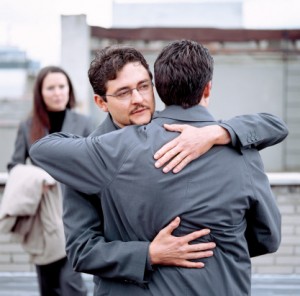 Most breakups are painful—not just for the couple, but also for those standing in the surrounding blast zone. We often hear about how divorce can affect the immediate family, but we rarely think about how a breakup or divorce affects a couple’s friends.
Studies have shown that divorce often negatively impacts those with up to two degrees of separation from the couple. If you’re friends with a recently divorced or broken-up pair, it is likely that your life may be impacted in one of the following ways.
1. You’re More Likely to Get Divorced
You wouldn’t necessarily think that someone else’s divorce could affect your marriage, but some studies show it can.
Divorce contagion is a social phenomenon wherein certain behaviors, feelings, and attitudes spread throughout a social network. This occurs because people tend to become more open to ideas and behaviors when they’re supported by their peers. When a married person talks with a divorced friend, he or she directly or indirectly learns the benefits and drawbacks of separation and may become more accustomed to or interested in the idea. If your significant other has been on the fence about the viability of your relationship, a divorce within your social circle can become a tipping point.
[fat_widget_right]
According to prominent research, if your friend gets divorced, your marriage has a 147% greater chance of coming to an end. Even your coworker’s divorce could affect your life, increasing your probability for divorce by 55%. According to the same research, however, if you have children your marriage will likely remain unaffected by the divorce of a friend. Children have been found to counter the effects of the social divorce contagion. Research reveals that couples with children are not as susceptible and their marriages are likely to stay intact regardless of the outcome of friends’ marriages.
2. Couple Friendships May Dissolve
If you’re married or in a long-term relationship and both you and your partner are friends with parting couples, it is quite possible that many or all of the shared friendships will dissolve. The double dates to movies, dinners, and sporting events will end immediately, but it may even be difficult to remain friends with an individual within a shared friendship.
Newly single people tend to dislike spending time with couples if it reminds them of an ended marriage or relationship that didn’t pan out. Similarly, couples may feel uneasy about spending time with a newly divorced friend if they were once friends with both partners. They may feel pressured to choose sides or reveal information to one party about the other.
In one study examining the fallout effect of ended relationships, for 50% of recently split couples, the former partners also ended friendships with one or more members of another couple with whom the former partners had been friends. One in eight couples ended their friendships with both partners in a mutual friendship. Don’t be too discouraged by these findings, however. It is quite possible to maintain your friendships after a relationship has ended. In fact, about 33% of the couples in the same study reported that they were able to remain friends with both of the individuals in a shared friendship.
3. Group Outings and Events May Never Be the Same
As mentioned earlier, if a couple in your social circle splits, your group of friends could end up losing one or both individuals from the recently parted couple. If your group is able to maintain the friendships, however, there will probably still be some difficulties when planning events such as birthday parties, group dinners, or other events that bring everyone together. One partner may not wish to see the other, forcing the group to choose when making invitations. One or both members of the former couple may choose not to come to a group event out of fear of seeing the other, or they could both come and end up arguing or making the event awkward for others in attendance.
It should be stressed that this isn’t always the case. Many couples are able to maintain healthy friendships and treat each other with kindness and respect. Regardless, your group of friends will notice some changes when it comes to getting the gang together.
4. Remaining Neutral Could Be Difficult
Most people who are mutual friends with both members of a divorced or split couple will choose to remain neutral and maintain friendships with both parties. Unfortunately, this isn’t always easy. Many people feel pressured to choose between friends, and they may not know how they should act around their newly divorced pals.
For this reason, people may start to distance themselves and friendships could weaken. As a mutual friend of the couple, expect to experience some uncomfortable feelings in the months following the breakup.
Help Your Friends Reach Out for Help If They Need It
Ending a relationship or filing for divorce is tough on all involved parties, including a couple’s friends. In the days, weeks, and months following a breakup or divorce, people generally reach out to friends for support, confirmation that they did the right thing, and a shoulder to lean or cry on. Be a good friend and be aware of some of the changes within your friend’s life.
If your friend has recently ended a relationship, know that some things are going to change, especially if he or she (or they) belonged to a larger social circle that you’re a part of. Be sensitive to these changes and try to help your friend get through them. If you notice he or she is exhibiting symptoms of depression or experiencing an unusual amount of stress and anxiety, please consider helping your friend find a qualified therapist to speak with. A therapist can provide a safe, neutral space, free of judgment, to help a person understand his or her feelings and behaviors related to the ended relationship, and the shifting dynamics that will inevitably occur after the split.
References:
- Chen, Stephanie. (June 10, 2010). Could you be ‘infected’ by friend’s divorce? Retrieved from http://www.cnn.com/2010/LIVING/06/10/divorce.contagious.gore/
- Deal, Katherine H., and Grief, Geoffrey. (August 31, 2012). The impact of divorce on friendships with couples and individuals. Journal of Divorce and Remarriage. Vol 53, Issue 6. DOI: 10.1080/10502556.2012.682894
- Morin, Rich. (October 21, 2013). Is divorce contagious? Pew Research Center. Retrieved from http://www.pewresearch.org/fact-tank/2013/10/21/is-divorce-contagious/
- Moutria, Kristen. The Effect of Divorces on Mutual Friendships. Global Post. Retrieved from http://everydaylife.globalpost.com/effects-divorces-mutual-friendships-14139.html
 Whether you read, saw, loved, or hated Fifty Shades of Grey, there’s no denying that its release started a larger conversation about BDSM in popular culture. It’s important for us to acknowledge that—even if we’re embarrassed by it; even if we think it’s better left a dark, sexy mystery—because according to the research, anywhere between 2% and 62% of the population is interested in BDSM (Sagarin, 2015).
BDSM is my favorite acronym because it’s so multifaceted: its letter pairings stand for bondage and discipline, dominance and submission, and sadism and masochism. It could be said that the underlying element across all these terminologies is power, and in fact, some kinksters call what they’re doing “power play.”
Any time we’re playing with power, however, we need to be aware of the potential misuse or abuse of that power. Fortunately, many in the adult BDSM community employ an ethics mantra to help those new to the scene, or even more seasoned practitioners, feel comfortable testing limits. Their guiding principles are “safe, sane, and consensual.”
[fat_widget_sex_right]
What do we mean when we’re talking about safety, sanity, and consent? This guide will define those concepts and give examples of responsible power play between adult partners. While it’s not necessary to label them as such, I may reference two types of play partner throughout this article: “Doms,” or dominant partners, and “subs,” or submissive partners. Play partners who occupy either or both roles are known as “switches.”
1. Safety
Some people who enjoy kink aren’t into gadgetry or fancy equipment, but others are. Some obvious equipment with the potential for damage are sensory deprivation masks, urethral sounds, genital clamps, and suspension devices, but even simpler tools such as rope, belts, or paddles could leave lasting damage or even prove fatal if play partners aren’t adequately prepared. Study up—not just on use of your equipment, but on basic human anatomy, too. Some parts of the body, like on the back near the kidneys, are riskier places to be struck. Consider the risk of losing circulation if you’re playing with rope or handcuffs, and have a backup plan for freeing your partner if you’re tying up or cuffing him or her. Make sure your partner can breathe if you’re using a ball gag or mask. Practice whipping pillows before using human partners; practice tying basic knots before attempting more intricate bondage. Minimize burn risks if you’re playing with hot wax.
These might sound like a lot of rules, but if your partner trusts you with his or her body, you need to be able to trust yourself, too. Emotional safety is as important as physical safety when it comes to sex and power play, which brings us to the second item of the BDSM ethics code.
2. Sanity
Whether I’m doing trauma work with people in individual therapy or facilitating classroom discussions about healthy relationships, I want to make sure that I’m maintaining an atmosphere of emotional safety. The rationale and context may be different, but the concept of emotional safety is absolutely critical for responsible BDSM exploration. Emotional safety exists in environments where you’re sharing only what feels safe and will be respected. In BDSM practice, this requires considerable introspection on the part of both dominant and submissive partners. Ask yourself: are the activities we’re engaging in going to open emotional wounds, and do I trust my partner to take care of me in a state of vulnerability? Do I have a handle on my sadism, and am I capable of balancing it with loving kindness? Am I doing this because I enjoy it, or out of a sense of guilt or obligation? Check in with yourself and your partner, and don’t be afraid to set limits based on what feels emotionally safe for you. Play only with partners with whom you know your limits will be respected. Do not equate genuine cruelty with kink.
If establishing limits ahead of time is tricky because you don’t know what your limits are, another way to ensure sanity and safety is to agree on a “safeword” for moments when things no longer feel safe or OK. In many cases, this word is never used, but there’s no shame in having one handy. The use of a safeword connects to the third and final descriptor in the BDSM ethics code.
Check in with yourself and your partner, and don’t be afraid to set limits based on what feels emotionally safe for you. Play only with partners with whom you know your limits will be respected. Do not equate genuine cruelty with kink.
3. Consent
Most forms of BDSM involve the creative surrender or takeover of control; however, this works harmoniously only between two or more consenting partners. Establishing consent may seem murky when people are playing out fantasies that involve force or domination, but there are many ways to ensure your partner is enjoying his or her experience. Agreeing on a safeword is important, as is respect between partners.
The idea of respect may seem confusing or even comical if humiliation or shame is integral to your fantasy. Rather than focusing on respectful words or behaviors, we can think of respect as an overall commitment to mutual safety and pleasure. Submissive partners are responsible for communicating their own limits, and Dom(me)s should be committed to the quality of their subs’ experiences. Look at your partner’s face; look at his or her body language. Notice any tension that exists for you alone or between you and your partner. Trust your gut.
Ethical Sex and Kink
I was surprised that I enjoyed much of the Fifty Shades movie, despite being a die-hard feminist and despite critiques I had read about the book it’s based on. The lead submissive character was empowered—I enjoyed her business meeting-style negotiations about what conditions she would and would not tolerate, and I often found the Dom/sub banter witty and endearing. There are definitely conversations to be had about their struggle for power, but it’s hard to arrive at any agreement about power, inside or outside the bedroom. The questions I used to critique the film’s responsible portrayal of BDSM include: “Were the sex acts safe? Were they sane? Were they consensual?”
It’s worth asking those questions about your own sex acts, whether you’re exploring kink with a new partner or you’ve been practicing BDSM for many years. With proper introspection comes the responsible use of power. Even when perceived danger is part of the sex appeal, it’s important not to blur the line between fantasy and reality. I hope these guidelines can aid you in your quest for ethical fun and pleasure!
References:
- The Community-Academic Consortium for Research on Alternative Sexualities (CARAS). https://carasresearch.org/
- Copulsky, D. (2015). Consent and safety basics for kink & BDSM [comic]. Sex Positive Education. Retrieved from http://www.sexedplus.com/consent-safety-basics-for-kink-bdsm/
- Sagarin, B. (2015). The surprising psychology of BDSM. Psychology Today. Retrieved from https://www.psychologytoday.com/blog/the-wide-wide-world-psychology/201502/the-surprising-psychology-bdsm
 I recently spoke with a young colleague who had just completed training to become a certified sexual addiction therapist (CSAT). She was astonished to hear my stories of what I jokingly refer to as the golden age of phone sex, which I’d say lasted from the mid-seventies, when I worked on a suicide prevention hotline, until about 1998, when the Internet was starting to really take flight.
You may be wondering why the suicide hotline I worked for bears mentioning. There were often callers to the hotline, usually male, who upon hearing a female ask, “How can I help you?” would begin to speak breathlessly about a “huge problem” they had. Our London-born supervisor referred derisively to these fellows as “wankers” and taught us ways to extricate ourselves from, ahem, conversations with them.
By the early eighties, I had ceased taking hotline calls and started practicing as a licensed therapist in my office in West Hollywood, California. Some of the people I helped had issues with obsessive phone sex. Some, again usually male, would spend hours or even days languishing at home or work paying to talk and talk and talk about sex, usually culminating in—you guessed it—masturbation. Neither party, of course, could see the other, so imagination was in full play.
[fat_widget_sex_right]
Frantic wives would call me after they clapped eyes on preposterous phone bills to 1-900 lines. Their husbands would call the next hour or appear reluctantly at my office, struggling with whether they actually had a problem with this potentially addictive (and highly expensive) behavior.
There was big money to be made by investors who snapped up and promoted 1-900 numbers with suggestive three-, four-, and seven-letter words rounding them out—not to mention resourceful women, young and not-so-young, who craftily embodied and impersonated the young subjects of glossy photos in the back pages of men’s magazines. Many people found the lure of “risk-free” phone sex with readily available strangers to be too hard to resist, spending countless hours and thousands of dollars maintaining their compulsive tele-sex habits.
How things have changed with the rise of the Internet and smartphones! Although traditional phone sex lines still exist and some thrive, no longer are people tethered to cumbersome wall sockets that keep them in their bedrooms or office cubicles. We have apps that use GPS to find sex partners near us as easily and anonymously as we locate a good Japanese restaurant. Phone sex is now often fully visual, streaming from hand to cell tower to satellite and back in the blink of an eye. Not only can it be addictive, it’s often free—in a financial sense.
Phone- and web-based sex can be profoundly costly when it comes to the toll on real-life relationships. Live video streaming or face time might be great for those of us who want to commune with a traveling partner or see and interact with grandkids on the other side of the continent. But what kind of effect does pornography and for-profit sex chat have for those who struggle with marital fidelity and remaining sexually sober? For those with a propensity for addictive escape and risky sexual behavior, it’s a whole new world of problems.
If you need some help navigating it, contact a therapist near you. It might prove to be the best call you’ve made in a long time.
 Why is it so difficult for some people to allow themselves to be helped? If there was a spectrum on which one end was total independence and the other was complete dependence, where would you say you fall? Ideally, it would be somewhere in the middle or fluidly moving back and forth along the spectrum as circumstances required. But many people get stuck at the independence end of the spectrum and only rarely dare to ask for assistance.
We are all influenced by societal beliefs about independence and dependence. However, those who are rigidly independent may need to look more closely at their personal experiences as dependent children in order to uncover their deep resistance to accepting help from others.
Independence is a healthy and important aspect of human development. It’s also supported by many popular beliefs:
- Independence is freedom. You’re free to think for yourself, make your own choices, and do what you want without anyone stopping you.
- Independence is powerful. You have the power to take care of yourself without having to rely on anyone else.
- Independence is safety. It’s safer to rely on yourself than on people who could prove unreliable or untrustworthy.
- Independence is respected. Independence is venerated in movies and books. The iconic hero is the lone wolf: strong, silent, and alone.
[fat_widget_right]
All of these beliefs contain truth, but not the whole truth.
Freedom at What Cost?
Rigidly independent people may be free to do what they want, but they have to do it alone. Healthy relationships require both partners to sometimes give up control and put the other partner’s needs first. By relying only on themselves, rigidly independent people actually limit their lives. They cannot accomplish large tasks that require the assistance of others. They limit their life experiences by missing out on camping trips, concerts, hobbies, and other shared life events. Rigidly independent people also limit their own emotional and intellectual growth by resisting the knowledge and input of others.
Are You Really Safer?
While taking care of yourself does increase your safety, your safety increases even more when you have a network of friends, family, and public services that you can rely on in times of need. The rigidly independent sometimes endanger themselves by being unwilling to accept assistance. Think of the elderly person who refuses to accept a caregiver and then accidentally burns the house down; the teen who drives drunk because he or she is unwilling to call a parent for help; or the woman who is too proud of her independence to ask a friend to walk her to her car late at night.
Who Feels Respected?
People respect independence, but not when it’s unyielding. People respect those who respect them back. Rigid independence devalues the contributions of others; it implies that they have nothing to offer you; and it disrespects their skills, wisdom, and generosity.
However, even those who are aware of the benefits of letting go of their rigid independence may find themselves unable to do so. For these people, this may be the time to examine their own negative views and possible past experiences with dependency. A person who experienced shame, danger, or betrayal as a child may not have the ability as an adult to find safe, trustworthy people to rely on.
We were all completely dependent on others when we were small children—and may need to be again as we age or become disabled. But even if we don’t require physical assistance, the fact is people still need each other. There’s no shame in it. Find safe people and let go of rigid independence … because we all need a little help sometimes.
“No one can whistle a symphony. It takes a whole orchestra to play it.” —H.E. Luccock
 The transition from being a wife or partner to being a mother with children can be a difficult one. Whereas before you could give all your time and attention to your partner or spouse, hobbies, work, and other pursuits, now there is a demanding baby to care for. Some women feel that during pregnancy they begin to experience “mommy brain” and have trouble with memory. In fact, research shows that women’s brains do shift during pregnancy. A study published in Behavioral Neuroscience showed that there was a small but significant level of growth in the amygdala, prefrontal cortex, and hypothalamus. These changes are associated with increased worry, obsessively thinking about and caring for the child, and placing a high emphasis on the baby’s needs. Well beyond birth, when the child is a little older and more independent, many women continue to have a difficult time shutting off obsessive thoughts about their child and focusing on being a wife or partner.
As a couples therapist, I hear often how hard it is for women to transition from being constantly involved with their children to being a wife or partner again. It’s completely normal for most women to have some challenge making the transition. After all, just because your children are asleep does not mean that your “mommy” duties are fulfilled. You might have to prepare lunches or fill out permission slips for the next day.
[fat_widget_right]
Just as the husbands and partners of mothers have to adjust to new roles and realities, women, too, have to come to some balance. Even in the throes of parenthood, it is essential to have time together with your partner independent from your children.
Here are some strategies for making the switch from “mommy mode” to “partner mode”:
- Effectively manage your time. Think about cutting some obligations so you have more time in the evening. Schedule things if you have to, and stick to the schedule. If there’s a task that isn’t a “must-do,” let it go. Make time with your partner a priority, right alongside fixing those lunches. When you’re with your partner, try not to think about anything else and allow yourself to immerse yourself in the moment. A family is only as strong as the partnership.
- Set aside one or two nights per week for intimacy. Make it a point to head to bed a little earlier than usual a couple of nights a week. (If you’re too tired at night, why not set the alarm for before the kids wake up?) If you set certain nights aside (and you know they are coming), you can train your mind and prepare yourself better. Oh, and just because you are not already in the mood does not mean you cannot get in the mood once you are physically close. Remember: desire does not always come before intimacy. Intimacy can generate desire.
- Do relaxing activities before bed that don’t have to do with housework or child care. For example, take a hot shower or bath, read a chapter from a novel or peruse a magazine, have some red wine and chocolate, or watch a favorite television show (perhaps one you wouldn’t watch with the kids). These activities will ground you and help you transition to intimacy with your partner, in whatever form that may take.
- Talk to your partner about your relationship or even “adult” things. Have an intellectual or emotional conversation about current events, work, your passions, or your relationship. Avoid discussing the kids, if possible.
Reference:
Kim, P., Leckman, J. F., Mayes, L. C., Feldman, R., Wang, X., and Swain, J. E. (2010). The Plasticity of Human Maternal Brain: Longitudinal Changes in Brain Anatomy During the Early Postpartum Period. Behavioral Neuroscience, Vol. 124, No. 5. 696-700
Thanks for your question. I guess the simple and perhaps even smart-alecky answer would be, “Don’t talk about politics and stick to sports!” I have very good friends who disagree with me politically and we are so passionate about our respective views that we simply agree to disagree. With others, I find it a little easier to have a more moderately tempered exchange; for example, I have a college buddy on Facebook who has drifted to the opposite end of the spectrum as me, but he has a sense of humor and pokes fun at my “side” and we have a good-natured sparring relationship about it. I could not do that with everyone.
But on a broader and philosophical level, your question points to a very psychologically significant phenomenon—related to change and, perhaps, loss.
The sometimes jarring fact of the matter is people change. There are friends from my past, as I sit here in middle age, whom I would no longer recognize. Some I am happy to stay in touch with via Facebook, and some I just can’t find common ground with anymore. A lot of this is about the present: the ongoing, indestructible present moment, which creates a context around what remains in common today. And other than a shared past, there are some with whom we just don’t share much in common anymore. Sometimes a new place—geographically, emotionally—can change a person, which changes his or her relationships. Sounds like your friend has changed for reasons that, I’m guessing, have little to do with you, but do affect the friendship.
[fat_widget_left]
We all exist in a particular context, often fleeting, ever shifting. (This would be related to what Buddhists call “groundlessness.”) In the case of your friend, you and he shared some very intense experiences in a common setting, but obviously things have changed in more complicated ways than can be assessed by the human eye. It sounds to me like you would have to make an adjustment to “fit” this new situation by listening to the “jibber jabber” of your friend’s politics. Perhaps these politics have become important to him for some reason that blocks more friendly relating. Could you ask him to drop this as a topic? Or is life too short to even bother at this point?
I was curious about the notion of an “obligation” to him, and I think that warrants further investigation. Why “obligation”? What are the risks of not following this new “requirement”? My sense is that not staying obligated might bring with it a loss of a kind that could be symbolic for you: for example, this friend was like a brother, and losing him might be related to experiencing a brotherly loss of a kind. Maybe you feel you’ve lost too many “friends” lately. Is there a loneliness losing him might touch on? Or perhaps there are people in your life like him, and for some reason you feel like you “owe” it to them to stay uncomfortable listening to opinions that seriously clash with yours. There is something abrasive about feeling “forced” to listen to political opinions that don’t jibe with yours; it sounds as if it might be more of a monologue than a conversation. “Fun for one,” as a friend likes to say. It does you no good to force yourself in such situations. I suppose you could try to “understand” his positions, if you’re interested, but that’s a lot of work on your part, and it may or may not be worth it.
More importantly, why hold on to this particular friendship if it’s no longer fun or friendly? It sounds like your college pal now wants your audience as more than a friend, from what you’ve said. Assuming he’s going to cling to his political points of view, what purpose does it serve by pretending a friendship is there that has changed or even faded away? I get a sad feeling while writing this, since people do come in and then out of our lives in a way that can spark specific feelings in us, depending on who we are and how we process these experiences.
In short, see if getting politics out of the equation helps, or if by continuing this friendship you are staving off inevitable feelings of loss that, unfortunately, are as difficult in life as connections are rewarding. You seem like a nice, considerate fellow, and I’m hoping there are people in your life whom you can spend more time with, rather than forcing a situation that no longer suits your particular context. Thank you for writing!
Best wishes,
Darren