 The Golden Gate Bridge, which connects San Francisco and Marin County, is a marvel of architecture and engineering. It’s an internationally recognized symbol of American culture and ingenuity. It’s billed as one of the top tourist destinations in the world.
It’s also, sadly, a well-known suicide hotspot where more than 1,600 people have jumped to their deaths since the span opened in 1937.
Suicides from bridges and other high points have long been a concern for communities. Much has been done in the way of suicide prevention by adding barriers designed to make suicide more difficult, posting signage with helpline information, and installing special phones that connect a person directly to crisis help. Such efforts, though, have generated some debate regarding just how helpful they may be. Some wonder, in fact, if it’s possible they do more harm than good.
Let’s take a look at some of suicide prevention methods in use today on bridges around the world to see whether their intended use and results are as solid as the bridges on which they are installed.
Prevention Signs and Phones: Are They Effective?
On some high bridges, you might see a sign with a message that reads something like, “There is hope. Make the call.†For some people, people at the right place at the right time, this message could be a lifesaver. Some have speculated, though, that suicide prevention signs and phones, while clearly well-intentioned, could inadvertently contribute to the problem by planting the idea of suicide. Could they give someone who otherwise was not considering jumping—from that spot, at least—the idea to do so?
[fat_widget_right]
There is no known evidence or research to support this possibility. What little evidence we do have tells an important, more optimistic, story, even if not everyone is buying it. Data collected from several bridges suggests that prevention signs may have an effect on the number of suicides per year—albeit minimal.
Researchers studied data from the Sunshine Skyway Bridge in St. Petersburg, Florida to analyze the period before and after emergency crisis telephones and signage were installed. The results from examining three-year periods before and after signs and phones indicated that the suicide rate dropped from 8.3 per year to 6.3.
In another example, in the mid-2000s, the New York State Bridge Authority (NYSBA) created a comprehensive suicide prevention plan to address this public health issue. Consulting with experts in the field, they concluded that the best possible prevention method was establishing a human connection between someone considering jumping and a mental health professional or law enforcement official. This led to the installation of emergency hotline services on every bridge, an awareness campaign for the public on use of the hotline, and increased emergency training for police dispatchers. The NYSBA declared the program an immediate success, citing that calls from the hotline phones began coming in less than two months after installation. In fact, the first call from a person using the phones resulted in a life saved.
Not everyone is convinced that signs and phones are effective, however. Reacting in 2013 to plans by the city of Pasadena, California to post four signs with a message and hotline number on the Colorado Street Bridge, site of more than 150 suicides over the past century, the then-medical director of the American Foundation for Suicide Prevention expressed doubt that they would have a measurable effect. “It’s a nice first step,” Dr. Paula Clayton told KNX 1070 Newsradio, “but the Golden Gate Bridge does have signs, and yet it hasn’t changed the rate of people dying by jumping from that bridge, so it’s doubtful.â€
Dr. Lanny Berman, then-executive director at the American Association of Suicidology, told The Oregonian in 2013 that phones aren’t the answer. “No data shows this method is effective,” Berman told the newspaper. “The only data that exists, both in this country and internationally, regarding prevention of jumping from height, are barriers.”
Physical Barriers: The Gold Standard?
In the city of Bern, Switzerland, a safety net was installed on the Muenster Terrace, another popular spot for suicides. An analysis of the data conducted in 2005 by researchers Reisch and Michel (2005) found that in the years following the installation, no suicides occurred.
Some have speculated that suicide prevention signs and phones, while clearly well-intentioned, could inadvertently contribute to the problem by planting the idea of suicide. Could they give someone who otherwise was not considering jumping—from that spot, at least—the idea to do so?
Go ahead and read that last sentence again: zero suicides after the installation of the safety net. They also found that the overall rate of suicides by jumping from any place in Bern dropped significantly after the net was put up, suggesting that potential jumpers most likely did not move to another high point.
Researchers Bennewith, Nowers, and Gunnell (2007) examined a barrier on the Clifton suspension bridge in Bristol, England and found that it reduced suicides by 50%. They also believe it may correlate to an overall decrease in suicides in the area.
Physical barriers designed to prevent suicide from bridges come in many forms, ranging from high fences topped by barbed wire to sloped walls to safety nets. Their purpose is to make it impossible (or at least very difficult or inconvenient) for a person to leap to his or her death, and there’s abundant evidence showing they work.
In 2008, the 988 Suicide & Crisis Lifeline (a network of crisis centers in 49 states and the folks handling those hotline calls from bridges) stated matter-of-factly, “The use of bridge barriers is the most effective means of bridge suicide prevention. Subsequently, as bridge/transportation authorities or other stakeholders approach the Lifeline with requests for implementing bridge phones, the Lifeline should emphasize the need for barriers as the most effective solution.â€
In reaching its conclusion on bridge suicide prevention methods, the Lifeline detailed three studies (including one of the Golden Gate Bridge and another conducted on the Sunshine Skyway Bridge) where the efficacy of suicide prevention signs and phones as the sole method of prevention is put into question, pointing out that suicides have still occurred from these points after signs were installed. Lifeline believes that signage and phones should be used as supplements to physical barriers.
The strongest piece of evidence for physical barriers as a suicide prevention tool, however, emerged in Auckland, New Zealand, where safety barriers were removed from the Grafton Bridge after having been in place for 60 years. After removal of the barriers due to complaints of unsightliness, suicide researcher Annette Beautrais and her colleagues found that suicides from Grafton Bridge increased from three in the four years preceding the removal to 15 in the four years after removal. This prompted the reinstallation and redesign of the barriers, after which zero suicides occurred from the bridge. This was the only known time and place in the world that physical barriers have been installed, removed for a period of time, and then reinstalled, providing the opportunity to study the effect in a way that would have otherwise been highly unethical.
Lessons Learned: The Future of the Golden Gate Bridge
We end now where we began—at the Golden Gate Bridge, where 38 people died of suicide in 2014 alone and where debate regarding the installation of safety barriers has raged for decades. Progress had been stalled by financial cost and questions of effectiveness, but things are changing. Last year, the Highway and Transportation District, the agency that oversees the Golden Gate Bridge, approved a $76 million project that will install safety nets on the bridge—an action, according to the evidence, that will save lives.
Knowing what you know now, what are your opinions on these types of suicide prevention methods? Have you seen backlash against barriers or signs in your community?
Do signs, phones, and barriers simply distract from the larger issue of creating better access to mental health care for people with suicide ideation?
References:
- Aleaziz, H. (2015, February 3.) 38 Golden Gate Bridge suicides last year, down from 2013 spike. San Francisco Gate. Retrieved from http://www.sfgate.com/bayarea/article/38-Golden-Gate-Bridge-suicides-last-year-after-6059465.php
- Beautrais, A. L., Gibb, S. J., Fergusson, D. M., Horwood, L. J., Larkin, G. L. (2009). Removing bridge barriers stimulates suicides: An unfortunate natural experiment. Australian and New Zealand Journal of Psychiatry, 43 495-497.
- Bennewith, O., Nowers, M., Gunnell, D. (2007). Effect of barriers on the Clifton suspension bridge, England, on local patterns of suicide: Implications for prevention. The British Journal of Psychiatry 190(3). 266-267. Doi: 10.1192/bpj.bp.106.027136
- Cabanatuan, M. (2014, June 28). Golden Gate Bridge board OKs $76 million for suicide barrier. San Francisco Gate. Retrieved from http://www.sfgate.com/bayarea/article/Golden-Gate-Bridge-going-to-get-suicide-nets-5585482.php
- CBS Los Angeles. (2013, June 21). Signs Along Pasadena Bridge Aimed at Curbing Suicides. Retrieved from http://losangeles.cbslocal.com/2013/06/21/signs-along-pasadena-bridge-aimed-at-curbing-suicides/
- Draper, J. (2008). Suicide prevention on bridges: The national suicide prevention lifeline position. Retrieved from http://host31.spidergraphics.com/spv/doc/SUICIDE_BRIDGES_Lifeline_Position_Paper_Final_6-16-08.pdf
- Glatt, K. M. (1987). Helpline: Suicide prevention at a suicide site. Suicide and Life-Threatening Behavior, 17(4), 299.
- Lester, D. (2005). Suicide by jumping from bridges. Perceptual and Motor Skills, 100(3), 628-628.
- New York State Bridge Authority. (2007). A comprehensive plan for suicide prevention New York state bridge authority briefing & summary report for consideration by transportation agencies. Retrieved from http://www.nysba.state.ny.us/Documents/NYSBA%20Suicide%20Prevention%20Summary%20Report.pdf
- Pogash, C. (2014, March 26). Suicides mounting, Golden Gate looks to add a safety net. The New York Times. Retrieved from http://www.nytimes.com/2014/03/27/us/suicides-mounting-golden-gate-looks-to-add-a-safety-net.html?smid=fb-nytimes&WT.z_sma=US_SMG_20140326&bicmp=AD&bicmlukp=WT.mc_id&bicmst=1388552400000&bicmet=1420088400000&_r=1
- Reisch, T., Michel, K. (2005). Securing a suicide hot spot: Effects of a safety net at the Bern Muenster Terrace. Suicide and Life-Threatening Behavior 35(4). 460-467
- Stabler, D. (2013, February 2). Vista Bridge: Is it time to stop the dying at Portland’s iconic bridge? The Oregonian. http://www.oregonlive.com/living/index.ssf/2013/02/post_37.html
- Walsh, B. (2011). Evaluation of the suicide prevention activities at Gap Park: Crisis telephones. Sydney, NSW: Lifeline.
 Although recent developments in the investigation into the crash of Germanwings Flight 9525 reveal that copilot Andreas Lubitz had recently researched suicide methods and the security of cockpit doors, making it appear as though he deliberately crashed the plane in a suicide attempt, many unanswered questions remain regarding his motivations for bringing down a plane full of passengers. The media have latched onto Lubitz’s history of depression and mental health treatment, painting a grim portrayal of hidden mental health challenges. Some headlines appear to suggest that depression alone can lead a person to behave violently toward others, though this is rarely the case. In the aftermath of a violent tragedy like this one, news headlines frequently point to a perpetrator’s mental health issues, leading the public to believe that conditions like depression and the people who experience them should be feared, when in fact, issues like depression, anxiety, and anger are common, everyday concerns that affect many millions of people around the world and are infrequently associated with extreme violence.
Can Depression Make a Person Homicidal?
Though depression is a leading factor in suicide, affecting about 90% of people who kill themselves, it’s certainly not the only reason people harm themselves. Challenging life circumstances, social rejection, a breakup, poverty, terminal or chronic illness, and a host of other factors can contribute to a person considering or attempting suicide.
Ruth Wyatt, a licensed therapist in New York, told GoodTherapy.org that suicide is a complicated issue. “I think it is important to remember that the vast majority of people being treated with counseling and/or medication for depression or other emotional issues are not suicidal,†she said.
Suicide, though, is not the same as homicide. There is no evidence suggesting that people with depression are more likely than people who do not have depression to harm others. Thus moves to prohibit pilots who have depression from flying or to implement workplace mental health screenings may do nothing to prevent a future catastrophe. Research has consistently shown that people labeled as “mentally ill†are significantly more likely to be victims of violence than they are to be perpetrators. A 2014 study found that a third of people with mental health issues are victimized in any given six-month period.
Mental Health and the Workplace
Lubitz is not the only person to have ever concealed a mental health issue from an employer. Indeed, for many people who struggle with depression, anxiety, and other mental health concerns, sharing the diagnosis with an employer could feel inappropriate.
One recent study found that nearly 40% of people would not tell their employers about a mental health condition. Half of that group worried that disclosing a mental health condition might negatively impact their careers. These concerns are not necessarily misplaced, either. Sixty percent of respondents said they’d be concerned if a colleague had a mental health issue, with 40% saying they’d be worried that mental health issues could impact workplace safety.
Workers with mental health concerns may face ostracism at work, and in some cases, could even lose their jobs. News of the Germanwings crash has prompted some workplace safety advocates to push for pilots with mental health issues to be ousted from their jobs. Given that about one in four adults experiences a mental health issue each year, making a job contingent upon a mental health screening could leave millions out of work.
Stigma and Treatment
At first glance, mandating mental health screenings for those whose jobs can be used to harm others might seem like a practical measure. After all, mental health services are notoriously difficult to access, and some people with mental health issues are reticent to seek assessment or treatment. Some, like Lubitz, actively conceal their diagnoses, even when they may not be well enough to work.
However, forced screenings and treatment also have the power to raise needless alarm bells about mental health. When a job requires people to undergo mental health screenings, the subtle message may be that those with mental health issues are unqualified. This can increase mental health stigma, and the Centers for Disease Control and Prevention say that stigma is the leading barrier to mental health treatment.
[fat_widget_left]A 2014 study of 90,000 people found that 75% of people with mental health issues do not seek treatment. Researchers found that stigma was the most commonly cited reason for not pursuing treatment. Other reasons included shame and embarrassment—two emotions that may be heightened by sensationalized coverage of mental health issues.
Andrew Archer, a licensed clinical social worker in Madison, Wisconsin, worries that excessive reliance on mental health screenings could eventually label everyone as “mentally ill.â€
“The ubiquity of screenings, awareness, and treatment for mental health issues will ultimately conclude that we all have a ‘mental illness,’ ” Archer said. “Major life stressors such as the ending of a relationship or role transitions have the potential to push us all over the edge. The impact is moderated by our safety nets—supportive, loving relationships—who won’t let us fall. Suicide is the shrapnel that rips through entire communities. The truth is that mental health providers have become incredibly skillful at predicting when someone will not commit suicide, but are less effective at predicting when someone will.â€
Treatment can and does work for many people experiencing mental health conditions, even for people struggling with obstacles that seem insurmountable. If you are experiencing a mental health condition or emotional crisis, consider finding a trained mental health professional who can assist you in your recovery. Additionally, if you are or someone you love is experiencing suicidal thoughts, contact the 988 Suicide & Crisis Lifeline at 988 or your local law enforcement agency immediately.
References:
- Adolescents Cope with Mental Illness Stigmas, Report CWRU Researchers. (2010, May 25). Retrieved from http://blog.case.edu/case-news/2010/05/25/mentalillnessstudy
- Brown, Pamela, Smith-Sparker, Laura, and Pleitgen, Frederik. (2015, April 2). Germanwings Crash: Co-pilot researched suicide methods, cockpit doors. Retrieved from http://www.cnn.com/2015/04/02/europe/france-germanwings-plane-crash-main/
- Greenberg, Gary. (2015, April 2). No, psychiatry could not have prevented the Germanwings Disaster. Retrieved from http://www.newyorker.com/news/news-desk/no-psychiatry-could-not-have-prevented-the-germanwings-disaster
- Frequently asked questions. (n.d.). Retrieved from https://www.afsp.org/understanding-suicide/frequently-asked-questions
- Mental illness facts and numbers. (n.d.). Retrieved from http://www2.nami.org/factsheets/mentalillness_factsheet.pdf
- Shipman, M. (2014, February 25). Study shows mentally ill more likely to be victims, not perpetrators, of violence. Retrieved from https://news.ncsu.edu/2014/02/wms-desmarais-violence2014/
- Stigma of mental illness. (2013, October 04). Retrieved from http://www.cdc.gov/mentalhealth/data_stats/mental-illness.htm
- Stigma of mental illness remains barrier to treatment. (2014, February 26). Retrieved from http://consumer.healthday.com/mental-health-information-25/anxiety-news-33/the-stigma-associated-with-mental-illness-remains-a-key-barrier-to-health-care-685196.html
- Violence and mental illness: The facts. (n.d.). Retrieved from http://promoteacceptance.samhsa.gov/publications/facts.aspx?printid=
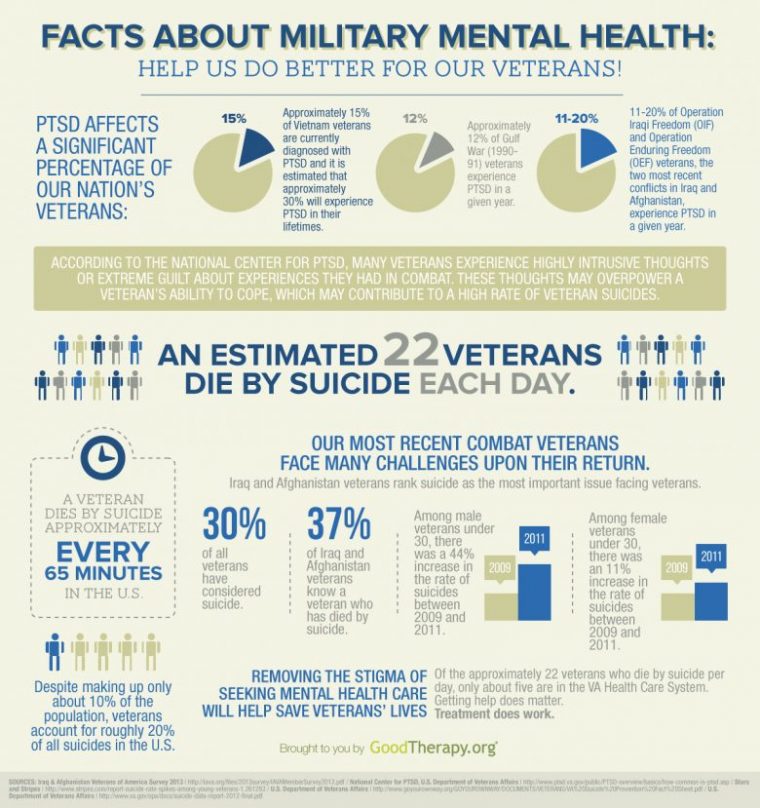
 When soldiers are killed in battle, families grieve and nations mourn for some of their bravest citizens. However, wars claim thousands of lives even decades after agreements have been reached and treaties are signed. According to the U.S. Department of Veterans Affairs (VA), approximately 22 military veterans commit suicide each day in the United States. While physical injuries obtained during military service are often immediately addressed, deep psychological wounds may go untreated for years—silently festering into suicidal ideation or other mental health issues.
Mental toughness is a highly valued trait in the military. Fresh military recruits train for months to toughen themselves physically and mentally because combat situations expose soldiers to many traumatic events such as being shot at, seeing a friend get shot, or seeing death up close and personal.
Despite their diligent efforts to prepare, some soldiers are not able to cope with the intense trauma they may encounter in combat. As a result, they can become severely scarred emotionally and psychologically. With mental injuries left unaddressed or simply ignored, many military veterans discover that going home may be even more difficult than going to war.
Military Suicide Rates
Veteran suicide statistics obtained from the Department of Veterans Affairs indicate that a veteran commits suicide approximately every 65 minutes. This rate translates to over 8000 suicides per year. And as astounding as these figures are, they are likely underestimated. The data used to determine the high rate of veteran suicide in the U.S. has been challenged numerous times as it was obtained from residents of only 21 of 50 American states. Some of the largest states with high veteran populations, including California and Texas, were not included in the Department of Veterans Affairs’ report on military suicide rates.
Suicide rates among veterans are much higher than those among American civilians. Approximately 20% of all suicides in the U.S. are committed by current or former military personnel, despite the fact that veterans make up only 10% of the population.
While resources for treating posttraumatic stress (PTSD), depression, and other hallmark psychological injuries are available, only 56% of qualified Operation Enduring Freedom/Operation Iraqi Freedom (OEF/OIF) veterans make use of them (2013). Similarly, of the reported 22 veterans who commit suicide each day, only 5 are in the Veterans Affairs Health Care system.
The good news is that we know when veterans do get help, it makes a difference. In 2007, the Veterans Health Administration launched an intensive suicide prevention effort and has since reported a decrease in:
- Overall rates of suicide among veterans with mental health conditions.
- Rates of suicide in the 12 months following a survived suicide attempt among veterans.
- Rates of suicide for veterans ages 35-64, which is one of the highest risk groups.
- An overall decrease in non-fatal suicide attempts.
The Stigma of Mental Health Care in the Military
Mental health issues and the receipt of mental health care treatment can be highly stigmatized within the military. The military promotes ideals such as self-sufficiency, endurance, mental fortitude, and strength, values that also support the notion—however unfair—that those seeking mental health treatment are deficient, dependent, or weak.
Factors that significantly affect service members’ decisions to seek mental health treatment may include:
- How higher-ranking officers and non-commissioned officers talk about mental health treatment.
- The belief that seeking mental health treatment will have negative repercussions on a service member or veteran’s career.
- The gender of the service member or veteran.
- The marital status of a service member or veteran.
- His or her military occupational specialty (MOS).
- Public expectations of how service members and veterans are supposed to cope with trauma.
Stigmas surrounding mental health treatment, both in the military and outside of it, greatly reduce the number of at-risk veterans that will seek treatment. Lisa Danylchuk, EdM, LMFT, E-RYT, an Oakland, California-based therapist and posttraumatic stress Topic Expert, believes, “Stigmas like these can increase feelings of shame and isolation, which can increase feelings of depression and decrease the likelihood that a depressed or suicidal person will reach out for help.”
In addition to these social pressures, veterans may believe that seeking treatment goes against their core principles and will damage their very identity.
Mental Health Issues Veterans Face When They Come Home
The Department of Veterans Affairs posits that posttraumatic stress, anxiety, depression, bipolar tendencies, and substance abuse are among the most common mental health issues affecting veterans of OEF and OIF.
When members of the armed forces return home, they often experience difficulties with reintegration. The 2014 Iraq and Afghanistan Veterans of America (IAVA) Member Survey states that loss of identity and mental health concerns were two of the top three challenges service members faced when transitioning out of the military. Of the 2,089 Iraq and Afghanistan combat veterans who completed the survey, 53% reported having a mental health injury.
Traumatic brain injury (TBI) is another health concern for veterans that has received much attention from the medical community in recent years, due primarily to the high number of OEF and OIF veterans who have endured blasts and injuries to the head and returned home with symptoms of TBI.
TBI may occur as the result of striking the head with an object, hitting the head during a fall, or, as is usually the case with combat veterans, the head being affected by a nearby blast or explosion. TBI can result in numerous health concerns, including emotional, behavioral, cognitive, and physical deficits. Records indicate that 18% of IAVA Member Survey responders were diagnosed with traumatic brain injury and have reported an increase in anger as well as changes in their personality.
Depression and anxiety are also major concerns for veterans. The Anxiety and Depression Association of America explains that veterans may feel out of sync with family and friends, but they should try to avoid social isolation. When veterans are cut off from social support, depressed thoughts may quickly lead to suicidal ideation. According to the IAVA Member Survey, 31% of Iraq and Afghanistan veterans have contemplated taking their own life since joining the military, compared to only 6% prior to joining.
Veteran Mental Health Resources
Though many veterans will experience their greatest mental health struggle after combat, in recent years, a number of mental health services and programs have been established specifically to aid military veterans. Many services within the VA Health Care system are free of charge, and many local mental health professionals and agencies offer their expertise at a reduced cost to veterans. If you are a current or former service member experiencing mental health issues, please reach out to these available resources for assistance:
- Call the Veterans Crisis Line at 988. Press 1 to speak to a Department of Veterans Affairs responder. People reaching out for assistance can also chat online or send a text message to 838255. Loved ones of veterans are encouraged to use the crisis line too.[fat_widget_right]
- Enroll in and obtain VA Health Care, which provides access to numerous mental health services at affordable rates or free of charge depending on the veteran’s economic and discharge status.
- Participate in regular post-deployment screenings that attempt to assess the mental health of military personnel after their service and encourage fellow veterans to do the same. These post-deployment screenings are designed to identify risk factors and gather data to help other veterans.
- Seek a qualified local therapist who can offer personalized care. Many therapists have specialized training to help those experiencing PTSD.
- Reach out to local support groups and veteran service organizations. Support from fellow veterans can aid in successful mental health treatment.
Family members and friends can also help veterans cope with their psychological wounds. Danylchuk encourages veterans to seek mental and emotional support not only professionally, but also within their social circles. Danylchuk recommends to friends and family members of veterans, “Listen with a non-judgmental ear, but don’t push someone to talk about something they are not ready to share. Encourage mindfulness practices like yoga, meditation, tai chi, and qigong. Remind veterans that they are having a normal reaction to an extreme experience, and that their experiences of anxiety, depression, and/or PTSD do not mean something negative about them; it just means they are still processing parts of their experience.â€
References:
- Anxiety and Depression Association of America. (n.d.). Tips for soldiers and veterans. Retrieved November 15, 2014, from http://www.adaa.org/living-with-anxiety/military-military-families/tips-soldiers-and-veterans
- Bagalman, E. (2013). Mental disorders among OEF/OIF veterans using VA health care: Facts and figures. Retrieved from http://fas.org/sgp/crs/misc/R41921.pdf
- Iraq and Afghanistan Veterans of America. (2014). 2014 IAVA member survey. Retrieved from http://media.iava.org/IAVA_Member_Survey_2014.pdf
- Kemp, J., & Bossarte, R. ( 2012 ). Suicide data report, 2012. Retrieved from http://www.va.gov/opa/docs/suicide-data-report-2012-final.pdf
- Miggantz, E. L. (2014). Stigma of mental health care in the military. Retrieved from http://www.med.navy.mil/sites/nmcsd/nccosc/healthProfessionalsV2/reports/Documents/Stigma%20White%20Paper.pdf
- United States Department of Veterans Affairs, Employee Education System. (2010). Traumatic brain injury. Retrieved from http://www.publichealth.va.gov/docs/vhi/traumatic-brain-injury-vhi.pdf
- United States Department of Veterans Affairs. (2011). VA suicide prevention program. Retrieved from http://www.goyourownway.org/GOYOUROWNWAY/DOCUMENTS/VETERANS/VA%20Suicide%20Prevention%20Fact%20Sheet.pdf
- United States Department of Veterans Affairs. (2014). How common is PTSD? Retrieved November 15, 2014, from http://www.ptsd.va.gov/public/PTSD-overview/basics/how-common-is-ptsd.asp
- United States Department of Veterans Affairs. (2014). Polytrauma/TBI system of care. Retrieved November 15, 2014, from http://www.polytrauma.va.gov/understanding-tbi/
 When it was revealed that actor/comedian Robin Williams took his own life in early August 2014, millions of people were in shock. For Williams’ family, friends, and fans alike, the news was devastating, but perhaps one of the most startling realizations about the incident—despite Williams regularly appearing in front of people worldwide for nearly four decades—was that no one saw it coming.
The subject of suicide is often portrayed as taboo, making it an extremely difficult topic for many to discuss. But people of all ages, genders, sexual orientations, ethnicities, socioeconomic statuses, and physical capabilities are at risk for suicide. Suicide affects both the strong and the weak. It can touch anyone.
As family members, friends, and confidants, we have a responsibility to assist the people we care about. September is recognized as National Suicide Prevention Month, which presents an opportunity to learn as much as we can about this sensitive, yet urgent, issue. How can we discern if someone we love is having suicidal thoughts, and how can we take preventative action?
Where Do Suicidal Thoughts Come From?
For people who have never seriously contemplated ending their own lives, it is challenging to understand the mind-set of an individual with suicidal ideation. As the 10th-leading cause of death in the United States according to the Centers for Disease Control and Prevention (CDC), however, understanding where suicidal thoughts come from is necessary if we want to help individuals contemplating suicide.
[fat_widget_right]Dr. Kelly Baez, a therapist who worked for several years as a crisis intervention counselor for suicidal and homicidal children and adolescents, explains, “[Suicidal ideation] is the ultimate in lack of perception, gratitude, and hope. Someone who is suicidal has developed a sort of tunnel vision—it is impossible for them to imagine that their life could ever improve.”
People who are suicidal often do not know how to obtain help. While prolonged suffering is typical in suicide-related cases, it is important to remember that suicidal persons are not always merely trying to escape pain. Most genuinely believe that there is no good reason to continue living and that the world will be a better place without them.
Identifying Common Risk Factors for Suicide
According to the American Foundation for Suicide Prevention (AFSP), 90% of people who die by suicide are experiencing a mental health issue at the time of their deaths. Depression is one of the most common factors attached to suicidal ideation, but people who experience bipolar tendencies or other mood-altering conditions are also at higher risk. Psychosis, excessive alcohol consumption, and the use of mind-altering drugs are other factors which can increase impulsivity and heighten the risk of suicide.
The highest rates of suicide occur among adults between the ages of 45 and 64, followed closely by adults 85 and older. Children, too, can become suicidal; one in 65,000 children ages 10-14 dies by suicide each year in the U.S. Issues such as the death of a parent, divorce, bullying, sexual abuse, or social exclusion can increase the likelihood of suicide among preteens. The main concern in these cases is that parents and teachers often believe that young children will not attempt suicide.
Regarding the possibility of pre-adolescent suicide, Baez said, “I have seen children as young as six who attempt suicide—usually in an ineffective way at that age. However, the intent is there, and that’s what matters. That’s what we have to address.”
The Importance of Therapy in Suicide Prevention
Therapy is one of the best tools for suicide prevention. Mental health professionals usually approach the situation in one of two ways: by targeting the conditions underlying a person’s suicidal thoughts (depression, for example), or by targeting a person’s suicidal ideations directly.
Two prominent types of therapy for suicide prevention are dialectical behavior therapy (DBT) and cognitive behavioral therapy (CBT). Dialectical behavior therapy helps individuals make lifestyle changes that minimize suicidal thoughts and helps people maintain control over emotions. Cognitive behavioral therapy, meanwhile, teaches suicide prevention skills and encourages the application of learned skills even if the individual is in an activated state of suicidal ideation.
Suicide Prevention Strategies You Can Use
If a family member or friend expresses suicidal thoughts, do not ignore them. They might desperately need your help. Here are a few tactful steps you can take to help a loved one at risk for suicide:
- Ask questions in a mild and sincere manner.
- Explain why you are asking questions.
- Express that your loved one is not alone. Tell them you are there for them and will continue to be there.
- If the individual is not comfortable speaking with you, suggest a qualified third party such as a therapist, spiritual leader, or doctor.
- Do not passively tell the person to just call a hotline; lead the person to helpful resources such as suicide hotlines and local mental health associations.
- Help the person schedule and keep appointments with a mental health professional, even if the individual no longer feels suicidal.
With National Suicide Prevention Month in full swing, take full advantage of the many articles, seminars, webinars, and other programs on suicide prevention. Suicide can affect anyone, and being prepared can help save lives.
Where You Can Find Help
If you or someone you know is having suicidal thoughts, the suicide prevention hotline in the United States is 988. If you are outside the United States, visit suicide.org or iasp.info to get a helpline within your local area. GoodTherapy.org also has a page dedicated to help those in crisis. Other online resources include:
- stopasuicide.org explains the warning signs of suicide so you can help prevent it from happening.
- https://chat.988lifeline.org/Â allows people to call or chat online with a suicide prevention counselor.
- thetrevorproject.org offers life-affirming programs to members of the LGBTQ youth community at risk for suicide.
Working with a therapist or counselor allows a suicidal person confront and cope with intense emotional pain. Therapy is a leading suicide prevention method. You can find a therapist near you by searching online at GoodTherapy.org or calling us at 1-888-563-2112 ext. 1 during business hours.
References:
- American Foundation for Suicide Prevention. (n.d.). Treatment. Retrieved from https://www.afsp.org/preventing-suicide/treatment
- Brent, D. A., Kuramoto, S. J., Langstrom, N., Lichtenstein, P., Runeson, B. and Wilcox, H. C. (2010). Psychiatric morbidity, violent crime, and suicide among children and adolescents exposed to parental death. Journal of the American Academy of Child & Adolescent Psychiatry, 49(5), 514-523.
- Pope, J. and Axelson, D. A. (2013, May 3). Warningsigns of suicide in teens and children. Retrieved from http://www.webmd.com/a-to-z-guides/warning-signs-of-suicide-in-children-and-teens-topic-overview
- Price, M. (2010). Suicide among pre-adolescents. Monitor on Psychology, 41(10), 52. Retrieved from http://www.apa.org/monitor/2010/10/suicide.aspx
- Sher, L. (2004). Preventing suicide. QJM: An International Journal of Medicine, 97 (10): 677-680. doi: 10.1093/qjmed/hch106. Retrieved from http://qjmed.oxfordjournals.org/content/97/10/677.full
 Grief after any death can raise a lot of questions. For a person of faith who has beliefs about the afterlife, a loved one taking their own life can raise specific questions that can be hard to deal with.
During these early stages of grief, a person can wrestle with their own sense of spirituality as well as external voices. These other voices may echo from the past and carry historical validity, or may still be present within specific faith communities. This article was prompted not only by the struggle of some with whom I have worked, but also by my perception that some in the mental health community are quick to lift up viewpoints of what is less helpful and more historic as the only Christian views on suicide that they have heard of. My hope is to provide several alternate views and encourage people to work within their spirit to find how they feel and believe.
Some stances may make it easier to move forward with the grieving process after a suicide, but if the person believes a different stance, working with a therapist who is sensitive to their spirituality may be helpful. The paragraphs that follow will intentionally focus on a Christian framework, although similar explorations could be made for those whose spirituality is rooted in other traditions.
Suicide as the Unforgivable Sin
A traditional viewpoint on suicide is that attempting and succeeding at ending your life is a gross affront to God, as you take into your own hands what is rightly God’s decision and action. From this perspective, a person who attempts suicide is making a choice to disallow God to play God’s role and to deny God basic control over their life. This denial of God is considered blasphemous, as it is a choice to place the human into the role of God. For this reason, suicide is seen as the unforgivable sin.
[fat_widget_right]The complication that this perspective brings is that if a loved one dies by suicide, you must come to terms with the idea thatthey have distanced from God for eternity. From this perspective, the comfort that there will be another time and place (heaven) where you will be reunited with your loved one is no longer a hope that can be helpful in your grieving process.
An additional struggle that you might enter into is that the only way to reunite with this person is to also distance yourself from God for eternity. This line of thinking has led some to attempt suicide to be able to be with the one who first died by suicide.
Suicide as a Mortal Sin
There are people for whom spirituality does not allow to label something as the unforgivable sin because they do not feel that scripture clearly identifies which act is unforgivable. However, suicide is seen as a serious sin that is intentionally carried out with full knowledge of both the sin and the gravity of that sin. Some people following this line will consider only those who died by suicide as having made the choice to carry out this mortal sin, while the failure of an attempt means it was not really being pursued.
Seeing suicide as a mortal sin means that you look at the person who (attempts or) dies by suicide as rejecting God’s perfect love and justice in such a way that the relationship with God is shattered and the person’s soul becomes “dead†until there is repentance and restoration. Given the timing of the sin and the ending of a person’s life, someone who believes this may have to think about whether the person had a chance to repent before they died.
Suicide as a Nonmortal Sin
The weakest way of looking at attempting or completing suicide as a sin is to believe it is a sin because it affects the relationship between the person and God. In contrast to the previous ways of seeing it as a sin, this belief allows for more of an understanding of the pain and lack of clear thinking on the part of the person who attempts suicide. This lack of clarity of thought means that the person cannot be held accountable for dealing with this as a severe, mortal, or unforgivable sin.
Within this way of looking at sin, one’s spirituality may project the sin associated with suicide as something that does not “kill†the person’s soul, and which leaves open the possibility that God will forgive the sin, even from God’s initiative. In contrast to the mortal sin concept, whether the person is forgiven for suicide is no longer dependent on whether they had the opportunity to repent before death and used it; rather, the grace of God provides an opportunity for the person to experience forgiveness and salvation.
Suicide Does Not Relate to Sin
All of the above approaches require that a person has the rational ability at least to choose to take their life. Generally, therapists understand that when suicide is seriously entertained, most people are operating out of a mental health condition rather than out of rational and conscious consideration of what is going on. Thus, if a person does die by suicide, the real fault lies in the mental health issue and not in a conscious, free choice. From this perspective, the faith community is called to embrace the one who is experiencing pain and whose capacity is limited rather than condemning that person for an act they were not fully in control of.
This way of looking at things encourages the movement toward wholeness and peace earlier in the process. It guides those who are around the person. It shows how God would have compassionate feelings toward the person rather than judgment. Of course, there are some examples that fall outside of this range—the rationally thinking person who dies by suicide as part of a murder-suicide, as part of a terrorism act, and other situations where the person is rationally choosing suicide—but these are not the norm.
Viewing suicide as a symptom of pain and torment is a pastoral way of looking at it rather than a legalistic way. If this is where your spirituality is, you can have an understanding of the problems the person was experiencing and the grace they may now be experiencing from God. It may be hard, however, to look closely and recognize what your loved one was facing. This may even involve you facing your role, if any, in the situation.
Understanding Your Spiritual Orientation to Suicide
As you think through how you relate to suicide and how you believe God relates to suicide, you will have another way of connecting with your sense of loss and grief. Your spirituality will influence your grief process. Having an understanding of your belief about these issues will help you to have a framework as you go through your grief process. This will help you to gain a sense of peace and wholeness, even in the face of tragedy.
 While most Americans will experience some level of depression in their lives, some will experience an intense and serious depression that requires the help of friends, family, and often a mental health professional.
The severity of a depressive state will fluctuate based on a variety of factors, including the availability of a support system, treatment options such as a therapist or psychiatrist, emotional coping skills, and a history of successfully navigating previous mental health episodes. However, when depression worsens, suicidal ideations (or thoughts) may develop, and are therefore often seen together. The focus of this article is to help identify common signs and symptoms of suicidal thoughts related to severe depression and how to recognize when to seek help.
Common depressive symptoms include a loss of interest in previously enjoyed activities, low energy, changes in sleep and appetite, concentration and focus problems, and changes in libido. When depression worsens, often people will experience hopelessness, a desire to isolate and withdraw, and may begin to have thoughts about how to make the pain (depression) stop. These are symptoms most commonly associated with the onset of suicidal ideations. This is where outside help is needed. The vulnerability experienced with hopelessness and a desire to make the pain stop sometimes leads to irrational actions and decisions. Once this hopelessness manifests as a desire to “go to sleep,†“make the pain go away,†or identifying ways to die and how to obtain the means (guns, pills, etc.), the suicide risk is dramatically heightened.
[fat_widget_right]
Other factors must be considered when determining how soon help should be acquired during a worsening depression. First, if a firearm is in a person’s possession or at least accessible to the person, help should be sought as soon as the depression is apparent. The firearm should be secured by a third party or by law enforcement. Next, any use of recreational drugs or alcohol limits a person’s insight and judgment, making them more impulsive and less likely to consider available resources. If a person is likely to use drugs, help needs to be called before a person becomes intoxicated and possibly makes a dangerous mistake. A previous history of suicide attempts increases a person’s suicide risk; thus, help should be attained immediately if a suicide survivor begins to experience suicidal thoughts.
Risk Factors
Numerous risk factors need to be evaluated to determine suicide risk level. Below is a listing of the more serious factors warranting immediate intervention. If any of the following become present in a person’s thoughts or behavior, help should be sought immediately (note this is not a comprehensive list but rather an overview of the more common risk factors):
- Decreased or no sleep. Without adequate restorative sleep, a person’s insight and judgment become significantly affected.
- Developing a suicide plan. A person moves thoughts into an action plan.
- Identifying ways to access suicide means or storing means (pills, guns, etc.).
- Giving away personal items of value and/or getting one’s affairs in order with the anticipation of dying.
- Any psychotic symptom such as auditory or visual hallucinations.
- Hopelessness, seeing no hope for the future.
- Intent to die.
- History of mental health treatment in the past, especially a history of suicide attempts.
- Family history of a completed suicide.
- Limited or absent support system (few or no friends or family to call for help)
- Serious/chronic medical condition(s).
- Withdrawing from sources of support, such as family, work, or friends.
- Happiness immediately after feeling severely depressed: This may suggest a person has resolved to die and is now hopeful for their plan.
- Impulsive and/or high risk taking or careless behavior, different from the person’s normal functioning.
Treatment Options
Depression and thoughts of suicide are serious, but they are also highly treatable. The sooner a person elicits help from friends, family, or a compassionate mental health professional, the sooner they may be able to gain healthier perspectives and insight into ways they can work to handle their current state. Help may be able to instill hope and help a person begin the process of returning to a happier and stable state.
It is important to know some available resources for those experiencing suicidal ideation. First, call 911 immediately if a person is expressing they may no longer be able to remain safe on their own. Second, if safety permits, a person can be taken by friends or family to any hospital emergency department, where the person will receive a comprehensive evaluation and possible placement inside a mental health facility. Third, many therapists have after-hours support available, but this should be used only if there is not an imminent threat to personal safety. Fourth, the 988 Suicide & Crisis Lifeline (24 hours, seven days a week) can be reached at 988, where a trained person will listen and help a person decide the best route for help. And lastly, many communities have local-based suicide-prevention crisis lines and clinics. Check with your local mental health department to see what resources are available.
Developing a safety plan before depression worsens is a key element in the treatment of those at risk for suicide. Having support systems early and risky behavior identified (e.g., thinking of ways to die, acquiring means to harm self, etc.) can be a life-saver. It is best to have a plan of prevention and response in place before a crisis; trying to develop a safety plan amid an active crisis is often unsuccessful. A mental health professional can help you develop an excellent care and safety plan in your very first session.
The personality traits of neuroticism, agreeableness, openness, extraversion, and conscientiousness, known as the “big five,” have been studied at length in relation to nearly every psychological condition. Several of the big five traits have been linked to suicide, but only in the presence of other comorbid conditions or only when viewed through a limited lens.
To get a more comprehensive picture of how these personality traits affect the risk of suicide in the general population, Victor Bluml of the Department of Psychoanalysis and Psychotherapy at the Medical University of Vienna in Austria recently conducted a study involving community participants. Bluml assessed 2,555 adults for measures of past, present, and potential suicidality as well as for the big five. He controlled for other risk factors such as anxiety, depression, PTSD, and socioeconomic status.
The results revealed that specific big five traits influenced risk for suicide for men differently than for women. For women, Bluml discovered that high levels of openness and neuroticism increased suicide risk. For men, low levels of conscientiousness and extraversion elevated the risk of suicide.
Bluml believes that neuroticism, which is a risk factor for depression, could increase depressive symptoms in women, making them more vulnerable to maladaptive coping and impulsivity. This could explain the link between neuroticism and suicidality in women. However, women are more likely to have nonfatal suicide attempts than men.
When Bluml looked at the big five scores for the male participants, he found that there was no direct association between openness or neuroticism and suicide. But extraversion, which is associated with positive affect, was found to be linked to suicide risk when scores were low. Likewise, low scores on conscientiousness, which directly impacts hopefulness, were also shown to be predictive of suicidality for males. Bluml also found that these trends persisted even when other factors such as anxiety, unemployment and stress were considered.
These results clearly show how specific personality factors impact suicide uniquely for each gender. Bluml also added, “Different personality dimensions are significantly associated with suicide-related behaviors even when adjusting for other known risk factors of suicidality.â€
Reference:
Blüml, V., Kapusta, N.D., Doering, S., Brähler, E., Wagner, B., et al. (2013). Personality factors and suicide risk in a representative sample of the German general population. PLoS ONE 8(10): e76646. doi:10.1371/journal.pone.0076646
 Mental health issues carry such a stigma that few people wish to talk about their experiences at a psychiatric ward. I am learning involuntary commitments are rarely necessary but are frequently directed by emergency room (ER) physicians who do not know how to deal with mental health issues. I share this experience so others know what happens when someone is committed to a mental institution. My opinions are not meant to be medical advice. Talk all medical issues over with a dedicated, concerned, and compassionate health care professional.
It Began with the Itching
The hydromorphone pill I had been prescribed for pain from a hysterectomy made me itch. Five days later the dysphoria set in. Dysphoria is an emotional state, sometimes instigated by medication, often indicated by restlessness, anxiety, and depression. The next day the anger followed. Finally, suicidal ideation took up camp in my mind. All I could think about was how relieving a long swim in the ocean would be to make the thoughts go away.
My nephew had committed suicide two years before. In reading up on suicide, I had learned those who take their own lives don’t understand suicide is a long-term solution to a short-term problem. The “sane†part of my brain continually played this mantra, keeping me from moving from ideation to suicidal intent. There are numerous definitions of suicidal ideation versus suicidal intent, and these often overlap. I refer to Carmel McAuliffe: “Suicidal ideation is a low-risk, common factor among nonclinical population samples…. Ideation may only become a risk factor for attempted or completed suicide when it is comorbid with rarer risk factors such as a dichotomous thinking style and in the absence of certain protective factors such as social support.†[fat_widget_right]
I asked a neighbor for help, which was the first thing I did correctly: seek help from a trusted person when you are in distress. My primary care physician (PCP) was called. This, on the other hand, was my first mistake; my surgeon should have been called first. Your surgeon’s office should encourage people to call with questions/issues at any time. If they don’t tell you this, do it anyway. My PCP directed me to my local emergency room.
I agreed to go, as I naively thought my local hospital would be able to address my medical issues. Drug-induced dysphoria is not considered a mental illness, but at your ER, you will be committed to a psychiatric ward, either voluntarily or involuntarily, “for your safety,†even though this may not be the best option for you. It is the best option for the ER staff as they are not experts in mental health.
My husband took me to the emergency room—second thing done correctly: always bring with you an advocate who can think rationally on their feet. My medications were given to the ER nurse, which was the third thing I did right. Take your meds or a list with you to the hospital.
One-Way Transport to a Psychiatric Hospital
My husband left the room so I could be examined by the ER physician. This was mistake number six. Keep your advocate with you at all times. I was asked about suicidal ideation, but not suicidal intent. None of my pain medication was discussed, even though it was known I was post-operative. A search on Medscape.com and Epocrates.com show that suicidal ideation is a known adverse reaction of bupropion (one of my medications) and dysphoria is a known adverse reaction of hydromorphone. I have since learned it is the responsibility of the person committed to monitor adverse reactions to drugs as every person’s body reacts differently to medications. Your doctor has no responsibility to share this information with you.
After a few questions about my mental state, I was asked if I would voluntarily commit myself to a mental institution. I said no, because I believed the root of the problem was physiological, not psychological. I was told I could go home if I agree to a day program and, though I wasn’t sure how this would address the physiological issue, I was open to the idea.
I then learned the day center did not have a place for me to lie down, so this option was not physically possible being that I was one-week postoperative. This was another mistake. Because of my “uncooperative behavior,†the ER physician filed a Section 12a on me, which in the state of Massachusetts meant I was then involuntarily committed to a mental institution of its choosing.
A guard was put at my door. I repeatedly tried to get the ER staff to understand my problem was physiological, not psychological. I am assured that my medical needs will be addressed at the psychiatric ward. The vice president and executive director of the hospital said she was sure that by the following week, she and I would meet again and I would thank her for the care I have received at the psychiatric hospital. This proved to be grossly inaccurate.
Stark Reality of a Mental Institution
The dysphoria and suicidal ideation abated by 11 a.m. At 6:30 p.m. I was transported by ambulance to the psychiatric hospital. Mental institutions are exactly how movies portray them: stark, cold, and dark, with stale air. Strapped to an ambulance gurney, I rolled through the unadorned white corridors. As the first set of automatic doors opened and slowly closed, I realized my children, husband, friends, and family were no longer available to me. When the second set of locked doors clicked shut, my freedom of movement and privacy left. As the third set of doors slammed behind me, dignity, respect, and even intelligence were stripped from me.
From then on, I wore only the label of “mentally ill.â€
After being checked in, I was assigned a hospital gown for sleeping, towels, and one blanket. I was not allowed a bra, as I might hang myself with it. No dental floss, as I might slit my wrists. No iPod because of the headphone wires… and the list goes on.
The acting physician came in, reviewed the pain medications I was taking, and prescribed the same ones again. As he left, I said, “Out of curiosity, should the hydromorphone make me itch?†He stopped and said, “You are allergic to it.†So it was the hydromorphone that I was allergic to! That was the fourth thing I did right: ask endless questions of your physicians. Do not fear them; fear the mistakes they could make. I would have been prescribed the harmful drug again.
Always Cooperate
I remember years ago reading that if you are ever involuntarily admitted to a mental institution, cooperate at every level. I made a series of requests, which were refused—food, ibuprofen, tea, and constipation medicine—because at that point it was too late in the evening to have them approved. By then, I must have seemed like an unreasonable patient, so I went to bed to stare at the ceiling until daylight. My roommate slept restlessly. I started taking notes in order to provide my husband with concrete examples of how my medical needs had not been met. Another thing done right: take notes. I recorded times and who I had spoken to.
 My Psych Team Does Their Job
At 9 a.m., I fought to find my breakfast tray in the cafeteria. Breakfast consisted of pancakes dripping in syrup along with sausages, which I knew my body would not process. Kind Nurse1 brought me a bowl of oatmeal, and a dietician came over to discuss what I could eat. She said, “Ok, we will start providing them to you tomorrow,†and I thought, “Tomorrow? What am I supposed to do today?†I remained quiet. When lunch arrived, I saw it was a peanut butter and jelly sandwich. I explained I was allergic to peanut butter, thanked the attendant, and went back to my room.
My “support team†met with me later. My intake report, which I subsequently requested, indicated I was “helpless, hopeless, and suicidal.†Later I learned my poor mental state was attributed to my not looking the admitting ER physician in the eye (while I was lying on a hospital bed). This was yet another mistake of mine. Make sure you look all interviewers in the eyes so they realize you are in full control of your mental state. At the meeting with my support team, the hospital psychiatrist held my intake report and asked me why I was there. I told them it was because of an allergic reaction to hydromorphone.
An activity coordinator asked, “What are your goals during your stay?†I was ready for this question, as while I was in the ER I used the hospital Wi-Fi to get an idea of what to expect, since I had never been to a psych ward. I replied, “To finish chapter three of the book I am writing.† I’ve since been informed that this could be interpreted as “Delusional Disorder, Grandiose Type,†since no one there knew I was a well-published university professor.
My only identity, according to my team, was “mentally ill with suicidal tendencies.†Wouldn’t I rather work on anxiety or other problems, they asked. I remained committed to chapter three of my book (with all due respect). “Well, ok,†they said, “there are board games, cards, and art you can do if you prefer. Maybe you would like a group session.â€
Here is a reminder to mental health providers: people do not automatically lose their intelligence once they enter your facility. (I have come up with several other pieces of advice, which you can see here.)
My Husband Advocates for Me
By midday a hospital human rights officer had arrived and said my husband filed a complaint. From that moment forward my care changed dramatically. My meals were brought to my room with food I could actually eat (that day, not the next), and drinks were supplied without my asking, including warm prune juice. Â I received fruit and vegetables for grazing on throughout the day. I got my iPod back, and I was given privileges for outside air twice daily. I refused group therapy because of pain, but I could ask for ibuprofen for breakthrough pain as well as milk of magnesia for constipation. I also received dental floss, and Kind Nurse2 provided tea twice in the evening. When I explained I needed a sleeping pill, Kind Nurse2 called the doctor immediately and I got an OTC sleeping pill.
You do have rights. If you feel they have been violated, have your advocate talk to the human rights officer.
Released
On the morning of my third day, I was asked to sign discharge papers which said I suffer from MDD, major depressive disorder. I refused. I asked the hospital psychiatric doctor whether my file stated I had an allergic reaction to hydromorphone. The answer was no. I asked for it to be added but did not stick around to see that it was.
I was released at 11:45 a.m., 52 hours after walking into my local ER. Ever so happy to see my husband, I finally let myself cry.
Five Lessons Learned
- Bring an advocate when seeking medical care. Four different doctors misdiagnosed my symptoms. Don’t fear your doctors; fear the mistakes they may make. Ask questions! Have your advocate ask the questions and take notes if you can’t. Have your advocate fight for your rights.
- Immediately call your physician or a poison control center if you or a loved one has ANY reaction to a medication, common or not (blurred vision, itching, hives, euphoria, dysphoria, anger, etc.). Epocrates.com and Medscape.com are good places to consult about side effects and drugs combinations that should be monitored closely.
- Share this mantra or a similar one with everyone you love, especially young adults: Suicide is a long-term solution to a short-term problem. Have a support system in place of people you trust; you never know when you might need them.
- Cooperate at all times if you are misdiagnosed and admitted to a psychiatric ward. Agitation and despondency support the diagnosis. While confined, your job is to relax; your advocate’s job is to fight on your behalf to get you out. Have your advocate bring magazines, newspapers, or something to keep you busy, and be prepared to get caught up on 2-3 days of reading.
- Know what is in your medical records. Ask to see them and make sure they are in a language/terms you understand. This is your right.
My surgeon later confirmed the hydromorphone likely caused the dsyphoria/suicidal ideation. If you are wondering, I did not abuse the pain medication. At admittance, eight days after surgery, the psych ward counted 20 pills left in the bottle out of a prescription of 30. I have been told the type of reaction I had is rare, but I wonder how many times this type of issue is misdiagnosed.
In this experience, I made mistakes more than I did things right, and I have made this report so you don’t make similar mistakes. Please pass on my story so others are educated likewise.
Dr. Rummel is an associate professor of marketing and innovations at a well-known university in the northeast. She holds a BS in Chemical Engineering, as well as an MBA, in addition to her PhD. She has two wonderful teens, a puppy, and a devoted husband. Mental health issues, especially depression, run in her family, but deter none of her family members from living full lives. She shares her experience in the hope that the health care industry will be the first to demystify mental health issues. Only then can the general public appreciate the commonality of temporary and long-term mental illnesses.
Reference:
McAuliffe, Carmel M. (2002). Archives of Suicide Research. 6:325-338, p. 336.
Occupation can be a risk factor for suicide. In addition to psychological issues, poor physical health, and general life stress, the occupation that someone holds can present an additional suicide risk via access to lethal means. According to a recent study conducted by S.E. Roberts of the College of Medicine at Swansea University in the United Kingdom, doctors, nurses, and veterinarians had some of the highest suicide rates by occupation in the past 30 years. The results of this study reveal some positive trends and raise awareness about other occupations that can pose a heightened risk for suicide.
Roberts looked at occupation, access to deadly means, socioeconomic status, gender, and national economic condition over a 30-year period to determine which factors most influenced occupational suicide rates. The results revealed that in the early 1980s, veterinarians, dentists, doctors, pharmacists, and farmers had some of the highest suicide rates. This could be influenced by easy access to pharmaceuticals and weapons.
Then, in the early 2000s, these occupations saw decreases in suicides. At the same time, manual labor occupations had increases in suicides. These occupations included construction, merchant marines, coal mining, trash collectors, and drivers, among others. Roberts believes that the reorganization within these industries could be partly responsible for increased rates of unemployment and subsequent increases in suicides.
When Roberts looked at socioeconomic status as a risk factor, it was revealed that suicide rates doubled in the 30-year period for those most economically disadvantaged. Unlike early statistics, it appears that socioeconomic condition has emerged as a more salient risk factor than access to lethal means in this British sample. Further, men were more likely than women to commit suicide across all occupations and socioeconomic statuses.
Another risk factor that was identified was isolation, as artists, actors and entertainers had higher rates of suicide than some other occupational groups. Despite increases in some areas, Roberts pointed out that interventions aimed at reducing suicide in high risk occupations, such as one tailored for farmers, have proven to be effective at reducing suicides over time. Roberts added, “This indicates that carefully targeted suicide prevention initiatives for other occupations could be important.
Reference:
Roberts, S. E., B. Jaremin, and K. Lloyd. (2013). High-risk occupations for suicide. Psychological Medicine 43.6 (2013): 1231-40.ProQuest. Web.
 I see many people who struggle with self-esteem issues. In fact, self-esteem issues and depression almost always occur together. Which one causes the other is not always clear, but the majority of people seem to have the self-esteem issues first.
People often tell me they want to die—because they “shouldn’t exist,†were “never wanted,†never “fit in,†are a “burden,†“don’t deserve anything,†or even have the feeling they “did something horrible†but don’t know what.
Generally, this viewpoint comes from something that happened when the person was very young. We now know that even embryos traveling down the fallopian tube are being affected by their environment in ways that have implications for physical and emotional health throughout the rest of their lives.
[fat_widget_right]
To work with this, sometimes I ask people if they deserved to live (or die) when they were an embryo, then a fetus, then a newborn, etc. Most people see themselves as innocent and deserving to live at some point. Going through this exercise helps them see that there was a time they could have compassion for themselves, rather than blame or condemnation. For others, as we advance in age, we come to a place where they can no longer say they were innocent and deserved to live. That can lead us to the origin of the issue. If they can’t say they were good anymore after age 2, 4, 10, or whatever, then we look for what happened at that age to change that. Almost always, it was some kind of abuse or trauma.
For example, I saw a woman who wanted to die and believed she didn’t deserve to live, despite the fact she was a kind, giving, loving person. She was severely depressed and obsessed about suicide. She told me if therapy didn’t work, she was going to kill herself. One of the things I did was to take her through this exercise. She reluctantly conceded that she was innocent as an embryo, fetus, and newborn. When we got to 2, she said she deserved to die at that point. When we explored it, she said something happened then to change this, but she didn’t know what. Few people have conscious memories from that age, so early memories can be challenging to resolve.
But then she said she had an image, but she was sure it didn’t happen—”it couldn’t have happened.” The image was of a sexual assault from a family member. It was very specific and unusual. We processed the image as if it was a memory with EMDR, and she felt enormous relief. She no longer thought she was so bad that she didn’t deserve to live. She finally saw that she had done nothing wrong and the shame wasn’t hers. It belonged to the adult perpetrator.
Others blame themselves for their parents’ divorce, or for their parents’ lost lives after marrying each other only because of the pregnancy. People blame themselves for being the gender the parent didn’t want, for their mother dying in childbirth, or for their parent’s depression. When children try to make sense of something that feels terrible in their world, and no one helps them, they tend to think they caused the problem. So many innocent children grow up feeling guilt, shame, and self-hatred because of this. Sometimes, they don’t even remember why. Once they can connect their adult perspective with their child beliefs, they see that it’s unreasonable to punish themselves the rest of their lives because when they were too young to be responsible, their parents made the choices they did.
So if you think you are bad, disgusting, undeserving, unlovable, or inadequate, were you so as an embryo? A fetus? A newborn? An infant? A crawling baby? A walking toddler? A talking toddler? When did you become unforgivable, and why?
Losing a family member is one of the hardest things a person can experience. Many families pull apart and suffer extreme emotional distress after the loss of a child or parent. This is especially true if the loss is sudden and from an accident or suicide. But even anticipated deaths, like those resulting from terminal illnesses such as cancer, can cause immense emotional pain that some people cannot easily overcome.
Although research in this area is extensive, another type of loss that can have similarly negative effects has not been examined nearly enough. When a person loses a sibling, the results can be equally as devastating, and in fact, some believe even more difficult than losing a parent or other family member. Siblings often represent the longest friendship and closest relationship many people have had.
When a sibling dies, the effect can be traumatic and even life-threatening if the death is sudden. People can become easily depressed when they are overwhelmed with grief. These emotions, if not reconciled, can put someone at risk for suicide.
Mikael Rostila of the Centre for Health Equity Studies at Stockholm Univesity in Sweden wanted to see if sibling death resulted in increased suicide in surviving siblings. To assess this, Rostila looked at population data between 1981 and 2002 on over 1.7 million Swedish adults between the ages of 25 and 64.
The analysis revealed that women who lost a sibling were 1.5 times more likely to commit suicide in the two decades following the death than those who did not experience the loss of a sibling. Men were 1.28 times more likely to commit suicide. And if the sibling death was the result of a suicide, the rate increased to 3.19 times for women and 2.44 times more risk for men.
Other types of deaths, such as cancer, resulted in much lower suicide rates in surviving siblings and there were relatively no differences by gender for these suicides. Additionally, Rostila did not find any association risk for suicide based on length of time since the sibling death. This research provides new and much needed insight into the effects of a sibling death on surviving siblings. Rostila added, “The mechanisms linking the death of a sibling and completed suicide among the bereaved person need to be further investigated.â€
Reference:
Rostila, M., Saarela, J., Kawachi, I. (2013). Suicide following the death of a sibling: A nationwide follow-up study from Sweden. BMJ Open 2013;3:e002618. doi:10.1136/bmjopen-2013-002618