 After 5 years of sobriety, in 1985, I began to notice a pattern in my sexual relationships: Even if I really liked someone, I couldn’t go more than 3 months before my attraction to them fizzled. I would then find some reason to end the relationship, although I never really understood why, and it made me feel bad. Thankfully, while I was leading a weekend retreat on Spirituality in Recovery, one participant pressed for bringing the subject of sex into the process.
Although I was unprepared, it gave me the opportunity to address the issue, and I shared my struggles with the group. When I asked if anyone else identified with the issue, all hands went up. I immediately felt a sense of relief, having previously thought I was uniquely flawed. And then I felt angry that no one had told me about this before, which launched my enthusiasm to shift the primary focus of my work. I began to create healing techniques for underlying trauma and sexual challenges.
The sexual-spiritual split, a deep psychic schism within almost everyone, prohibits loving relationships from forming and enduring. The chasm between sex and love, caused by generational, cultural, religious, and early programming, planted seeds in our unconscious that makes merging with another virtually impossible without the specific healing that new perspectives and experiences can offer.
In the previous article (Part One), I describe the subtle powers of Source Energy, our innate intelligence, to direct us forward. I have chosen sexual healing as the next pathway for expanding our access to Source Energy, although there is no particular linear course. Sexual energy, primal and fundamental to our nature, fully awakens our sensorial nature that always knows our best next step in life. A shift in perspective in our relationship toward the life force in sex can expand our Source Energy.
Like most of us who grew up in the Western world, I internalized sex and all references to it as shunned experiences to keep secret. Many of us received discordant messages in our formative years: love, family, and good deeds provide a happy, acceptable life. Conversely, anything having to do with sex, or even our bodies, was cloaked in a wall of shame and secrecy. While experiences vary, our collective consciousness suffers from this split, locking us out of our own rich, informative, multidimensional sensuality.
There are five key elements to dissolving the sexual/spiritual split:
Shifting Concepts: S.E.X.
Our erotic energy pathways have suffered trauma and distortion. To heal those wounds by utilizing expansive Source Energy, we must gently put our old concepts about sex aside. Most of us never developed a healthy, conscious context for having erotic pleasure. We clumsily fall into sex, gradually shaping ideas about it from what we have observed, and from our own, perhaps awkward, experiences.
When barriers dissolve, we are more likely to have more of what could be called “sacred†or “transcendent sex†and an openness to meaning and purpose for all types of lovemaking, including with ourselves. In paying attention to old sexual identities, we can rediscover, or in some cases reinvent, a new meaning of sex. Our willingness to detach from outdated conditioned thinking is the foundation for transforming sexuality to the sacred.
To help us step out of the cultural box, my partner and I created the abbreviation, S.E.X., for Soul Energy eXchange. It suggests we can choose to enlighten our sexual experiences by focusing on energy that comes from our souls, not just our bodies, and thereby designing a new outlook on pleasure. For those who are willing, it does take a bit of work. It’s rare that I’ve met anyone with an ongoing rich and fulfilling sexual life who did not have to go back in their history to create new contexts for their erotic experiences. But the payoff is huge.
S.E.X. Primary Energies
There are four primary forces in Erotic Ritual’s Soul Energy eXchange (S.E.X.): love, pleasure, lingam, and yoni, which are Hindu Sanskrit terms for penis and vagina. Though lingam energy is typically male identified as drive, pursuance, initiation, and aggression, it’s an energy shared in both genders. Yoni energy, feminine, receptive, creative, and artistic, is also found in both sexes. Love is an energy transmitted from the heart. It can be felt through hands of a lover or from a father or mother to a child. It is gender-neutral. Love means losing ourselves in the beloved. Pleasure takes many forms, but erotic pleasure can be defined as stimulation of the pleasure centers of the brain through visual and tactile stimulation. While some have a low threshold for erotic pleasure, others may find everything erotically pleasurable.
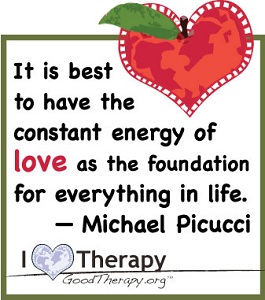
The kind of love we are exploring is the love that moves us to listen and intuit what our lover wants, to care about the other person’s needs. It is best to have the constant energy of love as the foundation for everything in life. The energy of love can be triggered by the energy of pleasure, but it is at its greatest when love is present first.
We have all experienced limiting conditioning in the expression of our lingam and/or yoni energies. Most of us experienced some sort of trauma that blocks our love and pleasure energies as well. Unlocking trauma and toxicity of shame and melting frozen erotic energies are pathways to the sacred. Judgment- free experimentation, using all four of these soulful forces, leads us on a path to the divine, to earth energy, and to a greater connection with the universe.
Perhaps more than in other rituals, through Erotic Ritual we learn that we are all expressions of a much larger source of communal energy. It melts barriers and we feel less isolated. Notice when you are having an erotic experience there is always giving and receiving of energy. Sometimes it’s reciprocated or sometimes one is consistently giving or receiving, and either is fine. Allow yourself to be really present in any prolonged erotic exchange and you will find yourself in a circle of energy. (The yoni expression fully experiences the lingam expression, and vice versa.)
Sexual Concerns
The very private issues that people have shared with me about sex have ranged from not feeling that they are desirable, to experiencing a sexual apathy, erectile and/or orgasmic dysfunction, or feeling detached from a loving partner. Sometimes it’s an obsession with body parts that they just don’t like or think something is wrong with.
Many people carry much the same type of burden, sometimes silently. The principles of Source Energy can have a very beneficial impact in renegotiating and resolving these hardships. With the right resources, including therapy in some cases, the barriers to erotic fulfillment will dissolve, creating possibilities for a blissful engagement with one’s self and with another.
When the sex in a monogamous relationship is unsatisfying, a substantial foundation is at risk. If the condition lingers, with sex becoming almost nonexistent, then the relationship is compromised. Often couples aren’t equipped with the tools to communicate sensitive issues. Their avoidance, sometimes lasting years, continues the downward spiral. Addressing these problems with the assistance of Source Energy can enhance those very skills.
Happily, mine is a loving, growing, and sexually fulfilling relationship, lasting many years. All of our efforts have paid off. Creating sacred time and using it for shame-free sex while opening our hearts, along with taking responsibility and respecting ourselves, have all been key. Sexual loving intensifies consciousness and pure love. In that vast, nurturing ocean there is no ego, nothing to defend, only a sense of just being and connection.
Communication in these sensitive areas can at first feel like hard work. With practice, it eventually becomes quite natural. When my partner and I explored having a committed relationship those many years ago, my primary request was that our sexual relations be the first priority in our union. Even in a number of long-term relationships I’d been in there was the sex-spirit split, along with undeveloped communication skills, causing sex and sensuality to wither. They were left with a sense of deadness in a potentially thriving relationship.
Instead, having made the commitment, we began a life of focalized conscious S.E.X. Expansiveness and sexual gratification became a planned, sacrosanct part of our time together. While it might seem to defy spontaneity, let me suggest that there is a significant payoff. Respecting existing realities—being tired, stressed, too busy, or distracted—doesn’t mean spontaneity is stifled. Rather, without earnest communication of our needs and desires, or without planning, we cannot build rich, enduring erotic lives.
Sexuality, Higher Consciousness, and Fantasy
Although it could feel clumsy, it is crucial to learn to express what we need and desire, as well as what we fantasize about. I like to call it reclaiming adolescent awkwardness, to allow people to go where it might be difficult, in order to heal the sexual-spiritual split, a requirement in forming intimate relationships that are authentic.
In sexual counseling, many are curious about where their fantasies come from, often feeling shame for having them. I tell my clients good fantasies are like rainbows, mysterious and beautiful, sometimes fleeting, and they are to be respected. Their origins may vary from abuses early in life to Freudian, or they may relate to recollections of pleasure from our past. Sometimes they mysteriously come from no conscious recollection whatsoever. Focalizing Source Energy filters the shame out of our fantasies and allow us to fall more deeply in love with ourselves. Self-love is essential to grow in sacred sexuality. Having fantasies doesn’t mean we’re bad or that something is wrong with us, as we don’t have to act on them. Only shame is Godless. Removing the shame from our fantasies transforms them, and that contributes to keeping a long-term relationship sexually alive.
Natural Resistance to S.E.X.
With all our knowledge we still encounter resistance to a loving fusion of our sexual and spiritual energies. The delicate nature of exploring repressed sexual history is likely to trigger that very resistance. When we appreciate the essence of our resistance to removing shame, our fantasies can be an entryway to joyous energetic harmony, where we can experience full-body orgasm along with deeply felt spirituality. Full-body orgasm refers to a burst of the four energies in S.E.X. that can take over every dimension of our physical and subtle energy being. When this happens, we can experience expansiveness and sometimes formlessness that is sublime. It is a full-body encounter that is uniquely restorative when we feel depleted and deeply relaxing when we are tense.
If we can consent to the reality that energy and its many vibrations and frequencies make up our physical reality, we can learn new skills to heal, with an efficient pathway to our inner wisdom. When we energetically experience resolution in our bodies from sexual barriers, we land in the divine center of Source Energy. As we tap into it, the more it begins to lovingly lead our lives.
Related articles:
Part I: Source Energy Optimizes Life – Finding Source Energy
What Do Your Sexual Fantasies Mean?
Fanning the Spark of Sexual Passion
 Every so often I will be treating a couple, one of whom says that the other doesn’t care about religion or spiritual matters. The complainant may cite a lack of support for his or her spiritual or religious activities. Sometimes the partner resents the time devoted to religious/spiritual pursuits. Sometimes one or the other person feels alone when it comes to events that are more couple or family oriented (such as holiday celebrations). In my religion, the Yoruba/Lucumi faith, the activities, initiations, drumming, etc. are so labor-intensive, it is hard to imagine being with someone who isn’t in some way in the faith.
When working with these couples, I explore if there is really some other issue lurking beneath the surface of the presenting complaint. Sometimes there is something not readily apparent; for example, feelings of neglect in general, sexual problems, addictions, abuse, and so on. Ultimately, these “hidden†are the issues that must be worked on in the treatment.
However, if most of the relationship is working well and this is the real complaint, I tend to explore the feelings on both sides rather than the issue of why someone is or isn’t religious/spiritual. The feelings that typically surface are those of abandonment: sometimes there is a feeling of scorn and contempt on the part of the religious/spiritual one, loneliness on both sides, a lack of joint purpose/values/goals, or a drastically different world view and outlook on life, just to cite a few examples.
I also explore why it is so difficult for one or the other to allow the partner to be on his or her own path. Is perhaps this some form of codependence that requires homogeneity in thought and belief? Is it perhaps threatening to one or the other to be different? Are there fears that unless the two are the same, they can’t survive as a couple?
While it is important in a relationship to have shared interests and values and to some extent goals, each person in a couple does not have to be a carbon copy of the other. After all, it is different points of view that make a relationship interesting.
As long as the other person is not critical, contemptuous or belligerent as far as the other’s religious/spiritual beliefs, it is important for each person in the couple to follow his or her heart when it comes to religion and spirituality. Too many people have been pressured by parents, extended families, social groups, communities and other such entities to follow along with a certain religious/spiritual example. Ideally, this is one area where there should be freedom of choice (even though that is often not the case). So, to perpetuate that lack of choice in a relationship makes it even worse for both parties.
I do appreciate that the issue becomes more complex when it comes to raising children. If this hasn’t been discussed prior to making a commitment to the other, then it needs to be worked out with mutual respect. Often compromise is the only way to resolve something like a conflict in this area, knowing full well that the children will probably decide what they want to do in the long run anyway.
Ultimately, what couples should strive to avoid is using religion/spirituality as a tool for manipulation of one another. That goes against the very purpose of belief, and in the long run is divisive and destructive to the relationship. Respecting another’s differences is really the only choice to make.
Related Articles:
Five Domains of a Healthy Relationship
What is “This”? An Exercise in Contemplation
Appropriate Conversations about Spirituality in Counseling
 This month our Paramita, or practice on the path towards happiness, is patience. The practice of patience involves a shift in our perspective. Buddhist teacher Sylvia Boorstein says patience “…remains present as long as the mind remembers that things end…when their conditioning causes end…†Conditioning causes are the elements that are coming together in this particular place and time that are causing us stress. In other words, have patience, this too shall pass.
Stress could, in fact, be celebrated as the only opportunity we have to practice patience. Of course, our habitual tendency is to react against stress rather than greet it with enthusiasm, but that doesn’t mean it’s impossible to do so. Try it sometime.
We sometimes object to the idea of patience, as if it will make us passive patsies and “someone will get away with something” (oh, no!). Holding this attitude, we ignore the depth of harm we do in our impatience, and also misinterpret the actual practice of patience. Patience isn’t standing by while harm is done to us or to someone else. It is not about letting someone take advantage of us or abuse us. Patience is the capacity to calm the mind under stress so we can see our way clearly. In an abusive situation, for example, patience can lead us to make a plan for our safety, and come up with an exit strategy that will actually accomplish our freedom. Impatience can lead to running out of the house without clothes or money or any support at all, and where does that end up? Not in a good place, usually.
What Does Patience Have to Do with Happiness?
Patience is the antidote to anger. If we are irritated or angry or even feel violent impulses, we can actually learn to wait until the feelings pass, which they will. Anger can be difficult to work with, because it so strongly compels us to action. We often feel we will have no relief until we let it all out. In truth, we always do harm when we act out of anger, whether towards another being, a circumstance, or ourselves.
Patience comes from having confidence, born of awareness, practice, and experience that the storm will pass, and that if we ride it out, all will be well again. I recently heard a woman on the radio describing her radical approach to conflict in intimate relationships; instead of “Never go to bed angry†she suggested just going to bed, and seeing if you are still angry in the morning. Given the impermanent nature of all emotions, this approach makes sense. If there is something you can do about it, no need to get upset. If there is nothing you can do about it, there is no need to get upset.
[fat_widget_left] The therapist who changed my life in my mid-twenties used to tell me, “The reward of patience is patience.†I didn’t find that appealing in the least, and I told her so. I may have said, “So what?†or “What’s that got to do with me?†I was impatient and had no interest in slowing down. I could not conceive of any possible benefit to patience. If it was its own reward, that meant nothing to me. Twenty-five years later, I think I may have finally caught on a bit.
When I put some effort into practicing patience in one area, such as in traffic or with a person I might find irritating, then patience is more likely to arise spontaneously, without effort, when I need it most. I was on an airplane recently that had been delayed by weather. We were two hours late taking off, and most of us were going to miss our connections. The man sitting next to me was extremely fretful and frustrated and tense, and I found that I was actually quite relaxed. We chatted a bit, and I tried to cheer him up, but I could see how deeply attached he was to feeling upset. He told me he traveled a lot for business and it was just getting worse and worse. I agreed that air travel has grown pretty unpleasant for most of us, but I noted to myself that, above all, we have the experience we create for ourselves. That day I realized that my efforts to develop patience had paid off—I felt patient without even trying!
What does patience feel like? For me it is relaxing, energizing, with a clear tone, like a bell, and a view that goes on as far as the sky. Patience is the willingness to stop stirring the water of the pond we are trying to look into. Patience sets down the stick and waits for the natural clarity of the settled water to arise. (Of course, as a teacher of mine noted recently, then we can see all the junked tires, tin cans, and skeletons down there on the bottom!)
Patience is trusting our natural minds to know what to do when we stop disrupting and distorting what is actually happening in the here and now, and practice mindfulness.
Now, I eventually ended that plane trip in a miserable heap, having missed too many planes to reach my destination and having a respiratory illness that forced me to make a last-minute decision to just go home. So, patience is not the answer to everything, nor is it guaranteed to stick around all the time. What stands out in my mind is the contrast between myself and that fellow steeped in anxiety on the airplane, and the knowledge that it is possible to feel calm even when our impulses drive us strongly toward distress. The reward of patience is, in fact, patience!
Five Steps to Cultivate Patience:
- Meditate regularly, for 5, 10, or 15 minutes daily.
- Count ten breaths (yes, ten) when feeling stressed.
- Remind yourself that the other person is acting out of pain or ignorance and needs your compassion.
- Remember that this too shall pass.
- Give yourself 24 hours before you act.
What other ways can you find to practice patience?
 The term “spiritual bankruptcy†is a word used in the rooms of 12-step programs to characterize addicts who have lost their connection to “higher power.†One dictionary definition describes spiritual bankruptcy as “a state of complete lack of some abstract property.†Recently, I’ve been pondering what I believe “spiritual bankruptcy†means and how it appears in the people I know personally and treat in my practice.
If I were to think of the personal qualities of someone who seems to be spiritually bankrupt, what comes to mind is despair. The spiritually bankrupt person cannot envision a future different from the present. The spiritually bankrupt person has lost his/her moral compass and makes poor choices. The spiritually bankrupt person is self-absorbed and often oblivious of the effects of his/her actions on others.
As I write this, these qualities are sounding an awful lot like how I would describe someone who is deeply depressed. And I also wonder, what’s chicken and what’s egg. Does someone become depressed because he/she is spiritually bankrupt or is it the other way around?
People become depressed for many reasons including genetics, life circumstances and temperament (sensitivity). Can we say that a person who has faith and is deeply spiritual will never become depressed? That faith and being spiritually grounded will always be the antidote to depression?
I’m not so sure. But what I do know is that those who have faith, who are connected to the God of their understanding, who have a relationship with a higher power do recover from bouts of depression faster and more completely.
The reasons for this I believe are that a spiritually connected person knows somewhere in the depths of his/her being that the depression is temporary, an aberration as opposed to a constant and permanent state of being. The spiritually connected person can look at the depression as holding value for him/her, perhaps in the form of some opportunity for deeper understanding of self and life.
In other words, the spiritually grounded person may not succumb to the same level of despair or lack of hope that someone without a spiritual connection might.
In my particular faith (Yoruba), we believe each individual has a destiny and it is his/her obligation to fulfill that destiny. Everything is part of it, including sadness, pain and even depression. Depression is not viewed as punishment for wrong doing or as some moral failure. Knowing that can be a strong hedge against losing that connection to higher power. It is a hedge against the sort of spiritual bankruptcy I started out describing in paragraph one.
We must each find our own spiritual path. Our beliefs can take many forms. We can be a part of many different spiritual and religious communities. But one thing all religions and spiritual paths have in common is the presence of the divine. A spiritual connection can help people feel a greater sense of fulfillment in life. The emphasis is on the “fill†in the word fulfillment. It is one of the best remedies for that deep-seated emptiness that many people feel. We as humans, by connecting to our spiritual selves, have the opportunity to compensate for what we never received in our families of origin and perhaps from society.
“For years it lay in an iron box buried so deep inside me that I was never sure just what it was. I knew it carried slippery, combustible things more secret than sex and more dangerous than any shadow or ghost. … I saw things I knew no little girl should see. Blood and shattered glass. Piles of skeletons and blackened barbed wire with bits of flesh stuck to it…The iron box contained a special room for my mother and father, warm and moist as a greenhouse. They lived there inside me, rare and separate from other beings. … I knew my parents had crossed over a chasm … The box became a vault, collecting in darkness, always collecting; pictures, words, my parent’s glances, becoming loaded with weight. It sank deeper as I grew older, so packed with undigested things that finally it became impossible to ignore.”
-Helen Epstein, Children of the Holocaust
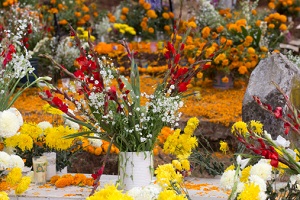 As a Yoruba priest, I frequently make offerings to the Orishas (divine spirits who guide our lives) and my ancestors. The type of offering varies, with the simplest being a white candle, glass of water, white flowers, and a bowl of fruit on my ancestral altar. We Yoruba also make offerings we call “Ebo.†The expression is to “do Ebo†in order to ask for something we want or to give thanks for something we have received.
In this article, I’d like to expand the notion of “doing Ebo†to include those actions/offerings, perhaps not as obvious, that we all take and make in honor of the divine or the ancestors. To illustrate this, I’ll tell a personal story.
For the past year, I’ve been doing extensive research on my family of origin. As far as I can tell, just about all of them have passed on. They were never very forthcoming about family history when they were alive.
One person, however, my paternal uncle, loomed very large in the family constellation. Not much was said about him by my paternal grandmother or my father. To me there was also a great deal of mystery surrounding him. I never knew where he was buried, when and where he died, or who he really was. All I did know was that he had drowned when he was 22, allegedly after getting a cramp while swimming in a lake.
When she was alive, my grandmother continuously eulogized him. I believe she suffered from what can be called pathological mourning, which is when someone experiences a loss so devastating it haunts him/her throughout, and interferes with, his/her life. My father rarely talked about his brother who was clearly the favorite son. I was going to be named after him (but in the end I wasn’t). All I gathered from them was that he was a budding superstar, on his way to law school, brilliant, talented, and full of promise. In other words, a tough act to follow.
Through research and an off-hand conversation with my father’s second wife, I managed to find out where he died and was able to get a copy of his death certificate. The death certificate told me where he was buried. I visited his grave and did an Ebo, which consisted of some simple offerings and prayers. During the visit to the gravesite, I was struck by the powerful impact his death had on my grandmother and father (and, hence, on me). It was an overwhelming and, for me, life-changing experience.
Jump ahead to this past April. I’m taking my dog to a canine internist in West Caldwell, New Jersey. The plan is to continue on to my house, upstate. I ask for directions from the receptionist at the office who tells me to make a right, then take Route 46, which would then get me to Route 23. I follow her directions and take 46 West. I’m driving and driving, sensing that I’m going the wrong way. But thinking, at some point, I was going to be heading in the right direction. Lo and behold, after more than an hour, I see a sign that says Delaware 7 miles, and I know I’m way off track. I keep going hoping to see a highway heading north. Within minutes I see the sign and then drive past Budd Lake—the very lake my uncle drowned in 72 years ago! I don’t stop but clearly feel he has been calling me to that place to remember him, and to bear witness to what had happened to him. I also felt he wanted something from me.
One of my spiritual advisors suggested I go to a local church and have them say a mass for him. Since my ancestors were Jewish, that didn’t feel right. So I went to the local synagogue, near my house, and was told that they were going to have a Yiskor (a ceremony honoring the dead) on May 20, which seemed appropriate.
Start time for the Yiskor was 9:30. Turned out it was also a holiday (the day that God gave the Ten Commandments to Moses). Unbeknownst to me, that was going to be acknowledged first. So as a group we prayed, and prayed, and prayed and finally about 11:30 a.m. we got to the Yiskor. I prayed for my uncle and my family and touched his photo to the Torah. I cried at his loss and prayed for his elevation. I didn’t leave there until after noon. It was the longest time I had ever spent in a synagogue, certainly the longest time I had spent reciting Hebrew prayers (in English, of course).
When it was over, I genuinely felt that I had done an Ebo. The Ebo was not only finding out about the Yiskor, but also spending far more time than I had intended remembering my uncle. I know he appreciated it.
So think about those sacrifices/offerings you have made for others, living and dead, in your life and take comfort that in doing so, you have been blessed accordingly.
 What prompted this article was something I read recently in AARP Magazine. (I guess I’m dating myself with that one!)
“The older you are, the more likely you are to value religion, says a new Pew Research Center survey, ‘Growing Old in America.’ Do religious folks outlive their secular age-mates? Maybe. Earlier research indicates that people who worship regularly follow a healthier lifestyle and share a life-lengthening social network. And for some, faith grows with age: a third of those 65-plus said religion became more important over the course of their lives.†(AARP Magazine, November and December 2009).
What’s interesting to me is, not so much whether or not interest in religion grows with age, but WHY?
I can come up with a few reasons:
1. One obvious reason might be that as people age, they are more aware of their mortality. It takes a certain amount of years and experiences to fully appreciate that they do not live in human form forever. Though it is not true that all young people feel like they will live forever. There are many youthful folks who have been exposed to death at an early age, and, as a result, have become aware of their own mortality. But, for most of us, it is an awareness that increases with age.
2. Another reason might be that, as people age, some become more reflective about their lives. This makes sense because there has been more life on which to reflect. As people get older, they tend to think about what that life has meant, and what they will leave behind. Those thoughts often get people thinking about what does happen when they die. This may be what inspires many people to think about some kind of higher power or divine force who, perhaps, rewards us for a life well-lived (or conversely punishes for a life lived badly), or who might be available to help make the transition.
3. When people think of their mortality, most don’t want to be alone as they make that transition to the other side. That’s when someone might turn to spirituality and/or religion for support. People know instinctively that no human will be with them as they cross over, but perhaps the divine will be there. So, some of this increased importance on religion may be driven by fear.
4. Another possibility is that the focus of older people is different from younger folks. In their twenties and thirties, much of the focus is on establishing themselves professionally and personally. What will they do? How will they support themselves? How will they acquire what they need and want? What about having a family? These questions often preoccupy them for a certain length of time. In their forties and fifties, they often are just living the life they have created. Perhaps in their sixties, many people begin to realize that they want more from life than just the acquisition of material things and status. Perhaps this is a result of gaining a certain amount of experience with the transitory nature of life. This may lead them to turn to religion and spirituality as an opportunity to get some answers about life’s deeper meaning.
5. Lastly, some people, as they get older, finally stop being reactive to the values and choices of their family of origin, and start to think about their own about spirituality and religion. I’ve worked with a number of individuals in my spiritual psychotherapy practice who say that they were so focused on distancing themselves from the religion of their parents, that they did not think about their own choices in this realm. Finally, with more confidence in themselves and true emotional separation from their parents, they were able to think about this for themselves.