 “That’s so Zen,†people say, meaning peaceful, accepting, and soothing. But what is Zen, exactly? You might picture a room filled with fluffy pillows decorated in blues and grays, lavender incense, and synthesizer sound waves punctuated by gongs. I’d probably like hanging out on those pillows, but Zen is much more than relaxation. It’s a way of life emphasizing the value of meditation and intuition, and realizing one’s true nature—the purpose of Zen.
We complain about stress, about losing ourselves in the hectic din of constant activity, always on the go, busy, and in touch. We even sleep with our phones kept handy on the nightstand, so we can be available 24/7. That is too much stress, but stress is not only a bad guy, it’s a good guy, too, often supporting growth.
[fat_widget_right]
Think of how stress helps in the gym. Muscles get bigger with resistance training—which is a form of stress (on the muscles). “No strain, no gain†and “use it or lose it†are popular refrains, but we have to find the optimal amount of strain that promotes growth. We need to work those biceps with the proper weight. Too much will tear our muscles, and too little will leave us with spaghetti arms. This is where a trainer in the gym, or a meditation teacher, a spiritual leader, or a psychotherapist, can come in handy, making sure that the stress you’re experiencing is optimal, be it physical, cognitive, spiritual, or emotional. We need to balance stress and relaxation.
Zen practitioners develop a sense of balance, as well as simplicity, order, and harmony. Right diet, regular exercise, enough sleep, right livelihood, and mindfulness activities such as meditation, yoga, prayer, and other techniques help us recover from too much stress. When we quiet the mind and the body, we have a better chance of finding the true self. That’s the goal of Zen—finding the deep self, who you really are, a key to a more rewarding life, and why psychotherapists often include meditation techniques as part of their treatment plan, although it is not a replacement for psychotherapy.
Zen is a peaceful way of life which avoids killing or harming another living thing, shuns stealing, promotes sexual responsibility, and practices truthful speech that does not hurt anyone. Drinking and drugging, anything that diminishes consciousness, is to be avoided. The Shakyamuni Buddha simplified what a Zen life looks like when he said that Zen means “to do no evil, to cultivate the good, and to purify one’s mind.†These are down-to-earth principles which help us live the good life, without too much stress.
A central aspect of Zen is meditation. Often it’s wise to start a meditation practice by resolving to meditate every day, at the same time if possible, and for a period of perhaps five minutes, so when your meditation time is over you want more and you’re ready to start again the next day. You can use a timer, if you wish; just choose a sound that you like. There are some really good apps for that! You can gradually lengthen the time spent meditating.
Meditation practice is simply sitting quietly while maintaining good posture and focusing on one thing, often the breath. Watching the outbreath is emphasized because the outbreath is a relaxing breath by its nature. We breathe out, let go, and then wait through the pause and on to the next breath, a bead in the necklace of your life’s breaths.
While you meditate and focus on the breath, you try not to get caught in the endless thoughts, stories, and fantasies that our brains are constantly spinning. Each time you catch sight of your thoughts, you simply say “thinking without judgment,†and then you return your attention to the breath. The “without judgment†part? I say it twice; it’s that important. NO JUDGMENT. Meditation is not a self-improvement program. It is a getting-to-know-and-accept-yourself program, after which you can get to know and accept other people, too.
People often get angry with themselves when they catch themselves thinking instead of meditating. They might feel like failures, but it’s exactly the opposite. Catching yourself thinking is the sweet spot. You didn’t do something bad, but just the reverse—you noticed, you woke up and were aware; this is the essence of meditation, the gentle road to mindfulness which leads inside to your true nature. Mindfulness is an extended awareness, throughout the day, noticing, not simply reacting.
Meditation reduces stress by increasing positive feelings and decreasing anxiety. As you get to know yourself better and learn to treat yourself and others with greater kindness, your ability to navigate your emotional reactions with more skillfulness also leads to a greater ability to get along with yourself and with others. Self-acceptance, again, is key.
There have been many scientific investigations into the benefits of mindfulness. An early one was the relaxation response developed by Dr. Herbert Benson, who founded the Mind-Body Institute, affiliated with Harvard University. He reports that meditation produces healthful changes in metabolism, heart rate, respiration, blood pressure, and brain chemistry. The National Institutes of Health concur. Other findings reveal that long-term meditators have increased grey matter in their brains, and an increase in alpha-wave activity.
Meditation can be an important part of your daily life. With patience, you will reap great benefits of consciousness and emotional development. Following basic Zen principles of compassion and nonviolence, and establishing a regular meditation practice, makes for a satisfying life with less stress—and provides the tools to handle stress when you need to. A Zen mind-set can go a long way toward teaching us to deal with stress. You don’t have to make a huge change to gain its benefits.
Recommended reading:
- The Wisdom of No Escape by Pema Chodron
- The Trauma of Everyday Life: A Guide to Inner Peace by Mark Epstein
- Peace Is Every Step: The Path of Mindfulness in Everyday Life by Thich Nhat Hanh, Arnold Kotler, and H. H. the Dalai LamaÂ
- Mind and Life: Discussions with the Dalai Lama on the Nature of Reality by Pier Luigi Luisi with Zara Houshmand
 The world can be a cold and cruel place, and as such, every display of warmth and goodness makes a difference. Performing random acts of kindness for those around you—such as opening doors, offering to help carry groceries, giving free hugs, or buying a cup of hot coffee for a stranger—can trigger a ripple effect, reverberating outward into the masses and spreading the good vibes like wildfire.
However, if you’re feeling lonely and unloved, showing kindness to others is often a stretch; in fact, it can be nearly impossible to do so with any amount of sincerity.
“We have all heard the adage that ‘you can’t love anyone else if you don’t love yourself first,’ and this is 100% true,†says Marla B. Cohen, PsyD. “When we are not practicing self-love, we may begin to see ourselves as unlovable and unworthy of the love and kindnesses shown by others. This can lead to a sense of distrust with other people and a tendency to devalue others and reject some of the kindness and care coming our way.â€
An important component of this practice, Cohen adds, is acknowledging that imperfections and mistakes are a part of being human. “When we are judgmental and critical of ourselves, and when we saddle ourselves with unrealistic expectations and unending obligations, we become dependent on others around us to help, heal, or save us. As this is an impossible task, we inevitably become resentful of others, because no amount of love, concern, or assistance from another will feel adequate if we are in a constant state of self-criticism and self-imposed pressure.â€
[fat_widget_right]Silencing the critical voices within can be a challenge, but it’s one worth taking on—and small acts of kindness toward ourselves can be incredibly transformative. “Self-kindness helps stop the constant flow of negative self-talk, criticism, judgment, and relentless pursuit of perfection that most of us have come to see as normal.
When we treat ourselves with kindness, compassion, and understanding, we feel worthy, nurtured, and secure. When we provide ourselves with an unconditional environment of safety and security, we free ourselves up to take more risks in service of our potential.â€
Simply put, the more gentle and forgiving we are with ourselves, the more likely it is that these positive vibrations will overflow into our interactions with those around us. “When we accept our own imperfections and limitations, we are much more able to have empathy for others’ shortcomings. This helps us be more accepting and loving in all of our relationships,†says Cohen.
So if you’re feeling the need for a little therapeutic love boost, treat yourself to one—or all—of the following random acts of self-kindness:

1. Take a hot bath.
Soaking in a hot tub, preferably with Epsom salt and aromatherapy oils, can do wonders for sore muscles and a worn-out spirit. Light a candle and turn on some relaxing music to add to the experience.

2. Go for a walk.
Ideally, this will be in a favorite park or neighborhood. But it could be as simple as a walk around the block. Moving your legs, breathing the outside air, and taking in the sights and sounds will naturally increase blood flow and endorphins, thereby warming your body and bettering your mood.

3. Buy a special treat.
What makes you smile? Candles, jewelry, a good book, a trinket from an antique or thrift store, a bar of chocolate, flowers, a latte from a local coffee shop—there are so many small purchases that can make a big difference in how you feel, if only for a few moments. Cohen adds that it’s a good idea to keep the purchase around $20 or less to avoid buyer’s remorse. Whatever you choose, allow yourself to savor the indulgence.

4. Schedule a massage.
Touch is a powerful form of pain relief and endorphin release. Giving yourself permission to make an appointment with a massage therapist sends the message that you are worthy of tenderness, care, and relaxation. Your body, mind, and spirit will thank you.

5. Meditate.
Setting aside the time to simply be—for a few minutes or a few hours—tells your inner taskmaster to simmer down and be still. Using candles, soft music, dim lights, and comfy cushions during meditation will help to set the mood, and slow, rhythmic breathing will guide you into a relaxed state. You can incorporate a mantra or simply allow your mind to become empty, letting go of one nagging thought at a time until all that remains is the sound of your heart beating and breath going in and out.

6. Pick a card, any card.
Have you ever had a bad day and come home to find a card from a loved one in the mail? Knowing that someone is thinking good things about you can be an uplifting and powerful heart warmer, so imagine making that gesture of kindness for yourself. “I love to encourage my clients to go to a card store and buy themselves a loving card,†says Cohen. “It’s wonderful to write a note inside, honoring and appreciating yourself, and offering yourself encouragement.â€

7. Decorate your personal space with positive messages and mantras.
Cohen encourages her clients to surround themselves with physical reminders of positive, encouraging messages. “In my office, I have painted rocks and notecards bearing messages such as ‘I matter,’ ‘I am worthy,’ ‘I will take time for me,’ and ‘I am enough,’†she says. “Keeping these kinds of messages around where you can see them regularly can really help the practice of self-care and kindness.â€

8. Take yourself on a date.
The idea of going to a restaurant or a movie sans friends or a romantic partner may seem a bit daunting. But all it takes is one time to realize that the experience can actually be quite enjoyable. What restaurant do you typically only go to for special occasions? What type of food do you love to eat but never feel like making at home—or don’t know how? Is there a movie or a live show you’ve been wanting to see? Make a reservation, buy the tickets, and go solo. Bring a book to read if you can’t handle the thought of eating alone and without conversation. Your self will be immensely grateful for the gesture.
As a final thought, Cohen says, “I encourage people to consider all of the ways they show love and kindness to others, and then urge them to treat themselves with the same attention, consideration, nurturance, forgiveness, and respect.â€
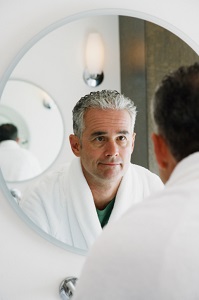 “Your visions will become clear only when you can look into your own heart. Who looks outside, dreams; who looks inside, awakes.†– Carl Jung
One thing is certain: each person has his or her own views, thoughts, and emotions. Even though we are so different, we experience similar patterns of self-analysis which make up who we are today. These patterns are typically created by the end result of our behaviors and viewed either negatively or favorably by our strongest critic, the almighty self. It’s amazing how our growth is determined by how the self translates our actions.
Self-awareness is the ability to formulate a summary of our behavior based on past and current thoughts and emotions. It allows us to understand what’s going on in our heads and why. Self-victimization, on the other hand, prevents us from accepting that we’re responsible for it, and for what we do as a result.
[fat_widget_right]
Being self-aware is the ability to see our true selves without blinders. This is the first step in being true to one’s self. It requires empathy, patience, strength, humility, and love. One of the hardest things to do is see one’s self as fallible, but that is what we are. We all make mistakes and we all have our triumphs. The great ones are capable of seeing both extremes in oneself and learning how to merge them together to make them a better individual.
As humans we generally spend our life living within the two hemispheres or poles of self-thought. On one side, we play out our lives as victims due to painful events in our past and learn to feel powerless when confronting obstacles. These thoughts are considered indications of victimization behavior, and may look different for each individual:
- Justifying events and ways in which you were wronged
- Complaining about a difficult event in life without looking at the role you played in the circumstance
- Obsessing about sad events to justify negative behaviors and feelings of anger, sadness, and shame
- Vocalizing and telling sad stories to gain approval and avoid potential judgment
- Taking the stance that others need to change for things to improve
In the other hemisphere dwell our thoughts of empowerment, which require self-awareness. The following are indications that you are practicing self-empowerment:
- Consciously allowing your self to let go of thoughts of victimization
- Taking responsibility for your role in difficult events from the past
- Responding proactively in the future based on your education and experience of past events
- Establishing emotional competence and development instead of relying on others to fill this void
- Taking full responsibility and course of action for your decisions
- Taking the stance that change will only happen when we work on our internal and external self
The fundamental difference between self-awareness and self-victimization pertains to our acknowledgment that we have been hurt. Self-awareness is about observing our response to what happened; self-victimization is about feeding into the story of what happened.
Tips to Achieve Self-Awareness
- Strive for emotional awareness—understand what you are feeling and what is being triggered within so you can appropriately assess what is occurring and how to respond in an effective way/space that voids previously negative responses and patterns.
- Recognize negative and damaging thoughts/cognitions so you can censor them.
- Recognize your behavior tendencies and possible patterns to make appropriate adjustments prior to negative actions and/or outbursts.
- Come to terms and learn about your expectations, beliefs, and assumptions which affect the path and actions you choose.
- Regardless of past events and patterns, accept responsibility for your actions and the role you played in the outcome.
 Recently, my son told me of a situation he had decided to avoid. To sum it up, he said, “I’d rather protect than subject.” I thought this encompassed many lessons in a concise way.
How often do we subject ourselves to situations we know will be unpleasant? How often do we choose to see people we know will deplete us, go to an event we would really rather skip, or say yes when every cell is screaming no?
[fat_widget_right]
Healthy self-care depends on our ability to set boundaries. Assertively creating the life you want includes saying no—and sticking to it, as opposed to saying no and letting people cajole you into saying yes. By staying true to your goal of treating yourself well, you can push out of the comfort zone of not disappointing anyone and actually say no as many times as is necessary for someone to hear you. Typically, this takes a few repetitions. The good news is you just have to repeat yourself. There’s no need to say it in a different way. The easiest response is often, “I am sorry I won’t be able to do that; I have other plans.” No one needs to know what your plans are. You may want to spend the afternoon staring into space, writing a dissertation, or taking a nap. It doesn’t matter. Just saying the same sentence again and again in a kind, patient, gentle way will do the trick.
Good self-care also requires a willingness to look at one’s life and see where it could be more balanced. Are you spending an inordinate amount of time at work? Are you experiencing compassion fatigue from caring for a relative? Does your life feel swamped with errands and chores? Are you studying into the wee hours? Exercising to a state of exhaustion? By taking a look at the major areas of your life, you can quickly see if you are giving short shrift to rest, relaxation, social time, solitude, quiet, dancing, nature, journaling, music, or anything else that rejuvenates your body, mind, and spirit. Start by carving out even five minutes to sit quietly, have a cup of tea, or close your eyes. Making the conscious decision to take time to be still can be far more challenging than staying on the activity treadmill. Once you give yourself the gift of stopping and simply being, the rewards will keep you coming back.
Protecting yourself from your own internal litany of self-criticism is also important. How do you talk to yourself? Are you quick to put yourself down? Sometimes, protecting yourself means learning to be more tender with your own feelings, including your emotional responses to life’s slings and arrows. Creating an inner dialogue of supportive, positive, loving messages will have a profound effect on your relationship with yourself. A good way to start is to read a list of affirmations and write down a few that really resonate with you. I am especially fond of Louise Hay’s approach: Look in the mirror every day and say, “I love you. I really, really love you.” As supremely simple as this sounds, it is amazingly powerful.
On a more mundane level, self-protection entails daily rituals of eating, sleeping, and getting some fresh air. How conscientious are you with these basic life tasks? Most Americans get far too little sleep, which sets the stage for disease, crankiness, and deep fatigue. How is your diet? Are you eating five to nine servings of fruits and vegetables a day? It is not that hard to do. Try a handful of baby carrots, a bowl of bean soup, some fruit and cereal, a stir-fry or salad. Each of these foods will improve your mood, bolster your immune system, and provide you with the energy you need to better navigate your day. Make eating well a priority and watch your sense of well-being improve. While you are at it, make sure you eat frequently enough. Eating infrequently is another emotional saboteur, as low blood-sugar levels wreak havoc on your ability to feel stable, patient, and resilient. So, don’t let more than four hours pass without a snack or meal—and please eat breakfast.
On the topic of food, there is an ever-increasing amount of research being done on the beneficial effects of probiotics on all aspects of health—especially immunity and mood. Whether you eat sauerkraut, tempeh, yogurt, kefir, cheese, or dark chocolate (yes, chocolate is a fermented food), having some of these every day ensures a healthy gut.
Last, but not least, being aware of how things affect you is crucial to doing everything I’ve mentioned. Whether it is awareness of how you respond to someone’s tone of voice and asking them to speak to you differently, paying attention to feeling tired and actually going to sleep, or eating before you are starving, the greater your awareness, the greater the chances you will take better care of yourself. If you find yourself rushing through your day, try to carve out some solitude for yourself. By sitting with your breath and watching the parade of thoughts as they pass across your mind, you soothe your nervous system and begin to understand the transitory nature of everything.
Remember, you are a work in progress. The next time you think you have subjected yourself to someone or something that was disturbing, unhealthy, or even toxic, use it as an opportunity to be more aware in the future. Growth and change happen incrementally. Be thankful you could be aware of the situation’s effect on you, and resolve to head it off at the pass the next time.
 My mom has worked as a nurse for over 30 years. I remember she would sometimes come home from work and talk about how she had had a doctor or nurse as a patient that day. She would always say how health-care professionals were always the worst patients, usually because they would push themselves farther and faster than they should, which resulted in a longer recovery.
I think that as therapists, we are just as guilty of holding ourselves to a “higher standard.†I have seen colleagues and friends who are therapists give out excellent advice about the importance of seeking and accepting help and practicing good self-care, only to neglect themselves and fall into a cycle of depression, anxiety, and trauma symptoms, basically disregarding their own wise words.
[fat_widget_right]
I previously wrote an article about secondary trauma for loved ones of people who had experienced trauma. I felt it fitting to write another article for therapists, as I believe we have the potential to also experience secondary trauma. Figley (1995) defines secondary trauma as “the stress resulting from helping or wanting to help a traumatized or suffering person.â€
Think about it: Most therapists see anywhere from 10 to 40 people per week. These people are coming to us for help with their problems, which could range from normal levels of stress to severe depression, anxiety, trauma, or other mental health difficulties. We listen and offer tools they can use to overcome their challenges. They leave the sessions armed with new skills to face their lives and challenges. And what are therapists doing between sessions? I can answer from my own experience: doing notes, writing up treatment plans and assessments, returning phone calls, following up with other professionals, preparing for the next session, etc. After work, many professionals have other commitments and obligations. Life can get very busy and chaotic, and many of us consistently put ourselves last.
Therapists are just as susceptible to secondary trauma as any other person. We are not superhuman, nor do we possess mental powers that make us resilient to depression, anxiety, trauma, and other mental health challenges. Sometimes as therapists we forget this and, therefore, neglect ourselves. One study found that therapists who treat people with trauma are susceptible to the effects of secondary trauma, particularly if they do not have the appropriate training, support, and self-care (Pearlman & Mac Ian, 1995). In my experience, this applies also to therapists who are treating other mental health issues.
So what do we do about it?
- First, make self-care a priority. Pearlman and Mac Ian (1995) emphasize the importance of self-care in order to provide the best services possible while protecting the provider’s own well-being. In my experience, I am much more effective as a therapist when I am taking excellent care of myself and being aware of any secondary trauma I might be experiencing. The basics are important here: getting enough rest, eating healthy foods, getting exercise regularly, spending time engaging in leisure activities, and spending time with loved ones, to name just a few. It basically comes down to taking our own advice and implementing the self-care skills we so often suggest to people who seek our help.
- Get support from fellow therapists through supervision or consultation. Even after the days of internship are done, we can all benefit from continued supervision and consultation. Pearlman and Mac Ian (1995) state of their study, “Therapists who work with trauma survivors need supportive, confidential, professional relationships within which they can process†the work they are doing. I have found it extremely helpful and stress relieving to consult with colleagues and to even ask for supervision at times. It can be extremely validating to learn that you are not the only therapist who sometimes struggles with secondary trauma, stress, and other emotional consequences common in the helping professions. Consultation and supervision can also help a therapist to work through challenging cases by giving a new perspective and new ideas for intervention.
- Consider furthering your training. One of the most stressful situations a therapist can encounter is having a person come to you with an issue with which you are not familiar or do not feel competent treating. Of course it is good practice to acknowledge when you are not competent to treat a specific problem, and to make a referral to a colleague who might be more skilled in that area. However, sometimes furthering your education and skill set can help to reduce anxiety and stress when it comes to treating people with unfamiliar situations. Furthering your education and training can also help you to effectively treat issues with which you are familiar. The bottom line is that getting the proper training can reduce your susceptibility to secondary trauma (Pearlman and Mac Ian, 1995).
- Consider finding your own therapist. Therapists are not an exception to the fact everyone encounters difficulties in life at times. It is extremely important that we are willing to acknowledge that we are human, and to address our own issues, whether they are from the past or present. Engaging in your own therapy will ensure that you are working through your own challenges, which will make you less susceptible to the effects of secondary trauma and more available to engage in meaningful and effective therapy with people.
In conclusion, I believe one of the most important things we can do for people who see us is to take excellent care of ourselves. If we neglect our needs and ourselves, we are not able to give all we have to others. We can set a great example of self-care and avoid being susceptible to secondary trauma if we are just willing to follow our own good advice.
References:
- Figley, C.R. (Ed.) (1995). Compassion Fatigue: Secondary Traumatic Stress Disorders from Treating the Traumatized. New York: Brunner/Mazel, p.7.
- Pearlman, L.A., Mac Ian, P.S. (1995). Vicarious Traumatization: An Empirical Study of the Effects of Trauma Work on Trauma Therapists. Professional Psychology: Research and Practice, 26 (6), pp. 558-565.
 Traumatic events usually occur without notice and result in people trying to deal with the aftereffects long after the event is over. Recent events, such as the Boston Marathon bombings, bring to light how traumatic events can create effects for long periods of time. Traumatic events can result in the development of posttraumatic stress (PTSD), which is a prevalent and serious mental health issue.
According to the National Institute for Mental Health, 26.2% of the adult American population will meet the criteria for a diagnosis of PTSD at some point in their lifetime. PTSD can severely impact a person’s ability to function in day-to-day life and interactions and relationships with loved ones. In my practice, I have noticed that relationships can become strained or distant, or even end due to the stress caused by PTSD.
Just as it is important for the person who experienced the trauma to address his or her symptoms, it is also important for their loved ones. Loved ones often report feeling helpless in assisting the person with PTSD to feel better. So what can loved ones do to help those who have PTSD in their recovery?
Practice good self-care. When a loved one has been traumatized, the stress can take a toll on that person’s entire support network. Making sure you are practicing good self–care habits such as eating well, getting enough sleep and rest, and continuing to engage in activities you find pleasurable can be very helpful in addressing the stress that can come with a traumatic event.
Offer your support, but don’t push the person affected with PTSD to describe or talk about the event that traumatized them if they do not want to. Many people affected with PTSD do not wish to “relive†the trauma by frequently talking about it or by going into detail. Sometimes well-meaning loved ones will push them to talk about the trauma without realizing that doing so can do more harm than good. Loved ones may feel offended or rejected when the traumatized individual does not want to talk about the incident. Know that this is nothing to personalize. You can be there as a supportive person to listen when they want to talk, without trying to “fix†what they are going through. Simply saying something like, “It sounds like that was really hard†or just letting them know you are happy to be a listener can be validating and can help the person to feel supported as they work through their trauma.
Encourage the person affected with PTSD to seek professional help. PTSD is a serious mental health issue that requires professional assistance to treat and overcome. There are many treatment modalities that have been successful in the treatment of PTSD. It is possible for a person with PTSD to get to the point where the traumatic event has little or no disturbance associated with it. There is much hope for overcoming PTSD, but it is much more likely for someone to overcome PTSD with professional help. Support groups can also be helpful for people suffering from PTSD as it gives them additional care in their recovery.
Get support and treatment for yourself. Having someone you love go through a traumatic event and supporting him or her as they recover can result in secondary trauma. Secondary trauma is defined by Figley (1995) as “the stress resulting from helping or wanting to help a traumatized or suffering person.†The signs of secondary trauma can include similar symptoms to PTSD, including (but not limited to) having overwhelming emotions, exhaustion, having thoughts that are intrusive and disturbing, difficulty concentrating, nightmares, and detachment from others. These are symptoms a therapist and support group can help you overcome. Be aware of your own emotions and mental health in order to identify the signs early.
Above all, don’t go through such a difficult time alone. There is support and an abundance of resources available to help people with PTSD and their caregivers overcome trauma and secondary trauma.
References:
- Figley, C.R. (Ed.) (1995). Compassion fatigue: Secondary traumatic stress disorders from treating the traumatized. New York: Brunner/Mazel, p.7.
- National Institute of Mental Health. Post-traumatic stress disorder among adults. NIMH. Retrieved May 28, 2013. From nimh.nih.gov/statistics/1ad_ptsd_adult.shtml.
 Those of you who’ve read my chapter in the anthology Goddess Shift: Women Leading for a Change know that I have had plenty of personal experience with depression, and that I have a unique relationship with it. I believe this has been an enormous help to me in helping others with depression. So I thought it might be useful to share some of what I do when I get depressed.
What resolves depression is grieving losses and traumas, changing brain chemistry, changing life circumstances, and time. What I have written below is more about what I do to cope during the process of resolution. This is not a complete list, by any means, but it is key for me and I hope you find it useful for you or someone you know.
[fat_widget_right]
1. Stay in bed, and give in to the exhaustion and lack of motivation.
This is a tricky call because spending time in bed, sleeping, isolating, crying, etc., can sometimes be the worst thing for depression, and can exacerbate and prolong it. Sometimes the best thing I can do to cope with depression is to keep busy. My mother used to tell me when I was growing up that when she got depressed, she’d clean out a closet. Many of us have noticed that when we have to keep functioning—keep parenting, working, or whatever—we actually get through the depression better. When busy is what helps, I try to accomplish something satisfying.
On the other hand, depression can be a sign that we need rest. Though giving up and not functioning can be the exact opposite of what’s helpful at times, other times it can be exactly what is needed for my brain to begin to heal. If I have the time the sense that I need a break from life, I will try this. It doesn’t necessarily make me feel better, and may even make me more aware of the pain I’m in. But I use the time to rest, think, write in a journal, and express my feelings, and within a few hours or days I am usually more ready to join life. Sometimes I’m ready because I feel better, and sometimes just because I’m bored with lying around. If it doesn’t go that way, I force myself to get up and join life and try to heal another way. The call on whether to rest or get busy has to come from experience with yourself, intuition, and experimenting.
2. Force myself to exercise.
Exercise is one of the hardest things to do when I’m depressed, and yet it is one of the absolute proven ways to feel better. Few people when they’re depressed love getting up and exercising, but most people feel better after they do it. You probably already know it does all the right things for brain chemistry, and can be as effective as medication. The trick is not to think about it. As soon as I start to think about it, I talk myself out of it. I have to “just do it†without thinking about it. The form or exercise should be rewarding in itself—walking amid nature, in interesting parts of the city, or with a friend, dancing, Zumba (if that’s your thing; it’s not mine), or cycling—whatever involves movement and increased heart rate for a sustained period of time.
3. Fantasize about something so amazing that it might give me pleasure.
My mind is my best friend. It can comfort me, figure out solutions to problems, entertain me, and take me traveling anywhere in the world or anywhere I can imagine, even if it doesn’t exist. I can virtually travel to the ocean, listen to the waves wash rhythmically to the shore, and feel the blue, salty water lap at my feet, the sand squishing between my toes. I can take care of dying people in India, go canyoning in France, raft in Idaho, live in an RV, go to Sundance, live on a farm, study painting at a retreat in Vermont … OK, these are random things and maybe not what you want to fantasize about, but something might give you a little pleasure or relief, and if you let your mind explore, you might find what it is for you. It’s free; you can do it anytime, and your mind responds to what you imagine the same way it does to what you see.
4. Look for pleasure through my senses.
Pleasure is incompatible with depression. Anywhere I can find pleasure, as long as it doesn’t hurt me or anyone else, it’s a good thing. The gift of being alive is our bodies, and that means our senses and our emotions. I remind myself of that and consider what would feel good: a hot bath, gently scratching my head, walking, smelling cinnamon, stroking my cat, tasting something delicious, hugging someone I love, lying on pine needles, putting my hand over my heart and feeling the warmth and protection from that, singing to music I love … whatever harmlessly gives me pleasure—even a little—I go toward that.
5. Talk to someone about whatever I need to complain about.
This is one of the most important options for me, but also one of the harder ones to arrange. People have to be available, capable, and in the mood. Fortunately, I cultivate people who can and want to do this well when I need it, including my own therapist.
I would love to hear from you about what helps you when you are depressed.
 Tantra is an ancient Indian practice that has a presence today around the world. Imagine, 5,000 years ago, this practice being developed, explored, and enhanced to promote sexuality, spirituality, and emotional interconnectedness. Tantra honors and celebrates our bodies, and enriches sensual pleasure, not just sexual pleasure. Breath, meditation, mindfulness, movement, and our environment can enhance intimacy with oneself and others.
Tantra encourages a full sensual and sexual experience with recognition of the importance of space and retreat to leverage and access desire. It is important to note that tantra can be an individual practice; it does not require a partner. Tantra may not even involve genital contact—it’s about energetic and spiritual contact between two partners (or with the self). Though genital contact or intercourse may enhance the energetic and spiritual contact, it is not necessary.
The word tantra has many meanings, including “the way,†“transformation,†and “expansion through awareness.†Though there is much debate, defining such a rich, historic, and important cultural entity may be impossible. For the purposes of this article, a general overview of breath and movement is provided to welcome readers to introduce components into their sensual and sexual experience.
Creating a Tantra-Like Environment
I encourage you to consider the power of simply having a space in your home or office that can be devoted to taking care of yourself, relaxing, and being mindful. Whether it is a particular chair with a candle nearby or removing technology from your bedroom, if you incorporate nothing from this article but creating a sacred space in your life, you will gain health, wellness, and self-care.
Tantra-like space is a space in which you are:
- able to suspend rational thought, and suspend worry, planning, and analysis
- free of technology
- able to step out of your of routine, which often means slowing down
- out of your usual space; is there a room underutilized in your home?
Meditation 101 Â
Meditation is a way to be in the moment. Are you in the moment right now? As you are reading this article, what do you see, hear, smell? Where is your body touching your chair? Can you feel your clothing, your breath? I introduce my clients to the “five senses exercise†in which we each suspend discussion, slow down, take a full, cleansing breath, then slow our breathing to rate similar to how we breathe when we sleep. Once there is a shift to relaxation, simply access your five senses to notice the feedback each provides you: What do you see? Hear? Taste? Smell? Feel? (The couch under you, your hands on your lap, etc.) Anytime you are in the moment, you are practicing meditation. You don’t need cushions, chanting, or the ability to sit in a meditation room in order to meditate.
Breath Basics
It’s fascinating that we need to breathe to survive, yet so few of us do so in a proper, cleansing, and nourishing way. Proper breathing provides each of our cells with what they need to function optimally, to support the tissues, muscles, and organs made up of those cells.
Breath is a gateway to enhancing your sexual energy. Try this simple exercise to be aware of your breathing habits. Inhale and “mark†your breath by placing your hand on your body to indicate how deep that breath is. Next, exhale and attempt to empty your lungs completely. On your next inhalation, lower your hand in an attempt to deepen your breath, and again fully empty your lungs before the third inhalation. Continue this exercise until your breath is deep enough that it is as if you are breathing into your genital and sit bones.
Adding Movement to Breath
Once you have done the above exercise a few times and can feel the awakening of your sex organs (this may be no to slight sensation for some, while for others this exercise may inspire desire), incorporate body movement. Lay on your back with your knees bent so that your feet are flat. Inhale long, slow breaths through the mouth, counting to five and expanding the belly, creating an arch under the small of the back. When you exhale, again count to five, bringing the small of your back to the floor, and tilt your pelvis slightly upward. Repeat until you feel the gentle-wave motion as your breath and body movements synchronize. Release tension in your face, feet, shoulders—anywhere you feel it. Be aware of any emotions you experience, which can range from empowerment, sadness, and vulnerability to joy. Finally, incorporate the “five senses exercise†to practice mindfulness once the wave motion of your breath and body is fully engaged.
Though tantra can be thought of as a lifestyle, or a commitment to learning we may not all have, this brief introduction in part or in its entirety can provide you enhancement to your sexual and sensual experience. Breath, meditation, mindfulness, movement, and your environment can enhance intimacy with yourself and others.
 “The greatest hazard of all, losing one’s self, can occur very quietly in the world, as if it were nothing at all. No other loss can occur so quietly; any other loss—an arm, a leg, five dollars, a wife, etc.—is sure to be noticed.†―Søren Kierkegaard
So often, people come to therapy seeking to “find themselves,†typically after a tragedy has occurred or some major shift has taken place in life and they realize they have somehow “lost†themselves along the way. But there is another way of losing oneself that is more insidious, more subtle, and can be even more damaging. This is what I call self-erosion.
[fat_widget_right]
Self-erosion occurs over a period of time and happens so quietly that the person doesn’t even realize it’s happening. Self-erosion happens when we are so busy doing other things—such as working, going to school, raising kids, and being in incompatible relationships—that we slowly lose touch with who we are. Our lives become so much about what we do, how we contribute, and what we offer the world that we lose touch with who we are. The tragedy of the self-erosion experience is that when we finally come face to face with the reality that we have no idea who we are anymore, we have no idea where to start.
You might be experiencing self-erosion if you have noticed any of the following:
- You don’t know what you like to do for fun.
- You can’t remember the last time you had a really good laugh.
- Your identity is tied to what you do (“I’m Jane’s mom,†“I’m a therapist,†“I’m a CEO,†and so on).
- You rarely take time for yourself.
If you are experiencing any of these, it is likely that you have lost touch with yourself. You may be very content with your life in many ways, but in some ways you find yourself longing for more. Whatever that “more†consists of is very personal and different for everyone, but the important thing is that you get back in touch with it.
Start with allowing yourself to do something you’ve always liked but don’t do often, whether that is taking a long, luxurious bath or going for a walk. It may be hiding away in a coffee shop and reading a book you have wanted to read but haven’t made time for. Maybe it will be going to Baskin-Robbins and trying every flavor until you find just the right one for you. Spend some time reflecting on all the things you used to do and greatly enjoyed, even when you were a child. You may find some keys to things that bring back the spark to your eyes, the joy to your living, and the passion in your existence.
The path to finding yourself does not have to begin at the crossroads of crisis; you can decide to own your life anytime you choose. I hope you choose today—this moment—to begin.
 Most people get a massage in order to relax, perhaps a pleasurable way to unwind after a long work week. Others go to address some physical discomfort or injury. Maybe your lower back aches from sitting too much in front of a computer. Massage can be a sumptuous delight that treats your body’s aches and pains.
But it can also be an effective choice of treatment for a number of psychological issues: depression, attention-deficit hyperactivity, and posttraumatic stress, to name a few. After a massage, we may find our spirits have been lifted, or that we’ve broadened our everyday perspectives. The opportunity is one for self-awareness.
The benefit of massage on mental health is not a surprise if we think about the connection between the mind and body. The body is a miraculous manifestation that gives us direct access to unknown parts of ourselves. The body revealed by posture, muscle contraction, and flexibility demonstrates the sort of armor we use to protect ourselves in a sometimes difficult world. For instance, an individual with depression might tense up or constrict the stomach or back in order to be less vulnerable to particular emotions.
[fat_widget_right]The massage therapist is as much a student of the mind as they are of the body. The massage therapist bears witness to our mounting stresses and vulnerabilities, and helps unblock the passageways that allow us to fully breathe in life. They soothe feelings of angst that cause depression, and prevent us from connecting to our bodies and experiencing joy.
An observant massage therapist need only consult a client’s muscles to gain an understanding of their psychology. For instance, some individuals’ muscles may come across as more or less penetrable. A hardened collection of back muscles can serve as a force field, making it difficult to reach deeper layers of musculature. Such a force field is simultaneously physical and psychological. Psychologically, it may represent a general distrust or impermeability to others. Granted, such armor can be invaluable in adapting to threatening situations.
If the client is unaware of this “body armor,†the therapist has an opportunity to bring it to the their attention. With such awareness, the individual may choose to slowly “disarm†if they are carrying “unnecessary armor.†While massaging, the therapist may ask the client to “breathe into it,†which encourages the development of a deeper trust. Every point of contact on the body is an opportunity for self-awareness. Psychological healing occurs when we sink into the reality of our bodies.
Technological advances in communication can paradoxically leave many feeling more isolated and alone. When that happens, our life forces may dwindle. We communicate with greater numbers of people, especially online, but it may be less direct contact and interaction. The mind and body become estranged from physical and emotional stimulation. You may then experience feelings of dissociation, depression, or detachment. What is needed is a return to a nurturing touch, both physically and emotionally.
Depression can be seen as an estrangement from a caring world. The sense of being “held†in a massage awakens a feeling of being cared about, as the therapist’s focus is a kind of concentrated care for the client. Massage offers an opportunity for learning a different way of being. Your body may begin to realize that you don’t have to tense up so much when work gets stressful. If depression is the expectation that you will not receive the connection and nurture that you need, a massage can rattle the rigid sense of isolation. Rigidity then dissolves. It liquefies into the stream of life.
 Humans have been making music ever since they realized that tapping two sticks together could create an engaging beat. Music can foster feelings of joy, unleash our creativity, and is often a key feature of our most enjoyable social gatherings. Ever versatile, music can set the tone for romance or relaxation, and can impel us to move our bodies, whether for exercise or self-expression.
In the mid-twentieth century, music therapy emerged as a discipline, and the development of modern technologies has since shed new light on how music can change the structure and function of the brain, improve mood, and help us recover after a stroke.
[fat_widget_right]
Music and the Brain
One thing we have learned is that music is processed by a number of different areas of the brain, including ones involved in spoken language. Learning to play music changes the structure of our brains in a way that is somewhat analogous to how physical exercise tones our muscles and makes us stronger and more dexterous. A number of studies with healthy and clinical samples have shown temporary cognitive benefits associated with listening to pleasant music, including improved information processing speed, reasoning, attention and memory, and creativity.
In some studies, verbal material that was presented in a musical context was learned and recalled better than spoken verbal material. Music therapy has also helped people who have had strokes to improve their gait, mood, speech, social interactions, and to reduce visual neglect.
Music Therapy and Visual Processing
Visual neglect is the inability to recognize objects in part of the visual field due to lesions in the visual cortex. Specifically, a lesion in one hemisphere produces neglect in the opposite visual field (so a stroke in the left visual cortex would result in one being unable recognize objects in the right visual field, and vice versa). In one study of stroke patients experiencing visual neglect, listening to pleasant music resulted in both better mood and a statistically significant improvement in their ability to describe the color and shape of geometric objects presented via computer. No such effects were observed when patients sat in silence or when they were presented with music that they did not like.
Further examination with functional magnetic resonance imaging (fMRI) confirmed that listening to pleasant music activated a number of different brain areas, including those involved in visual processing.
Memory, Attention, and Mood
The same team conducted another study, this time with 60 patients who had recently suffered a stroke. Participants were randomly assigned to one of three groups: a music group, an audio book group, or a control group receiving neither intervention. All groups otherwise received standard medical treatments. Those in the two audio groups were allowed to select either the music or audio books of their choice and were asked to listen for an hour daily for two months, and then more on their own after the intervention period ended.
Listening to music was associated with greater recovery of verbal memory and focused attention in the music group versus the other two. Furthermore, the music group participants had significantly less depression and confusion than those in the control group. This benefit was seen within the first three months of listening.
The act of listening to music has been associated with a number of benefits, including on mood, cognition, and physical functioning in healthy people and in clinical samples, such as those who have suffered a stroke.
Those in the music group reported that listening helped them relax, increased their motor activity, and improved their moods. In both the music and audio book groups, participants said the experiences provided positive stimulation. Preliminary imaging results suggest that listening to music following a stroke may result in observable changes to the structure and function of the brain that enhance recovery.
The researchers speculate that the short-term cognitive benefits of music therapy post-stroke may be related to effects on the brain’s reward system and effects on the neurotransmitter dopamine, but the long-term effect is more likely due to improvements in mood somehow impacting improvements in verbal memory and attention. Music may also mitigate the negative effects of stress on the brain and body, and impact other neurotransmitters that play a role in recovery.
The act of listening to music has been associated with a number of benefits, including on mood, cognition, and physical functioning in healthy people and in clinical samples, such as those who have suffered a stroke. Although we are still learning about how and why music helps, it is worth making time for music to move your body, engage your mind, and soothe your soul.
References:
- American Music Therapy Association: http://www.musictherapy.org
- Thaut, M., & McIntosh, G. (2010). How Music Helps to Heal the Injured Brain. Therapeutic Use Crescendos Thanks to Advances in Brain Science. Cerebrum. http://dana.org/news/cerebrum/detail.aspx?id=26122
- Sarkamo, T., & Soto, D. (2012). Music listening after stroke: Beneficial effects and potential neural mechanisms. Ann. N.Y. Acad. Sci., 1252, 266–281.
 Don’t wait for trouble to set in when it comes to the enriching elements of your life, such as sensuality and sexuality. Often, we are draining ourselves of the essence in our sexual, erotic selves through seemingly small, inconsequential thought and behavioral patterns.
This article addresses some of the most common drains to our sexual energy. I encourage you to use it as an awareness-raising exercise and to begin to investigate your own energy drains. In response to what you learn from your own self-reflection and investigations, you may begin to compile and act on antidotes to your drains.
- The great storyteller: Being in your head too much creates performance anxiety and, sometimes, perfectionism. Telling yourself that your skills aren’t up to par, or wondering if your lover’s last lover was better or more interesting than you in the sex department, will keep you from fully engaging all your senses and fully being your erotic self. If you are telling yourself that sexual engagement with another (or yourself) has to look like candles and a quiet house, you are engaging in a false story and draining your sexual energy. You may have authored a story that is keeping you hostage.
- Swinging for the fences: When we engage in all-or-nothing thinking, we miss out on opportunities to replenish our sexual energy. No time for a long-lasting lovemaking encounter? Do not forgo a wonderful, engaged, 30-second kiss or a good, ol’-fashioned make-out session. The dog needs to be walked, there are bills to be paid, and you have phone calls to return, but give yourself time and space to indulge in some physical contact before tackling the rest of life. Trust me, it is far more enjoyable putting sexual energy replenishment at the top of your to-do list than skipping the kiss because you don’t have time for a full lovemaking session. When we assume sexual engagement must be a “home run†every time, we are draining ourselves and missing the opportunity to replenish our sexual energy.
- Relying on the goodness of others: Relying on your partner(s) to replenish your sexual energy by initiating or expressing interest is enemy No. 1. Your strength and sexual energy, including self-esteem, self-care, self-love, and empowerment, are all too often thought to be somebody else’s job. When we as individuals fulfill our own needs, we embark on a new way of relating to ourselves and others. To feel good about ourselves outside of the bedroom is essential to feeling good in the bedroom.
- Glory days: It’s particularly draining to ourselves, relationships, and sexual energy when we dwell on “better times†in our relationship. Within a longstanding relationship, we tend to think back to when we first met our partner and lament the times we couldn’t keep our hands off each other. One of the greatest gifts we have as humans is relating and relationships. Yes, it tends to be that the closer we get to our intimate partner, the flame can be dampened, however the fuel to that fire is drained only by focusing on “how it used to be.†In Patricia Love’s book, The Truth about Love: The Highs, the Lows, and How You Can Make It Last Forever, she shares with readers the predictable stages of “better times†and a more enriching, emotionally intimate relationship, which is often coupled with less “firework†sex. It is essential to understand the ebb and flow of sexual energy.
- Keeping score: Unresolved resentment and conflict, and not voicing our own needs, drains our sexual energy. Gatekeeping, policing, and “giving to get†drains the sexual energy from us and our relationships. Our sexuality is not a weapon or a reward system. When we engage in this thinking and pattern of interacting with our lovers, we drain the essence of our sexual selves.
So, what stories are you telling yourself? What habits need a little tweaking in order to replenish your sexual energy? I encourage you to monitor your own thinking and behavior patterns, and note what drains you and what replenishes you. Enjoy!