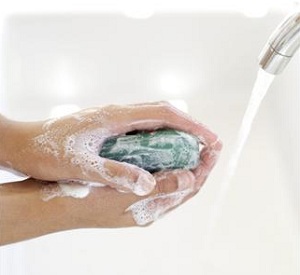
Most people experience some form of irrational fear or anxiety, and many are concerned about germs and disease in particular. Amid a flurry of films and media reports about antibiotic-resistant infections and life-threatening flu strains, it’s easy to understand why some people actively worry about what they touch and breathe.
While concern about germs can motivate people to make health-conscious decisions such as frequently washing their hands, a serious germ phobia can drastically alter how a person functions and engages with society. Even actor and television host Howie Mandel concedes he has been unable to shake the grip of mysophobia—the technical term for fear of germs. Phobias are differentiated from general fears by degree. A person who is concerned about germs might wash his or her hands or get a flu shot, but a germ phobia can interfere with every area of life. Phobias are treatable, and people experiencing them should seek medical or psychological assistance.
[fat_widget_right]
Symptoms
The primary symptom of mysophobia is an irrational fear of germs. This can manifest differently in different people. One person, for example, might be fixated on a specific germ or disease, while another person might be afraid of germs and dirt in general. Common behaviors associated with mysophobia include:
- Compulsive hand washing
- Excessive use of disinfectants and antibacterial soap
- Fear of physical contact with others
- Extreme fear of getting sick
- Reacting with extreme fear to media reports of new diseases
- Fear of certain locations, such as doctor’s offices and airplanes, where germs or sick people might be present or confined
Effects
Mysophobia doesn’t simply inspire fear and avoidance. The phobia can be all-encompassing and life-altering. While people with mysophobia often recognize that their reactions are irrational, they can’t control them. They may avoid going out in public, developing intimate relationships, or eating food they did not cook. Because mysophobia affects so much of a person’s life, it can lead to other mental health issues such as depression, social isolation, and anxiety. Complete avoidance of germs can actually contribute to the development of health problems. Overuse of antibacterial and disinfectant products has been implicated in the spread of new, resistant infections, and children who are not exposed to germs are more likely to develop allergies.
Causes
No one knows exactly why people develop phobias, but mental health experts have developed a few theories. Some believe that people are more likely to develop phobias that protect from danger. These phobias include germ phobias, fear of large animals, and fear of heights. People who develop phobias may take these natural fears too far and react with extreme anxiety, placing them in danger they are believed to be trying to avoid.
Early experiences also can make a person more likely to develop a phobia. Childhood illness, the death of a parent, or painful medical procedures can condition a person to be extremely fearful of germs and to take extreme measures to avoid them. Phobias also tend to run in families; they may be genetic or simply learned from parents.
Treatment
Phobias are highly treatable and often require only a few sessions with a qualified mental health professional. Cognitive behavioral therapy, which helps people to reframe intrusive and phobic thoughts, can be extremely beneficial. Desensitization, a process whereby a person is slowly exposed to a frightening stimulus, also is highly effective. Some doctors may prescribe anti-anxiety medications to help people with mysophobia cope with their fears during treatment or to enable them to function in public. Some clients also experience success with hypnotherapy, often in only two or three sessions.
References:
- Audesirk, T., Audesirk, G., Byers, B. E. (2008). Biology: Life on earth with physiology. Upper Saddle River, NJ: Pearson Prentice Hall.
- Overcoming your Fear of Germs. (n.d.). Fear of Germs. Retrieved from http://www.fearofgerms.com/
- Kring, A. M., Johnson, S. L., Davison, G. C., Neale, J. M. (2010). Abnormal psychology. Hoboken, NJ: John Wiley & Sons.
- Phobias. (n.d.). U.S. National Library of Medicine. Retrieved from http://www.nlm.nih.gov/medlineplus/phobias.html
What was once considered a rarity—step-siblings, step-parents, and step-in-laws—has become more common than not. When couples marry, there is a very good chance that one of them brings an extended family that branches by halves and steps. And if that couple winds up divorcing, the tree splinters even further. Because there is no biological bond that obligates a step-family member to stay in contact with other steps, the rules of engagement can be confusing and tense. In a recent article, marriage experts explain how to navigate the rocky road of step-relationships after divorce.
Take, for example, the case of an ex-wife who spent decades raising her step-children. Should she continue the relationship with these nonbiological children, even though she has no legal claim to them? Mary T. Kelly, a marriage therapist from Colorado, notes that often step-children can be a contributing factor to divorce. Many blended-family parents disagree over how to raise his, hers, and their children. Tension that exists between step-children and step-parents seems like normal childhood rebellion, but in many cases may actually run deeper.
Paul Hokemeyer, a New York therapist, says couples and children need to determine if they want those relationships to continue after divorce. Many children may not be permitted to make contact with their ex-step-parents while they are minors, but can make the choice whether to have a relationship with that significant person when they reach adulthood. Even step-grandparents get caught in the mix when step-families divorce. Grandparents who become attached to step-grandchildren, only to have them taken away, may not be willing to invest as much into future step-family members.
One Massachusetts psychologist, Patricia Papemow, recommends that clients try to initiate contact through letters rather than personal visits or phone calls. It is important for step-children to be allowed to have time to process the shift in the relationship on their own terms. Letting them know a step-parent is there through cards and letters is a noninvasive and subtle way to continue contact and keep the door open for future communication. Regardless of how an individual chooses to stay in contact with their step-children, Hokemeyer insists that they review their motives so that all parties will be receptive. “Make sure that you are acting out of genuine love and concern for the other person, and not out of anger and attempts to manipulate,†Hokemeyer says. Following these tips could help step-exes maintain important family ties in a world of ever-changing family dynamics.
Reference:
Gootman, Elissa. When branches tangle in a stepfamily tree. (n.d.): n. pag. The New York Times. 3 Oct. 2012. Web. 8 Oct. 2012. http://www.nytimes.com/2012/10/04/fashion/-step-family-trees-with-tangled-branches.html?pagewanted=all&_r=0

Marriages aren’t like fine wines. They are not harvested in vineyards and they do not always get better with age. However, many marriages far exceed any expiration date. According to a recent article by Matt Richtel, Pulitzer Prize-winning writer and columnist, modern marriages—which divorce at rates upward of 50%—may benefit from an exit strategy after, say, five, 10, or 20 years. Richtel said that many marriage contracts already exist. Prenuptial agreements are rampant among the wealthy, some couples who live together make paperless commitments to each other, and many celebrities and politicians have legalized business/marriage agreements. In fact, the idea of contractual marriage has been picked up in Mexico, where lawmakers recently introduced the idea of renewable marriages. Good idea or bad, the law didn’t pass.
But should it have? Should the institution of marriage be updated to keep pace with other cultural advances in areas such as medicine and technology? This was the question that Richtel asked several marriage therapists, psychologists, and divorce attorneys. The responses were varied. Author and professor Pepper Schwartz commented that marriage has been getting picked apart for decades and needs to be fully examined. Today’s marriages have less connection to religion and family, which creates a weaker support system, and modern technology encourages people to expect instant gratification from marriage. Schwartz said something like a 20-year marriage contract is an option, and that nuptial contracts including dowries and financial arrangements are not new.
Dr. Robert E. Emery, a professor of psychology at the University of Virginia, says the problem with marriage is the expectation of longevity that it comes with. Children of divorced parents bear the immediate emotional devastation of losing one parent, or having their family rhythm disrupted. If the possibility of divorce was anticipated, and marriages were not supposed to last past a certain point, it would be more culturally acceptable and emotionally tolerable. Emery says the best way to approach marriage is to understand that it is not a union filled with unlimited sex with someone who is beyond perfect, but rather an investment of every available resource that can reap emotional, sexual, and physical rewards. “There are good reasons to be romantic about marriage,†Emery said. “The big benefit of marriage is precisely the commitment over the long term.â€
Reference:
Richtel, Matt. Till death, or 20 years, do us part. (n.d.): n. pag. The New York Times. 28 Sept. 2012. Web. 1 Oct. 2012. http://www.nytimes.com/2012/09/30/fashion/marriage-seen-through-a-contract-lens.html?pagewanted=all&_r=0

Sports generally are viewed as harmless pursuits, a source of social interaction and bonding, exercise, and stress relief. But in recent years, highly publicized incidents of fan violence have raised concerns about the culture surrounding sports. The vicious 2011 beating attack on Bryan Stow at Dodger Stadium in Los Angeles is just one such example. Alcohol-fueled fights and skirmishes are increasingly common at all levels of competition, from playgrounds to professional leagues. Most people who have attended a sporting event have witnessed at least one example of an out-of-control fan.
What’s behind this surge in violence? The problem may not be the nature of sports themselves, but rather the way society treats sports in conjunction with personal factors. A closer look at some factors that may contribute to fan violence:
Overidentification
For many sports fans, their teams of choice become a proxy for their own identities. Overidentifying personally with a favorite team may be a contributing factor to sports violence. A person who watches a favorite team lose, or witnesses an unfavorable referee call, may behave as if he or she has personally suffered. The advent of Facebook and other social media, as well as message boards and other gathering places for fans, may make it difficult to disengage from favorite teams or let go of bad memories. These platforms also provide more access to inflammatory views from rival teams’ fans, fueling deep feelings of loyalty, protectiveness, and anger that boil to the surface amid the emotional current of a live game.
Alcohol
Alcohol plays a significant role in many fan altercations. At National Football League games in 2011, more than 7,000 fans were ejected for inappropriate or violent behavior. Some fans spend all morning and afternoon tailgating and drinking with friends before watching the event and then celebrating—or grieving—afterward. People often are intoxicated before even entering a venue. The feelings of deep loyalty and anger that many fans feel can be exacerbated by alcohol consumption.
Hypermasculine Culture
Despite years of progress toward gender equality, many men feel pressured to meet expectations of traditionally masculine behavior. Sports can be a significant platform for masculine identity, and people who identify with hypermasculine culture may be more likely to attend sports events. Combined with adrenaline, overidentification, and ready access to fans with opposing allegiances, some men may be inclined to be violent when exposed to triggers. Likewise, women in hypermasculine environments that promote disrespectful or violent behavior may also be more inclined to engage in it.
Sociological Factors
Certain people are at a greater risk of engaging in violent behavior. People who have experienced a recent stress such as job loss, the death of a loved one, or a perceived humiliation are already on edge and more likely to react emotionally. Many people attend sporting events to alleviate stress. However, when a favored team loses, a person is heckled, or a person loses a significant bet associated with a game’s outcome, stress may explode into rage.
Group Dynamics
Millions of people attend sporting events every year, and the vast majority never commit a violent act. When 100,000 people pack a stadium, though, the odds are high that a number of them are under the influence of alcohol. Combine this with an emotional, hypermasculine environment and exposure to opposing sentiment, and you’ve created a recipe for fan violence. Proactive measures such as reporting inappropriate behavior immediately, limiting alcohol intake, and actively encouraging sportsmanship among peer groups, can help address an increasingly challenging threat to our enjoyment of sporting events.
References:
- Aguirre, B. E. (2008). Sports fan violence in North America. Contemporary Sociology: A Journal of Reviews, 37(2), 157-158. doi: 10.1177/009430610803700235
- Associated Press. (2012, May 31). Witnesses describe violent scene. ESPN. Retrieved from http://espn.go.com/los-angeles/mlb/story/_/id/7991565/witnesses-depict-violent-scene-bryan-stow-beating
- Handwerk, B. (n.d.). Sports riots: The psychology of fan mayhem. National Geographic. Retrieved from http://news.nationalgeographic.com/news/2005/06/0620_050620_sportsriots.html
 Let’s face it: Every woman on the planet knows about hormonal cycles. They’re difficult to ignore. Most men, on the other hand, are taught from the time they are born that being manly means denying anything in us that might be viewed as “feminine.†I still remember the taunts when I was a kid. “What’s the matter with you, Diamond, you throw like a girl.†Or, “Look, he’s going to cry, just like a little girl.â€
It’s no wonder guys grow up convinced that we’re not “hormonal.†But is that true? Many of us know intellectually that we have hormones. We know we’ve got testosterone. Many of us have a vague idea that we also have estrogen coursing through our bloodstream—a fact we’d like to ignore. Hormonal cycles? That sounds too “fem†for many of us to even contemplate.
Midlife Hormonal Changes
I first began to recognize that there might be more going on inside me when I began doing research on andropause, or male menopause, in the early 1990s. I was seeing changes going on with midlife men at my health clinic that seemed similar to what I saw with women going through menopause. Many of the men were having “night sweats†and “hot flashes.†Others were on an emotional rollercoaster, up one minute and down the next. Some were having unexplained joint pain, and others were having problems becoming aroused or having intercourse.
[fat_widget_right]
I began interviewing midlife men and women to find out what they were experiencing. Most of the men thought the idea that they were “hormonal†was ridiculous. Most of the women had a different view. “Well, it’s about time you guys finally figured out you’re hormonal,†one woman told me. Eventually, I interviewed more than 1,000 men and women, and 30,000 filled out a questionnaire I developed. The results were published in my books, Male Menopause, in 1997, and Surviving Male Menopause: A Guide for Women and Men, in 2000.
Do Men Have Hormonal Cycles?
Although most of us now accept that women and men have “male†and “female†hormones, it is more difficult to accept that men also have hormonal cycles. According to endocrinologist Dr. Estelle Ramey, professor at Georgetown University Medical School, “The evidence of them may be less dramatic, but the monthly changes are no less real.†But if men do have hormonal cycles, why don’t they recognize or talk about them? Dr. Ramey believes it is because men respond to their cycles in a way that is a function of their “culturally acquired self-image. They deny them.†This denial is the main reason she believes the largely male scientific and medical communities have taken so long to recognize hormonal cycles in men.
Winifred Cutler is one of the world’s leading experts on hormonal cycles. She has published more than 35 scientific papers, is co-inventor on five patents, and has authored eight books, including Love Cycles: The Science of Intimacy. “Now it is known that men show a hormonal rhythm,†she says. “A rhythm I call the hormonal symphony of men.â€
A cycle might last a few minutes, a day, a week, a month, a season, a year, or a lifetime. When we go to sleep, our testosterone levels rise hour by hour until, by the time we awaken, they are at their highest (morning erections, anyone?). By the early and late morning, our levels typically level off and begin to decline. By late afternoon, our testosterone is usually at its lowest ebb. No wonder it’s more difficult for me to get up for the “afternoon delight†my wife thinks is wonderful, while I’m more interested in a morning romp.
Men’s hormones cycle throughout the year. In studies conducted in the United States, France, and Australia, it was found that men secrete their highest levels of sex hormones in October and their lowest levels in April. There was a 16% increase in testosterone levels from April to October and a 22% decline from October to April. Interestingly, although Australia, for example, is in its springtime when France and the United States are in their autumn, men in all three parts of the world showed a similar pattern of peaks in October and valleys in April.
Men also have monthly hormonal cycles, though there are some interesting differences and similarities between women’s and men’s cycles. Women’s monthly cycles are more predictable and synchronous. Women who live in close proximity find that their monthly cycles begin to align. Men’s cycles seem to be more unpredictable and individual. A study of young men showed that the majority had a discernible cycle of testosterone with repeating rises and falls, but each man who did show a cycle had a cycle unique to himself.
“Testosterone levels oscillate every 15 to 20 minutes in men, and also follow daily, seasonal, and annual rhythms,†says Theresa L. Crenshaw, author of The Alchemy of Love and Lust. “The morning highs, daily fluctuations, and seasonal cycles whip men around. Think about the moment-to-moment impact of testosterone levels firing and spiking all over the place during the day and what this must be doing to a man’s temperament. Men who so strongly need to feel in control are in fact in much less control than they realize. No wonder they can be so, well, testy!â€[fat_widget_right]
I suspect that we’d all be better off if we recognized that men, like women, have our own challenges dealing with our hormones. The great philosophers tell us to “know thyself.†Knowing and accepting our hormonal cycles may be the most important knowing we can have about what it means to be a man.

Reality television programs are anything but real. Shows that depict romantic relationships or the pursuit thereof—such as The Bachelor and Real Housewives—reveal fantasy lives filled with high-octane intimacy, infidelity, and unrealistic ideals. These factors seem to add to the appeal for many people. But do these portrayals influence people’s expectations of their own, real-life relationships? Yes and no, according to a study conducted by Jeremy Osborn of Albion College in Michigan.
Osborn surveyed almost 400 married people to find out if their perceptions of relationship satisfaction and commitment were affected by what they viewed online, on television, and in movies. He found that those who believed in fictitious romance had a lower sense of relationship commitment. They expressed concerns about the high cost of losing their independence and having to sacrifice their own interests for those of their partner. Because they viewed the price of relationship commitment to be high, they also placed relationship satisfaction at a premium. This could explain, in part, why the reality romance supporters had the same level of relationship satisfaction as those who did not believe in reality romance.
Perhaps people who view relationships as emotionally costly expect more from their relationships than people who view their relationships as less emotionally expensive. In fact, if someone anticipates having to invest quite a bit into a partnership, he or she probably expects a large return. Therefore, those who see romantic relationships as requiring a big injection of time and effort may value the outcome of their efforts differently than people who do not approach relationships the same way. However, Osborn cautions that commitment is a key element to relationship satisfaction and that culture’s definition of relationships, as manifested in the media, does not demonstrate that. “We live in a society that perpetually immerses itself in media images from both TV and the web, but most people have no sense of the ways those images are impacting them,†Osborn said. Because marriage failures are holding steady in the United States, he believes it is imperative that couples take a good, long look at how everything, including reality TV, affects their relationships.
Reference:
Gannon, Megan. Commitment harder for those who watch TV romances, study claims. (n.d.): n. pag. The Huffington Post. 19 Sept. 2012. Web. 19 Sept. 2012. http://www.huffingtonpost.com/2012/09/19/commitment-issues-tv-romances_n_1896784.html

Well, maybe not real fireworks. But according to MeiMei Fox—a speaker, depth psychotherapy life coach, and author of a recent article—feeling as if fireworks are exploding is one of the 10 sure signs that you’ve found your true love. Fox, who has had her share of failed relationships, worked with her new husband to come up with 10 signs that partner is Mr. or Mrs. Right:
- Sexual attraction: Even though fireworks may eventually smolder, sexual attraction to your partner is a must and serves as a foundation for love, honesty, and intimacy.
- Authenticity: Partners should be comfortable with each other exactly as they are, with no pressure to act like someone they’re not.
- Commitment: If one partner is not able to commit wholeheartedly to the relationship, it could mean they have doubts. Commitment is at the core of a true loving union.
- Honesty: There is no place for secrets in the most important relationship of your life. “When it’s true love, you should find yourself wanting to share everything,†Fox says. “Your love is made simple and true by being honest.â€
- Unity: Each partner must put his or her needs behind those of the relationship. As the old saying goes: “There is no ‘I’ in team.†True love is about teamwork.
- Priority No. 1: The relationship should come before anything else. The love you share with your soulmate should be the most valuable thing in both of your lives, and you should stay committed to letting nothing get in the way of working toward and sharing in its success.
- It’s romantic: Relationships should not be all work. They should be fun, and each partner should be living in the fun of the relationship rather than talking about the relationship and its problems.
- Your friends are happy: People sometimes worry too much about what their friends will think of a new love interest. Fox agrees that outsiders may be able to see things in your partner that you can’t. When family and friends like the person who makes you happy, it’s a good sign.
- You want to be home: Looking forward to returning home to the arms of your partner reinforces that you’re with someone you love, value, and enjoy being with.
- Having that lucky feeling: Fox says that she feels as if she’s won the lottery every morning she wakes up next to her husband. Although that might not happen all the time for most people, you can be pretty sure you’ve found a keeper if you feel darned lucky that he or she found you too.
Reference:
Fox, MeiMei. 10 Signs You’ve Found “The One†(n.d.): n. pag. The Huffington Post. 12 Sept. 2012. Web. 12 Sept. 2012. http://www.huffingtonpost.com/meimei-fox/10-signs-youve-found-the-_b_1870841.html
 The oldest profession in the world has undergone a makeover in recent years. Although subtle, the changes to prostitution are having ripple effects. The business that used to be marketed on street corners and in seedy bars has gone high class. Escorts that provide sexual services are available as companions for outings, family gatherings, business functions and other events that are usually reserved for significant others. And the lure of having a date for these important occasions, and being guaranteed sex, is becoming irresistible for many men. However, the men who pay for sex are discovering that it is not just the sex they really want but the love and intimacy that come with it.
Researchers from George Washington University conducted an online examination of conversations between clients and escorts and found that of the 2,442 posts, many were about things other than sex. The authors believe that the transition from sex to pseudo-relationship that is emerging in the world of prostitution is due in large part to the mock dating services that escort companies provide as part of the overall package. Men enter into an agreement for companionship and sex but may soon find that the close, personal conversations and comforting presence of the escort cause them to fall in love. Christine Milrod, a sexologist and coauthor of the study, says this is especially true when a client patronizes the same escort repeatedly.
The popularity of this “girlfriend experience†of sex for hire can blur the lines between sexual satisfaction and relationship attachment. Although many of the men surveyed said that they hire sexual escorts primarily for the sex, they enjoyed the fact that the women were obligated to engage in conversations with them. They also liked being able to explore sexual fantasies that they might not otherwise have an opportunity to explore. The fact that an emotional and intimate connection may develop is merely a byproduct of this novel approach to prostitution. The authors added, “Like any other commercially packaged leisure activity, intimacy is now readily available for a price.â€
Reference:
Bennet-Smith, Meredith. (Sept. 4, 2012). Men who pay for sex may also be hoping to find true love, study finds. Huffington Post. Retrieved Sept. 6, 2012, from http://www.huffingtonpost.com/2012/09/04/men-paying-for-sex-may-also-looking-true-love-study_n_1854372.html
 If you don’t get the right nutrients, your body won’t function to the best of its ability. Some general health conditions can be linked to nutritional deficiency, but it’s up for debate whether the same applies to specific mental health conditions. Some nutrition experts do claim that unique cases of social anxiety can actually be caused by a nutritional deficiency. In the condition several experts refer to as pyroluria, once the nutritional deficiency is taken care of, the social anxiety is relieved. Other experts are quick to dismiss the validity of this diagnosis.
Trudy Scott, a food-and-mood expert who said in an email that she has suffered from pyroluria, is a certified nutritionist, immediate past president of the National Association of Nutrition Professionals, and author of The Antianxiety Food Solution: How the Foods You Eat Can Help You Calm Your Anxious Mind, Improve Your Mood and End Cravings.
“The person experiences shyness, inner tension, and social anxiety,†Scott said in regard to symptoms of pyroluria. “Symptoms usually start in childhood and are made worse under stressful situations. The wonderful thing is that the symptoms can be completely alleviated with taking these supplements: zinc, vitamin B6, and evening primrose oil. People typically start to feel less anxious, less shy, and more social within a week. The important thing is that if you do have pyroluria, you do need to take the supplements always.â€
Generally only zinc and Vitamin B6 are recommended for pyroluria, but “gamma-linolenic acid (GLA), found in evening primrose oil and borage oil, is also beneficial for those with pyroluria because its levels are often low, and supplementing with GLA improves zinc absorption,†she added. In her book about anxiety, mood, and food, she wrote a whole chapter about pyroluria.
“I am … very passionate about the subject because I have pyroluria myself and used to suffer terribly from social phobia and shyness, anxiety, unexplained fears, waking with a sense of doom and even panic attacks,†Scott said. “I have used the amazing healing powers of foods and nutrients to completely heal. I now help women find natural solutions for anxiety and other mood disorders.â€
She has posted a questionnaire on her website for pyroluria. It includes a long list of symptoms, and if 15 or more items are checked on the list, it is likely a person has pyroluria: http://www.everywomanover29.com/blog/pyroluria-questionnaire-from-the-antianxiety-food-solution/
She said that in research studies, pyroluria is also called “the mauve factor.†“Much of what we know about pyroluria is based on the work of Humphrey Osmond, Abram Hoffer, and Carl Pfeiffer,†Scott said. “Much of the original work was done with schizophrenic patients in psychiatric hospital settings. Although pyroluria was first identified in the 1960s, the medical and mental health communities have been slow to recognize it, and many mental health practitioners and physicians remain unfamiliar with this condition.â€
She said she learned about the condition mainly from reading the following books:
The Mood Cure by Julia Ross
Depression-Free Naturally by Joan Mathews-Larson
Nutrition and Mental Illness (1988) by Carl Pfeiffer
Her own book goes into the specific details and biological/chemical/genetic aspects of pyroluria. In her book, she cites research prevalence rates from Joan Mathews-Larson, the author of Depression-Free Naturally. Pyroluria is thought to exist in “11 percent of the healthy population†and “40 percent of adults with psychiatric disorders,†according to Scott’s book. For people with alcohol addiction, pyroluria is thought to have a 40% prevalence rate. However, the prevalence rates do depend on the source. In her own experience as a nutritionist, Scott said about 80% of her clients who have moderate to severe anxiety have symptoms associated with pyroluria.
She added that stress can be a major factor for what age pyroluria develops and that it is a genetic condition that seems to affect more women than men. In addition, people who have pyroluria tend to also have gluten sensitivity, especially if they also are dealing with other issues like depression, anxiety, autism, alcoholism, bipolar disorder, and schizophrenia, according to the book. People with pyroluria may also have digestive problems, and they need to make sure to balance out an increased Vitamin B intake with a higher intake of magnesium.
In the book The Mood Cure by Julia Ross, the author includes a discussion of the prevalence, testing, and treatment of pyroluria, as well as a checklist similar to that offered by Trudy Scott. Ross states that the questionnaire was developed by Dr. Carl Pfeiffer, a clinician and researcher. He wrote the book Nutrition and Mental Illness: An Orthomolecular Approach to Balancing Body Chemistry in 1988.
Ross states in her book that pyroluria is fairly uncommon in the general public, but in certain groups of people (like those who have experienced alcohol addiction), it is more common. “I am just getting familiar with this condition, but I can see that it is an important one for certain people, affecting stress levels and mood generally and preventing full response to nutrient therapy until it is addressed,†Ross wrote in her book.
There are a plethora of articles dedicated to nutrition, diet, and mental health in general, as well as multiple research studies suggesting that certain mental health issues can be improved through natural supplements and a healthy overall diet. “Notably, essential vitamins, minerals, and omega-3 fatty acids are often deficient in the general population in America and other developed countries and are exceptionally deficient in patients suffering from mental disorders,†according to an abstract from a research study in Nutrition Journal. “Studies have shown that daily supplements of vital nutrients often effectively reduce patients’ symptoms.â€
Another abstract from a research article in the journal Alternative Therapies in Health and Medicine concludes the following: “Many patients will benefit from the use of specific dietary supplements, such as a multivitamin-mineral high in B vitamins and omega-3 fatty acid,†according to the abstract. “And no matter what the underlying cause of the mood disorder, patients should be counseled about the relationship between food and mood, for the evidence now substantiates what laypeople and medical professionals have long known intuitively: the way we eat affects the way we feel.â€
The research, authored by Tieraona Low Dog, director of the fellowship at Arizona Center for Integrative Medicine at University of Arizona, added in the research abstract that the healthiest diet for improving mental health is a “low-glycemic, modified Mediterranean diet rich in fruits, vegetables, whole grains, and seafood (if not vegetarian) and low in processed, refined foods.â€
Other experts remain unaware of the condition and are skeptical of its legitimacy. Scott Carroll, a psychiatrist with dual board certifications in adult and child and adolescent psychiatry, said in an email that he is not accustomed to pyroluria and had to look it up on Google to find out what it was.
“Once I saw that it is connected to orthomolecular psychiatry, which I have heard of, I knew it was in the pseudoscience realm,†said Carroll, who is also an assistant professor at the University of New Mexico School of Medicine. “Not surprisingly, it claims to be the cause of a number of unrelated psychiatric disorders, which is typical of pseudoscience disorders. Like so many ‘cure-alls,’ it sounds plausible, but there is no scientific basis to it, and it allows dubious practitioners to prey on desperate, suffering people.â€
He said there are certain cases where nutrition can play a part in mood and mental disorders. “Inadequate amounts of Omega 3 fatty acids, especially from fish or krill oil, have been shown to affect mood and anxiety in a broad way of which social anxiety can be a part,†Carroll said. “Also, low folate, low Vitamin D, and low B12 have all been associated with negative effects on mood and anxiety.â€
“However, in people with low folate, it is more often a case of a genetic inability to transport the folate molecule into the brain rather than a low blood level,†he added. “In those cases, which often present with chronic depression and anxiety that has never responded to antidepressants, there are folate precursors that are more lipophilic and can diffuse into the brain without use of a transport mechanism.â€
Nerina Garcia-Arcement, a licensed clinical psychologist and clinical assistant professor at the NYU School of Medicine, said in an email that she didn’t study pyroluria in school and hasn’t read about it in any research studies after graduating from her doctorate program.
“Based on current knowledge it does not appear to be a legitimate health condition,†Garcia-Arcement said. “Further research is required to further explore and understand whether social anxiety or any other mental health condition could be related to improper synthesis in the blood. Although this theory seems appealing, being able to ‘cure’ a mental disorder with vitamins or supplements … is unlikely.â€
“Causes of social anxiety that have been substantiated by research include chemical imbalances in the brain (i.e., serotonin, a neurotransmitter), inherited traits (genetic and through observing anxious family members), negative life events or experiences, and an overactive amygdala (a part of the brain that controls emotions, including fear response),†she added.
She said that good nutrition is important for overall health, but it’s not necessarily linked to mental disorders. “In my experience, the social anxiety could be traced to other causes, not nutritional deficiencies,†Garcia-Arcement said. “Having a healthy and balanced diet is overall beneficial, but it won’t cure social anxiety or a mood disorder. I am more likely to recommend my clients get enough sun exposure to improve their moods (seasonal affective disorder) than recommend diet changes.â€
Related articles:
Social Anxiety Can Be a Hidden Problem in College
Breathing Lessons
The Birth of Anxiety
 Texting has, in many ways, made communication easier by helping people avoid long, unpleasant phone conversations and making a quick “Hello†much easier. According to the Pew Research Center, 72% of teenagers text regularly, and one in three sends more than 100 texts per day. Clearly, texting is the preferred method of communication among young people, and that trend is moving upward toward adults, who are also texting much more frequently. While texting hasn’t been around long enough for researchers to study its long-term effects on communication, there is circumstantial evidence that it is rapidly altering the ways people communicate with one another both via text and in person.
[fat_widget_right]
Face-to-Face Communication
Texting encourages rapid-fire, single-sentence thoughts, but this style of communication isn’t conducive to face-to-face communication. Consequently, people who text a lot may be more uncomfortable with in-person communication and may even use their cell phones to communicate with people who are in their presence. Parents often report that their teens text during dinner, and the friend who texts during a group night out is a common phenomenon. The reality may be not that these people are being rude but that they are uncomfortable with slow-paced, in-person communication.
Surface-Level Communication
Texting increases the frequency of small talk and can be a great asset to people beginning to form a friendship; they may be much more comfortable texting each other witty one-liners than they are picking up the phone and calling. But texting is, almost by definition, surface-level communication. When people communicate primarily via text, they’re much less likely to have meaningful conversations.
Written Communication
People know they’re using improper grammar when they text; it’s merely a shortcut that enables them to relay a message quickly and effectively. But over time, the way we communicate—even if we know the way we communicate is “technically†wrong—affects the way we think. The result is that people who have grown up texting may have much poorer writing skills than people who regularly communicate using grammatically correct sentences either in person, over the phone, or via email. Even worse, they may lose their ability to modify their tone and style depending upon who they talk to. Many employers complain that entry-level hires have no idea how to send a business email or communicate appropriately to superiors.
Impatience and Instant Gratification
Texting is real-time communication but is not in person. This creates an odd situation in which people feel compelled to respond immediately via text, but they aren’t really participating in an ongoing, progressively deepening conversation. The instant gratification of texting can lead to incredible impatience, even aggression. But when people are in person, the requirement of communicating immediately can be daunting for people communicating primarily via text. Thus texting can inhibit both in-person communication and texting itself.
Social Boundaries
Unlike phone calls, there are no clear rules about when it’s acceptable to text. And because texting doesn’t result in an angry person answering on the other end, many people feel more comfortable texting at any time and in any circumstance. The result is a decrease in privacy and social boundaries. People may text in the middle of the night or while someone is on vacation and expect an immediate response, because of the impatience texting encourages. The result is a blurring of the lines between public and private. While a couple might previously expect no interruptions on a vacation or honeymoon, they can now anticipate receiving and responding to texts. Because texting is not old enough for psychologists to know how this affects intimacy, we can only guess at its long-term effects on relationships.
References:
- Alison Bryant, J., Sanders-Jackson, A., Smallwood, A. K. (2006). IMing, Text messaging, and adolescent social networks. Journal of Computer-Mediated Communication,11(2), 577-592. doi: 10.1111/j.1083-6101.2006.00028.x
- Hanna, J. (n.d.). W&L Psychology Project examines cell-phone usage and adolescent health. Washington and Lee University. Retrieved from http://news.blogs.wlu.edu/2012/07/24/wl-psychology-project-examines-cell-phone-usage-and-adolescent-health/
- Influence of Texting on Communication Skills. (n.d.). Influence of texting on communication skills. Retrieved from http://artofeloquence.com/texting/
 People in their 20s seem to have it all: youth, energy, health, and looks. But they are also still figuring themselves out, and this time of change can bring certain mental health concerns as well. Experts have information on these issues that tend to impact people in their 20s, and provide some solutions for addressing and coping with these problems.
Clinical psychologist Dean Haddock, a marriage, family, and child counselor and the executive director and founder of Community Counseling and Psychological Services, points to a fairly common activity of 20-somethings that can lead to mental health issues if it’s not checked: alcohol and drug use.
“The first problem that leads to many others is alcohol and chemical abuse, which often leads to dependency,†Haddock said in an email. “The mental disorders that follow are often depression, anxiety, and brain injury. Of course, self-esteem and body-image problems often lead to eating disorders.â€
Haddock gives three tips to help people in their 20s prevent and get through some common mental health concerns:
- Know your genetic history of mental disorders. Knowing is half the battle to avoid those disorders in yourself.
- Be choosey about your friends, as they will influence your decisions. Healthy friends lead to healthier decisions.
- Self-esteem is often the result of the people who matter to you. If they do not esteem you, then you will not esteem yourself.
Nerina Garcia-Arcement, a clinical psychologist and clinical assistant professor at NYU School of Medicine, suggests that the many life changes people experience in their 20s can cause mental health issues at times.
“Your 20s are filled with life transitions that can be stressful,†Garcia-Arcement said. “This is a time when young adults are solidifying their personalities, developing their independence from family, starting or finishing college, beginning new jobs, developing a career, forming romantic relationships, and learning to manage their existing family relationships and friendships within these context.â€
“Individuals in their 20s don’t have a lifetime of experience to draw on when managing multiple life transitions at once,†she added. “When someone experiences these transitions, anxiety and depressive disorders can occur.â€
Here are six of Garcia-Arcement’s tips to help people in their 20s cope with mental health issues more common to that age group:
- Seek out and form strong support networks.
- Seek out others who are going through similar experiences and share your feelings, whether you are feeling worried, nervous, scared, sad, confused, or excited.
- Know that you are not alone in your confusion about your career and relationships.
- Seek out mentors who have achieved their goals, and ask for advice.
- If you are feeling stress, sadness, or anxiety, engage in activities that will help you manage those feelings such as yoga, meditation, exercise, hobbies, social activities, relaxation exercises, and deep breathing.
- If you feel you are not getting the necessary support and feel overwhelmed or depressed, seek out mental health professionals who can help you manage the feelings related to your life transitions.
Stephanie Sarkis, a licensed mental health counselor, said in an email that anxiety and depression are some of the main mental health issues 20-somethings face.
“We have seen an increase in these issues due to the lagging economy and difficulties finding employment,†Sarkis said. “Many people in their 20s have moved back in with their parents, which can trigger feelings of failure and frustration.â€
Dr. Maiysha Clairborne, a family physician and wellness and stress management coach, added in an email that eating disorders associated with body dysmorphic disorder and body-image issues are also common for people in their 20s. She has three overall tips for people in this age group:
- Talk to someone. The worst thing that a person can do when they are feeling depressed, anxious, or alone is to isolate more. Many times when we talk with someone we trust about what’s going on, we come to realize that we are not the only ones experiencing it and then we can get support.
- Get active. Staying physically active not only helps to keep the body fit but also helps release endorphins and serotonin in the brain, which help keep the mood elevated. Physical activity is also a good release for stress and anxiety.
- Minimize sugar and junk food. Sugar and processed junk foods can worsen the emotions of stress, anxiety, and depression because they cause erratic changes in your body’s blood sugars. This can disrupt the normal release of hormones in the brain that keep your moods stable.
Scott Carroll, a psychiatrist with dual board certifications in adult and child and adolescent psychiatry, said there are many issues specific to people in their 20s, including problems associated with medication use.
“Many people were on stimulants/meds for their ADHD when they were younger, but they thought it was okay to stop their meds when they were done with school,†Carroll said. “Now they are struggling at work and don’t know why. I’ve also seen young adults stop all kinds of meds like their thyroid meds because they didn’t know why they were even on it, and then they have all kinds of problems.â€
Bad habits involving drug and alcohol use can start to become a major substance abuse issue when people are in their 20s, and other mental health issues start coming to the forefront at this time in peoples’ lives. Examples include bipolar disorder and schizophrenia. Also, panic attacks can start for people who have a genetic predisposition and who have higher amounts of stress associated with newfound adulthood.
“The 20s are an important time of social/emotional development,†Carroll said. “Unlike previous generations, identity formation often takes the entire 20s due to the complexity of modern society. It could be said that adolescence lasts until the early 30s in today’s society due to [prolonged] periods of education (grad school, law school, med school, etc.), lack of stable job options, and delays in getting married and starting families.â€
Carroll, who is also an assistant professor at the University of New Mexico School of Medicine, suggests that when it comes to serious relationships and marriage, people in their 20s should consider how their choices could eventually affect their mental health and how their brain plays a part in their decision.
“Many 20-somethings are tempted to get married, but it is generally a bad idea because the brain in not done developing until about 25 [years old] … which leaves young adults vulnerable to having their rational mind be overwhelmed by their feelings or stress,†Carroll said. “Relationship choices often dramatically change from the early 20s to the late 20s, so many people find that the person that was perfect at 22 is a disaster at 27. This can be an incredibly hard transition, to have to break up with your former soul mate that you thought you’d love for life because you’ve changed so much over the last several years.â€
Related articles:
Do I Have a Healthy Relationship With Food and My Body?
Social Anxiety Can Be a Hidden Problem in College
How Schools Could Prevent Depression

According to a recent article, men spend a bit more time fantasizing about sex than women do. However, contrary to what some people believe, based on the results of a study conducted by Juan Carlos Sierra Freire and Nieves Moyano Munoz, both of the Department of Personality, Psychological Evaluation and Treatment at the University of Granada in Spain, men and women don’t usually fantasize about sexual encounters with strangers, but with their partners. Sources of entertainment that are focused on fulfilling sexual fantasies, like steamy books, racy movies, and even websites, all sensationalize the stranger fantasy. Whether it is with a hot construction worker or a sexy swimsuit model, some of the most sexually stimulating scenarios involve strangers colliding for a thrilling and fulfilling sexual encounter. But this is not what the majority of people actually fantasize about.
For their study, Freire and Munoz surveyed 2,500 men and women ranging in age from 18 to 73. All of the participants questioned had been in some form of heterosexual partnership in the last year. They were asked whether they had ever had a sexual fantasy and if so, to describe the type of fantasy. The researchers assessed whether the fantasies resulted in negative or positive feelings and explored what characters were most prevalent in the fantasies. They found that almost all of the respondents had fantasized about sex at one time or another. Surprisingly, the majority of them, nearly 80%, reported that they had had at least one negative sexual fantasy. For women, negative fantasies involved forced sexual encounters and for men it involved homosexuality.
The team also found that although men did fantasize more often than the women, both men and women usually fantasized about sex with their partners. Other findings revealed that women had more positive sexual fantasies than the men, and men had more experimental sexual fantasies, including fantasies about threesomes and other group sexual encounters. Overall, the researchers believe that having fantasies about sex “favors some aspects as sexual desire and arousal†and is an area of exploration for therapists working with individuals who have sexual concerns.
Source:
University of Granada (2012, July 18). A study shows that men and women have the same sexual fantasies. Retrieved from http://www.alphagalileo.org/ViewItem.aspx?ItemId=122554&CultureCode=en
Related articles:
What Do Your Sexual Fantasies Mean?
Fanning the Spark of Sexual Passion
Exploring Alternative Lifestyles in Your Relationship