It sounds like there are two main issues for you right now: managing your feelings and hesitation about dating someone with a teenage daughter, and dealing with your fears about how your family will respond to your situation and the woman you love.
The fact is your girlfriend is a mom. Nothing is going to change that. You can wish it weren’t so, but that is a big part of who she is. It also may be that her experiences as a mom made her into the person you fell in love with.
I’m curious about where your resentment is coming from. Is it mostly coming from fears about how your family will react, or are there other issues at play? You knew she was a mother when you started dating her. You have been in a relationship with her for a year. If you are uncomfortable with the idea of moving in together, you owe it to her, yourself, and your relationship to have an honest conversation about that. Her feelings may get hurt, but avoiding the issue and letting these feelings fester in secret can do much more damage to your relationship. If you need support in how to have that kind of conversation, you may want to reach out to a therapist in your area for individual or couples work.
[fat_widget_relationships_left]
Dating someone who has kids can be complicated. Something that makes your situation potentially even more complicated is the spread of ages. You are, in fact, closer in age to the daughter than the mother. How much of that is factoring in to your unease? Would you feel the same way if her daughter were 7 instead of 17?
As for how your family reacts to your relationship, you cannot control what your family thinks or feels. They may disapprove of your relationship. They may disapprove of your girlfriend. It is up to you how much importance you give to their feelings. At 26, you are an adult who can make his own decisions. If the way your family feels about your partner is a deal-breaker, then it is important to be honest about that. Her past is not going away. If, however, you choose to be in relationship with this woman, it is not fair of you to judge or condemn her for her past. Your family can choose to disapprove. Only you can choose to let that matter.
I hope this helps shed some light on your situation. I hope you can resolve your internal conflict and highly recommend seeking the support of a therapist to help guide you through it.
Best,
Erika
 A broken heart has become synonymous with the pain of romantic rejection and bad relationships. According to a new Michigan State University study, though, a bad marriage could quite literally break your heart—especially if you’re female.
Can Your Relationship Affect Your Heart Health?
Researchers decided to look at the effects of a bad marriage in older couples, since most marriage counseling and research into marital quality focuses on young people. They analyzed five years of data from the National Social Life, Health and Aging project, looking at about 1,200 married women and men ranging in age from 57 to 85. Participants answered questions about the quality of their marriages, in addition to undergoing lab tests and reporting their symptoms of and risks for cardiovascular disease.
The researchers found that people in bad marriages were more likely to have cardiovascular problems. They also learned that a bad marriage affects heart health more than a good marriage, and that women in bad marriages suffer more negative cardiovascular effects than men in bad marriages. They speculate that this may be because women are more likely to internalize negative feelings and to become depressed. The negative effects of a bad marriage on heart health increase with advancing age. [fat_widget_relationships_right]
Researchers also found that heart disease itself could harm marriages, but only for women, not for men. They point out that previous research has found that women are more likely to care for sick spouses than to receive care when they are sick. Consequently, married women with heart disease may get less support and be subject to more stress than married men with heart disease.
Heart disease is the leading cause of death for people in the United States, and it kills more women than all forms of cancer combined, according to the American Heart Association.
References:
- About heart disease in women. (n.d.). Retrieved from https://www.goredforwomen.org/home/about-heart-disease-in-women/
- Bad marriage, broken heart? (2014, November 19). Retrieved from http://www.sciencedaily.com/releases/2014/11/141119204855.htm
 In my first meeting with Nora and Jeff, Nora told me (actually, she was yelling and crying): “He’s so passive, he’s driving me crazy. Jeff never lets me know what he’s thinking. He doesn’t make clear what he wants; when we disagree, he doesn’t explain what he thinks or feels.” As I got to know Nora and Jeff, I could imagine that most people would describe Jeff as a passive person—not actively taking part, compliant, meek. But I have come to understand that, more accurately, Jeff is a person in hiding.
While both Nora and Jeff contributed to the difficulties in their relationship, I am going to focus on Jeff.
Passivity as Protective Hiding
Several months into my work with the couple, this particular session was not the typical discussion of the vicious circle where Jeff’s passivity evokes Nora’s anger which makes Jeff more passive and around they go. Instead, Jeff started the session. Looking frightened but sounding more filled with feelings than usual, he told Nora: “I’m tired of this fighting. I’ve tried so hard to give you what you want, to be the good guy. All you do is criticize me and make me feel like the bad guy. You’re always screaming, but now I do feel like the bad one. This isn’t me. I’m always the good guy. I can’t stand that you don’t see me that way anymore. I don’t know what to do.”
[fat_widget_right]
In my work with Jeff and Nora, I learned a lot about Jeff’s need to hide and came to understand his passivity as his way of hiding himself to stay safe. Jeff projected a self to the world that was easygoing, undemanding, and kind. In our sessions, Jeff slowly revealed how this was not how he felt about himself: “I can’t say I like myself very much or think very highly of myself. I don’t know. Maybe it has to do with having such critical parents. They were horrible. They always laughed about my appearance: look at his big ears; his voice is so squeaky; ooh, he’s so hairy. They made me feel ashamed. They didn’t like my friends, complained about how I ate, dressed, ugh, everything. I finally learned to tune them out. From the time I was, I guess, about 8 or 9, I stopped reacting. I suppose I do that with everyone now.”
Nora started to cry softly in response to Jeff: “I had no idea; you never told me any of this. I’m so sorry your parents were so mean to you.”
Jeff looked shocked by Nora’s tears and words: “I don’t want you to feel sorry for me. I hate that! I can’t stand it. Now you both are going to think there is something wrong with me. I never should have said anything.”
Jeff’s “saying something” was the start of expressing his “true self,” which his false self had kept hidden and safe from harm. His false self had been engaging with a world that could be emotionally destructive and dangerous. Consequently, Jeff wasn’t totally familiar with the Jeff who had been kept in hiding. He had done a good job of protecting his young self from intolerable feelings of shame, hurt, and rage. Unfortunately, with the “true self” in hiding, there was little opportunity for Jeff to grow and develop through relationships in the real world.
False-Self Interference with Good, ‘True-Self’ Feelings
The false self develops as an adaptation that protects the individual and makes it possible for the “true self” to go into hiding. Often, the development of the false self is unconscious, and the individual may not be aware that this defense is protecting him (or her) from intolerable feelings. Over time, awareness may develop that the “me” who is acting in the world is “not me.” As these “not me” feelings get stronger, the feelings of being loved, being successful, deserving of recognition, etc., cannot be felt as me, or as the “true self.” It is, after all, “not me” who is loved, admired, or successful. This leaves no room for good self-feelings and frequently results in increased hiding to diminish the risks of being seen and known.
As the individual becomes increasingly aware of the false self adaptation, he (or she) is also aware that he (or she) may not know what will appear when the “true self” begins to emerge. It feels risky to be vulnerable and speak one’s feelings. How the person will be responded to is an unknown. The false self emerged early in development and was successful in protecting the person from intolerable feelings. Now that the false self no longer protects so well, it takes courage to begin to allow the true self to emerge. There are no assurances that the old shaming ways that required the adaptation to a false self won’t be repeated. Jeff’s relating of his early experiences with his parents, his shame, and his negative self-feelings were a brave expression of his “true self.”
Interference with Intimacy
To be intimate with another assumes a personal closeness, familiarity, and a knowing of the other. Jeff and Nora had difficulty being intimate because Jeff was in hiding and Nora had no sense of a real other self to relate to. In one session, Nora turned to Jeff and described her struggle: “I think I love you, I want to love you, but sometimes I don’t know who you are. I want this to work, but I rarely feel I know what you want.”
Sadly, no matter what loving or affectionate feelings Nora might have been able to feel for Jeff, he felt it was “not me” who was being loved. As a false self, he had no way to experience that Nora’s loving feelings had anything to do with what was true or real about him. As Jeff became more interested in shedding his false self and developing his “true self,” he was handicapped in his ability to be intimate since he didn’t feel he was a person of substance with thoughts, feelings, needs, and desires with which he could relate to Nora. It takes a strong desire and a good deal of courage to overcome the anxiety of risking a repeat of the shame and hurt as one begins to let oneself know what they are feeling and then allow the vulnerability to share oneself with significant others and then ultimately the world. Jeff is working on this with Nora and is making slow but steady progress.
Interference with Self-Knowledge
Who am I? What do I want, think, need, believe? What do I like, hate, fear, love? These are only some of the basic questions we wrestle with as we grow and develop our identities. When we grow up in an environment that feels dangerous or destructive, we need to find a safe way to protect ourselves from mistreatment and intolerable feelings. But when we adapt to a false self, we frequently miss the opportunity to develop the answers to these questions.
Who we know ourselves to be is based on the accumulation of our continuing experiences of the interactions between ourselves and others. This relational dialogue—all these back-and-forth responses—are the building blocks of self-knowledge. We develop the ability to self-reflect and think about self and other. We discover what we want and don’t want. We learn how to get what we want and from whom. But we can’t do this when we keep ourselves hidden from the world. The “true self” must participate in these interactions if we are to come to know who we are.
The development of a sense of identity—this is who I am; this is what I know and feel about me—helps us to locate ourselves in the world. The sense of self that we carry with us, including feelings of confidence and self-esteem, are constantly evolving as we engage in our relationships in the world. When we sequester our “true self” to keep it safe, it loses the opportunity to have “true self” experiences, which are the building blocks of identity. The false self may have kept Jeff safe from intolerable feelings, but it deprived him of becoming a person who could see himself and be seen as a person with a large number of positive and negative attributes (valuable, funny, smart, stubborn, courageous, mean, loving, etc.).
Jeff and Nora have a lot of work to do individually and with each other if they are going to be able to develop a trusting, loving, intimate relationship. When our defenses no longer protect us, as when Jeff’s false self no longer protected him from intolerable feelings of shame, badness, and anger, we become more motivated to make changes in the way we think about ourselves as individuals and in relationships. Jeff’s growing awareness of how hiding himself was damaging not only to his relationship with Nora, but also to himself, became a driver of his openness to learning the ways in which hiding himself was having severe consequences in his life.
Note: To protect privacy, names in the preceding article have been changed and the dialogues described are a composite.
 Do you want to build a case about how your partner is wrong and defective or do you want to repair the relationship? So many people come to my office wanting to convince me how wrong and/or bad their partners are. They are so busy focused on their partners’ flaws that they don’t pause to look at themselves and what their part in the relationship might be.
A version of the Serenity Prayer that I like is:
God grant me the serenity to accept the people I can’t change,
The courage to change the one that I can,
And the wisdom to know that is me.
Emotional hurts or traumas experienced in early childhood—we’ve all been there to greater or lesser degrees—stay with us, but they can be overcome. Our opinions of ourselves and others are formed by these early experiences. These are what become familiar. Unconsciously, we are seeking the comfort of the familiar even though it may not be good for us. Often we deny and overlook these early experiences, as we don’t want to remember the hurt and bad feelings.
Unconsciously, we attract partners who feel familiar, and often they are more similar to our most unresolved relationship from childhood. Most of us aren’t consciously aware that this is what is happening.
[fat_widget_relationships_right]
So how does all this happen?
I maintain that the best individual therapy happens in the context of couples therapy, where each partner holds up a mirror of sorts for the other, giving each partner the opportunity to see themselves more clearly. When we don’t like what we see, it becomes easier to blame our partners and point out that they are flawed. Bringing up these old feelings and looking at ourselves takes courage.
Rather than saying, “You did this or that wrong and therefore you are (insert negative label here),” we can focus on ourselves and what is going on within us.
It is helpful to say:
- “When (whatever the situation that has caused upset) happens, I feel _______.” Ask yourself what your primary emotion is. Sometimes we think we are angry, but we may actually feel hurt, with anger as a secondary emotion. Try to identify your primary emotion. If someone scared me, I could get angry that they did this, but fear would be the primary emotion.
- “What this reminds me of from childhood is _______.” Now you start to become aware of your childhood wounds and disappointments. As the old saying goes, if you can feel it, you can heal it. Don’t take too much time to figure this out; just notice the first thing that pops up—it’s usually the correct response.
- “What I tend to do when I feel this way is _______.” Your response is likely to be what you did when you were a child to protect and defend yourself. It worked for you then, and you think it will work for you now, but it might not.
- “I react this way to hide my fear of _______.” This is when you are likely to feel vulnerable, but it is the vulnerability that leads to intimacy. We all have fears, and we need to identify them so we can work to alleviate them at a conscious level. When we don’t, we tend to act them out defensively in an unconscious way. Once they are identified and labeled, we are better able to make conscious choices as to how we respond.
- “What I want and need is _______.” What was it that you wanted and needed in childhood that you didn’t get? It is likely the same as or similar to what you want from your partner, but you might not even be conscious of wanting this from him or her.
- And finally, to your partner: “Would you please _______?” Our emotional brain heals through experience. When we experience receiving what we truly need, we begin to heal. Hopefully, you have a partner who will do this for you, just as you would be willing to do it for him or her.
Emotional intimacy involves two people entering into a conscious relationship with an agreement to support each other in healing their childhood wounds. When we do this, we evolve into mature individuals and have healthier relationships. We are then able to blossom into expressing the fullness of who we are as individuals. A relationship at this level is an example of an interdependent relationship. The more the old issues resolve, the more enjoyable a relationship will become.
 Just over three years ago I considered myself happily married and content to grow older gracefully. I was 46, working hard as a senior school teacher and raising two teenage girls. My husband, who is almost 10 years older than me, had been in poor health after an operation and had been off work for several months. Much of my life was about obligation—it was tedious and I was in a rut.
At the start of the academic year I was assigned, once a week, a 29-year-old trainee teacher. The first day I worked with him I thought what a nice young man he was and wished my daughters would meet someone like him one day. He had a gentle nature and such a non-confrontational approach to teaching that the students took to him immediately.
By week three I was hopelessly in love with him. We were relaxed with each other, could talk for hours and had such an intense connection. I could think of little else, day and night. I have never longed for someone, cried over someone, or been absolutely driven to distraction like I was with this man. I completely lost my perspective, and almost my sanity.
The thing is, unlikely as it may seem, he was obviously attracted to me. He paid me endless compliments, stared at me constantly in class, commented that my husband was lucky, described me to a colleague as ‘beautiful’ and ‘wondrous,’ blushed and stammered when we met around school and generally acted like someone with a teenage crush. The week of Valentine’s Day, he gave me a beautiful drawing of a heart that had obviously taken hours; another day, when I complimented him on his teaching, he responded with “There are just not enough superlatives in the world to describe how wonderful I think you are.” I was in heaven. [fat_widget_left]
Against this barrage of affection I consistently maintained a ‘you’re very sweet but I’m happily married and far too old for you’ response. It was agony but I couldn’t show him how I felt. What held me back was my devotion to him—a relationship between us could never have worked and the one thing I wanted in the world more than him was for him to be happy. When he left after a year I was heartbroken and went for counseling to make sense of it all, which really helped in several ways: I could talk my obsession through in safety and realize how impossible it was, I was able to explore what was missing in my marriage at that time and try to identify the positives, but moreover, my counselor helped me to address problems at home and improve the relationship with my husband.
Three years on and things are completely different—this infatuation, or whatever it was, is all but forgotten and hardly seems real. My husband is mostly back to good health and we are much happier. I’m also doing more things for me—I’ve reduced my working hours and enjoy a more balanced life. And the young teacher? We have stayed in touch, but inevitably he has moved on. When we occasionally meet I can’t honestly understand what I saw in him.
 Karina is a senior school teacher, now aged 49. She lives in England, is married and has two daughters—one at college, one at university. The episode that she recounted happened three years ago.
 The matter of trust is always a burning issue, especially nowadays when technology has taken over the bigger part of our lives. With the development of social media, we forgot how to talk to each other, and replaced our real life communication with calls, chats, and videos. We think we have the company of friends and lovers, but when the Internet goes dark, we face the terrifying reality—our virtual worlds are just an excuse to avoid complete solitude.
One of the biggest problems we face while using the Internet is jealousy. It starts with simple comments, “likes,” and then progresses to messages and even calls. If there were a way to check your better half, would you do it? Does online chatting constitute cheating?
Many stories start with flowers and chocolate, mine was no different. I met my husband in college, where both of us were studying programming. It is not news that there are few girls in that field, and I was lucky to catch the best boy in our group.
Soon after graduation, we got married and moved to New York. Things were going pretty well except that we hardly saw each other. He joined an international company and was constantly away. Quite a common story, you might say, but it wasn’t just distance that set us apart—there was technology.
I could not stop thinking of what he was doing and with whom he was talking when he was not with me. One time I caught him chatting with another woman, and I was foolish enough to start spying on him. In reality, though, I had neither time nor money to hire a private detective to follow him to Japan, so I bought a spying pen, which indicated his GPS location and recorded his surroundings, but in practical terms, it was nothing but a waste of money. I didn’t know how to make my husband carry it with him all the time; moreover, I couldn’t hear anything because of the wind. Eventually, the battery charge got so low that I had to ditch that idea. [fat_widget_left]
Next, I took my friend’s advice to use a mobile spying app. It was quite a simple thing to use: I downloaded the file and installed it on his iPhone, then I could track his messages, calls, his GPS location. I became obsessed, lost sleep, could hardly work, and was even admitted to a hospital.
You probably want to know if he was actually cheating. There was a girl—his coworker—I saw them taking pictures together, which he deleted before coming home. I could see those pics through my spying app; I tracked his messages, and I knew how many times he called her, but I could not prove that they were involved in an affair.
Spending all my money on shrinks, I got lost completely. I couldn’t sleep and one of the shrinks I went to told me I had neurosis—symptoms of anxiety, depression, and obsessive behavior. He told me to visit another doctor who gave me antidepressants. It’s easy to become addicted to those pills, though, and they don’t really cure the real problem. I felt better, but I knew that I felt so only because of the drugs, so I stopped using them, and then it all changed into a nightmare.
There was a time when I couldn’t even work, and my mom had to take me to my parents’ house where I stayed for a whole week while my husband was in Indonesia. I knew one thing: I needed help, real help that surprisingly came from no one else but my husband. He got back and called my mother. He pestered me for information, as he couldn’t understand the reason for my behavior. When suddenly I cracked and told him everything, he just started crying. He confessed that there was a crush and that on one occasion he had almost taken it too far. Nevertheless, I was the reason he was interested in her. My depression led me to neglect self-care, and I had no interest in making love or spending romantic time together. He thought there was no more love left from me, and he was also stressed because he was under risk of getting fired. I pushed him off and abandoned him when he needed me most. I was so wrapped up with thoughts of jealousy, I thought only about myself, when the person I loved the most was devastated.
I relied on technology to reveal the truth, when all I had to do was to talk with him upfront. Eventually, we figured out a way to stay together—he quit his job and found a new one in the city. Surprisingly, we needed no recovery therapy, our main medicine was honesty and love.
Although my story has a happy ending, I really think that love and technology do not match. Because it is true, as the author Frank Crane wrote, “You may be deceived if you trust too much, but you will live in torment if you don’t trust anyone.”
Paula Green is an IT professional who currently works as a writer for a college writing service.
 Even people who have happy relationships spend a lot of time having negative thoughts about their partner. Here’s why:
- You have a fantasy about how your partner should be.
- You are a person with high sensitivity, anxiety, or depression.
- You think your partner should make you happy.
- You are with someone who is not like you.
- You don’t see your part in conflicts.
Fantasies Falling Short
Intimate relationships and marriages can be a dream come true but, for many, they can feel like a nightmare. Consciously or unconsciously, people go into marriage with expectations from their own parents’ marriage(s). Some people try to fashion the closeness or distance they observed between their parents, while others affirm desperately that they will never repeat what they saw. Either way, you may feel angry, anxious, and/or hopeless if your relationship falls short of your expectations.
Temperament and Mood Matters
If you are highly sensitive or prone to depression or anxiety, you might be intensely reactive to minor slights from your partner. Understanding how to work with, tolerate, and manage these feelings is crucial in avoiding chronic disagreements and misunderstandings. I once asked a friend how she could get married after being single so long. “Prozac,” she said. Don’t underestimate the power of your mood to create conflict in your relationship.
[fat_widget_relationships_right]
Happiness Is an Inside Job
While it would be great if your partner could make you happy, he or she can only enhance how you feel. Your spouse is a separate person who may not share your moods, interests, patience, empathy, or level of sexual interest. He or she should be respected for these differences. If your spouse makes you happy, realize that is a gift and not an entitlement.
Differences Are Enriching
Opposites may attract us initially but can later repel us. That joke-telling, life-of-the-party spouse suddenly isn’t so funny. That brilliant, charming guy is now draining to be around. So do you leave? Not necessarily. Stick around and learn to understand and accept your partner. Often, the masks that attracted you cover vulnerabilities that your partner didn’t want you to see. Show your significant other you love the “real” him/her and your relationship will move to a much deeper level. After all, you are your partner’s port in the storm and he/she is yours.
You Don’t See Your Part in Conflicts
Ever feel like you’d have a wonderful relationship if you just had another partner? When you become intimate on so many levels with another person, you are bound to conflict and disagree. It is much easier to point your finger at your spouse than to look in the mirror, but looking at yourself is the only way to change your relationship. When you look inside, you may discover that the person you really have trouble with isn’t your spouse.
In short, it is so much easier to hate or be disappointed in your partner than to take the time to appreciate him or her. If you open up and learn to accept and cherish your partner, your relationship may unfold in ways you never thought possible. In the words of Carl Rogers, a famous 20th-century psychologist, “The curious paradox is that when I accept myself as I am, then I can change.” So start accepting yourself as you are, your partner as he or she is, and then create a relationship together that you both love. And if you need help getting started, contact a therapist.
You are in a tough spot. You have been married for 16 years, and of course there’s a part of you that would love to see him change and spare all of you the challenges that come with restructuring your family. That makes total sense to me. I can’t tell you what to do, but I think one of the most telling parts of your question is the presence of apparent emotional manipulation in his pleas to give him a second chance. I say “apparent” because, although his pleas feel manipulative to you and might very well be strategic, we have to leave open the possibility that the guilt trips are unintentional manifestations of the pain your husband is experiencing. You would know better than me how authentic those pleas are.
Whatever the case, though, it’s clear that he has some work to do. There are plenty of other signals in your narrative—verbal and emotional abuse, controlling/limiting/tracking behaviors, denying social connections—that should alarm you. Those signals are not consistent with a healthy relationship.
The way I see it, here are the possible scenarios: he has or has not changed and you do or do not call off the divorce. Best case, he has changed and you call off the divorce and, with the help of a marriage counselor, develop a strong and healthy relationship. Worst case, you call off the divorce and it becomes clear in the following weeks/months/years that he has not changed and he reverts to abusive behaviors.
[fat_widget_relationships_left]
I can’t tell you the likelihood of either scenario in your specific situation, but in my experience, change like the kind your husband is talking about takes time and committed work. In the meantime, I would be concerned about your well-being and the well-being of your children. His intentions may be to change, but there is significant work to be done to implement those changes consistently. Has he started working with a counselor to address his behaviors? How does he react when you don’t give him answers he likes? Do you feel heard, accepted, and safe? If the answer is not a resounding “yes,” there is still work to be done.
Let’s look at some alternative scenarios. What if you continue with the divorce and he shows he is committed to changing? There is nothing to say you can’t let him back into your life in the future if you trust that his changes are real and you feel safe doing so.
If you continue with the divorce, however, and the negative behaviors continue or escalate, you will know that you made the right decision. It is not unusual for the angry party to try to place the blame for his or her reaction on the other person; if only you had taken him back, it would be different. Don’t buy into that. Either he will choose to operate in this world in a peaceful, kind manner, or he won’t. If his choice is dependent on getting what he wants, then that change is not likely to last.
Best of luck!
Erika
 The initial aftermath of affair exposure is a critical time in the life of an intimate relationship. What you say or don’t say can make a big difference in the outcome of your partnership.
Let’s start with what you shouldn’t say. You should not say your affair “didn’t mean anything.” Do not yell, get angry, raise your voice, play the victim, blame your partner, blame your affair partner, or blame your kids. The only person you should blame is yourself. The goal is to take responsibility and be accountable for your actions in a way that is genuine, respectful, and remorseful.
There is a story to your affair which your partner will very likely want to hear. She or he may want to know everything. If so, you should go slowly in the unfolding of the story. Watch for his or her reaction when you talk about the affair; every detail may not be necessary in order to communicate the key elements of the infidelity. Be considerate and watchful of providing details that will only hurt your partner more. Emotional sensitivity is required even if your partner claims he or she wants to hear everything. Use your best judgment. Remember, this is a person you love and hope to love in the future.
Even though you are feeling shocked, exposed, and ashamed, don’t shut down and go silent. You probably don’t know what to say to help soothe and calm your partner. But it is important that your partner not have to drag information out of you. Before you begin the process of telling your story, check with your partner to determine if it is a good time. You may need to postpone the discussion depending on her or his mood and emotional reactivity. Your partner’s world has come unraveled, and you need to begin the process of cleanup. Your need to be proactive cannot be overstated. Some assumptions you can make about the situation: your partner is very angry, hurt, and lost. In addition to some other questions he or she may want answered, your partner wants to know why, how, and for how long. He or she may ask questions such as,“How could you hurt me like this, where did you meet, who initiated the relationship, who else knew about it, when did it start, and is it still going on?”
[fat_widget_relationships_right]
You need to be proactive and get this discussion going. You may not want to create an emotional storm and begin sharing all the information you went to great lengths to hide, but you must. Your partner is in pain, and the only one who can address the suffering is you. You should not answer any question with, “I don’t know.” Whenever I hear someone say this in response to a question about the affair, I push them to think harder about the reasons behind the betrayal. “I don’t know” is the intellectually dishonest and emotionally safe response. Of course you know why, but chances are you have never had to answer that question and are afraid telling your partner may hurt him or her. The thinking behind the “I don’t know” answer is really “I don’t want to tell you,” “I don’t want to think about it,” or “I’m afraid to tell you because I may incriminate myself further.” From your partner’s perspective, if you made a decision that put your relationship at risk, you had better have a good reason for doing so. Being drunk, bored, or angry is not a good reason to have an affair.
As the unfaithful partner, you will need to spend some time thinking hard about why you engaged in the hurtful behavior. The explanations and reasons for the affair are likely many, and will require serious reflection to determine how you strayed so badly off course. If your partner wants answers immediately and you don’t feel adequately prepared to provide them, give him or her a time and a place when you will be ready to tell the story. The sooner you are honest and forthright with your partner, the sooner you can begin the process of repair.
If you need help in putting your story together, contact a mental health professional for assistance.
 Have you ever been in a situation where you’re in a good mood, but then you talk to a friend who’s not doing so well and suddenly you feel conflicted? You want to support your friend, but you feel like you’re being pulled into the friend’s negative emotions, and you don’t want to give up your good mood. It seems like your only choice is to be pulled into the bad feelings or run away. Neither choice feels right.
This is one of the challenges that we navigate in order to have healthy relationships. But while it may seem like your only choice is between being pulled in or running away, there is a third choice: differentiation.
The psychological term for being “pulled in” is enmeshment. Enmeshment means losing our individuality and merging emotionally with others. We’re born enmeshed. As infants, we have no sense of where we end and others begin. When the brain is finally able to comprehend that we are separate beings, separation anxiety sets in, triggering existential isolation and creating a longing to merge with another.
Enmeshment can feel like love, connection, or empathy. It could be the only way you know how to be with someone else or the way you were taught you were supposed to feel. If a loved one has a feeling, you have a feeling, too. Feeling neutral can feel lonely, uncaring, or just plain wrong.
[fat_widget_relationships_right]
The fact is, though, enmeshment doesn’t really help either person in the relationship. If your partner is distressed and you join them in distress, then you’re both distressed! It’s much more helpful if one of you remains calm and supportive. When your child is anxious, being anxious yourself only increases the child’s anxiety and may even send a message that the child can’t handle their feelings alone. It’s unhealthy for your own mental well-being to be so affected by the moods of others. You have enough of your own feelings without also taking on everyone else’s. Enmeshment can stop both of you from reaching your full potential as individuals.
The psychological term for “running away” is emotional cutoff. Emotional cutoff occurs when enmeshment has gone too far, becoming emotionally dangerous for you, engulfing you in painful feelings. In order to protect yourself, you react by cutting yourself off emotionally from the other person. A woman notices her husband’s sadness, feelings of helplessness or fear flare up in her, and so she cuts off these feelings by ignoring and avoiding him. As a result, her husband is left alone with his feelings, he doesn’t receive love and support when he needs it, and a chasm grows between them.
In extreme cases, a person will permanently sever the relationship. It’s not always possible or even healthy to maintain toxic relationships, but in other cases, becoming differentiated can help you achieve a healthy relationship.
Differentiation is a person’s ability to maintain individuality while remaining emotionally connected to significant relationships. Differentiation is an innate part of human development, but the conflicting demands or desires for enmeshment can thwart its development. When you are differentiated, you can be with another person and listen to what that person is feeling without being emotionally pulled in one direction or another.
As with any problematic behavior, the first step in effecting change is to become aware that there is a problem. If this article rings true for you in any way, start by paying more attention to how you’re reacting in your relationships when you are confronted by someone else’s negative emotions. Do you remember the old suggestion, “Take a deep breath and count to 10?” Try it. It works!
The goal is to create a little window of opportunity to slow down your emotional reaction to the other person so that you can become aware of it, think about it, and hopefully choose to handle it differently. Ask yourself some questions: Are you becoming emotionally activated easily? Are you distancing yourself from the person? What is the person really trying to tell you? Does he or she want you to help, or just listen?
In order to separate your reactions from the other person’s emotions, you have to focus on yourself. This might require a heavy dose of acceptance: accepting your own thoughts and feelings, accepting the loneliness of individuality, and accepting the necessity of allowing other people to work through their feelings on their own.
If you ask yourself, “I’m OK, they’re not … is that OK?” The answer is yes.

Many people believe that if you meet the right person and fall in love, you are meant to be with this person. That there won’t be anything you will ever want to change about them. That it should just work out.
There may be couples who do not struggle, but marriage counselors recognize that most relationships face challenges. If only it were easy, we would not have so many divorces or so many conflicts driving couples to counseling. Most people would agree that marriages and long-term relationships are hard work. There are many who resign themselves to sticking it out, thinking they can learn to live with, accept, and endure whatever arises, even though they may be miserable. That is not what most of us want. If we understood that there are stages to relationships and things we can do to make them better, more might work harder to make them last.
This article presents one clinical framework for understanding relationship development, drawing on Imago relationship therapy and longitudinal research, but other models exist, and couples may experience relationships differently.
Stage 1: Romantic Love
The theory of Imago relationship therapy explains that we tend to attract and be attracted to people who feel familiar. Romance happens unconsciously. At the time, we may not be consciously aware of how a person is like our childhood caretakers. We just experience the attraction and feel the chemistry. We discover all the things we have in common and minimize, if we even notice, the differences we have. We can’t take our hands off each other. We finish each other’s sentences. We merge with each other. It all seems amazing. We feel that this is the one person who will meet the unmet needs of childhood, but we are not consciously aware of feeling this. This stage is also referred to as the unconscious partnership.

Powerful neurochemicals fuel this early stage, with oxytocin playing a central role. Recent research shows that oxytocin levels are significantly higher in new lovers compared to singles, suggesting increased activity of the oxytocinergic system during the early stages of romantic attachment. These neurochemicals produce feelings of attachment and connection, a sense of well-being and belonging, with oxytocin particularly active during intimacy and caregiving moments. This phase can last anywhere from three months to two years, though recent research on college students shows this initial “flirtationship” stage involves the first sparks of attraction and exploration of common interests.
The purpose of this stage is to form a bond that provides a secure foundation for the journey forward.
Find a Therapist for Relationships
Stage 2: Power Struggle
At the beginning of a relationship, we generally do not see the things that will annoy us as the relationship progresses into the second stage. In the second stage, you start noticing each other’s differences. He likes to spend all Sunday afternoon in the fall watching football; you don’t. You have emotional needs; your partner has different wants and needs. You like to cuddle; your partner doesn’t want physical closeness.

You may find you feel frustrated in a similar way to your disappointments in childhood. Some of us are wounded and abused to the point of trauma, whereas others have minor hurts and disappointments.
In this stage, you may try to deny these differences in order to preserve the bliss of the first stage, or you may begin squabbling, trying to get back to the oneness that you previously experienced. The relationship may feel like a lose-win or win-lose. It may be experienced as competitive as to who is going to get his or her way.
Research shows that markers of the power struggle phase often include disillusionment, conflict, mutual blame, tension, anxiety, and doubt, with emotions running high and unresolved issues feeling overwhelming. Recent studies demonstrate that power struggles can be reduced through interventions that facilitate psychological distancing from reactive self-focus and redirect attention toward understanding the partner’s emotions, needs, and motivations, which interrupts the defensive cycles that fuel power dynamics.
Many couples can navigate disagreements with empathy and understanding, but if conflicts involve ongoing contempt, abuse, or safety concerns, seeking support from a qualified mental health professional can help keep everyone safe and supported.
When couples reach a power struggle stage, they often say it doesn’t feel like love. But if we care about a partner and the relationship, we become aware that love is more than a feeling—it is a behavior, a commitment to stay with your partner and do the work. As long as both are committed to the relationship and doing the work, a relationship can grow.

Most couples who go to marriage counseling have entered this stage. Research indicates there are five phases in romantic relationships—honeymoon, power struggle, stability, commitment, and co-creation—with the power struggle phase commonly showing up somewhere between two months and two years into a relationship. They feel stuck and don’t know what to do. There are also many who, at this stage, give up and separate or divorce.
The purpose of this stage is to learn the skills and tools to resolve differences without losing yourself. Once couples have worked through the power struggles and practiced healthy communication, they’re ready to enjoy the deeper closeness and stability of mature love.
Stage 3: Mature Love
Assuming that both parties are committed to growth and value the relationship, this stage reflects long-term, conscious love built on growth and mutual understanding. We are now aware that, together, we can heal our childhood wounds. We have learned the skills and tools of dialogue so that we can listen and hear each other. We understand that we have differences and how those differences make sense. We have compassion for our partner. We are less reactive and more intentional. We communicate our wants and needs more clearly. We allow ourselves to be influenced by our partner without losing ourselves because we care about his or her happiness. We recognize that to have a healthy, happy relationship, we both need to experience a sense of well-being. It becomes a win-win.
Research on mature love shows it thrives on transparency, with partners feeling safe sharing their innermost thoughts, fears, and desires, knowing they will be heard and respected. This level of communication builds a foundation of trust and deepens the connection between partners. Recent findings indicate that enduring connection in marriage results more from the intentional efforts of spouses than from spontaneous love and emotional spark, with high-connection marriages showing three times higher scores on proactive behaviors like spending meaningful time together, doing acts of kindness, and forgiving offenses.
Long-term research with couples married 40+ years identifies primary coping mechanisms that strengthen relationships: effective communication, drawing closer together, persevering together, prioritizing the relationship, and mutual sacrifice. Studies show 83% of successful coping mechanisms involve “together coping” that strengthens the attachment bond.
The purpose of this stage is to enjoy each other and feel the intimacy of connection with someone who gets you. We do this by using the skills and tools learned in the second stage when challenges arise.
References:
- Bühler, J. L., & Orth, U. (2025). Terminal decline of satisfaction in romantic relationships: Evidence from four longitudinal studies. Journal of Personality and Social Psychology. Advance online publication. https://dx.doi.org/10.1037/pspp0000551
- Dupuis, H. E., Girme, Y. U., Overall, N. C., Cross, E. J., & Sibley, C. G. (2025). Changes in well-being and relationship satisfaction in the years before and after marriage in a sample of New Zealand adults. Journal of Social and Personal Relationships, 42(2), 315-199. https://doi.org/10.1177/02654075251315199
- Galovan, A. M., Carroll, J. S., & Schramm, D. G. (2024). Flourishing marriages are made, not found. Institute for Family Studies. https://ifstudies.org/blog/number-5-in-2024-flourishing-marriages-are-made-not-found
- Grob, A., Weidmann, R., Wünsche, J., Burriss, R. P., Bühler, J. L., Traut, A. C., Uhlich, M., Arnold, K., & Gander, F. (2025). Personality change in the light of relationship transitions in partnered and single individuals: Study protocol of a prospective measurement burst design. Swiss Psychology Open, 5(1), 1-15. https://doi.org/10.5334/spo.90
- Hoan, E., & MacDonald, G. (2025). Personality and well-being across and within relationship status. Journal of Personality and Social Psychology, 128(3), 430-450. https://doi.org/10.1177/01461672231225571
- Muñoz, N., Abalorio, B., & Yang, Y. (2025). The role of perspective-taking training on reducing power struggles and increasing relational empathy. Research and Practice in Couple Therapy, 3(1), 1-11.
- Ogolsky, B. G., Dobson, K., Rivas-Koehl, M., Kawas, G., & Hardesty, J. L. (2025). The progression of college student romantic relationship development: Stability and change over 10 years. Personal Relationships, 32(1). https://doi.org/10.1111/pere.12590
- Schneiderman, I., Zagoory-Sharon, O., Leckman, J. F., & Feldman, R. (2012). Oxytocin during the initial stages of romantic attachment: Relations to couples’ interactive reciprocity. Psychoneuroendocrinology, 37(8), 1277-1285. https://doi.org/10.1016/j.psyneuen.2011.12.021
- Snowdon-Farrell, A., Attal, C., Nikkheslat, N., Pariante, C., Young, A. H., & Zahn, R. (2025). How does neurochemistry affect attachment styles in humans? The role of oxytocin and the endogenous opioid system in sociotropy and autonomy – A systematic review. Neuroscience & Biobehavioral Reviews, 169, 105994. https://doi.org/10.1016/j.neubiorev.2024.105994
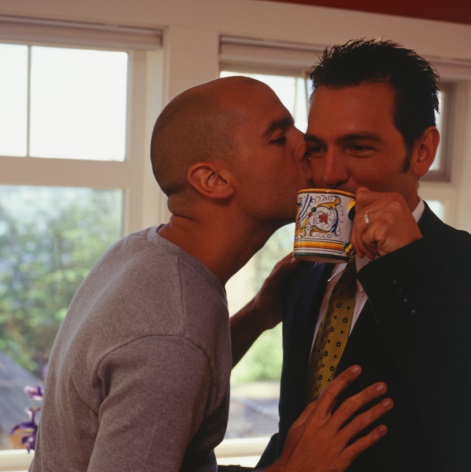 Opponents of gay marriage have periodically argued that gay marriage is fundamentally different and that gay couples are more likely to break up. According to a new study, though, gay marriage looks a lot like heterosexual marriage, with gay couples splitting at rates similar to those of straight couples.
Divorce Rates among Gay and Straight Couples
The study drew its data from the How Couples Meet and Stay Together survey and began tracking about 3,000 couples in 2009. They followed up with the couples every year through 2012. Because many states did not have legal gay marriage options at the time of the study, researchers looked at both legally married same-sex couples and same-sex couples who maintained long-term, marriage-like relationships. The study included almost 500 same-sex couples.
Researchers found that the rate of marriage breakup among same-sex couples was indistinguishable from that of straight couples. There was also no substantive difference in marriage breakup rates between lesbian and gay couples. Both straight and gay marriages had an annual breakup rate of less than 3%.
The study also found that legalized same-sex marriage tended to encourage marriage among same-sex couples. Forty-two percent of same-sex couples living in states where gay marriage was legal were married when the survey began, compared to just 28% of couples in states that did not legally recognize gay marriage. [fat_widget_left]
Michael Rosenfeld, an associate professor of sociology at Stanford University and the study’s lead author, explains in the study that same-sex couples are more likely to stay together in states that legalize same-sex marriage. He further emphasizes that the sex of partners plays a less significant role in predicting divorce than other factors. The study notes that some previous research found that gay couples are more likely to break up, but that data did not come from a nationally representative sample. For both gay and straight couples, the study says, factors such as commitment, the history of the relationship, and the length of the relationship all play more significant roles in keeping couples together.
References:
Marriage break-up rates similar for gay, straight couples — study. (2014, October 6). Retrieved from http://health.usnews.com/health-news/articles/2014/10/06/marriage-break-up-rates-similar-for-gay-straight-couples-study